

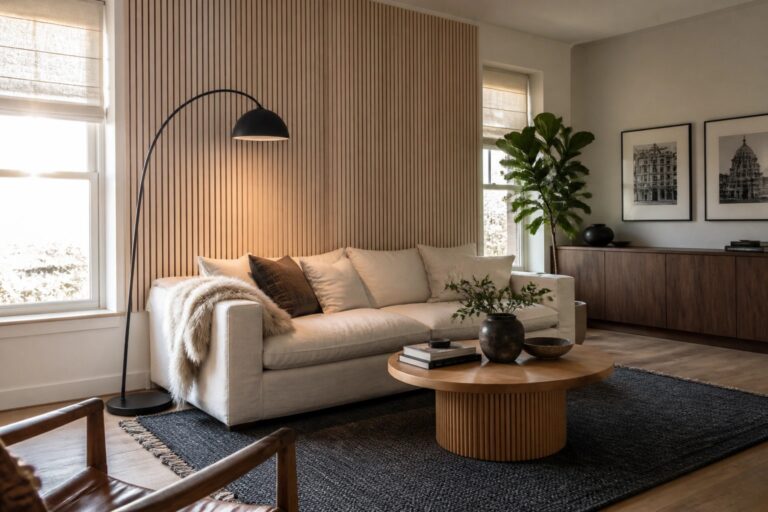
I often find that the first thing people notice when they walk into a room is whatever stands out on the walls.
Adding wood to one surface can ground the space in a way that feels more lived in than just another coat of paint.
The grain and tone end up affecting how the light moves through the area over the course of a day.
One wall can shift the whole balance.
I keep coming back to the idea that these choices work best when they match the way the room is actually used rather than just how it looks in a photo.
Vertical Wood Slats Behind the Sofa
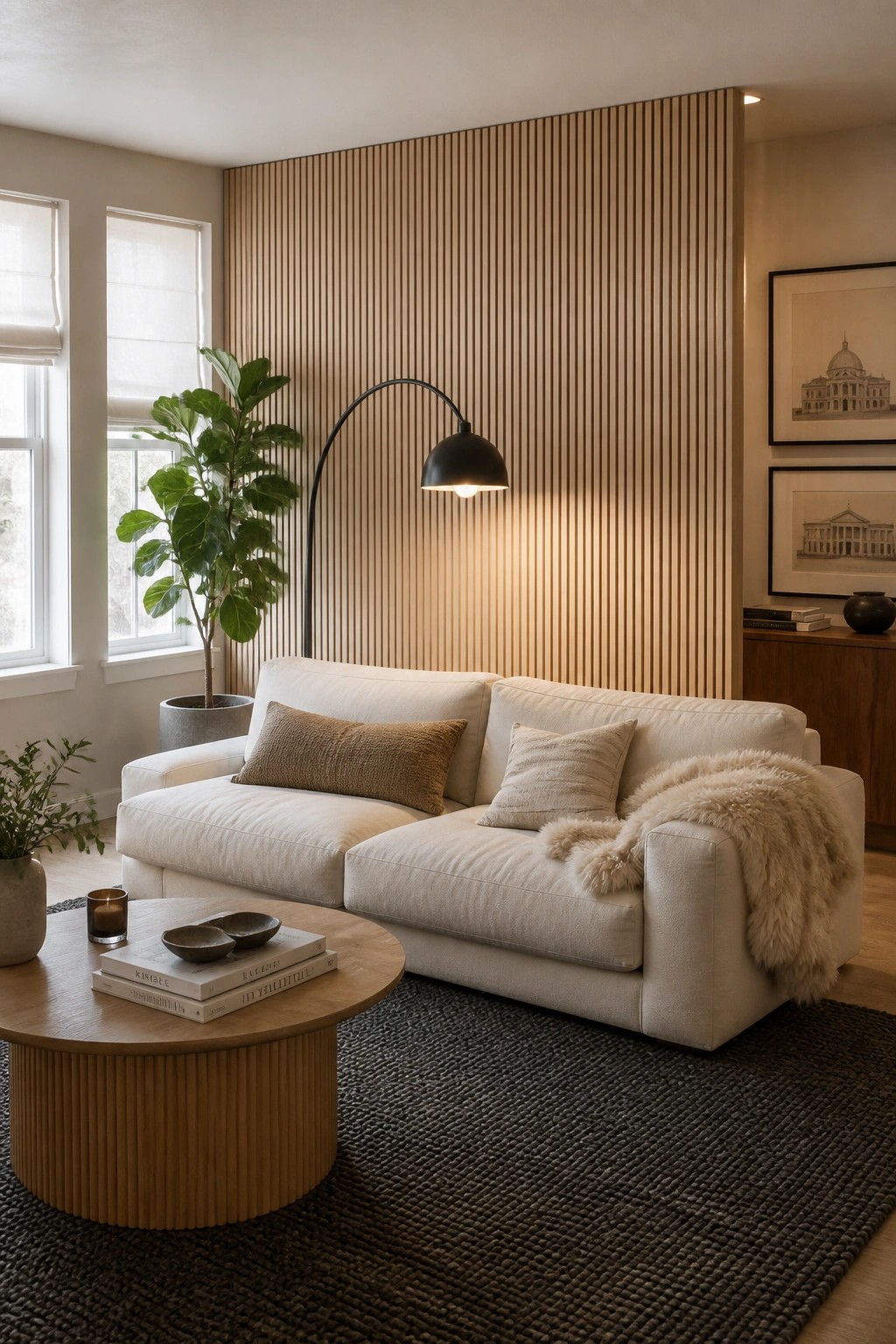
Vertical wood slats give a wall real presence without much fuss. The narrow boards add texture and a bit of depth, so the area behind the seating becomes the clear focal point in the room.
This approach works best in living spaces with mostly neutral furniture and simple finishes. Keep the rest of the walls light and let the wood carry the interest, especially if the room gets good natural light during the day.
Wood Accent Walls Behind The Bed
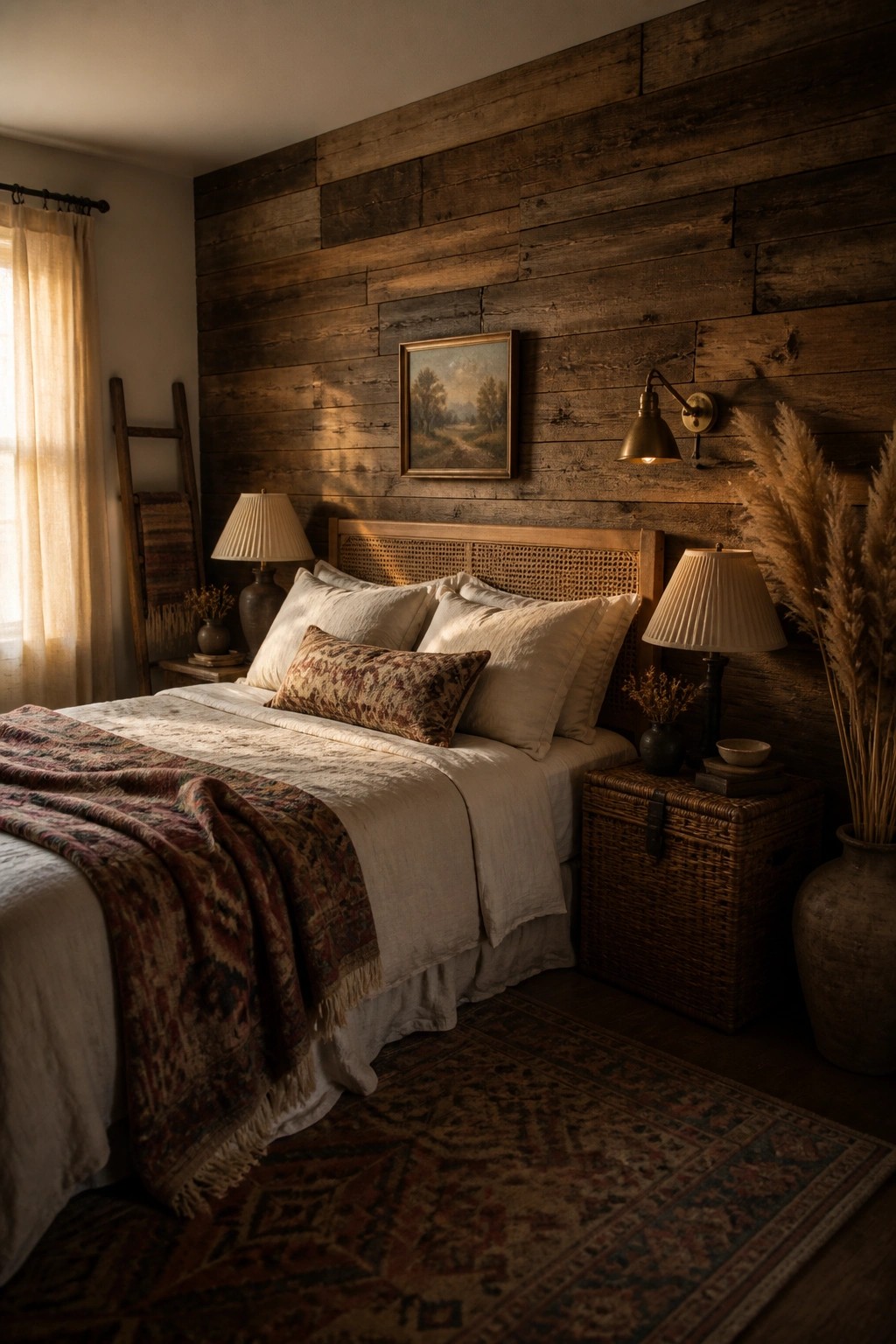
A wood accent wall gives a bedroom an instant focal point without needing much else. The planks add texture and warmth that stand out against lighter bedding and simple furniture, making the space feel more settled.
This approach works best in rooms that already have some natural light so the wood does not feel too heavy. It suits homes that lean rustic or traditional, and it pairs well with neutral fabrics and minimal decor so the wall stays the main feature.
Dark Wood Paneling In The Kitchen
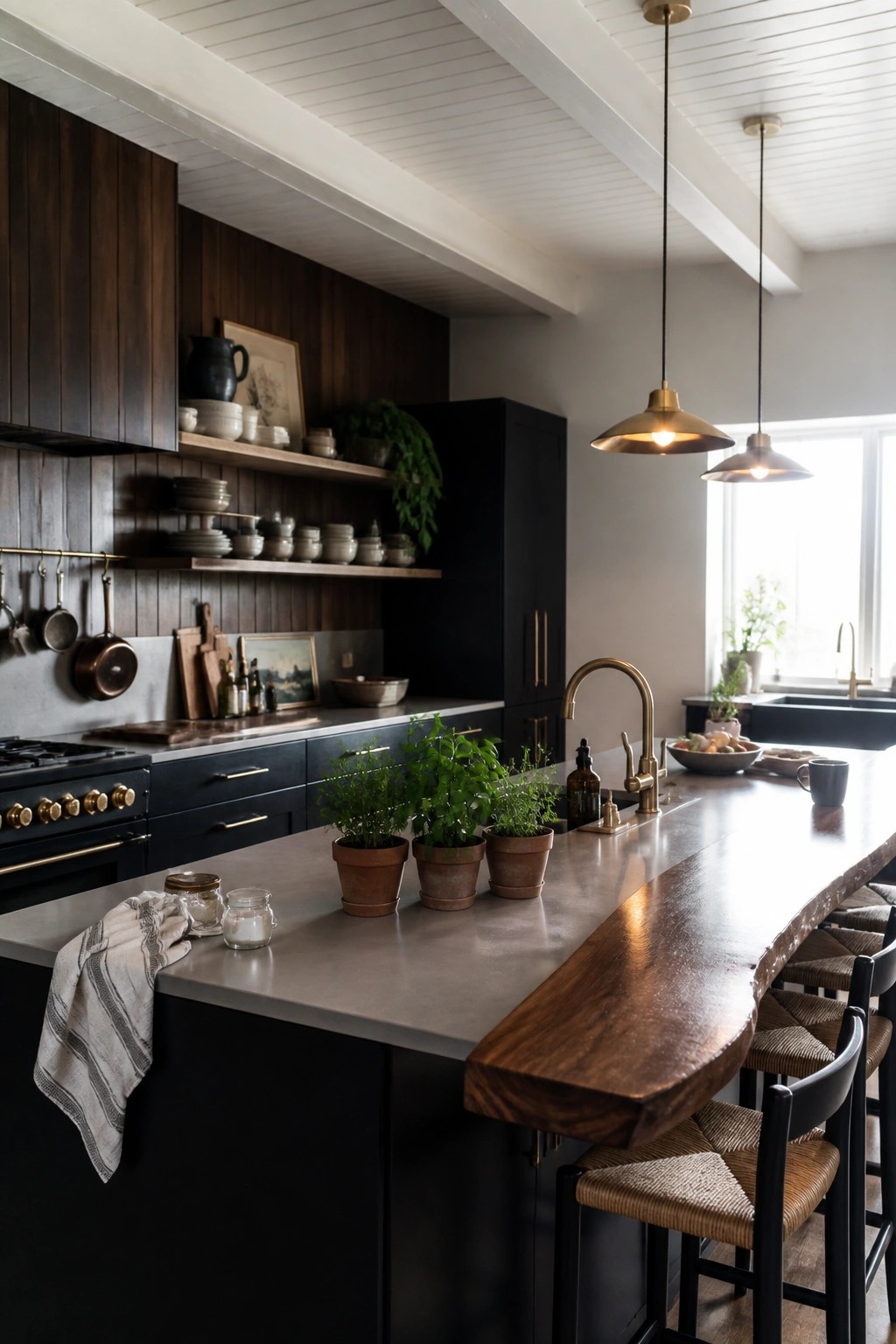
A dark wood accent wall works especially well in a kitchen because it adds depth without making the space feel closed in. The vertical grain gives the wall some movement, and the deep tone creates a clear focal point against lighter counters and open shelving. It pairs nicely with brass hardware and neutral tones that keep the room from feeling too heavy.
This approach suits kitchens that already have some wood elsewhere or homes that lean transitional or modern. Keep the rest of the surfaces fairly simple so the wall stays the main feature. Too many competing textures can dilute the effect.
Wood Accent Walls for Bathrooms
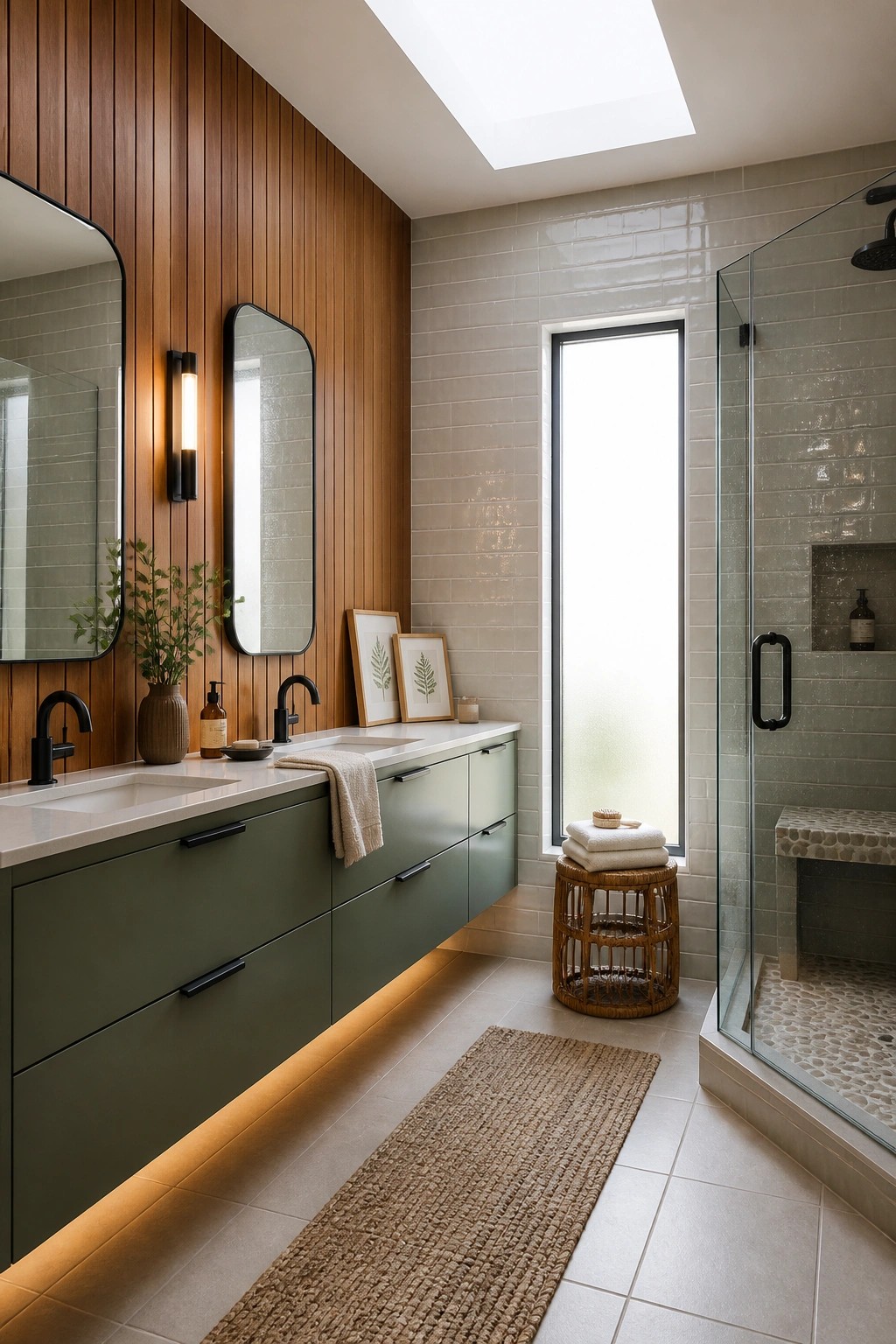
A wood accent wall gives a bathroom a clear focal point that feels natural without taking over the room. Vertical slats add height and a bit of texture that works nicely against tile and solid cabinet colors.
This approach suits smaller or medium bathrooms where you want warmth but still need the space to feel clean. Keep the rest of the finishes simple so the wood can stand out on its own.
Herringbone Wood Accent Walls
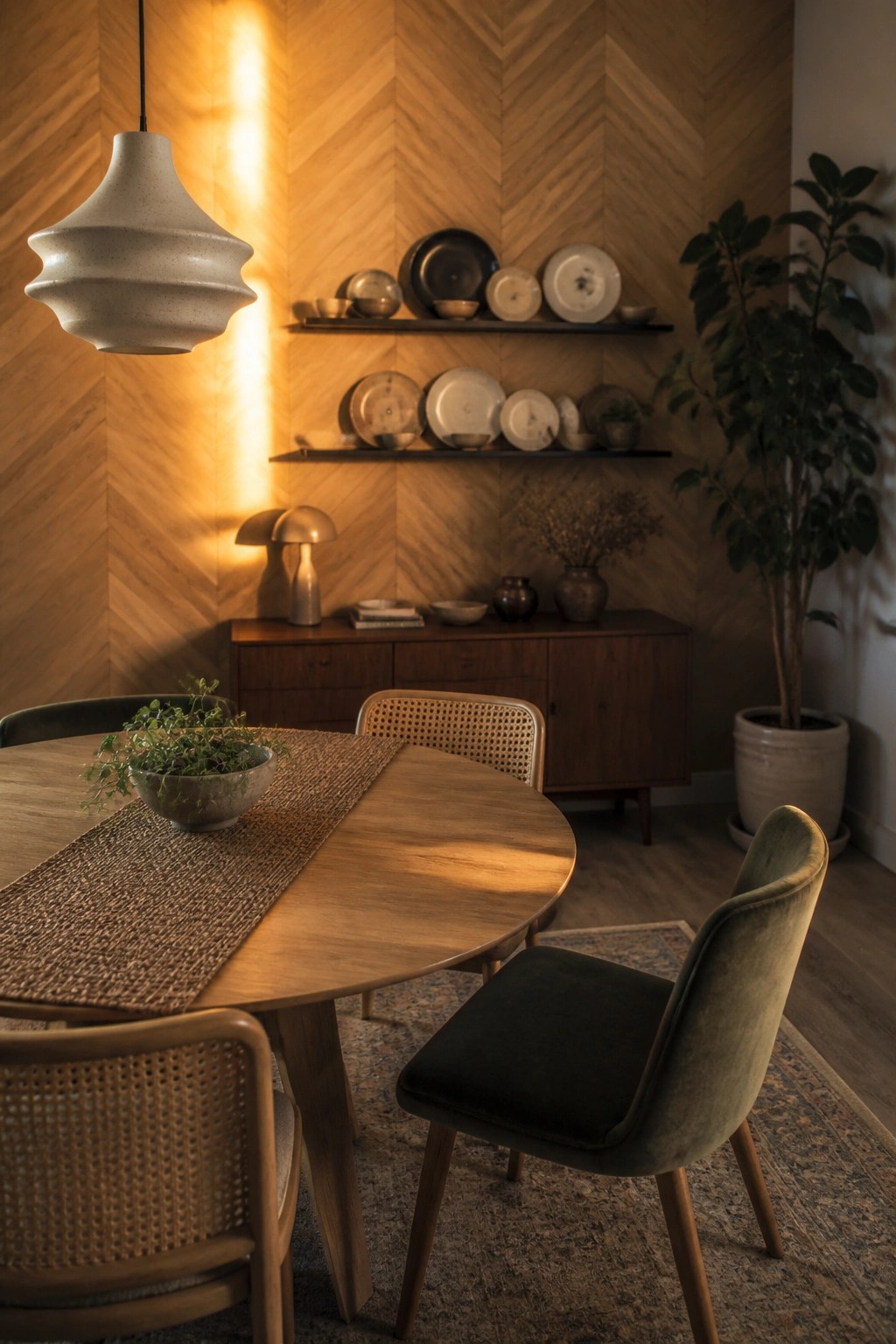
A herringbone pattern on a wood accent wall gives a dining space real presence without any extra fuss. The angled layout catches light nicely and turns an ordinary wall into the main feature behind the table.
This approach suits homes that already lean toward natural materials and simple furniture. It works best when the wood tone stays close to other wooden pieces in the room so nothing feels out of place.
Dark Wood Plank Walls In Entry Spaces
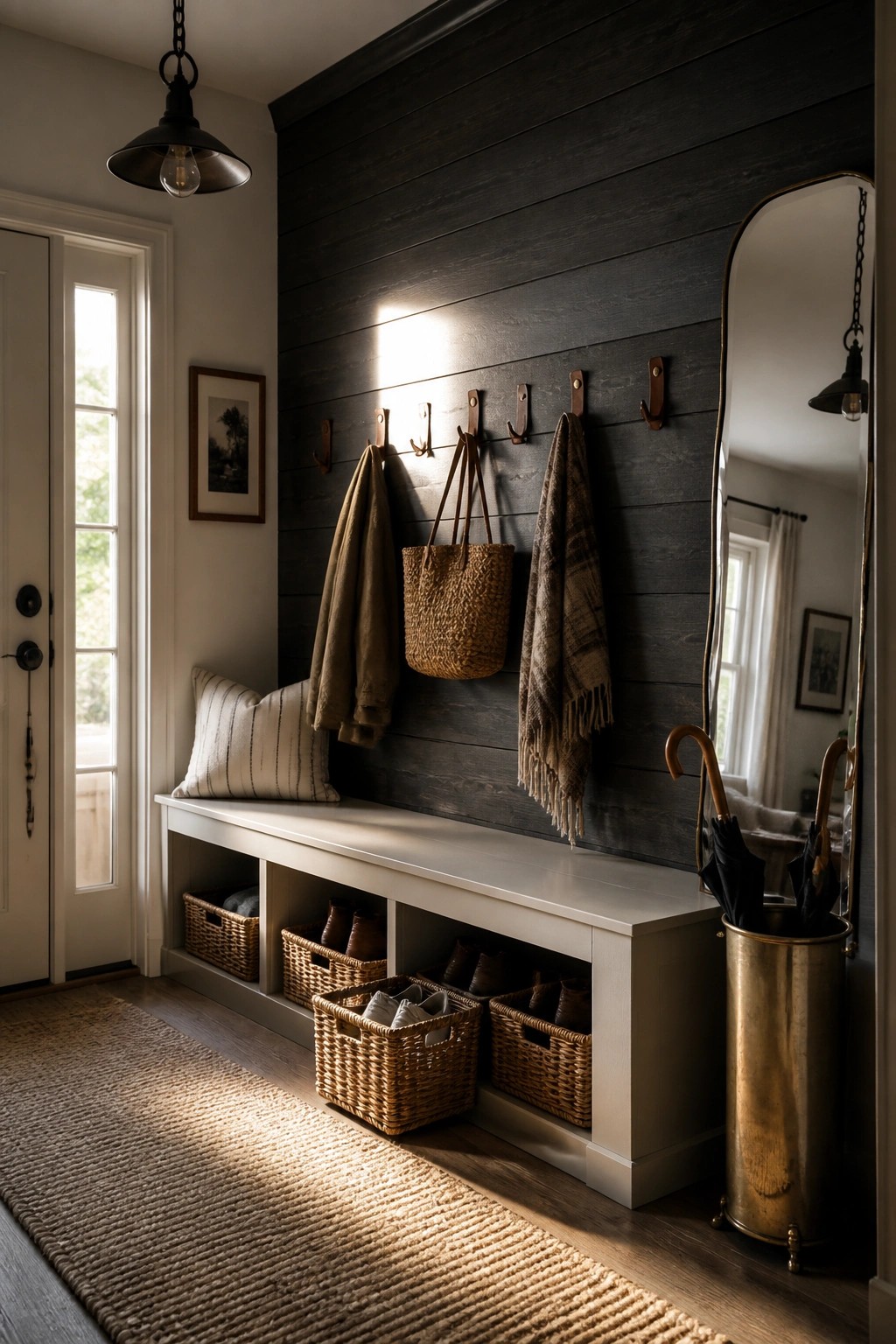
A dark wood accent wall gives an entry or mudroom a clear focal point without extra decoration. The planks add depth and make the area feel more finished while still keeping things simple.
This works best in homes that need a spot for coats and bags right by the door. Keep the rest of the space light so the wood stands out, and add hooks or a bench if you want the wall to handle everyday use too.
Wood Paneling Behind A Desk
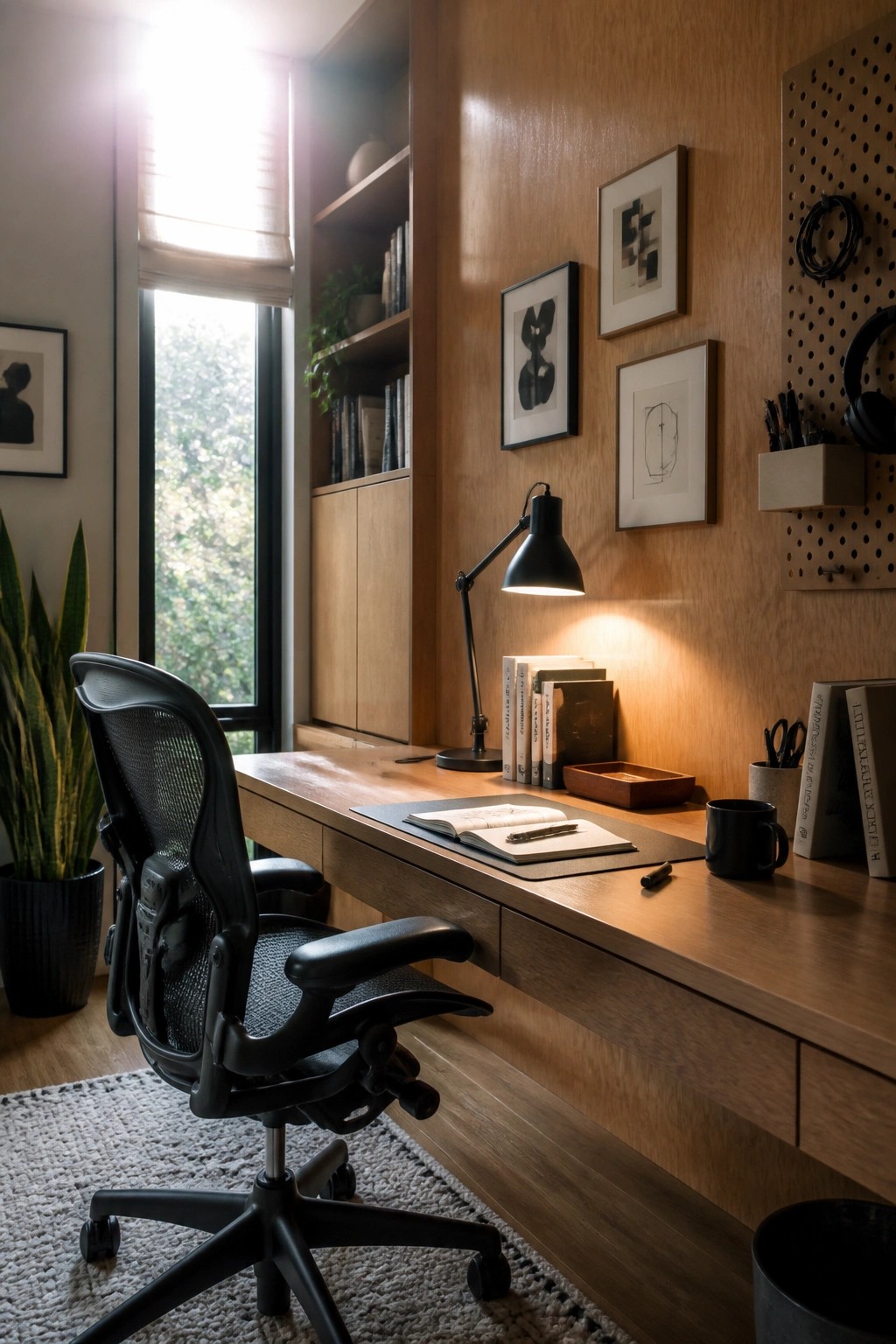
A wood accent wall works especially well behind a desk because it gives the workspace a grounded feel without needing much else. The natural grain adds warmth and helps the area stand out from the rest of the room, which is useful when the office sits inside a larger living space.
This approach fits homes that already use wood elsewhere or want a simple way to define one zone. Keep the rest of the room lighter so the wall does not close things in, and make sure the desk sits flush against it for a clean line.
Light Wood Plank Walls In Nurseries
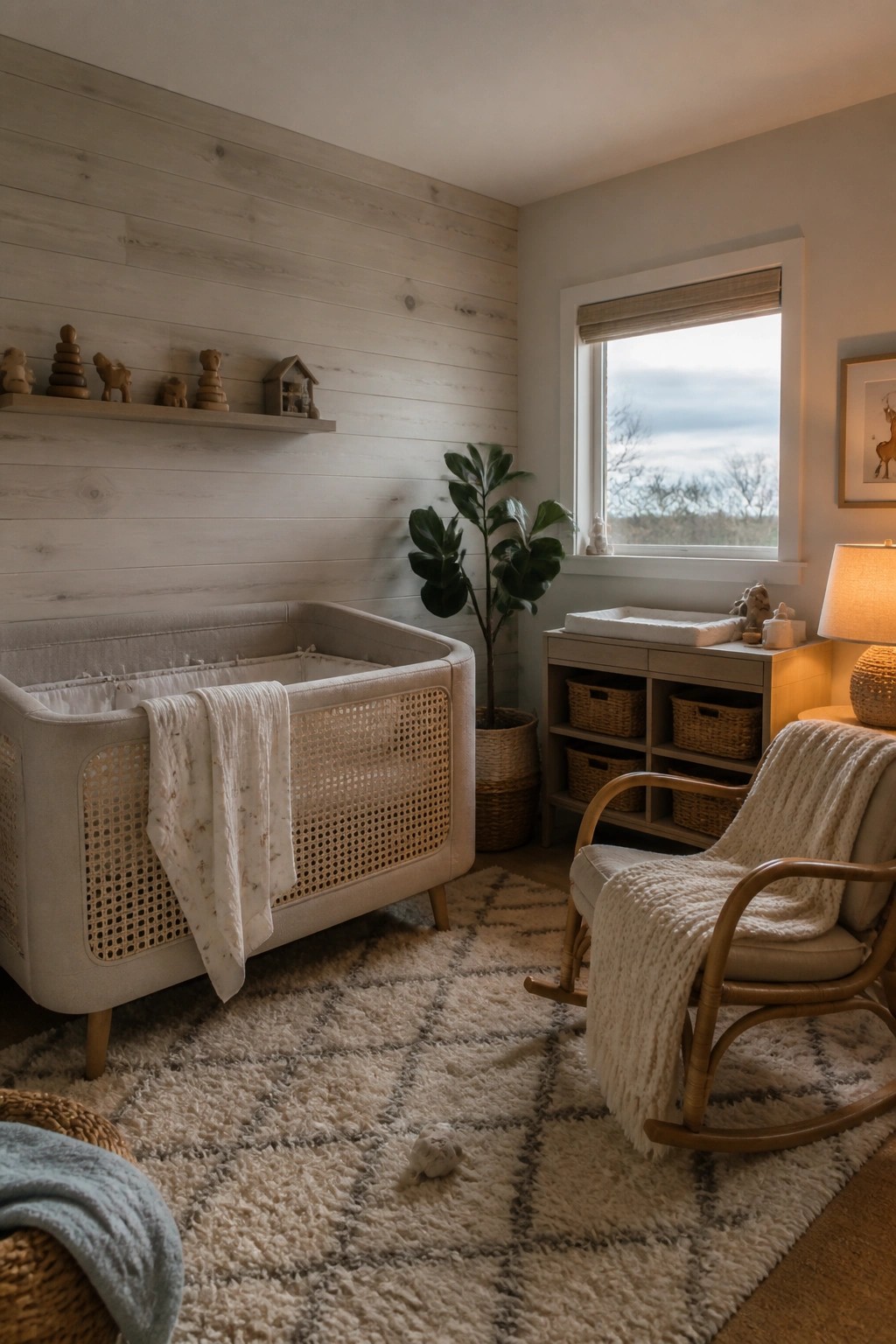
A wood accent wall works well in a nursery because it adds warmth without making the room feel busy. The horizontal planks give the space a quiet, natural look that pairs easily with simple furniture and soft textiles.
This approach suits smaller rooms where you want one clear focal point. Use light tones so the wood brightens the space instead of closing it in, and keep other walls plain to let the accent wall do the work.
Reclaimed Wood Over Painted Walls
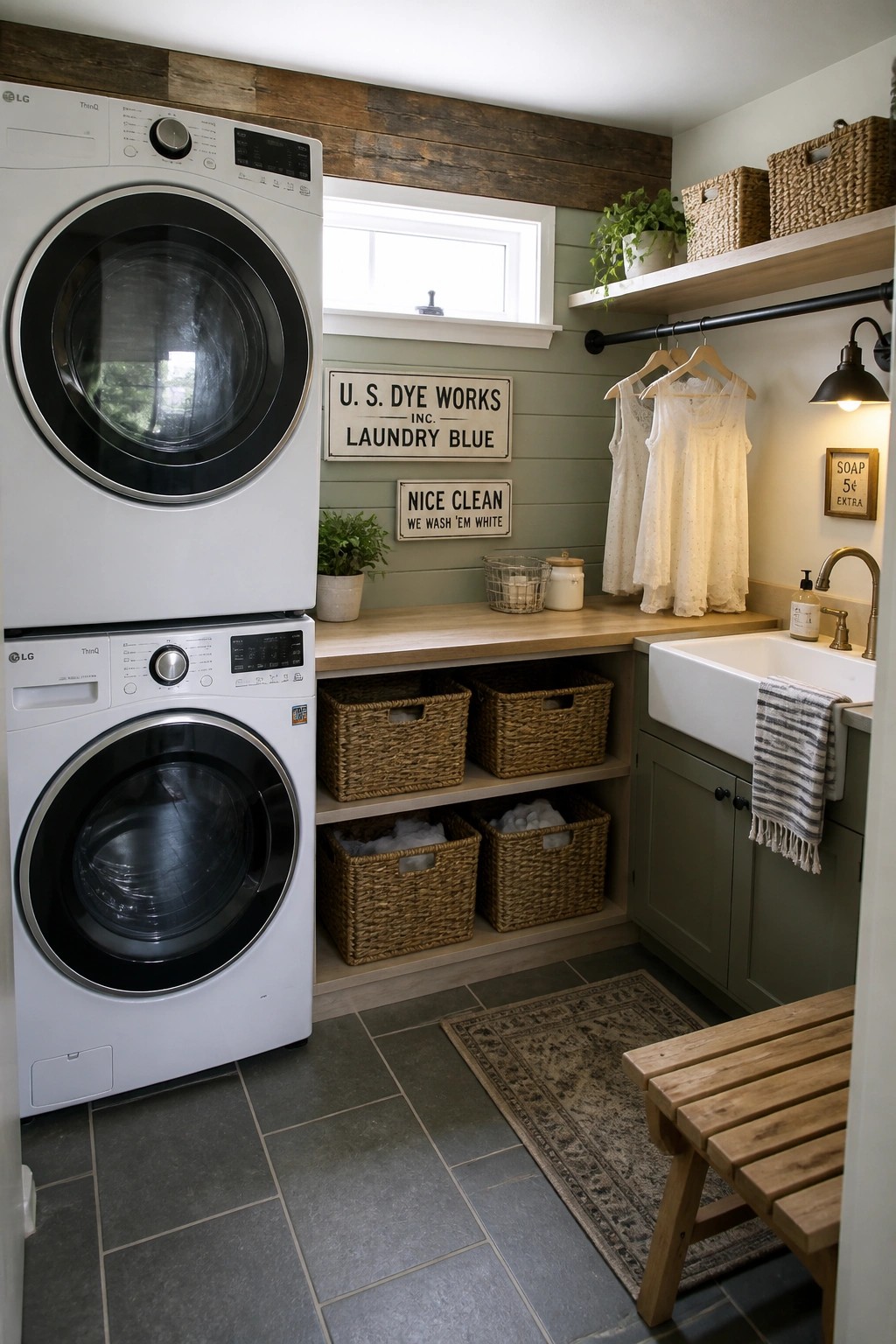
A strip of reclaimed wood across the top of a wall can give a room more character without much effort. In this laundry space the wood sits right above the green painted boards and draws the eye upward while keeping the rest of the room simple and functional.
This approach works well in smaller or utility rooms where you want some texture but do not want to cover every wall. Keep the wood band fairly narrow so it feels like an accent rather than a full feature, and pair it with a single paint color below to hold the look together.
Herringbone Wood Behind The Bed
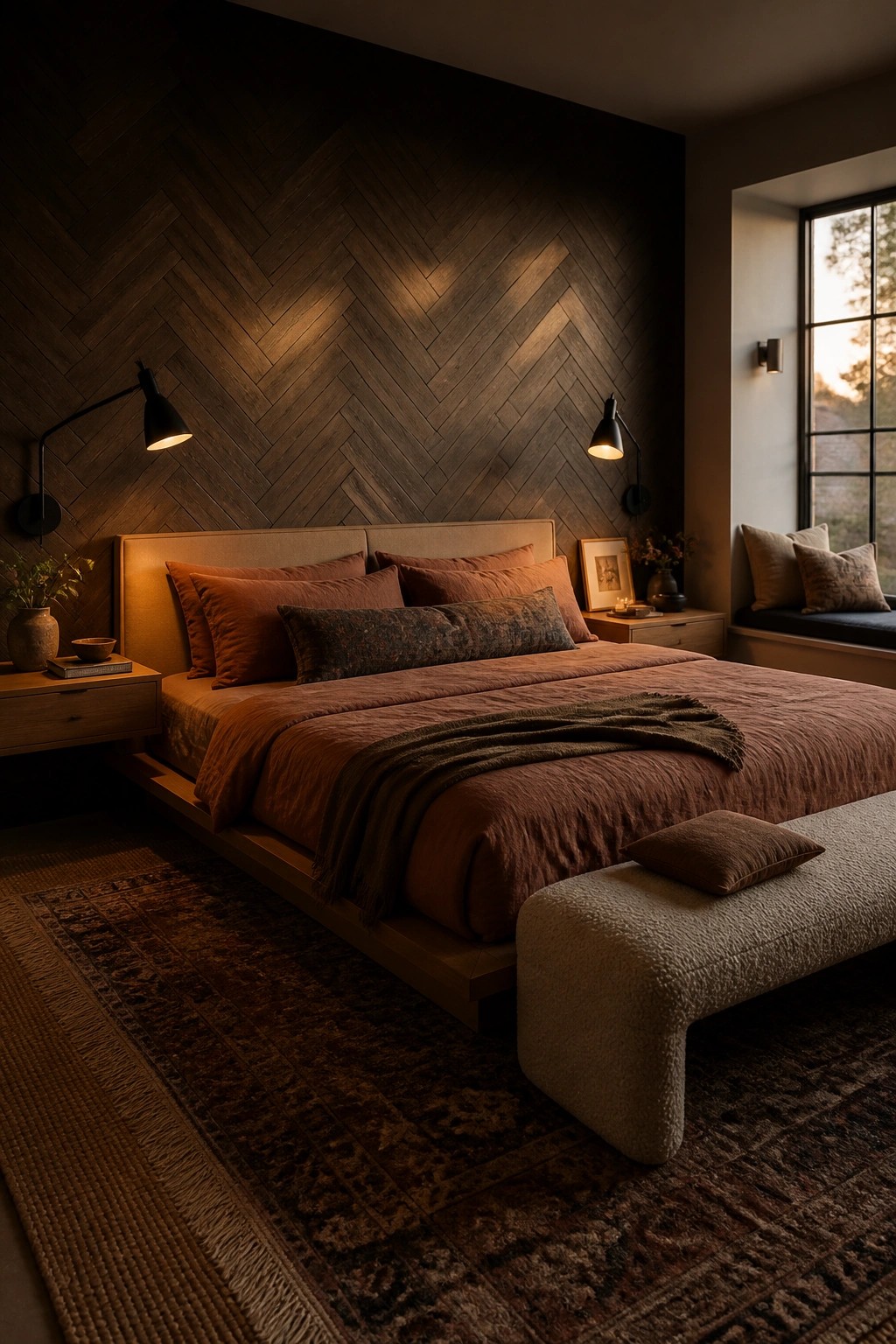
A dark herringbone wood accent wall gives the bed area real presence without extra pieces or clutter. The pattern catches the light in a way that feels steady and grounded, which is why it works so well as the main focal point in a bedroom.
This approach suits rooms where you already like warm tones and want the wall to do most of the visual work. Keep bedding and side tables simple so the wood stays the star, and test the finish in your actual light before committing.
Horizontal Wood Slats Behind The Tv
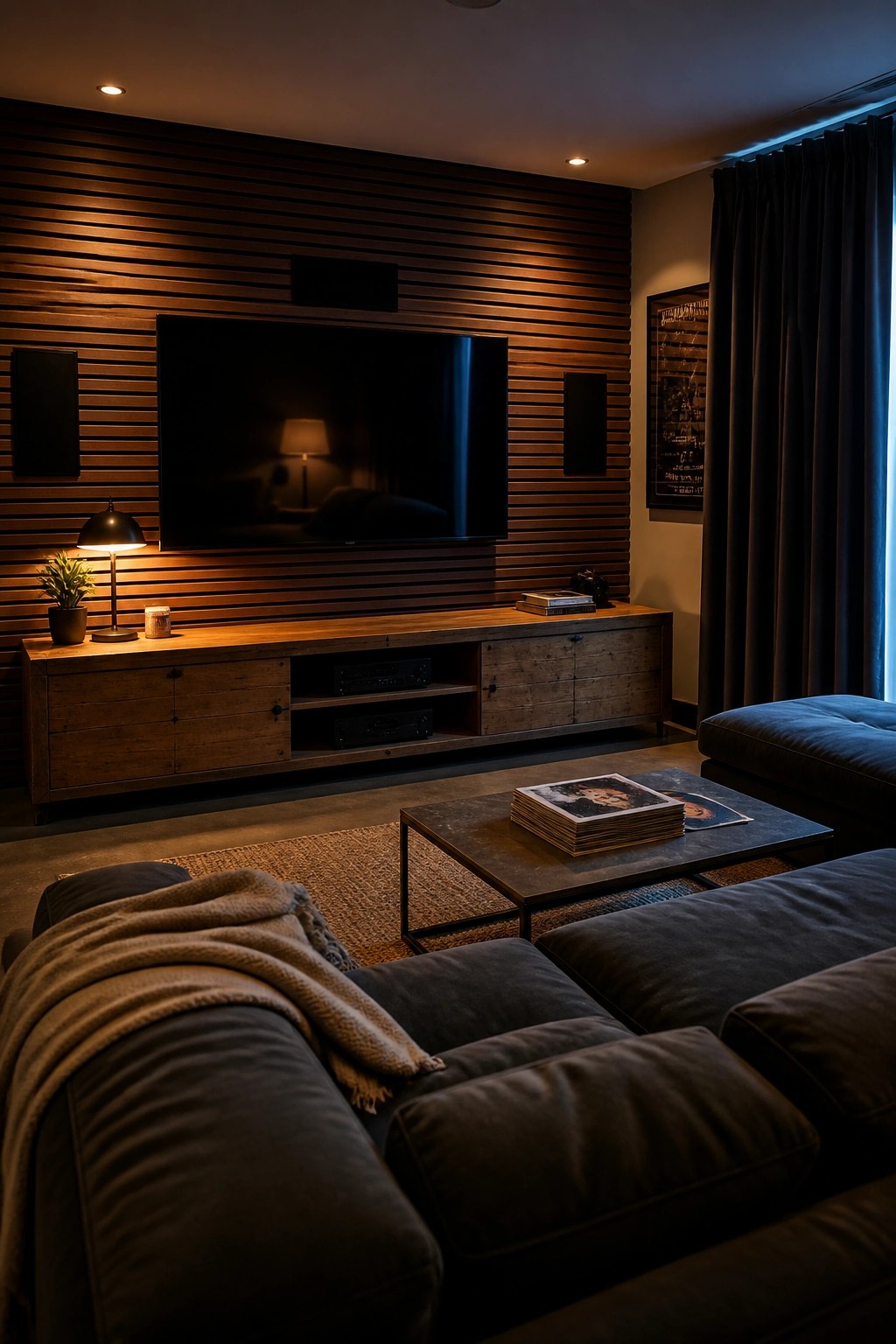
A wood accent wall made of horizontal slats gives the TV area a clear focal point without needing much else. The lines add texture and keep the wall from feeling flat, which helps the screen sit naturally in the room instead of floating on a plain surface.
This approach works best in living rooms where the TV is the main feature. It suits homes that already lean modern or want a warmer tone than painted drywall. Use it on one wall only and keep the rest of the space simple so the wood stays the star.
Wood Plank Walls In Small Bathrooms
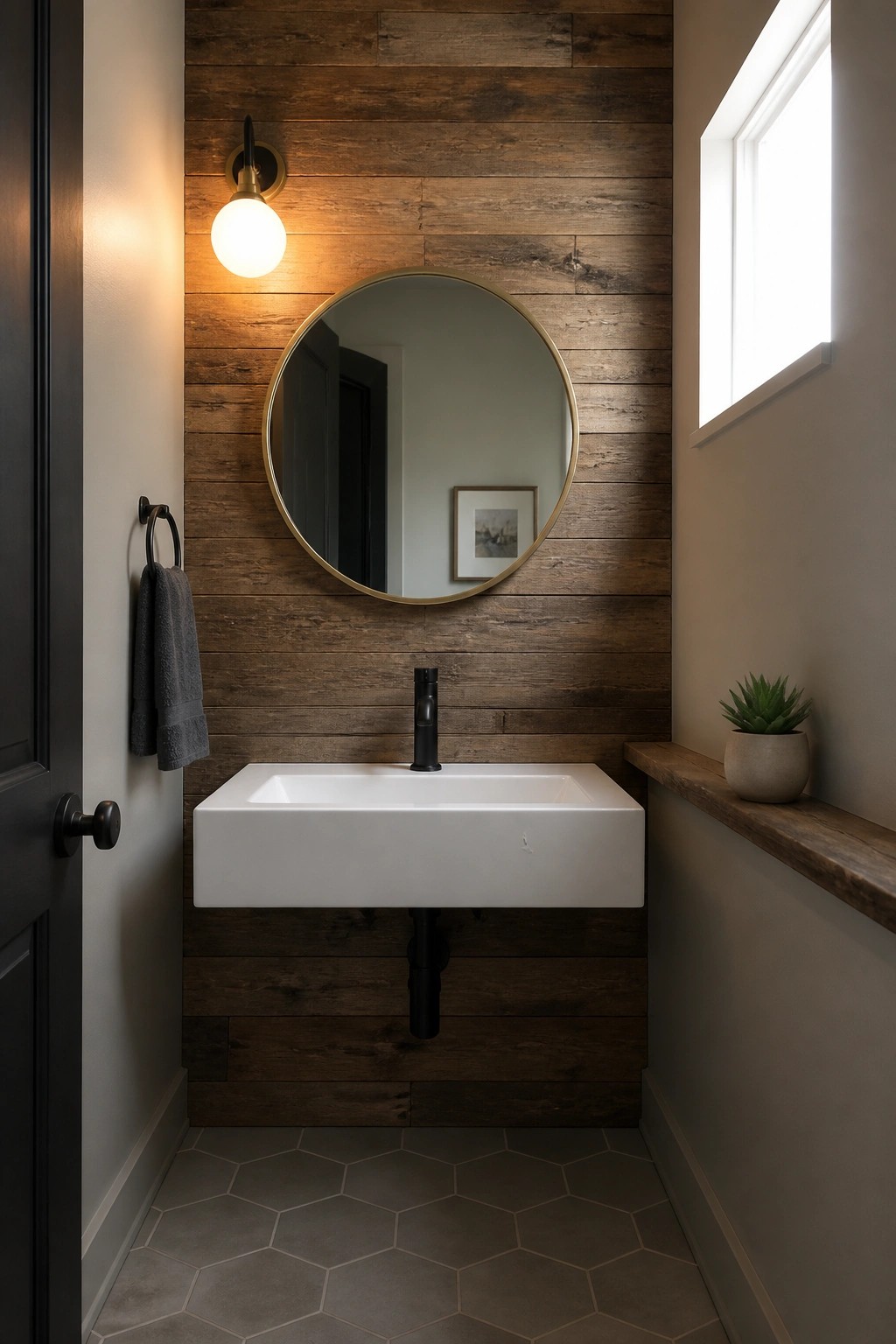
A wood accent wall gives a small bathroom more presence without any extra furniture or clutter. The vertical planks add texture and warmth that stands out against white fixtures and simple tile.
This works best in powder rooms or guest baths where you want some character but still need the space to feel open. Keep the wood tone medium to dark and let the rest of the room stay fairly plain so the wall does the work.
Horizontal Wood Plank Accent Walls
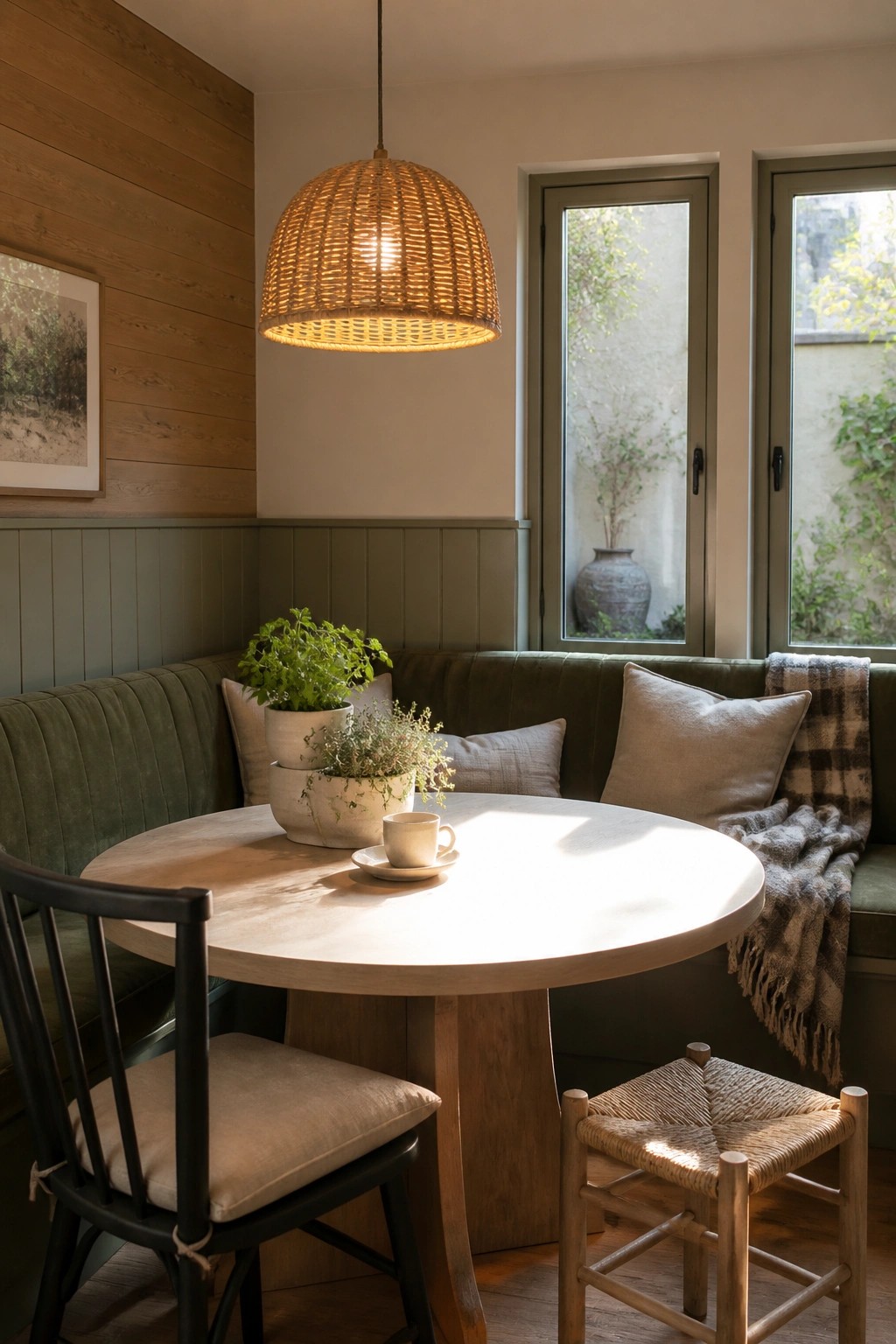
A wall of horizontal wood planks brings natural warmth into a dining space without needing much else. It works especially well when paired with a built-in banquette, since the wood adds texture and depth right where the seating meets the wall.
This approach suits smaller eating areas or corners that need a bit of visual weight. Keep the planks in a mid-tone wood and let the lower section stay simple, like painted paneling, so the wood stays the main focus.
Wood Paneling Behind The Vanity
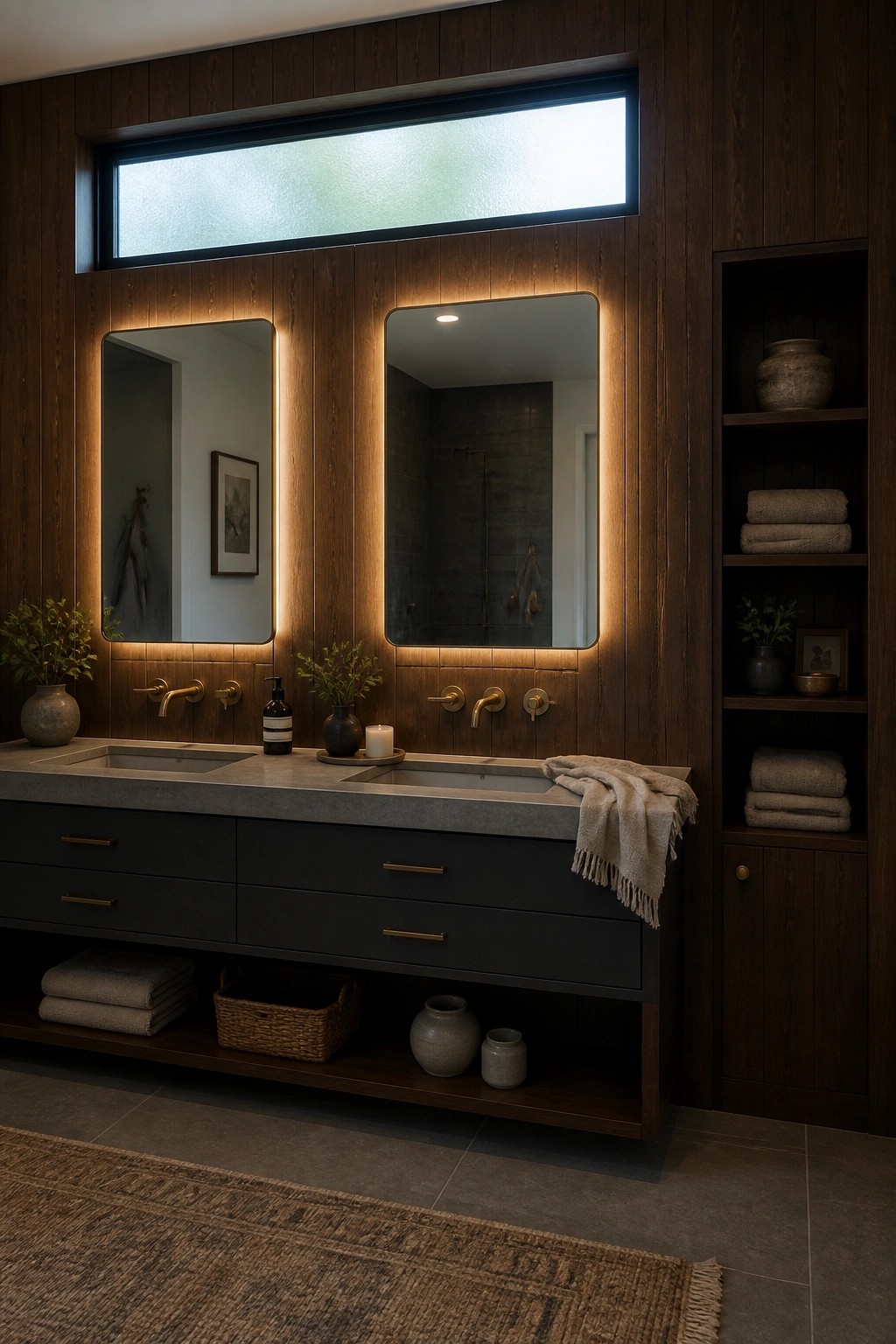
Wood paneling works well in bathrooms because it adds warmth and texture where most surfaces tend to feel hard and cool. The vertical grain gives the wall behind the sinks some presence without needing extra color or pattern.
This approach suits homes that already use wood elsewhere, like in flooring or cabinetry. Keep the rest of the room simple so the paneling stays the main feature rather than competing with too many other materials.
Vertical Wood Paneling In Hallways
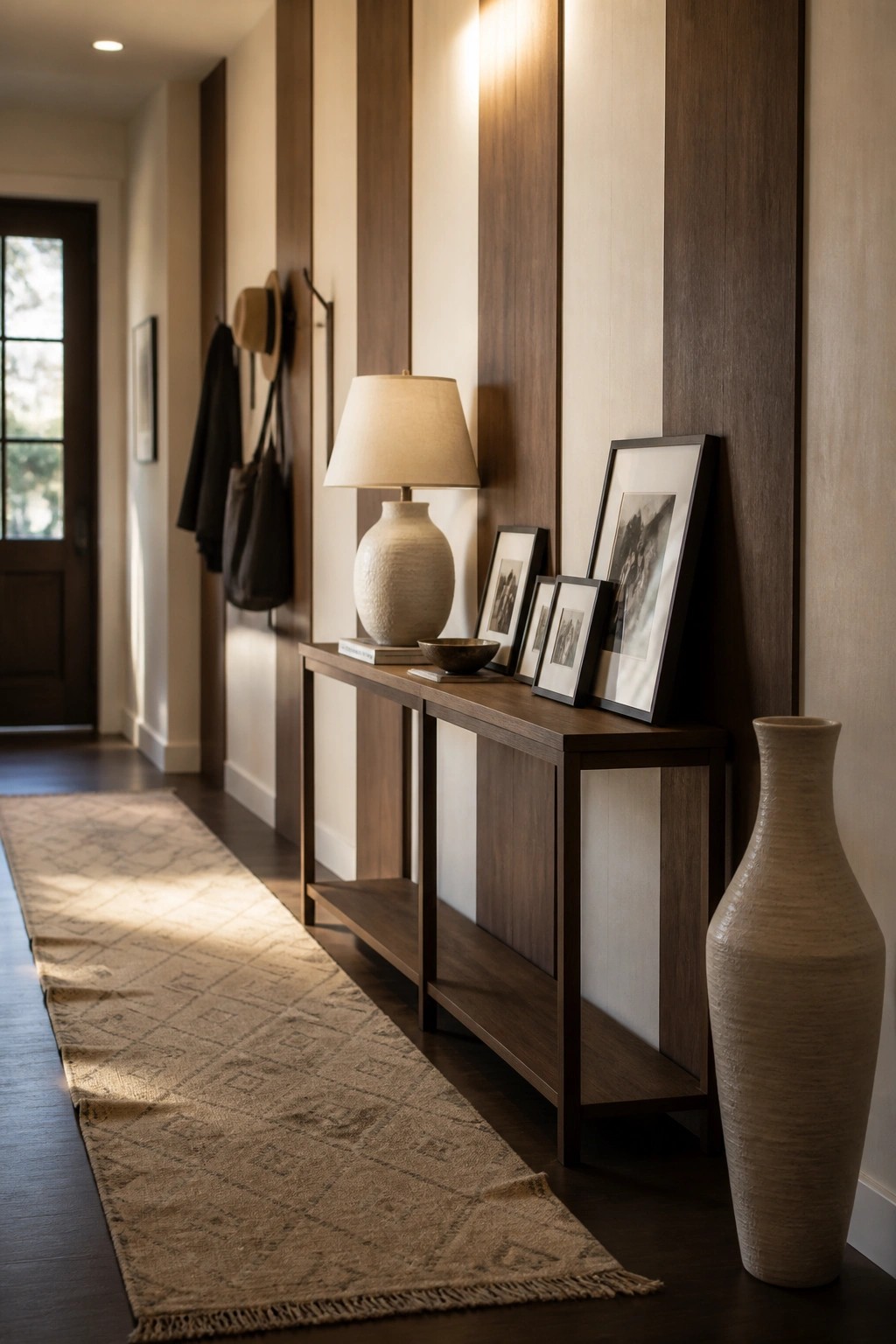
Vertical wood slats give a hallway a strong focal point without crowding the floor space. The striped pattern adds texture and warmth while guiding the eye down the length of the room.
This works best in homes with plain or narrow corridors. Pair it with a simple console and minimal accessories so the wall stays the main feature.
Wood Planks Work Well In Mudrooms
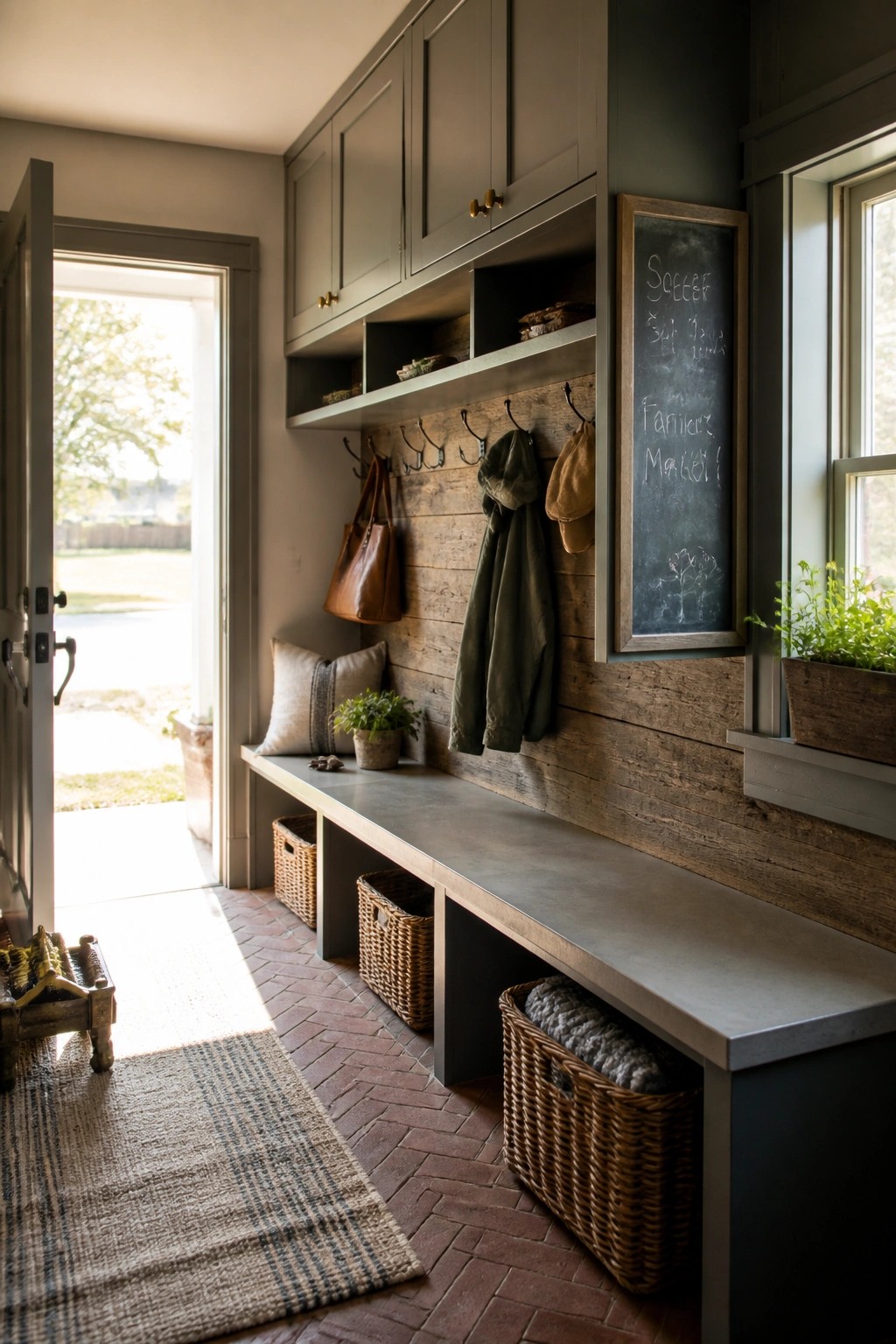
A wood accent wall brings texture to a high-traffic entry without much effort. It gives hooks and storage a clear backdrop while making the space feel more finished than plain drywall would.
This approach suits homes that need extra organization near the door. Keep the wood tone simple and let the hooks and bench do the practical work so the wall stays useful rather than just decorative.
Horizontal Wood Planks as an Accent Wall
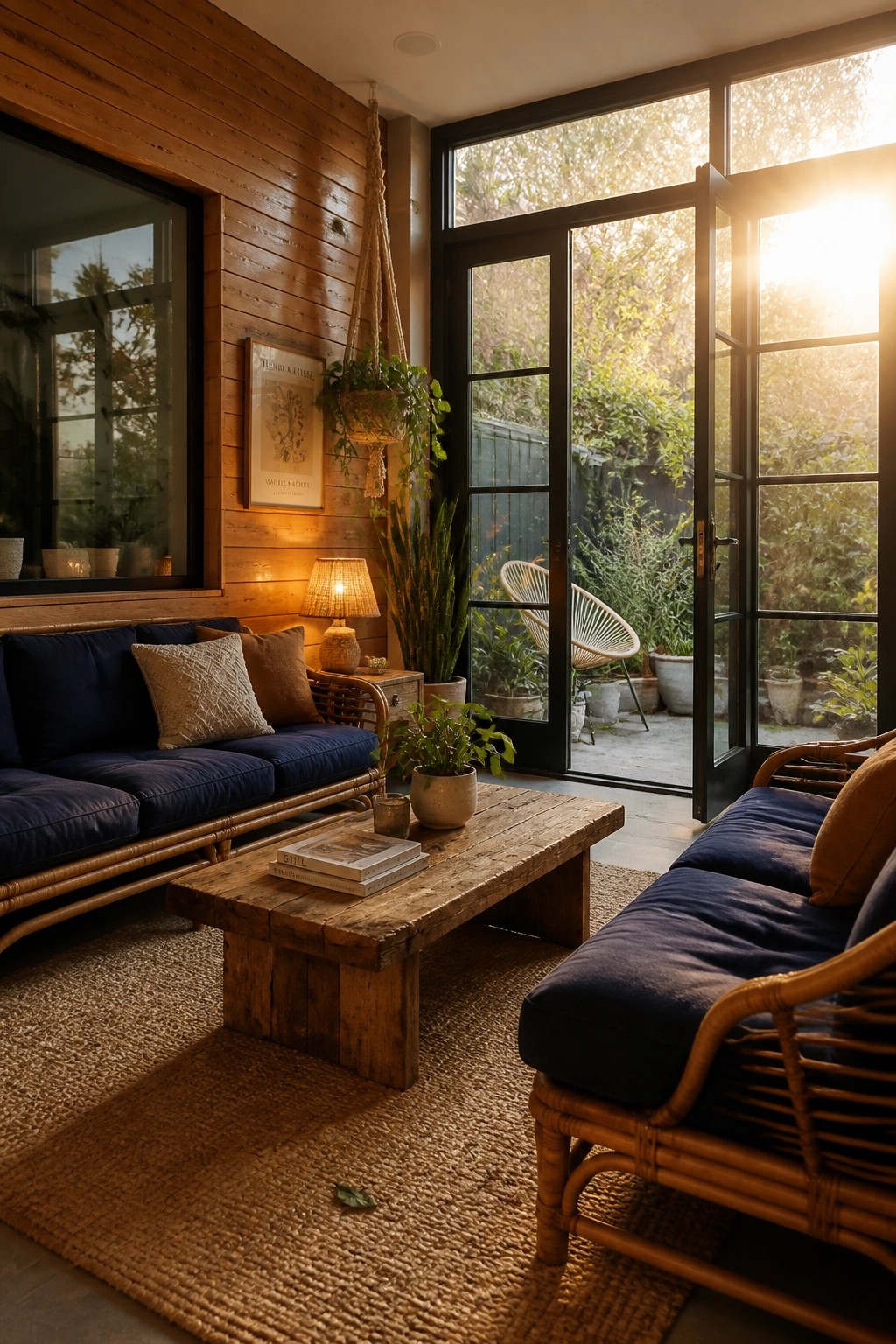
A wall of simple horizontal wood planks can turn an ordinary room into something warmer and more grounded. The wood adds texture without taking over, and it works especially well when the rest of the space stays simple.
This approach suits living rooms that get good natural light and already have some wood or rattan furniture. Keep the planks in a natural finish and let the wall stand on its own rather than covering it with too many shelves or art.
Built-In Wood Shelving With An Integrated Desk
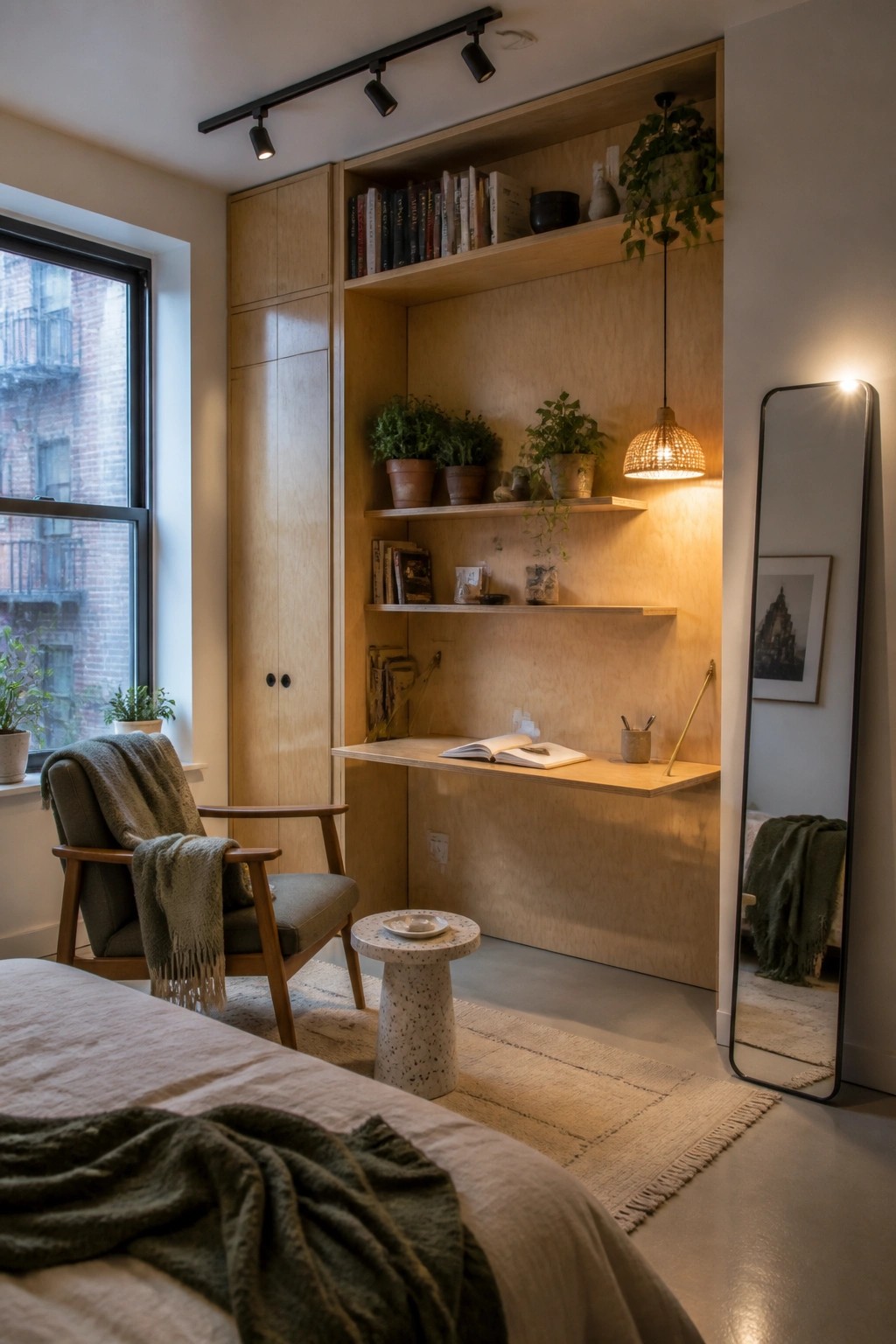
One way to make a wood accent wall feel useful is to build it around a workspace. The wood wraps the area with shelves above and a desk surface below, turning what could be empty wall space into something practical.
This approach works especially well in bedrooms or smaller rooms where you need storage but want to keep the look calm and natural. Choose a light wood tone if you want the space to feel open rather than heavy.
Wood Accent Walls With Hanging Storage
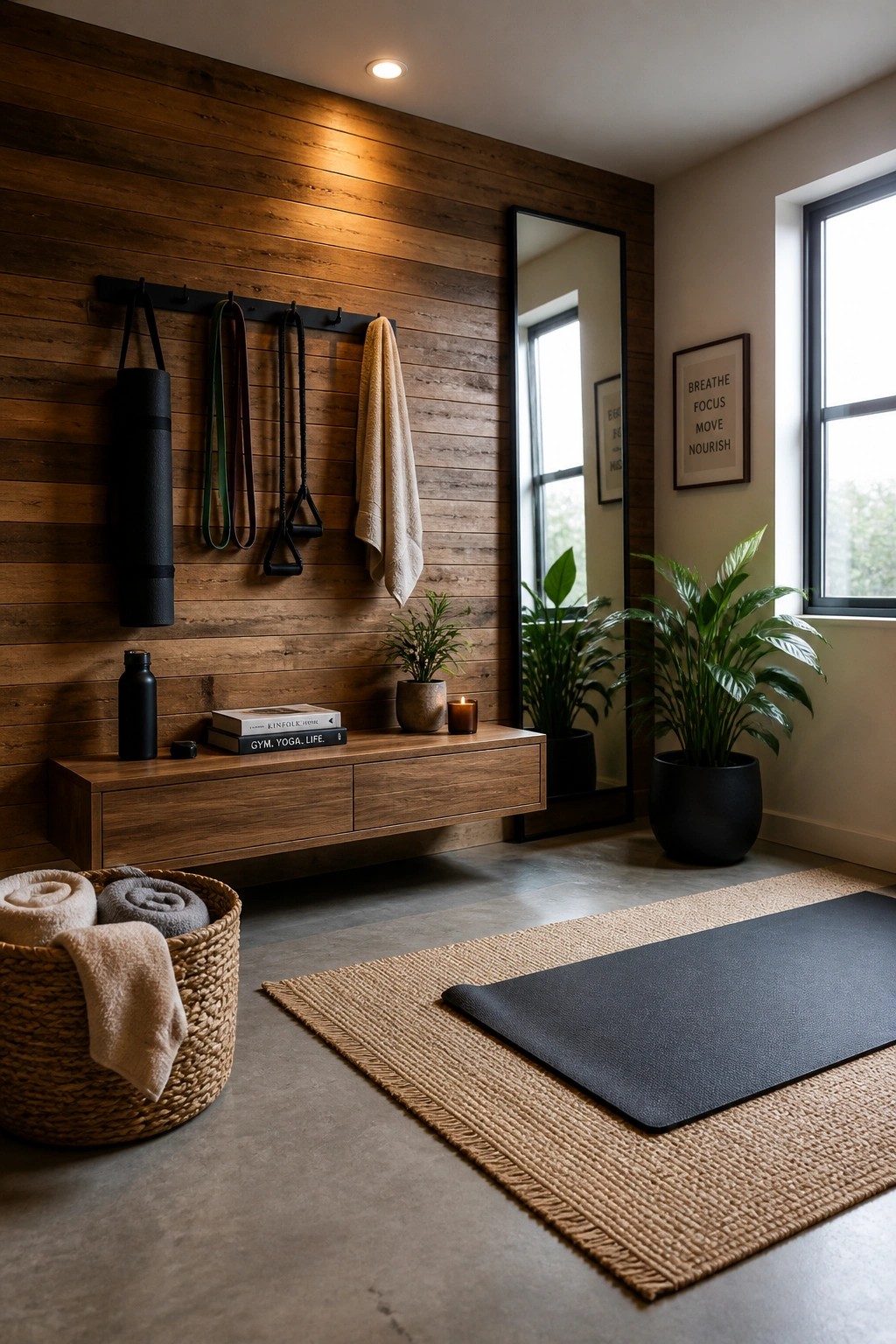
A wood accent wall works especially well when it also helps keep things organized. Adding a simple rail or row of hooks lets you hang straps, mats, and towels without needing extra furniture that would crowd the space.
This approach suits small workout rooms or any area where you want the wall to feel useful rather than just decorative. Keep the wood tone fairly light or mid-range so the wall still reads as a focal point without darkening the room too much.
Frequently Asked Questions
Q: Which wood works best if I want a modern look instead of rustic?
A: Go for smooth boards in a lighter oak or walnut shade. Keep the grain subtle and the finish matte. This keeps the wall clean and simple without extra texture.
Q: How can I make sure the wall stays straight during installation?
A: Mark your layout lines on the wall before you start. Use a level often as you attach each piece. Work from the center out to balance any adjustments.
Q: Do I need to seal the wood after putting it up?
A: Apply a clear sealant if the wood will see moisture or touch. It protects the surface and makes cleaning easier.
