

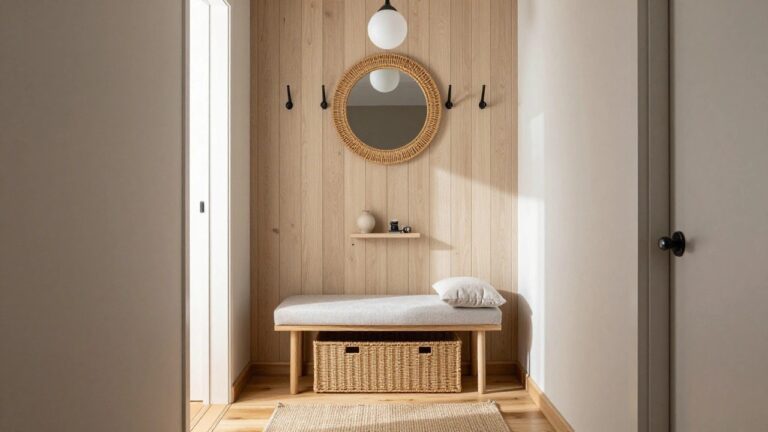
When I step into a house the entryway and hallway are the first places that tell me how the rest of the rooms will feel.
Wood accent walls can give these narrow spots some needed depth without taking up any floor space.
I once added a simple vertical wood panel in my own hallway and noticed right away how the light shifted and the area no longer felt like an afterthought.
The grain direction and finish matter more than people expect because they change how the space reads from one end to the other.
A quick sample on the wall is worth the extra step.
Vertical Wood Paneling For Small Entryways
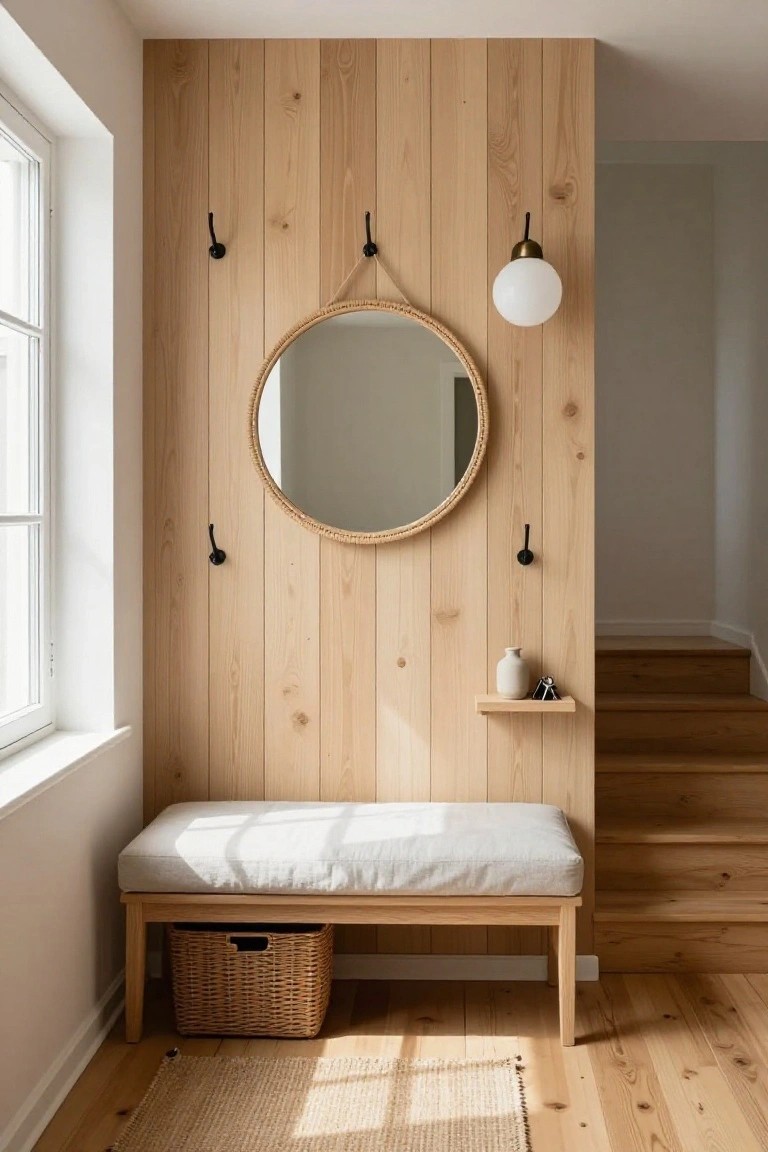
Vertical wood paneling works well in tight entry spaces because it draws the eye upward and makes the area feel a little taller without adding bulk. The light tone keeps things bright while the natural grain adds warmth that painted walls often lack. It also gives a clean backdrop for hooks and a small shelf so everyday items stay organized.
This approach suits homes where the entry opens right into the main living area and needs to feel pulled together without much floor space. Keep the wood finish simple and matte so it does not compete with other materials nearby. A bench tucked underneath adds seating and hidden storage without crowding the walkway.
Wood Accent Wall With Hooks And Storage Bench
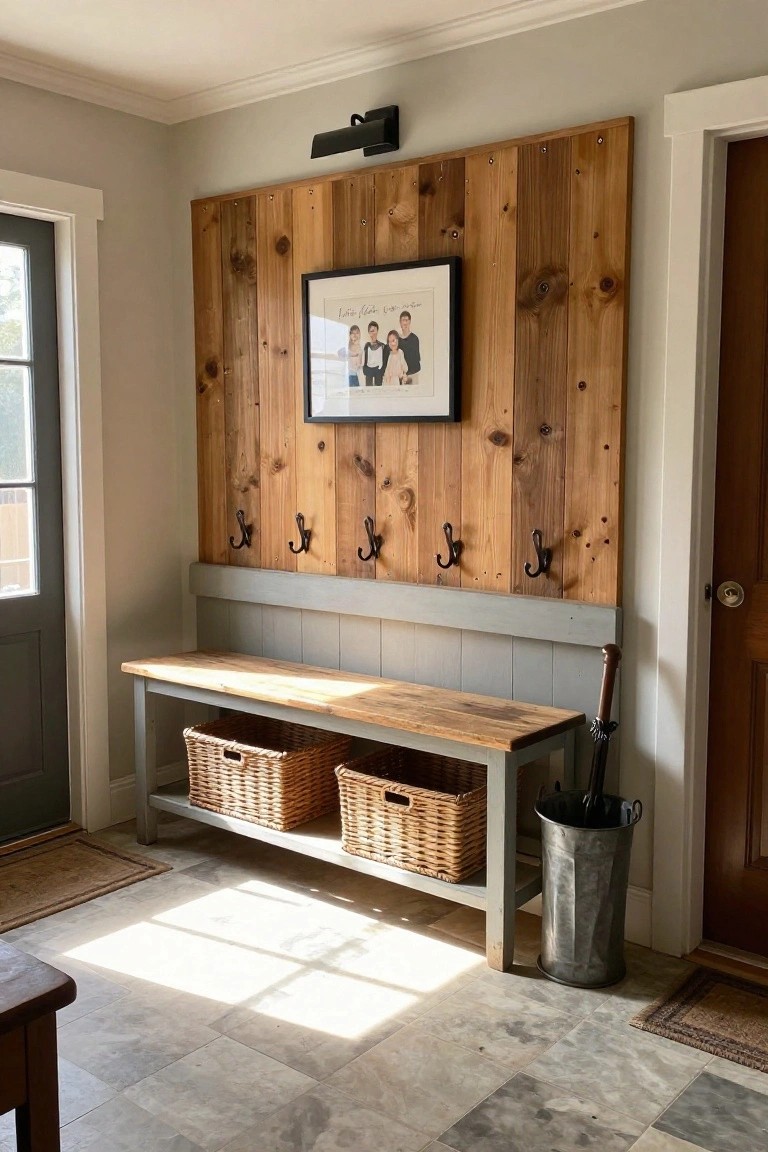
A wood accent wall works especially well in a small entry when you add hooks right at eye level. It gives you a place to hang coats and bags without needing extra furniture that would crowd the space.
This approach fits homes that need quick organization near the door. The bench underneath can hold baskets for shoes or other items, and the wood itself adds some warmth that plain drywall often lacks.
Built-In Storage on a Wood Accent Wall
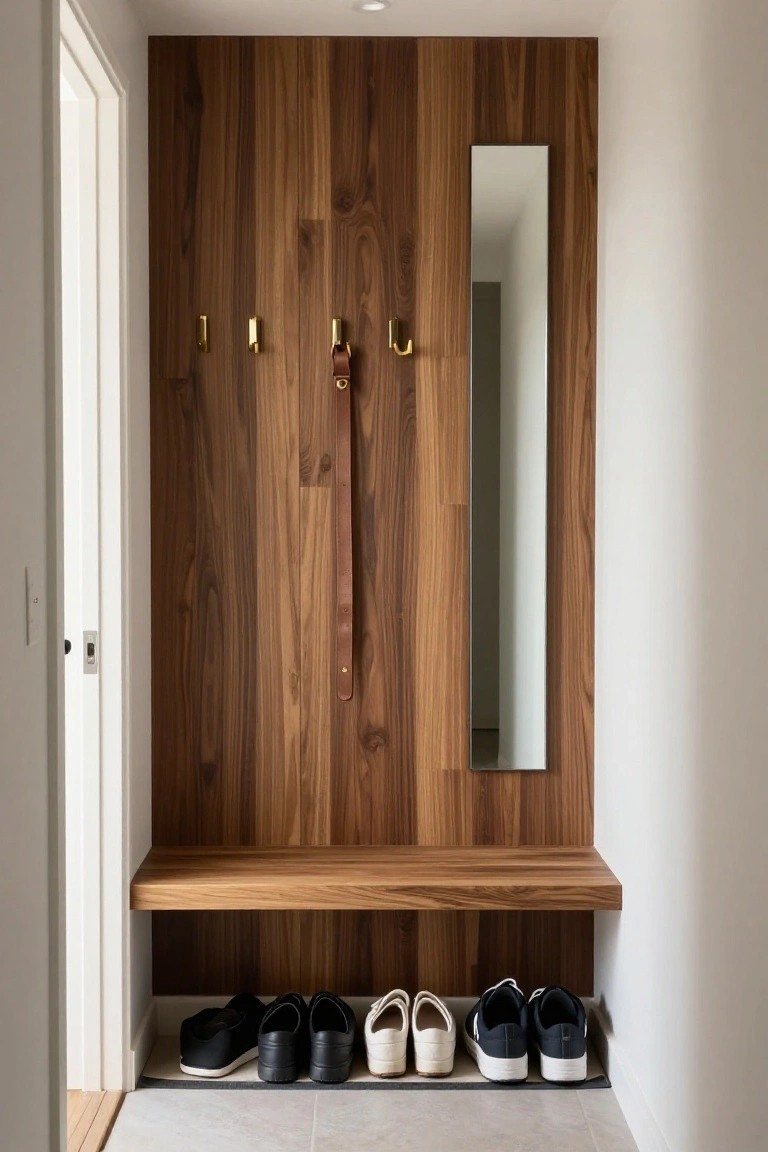
A wood accent wall gives a small entry a practical spot for daily items without crowding the floor. Hooks at different heights let you hang bags and coats right by the door, while the bench below creates a place to sit and sort shoes.
This works best in narrow hallways or entry nooks where every inch counts. Keep the wood tone simple and add just a few hooks so the wall stays useful instead of cluttered.
Built-In Bench Storage Along a Paneled Wall
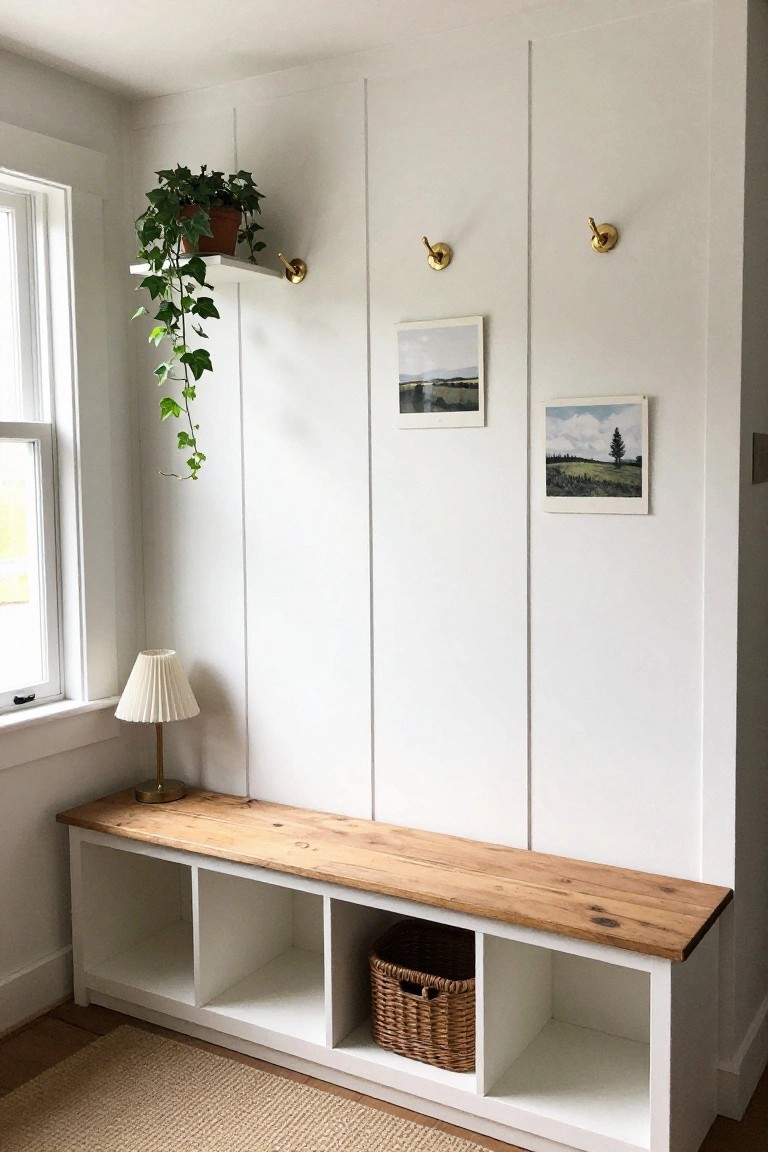
A long bench with open cubbies underneath turns a plain accent wall into something you can actually use every day. It gives you a spot to sit while putting on shoes and a place to tuck away baskets or bags without crowding the floor.
This setup fits best in narrow entryways or hallways where space is tight. Keep the bench top in natural wood and the cubbies white so the whole thing stays light and does not overwhelm a small area.
Dark Vertical Wood For Narrow Entries
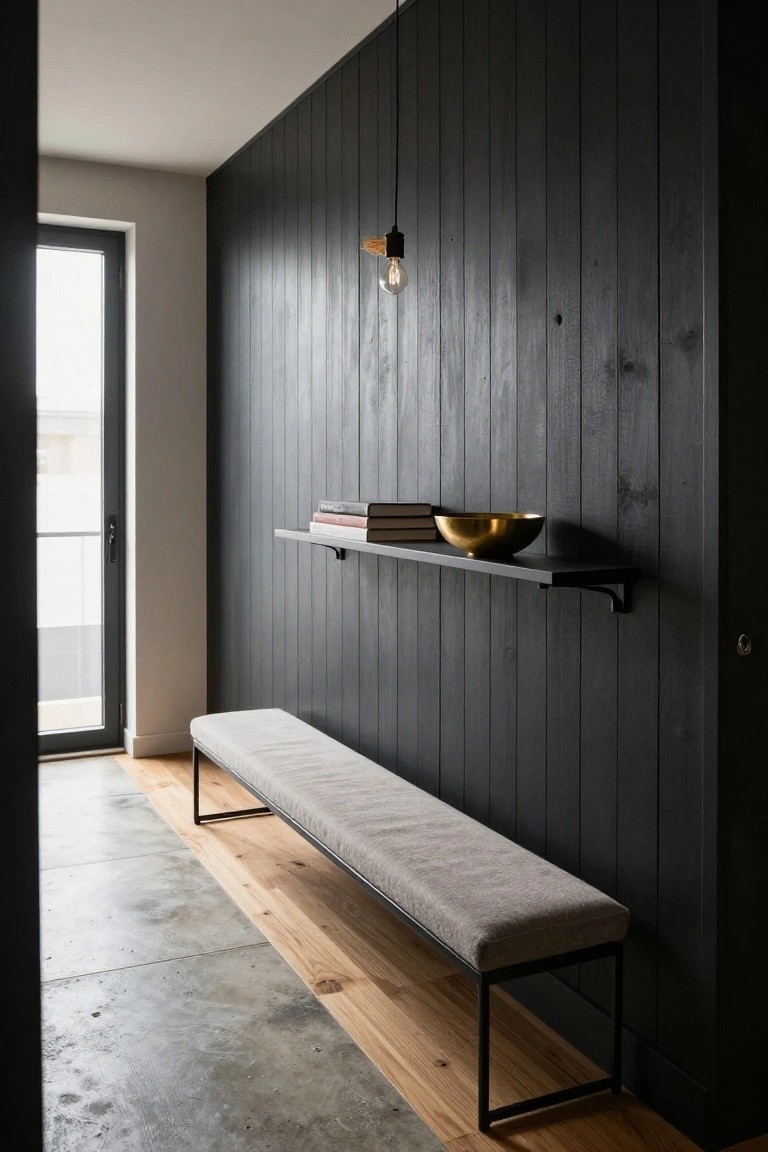
A dark wood accent wall gives a small entryway or hallway a clear sense of structure. The vertical lines add height and keep the space from feeling flat, while the deep tone brings in warmth that lighter walls often lack.
Run a bench along the base so the area gains a practical spot for shoes and seating. This works well in tight passages that need function without extra furniture crowding the floor.
Shiplap Walls For Narrow Entryways
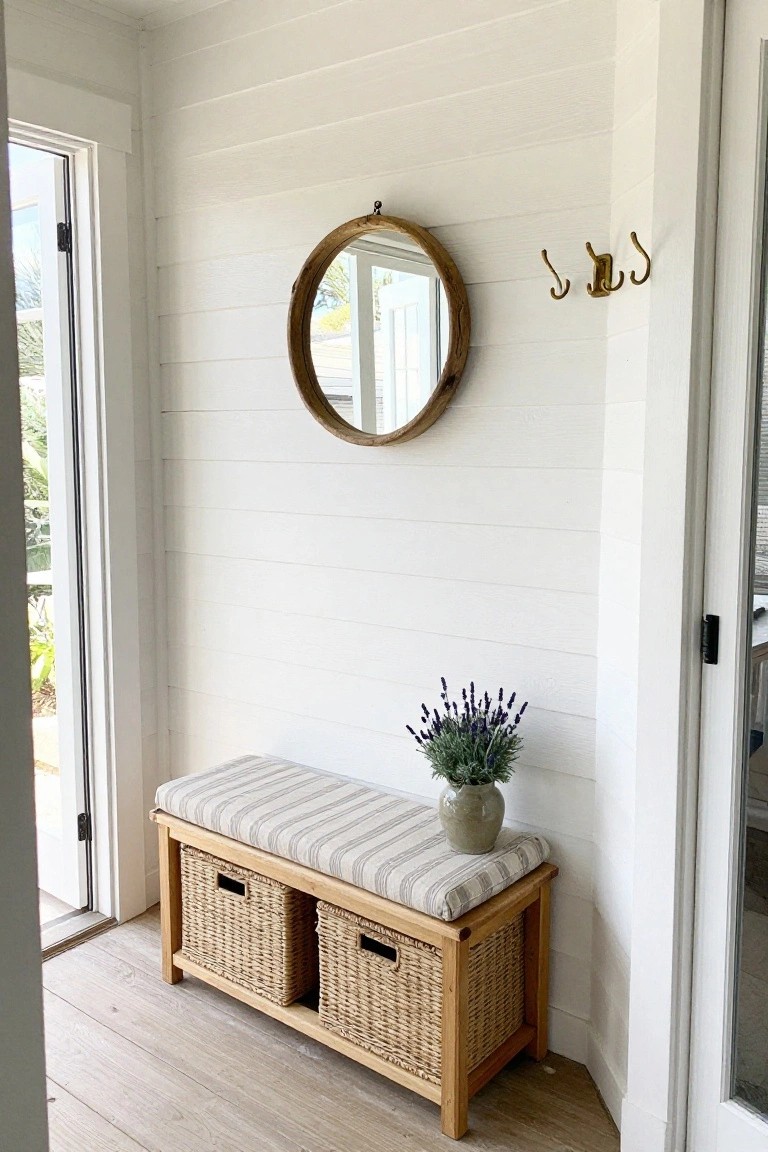
Shiplap gives a small entryway just enough texture without making the space feel closed in. Painting it white keeps the look light while the wood lines add quiet detail that stands out against plain drywall.
This works best in homes that already lean traditional or coastal. Pair the wall with low storage like a bench and a few hooks so the area stays useful without extra clutter.
Wood Paneling In Small Entryways
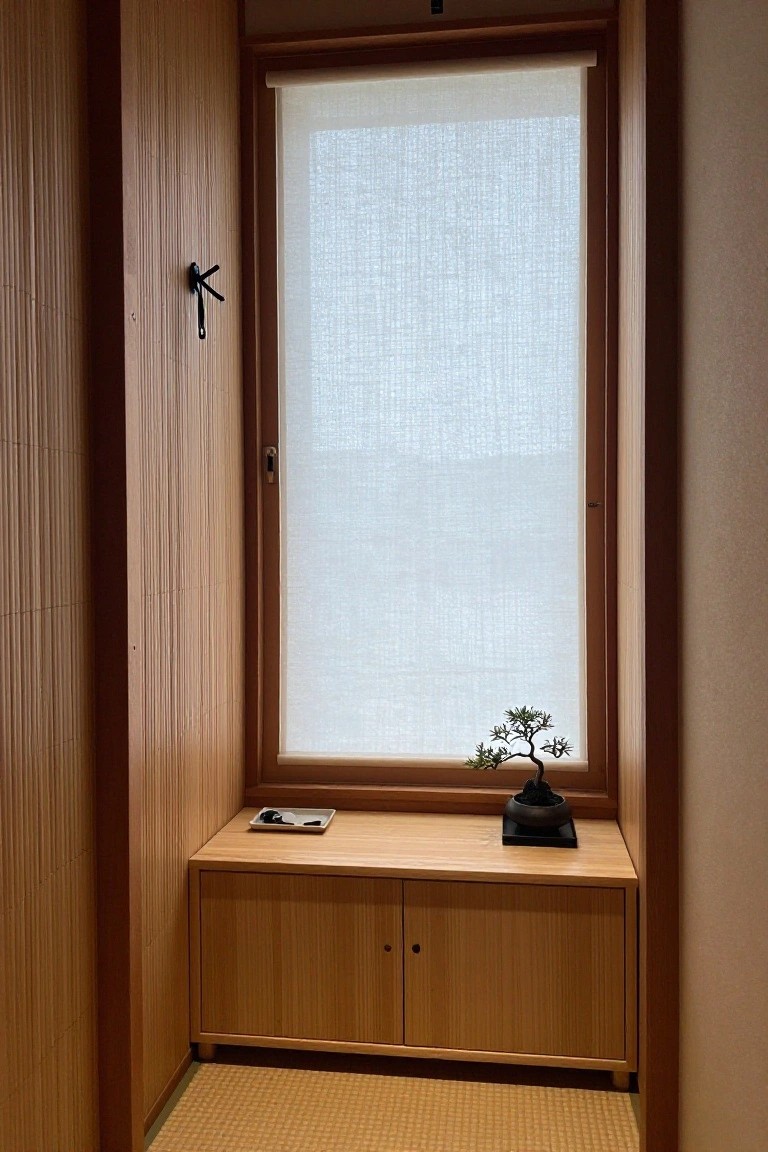
Vertical wood paneling works well in narrow entry spaces because it adds texture and warmth without making the area feel closed in. The natural grain brings some life to tight hallways while the vertical lines help the walls feel a bit taller.
This approach pairs nicely with low built-in cabinets below a window since it turns leftover wall space into storage. It suits smaller homes or older houses where every inch counts and you want the entry to feel practical rather than bare.
Herringbone Wood Walls for Small Entries
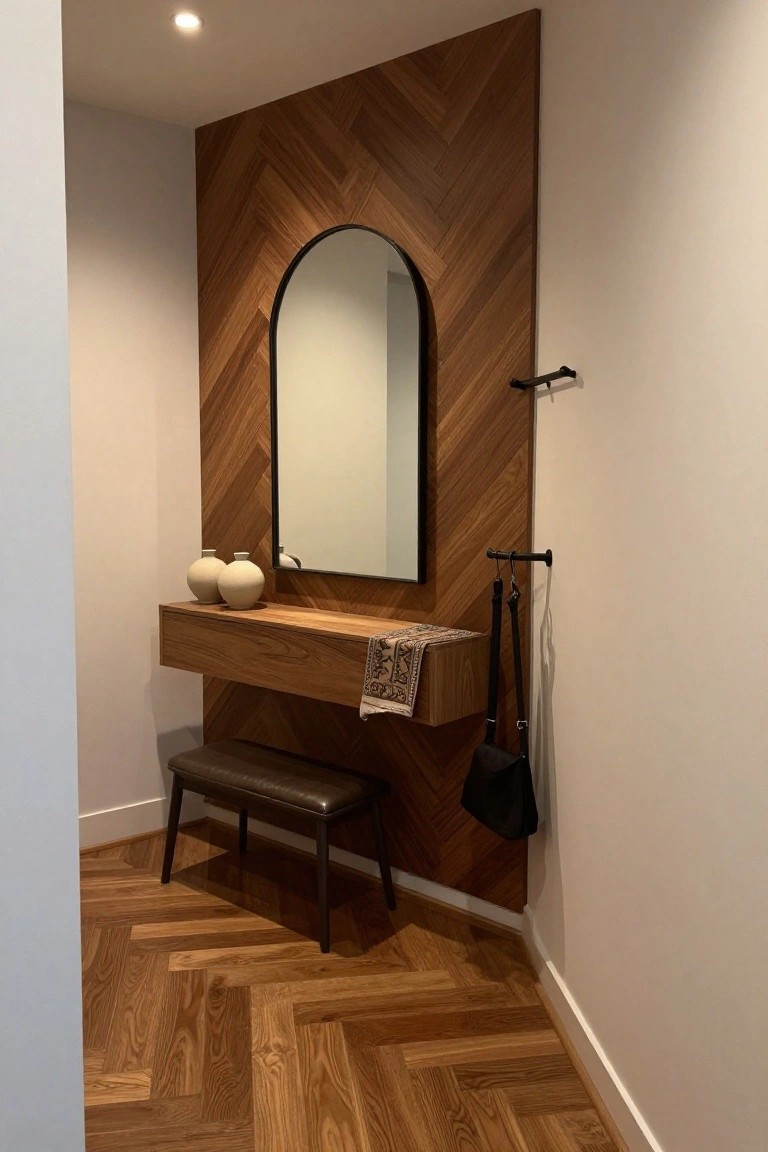
A herringbone wood accent wall gives a small entryway some texture and warmth without crowding the floor. The pattern adds visual interest while the vertical lines help the space feel a little taller.
This works best in narrow hallways or entry nooks where you want the wall to do the main job. Keep the rest simple with a floating shelf and basic seating so the area stays open and easy to move through.
Herringbone Wood Walls In Small Entries
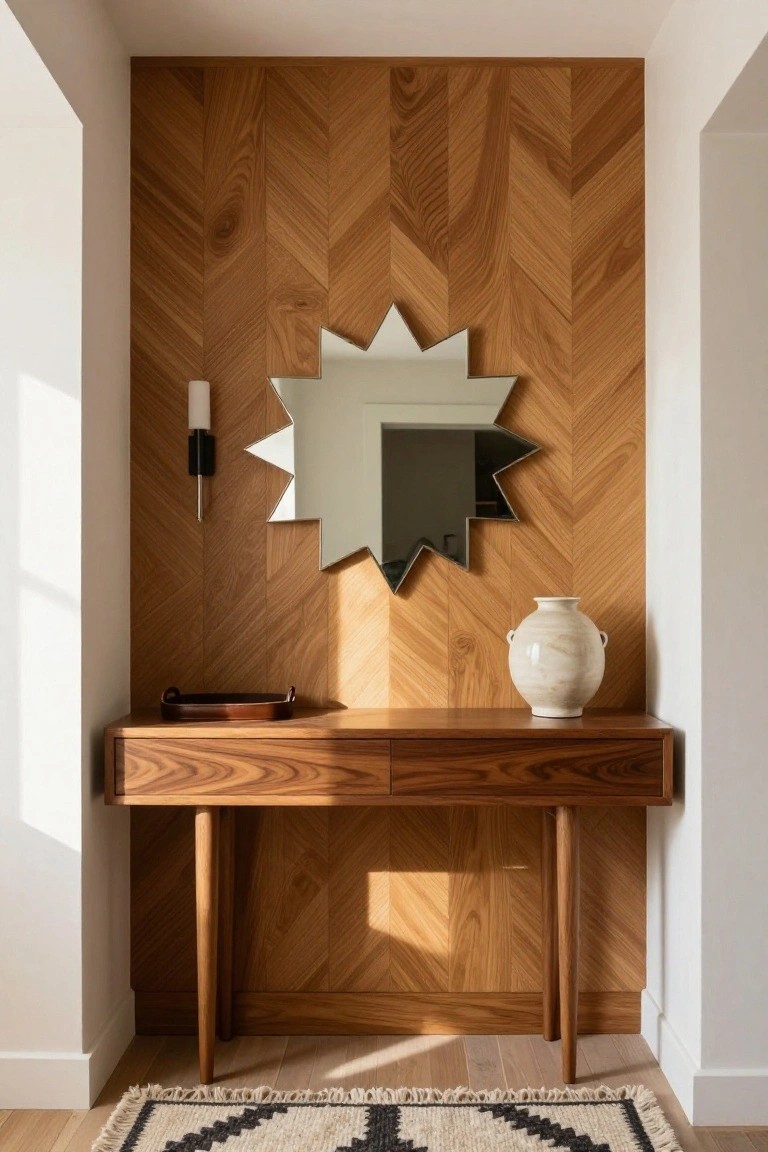
Herringbone wood walls give a small entry a clear focal point without adding clutter. The angled pattern catches light nicely and makes the space feel more finished than a flat wall would.
This approach works well in narrow hallways or entry nooks where you want warmth but still need the area to feel open. Keep the rest of the room simple with a low console and minimal accessories so the wood stays the main feature.
Wood Accent Wall With Hooks For Entry Storage
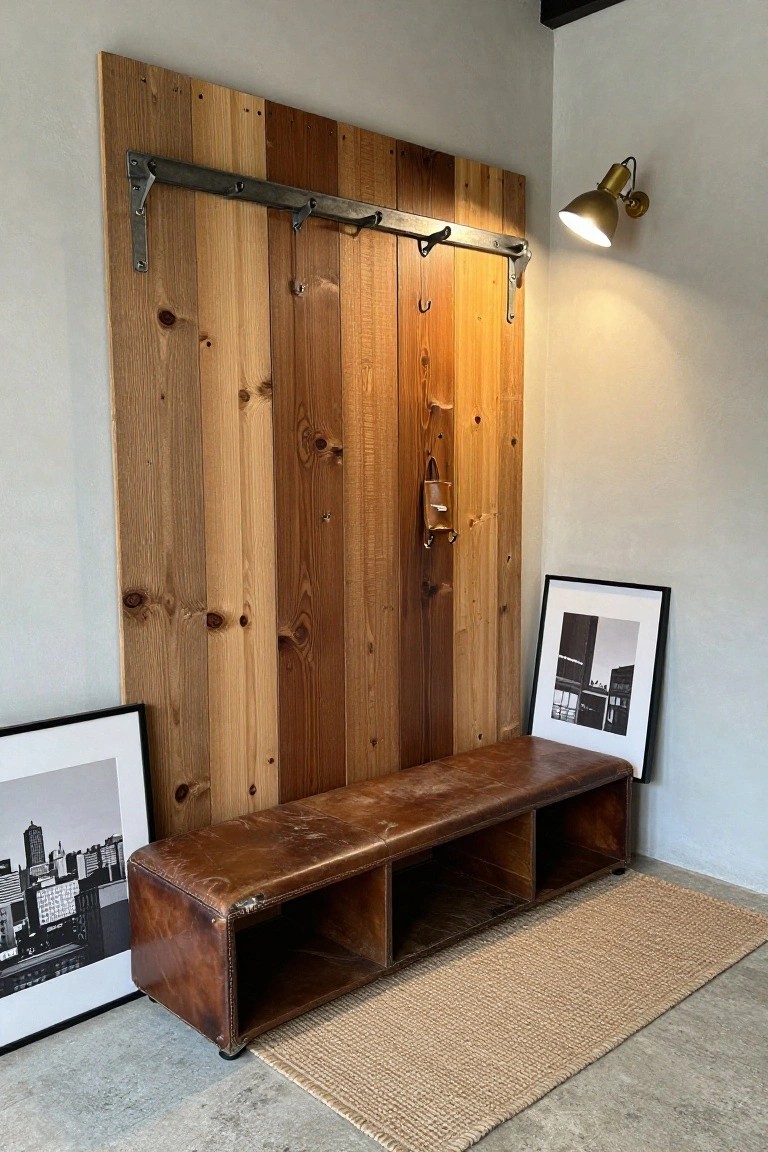
A wood accent wall gives a small entryway some warmth while also creating a spot to hang everyday items. Mounting a rail with hooks along the wood keeps coats, bags, and keys off the floor without adding extra furniture.
This setup works best in narrow hallways or entry areas where space is tight. Choose a simple metal rail that matches the wood tone so the hooks blend in and stay easy to use.
Wood Accent Walls With A Console For Everyday Storage
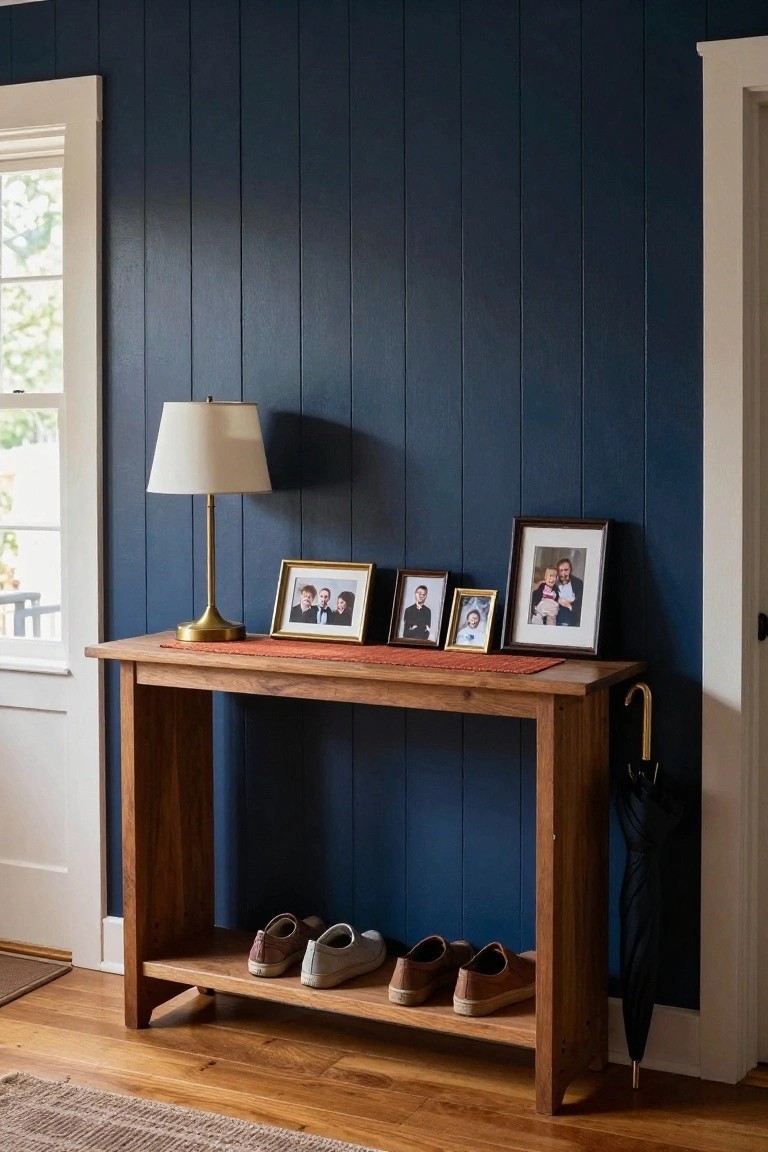
A wood accent wall works especially well in a small entry when you pair it with a simple console that has an open lower shelf. The shelf keeps shoes and daily items off the floor without adding extra furniture that would crowd the space. Darker wood tones on the wall also make the console stand out while still feeling connected to the rest of the room.
This setup suits narrow hallways or entryways in older homes where you need function without blocking the path. Choose a console with a lower shelf deep enough for boots and sneakers, and keep the top surface clear except for a lamp and a few small items. Avoid overcrowding the wall with too many frames if the hallway already feels tight.
White Shiplap in Small Entryways
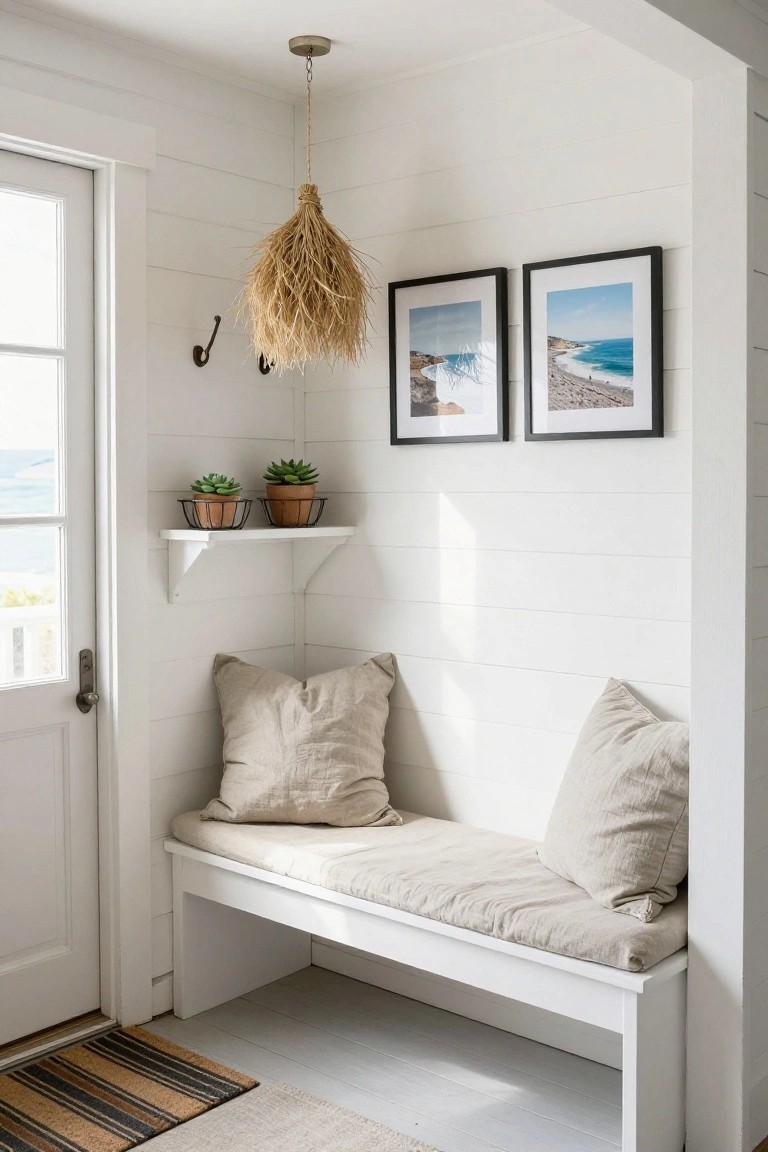
White shiplap gives a small entry a bit of texture while still keeping the space bright. The horizontal lines help reflect light around the room, which stops the walls from feeling flat or closed in.
This approach works best in homes that already lean toward simple or coastal styles. Pair it with a built-in bench if you need seating, but avoid crowding the wall with too many hooks or shelves.
Dark Wood Walls for Entryway Storage
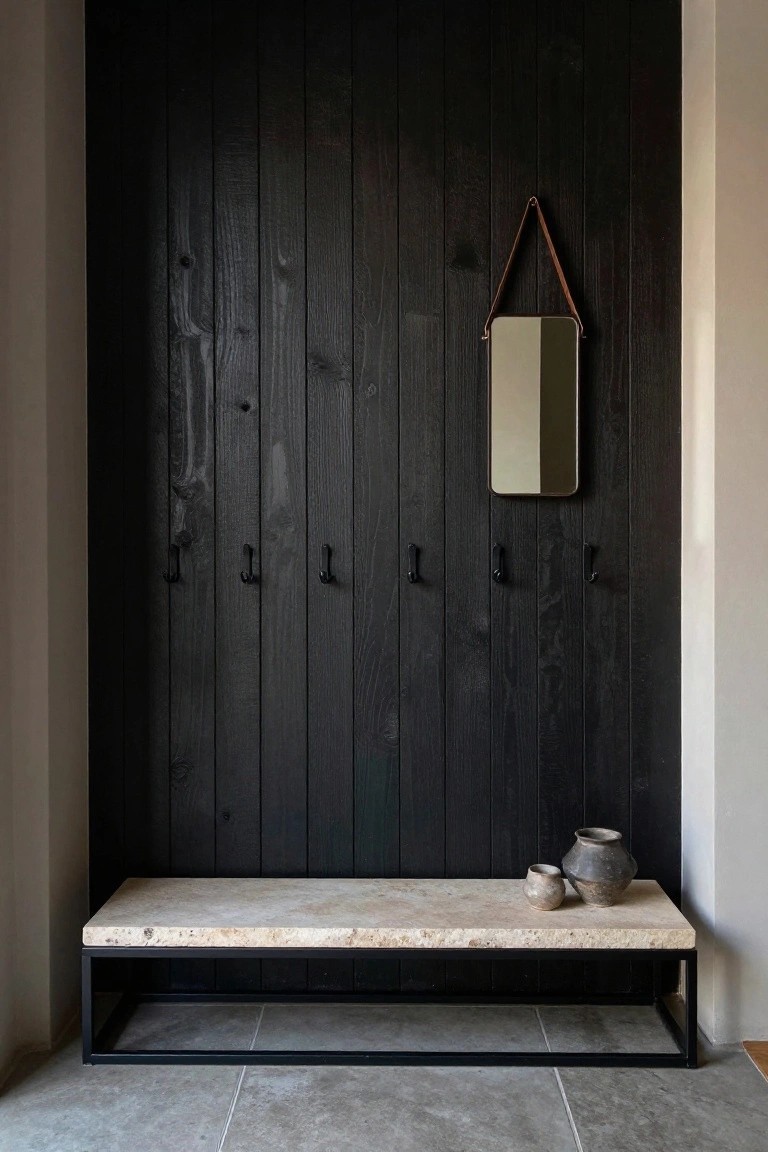
A dark wood accent wall works well in small entryways because it turns one surface into a practical spot for daily use. The vertical boards give the space structure, and adding hooks along the lower half keeps coats and bags off the floor without needing extra furniture.
This setup suits narrow hallways or foyers in homes that need simple organization. Place the hooks at a comfortable height and add a bench or ledge below so the area stays functional without feeling crowded.
Wood Paneling With A Built-In Bench
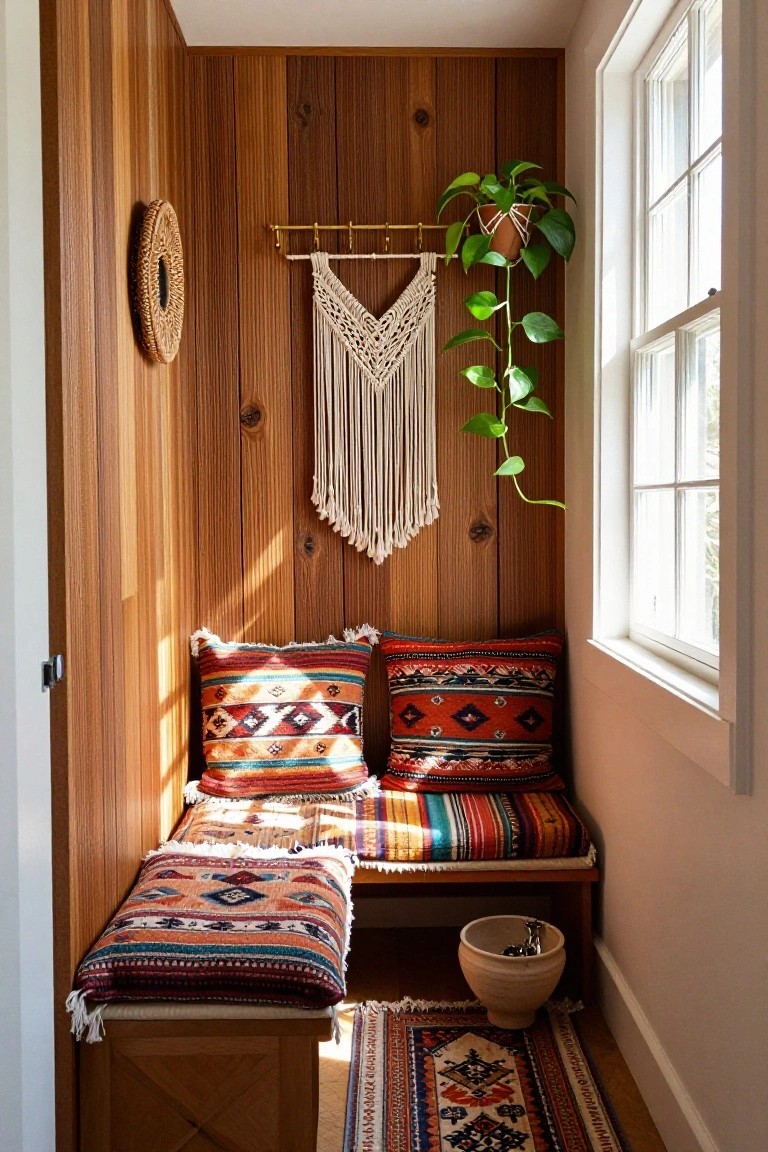
A wood accent wall can turn a narrow entry or hallway into something that feels more finished and welcoming. The vertical boards add texture without crowding the space, and pairing them with a simple bench below gives you a place to sit while pulling on shoes or dropping bags.
This setup works especially well in small homes or apartments where every inch needs to earn its keep. Keep the bench low and the cushions simple so the wood stays the main feature. Just watch the scale. Too many patterns on the bench can start to compete with the wall itself.
Vertical Wood Paneling
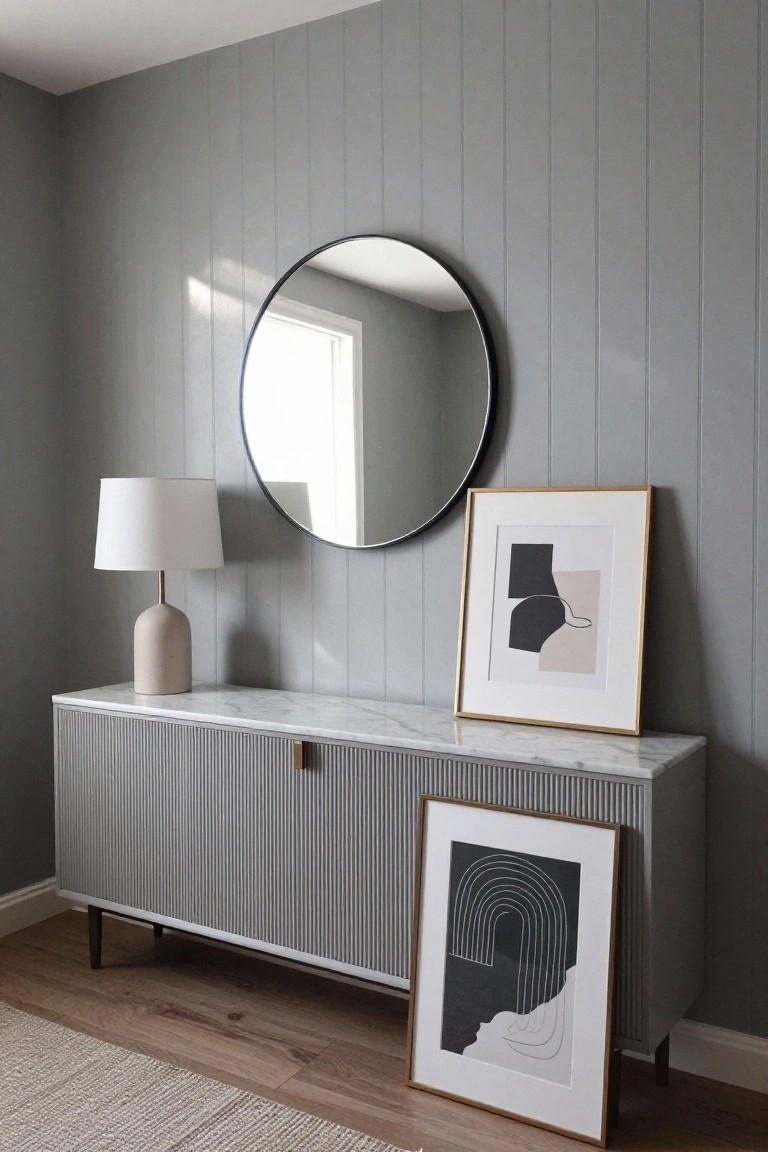
Vertical wood paneling brings quiet texture to a plain wall without crowding a small entryway. The lines run up and down, which can make the space feel a little taller while still keeping the look simple and calm.
Paint the panels the same color as the surrounding walls if you want the effect to stay subtle. This works best in narrow hallways or entry spots where you already have a console or bench against the wall and do not want to add much else.
Built-In Wood Storage For Narrow Entries
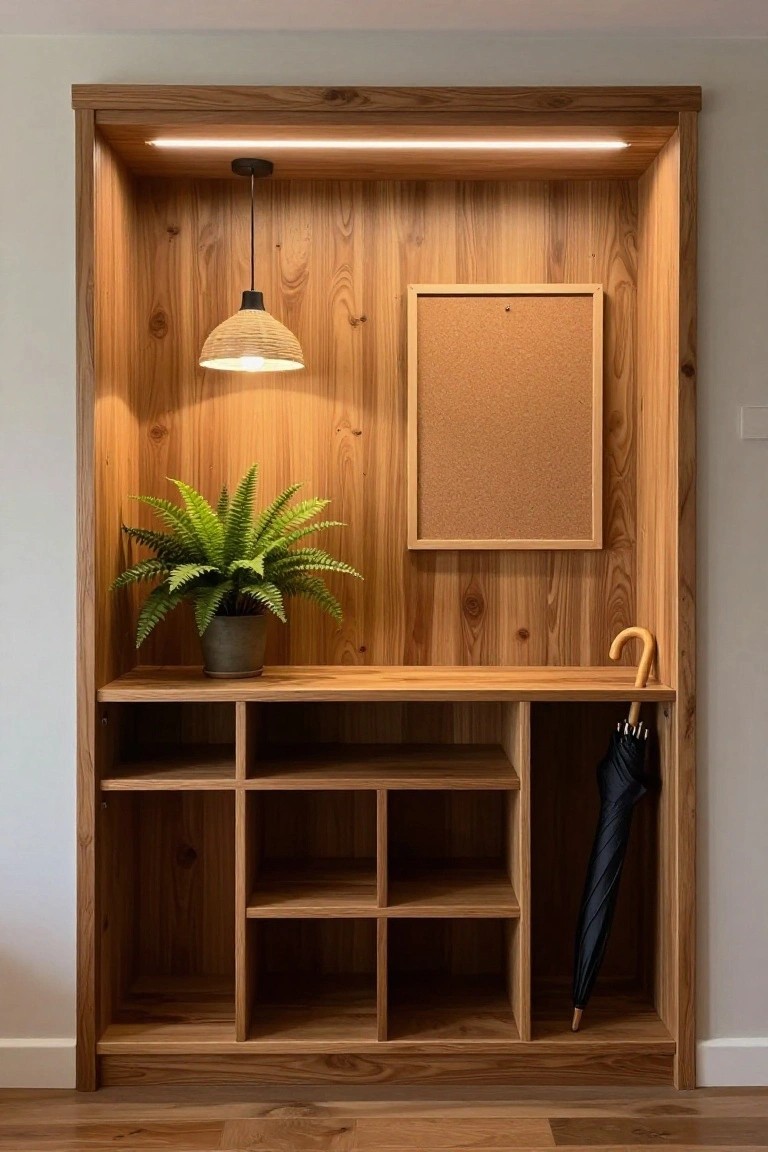
A recessed wood unit like this turns an empty wall into practical storage that fits right into a small entry. The cubbies hold everyday items while the top surface gives a place to drop keys or mail without adding freestanding furniture.
This approach suits homes where the entry opens straight into living areas and floor space is tight. Keep the overall depth shallow so the unit does not block traffic, and choose a wood tone that blends with existing trim.
Wood Wainscoting In Small Entryways
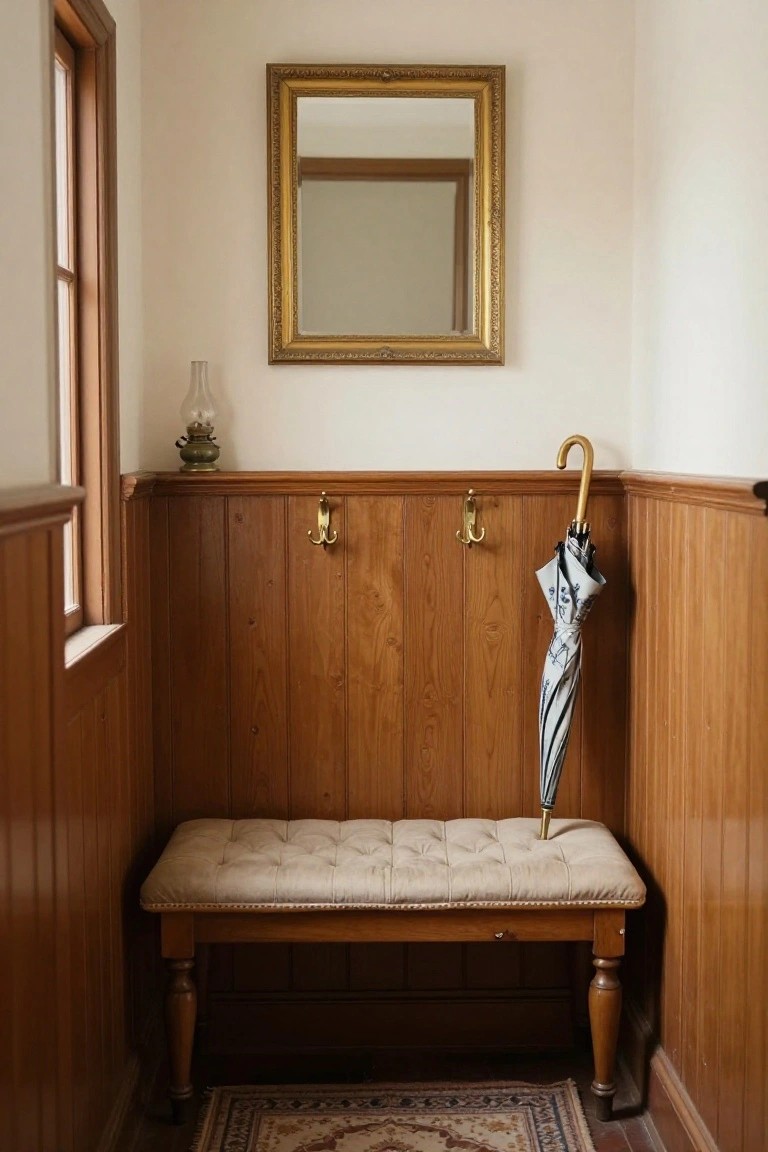
Wood wainscoting gives a small entryway some structure and warmth without crowding the space. The panels protect the wall from daily wear while the wood grain keeps things from feeling too plain.
Run the wainscoting about waist high and add a simple bench in front of it. This works best in older homes or narrow hallways where you need both seating and a place to store shoes or bags.
Built-In Storage In A Wood Accent Wall
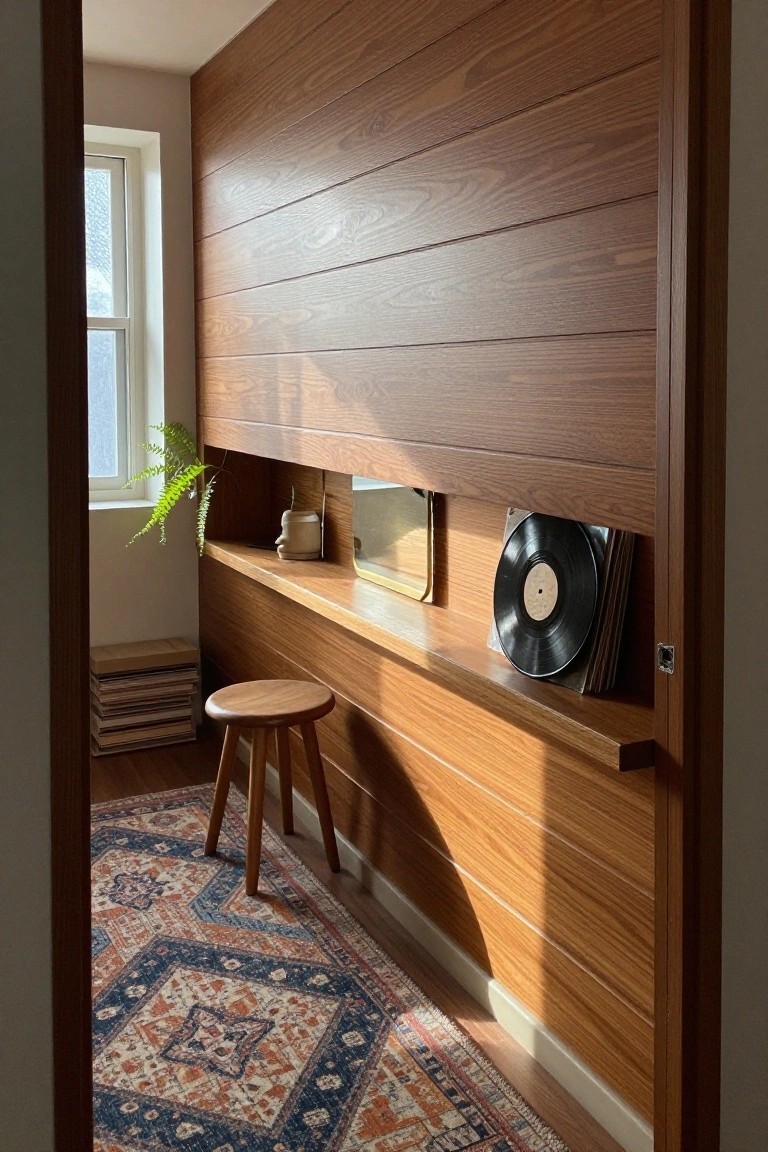
A wood accent wall gains real purpose when you add recessed shelves into the design. This keeps the surface flat and clean while giving you a place to store or display a few everyday items without crowding the floor.
The idea works best in narrow entryways or hallways where every inch counts. Keep the shelves shallow and line them up with the wall panels so the whole thing still reads as one surface rather than a set of separate pieces.
Vertical Wood Paneling in Small Entryways
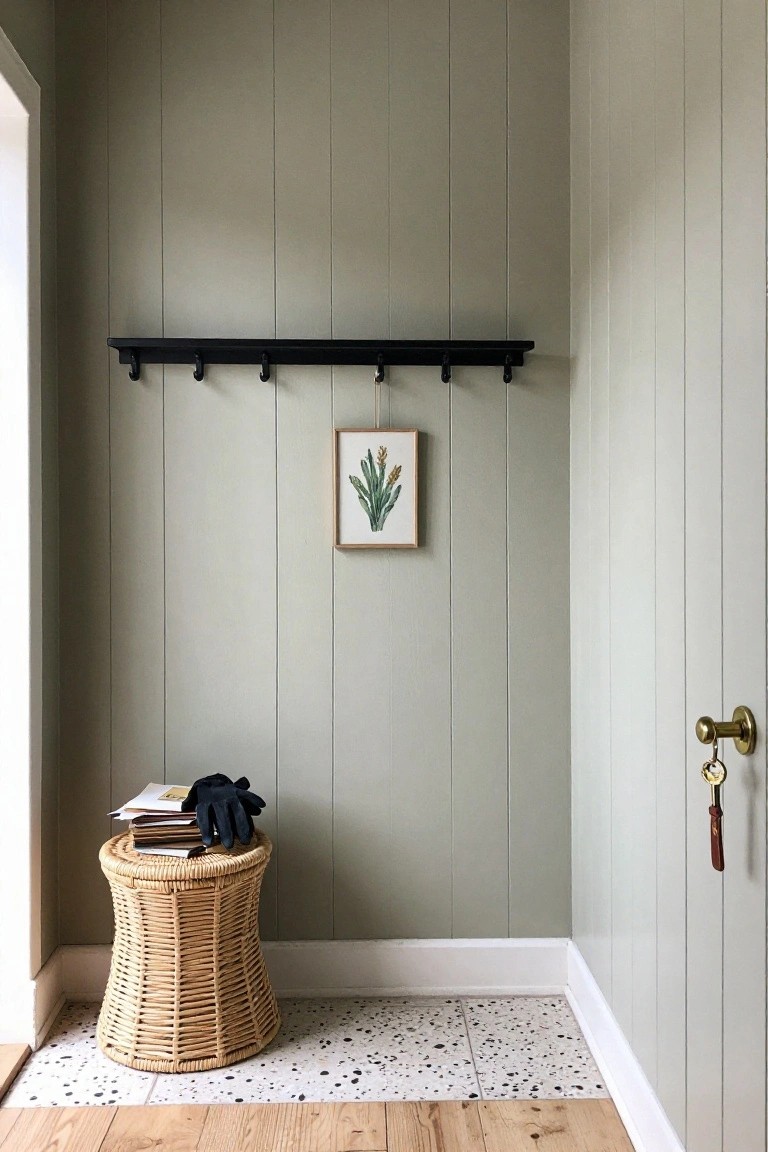
Vertical wood paneling gives a small entry or hallway just enough texture to feel finished without crowding the space. A soft paint color keeps it light so the narrow area does not feel tighter than it already is.
This works well in older homes or simple layouts where the entry sees daily traffic. Run the paneling from floor to ceiling on one wall only, then add a few hooks for coats and bags so the rest of the room stays open and easy to move through.
Wood Furniture for Narrow Hallways
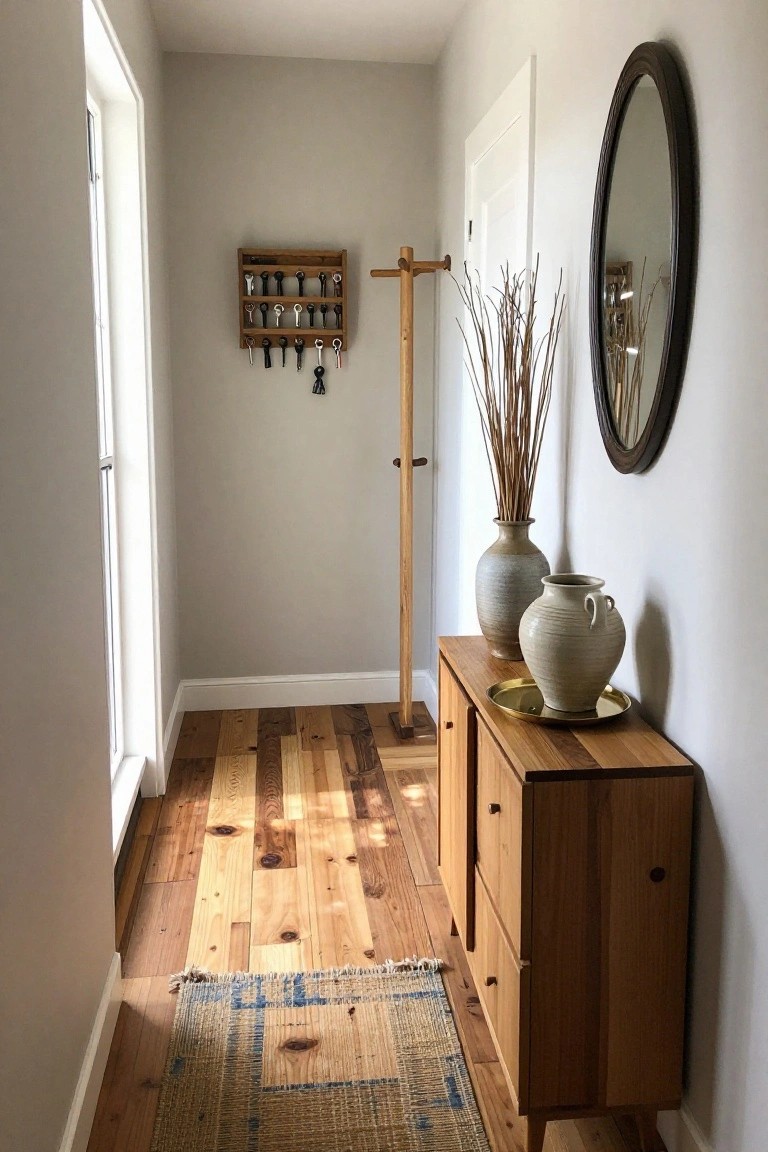
A low wooden sideboard gives a small hallway both storage and a bit of natural material that plain walls cannot provide. The grain and tone add warmth without needing extra paint or wallpaper.
This works best in older homes or apartments where the hallway is tight and mostly used for coming and going. Choose a piece that stays slim so it does not crowd the walkway, and keep the rest of the space simple so the wood can do its job.
Vertical Wood Walls With Built-In Seating
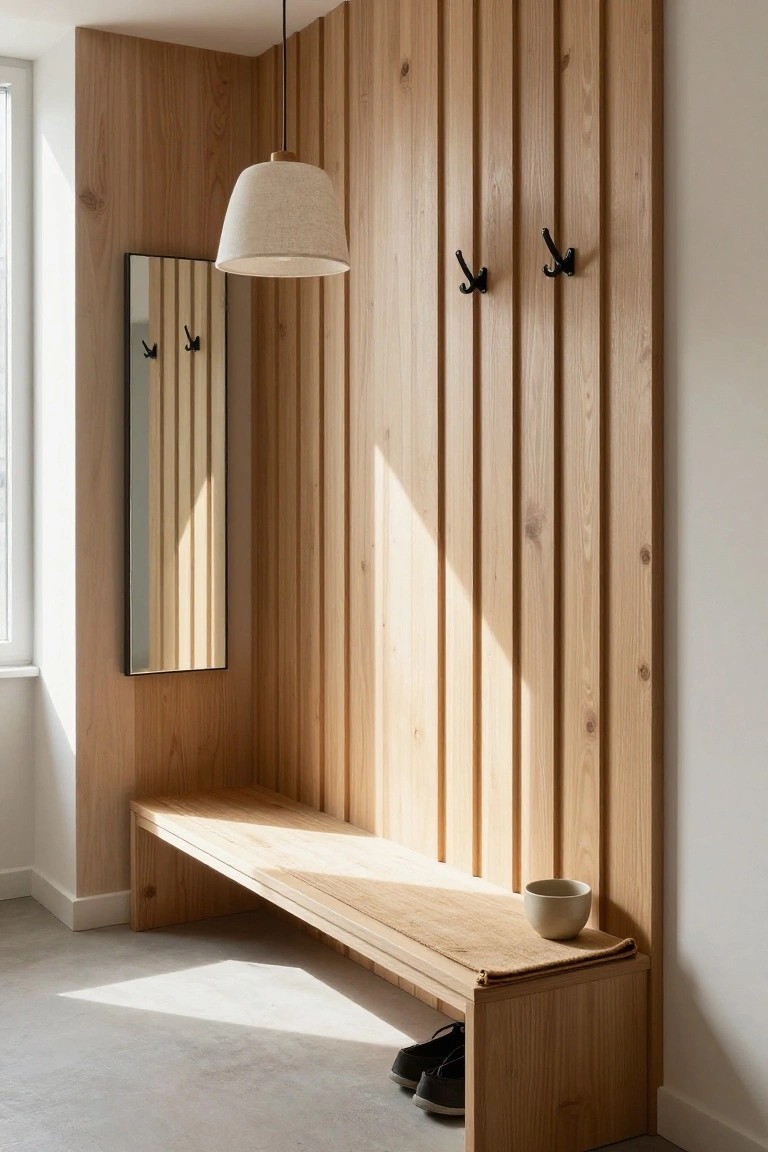
Vertical wood paneling gives a small entry a clean, structured look while making the space feel taller. The planks run from floor to ceiling and create a simple backdrop that still feels warm and practical.
A low bench built along the base adds a place to sit and store shoes underneath without taking up extra floor space. This works especially well in narrow hallways or compact foyers where you need both seating and storage in one spot.
Frequently Asked Questions
Q: How do I choose wood for a hallway that gets banged up a lot?
A: Go with a hardwood like oak that holds up to knocks better than soft pine. Apply a tough topcoat after installing to protect the surface. This keeps the wall looking fresh even with daily use.
Q: Can vertical boards make my low ceiling feel taller?
A: Yes they draw the eye upward and add height to the room. Space them evenly for a clean look that works in tight entryways.
Q: What if I want to remove the accent wall later without a big mess?
A: Use removable panels or a floating system instead of gluing everything down permanently. That way you can take it off and patch the wall easily if your style changes.
