

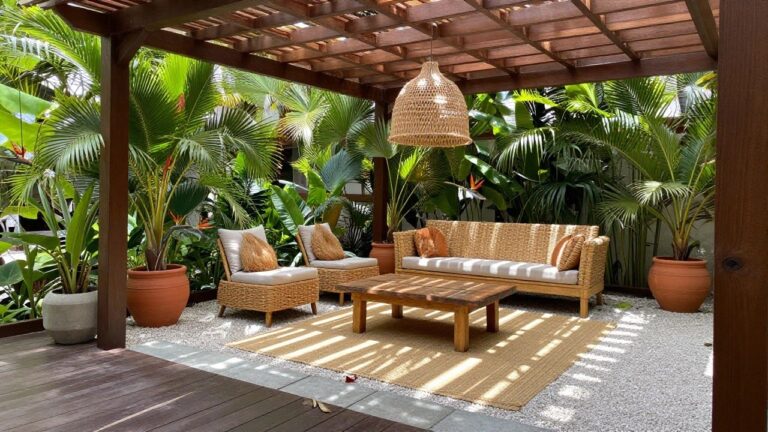
When planning an outdoor space I usually start by thinking about how the wood will handle moisture because that choice affects everything from maintenance to comfort over time.
Tropical backyard retreats often rely on simple structures that create shade without closing off the view to the rest of the yard.
Not every arrangement stays practical once the season changes.
I tend to test small versions of these setups first to see how they feel during regular evenings outside.
The ones that allow for flexible seating arrangements usually end up getting used the most in my experience.
A Wooden Pergola for Simple Shade
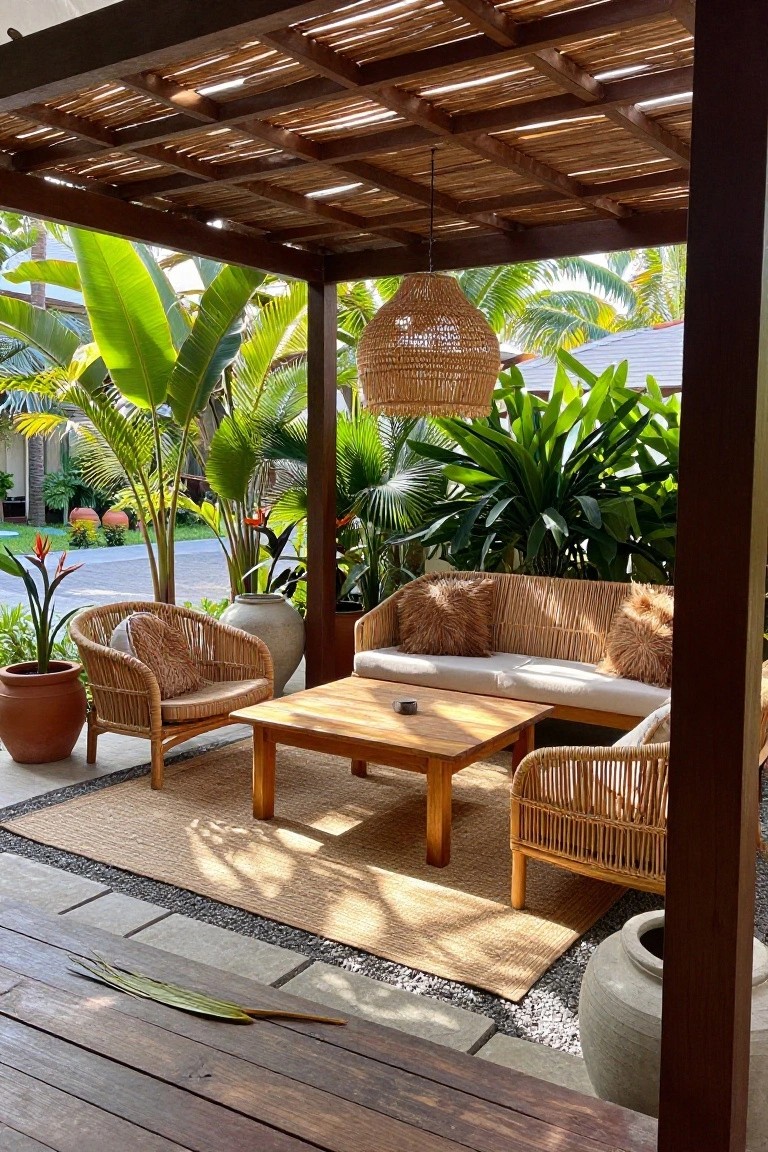
A wooden pergola overhead gives an outdoor seating area a clear sense of place without making it feel enclosed. The slatted top lets some light through while cutting the direct sun, which works especially well in a warm climate where you still want to enjoy the garden views.
This kind of structure suits homes with decent backyard space and a mix of wood and natural materials. Keep the furniture low and simple so the pergola stays the main feature, and make sure the posts are set on a solid base if the ground is uneven.
Wrap a Bench Around Your Outdoor Fire Pit
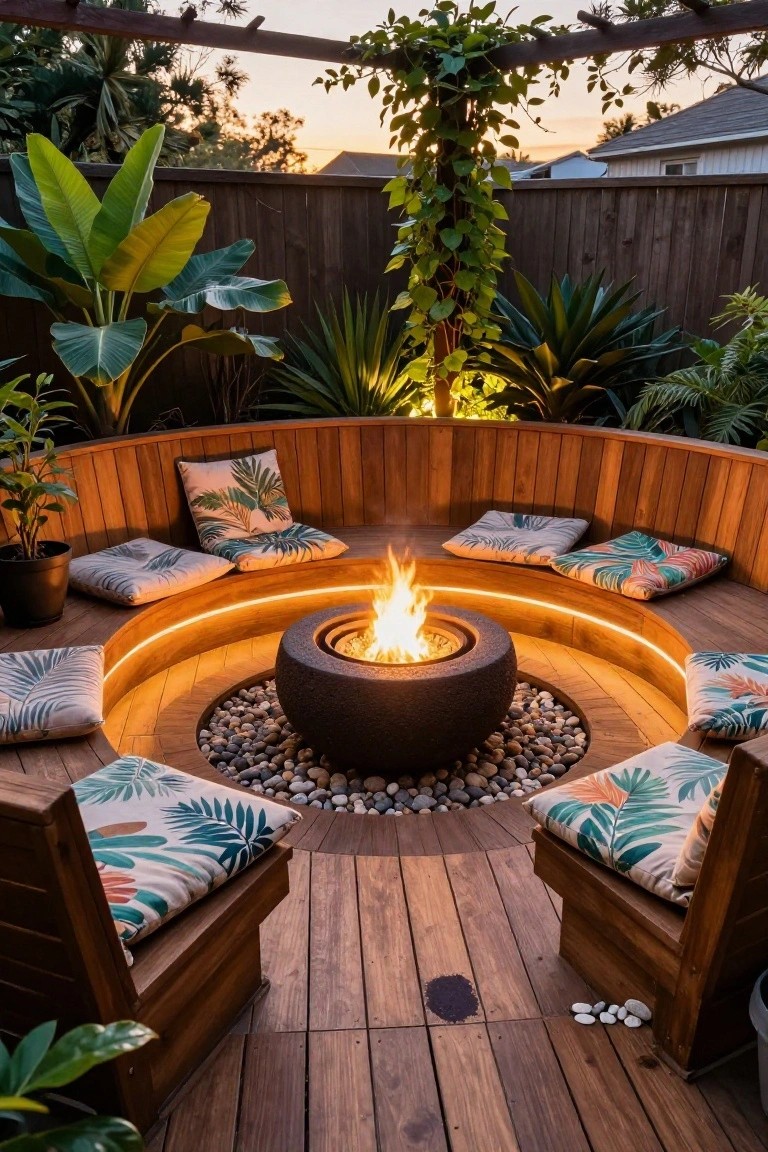
A curved bench built right into the deck makes the fire pit the natural center of the space. Everyone can sit close without pulling up extra chairs, and the layout keeps things simple and contained.
This works best on wooden patios or decks where you have a bit of open room in the middle. It suits homes that already lean tropical or casual, but keep the curve wide enough so people can still walk around the outside comfortably.
A Daybed with Canopy on the Deck
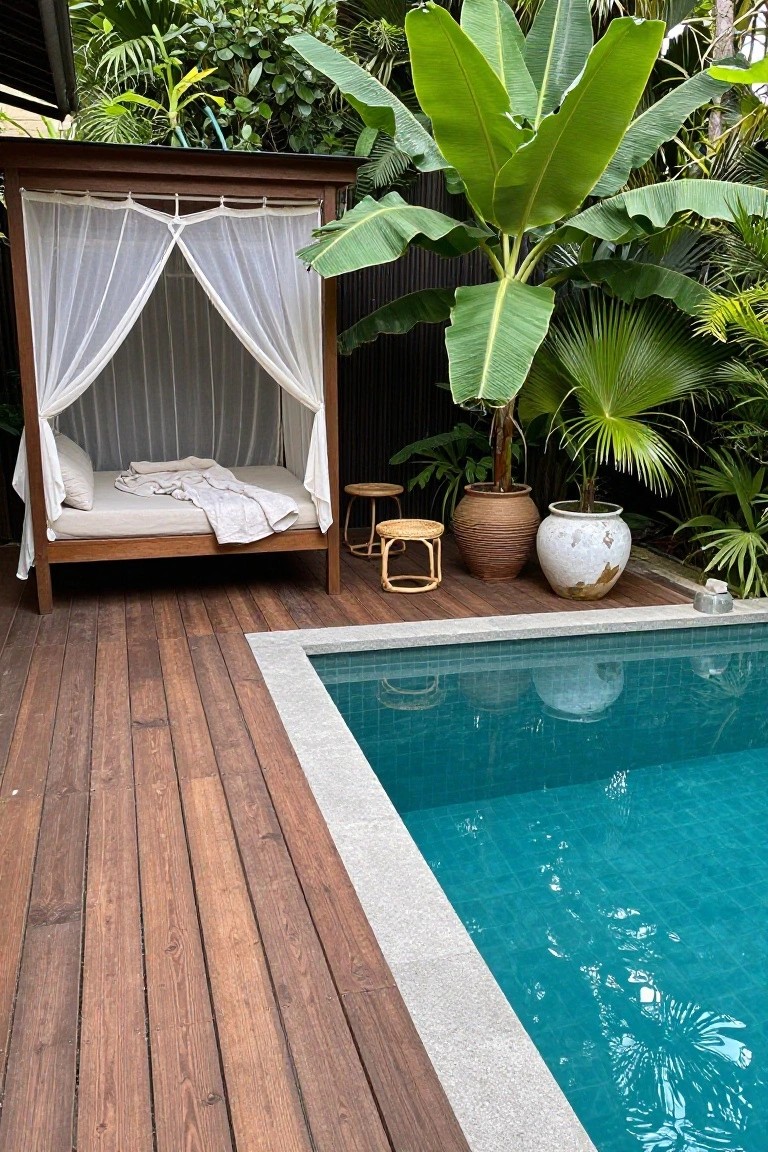
A canopied daybed gives the deck a clear spot for resting without needing to go inside. The wood underfoot stays warm under bare feet and pairs easily with the water right beside it. Many people like how the curtains can be pulled for a bit of shade or left open when the sun is lower.
This setup works best on decks that already sit close to a pool or water feature. Keep the bed frame simple in wood and use light fabric so it does not block the view. Make sure there is room to walk around it so the space still feels open on busy days.
Thatched Roof Over an Outdoor Dining Table
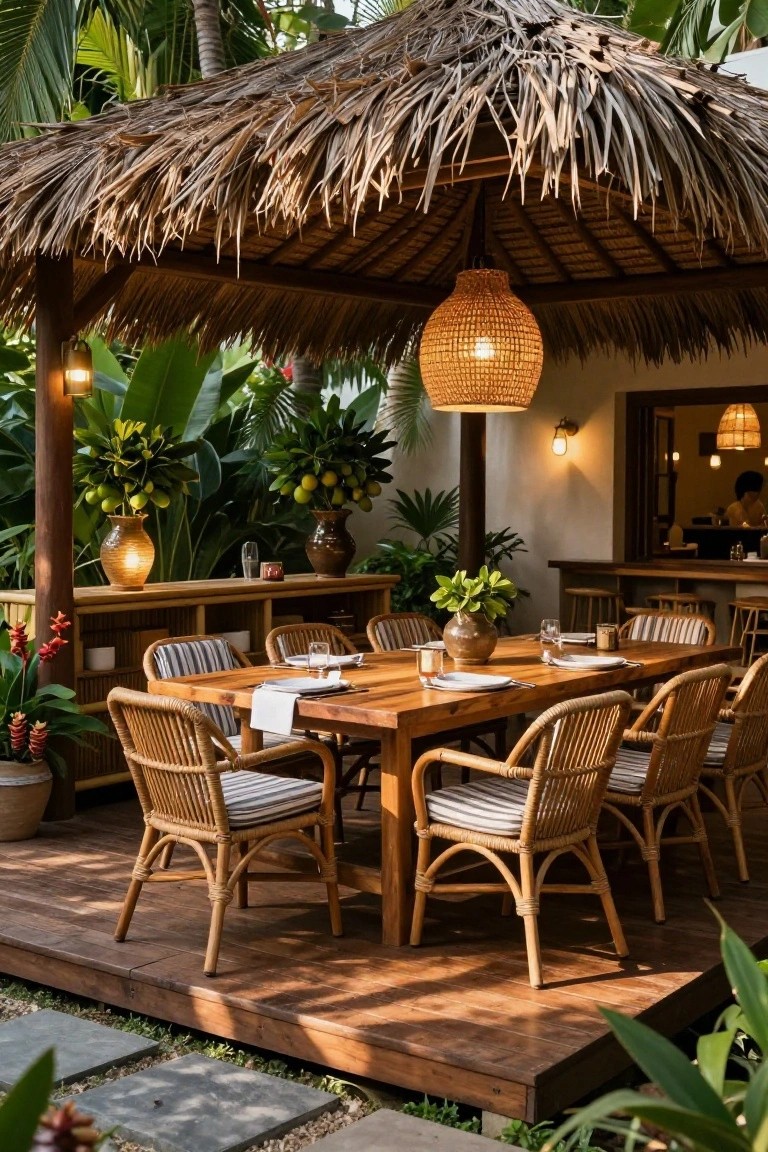
A thatched roof gives solid shade while still letting a little breeze through, which makes long meals outside feel more comfortable. It pairs naturally with a wooden deck and simple rattan seating so the whole setup stays light and relaxed instead of heavy.
This works best in warm climates where you want to eat outside most of the year. Keep the roof structure fairly open on the sides so the space does not feel closed in, and use one or two woven lights underneath for evenings.
Hang Vines Along a Wooden Screen
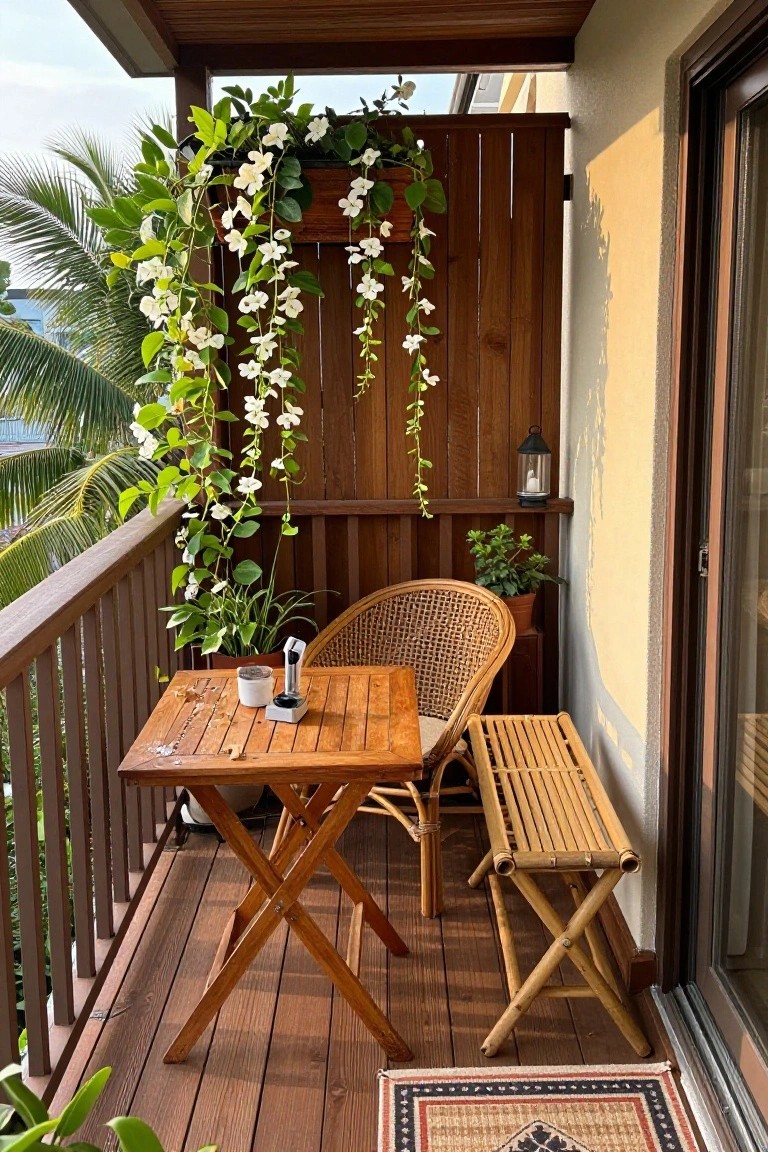
One easy way to give a wooden patio that tropical feel is to let vines hang down from a simple wood screen or panel. The greenery softens the straight lines of the wood and adds layers of leaves and flowers without crowding the floor space.
This setup works best on balconies or small decks where you want a bit of privacy and shade. Choose fast-growing vines that can handle your climate, and let them trail from a mounted planter so they drape on their own.
A Long Wooden Island for Outdoor Kitchens
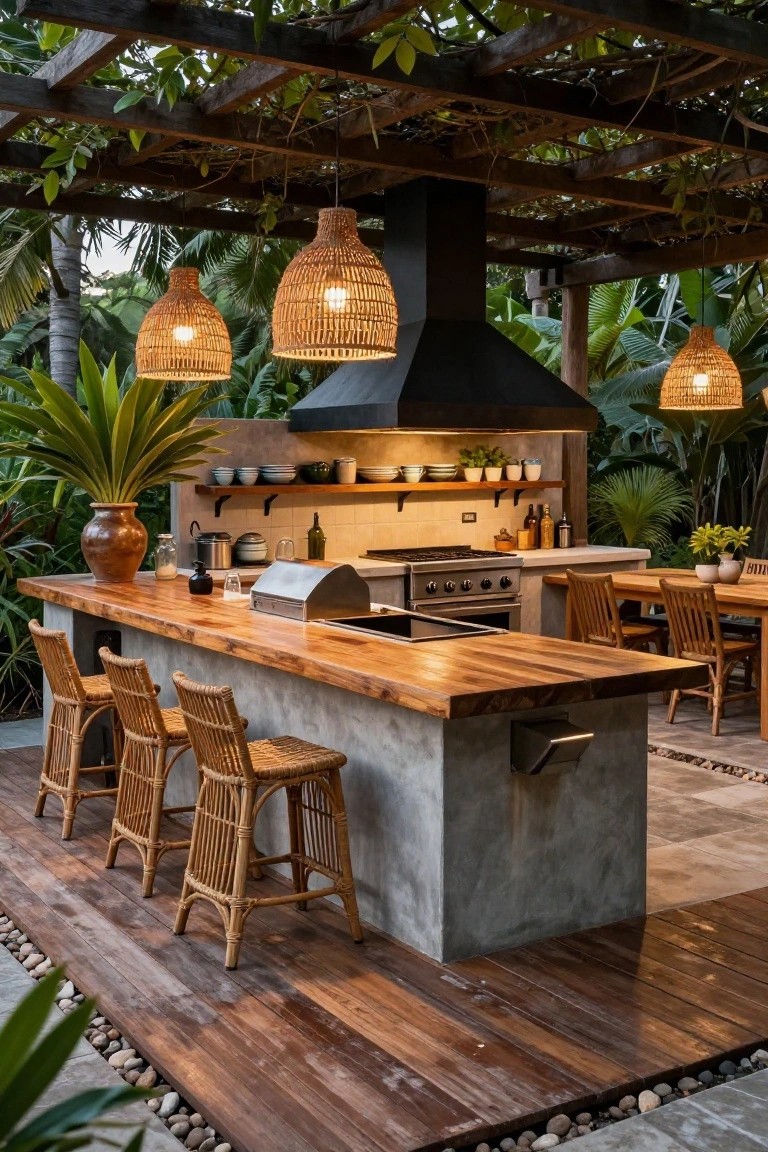
A long wooden island gives you room to prep food on one side and pull up stools for guests on the other. It turns the cooking area into the main spot where people gather instead of staying stuck behind a counter. The thick wood top feels warm and natural next to the concrete base, which holds up better in wet weather.
This works best on a deck or patio that already has a pergola or some overhead cover. Use it in a tropical-style backyard where you want the kitchen to blend with the wood decking and surrounding plants. Treat the wood well so it handles sun and rain without warping.
Add a Ceiling Fan Over the Deck
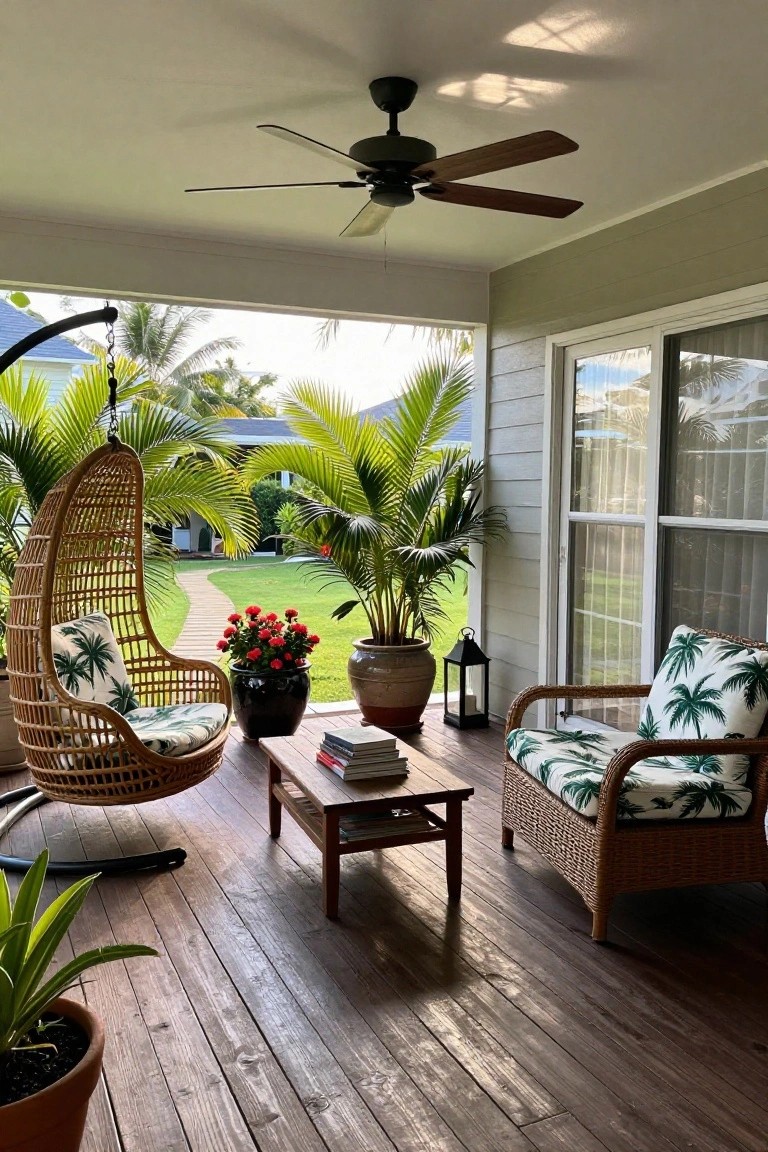
A ceiling fan changes how usable a wooden patio feels in warm weather. It keeps air moving so the space stays comfortable instead of turning stuffy under the roof.
Mount it centered above the main seating area and choose a simple dark finish that blends with the ceiling. This setup works on most covered decks and helps extend the season without adding much cost.
Adding a Pergola to a Wooden Deck
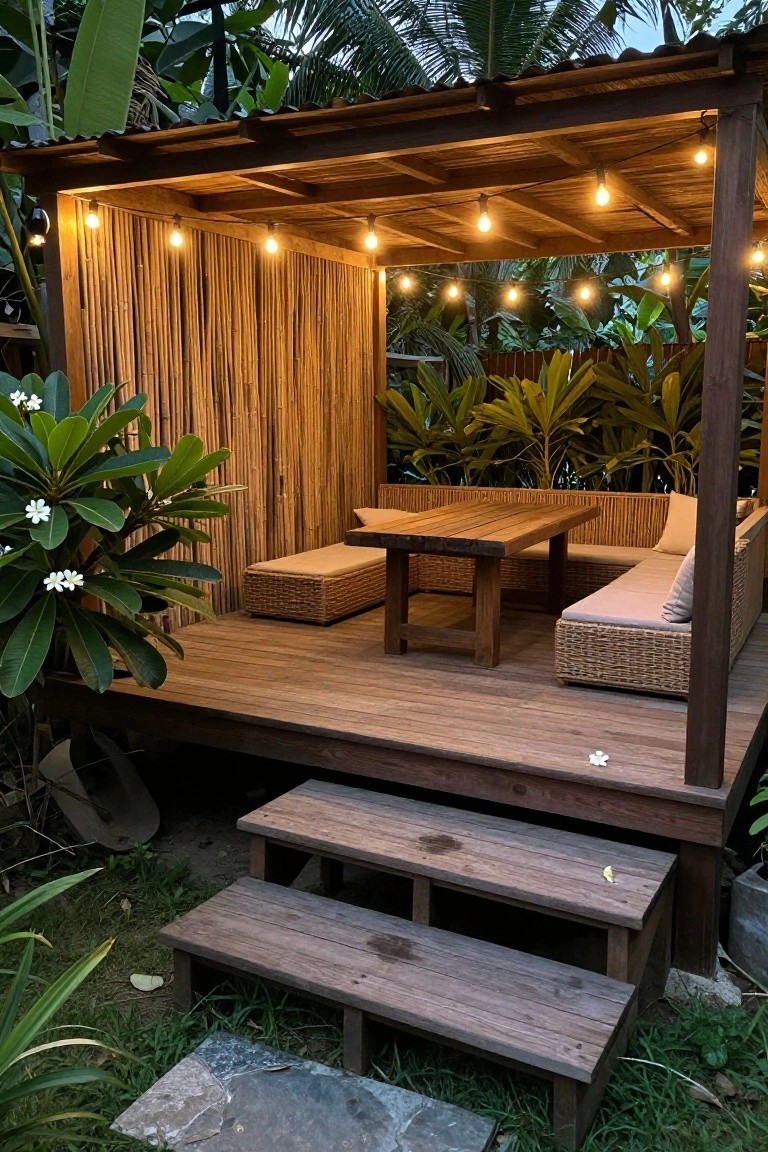
A pergola gives a deck a clear sense of structure without closing it in. It marks the space as an outdoor room, offers partial shade, and creates a place to hang lights so the area stays useful after dark.
This setup works best on raised decks in warm climates where you want a bit of cover but still need airflow. Keep the frame simple, use weather-treated wood, and add string lights along the beams. Skip heavy curtains or solid roofing if you want the tropical feel to stay open.
Louvered Wood Screens For Patio Privacy

Wooden louvered panels work well when you want an outdoor seating area to feel more enclosed without building full walls. They block direct views from neighbors while still letting air move through, which keeps the space comfortable in warm weather. The horizontal lines also add texture that pairs nicely with simple wood furniture.
This setup works best in smaller backyards or side yards where you need a bit of separation from the rest of the garden. Place the screens along two or three sides of a corner bench arrangement, and keep the planting light so the wood stays the main feature. Just make sure the louvers can be adjusted or cleaned now and then.
Bamboo Screening For Simple Privacy
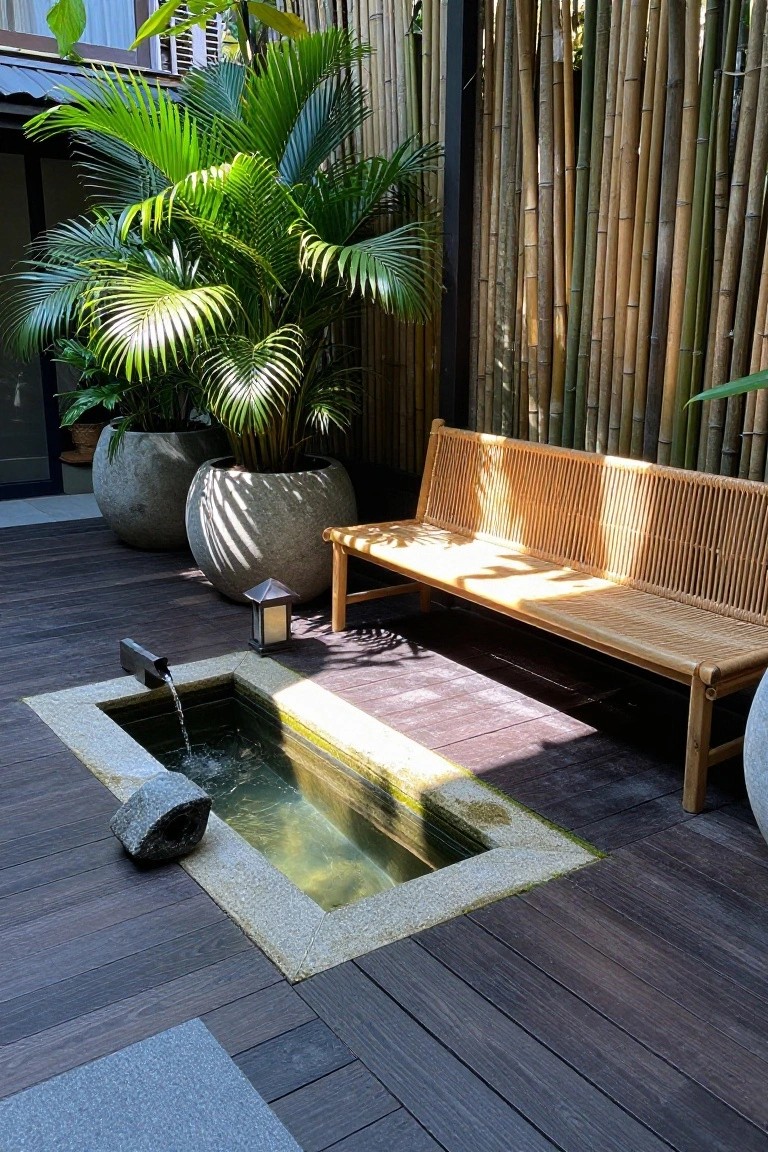
Bamboo screening gives a wooden patio a natural border without closing it in completely. It adds texture that matches the deck boards and keeps the space feeling open while still blocking unwanted views from outside.
This works best on patios that back up to other yards or streets. Set the screen along one or two sides, then add a simple bench in front of it so the whole area feels like a tucked-away spot rather than an open deck.
Fire Pit Seating on a Wooden Deck
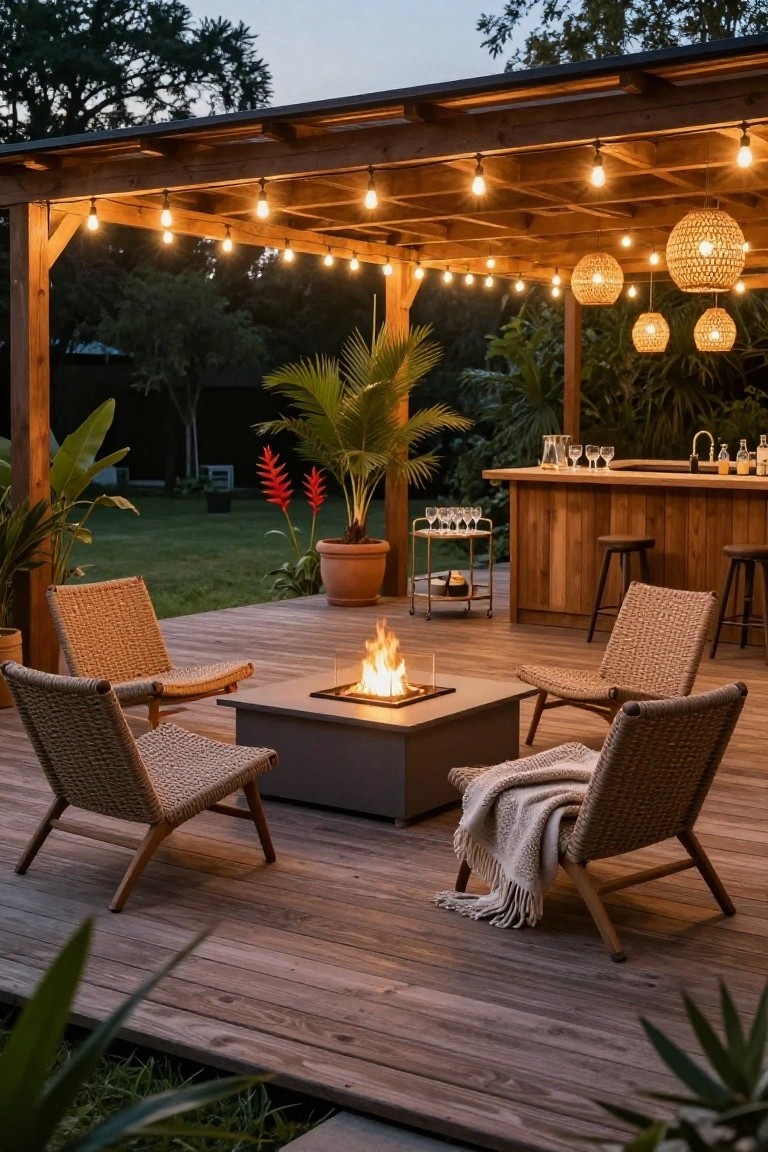
Putting the fire pit right in the middle of the seating makes the deck feel more like one usable space. The chairs can face inward so people stay close to the fire without needing to rearrange things later.
This works well on a deck that already has some overhead cover. String lights along the beams help keep the area comfortable once the sun goes down, and it suits homes where evenings outside happen often.
Create Shade with a Wooden Pergola
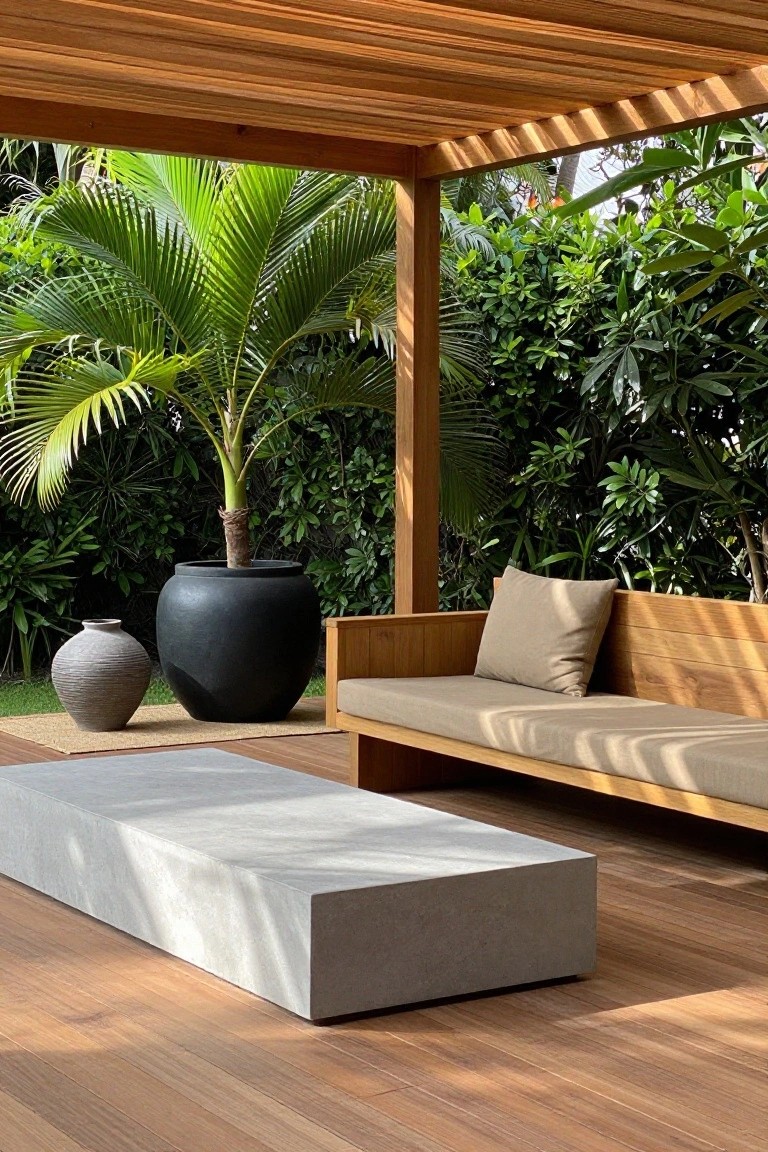
A pergola overhead gives the patio a clear sense of space without closing it in. The wood slats filter sunlight and keep the seating area comfortable even on bright days, which works especially well in tropical settings where you want to spend time outside.
This approach suits homes with existing garden growth around the edges. Keep the structure simple, use the same wood tone for any built-in seating, and let the plants do most of the softening. Just make sure the posts sit on a solid base so the whole thing feels stable over time.
Mount Plants on a Wood Wall
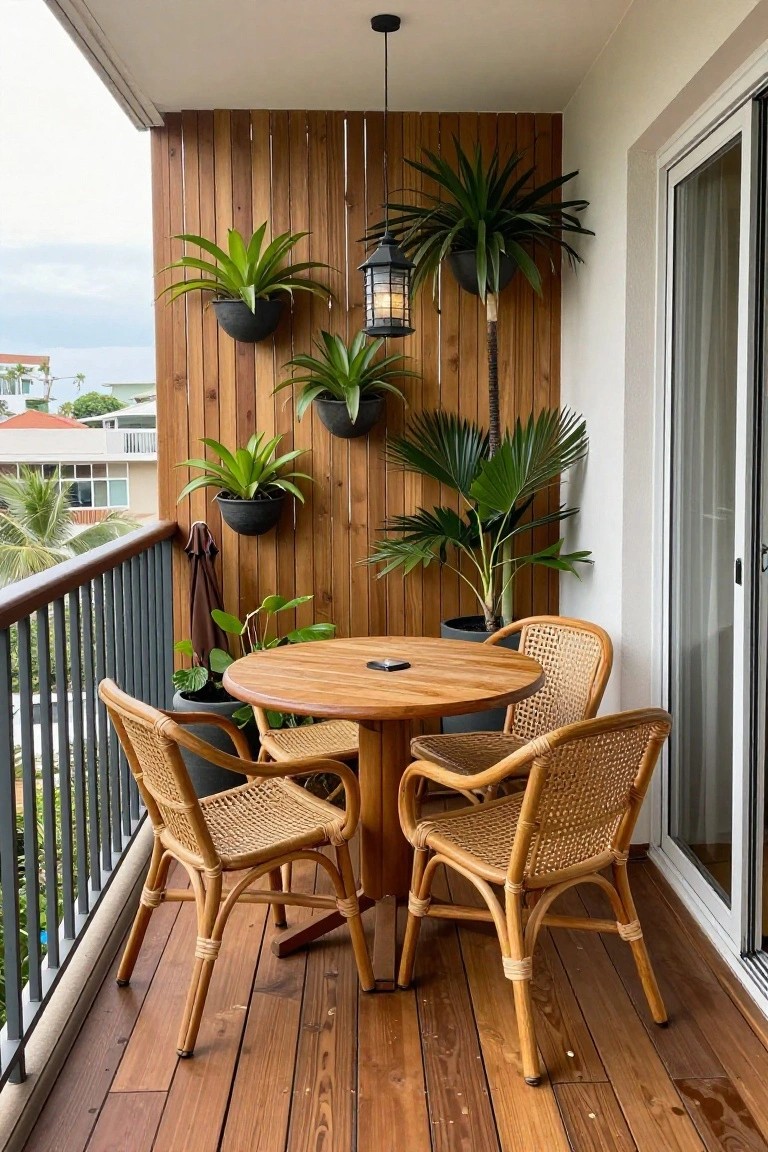
Mounting plants on a wood wall keeps the floor clear while still filling the space with greenery. The vertical setup works well on balconies or small patios where every square foot counts and you want the area to feel full without looking crowded.
This idea suits homes with limited outdoor room or spots that need a privacy screen. Use a simple wood backdrop, hang pots at different heights, and set a table and chairs in front so the plants form a natural background.
Add An Outdoor Heater To Your Wooden Patio

A tall patio heater fits well on a wooden deck because it keeps the space comfortable when evenings turn cooler. Many people skip this step and end up using the patio only during the warmest months. Placing the heater near the seating area but not right in the middle leaves room to walk around while still spreading warmth evenly.
This works best on a covered deck with a solid floor like the one shown here. The heater needs a stable surface and some clearance from the roof and plants. It suits homes in mild climates where nights can still feel chilly even if days stay warm.
Fire Pit With Surrounding Wooden Seating
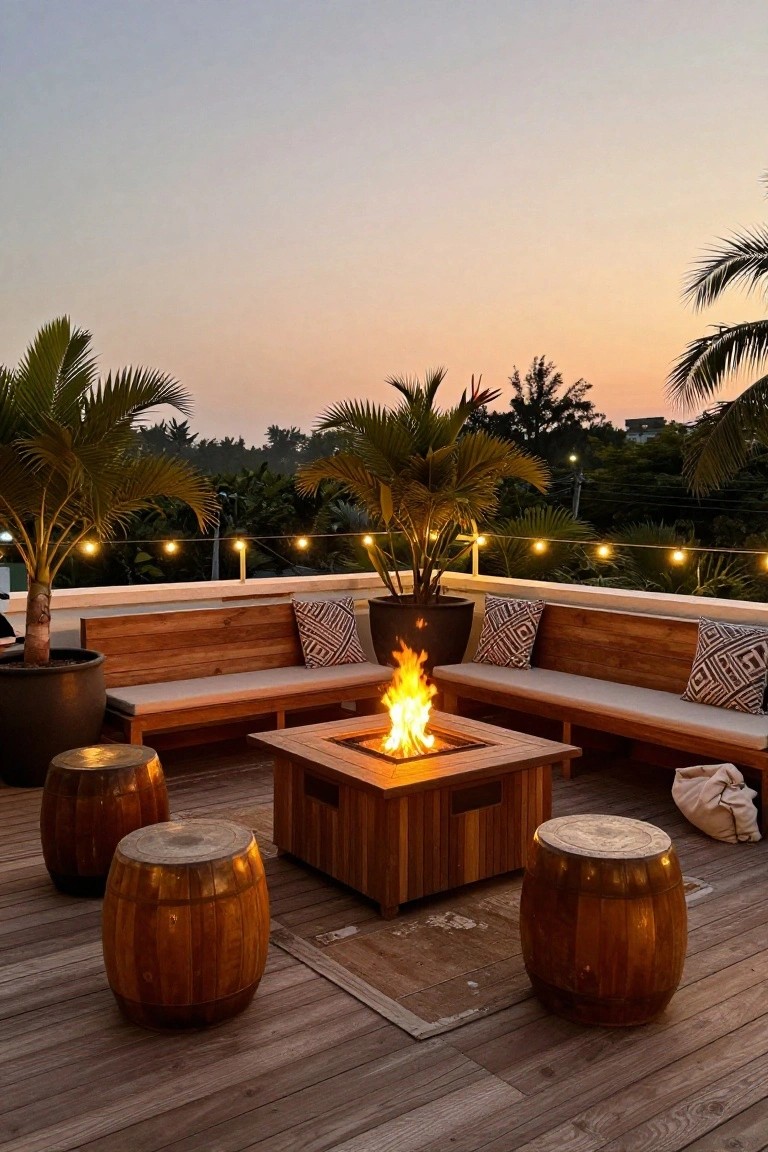
Placing a fire pit right in the middle of a deck gives the whole space a clear purpose. People naturally gather around it, and the seating stays useful even after the sun goes down.
This works best on wooden decks in mild climates where evenings stay comfortable. Keep the benches far enough from the flames for safety and pick woods that hold up to weather without much fuss.
Frequently Asked Questions
Q: How often do I need to seal the wood on a tropical patio?
A: Seal it once a year before the rainy season starts. This keeps moisture out and prevents cracking. Pick a clear sealant that lets the grain show through.
Q: Can I use cheaper wood for these ideas without losing the look?
A: You can go with pine if you treat it well. It will need more frequent checks though.
Q: What if my backyard gets too much shade for lush plants?
A: Focus on ferns and shade-loving palms instead. They thrive without direct sun and add that green layer you want. Arrange them in clusters near the seating area.
Q: Do these wooden patios need special drainage?
A: Build a slight slope into the design from the start. Water runs off easily and avoids pooling on the boards.
