

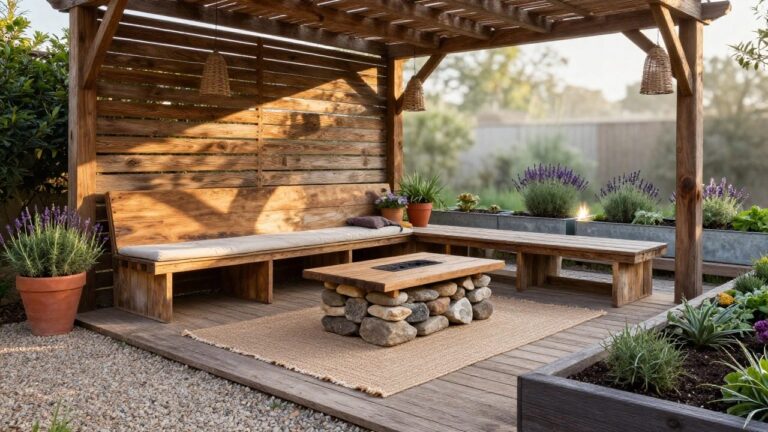
I have always found that wooden patios gain their real appeal when the grain and finish match how the space gets used from morning coffee to evening gatherings.
Weather exposure and foot traffic tend to highlight whether the choices were made with longevity in mind or just for the first impression.
Texture matters more than most people expect.
It is worth checking how the wood will feel under bare feet or hold up to furniture movement before committing to a full layout.
I usually start by testing a single board sample in the actual spot to see how the color shifts with the light throughout the day.
Built-In Benches Make a Patio Feel Finished
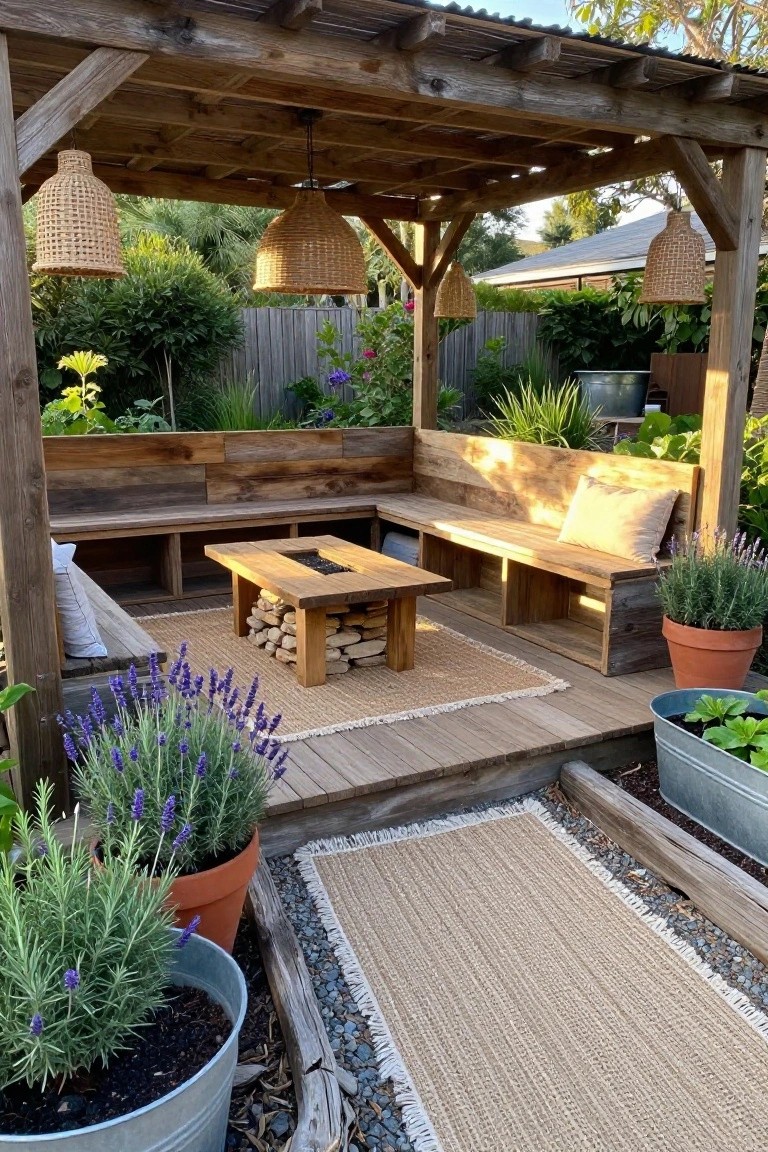
Built-in benches give a wooden patio a settled look without filling it up with loose furniture. They follow the edge of the deck and create steady seating that stays in place year after year.
This setup works best on smaller or mid-size decks that already have a pergola or roof overhead. Match the bench wood to the deck boards so the whole space reads as one material, and keep cushions simple so the benches can stay out in any weather.
Mixing Benches and Chairs Around One Table
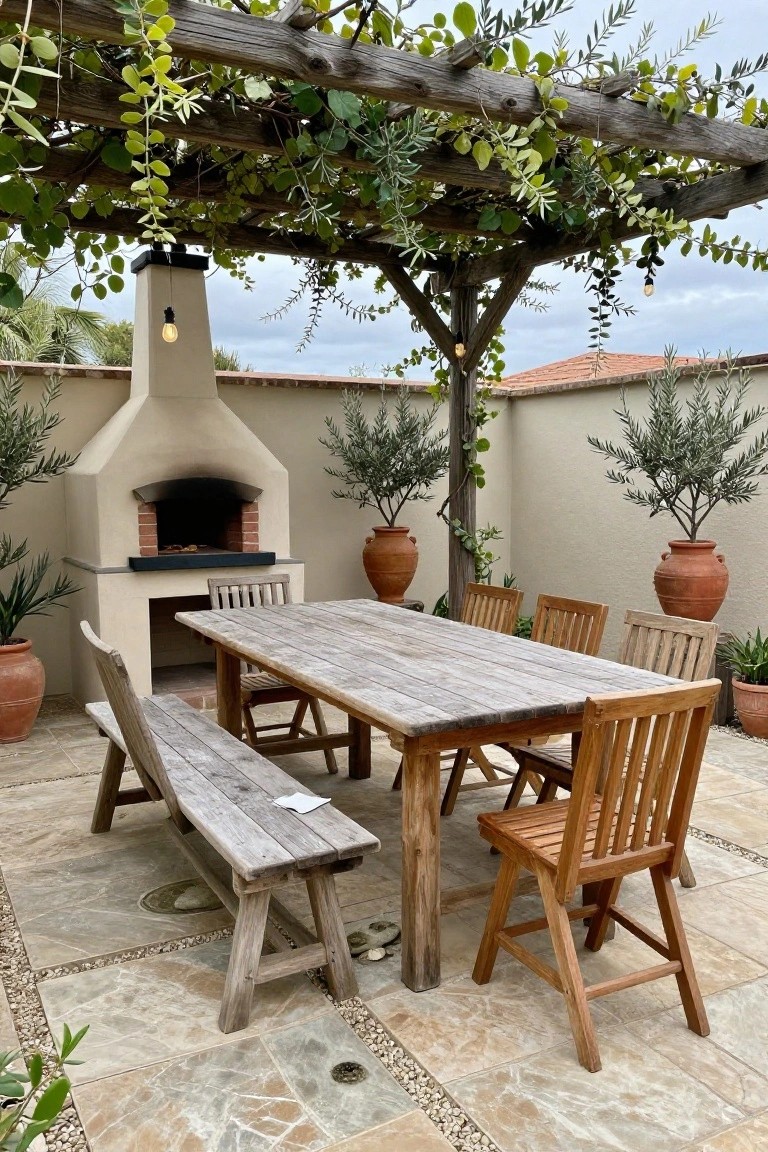
A long wooden table works best when you do not force every seat to match. Putting a bench on one side and regular chairs on the other keeps the setup flexible, so people can slide in easily or pull up extra seats when needed. The mix also stops the whole area from looking too planned or stiff.
This approach suits any patio that gets regular use, especially spaces that already have a pergola or simple overhead cover. Just keep the table size in proportion to the seating so the bench does not feel too heavy next to lighter chairs.
A Simple Wooden Bar for the Patio
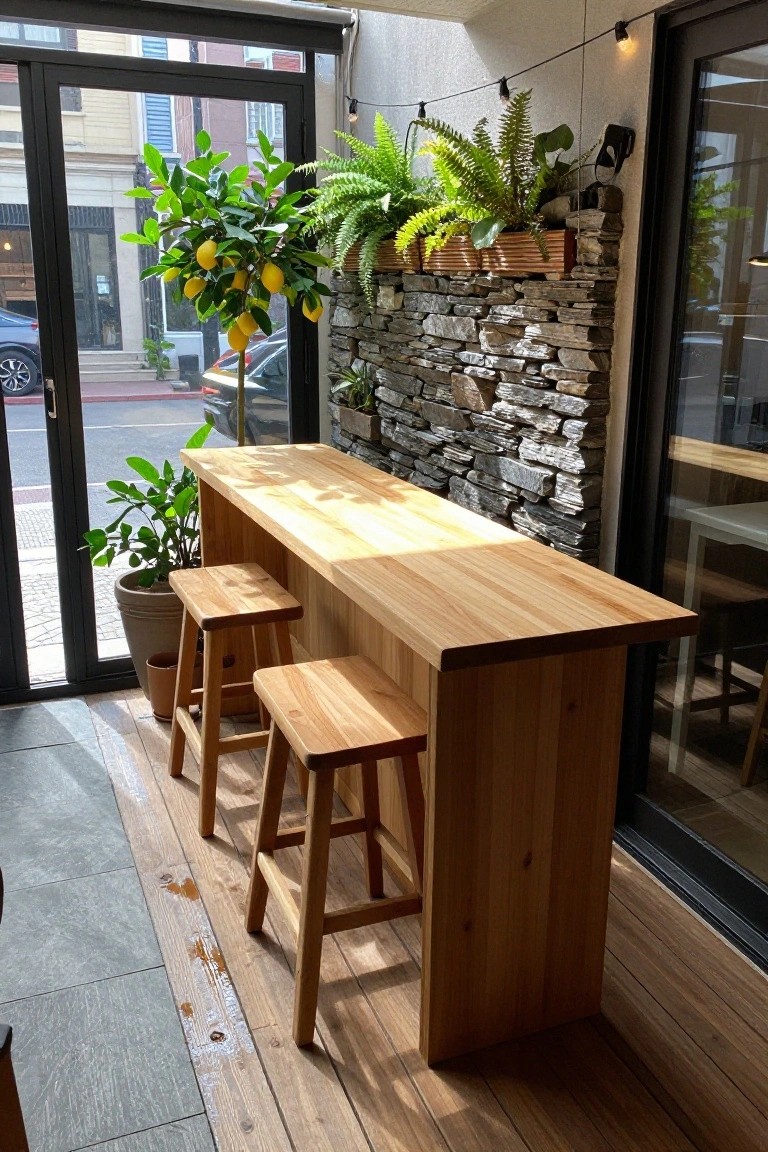
A bar-height counter made from plain wood gives an outdoor space a clear spot for drinks or quick meals without needing a full dining setup. The stools slide right underneath when not in use, so the area stays open and easy to walk around.
This works best on a patio that already has a wall or railing to back it up. Natural wood tones pair well with stone or plants nearby, and the whole thing feels at home on decks or terraces that get regular use in warmer months.
A Fire Pit on the Wooden Deck
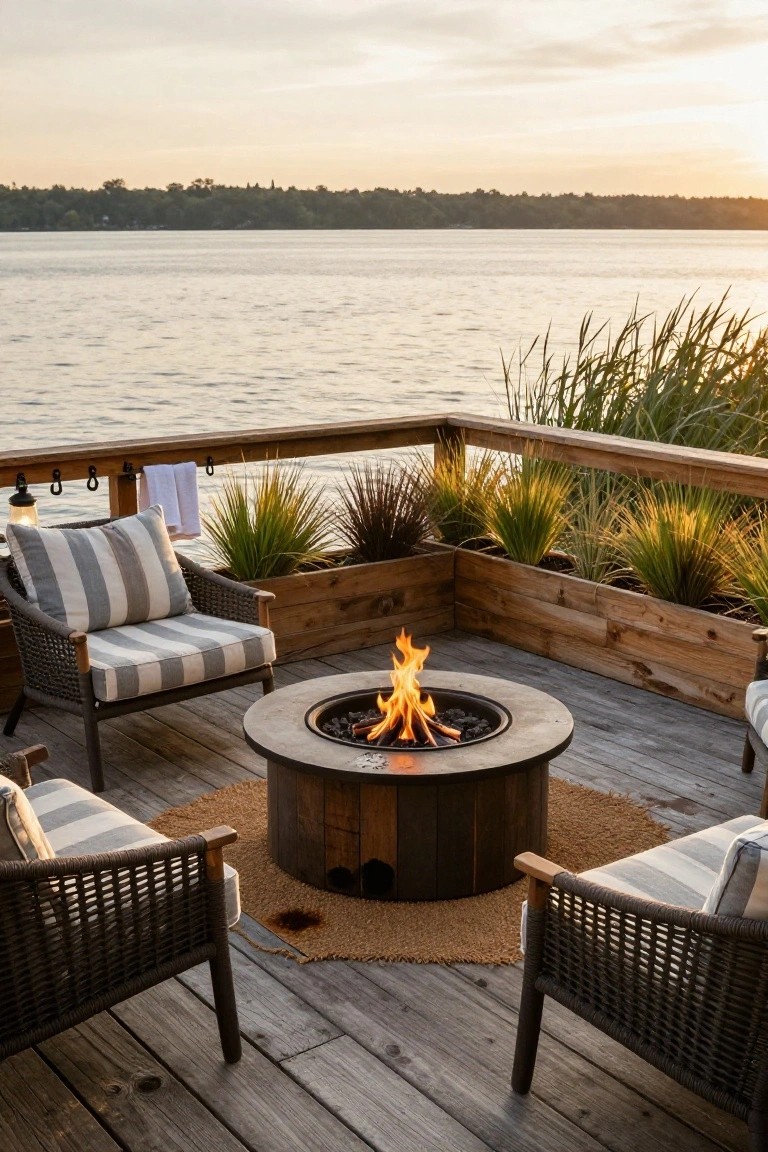
A fire pit placed right in the middle of the deck turns the whole space into a natural gathering spot. People tend to pull chairs closer and linger longer once the fire is going, especially on cooler evenings.
This works best on decks that have some open floor space and a view beyond the railing. Make sure there is room to walk around the pit without crowding the seating, and match the base material to the deck boards so everything feels connected.
Grow Climbing Roses Over a Wooden Pergola
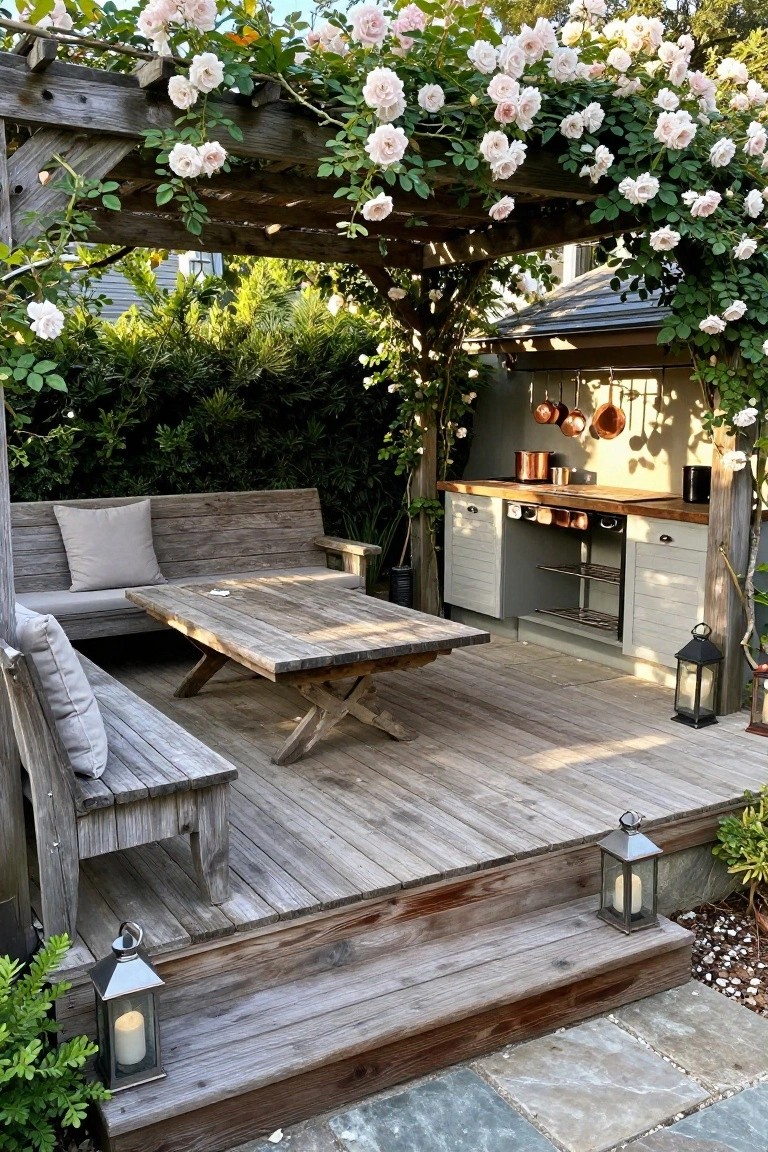
A wooden pergola with climbing roses overhead turns a basic patio into something that feels settled and shaded. The vines add texture and break up the light so the space stays comfortable even in full sun.
This setup works best on a deck built from the same kind of weathered wood. It suits homes that already have a simple, natural style and gives you a clear reason to spend time outside without needing extra furniture or screens.
Add a Fireplace to Your Wooden Patio
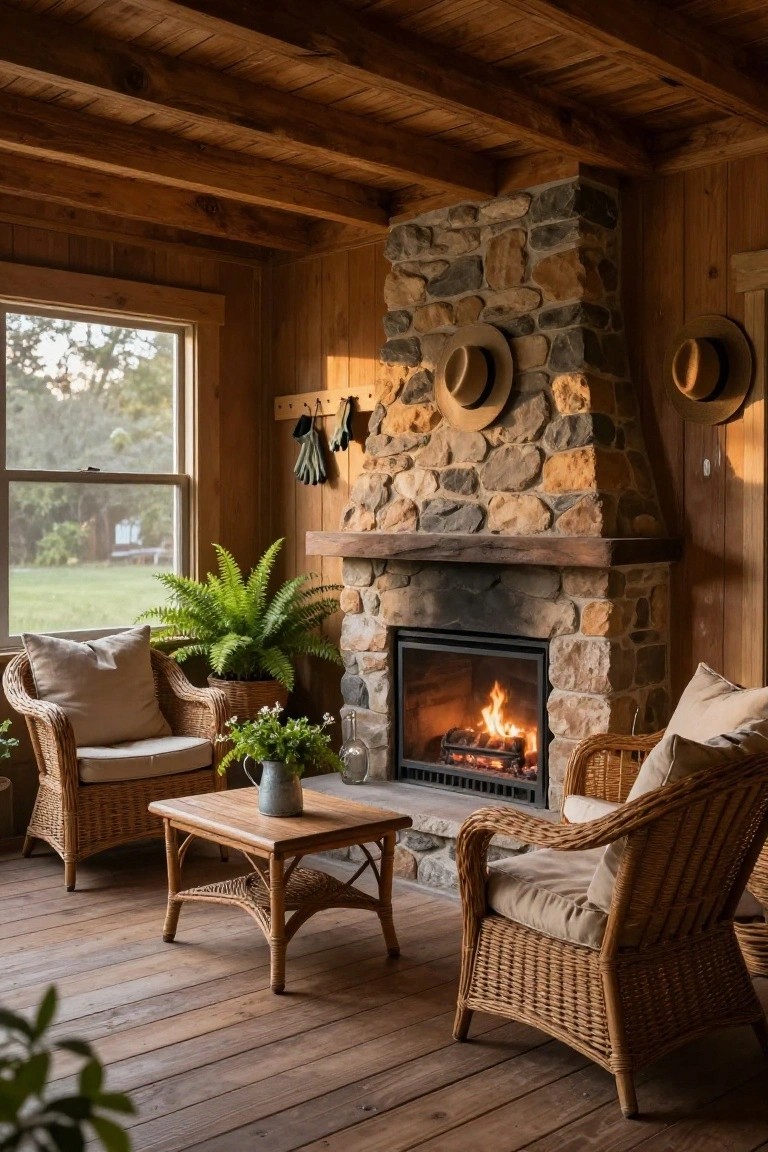
A fireplace gives a wooden patio a real focal point and turns the space into something you can actually use when the evenings get cooler. The stone stack blends right in with the wood ceiling and floor, so the whole area feels pulled together without a lot of extra effort.
This setup works best on a covered porch or deck that already has some shelter from wind and rain. Keep the seating close and simple, and the fireplace does most of the work of making the spot feel inviting.
Built-In Seating That Fits The Deck
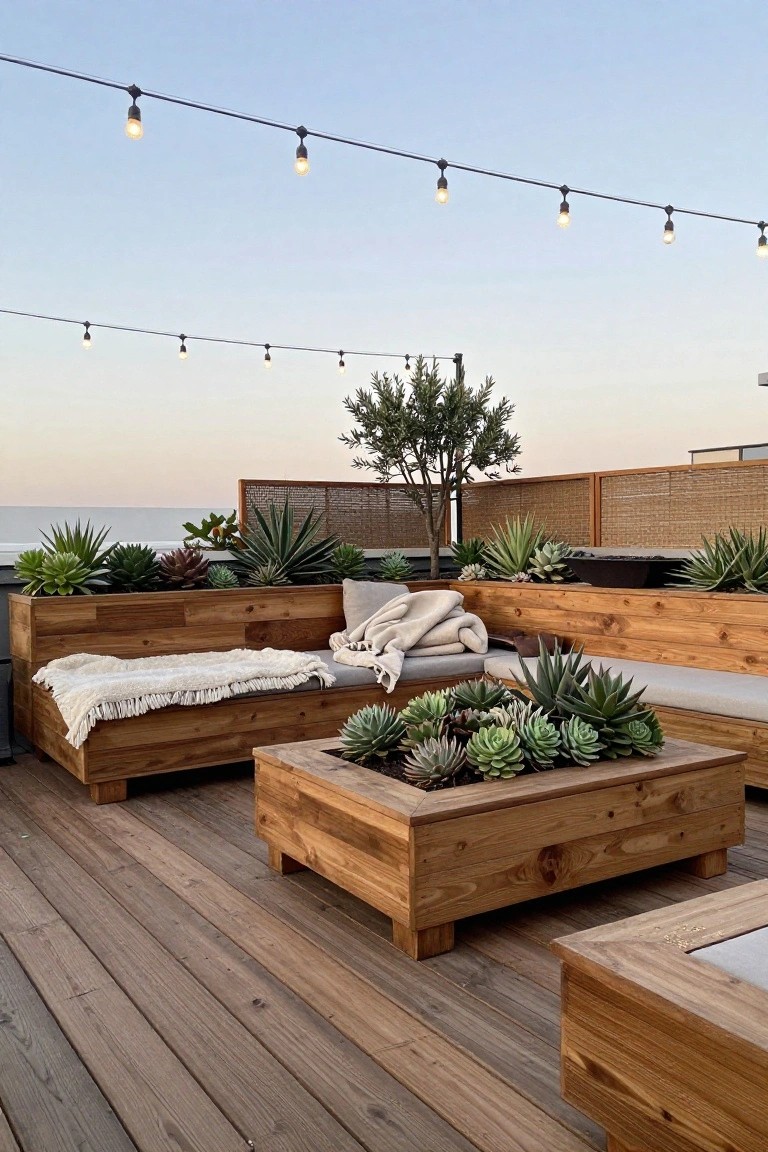
Built-in wooden benches give a patio a finished look without taking up extra floor space. The seating runs along the edges and connects directly to the deck boards, so the whole area feels like one solid structure rather than separate pieces added later.
This approach works well on rooftops, decks, or small yards where you want permanent seating that stays put. It suits homes that already have wood decking and need a low-maintenance way to add more places to sit without crowding the middle of the space.
Weathered Wood Patio Furniture
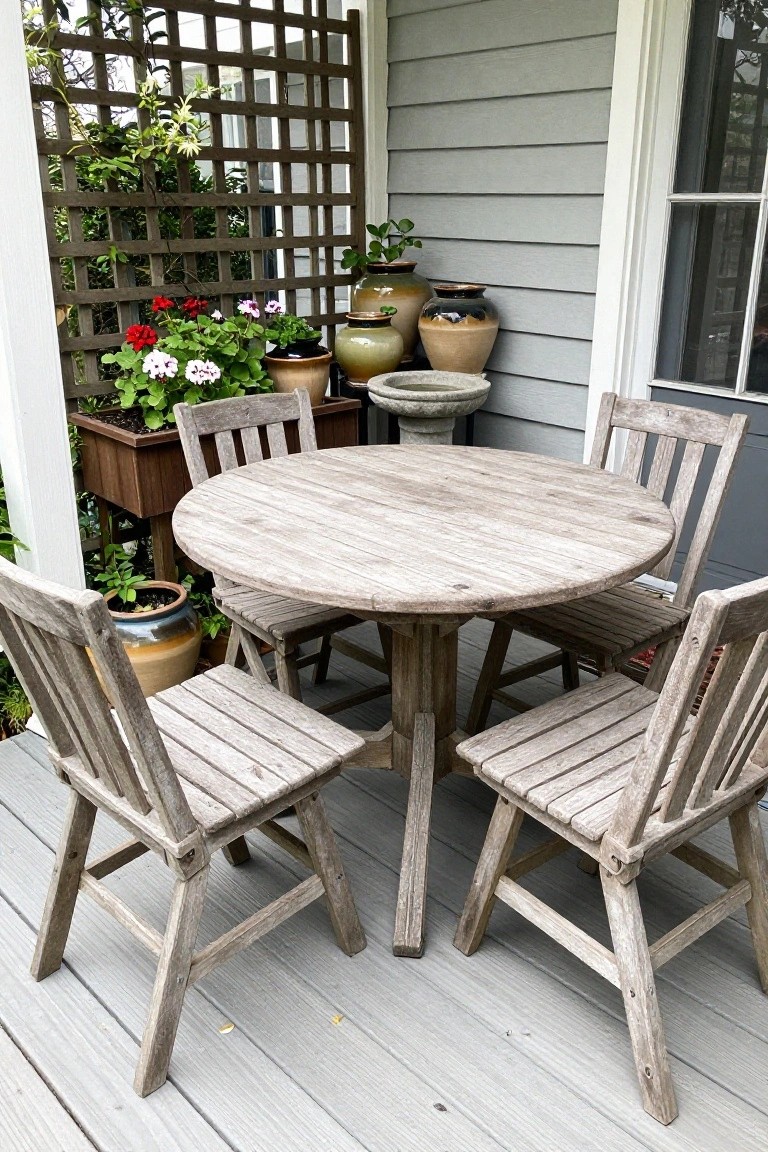
Weathered wood furniture gives a patio that relaxed, lived-in feel without much extra effort. The natural grain and faded tones blend easily with decking and surrounding plants, making the whole space feel more connected to the outdoors.
This approach works best on decks or patios where you want simple seating that can stay out year-round. Choose pieces that are already sealed for weather so they hold up without constant upkeep.
A Sturdy Wooden Table For Casual Dining
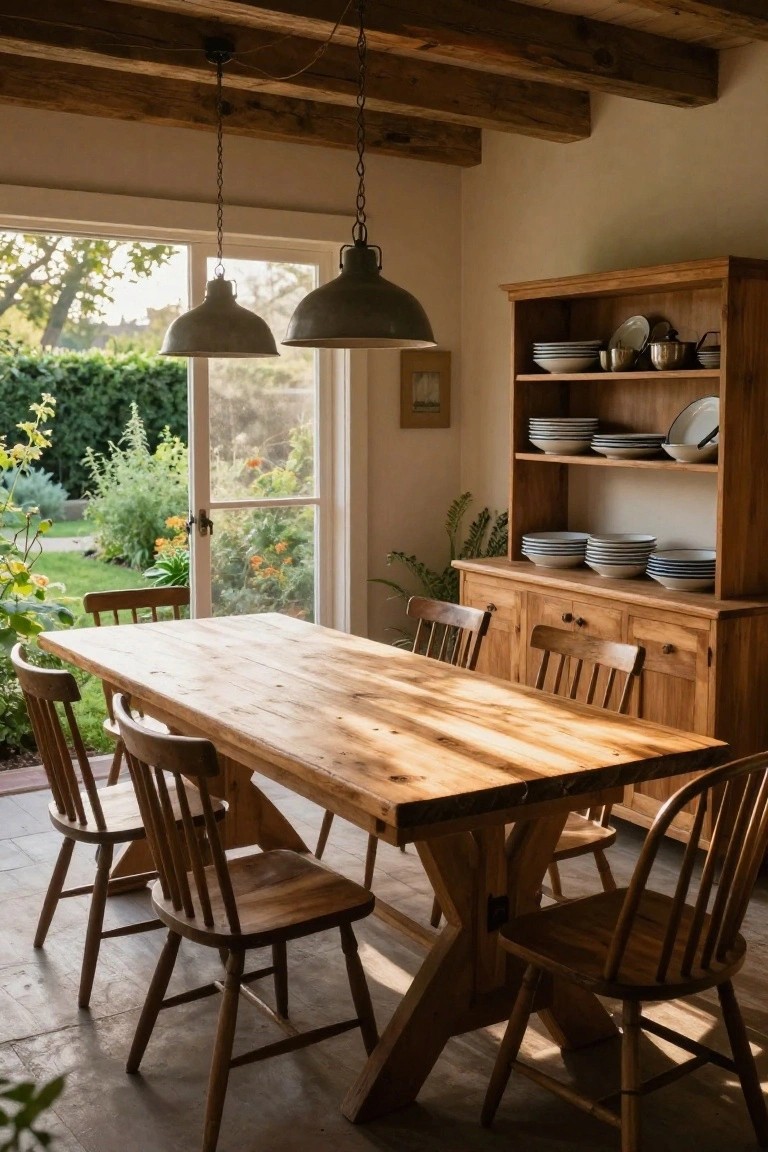
A big wooden dining table like this one gives the room a grounded feel that works for daily meals and longer gatherings alike. The simple trestle base and thick top keep the look practical without needing much else around it.
This setup works best in homes with easy access to the outdoors, where the wood can tie the inside to the garden. Pair it with plain wooden chairs and leave space so people can move around comfortably during normal use.
A Wooden Outdoor Bar Island
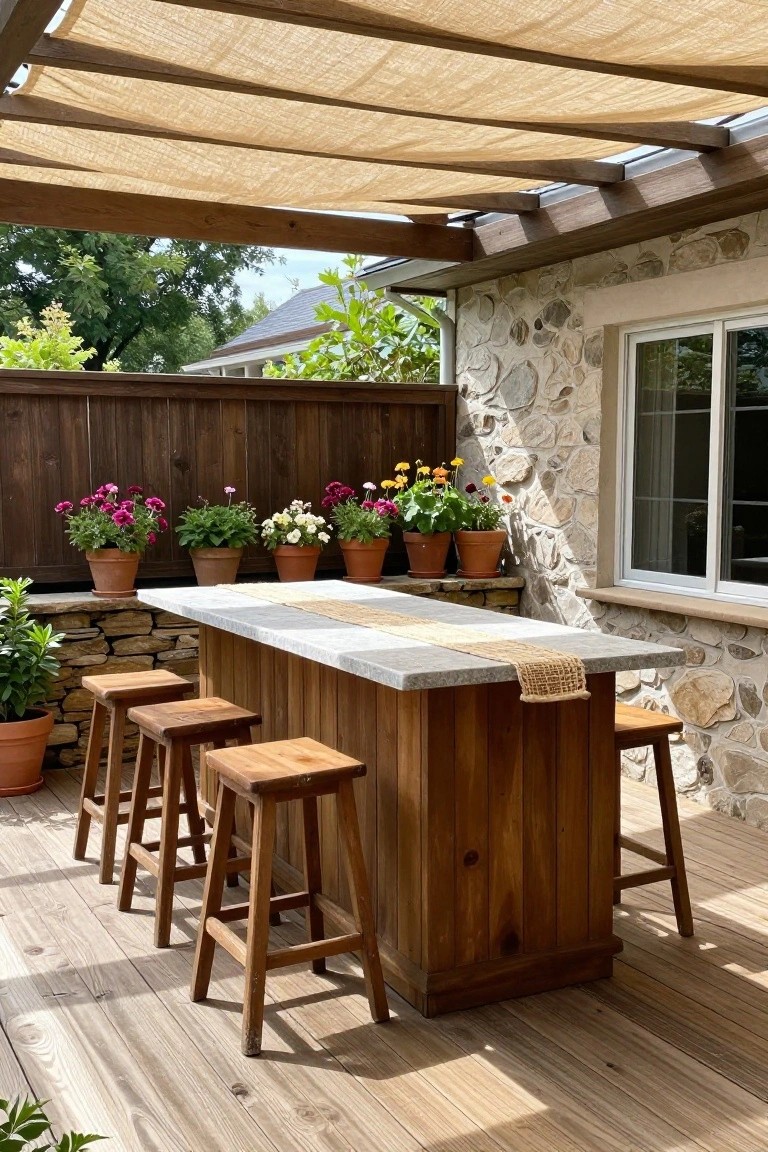
One idea that works well on patios is adding a wooden bar island. It gives you a solid spot for serving food and drinks while also creating extra seating with stools pulled up around it. The wood feels at home with the decking and stone walls already in place.
This kind of bar suits homes with existing wooden decks or simple outdoor spaces where people gather often. Keep the size reasonable so it does not crowd the rest of the patio, and use weather-treated wood if it will stay outside year round.
Add a Bench Along One Wall
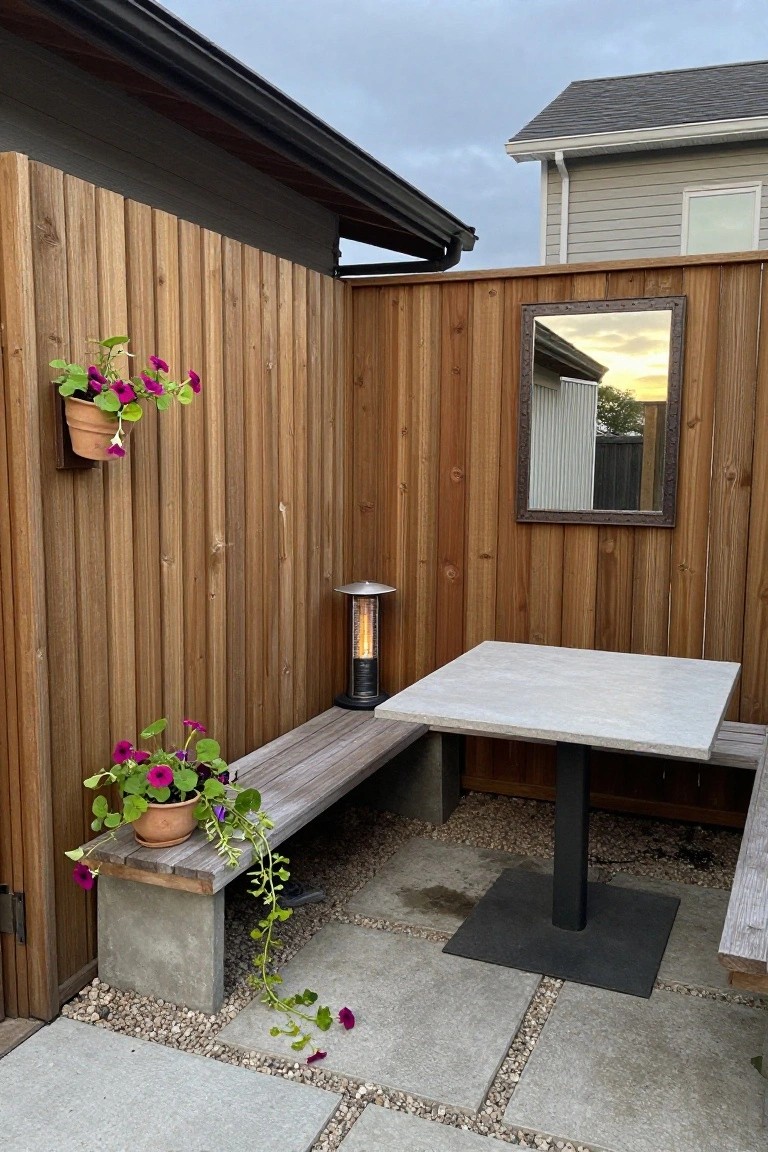
A bench along one wall makes good use of the space in a small patio. It turns the fence or wall into part of the seating instead of leaving empty space behind chairs, and the simple wood construction fits right in with the rest of the rustic setup.
This works best on patios that already have a solid fence or wall to build against. Use pressure-treated lumber or cedar, set it on concrete blocks or posts for stability, and keep the bench depth around 16 inches so it stays comfortable without crowding the table area.
Create a Defined Seating Area With a Wooden Platform
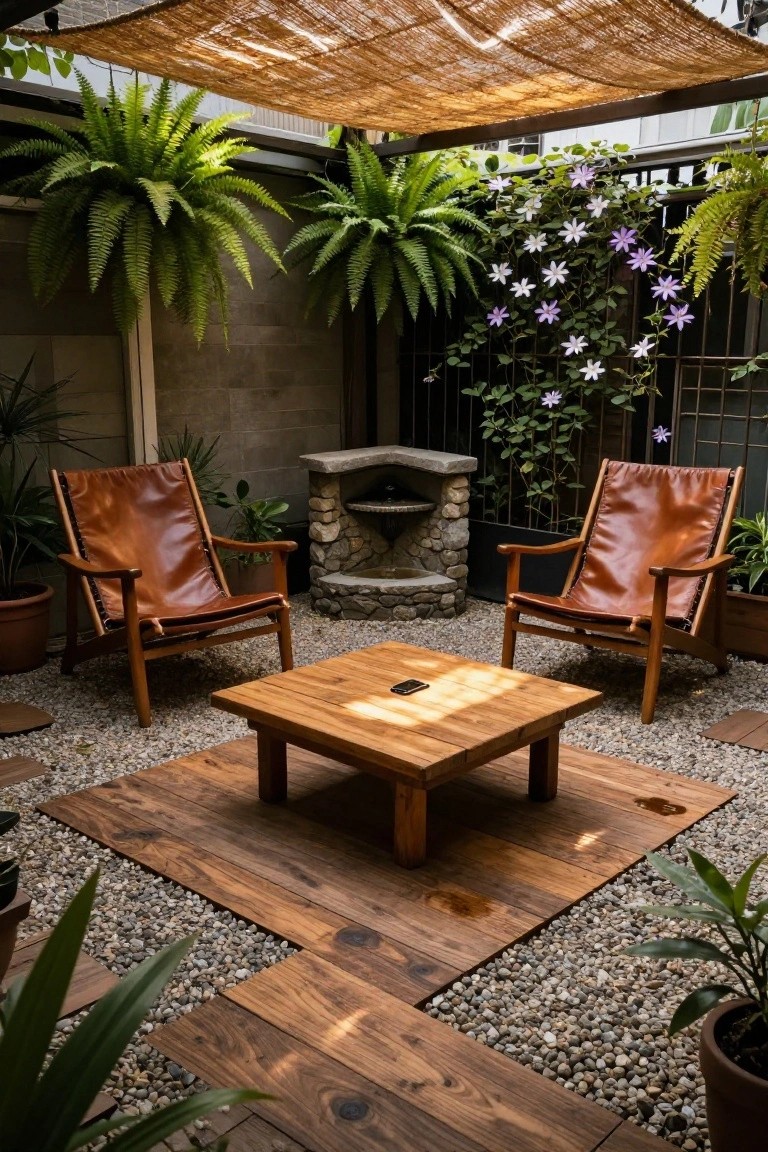
A wooden platform set over gravel gives the seating area a clear edge without making the whole space feel built up. It keeps the ground level and solid underfoot while the loose gravel around it handles drainage and adds texture.
This setup works best in smaller yards or side courtyards where you want a simple seating zone that still feels connected to the garden. Keep the platform low, use treated wood, and size it just big enough for a couple of chairs and a table so the surrounding gravel stays the main surface.
Woven Rattan Seating on a Wooden Deck
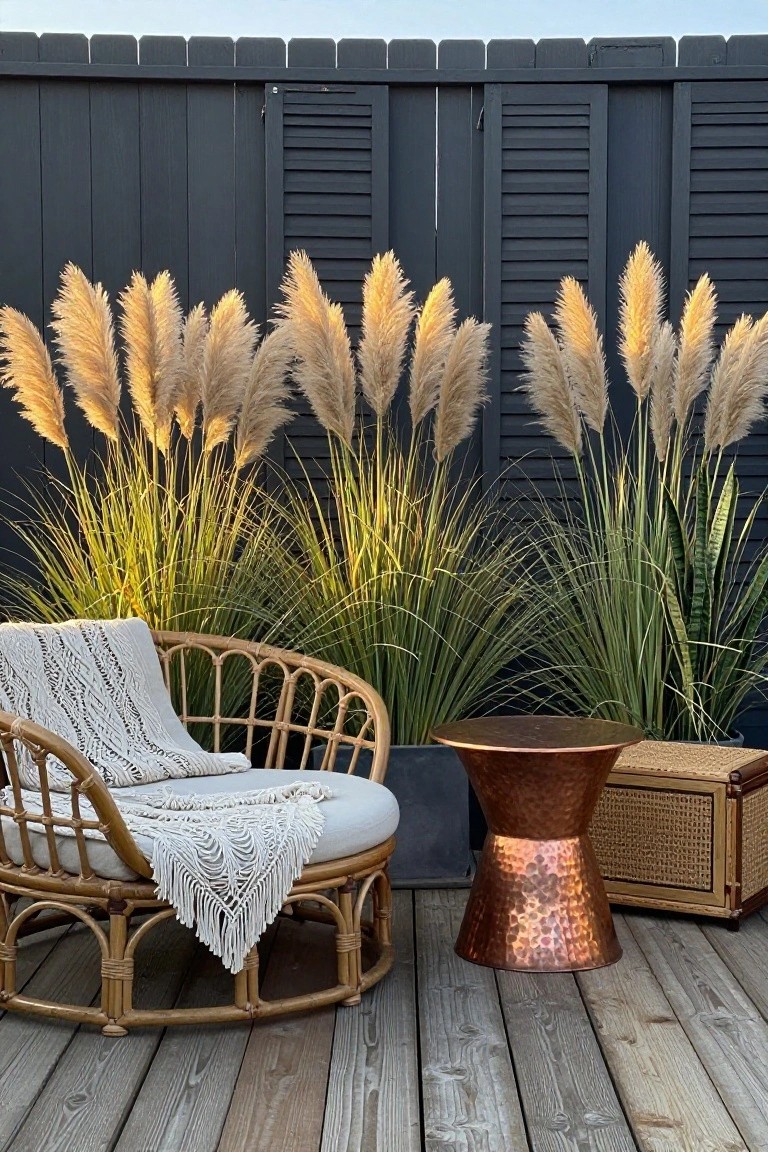
Woven rattan chairs add a soft layer of texture that pairs naturally with wooden decking. The material feels lighter than solid wood furniture but still holds up to the same warm, rustic tone people want outdoors.
This setup works best on decks that already have some age or graying in the boards. Keep the rest of the space simple so the woven pieces and any nearby plants can stand out without crowding the area.
Using a Concrete Fire Trough on a Wooden Deck
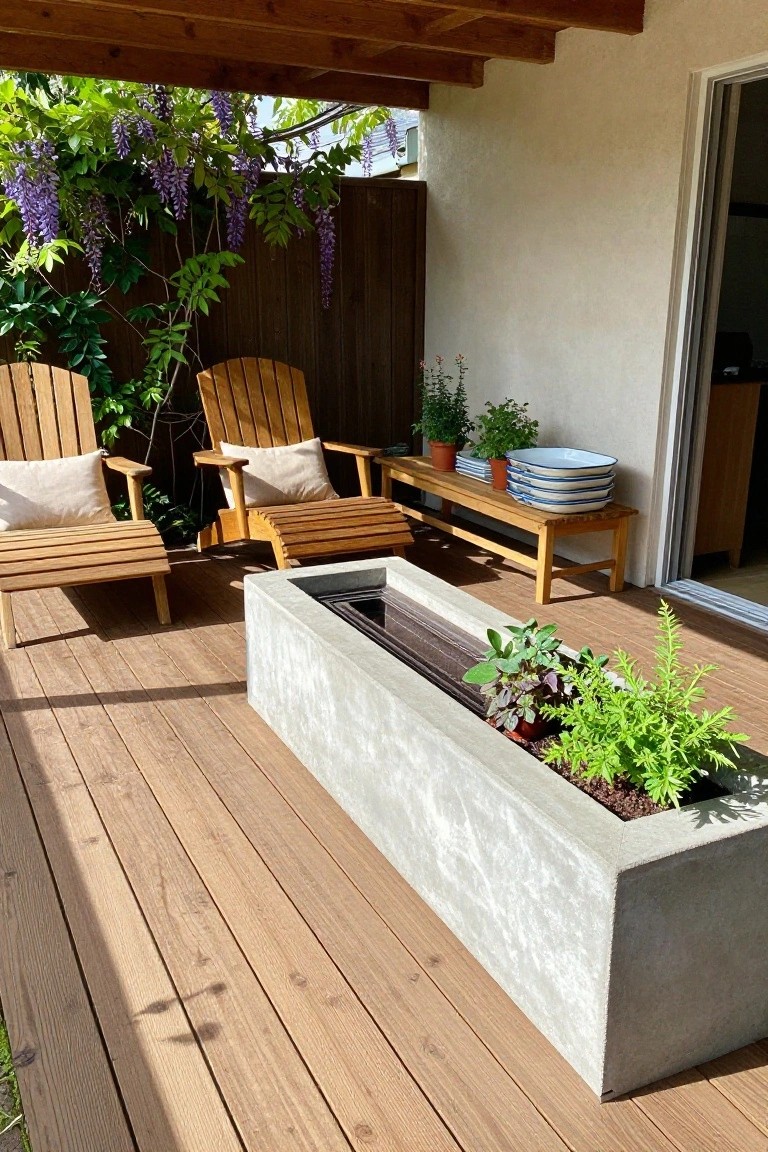
A long concrete trough with a built-in fire line gives the deck a steady focal point without taking over the space. The wood decking stays the main surface, so the whole area still feels warm and natural even with the concrete addition. It works well because the fire can run in cooler months while the plants in the trough keep the look softer during the day.
This setup suits decks that already have a strong wood base and need one clear spot for gathering. Keep the trough low and simple so it does not compete with the surrounding wood. It fits best on medium-sized patios where you want both seating and a light cooking or warmth element without adding a full fire pit structure.
A Solid Wood Table for the Patio
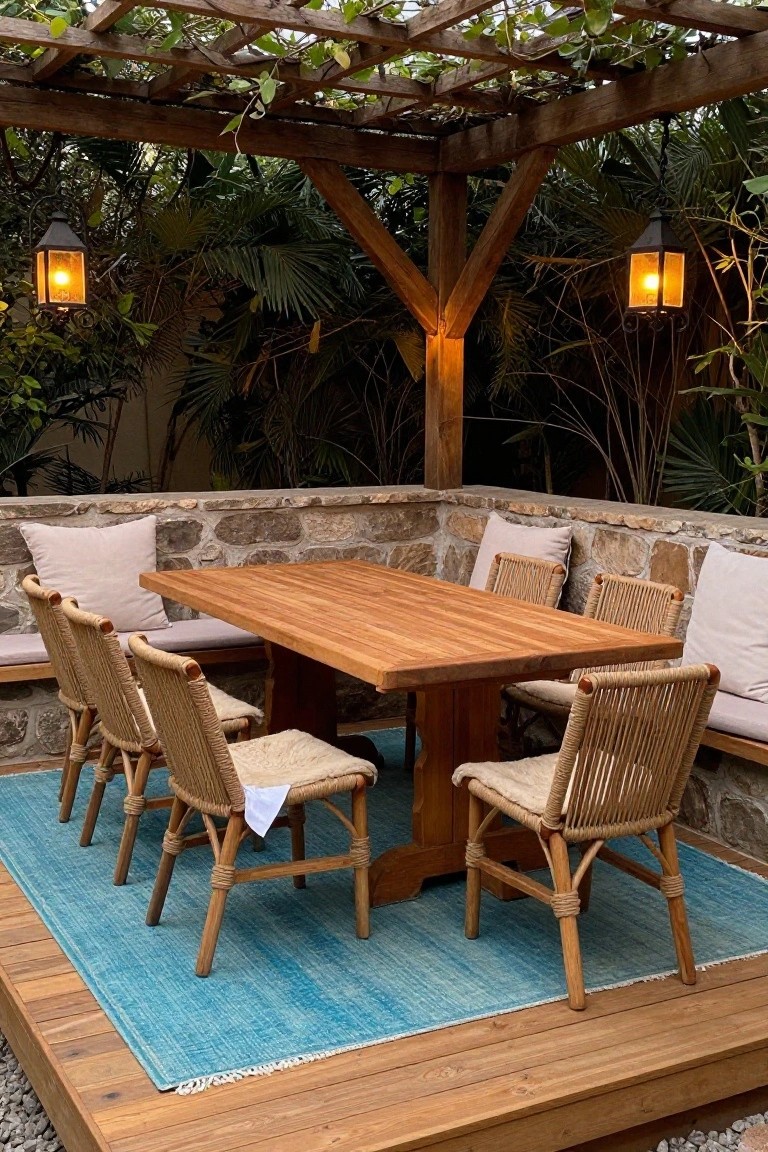
A solid wood dining table gives an outdoor space real weight and makes it feel more like an extension of the house. It holds up to daily use and brings that natural texture the rest of the patio can build around.
This works best on a deck or paved patio where people actually eat outside often. Keep the seating mix simple, add a rug to mark the area, and let the table do most of the work.
Folding Wooden Chairs for Small Balconies
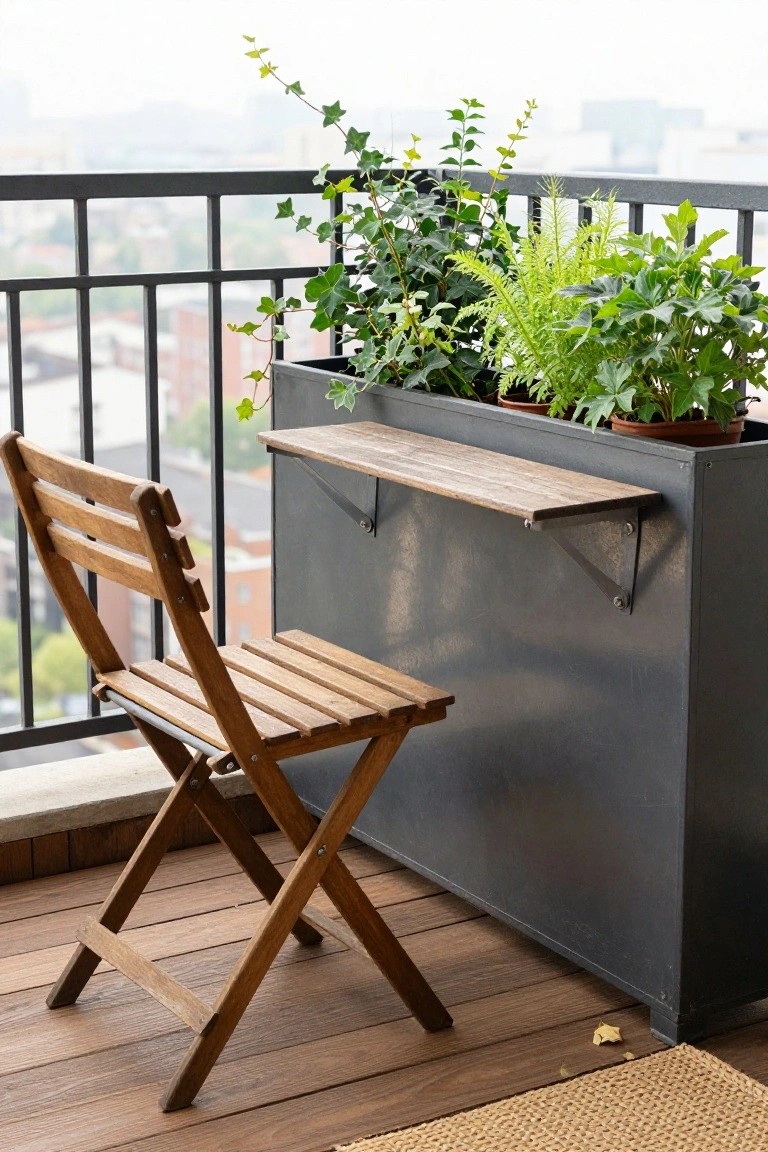
A wooden folding chair brings simple rustic texture to a balcony without crowding the space. It tucks away when not needed and adds that warm natural grain that works well with metal planters or railings.
This setup suits urban balconies or small decks where permanent seating would feel too heavy. Look for sturdy hardwood frames and keep the finish natural so it ages gracefully outdoors.
Wide Wood Decking Extends The Indoor Space
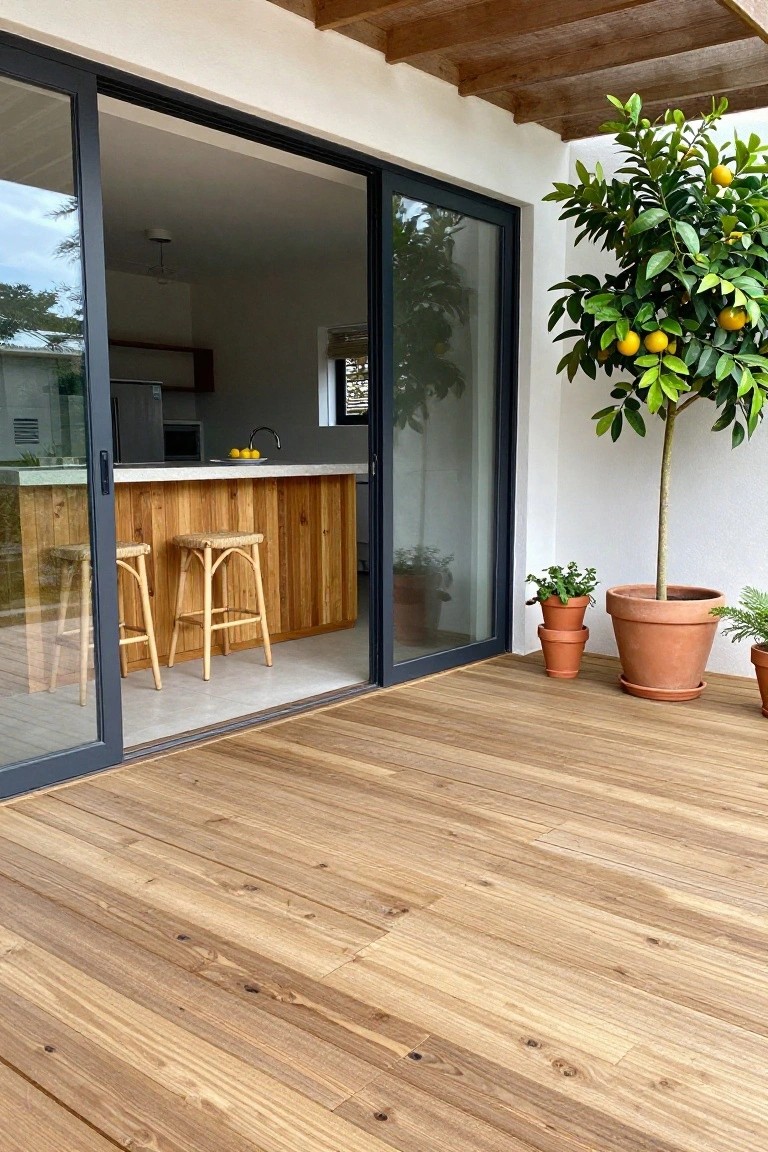
One simple way to get a rustic feel on a patio is to lay wide wood planks that look similar to the flooring inside. The boards bring in natural texture and help the outdoor area feel connected to the rooms just beyond the doors.
This approach works best on decks that sit right off a kitchen or living space where people move in and out often. It suits homes that want a low-key, lived-in look without adding too many separate materials.
Built-In Benches For Simple Outdoor Dining
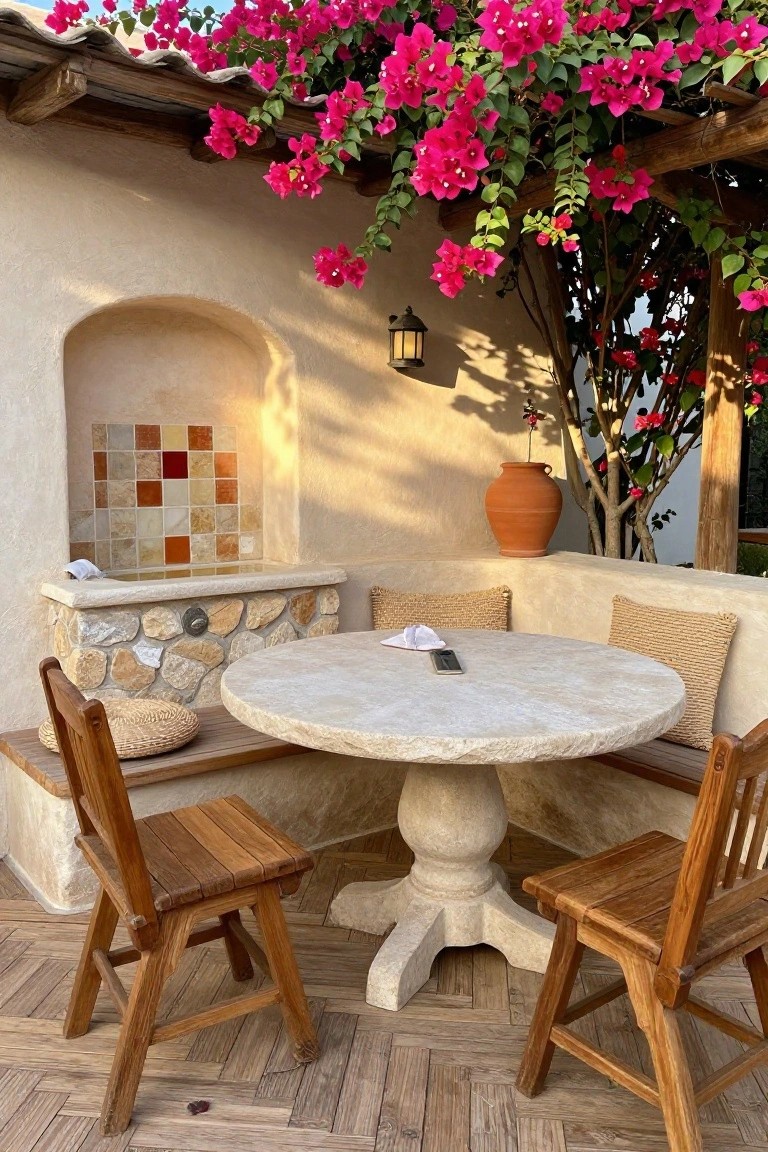
Built-in benches along the patio walls give you steady seating without crowding the space. They pair well with a heavy stone table in the middle and a few wooden chairs that can move around as needed.
This works best on smaller patios or homes with stucco walls where you want a permanent feel that still stays practical. Keep the cushions simple and let the wood and stone do most of the work.
Built-In Benches That Store Firewood
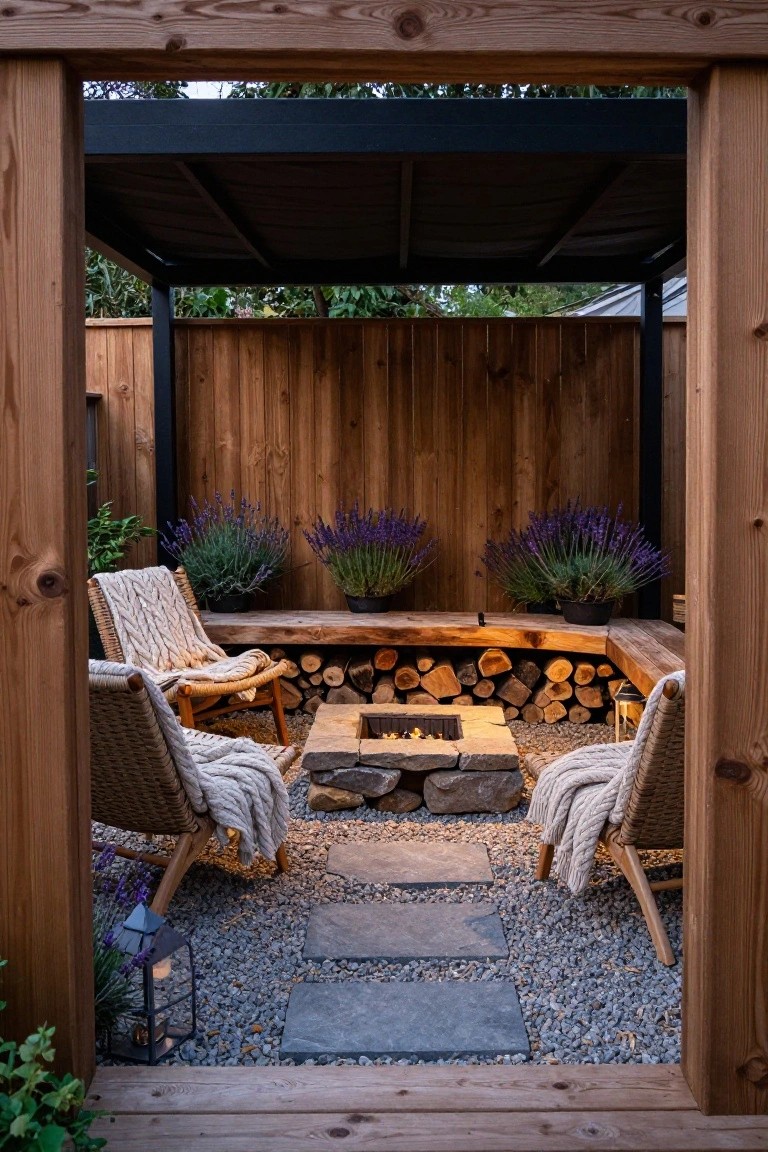
A built-in bench that holds firewood underneath keeps everything you need right where you use it. The logs stay dry, the seating stays useful, and you avoid a messy pile sitting off to the side.
This setup works well on smaller patios or decks where space is limited. Match the bench wood to your existing fence or posts, and keep the curve gentle so the fire pit stays the main focus without crowding the chairs around it.
Frequently Asked Questions
Q: How can I protect the wooden patio from rain and sun damage?
A: Apply a good sealant every couple of years. Choose woods like cedar or redwood that naturally resist moisture. This keeps the warm tones intact over time.
Q: Where do people usually find affordable rustic wood for projects like this?
A: Check local lumber yards or reclaimed wood suppliers. Old barn boards often give that perfect character without costing much. Sand them lightly before use.
Q: What simple additions make the space more comfortable for sitting?
A: Thick cushions in neutral fabrics work well. They blend with the wood textures.
