

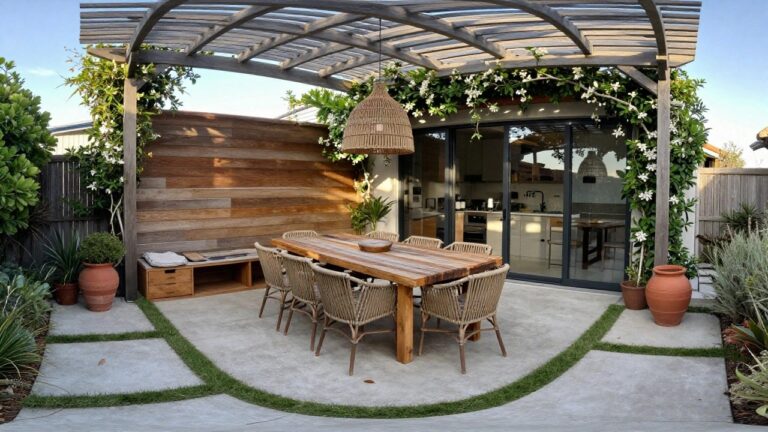
I’ve noticed that a wooden patio tends to feel more settled when the greenery is placed to frame the seating areas rather than fill every open spot.
In my own yard I learned the hard way that wood and plants need room to breathe so the space stays usable for chairs and tables once everything grows.
What matters most is how the layout holds up when you actually spend time out there instead of just looking at it from inside.
Not every balanced plan works once daily routines start.
Trying one or two small changes in plant spacing or wood finish can show whether a design will last through the seasons.
Adding a Pergola Over Your Patio Table
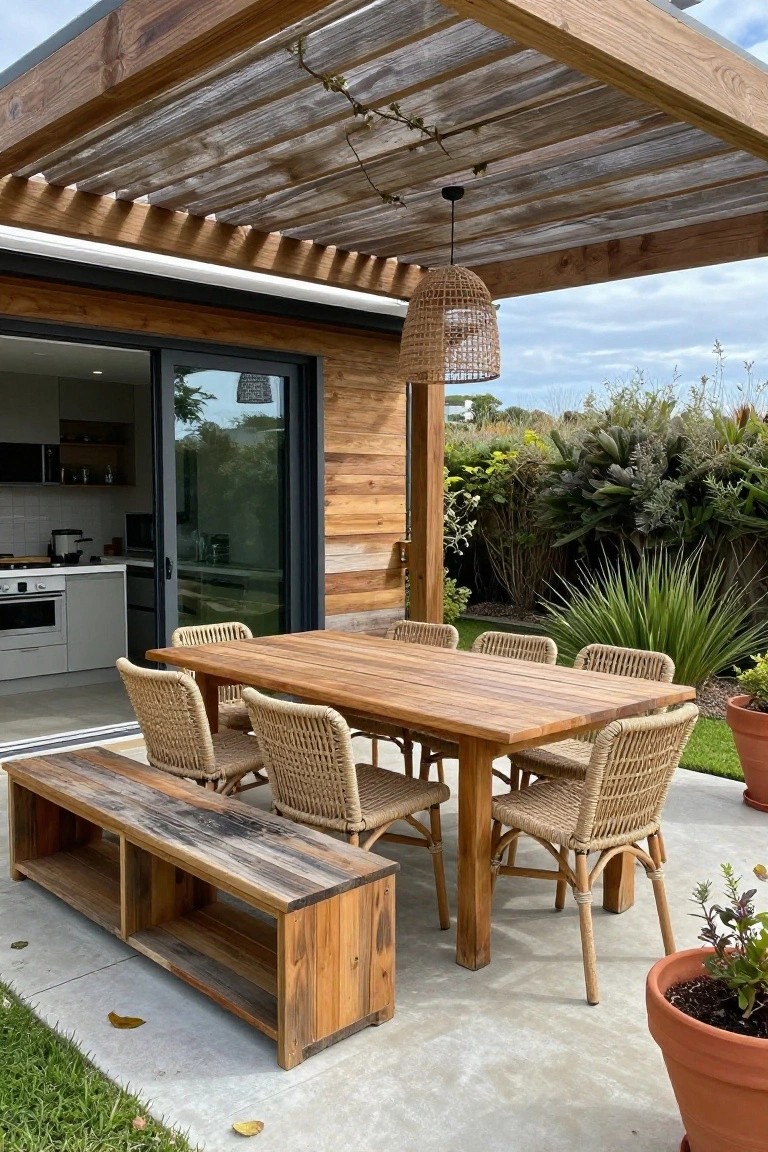
A pergola gives an outdoor dining spot a clear boundary while still keeping the space open and airy. The wood slats provide just enough shade to make meals comfortable without cutting off the view or the breeze.
This works best on a paved area right beside the house, especially when the table is sized to seat six or more. A mix of bench seating on one side and chairs on the other keeps the layout flexible for different group sizes.
Built In Seating Around A Fire Pit
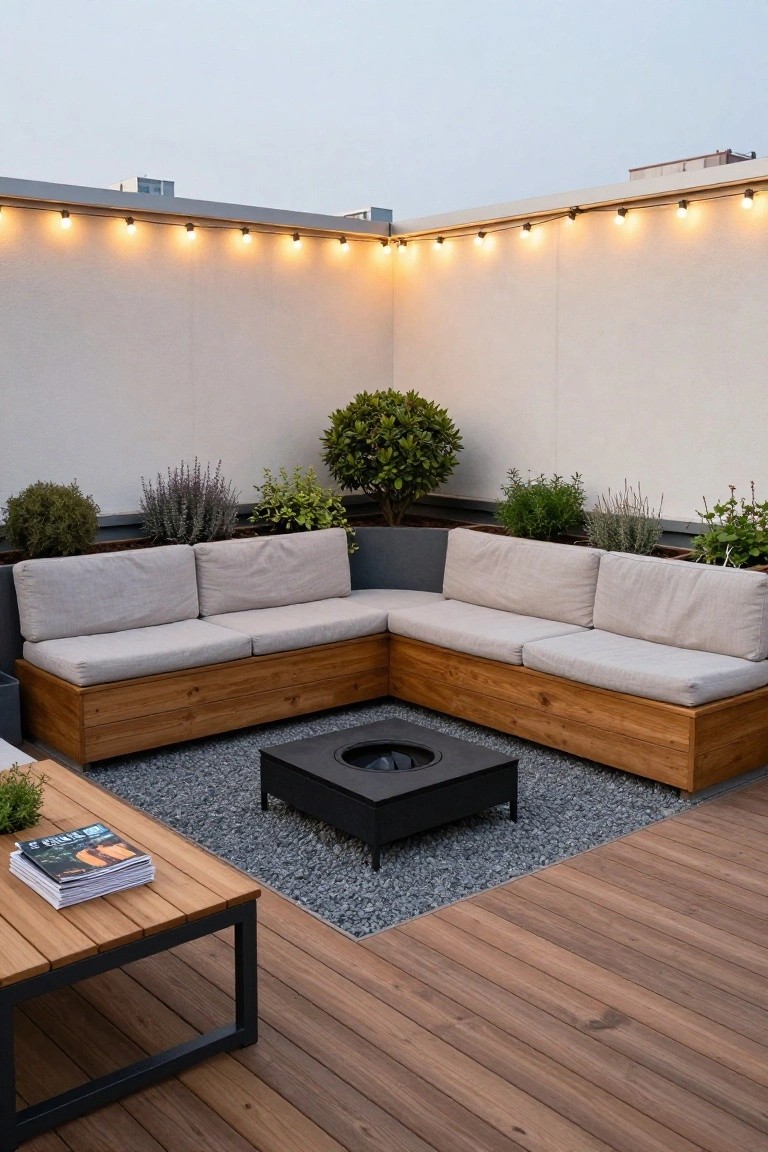
Built-in wooden benches give you a solid way to shape the seating area without crowding the space. They turn the corner of a patio into one clear zone that feels intentional and easy to use, especially when the fire pit sits right in the middle.
This works best on rooftops or small decks where every foot matters. Keep the wood tones simple, add cushions for comfort, and let a few plants soften the edges so the whole spot stays welcoming without extra furniture.
Wood Ceilings That Link A Room To The Garden
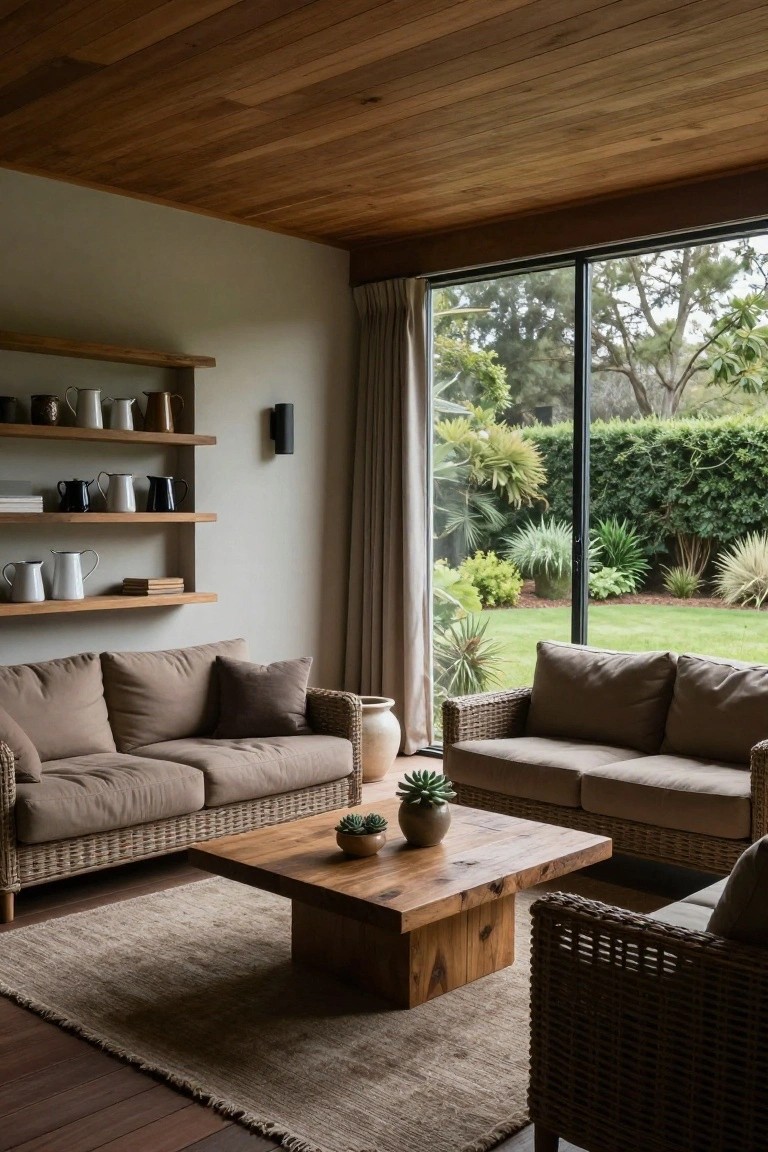
A wooden ceiling adds a simple layer of warmth that helps an indoor space feel more tied to the outdoors. In rooms that open toward a garden, the natural grain overhead keeps the whole area from feeling boxed in or too separate from what is outside.
This approach suits homes where the living area already has some wood tones in the furniture or floors. It works best when you keep the walls light so the ceiling stands out without competing. Just avoid covering every surface in the same wood tone, or the room can start to feel heavy.
Building the Deck Along a Narrow Water Feature
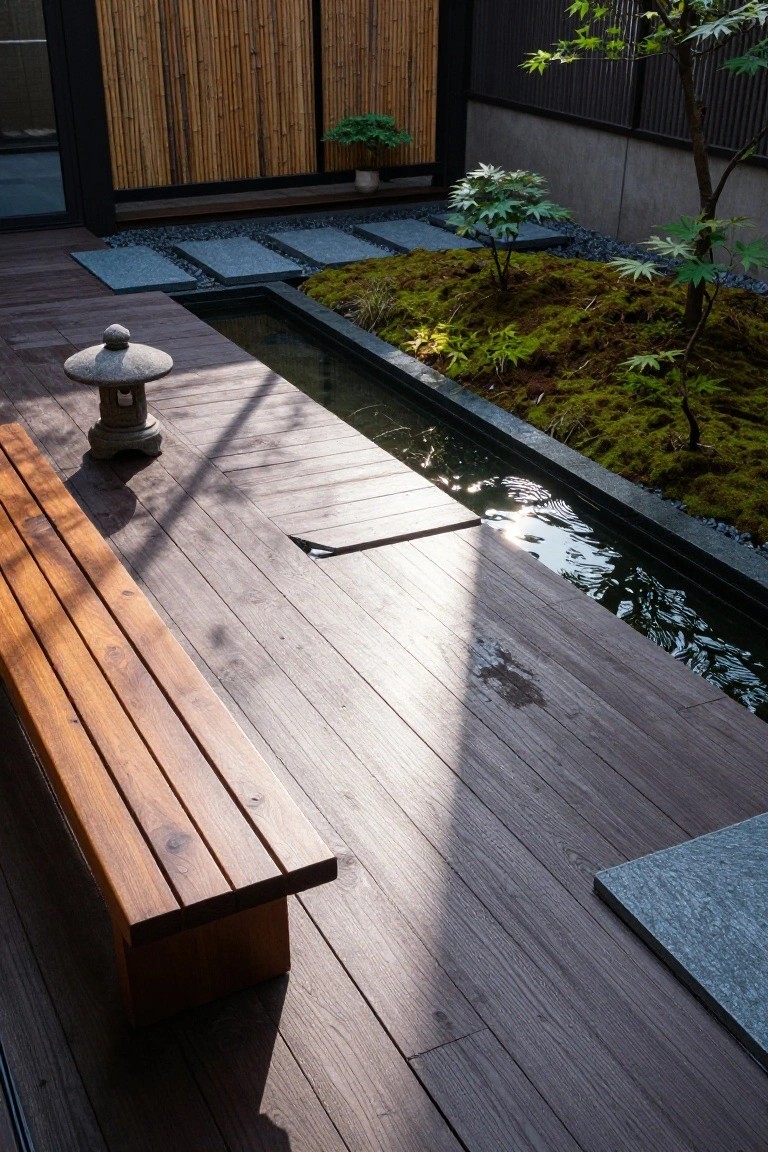
A long wooden deck gains a lot when it runs right beside a slim water channel. The water adds quiet movement and soft reflections without taking up much space or breaking the flow of the seating area. It also gives the garden edge a clean line that feels intentional rather than abrupt.
This setup works well on smaller lots or side yards where you want greenery close but still need a solid place to sit. Keep the channel narrow and the deck boards running lengthwise so the space feels longer and calmer. Just watch the depth and edge detailing if kids or pets will use the area often.
Centering a Fire Pit on the Deck
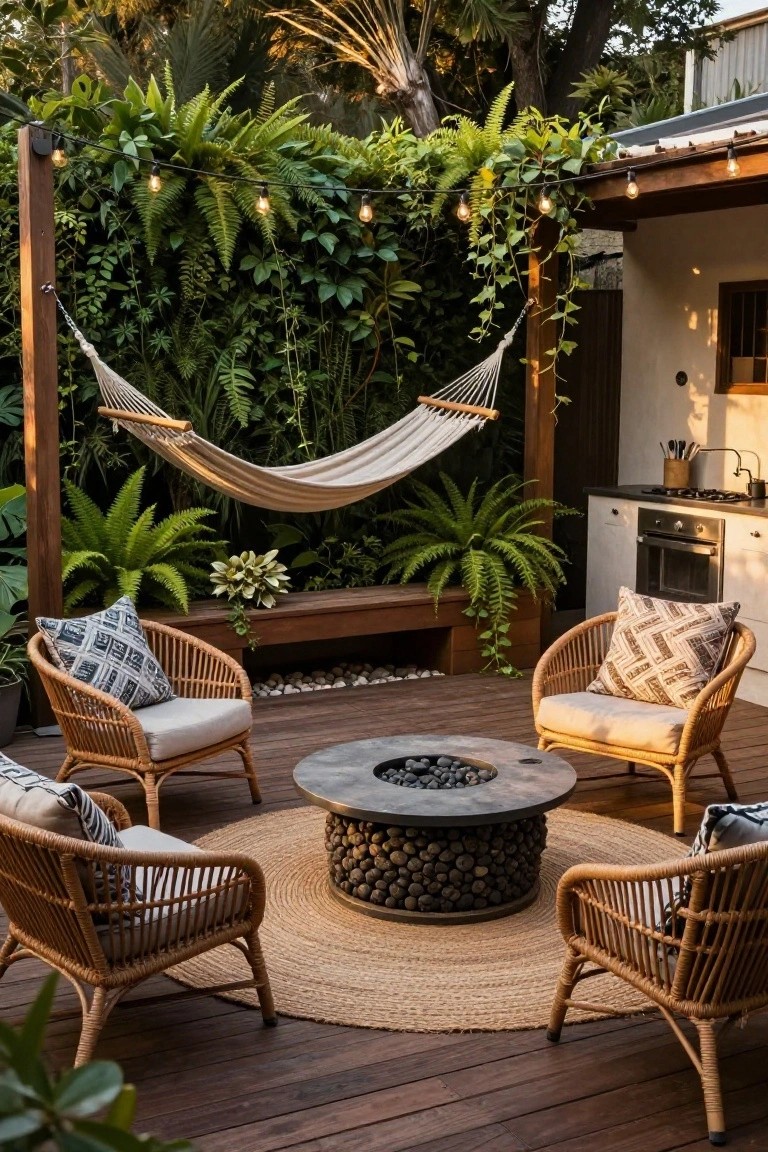
A fire pit placed right in the middle of a wooden deck gives the whole space a clear purpose. It draws people in to sit and stay awhile, especially once the lights come on and the evening cools down.
This setup works best in yards that already have plants along the edges. Keep the chairs simple and leave enough space to move around the circle so the area stays practical rather than crowded.
Built-In Benches For Easy Outdoor Seating
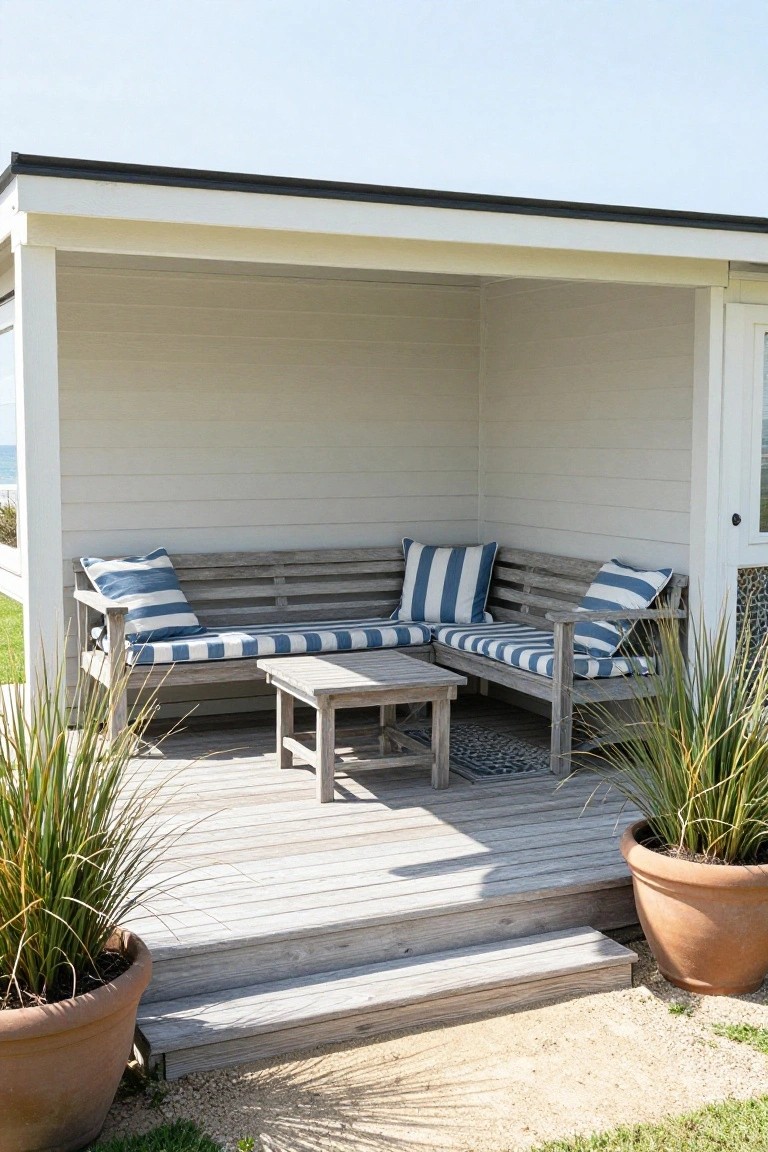
Built-in benches work well on porches because they keep the floor clear and give you steady seating without extra furniture to move around. The wood matches the deck and walls so the whole space feels connected rather than cluttered.
This setup suits smaller patios or covered decks where you want room to walk but still need places to sit. It works best in mild climates and pairs simply with a few large pots to bring in some greenery without taking over the floor space.
Built-In Counters For Everyday Outdoor Use
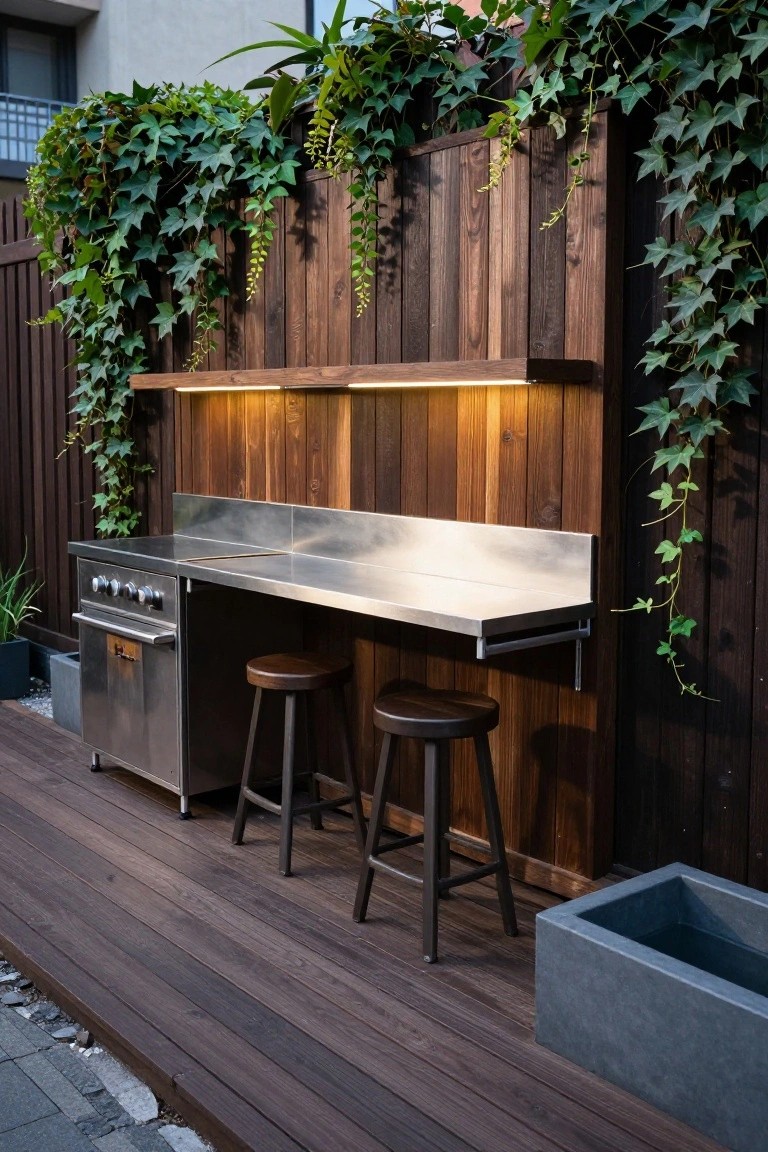
An outdoor kitchen works best when it feels like part of the deck instead of something added later. A long stainless counter set against the wood wall gives you a place to cook without taking over the whole space, and the two stools let people sit and talk while the food is going.
This setup suits smaller decks or townhouse patios where you want function without crowding the area. Keep the wood tones consistent between the wall and deck, and let some greenery climb nearby so the metal does not feel out of place.
Built-In Benches Around a Fire Pit
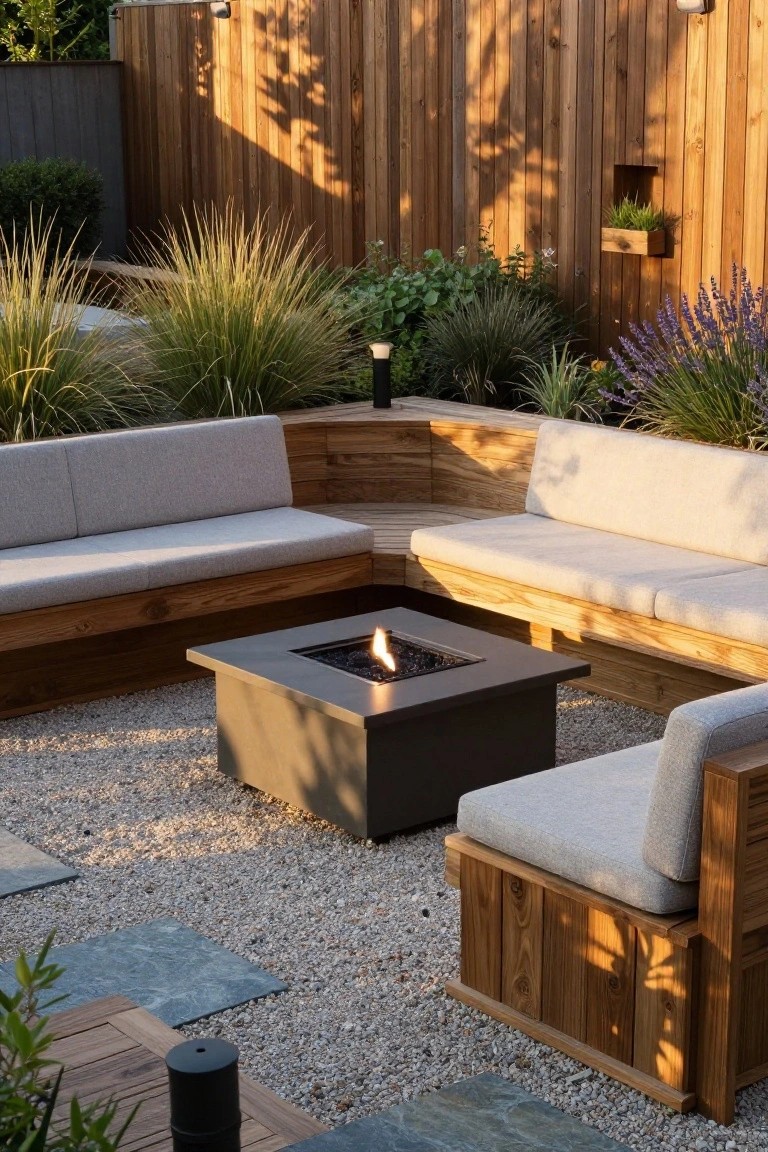
Many outdoor spaces feel more settled when the seating is built directly into the structure instead of added later. Using the same wood for the benches and the surrounding walls helps the whole area read as one piece rather than separate parts.
This layout works best in smaller yards or on decks where you want a clear spot for the fire without crowding the space with loose chairs. It also makes it easier to keep the gravel area open and simple while still giving people plenty of places to sit.
Using Large Pots to Bring Greenery Close
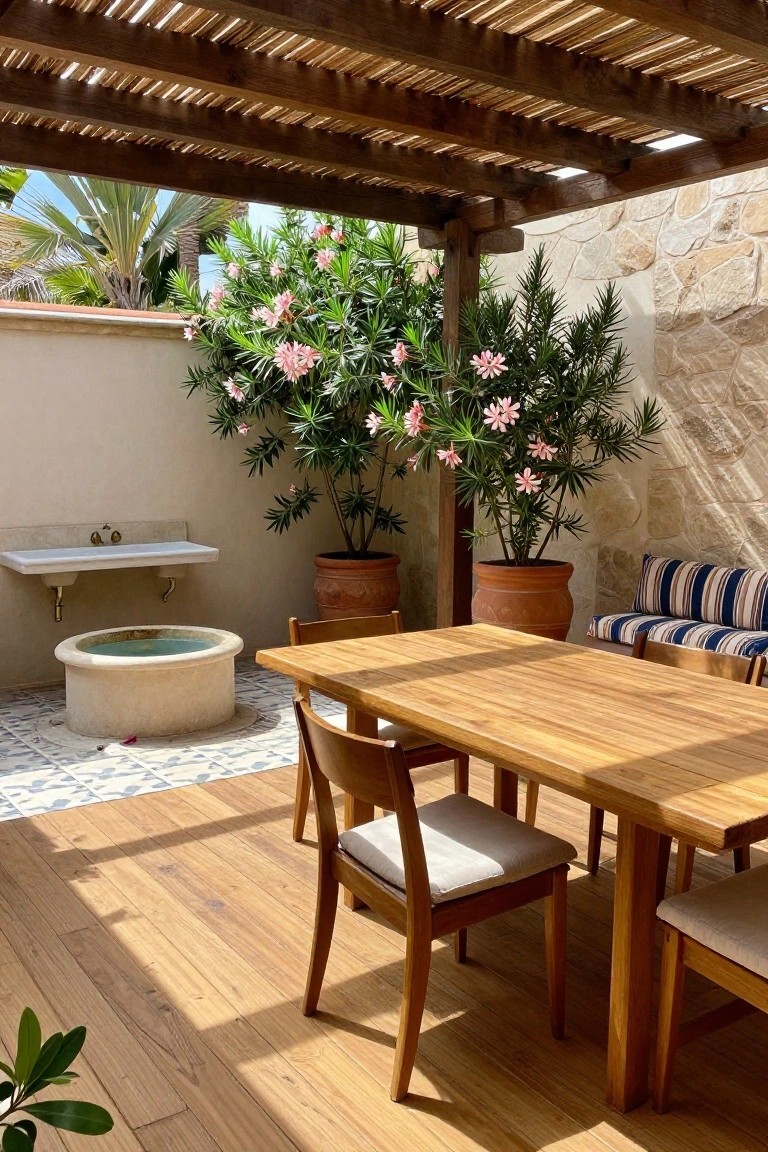
Large pots make it easy to add real greenery to a wooden patio without planting anything in the ground. They let you move things around as the seasons change and keep the plants right next to where people sit and eat.
This works especially well on decks or patios that get strong sun, since the pots can hold bigger shrubs that give some shade and softness. Just place a few near the table edges so the wood and plants feel connected.
A Low Table Over An Indoor Rock Garden
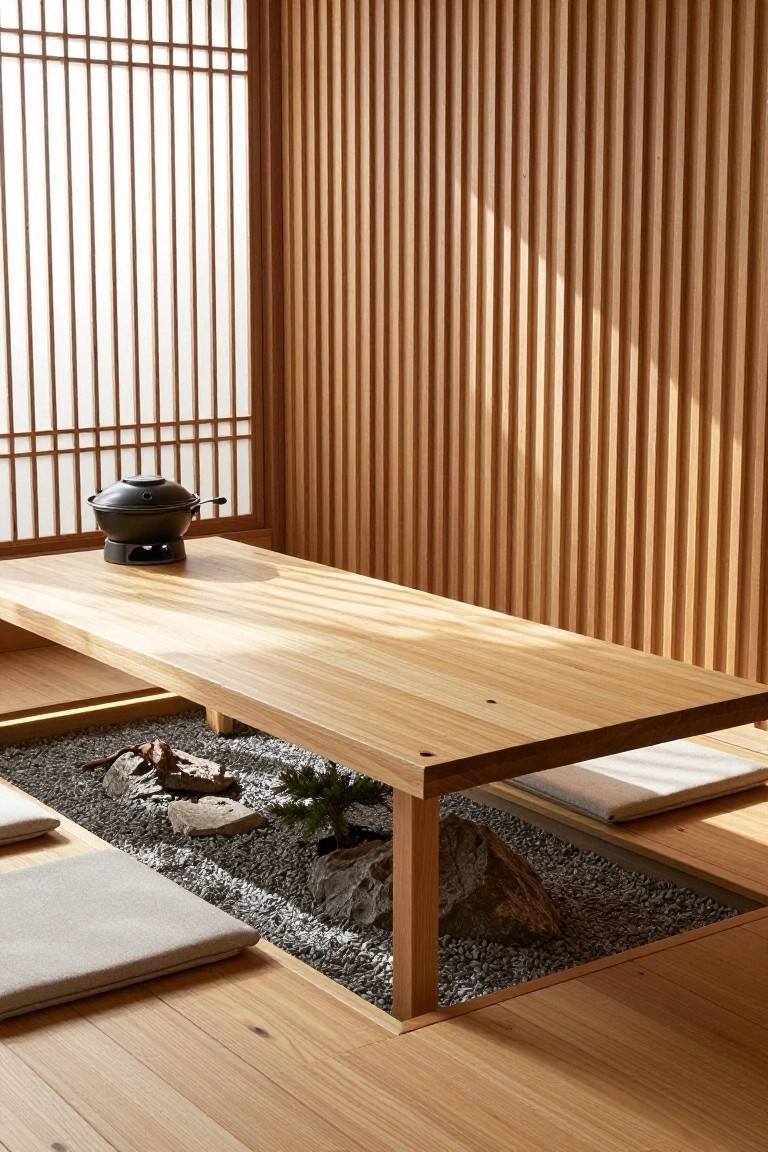
One way to add natural texture without taking up extra floor space is to recess a small garden area right beneath a low table. The table still works for meals or gatherings, but the gravel and stones below become a quiet part of the room instead of empty space.
This approach suits smaller rooms or homes that already lean toward simple, calm interiors. Keep the planting low and easy to maintain so the seating around the table stays comfortable and the feature does not feel busy.
Building A Covered Wooden Bar On The Patio
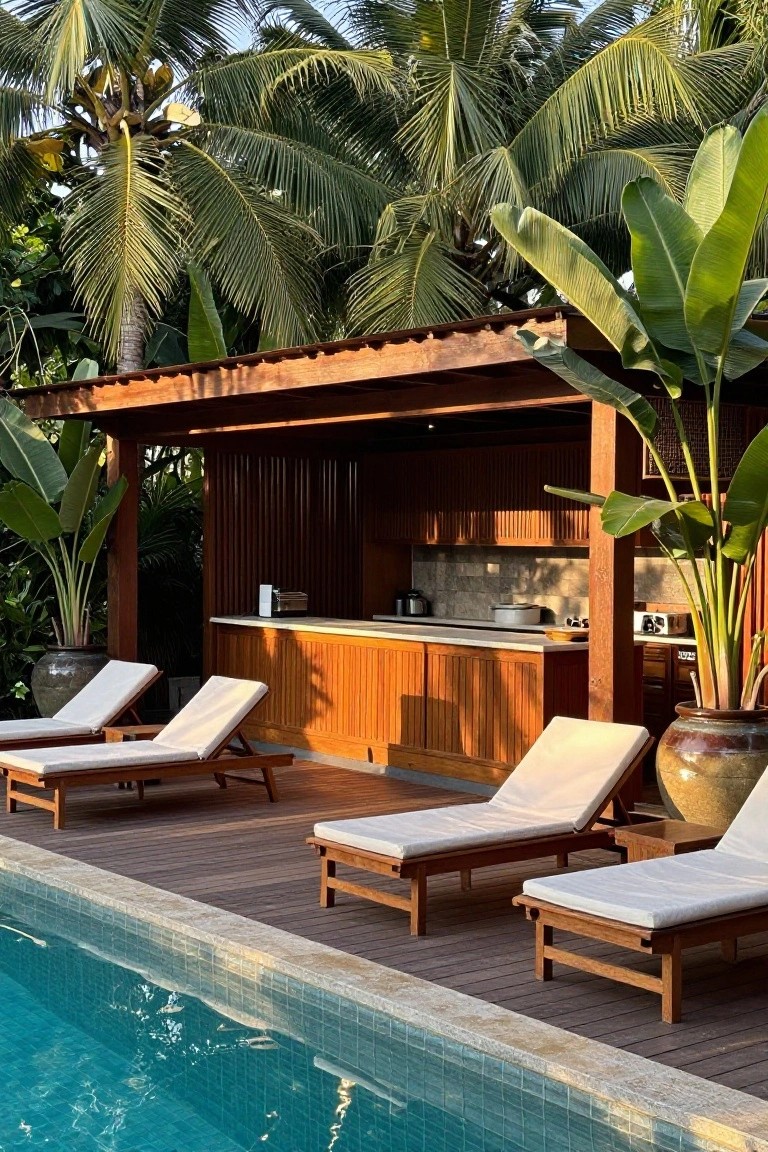
A covered wooden bar gives the patio a clear purpose without needing a lot of extra furniture. It turns the space into somewhere you can actually prepare food or drinks while staying close to the pool and seating, and the solid roof keeps things usable even when the sun is strong.
This setup works best on larger decks where you have room for both lounging and a work area. Keep the wood finish simple and let nearby plants soften the edges so the structure feels like part of the garden rather than a separate room.
Wooden Cabinets Add Storage on the Porch
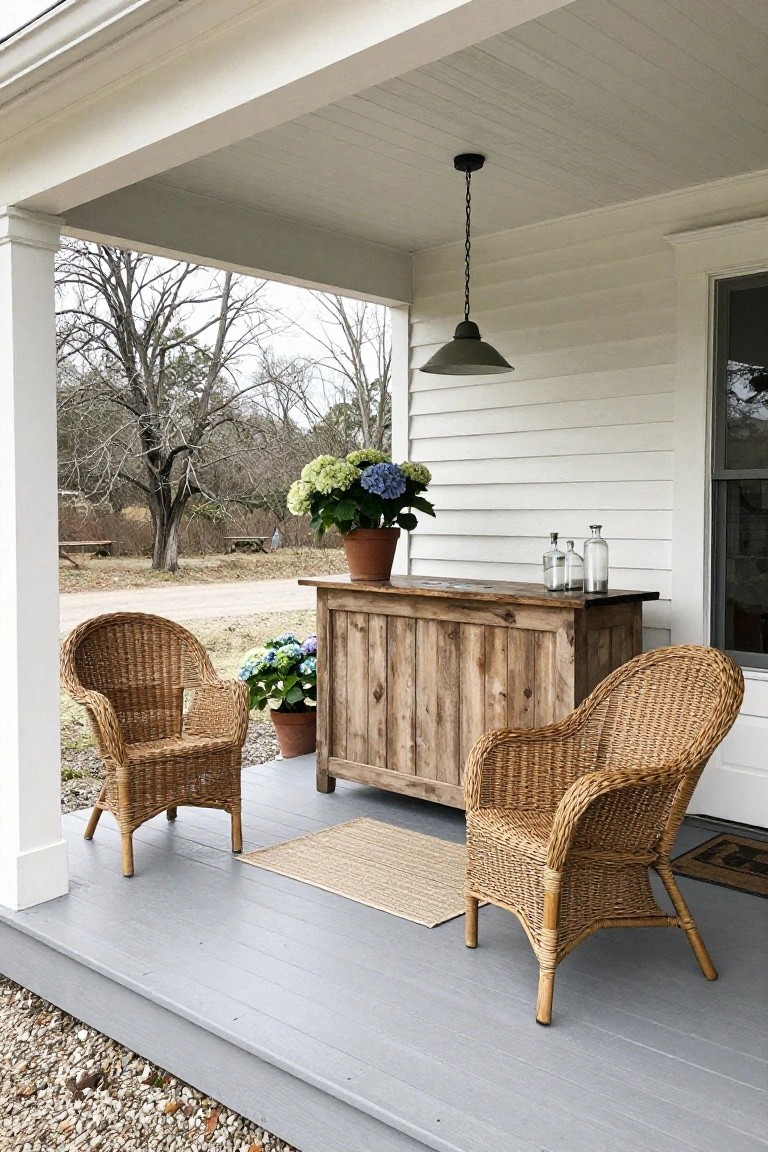
A wooden cabinet placed on the porch gives you a solid surface for plants while also hiding cushions or tools inside. It keeps the space from feeling empty and works with the natural wood tones already present.
This setup suits covered porches best since the wood stays dry. It fits homes that already use simple seating like wicker chairs and lets you add greenery without crowding the floor.
Run A Fire Feature Through Your Deck
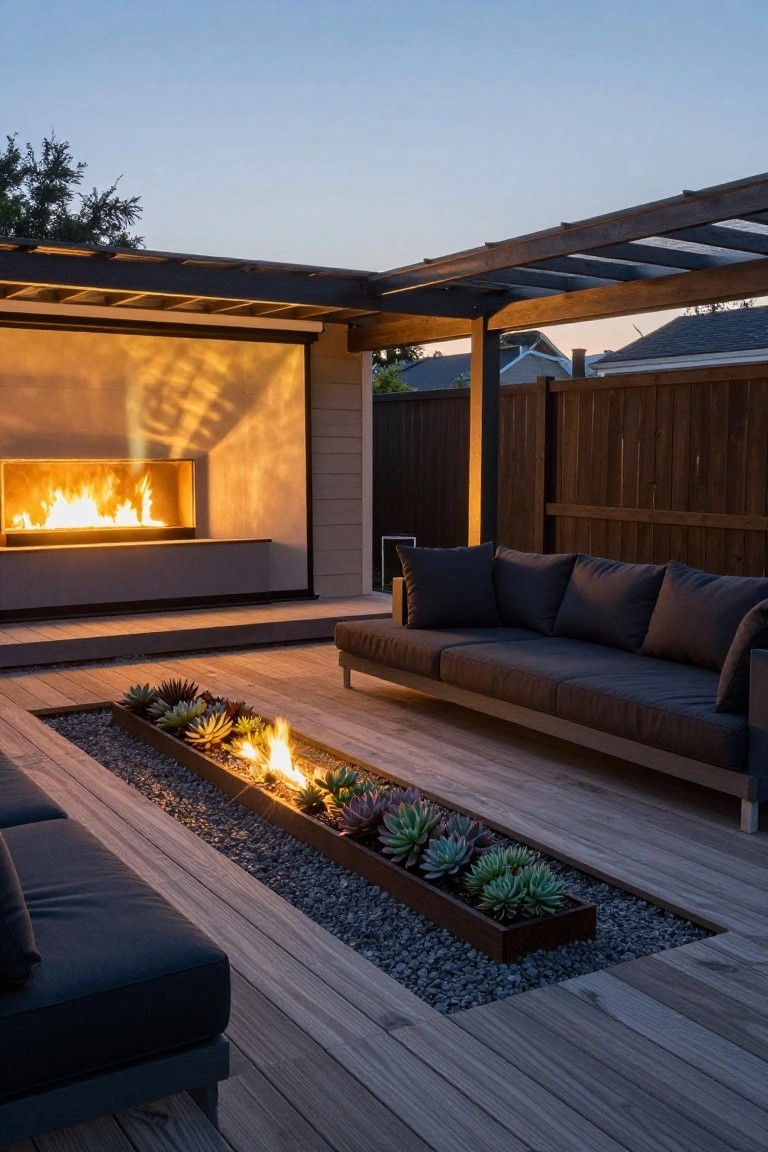
A long, narrow fire trough set right into the wood decking gives the patio a steady focal point without crowding the space. The gravel bed and low succulents keep the line open and let the flames stay visible from the seating area.
This works best on decks that have room for a straight run of at least eight or ten feet. Keep the planting low so it does not block the fire or the view across the patio, and choose succulents that handle heat and reflected light from the wood.
Adding a Bar Table Along the Railing
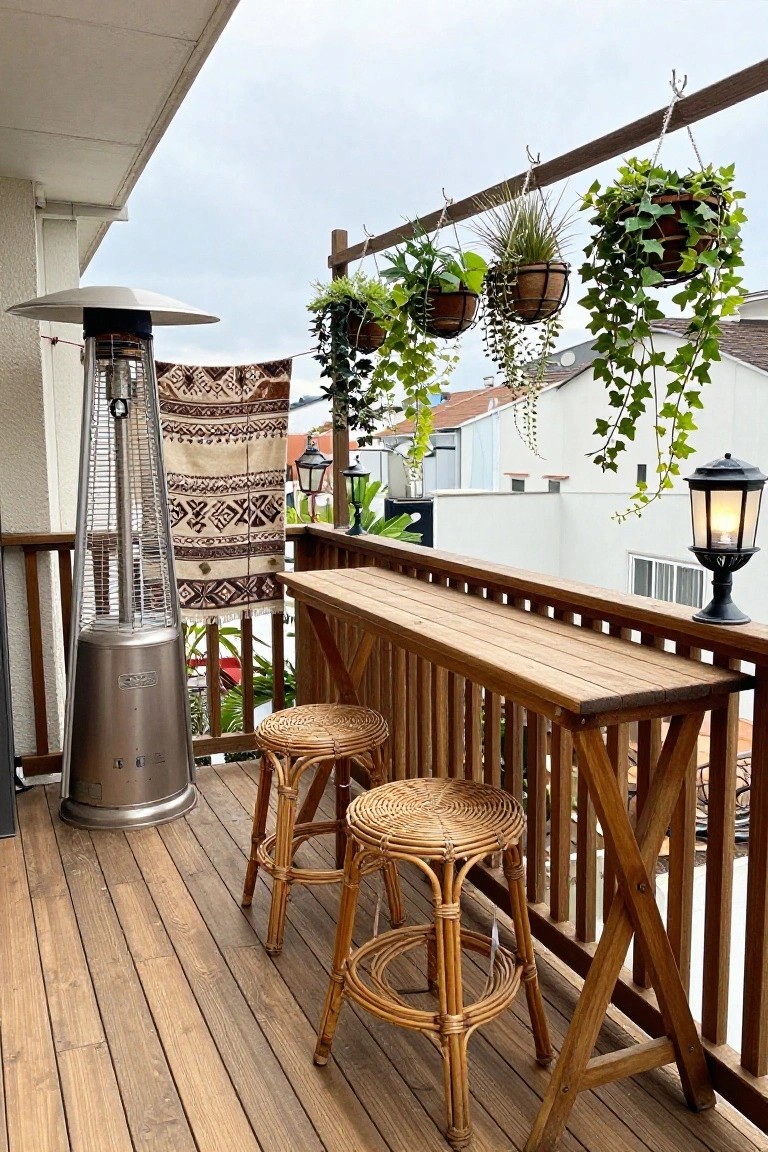
A bar table set along the edge of a wooden deck or balcony gives you a practical spot for drinks and casual meals without crowding the floor. It keeps the seating high enough to enjoy the view while using the railing as a natural backrest.
This setup works best on smaller outdoor spaces where a full dining table would feel too big. Pair it with simple stools and let hanging plants soften the line above. Just make sure the height lines up with how you plan to use it most.
Using Curtains On A Wooden Pergola For Shade
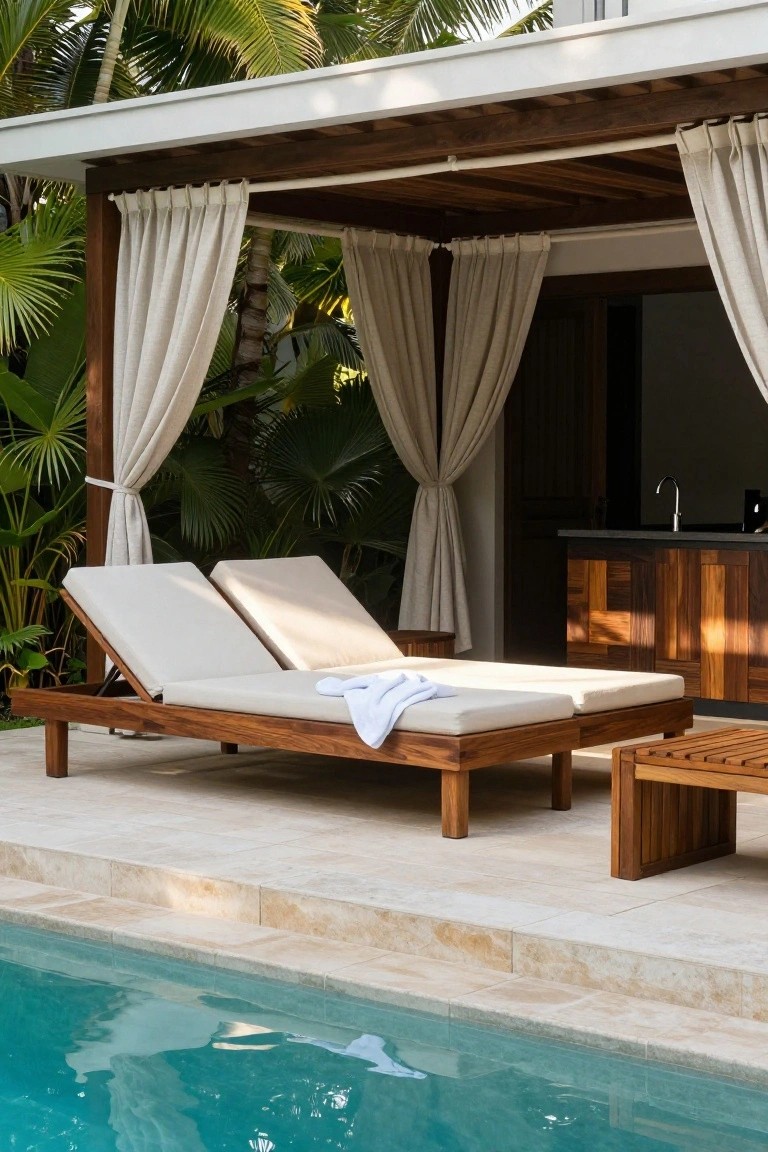
A simple wooden frame with fabric curtains can turn an open patio into a more usable spot during the day. The curtains block harsh sun without closing off the view completely, and they can be pulled back when the light is softer. This setup works especially well next to a pool where glare off the water can make sitting uncomfortable for long.
It suits homes with warm climates and plenty of outdoor space. The wood gives structure while the curtains add softness and some privacy from neighbors. Just make sure the fabric is weather resistant and easy to clean if you plan to leave it up year round.
A Long Wooden Table For Casual Outdoor Meals
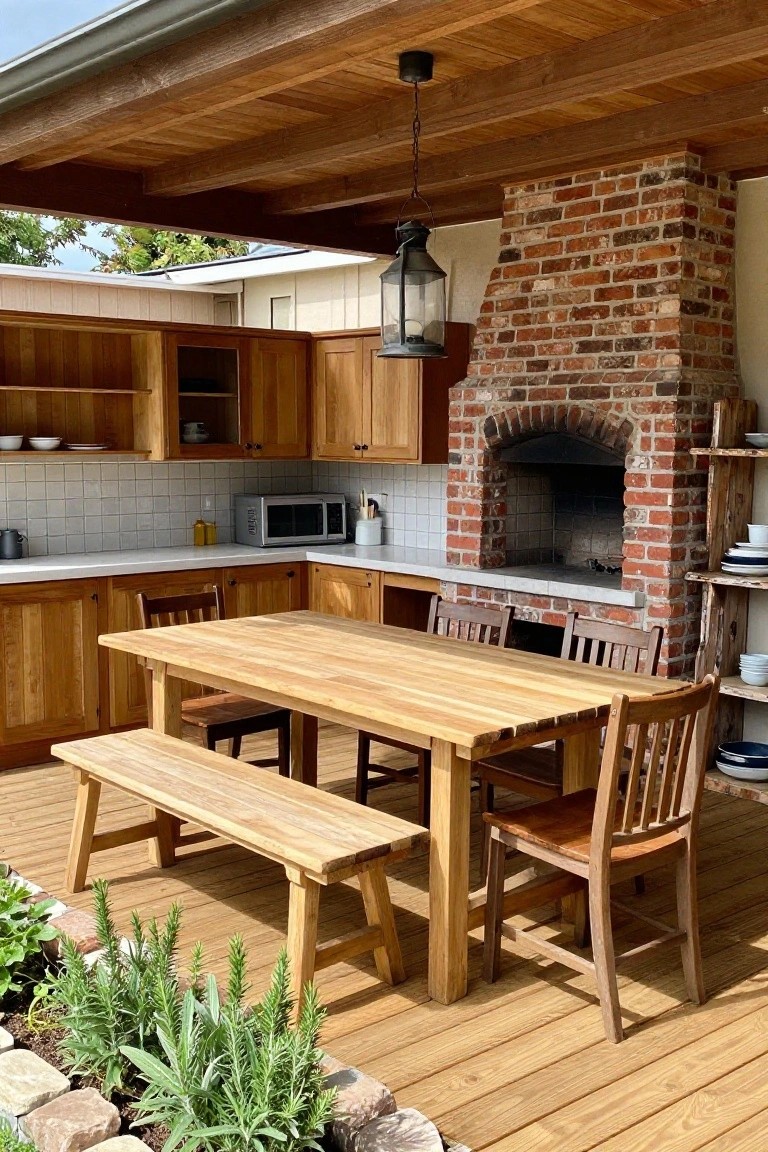
A long wooden table with a bench on one side makes outdoor dining simple and practical. It fits easily into a deck layout and leaves room for people to move around while staying close to the cooking area.
This setup works best on wooden decks where you want furniture that matches the floor and holds up to daily use. Treated wood keeps maintenance low, and the bench saves space compared to pulling out extra chairs every time.
Pergolas Over Wooden Decks
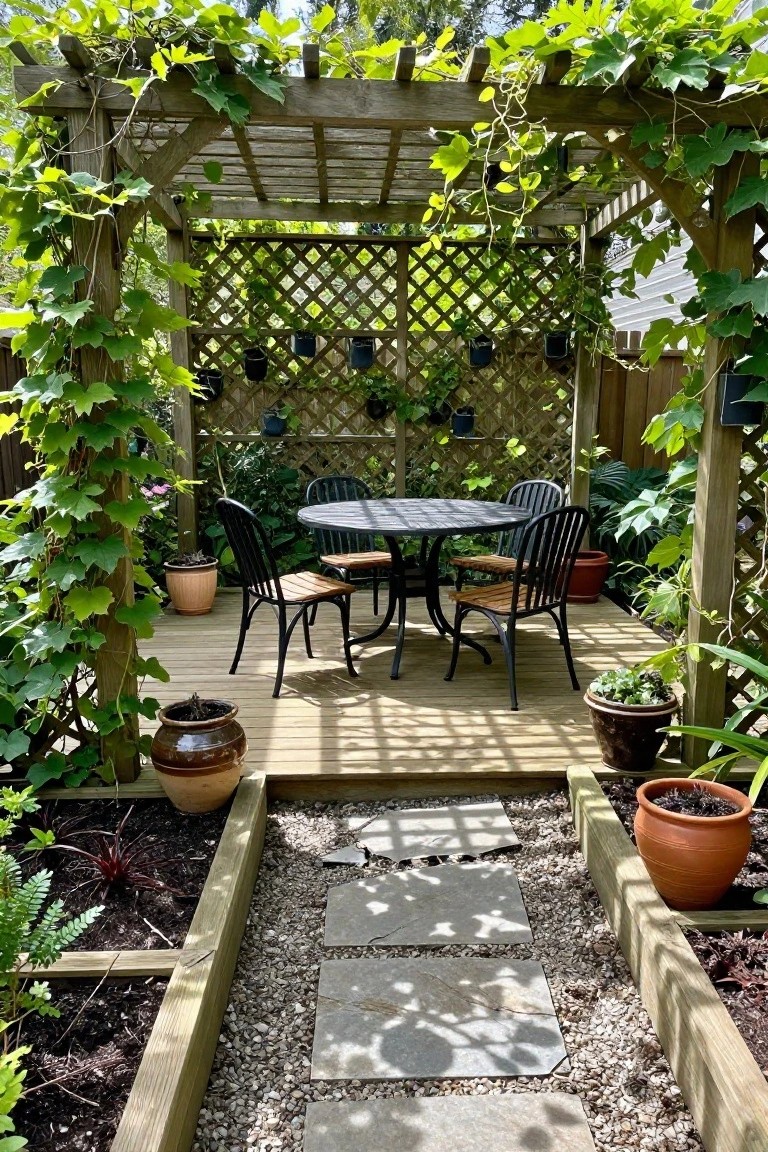
A pergola gives a wooden deck clear boundaries without making the space feel boxed in. It creates shade for the table and chairs while giving vines a place to grow, so the seating area blends right into the surrounding plants instead of sitting apart from them.
This works best on decks that sit at the back of the yard or along a garden edge. Keep the wood tone consistent between the deck and pergola, and let the plants do most of the softening so the whole spot feels like part of the garden rather than a separate addition.
Built-In Benches Keep A Patio Layout Simple
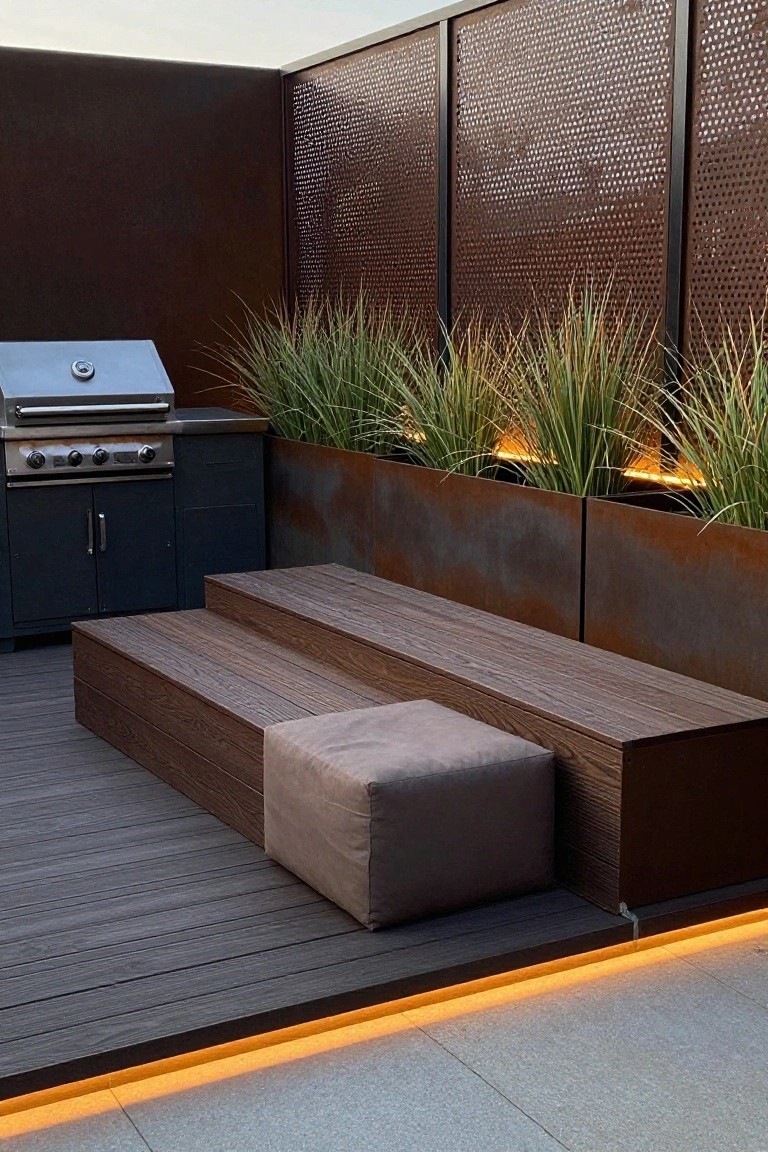
Built-in wooden benches along the edge of a deck give you seating without adding extra furniture that takes up floor space. They work especially well when the benches line up with raised planters, so the whole area feels connected rather than broken into separate pieces.
This setup suits smaller patios or side yards where you want room to move around. Keep the wood tone consistent with the decking and let the planters do most of the softening with tall grasses or similar plants.
Sturdy Wooden Benches For Everyday Patio Use
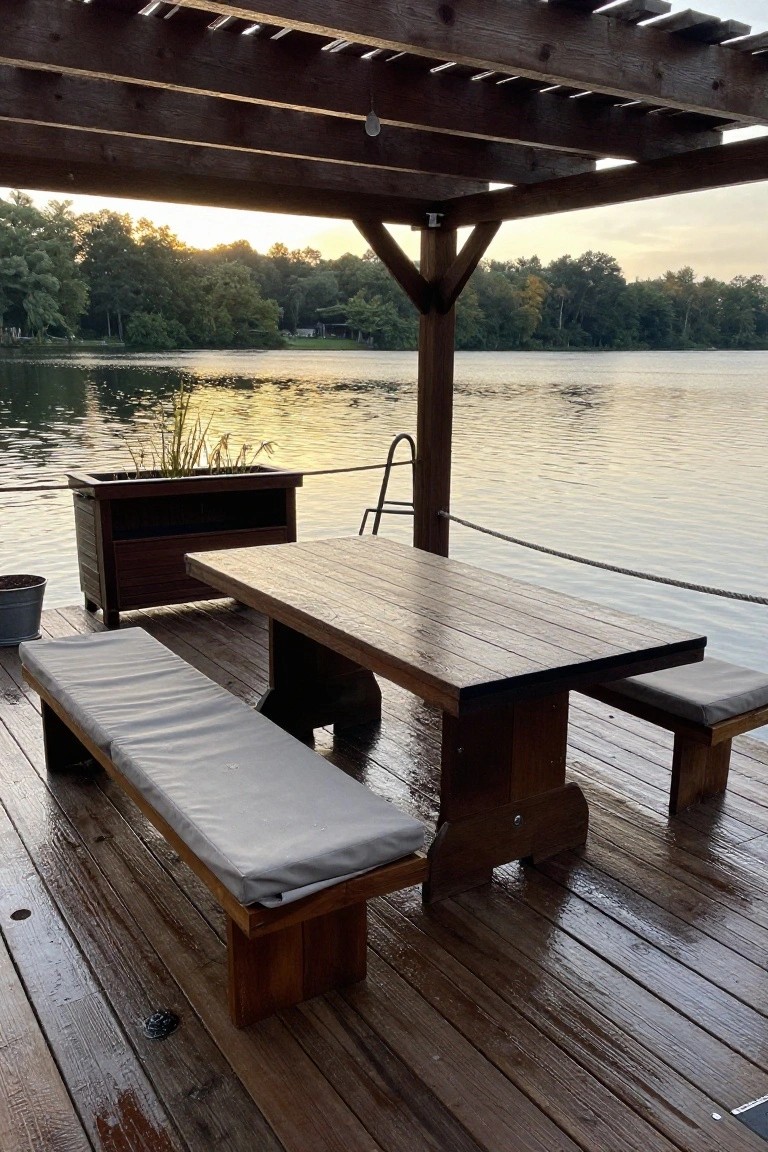
A solid wooden table with matching benches holds up well on a deck that sees regular use and changing weather. The thick planks and simple construction keep the setup from shifting or wearing down quickly, which makes it practical for spaces that stay outdoors all year.
This kind of seating works best on larger decks near water or trees where you want a fixed dining spot without constant upkeep. Pairing it with a nearby planter adds a bit of greenery while keeping the overall look straightforward and functional.
Frequently Asked Questions
Q: Will the wood stay nice if I water the plants a lot?
A: Pick a wood that handles moisture well and let it dry out between waterings. Raise the planters a bit so water drains away from the boards. That keeps everything looking fresh without extra work.
Q: Which plants won’t drop leaves all over the seating area?
A: Go for evergreens or plants with bigger leaves that you can trim easily. They add the green feel without constant sweeping.
Q: How do I keep bugs away when there’s so much wood and plants together?
A: Use natural repellents like citronella around the edges. The open design helps air flow too so bugs don’t stick around much.
