

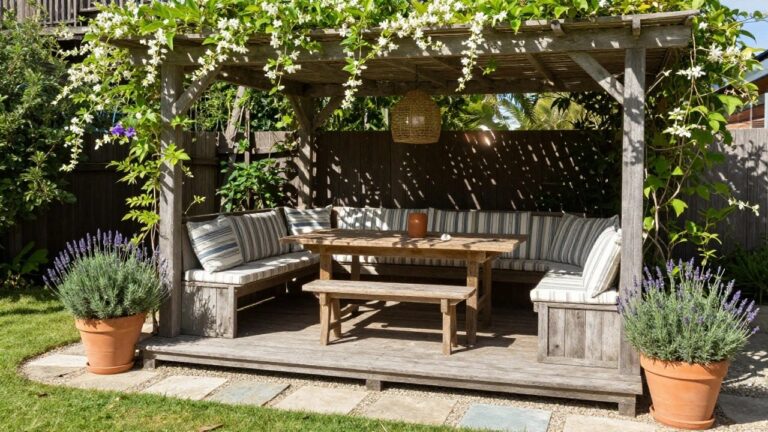
I have always found that wooden patios hold up better when the shade comes from plants that grow into the structure instead of being added on top later.
Vines and flowers placed along the edges can soften the look of the wood while also cutting down on direct sun during the hottest hours.
Usability comes first in practice.
I usually check how much open floor space remains once everything fills in because a patio that feels cramped loses its purpose quickly.
The setups that work longest are the ones where the wood and the greenery look like they developed together over time.
Pergola with Overhead Vines for Shade
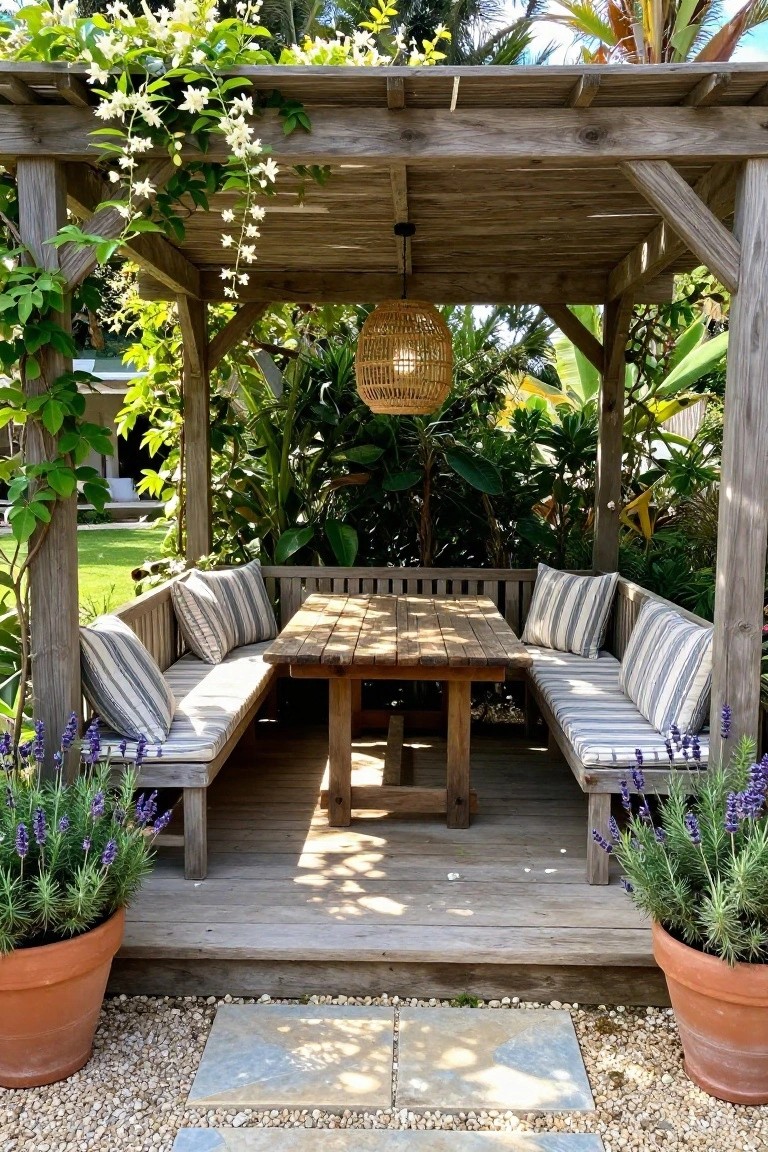
A pergola makes a patio feel more finished while giving you shade that actually works with the plants around it. Vines growing across the top create a natural screen that filters light instead of cutting it off completely, and they soften the whole structure without extra fabric or umbrellas.
This setup works best on a deck or patio that already gets good sun. Keep the frame simple in wood so the vines can take over the look, and leave room underneath for a table and benches that stay usable through the day. Just watch how fast the vines spread if you want to keep some open sky visible.
Built-In Bench Seating For Small Patios
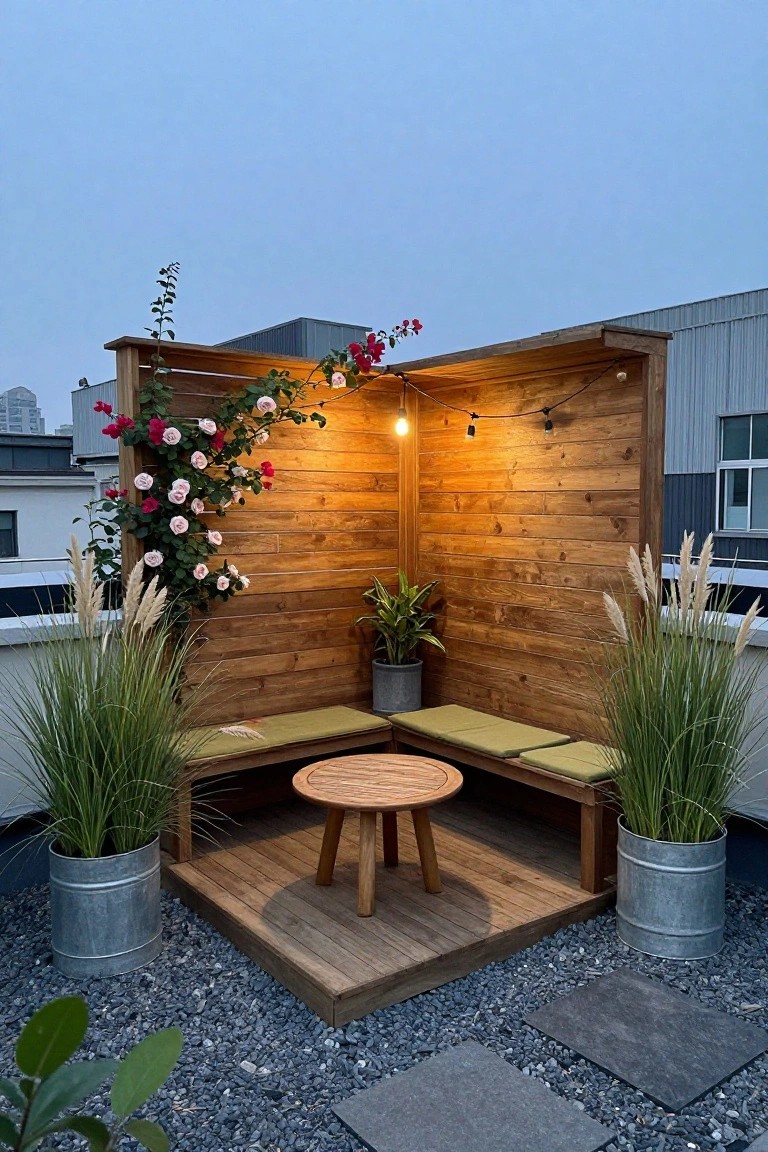
Built-in benches work well when space is tight because they stay tucked against the walls and do not take up extra floor room. A simple L-shaped layout like this gives plenty of seating while keeping the middle open for a small table and easy movement.
This kind of seating suits decks or patios that already have a back wall or fence to build against. It works best in modest backyards or rooftop spots where you want a quiet place to sit without crowding the area with loose chairs.
Growing Vines Over a Pergola for Shade
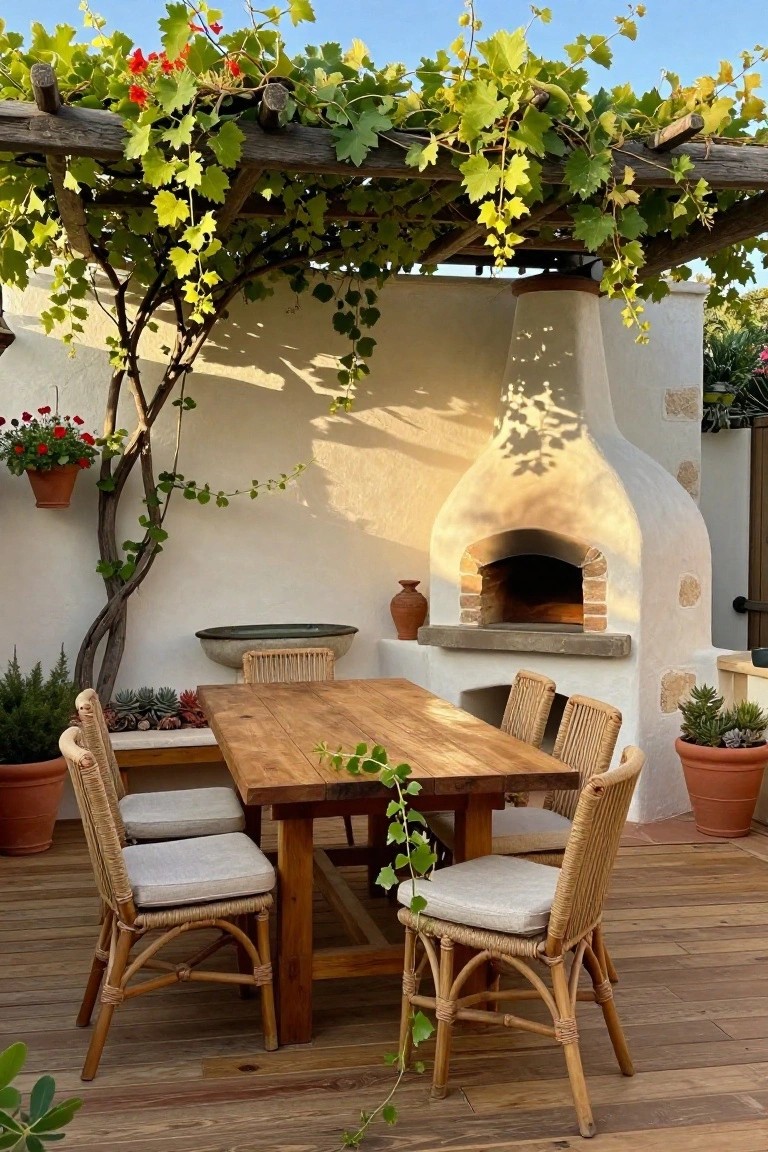
A pergola covered in vines gives steady shade while still letting some light through. The leaves create a natural screen that cools the space and adds a bit of green without needing heavy fabric or solid roofing.
This setup works best over a dining table on a wooden deck or patio. It suits homes that already have room for outdoor seating and gives climbing plants a simple structure to grow on.
A Fire Pit Placed Low On The Deck
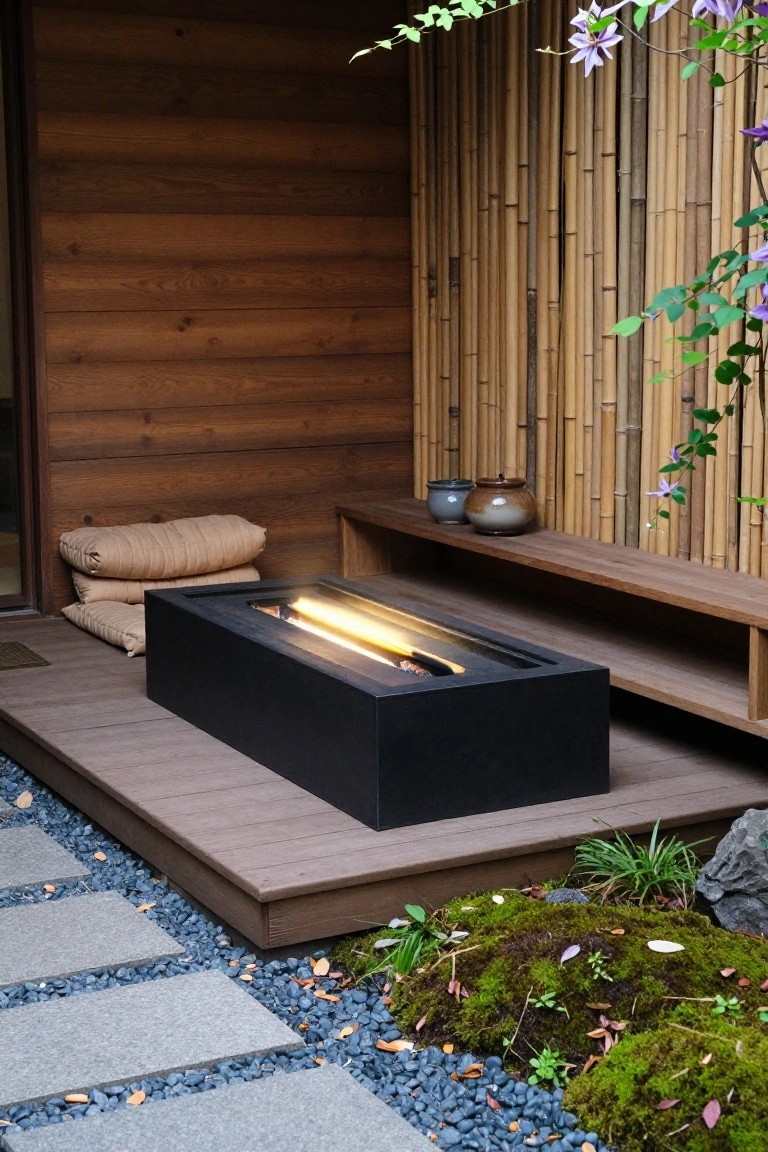
Setting a fire pit right on the deck surface keeps the whole area feeling open and easy to use. It gives you a steady spot for sitting without adding tall furniture or structures that might get in the way of the plants around it.
This works best on decks that already have some natural screening nearby, like bamboo or low garden beds. Just check that the deck boards can take the heat and that the pit sits level so it stays safe to use.
Built-In Benches Under A Pergola
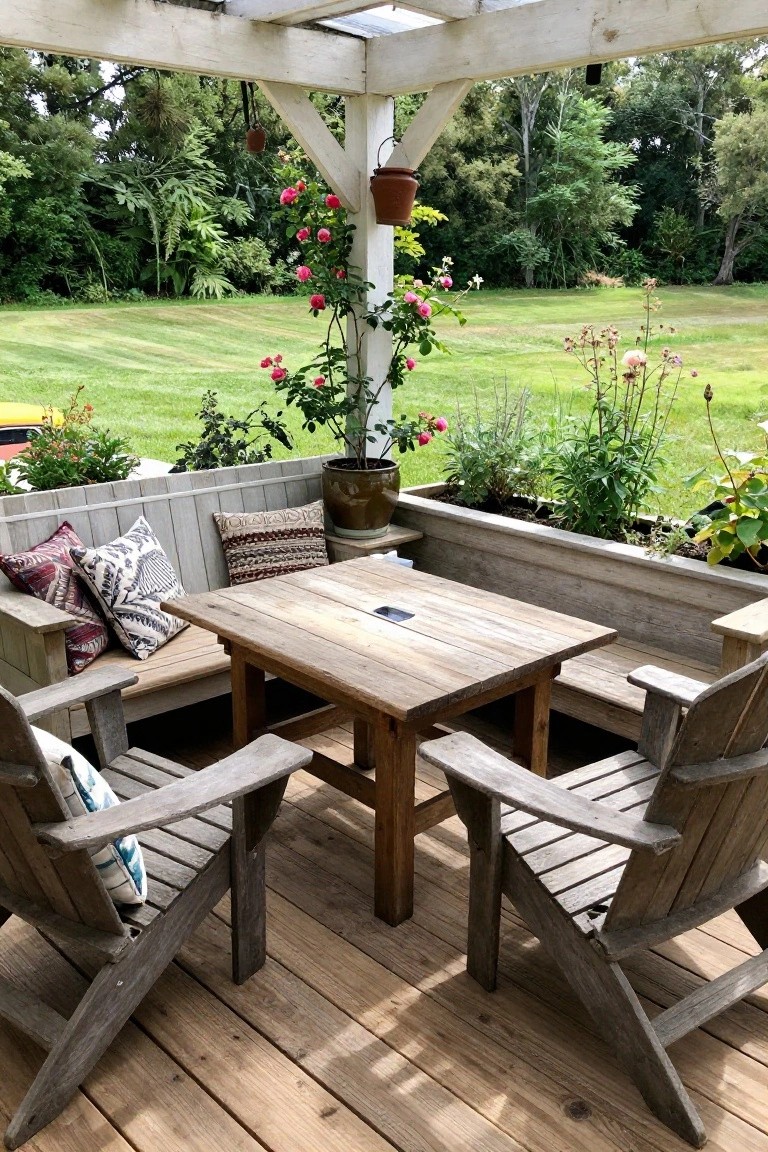
Built-in benches make a patio feel more settled because they stay in place and do not need rearranging every season. When a pergola sits above them with vines growing across the top, the shade feels natural and the whole area stays cooler on warm days.
This layout works best on a mid-sized deck that gets regular sun. It suits homes where simple vines like roses can climb without much fuss. Keep the bench height in line with the table so people can sit comfortably for meals.
Grow Vines Over a Pergola for Shade
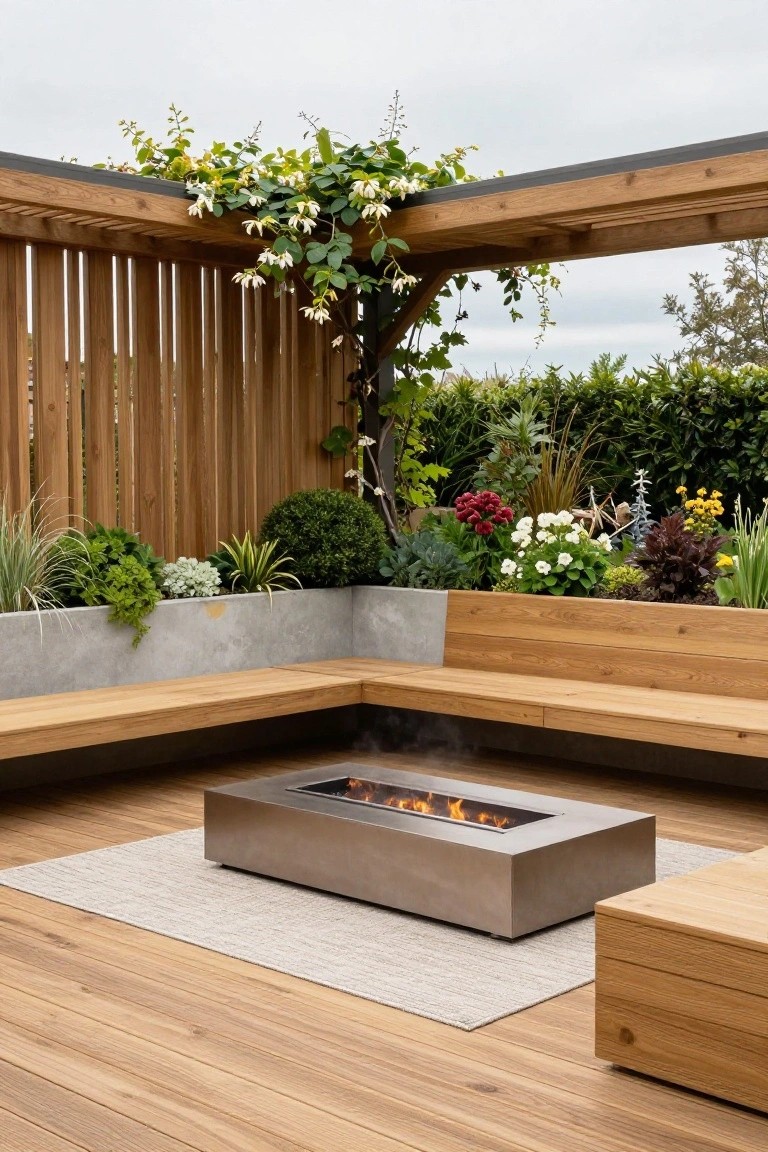
A pergola with vines overhead gives a wooden patio useful shade without needing a solid roof. The plants soften the structure and let some light through while keeping the space cooler on warm days. It also brings flowers and greenery right into the seating area.
This approach works well on decks that already have a simple frame in place. Pair it with built-in benches around a fire pit so the vines help define the zone. Choose a vine that grows at a steady pace for your area and give it something sturdy to climb.
Let Vines Grow Over a Pergola for Shade
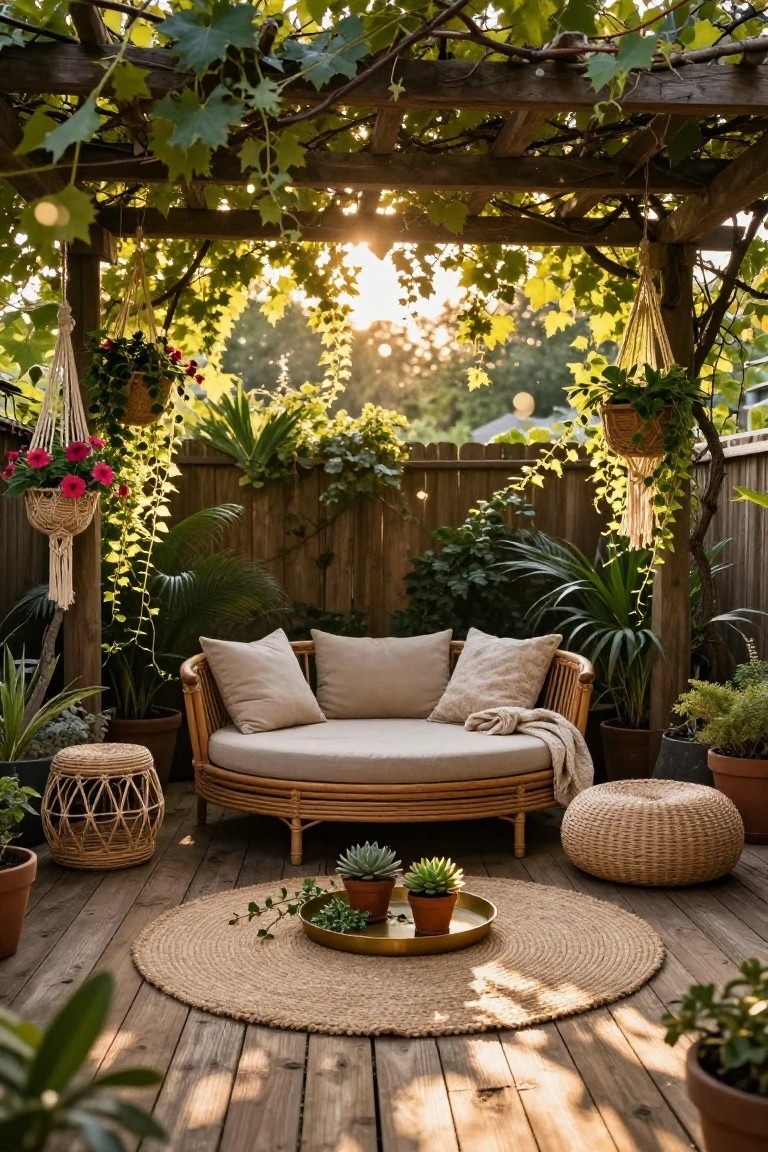
A wooden patio often feels more usable when a pergola is added and vines are allowed to climb across it. The plants create shade on their own, and the look stays light instead of heavy like a solid roof.
This works well on decks that get afternoon sun and already have some planting nearby. Choose a sturdy frame and vines that suit your area so the coverage builds without constant trimming.
Outdoor Kitchen Cabinets on a Wooden Patio
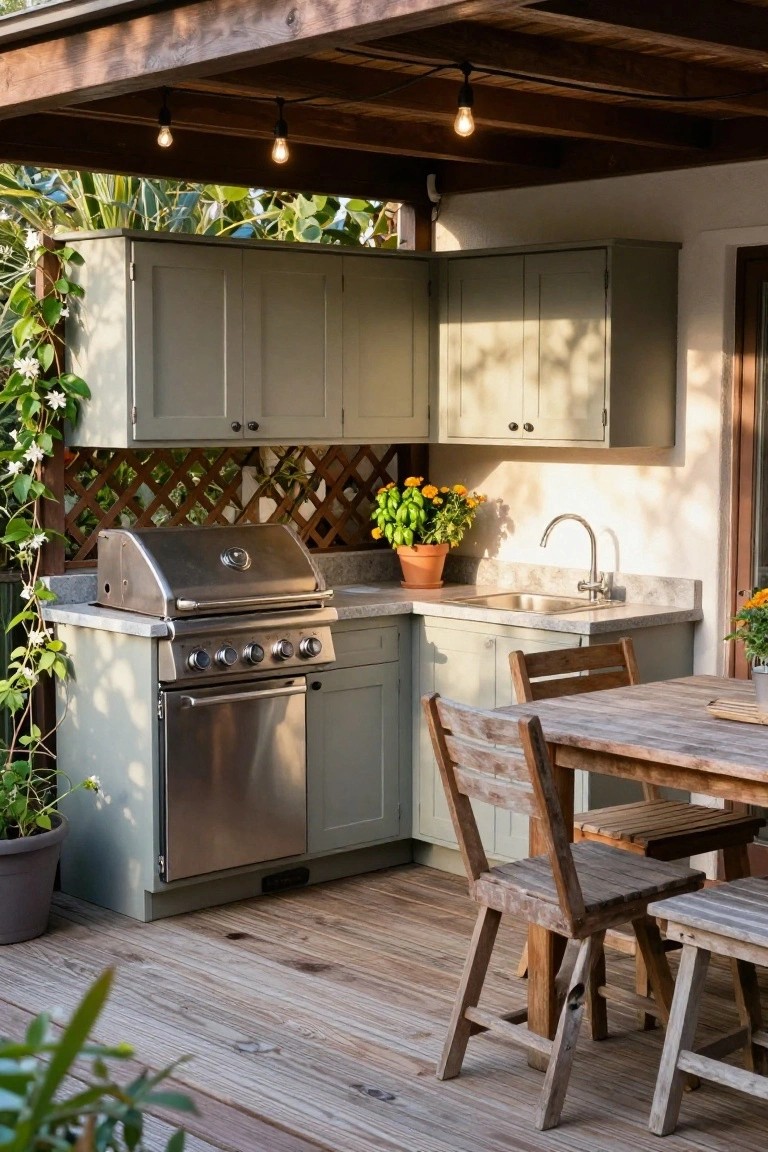
An outdoor kitchen turns a wooden patio into a place where cooking and gathering happen in the same spot. The built-in cabinets and appliances keep everything organized without taking up extra floor space, so the deck stays open for tables and chairs.
This setup works best on decks that already have good structure and some overhead cover. Match the cabinet color to the surrounding wood tones and make sure the materials can handle weather, since that is what keeps the whole area looking clean over time.
Built-In Seating Around a Fire Pit
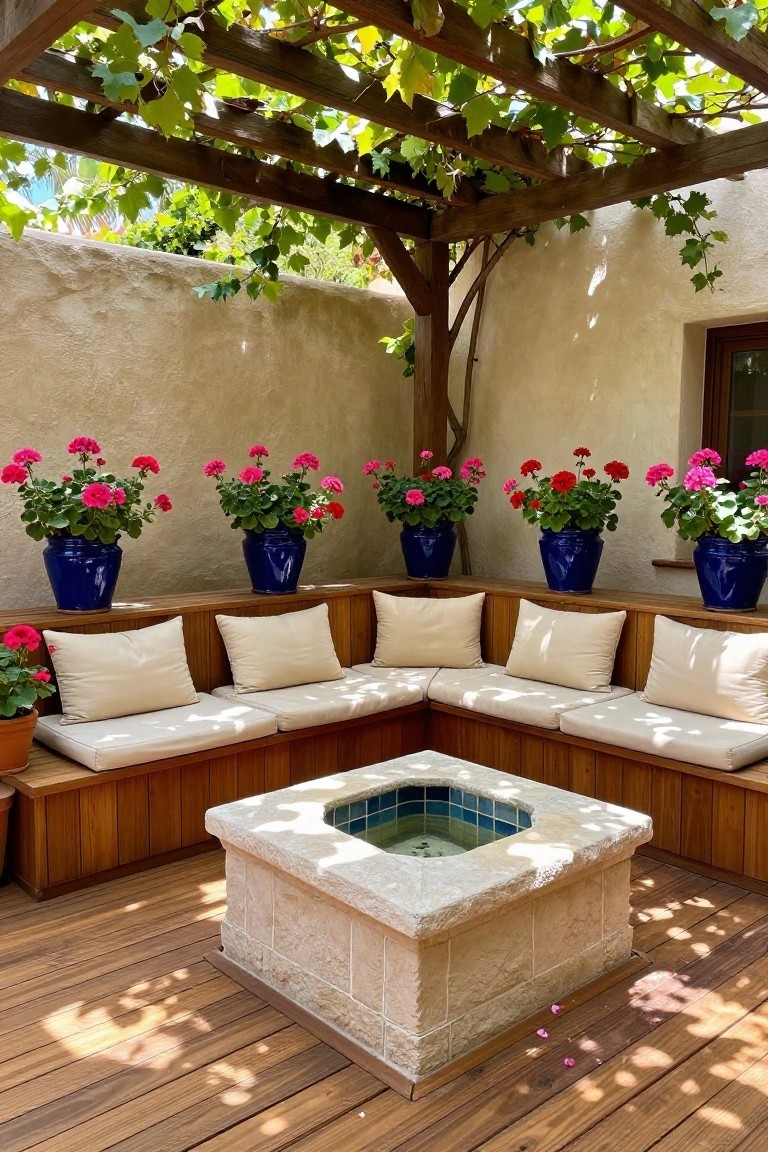
Built-in benches make a patio feel more settled and ready for use. When they wrap around a fire pit the whole area becomes a single spot for sitting and gathering instead of scattered chairs that need moving.
This layout suits wooden decks best because the benches can be built to match the deck boards. It works well in smaller yards where space is tight and you want the seating to stay in place year round.
Wooden Loungers on a Deck by the Pool
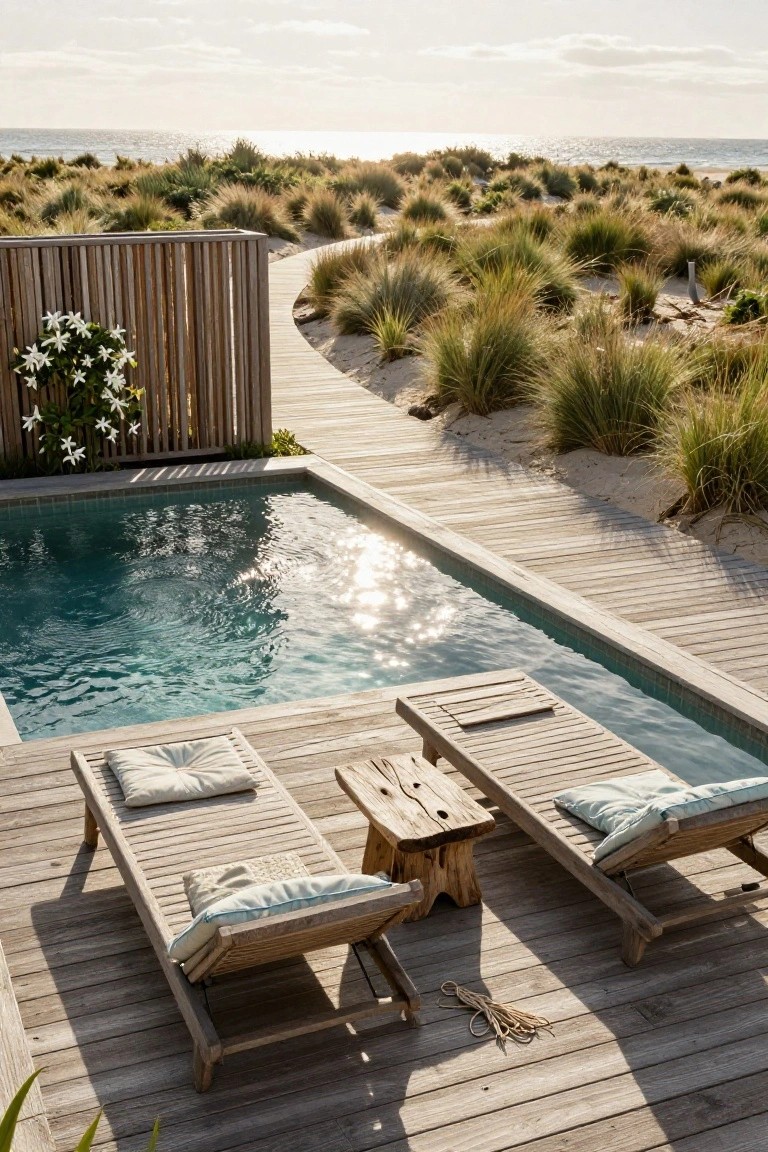
A pair of simple wooden lounge chairs placed right at the edge of the pool deck gives the space a relaxed, usable feel without much fuss. The wood tones sit comfortably against the water and the surrounding grasses, and the setup makes it easy to move from sitting to swimming in just a few steps.
This works best on coastal properties or homes where the deck already blends into the landscape. Keep the furniture low and weathered so it ages with the boards instead of standing out, and leave enough open deck space around the chairs for walking through.
Pergola With Vines For Natural Shade
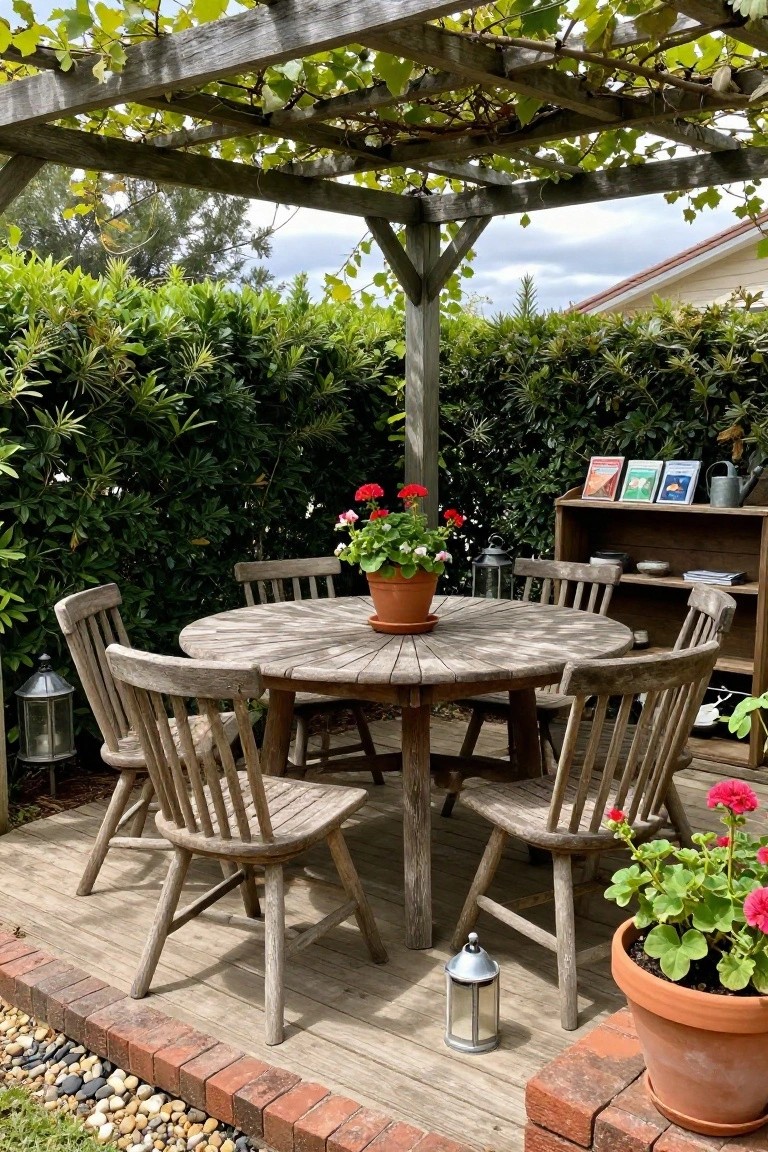
A pergola with vines overhead creates shade in a way that feels lighter than a solid roof. The vines filter sunlight and keep the space cooler while still letting some light through. This works especially well over a wooden deck where you want to keep the natural look.
Grow vines that match your climate and give them time to fill in. Place the structure right over a table so the area stays usable during the day. It suits homes that already have some garden space and can handle a bit of seasonal upkeep.
Grow Vines on a Lattice for Natural Shade
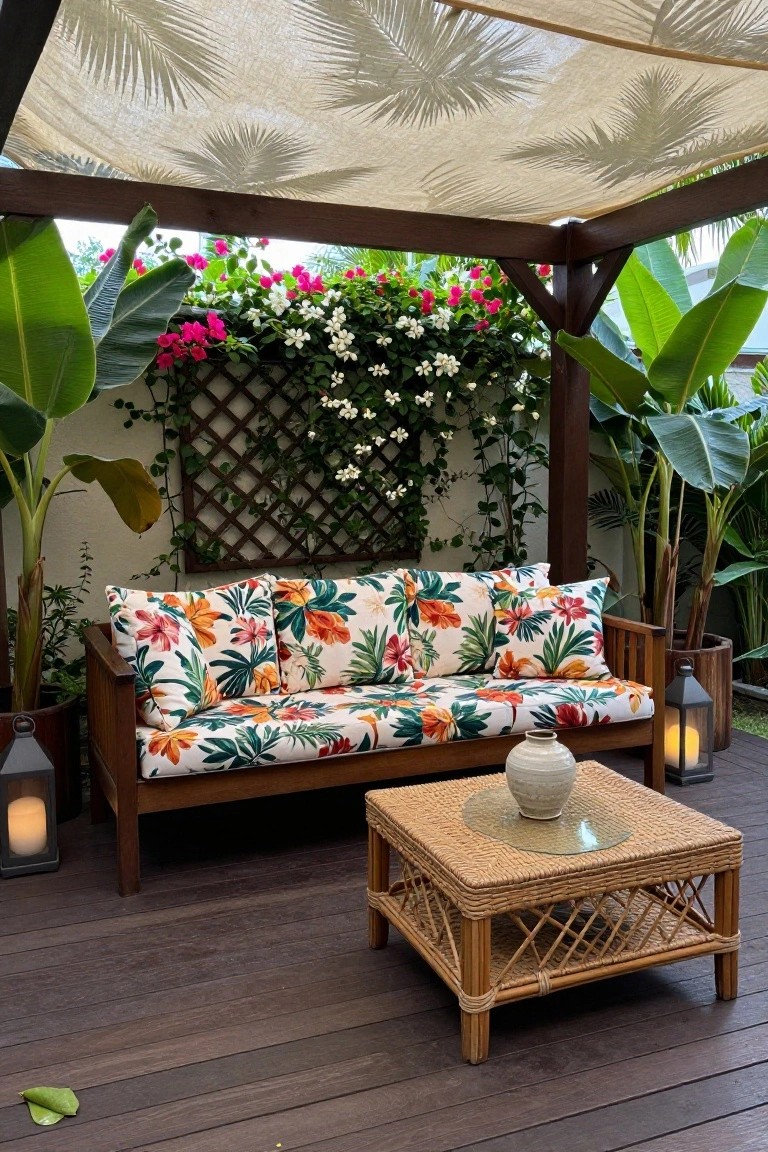
A simple lattice placed behind patio seating gives vines a place to climb and creates living shade that changes with the seasons. The flowers add color without extra effort, and the greenery softens the look of the wood around it.
This setup works best on a deck or patio that already has some overhead cover. Choose a sturdy trellis that can handle the weight of mature vines, and pick plants that suit your local climate so they fill in quickly without constant trimming.
Grow Vines Over a Pergola for Natural Shade
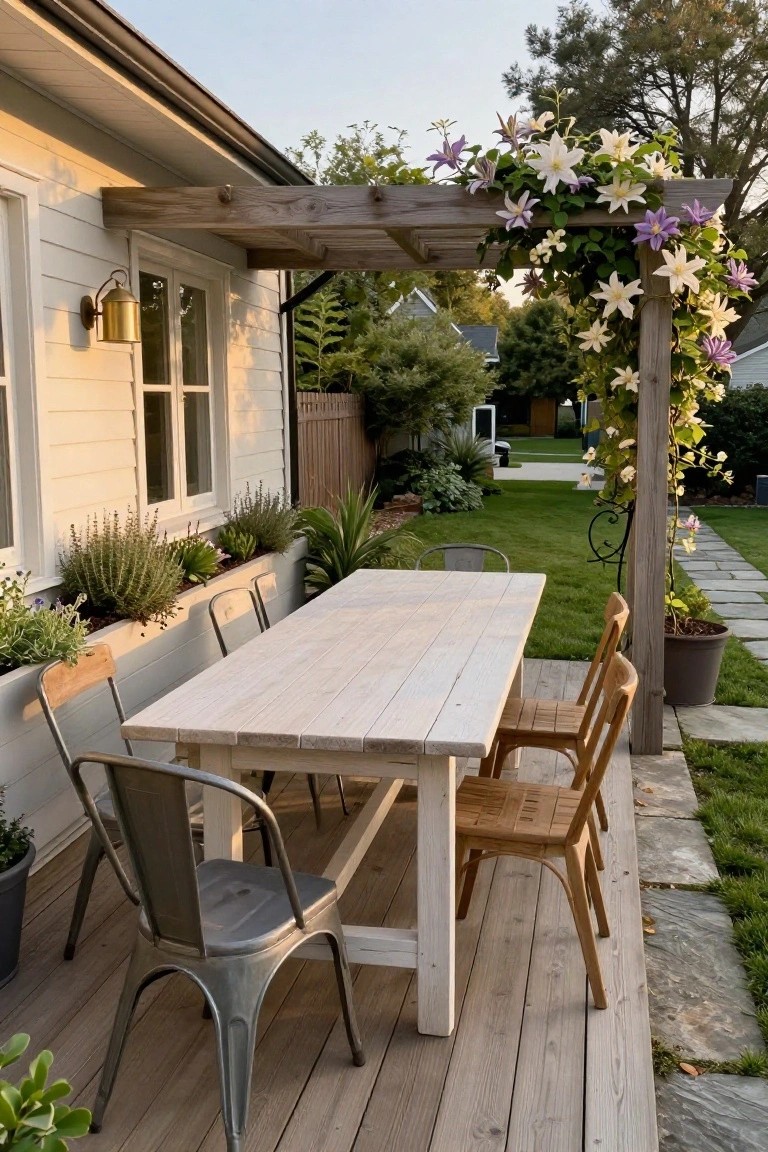
A wooden pergola with flowering vines running across the top gives steady shade without making the space feel closed in. The vines filter sunlight and add color right where you sit, which keeps the area cooler on warm days and makes the whole patio feel more settled.
This works best on a deck attached to the house where you plan to eat or gather. Pick vines that grow quickly in your area, give them something to climb on, and check that the posts can handle the weight once the plants are full.
Pergola With Flowering Vines For Natural Shade
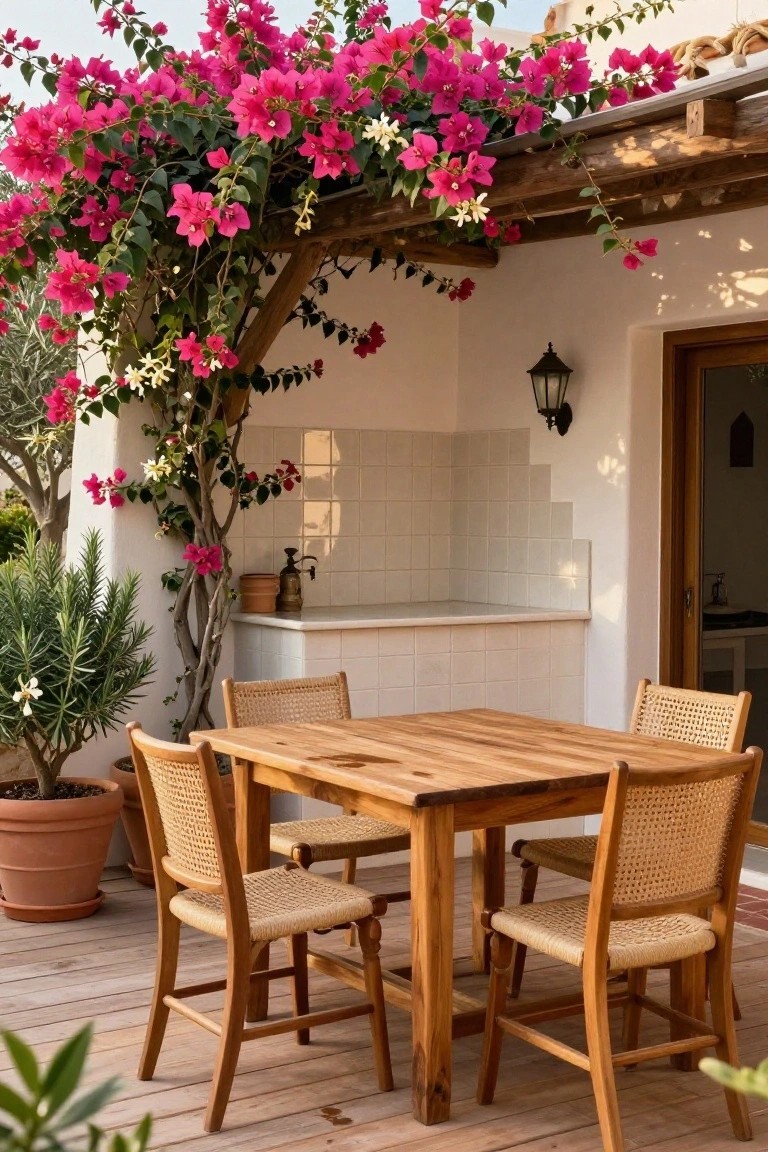
A wooden pergola gives vines something solid to climb while the plants fill in and block the sun over time. This setup keeps the space open and airy but still cuts the heat enough to make outdoor meals comfortable during the day.
It suits most backyards or side patios that get strong sun, especially if you already have a wooden table and chairs in place. Just make sure the frame is built well from the start, since the vines will add weight once they grow thick.
Built-In Benches Around A Fire Pit
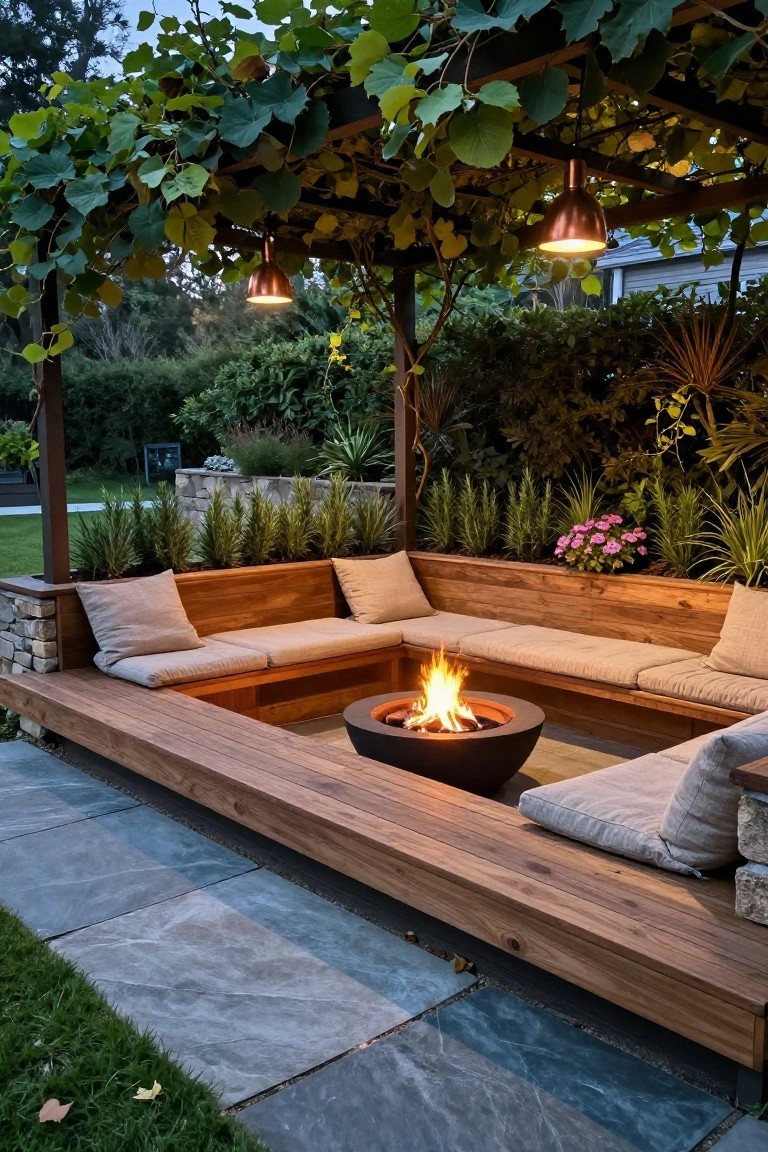
Many people like the way built-in benches turn a fire pit into the main spot for sitting and talking. The seating stays low and close to the flames, which makes the whole area feel more usable on cooler evenings.
This setup works best on wooden patios where the benches can be framed right into the deck. Keep the fire pit low and centered, and add overhead vines if you want extra shade without a solid roof.
Climbing Vines for Natural Shade on Wooden Patios
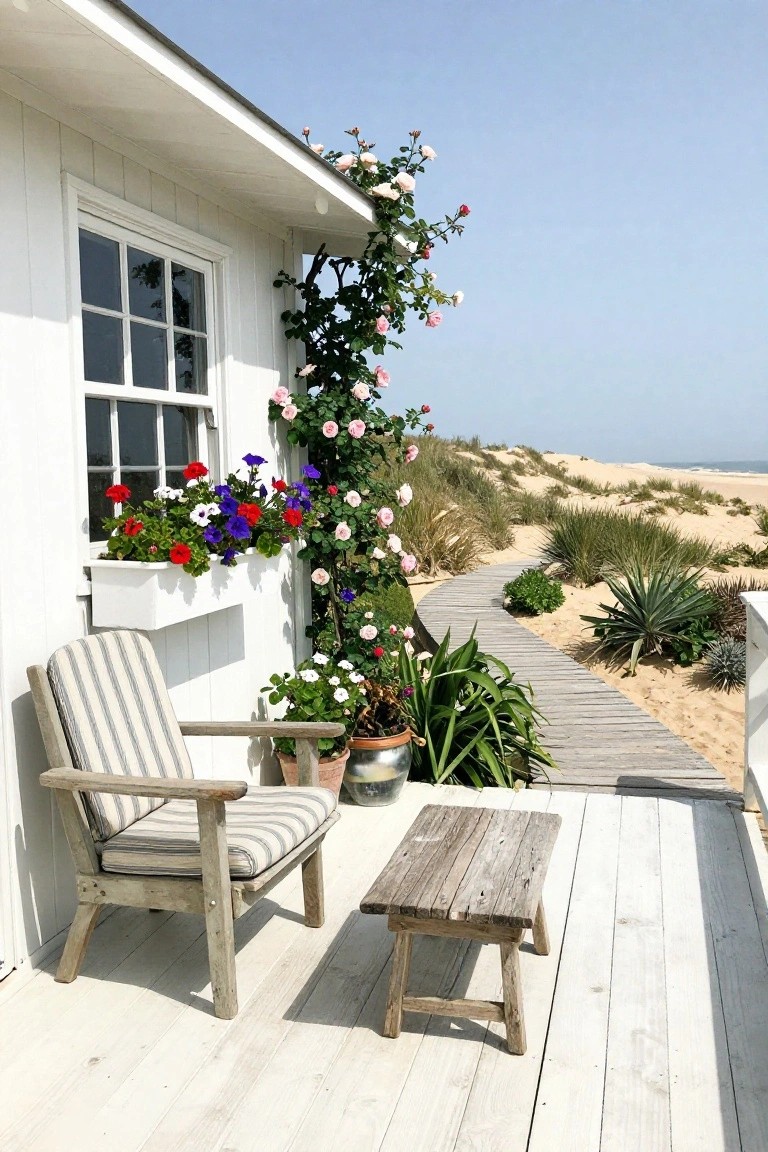
Climbing vines work well on wooden patios because they grow right up the side of the house and give shade without adding a roof or big structure. The flowers bring color too, and the whole setup feels softer than a bare deck with just furniture.
This idea suits homes that get lots of sun and already have a simple wood deck or porch. Give the vines something to climb on, like a trellis or the house wall itself, and choose plants that handle your local weather. Keep the furniture light so the plants stay the main feature.
Vines on a Wooden Fence for Patio Shade
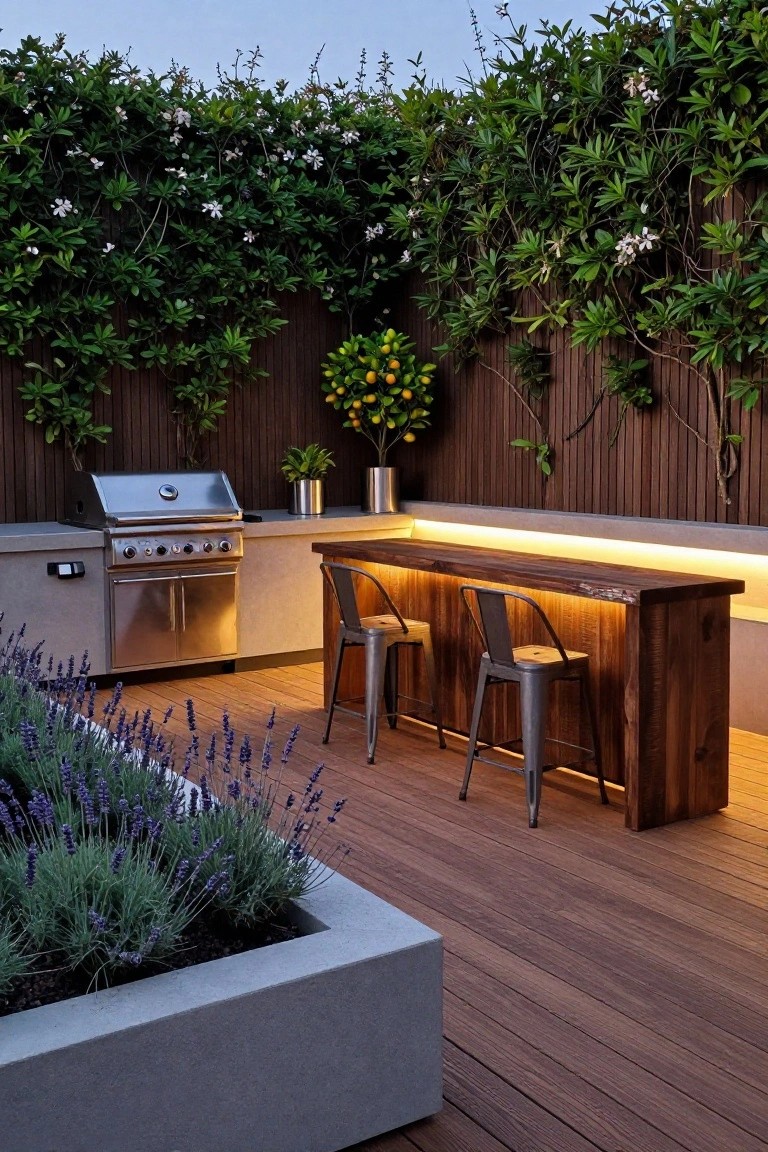
Many people like adding vines to a wooden fence around an outdoor bar because it brings natural shade without extra screens or roofs. The plants soften the look of the wood and give the space a bit more privacy while still feeling open.
This setup works best on decks that already have solid fencing and room for a simple bar counter. Pick climbers that grow well in your area and let them spread over a season or two. It suits homes that want low-key greenery rather than heavy structures.
Shade Your Patio With a Vine-Covered Arch
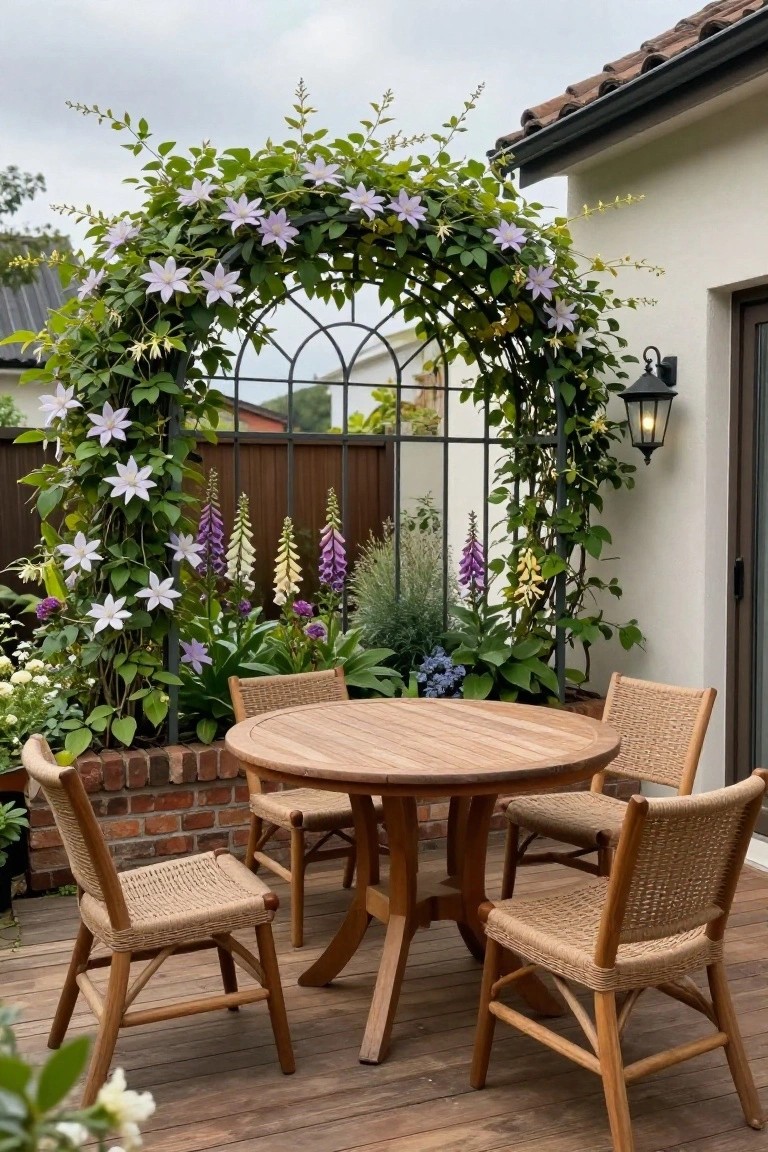
An arch covered in flowering vines makes a simple way to add shade over a patio table. The plants grow up and over the frame, giving dappled cover that feels lighter than a solid roof while still keeping the space usable on sunny days.
This setup works best on a wooden deck where you want some greenery without losing the open feel. Make sure the arch is sturdy enough for the vines and placed where it lines up with the seating area so the shade actually hits the table.
Climbing Roses Create Natural Shade For A Wooden Patio
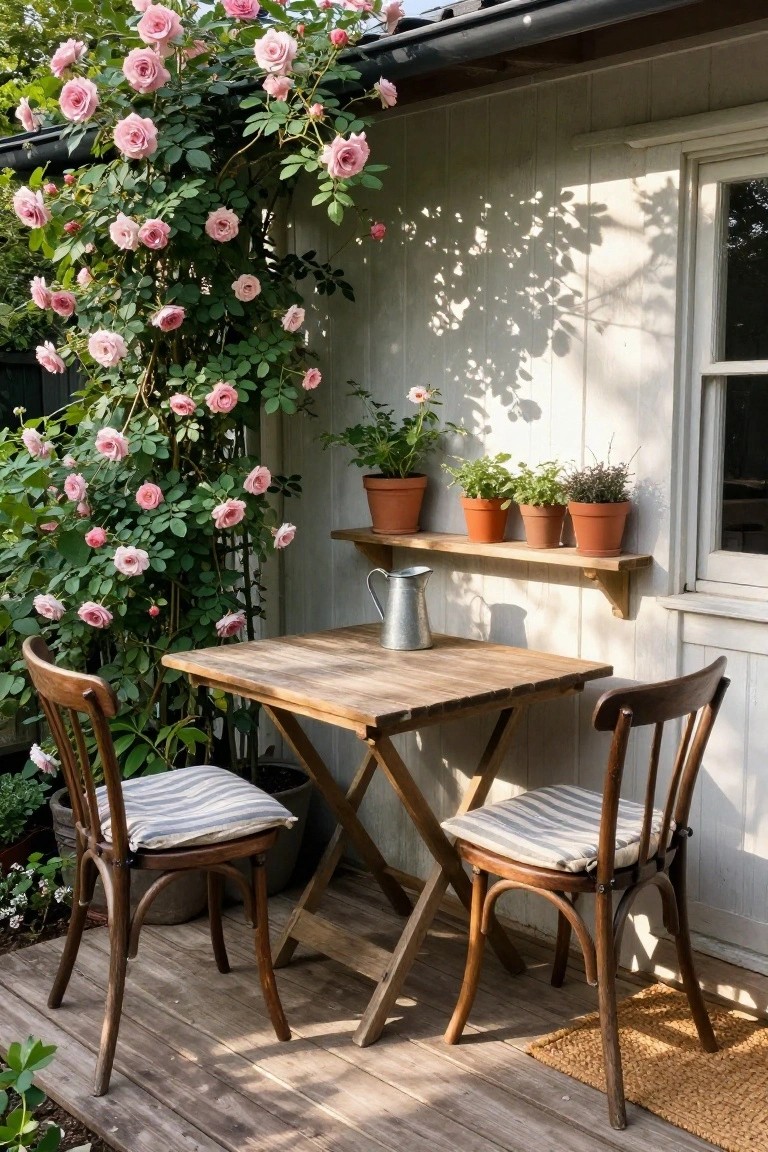
A small patio next to the house often needs some cover from the sun, and climbing roses do the job without needing a big structure. They grow up the wall, give you flowers, and cast soft shade over the table and chairs below. The wooden furniture stays simple and lets the plants do most of the work.
This works well on decks or patios that sit right against the house, especially if you already have a blank wall. Just give the roses something to climb on and keep the seating compact so the space does not feel crowded. It suits older homes or cottages where you want a bit of greenery without building a pergola.
Pergola with Hanging Vines for Natural Shade
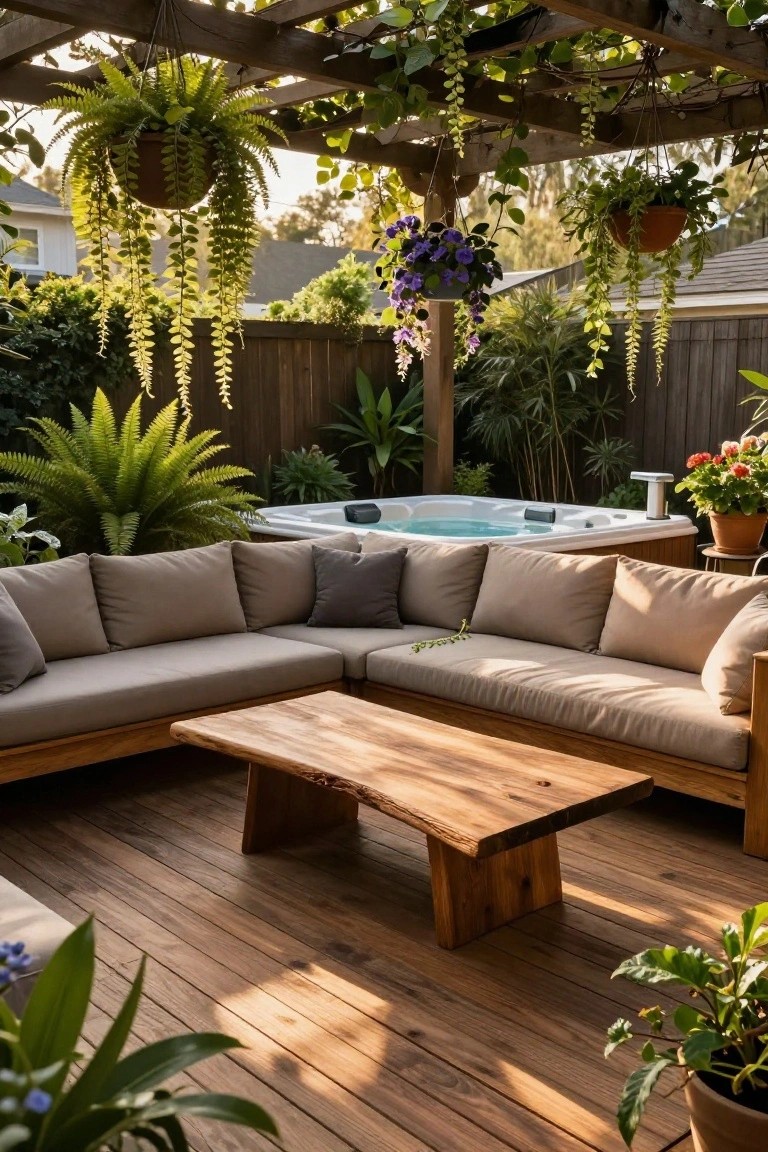
A pergola works well when you let vines and hanging plants do the work of creating shade instead of adding a solid cover. The open structure still feels light, and the greenery softens the whole area while cutting down on direct sun.
This setup suits wooden decks that already have built-in seating. Just check that the beams can handle the weight of the pots and plan for regular watering so the plants stay full through the season.
Shade an Outdoor Bar With a Pergola and Vines
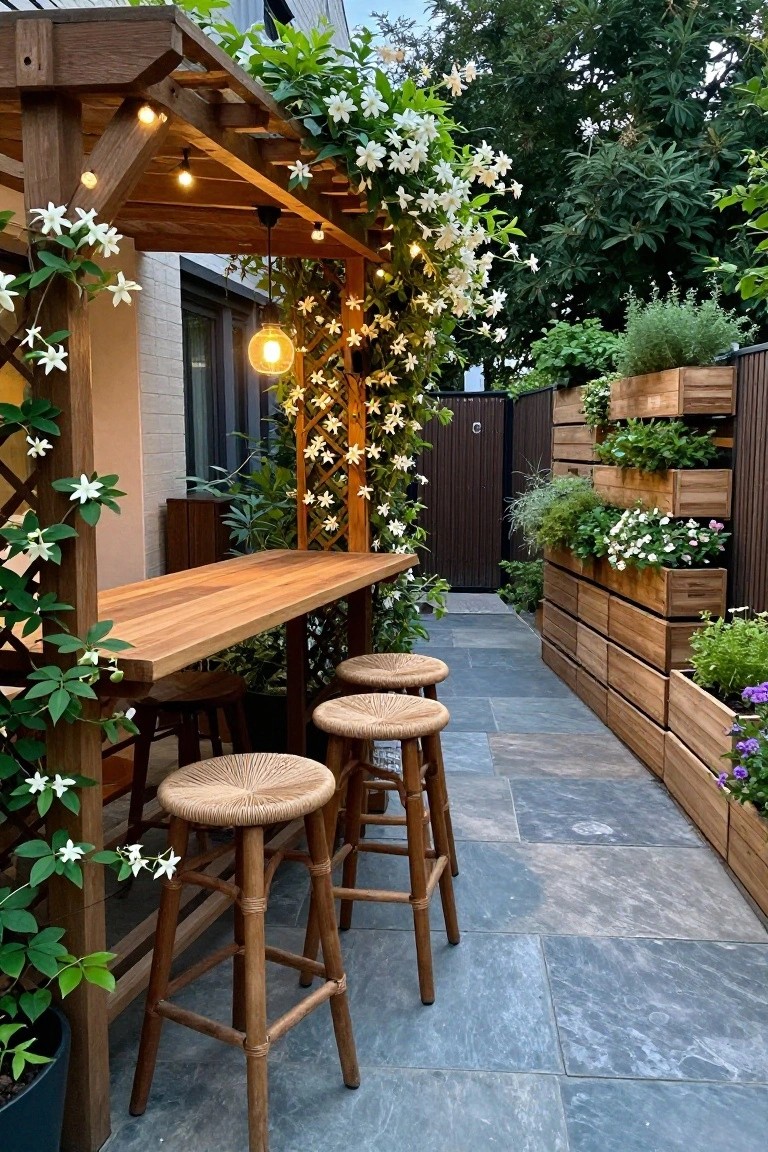
Many people like having a bar area outside that still feels connected to the garden. A wooden pergola with vines trained across it gives shade that changes with the seasons and keeps the space from feeling too open.
This setup works well along the side of a house or on a narrow patio where you want seating without blocking light completely. Use a sturdy wood for the counter so it holds up to weather, and pick vines that grow quickly but stay manageable.
Vines on a Pergola for Natural Shade
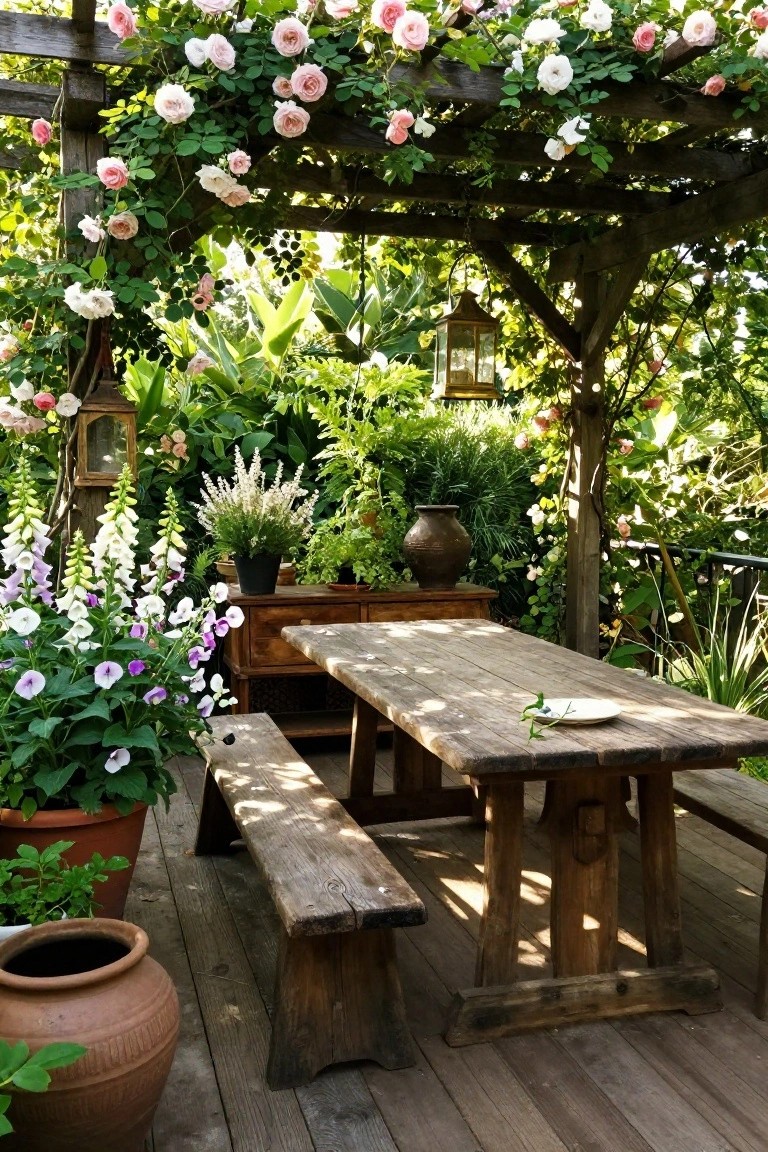
A pergola with climbing roses overhead gives a wooden patio steady shade while letting some light through. The vines soften the structure and keep the space from feeling too open or exposed during hot afternoons.
This setup works best on a deck or patio that already has a simple wooden table and seating. Keep the rest of the planting in pots so the vines stay the main feature and do not crowd the floor space.
Frequently Asked Questions
Q: What kind of vine stays manageable on a small patio? A: Try jasmine or honeysuckle in containers. They grow steadily and give sweet smells without needing constant heavy pruning.
Q: How can I keep flowers blooming under the shade of vines? A: Choose shade loving blooms like impatiens or begonias for the ground level. Water them regularly and deadhead the spent flowers to push new growth.
Q: Will the wood hold up with all the moisture from plants nearby? A: Raise pots off the surface so water drains away fast. Check the wood yearly for soft spots and reapply sealant as needed.
