


I have found that attaching a pergola to the house often determines whether the patio becomes part of everyday life or stays empty except on special occasions.
Many backyards already have decent furniture and plants, yet the space still feels disconnected because nothing bridges the house wall to the open yard in a practical way.
A simple wooden structure usually fixes the problem better than expected.
It helps to study how the posts line up with windows and doors so the whole addition feels like it belongs rather than tacked on later.
In my yard I started with a basic attached frame before adding any extras, just to test the flow first.
Shade an Outdoor Dining Table With a Pergola
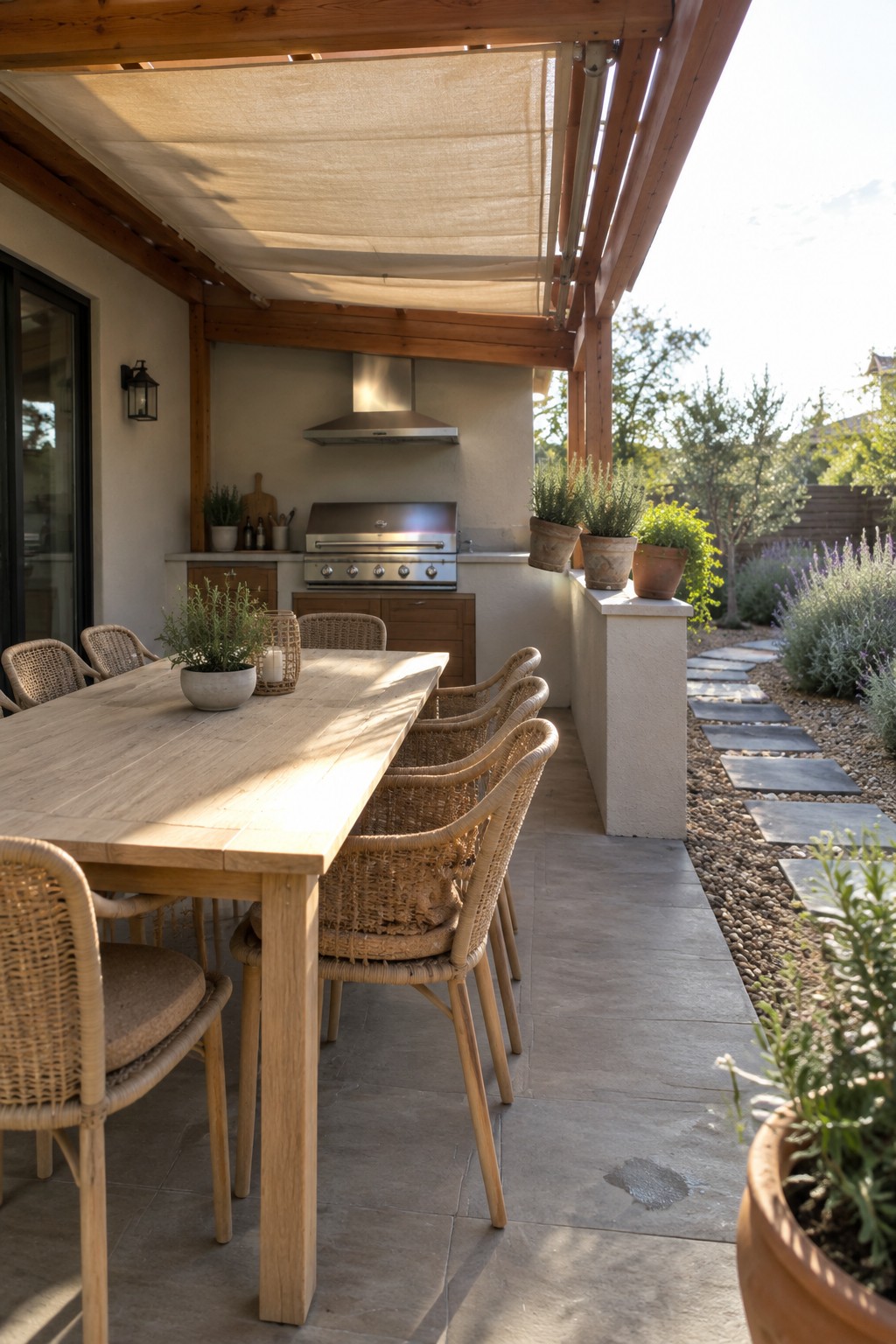
A pergola with a simple fabric cover makes a patio table usable even when the sun is strong. It creates a defined spot for meals without building a full roof, and the open sides keep the space from feeling closed in. The wood frame also ties the table area back to the house so the whole setup reads as one extended room.
This works best on a fairly flat patio that sits right against the back wall. Line up the posts with the house edge and keep the table centered under the shade so people can move around the chairs easily. It suits most single-story homes where you want a little cover without losing the open feel of the yard.
Add a Pergola Over an Outdoor Kitchen
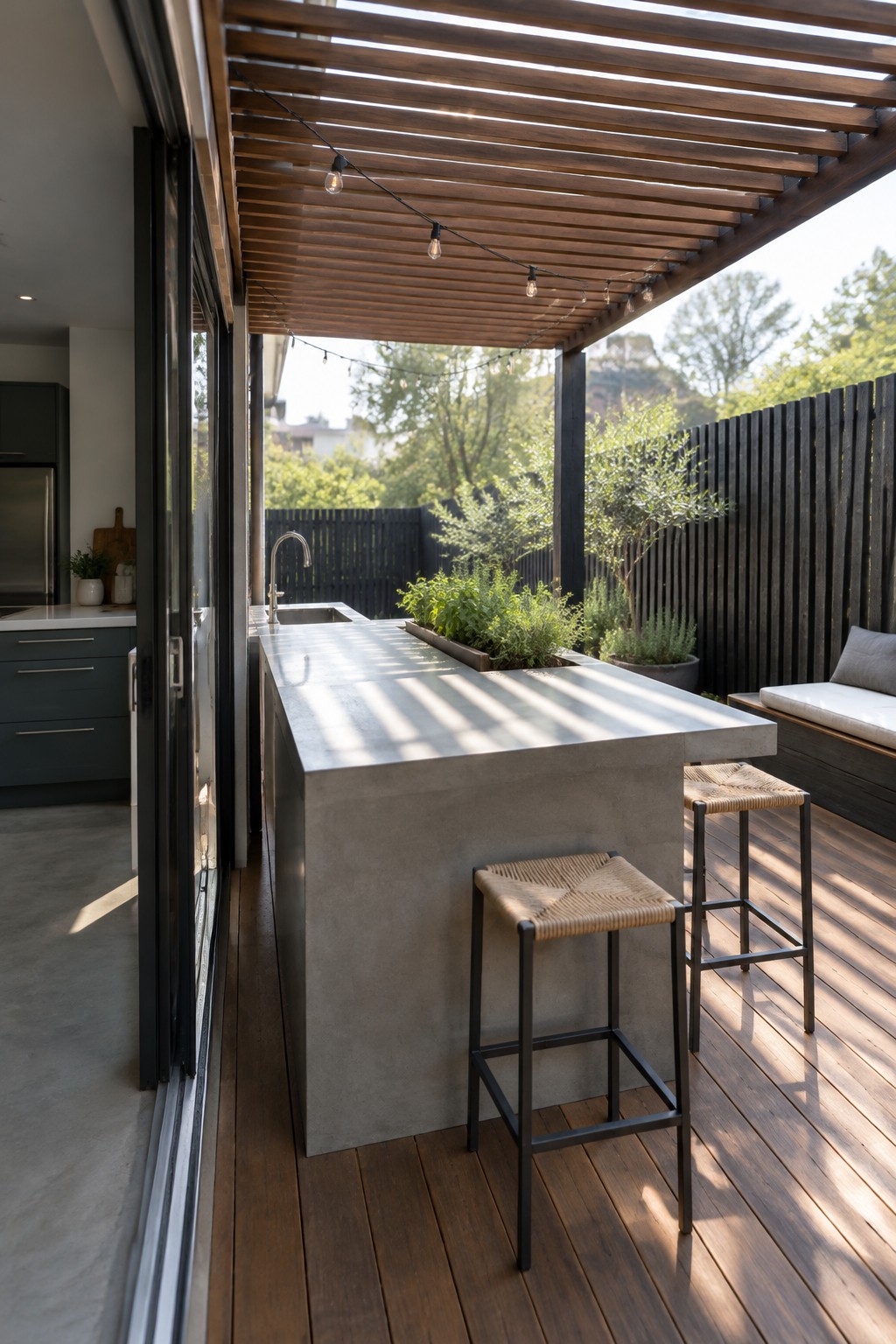
An outdoor kitchen needs some cover to feel usable, and a pergola does that job without closing the space in. The open slats block harsh sun while still letting light through, and the structure itself helps mark where the cooking area begins and ends.
This setup works best when the pergola lines up with an existing door or large window so people can move between the indoor and outdoor counters without much thought. Keep the island simple and the seating low so the whole area stays easy to maintain and does not compete with the house itself.
Pergola Covered Dining Areas Attached to the House
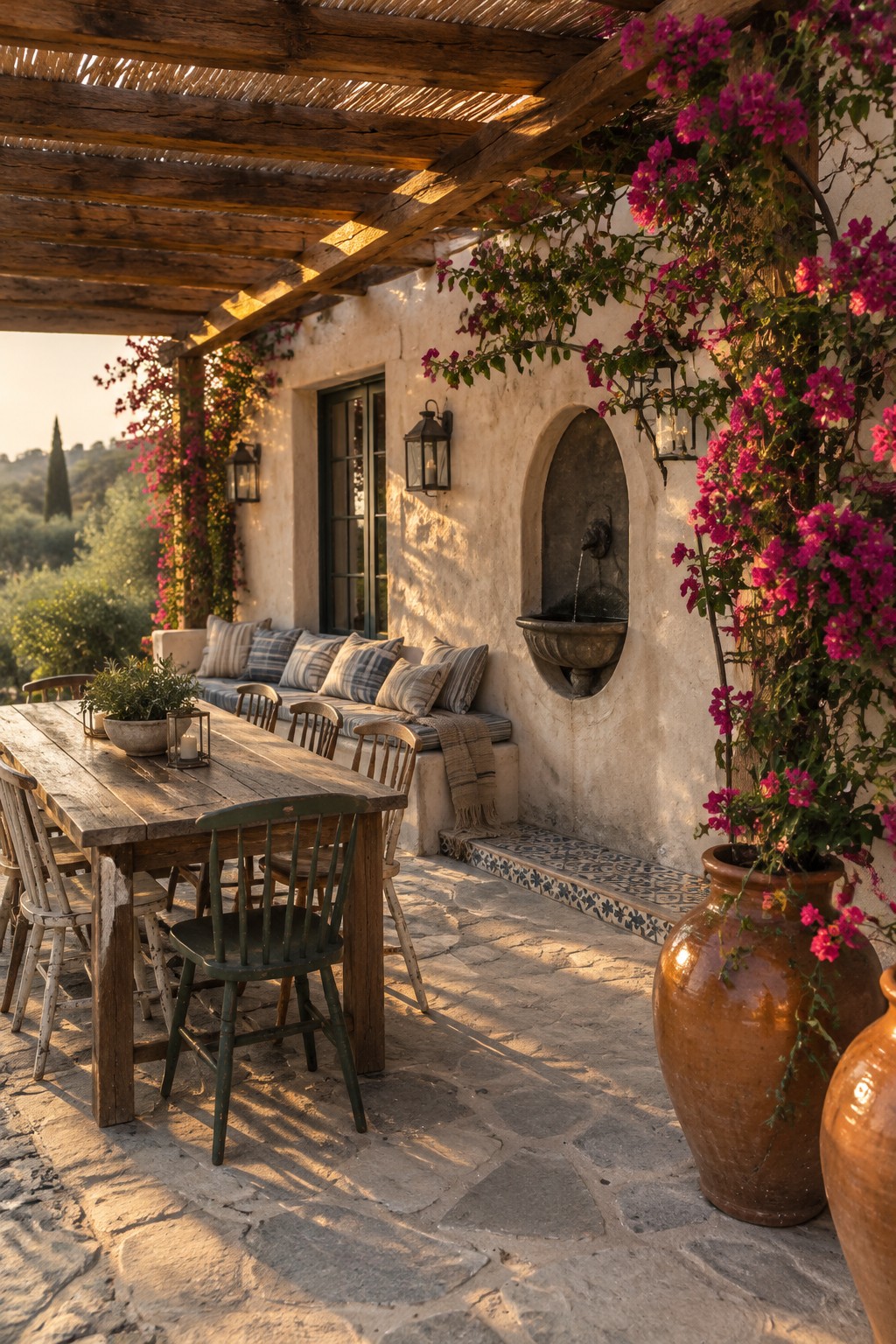
A wooden pergola attached right to the house gives you a shaded spot for meals without making the patio feel closed in. It turns an open area into a place where you can sit for breakfast or dinner and still stay connected to the indoors through a nearby door or window.
This setup works best on homes with a fairly flat wall section next to the main living areas. Place a long table underneath and keep the posts simple so the structure feels like part of the house rather than something added later. Make sure the wood is treated for weather so it lasts through seasons.
Attach a Wooden Pergola to Extend Your Living Space

A pergola attached right to the house gives you a clear outdoor zone without cutting the space off from the rooms inside. The open structure adds shade and a bit of definition while still letting light and air move through, so the area feels like part of the home rather than a separate deck tacked on later.
This setup works especially well on homes where doors already open onto a porch or patio. Keep the furniture simple and weather friendly, and make sure the pergola lines up with the roofline so the whole thing reads as one continuous area instead of two separate spots.
Attach a Wooden Pergola Over Your Fire Pit Area

A pergola attached to the house gives the patio a clear boundary and makes the space feel like an extension of the indoors rather than an afterthought. The overhead beams create just enough cover and structure to keep the area comfortable during cooler evenings or light rain, which is why this setup gets used more often than an open deck.
Place the fire pit near the center so seating can wrap around it, and run simple linear lighting along the rafters to keep the zone usable after sunset. This approach suits homes with decent yard depth where you want a low-maintenance outdoor room that still feels tied to the main living space.
Attach A Pergola To Extend Your Outdoor Space

An attached pergola can turn a plain side patio into a spot that actually gets used. The wood slats overhead give just enough shade without closing the area in, so it still feels like part of the yard rather than a separate room.
This setup works best on homes with a back or side door that opens straight onto the patio. Keep the frame simple and match the wood tone to any nearby fencing or decking. It helps if the pergola sits at a height that lines up with the door frame so the whole space reads as one continuous area.
Attach a Pergola for Outdoor Dining
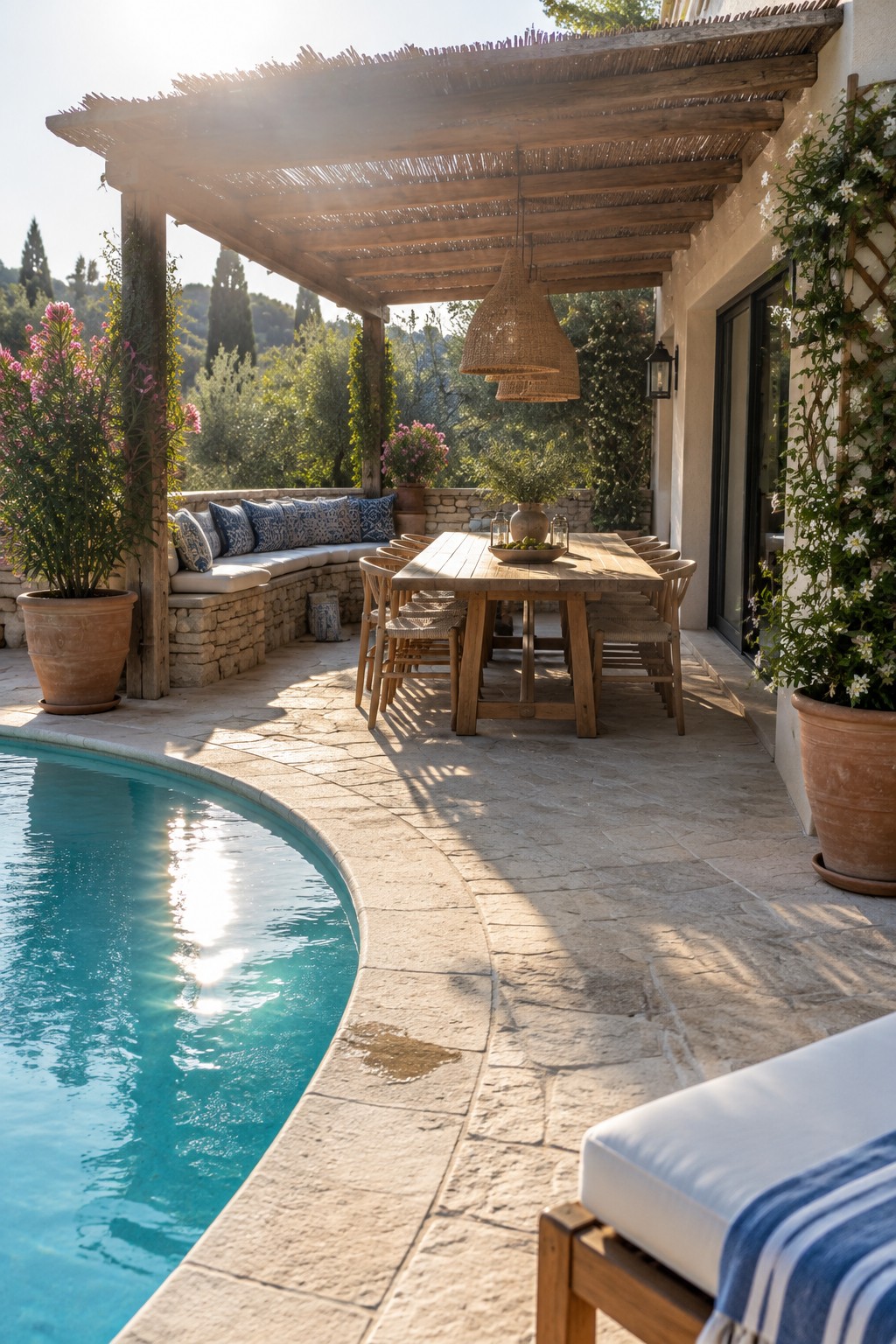
Attaching a pergola right to the house creates a shaded spot for meals without needing a separate structure. The wooden frame and natural roof material blend with the stone patio and keep the space usable even on bright days.
This setup works well on homes where the patio sits just outside the main living areas. Keep the table and seating simple so the pergola feels like a natural extension of the house rather than something added later.
Attach A Pergola To Create Outdoor Dining Space

A pergola attached right to the house gives you a covered spot for meals that feels connected to the indoors. The simple wood structure defines the area without closing it off, so the table and benches sit comfortably in between the kitchen and the yard.
This approach works best on homes with a straight exterior wall and enough room for a long table. Keep the furniture basic and the floor open so the space stays easy to move through and use every day.
Attach A Pergola Straight To The House

One idea that works well is attaching a wooden pergola right to the house wall. It gives steady shade over the seating area and removes the need for extra posts in the middle of the patio. The result is a space that feels tied to the indoors without any big gap between the two.
This approach suits homes with simple lines and a patio that sits right off the main living area. Match the wood tone to any existing trim, and keep the slat spacing wide enough for light to filter through. Just watch the height so the structure lines up with your door or window openings.
Hang String Lights Under Your Pergola For Evening Use

A pergola gives daytime shade and a clear boundary for the outdoor space. String lights add the extra step that lets people stay outside comfortably after dark without needing to move indoors.
This setup works best on homes where the patio sits close to the back door. Space the lights evenly across the beams so the seating area below stays usable for casual meals or just sitting out without extra lamps.
Attach A Pergola Over A Low Deck Platform

A low wooden deck set right against the house works well when you cover it with a simple pergola. The flat roof structure gives shade and a clear sense of room without closing the space in. It turns a basic side yard into a usable spot for sitting or meals while keeping the connection to the garden easy and open.
This setup suits homes that already have some outdoor space and want a quiet transition rather than a big new room. Keep the deck low so it feels like part of the ground rather than a separate structure. Pair it with gravel or stepping stones around the edges so the whole area reads as one continuous outdoor zone instead of separate pieces.
Pergola Shade Over an Outdoor Bar

Running a pergola straight out from the house and over the bar gives the whole cooking and seating area a bit of cover without boxing it in. The wood ties the space back to the house and makes it feel like a natural extension rather than something added on later.
This setup works best on decks that already have a kitchen or serving counter along the edge. Keep the posts set back just enough to leave room for stools and foot traffic so the area stays open and easy to use on busy nights.
Bamboo Blinds for Adjustable Pergola Shade
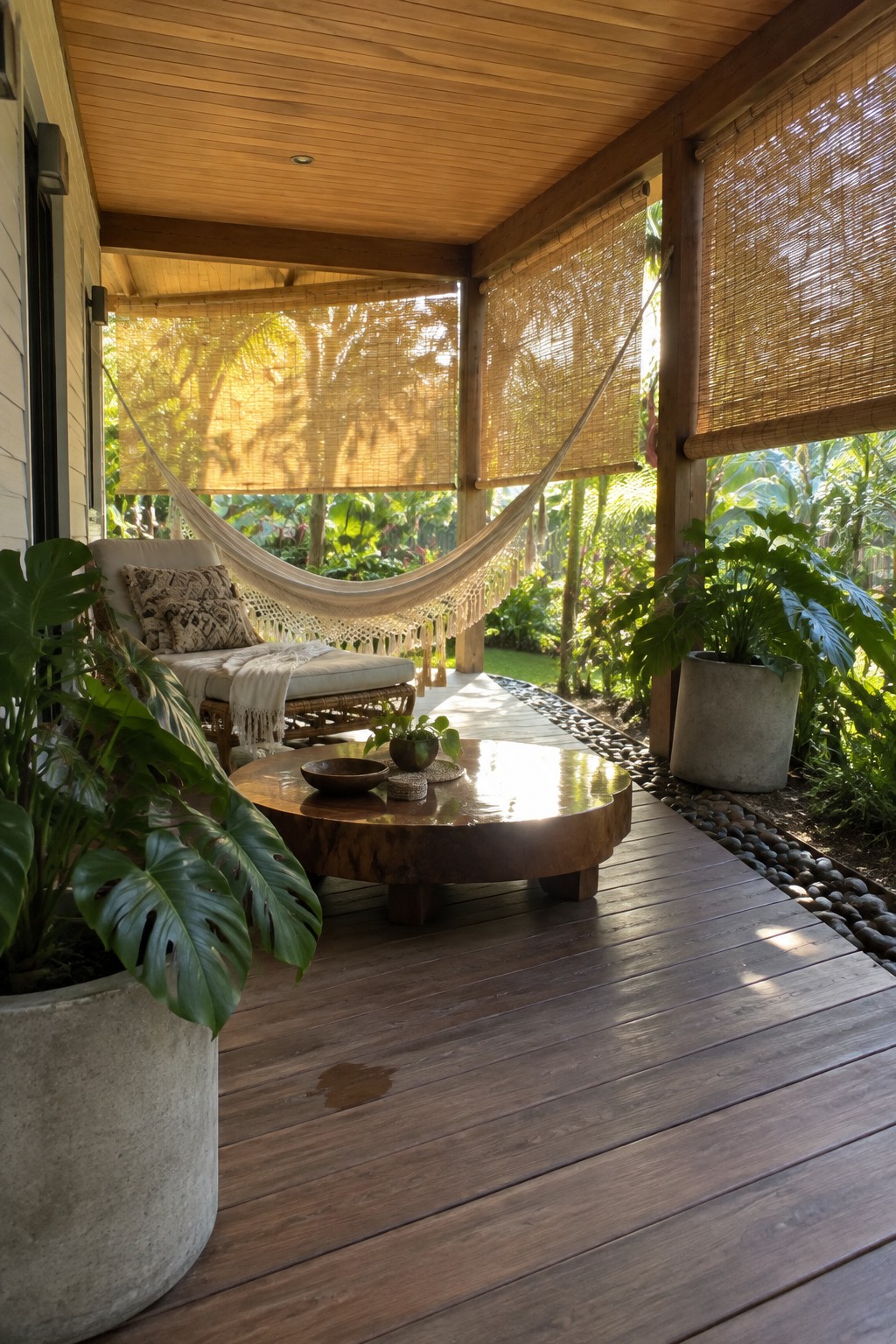
Adding roll-down bamboo blinds to the sides of a wooden pergola gives you simple control over sun and privacy. You can leave them up for an open feel or lower them when the light gets too strong, without losing the connection to the yard outside.
This works best on pergolas attached directly to the house, where the structure already creates a natural transition between indoor and outdoor space. The woven material blends with wood beams and suits homes that get heavy afternoon sun, though it helps to check that the blinds can be secured well against wind.
Add a Pergola Over an Outdoor Kitchen

A pergola attached to the house gives an outdoor kitchen real structure and shade without closing it in. The wood beams create a clear overhead plane that makes the cooking area feel like a natural extension of the indoor space rather than a separate zone tacked on later. People like this setup because it keeps the grill and counters usable in most weather while still letting light and air move through.
This works best on homes that already have a flat wall to anchor the structure and enough patio room for both cooking and seating. Keep the pergola simple in finish so the focus stays on the function of the kitchen rather than on extra decoration. Make sure the posts do not block the main walkway between the door and the grill.
Attach a Pergola to Extend Your Deck Space

A pergola fastened to the house gives the deck a clear boundary without making it feel closed off. The wood slats overhead provide some shade while still letting in light and air, so the area stays usable through more of the day.
This setup works best on homes that already have a deck or patio right off the back. Keep the furniture simple and low so the space feels open, and make sure the pergola size matches the seating area below it rather than overwhelming the whole yard.
Adding a Pergola Over the Porch

A wooden pergola attached to the house gives the front entry a clear sense of shelter without closing it in. The open roof structure lets in light while still marking off a spot for seating right by the door. It turns what might feel like a plain step into a usable outdoor area that feels connected to the inside.
This setup works best on homes where the entry faces the yard and gets afternoon sun. Keep the posts simple and match the wood tone to any existing trim. Make sure the depth allows room for a bench or two without crowding the walkway.
Extend Your Kitchen Outdoors With A Pergola

A pergola attached right to the house works well when you want a simple covered spot for meals without building a whole new room. It turns the area just outside the door into a place you can actually use for sitting and eating, and the open sides keep it from feeling closed off.
This idea fits homes with a back door near the kitchen or dining area. It works best on smaller lots where you need the space to feel connected but still open. Keep the posts clear of walkways so the flow stays easy.
Add a Retractable Canopy to Your Pergola

A retractable canopy on a wooden pergola gives you shade when you need it and an open view when you do not. The fabric rolls back on a track so the space stays light and airy most of the time but can be covered quickly for strong sun or light rain.
This setup works best on patios that sit right against the house and get used for cooking or meals. It keeps the connection between indoors and outdoors simple while letting you adjust the cover without adding a permanent roof.
Built-In Seating Under An Attached Pergola

Built-in benches make an attached pergola feel more like a real room than a temporary setup. The seating tucks neatly into the corners and leaves the middle open for a table, so the space works for meals without crowding the walkway. It also cuts down on the number of loose chairs you need to move around when the weather changes.
This approach works best on homes where the pergola sits right off the main living area. Folding doors help the two spaces connect, and the bench gives people a place to sit even when the table is not in use. Just keep the bench depth comfortable for sitting and choose cushions that can handle some sun and dampness.
Attached Pergolas That Extend The Living Space

One of the simplest ways to make an outdoor area feel connected to the house is to attach the pergola directly to the structure. The heavy timber beams tie into the existing roofline and wall, so the covered space reads as part of the home rather than something added on later. This approach works especially well when the seating and fireplace are also built in, keeping everything in one steady zone.
It suits homes with stone or masonry exteriors that can handle the weight and scale of solid wood. Keep the posts aligned with the house corners and use the same finish on the beams as any other exterior woodwork. That small step prevents the pergola from looking like a separate garden feature.
Add Built-In Storage to Your Pergola Area

A pergola attached to the house works even better when you add a long bench with storage underneath. It keeps toys, cushions, and garden tools out of sight while giving people a place to sit without crowding the space. The bench also helps the whole setup feel more like an extension of the house instead of a separate patio.
This works best on smaller yards or homes with kids, since everything stays organized and the seating stays useful year round. Just make sure the bench height lines up with your chairs so the area feels comfortable to use every day.
Attach a Pergola to Shade the Pool Deck

A wooden pergola attached right to the house works well when you want shade over lounge chairs without losing the open feel of a pool deck. The beams create a light roof that still lets in air and views, so the space stays usable even on hot days.
This setup suits homes where the pool sits close to the back wall. Keep the wood tone simple and match it to any decking so the whole area reads as one outdoor room. Just check that the posts are anchored well if the deck gets heavy use.
Pergola Overhead Defines the Outdoor Space

A wooden pergola attached to the house gives a balcony a clear boundary and some shelter without making it feel closed in. The slats filter sunlight and create a comfortable zone for seating, which makes the space more inviting to use throughout the day.
This approach suits homes with smaller outdoor areas where a full roof would feel heavy. Keep the structure simple, add weatherproof seating, and the balcony starts working like an extra room rather than just an open deck.
Attach a Pergola to Shade and Define Outdoor Seating

A pergola attached right to the house gives the patio a clear sense of place without making the space feel boxed in. The open wood slats overhead cut the sun while still keeping the area bright and connected to the rest of the yard.
This approach works best on homes that already have a patio or deck slab you want to use more often. Match the wood tone to your house trim so the structure feels like a natural extension rather than an add-on.
Frequently Asked Questions
Q: How do I keep rain from pooling on the pergola and dripping onto my deck? A: Angle the rafters slightly so water runs off toward the outer edge. Add a simple gutter along that edge if your area gets heavy storms. This setup keeps the wood drier and your outdoor space usable right after a shower.
Q: What if my house siding makes it tricky to bolt the ledger board in place? A: Remove a section of siding first and attach the ledger straight to the wall studs. Then flash the top edge well before you replace the siding pieces. You end up with a tight seal that protects both the house and the pergola frame.
Q: How often should I check the attachments once the pergola is up? A: Walk around twice a year and tighten any bolts that have loosened from weather shifts. Look for small cracks in the wood near the house connection too. Catching those early stops bigger repairs later.
