


I have built a couple of basic pergolas in my own yard and the ones that lasted were the ones that actually matched how we move through the space day to day.
A structure can look balanced on paper yet end up blocking the best afternoon light or leaving the seating area too exposed.
I would test the simpler frames first because they show right away whether the proportions feel right once you stand under them.
Thinking through the shade pattern at different times of day saves a lot of rework later on.
Small changes like adding a cross beam or shifting the posts a few inches often make the whole area feel more settled.
Pergola Over an Outdoor Dining Table

A pergola right over the table turns a basic patio into a spot that actually feels set up for meals. It adds shade during the day and gives you a place to hang lights so the area stays usable after dark. Many people like this because it creates a clear dining zone without building anything complicated.
This setup works best on existing patios or decks where the table already sits. Keep the posts simple and the span modest so one person can handle the build in a weekend. It fits homes that have a flat outdoor area and want a low-key way to eat outside more often.
A Simple Attached Pergola For Patio Shade

A basic wooden pergola fastened to the house gives you usable shade without a big construction project. The open slats on top cut the harsh sun while still letting some light through, so the space below feels comfortable during the day instead of dark or stuffy.
This layout works best on small patios or side yards where you already have seating. Keep the frame straightforward, use pressure-treated lumber, and you can finish the whole thing in a weekend. Just make sure the posts sit on solid footings so it stays steady over time.
A Simple Slatted Pergola Over The Outdoor Counter

A pergola with spaced wooden slats gives an outdoor bar just enough cover without turning it into a dark cave. The open roof lets in light and air while still marking the space as its own zone, which makes the whole setup feel more finished than an open deck.
This works best on smaller patios or decks where you want a casual spot for drinks or quick meals. Keep the slats wide enough apart so the area stays bright, and match the wood tone to your decking if you want it to blend in rather than stand out.
A Simple Pergola Shade For Small Balconies

A basic wooden pergola with a fabric cover can make a sunny balcony comfortable enough to use during the day. The frame defines the space and gives you a place to hang plants without blocking the view completely.
This approach suits apartment balconies or narrow patios where a full roof would feel too heavy. Build the posts and cross pieces from standard lumber, then stretch a lightweight cloth across the top. Secure it well so wind does not pull it loose, and leave the sides open to keep the area from feeling closed in.
Cover a Pergola With Vines for Shade

A wooden pergola becomes more useful once vines start filling in the top. The plants add real shade without needing a solid roof, and they keep the space feeling open and connected to the garden. This works especially well over a dining table where you want some relief from the sun but still like seeing the sky.
Start with a simple post-and-beam pergola sized to fit your table and chairs. Choose a fast grower like grapes or wisteria and give the vines something to grab onto along the beams. It suits most sunny backyards and takes very little upkeep once the plants are established.
A Basic Pergola Creates A Defined Outdoor Room

A wooden pergola is one of the easiest ways to turn an open deck or patio into a space that actually feels like a room. It gives you overhead structure without closing things in, and it works especially well when you keep the rest of the setup simple with low seating and a rug to anchor the area.
This approach suits most backyard decks or side patios where you want shade and a bit of separation from the rest of the yard. Keep the frame straightforward, add string lights if you use the space at night, and let the pergola do the main work of making the spot feel intentional.
A Pergola Over The Fire Pit Area

A wooden pergola gives a fire pit its own defined spot without making the patio feel boxed in. The open roof lets smoke rise while the posts create a clear boundary that pulls the seating together and makes the whole corner feel more intentional.
This works best on a stone or gravel patio where you already have room for a few chairs. Keep the build basic with four posts and simple cross beams so it stays a true weekend project. Just make sure the posts sit far enough back from the fire to stay safe.
Pergola Shade for Poolside Lounging

A simple wooden pergola gives you a shaded spot right by the pool without much fuss. It turns an open deck into a usable lounge area where you can sit or lie down without getting baked by the sun.
This works best on smaller backyards or pool decks where you want one clear zone for relaxing. Keep the design basic with straight posts and a slatted roof so the build stays quick and beginner friendly.
Pergola Over A Garden Workbench

A pergola makes a simple shelter for a potting bench and turns an open stretch of yard into a spot where you can actually work. The overhead slats cut the sun enough to keep you comfortable while you repot plants or clean tools, and the whole thing still feels open to the air.
This layout suits a narrow side yard or the back wall of a garage. Build the pergola first, then slide the bench underneath so tools can hang on the house siding and extra pots can stack on the lower shelf. Keep the footprint small and the posts set in concrete so the structure stays steady without much extra bracing.
A Slatted Pergola For Deck Shade

A pergola with spaced wooden slats gives decent shade without making the space feel closed in. The gaps let some sunlight through, so the area stays bright enough for meals or reading while still cutting the harshest rays.
This works especially well on decks or rooftops where you want a defined spot without adding a full roof. Keep the frame simple and the slats evenly spaced if you want it done in a weekend.
Pergola Over An Outdoor Kitchen Counter

A pergola gives an outdoor kitchen a clear boundary and some overhead cover without making the space feel closed in. The simple wood frame here turns a basic concrete counter into a spot that works for cooking and sitting, even when the sun is strong or light rain starts.
This layout suits homes with a patio or deck that already has a solid surface. Keep the build basic with posts and beams so it stays beginner friendly, then add lights or hanging plants only after the structure is up.
Hang a Swing Bench From Your Pergola

A pergola becomes more useful when you hang a swing bench from the beams. It turns the space into a simple place to sit without adding tables or extra chairs, and the vines growing overhead give just enough shade.
This setup works best along a garden path or in a narrow side yard where you want a quiet spot to rest. Make sure the posts and cross beams are solid enough to hold the weight, and use sturdy rope or chain that can handle outdoor conditions.
Hang a Hammock Chair From the Pergola

Hanging a chair from the pergola beams is a simple way to add a comfortable seat without taking up floor space. It turns the covered area into a spot meant for relaxing rather than just passing through.
This setup works best on smaller patios or side yards where you want one or two people to have a quiet place to sit. Use strong rope or chain rated for the weight, and check that the beam can handle it before hanging anything.
Add a Fabric Shade to Your Pergola

A fabric shade stretched across the top of a wooden pergola gives you shade without closing the space in. It works especially well over a dining table on gravel or pavers, where you want cover during meals but still like the open feel of the yard.
This approach suits most backyard setups and small patios. Secure the fabric to the beams so it can be removed or rolled back when you want full sun. Keep the wood frame simple and let the shade do the main job.
Add a Removable Shade Cloth for Adjustable Sun Protection

A fabric shade under the pergola beams lets you block strong sun without turning the space dark. It keeps the dining area cooler during the day and still feels open, which makes the whole setup more usable on warm afternoons.
This approach works best on a simple frame because the cloth can be tied or clipped in place and removed later if needed. It suits small patios or beginner projects where you want quick shade without adding a full roof.
Simple Pergola Shade For Quick Outdoor Use
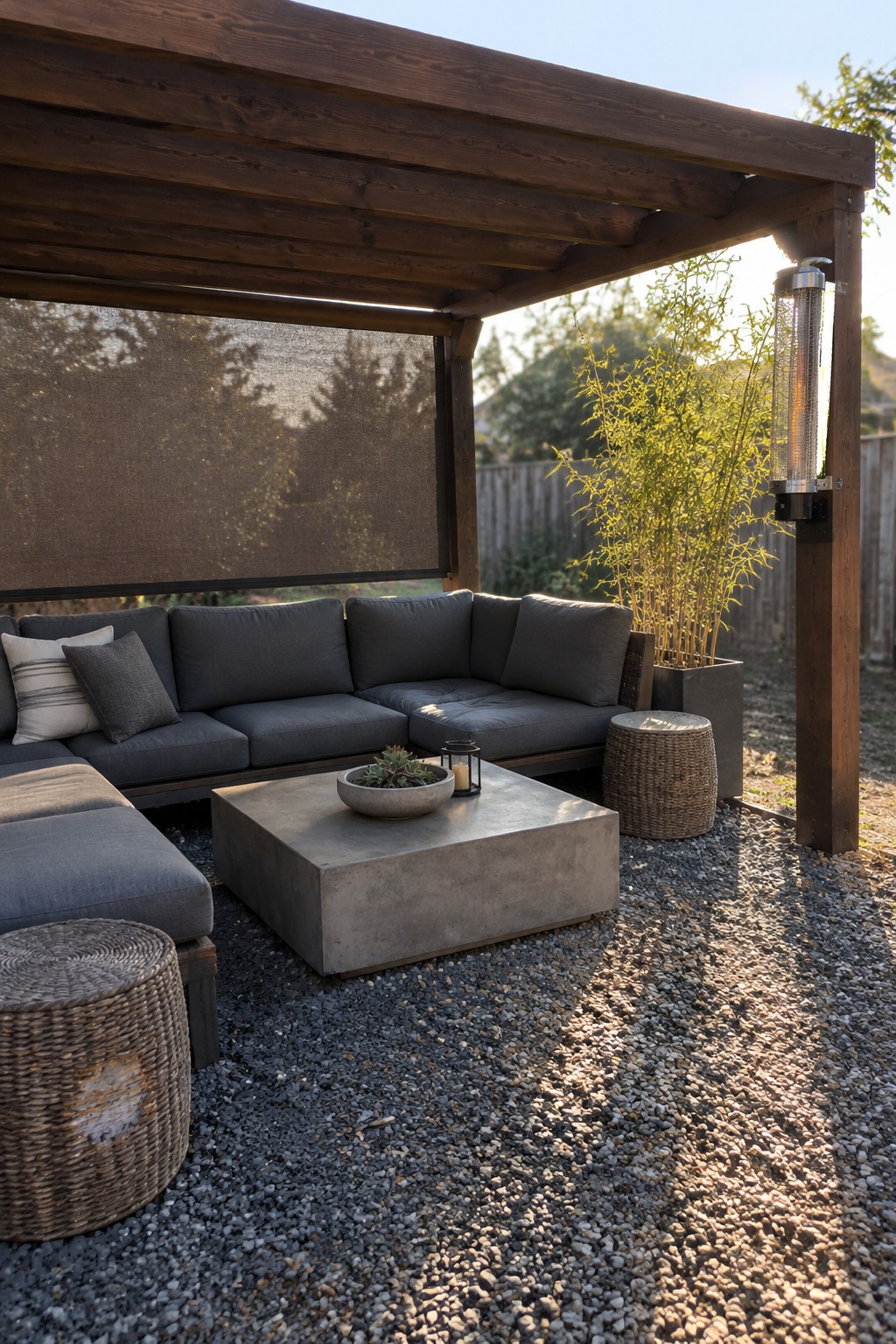
A wooden pergola gives you shade and a clear boundary for seating without needing a full roof or complicated plans. It works because the open top still lets in some light while cutting direct sun, and the posts make the space feel like a separate room.
This setup suits backyards with gravel or simple hardscaping where you want something that goes up fast and does not block views. Place it near the house or along a fence so the posts can anchor into solid ground, and keep the beam spacing wide enough that it does not feel closed in.
Build a Pergola to Create an Outdoor Workspace

A pergola gives you a quick way to mark off a workspace outside without building walls. The open roof lets in light while cutting down on direct sun, and the posts help the area feel set apart from the rest of the yard.
This setup works best in a side yard or back corner where you can run a desk along one post. Gravel underfoot keeps things simple and drains well, and a basic wood desk plus one chair is all you really need to get started.
Keep The Pergola Slats Spaced For Light

A simple wooden pergola with evenly spaced slats gives just enough shade without turning the space dark or heavy. The open layout lets some light filter through while still marking off a clear dining zone on the patio.
This approach works best on smaller lots or gravel patios where you want to keep the feel open. Use standard lumber, set the posts in the ground or on concrete bases, and keep the spacing consistent so the structure feels balanced rather than closed off.
A Basic Pergola Gives An Outdoor Area Some Structure

A pergola is one of the easiest ways to turn an open patch of ground into a defined spot for relaxing. It adds just enough overhead cover to make the space feel intentional, while still letting in light and air. In this setup, the simple wood frame sits right over the hot tub and creates a clear boundary between the gravel patio and the rest of the yard.
This works well on smaller lots or near water where you want a little separation without building walls. Keep the design plain with straight posts and basic cross beams so it stays beginner friendly. Add string lights along the rafters if you want evening use, but skip anything too fancy that would slow down the build.
Frequently Asked Questions
Q: Can I build one of these pergolas by myself or should I get a friend to help? A: Start with a simple design that uses straight cuts. Have someone spot you when lifting the main beams into place. That way you avoid any wobbles early on.
Q: How do I keep the wood from rotting after a season or two? A: Pick pressure treated lumber for the posts that touch the ground. Apply a good outdoor sealer every couple years. This keeps the structure solid without extra work.
Q: What size should the posts be for a small backyard version? A: Go with four by four posts for most one weekend builds. They handle the weight fine and stay easy to handle. Sink them at least two feet deep for stability.
