

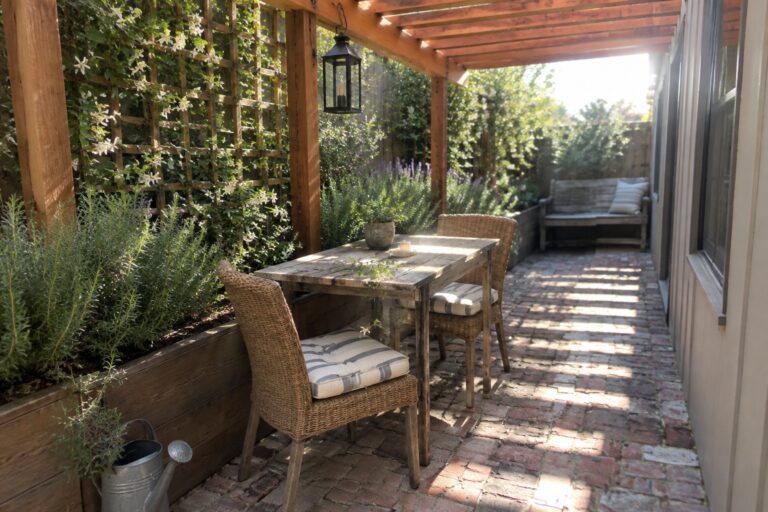
Narrow side yards and slim patios often end up as wasted space because they feel too tight to furnish properly.
I have noticed that a wooden pergola can give these areas enough structure to feel intentional without taking over the whole footprint.
The real test comes down to whether you can still move through the space comfortably once the posts and beams are in place.
Over time I have learned to favor designs that leave room for a single chair or a narrow bench rather than trying to force in more.
Some of these setups are worth sketching out on paper first.
Pergolas For Narrow Outdoor Spaces
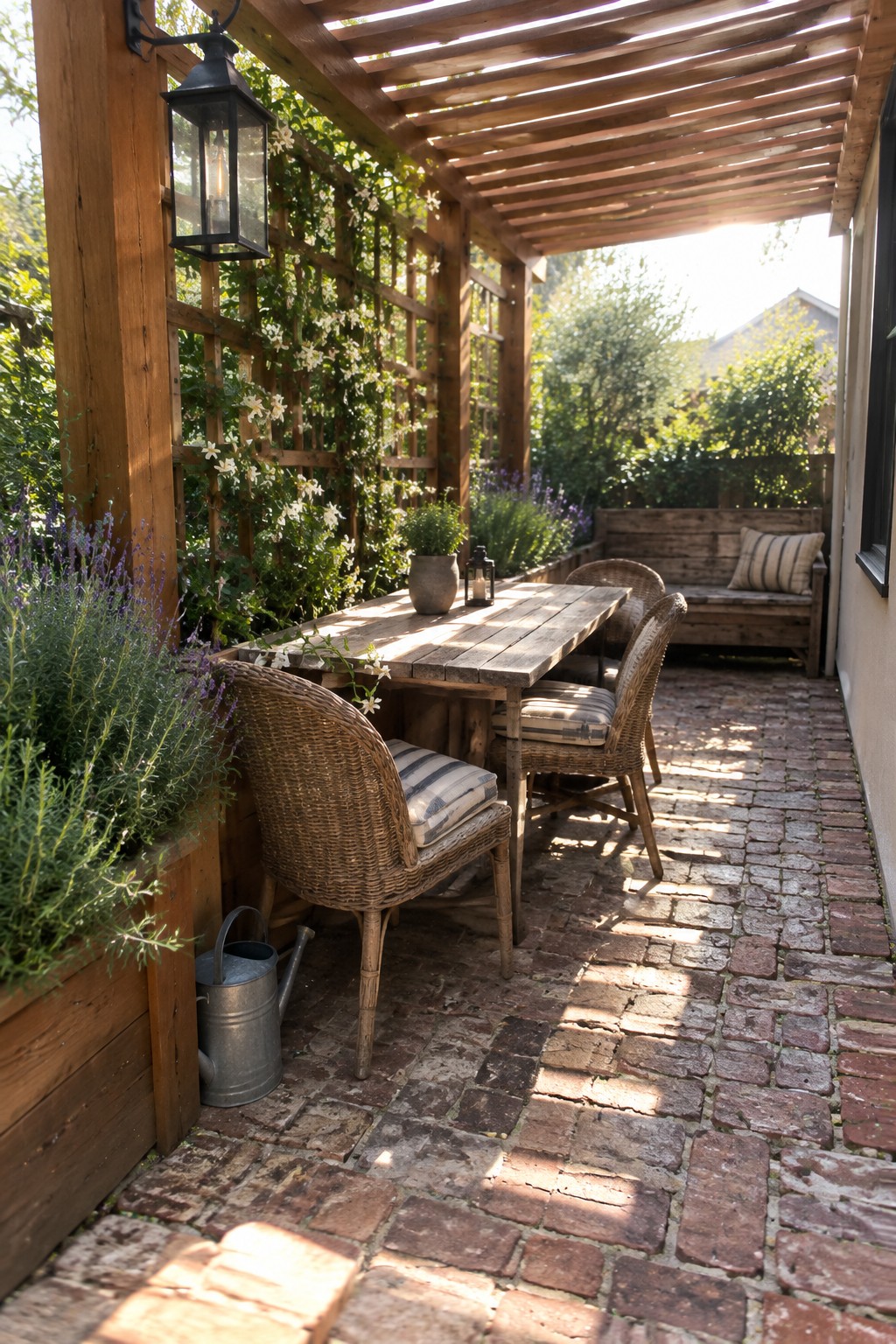
A wooden pergola with open slats can turn a tight side passage into a workable dining spot. The structure gives just enough cover and definition without making the area feel boxed in, and the brick floor underneath helps keep the whole setup grounded and practical.
This approach suits homes where the outdoor width is limited but there is still room for a table and a couple of chairs. Place the posts close to the house or fence line so the walkway stays clear, and keep the seating simple so people can move through easily.
Slatted Screens Give Narrow Yards A Clear Purpose
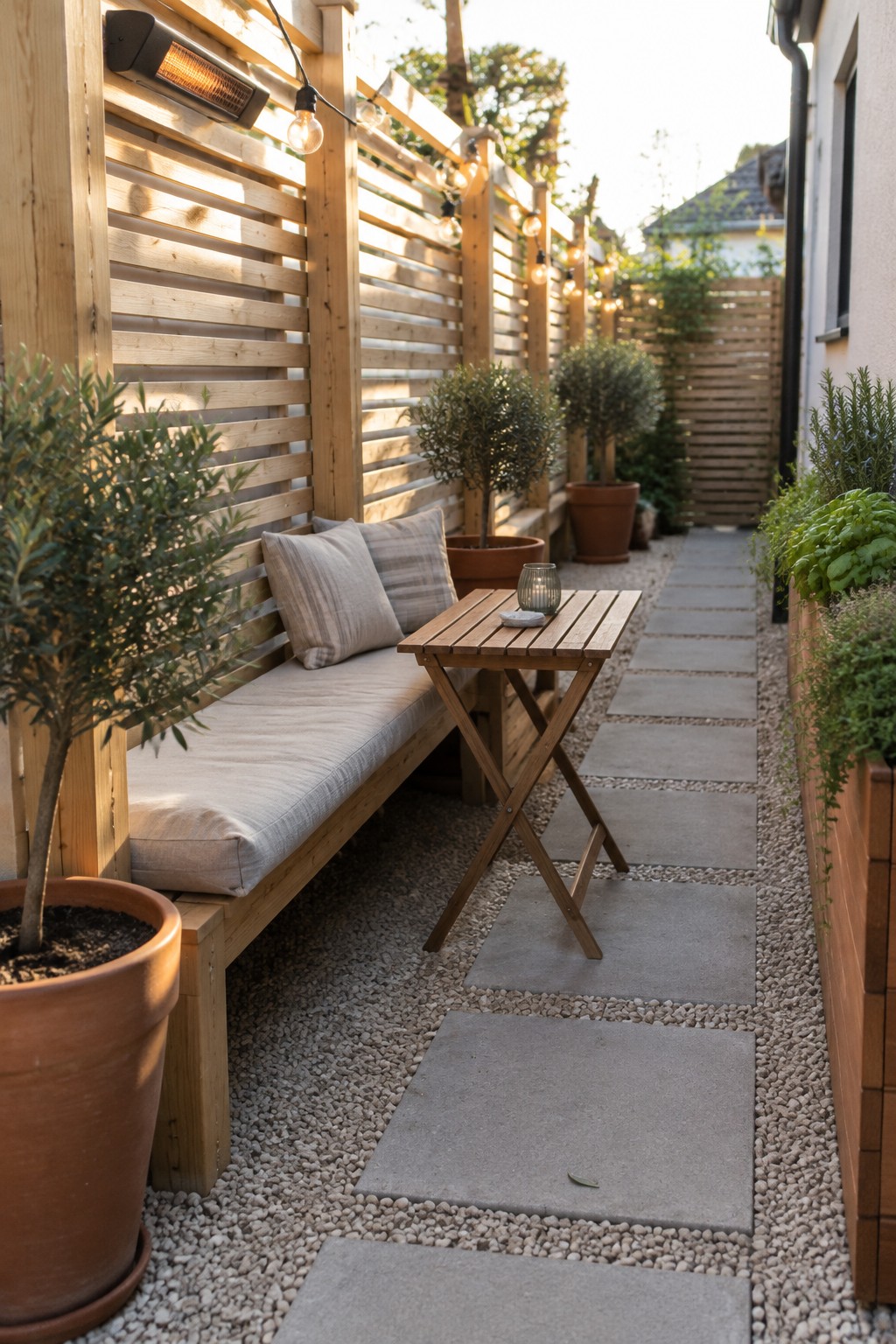
A slatted wood screen along one side of a narrow yard creates a simple boundary that makes the space feel more intentional. It supports seating without eating into the walking area and gives the eye a place to rest instead of just seeing a blank fence or neighboring wall.
This approach suits side yards or slim patios where full enclosure would feel too heavy. Keep the slats spaced so light still passes through, add a bench right against the screen, and use gravel with a few pavers for the ground. It stays practical and easy to maintain.
Pergola That Runs the Length of a Narrow Patio

A wooden pergola works well in narrow outdoor spaces because it adds overhead structure without taking up floor room. Running one along the side of the house creates a shaded path that still feels open while giving you a place to sit and eat.
Use a long table with a bench on one side so the seating stays compact and leaves the walkway clear. This kind of setup suits homes where the outdoor area is tight in width but has enough length to make the space feel purposeful.
A Bench Under The Pergola Makes Narrow Spaces Usable

One setup that works well in narrow yards is running a long bench or daybed right under the pergola. It turns the slim strip of space into an actual seating area without crowding the floor with separate chairs or tables.
This works best along a fence or wall where the bench can sit flush against it. Keep the pergola structure simple and make sure it extends far enough to cover the full depth of the bench so the seat stays shaded during the day.
Pergolas Over Narrow Side Passages

A wooden pergola works well when you need to give a slim side yard some purpose. The overhead structure adds shade and a clear sense of direction without eating into the limited floor space.
This setup suits homes where the side passage needs to feel like an intentional route rather than leftover space. Keep the sides fairly open with simple fencing or low planting so the walkway stays usable and does not feel squeezed.
Built-In Bench Seating Along One Side

A built-in bench under the pergola turns a narrow strip of patio into a usable dining spot without crowding the floor space. The bench runs the length of the table on one side, so you only need chairs on the other. It keeps the area open while still seating six or more people comfortably.
This setup works best on long, tight patios or side yards where freestanding furniture would feel cramped. Paint the bench to match the pergola frame so it reads as part of the structure rather than an added piece. Just leave enough room for people to pull out the chairs on the open side.
Pergolas That Turn Narrow Balconies Into Outdoor Kitchens

A wooden pergola overhead can give a narrow balcony enough definition to feel like an actual room instead of leftover space. The slatted roof adds shade and a place to hang lights, while keeping the floor open for movement.
This setup works best on urban balconies where you want room for a counter and stools without crowding the walkway. Keep the pergola simple and match the wood tone to any nearby railings so the whole thing feels like one clean structure rather than an add-on.
Pergolas That Add Shade To Narrow Pool Areas

A wooden pergola overhead gives you usable shade in a tight strip of deck without crowding the pool or the walkway. It turns a long narrow space into a place where chairs can stay comfortable during the day instead of heating up in full sun.
This setup works well on homes where the pool runs close to the house or a boundary wall. Keep the beams simple and the slats open so the area still feels light while the lounges get some cover.
Wooden Pergolas Overhead in Narrow Passages
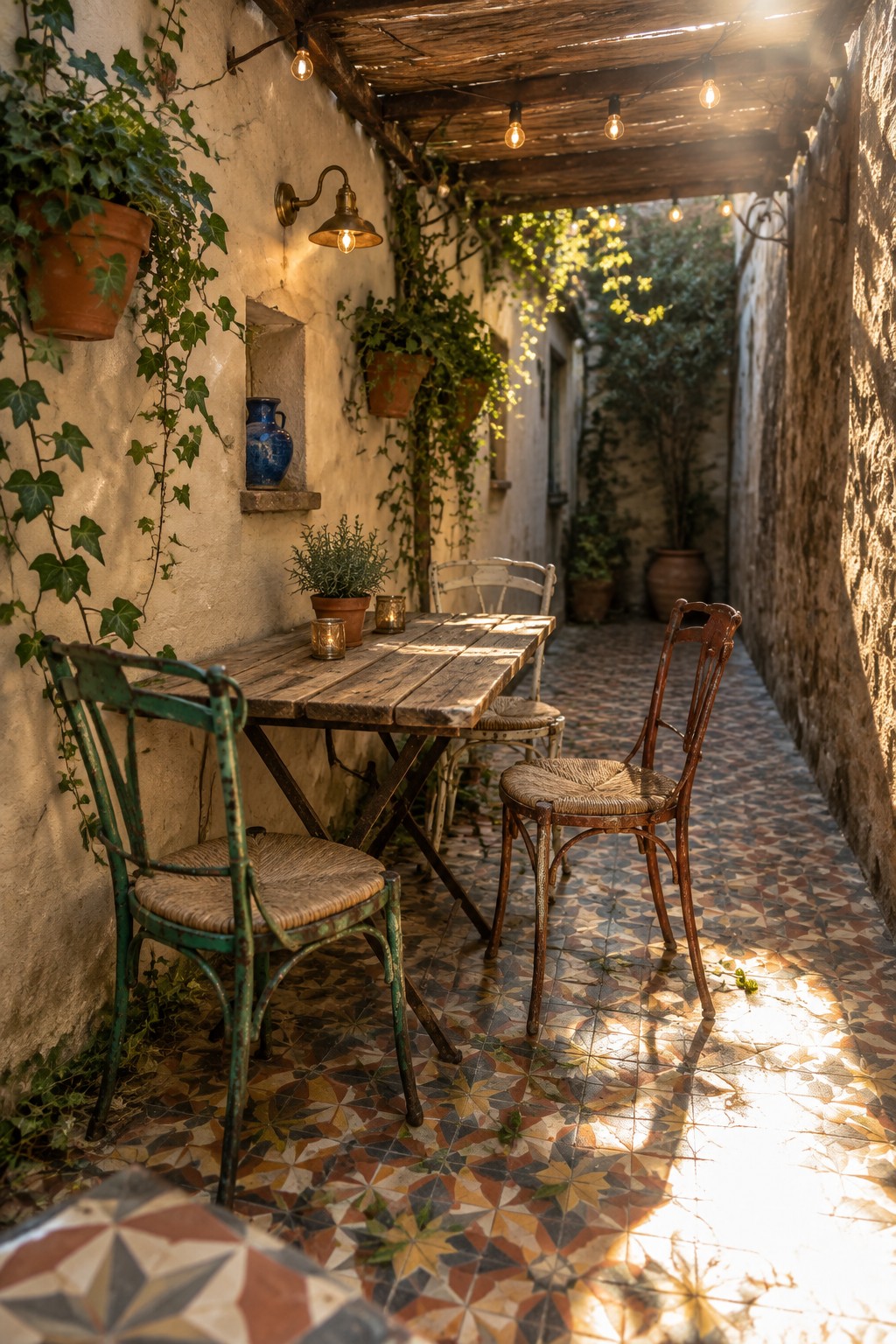
A basic wooden pergola overhead can turn a skinny side yard or tight walkway into a spot where people actually want to sit. The structure gives just enough cover and definition without closing the space in, which makes the area feel more like a room than a leftover corridor.
This works best on homes where the side yard runs long and narrow between walls or fences. Keep the furniture simple and low so it does not block movement, and run a few strands of lights underneath if you want the space to feel usable after dark.
Pergola Over A Narrow Side Path

A simple wooden pergola works well when you need to turn a tight side yard into something more usable. It adds overhead structure without closing in the space, and the open sides keep the walkway feeling open even when vines start to grow across the top. The brick path underneath stays practical for walking through, while the bench tucked along one side gives you a spot to rest without taking up extra room.
This setup suits older homes that have a long narrow strip between the house and the fence. Keep the planting beds low and narrow so they do not crowd the path, and use the pergola posts to support both shade and a few hanging tools or baskets. It stays low maintenance as long as you choose weather treated wood and let the vines do most of the screening work.
Add a Bench Along One Side of the Pergola

In a narrow space, a long bench tucked under the pergola turns a simple walkway into a spot where you can actually sit and relax. It keeps the path clear while giving the area a purpose without adding extra furniture that would crowd things.
This setup works well in side yards or along the edge of a house where width is limited. Keep the bench low and simple so it matches the pergola posts, and add cushions only where you need them for comfort.
Pergola Cover for a Narrow Walkway

A wooden pergola gives a narrow outdoor space clear boundaries without crowding the floor. It adds height and a bit of shade while keeping the area open enough to walk through or sit in. The structure also supports vines if you want more greenery overhead later.
This works best on long side passages or slim patios where a full roof would feel heavy. Keep furnishings light, like a small table and chairs, and use pots along the edges to soften the walls without blocking movement.
Add a Bench and Planter Along One Side

A long built-in bench with a matching planter works well in narrow outdoor spaces because it turns the side wall into usable seating without eating into the walkway. The planter softens the wood and brings in some greenery, while the bench gives people a place to sit without needing extra furniture that would crowd the area.
This setup suits homes with tight side yards or covered walkways where you want a simple outdoor spot to relax. Keep the bench depth around 18 inches so it does not block foot traffic, and choose plants that stay fairly contained.
Pergolas That Turn Narrow Passages Into Seating Spots

A wooden pergola works well in narrow outdoor spaces because it adds structure overhead without eating up floor room. The beams and lattice create a sense of enclosure, and vines or climbing plants soften the edges over time. This setup suits side yards, tight patios, or small alcoves where a full room addition would feel cramped.
Place the table and chairs along one wall so the path stays clear on the other side. Dark painted wood helps the structure blend with existing fences or house trim, and a simple lantern adds light without needing extra wiring. Watch the height so the space still feels open rather than boxed in.
Wooden Pergola Ceilings For Narrow Balconies

Many narrow balconies feel unfinished until something overhead pulls the space together. A simple wooden pergola structure adds that frame without eating into floor space or making the area feel closed in.
This approach suits apartment terraces and tight urban decks where you still want shade and a spot for string lights. Keep the slats spaced and the overall build fairly light so the width stays open and usable.
Cover a Narrow Path with a Wooden Pergola
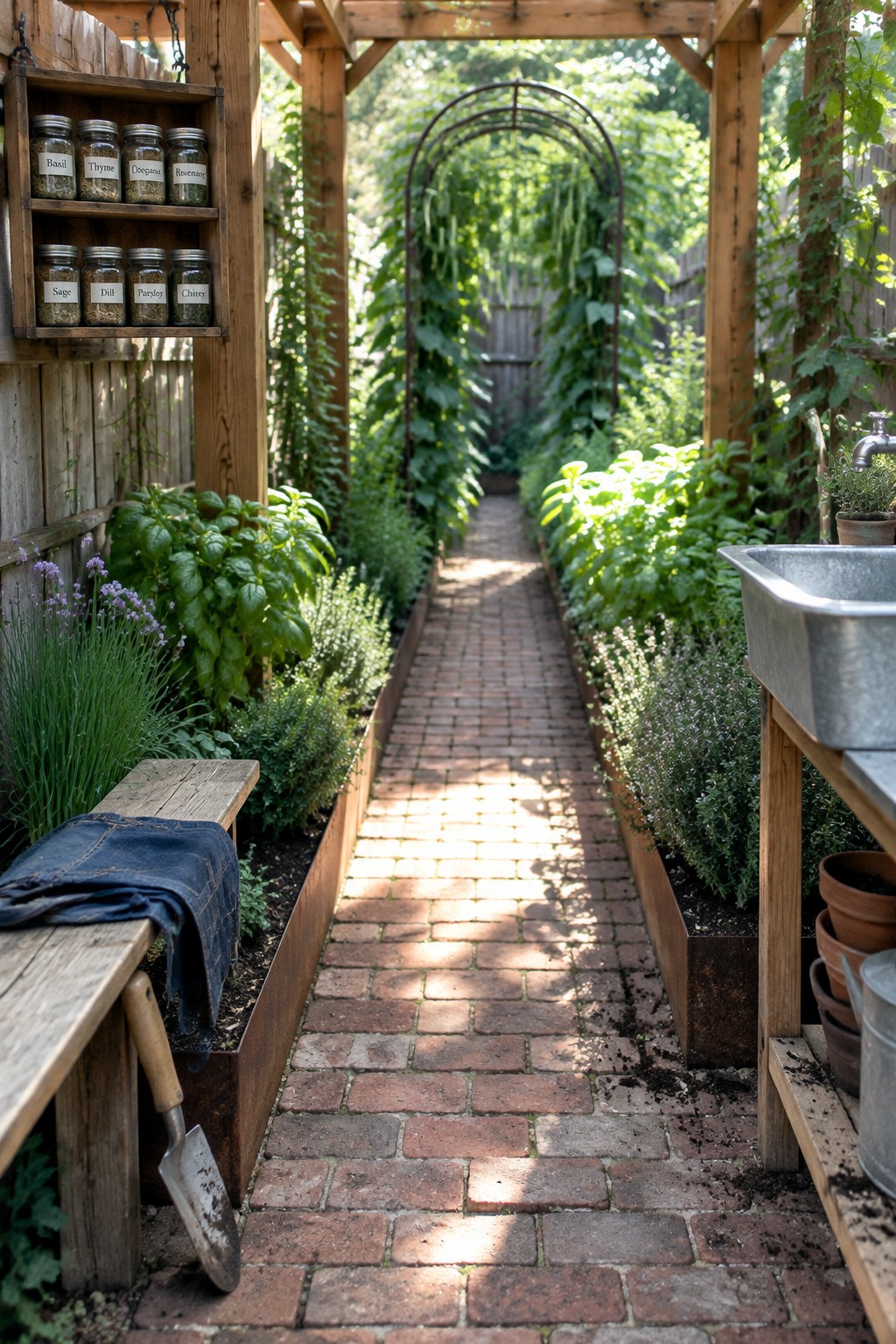
A pergola running the full length of a narrow garden path gives the space a clear sense of order without crowding it. The overhead beams create vertical growing room for vines while the open sides keep the walkway feeling light and usable even in a tight spot. Raised beds on either side stay easy to reach, and the structure itself helps tie the whole garden together.
This setup works especially well in side yards or long strips between fences where a full patio would feel cramped. Keep the path material simple, like brick or gravel, so it drains well and stays practical. Just watch the height of the posts if you want room for taller plants underneath.
Add a Linear Fire Feature Under the Pergola

A long fire trough running along one wall works well in narrow outdoor spaces because it adds warmth and light without eating into the walking area. The pergola overhead keeps the heat from escaping too quickly, so the spot stays comfortable even on cooler nights.
This setup suits side yards or tight passages where you want a place to linger without crowding the floor. Keep the seating low and slim so people can still move through easily, and use simple materials that hold up to weather.
A Basic Workbench Under the Pergola

A narrow pergola walk can easily become more useful when you add a simple wooden table along one side. It turns the space into a spot for potting plants or storing tools without crowding the path, and the overhead structure already provides shade and a bit of shelter from rain.
This setup works best in side yards or tight passages where you need both access and function. Keep the bench low and narrow so it does not block the walkway, and use the lower shelf for bins or extra pots. The brick path underneath helps with drainage and keeps things from getting too muddy after watering.
Use a Wall-Mounted Table in Narrow Outdoor Passages

A fold-down table mounted to the wall gives you a place to sit and eat without eating up floor space in tight outdoor areas. It stays out of the way when not in use and turns a slim walkway into something more functional.
This works best along the side of a house or under a covered structure where a full table would block movement. Keep the stools simple and make sure the table height lines up so people can sit comfortably without crowding the path.
Shelter a Narrow Outdoor Counter Under a Pergola

Many people with tight side yards turn to a pergola when they want a usable cooking area without losing the rest of the space. Running a long counter along one wall keeps everything in a straight line so the walkway beside it stays clear.
This works best on narrow lots when the counter depth stays modest and the pergola stays open on the sides. Use the back wall for hooks, shelves, or a vertical garden so the floor stays open for stools or simple storage like stacked firewood.
Pergola Shelters a Narrow Side Path for Seating

A wooden pergola works especially well when the only available outdoor space runs along the side of the house. The overhead structure gives just enough enclosure to make a table and a couple of chairs feel like they belong there instead of sitting in an open walkway.
This setup suits older homes or narrow lots where a full deck would not fit. Keep the posts close to the house wall and let the beams run parallel with the path so the seating stays out of the way while still feeling intentional.
Built-In Bench Seating Under A Pergola

One simple way to handle a narrow outdoor space is to run a long built-in bench along one wall beneath the pergola. This keeps the floor open for a table and chairs while still giving you plenty of places to sit without adding bulky furniture that would get in the way.
It works best in side yards or covered passages where you need the space to feel usable rather than cramped. Just keep the bench depth modest so the walkway stays clear and people can move through easily.
Frequently Asked Questions
Q: Will adding a pergola make my narrow patio feel even smaller? A: Choose an open rafter style with wide spacing between the beams. This lets plenty of light through and keeps the area airy. Paint the wood a light color to reflect sunshine too.
Q: What if I want to grow plants on it without blocking the walkway? A: Train vines up the outer posts only. Keep the inner side clear so people can pass easily. Fast growing types like jasmine work well if you prune them back often.
Q: Can I attach the pergola to my house to save space? A: But skip full coverage if the space already feels closed off. An open top lets air move freely and stops the area from turning stuffy.
