

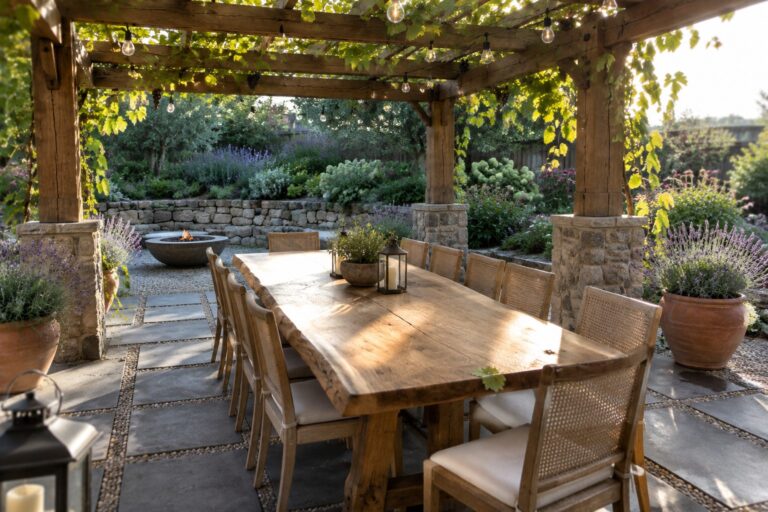
I have found that a well placed pergola can turn an open backyard into a space that actually gets used every day rather than sitting empty most of the season.
Natural timber tends to settle into the landscape over time in a way that feels intentional instead of forced.
Stone accents help anchor the posts so the structure reads as part of the yard instead of something set on top of it.
I usually sketch a few versions on site before deciding because the light and shadows shift depending on where the trees are.
The slope of the lot often decides what works.
Using Stone Pillars With A Timber Pergola
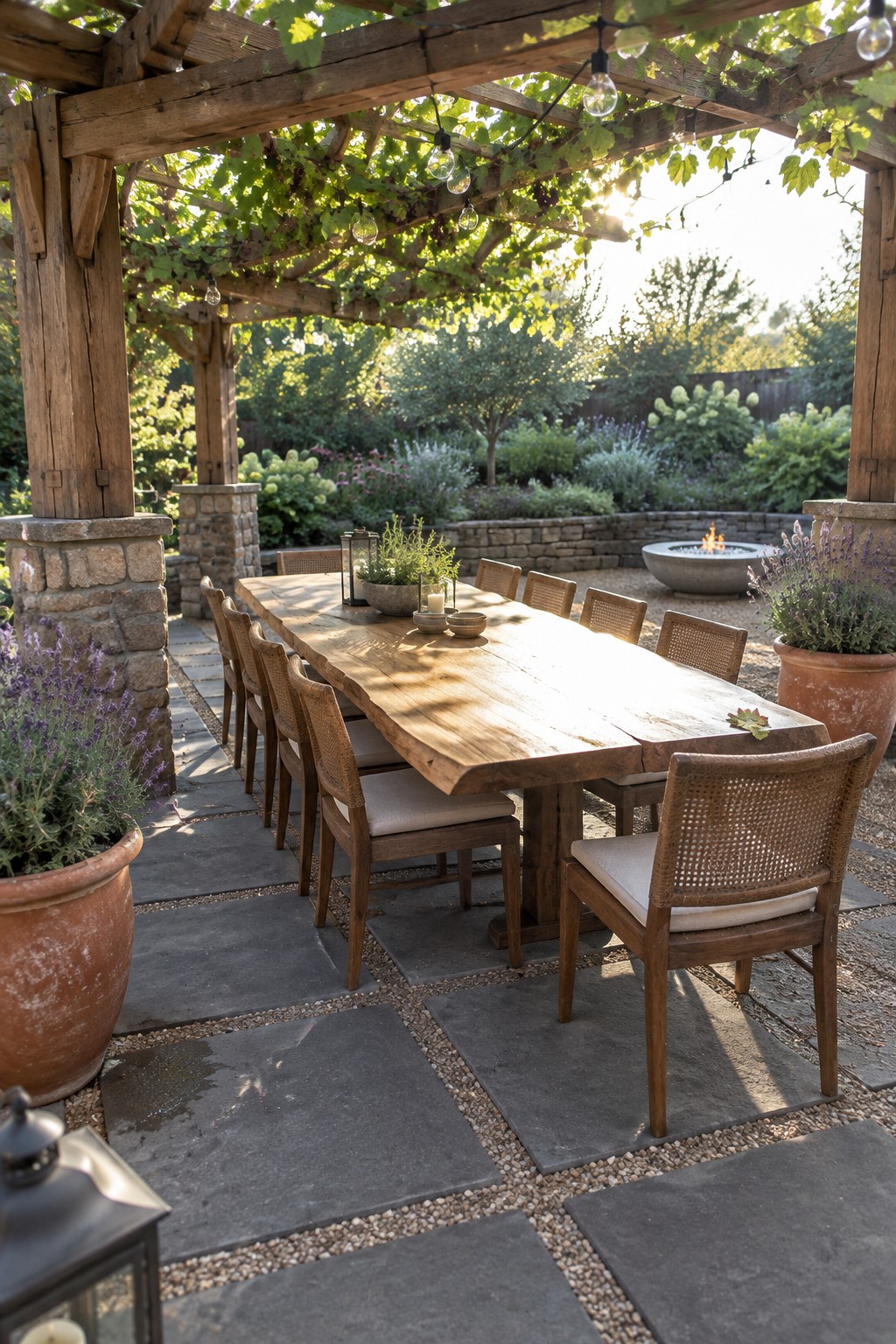
One solid approach is to set the main posts of a wooden pergola on stone pillars instead of sinking them straight into the ground. The stone gives the whole structure more weight and presence, and it helps the pergola feel like it belongs with the rest of the garden rather than sitting on top of it.
This setup works best in yards that already have some stonework, whether that is a low wall, a path, or a fire pit area. The combination holds up well outdoors and gives you a clear spot for a long table without the pergola looking temporary or light.
Timber Pergolas Over Stone Seating Walls
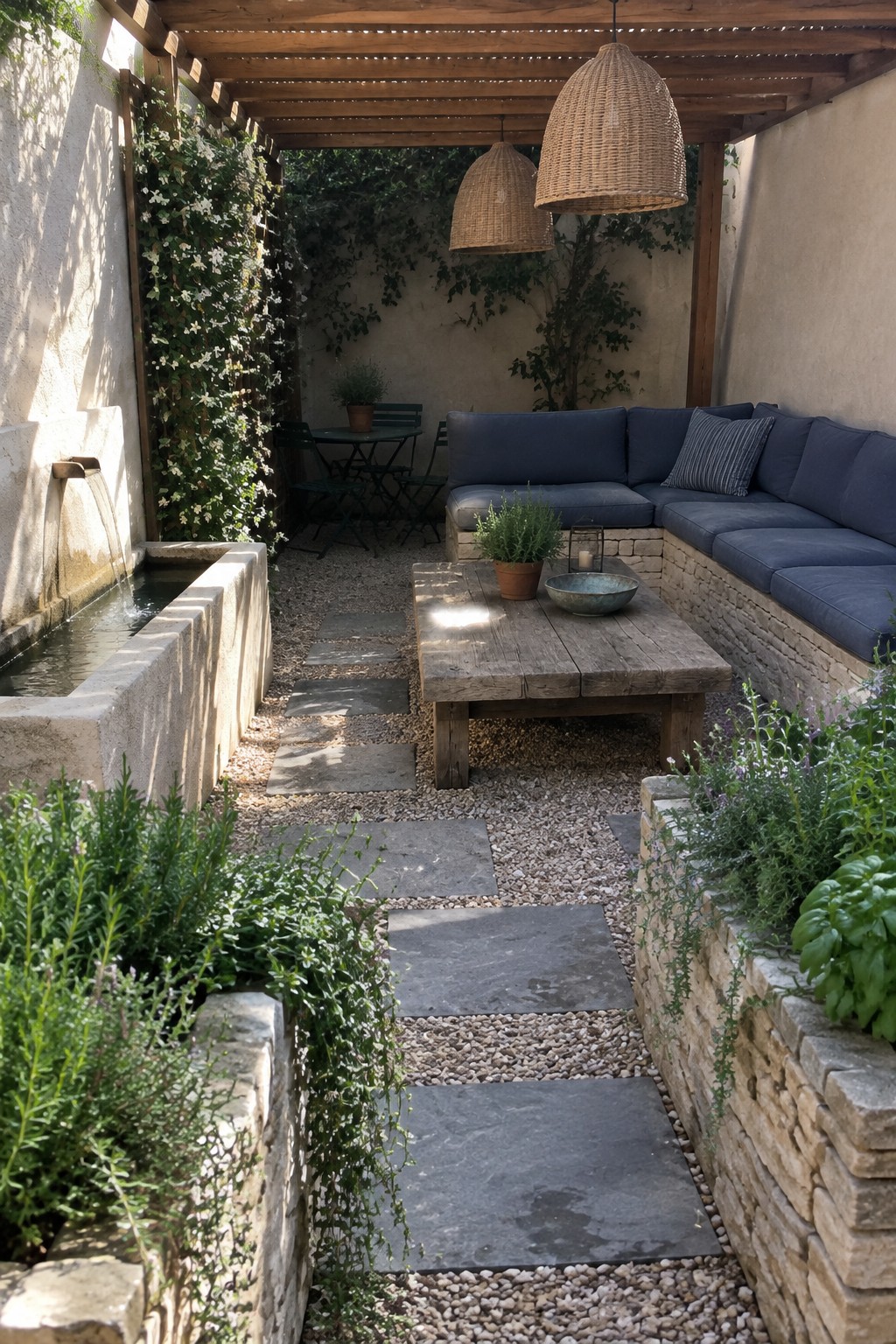
A wooden pergola works especially well when it sits above low stone walls that double as seating. The timber gives height and shade while the stone keeps everything solid and low maintenance. This combination turns a plain corner into a usable outdoor room without adding much furniture.
It suits homes with gravel or paver paths and simple planting beds. Keep cushions in one or two colors and let the stone and wood do the rest. Just watch the scale so the pergola does not overwhelm a small space.
Timber Pergolas Built With Stone Supports
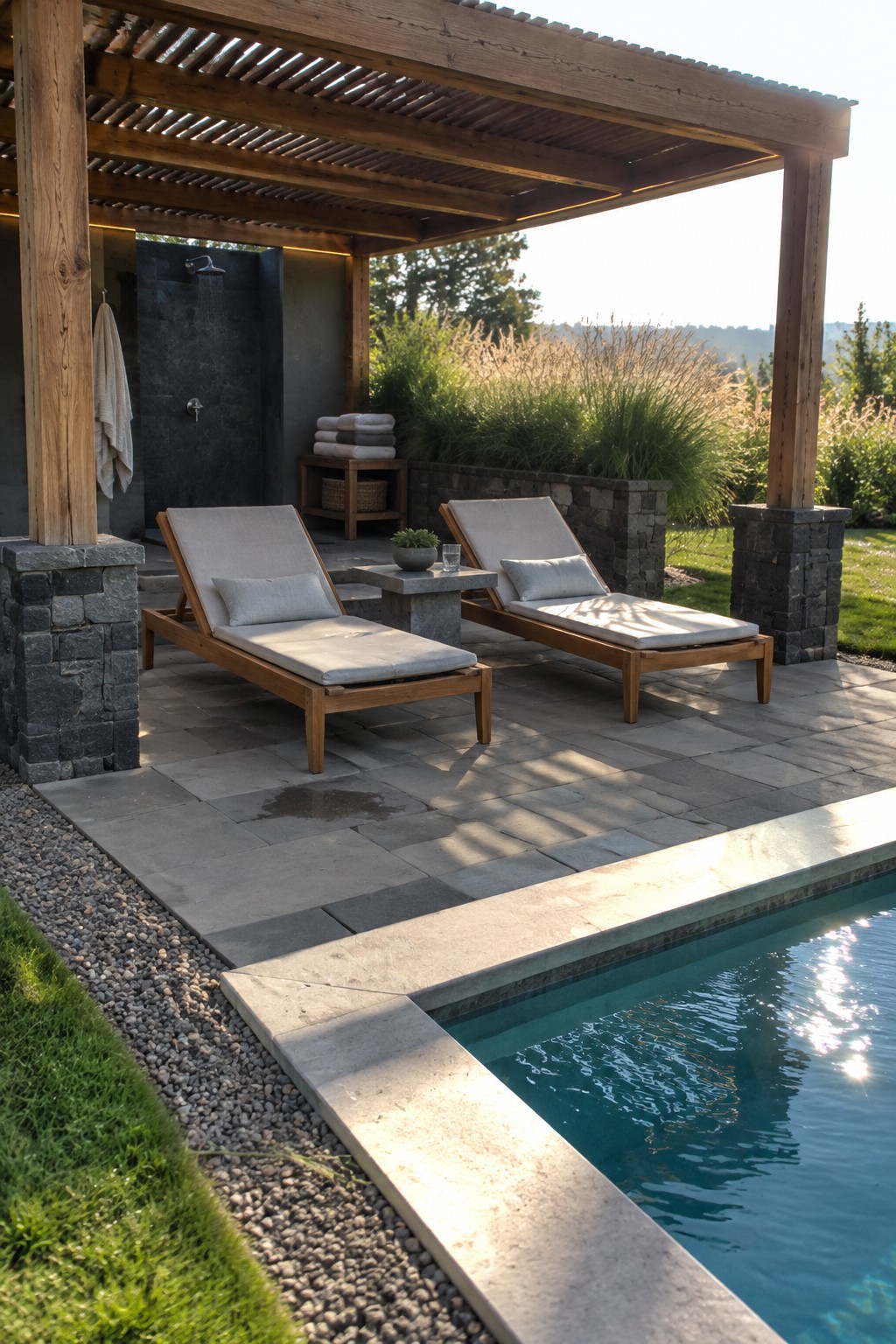
Many people like adding stone to the base of a timber pergola because it makes the whole thing feel more permanent. The mix of materials also helps the structure blend into the surrounding landscape without looking too heavy.
This approach works especially well on pool decks or patios where you need solid support but still want that natural wood look overhead. Just keep the stone simple so it does not compete with the wood tones.
Timber Pergolas Over Outdoor Kitchens
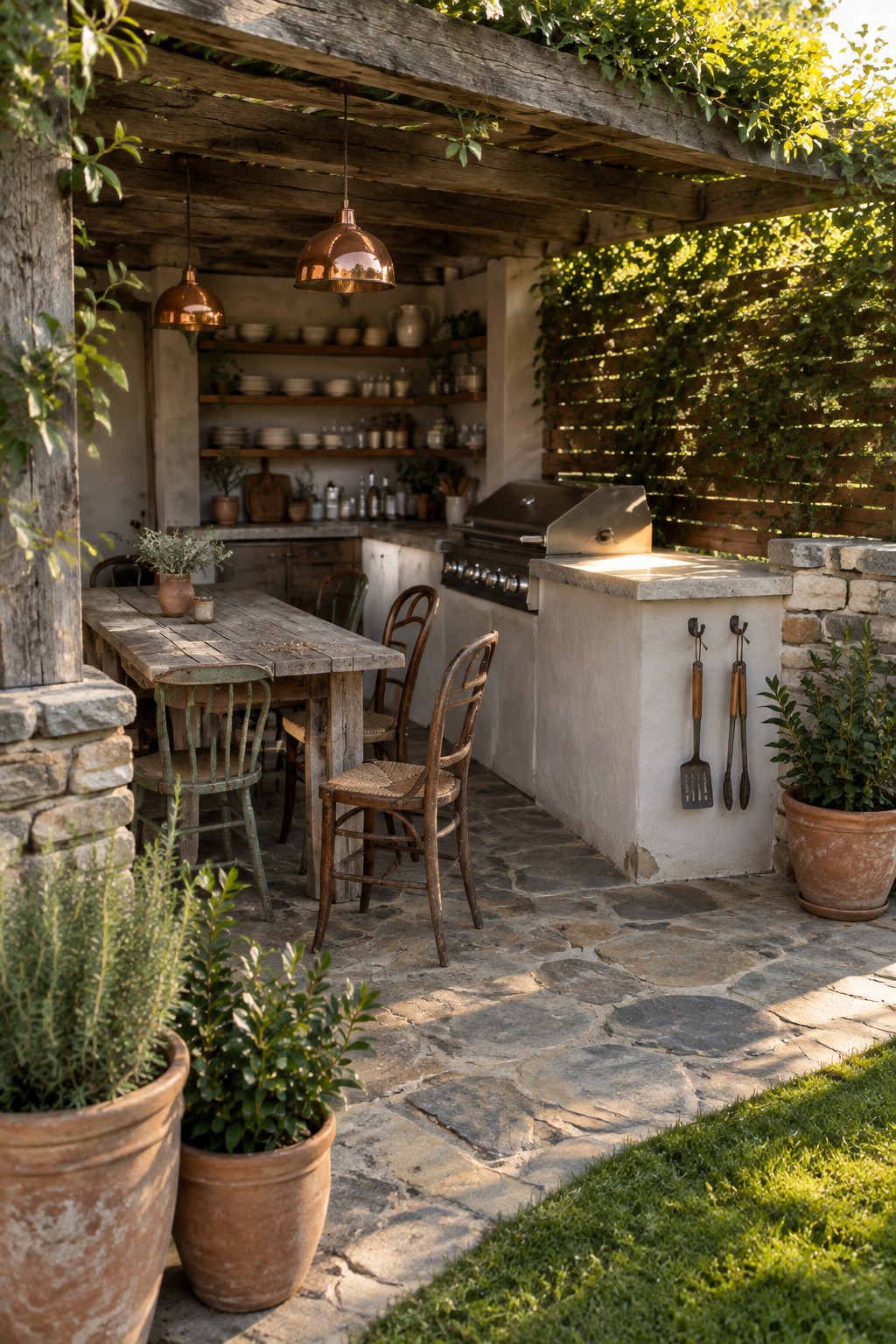
A simple timber pergola gives an outdoor kitchen a clear roof without closing it off from the garden. The rough beams and stone base keep the whole setup feeling grounded and practical, especially when the space needs to handle cooking, eating, and storage all at once.
This setup suits homes where the patio already has stone paving and you want to add shade and a bit of enclosure without building walls. Keep the wood natural and the stone local if you can, and make sure the posts sit on solid bases so the structure lasts through weather and heavy use.
Timber Pergolas With Stone Pillars
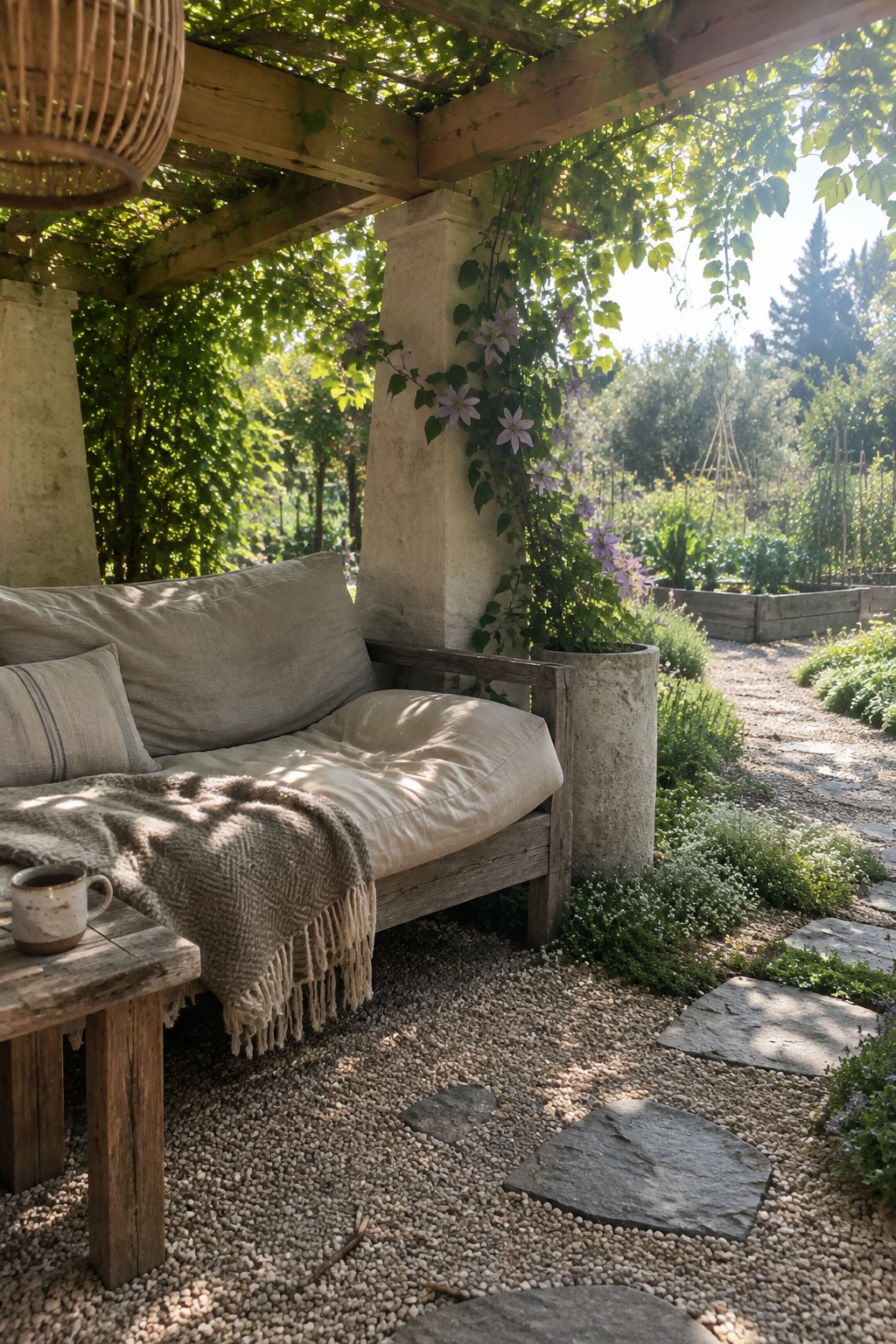
Using stone for the main supports gives a wooden pergola more weight and permanence. The pillars anchor the lighter timber frame so the whole structure feels settled rather than temporary, and the mix of materials holds up better in outdoor conditions.
This approach works well in garden settings where the pergola needs to connect with paths and planting beds. Keep the stone simple and local if possible, and let vines cover parts of the pillars so the pergola reads as part of the landscape instead of an added feature.
Stone Bases For Timber Posts
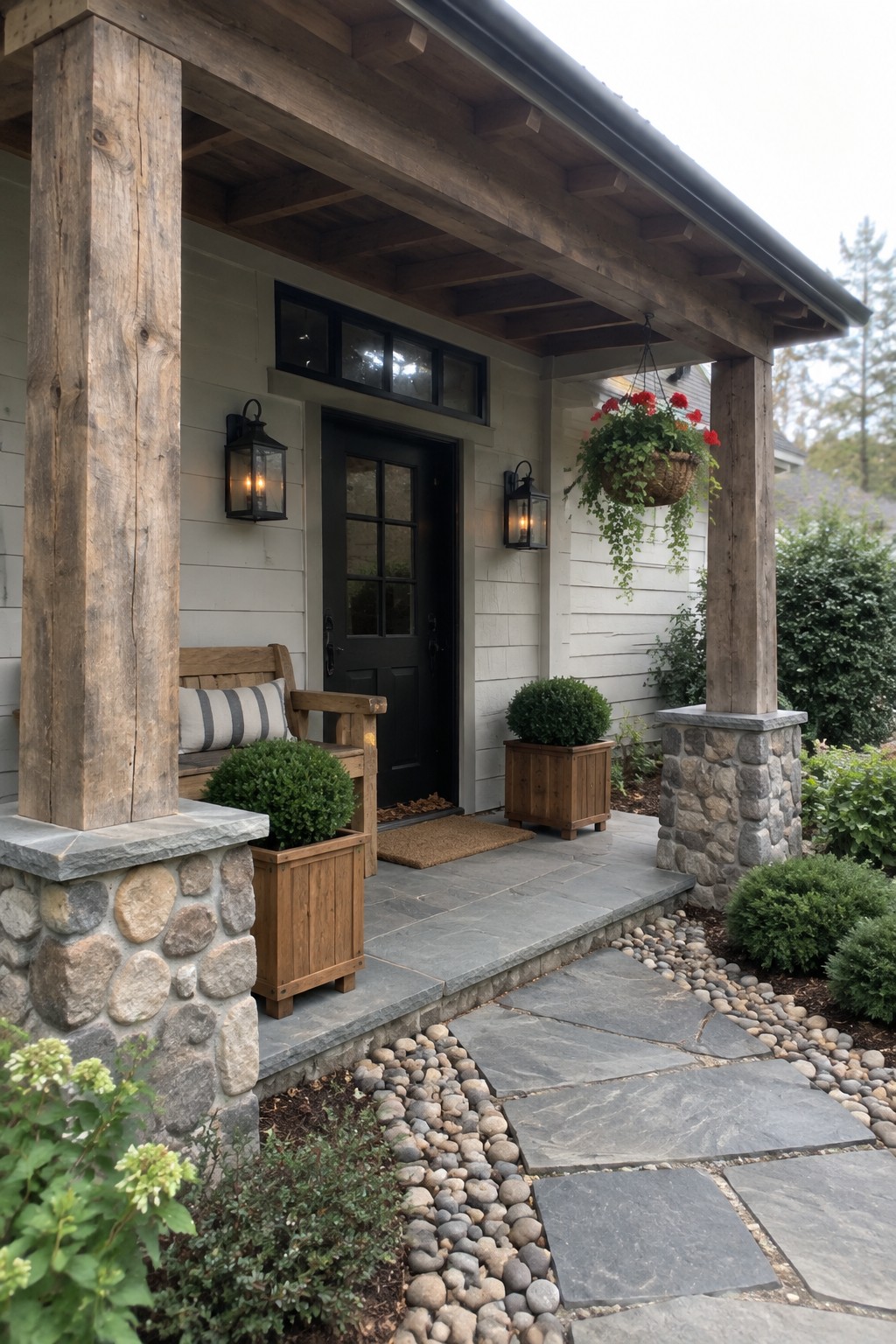
Thick timber posts can look a bit light on their own when they hold up a porch or pergola roof. Setting them on low stone piers gives the structure real weight and helps it settle into the ground instead of just sitting on top of it.
This approach works best on homes with simple siding or shingle where the mix of wood and stone adds texture without extra trim. Keep the stone piers short and match their width to the timber so the proportions stay balanced.
Using Stone Bases With Wooden Pergolas
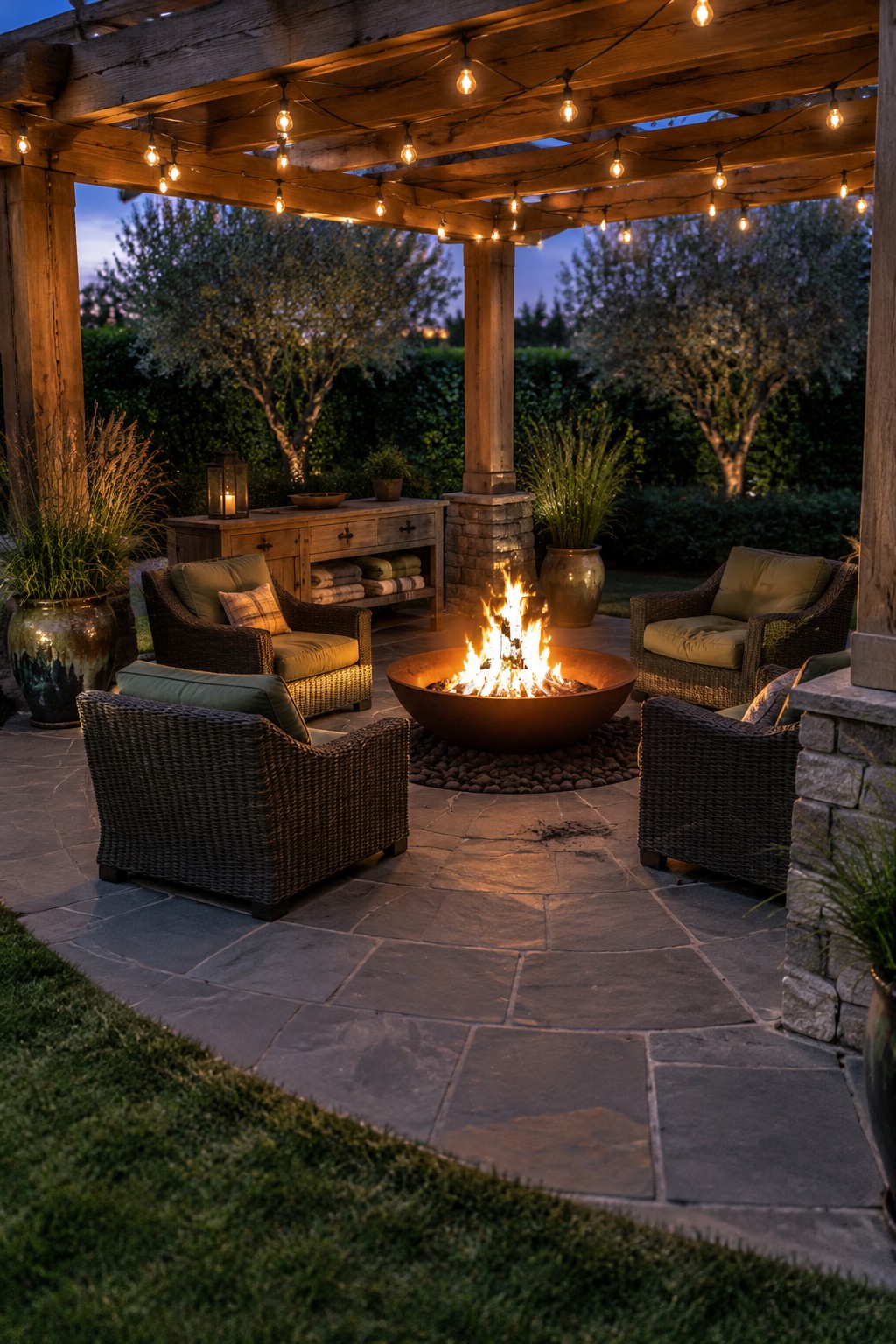
A wooden pergola gains a lot of weight and permanence when it sits on stone pillars or bases. The mix keeps the structure from looking temporary and helps it feel like a natural part of the yard rather than something added later.
This approach works best on homes that already use stone in walls, paths, or garden beds. It pairs especially well with a central fire pit and simple seating so the space feels grounded and easy to use year round.
Timber Pergolas Work Well Against Stone Walls
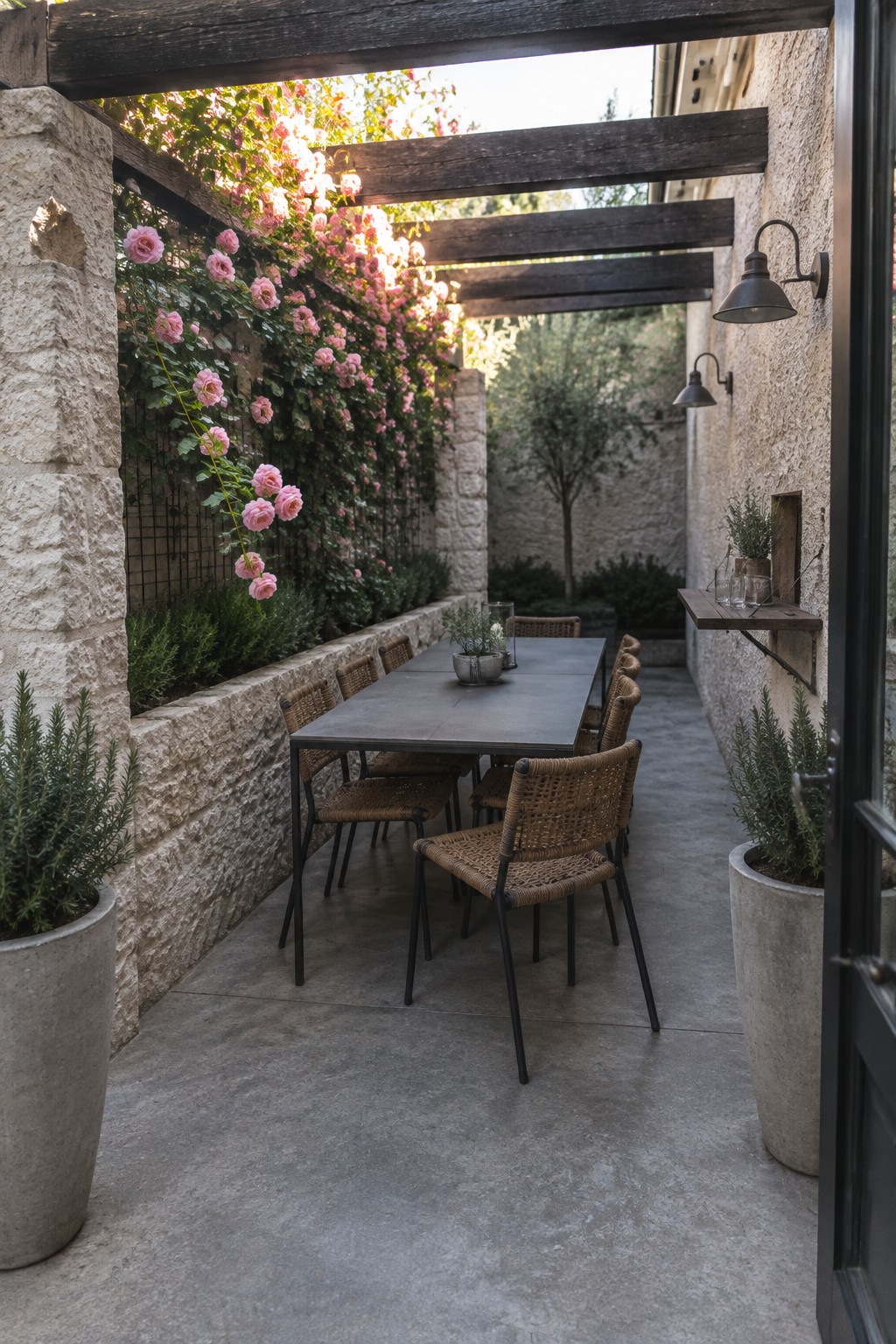
A wooden pergola placed along a stone wall gives an outdoor dining area clear shape without making it feel boxed in. The heavy beams provide shade and a sense of shelter, while the stone brings in texture and weight that grounds the whole setup.
This approach suits homes with side courtyards or narrow patios where you want to create a usable dining spot. Keep the table and seating simple so the timber and stone stay the main features, and add a few climbing plants if you want a bit of softness over time.
Timber Pergolas Over Stone Walls
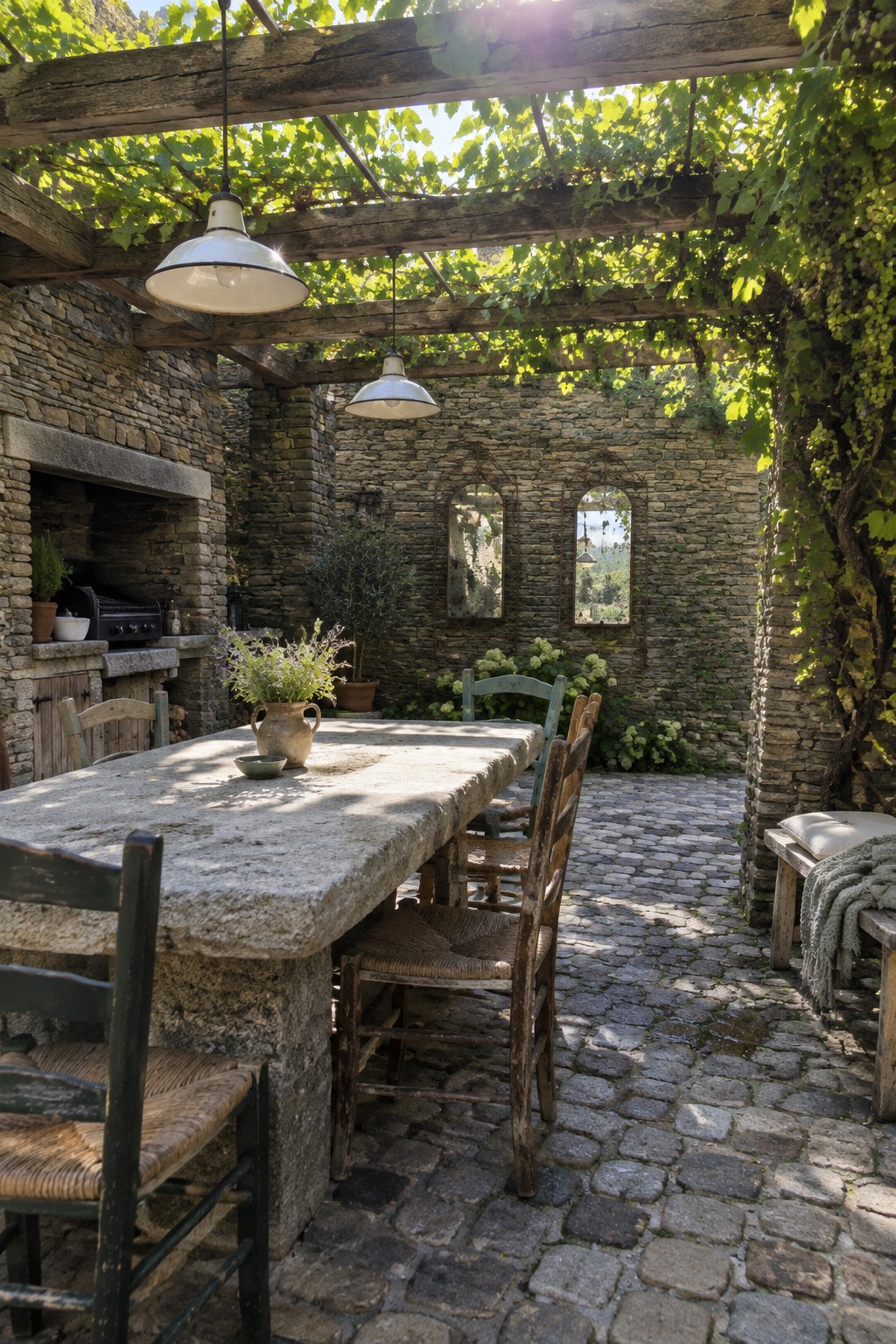
A pergola made from thick, unfinished timber sits comfortably against stone walls because the two materials share the same rough, natural character. The wood brings shade and structure while the stone gives weight and permanence, so the whole area feels like it belongs together rather than added on later.
This approach works best on older properties or homes that already have stonework. Keep the beams simple, let some vines grow across the top, and use basic seating so the materials remain the focus instead of extra decoration.
Timber Pergolas Over Stone Paths
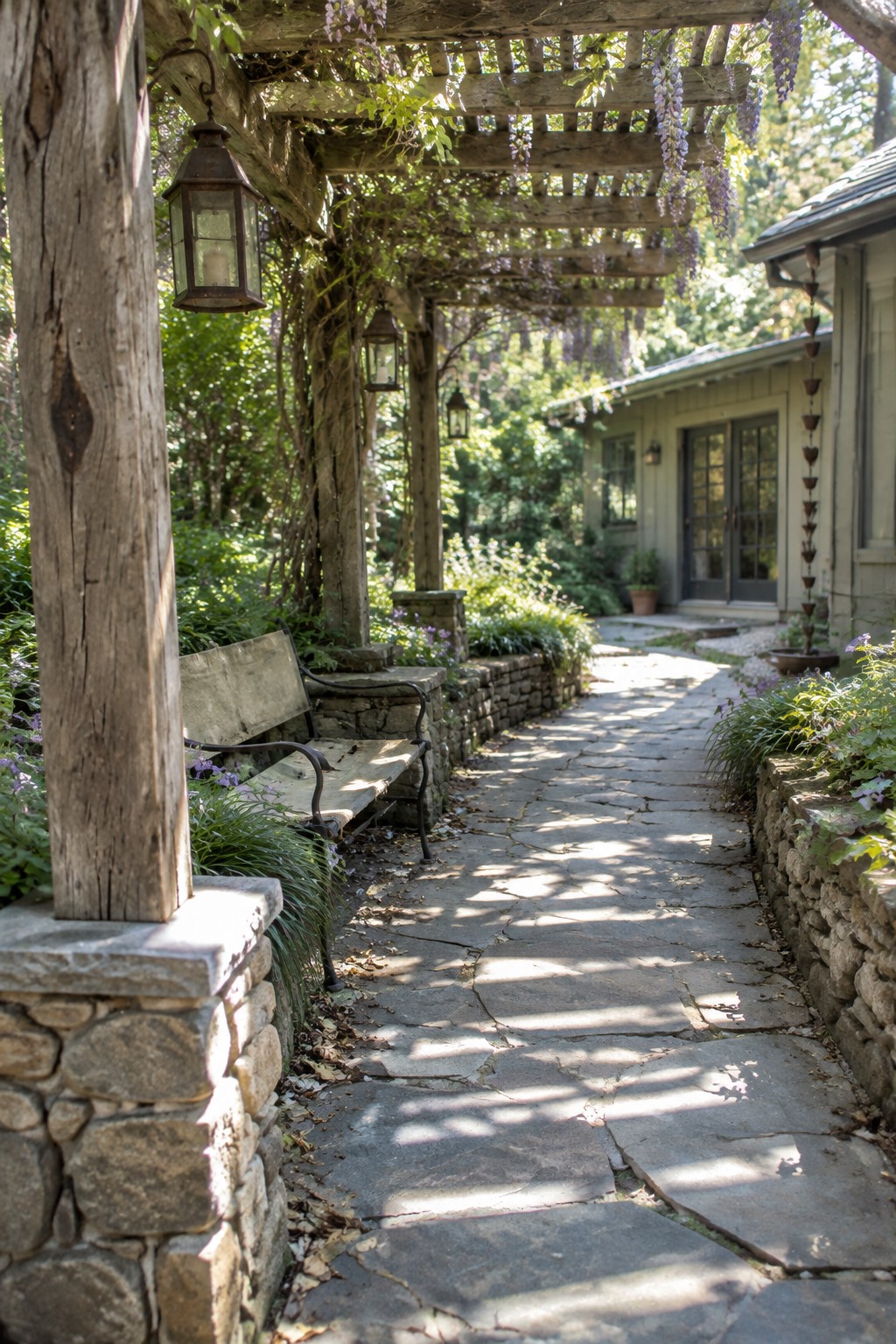
A wooden pergola running above a stone path gives a clear sense of direction through the garden while still feeling open. The natural timber beams add height and rhythm, and the stone bases keep everything grounded without looking too finished.
This approach works best on properties where the path needs to connect the house to a seating area or farther garden zone. Keep the wood simple and let vines cover parts of the structure over time, but make sure the stonework stays low so the path does not feel walled in.
Timber and Stone Pergolas for Outdoor Dining
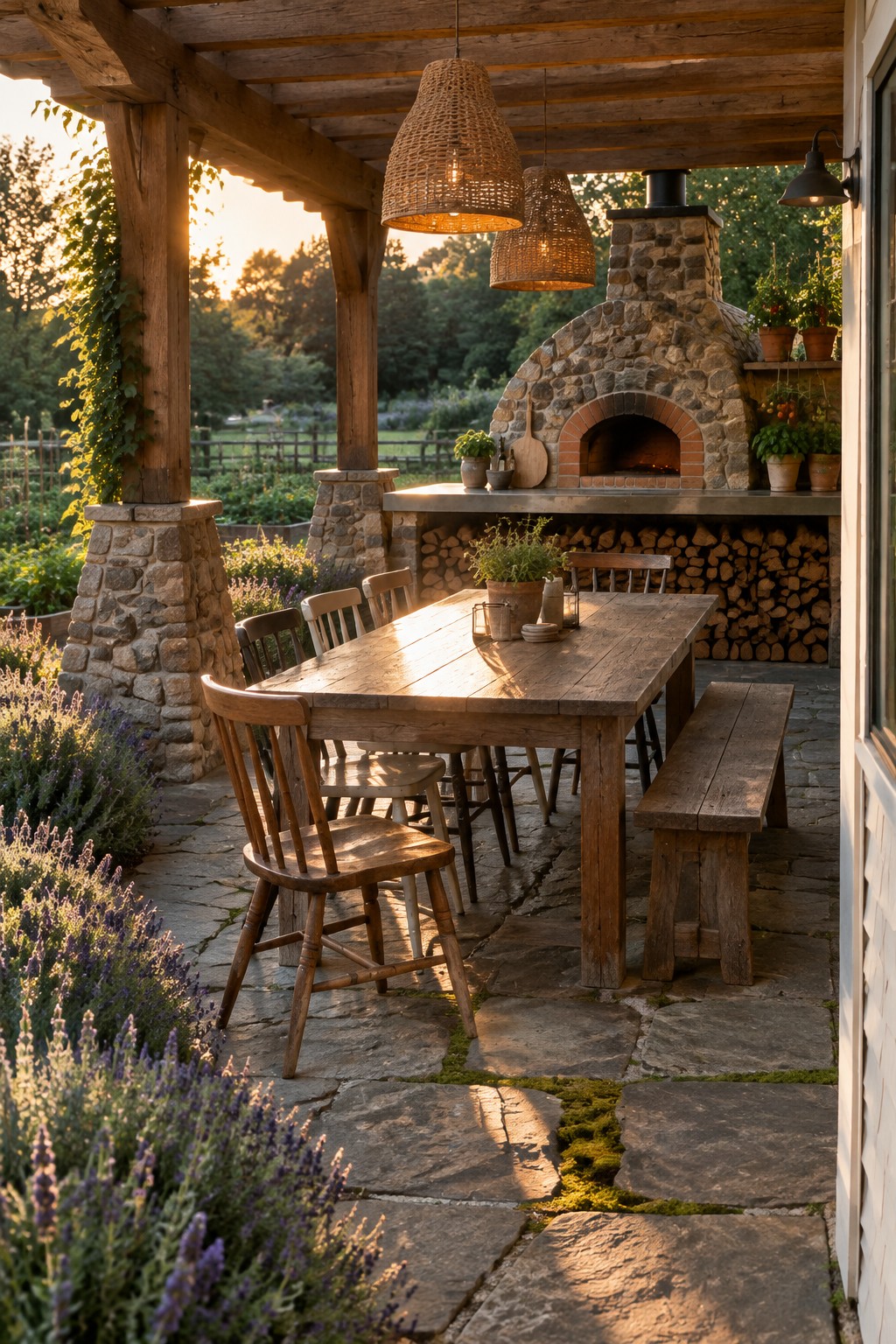
A wooden pergola paired with stone pillars and a built-in oven creates a simple, sturdy setup for outdoor meals. The timber gives the structure warmth and a natural look, while the stone anchors it and adds lasting strength against weather.
This approach works best in garden settings or backyard spaces where you want shade and a place to gather without building a full room. It suits homes that already lean rustic or have plenty of surrounding greenery, though the wood will need occasional sealing to hold up over time.
Anchor a Wooden Pergola with Stone Columns
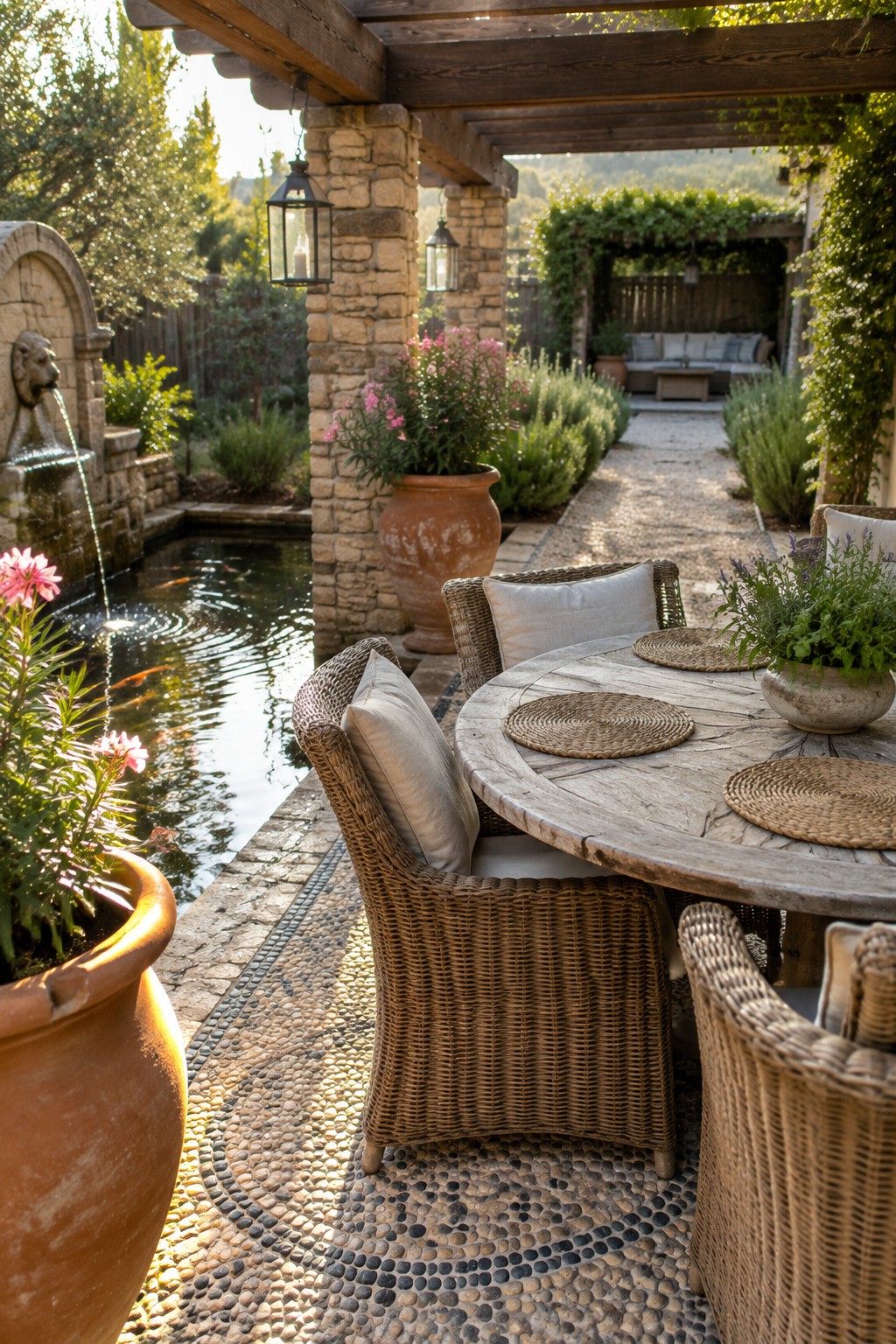
Stone columns give a pergola real presence in the garden. They keep the wood from feeling too delicate and help the structure settle into the landscape instead of sitting on top of it.
This works best on a patio or terrace where you want a clear spot for meals or gatherings. The stone holds up to weather and gives the timber something solid to rest on, which makes the whole setup feel more permanent. Just match the size of the columns to the beams so the proportions feel right.
Stone Accents with Rustic Timber Pergolas
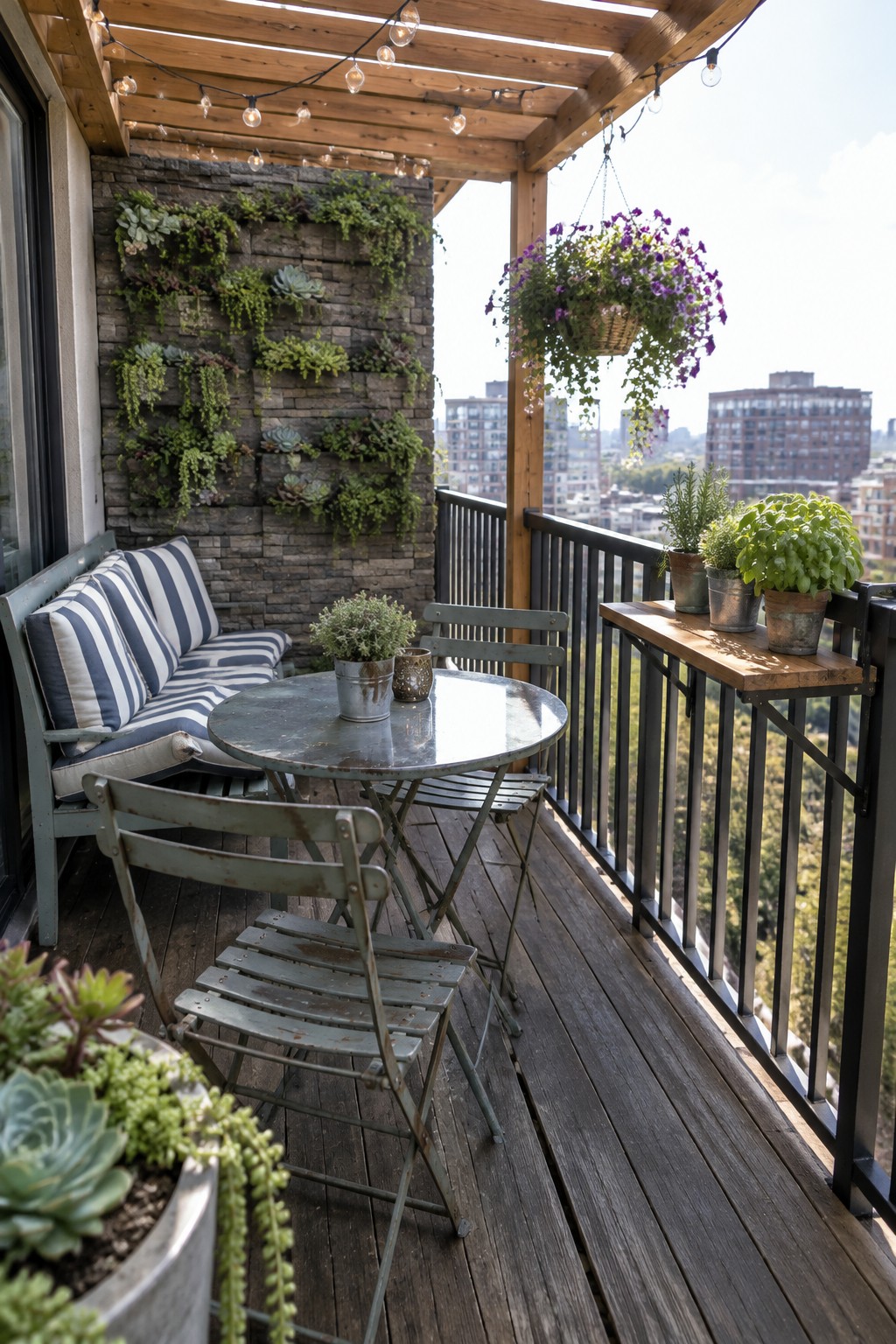
A stone wall behind the seating area gives the pergola something solid to work with. The rough texture of the stone balances the lighter look of the timber beams overhead, and the plants growing out of it add softness without extra furniture or decor.
This approach works best on balconies or small decks where you want a bit of enclosure. It suits homes that already have stone or brick details, and it holds up well if the wood is sealed and the stone pockets drain properly.
Wooden Pergolas With Stone Supports

A wooden pergola gains real staying power when the posts sit on solid stone bases. The stone keeps the timber off the ground so it lasts longer, and it gives the whole structure a grounded look that fits right into a garden setting. Many people like this mix because it feels sturdy without looking too heavy or formal.
This approach works best on patios or seating areas where you want shade but still need the space to feel open. Keep the stone simple and local if you can, and make sure the pergola timbers stay a natural finish rather than painted. It suits homes with existing stone walls or paths, and it avoids the common problem of pergola posts rotting at the base over time.
Timber Pergolas With Built-In Stone Seating
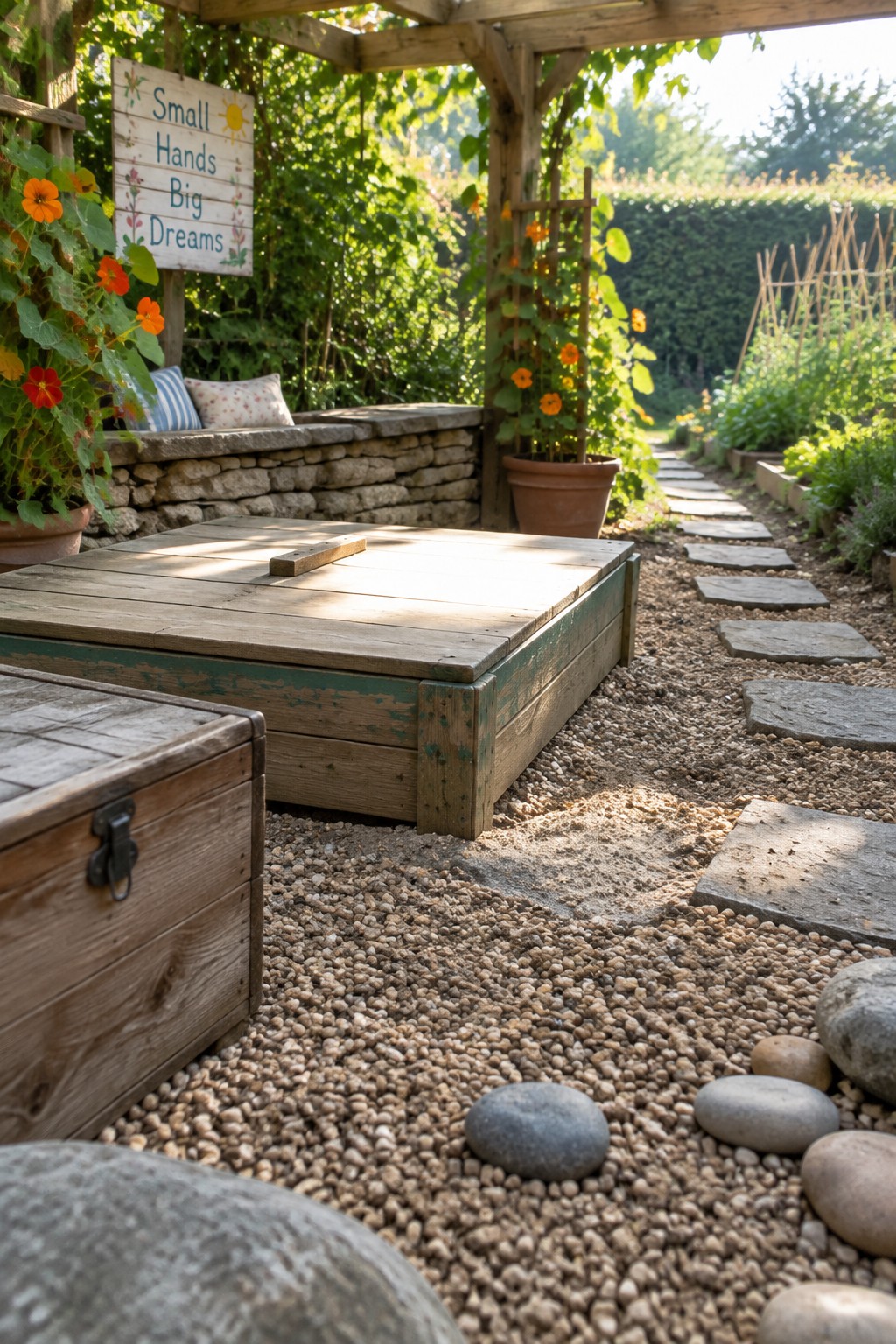
A pergola made from plain timber works especially well when it sits over a low stone wall or bench. The wood gives structure and shade while the stone adds weight and a place to sit without needing extra furniture. This combination feels settled and practical in a garden that already uses gravel and natural paths.
It suits smaller yards or side gardens where you want a defined spot to rest without building a full deck. Keep the wood untreated or lightly sealed so it weathers to match the stone, and make sure the bench height stays comfortable for sitting. Avoid crowding the area with too many pots or ornaments so the simple materials stay the focus.
Timber Pergolas With Stone Supports
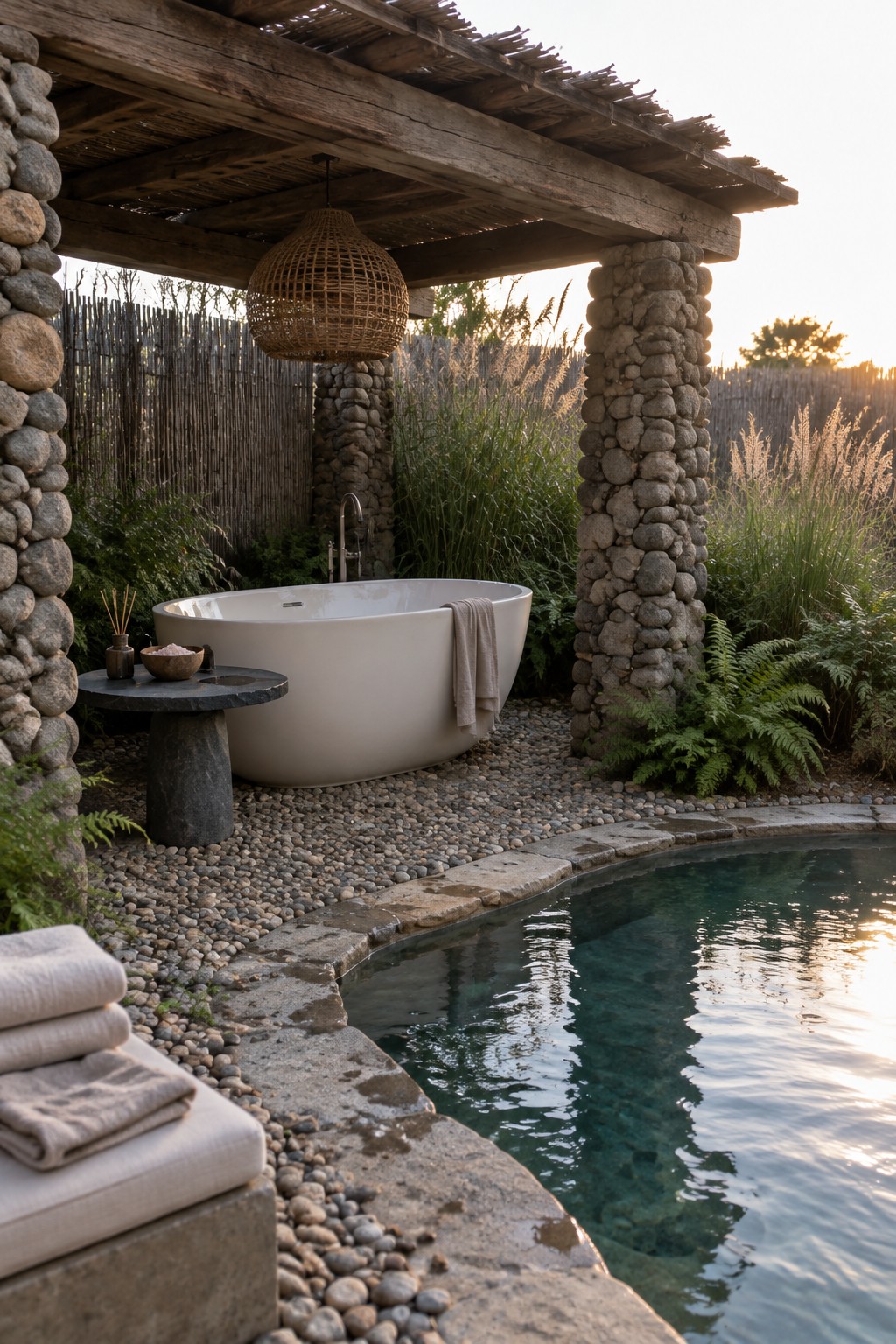
A simple way to anchor an outdoor pergola is to set thick timber beams on columns built from stacked field stones. The stone gives weight and stability at ground level while the wood keeps the overhead structure light and open.
This setup works best in poolside or garden spa areas where you need shade during the day but still want to feel connected to the surrounding plants. It suits homes with loose, natural landscaping and tends to age well in wet climates as long as the timber is properly sealed.
Covering A Stone Patio With A Simple Timber Pergola

A wooden pergola adds just enough structure to turn an open stone patio into a usable seating area. The natural timber keeps the look light while the beams create shade and a sense of boundary without walls.
This setup works best on smaller side yards or back patios attached to older homes. Keep the sides open so air and plants can move through, and use the same stone or brick already on the ground to tie everything together.
Stone Bases For Timber Pergola Posts
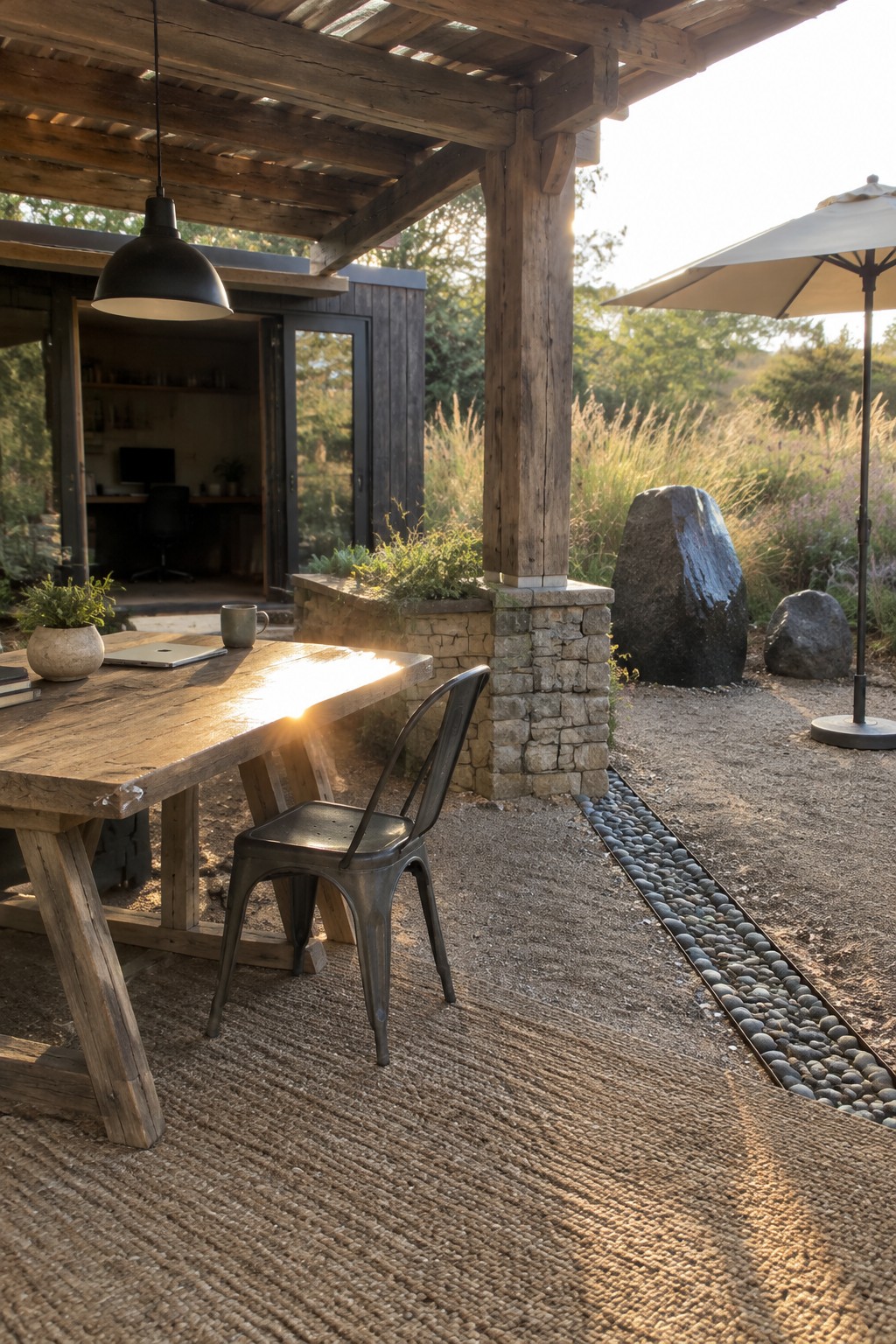
Setting pergola posts on stone bases gives the structure real weight and helps it settle into the landscape instead of floating on top of it. The stone anchors the wood and creates a natural transition between the built elements and the ground around them.
This works best in open yard spaces or garden edges where you want the pergola to feel lasting rather than temporary. Choose stone that matches other hardscaping on the property so the materials stay consistent as the space ages.
Frequently Asked Questions
Q: How do I stop the timber from splitting after a few seasons outside? A: Rub a coat of raw linseed oil on all exposed surfaces twice a year. Focus on the top edges where rain sits longest. The wood stays flexible and keeps its natural color longer.
Q: Will stone bases stay solid under the posts once the ground freezes? A: Dig down six inches and pack in crushed rock before you set the stones. This gives the base room to shift without cracking the wood joints above it. Re-check the level each spring.
Q: What vines actually climb well on rough timber without taking over? A: Start with something light like clematis or a climbing rose. Tie the first stems loosely so they grab the beams on their own. Trim back any runners that head toward the house roof.
