

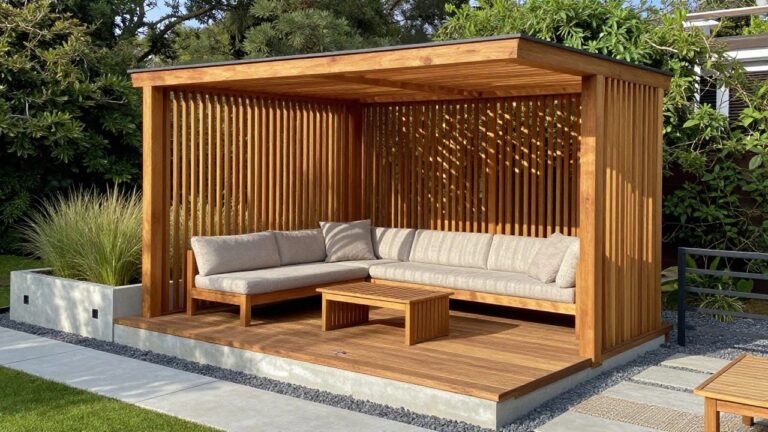
I have seen wooden patios come together well when the design keeps the main walking paths clear from the start.
Clean lines in natural finishes usually make the space feel larger without adding extra structures that might block views.
Some setups look great in photos yet end up unused because the seating does not face the right direction for conversation or shade.
A quick trial with a few boards can reveal a lot.
I tend to adapt those practical details first when planning changes to my own outdoor area.
Pergolas For Simple Deck Shade
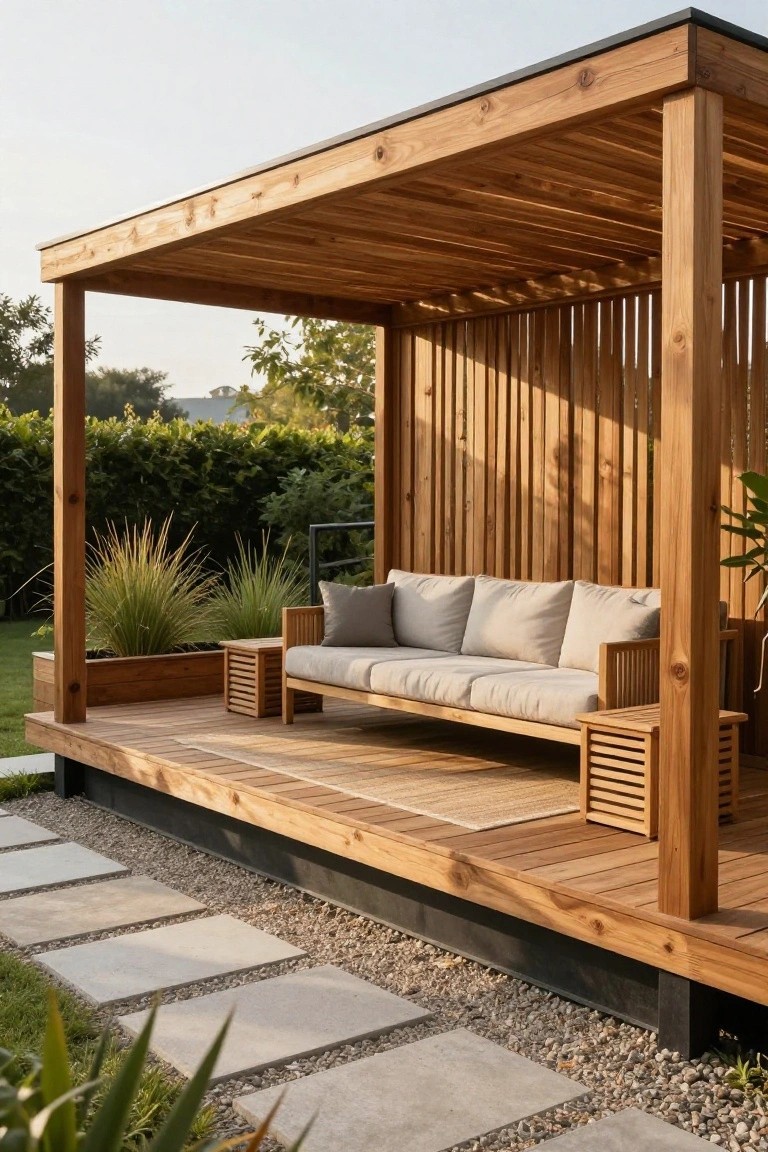
A pergola like this gives a deck some real shade while still keeping the space open. The clean wood lines and natural finish make the whole area feel like a natural extension of the yard instead of something added on later.
This setup works best on decks that face afternoon sun and need a bit of cover without turning into a full roof. It suits homes that already lean toward simple wood details and lets the structure blend in as the wood weathers.
Built-In Benches Along the Walls
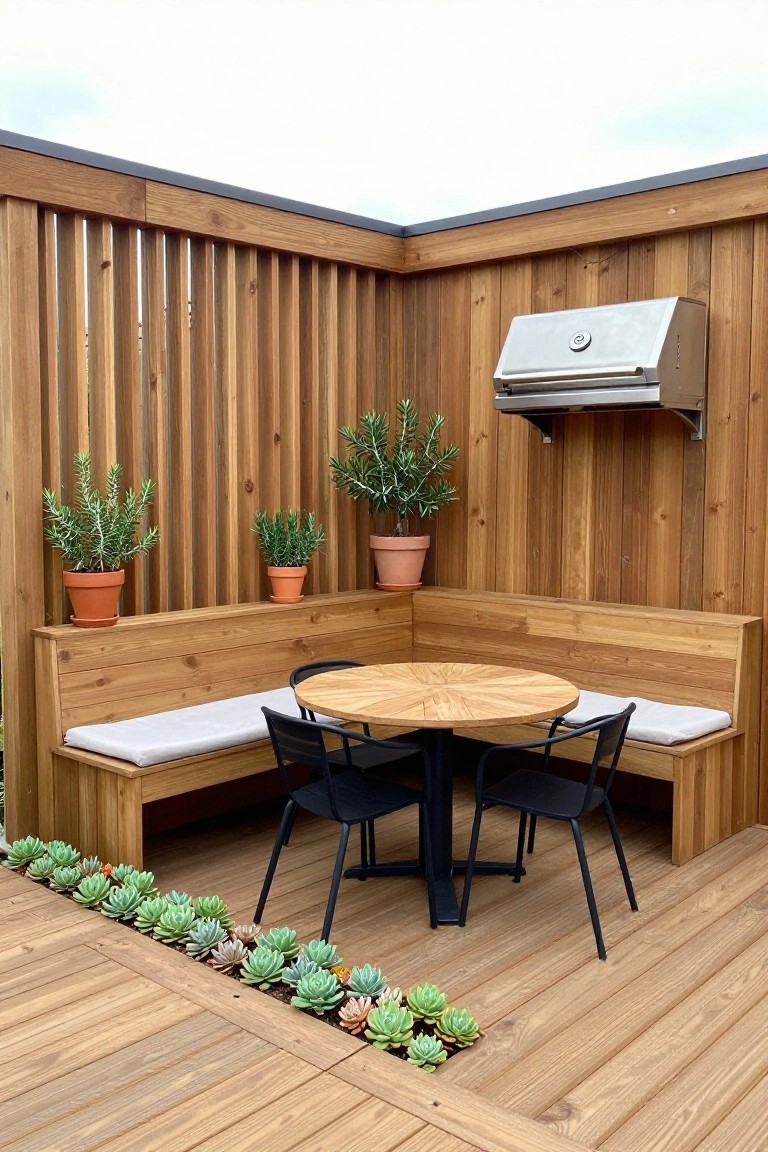
Built-in benches give a patio a finished look without taking up extra floor space. They turn the edges of the deck into usable seating while keeping the center open for a table and chairs. The wood matches the decking, so everything feels connected rather than added on later.
This setup works best on smaller or corner patios where freestanding furniture would crowd the area. It suits homes that already have wood siding or decking and want a low-maintenance outdoor spot that still feels comfortable for meals or gatherings.
Low Wood Tables for Open Patios
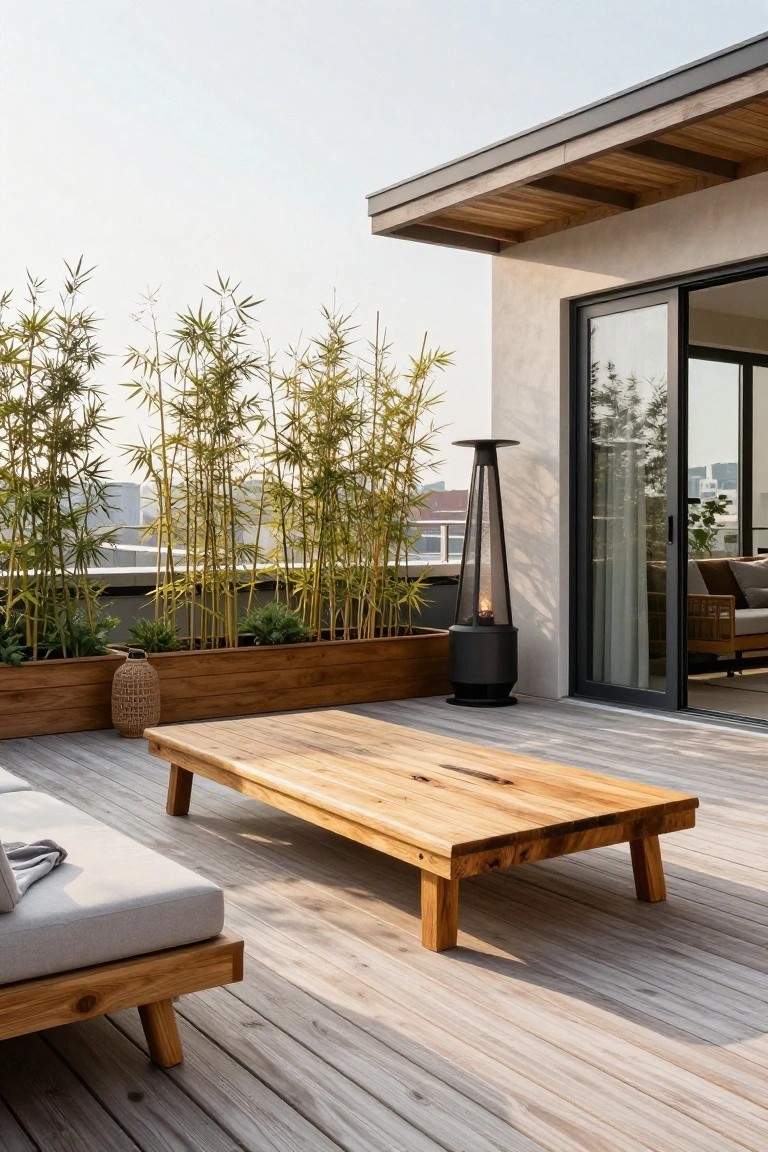
A low wood table keeps the deck feeling open and easy to move around. It sits low enough that it does not block sight lines to the plants or the view beyond, yet it still gives a solid surface for drinks or plates.
This setup works best on decks or patios that already use natural wood tones and simple lines. It suits smaller outdoor spaces where you want room to walk and a relaxed feel without adding bulk.
Wood Decking That Runs to the Pool Edge
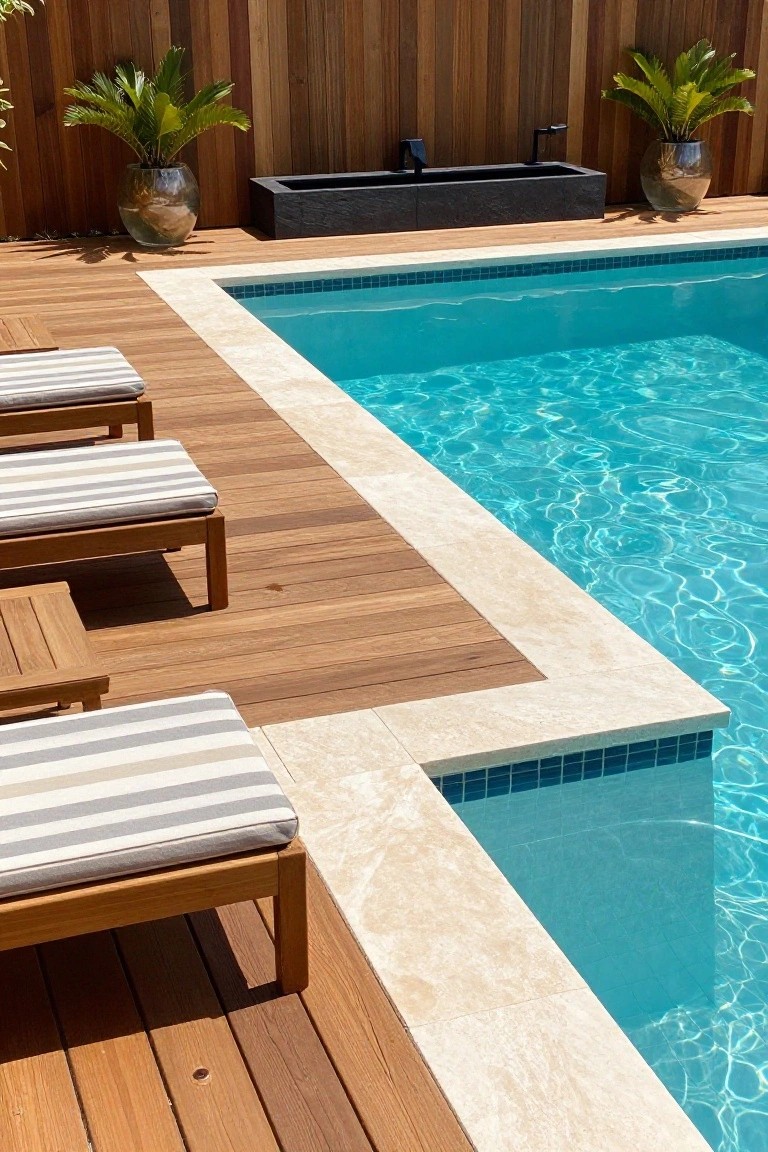
Wood decking can sit right up against pool coping without much fuss. The warm tone of the boards makes the whole area feel connected and open rather than split into separate zones.
This layout suits homes where the pool gets regular use. Choose boards that hold up to water and sun, and keep the finish natural so it ages evenly with the rest of the outdoor space.
Matching The Table To The Deck Wood
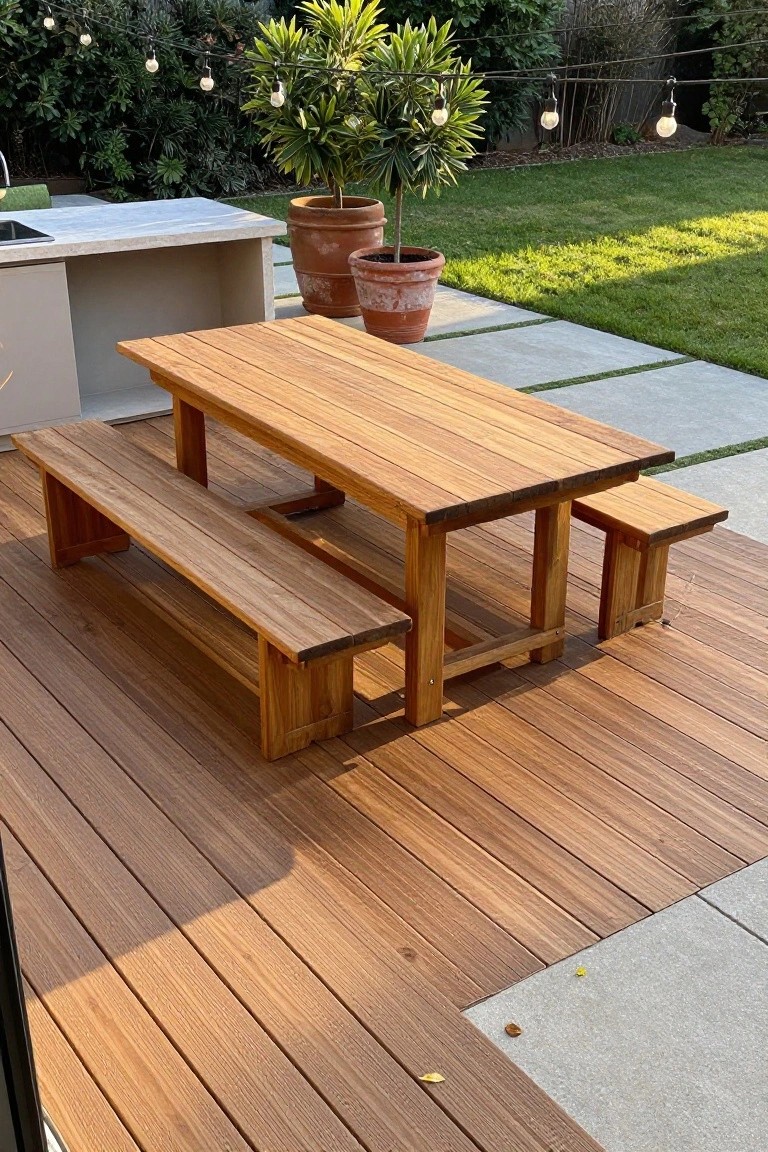
One approach that keeps an outdoor dining area feeling calm and connected is using a table and benches made from the same wood as the deck. The matching grain and tone make the furniture look like it belongs there instead of sitting on top of the surface as an afterthought.
This works best on decks where you want a simple, low-fuss layout for meals. Stick with straight lines and a natural finish so the wood can age evenly, and leave enough room around the benches for easy movement.
Simple Wooden Platform Decks
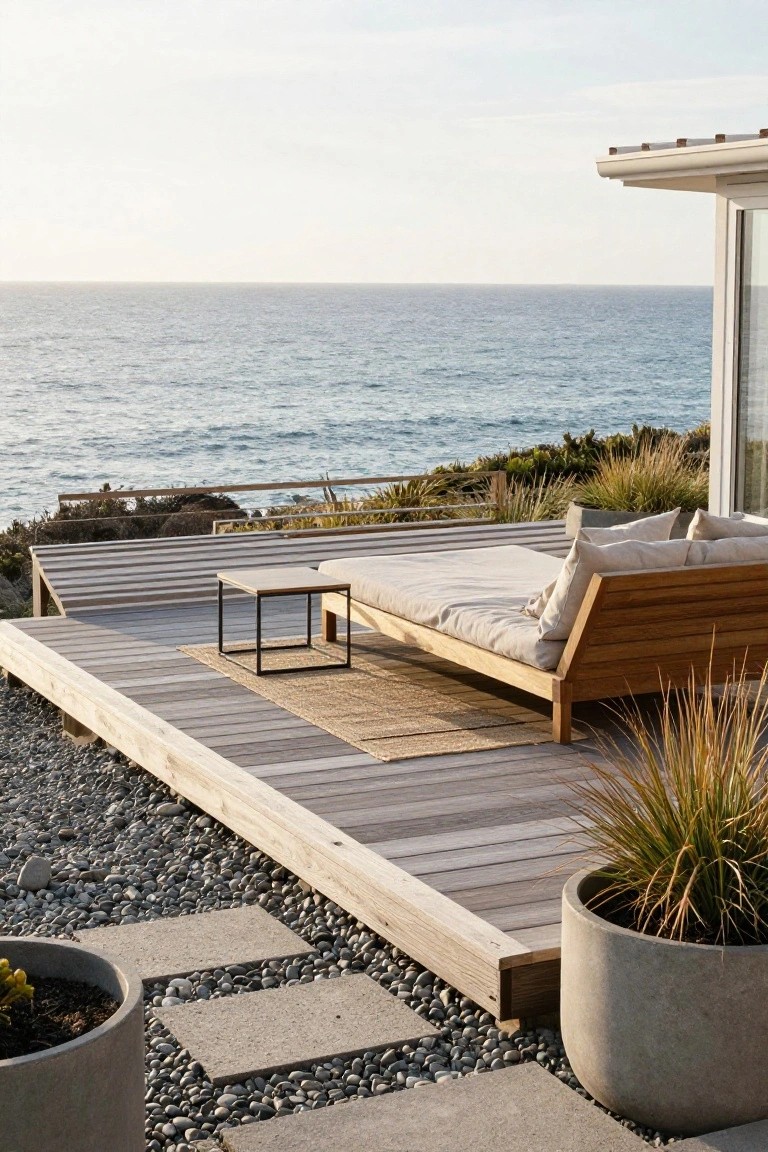
A low wooden deck made from natural finished boards gives an outdoor space a clean base without a lot of extra structure. The horizontal lines keep the surface calm and let the furniture stay minimal, so the area feels open rather than crowded.
This approach works well on sites with a view or where the ground slopes. Keep the wood light and untreated so it weathers evenly, and add only a few low seats or a daybed. Avoid tall railings or heavy accessories that would break the simple look.
Wooden Benches With Clean Lines
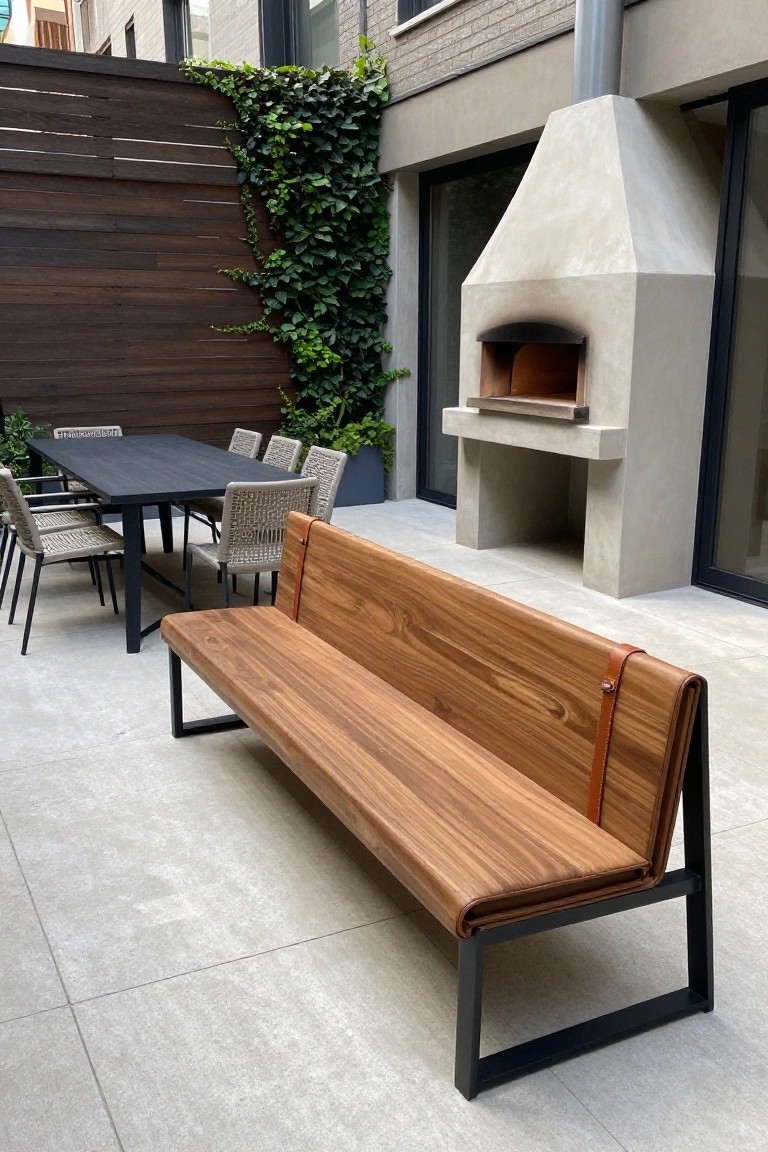
A wooden bench gives a patio a straightforward place to sit without crowding the space. The natural grain and simple shape keep things feeling open while still providing real seating that holds up outdoors.
This works best on smaller patios or beside a dining table where you need flexible extra seats. Look for solid wood with a protective finish and a low metal base so the bench stays stable and ages well over time.
Curved Built-In Benches For Wooden Patios
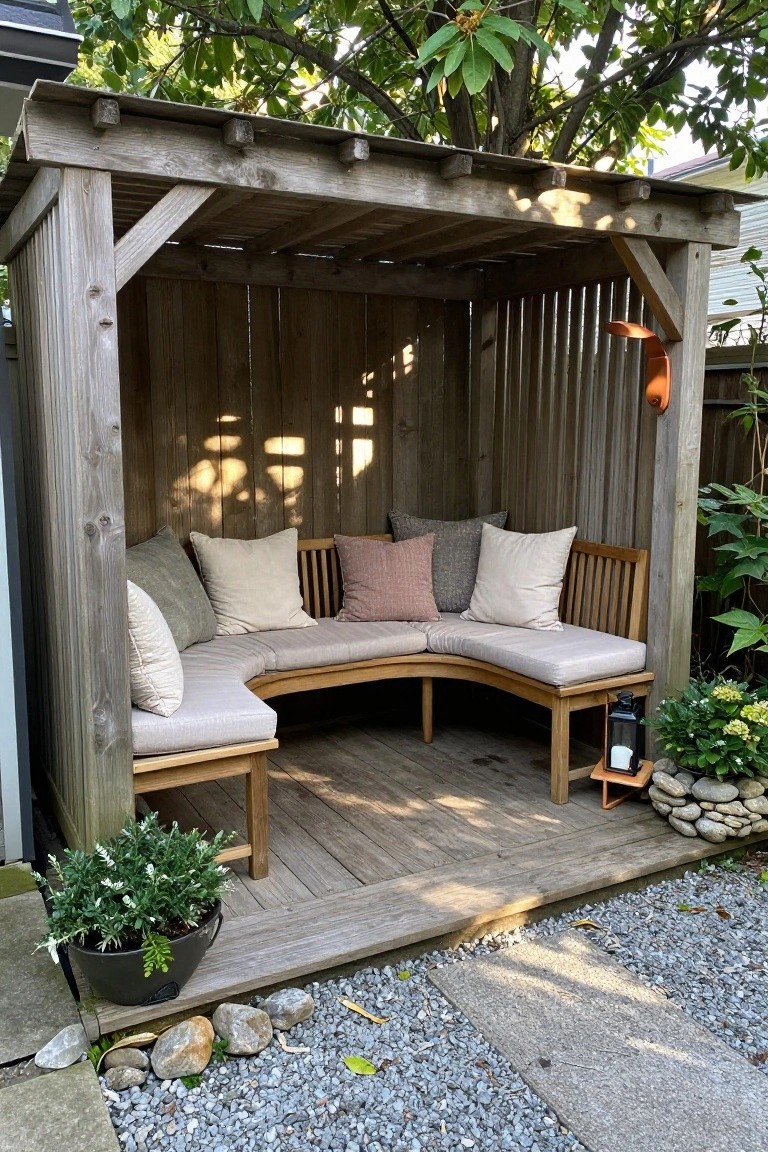
A curved bench makes good use of a small covered patio because it follows the shape of the structure instead of cutting across it. This leaves more open floor space in the middle and gives you room for several people without crowding the area. The wood matches the shelter itself, so everything feels like one piece rather than separate furniture brought in later.
This setup works best in backyards where the patio sits right against a fence or wall. Build the bench from the same lumber as the frame so it lasts and stays simple to maintain. Just watch the depth so the seat stays comfortable without blocking the walkway in front.
Built-In Seating Keeps Things Simple on the Patio
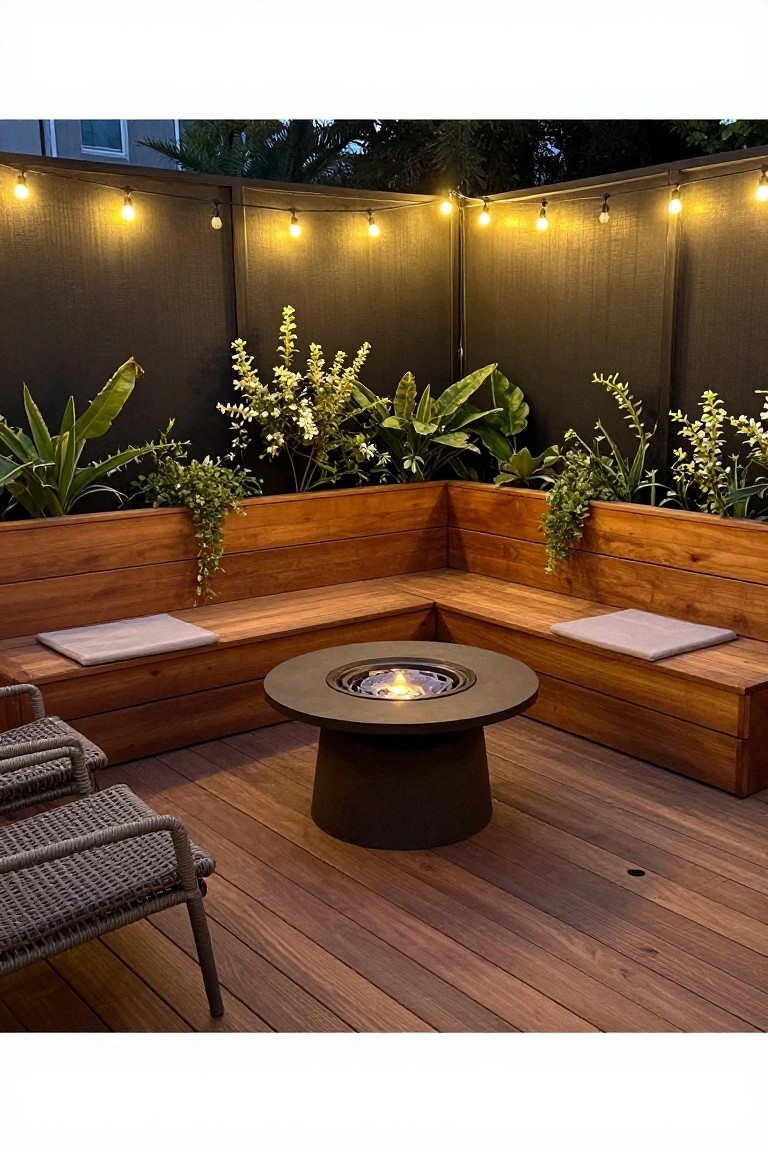
Built-in benches along the edges give you plenty of seating without adding extra furniture that takes up floor space. The wood ties right into the deck and creates a steady, finished look that feels natural rather than added on later.
This approach works best on smaller or medium decks where you want the center left open for a fire pit or table. It suits homes that already use wood finishes outdoors and prefer seating that stays in place year round instead of moving cushions around.
Built-In Benches Along Planters
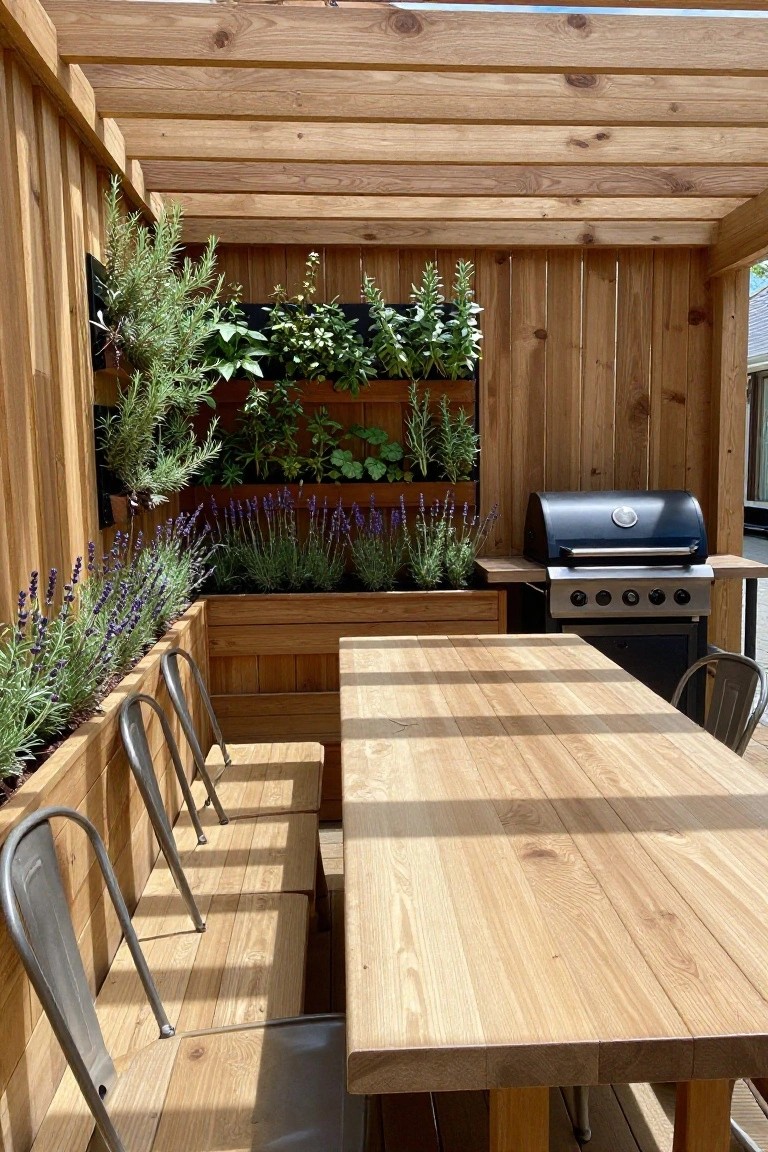
Built-in benches that run right next to planter boxes give an outdoor dining area a settled look without adding extra furniture. The wood ties the seating to the surrounding structure, and the plants soften the edges so the whole setup feels like part of the patio rather than something added later.
This works best on smaller decks or side yards where you want seating that stays put and does not crowd the space. Keep the bench height level with the planters and use the same wood finish so the lines stay clean.
Matching Wood For Patio Furniture
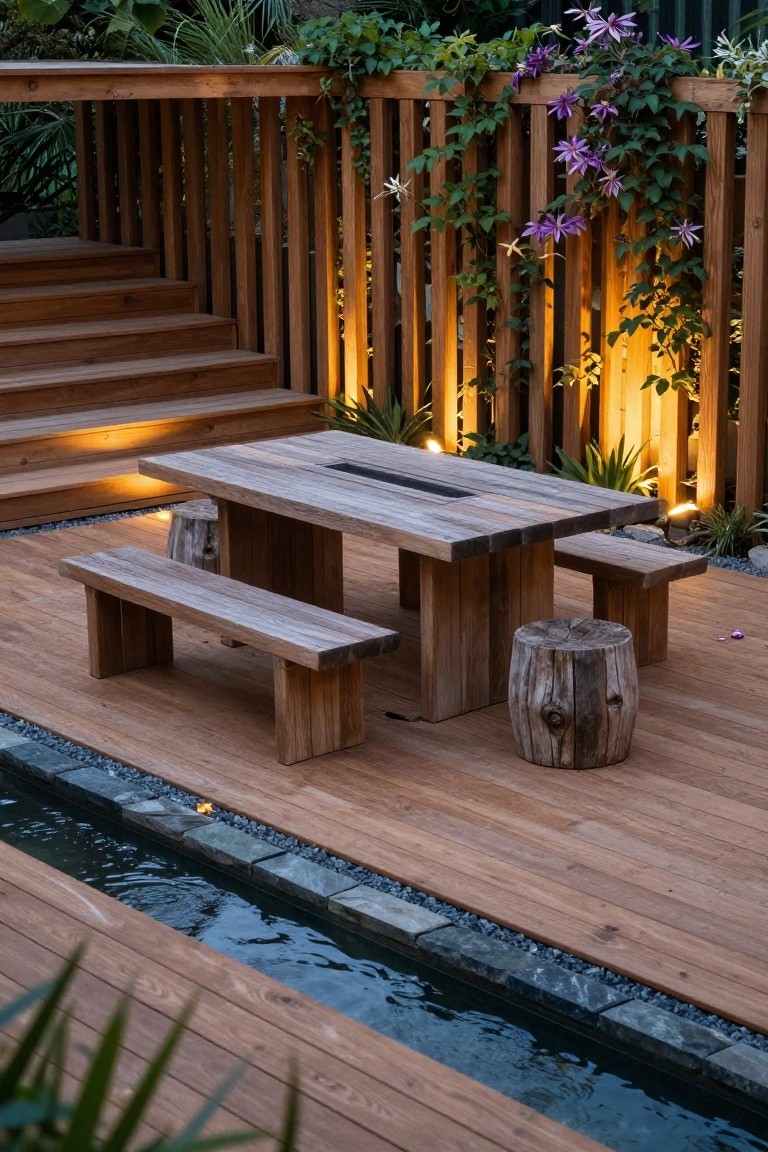
Using the same wood tone and finish for the table, benches, and deck creates a calm, connected look that feels natural rather than built up. The furniture sits low and simple, so the space stays open and easy to move around even when people are gathered for a meal.
This approach works best on mid-sized decks where you want the furniture to feel like part of the structure instead of something added later. It suits homes with clean modern lines and pairs well with a water edge or planting that already uses natural materials. Keep the shapes straight and avoid mixing in too many other finishes if you want the effect to hold.
Natural Wood Patio Furniture
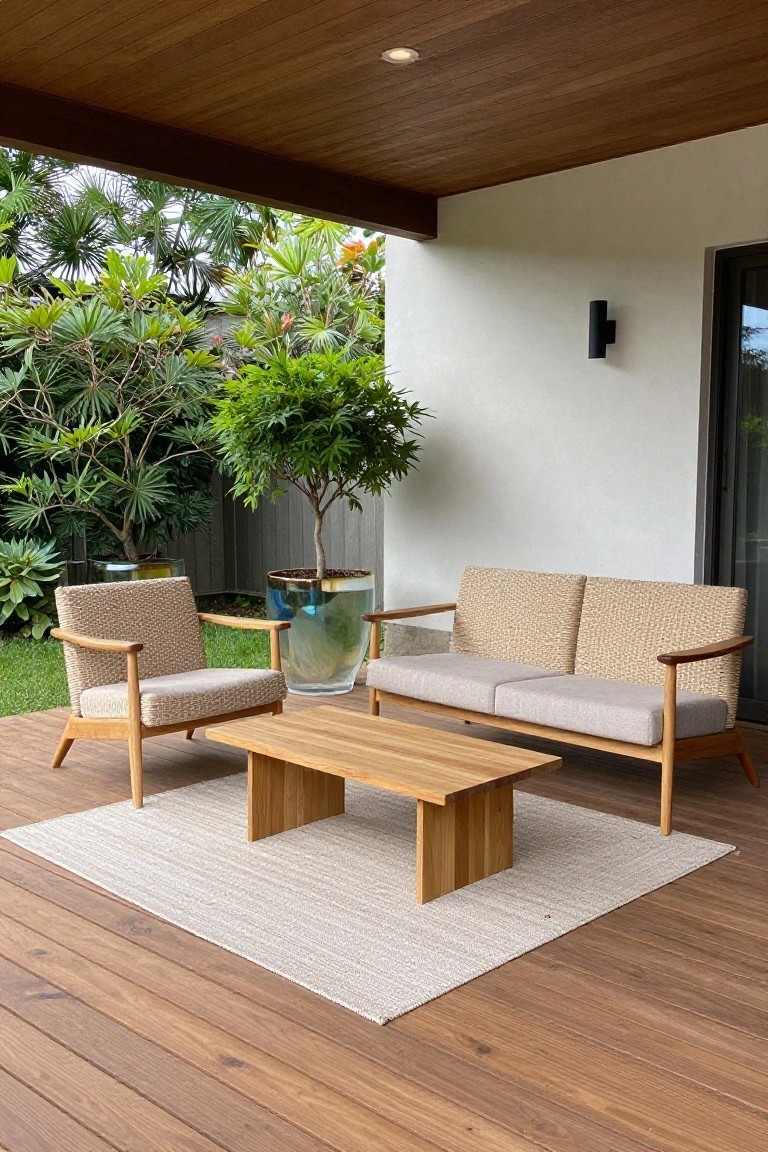
Many people choose wood furniture in natural finishes for their patio because it blends right into the deck without standing out too much. The simple shapes and matching tones help the whole space feel calm and connected.
This works especially well on decks that get regular use, since the wood can handle the weather and still look good over time. Try it on a medium sized patio where you want seating that does not crowd the area.
Natural Wood Chairs On A Deck
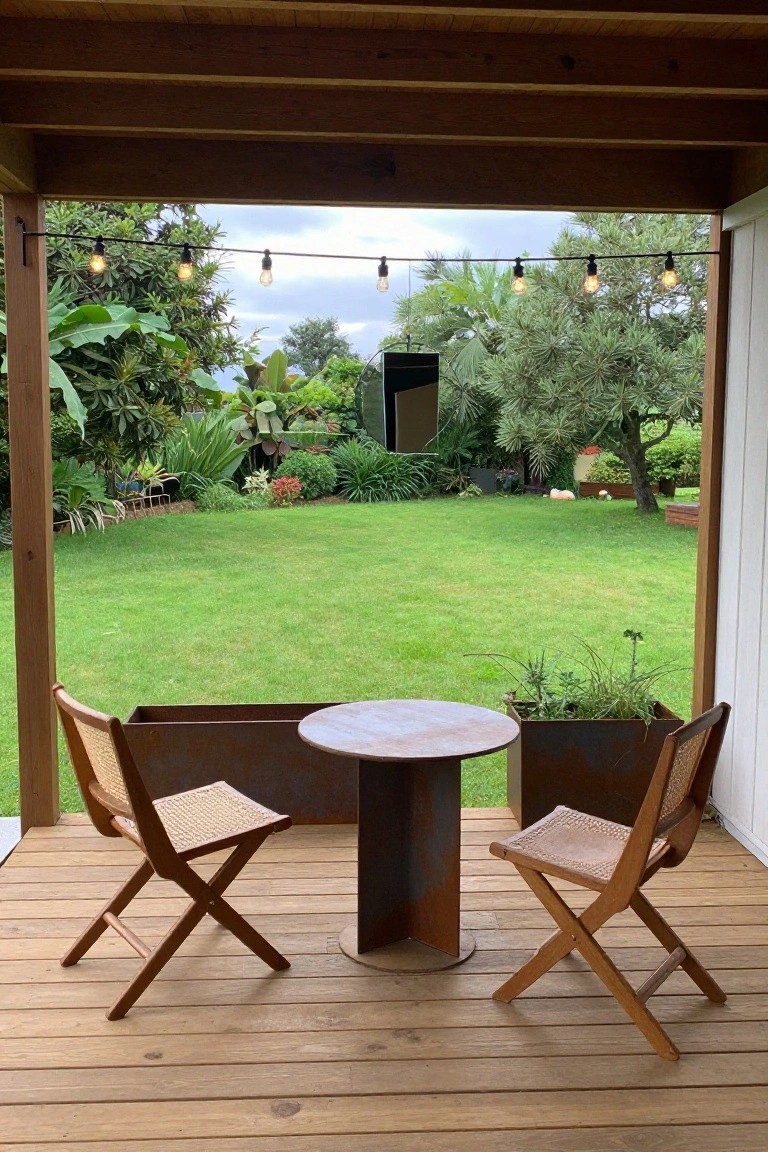
Wood chairs with simple frames and woven seats sit well on a wooden deck because they add texture without crowding the space. The natural finish matches the deck boards, so the whole area feels pulled together even with just a couple of pieces.
This setup works best on smaller patios or covered decks where you want flexible seating. Place the chairs around a compact table and you can move them easily when needed. They suit most homes that already have wood outdoors, and they avoid the bulk of heavier furniture.
Built-In Benches That Follow the Patio Walls
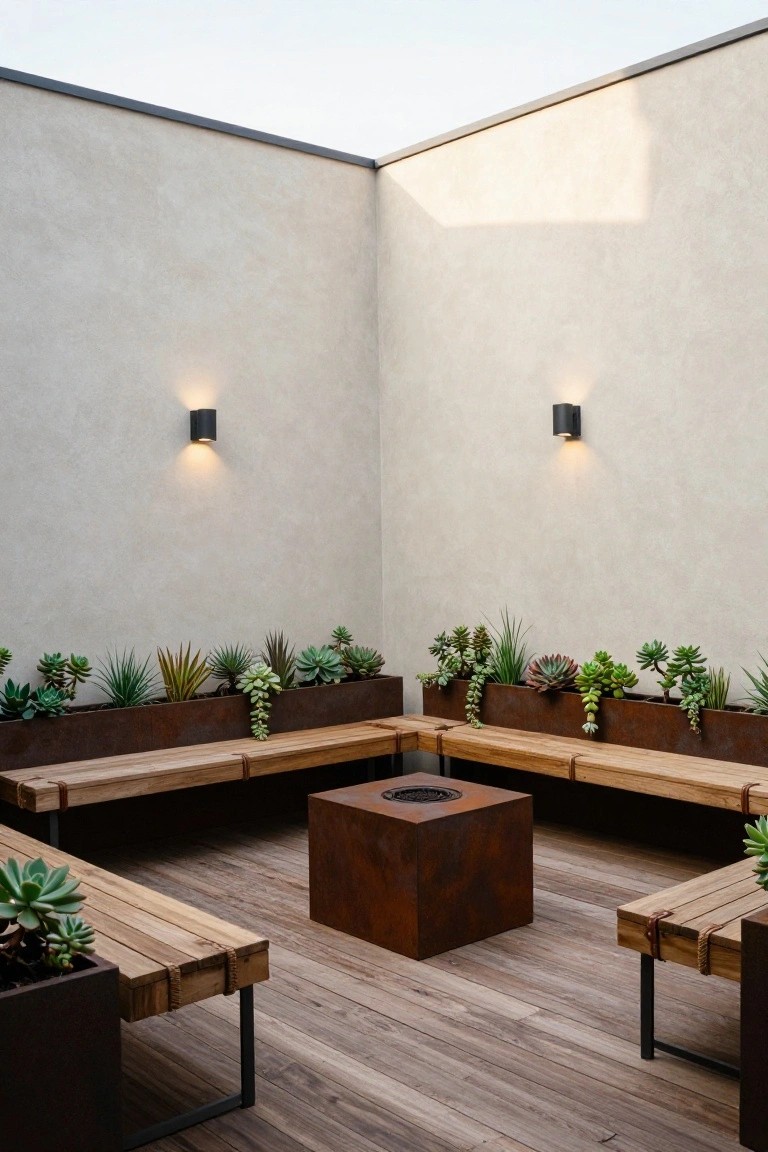
One simple way to organize an outdoor space is to run wooden benches along the walls so the seating becomes part of the structure itself. This keeps the floor clear and gives the area a settled, finished look without needing lots of separate furniture.
The approach works best on smaller or corner patios where you want room to gather around a fire pit. Keep the wood in a natural finish and add a few raised planters along the back edge so the plants stay out of the way but still soften the seating. It suits homes that already lean toward clean lines and low-maintenance outdoor areas.
Edge Your Deck With Raised Wooden Planters
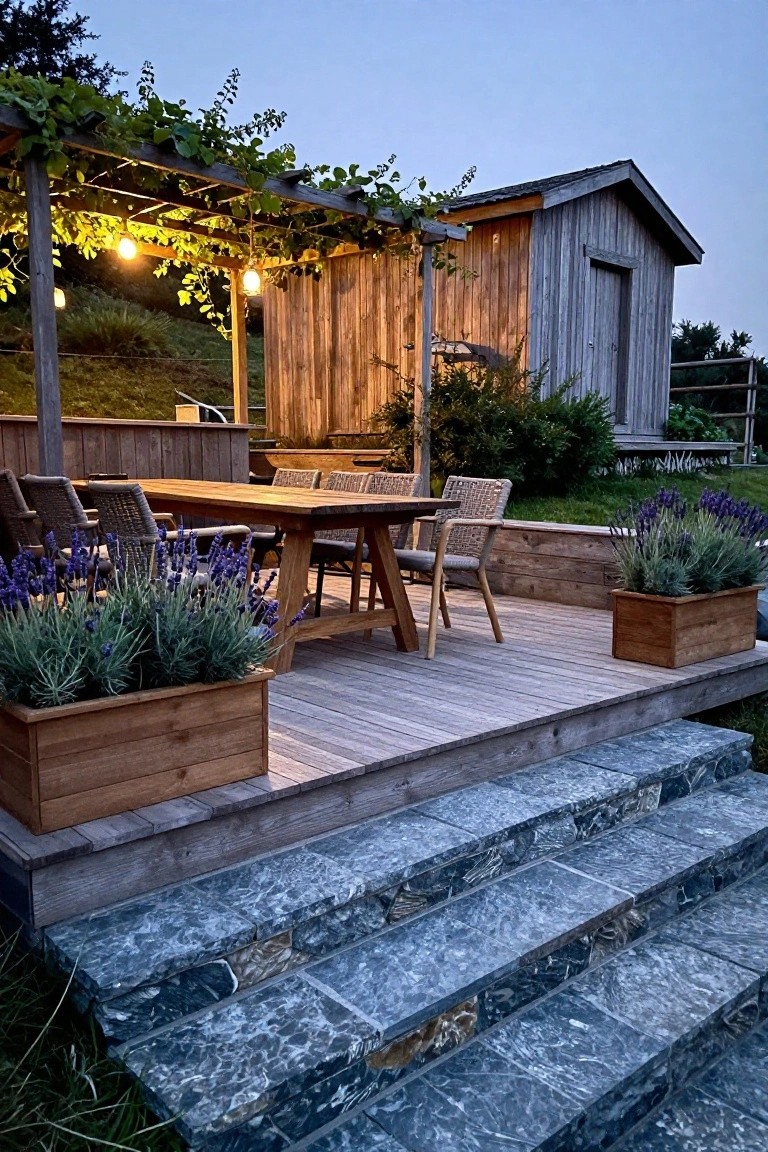
Raised wooden planters give a deck a finished look without adding extra furniture or clutter. They create a clear border that keeps the space feeling open while bringing plants right up to the seating area. The wood matches the deck boards, so everything stays simple and consistent.
This works well on decks that sit a step or two above the lawn. Place the planters along the outer edges or near steps, and fill them with low-maintenance plants that handle sun or shade. Just make sure the boxes are deep enough for good root growth and built from the same wood species as the deck so they age at the same rate.
Built-In Bench Seating Along the Balcony Edge
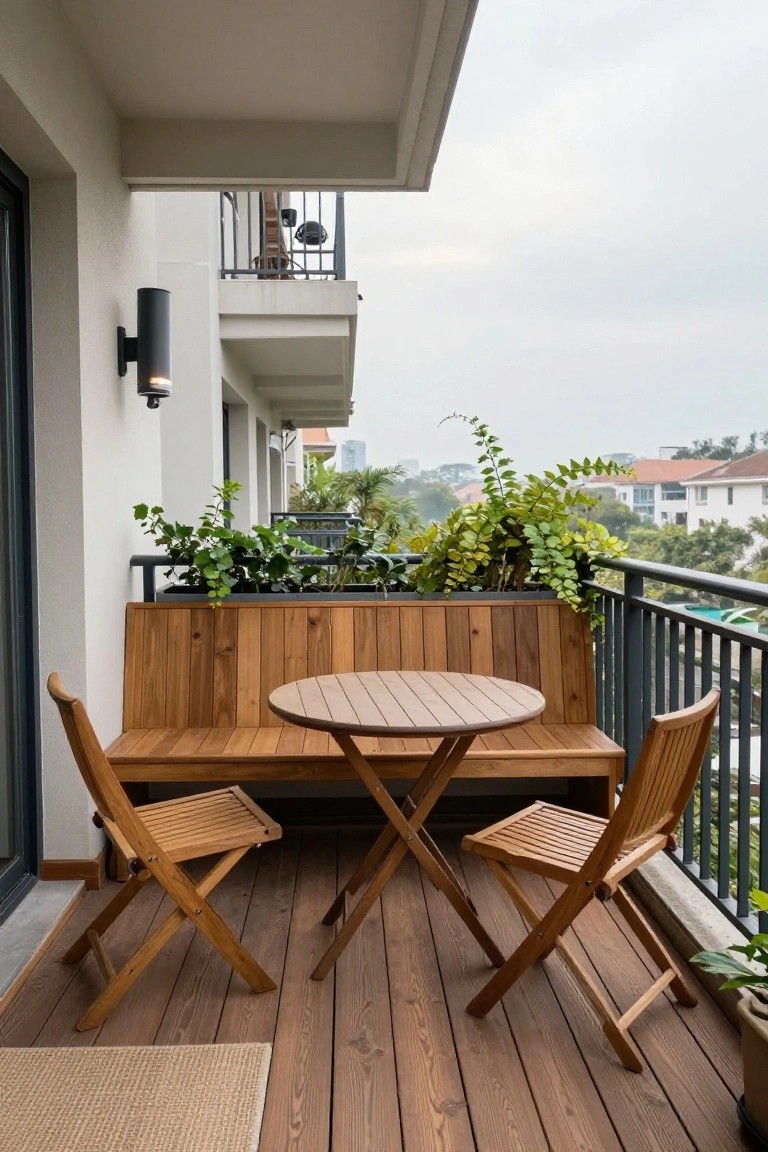
A built-in bench gives you a fixed place to sit without taking up much floor space. It works especially well on smaller balconies where regular chairs might crowd things. The wood finish blends right into the decking and railing, so the whole area feels like one clean surface instead of separate pieces.
This setup suits apartments or townhomes with narrow outdoor spots. You can add cushions when you want comfort and store them away when you need more room to move. Just keep the bench height low enough that it does not block the view over the railing.
Built-In Benches That Shape the Patio
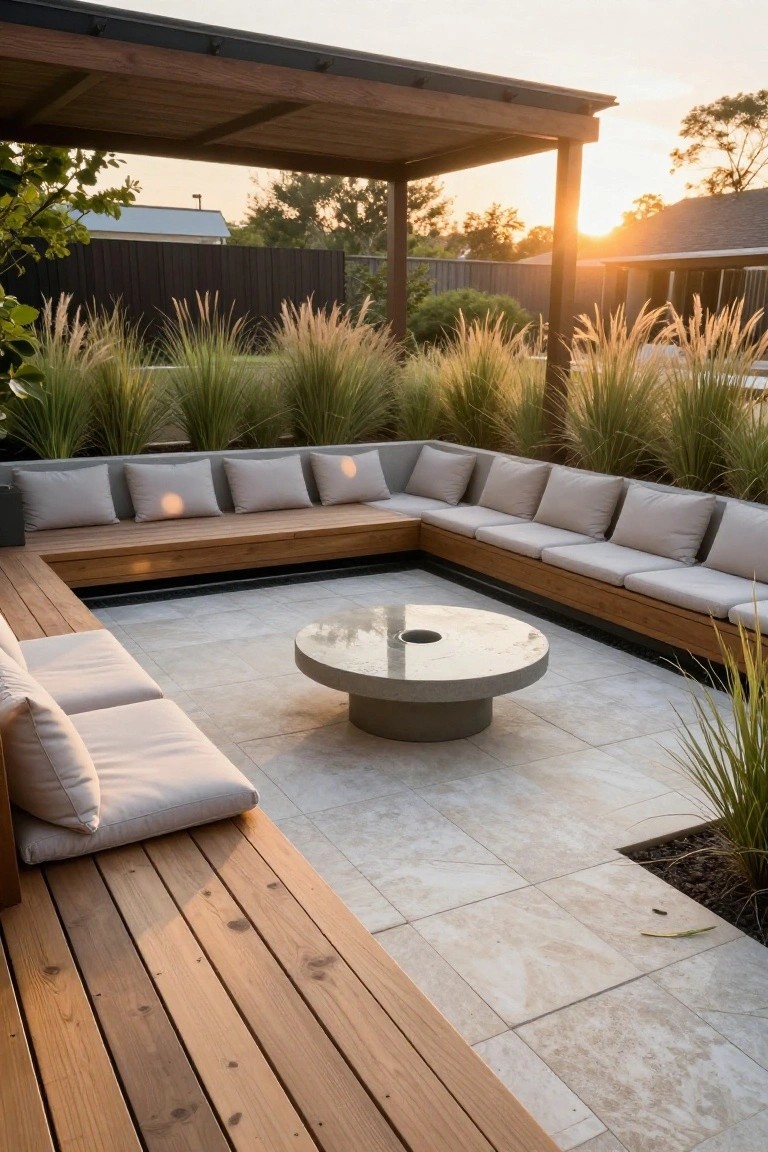
Built-in benches give a patio a finished feel without crowding the space with loose furniture. The wood ties into the deck and overhead structure, so the whole area reads as one clean room instead of separate pieces.
This layout works best on mid-sized patios where you want seating for a group but still need room to move around the center. Keep the cushions neutral and the lines simple so the wood remains the main material.
Wooden Bar Counters For Outdoor Patios
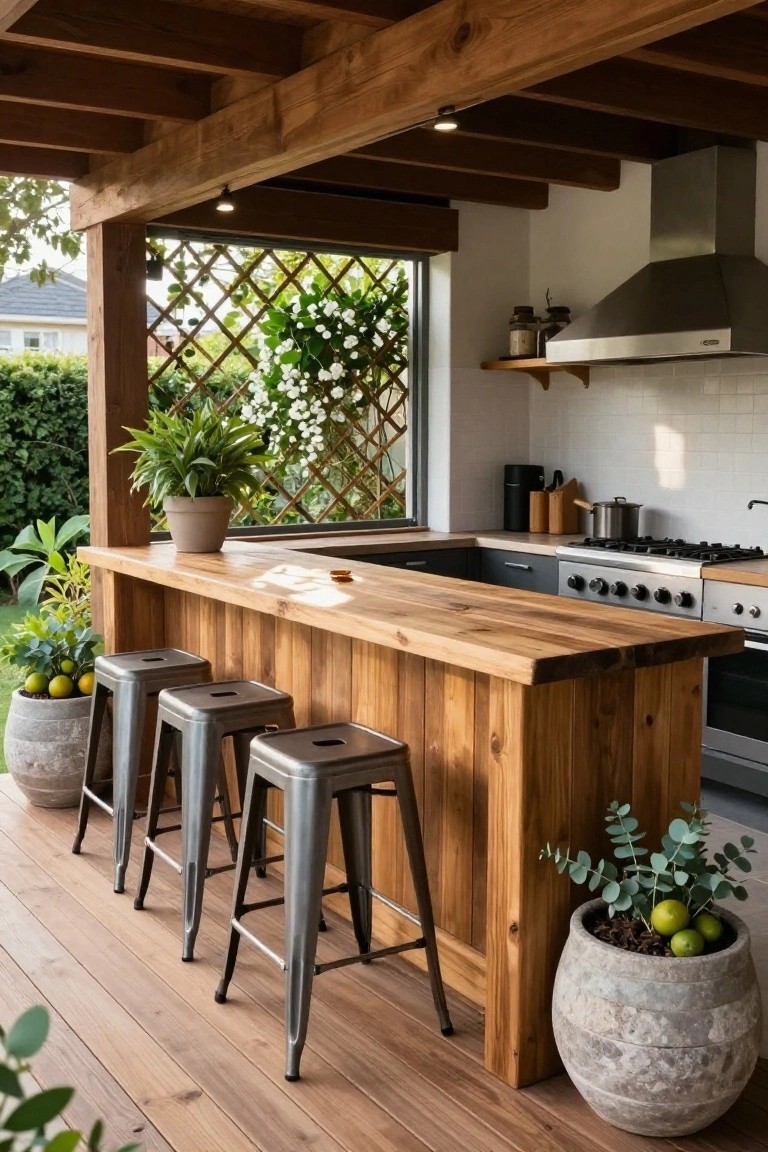
A wooden bar counter gives an outdoor space a clear spot for both prep work and casual seating. The natural grain and simple lines keep the whole area feeling relaxed instead of like a separate room that was added later.
This setup works best on covered patios attached to the house, where the bar can line up with the indoor kitchen. Leave enough room for stools on one side and keep the top clear so people can actually use it for plates and drinks.
Wooden Fire Pits on Gravel
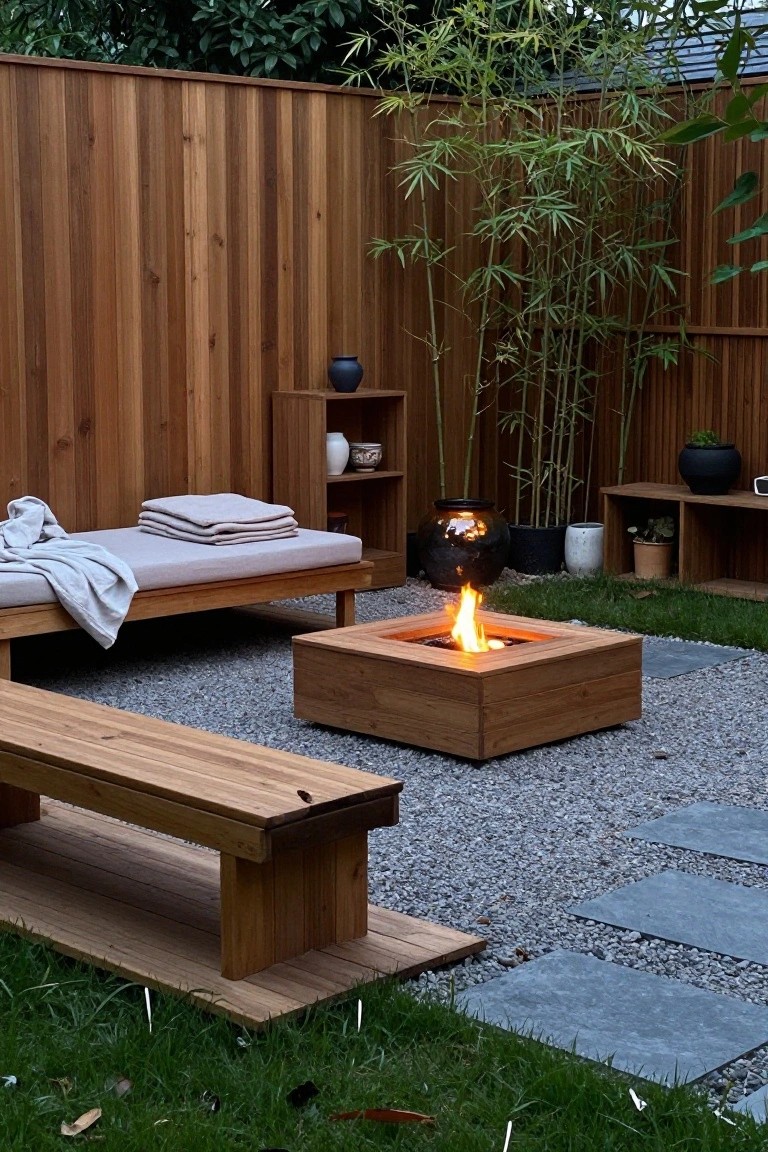
A square wooden fire pit placed right on gravel gives the patio a simple center point. The natural finish blends with the bench and daybed, and the gravel surface keeps the whole area easy to maintain without a full deck.
This works best in smaller yards or behind a fence where you want a spot to sit without much building. It suits homes that already use wood tones outdoors, though the gravel will need occasional raking to stay even.
Frequently Asked Questions
Q: How do I keep the wood from turning gray too fast? A: Seal it once a year with a clear finish that lets the grain show through. Wipe it down every few months to remove dirt buildup. This keeps the natural tone fresh without extra layers.
Q: What if I want to add some color without messing up the clean lines? A: Stick to neutral cushions in soft grays or beiges on your seating. They blend right in and let the wood stand out. Skip bright pillows that fight the simple look.
Q: Does this style work if my yard gets full sun all day? A: Choose woods like cedar that handle heat well. Position the main seating area under a light pergola for shade. The clean design still shines even with strong sunlight.
Q: How do I stop bugs from getting into the wood? A: Treat the surface with a natural oil blend every spring. Check the joints twice a year and fill any small cracks right away.
