

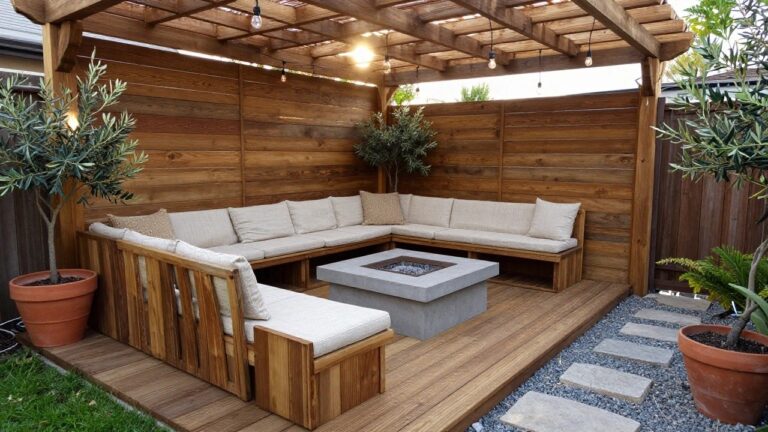
I have spent enough time in backyards to know that a patio only feels like a real retreat when the layout lets you move around without bumping into furniture or staring at the neighbor’s fence.
Wood tends to help because it warms up the space and gives the eye something solid to rest on instead of leaving everything open to the lawn.
Some setups look balanced on paper yet turn out awkward once you try to eat a meal or read a book out there.
I usually walk the space a few times at different times of day before deciding where to place the main seating.
That habit has kept me from building something that looks finished but never gets used.
Built-In Benches That Wrap the Fire Pit
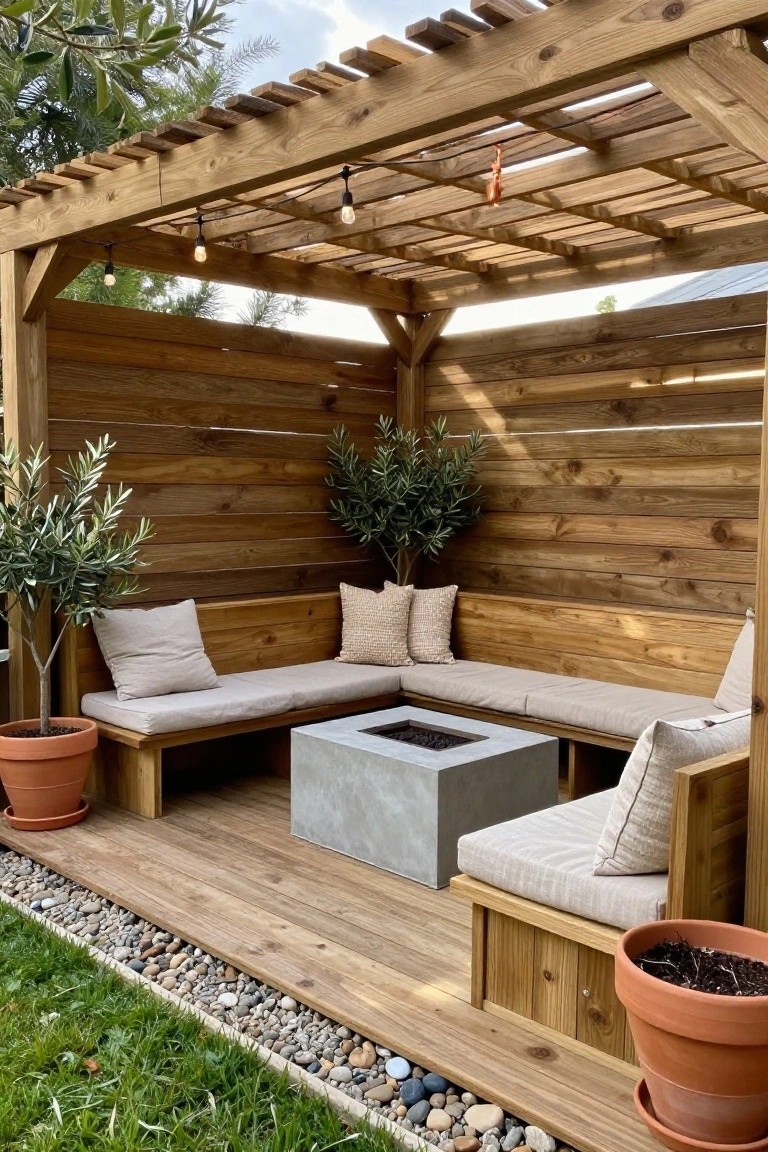
One simple way to make a patio feel settled is to run benches right along the edges instead of adding separate chairs. The built-ins keep everything in one line so the fire pit sits in the middle without taking up extra room.
This setup works best on wooden decks that already have some height and structure. It suits smaller backyards that need seating for several people but still want open floor space in the center.
Built-In Cabinets Add Practical Space on a Patio
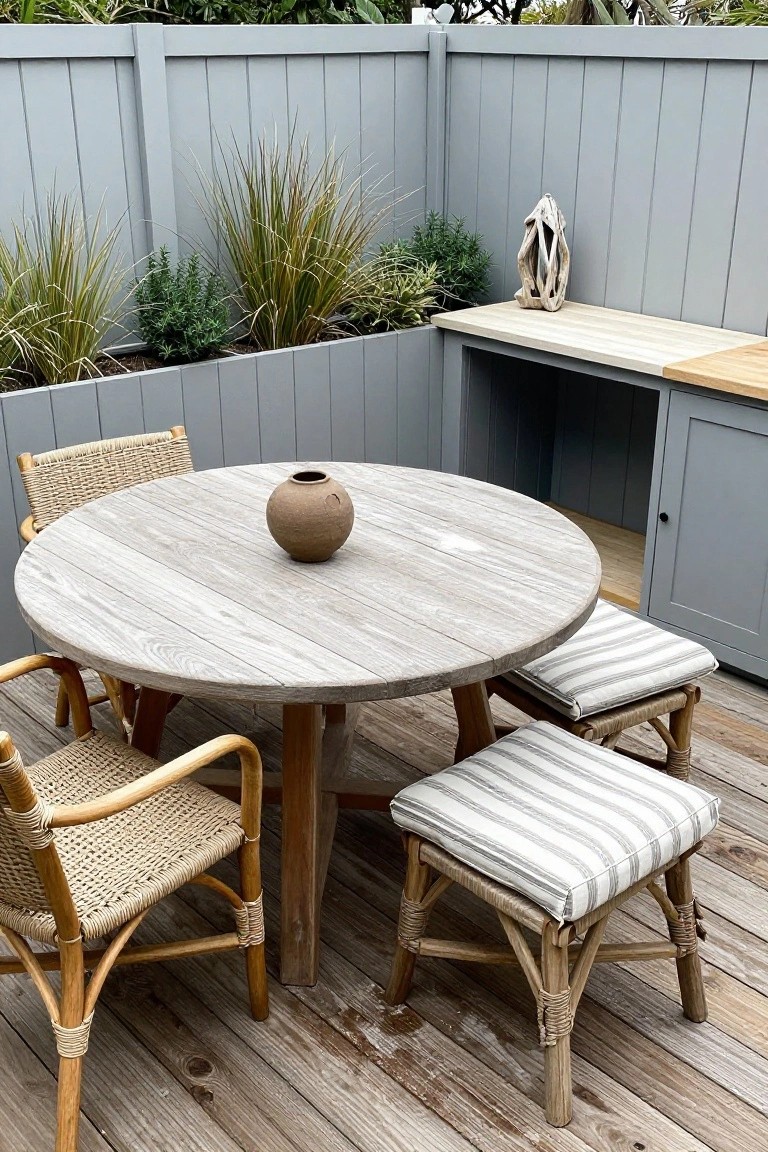
One useful way to make a wooden patio work harder is to run a simple built-in cabinet along the fence line. It gives you a steady surface for plates and drinks while keeping cushions or other items tucked out of sight behind the doors.
This kind of addition fits best on decks that already have a solid edge or fence to work against. It keeps the main seating area open for a round table and mixed chairs without crowding the floor space.
Vertical Gardens for Patio Privacy
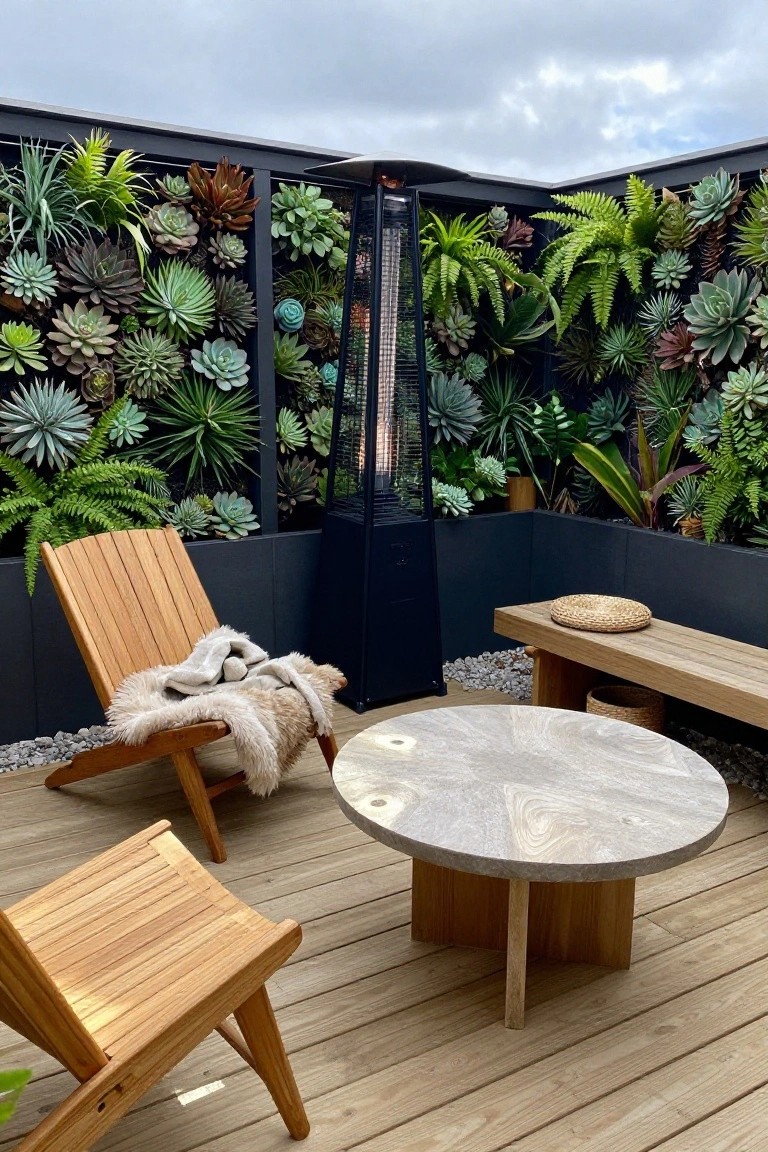
One simple way to make a wooden patio feel more private is to cover a back wall with a living garden. The plants form a thick screen that softens the edges and keeps the space from feeling open to the rest of the yard.
This approach works best on smaller decks or urban patios where you want enclosure without building a solid fence. Use a mix of ferns and succulents so the wall stays full even in cooler months, and pair it with simple wood seating so the focus stays on the greenery.
Round Tables Keep Patio Meals Easy
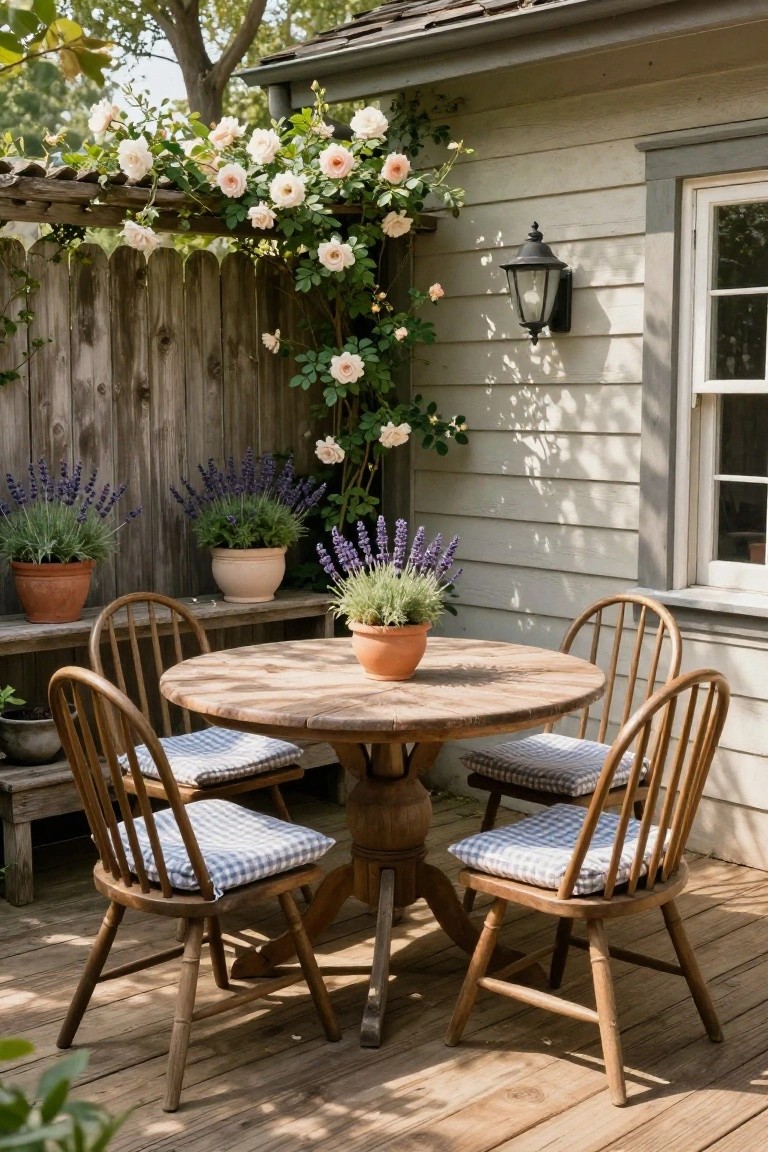
A round table on a wooden deck makes it simple for people to talk without anyone getting stuck at a corner. The shape also leaves more room to walk around the chairs, which helps on smaller decks where space feels tight.
This works best with four or six chairs at most and a few pots set right on the deck boards. It suits older homes with basic wood siding and gives the area a relaxed garden feel without needing built-in benches or fancy lighting.
Raised Wooden Decks for Defined Seating Zones
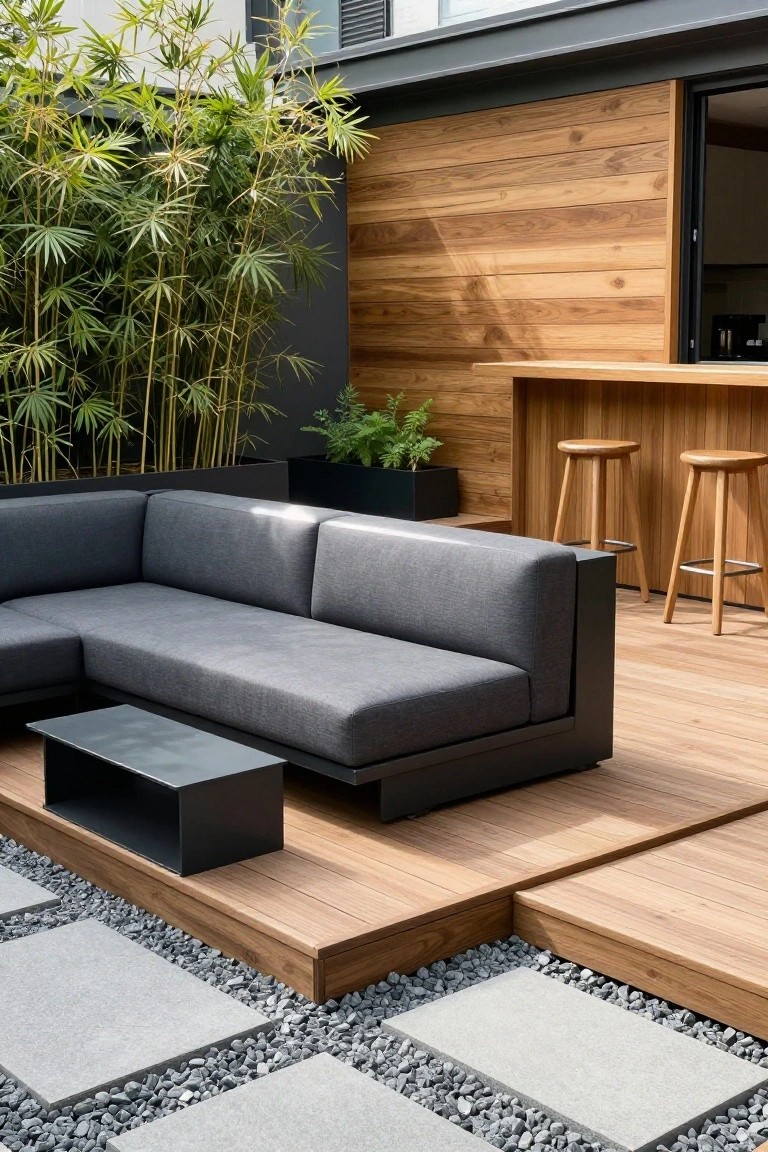
A raised wooden deck gives the patio a clear edge and makes the seating area feel more like a room than just part of the yard. The slight lift helps separate it from gravel or pavers while keeping everything easy to step onto.
This approach works best on smaller or flat backyards where you want the space to feel contained without adding walls or screens. Match the deck tone to nearby siding or fencing so it blends rather than stands out.
Hang Textiles From The Pergola
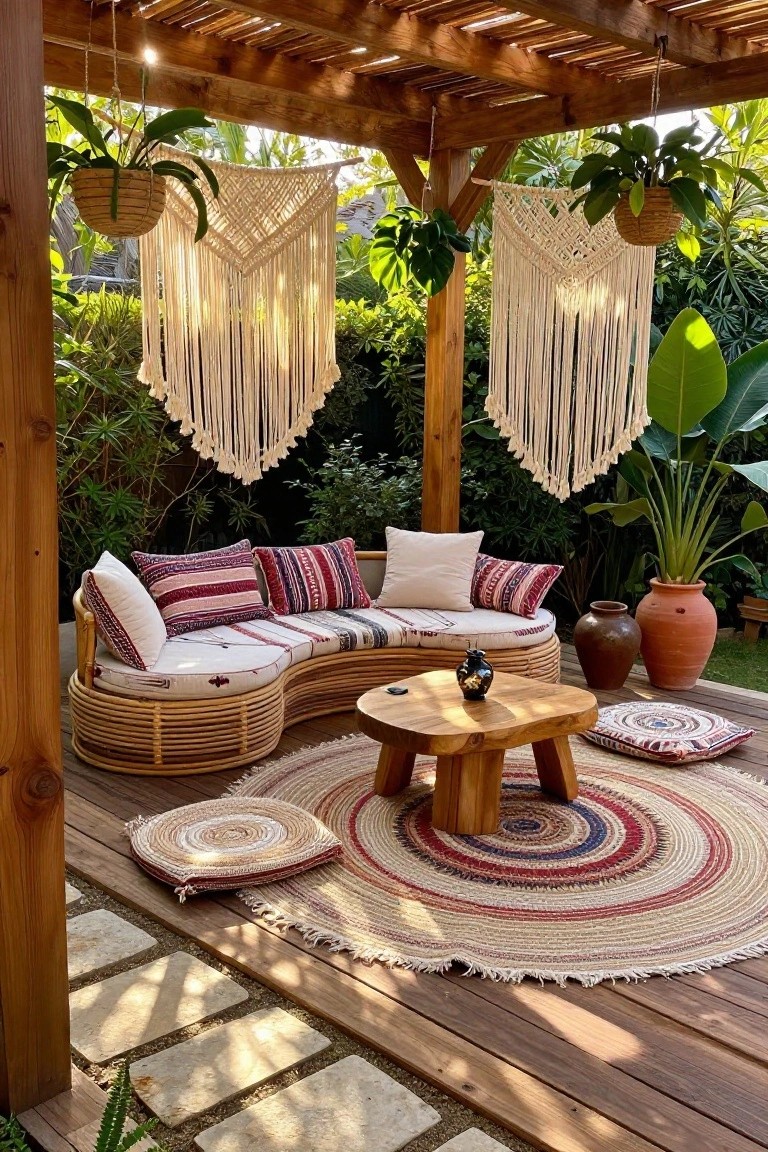
Hanging a few lightweight panels from a pergola can turn an open wooden deck into a spot that feels more private and settled. The fabric or woven pieces catch the light and move a little in the breeze, which keeps the area from feeling too hard or exposed even when the seating is simple.
This works especially well on decks that already have some overhead structure. Choose pieces that are easy to take down for weather or cleaning, and keep the rest of the furnishings low so the hanging textiles stay the main focus. It suits smaller backyards where you want one clear seating zone without building walls.
Gravel Paths Around a Wooden Deck
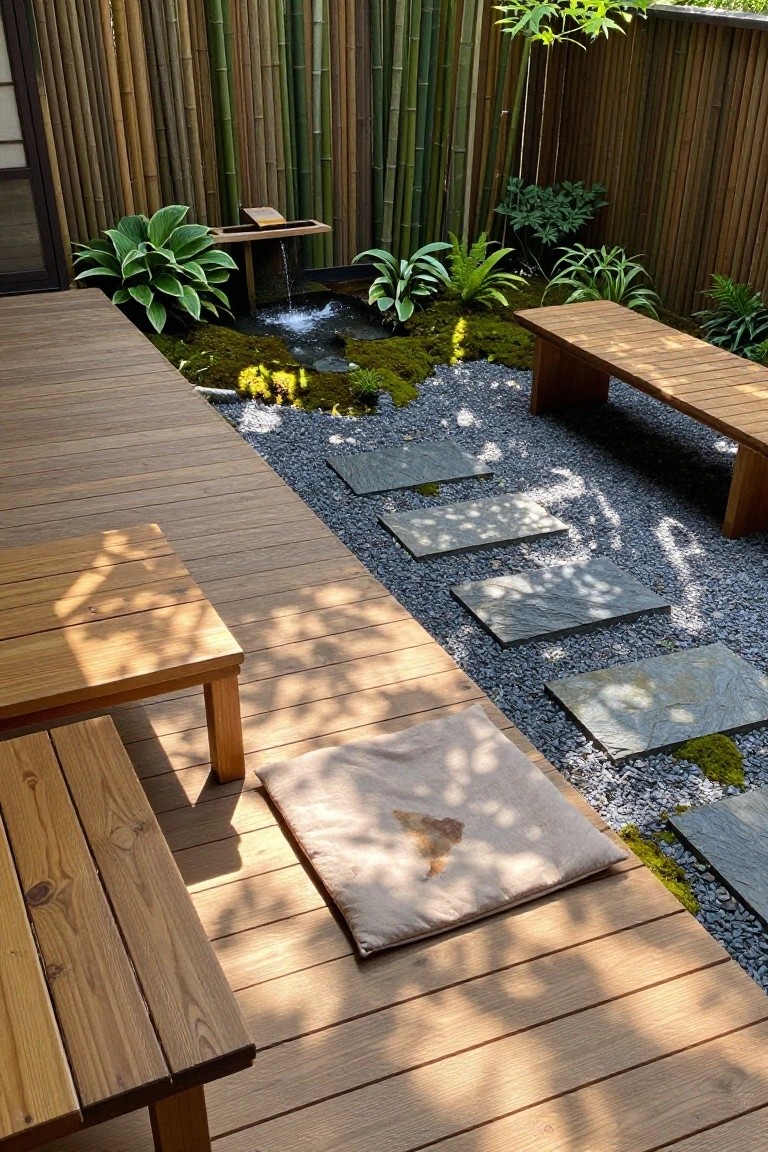
A wooden deck feels more grounded when it sits next to a gravel area with stepping stones. The contrast keeps the space from looking too flat and gives you a simple way to separate seating from garden zones without adding walls or railings.
This works well in smaller backyards where you want room to walk but still keep things low maintenance. Just make sure the gravel sits a little lower than the deck edge so water drains away from the wood.
Pergolas That Add Shade Over Outdoor Tables
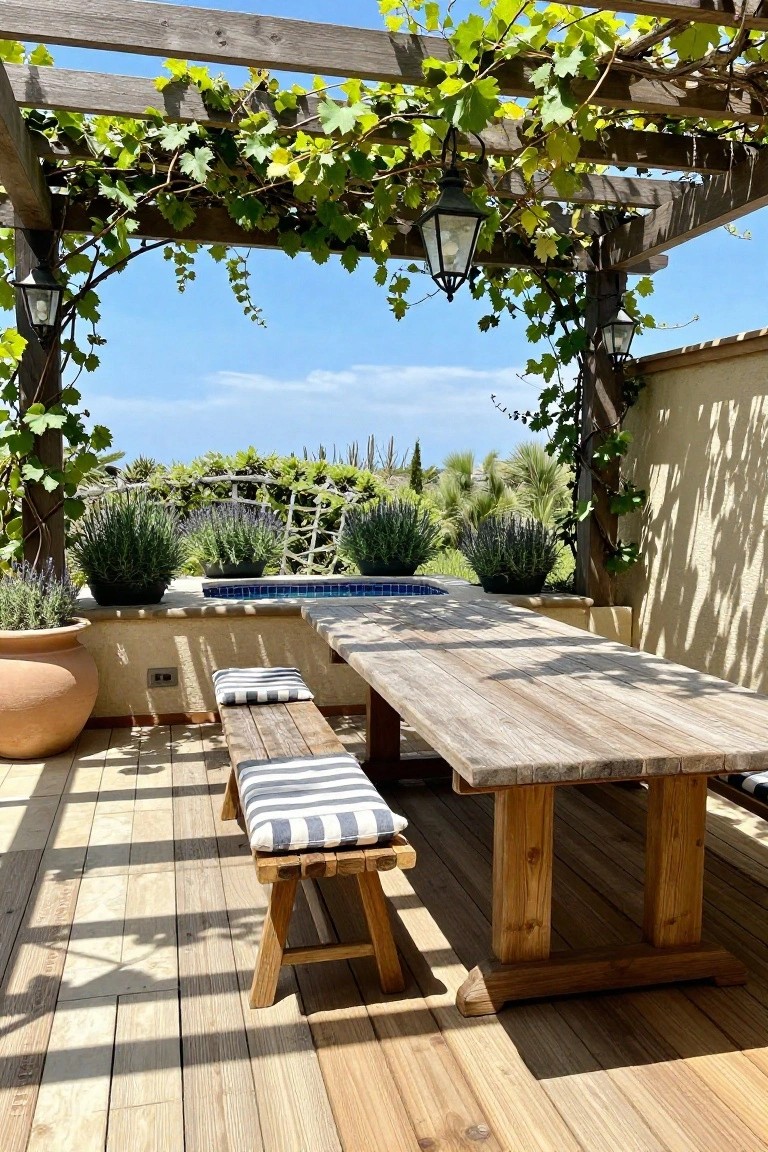
A pergola with vines overhead gives an outdoor table a clear sense of place while cutting down on direct sun. The wood structure feels sturdy and blends with a deck, and the plants soften the lines without needing much extra work once they take hold.
This setup works best on a sunny deck or patio where meals happen often. It suits homes that already have open backyard space, though it helps to pick vines that stay manageable and to check the posts are set firmly into the ground.
Built-In Benches Along The Fence
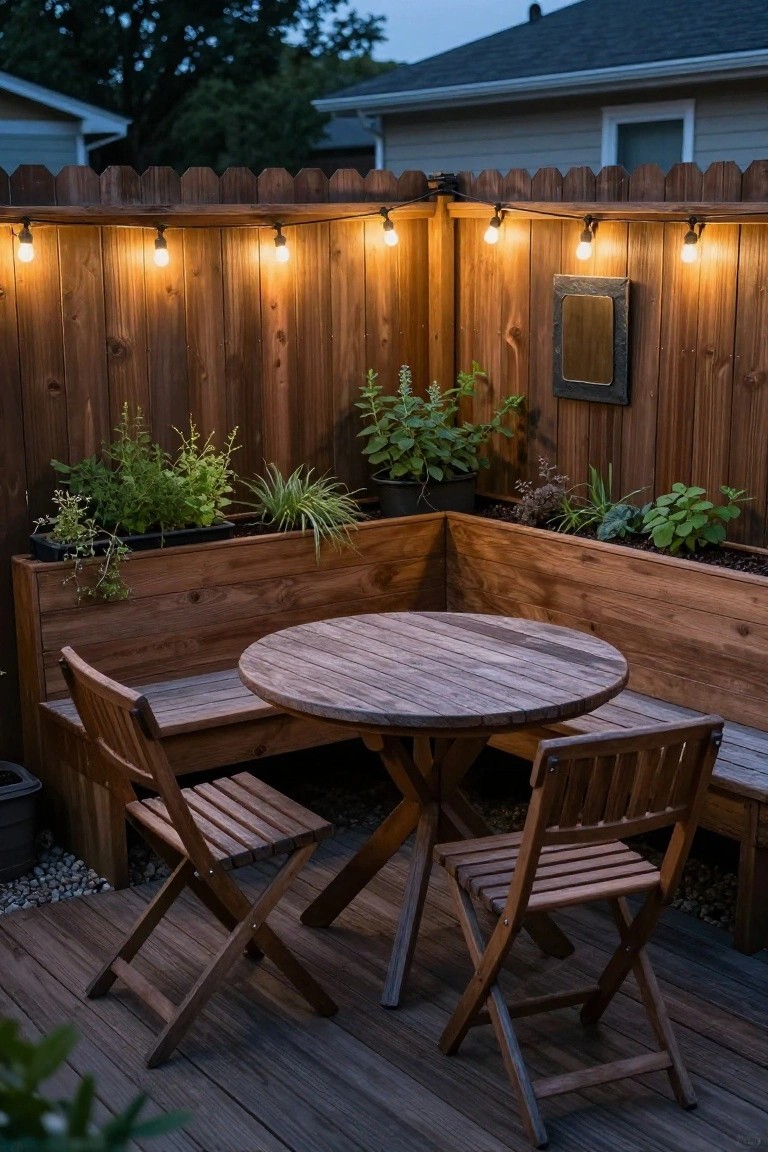
Many people like adding built-in benches right against the fence on a wooden patio. It turns the edges into useful seating without taking up extra floor space.
This setup works well in smaller backyards where you want room to move around a central table. Just make sure the wood matches the decking so everything feels connected.
Centering A Fire Pit On A Wooden Deck
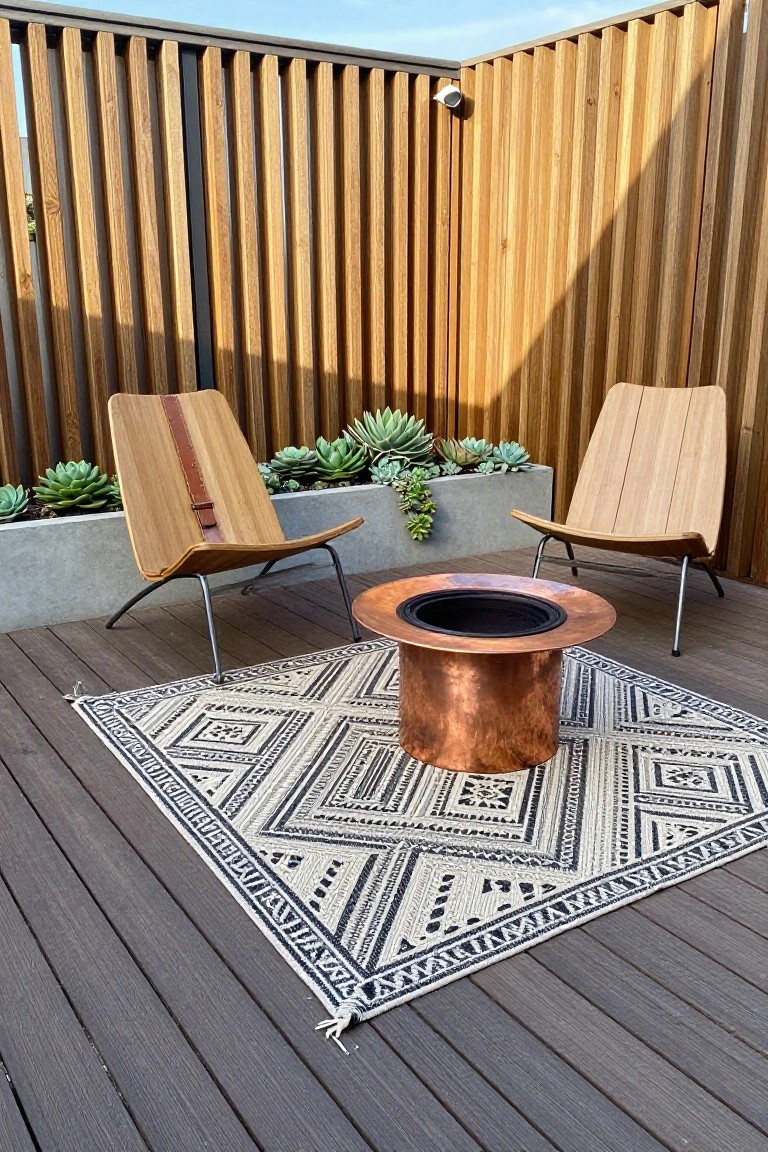
A fire pit set right in the middle of a wooden deck gives the whole space a clear purpose. It becomes the spot where people naturally gather, and the low profile keeps the area feeling open instead of crowded.
This setup works best on smaller patios where you want one main seating zone. Keep a simple rug underneath and leave walking room on all sides so the fire pit stays usable without blocking the deck.
Circle a Pool with Wood Decking
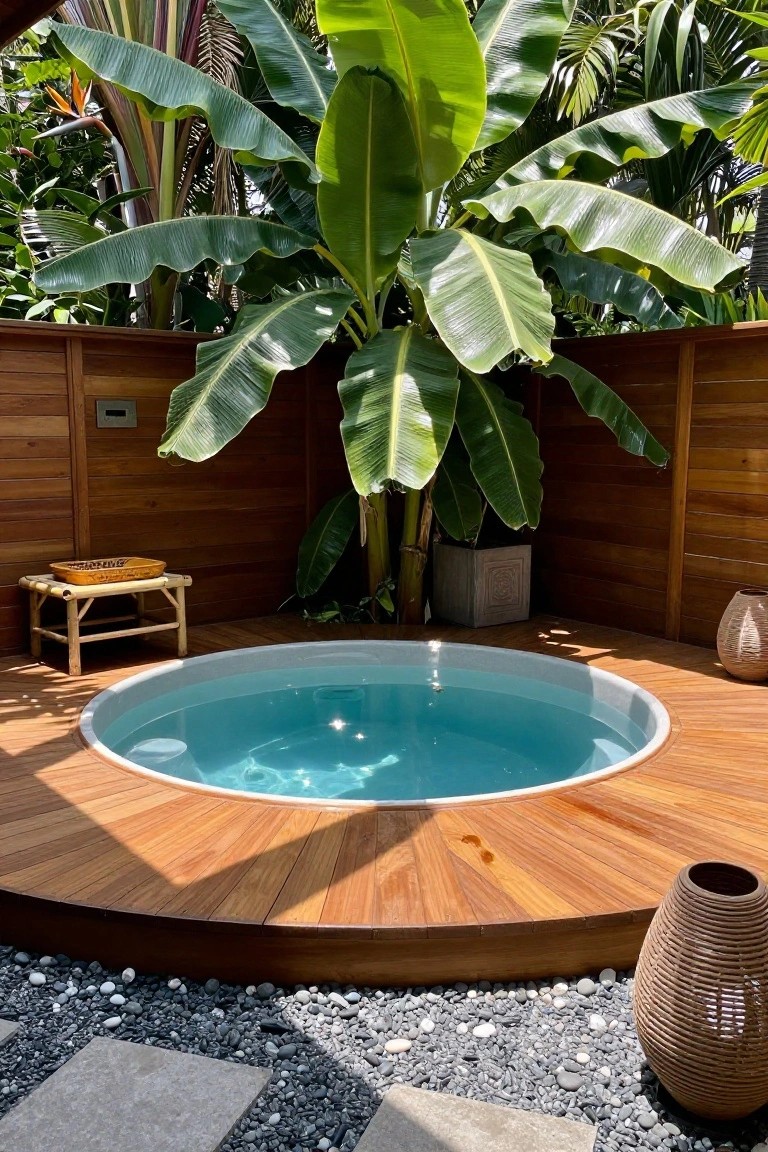
A wooden deck built right around a small pool gives the water a clean edge and makes the whole area feel like one connected space. The planks create a solid base that keeps the pool from looking like it was just dropped into the yard.
This setup works best in compact backyards where you want the pool to feel like part of the patio rather than a separate feature. Keep the deck low to the ground and add a simple fence with some tall plants behind it if privacy matters.
Wooden Deck Under a Pergola
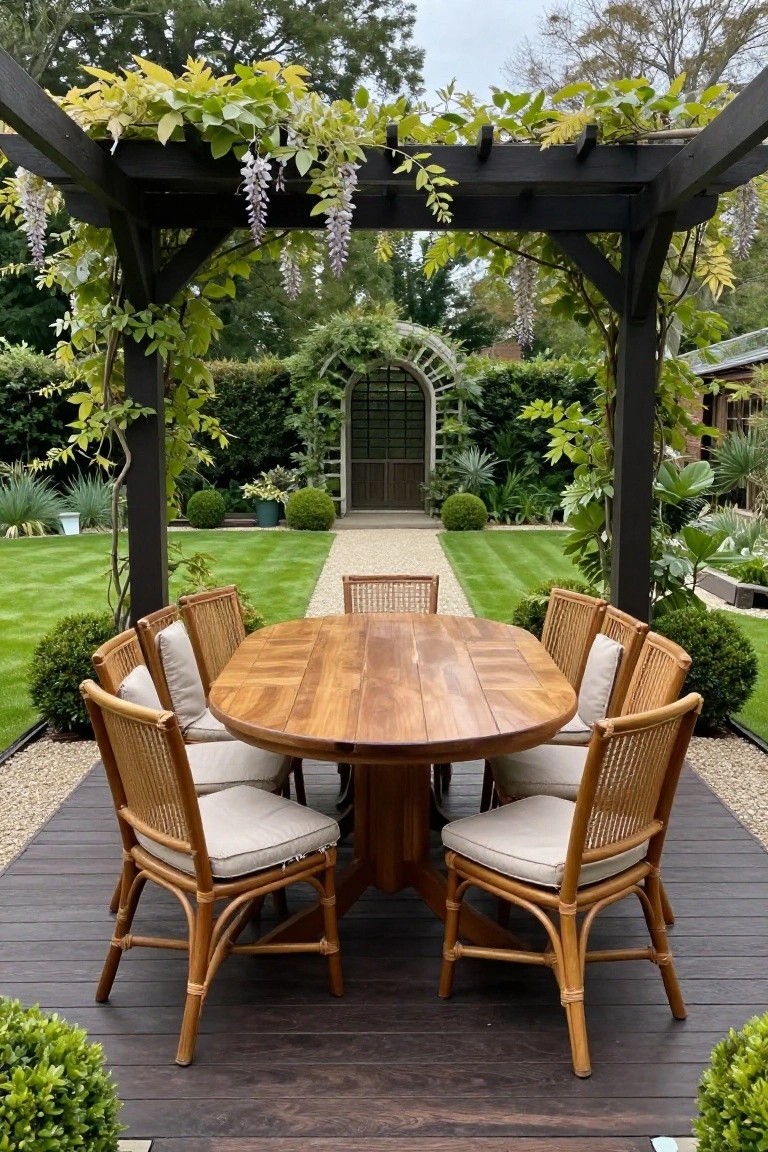
A wooden deck paired with a pergola gives the patio a clear sense of place. The dark wood underfoot and overhead makes the area feel settled and sheltered without blocking the view of the garden around it.
This works best on a level backyard where you want one spot that feels separate for meals. Keep the pergola simple and let vines cover it over time so the shade builds naturally.
A Wooden Bench Brings Casual Seating To A Patio
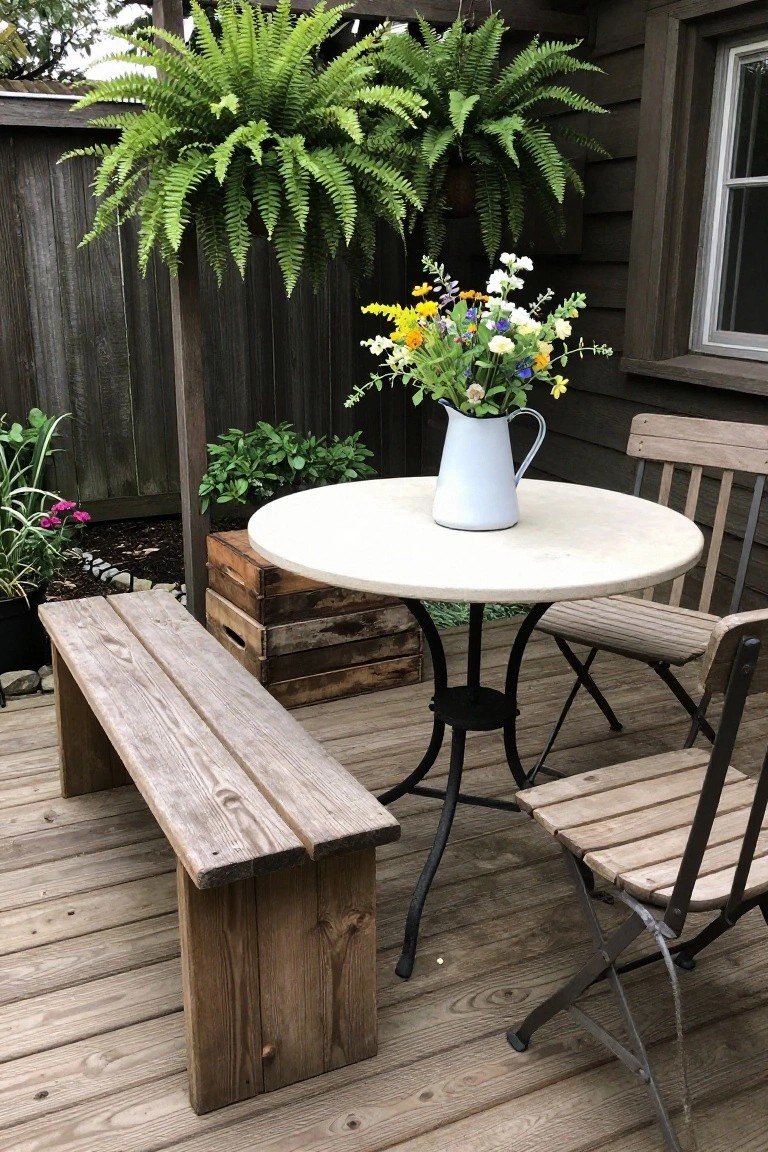
A wooden bench fits naturally on a deck because it feels solid and matches the flooring without much effort. It gives extra seating without crowding the space or requiring a full matching set.
Place the bench on one side of a round table and add a couple of folding chairs opposite it. This works well on smaller decks or in backyards where you want simple seating that still feels relaxed and easy to maintain.
Low Tables Keep Wooden Patios Feeling Open
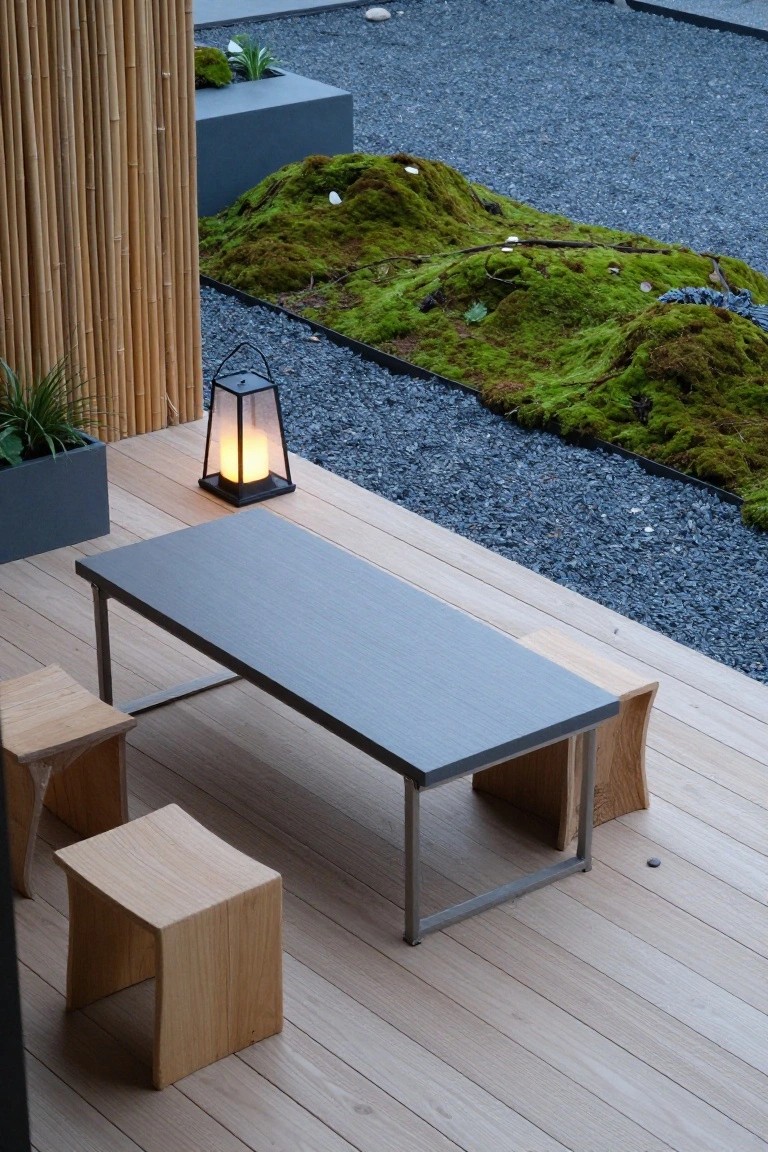
A low table on a wooden deck makes the space feel less boxed in. It sits close to the surface and leaves the view open to whatever is beyond the edge, like the moss and gravel in this case.
This approach works best on decks that sit right next to a garden. Keep the seating simple and low too so nothing blocks the line between the wood and the planting. Tall pieces tend to cut that connection and make the patio feel more separate.
Wraparound Seating Around A Fire Pit
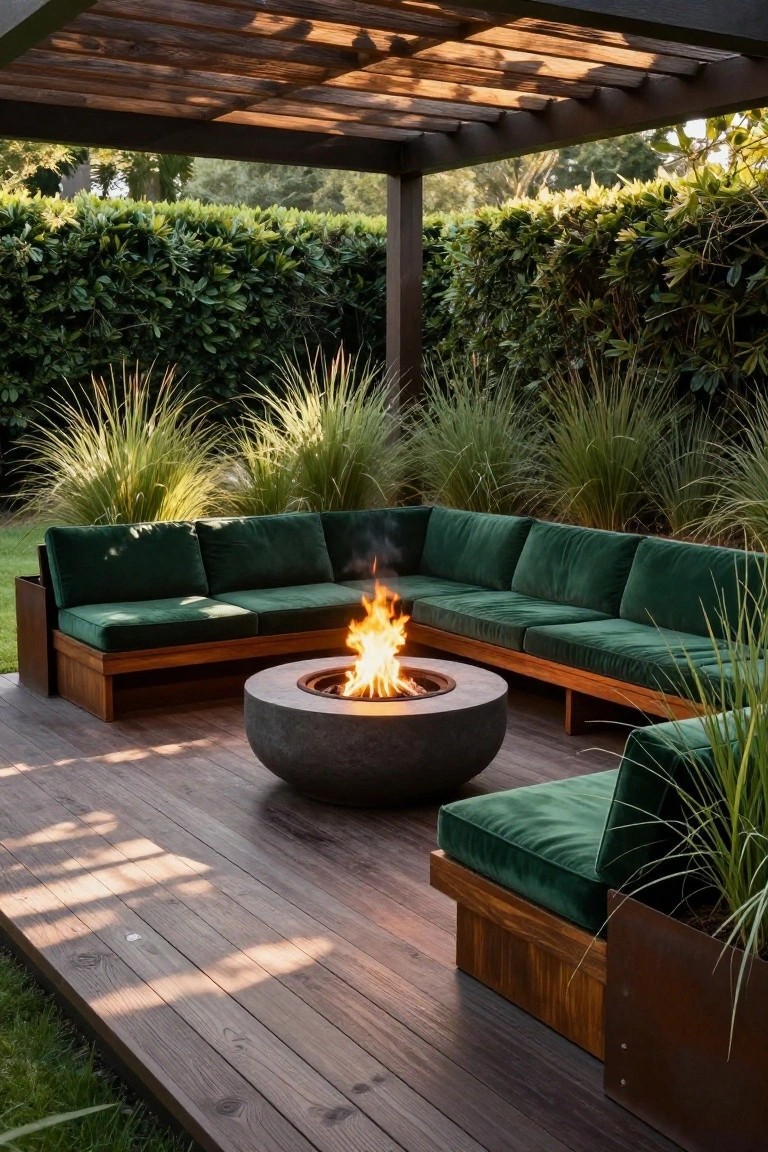
One simple way to make a wooden patio feel more finished is to run the seating all the way around the fire pit. The shape keeps people facing each other and turns the fire into the main point of the space instead of leaving it off to one side.
This layout works best on decks that already have some height or screening from nearby plants. The solid wood base under the cushions helps tie everything to the decking so the whole area reads as one zone rather than scattered furniture.
Built-In Planters Along the Deck
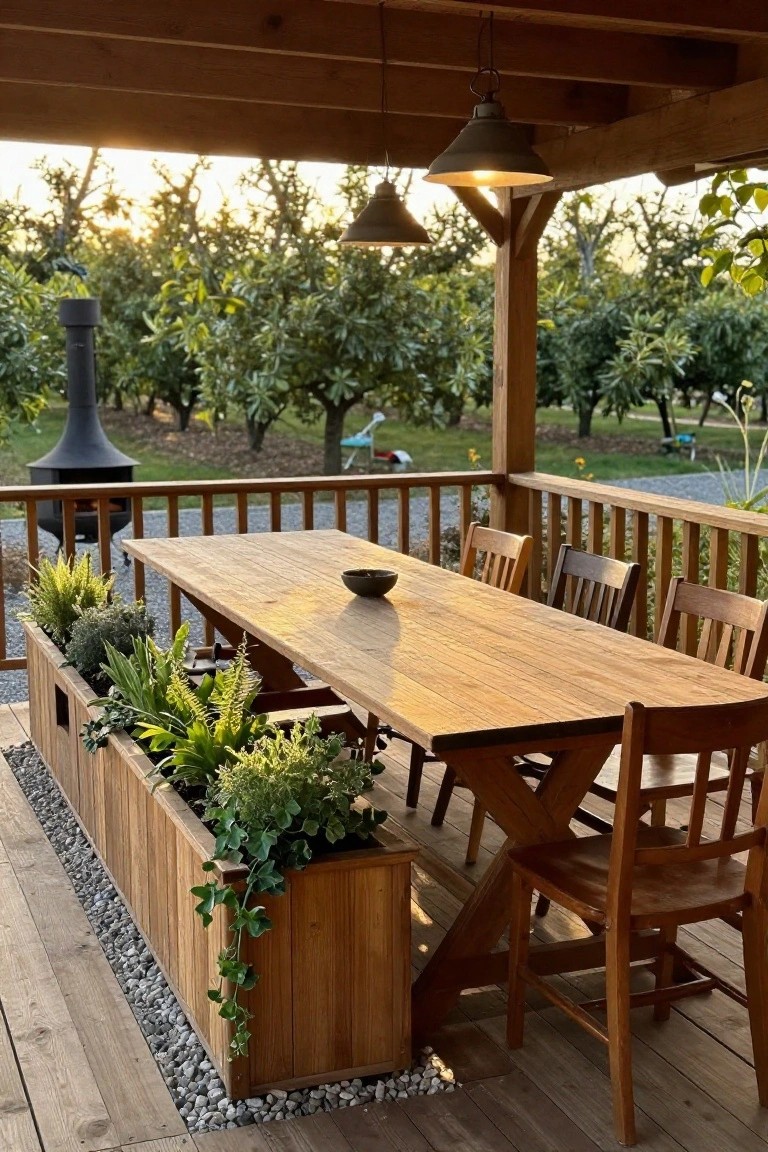
Running a long planter box right beside an outdoor table keeps plants close without taking up floor space. It ties the dining area to the surrounding garden and lets the wood of the box match the deck and table for a simple, pulled-together look.
This setup suits decks that already have room along one side and works best when the plants can spill over a bit. Pick hardy varieties that match the light conditions and make sure the box drains well so water does not sit against the wood.
Stone Slabs Set Into a Deck
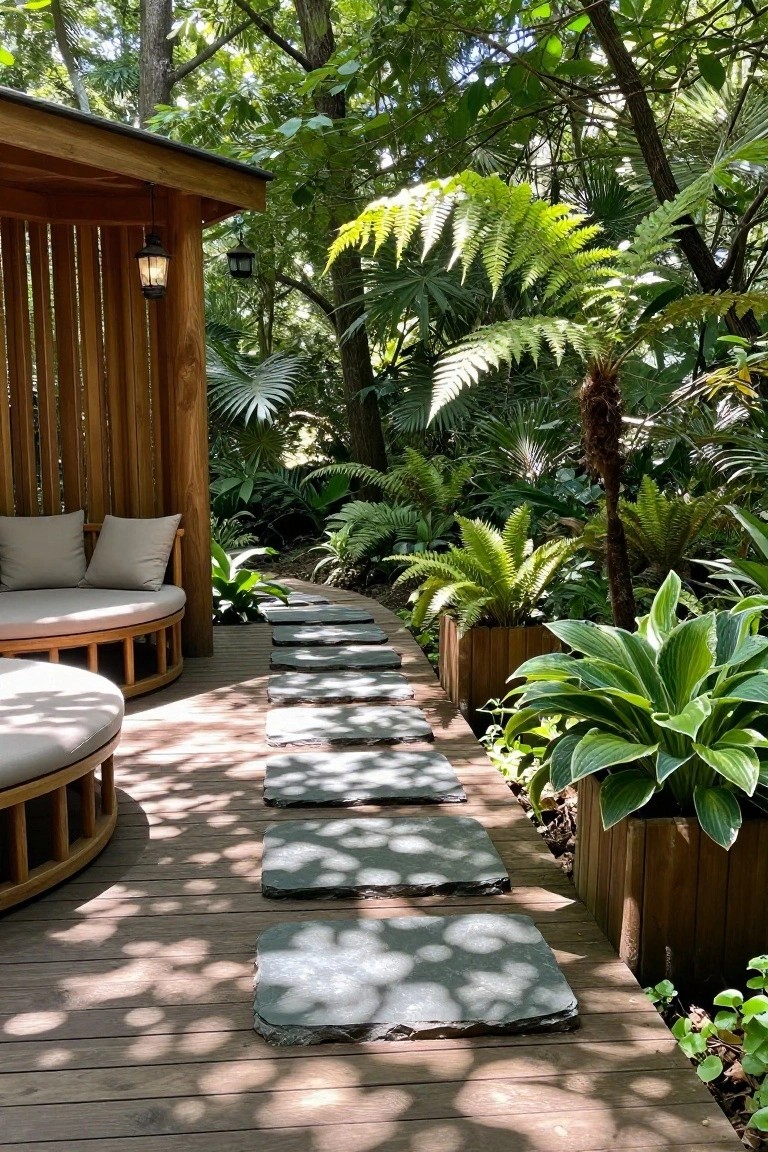
A stone path laid right over the deck boards gives the space a more natural feel. It breaks up the flat wood surface and leads the eye out toward the garden instead of stopping at the edge of the seating area. The effect works especially well when the rest of the yard is already full of plants.
This layout suits smaller backyards where you want the deck to feel like part of the landscape rather than a separate platform. Keep the stones spaced evenly and use the same material in the garden beds so the transition stays smooth. Avoid overcrowding the path with furniture if you want the flow to stay open.
A Wooden Kitchen Island for the Patio
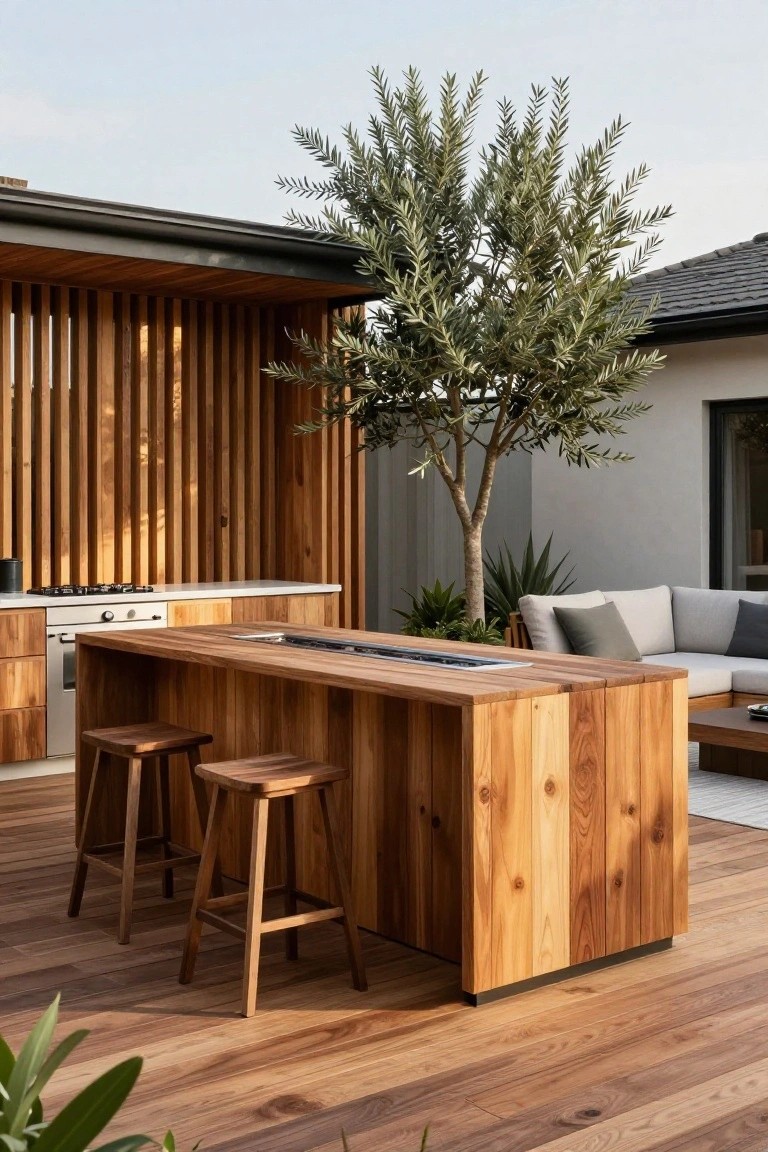
Many people want their outdoor space to handle both cooking and hanging out without feeling like two separate areas. A solid wooden island does that by giving you a big central spot for the grill, prep work, and a couple of stools so guests can stay close.
This setup works best on a roomy deck or patio attached to the house, especially when the rest of the seating stays simple. It suits homes that already use wood elsewhere outside and need one main piece to pull the whole layout together.
Built-In Seating That Adds Storage
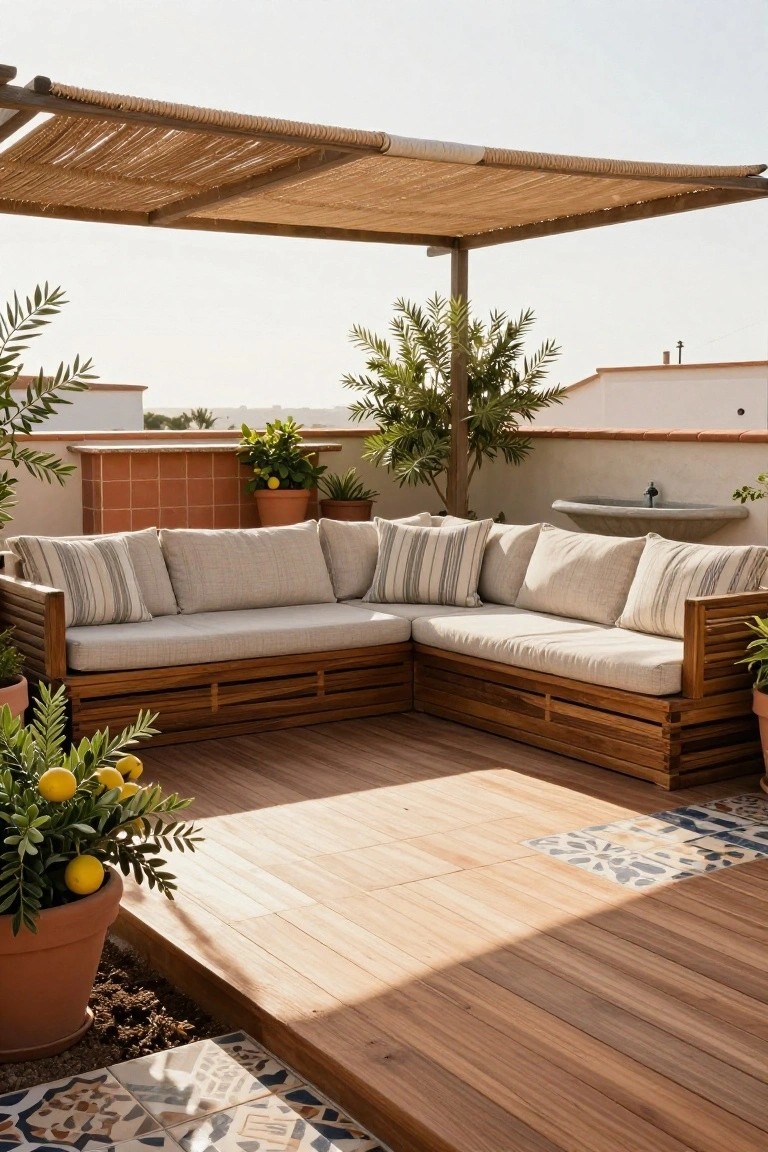
The built-in wooden benches around this patio keep the space feeling open and useful at the same time. They give you plenty of seating without adding loose furniture, and the base holds cushions or tools out of sight.
This kind of seating works best on a deck or terrace that gets steady use. It fits homes with smaller yards especially well, since everything stays fixed and the wood ties in with the floor.
Built In Bench Seating Along The Fence
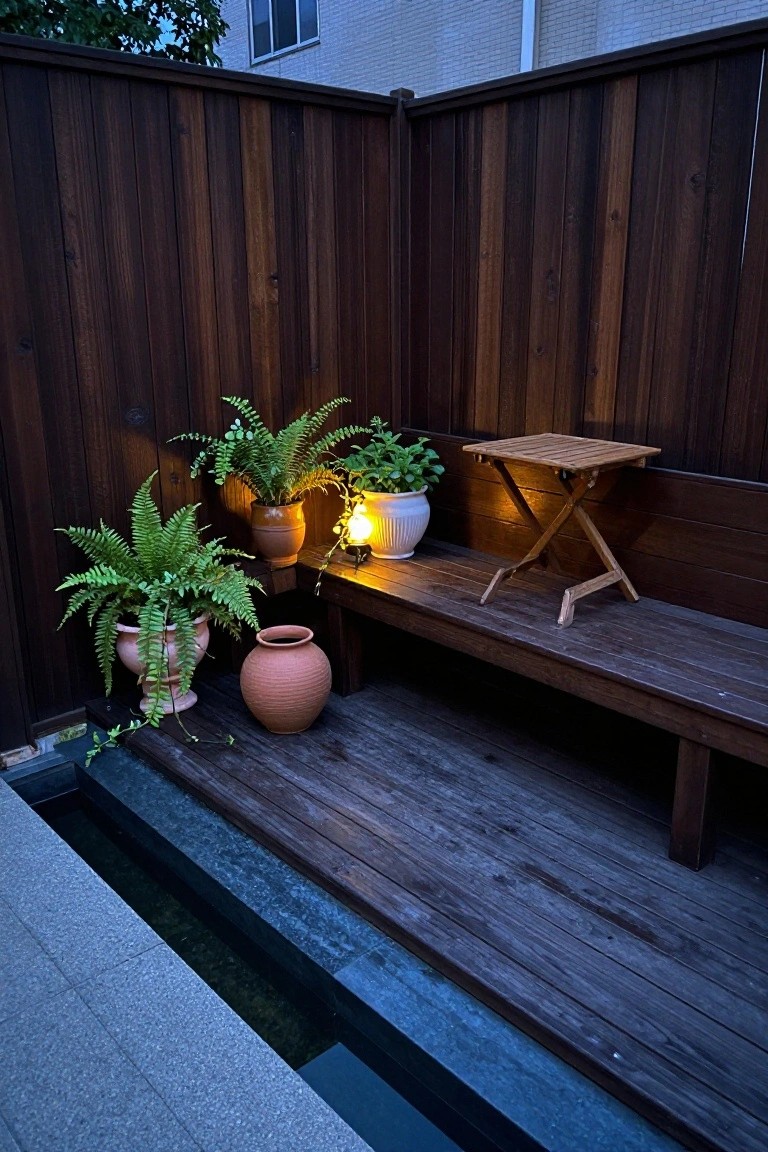
A long bench built right against the fence turns a basic deck into a more usable spot. It gives you seating without crowding the floor space and makes the area feel more settled.
This setup works best on smaller patios or in corners where you want to keep things open. Match the bench wood to the deck so it blends in, and keep the rest of the space simple.
Built-In Storage Keeps A Wooden Patio Organized
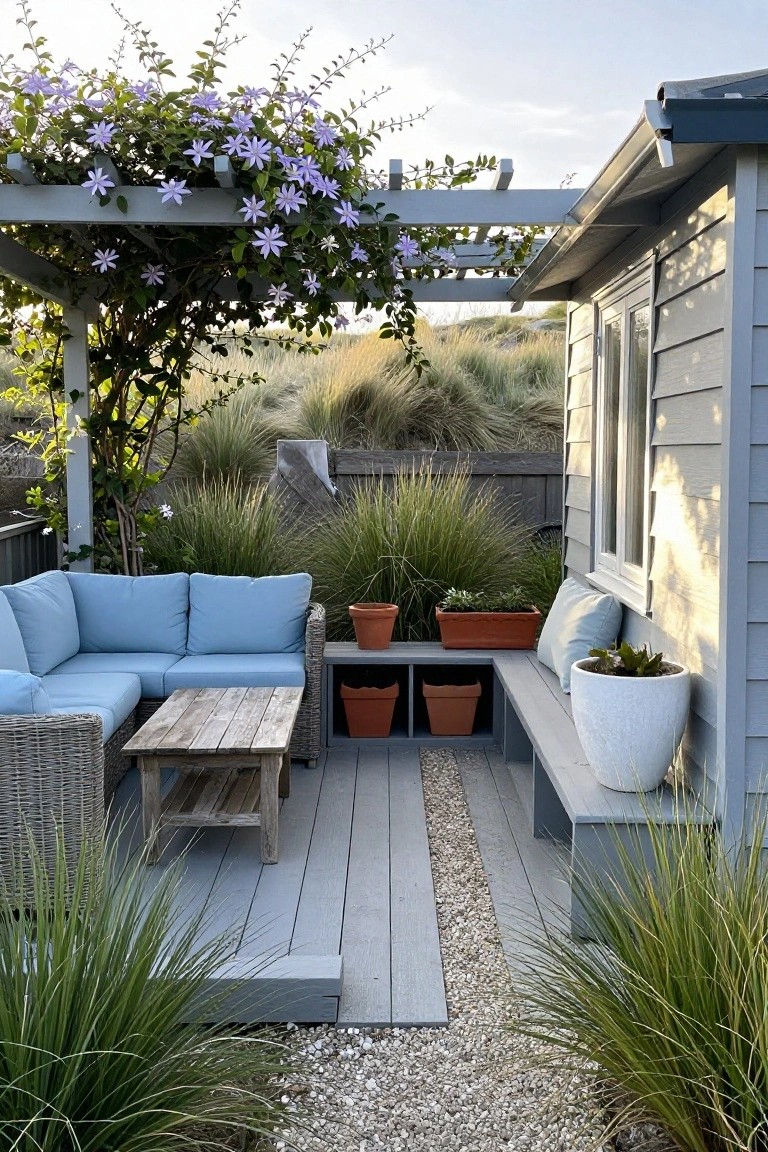
Many patios end up cluttered with cushions, gardening tools, and stray pots because there is nowhere practical to put them. Built-in benches with open cubbies solve that problem by turning seating into useful storage without taking up extra floor space.
This works best on decks that run along the house, where the bench can sit against the wall and still leave room to move. It suits smaller backyards especially well, since everything stays contained and the surface stays clear for daily use.
Adding a Pizza Oven to a Wooden Deck
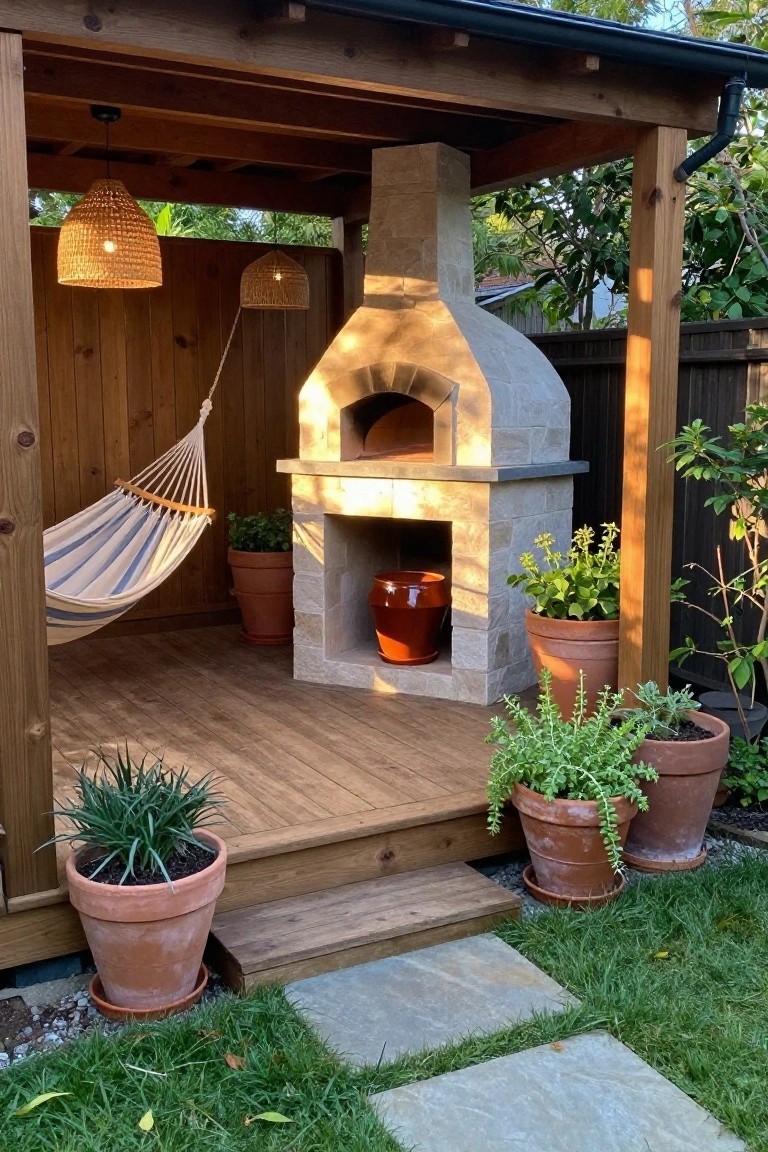
A built-in pizza oven gives a wooden patio a clear purpose beyond just seating. It creates a natural spot for cooking and gathering while the surrounding wood keeps everything feeling grounded and simple.
This setup works well on decks that already have partial cover or nearby planting. Keep the oven material fairly neutral so it does not compete with the wood tones, and leave enough open floor space around it for chairs or a hammock.
Sheer Curtains Create Privacy On A Wooden Deck
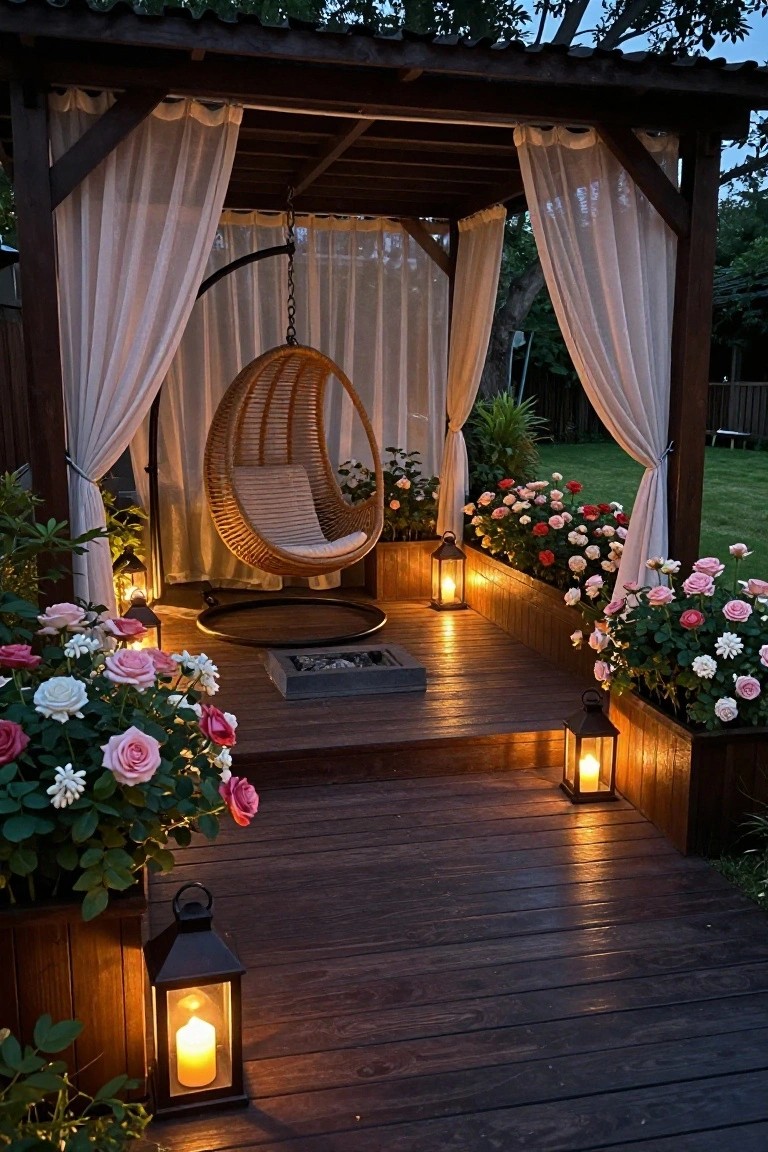
Sheer curtains hung from the beams of a wooden pergola give the patio a softer edge and block views from the yard without making the space feel closed in. They move a little with the breeze and help turn an open deck into something that feels more like a separate room.
This works well on decks that sit close to neighboring yards or get a lot of foot traffic. Use lightweight fabric that ties back easily on warm days, and keep the hardware simple so it does not fight with the wood tones.
A Pergola Adds Simple Structure Overhead
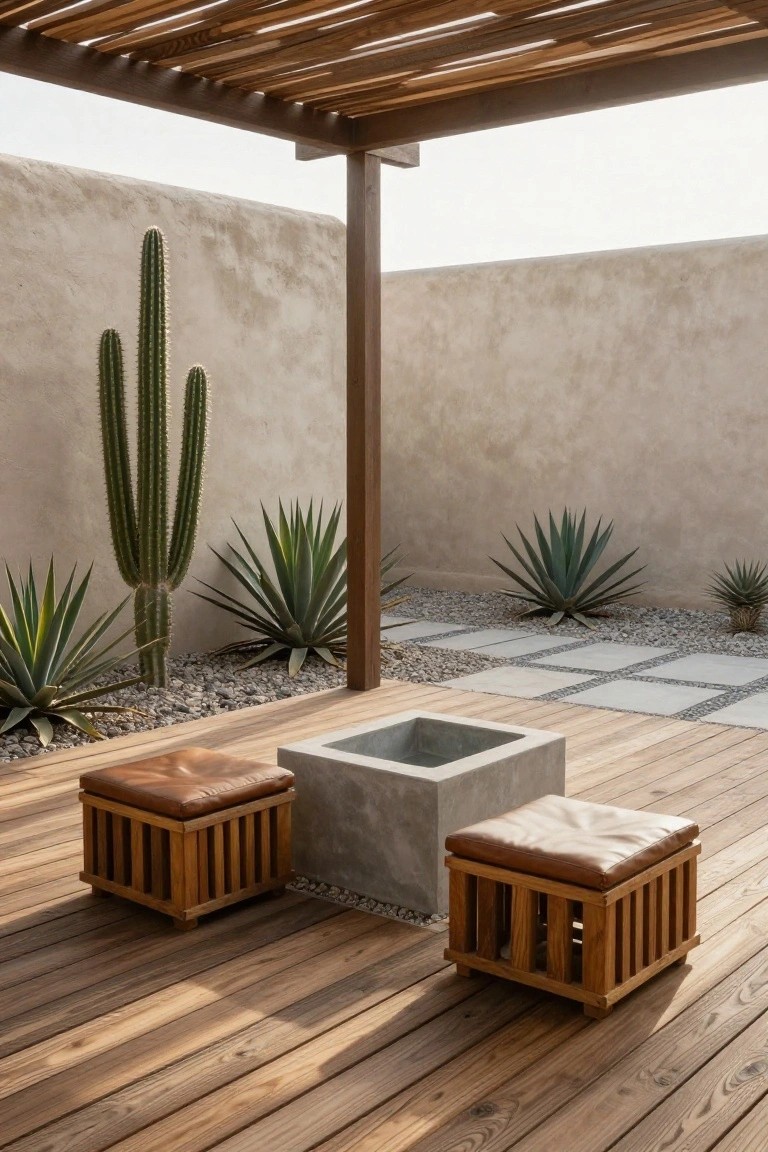
A pergola made from straight wood beams gives a patio a clear sense of place without closing it in. The open slats let in light while still marking the area as a separate zone from the rest of the yard. On a wooden deck this works especially well because the warm tones of the wood carry through from the floor up to the roof line.
This setup suits homes that get strong afternoon sun and need a bit of relief without a full roof. Place the pergola over the main seating area and keep the rest of the deck open so the space does not feel boxed in. Avoid adding too many hanging plants or heavy curtains if you want the light, open feel to stay intact.
Frequently Asked Questions
Q: How do I keep the wood from weathering too fast?
A: Pick a naturally durable option like cedar to start with. Then apply a light coat of oil once a year to maintain the color. This keeps the retreat feel without much hassle.
Q: How can I add privacy without blocking all the light?
A: Tall potted grasses or climbing vines on a simple trellis work well next to the wooden structure. They soften the edges and create that enclosed feel gradually. You still get some sunlight filtering through.
Q: Is it worth adding built-in seating to the design?
A: Built-in benches along the sides make the space feel custom and save room for a small table. They tie directly into the wood theme too.
