

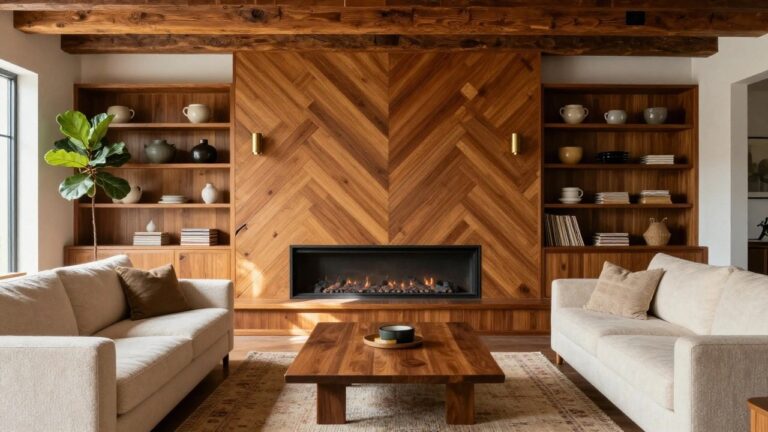
When I think about updating a room without a full renovation, wood accent walls stand out because they add texture that paint alone cannot match.
In practice the choice of wood grain and how it runs across the wall affects whether the space feels grounded or a bit off balance.
Scale matters more than people expect.
Some projects work better in larger rooms where the wall can serve as a quiet backdrop rather than the main feature.
I keep coming back to the idea of starting with a small section in a hallway to see how the material ages before committing to a bigger living room wall.
Herringbone Wood Accent Wall Around The Fireplace
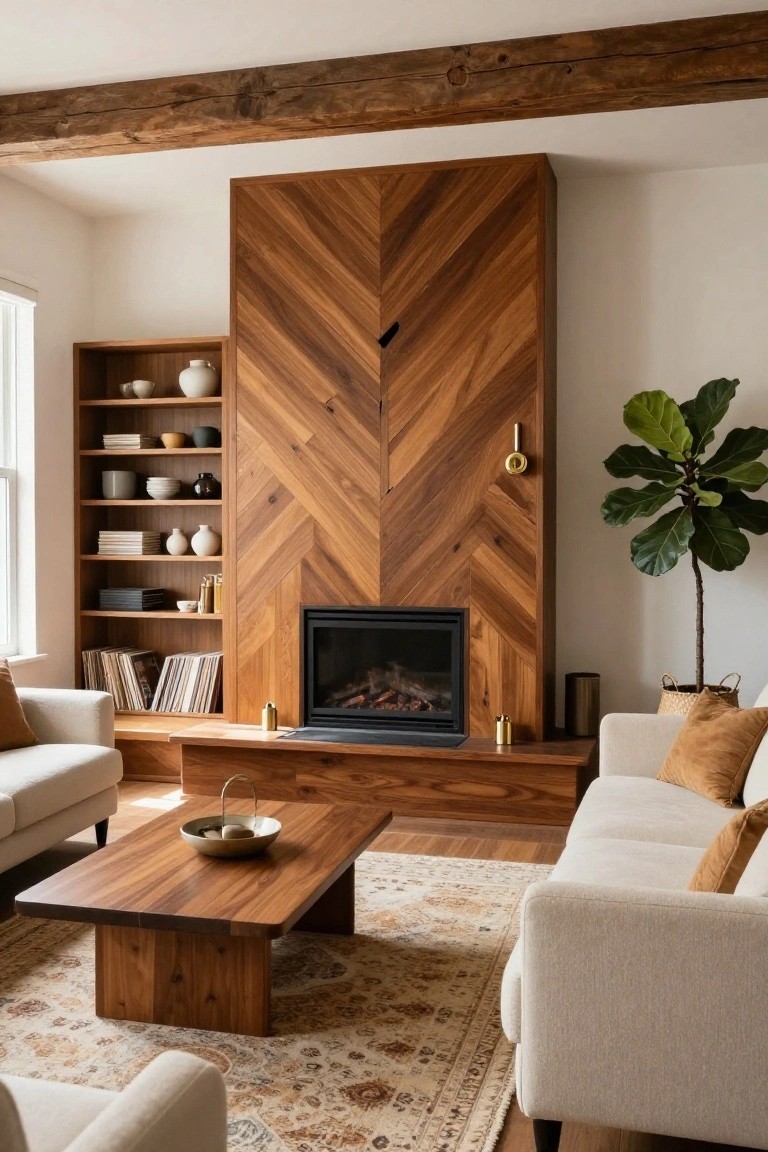
A herringbone wood accent wall gives a fireplace real presence without needing much else around it. The pattern draws the eye upward and makes the whole area feel more finished than a plain wall or basic surround would.
This works best in living rooms where the fireplace already sits in the middle of a larger wall. Keep the wood tone close to your floor or main furniture so it blends in rather than fights for attention. Leave some open space on either side so the pattern stays the main feature.
Vertical Paneling for Bedroom Walls
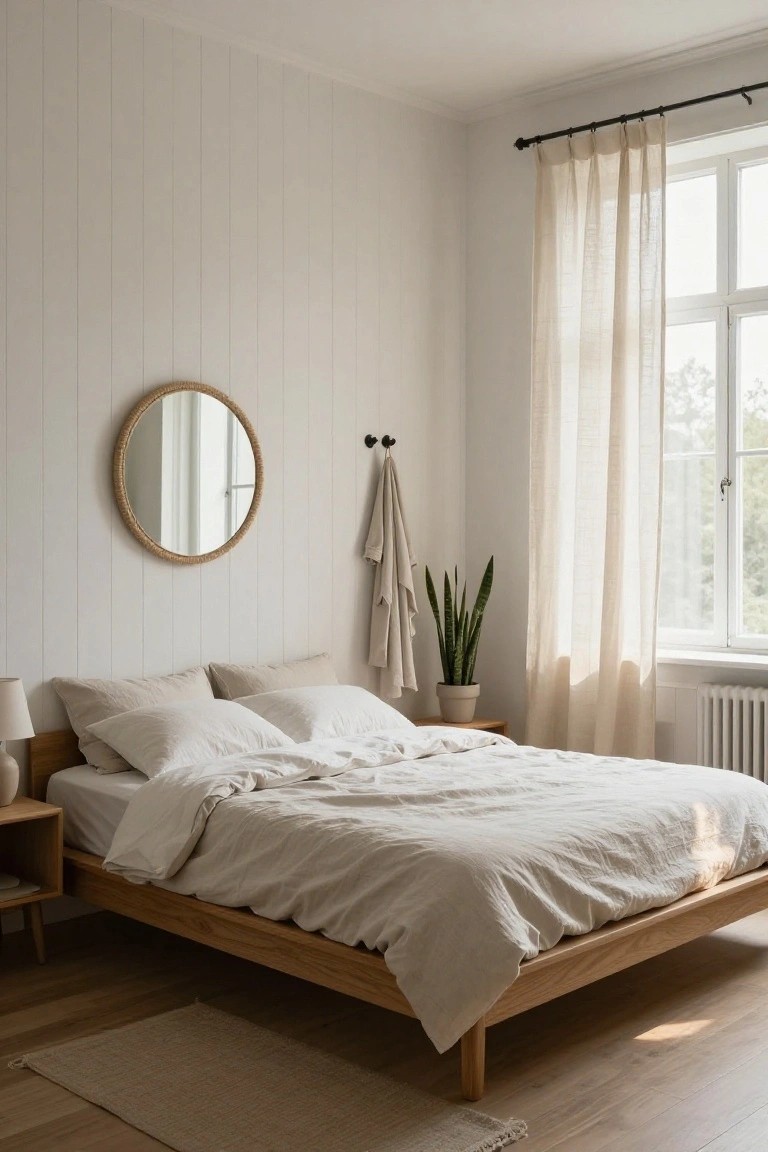
Vertical wood paneling adds a soft layer of texture that keeps a bedroom feeling calm and simple. It works especially well when painted the same color as the rest of the room so the lines show up without making the space feel busy.
This treatment suits smaller bedrooms or any room where you want a bit of interest without adding much color. Keep the rest of the space light and let the paneling do the work on its own.
Horizontal Wood Planks for a Casual Accent Wall
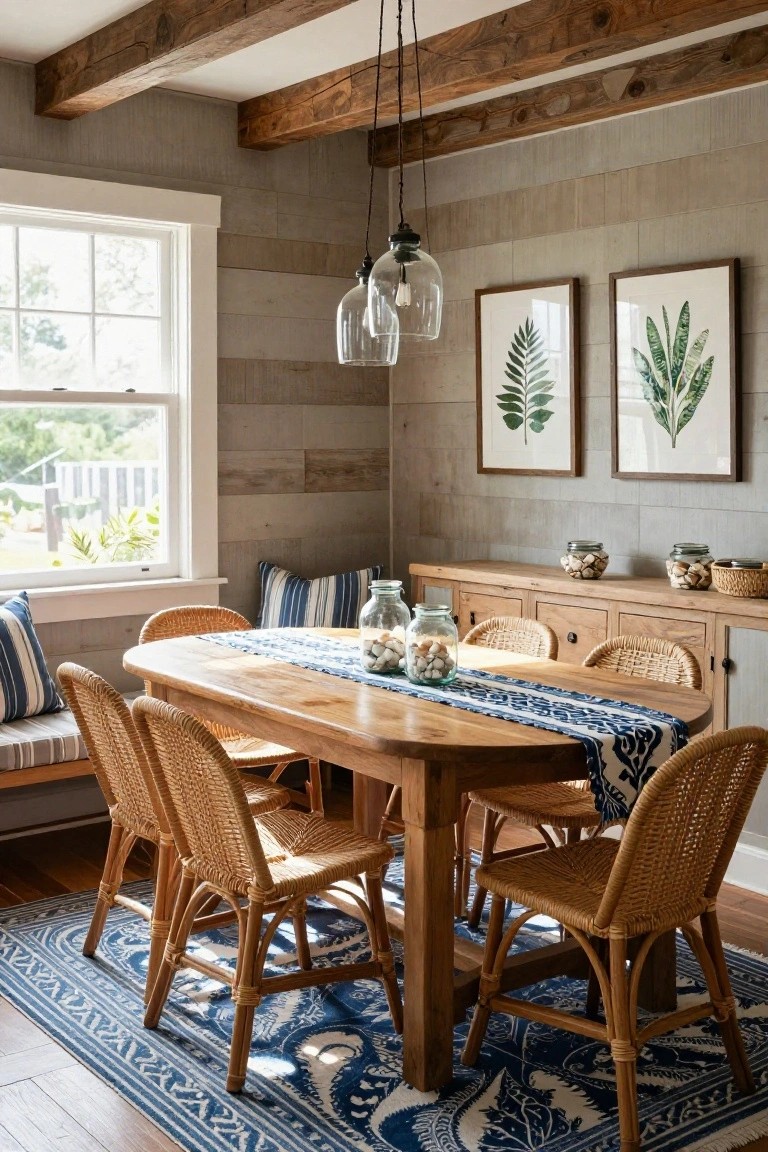
Horizontal wood planks work well on an accent wall because they add texture and a bit of warmth without making the room feel busy. The even lines keep things simple and give the space a relaxed background that pairs easily with everyday furniture and soft colors.
This idea fits best in dining rooms or living areas where you want some natural material but not a full wood room. Use a light or mid gray finish so the wall stays in the background, and keep the rest of the space open so the planks have room to show off their lines.
Wood Accent Walls In Entryways
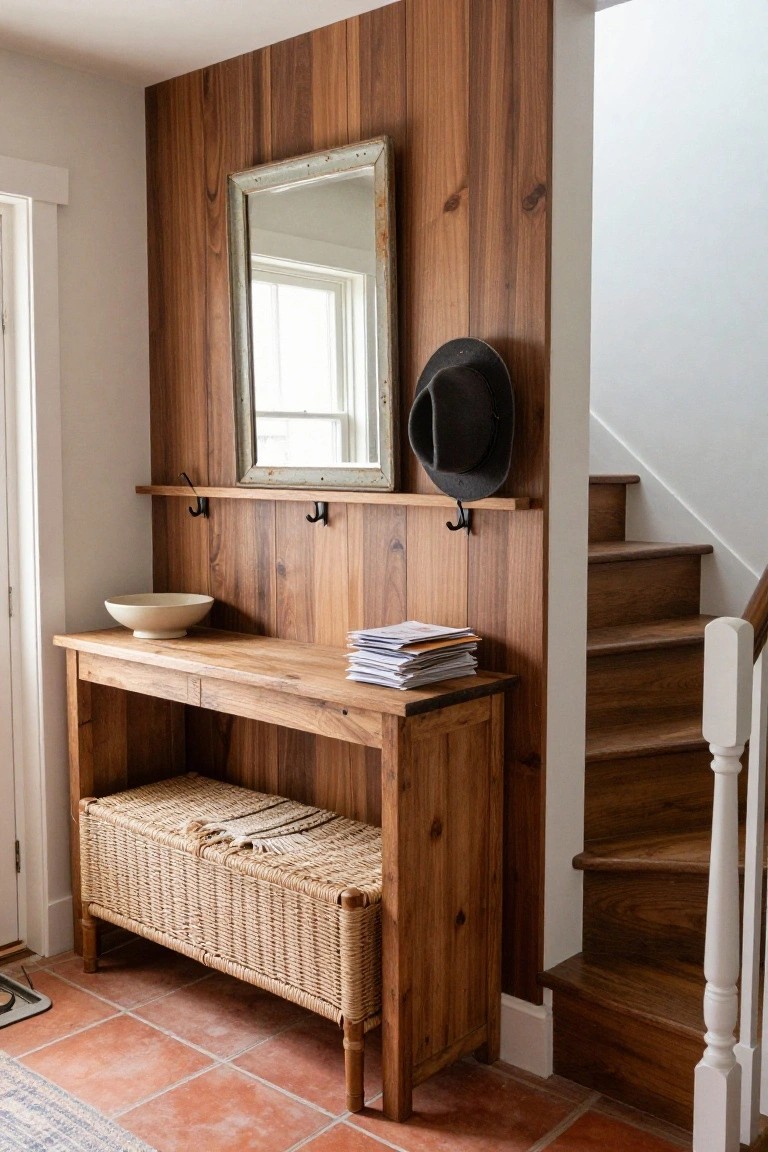
Wood accent walls can handle the daily traffic that comes through an entry or hallway. The vertical planks give the space a warmer feel and create a solid background for hooks or a small shelf without needing extra trim work.
This approach works best in homes where the entry opens right into living areas or near stairs. Keep the rest of the walls painted and let the wood section carry the function, so the hooks stay useful and the surface stays easy to clean.
Wood Cubbies Above A Desk
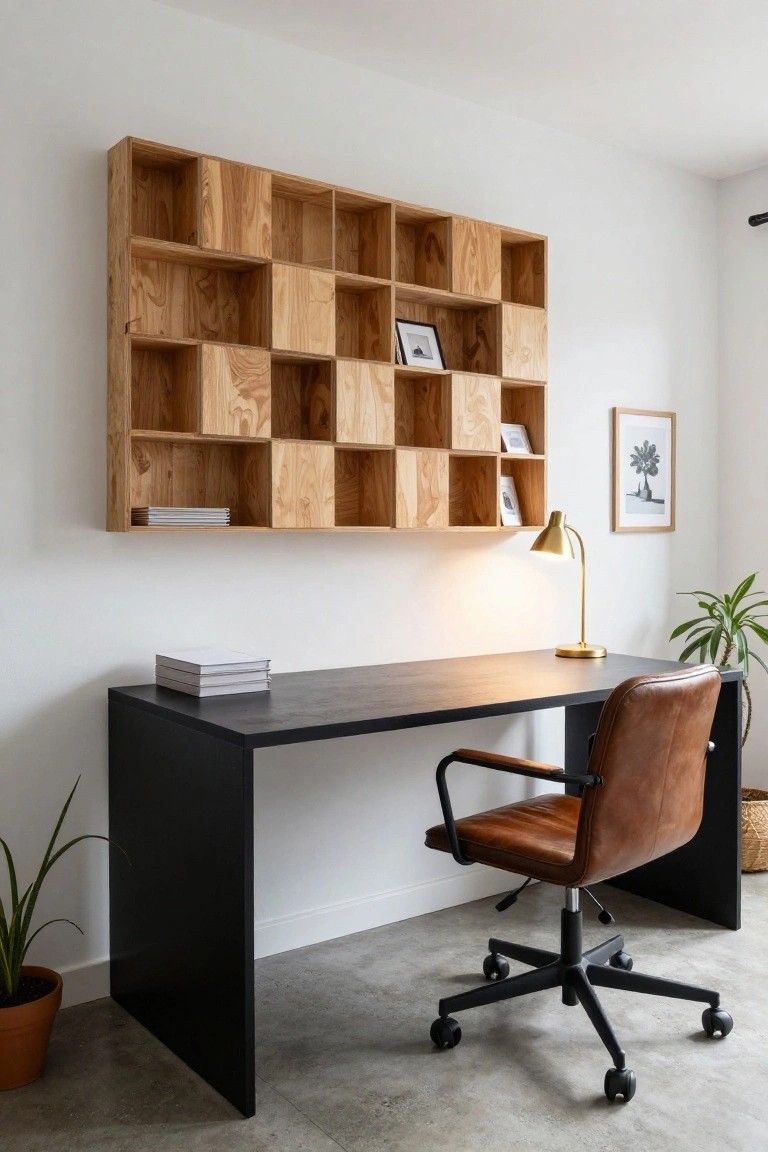
A grid of open wood cubbies mounted right above a desk adds useful storage without eating into floor space. The natural wood brings warmth to an otherwise plain wall and keeps books or small items within easy reach.
This works best in smaller offices or any workspace where you want to stay organized but avoid extra furniture. Build the cubbies from plywood in whatever grid size fits your wall, then hang them high enough to clear the chair.
Letting Light Wood Furniture Warm a White Room
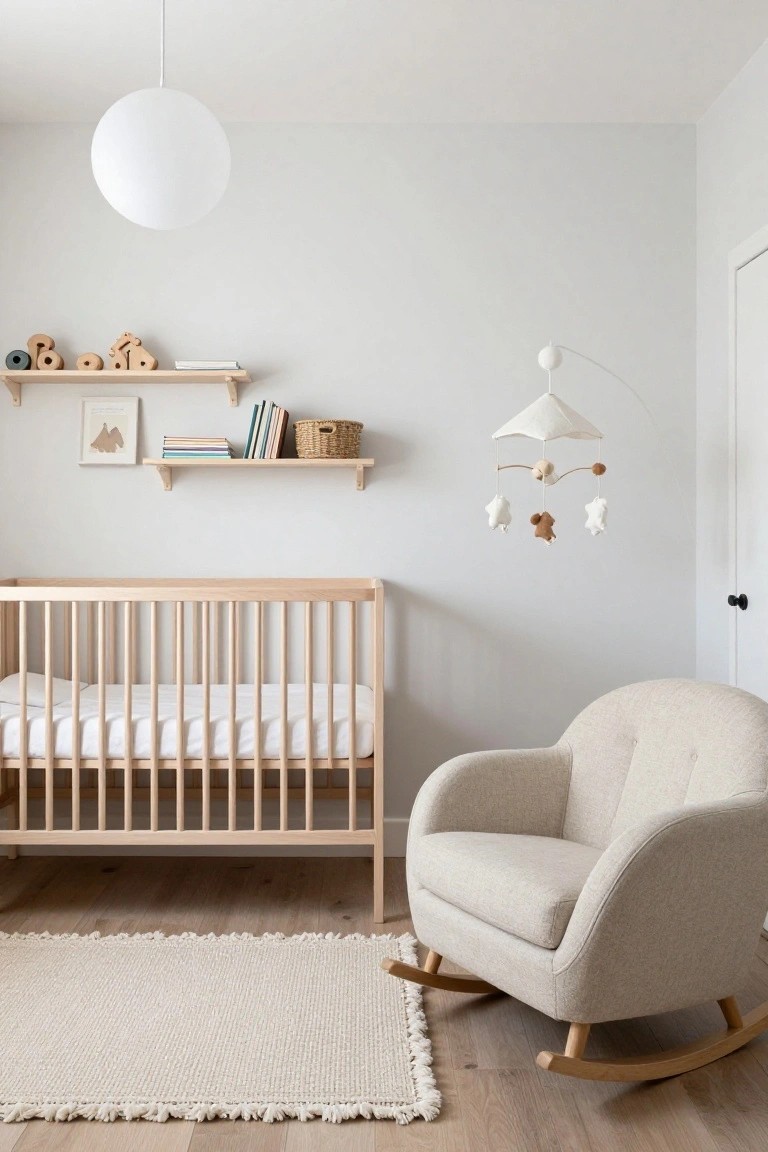
Light wood pieces can make a plain white room feel much more welcoming without adding any extra color or pattern. In a nursery this choice keeps things calm and simple while still giving the space a bit of natural texture that feels easy to live with.
The crib and rocking chair here show how a few matching wood items can carry the look. Try the same approach in any small room where you want warmth but still need the space to feel open. Just stick with one wood tone and let the white walls do the rest.
Floating Wood Vanities For Simple Storage
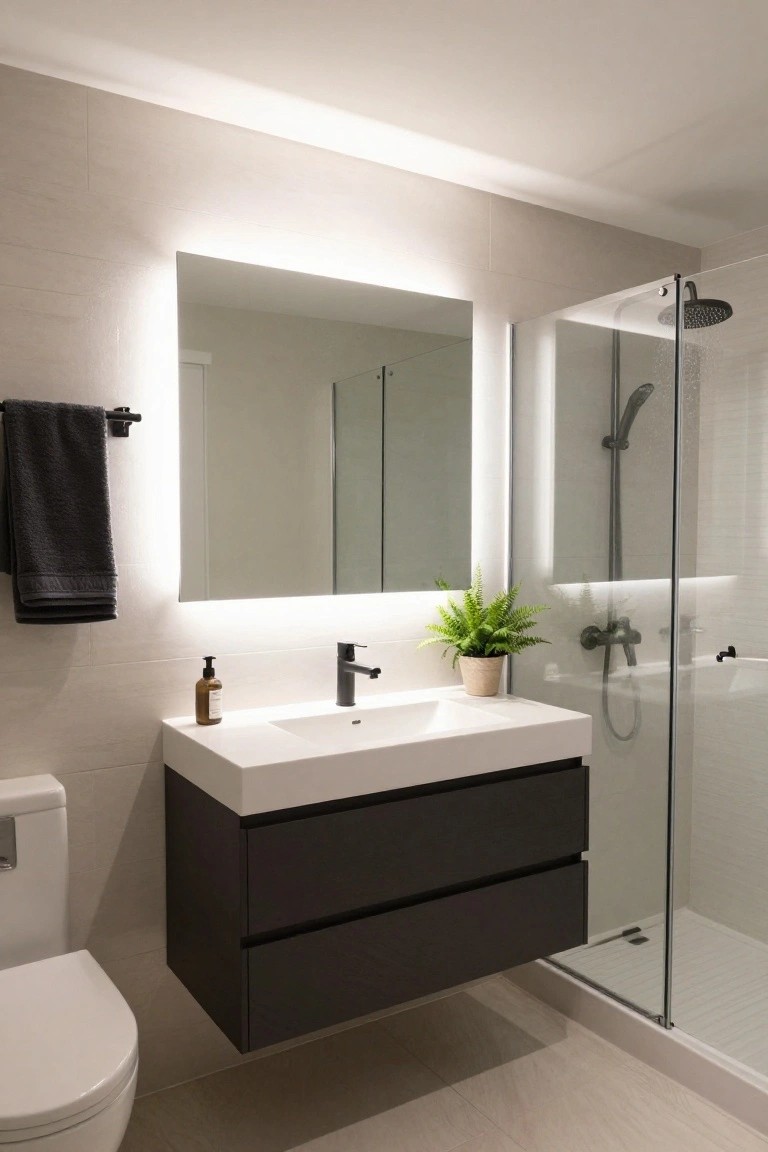
A floating wood vanity brings storage into a bathroom without taking up floor space or making the room feel heavy. The dark wood cabinet here stands out against the light tile and white sink, giving the space some warmth while keeping everything clean and open.
This works best in smaller bathrooms where you need drawers but do not want a bulky piece on the floor. Keep the rest of the room light so the wood reads as an accent rather than an overpowering block.
Using Natural Wood Furniture For Warmth
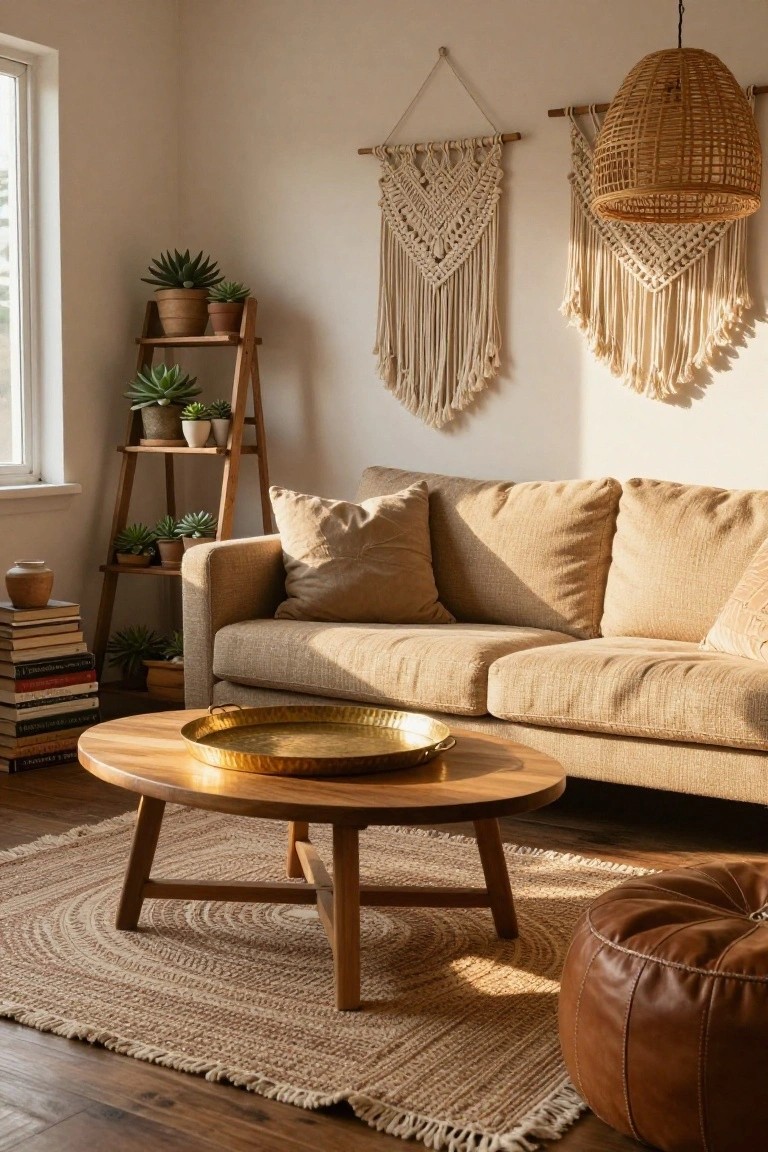
Natural wood pieces can soften a mostly neutral room without any major changes to the walls. A round coffee table and a simple wooden ladder both bring in texture and a grounded feel that painted surfaces alone often lack.
This works best in living rooms that already have light walls and soft fabrics. Keep the wood tones close in color so the pieces feel like they belong together rather than competing.
Reclaimed Wood Behind the Bed
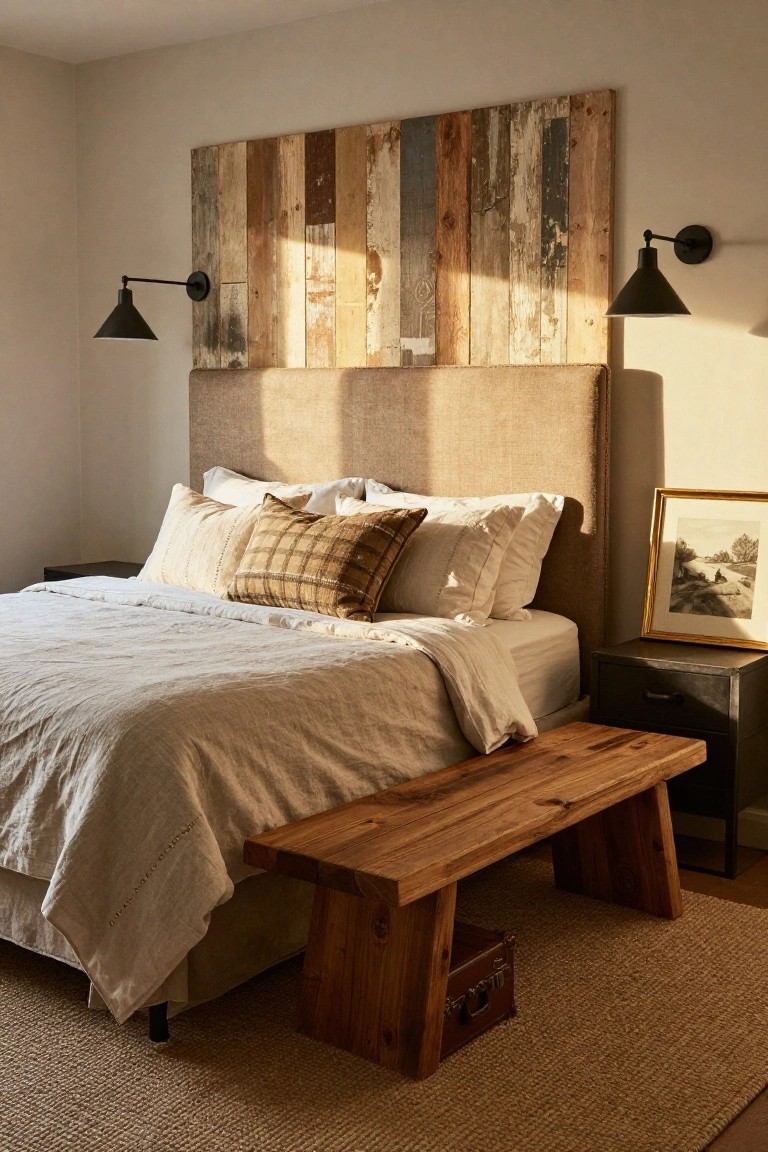
A wood accent wall right behind the bed gives a bedroom instant warmth and texture. It stands out because it adds character without needing a lot of extra furniture or color.
This approach works best in rooms with simple bedding and neutral tones, since the wood does most of the visual work. Use old boards or fence planks if you want that varied look, but keep the rest of the space light so the wall does not feel heavy.
Vertical Wood Slat Walls In Laundry Rooms
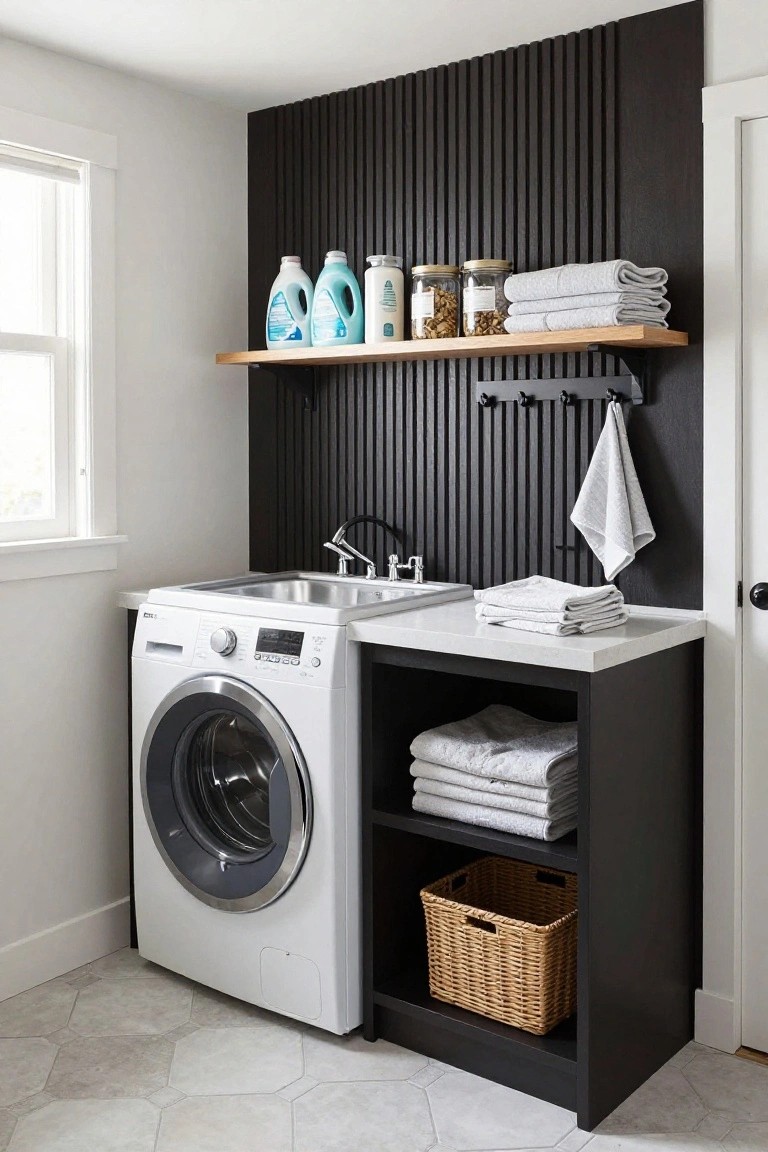
A vertical wood slat accent wall works well in a laundry room because it adds texture and depth without crowding the space. The narrow slats give the wall some movement while keeping the look clean, and the dark finish helps the area feel more intentional than a plain painted wall.
This idea fits small utility rooms that sit near living areas or hallways. Paint the slats a deep color if you want the shelves and hooks to stand out, and keep the rest of the room light so the wall does not overwhelm the room.
Wood Accent Walls In Narrow Hallways
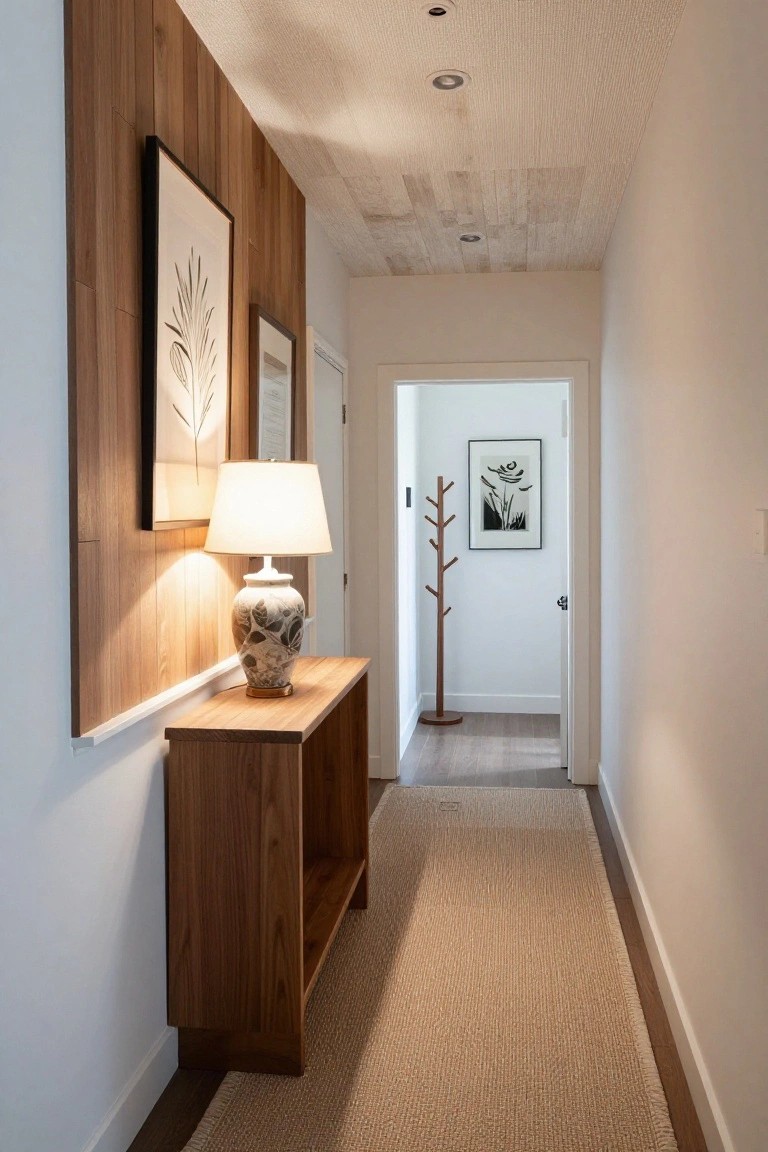
A wood accent wall can give a plain hallway some warmth and texture without crowding the space. Vertical planks add height and keep the look simple, which works especially well in tight areas that often feel flat or boring.
This idea suits homes where the rest of the walls stay light and neutral. Keep any furniture low and minimal so the wood stands out without making the hallway feel smaller.
Vertical Wood Paneling Behind A Banquette
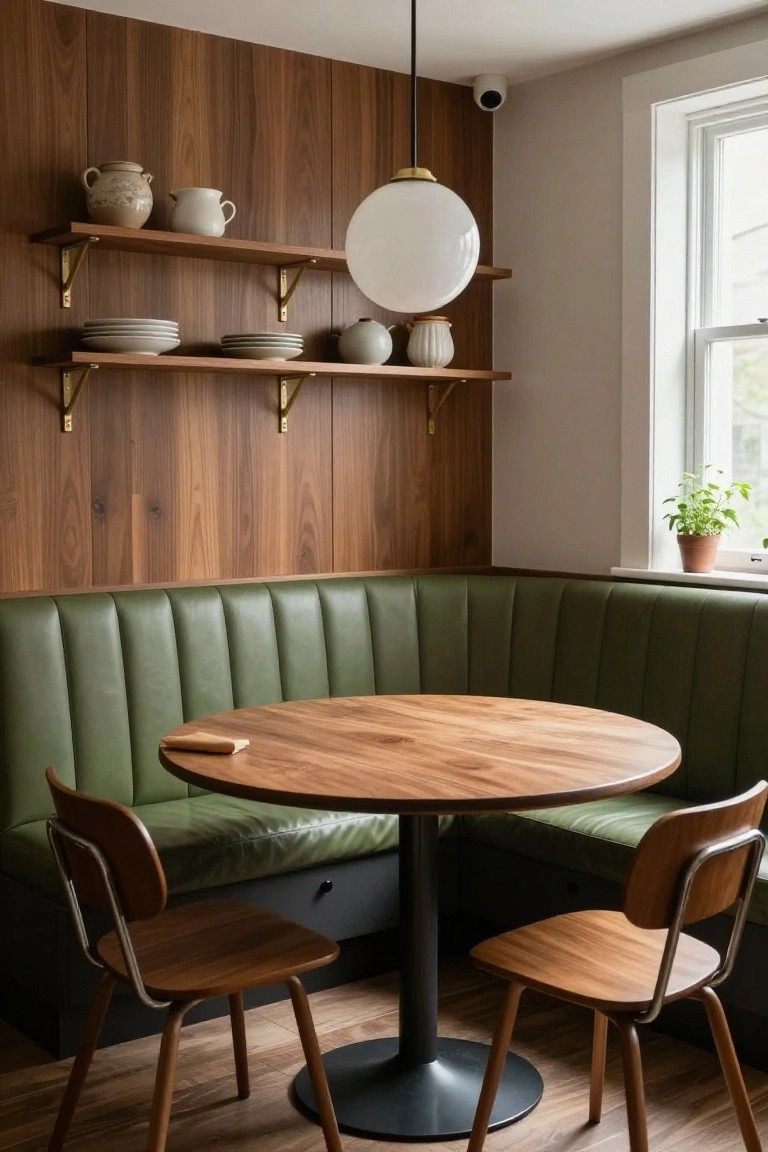
Vertical wood paneling works well in dining corners because it adds texture and warmth without taking over the whole room. The planks give the space a grounded feel that pairs nicely with simpler seating and tabletops.
This idea suits smaller homes or apartments where you want one strong wall rather than full room coverage. Keep the finish natural and install the boards vertically to draw the eye upward and make the area feel a bit taller.
Striped Wood Plank Walls For Dining Rooms
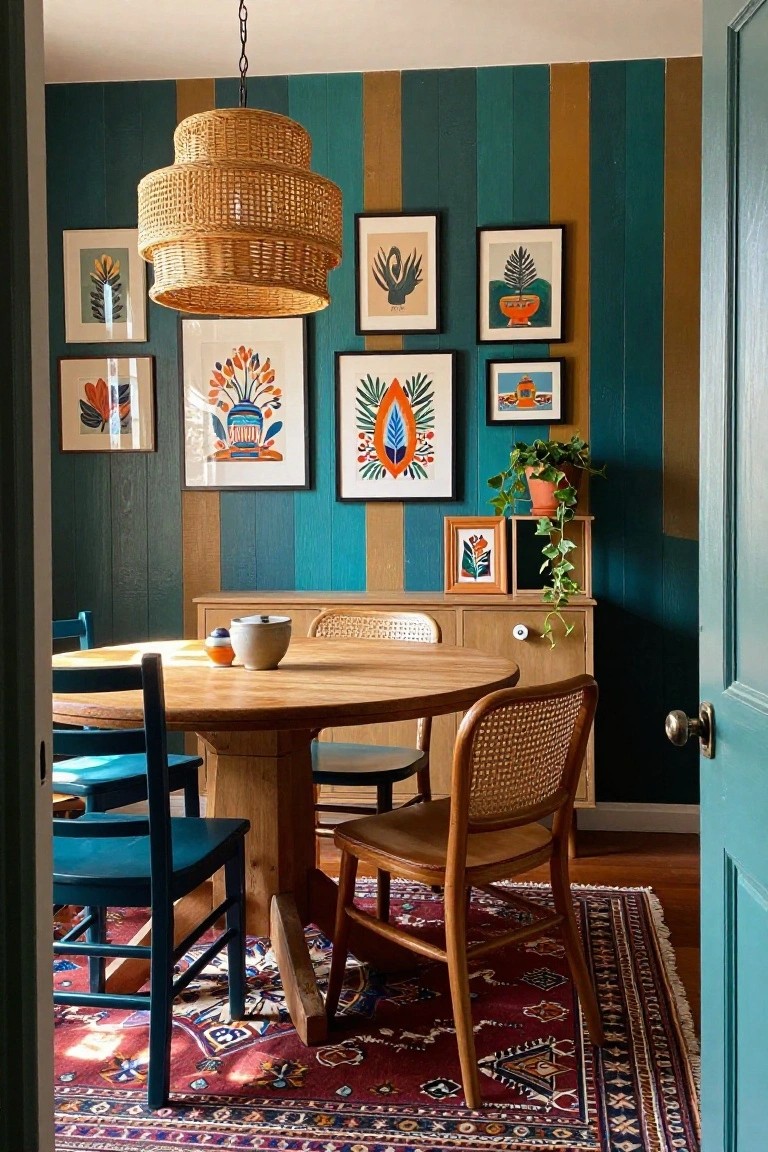
Painting vertical wood planks in several colors gives a dining room an easy lift. The stripes break up the wall without adding clutter, and the wood texture keeps the look grounded even when the colors are bold. Many people like this because it turns a plain wall into the main feature while still working with everyday furniture.
This idea suits smaller homes or rooms that already have simple layouts. Keep the stripes fairly even and use a few related tones so the wall feels pulled together rather than busy. It also works well if you want to highlight an existing wood tone in the table or floor.
Vertical Wood Paneling In The Bathroom
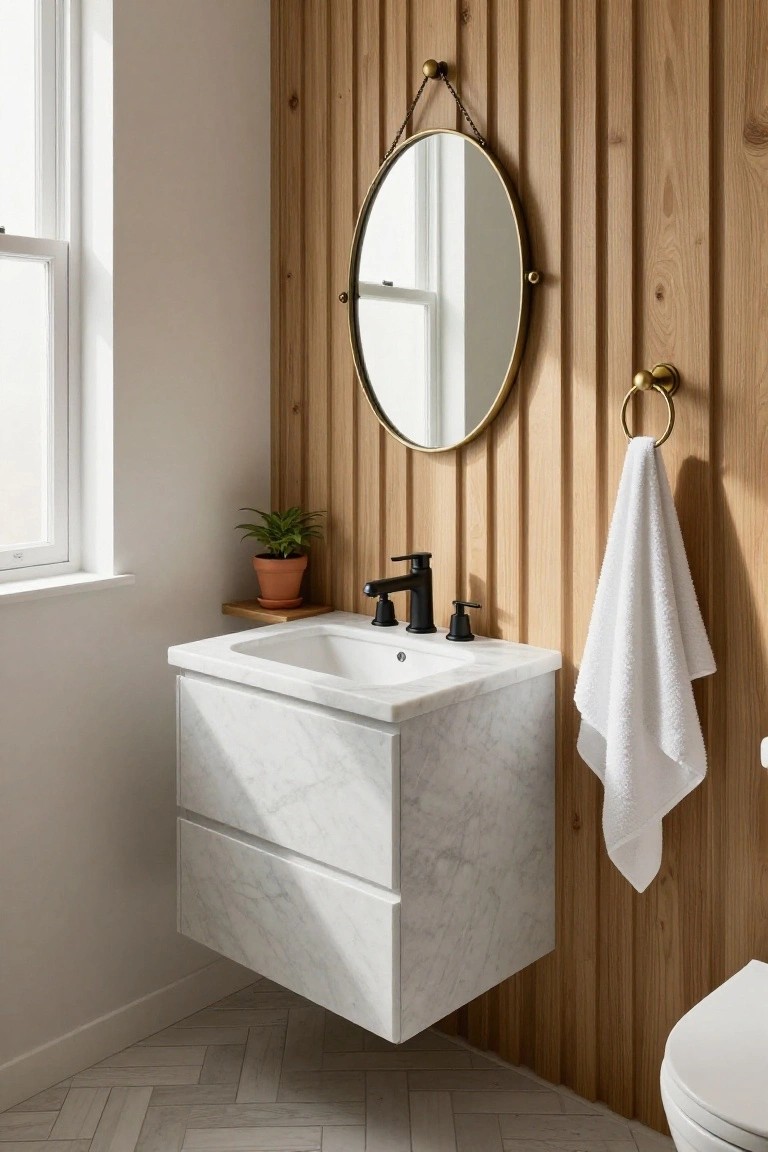
Vertical wood paneling brings a warm natural texture into a bathroom without making the room feel closed in. It works especially well behind the vanity because the lines draw the eye upward and give the space a bit more height.
This idea suits small bathrooms or powder rooms where you want some character but still need the room to feel light. Keep the other walls painted and use the wood only on one surface so the look stays simple. It is a straightforward weekend project with basic lumber and can be sealed for moisture.
Built-In Bench With Wood Shelves
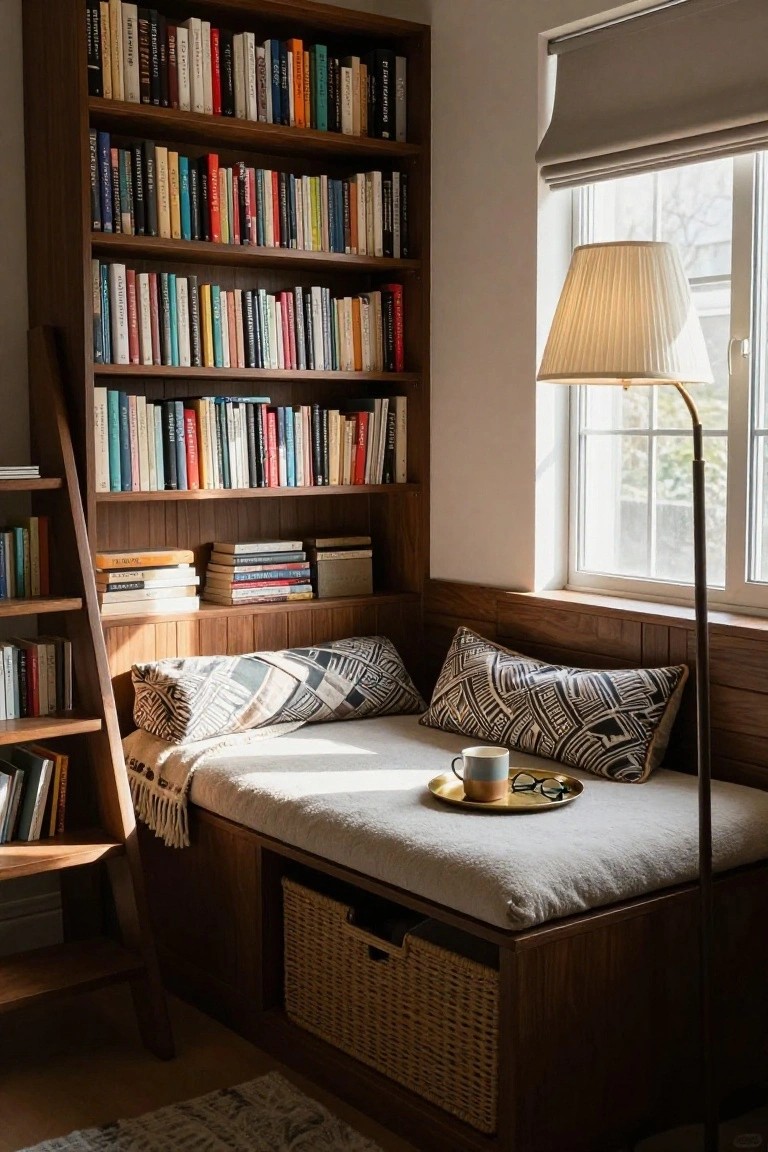
A built-in bench under a window paired with tall shelves above turns an empty corner into useful space without taking up much floor area. The wood ties the whole wall together and adds warmth that painted drywall alone cannot match. It also gives you a place to sit, store blankets, and keep books close at hand.
This setup works best in smaller rooms or along a long blank wall where you want both seating and storage. Keep the wood tone simple and match the bench height to standard chair seats so it feels comfortable for reading or resting. Avoid crowding the shelves if you want the nook to stay calm rather than busy.
Vertical Wood Panels For A Bedroom Accent Wall
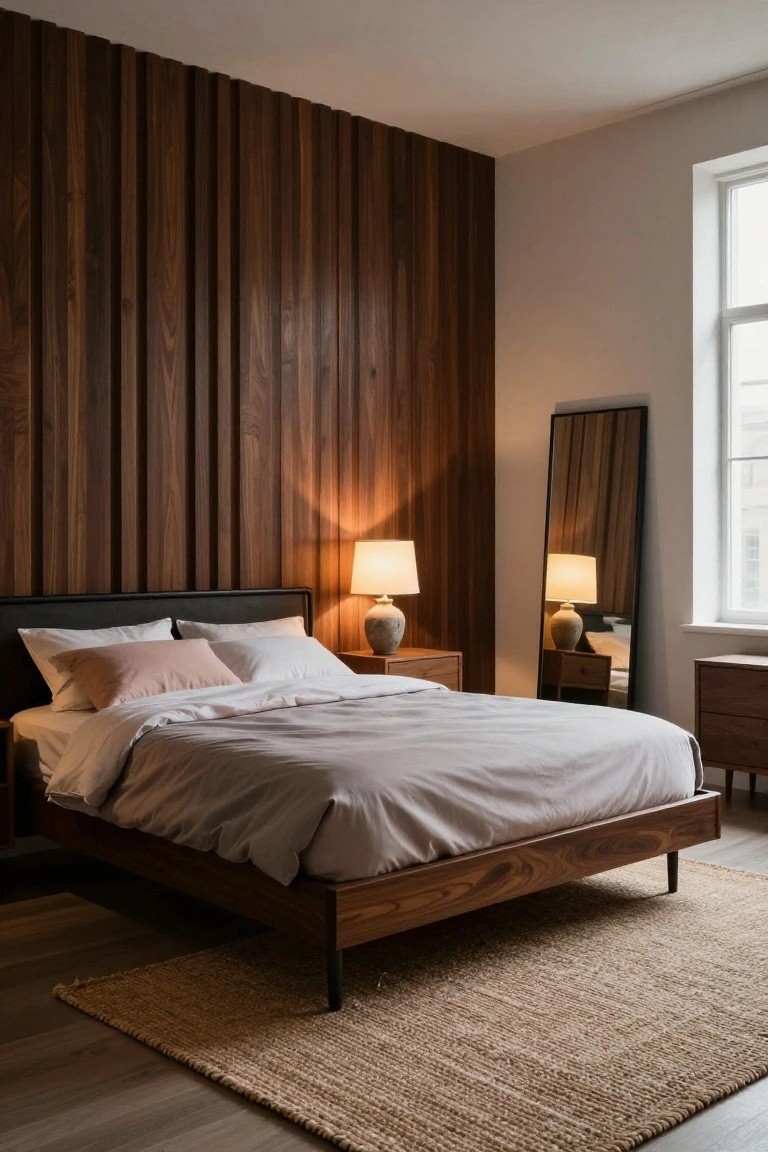
A vertical wood accent wall behind the bed gives a bedroom instant warmth and texture. It pulls the eye to the head of the bed and makes the room feel more finished without adding much furniture or clutter.
This works best in rooms with simple bedding and neutral walls. Keep the wood tone fairly dark if your floors are light, or go lighter if you want the space to feel brighter overall.
Vertical Wood Paneling In Bathrooms
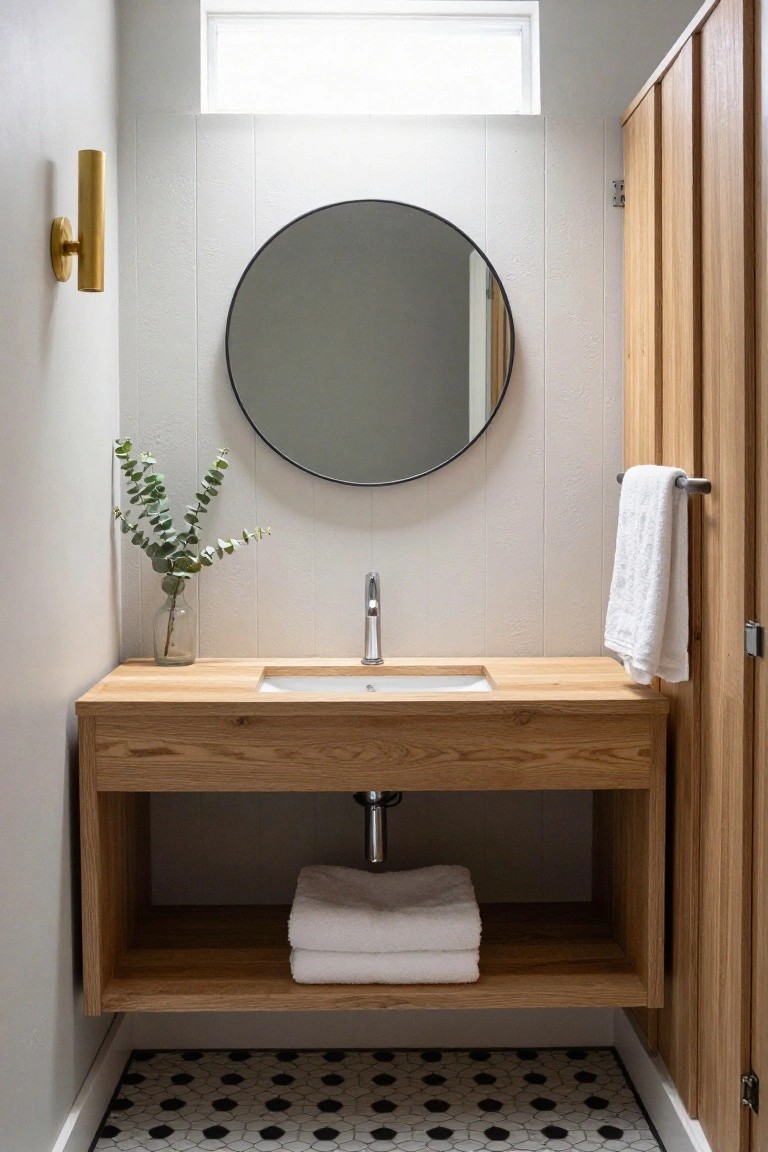
Vertical wood paneling brings quiet texture to a bathroom wall without adding color or pattern that might close the space in. Many people like it because it feels fresh and simple while still giving the room a bit more depth than flat drywall.
This treatment works best in smaller bathrooms where you want some warmth but still need the space to stay light. Seal the wood well if moisture is a concern, and keep the rest of the room fairly plain so the panels stay the main feature.
Reclaimed Wood Accent Wall in the Bedroom
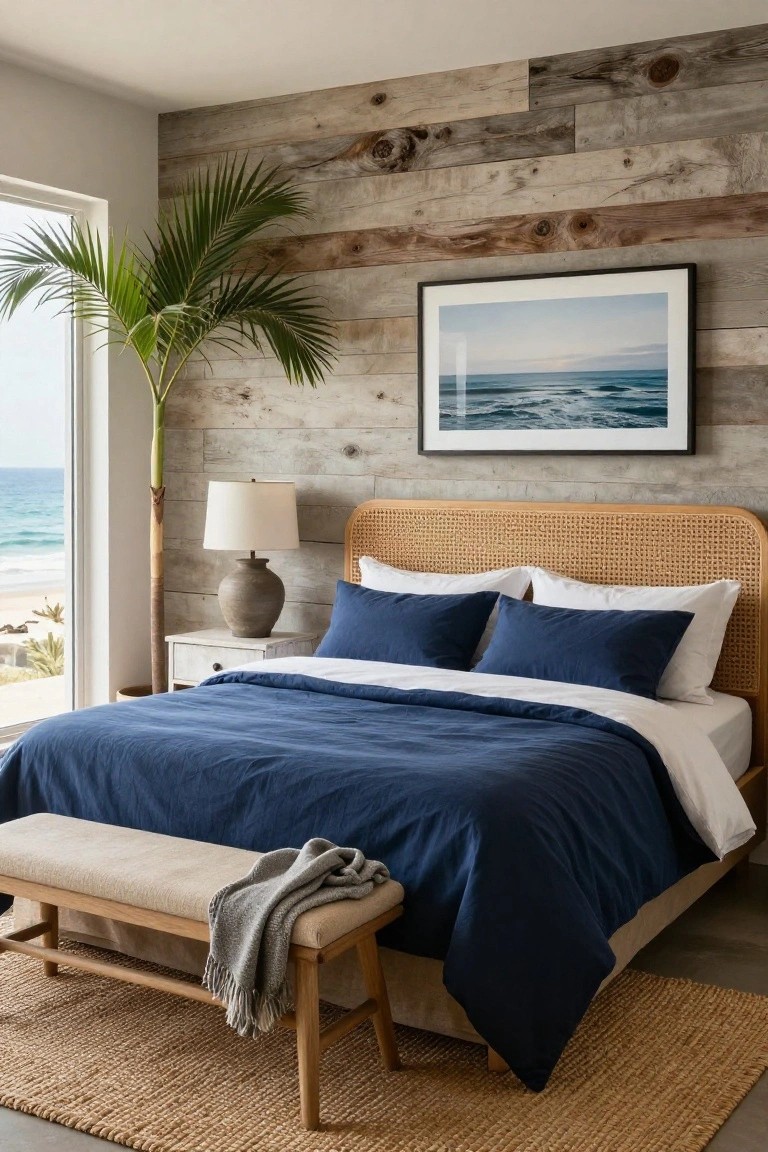
A wood accent wall made from horizontal planks gives a bedroom instant texture and warmth. The mix of light and dark tones in the wood keeps things from feeling too uniform, and it works nicely with simple bedding and minimal furniture.
This approach suits rooms that already get good natural light. It looks best when the wood covers just one wall, usually behind the bed, while the rest of the room stays light and simple.
Built-In Bed Alcoves From Plywood
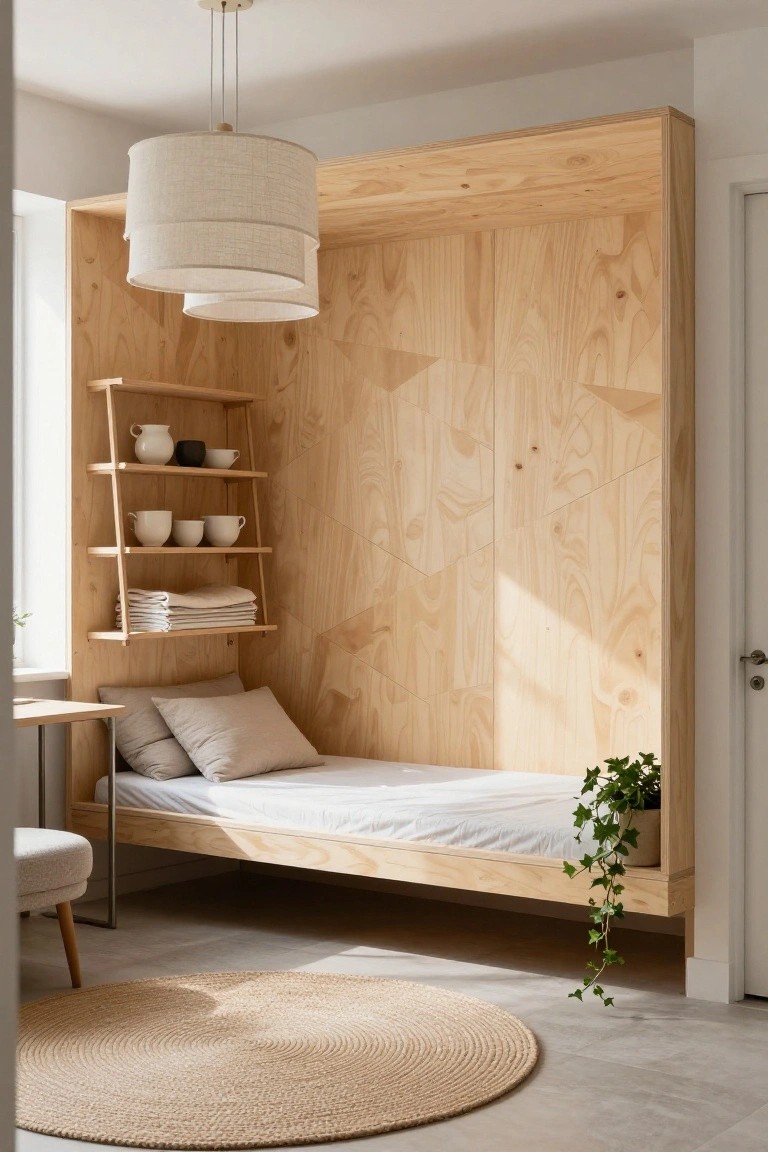
A built-in bed like this turns an empty wall into the main feature of the room. The plywood wraps around the bed on three sides and creates a simple alcove that feels separate from the rest of the space without needing extra walls or construction.
This setup works best in smaller bedrooms or guest rooms where floor space is tight. You can build the frame to fit your mattress, add a few shelves on one side for books or linens, and finish the wood to match whatever look you want.
Built-In Bookshelves Create A Useful Wood Accent
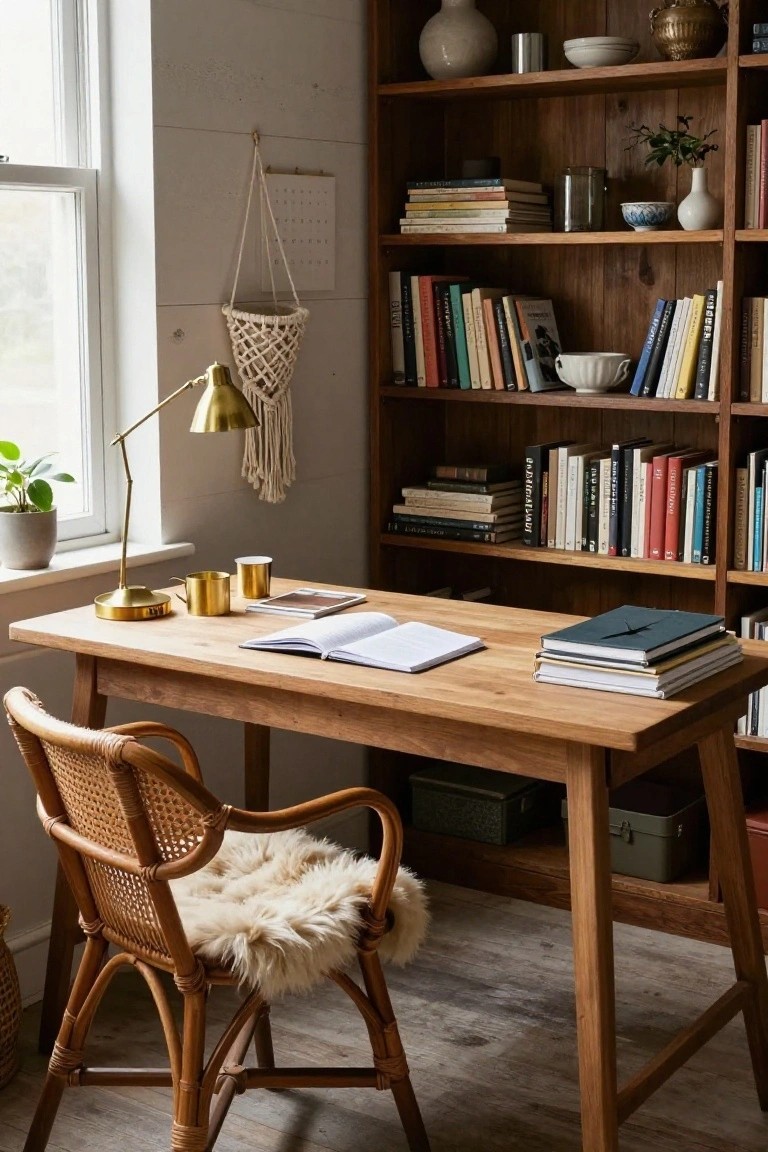
A built-in bookshelf made from wood gives a wall both storage and a finished look without needing much extra decoration. It turns an empty space into something practical while adding the natural grain and warmth that wood brings to a room.
This approach works best in a home office or study where books and supplies need a place to live. It suits homes with plain walls that could use more function, and it can be sized to fit whatever length of wall you have available.
Herringbone Wood Accent Walls
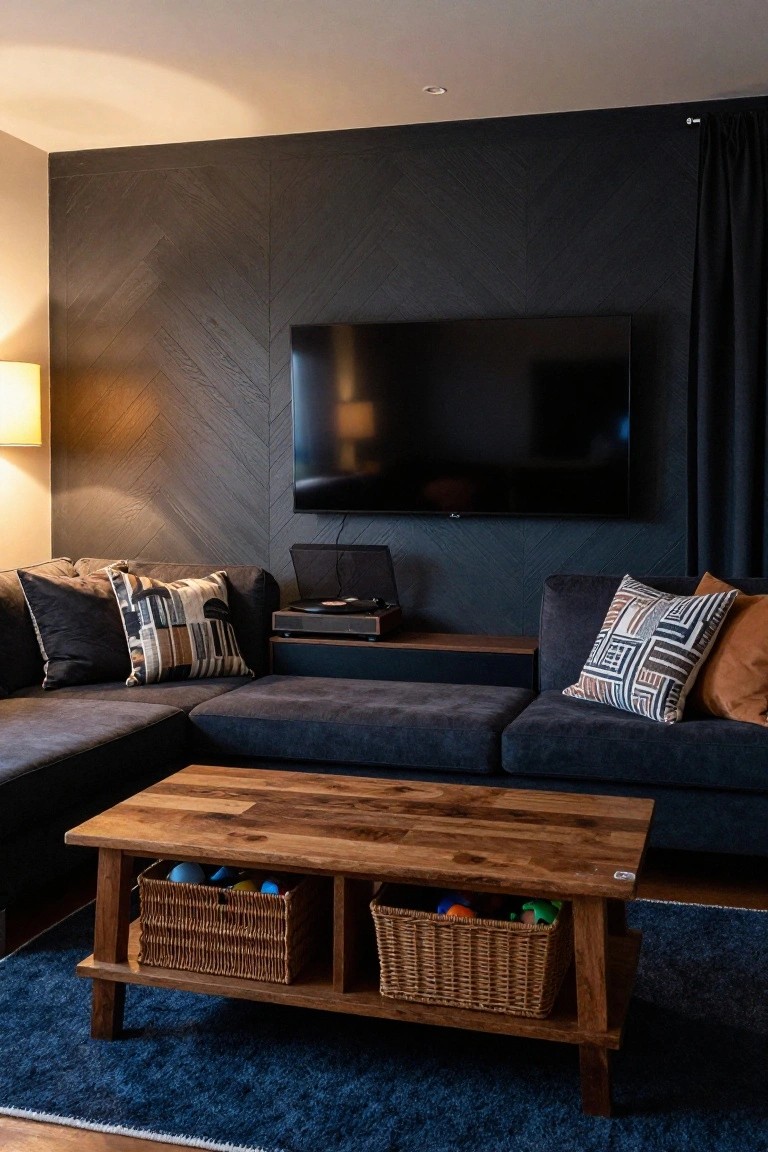
A dark herringbone wood accent wall gives a living room instant focus without needing lots of extra pieces. The pattern adds texture and depth, especially when it sits behind a television or main seating area.
This approach works best in rooms with lighter furniture and floors so the wood stands out. It suits smaller spaces where you want one strong surface rather than covering every wall, and it can be done with basic plywood cut into strips if you keep the layout simple.
Wood Accent Wall For A Small Bench Area
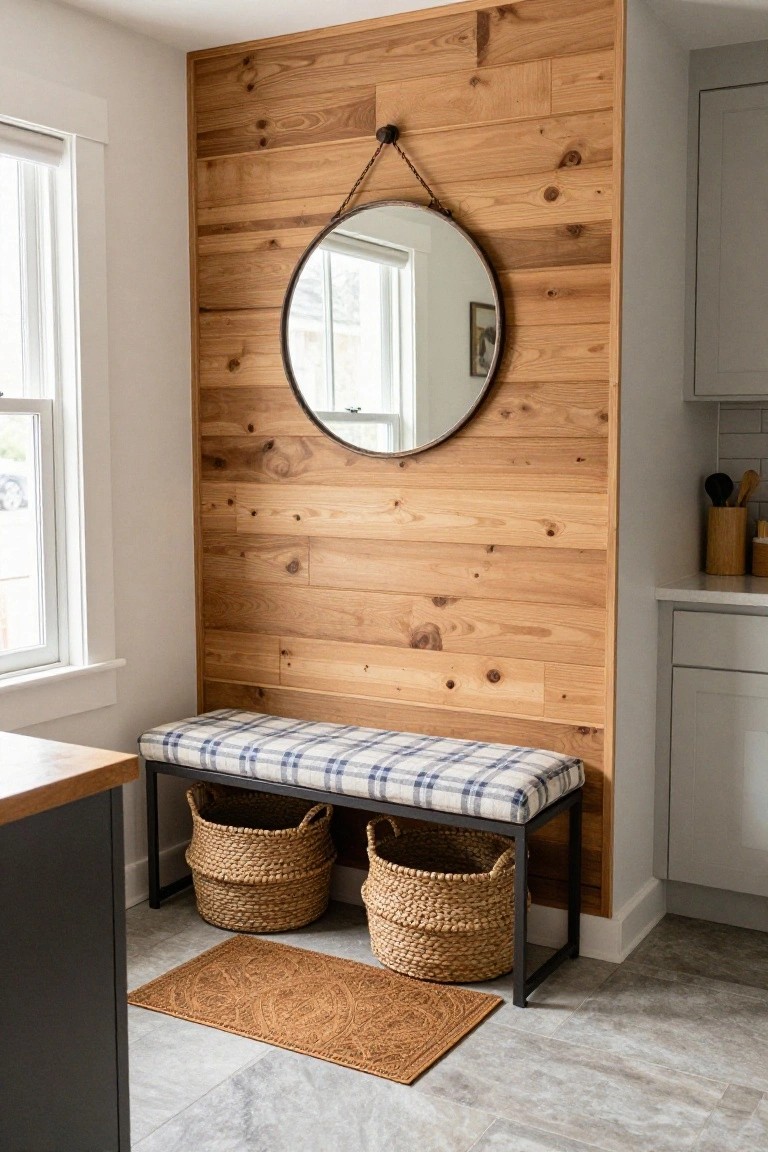
A wood accent wall gives a plain corner real presence without needing a lot of extra pieces. The planks bring warmth and texture that makes the space feel more finished and useful at the same time.
This approach works best in entryways or mudroom spots where you already need seating and storage. Keep the bench low and simple, then tuck baskets underneath for shoes or bags. It suits homes that want a natural look without turning the whole room rustic.
Wood Vanities For Bathroom Warmth
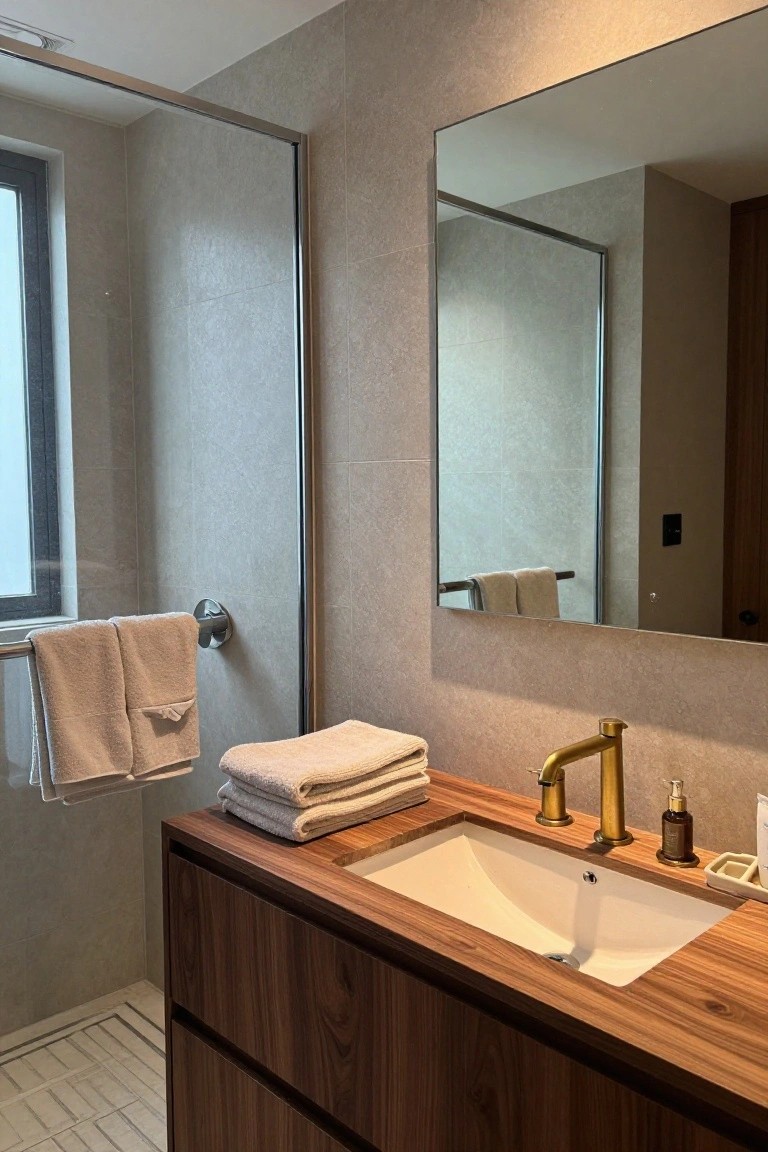
A wood vanity brings natural texture into a bathroom that might otherwise feel cool and hard. The grain and tone stand out against tile, and it gives the space a grounded feel without needing much else.
This approach works well in smaller baths where you want one strong material note. Keep the wood finish simple and let the vanity carry the warmth while the rest of the room stays light and clean.
Frequently Asked Questions
Q: What kind of wood works best if I want a quick weekend project? A: Start with pine or cedar boards since they cut easy and take stain well. Grab pre-cut lengths from the store to skip extra sawing time. That keeps the whole job under two days.
Q: Do I need special tools beyond a basic drill and saw? A: A level and measuring tape handle most alignment. Hand nailing works fine without fancy tools.
Q: How do I protect the wood after I install it? A: Wipe on a clear polyurethane coat once everything is up. One thin layer dries fast and guards against daily bumps. Reapply every couple years if the wall sees heavy use.
Q: Can I do this in a rental without damaging the walls? A: Use removable adhesive strips instead of nails for the main hold. They come off clean when you move out. Test a small spot first to make sure your paint does not peel.
