

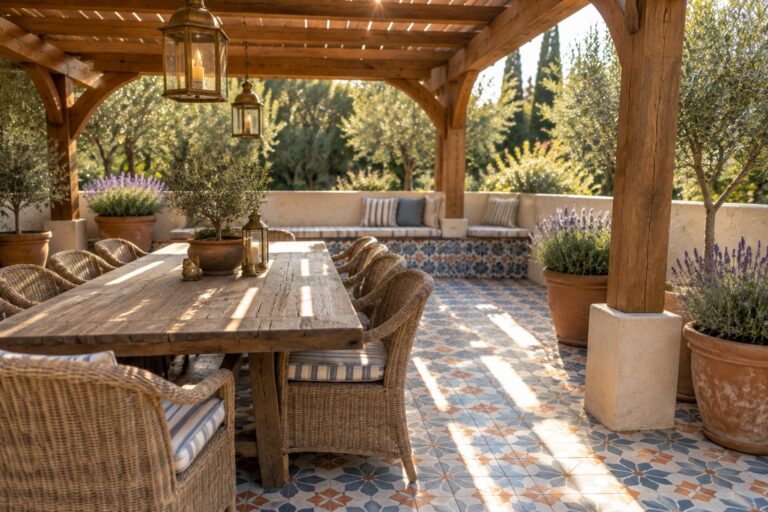
I have noticed that wooden pergolas with curved elements tend to soften the edges of a patio in ways that straight beams rarely achieve.
When I look at my own backyard setup, the way the structure meets the ground matters more than I expected at first because it affects how the whole space feels underfoot.
Tile accents can pull in colors from nearby plantings or paving, but only if they are placed where they catch the light without becoming slippery when wet.
Some designs look balanced on paper yet end up blocking too much breeze once built, which is why I usually sketch a few options before committing.
Arches change the feel more than most people expect.
Patterned Tiles Under Wooden Pergolas
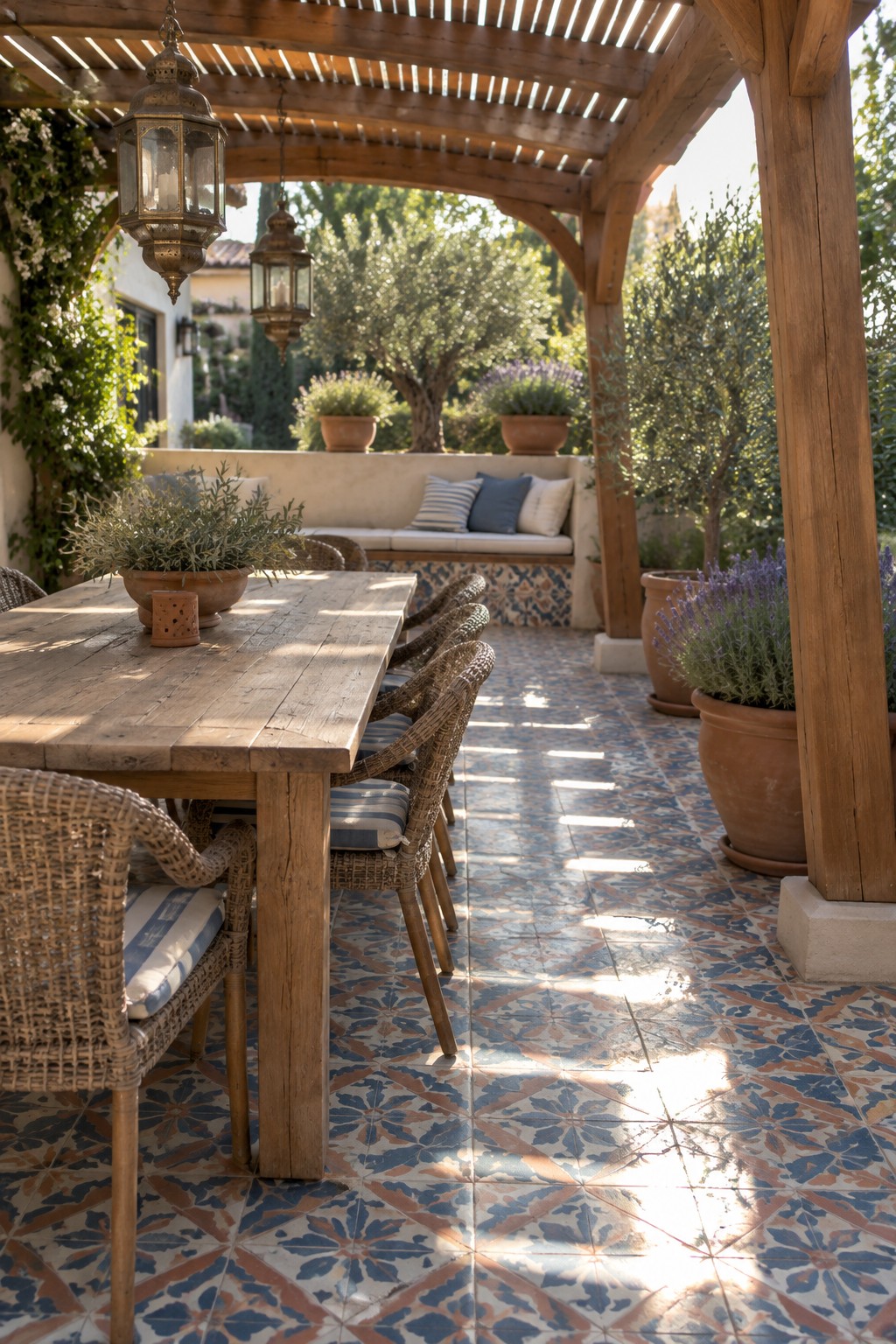
Many people add patterned tile floors under their pergola because it gives the space a finished look and helps it feel more like a real room. The tiles create a clear boundary for the seating or dining area while adding color and texture that wood alone cannot provide.
This approach works best in sunny climates where the tiles can handle the heat and add a bit of coolness underfoot. It suits homes with Mediterranean or Spanish influences, but it can also work in simpler backyards as long as the pattern stays fairly neutral and the grout is easy to keep clean.
Arched Wooden Pergolas For Covered Patio Seating
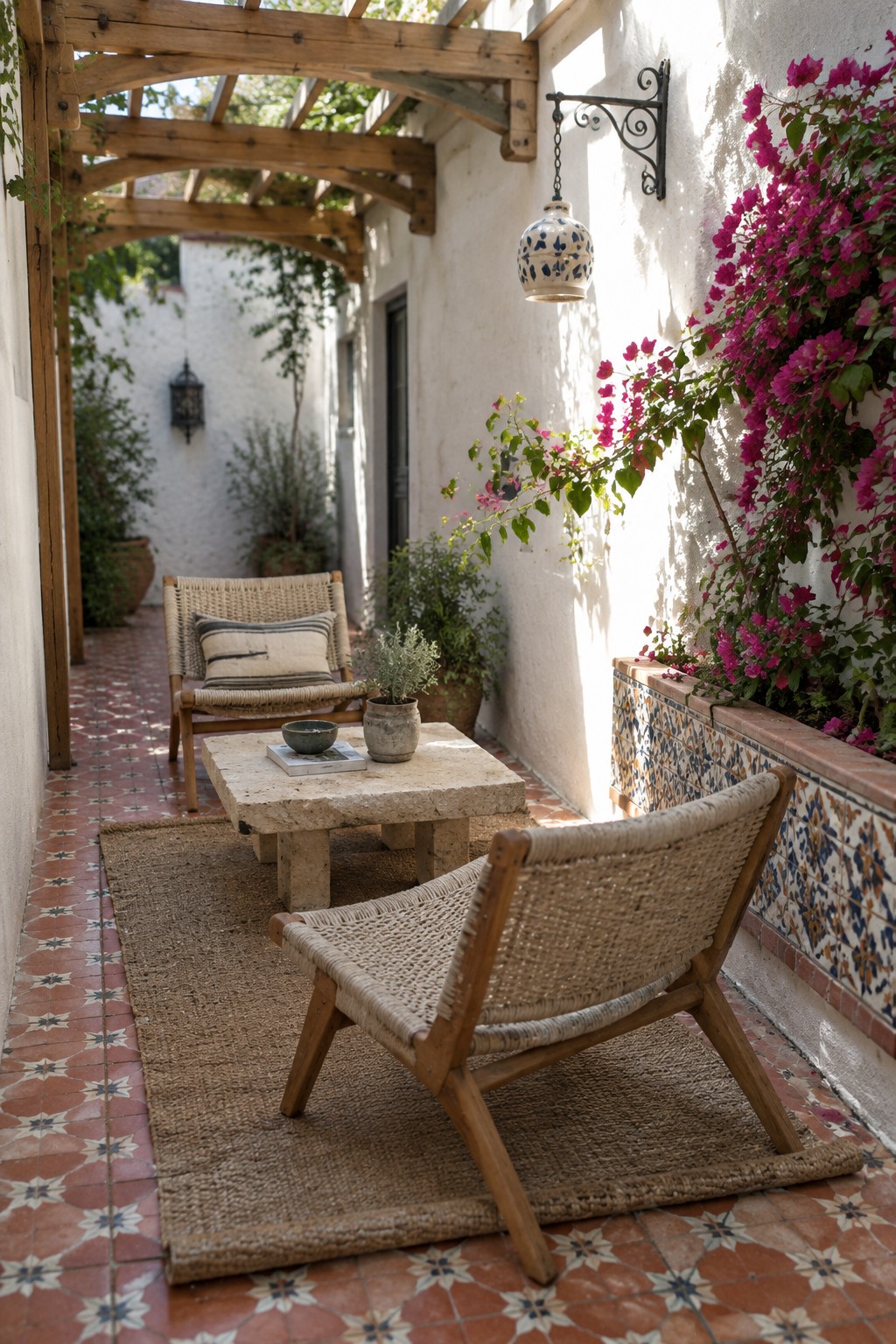
An arched pergola gives an outdoor seating area a clear sense of place without building full walls. The curved wood softens the overhead structure and creates a gentle frame that feels more welcoming than straight beams.
This setup works best in warmer climates where you want shade during the day but still need an open feel. Pair the wood with patterned tile on nearby planters or low walls to tie the whole space together. It suits small courtyards or side passages where you need a bit of enclosure without crowding the floor plan.
Tile Accents on Pergola Columns

Adding patterned tile to the base of pergola posts gives the structure a finished look that feels grounded in Mediterranean style. The tile breaks up the plain stone or stucco columns and adds color that echoes the pool tiles or nearby paving. It keeps the focus on the wood while still giving the eye something interesting to land on.
This works best on pergolas that sit close to water or paved areas where you want a bit of decoration without extra furniture or accessories. Use a simple repeating pattern so it does not compete with the wood beams overhead. It suits homes that already have some tile elsewhere on the property, so the whole space feels connected.
Wooden Pergolas Over Entry Porches
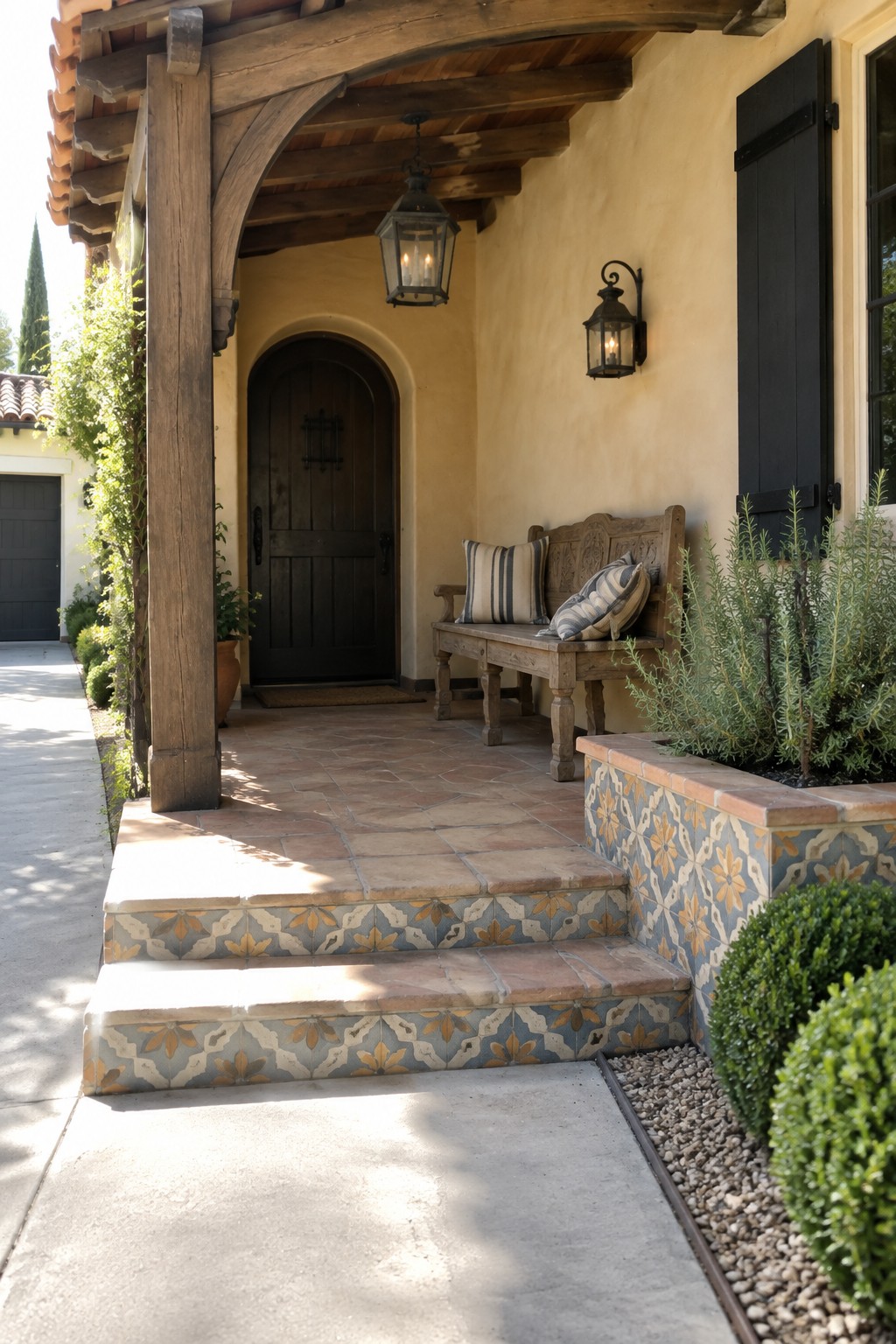
A wooden pergola over the front steps gives the entry a clear sense of shelter without closing it in. The open beams create shade and a spot for a bench, so the doorway feels more like a small outdoor room than just a way in.
This setup suits homes that already lean Mediterranean or Spanish in style. Use patterned tile on the steps and planter edges to tie the wood to the rest of the house, and keep nearby planting low so the structure stays easy to see.
Arched Pergolas Over Terrace Dining Areas
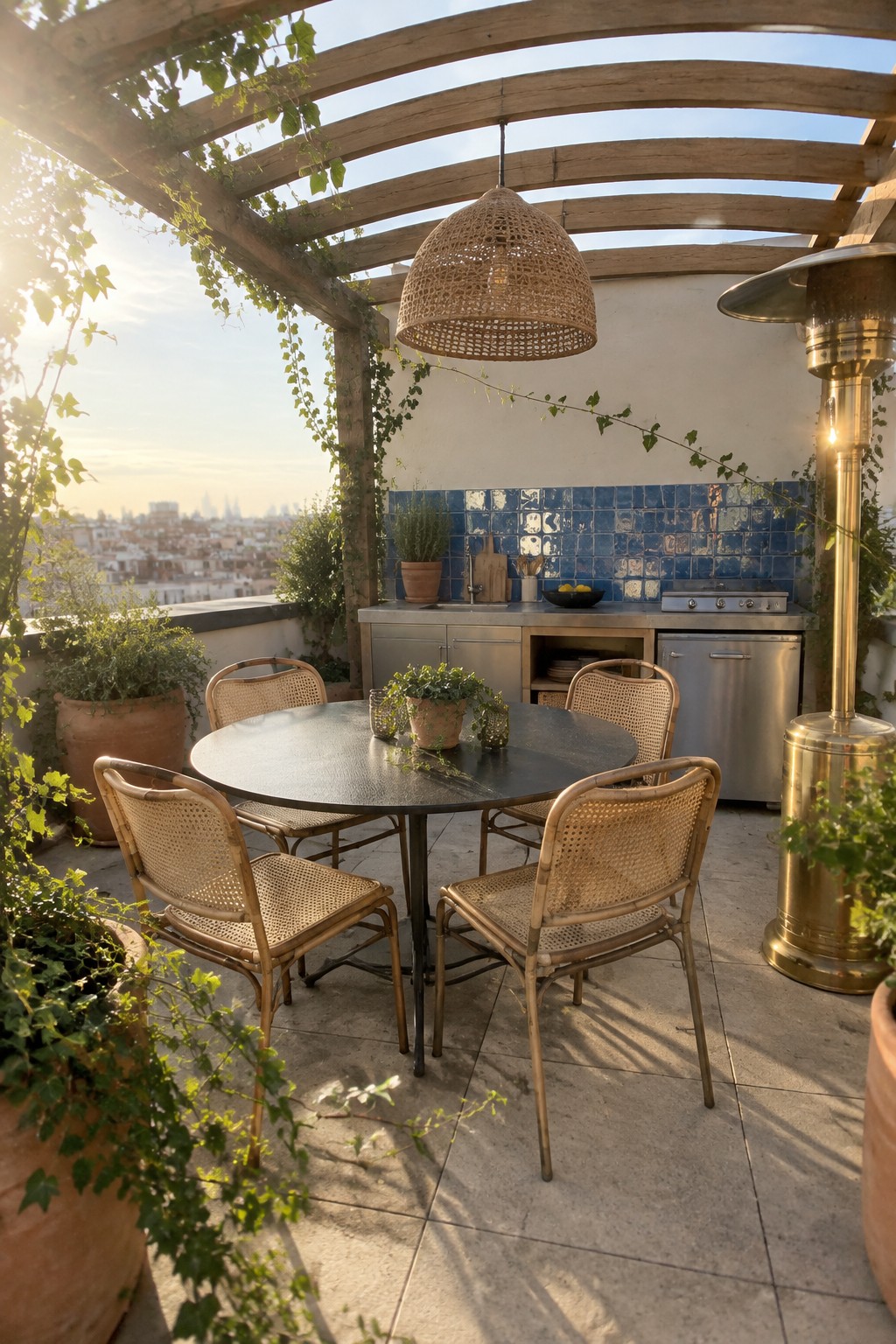
A wooden pergola with arched beams can turn an open terrace into a more defined spot for meals. The curves add a gentle shape overhead without blocking the sky, and the wood brings warmth that works well with stone or tile surfaces nearby.
This approach suits rooftops and upper patios where shade is needed but full enclosure is not. Keep the furniture simple and the surrounding plants in pots so the space stays open and easy to use. Make sure the pergola sits at a comfortable height so views beyond the railing remain clear.
Arched Pergolas Over Patio Seating
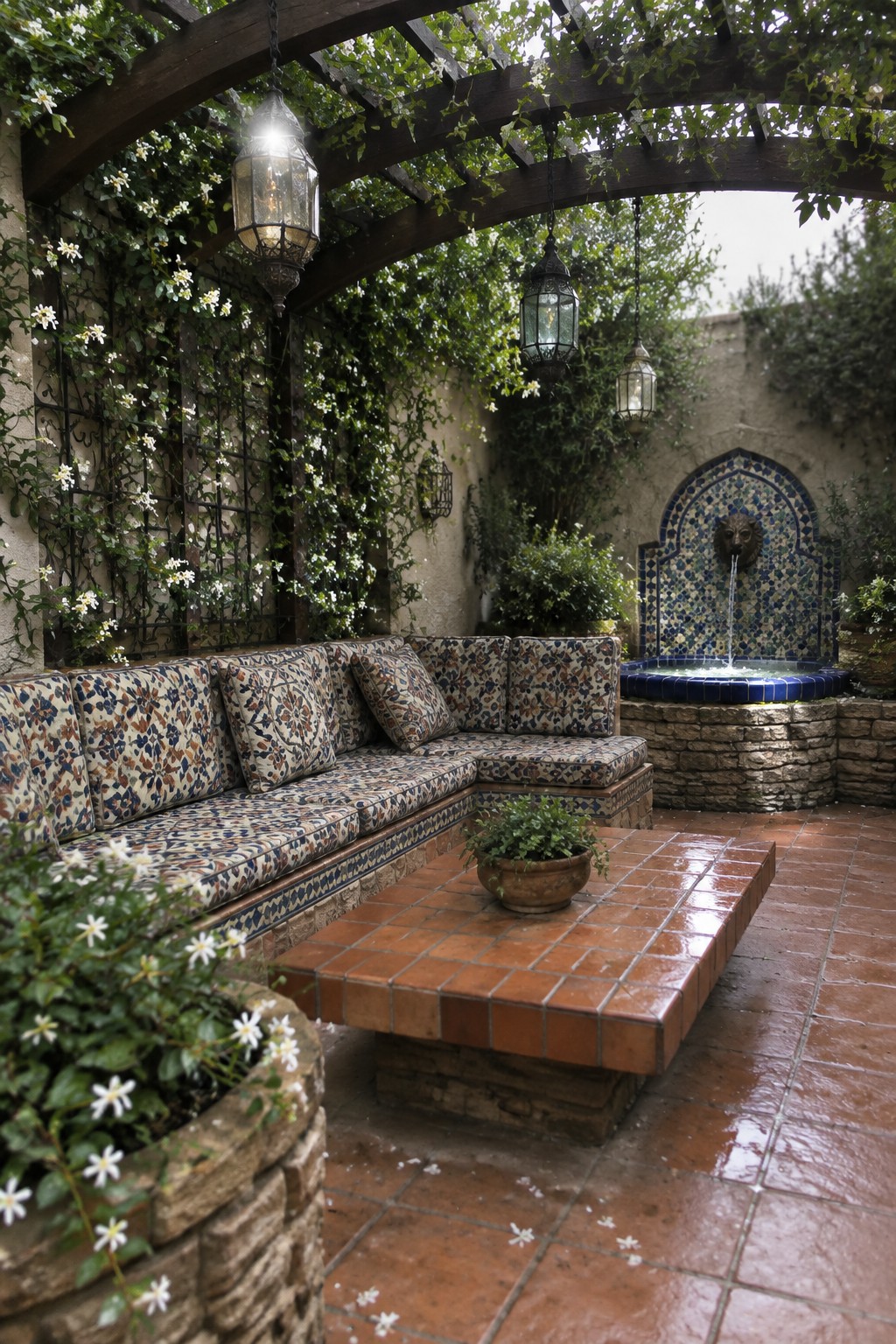
A wooden pergola with arched beams gives an outdoor seating area real structure while still keeping it open to the air. The arches add a bit of softness to the frame and help the whole space feel more settled instead of just a few chairs on a hard surface. Tile details on the bench and table tie everything together without needing much else.
This setup works best in warmer regions where you want shade during the day but still like eating or sitting outside in the evenings. It suits homes with existing stone or stucco walls and pairs easily with simple terracotta or patterned tile. Just make sure the pergola is deep enough to cover the main seating so the area actually gets used.
Tiling Outdoor Bar Fronts
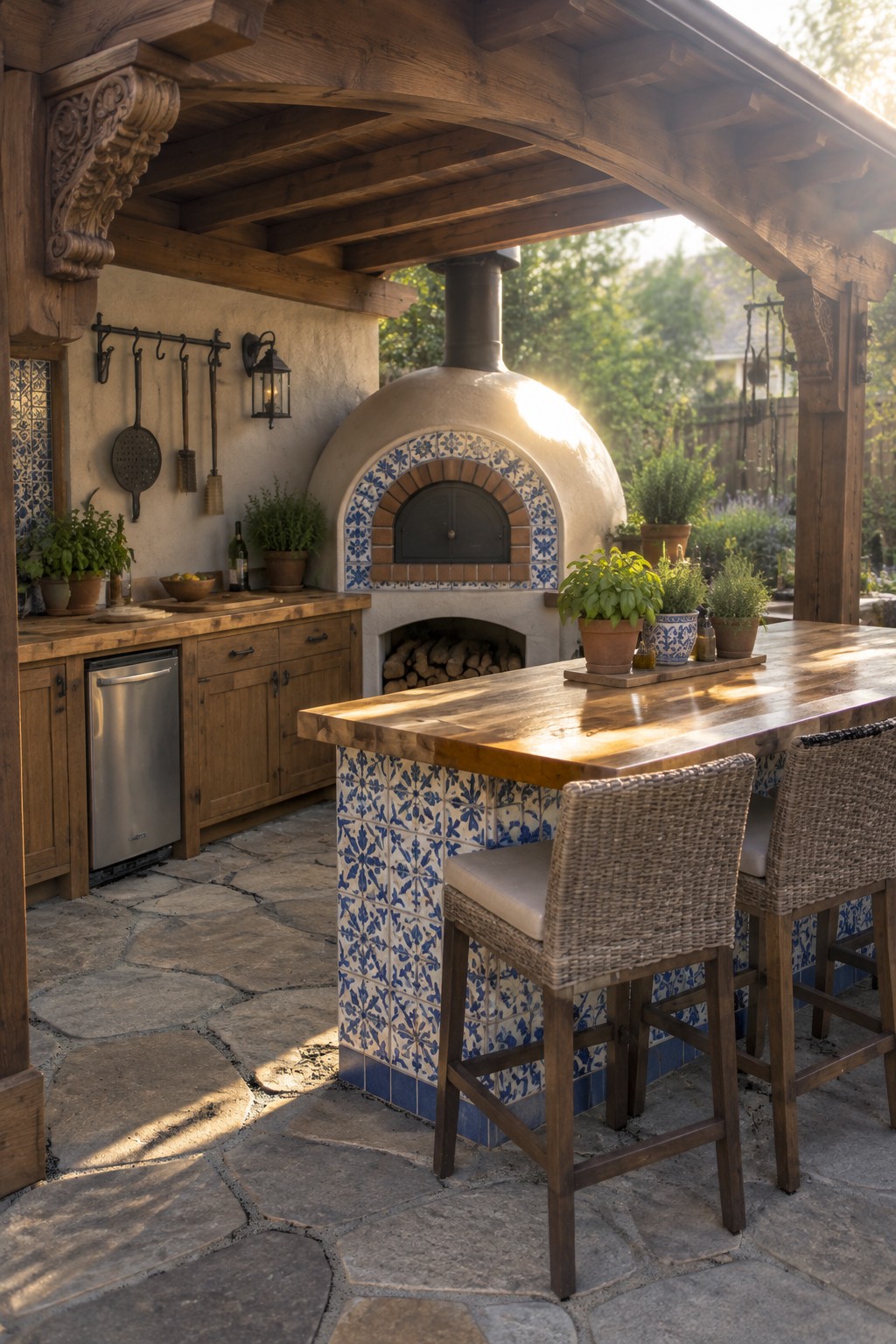
Patterned tiles on the front of an outdoor bar give the whole setup a finished look that feels more like an extension of the house than a temporary setup. The color and repeat break up the wood and stone without needing much else, and they hold up well to weather and daily use.
This works best on patios that already have some tile elsewhere, like around a pizza oven or along a backsplash. Keep the pattern simple and stick to a few colors so it does not fight with the pergola or surrounding plants.
Drape Fabric Under Pergola Beams For Softer Light
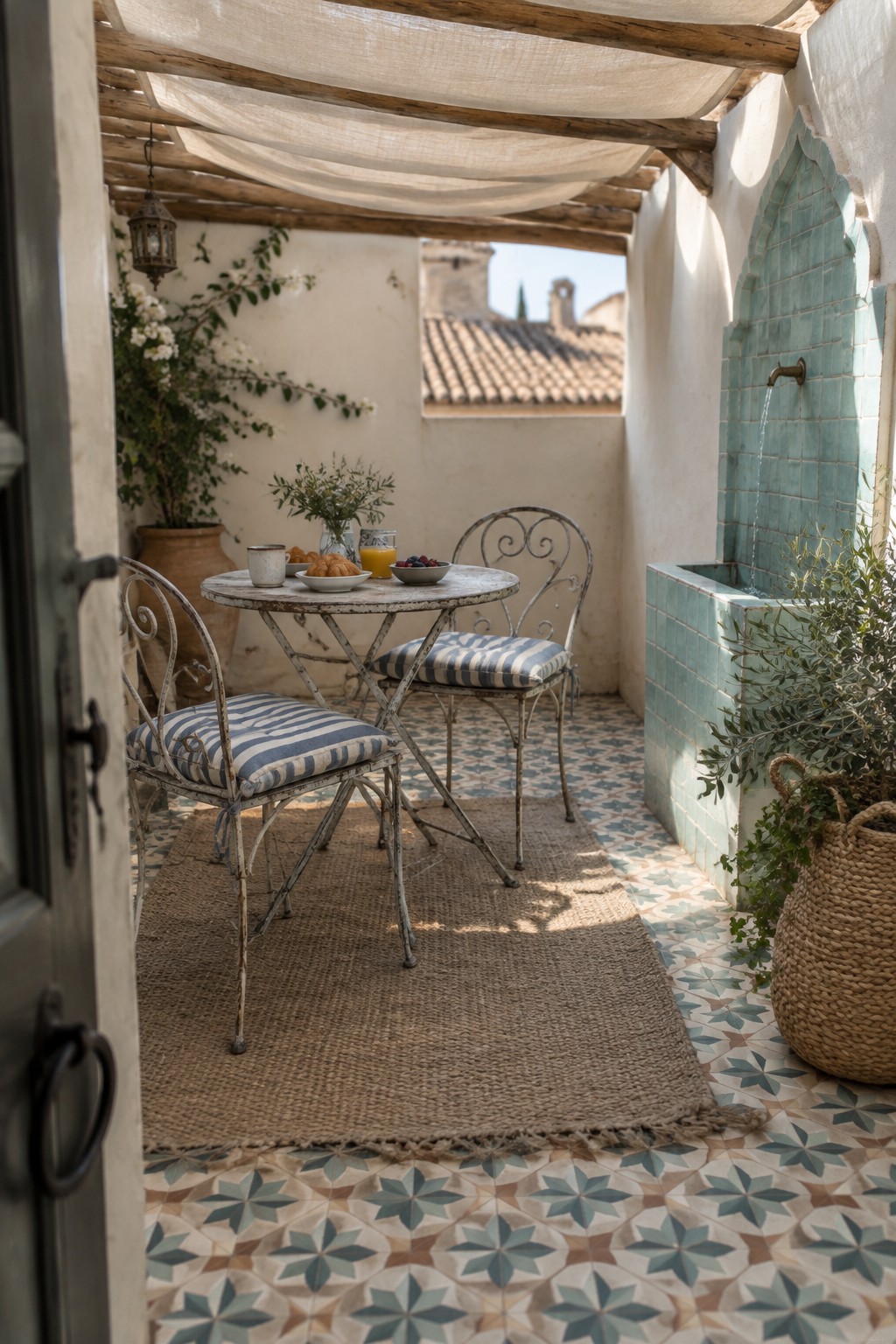
A fabric layer under the beams turns a basic wooden pergola into something more comfortable. It cuts the glare without blocking all the light, and the loose drape gives the whole spot a relaxed feel that works with the tile and simple furniture below.
This setup suits a small courtyard or side patio where you already have some shade structure in place. Use a washable linen or cotton panel that you can take down when the weather turns, and keep the edges free so air still moves through.
Wooden Pergolas With Arched Tile Details
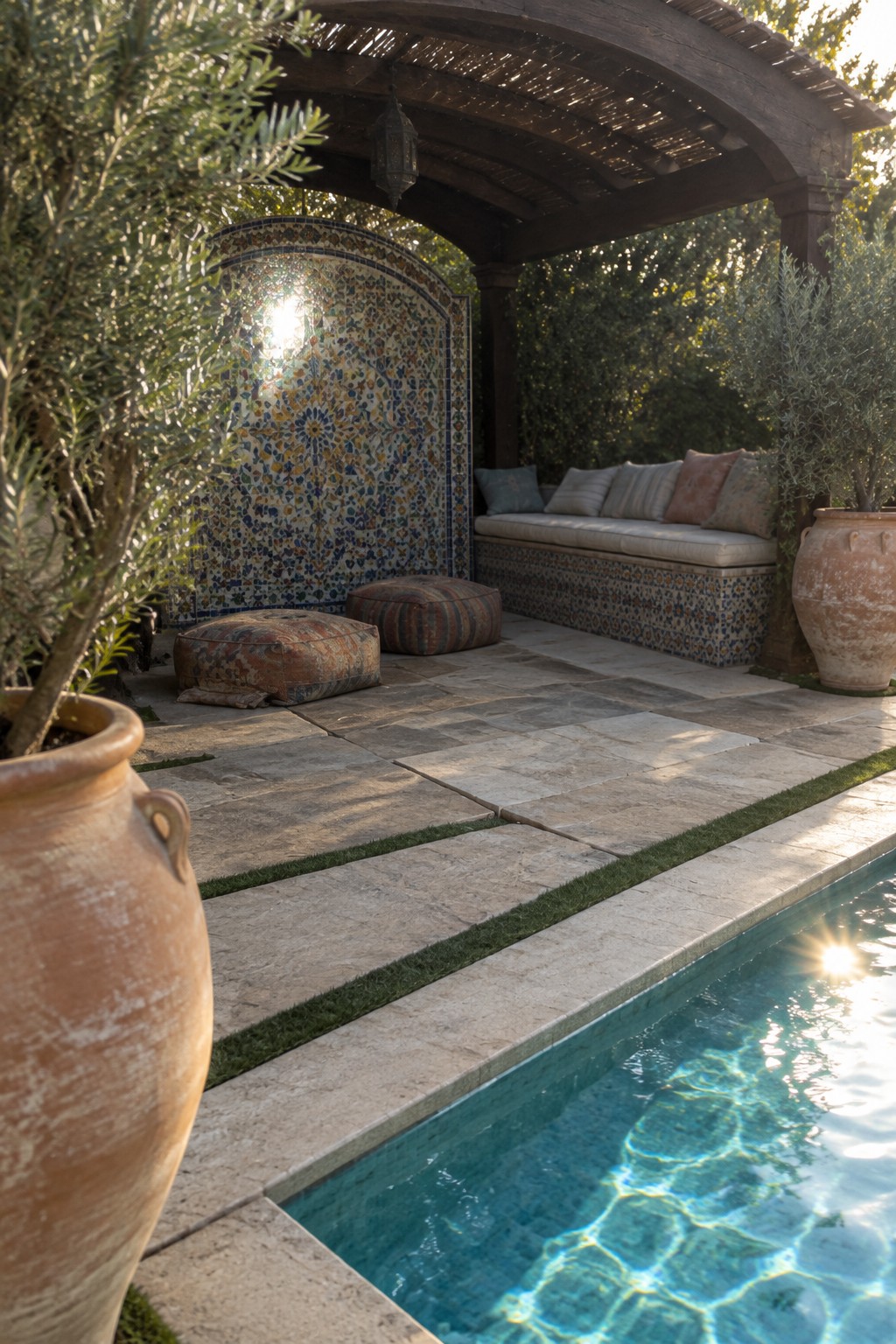
One simple way to give a pergola more character is to add an arched tile panel behind the seating. The curve and the pattern create a clear focal point that makes the whole area feel more finished. It also helps the wooden structure blend with the garden instead of looking like it was added later.
This works especially well in warm climates near a pool or patio where people gather in the evenings. Keep the tile colors in the same range as your pots or cushions so nothing fights for attention. Just watch the size of the arch so it matches the scale of the pergola and does not overwhelm the space.
Arched Pergolas Over Garden Paths
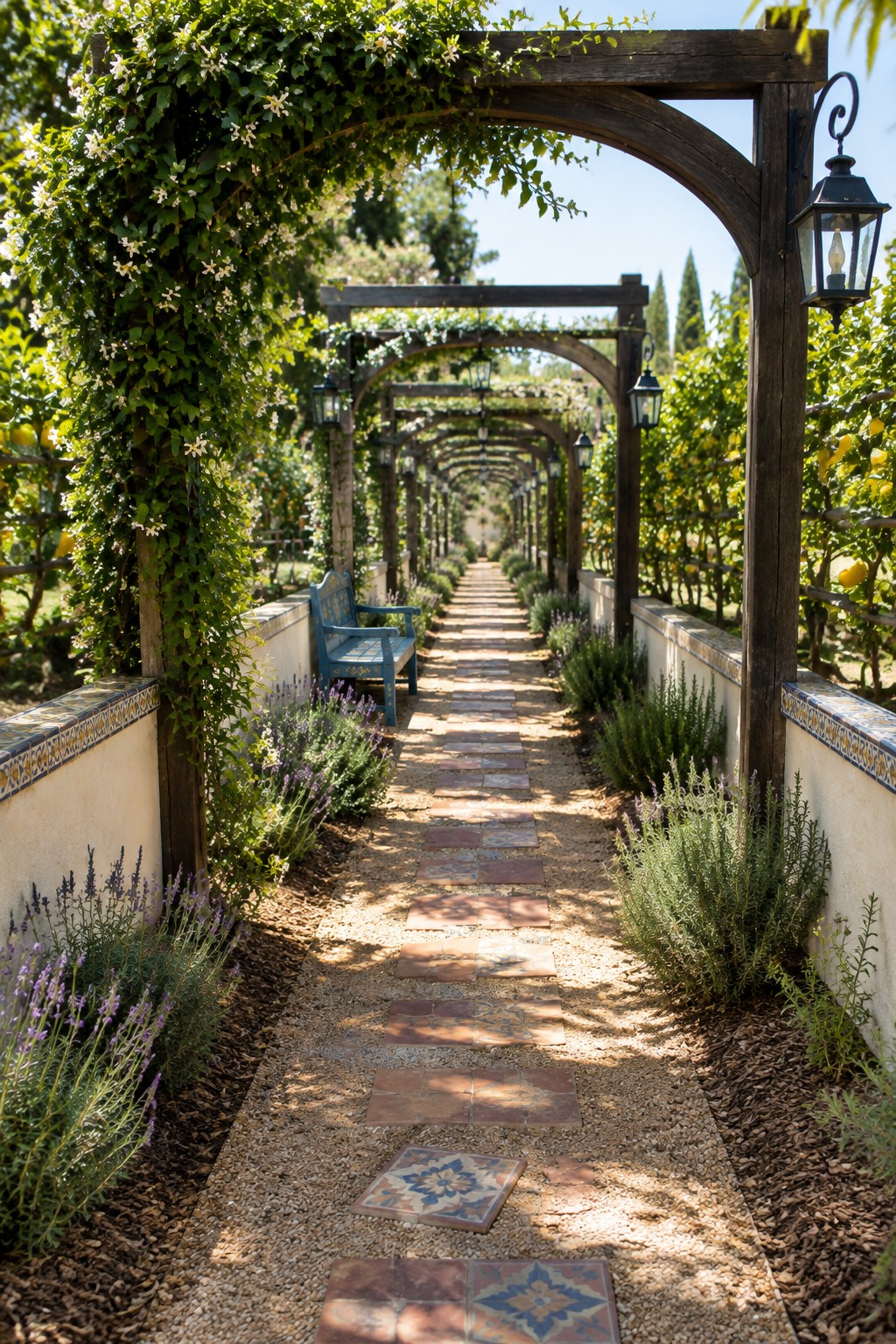
A long row of wooden arches can turn a simple walkway into something that feels intentional and easy to use. The repeated shape gives the garden a steady rhythm while still leaving room for vines to fill in over the years. It works especially well when the path leads toward a bench or a view at the far end.
This approach suits homes with a bit of length to the yard and a warm climate where shade matters. Use it on a main route rather than a side path, and keep the ground treatment simple so the arches stay the focus.
Tile Accents Under Wooden Pergolas
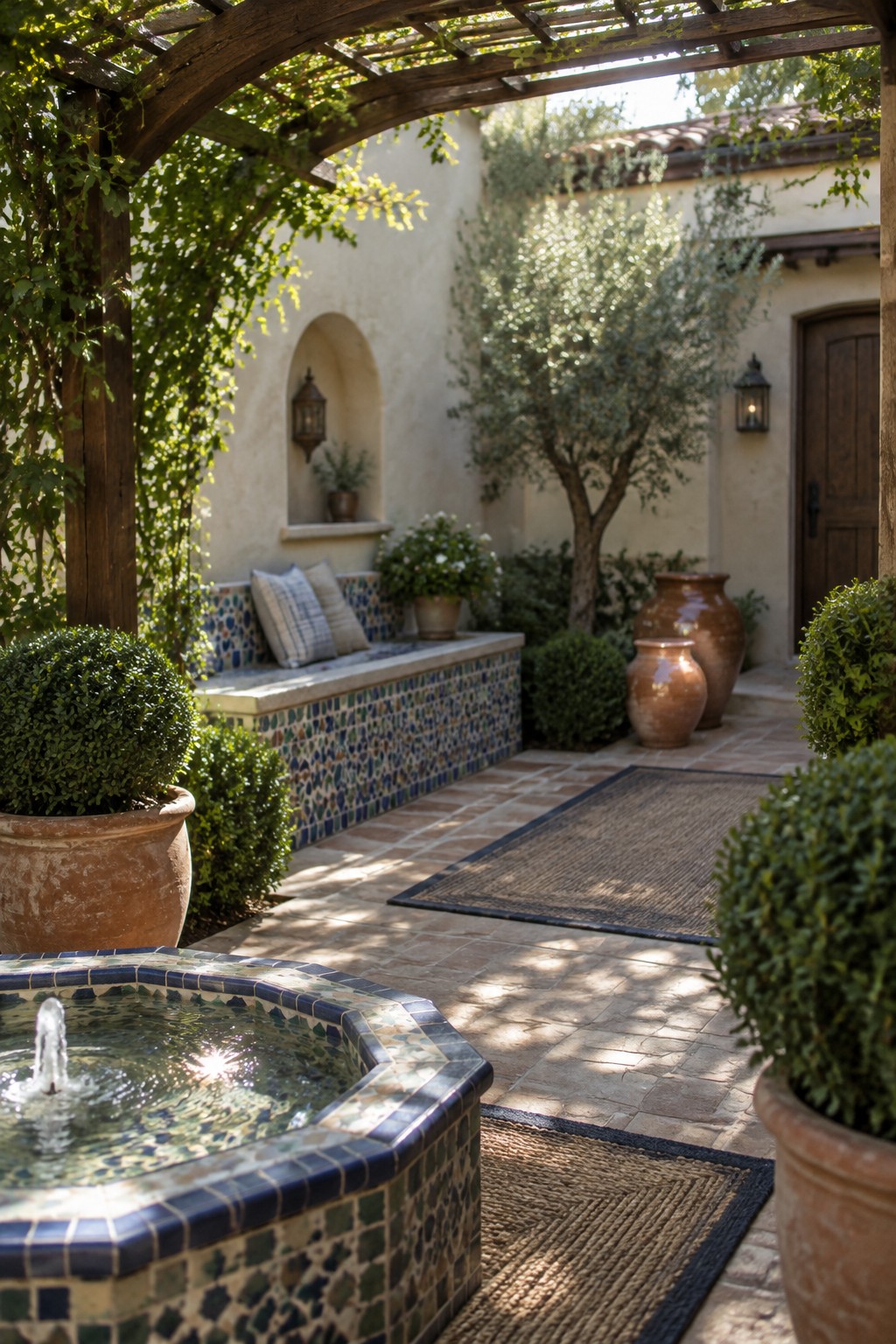
Mosaic tiles add color and texture to a shaded patio without needing a lot of extra pieces. They stand out against the wood of the pergola and the simple stucco walls, and they help the space feel more finished.
Try using them on a low fountain or along the front of a built-in bench. This works best in sunny courtyards where the pergola already provides shade and the tiles can catch the light.
Arched Openings In Wooden Pergolas
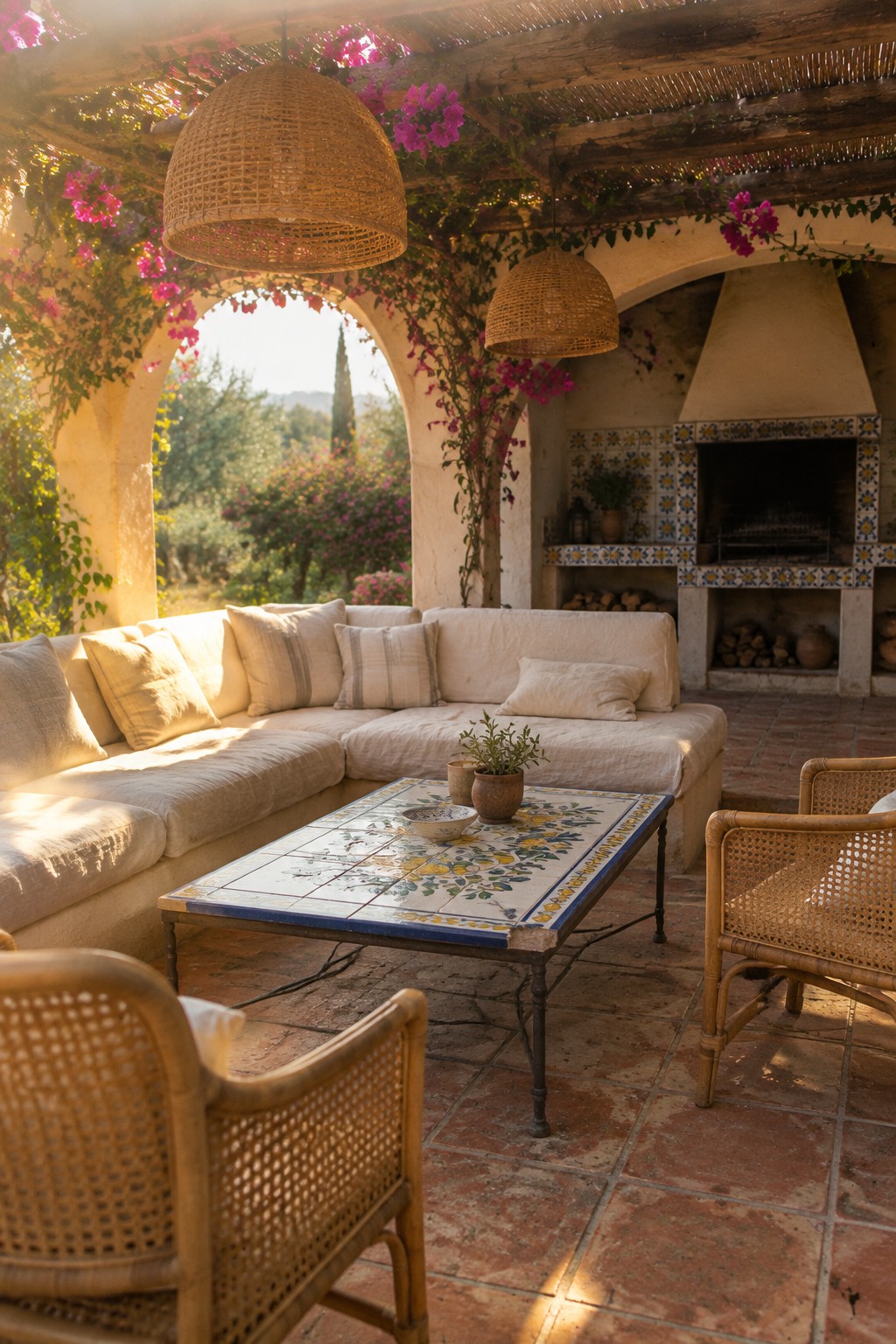
A wooden pergola with arched openings turns a simple patio into a more defined outdoor room. The curves break up the straight lines of the beams and give climbing plants a better structure to follow without making the space feel closed in.
This works best on homes that already lean Mediterranean or Spanish in style. Keep the seating low and neutral, then bring in tile on a coffee table or fireplace surround to add pattern and color. It suits warm climates where you want shade during the day but still need the area to feel open in the evenings.
Arched Pergolas Over Outdoor Kitchens
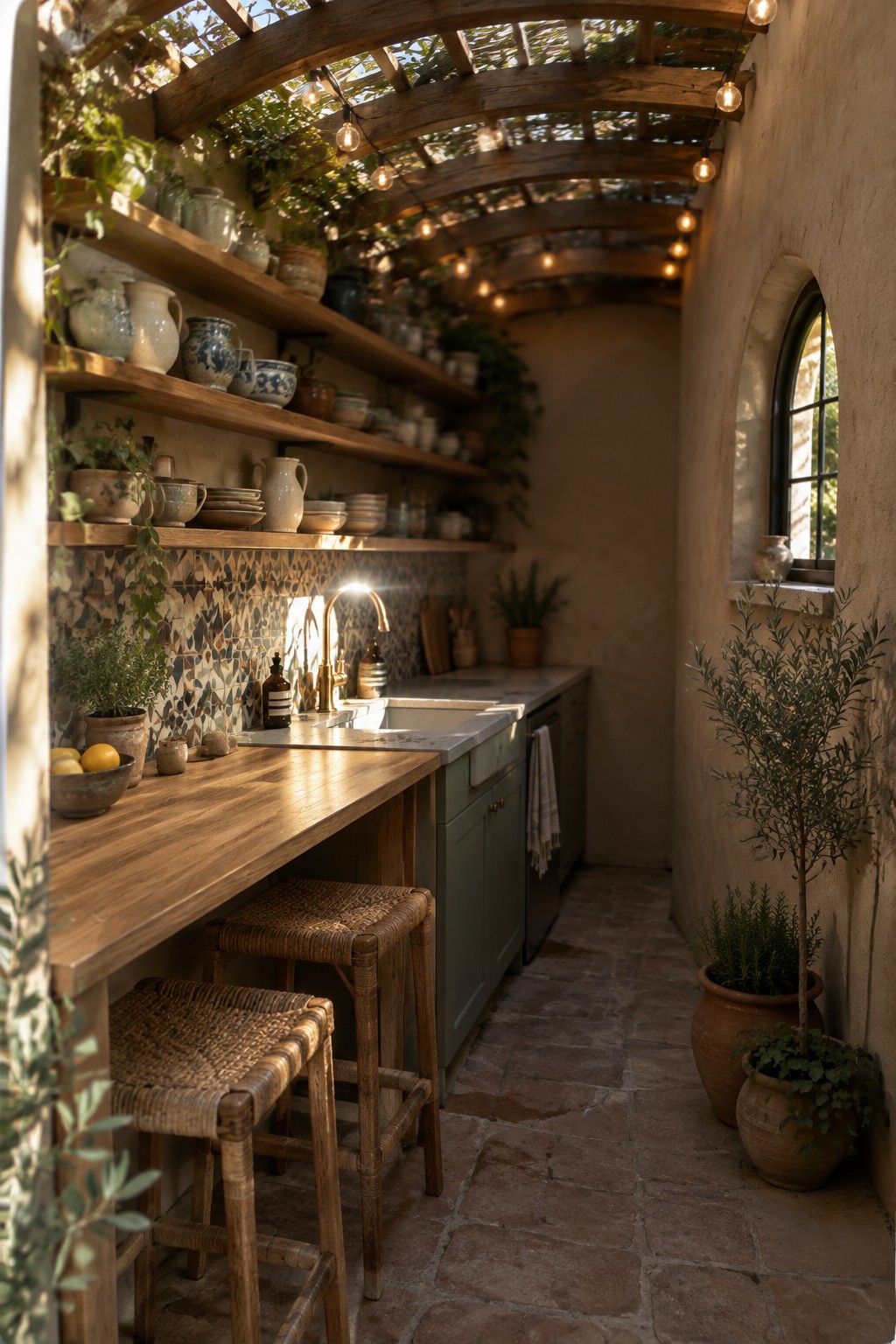
An arched wooden pergola gives an outdoor kitchen clear shape and steady shade without making the space feel boxed in. The curve of the beams adds a bit of softness that works well with the rough wood and simple materials below.
This setup fits homes that already lean Mediterranean or want a relaxed outdoor room for cooking and eating. Keep the backsplash simple with patterned tile and leave the shelving open so the whole area stays light and easy to use.
Arched Wooden Pergolas Over Outdoor Fireplaces

A wooden pergola with arched details gives an outdoor seating area a clear sense of structure without making it feel closed in. The curves soften the look of the heavy beams and help the space connect to the house instead of sitting apart from it.
This setup works best on a patio that already has a fireplace or built-in seating. Keep the tile work simple on the fireplace so it echoes the pergola without competing with it, and use the arches to frame the view toward the garden.
Arched Pergolas Over Tiled Balconies
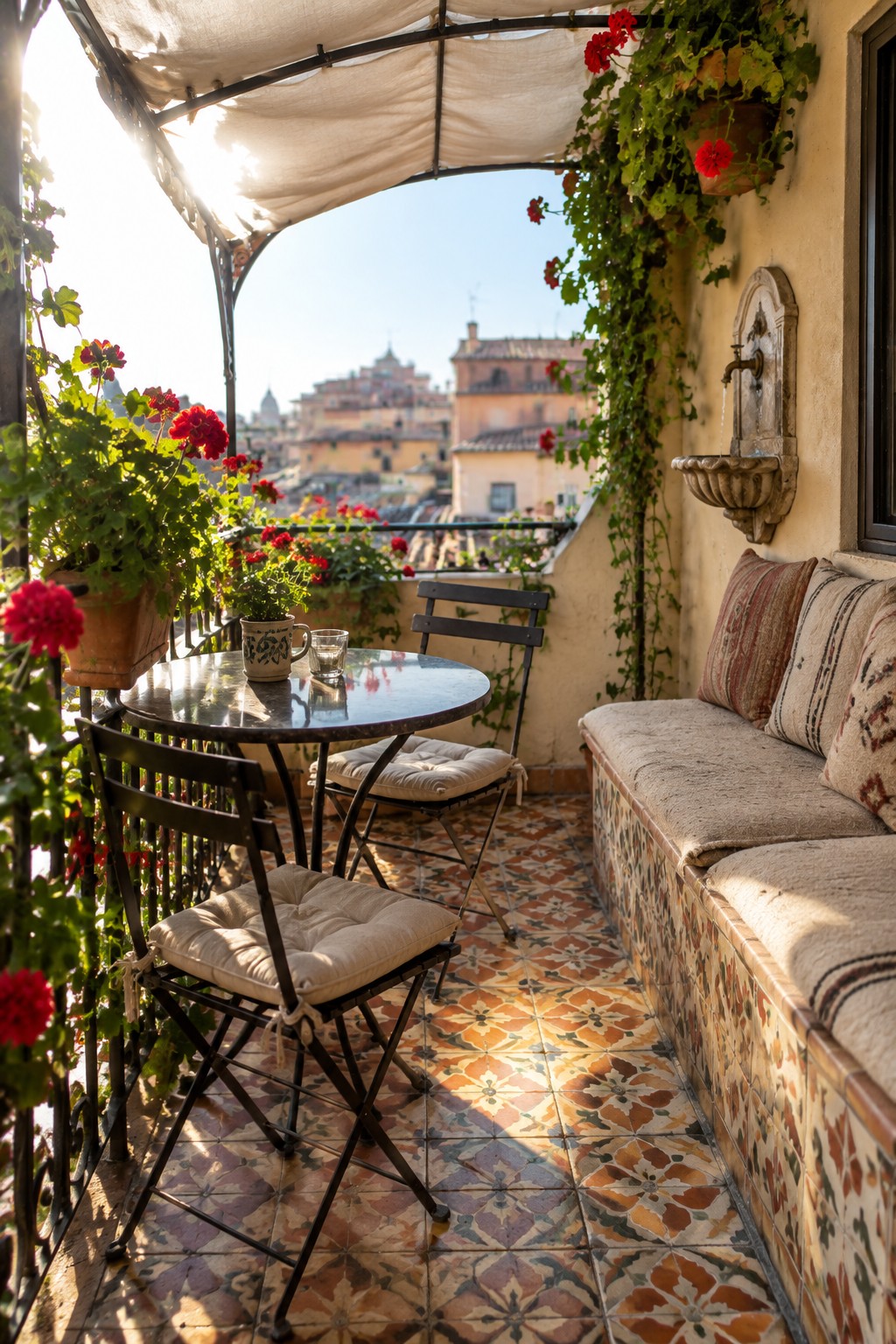
A pergola with an arched opening and simple fabric shade works well on a small balcony because it creates a defined seating area without closing off the view. The structure adds height and a bit of enclosure while still letting in light and air. Many older homes already have the bones for this kind of addition, especially when the floor is already tiled.
This setup suits Mediterranean-style homes or any place where you want shade without losing the outdoor feel. Choose a sturdy frame, keep the canopy light, and let the tile pattern do the rest of the work. Just watch the scale so the pergola does not overpower the space.
Wooden Pergolas with Arched Openings
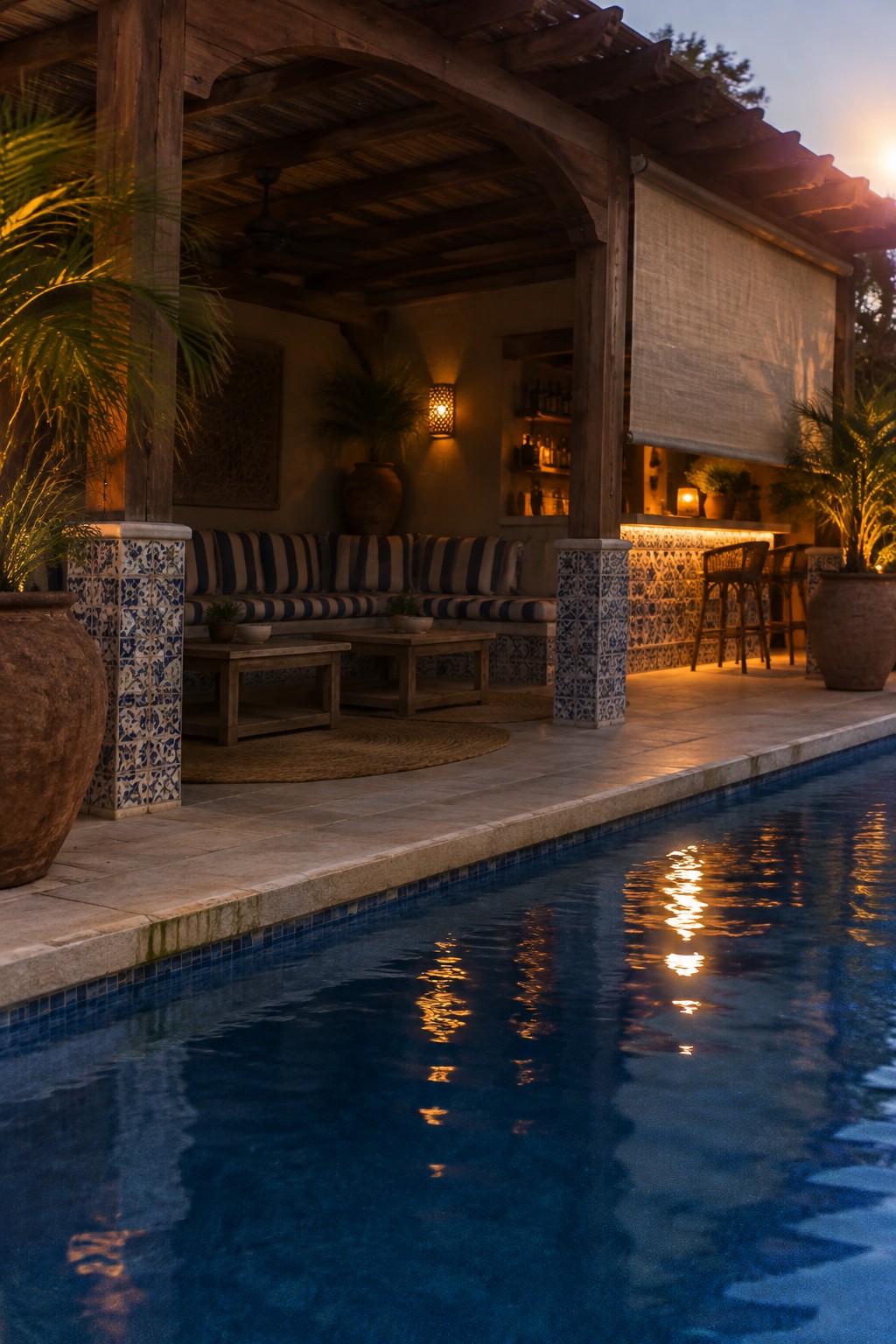
An arched opening in a wooden pergola gives the structure a softer shape and helps mark off a clear spot for seating. This works well when the pergola sits close to a pool, since the curve frames the view without blocking the open feel of the water.
The same idea pairs nicely with tile on the base of the posts. It suits homes that already lean Mediterranean or Spanish, where wood and patterned tile sit comfortably together. Keep the rest of the furnishings simple so the arch stays the main feature.
Arched Pergolas With Tile Accents
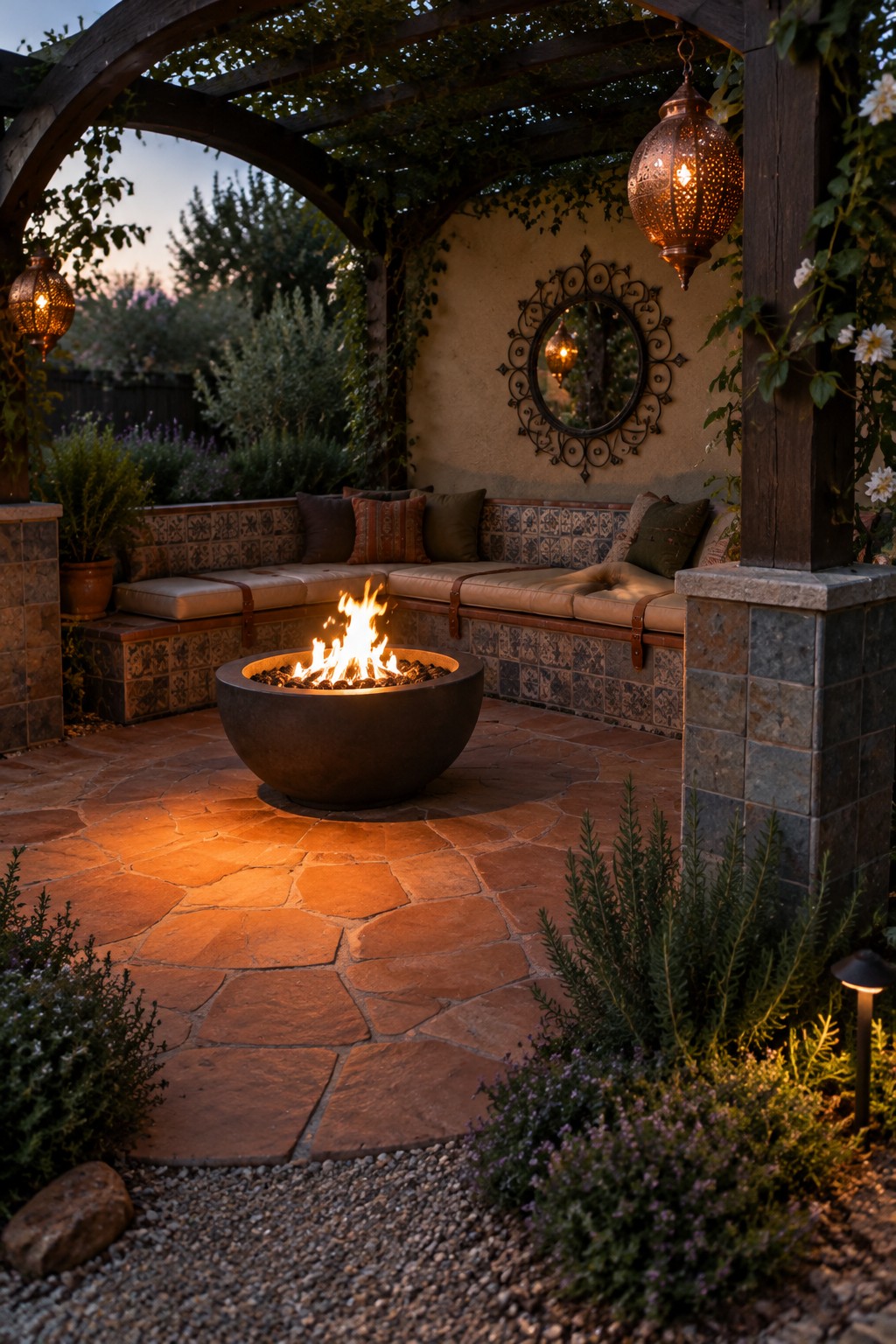
A wooden pergola with simple arches overhead turns an ordinary patio into something that feels more like a room. The curves keep the structure from looking too heavy, and the open sides still let in light and air while giving a bit of shelter.
Tile details along the base of the built-in seating add color and texture without much extra work. This approach suits homes in warmer areas where you want a shaded spot that can handle evening use. Stick with earthy tile patterns so the whole setup stays relaxed rather than formal.
Arched Pergolas Over Garden Paths
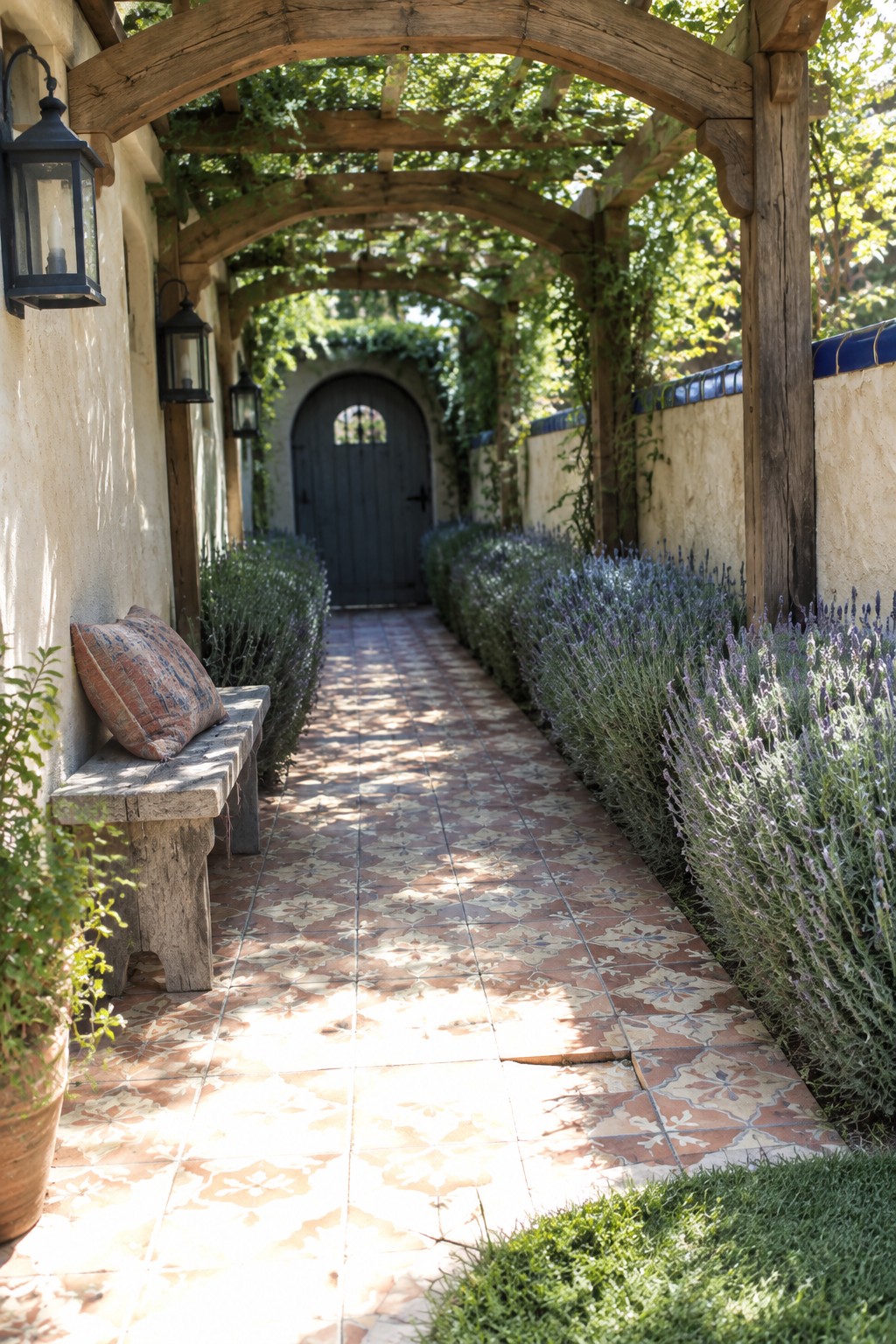
A wooden pergola with repeated arches gives a walkway real structure without making it feel closed in. The arches break up the length and let light filter through while still offering shade, which works especially well in warmer climates where you want to move between parts of the garden without full sun exposure.
This approach suits homes with Mediterranean or Spanish influences and pairs best with simple terracotta or patterned tile underfoot. Keep the planting low and fragrant along the sides so the path stays open and easy to maintain.
Add Tiled Planters Along A Pergola Patio
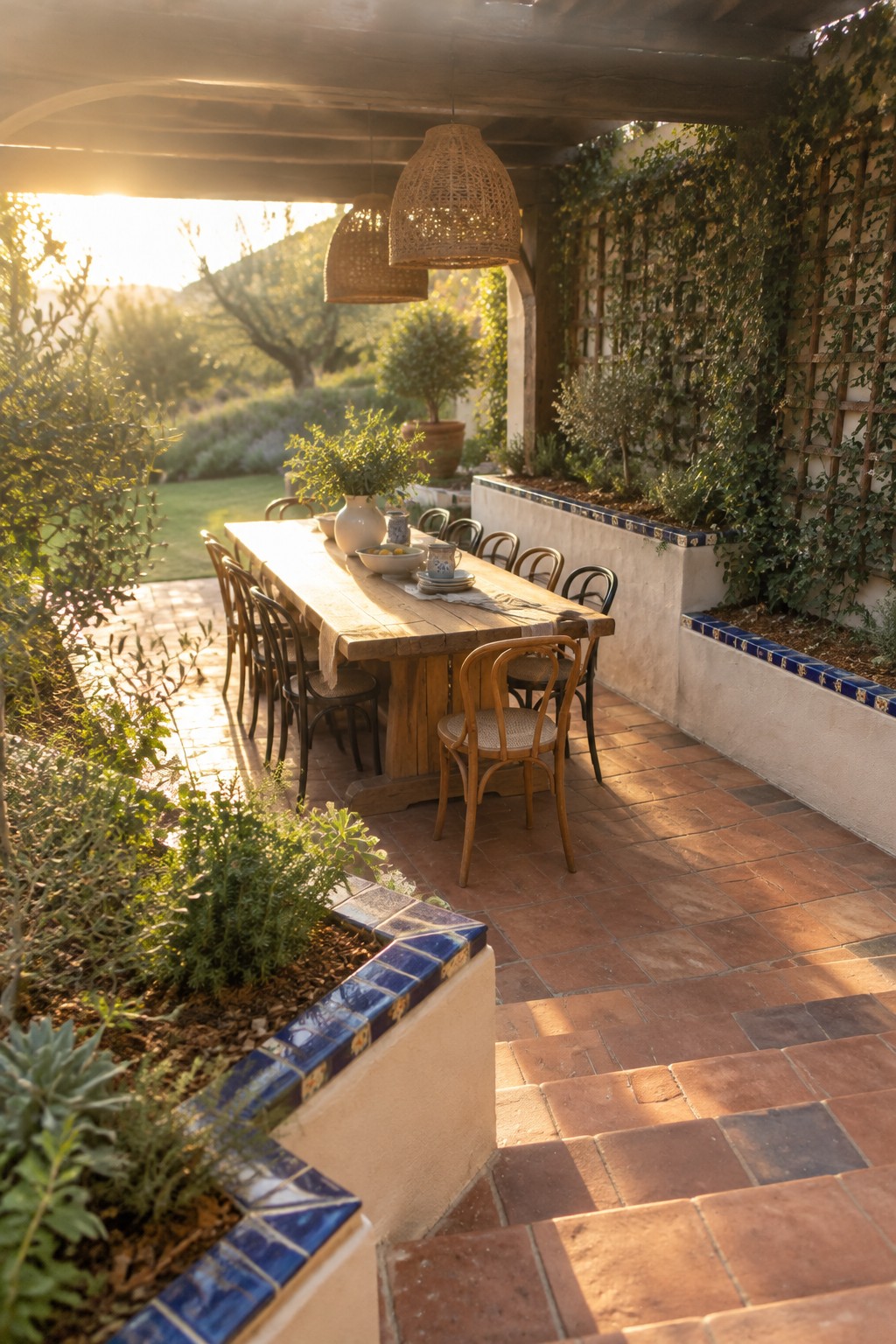
Tiled planters give a pergola patio a settled, finished edge without closing it in. The blue and white trim here picks up the light and keeps the wood and brick from feeling too heavy, while the plants soften the whole setup and tie it to the garden beyond.
This works best on homes that already lean Mediterranean or Spanish in style. Keep the tile simple, match the height to nearby walls or steps, and leave enough room for the chairs to pull out easily.
Arched Pergolas with Tile Walls
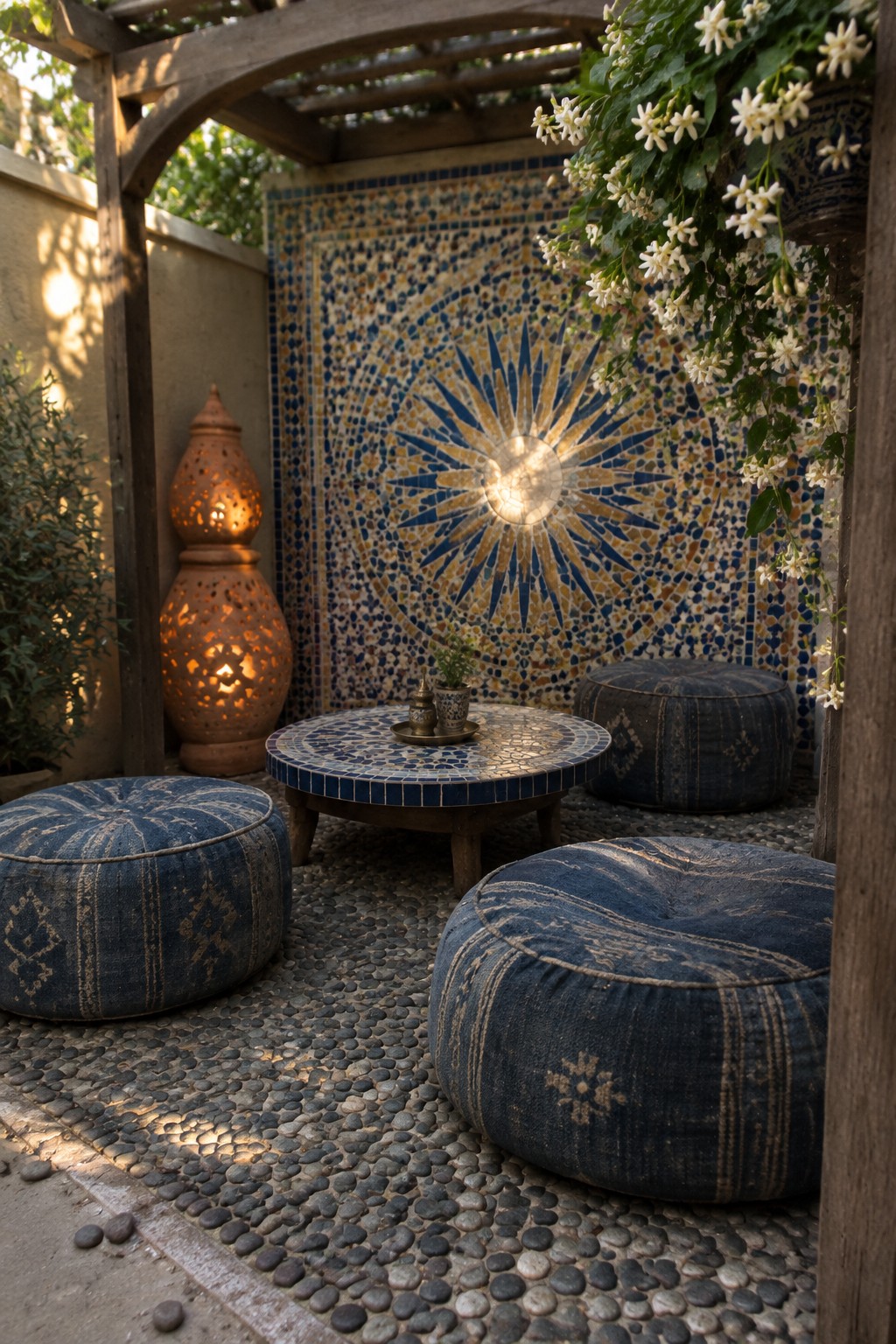
A wooden pergola with an arch overhead works well when paired with a bold tile wall behind the seating. It gives the space a clear boundary without closing it in, and the tiles bring color and pattern that feels right at home in warmer weather. Many people like this setup because it turns a simple patio into something that feels more like a room.
This approach suits small courtyards or side yards where you want shade and a focal point at the same time. Keep the floor simple, like pebbles or pavers, and use low seating so the tiles stay visible. Just watch the scale. Too much tile can overwhelm a tiny area, so balance it with plain walls or greenery nearby.
Built-In Bench Seating For Covered Patios
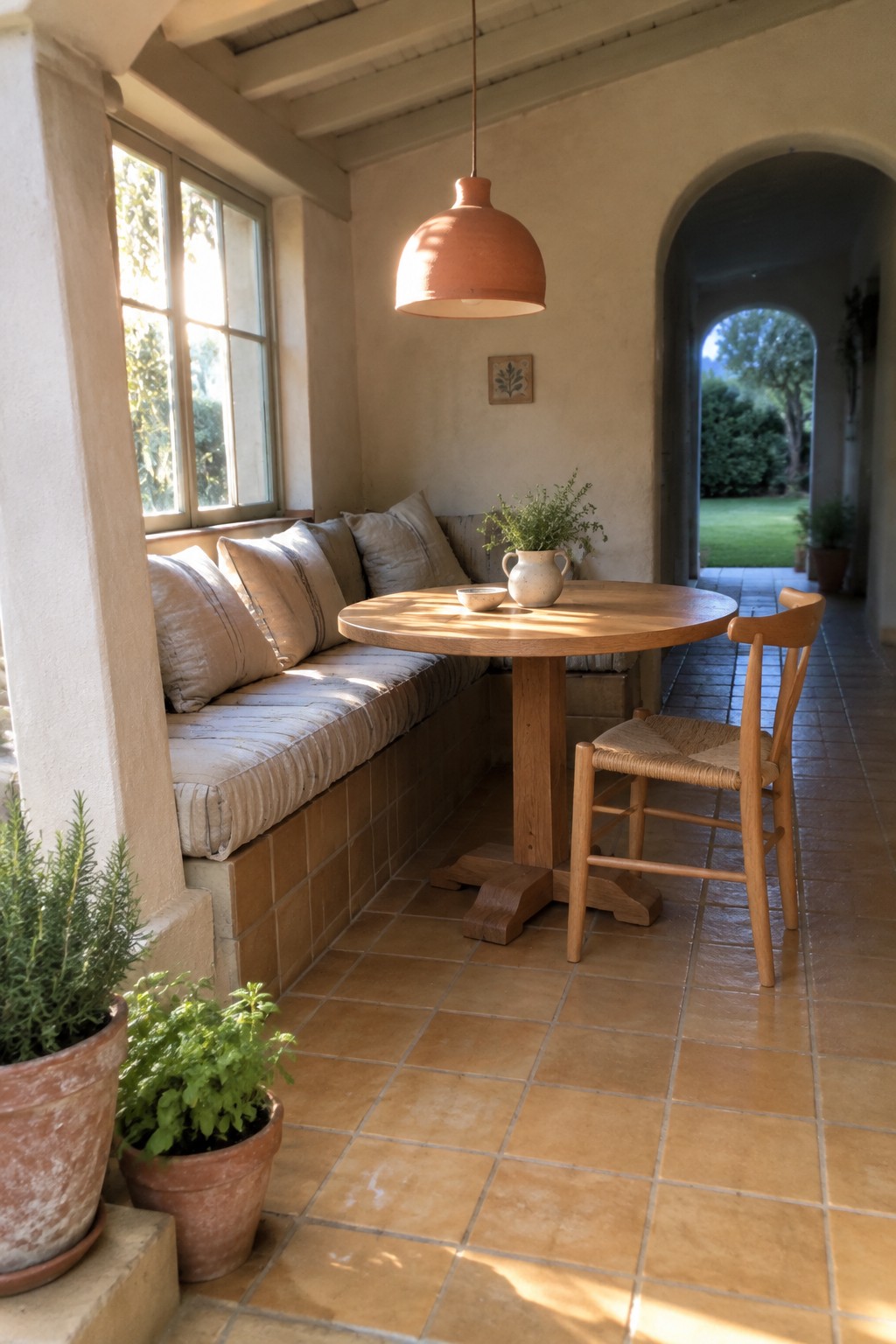
Built-in benches work well in outdoor spaces because they save room and give the area a settled, permanent feel. In this setup the bench runs along the wall under the covered roof, turning what could be empty floor into usable seating without adding extra furniture.
This approach suits homes with terracotta tile floors and simple wood structures. Keep the bench cushions neutral, add a round table in the center, and bring in one or two loose chairs so the space stays flexible for different group sizes.
Using Arched Tile Details with a Wooden Pergola

An arched tile niche gives a pergola patio a clear focal point without needing a lot of extra decoration. The tile work adds color and texture that feels at home in a Mediterranean setting, and it pairs naturally with the wood overhead. People like this because it turns a simple seating area into something that feels more finished and intentional.
This works best in smaller courtyards or side yards where you want one strong feature to anchor the space. Keep the tile pattern simple so it does not compete with the pergola structure, and make sure the fountain or niche sits at a comfortable viewing height from the seating.
Tiled Tabletops Under Pergolas

A patterned tile top on an outdoor table gives the whole pergola area a finished look without extra clutter. The tile brings in color and holds up to sun and spills, which is why it works so well in spaces meant for long meals outside.
This idea suits homes with Mediterranean details or simple stucco walls. Keep the rest of the furniture simple so the table stands out, and choose a tile pattern that picks up colors already used in nearby planters or the kitchen backsplash.
Arched Pergolas With Tiled Bench Details
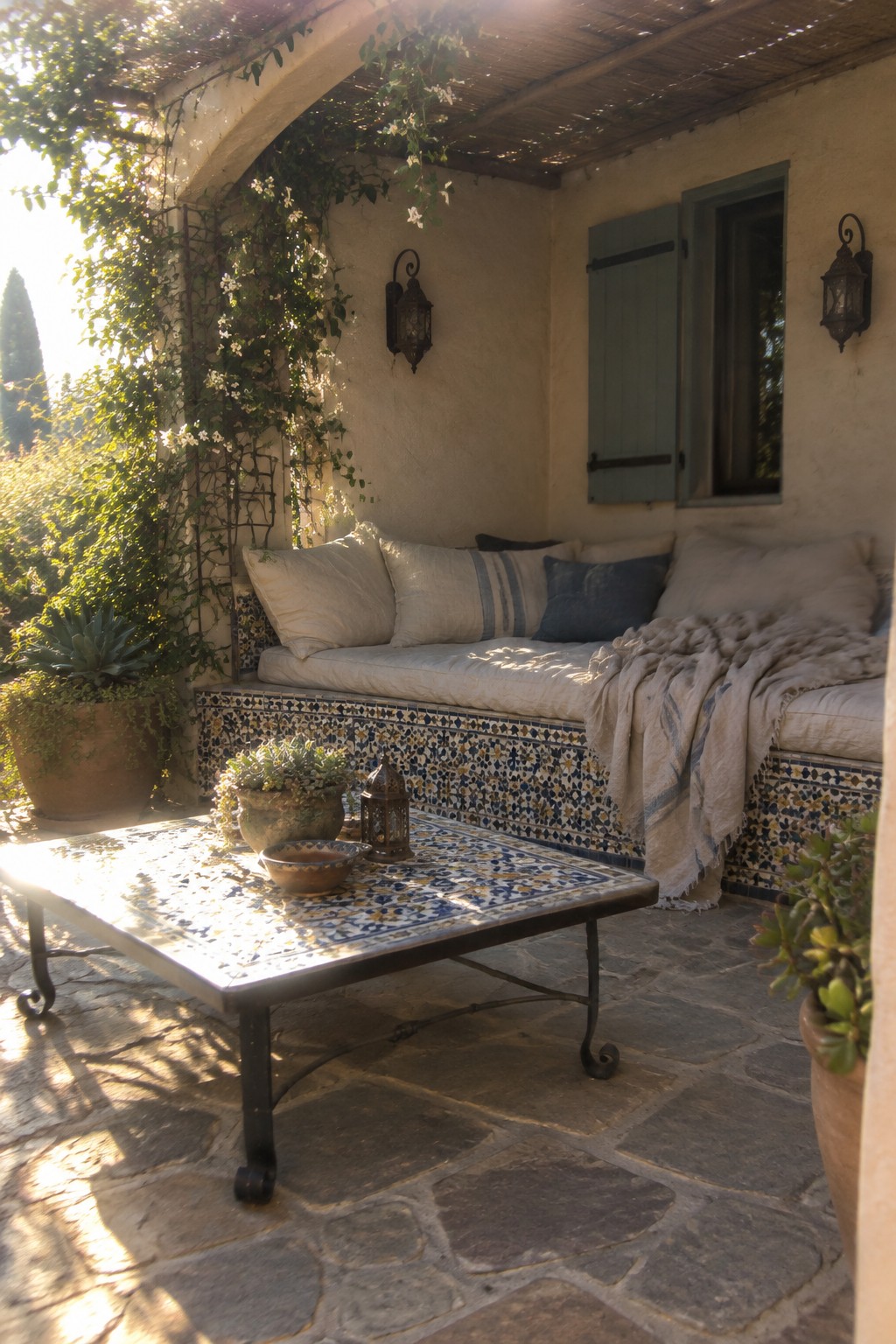
A pergola with an arched opening paired with a built-in bench covered in patterned tile gives an outdoor space a settled, comfortable feel. The arch softens the wood frame and the tile adds color without needing extra furniture or clutter.
This setup works best on stone or brick patios where you want shade and a clear seating zone. Let vines grow across the top for more cover, and keep cushions neutral so the tile remains the main accent. It suits older homes or any courtyard that needs a bit more structure.
Arched Pergolas With Tile Accents
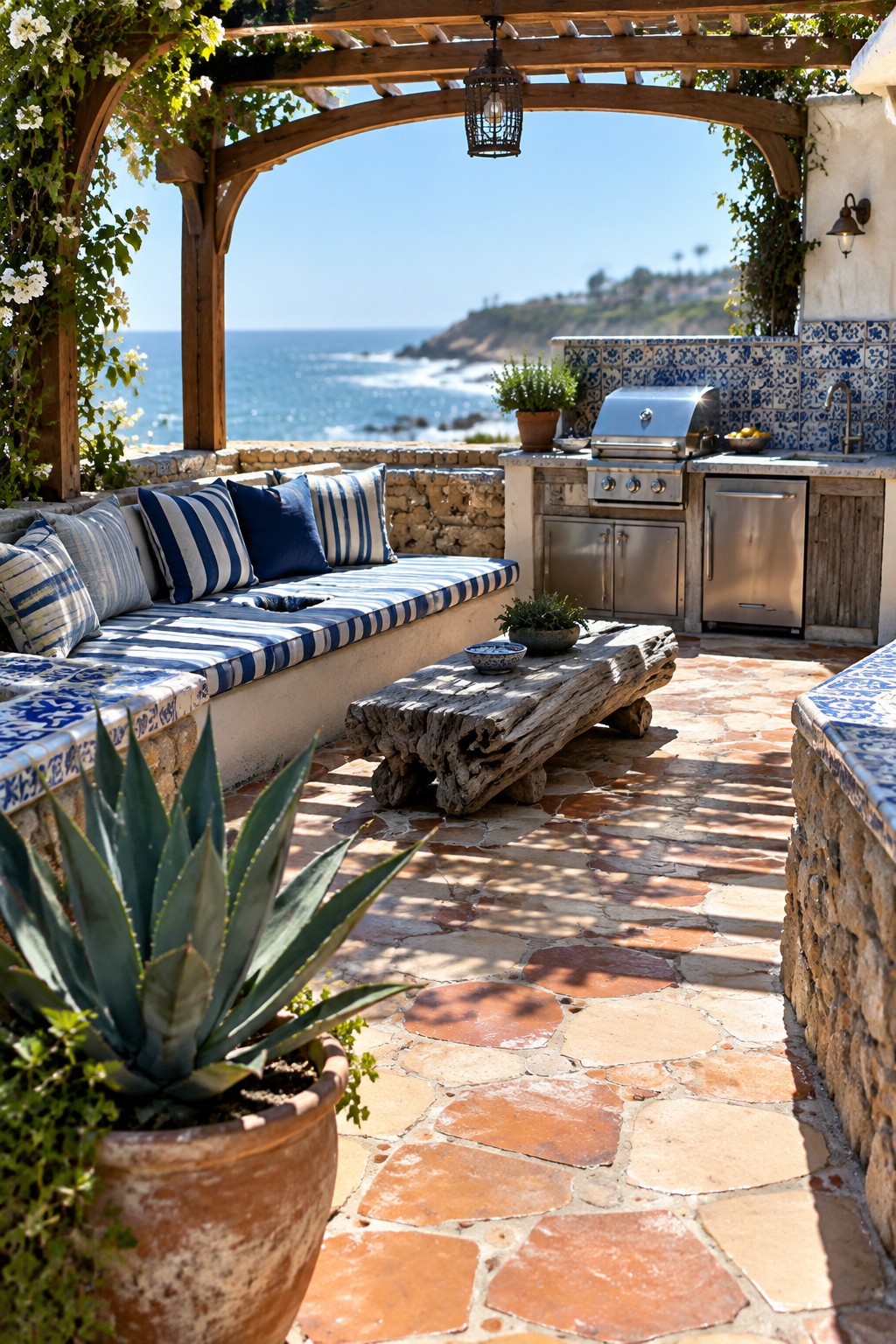
A wooden pergola with arched openings gives an outdoor space more structure without closing it in. The arches soften the roofline and help the whole area feel more finished, especially when the same wood tone shows up in the bench or beams nearby. Adding tile along the kitchen counter or bench wall ties everything together and keeps the look from feeling too plain.
This approach works best on patios that already have some stone or stucco around them. It suits homes near the coast or in warmer climates where you want shade but still need the space to feel open. Keep the tile pattern simple so it does not compete with the wood, and make sure the pergola height leaves enough room for standing and cooking underneath.
Frequently Asked Questions
Q: What wood holds up best if I want those curved arches without constant repairs? A: Cedar bends well for the arches and fights off rot on its own. Give it a coat of oil each spring to keep the warm tone. Skip pine unless you plan to replace sections sooner.
Q: How do I add tile accents so they stay put through rain and heat? A: Pick tiles made for outdoor use and set them with strong construction adhesive on the posts or beams. Grout the gaps well to block water from getting behind. Check the fit after the first big storm and tighten anything loose.
Q: Will vines or plants mess with the tile details over time? A: Train vines along the sides away from the tiles so roots stay clear. The weight from heavy growth can pull on the wood arches if you let it go wild. Trim back once a month during peak growing season.
