

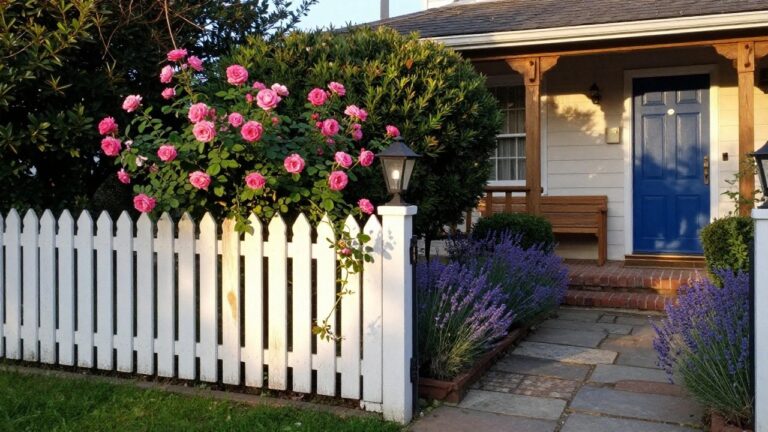
I often think about how a front fence shapes the first impression a house gives to anyone walking by.
Wood picket styles tend to soften the edge between the yard and the sidewalk while still marking a clear property line.
Over time I have seen that the spacing between the pickets and the overall height can make a bigger difference than the color choice alone.
I tested this myself once.
Matching the fence to the home’s entry and roofline usually creates a more balanced look from the curb.
Add a Wooden Gate to Your Picket Fence
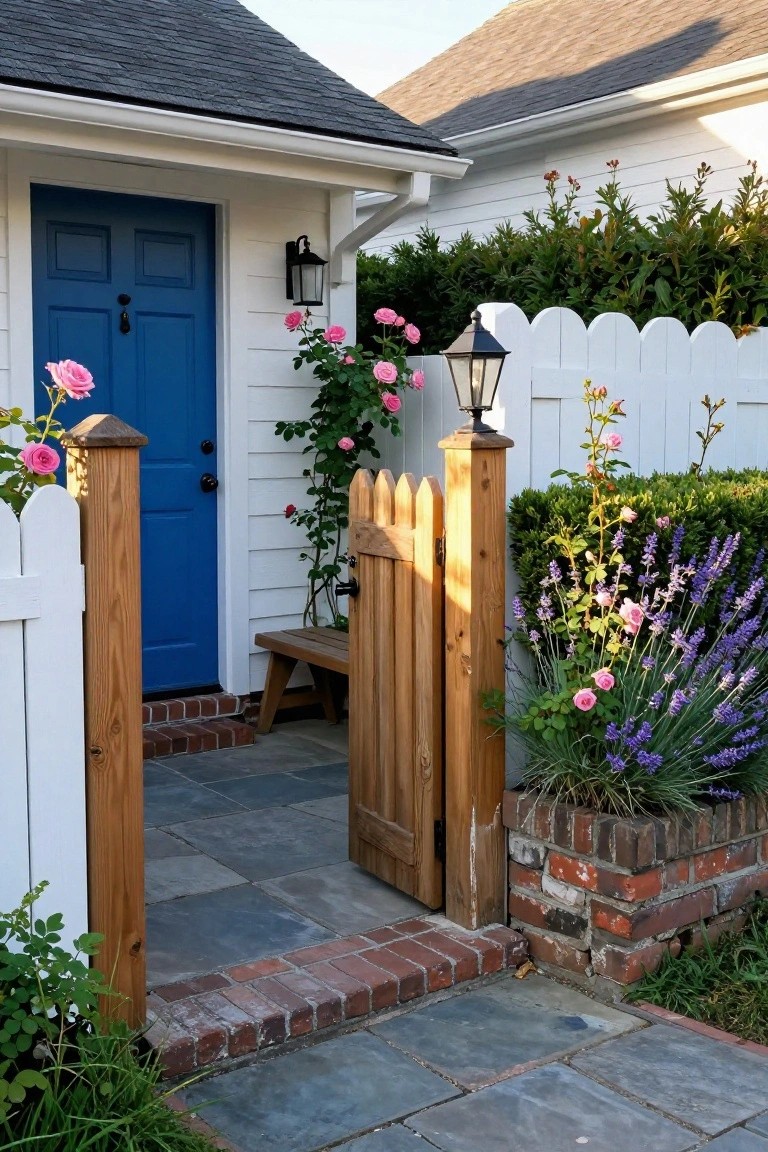
A wooden gate gives a picket fence a clear purpose. It marks the entry without making the front yard feel closed off, and the natural wood tones keep the whole setup looking simple and friendly.
This approach works best on smaller lots or homes with a short walk to the door. Match the gate style and wood color to the fence posts so the two pieces read as one feature rather than separate additions.
Natural Wood Picket Fences
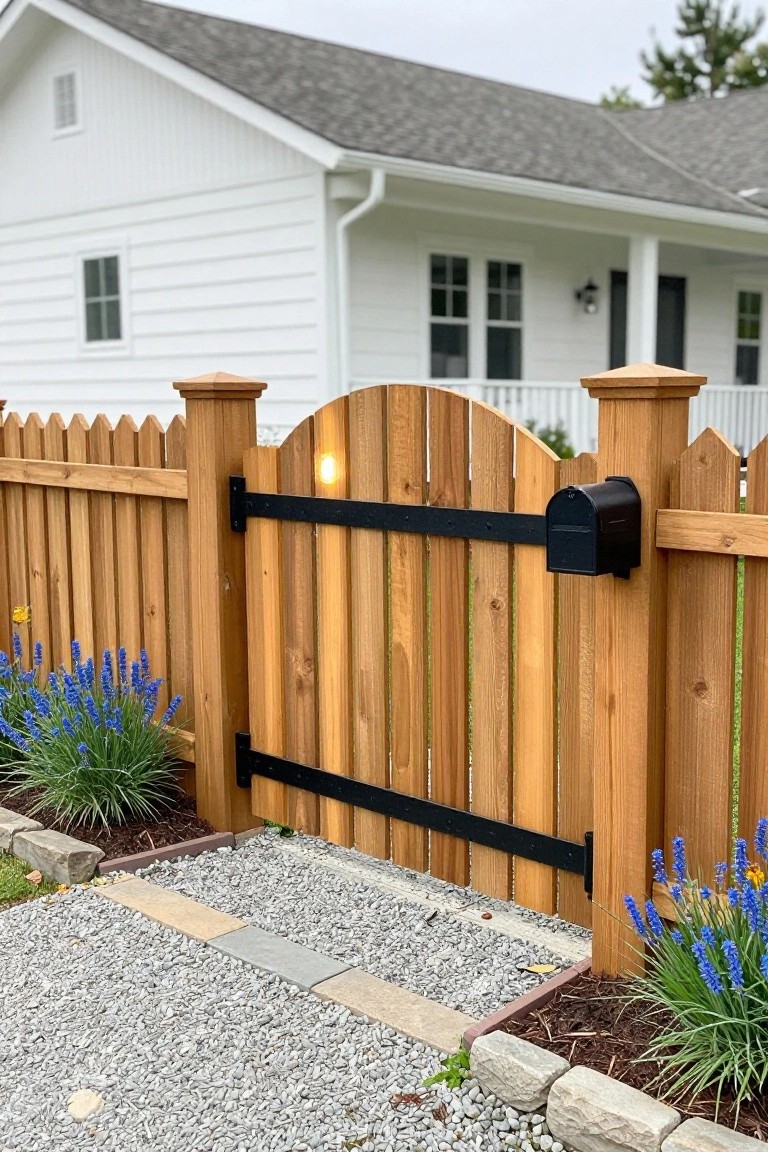
A natural wood picket fence keeps the look simple and lets the material do the work. The unstained cedar ages to a soft gray that pairs easily with garden beds and does not fight with the house color behind it.
This approach suits older homes or any place where you want the fence to feel like part of the landscape rather than a separate structure. Use black metal straps and hinges for contrast, and keep the path in gravel so the whole entry stays low maintenance.
A Simple White Picket Fence
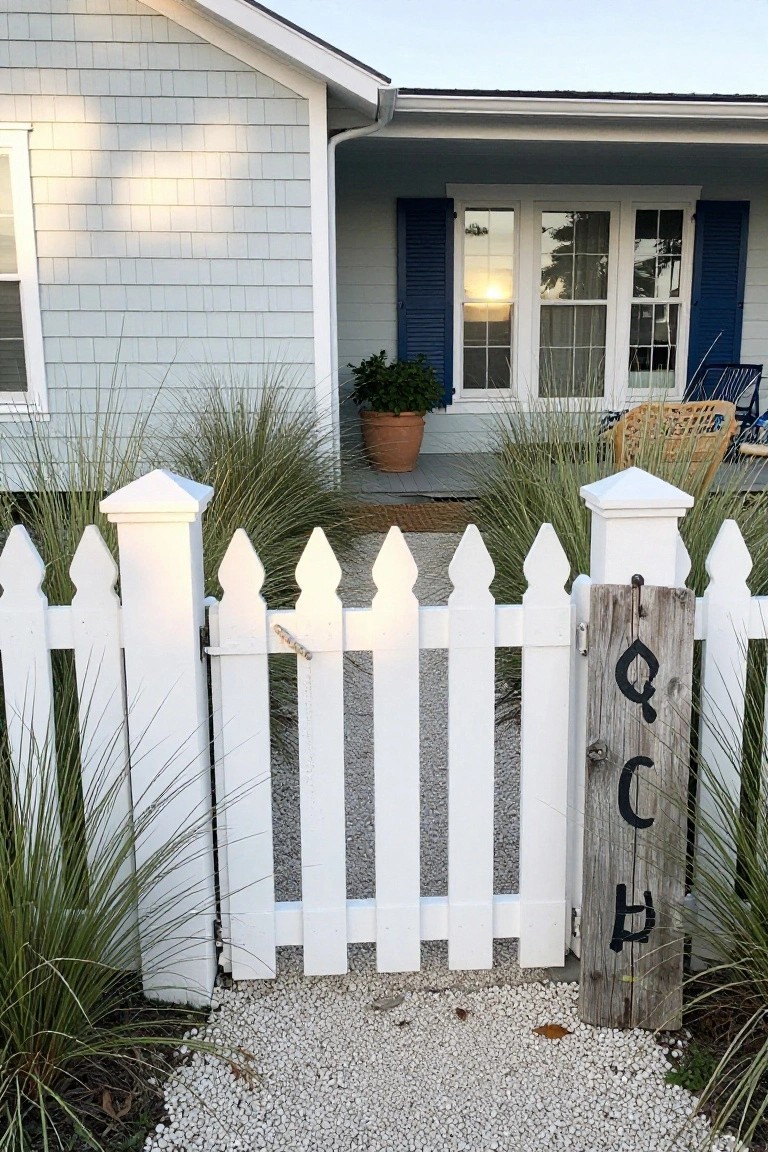
A white picket fence gives the front yard a clear boundary without making the space feel closed in. The vertical boards and pointed tops keep the look light and familiar.
This works best on modest lots where you want the house to stay visible from the street. Use it with a basic gate and a simple path so the fence directs people toward the entry without extra fuss.
Picket Fences With Brick Posts
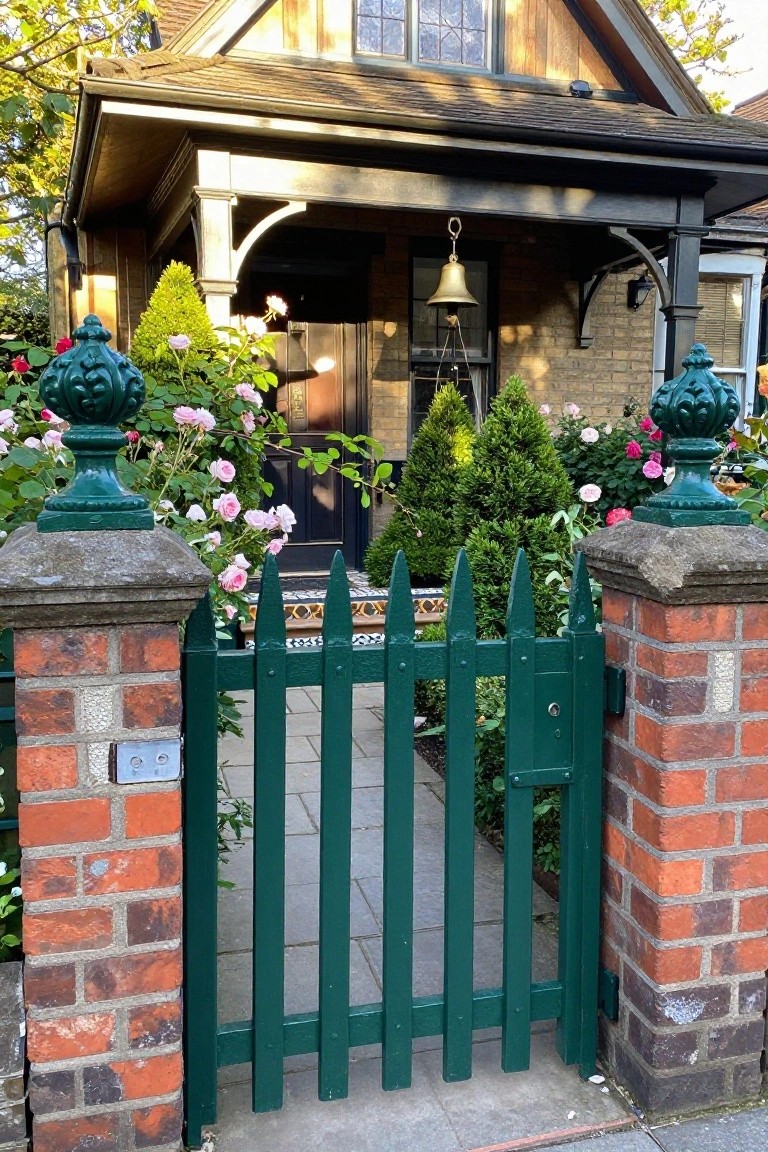
A painted wood picket fence already feels classic, but setting it between brick posts gives it more weight and permanence. The solid base keeps the fence from looking too light or temporary, especially when the wood is finished in a deep color that stands out against the brick.
This setup suits older homes or traditional neighborhoods where you want the front boundary to feel intentional. Keep the posts fairly simple so they support the fence without competing with it, and match the brick tone to the house if you can.
Dark Stained Picket Fences
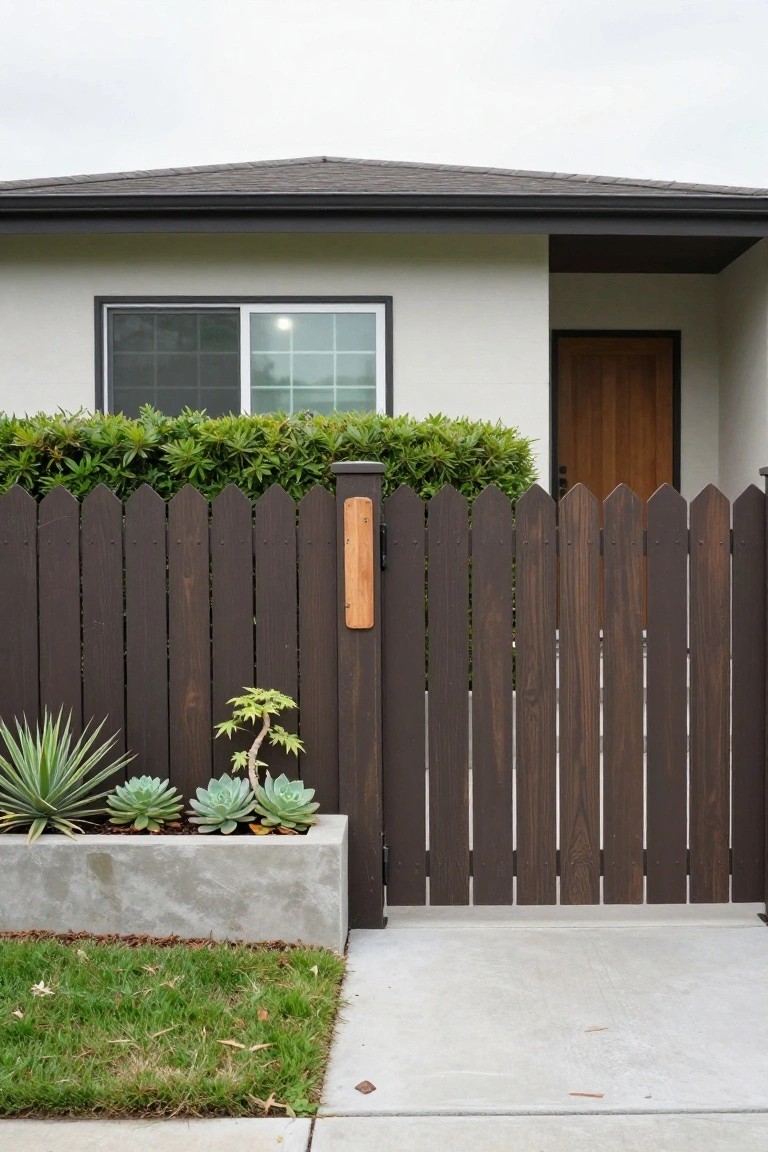
A dark stain on a wood picket fence gives the front yard a sharper look without losing the classic style. It stands out nicely against lighter house colors and makes the boundary feel more defined while still keeping things open and friendly.
This works best on homes with pale siding or stucco, where the contrast helps the fence become a main feature. Keep plantings low and simple along the base so the fence stays visible, and make sure the stain is a solid exterior grade that holds up in sun and rain.
A Simple Picket Fence Defines the Front Yard
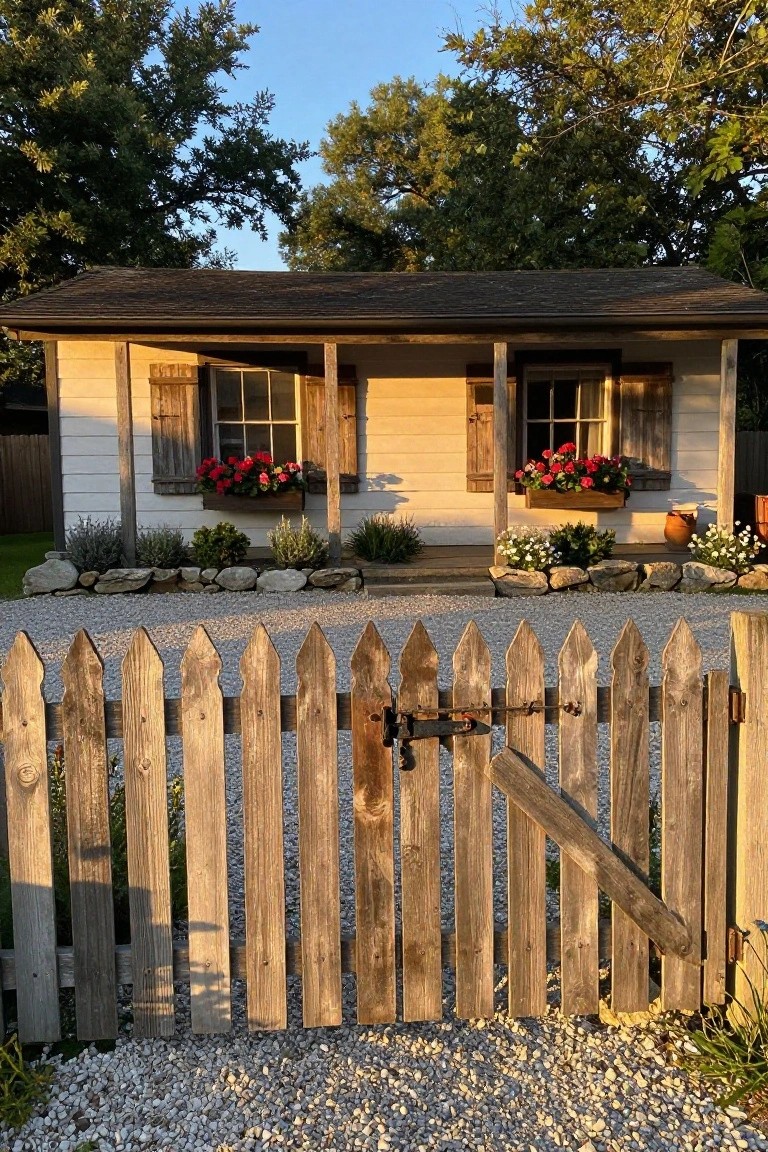
A basic wood picket fence still gives a front yard a clear edge without making it feel closed in. The upright boards and natural finish keep the look light and approachable, which works especially well along the street side of a smaller home.
This fence style suits homes with gravel paths or low garden beds in front. It needs little more than a coat of sealer every few years and leaves plenty of room for flowers or shrubs right behind it.
Painting Picket Fences in Gentle Tones
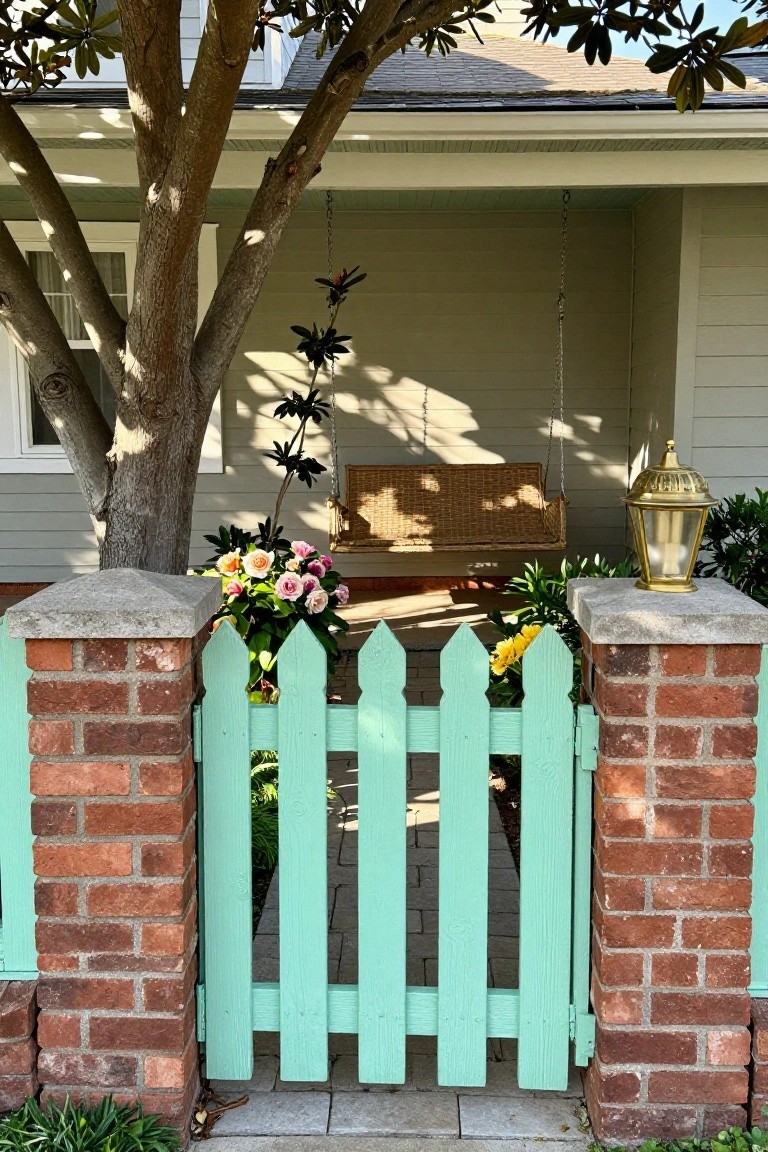
A soft painted color can make a picket fence feel more personal without losing its simple charm. The light green used here gives the front yard a welcoming touch that still reads as classic rather than trendy.
This approach works best on homes with brick details or traditional siding. Stick to muted shades so the fence adds interest but does not fight with the house itself.
Try Low Planters Along the Fence Line
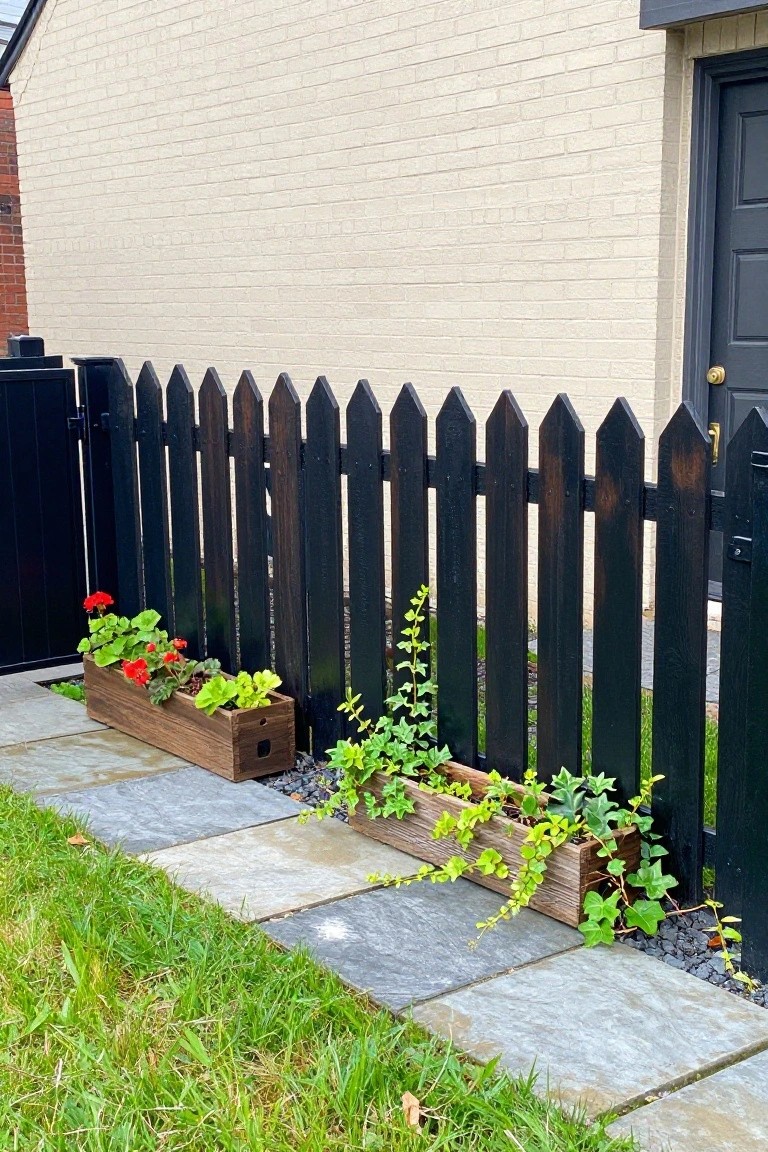
Many people set a few low wooden planters right against the base of a picket fence. It adds planting without digging up the ground or blocking the fence itself.
This works best along a front path or narrow strip where a full bed would feel too much. Keep the planters simple and match the wood tone so the whole line stays clean and easy to maintain.
Line the Entry With a Wood Picket Fence
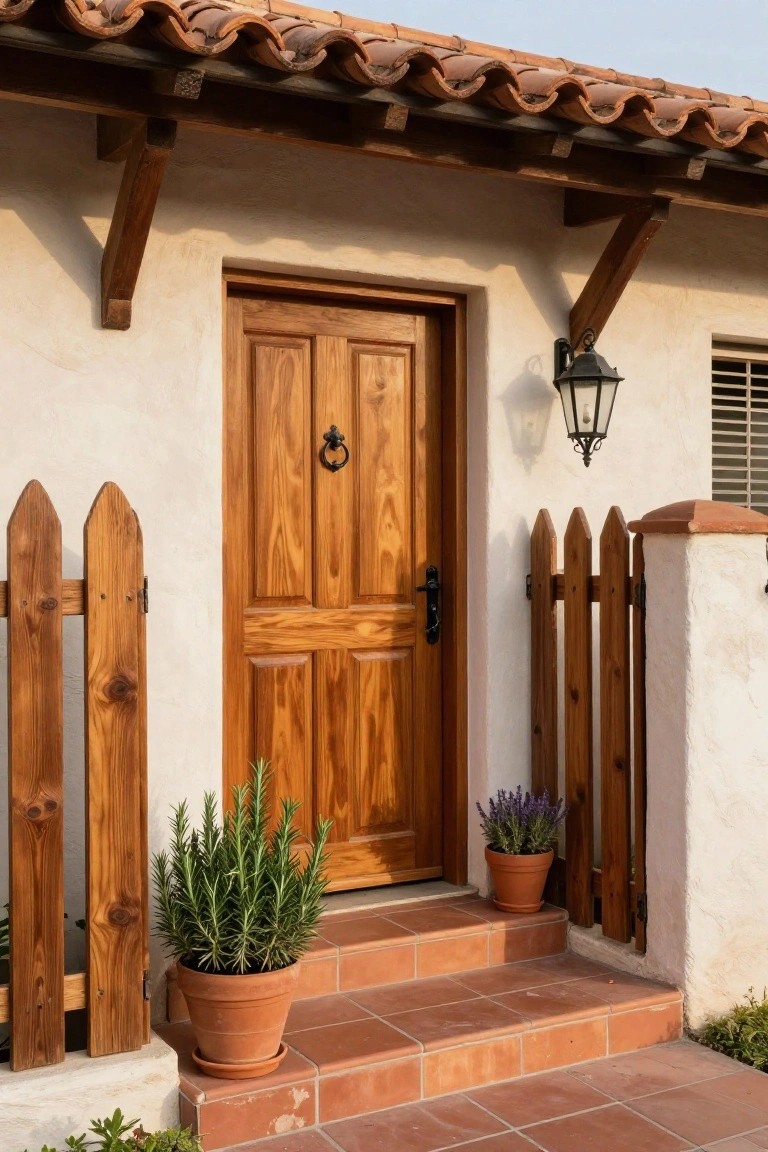
A low picket fence placed on both sides of the front steps helps guide people toward the door without creating any sense of enclosure. The simple vertical boards add just enough structure to make the entry feel intentional and cared for.
This works best on homes with a centered door and a short walk up from the street. Keep the fence height around three feet, use the same wood tone as any nearby trim, and add a couple of pots near the base if you want a bit more greenery without crowding the steps.
Dark Stained Picket Fences
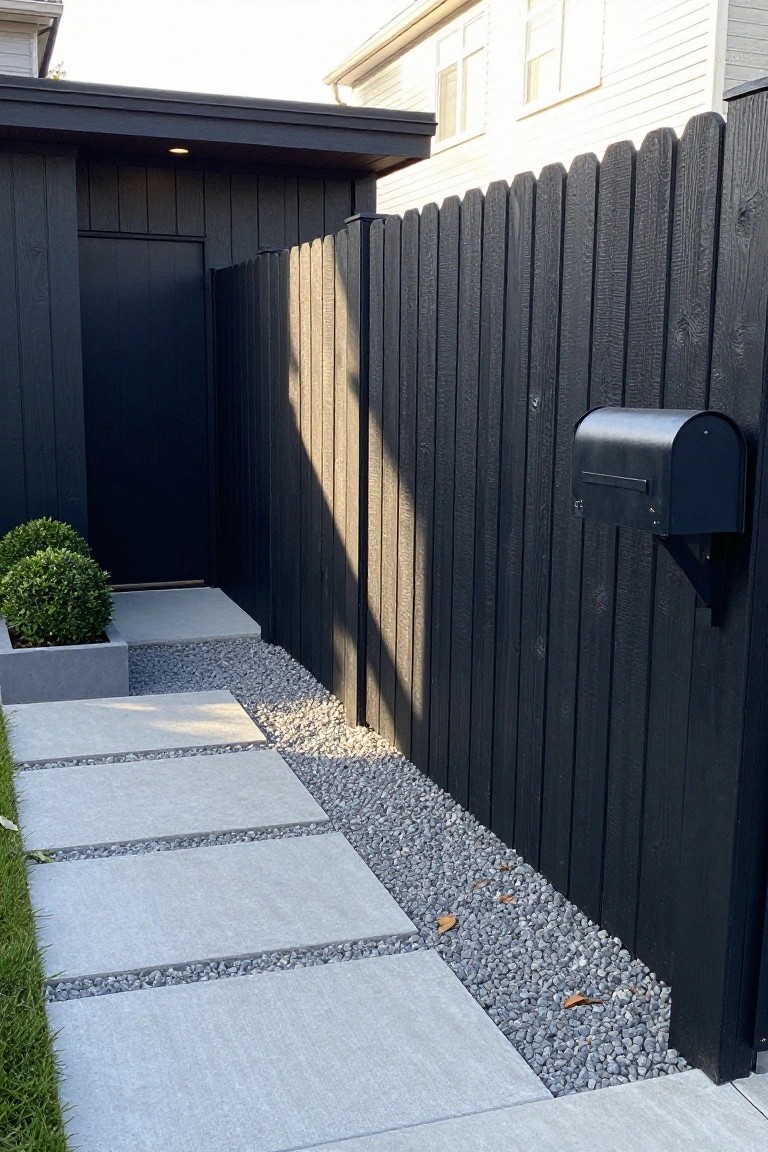
Staining a wood picket fence dark changes the whole feel without losing the familiar shape. It gives the fence more weight and helps it stand out against lighter paths or plantings instead of fading into the background.
This approach works best on homes with dark siding or trim where you want everything to feel pulled together. It pairs cleanly with gravel edges and simple stepping stones, though you will want to keep up with the stain every few years to avoid weathering.
Picket Fence Arches for Front Yard Entries
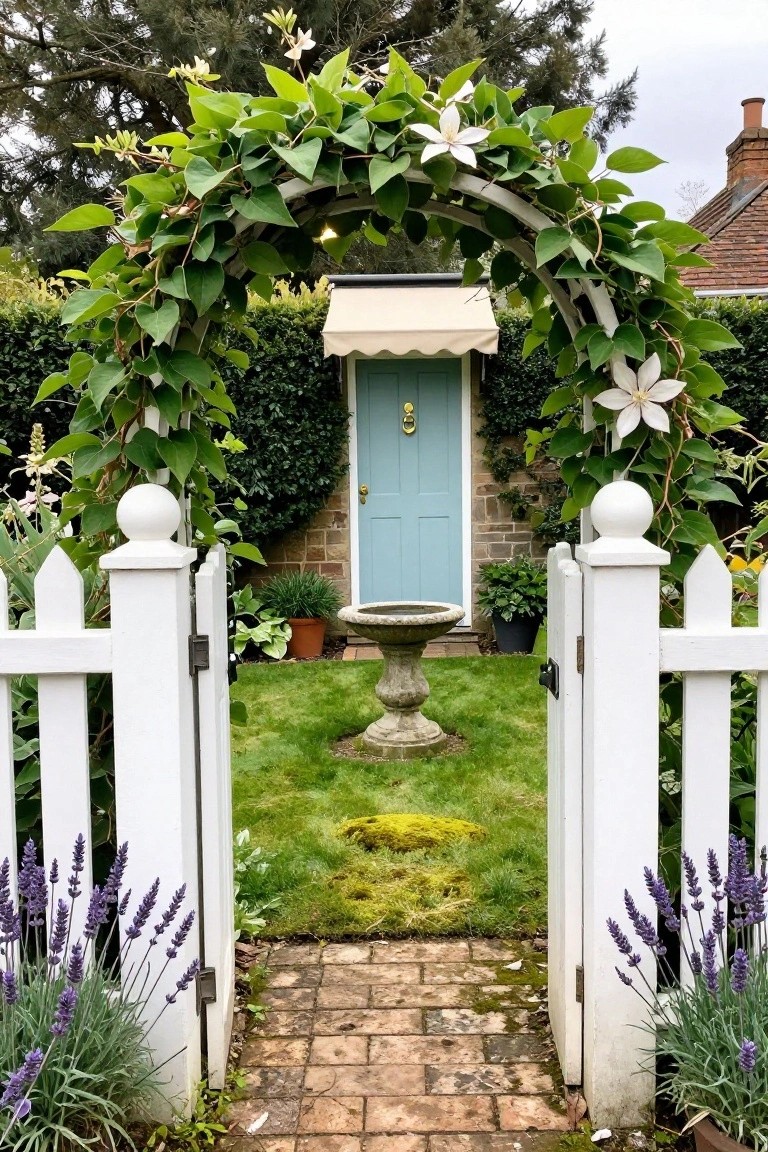
A white picket fence with an arch over the gate gives the front yard a clear sense of entry. It keeps the fence looking friendly while making the path feel more defined and purposeful.
This approach suits older homes and cottage gardens best. Let vines grow over the arch so the fence blends into the planting instead of standing apart from it.
Add Gravel Beds Along The Fence
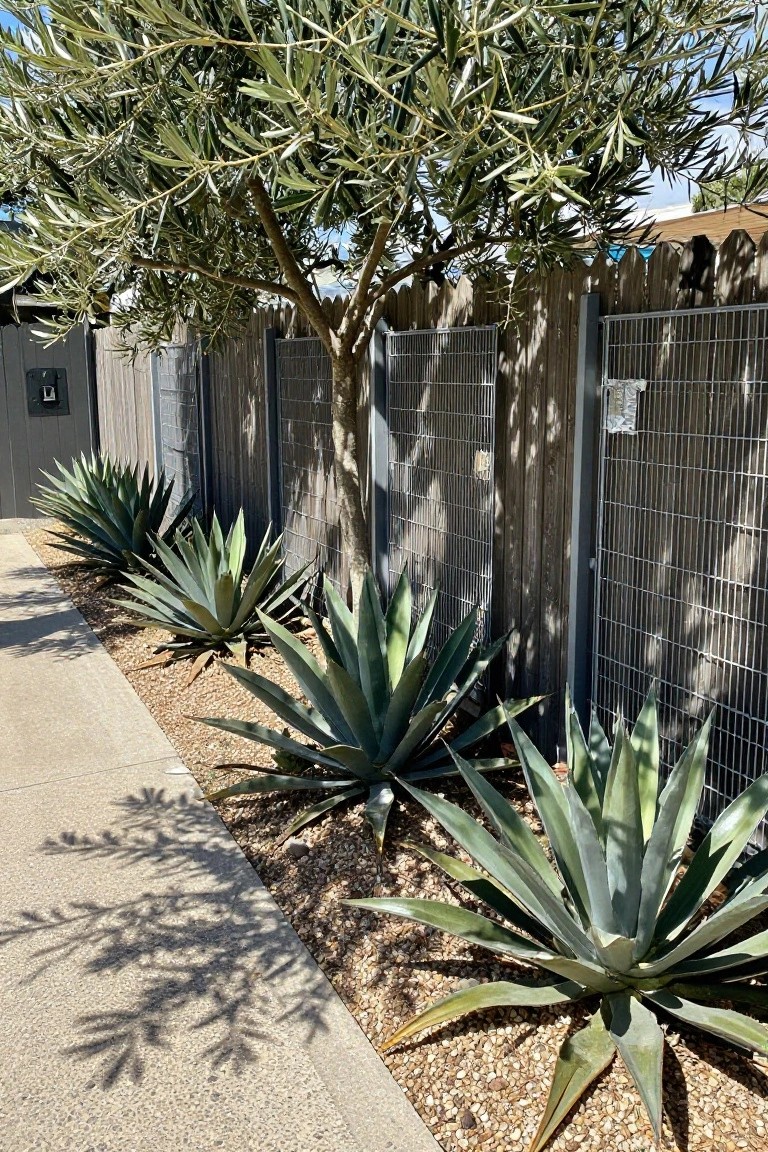
A gravel bed next to a wood picket fence gives the whole front edge a tidy, finished look without much work. It also helps keep weeds down and cuts back on watering, which makes the fence feel more like part of the landscape instead of just a barrier.
This setup works best in front yards that get full sun or in areas where people want lower maintenance. Stick with tough plants like agaves or similar succulents, keep the gravel layer even, and make sure the bed stays narrow enough to leave room for a path.
White Picket Fence Along the Entry Path
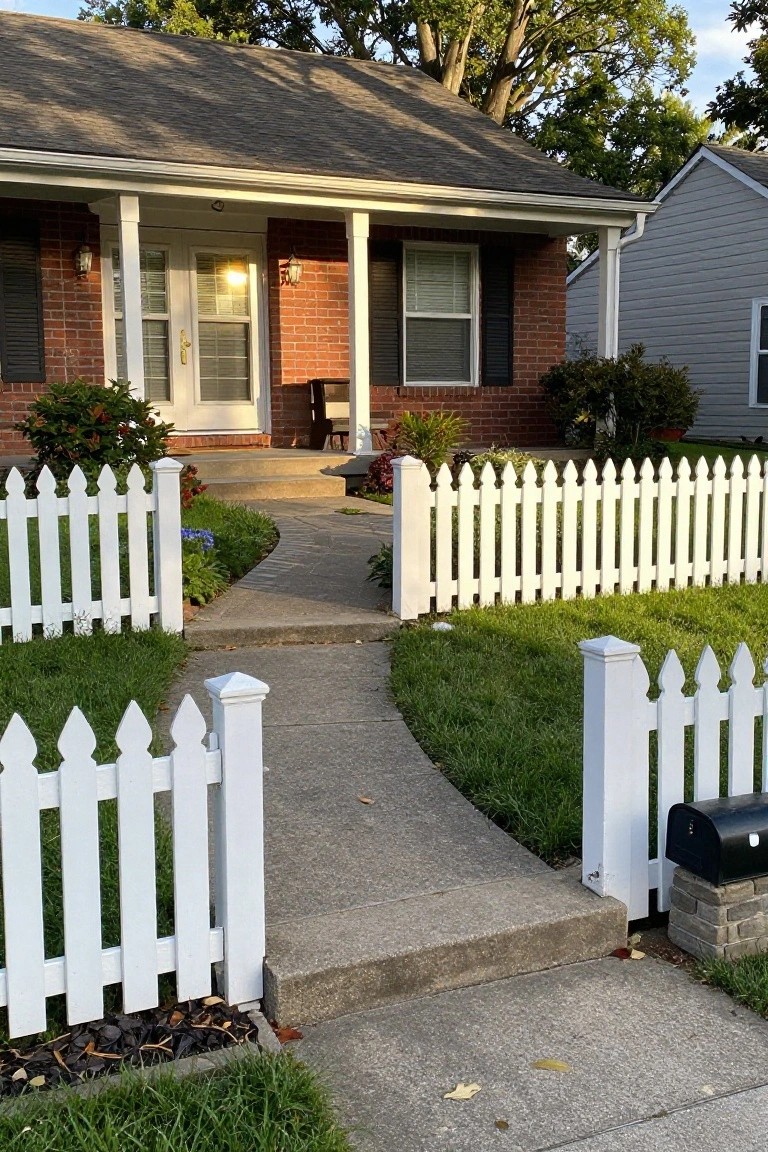
A white picket fence lines up neatly with a front walk and gives the yard a clear shape. It marks the boundary without hiding the house or making the space feel closed off. The fence adds a simple structure that works with the grass and plants on both sides.
This look fits homes with a straight or gently curved path from the street. Keep the fence height low and paint it white so it stays bright and traditional. Check that the posts sit level and the sections stay even so the whole thing reads clean over time.
Line the Fence With a Simple Path
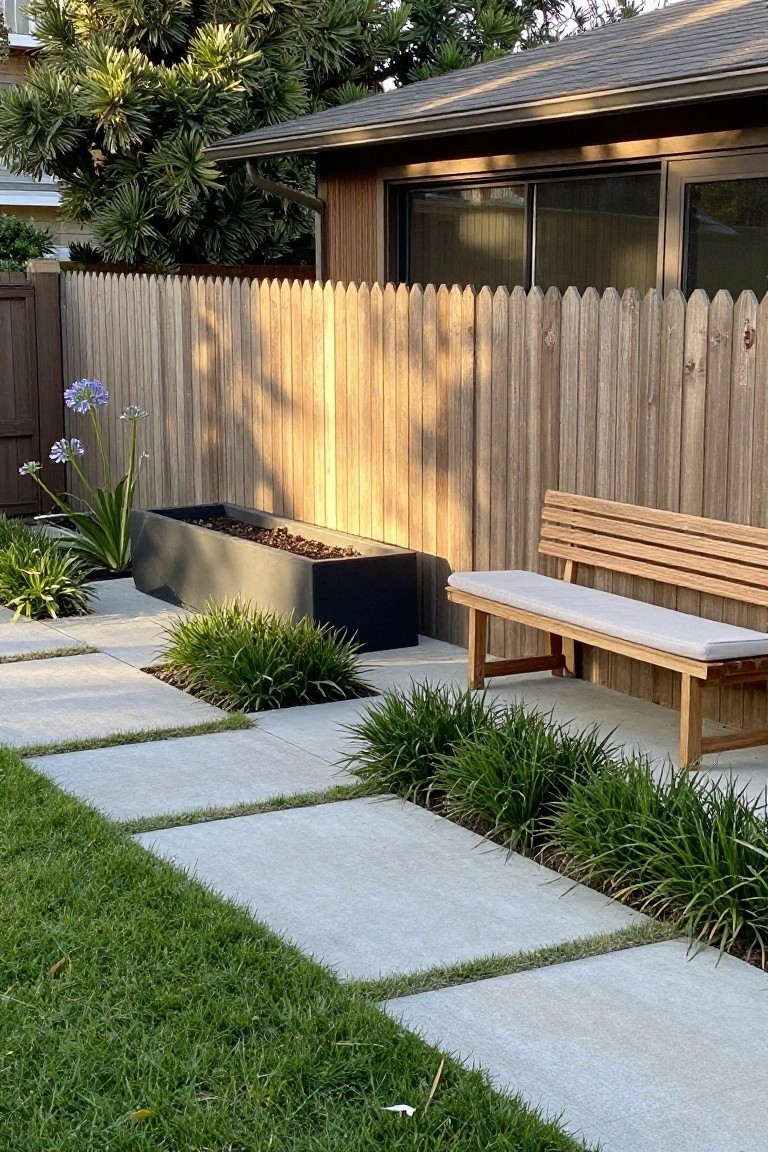
A straight path running right along a picket fence gives the whole side of the yard a clear shape. The fence stays visible instead of getting lost behind plants, and the path keeps foot traffic off the grass or beds. Concrete pavers work well here because they sit flat and need little upkeep.
This setup suits narrow side yards or the edge of a front garden where you want easy access without crowding the fence. Keep the planting low on one side so the wood stays the main feature. Avoid curving the path too much or the clean look starts to disappear.
Pair a Picket Fence with a Simple Arch
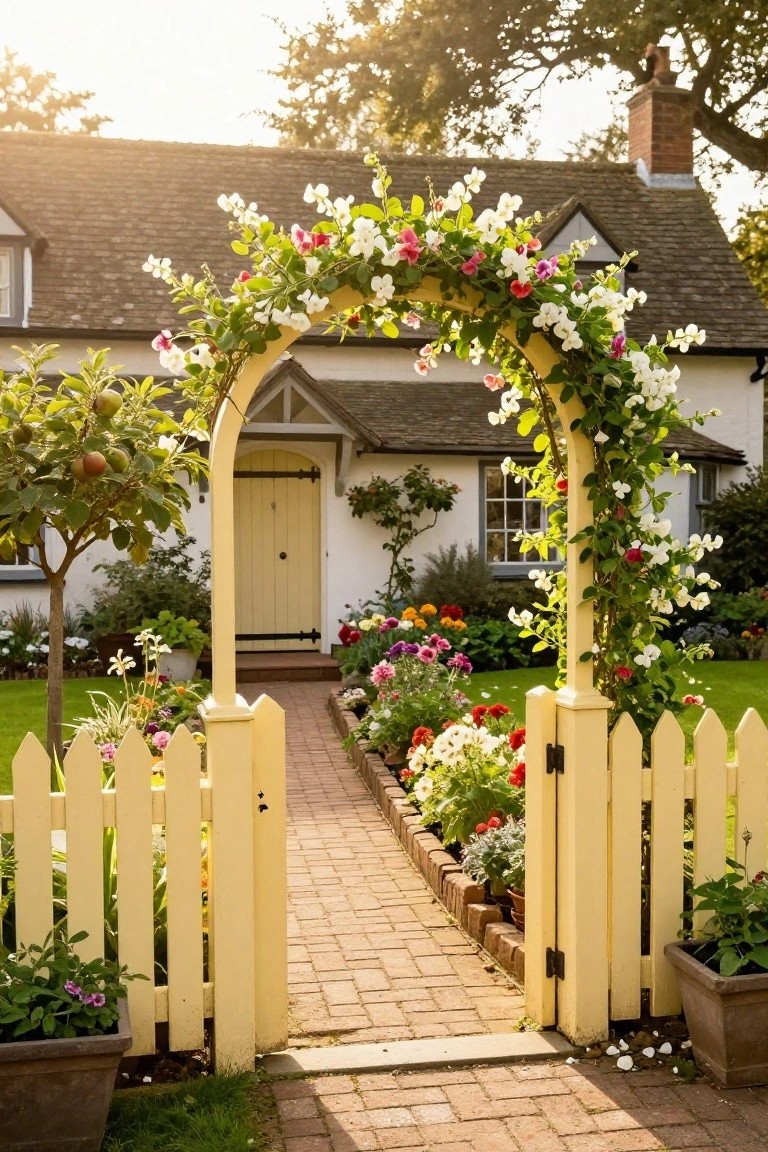
A picket fence feels more complete when it includes an arch over the gate. The curve softens the straight lines of the fence and makes the path feel like a real entrance instead of just a gap in the boards.
This setup works best on modest front yards where you want to lead people clearly toward the door. Keep the fence and arch the same color, then let a few climbers grow over the top so the flowers do most of the work.
Picket Fences Along Entry Paths
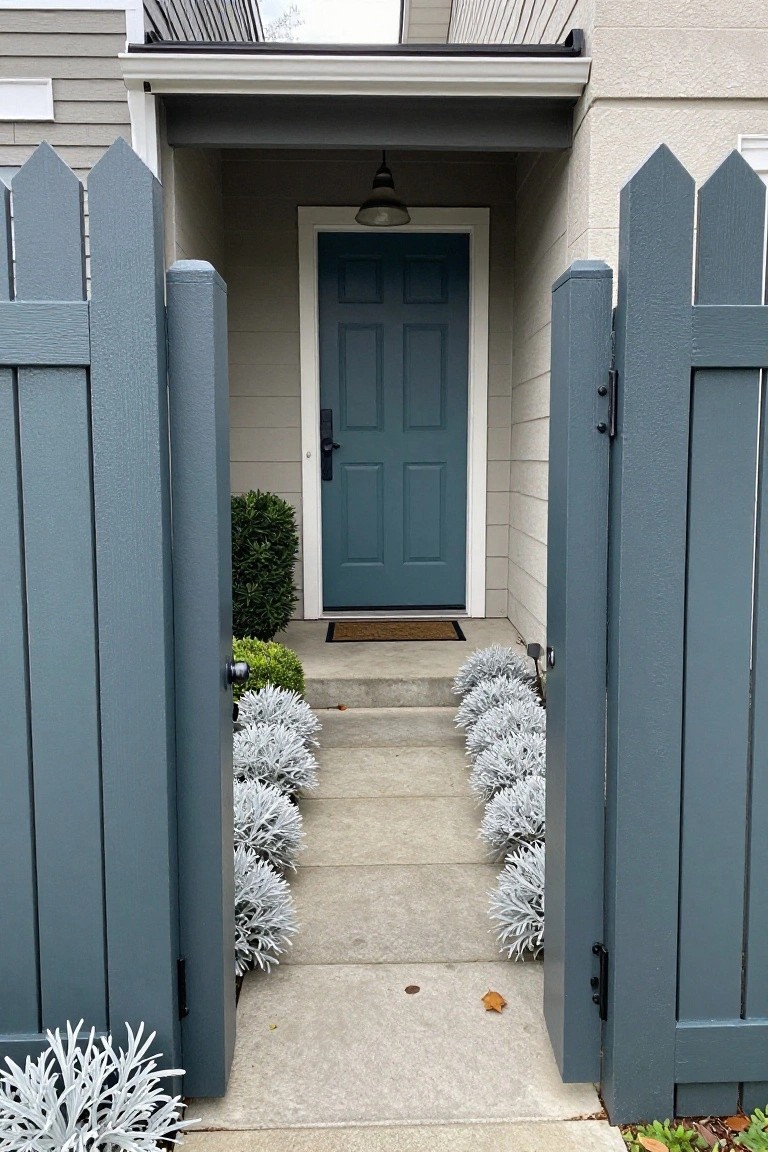
A painted picket fence gives a front path a clear sense of arrival. It marks the way without blocking the view, which makes the walk up to the door feel more intentional and welcoming.
This setup works especially well on narrow lots or in older neighborhoods where you want a bit of definition from the street. Keep the fence color soft so it relates to the house trim, and line the path with low plants to soften the edges.
Use a Painted Gate in a Wood Picket Fence
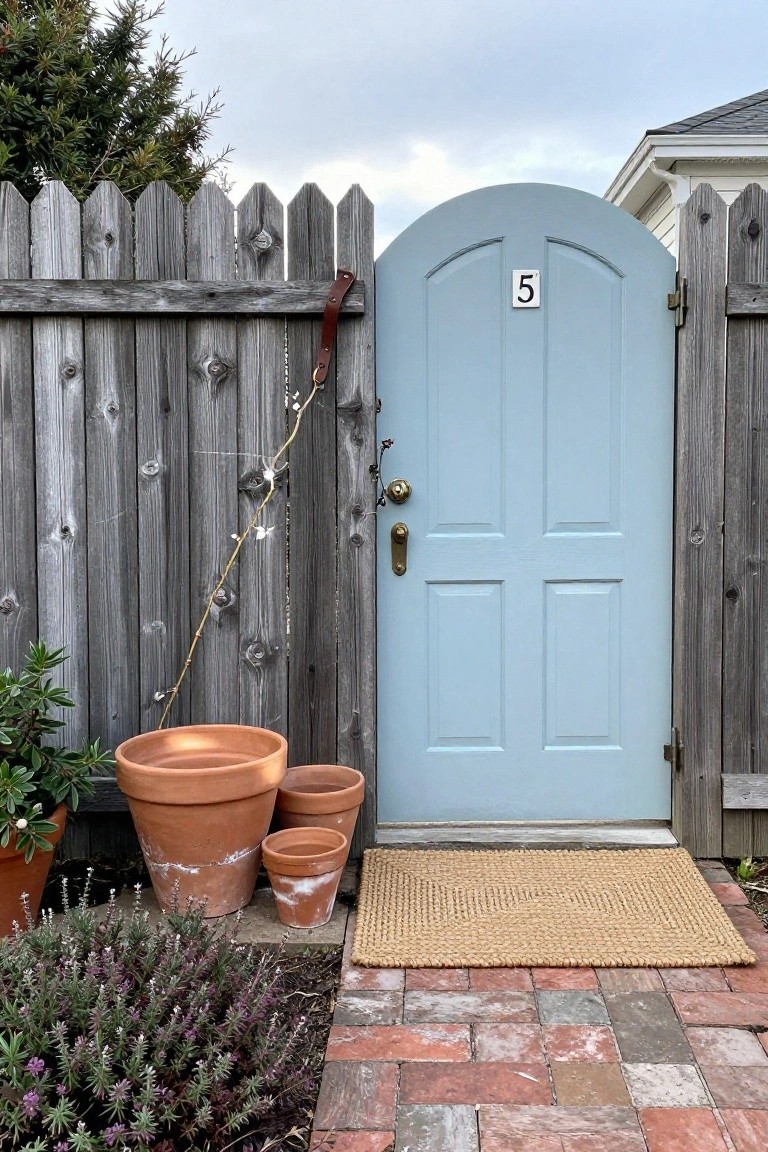
A painted gate stands out nicely against a natural wood picket fence and gives the whole front yard a bit more personality. The contrast keeps the fence from feeling too plain while still letting the wood do most of the work.
This works well on older homes or any place where you want the entry to feel friendly without adding extra trim or hardware. Stick with soft colors that echo something already on the house, and make sure the gate sits at the same height as the fence so the line stays clean.
White Picket Fences With a Gate
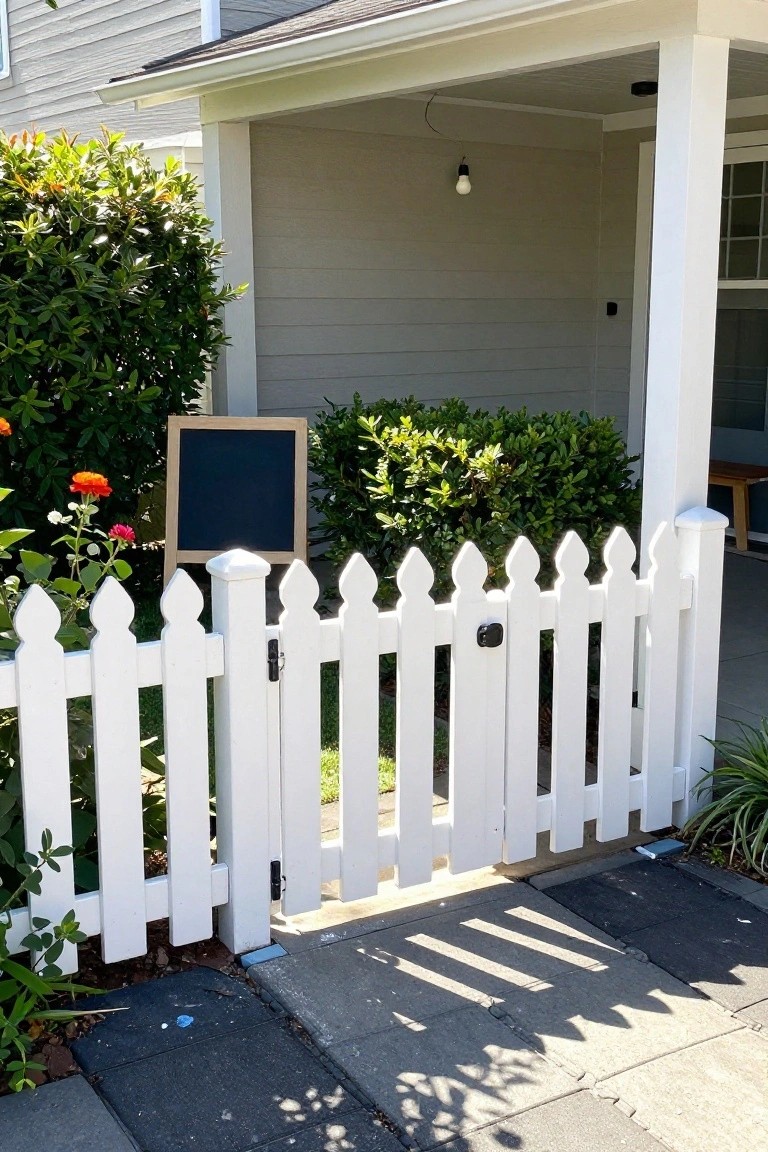
A white picket fence with a gate gives the front yard a clear boundary without making it feel closed off. It keeps things simple while still marking the entrance in a way that feels friendly and intentional.
This approach works best on smaller lots or homes that sit close to the street. Match the gate style to the fence and keep the height even so the line stays clean from the sidewalk.
Picket Fence with Raised Planters
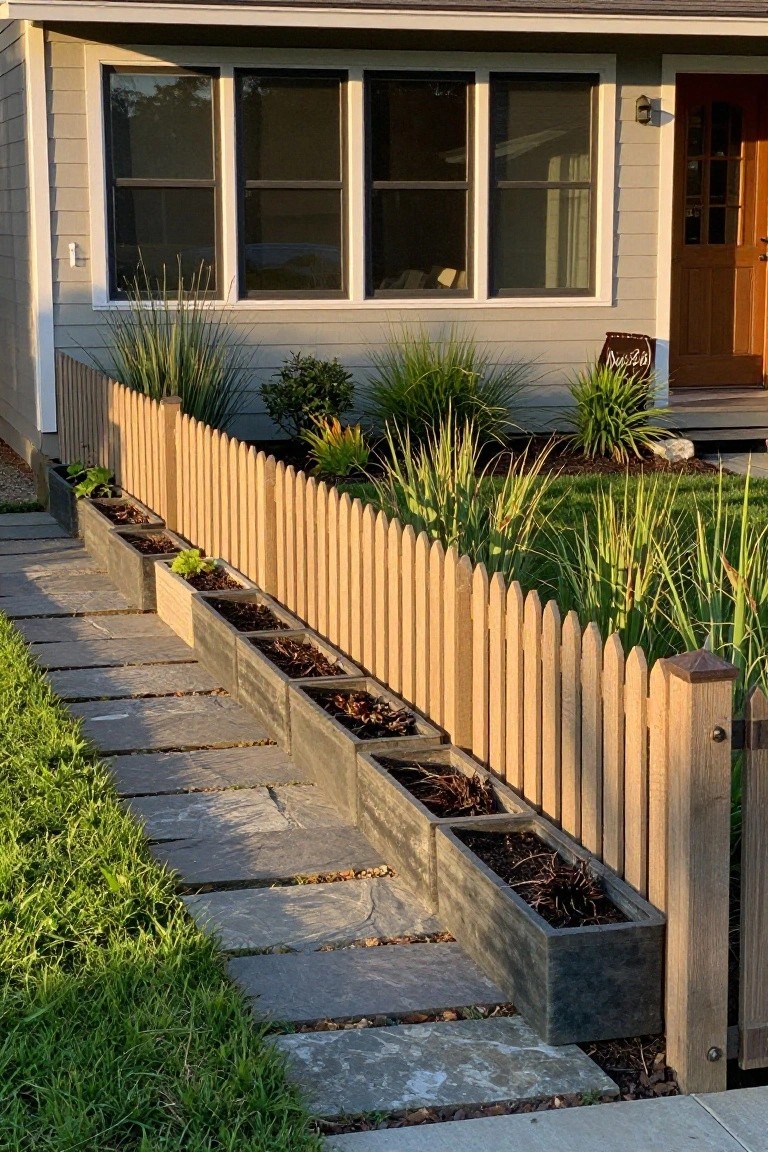
A picket fence gains more structure when you set it beside a row of raised planters. The fence keeps the classic look while the planters handle the planting along the path and give the edge a finished feel without needing a full wall.
This setup works best on sloped front yards or long side entrances where you want clear separation but still room for greenery. Choose simple rectangular planters in a neutral tone so the fence remains the main element, and let a few plants spill over the edges.
Adding an Arbor Over a Picket Gate
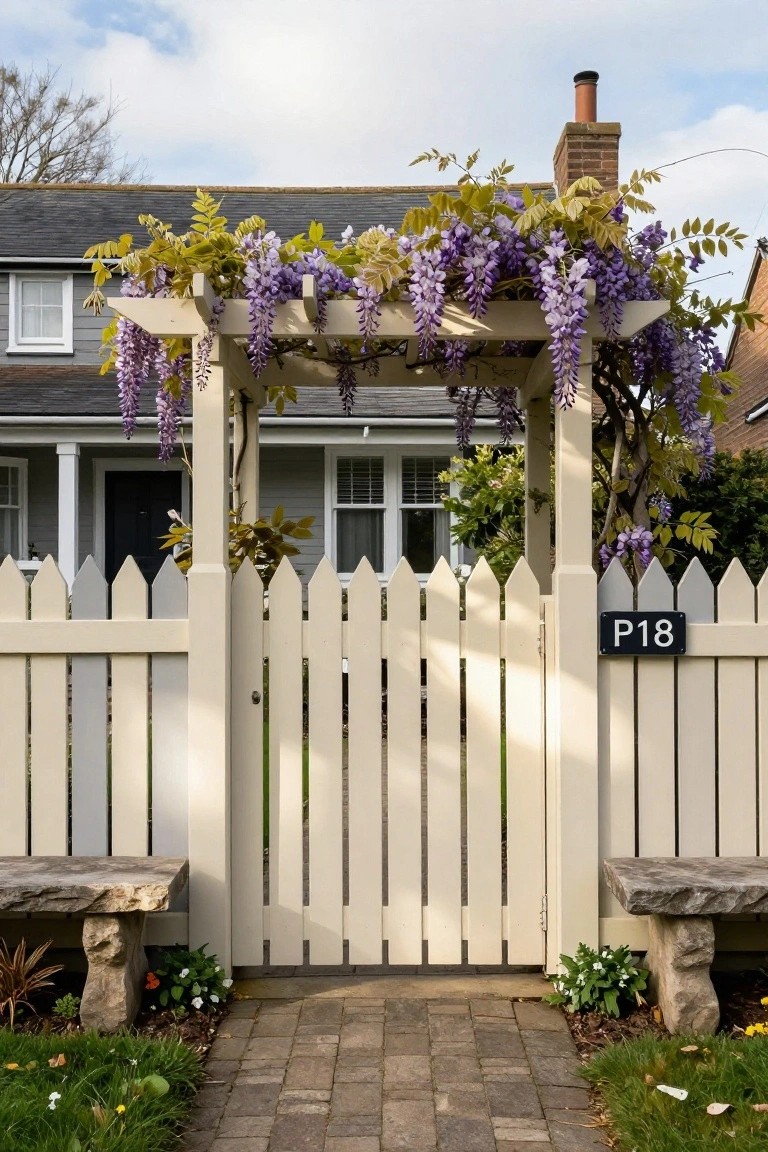
A simple arbor over the gate adds height and gives vines a place to grow across the top. It turns a basic fence opening into a clearer entry point without needing much extra structure.
This approach works best on smaller lots or homes with a cottage feel. Keep the arbor the same color as the fence and choose vines that will not overwhelm the path or drop too much debris on the ground below.
Frequently Asked Questions
Q: How do I stop a wood picket fence from warping after the first winter? A: Choose kiln-dried cedar or pine and let the boards acclimate outside for a week before you nail them up. Space the pickets a quarter inch apart so air can move through and reduce moisture buildup. That one change keeps most fences straight for years.
Q: What height feels right for a front yard without looking closed off? A: Four feet works well in most neighborhoods. It marks the boundary clearly but still lets people see the house and garden from the sidewalk. Anything taller starts to feel like a wall instead of a welcome.
Q: Do I need to stain the fence or can I leave it natural? A: A clear penetrating stain every two years protects the wood and keeps the grain visible. Skip solid colors if you want that classic timeless look the article shows. Natural wood weathers to a soft gray that still reads warm and inviting.
Q: Can I put a gate in a picket fence without hiring help? A: Build the gate frame first with the same picket spacing as the fence sections. Hang it on heavy-duty hinges and add a simple latch at the top. Most people finish the whole gate in an afternoon once the posts are set.
