

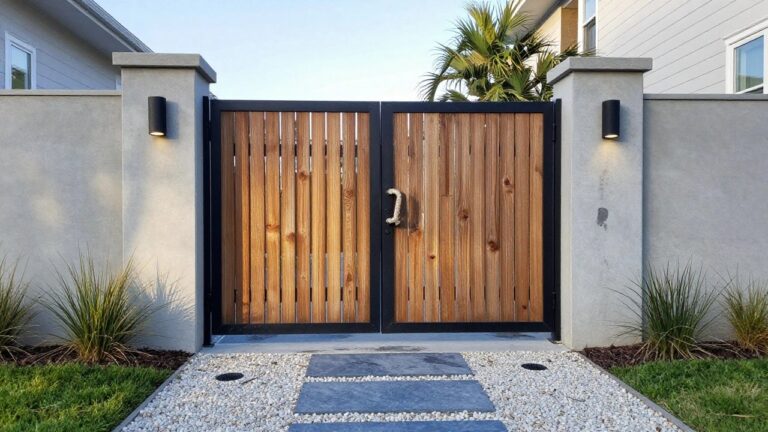
I often notice that the gate is the first thing that shapes how a house feels when you approach it from the street.
Wood tends to bring a warmer texture to an entry and helps the front of the home connect better with the surrounding yard.
Small changes here can shift how the entire facade reads from the street.
I tried swapping the hardware on my own gate last year and it changed the daily walk up more than I expected.
Planning for how the wood will weather and match the rest of the exterior saves time later when the whole front view starts to come together.
Horizontal Slats on a Gate
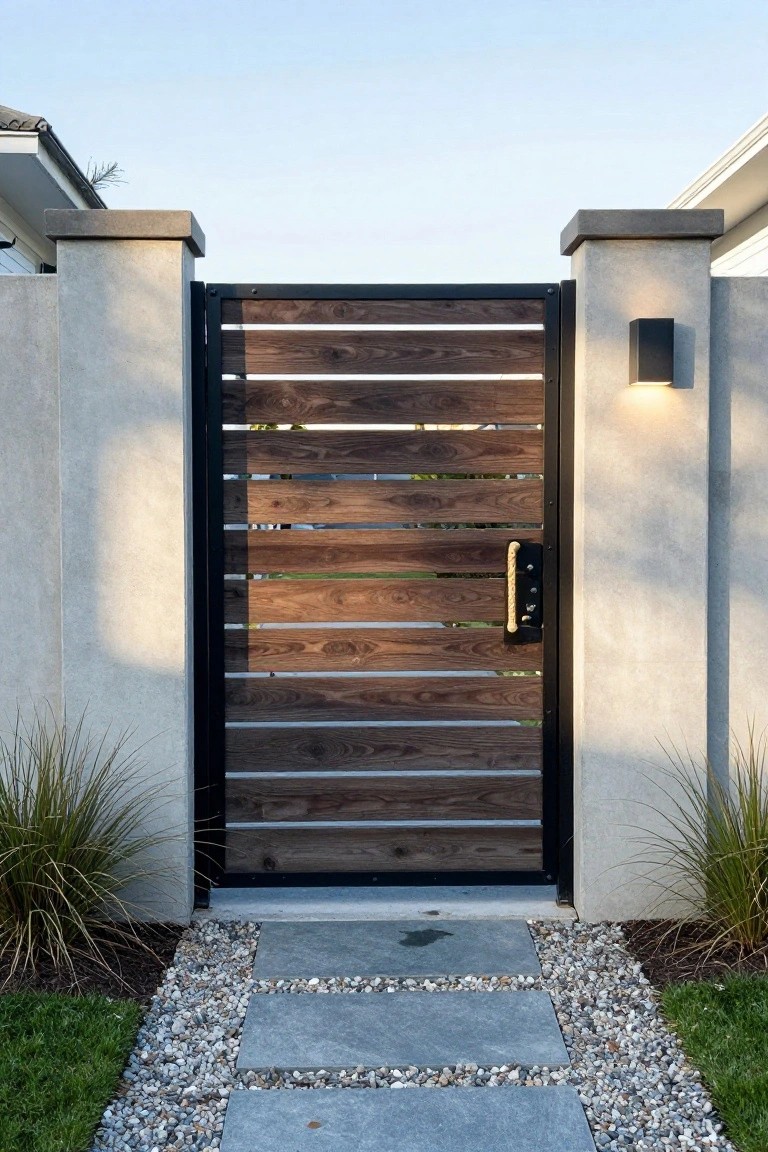
A gate made with horizontal wood slats gives an entry a lighter look without losing privacy. The boards let some light and air through while the dark frame keeps the whole thing feeling solid and neat. This style works especially well when the gate sits between simple pillars or a low wall.
It suits homes with clean lines and modern or midcentury details. Keep the wood tone natural and let the frame do the contrast work. Avoid making the slats too close together or the gate starts to feel heavy again.
Climbing Roses Over a Wooden Gate
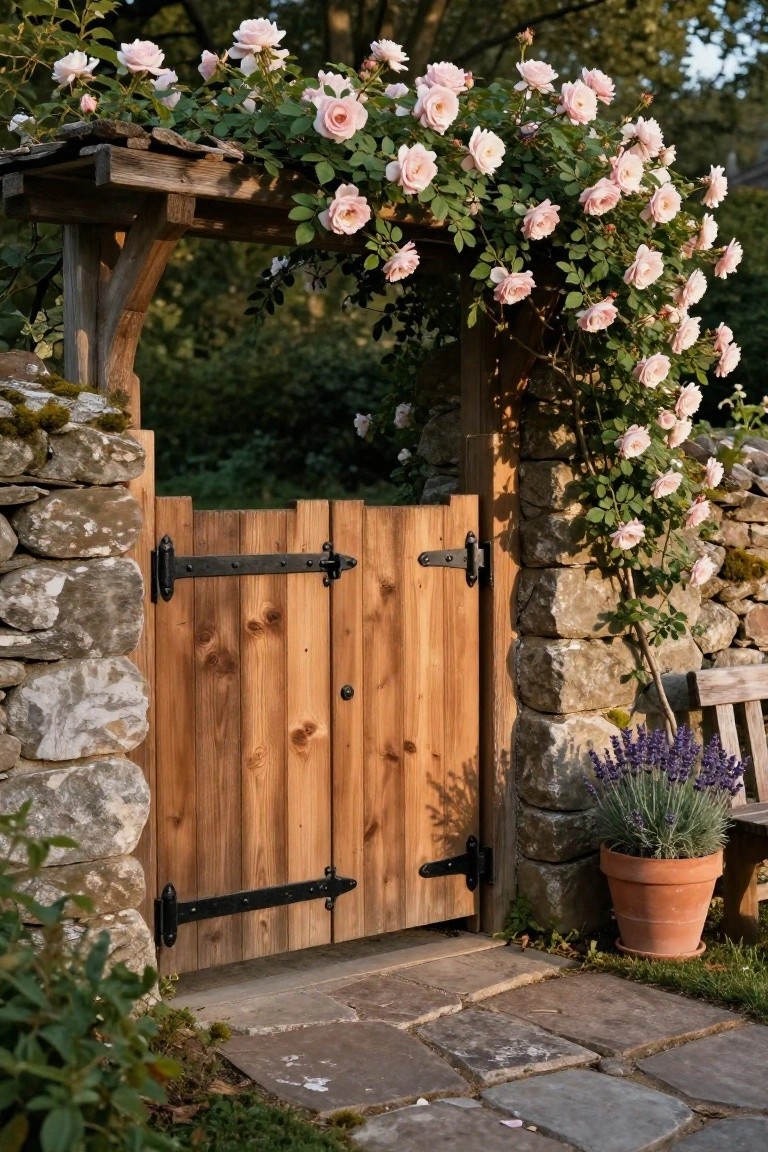
A wooden gate already feels welcoming on its own, but letting roses climb across the top adds a softness that makes the entrance feel more personal. The contrast between the simple wood and the full blooms draws the eye without any extra effort. It works especially well on gates that sit in a stone or brick wall.
This approach suits older homes or cottage style gardens where you want the gate to blend into the planting rather than stand out as a hard edge. Just make sure the roses are the type that can be trained along the structure without constant pruning. A few well placed plants can turn a basic gate into something that feels like part of the garden itself.
Adding Pots Beside A Picket Gate
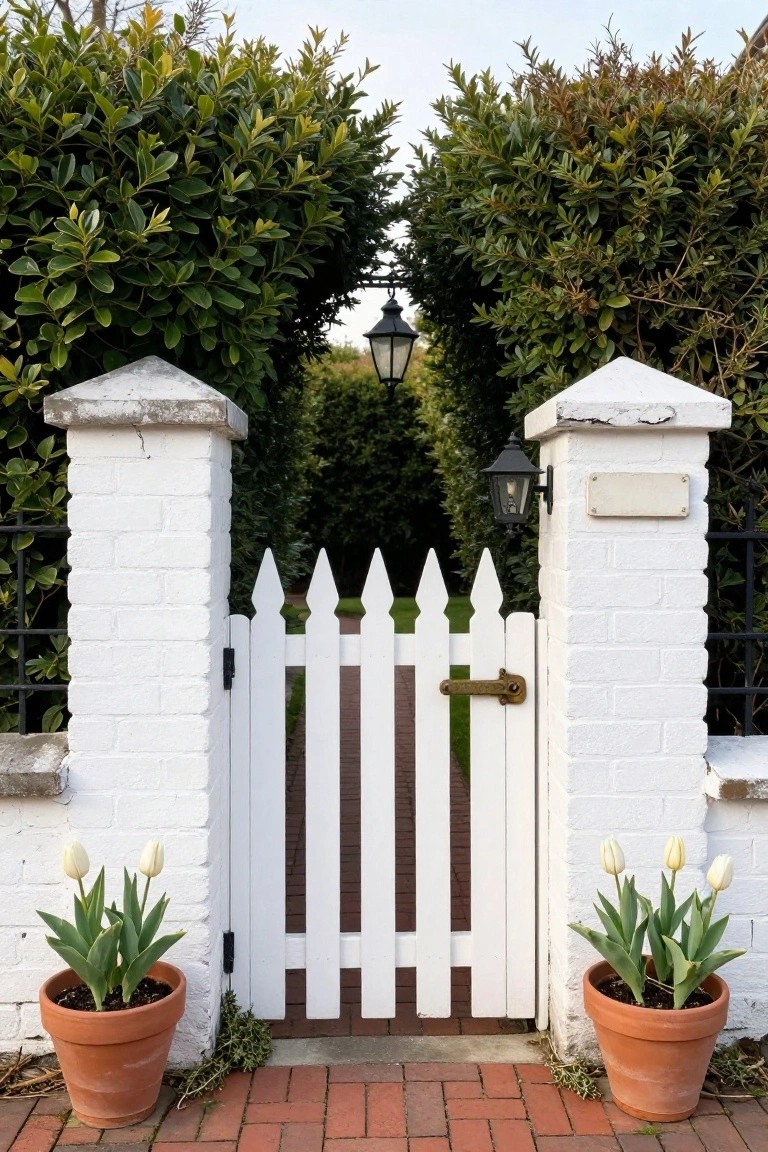
A white picket gate already feels open and friendly on its own. Placing a pair of pots right at the base adds a bit of color and life without crowding the entrance or making it feel fussy.
This works best on homes with a simple front path or a small garden edge. Keep the pots low and the plants seasonal so the gate stays the main focus and the whole spot stays easy to walk through.
Wood Gate With Stepping Stones
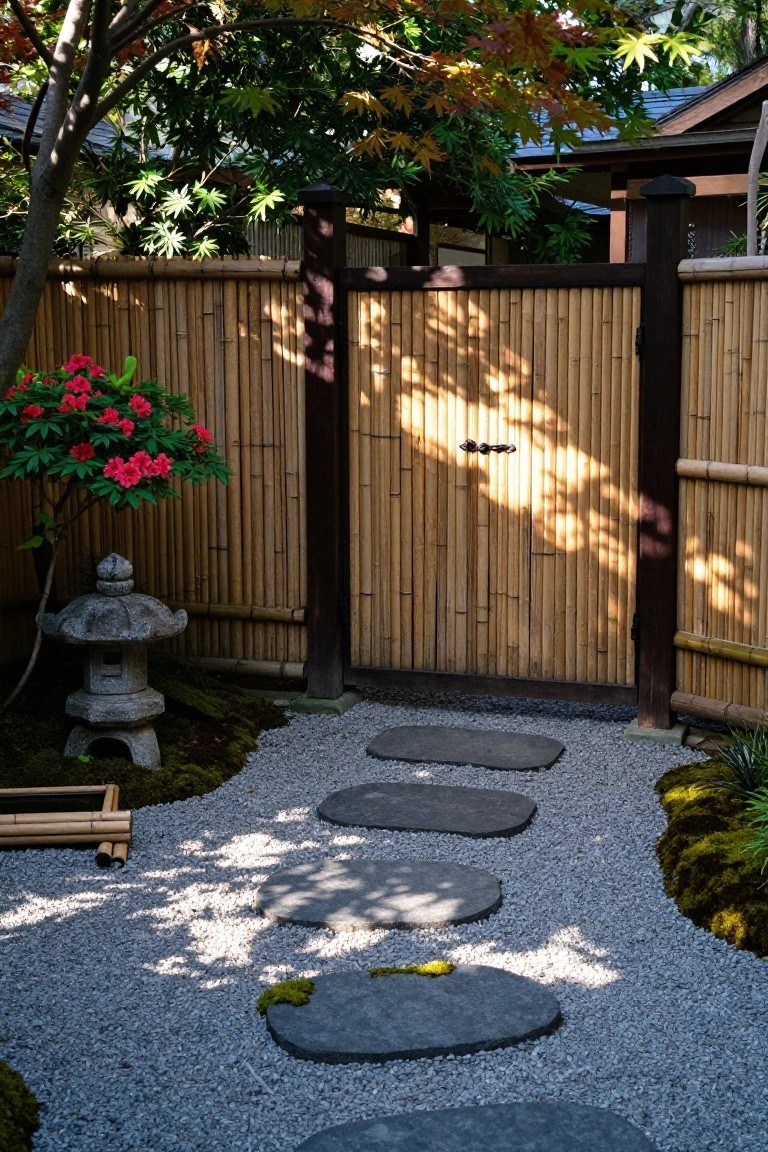
A wood gate set into a fence works better when the path leading up to it feels easy and natural. Stepping stones laid through gravel slow people down just enough and make the whole entrance feel more like part of the garden instead of a hard cutoff.
This setup suits homes with smaller yards or side entries where you want something simple but still welcoming. Keep the stones slightly irregular and let a bit of moss or low ground cover grow between them if the light allows. The wood gate itself stays the main focal point without needing extra trim or hardware.
Try Horizontal Slats On The Gate
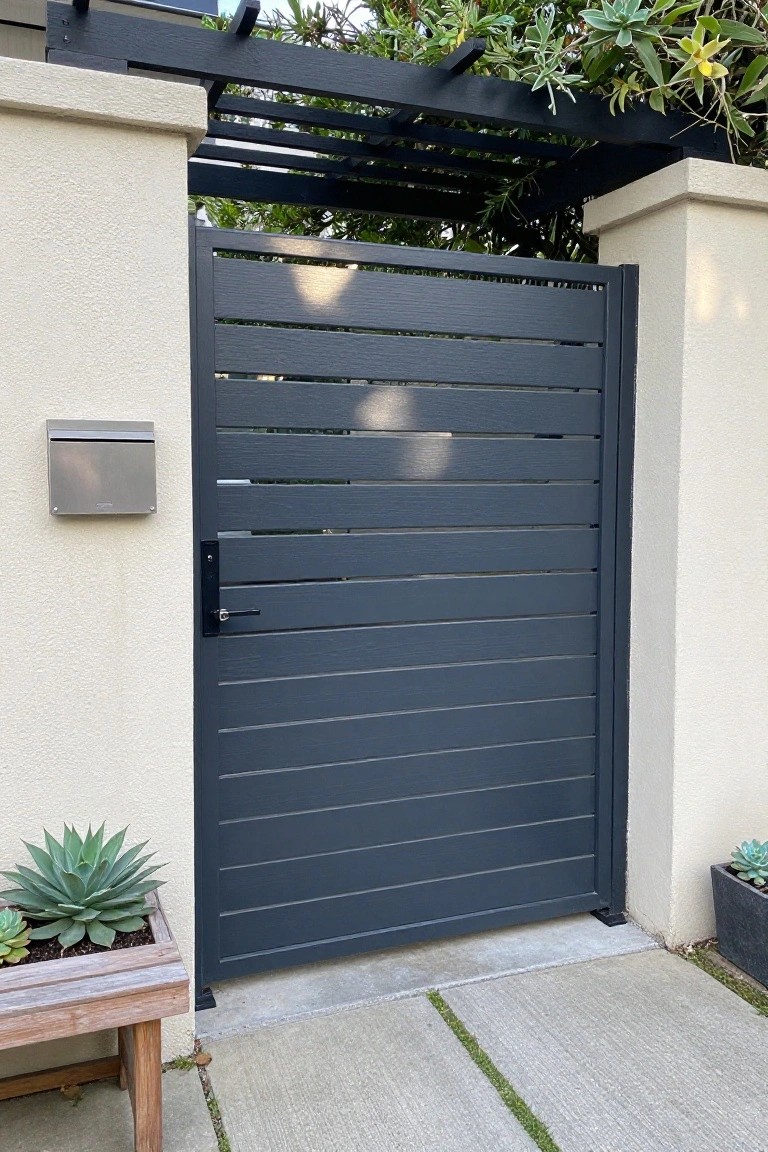
Horizontal slats give a gate a lighter look than solid panels while still keeping the boundary clear. The even lines break up the surface without making the whole thing feel busy or fussy. Many people like this style because it feels current but does not demand much attention on its own.
This approach suits homes with straight lines and simple materials. It works especially well when the gate color stays close to the fence or wall color so the entry reads as one quiet plane. Dark finishes help the gate sit back visually and let nearby planting do more of the work.
Add an Arch Over the Gate
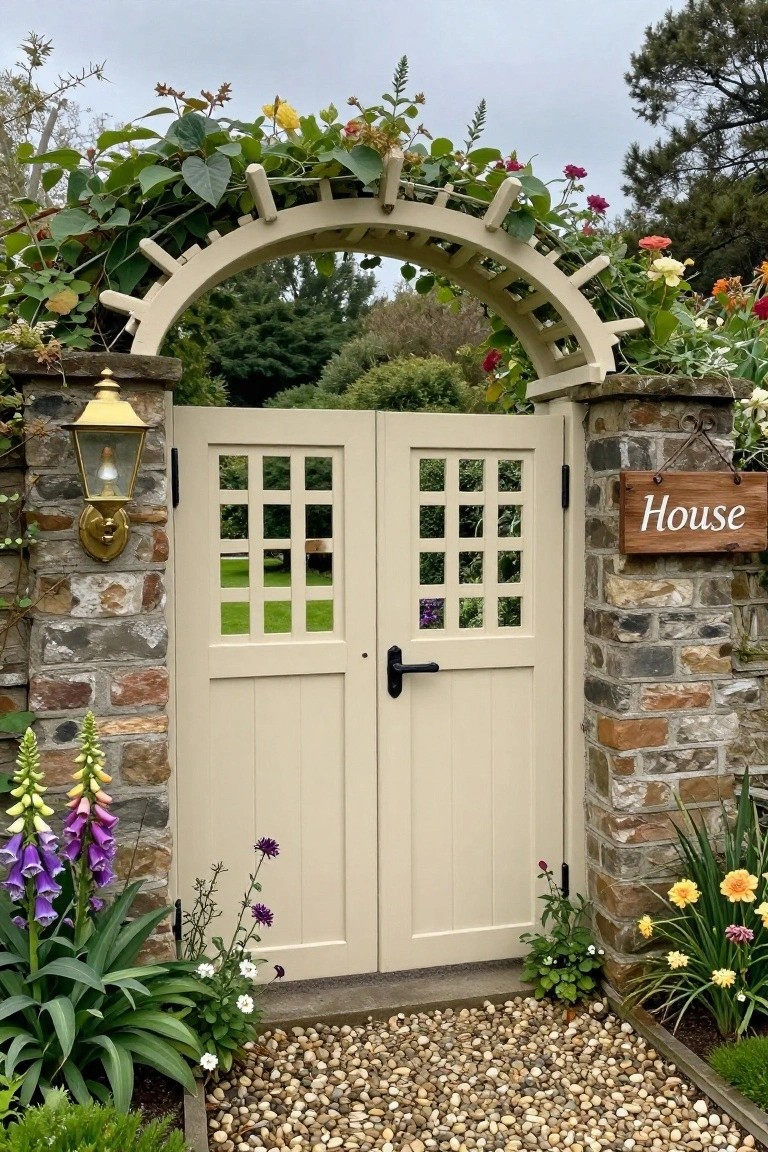
An arched trellis above a gate gives the entrance a finished look that feels more welcoming than a plain opening. The curve adds height and shape, and it creates a natural spot for vines to grow across the top without taking up much space on either side.
This works best on garden gates or side entrances where you want a bit of character but do not need a full arbor. Keep the arch simple and match the wood tone to the gate so the whole thing feels like one piece rather than an add-on.
Weathered Wood Gates With Rope Latches
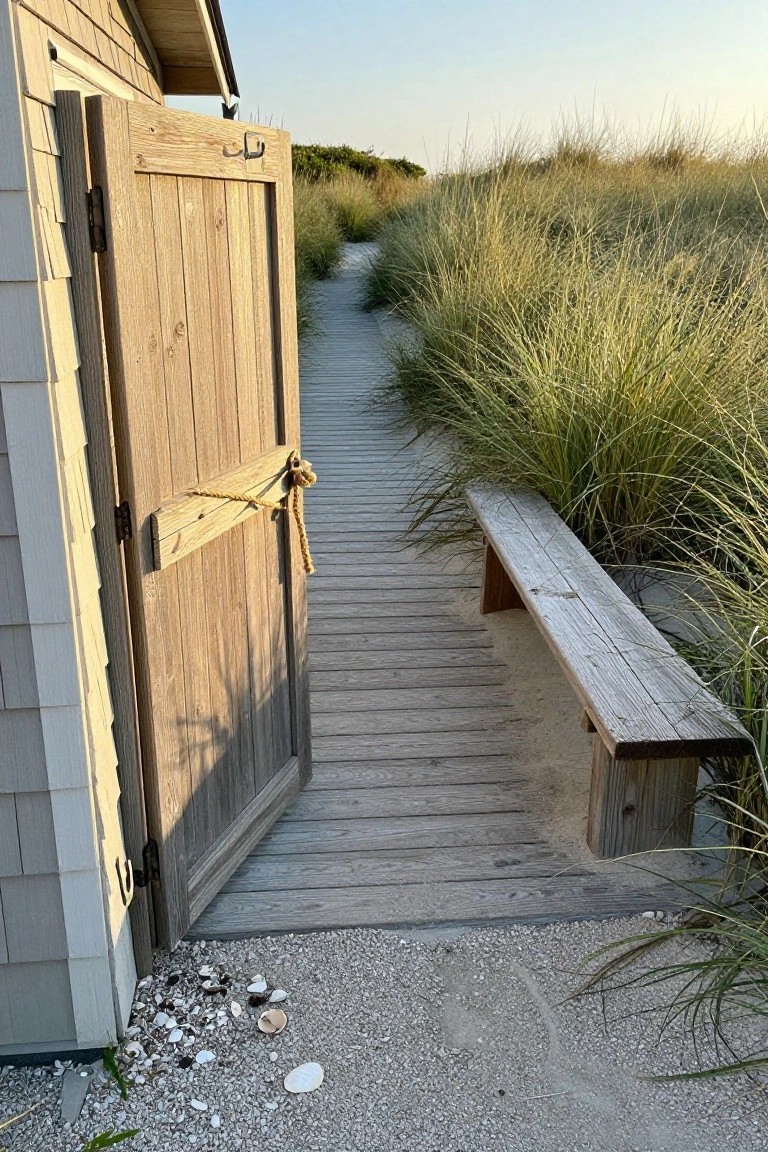
A gate made from simple vertical planks and left to weather naturally gives an entrance an easy, unfussy look. The rope latch adds a practical touch that feels right at home near sand and grass instead of something fussy or painted.
This style works best on homes near the coast or in open landscapes where you want the gate to blend in rather than stand out. Keep the wood unfinished so it ages with the surroundings, and make sure the path beyond stays clear and wide enough for comfortable use.
Keep the Entry Simple with Natural Wood
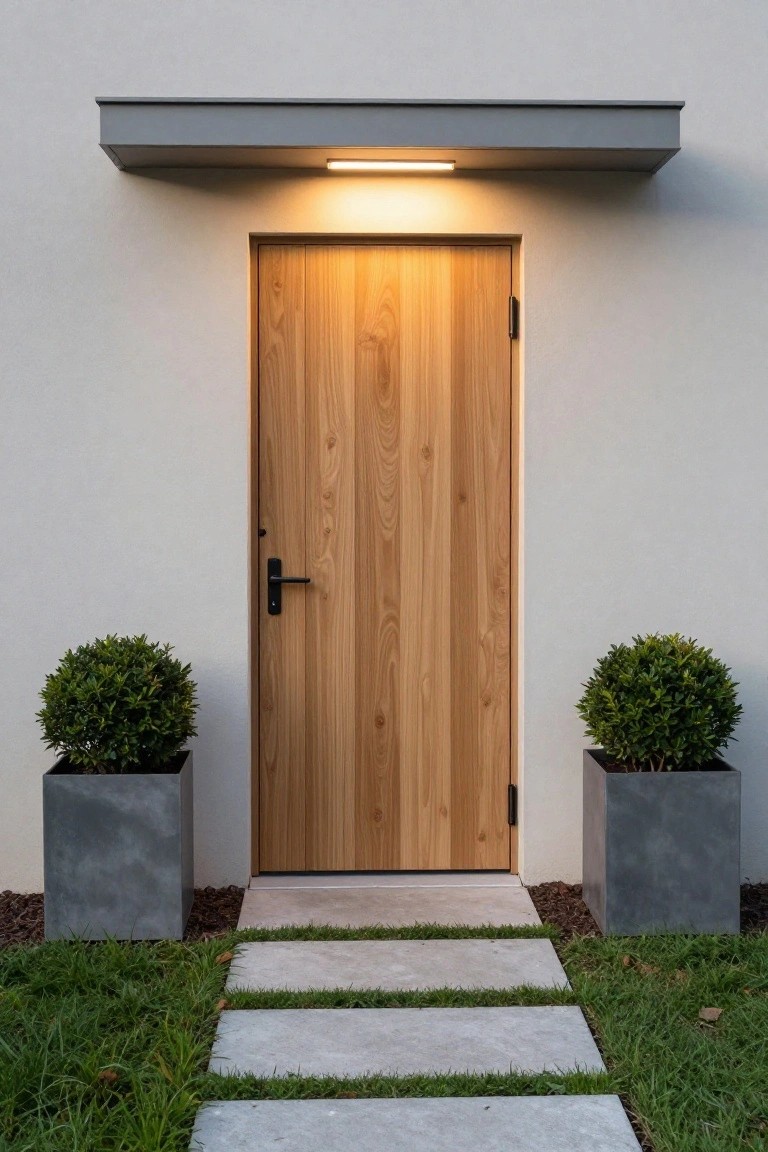
A wood door with clean vertical grain can make an entrance feel more welcoming without any extra decoration. It pairs well with a plain overhang and simple hardware that does not compete with the material itself.
This approach works best on homes with a modern or minimalist style where you want the front to feel open and approachable. Match the planters on each side so the door stays the center of attention rather than getting lost among other details.
Paint a Few Pickets in Pastel Tones
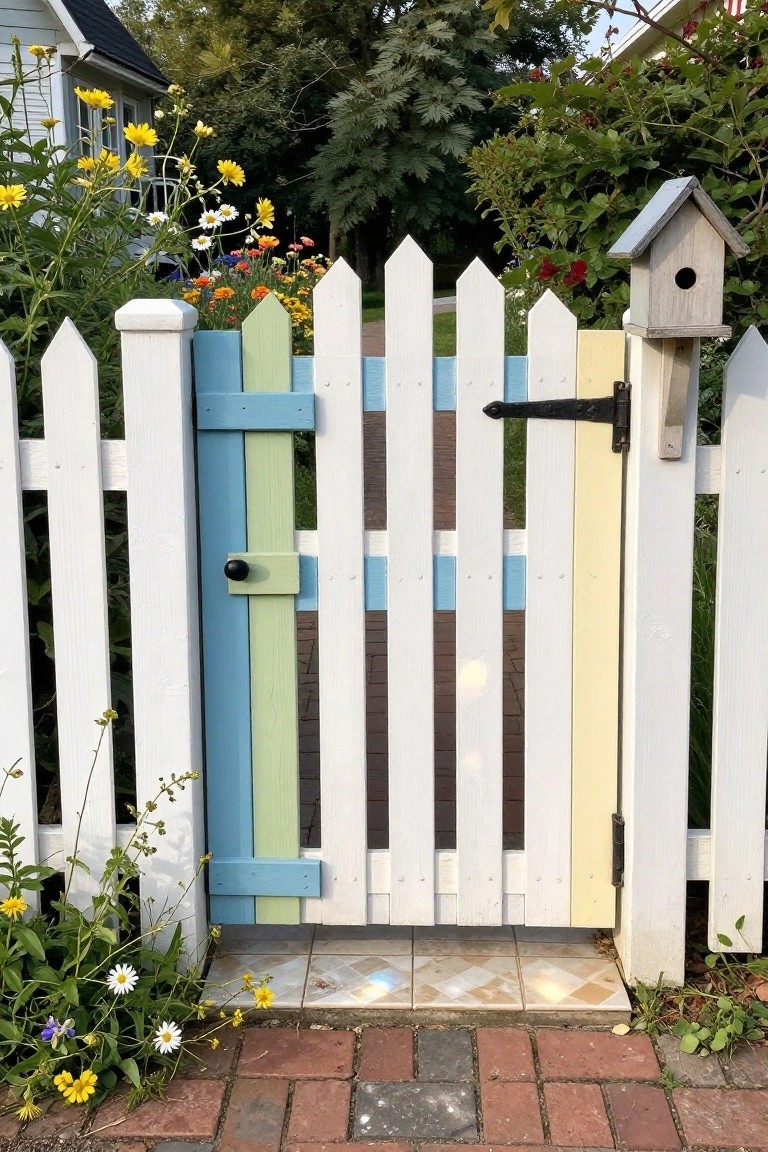
One simple way to make a gate feel more welcoming is to paint just a handful of pickets in soft pastel shades while leaving the rest white. The mix adds a gentle touch of color that still reads as classic rather than bold.
This works best on smaller gates in cottage or traditional yards. Keep the colors light and limit them to two or three tones so the look stays friendly instead of busy.
Vertical Wood Slat Gates
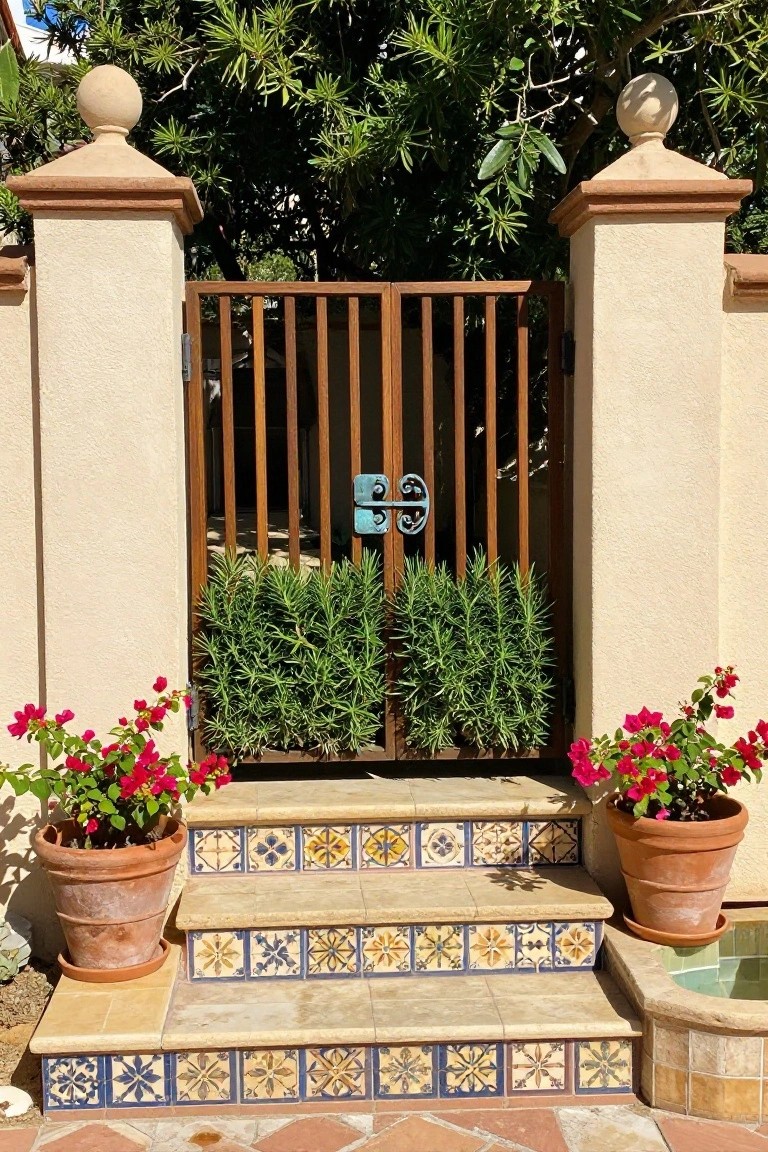
A vertical wood slat gate gives an entrance a clean look without making the space feel closed off. The bars let light and views pass through, which keeps the entry feeling open even when the gate is shut. This style pairs easily with stucco walls and works well on homes that already have some tile or stone details.
It suits smaller front yards or side entries where you want a clear boundary but not a heavy wall. Keep the hardware simple so it does not compete with the wood, and make sure the gate height lines up with any nearby pillars or fencing.
Add A Metal Cap To Your Wood Gate
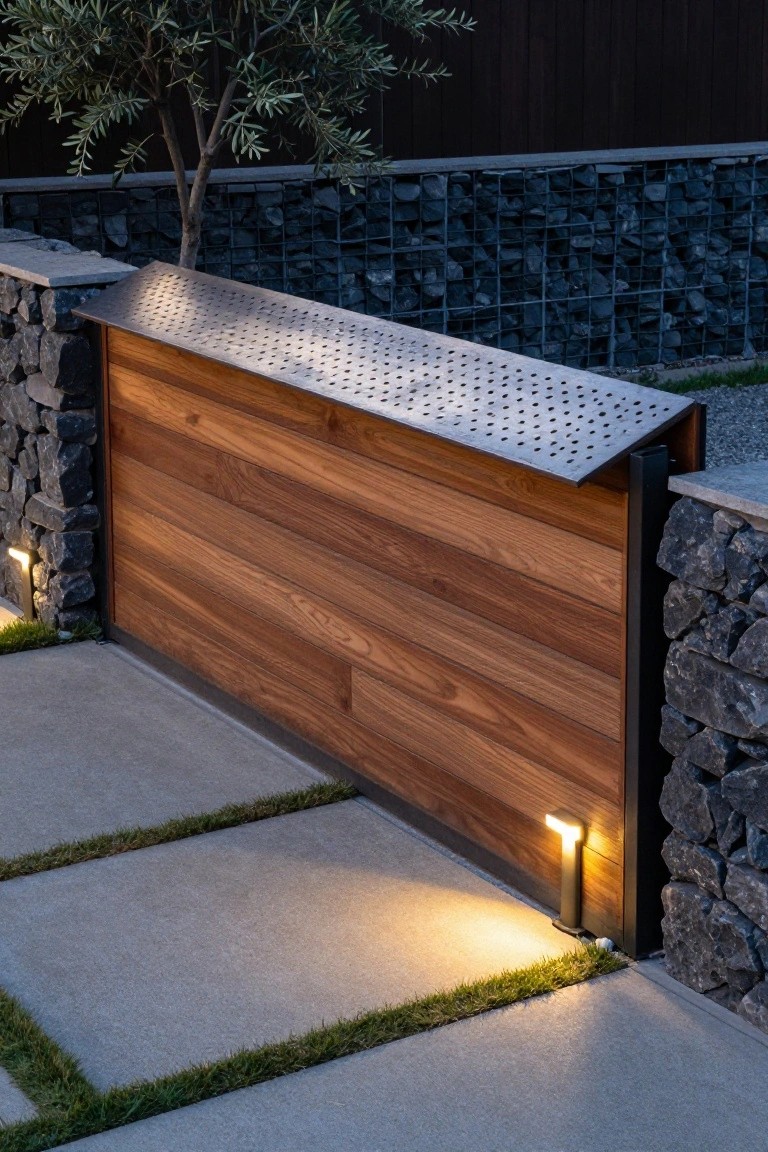
A metal cap gives a wood gate a clean finished edge that stands up better to weather. The perforated top here sits right over the horizontal boards and adds a quiet modern note without taking away from the warmth of the wood.
This detail works best on gates that sit between stone or masonry walls. Use a sturdy gauge of metal so it does not dent easily, and match the finish to any other hardware on the gate.
Add a Frosted Panel to the Gate
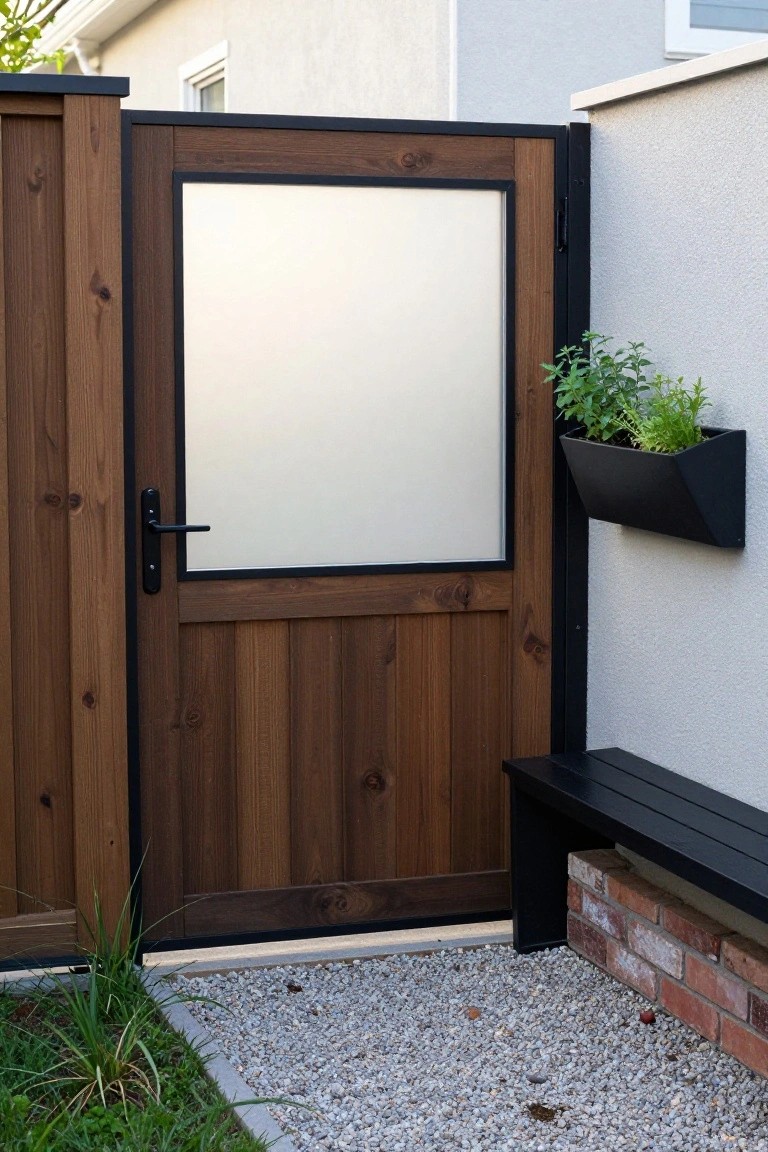
A frosted panel in a wood gate lets daylight reach the path without giving up privacy. The effect feels lighter than a solid door while the wood still gives that warm, natural look most people want at an entrance.
This choice works best on side or back gates where full visibility is not needed. Keep the frame simple, use a matte finish on the glass, and match the hardware to the fence posts so the whole thing stays easy to maintain.
Vertical Planters On A Wood Fence
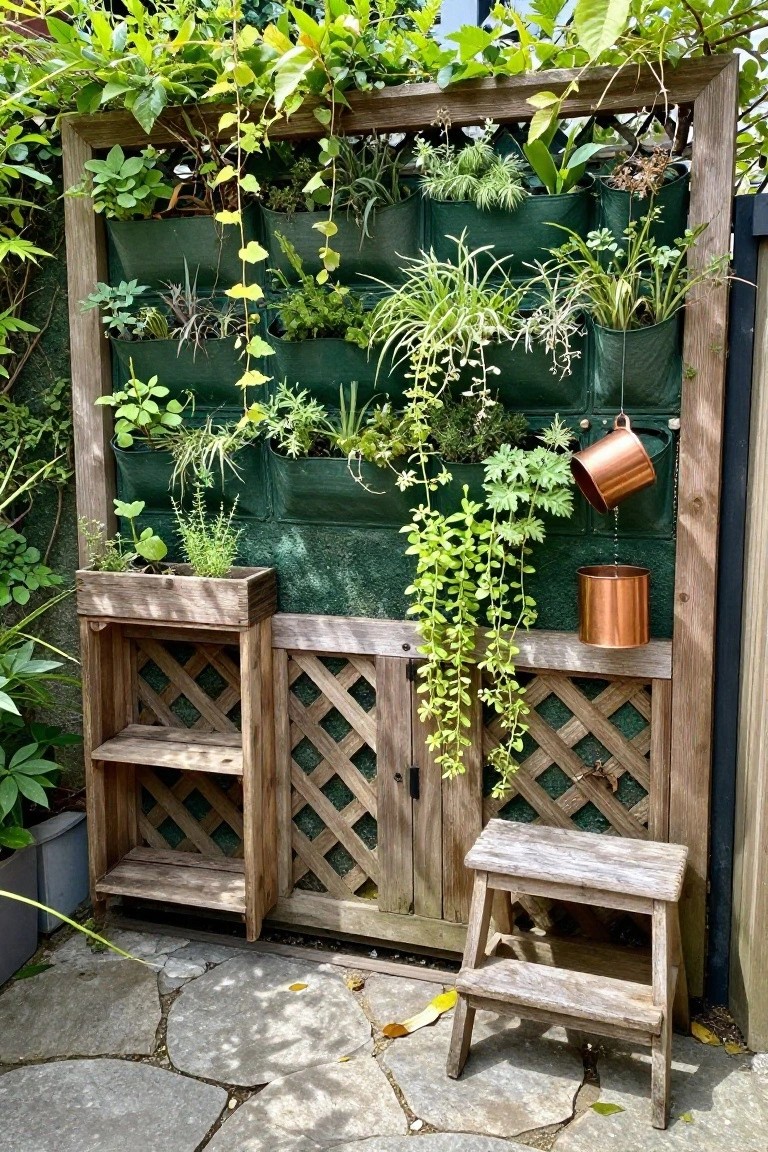
Adding vertical planters directly to a wood fence or gate gives the entrance some life without crowding the ground. The pockets hold a mix of herbs, trailing plants, and flowers that soften the wood and make the whole area feel more open and friendly. It is a simple way to bring color and texture to what might otherwise be a flat surface.
This approach works best on fences that already have some structure or backing to support the weight. It suits smaller yards or side entrances where ground beds are not practical. Just keep the fabric or containers well secured and check that water drains properly so the wood stays dry over time.
Wooden Gates With Stone Pillars
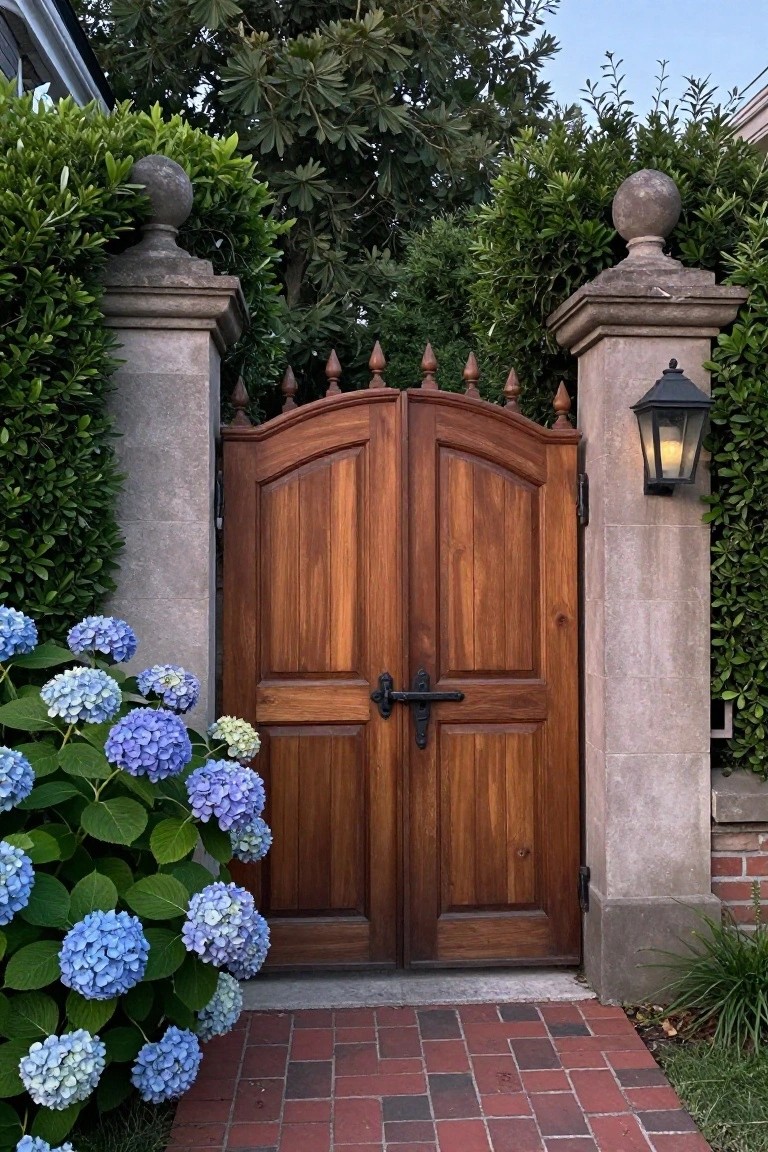
A wood gate placed between stone pillars creates a clear and friendly entry point. The solid posts give the gate weight and presence, while the wood itself keeps things warm and approachable rather than stark.
This setup works best on homes with traditional or cottage style where the pillars can match existing stone or brick. Keep plantings low and full right at the base so they soften the look without blocking the gate or the path.
Run a Bench Along the Fence
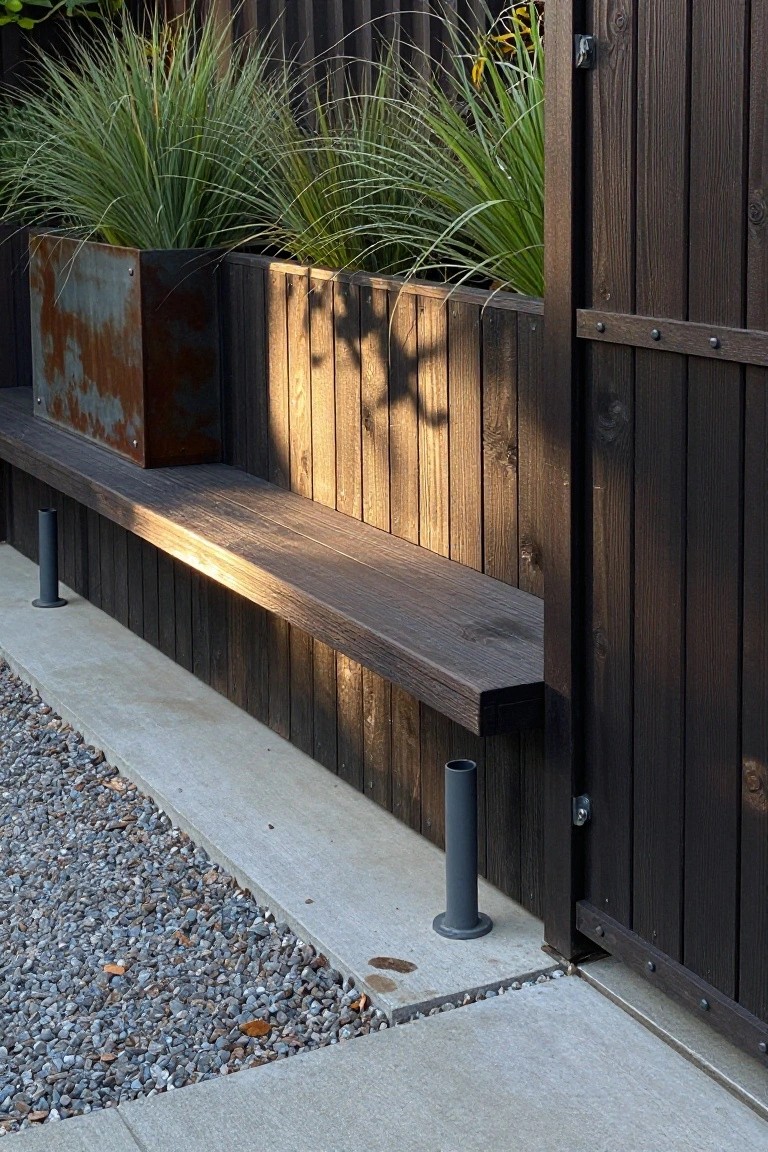
One simple way to make a wood gate feel more useful is to add a bench right along the fence. It gives people a place to sit without taking up extra space in the yard, and it makes the whole entrance feel more settled.
This works best on side entries or narrow front paths where you want seating but do not have room for separate furniture. Keep the bench material close to the fence color and use simple supports so it feels like part of the structure rather than something added later.
Add Small Planters to a Wooden Gate
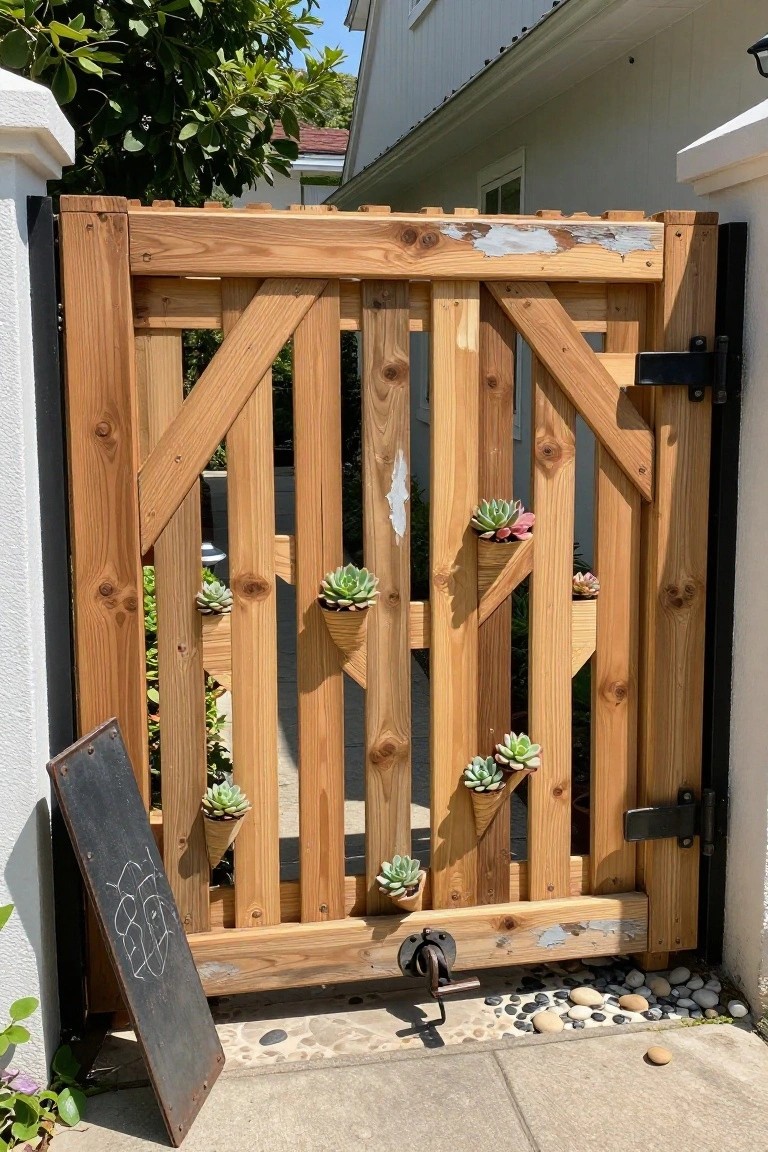
One simple way to soften a wood gate is to add a few small planters directly onto the boards. The plants break up the straight lines of the wood and give the entrance a bit of color and life right at eye level.
This works best on gates with vertical slats or rails where lightweight holders can be mounted without getting in the way of the latch or swing. Use plants that need little water so they stay looking good even if you forget them for a few days.
Carved Wood Doors For A More Inviting Entry
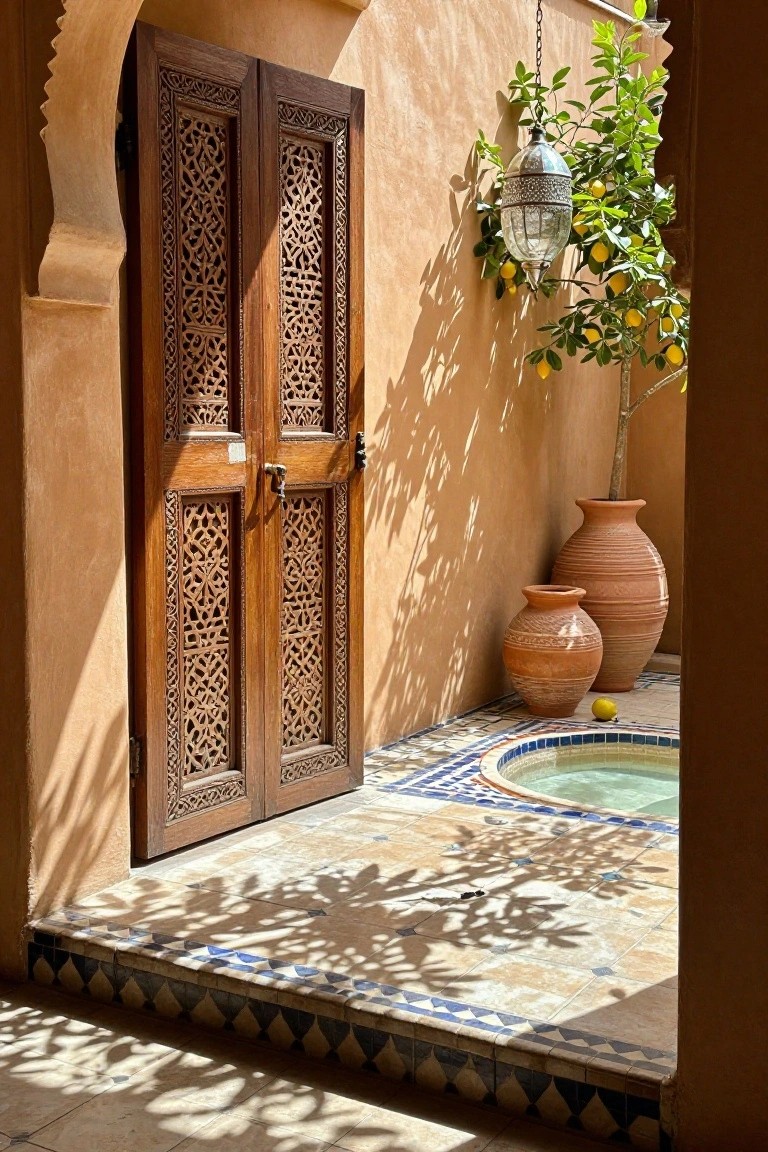
Carved wood doors give an entrance a sense of care that plain ones often lack. The patterns stand out even from a short distance and make the doorway feel like it was built with some intention rather than just put up to keep the weather out.
This approach works best on homes with warm stucco or simple masonry walls where the wood can contrast nicely. Keep the carvings bold enough to read from a few feet away, and choose a finish that holds up to sun and rain if the door sits outside.
Add an Arbor at the Start of a Garden Path
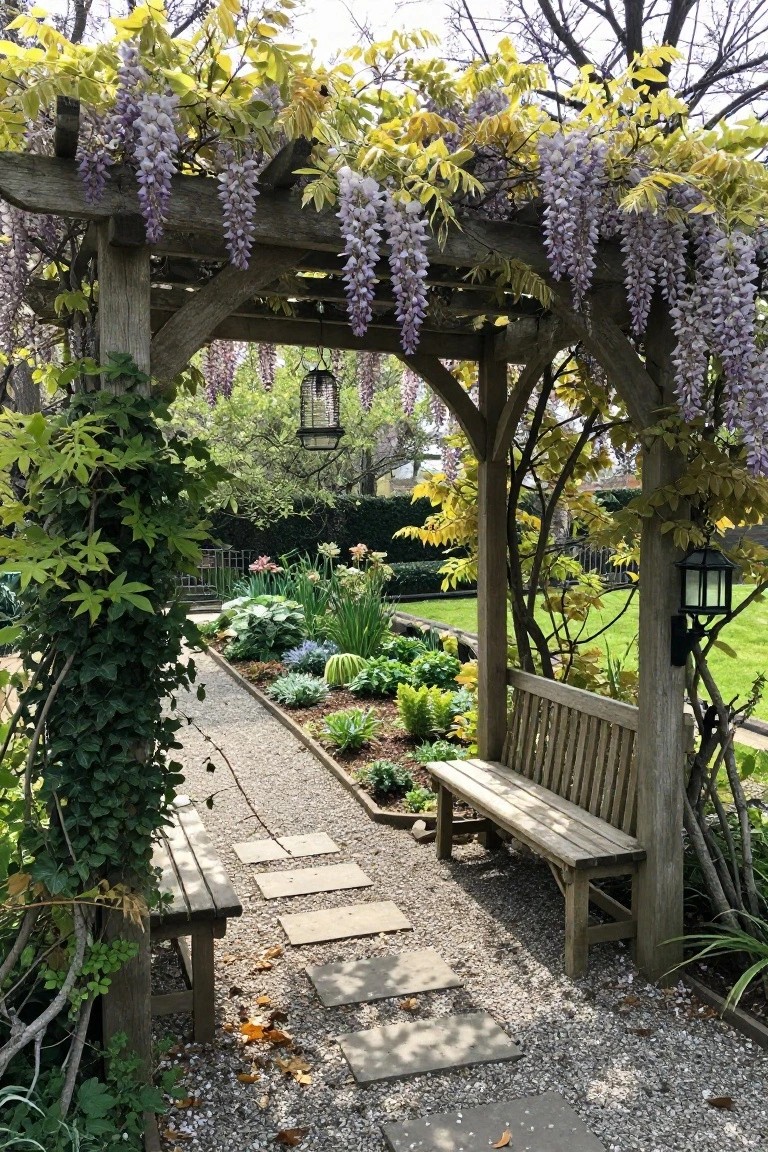
A simple wooden arbor works well as a garden entrance because it gives the space a clear starting point without closing it off. Vines growing over the top add height and softness that a plain opening often lacks.
This setup suits homes with gravel paths or informal beds where you want something welcoming but not too formal. Keep the wood natural or lightly weathered and choose a vigorous climber that can handle the structure over time.
Pavers Set In Grass Form A Casual Path
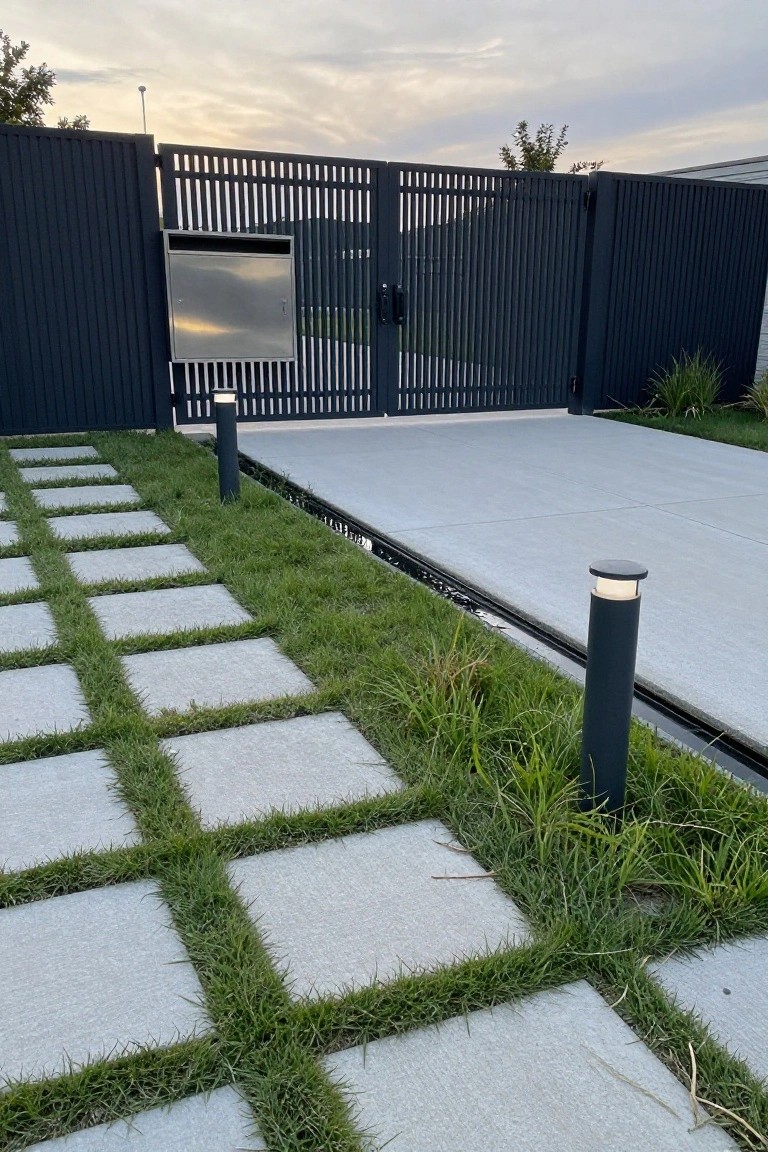
Many people like square pavers set right into the lawn because the look feels relaxed yet still gives a clear way to walk. The grass growing between them softens the whole approach and keeps the entrance from feeling too hard or formal.
This setup works best on smaller side entries or front yards where you want something simple and low maintenance. Space the pavers for easy steps and keep the surrounding grass trimmed so the path stays easy to follow.
Built-In Benches Between Stone Walls
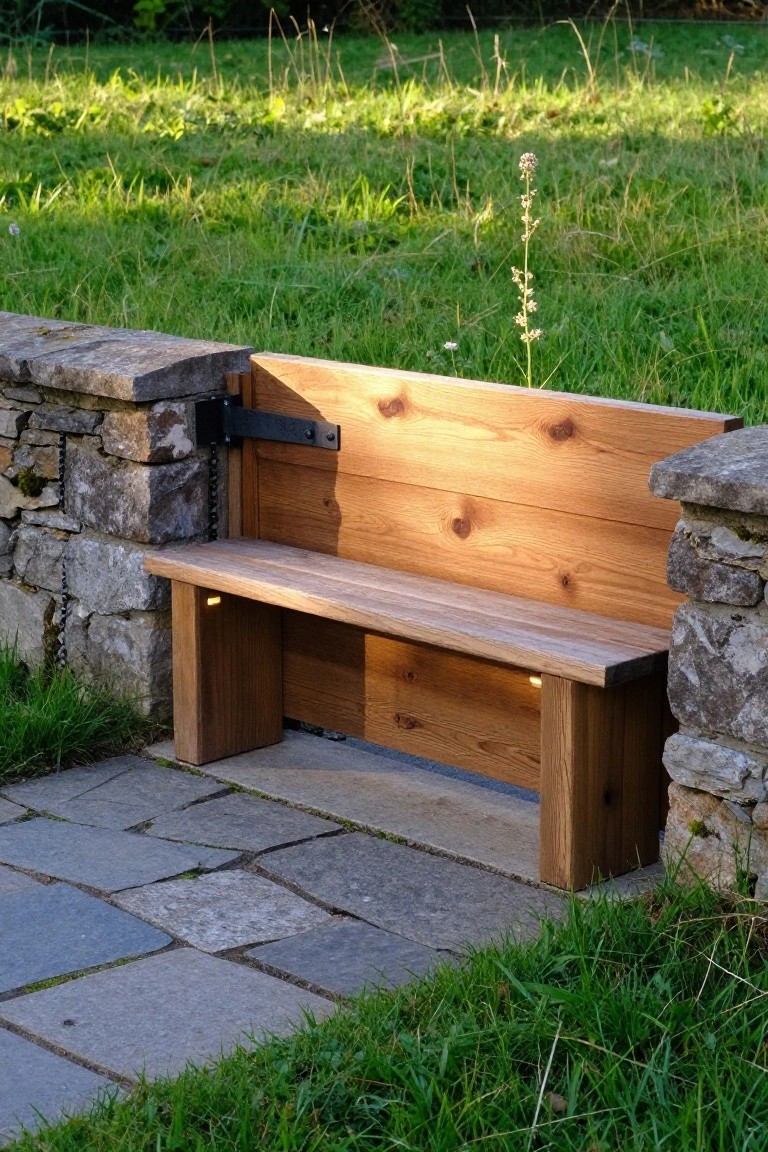
A wood bench set right into stone walls gives an entrance a place to pause without adding much extra structure. The simple plank design keeps the focus on the path and the boundary rather than on separate furniture.
This setup works best along garden paths or low boundary walls where people already walk through. Use pressure-treated or sealed hardwood so it holds up, and keep the seat depth comfortable for short rests rather than long lounging.
Frequently Asked Questions
Q: How do I pick a gate style that fits my house without it looking out of place? A: Match the gate lines to your fence posts and any nearby trim on the house. Simple vertical boards often work best next to horizontal siding.
Q: What wood holds up if my yard stays damp most of the year? A: Cedar resists moisture on its own so it needs less work later. Pine soaks up water faster and starts to split sooner in wet spots.
Q: Can I hang a new gate myself if the fence is already there? A: Yes with a drill, level, and a helper for the first lift. Set the hinges square before you tighten anything so the gate swings free and stays that way.
