

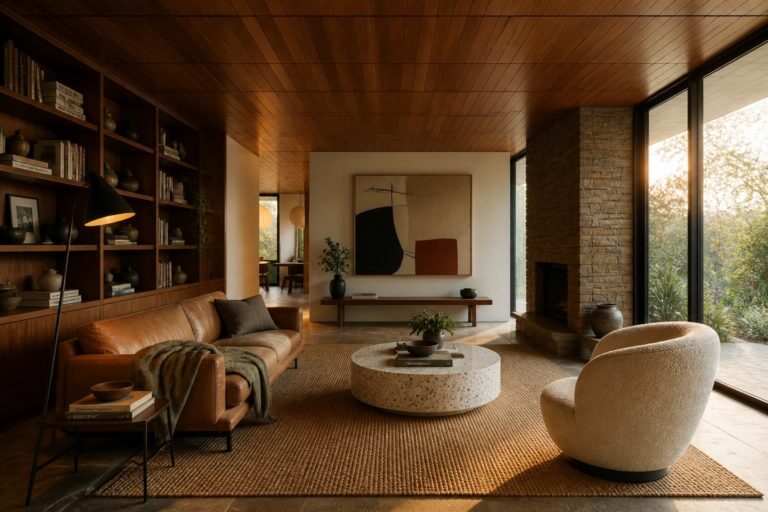
I have always noticed that ceilings tend to shape how a room settles once the furniture is in place and people start using the space every day.
Wood panels arranged in steady grids can help pull the eye across the room without making the height feel off.
Some patterns hold up better once you live with them for a while.
I have seen rooms where a ceiling treatment either ties everything together or leaves the space feeling slightly unfinished depending on how the lines run.
In my own house I would test the seamless styles first because they seem to stay looking intentional even after a few years of normal wear.
Wood Panel Ceilings With Clean Grids
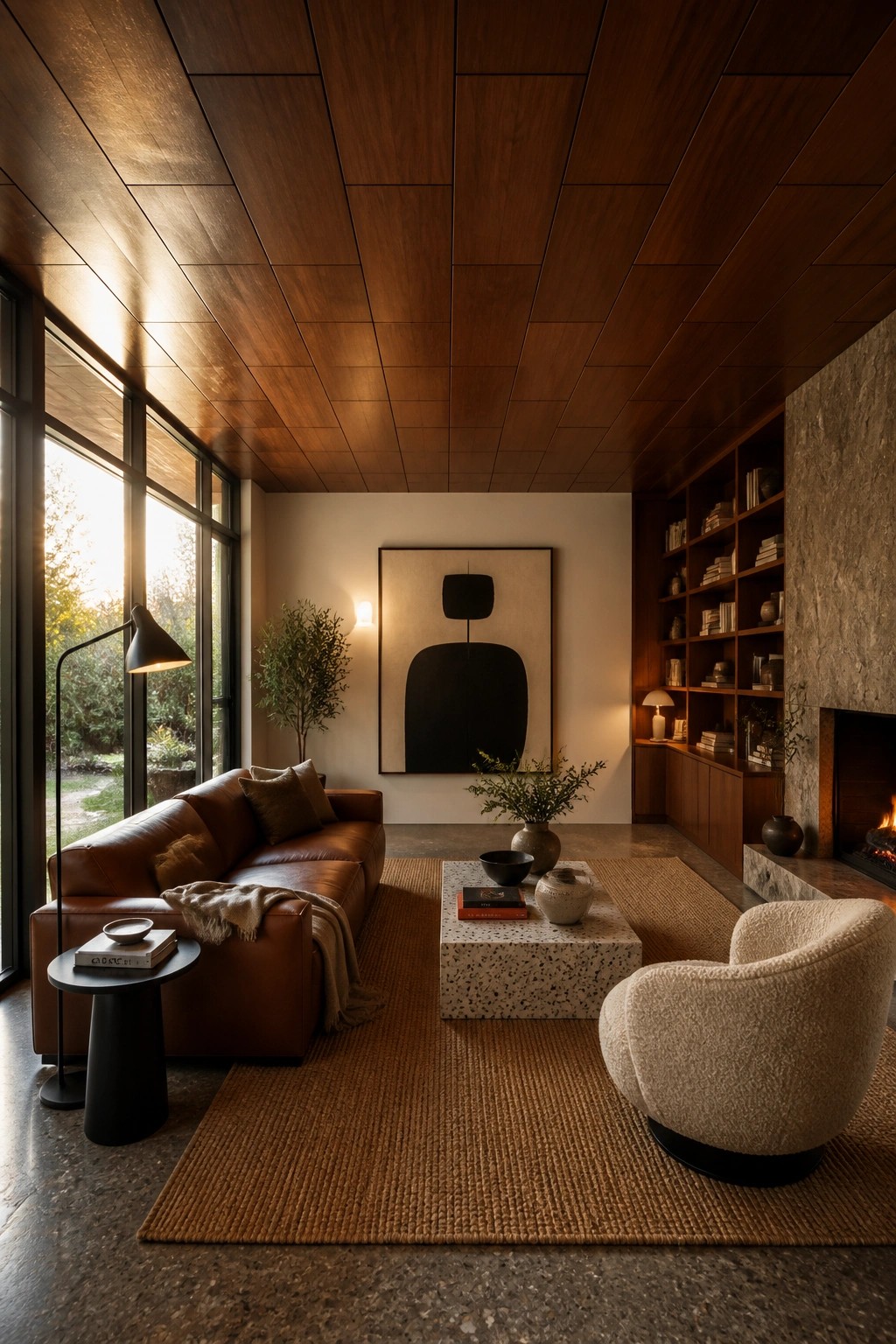
A wood panel ceiling laid out in a simple grid adds warmth and structure without extra trim or fuss. The even lines keep the surface feeling calm and complete, especially in rooms where the ceiling gets plenty of light.
This works best in living areas or open spaces that already use wood elsewhere. Keep the grid tight and the finish consistent so the ceiling reads as one clean plane rather than separate boards.
Carry Wall Paneling Onto the Ceiling
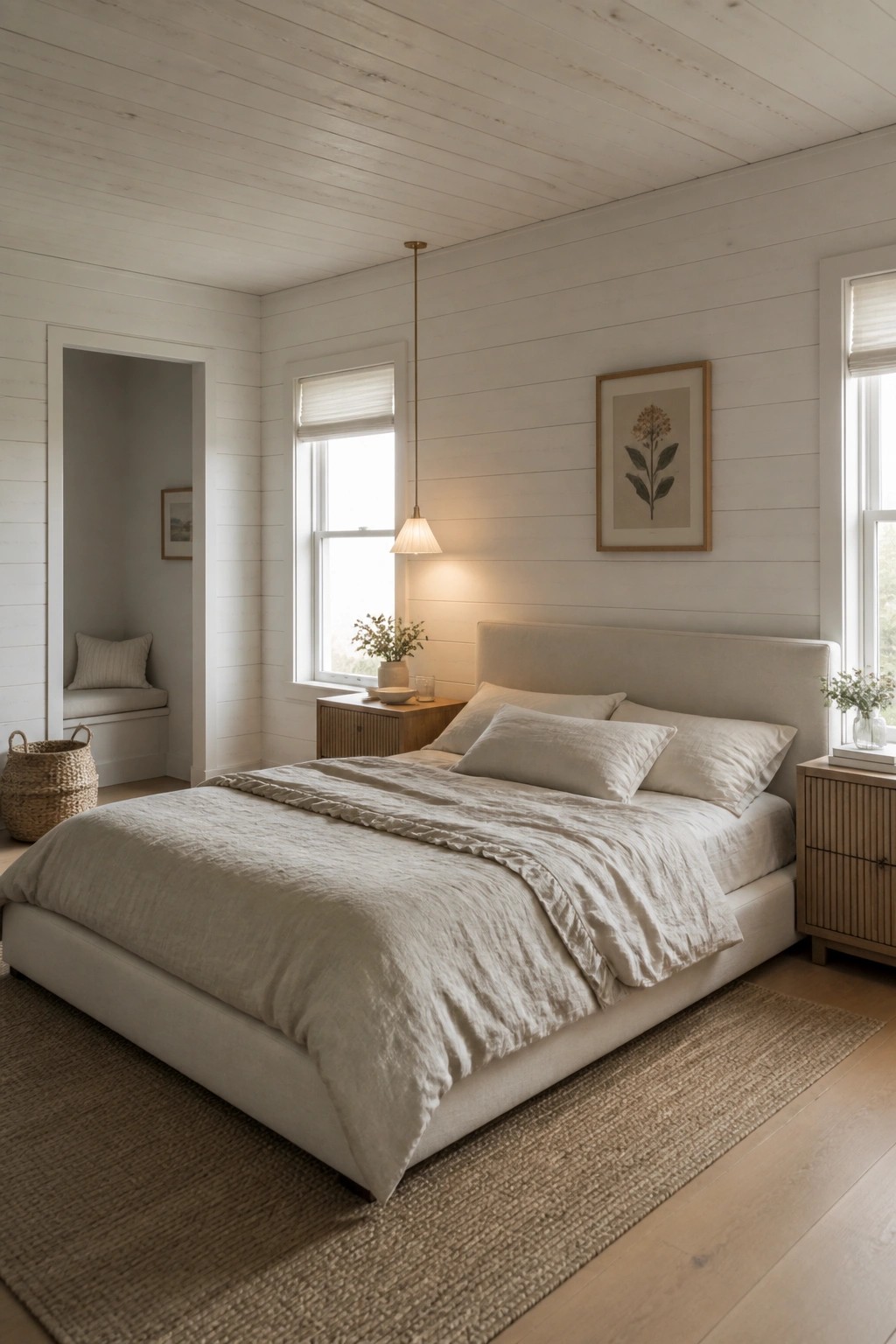
One simple way to make a room feel more connected is to run the same wood panels from the walls straight up onto the ceiling. The break between surfaces disappears, and the space feels calmer and a little taller without adding any extra trim or contrast.
This approach suits bedrooms and smaller rooms where you want a quiet, unified look. Keep the panel direction consistent and stick with the same finish so the ceiling reads as a natural extension rather than a separate surface.
Wood Slat Ceilings That Keep Lines Clean
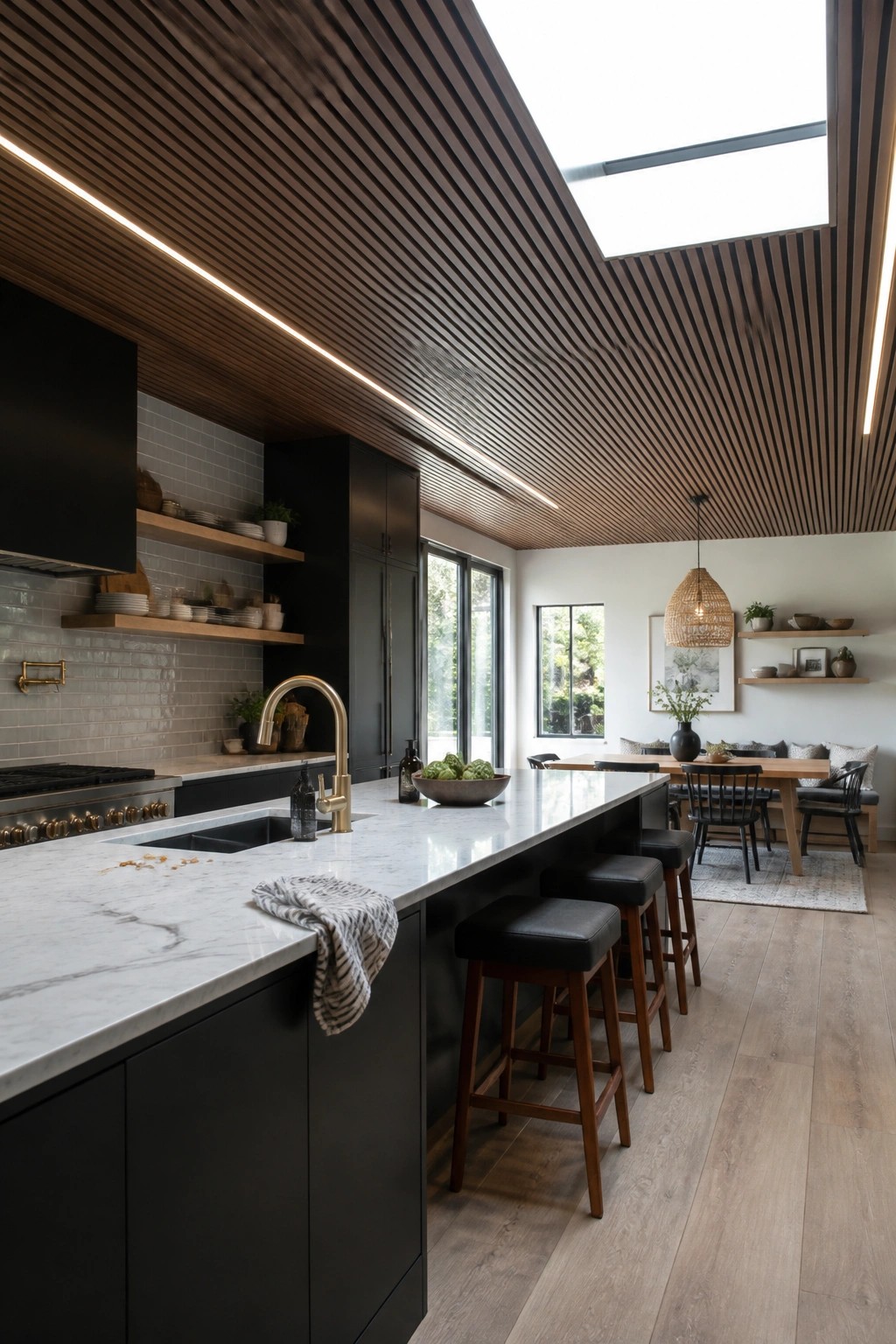
Linear wood slats work well when you want the ceiling to feel finished without adding heavy detail. They create a steady pattern that runs across the space and helps tie together different zones in an open kitchen. The slats also give the room some warmth while keeping the overall look simple and modern.
This approach suits homes with high ceilings or skylights because the lines stay consistent even when light comes in from above. Keep the slats narrow and evenly spaced, and match the tone to your cabinetry or flooring if you want everything to feel connected. Avoid mixing too many other ceiling treatments in the same room or the effect gets busy fast.
Wood Panel Ceilings That Add Quiet Warmth
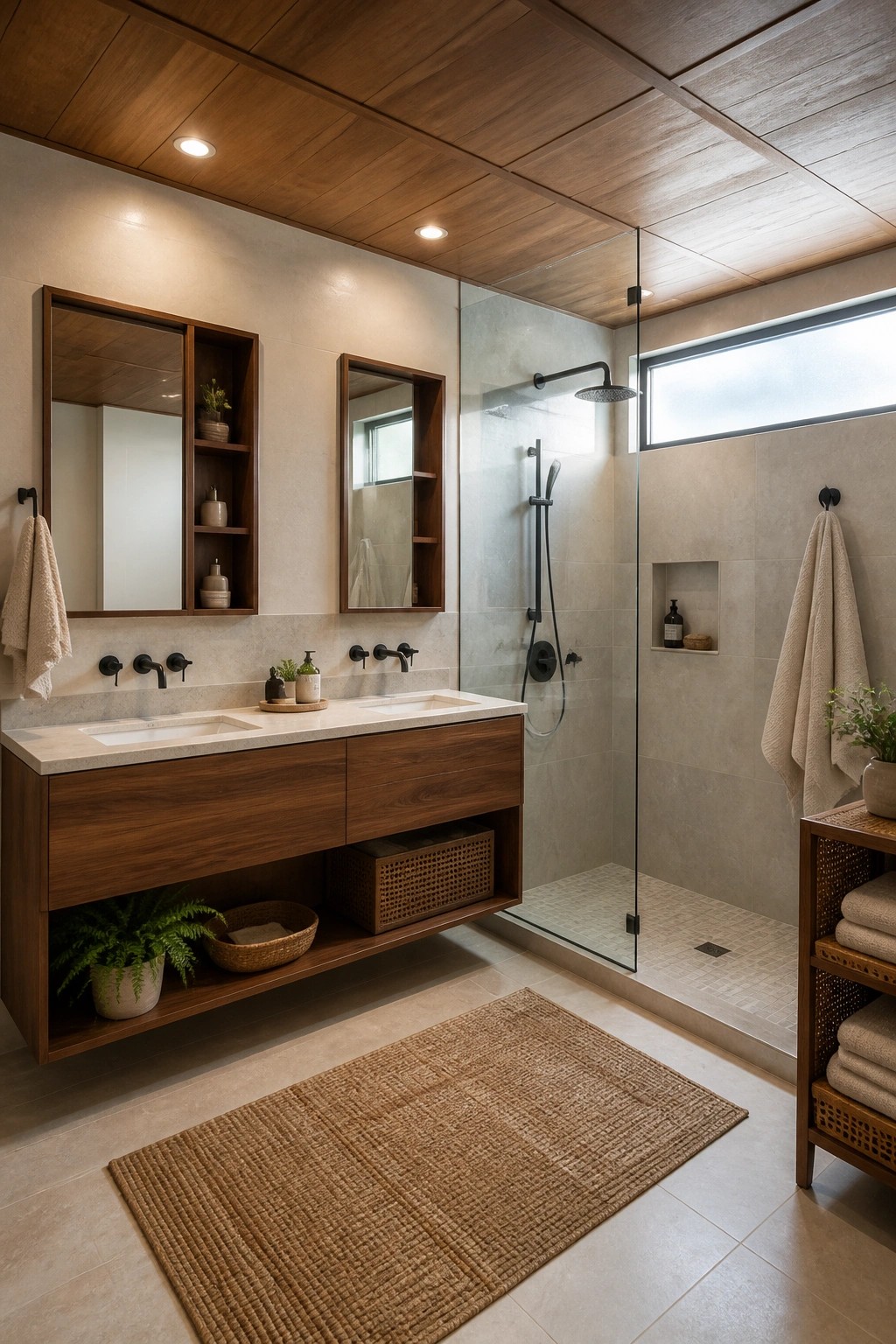
A wood panel ceiling brings a steady sense of warmth to a bathroom without making the space feel heavier. The clean grid layout keeps the pattern simple and the coverage seamless, so the room still feels open even with all the wood overhead.
This works best in homes that already use natural materials elsewhere. It pairs well with lighter walls and simple fixtures, and it gives you that extra layer of texture without needing more decoration on every surface.
Wood Coffered Ceilings With a Grid Pattern
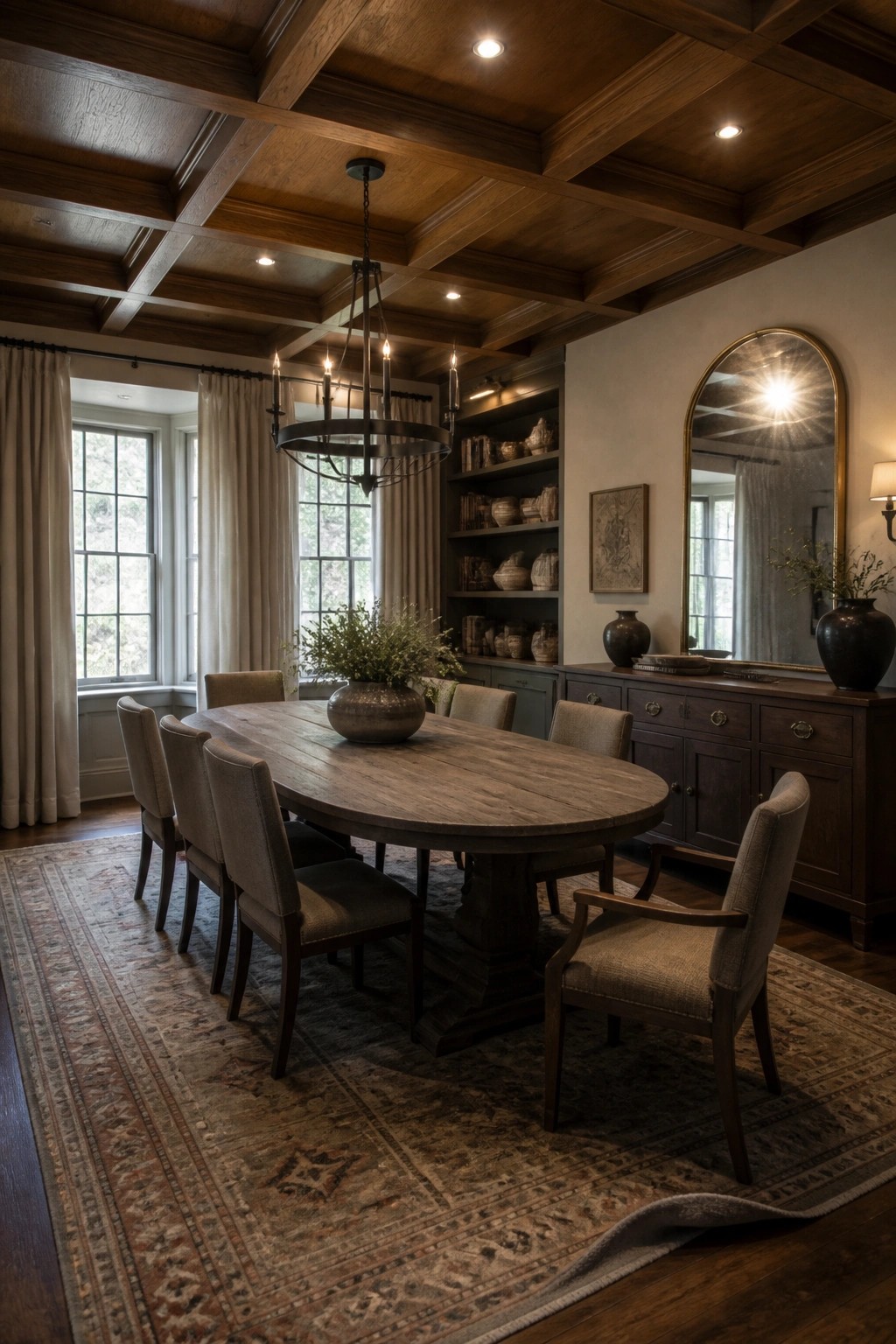
A coffered ceiling built from wood panels in a clean grid adds structure without feeling heavy. It works especially well in dining rooms where people spend time looking up, and the repeating squares help the space feel ordered and finished.
This approach suits homes with higher ceilings and pairs best with simple wall colors and darker wood tones. Keep the beams fairly even in size and spacing so the grid stays balanced rather than busy.
Grid Ceilings That Add Quiet Structure
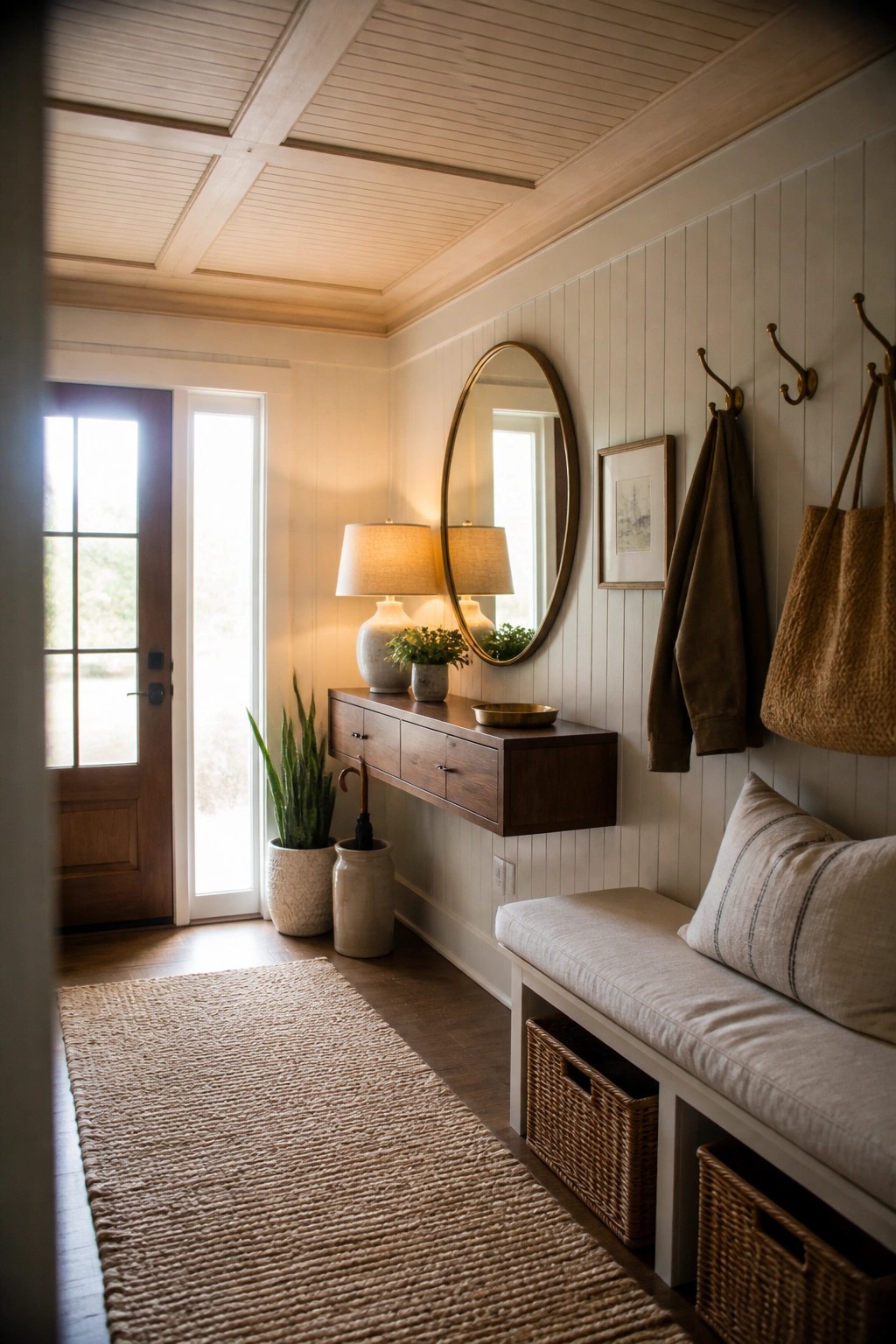
A wood grid ceiling works well in a busy entry space because it gives the room shape without adding clutter on the walls or floor. The clean lines keep the look simple while the wood tone brings in a bit of warmth that helps the area feel more finished.
This approach suits homes with lower ceilings or narrow hallways where you want some architectural detail but still need the space to stay practical. Keep the grid spacing even and match the wood tone to other trim in the room so the ceiling feels like a natural extension rather than an afterthought.
Soft Color On A Grid Wood Ceiling
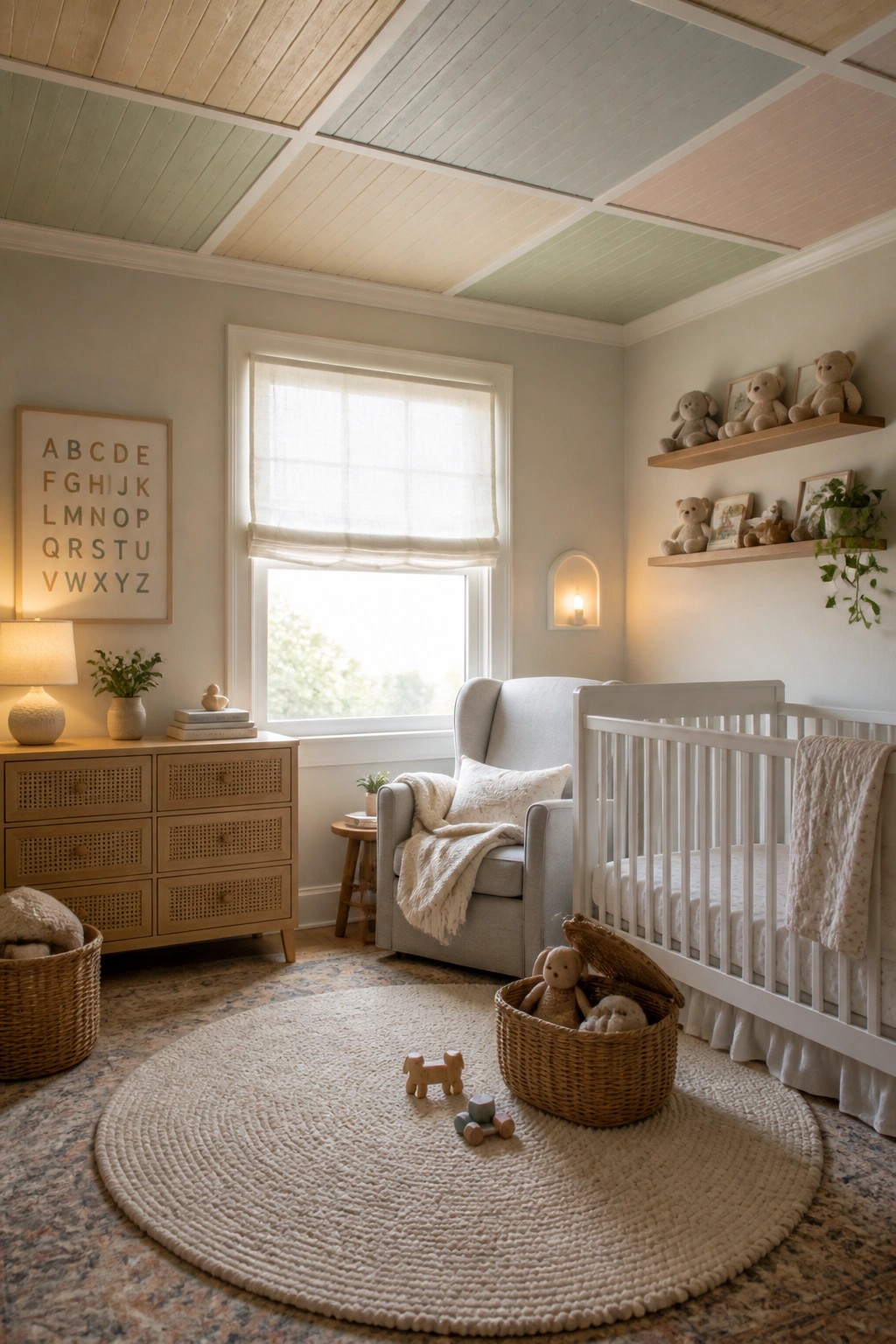
A grid of wood panels painted in gentle pastels gives the ceiling a quiet presence without taking over the room. The lines stay clean and the colors stay soft, so the space still feels calm even with several shades overhead.
This approach suits rooms where you want a bit of personality but nothing too bold. It works best on ceilings with straightforward layouts and pairs well with light walls and simple furnishings. Test the colors in place first, since overhead light can change how they read once the panels are up.
Linear Lighting In Wood Panel Ceilings
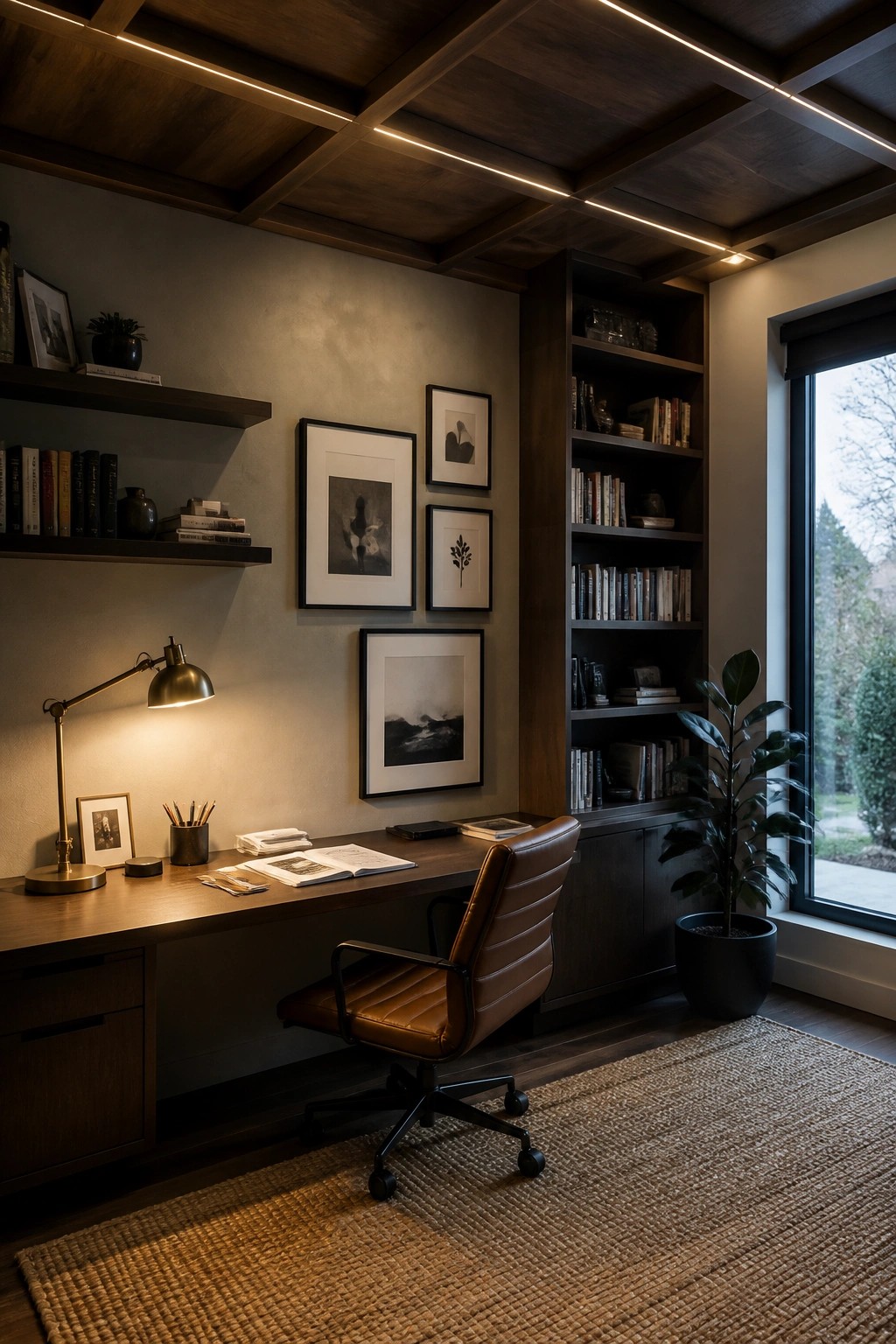
Many people like running linear lights along the seams of a wood panel ceiling. It gives steady overhead light without adding visible fixtures or breaking up the grid pattern.
This works best in a study or office where you need even task lighting. Keep the spacing consistent and match the light color to the wood tone so the ceiling stays the main feature.
Seamless Wood Panel Ceilings
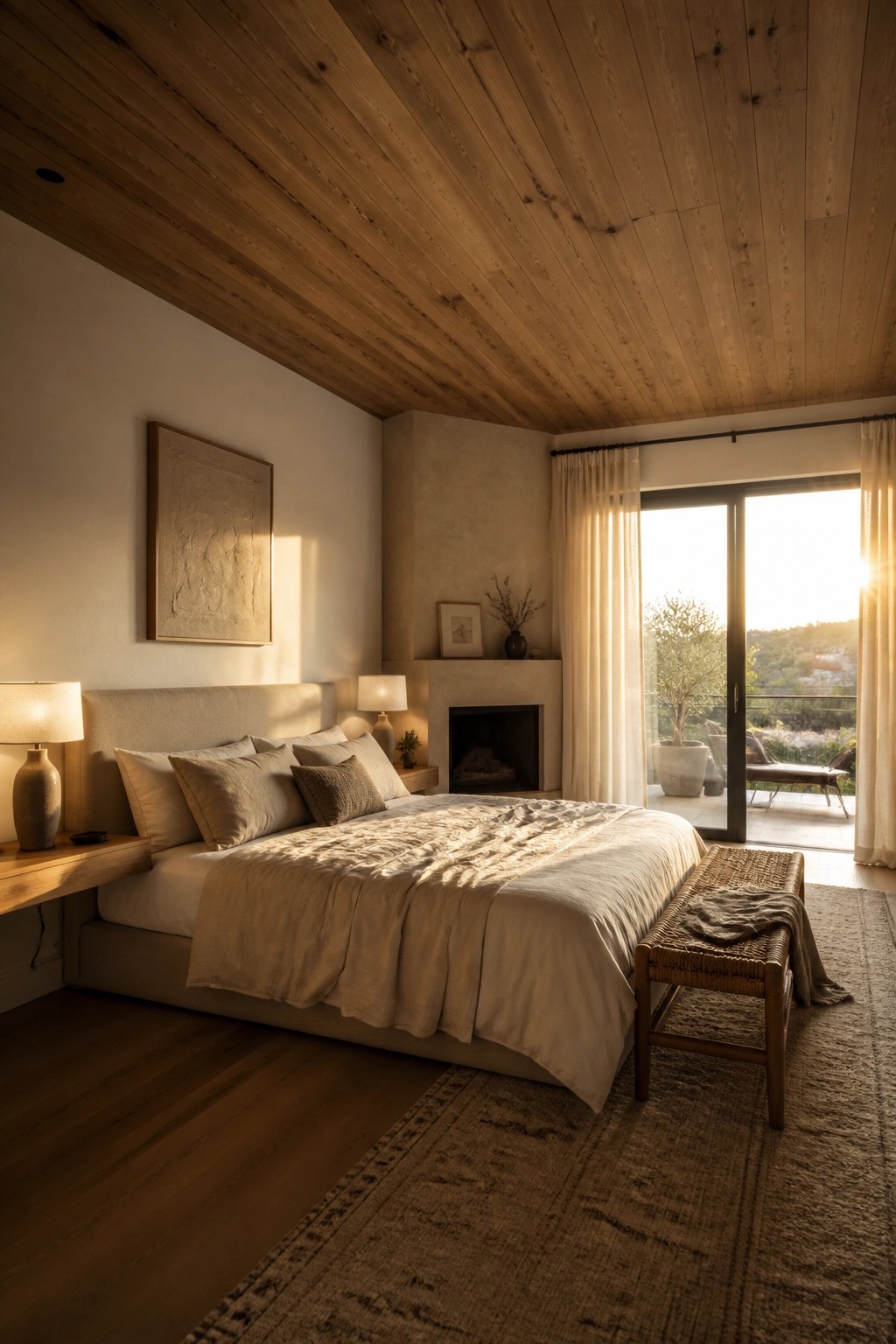
A ceiling finished in wood panels with no visible breaks gives a room a calm, finished look. The planks run end to end and the eye follows them without stopping, which makes the space feel a little larger and more settled.
This approach works best in bedrooms or living rooms where you already have simple walls and floors. Keep other wood tones close in color so the ceiling blends in rather than fighting with the rest of the room.
Run Wood Panels The Full Length Of The Room
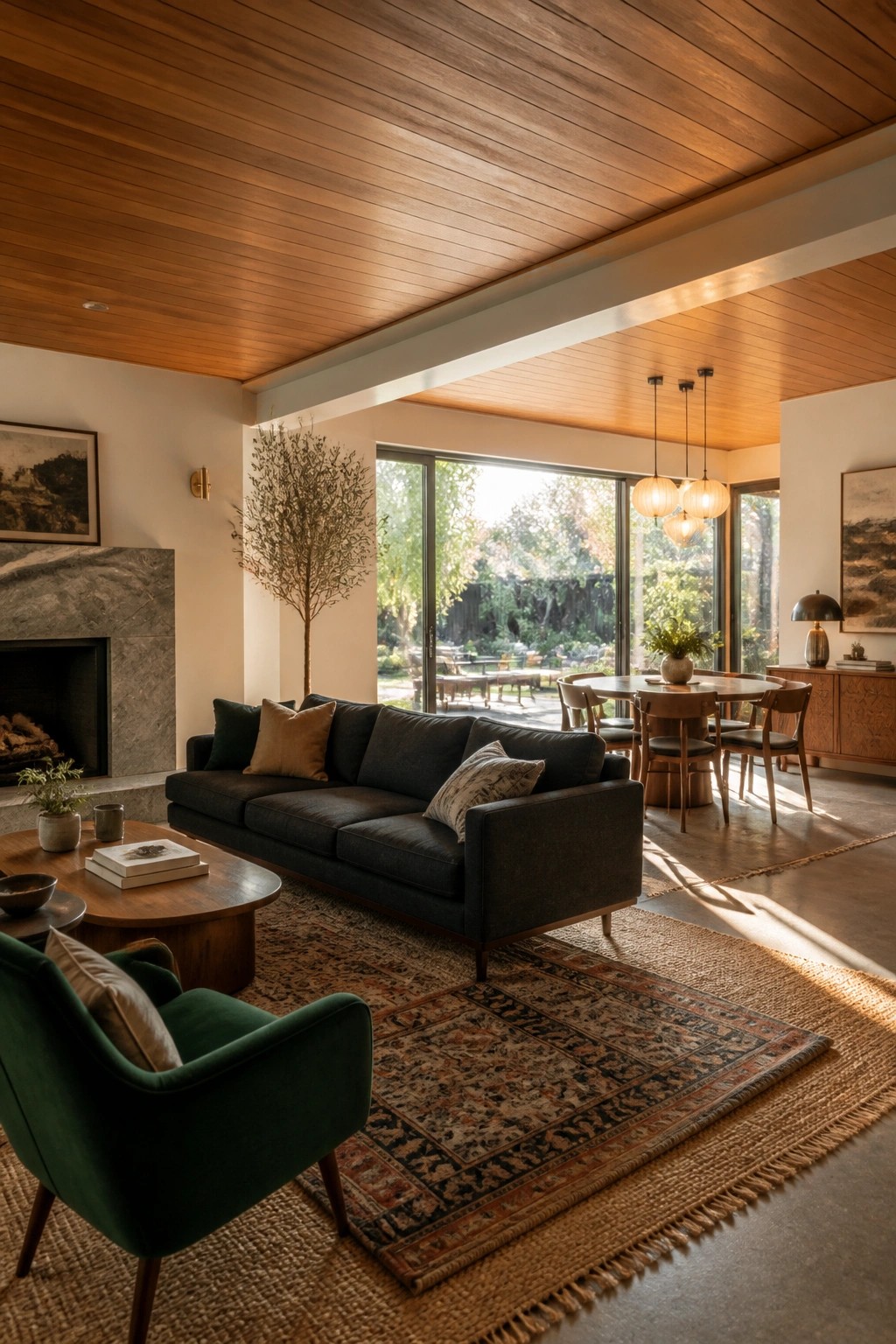
A wood ceiling can feel more settled when the panels run straight across the whole space instead of stopping at each area. This keeps the lines clean and avoids any patchwork look, especially in rooms that open into each other.
It works best in homes where the ceiling height is already generous and the floor plan stays fairly open. Keep the finish consistent and skip extra trim or grids if you want the surface to read as one quiet plane.
Wood Panel Ceilings for Laundry Rooms
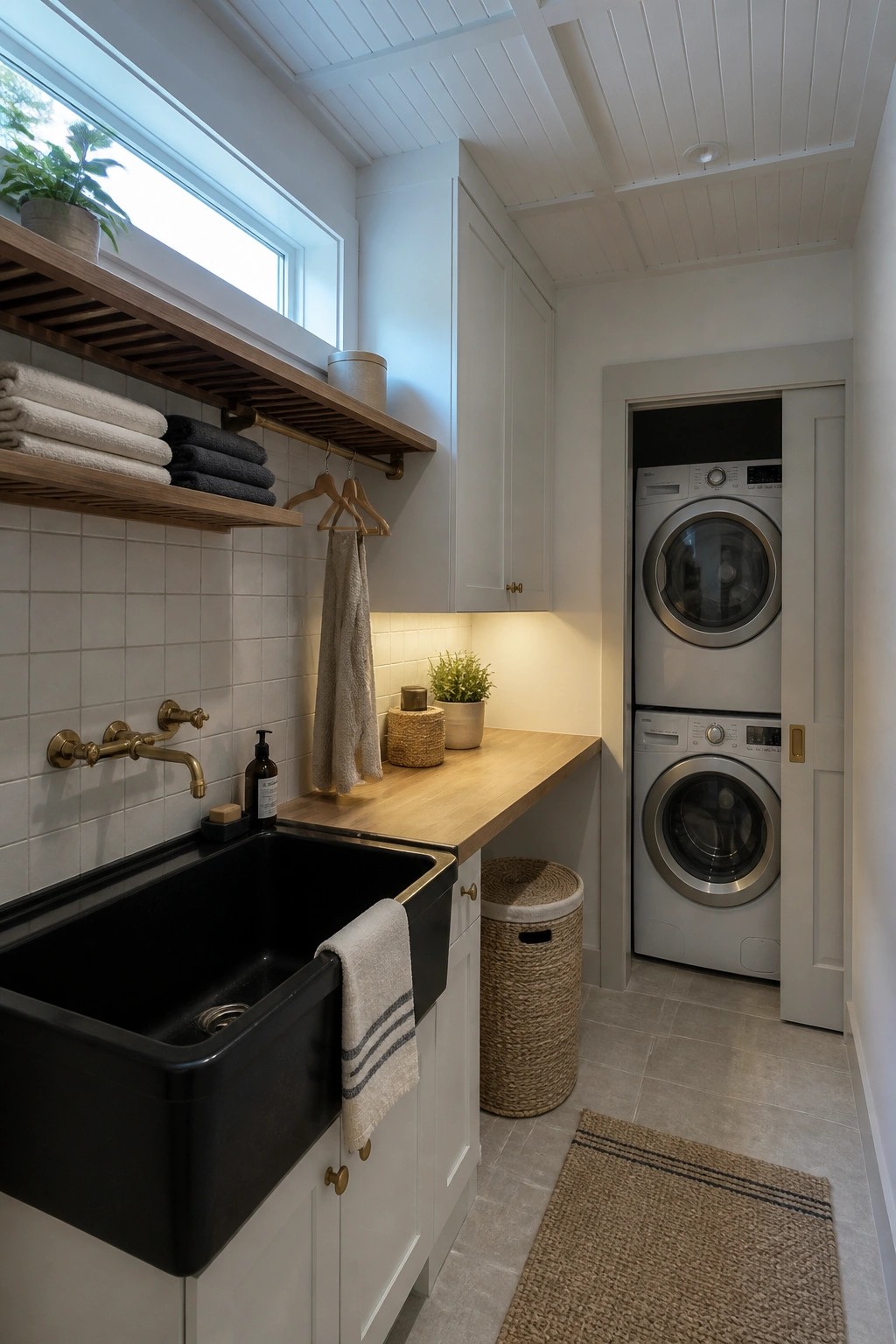
Wood panel ceilings can turn a basic laundry room into a space that feels finished rather than purely functional. The clean lines help tie the room together, especially when the rest of the house already uses wood ceilings elsewhere.
This works best in homes where the laundry area sits off a hallway or near living spaces. Keep the panels simple and painted to match the trim so the ceiling adds quiet structure without drawing attention away from the sink and storage below.
Dark Wood Grid Ceilings
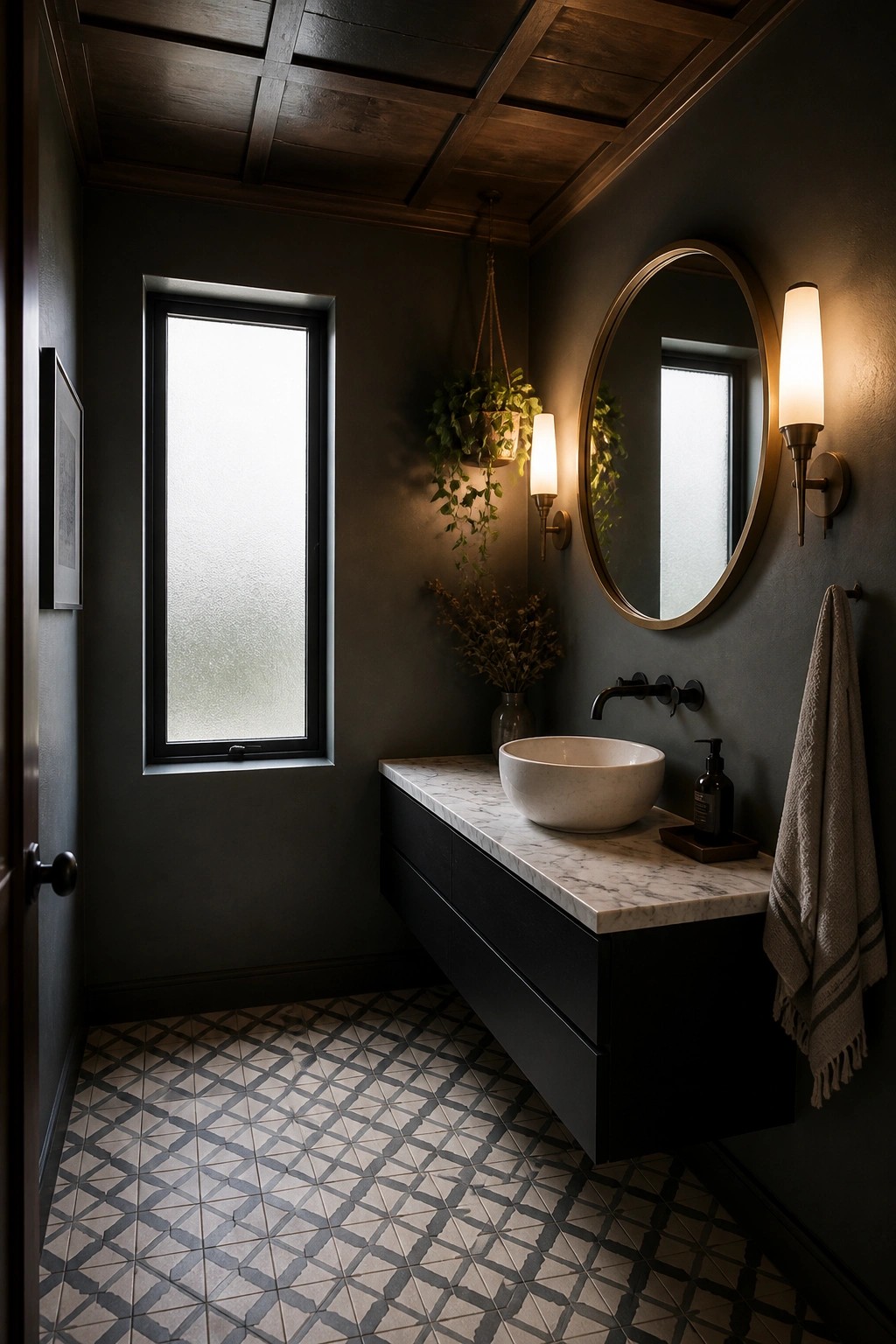
A wood panel ceiling laid out in a clean grid adds structure and warmth without taking up any floor space. In rooms with darker walls, the contrast keeps the ceiling from feeling heavy while still giving the space a finished look.
This works best in smaller rooms like bathrooms where the ceiling is easy to notice. Stick with a simple square layout and a matte finish if you want the grid to feel calm rather than busy.
Wood Panel Ceilings In Attic Spaces
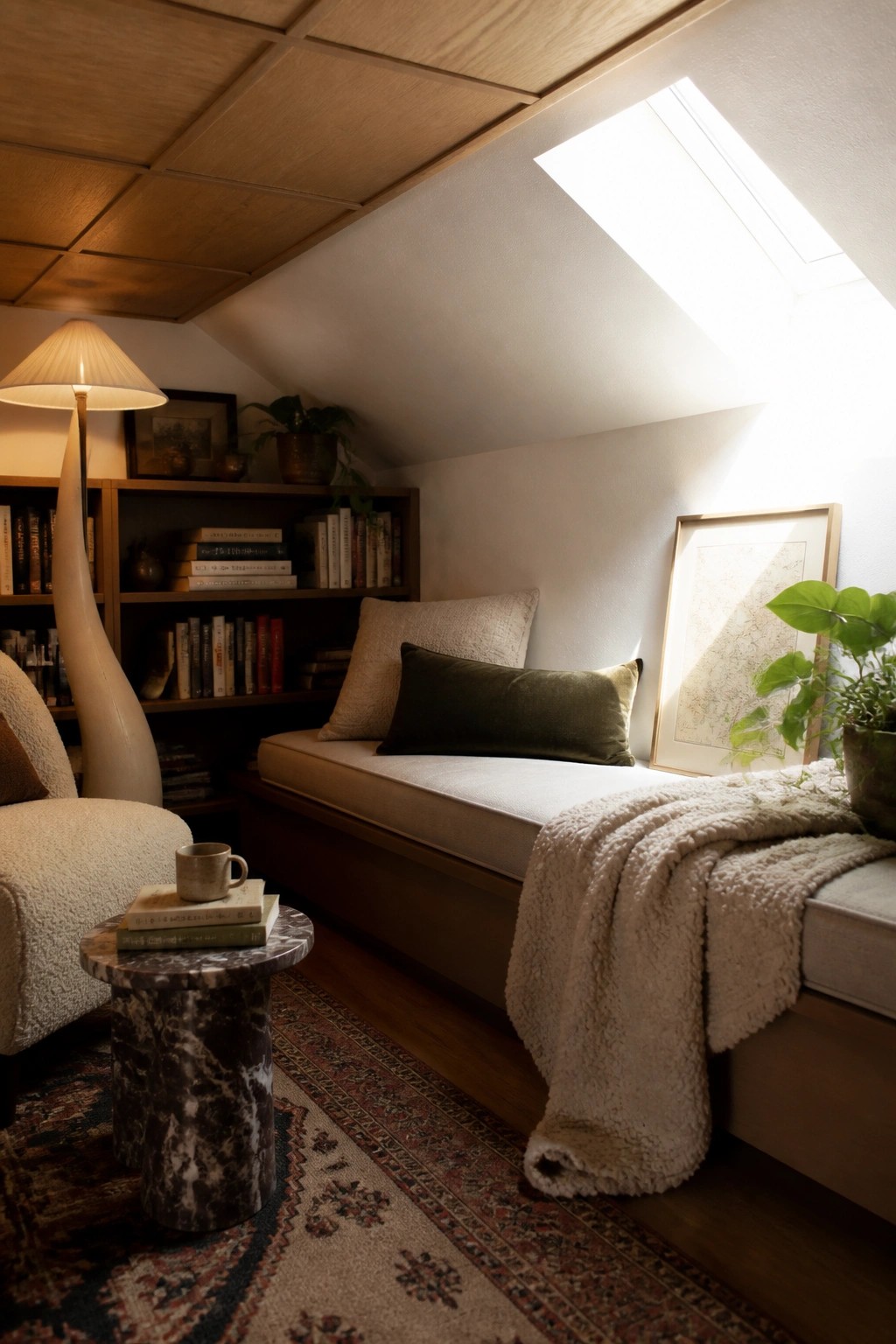
Wood panel ceilings with a simple grid can make an attic room feel more finished and intentional. The clean lines give the sloped surface some order, while the wood itself adds warmth that painted drywall often lacks.
This works best in smaller spaces like reading corners or quiet nooks where you want some texture overhead without crowding the room. Keep the panels light in tone and the grid spacing even so the ceiling does not feel too heavy or busy.
Wood Grid Ceilings in Hallways

A wood grid ceiling adds quiet structure to a long hallway without crowding the space below. The beams create steady lines that guide the eye forward and keep the area from feeling plain or tunnel-like.
This works best in homes with decent ceiling height and simple wall colors. Space the beams evenly and finish them in a natural tone so the grid stays clean rather than busy.
Wood Ceilings With Clean Grids
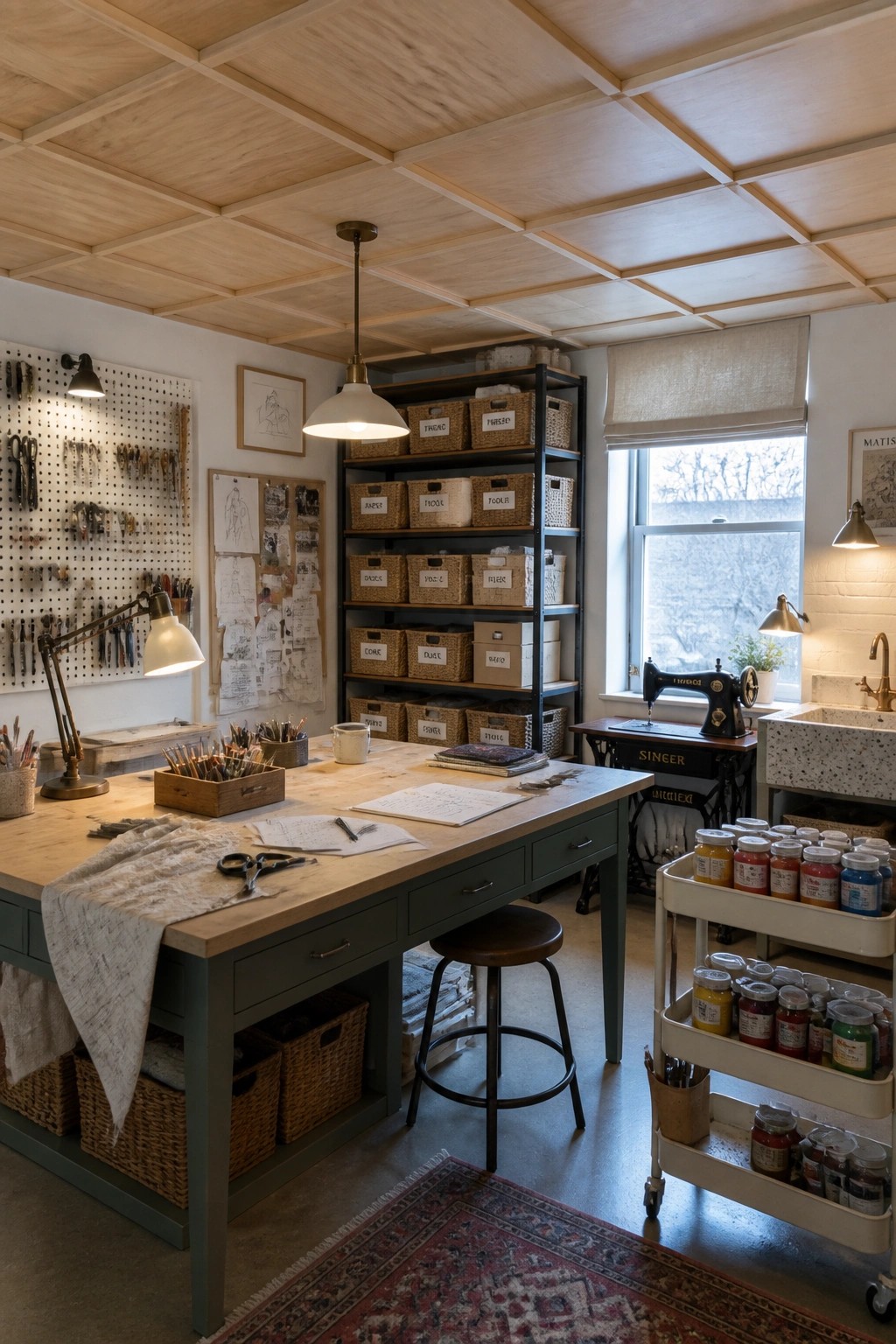
A grid of wood panels on the ceiling adds order to a room without making it feel closed in. The even lines create a steady overhead structure that pairs well with busy workspaces where things tend to pile up on surfaces.
This works best in rooms that already have some height and can handle the added texture. Keep the seams tight and the finish consistent so the coverage reads as one surface rather than separate boards.
Wood Ceilings With Simple Exposed Beam Grids
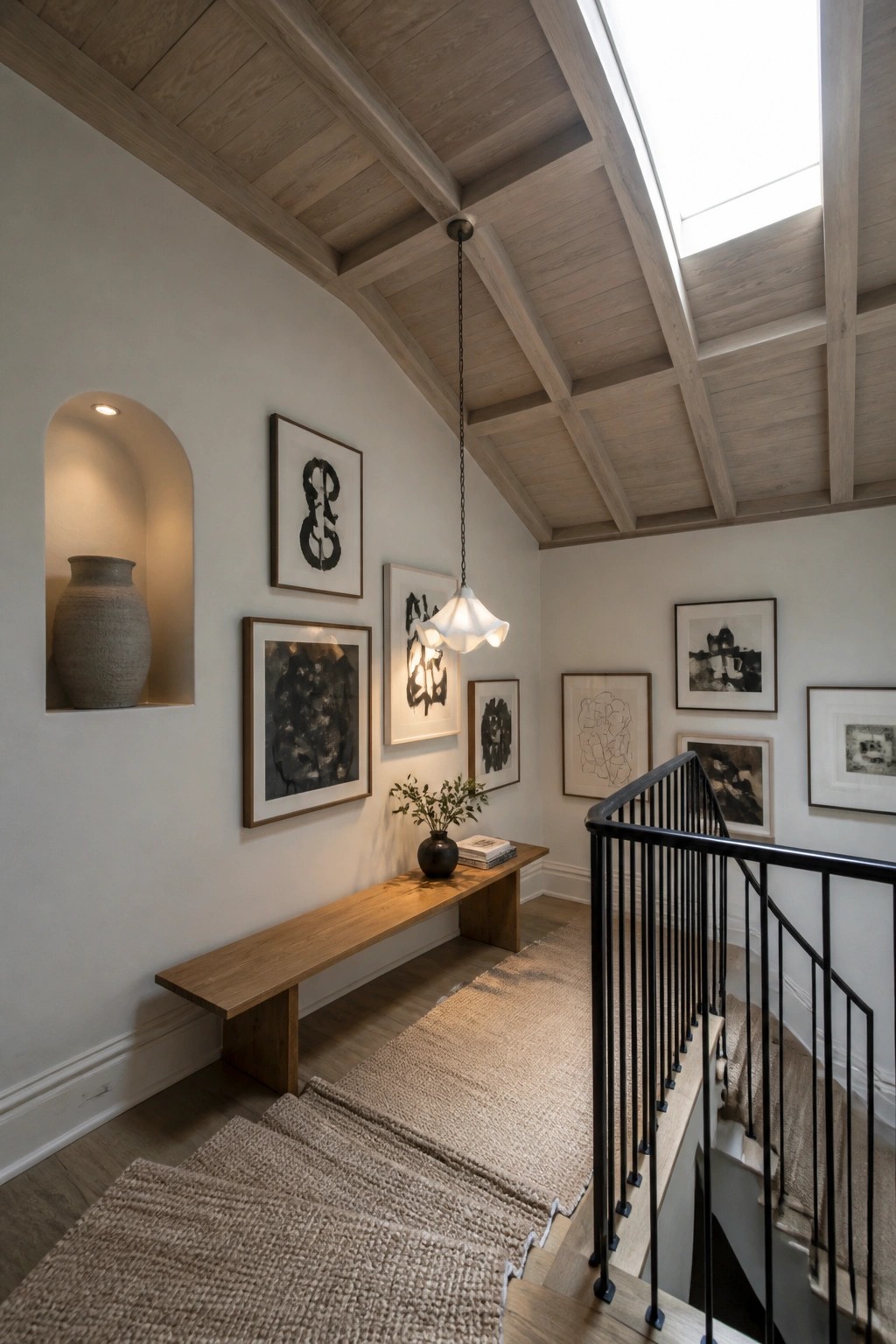
A wood ceiling laid out in a grid of beams can give a room structure while still feeling open. The beams break up the surface without adding clutter, and the light tone of the wood keeps the whole space from feeling closed in. This approach works especially well in taller or angled ceilings where you want some definition.
It suits homes that already lean toward natural materials and simple lines. Keep the beams fairly slim and evenly spaced so the grid stays clean rather than busy. Avoid mixing in too many other wood tones if you want the ceiling to stay the main feature.
Light Wood Plank Ceilings
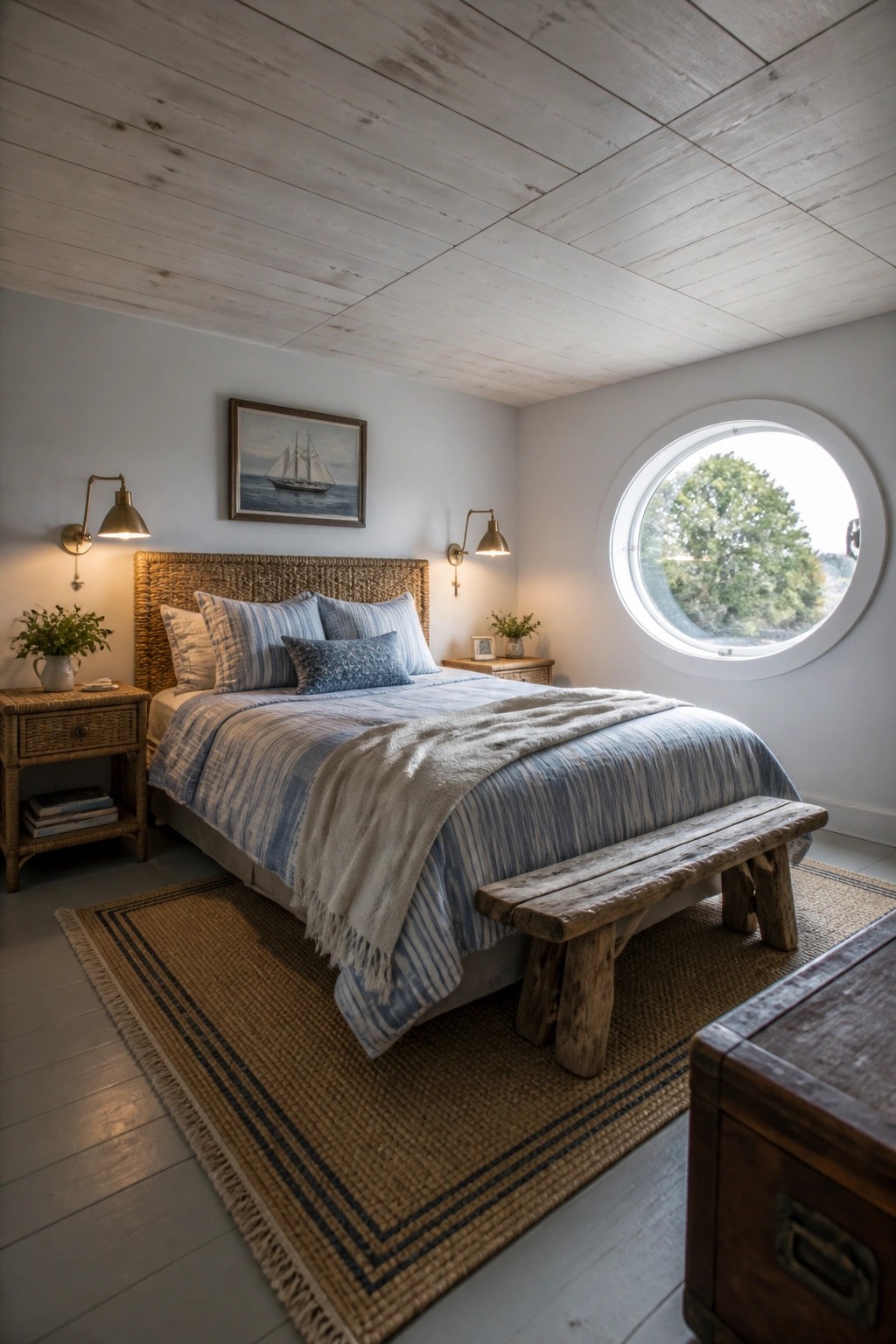
A light wood ceiling can add quiet texture to a room without making it feel heavy. The planks here run in clean lines across the whole surface and keep everything feeling open and bright even with the low pitch.
This approach works best in bedrooms or smaller spaces where you want some warmth but still need the room to feel airy. It suits homes with simple walls and natural materials, and the light tone helps the ceiling blend rather than dominate.
Wood Panel Ceilings With Straight Linear Runs
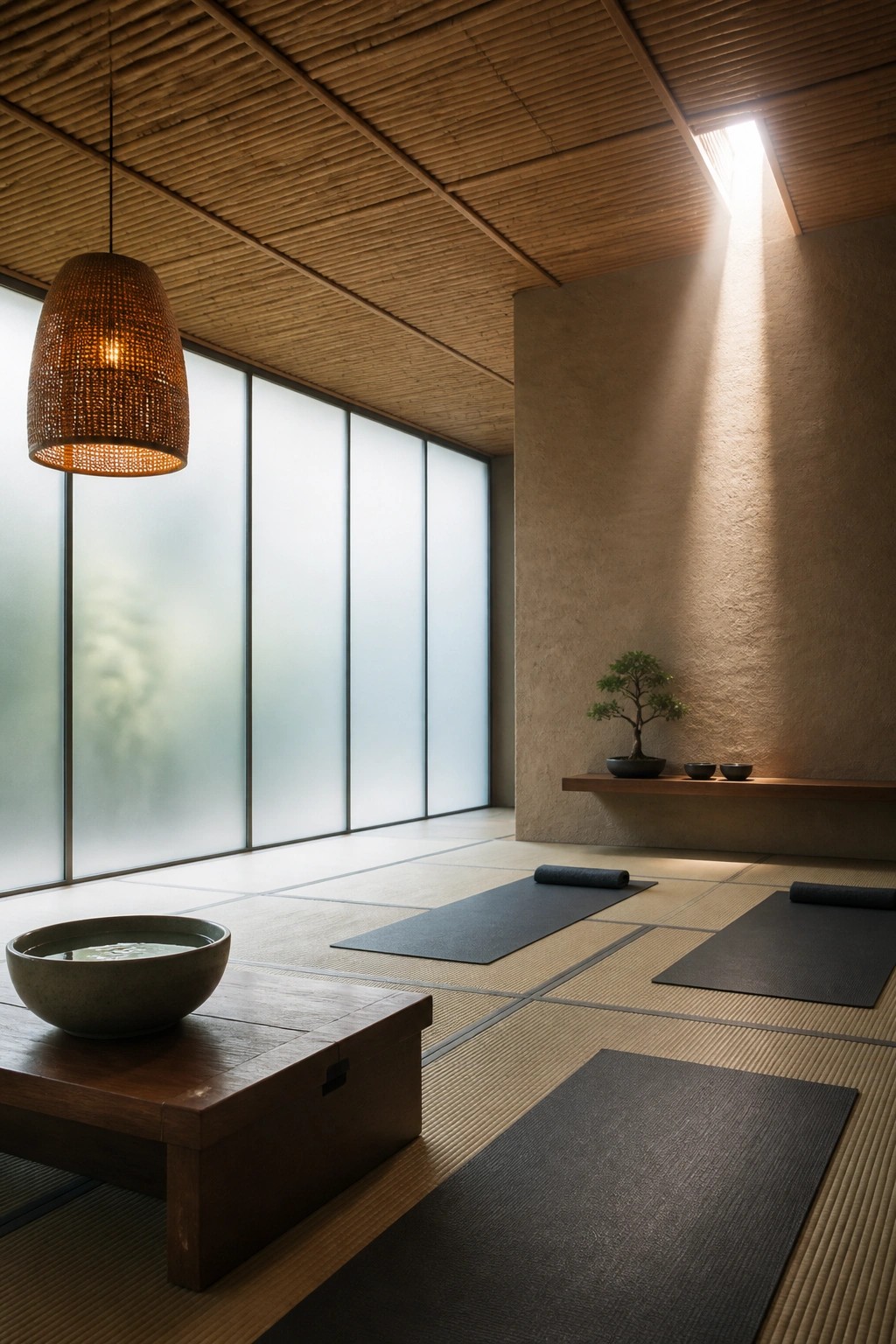
A ceiling covered in wood panels set in clean horizontal lines can bring a quiet sense of order to a room. The even spacing and full coverage keep the look simple while adding warmth that painted ceilings often lack. Many people turn to this when they want the space to feel settled without adding extra trim or detail.
This approach works best in rooms that already have natural light and plain walls. Keep the panels running wall to wall so the lines stay uninterrupted. It suits homes that lean toward calm, uncluttered interiors where the ceiling becomes part of the background rather than a focal point.
White Wood Panel Ceilings in Narrow Rooms
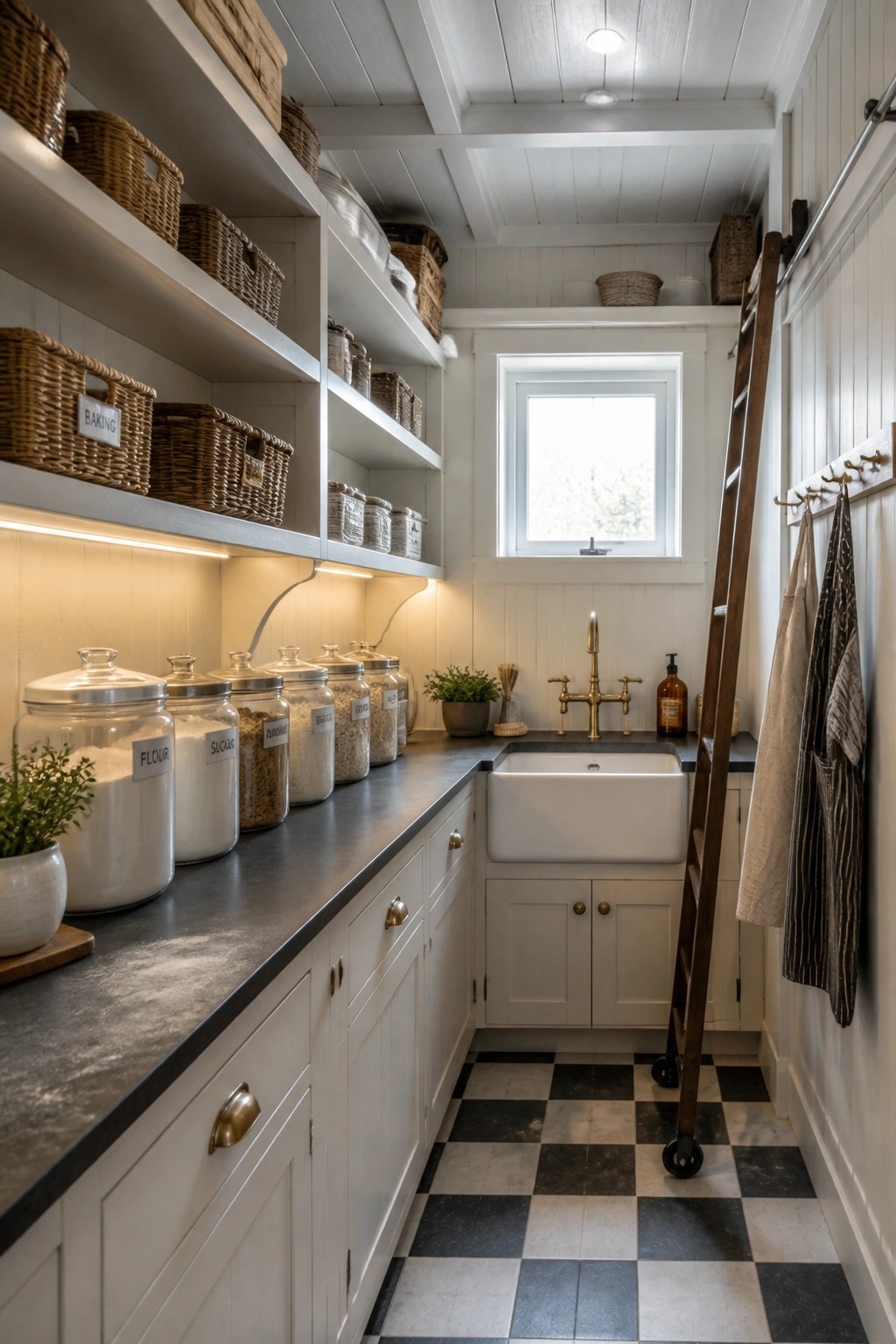
A white wood panel ceiling works well in tight spaces because it bounces light around and keeps the room from feeling closed in. The clean lines also help tie together all the storage and work surfaces below without adding visual clutter.
This treatment suits older homes or simple cottages where you want to keep some wood character but still brighten the space. It looks best when the panels run straight through from the main rooms so the ceiling feels like part of the same house rather than a separate afterthought.
Wood Panel Ceilings in Dressing Rooms

A wood ceiling can give a closet or dressing room the same finished look as the main living areas. The clean grid pattern keeps the surface calm while the wood tone adds warmth that painted drywall often lacks. Many people like this approach because it turns a purely functional space into one that feels more like a proper room.
This works best in larger closets where you already have built-in cabinetry and good lighting. Darker woods pair well with the grid layout since the lines stay visible without looking busy. Just make sure the panels run straight and the seams stay tight so the ceiling does not compete with the storage below it.
Wood Panel Ceilings In Bathrooms
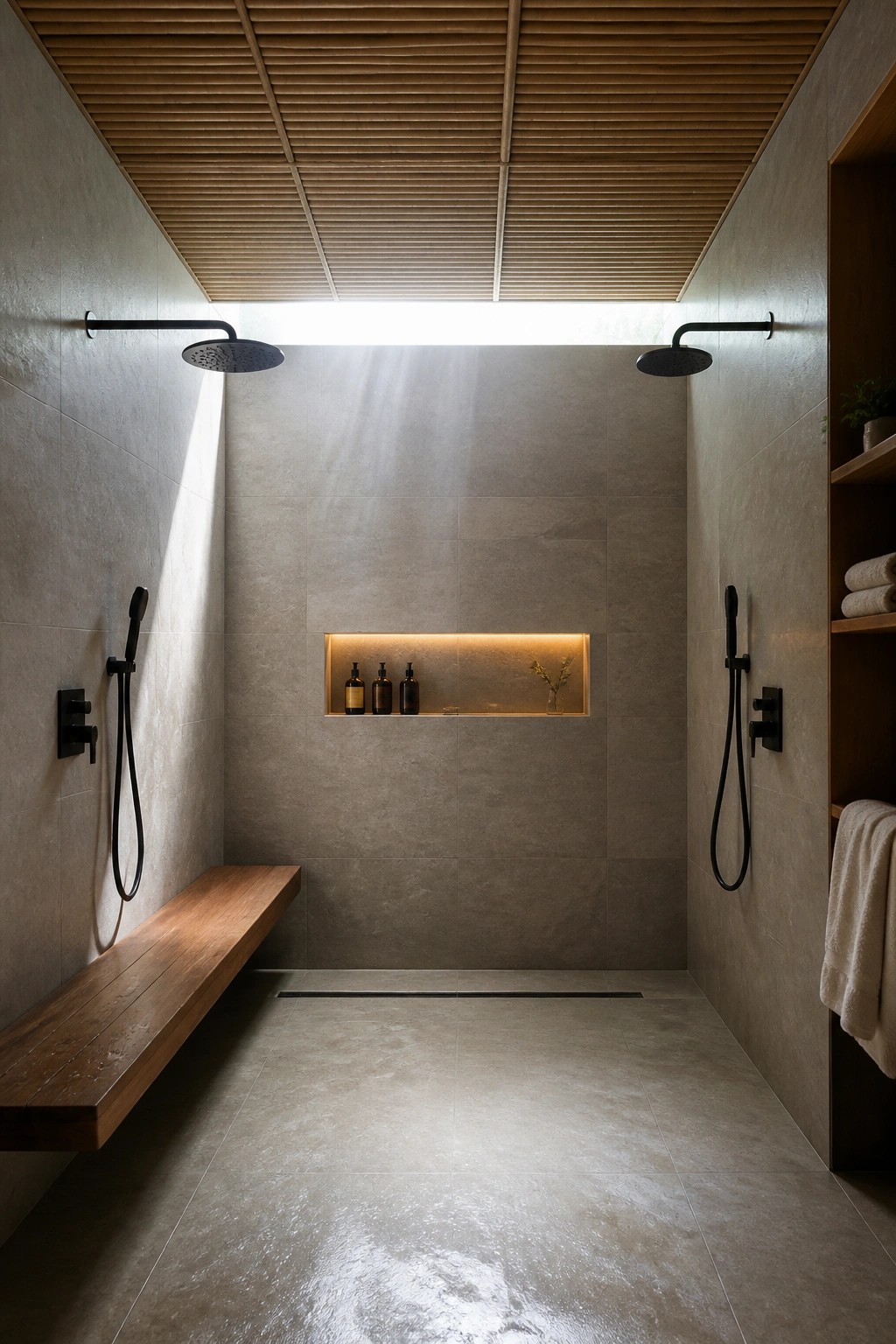
Wood panel ceilings can work well in bathrooms because they add a bit of warmth that tile alone often lacks. The clean lines and even spacing keep the look simple rather than busy, which helps the room feel calmer.
This approach suits smaller wet areas or larger showers where you want one natural surface to balance all the hard finishes. Make sure the wood is properly sealed and the ventilation is good so it holds up over time.
Clean Grid Wood Paneling Across The Ceiling

A wood ceiling with a simple grid pattern gives a room a finished, orderly look. The panels keep the space from feeling too open while still letting the walls carry most of the visual weight.
This works especially well in studies or libraries where the shelves already run floor to ceiling. Match the wood tone to the built-ins so the ceiling reads as a natural extension rather than a separate feature.
Frequently Asked Questions
Q: How do I handle ceiling lights with these seamless wood grids?
A: Frame each light fixture with the same wood pieces you use for the grid. Run the panels right up to the edges and seal the joints with matching filler. This way the whole ceiling stays uniform.
Q: What happens if the wood shifts after a few seasons?
A: Pick kiln-dried lumber and leave tiny expansion gaps at the walls. Check the panels each year and tighten loose fasteners right away.
Q: Is this grid style hard to do in a small bathroom?
A: Scale down the grid spacing so it fits the tighter space. Use moisture-resistant wood and seal it well before hanging. The clean coverage still works if you keep the lines simple.
