

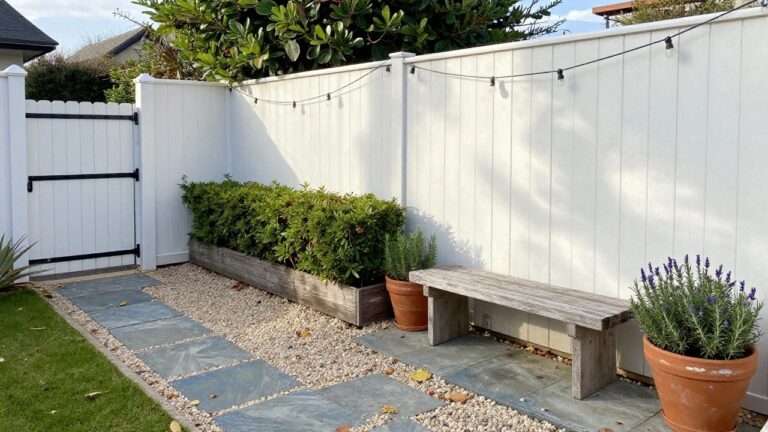
I have walked past plenty of houses where the fence sets the first impression long before you reach the front door.
Weathered wood often fades in uneven patches that make the whole property look older than it really is, especially when the rest of the exterior still holds up.
A new color can change that balance without replacing the boards.
Some shades tie the fence to the house siding or trim while others let it recede so the garden or lawn becomes the main view from the street.
In my own place I would test two or three samples on the same fence section first to see how they read against the roofline at different times of day.
White Paint on Wood Fencing
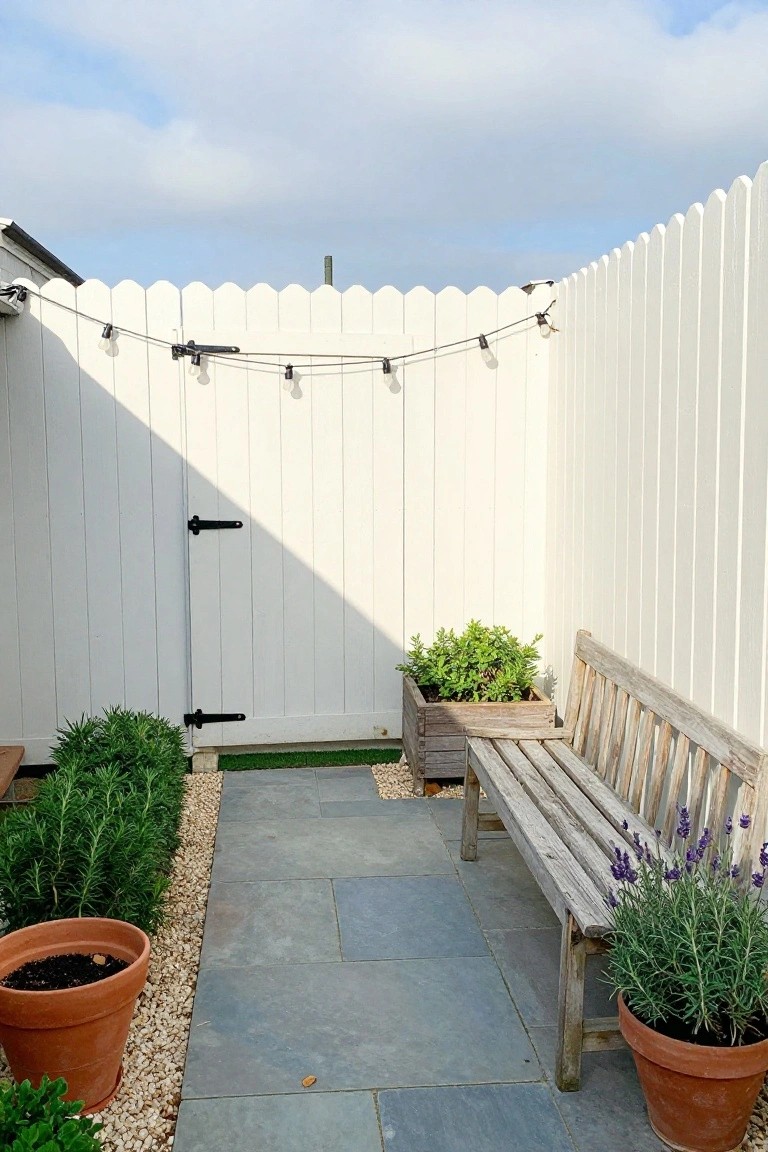
A white fence can make a small patio feel brighter and more open without much extra work. It reflects light well and gives the whole area a cleaner look, especially when the space is boxed in by fencing on multiple sides. Many people like how it stands out against green plants and gray stone without needing constant upkeep.
This approach works best on fences that are already in decent shape or can be prepped properly before painting. It suits modest backyards and side yards where you want the enclosure to feel lighter rather than heavy. Just make sure to use exterior paint made for wood so it holds up over time.
Dark Charcoal on Wood Fencing
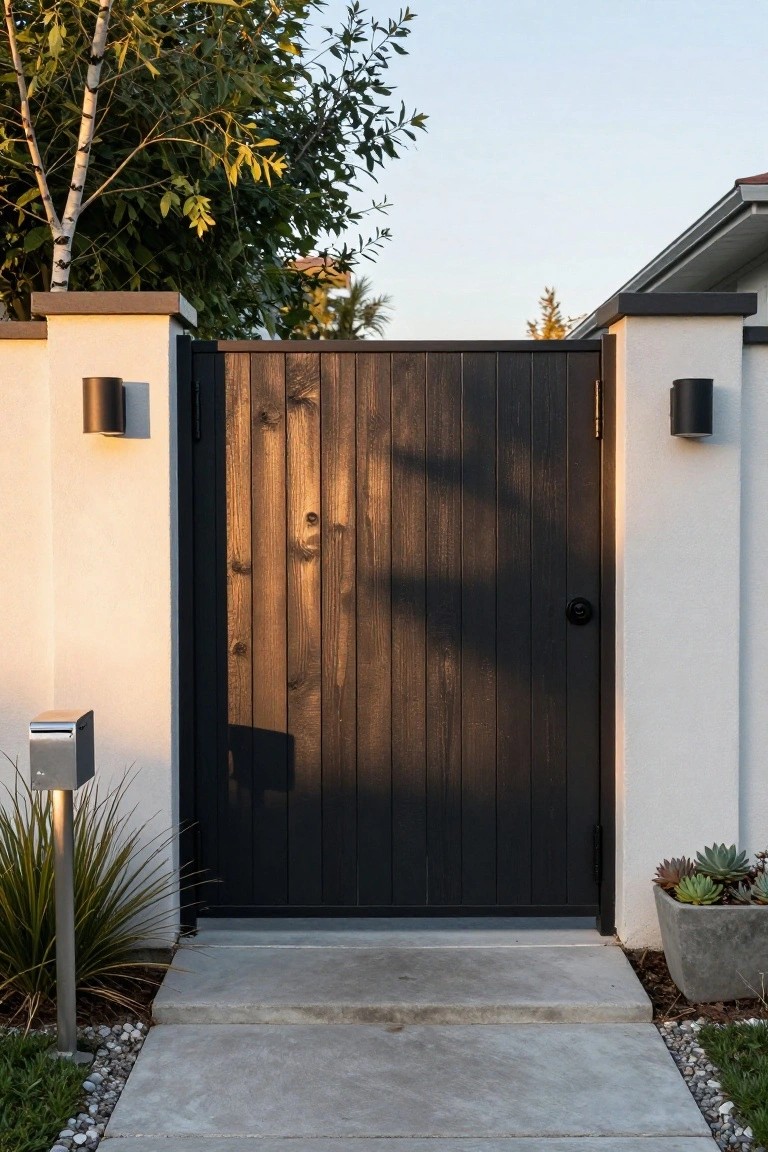
A deep charcoal stain gives wood fencing a clean, updated look without needing to replace the boards. It stands out nicely against light walls and helps the fence feel more intentional rather than just a boundary.
This color works especially well on homes with white or light siding, where the contrast keeps the fence from fading into the background. It suits modern or simple exteriors best, and a matte or low-sheen finish helps it age more gracefully than a glossy one.
Warm Golden Stains for Wood Fencing
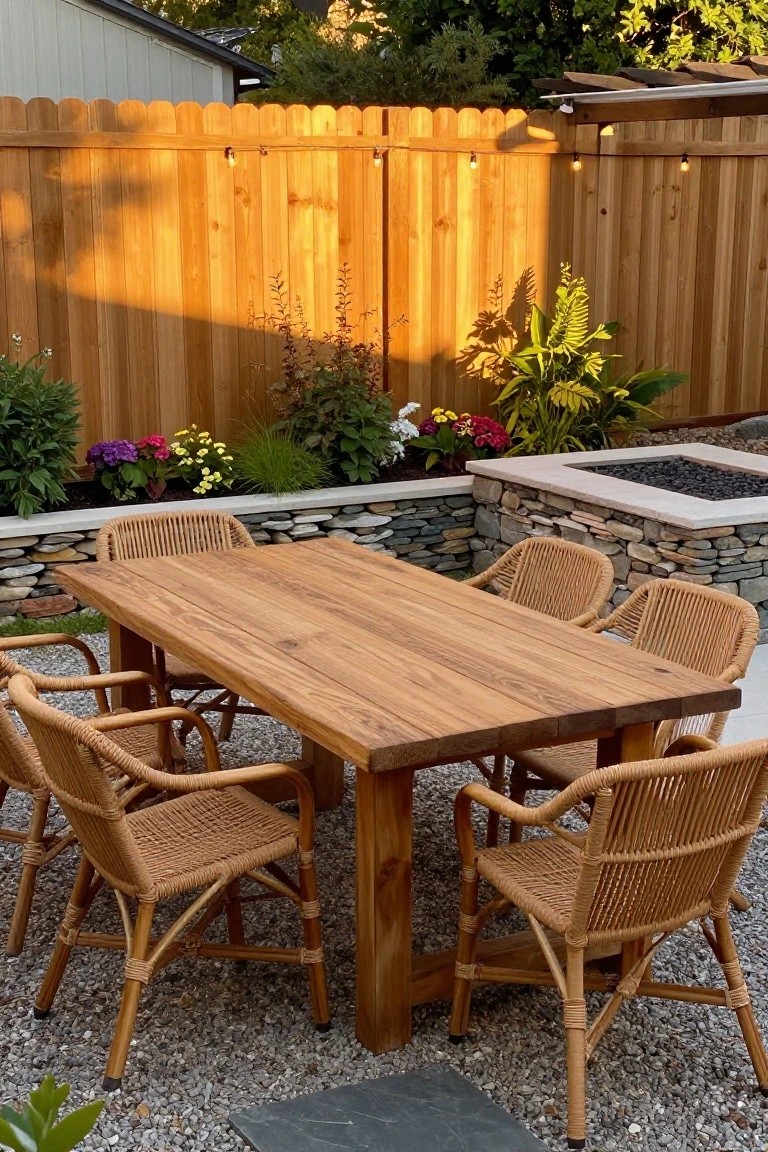
A warm golden stain on a wood fence can pull an outdoor space together without much effort. It brightens the area, reflects light, and pairs easily with gravel, stone, and simple seating setups like a long dining table.
This color works best on fences that border patios or small yards where people gather. It suits homes that already use natural materials and gives the fence a refreshed look without going too dark or too pale. Just test the stain on a small section first since the final tone shifts with sun exposure.
Soft Gray Fence Color Complements Flower Beds
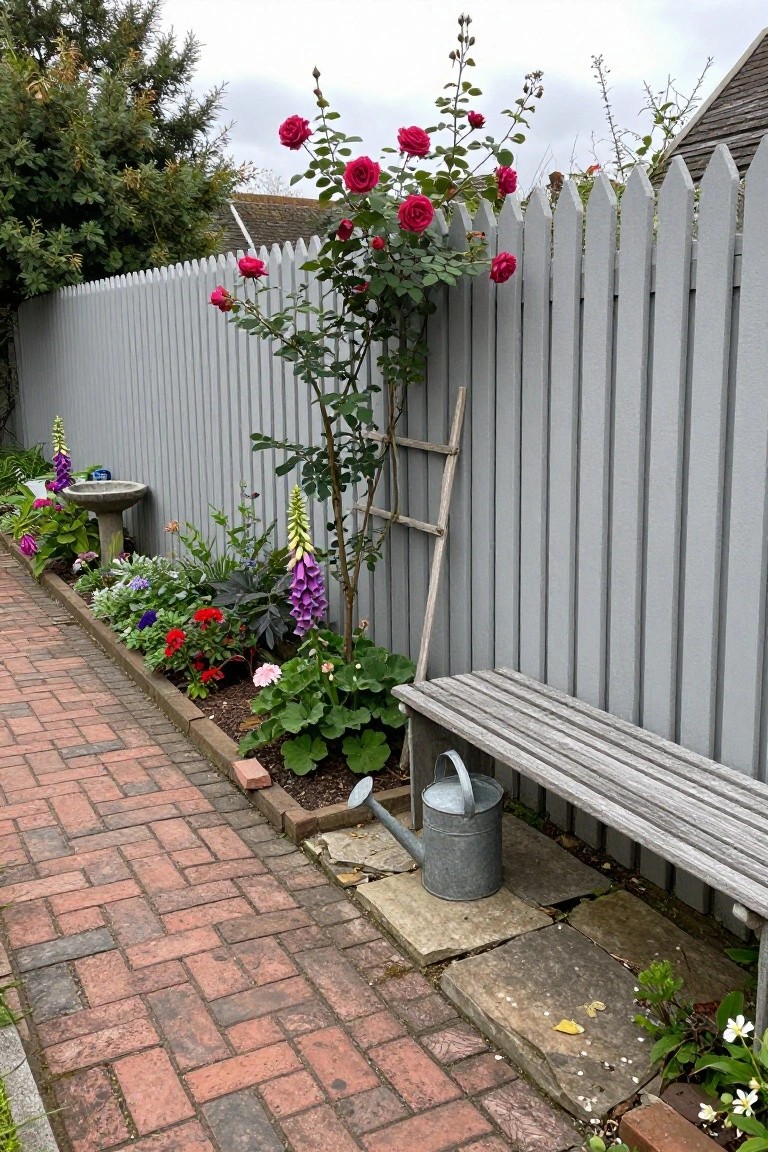
A pale gray finish on a wooden fence creates a calm backdrop that lets bright flowers stand out without competing. The color feels fresh on older wood and keeps the focus on the plants rather than the structure itself.
This approach works well in narrow garden beds where you want color without visual clutter. It suits homes with mixed plantings and simple paths, and it holds up better than stark white in shaded or damp spots.
Warm Brown Stains Refresh Wood Fencing
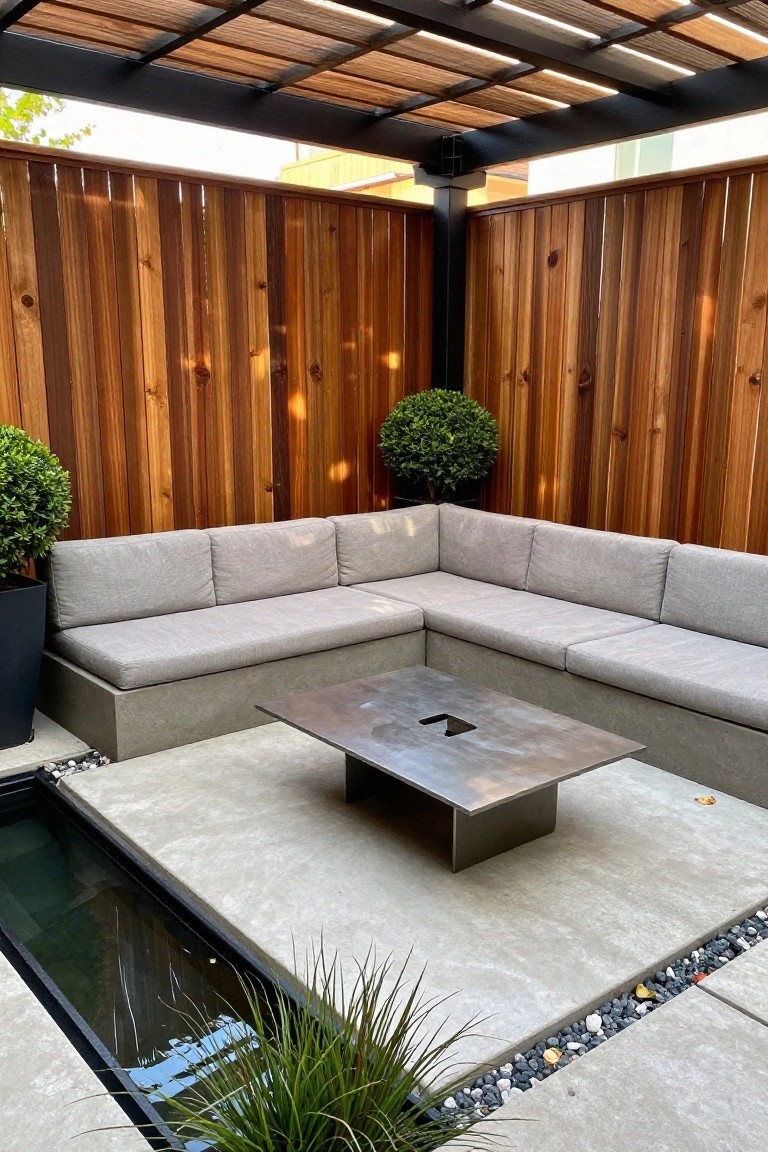
A warm brown stain on vertical wood fencing gives an outdoor space a grounded look without trying too hard. It pairs well with neutral seating and concrete surfaces, turning older fence boards into something that feels current rather than faded.
This color works best on modern or simple backyard setups where you want the fence to blend in rather than stand out. Keep the tone on the richer side so it hides weathering over time, and test a small section first to see how it looks against your actual patio materials.
Black Fence Color for a Clean Backdrop
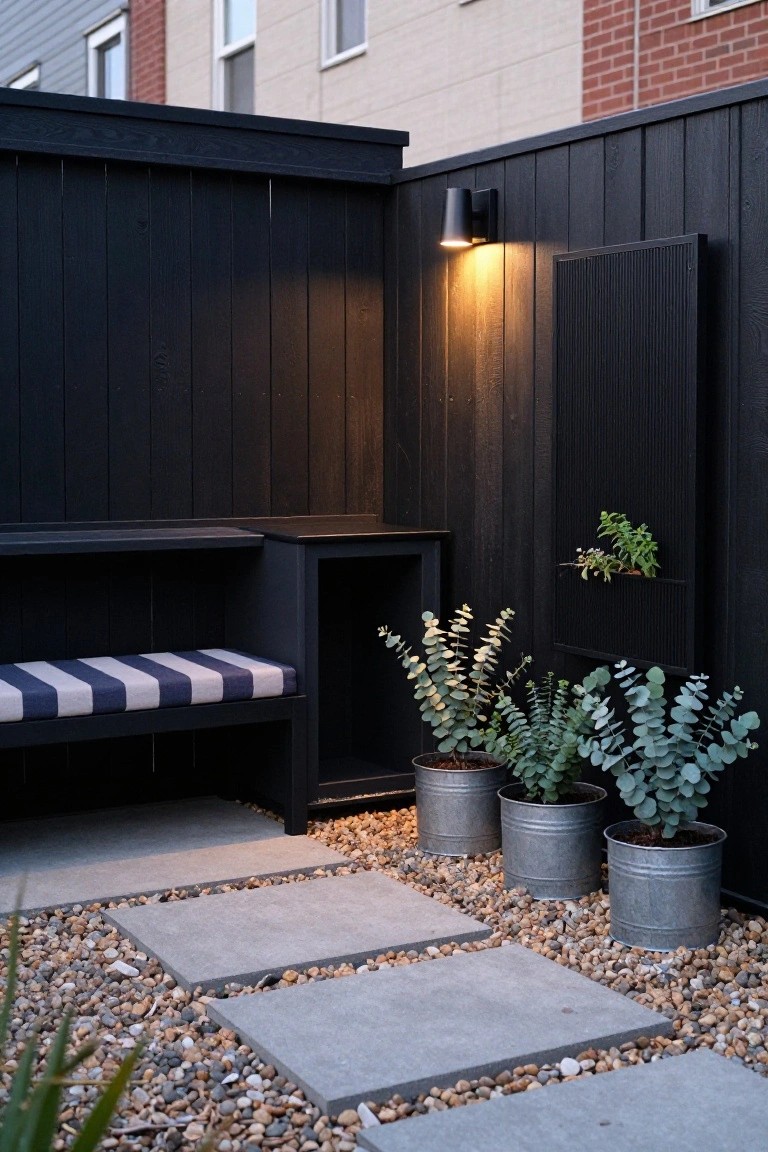
A black fence color gives an outdoor space a solid, finished look without a lot of extra effort. It turns the fence into a quiet background that lets benches, plants, and paths feel more intentional instead of scattered.
This works best in smaller yards or corner patios where you want the area to feel contained. Keep the wood surface clean and use a good exterior paint so the color holds up over time.
Natural Wood Tones For Garden Fences
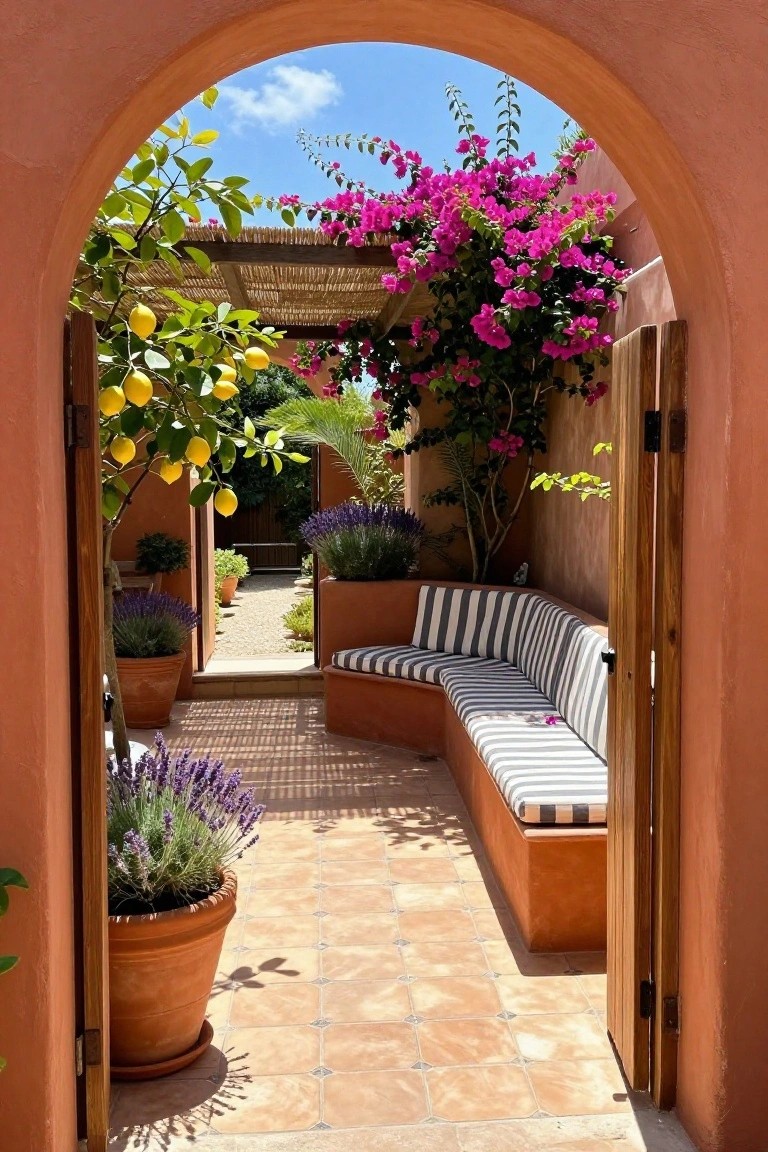
Natural wood finishes give fences a softer look that blends into outdoor spaces instead of standing out as a hard edge. The color works especially well with warm wall tones and planted areas because it picks up the same earthy feel without needing much contrast.
This approach suits Mediterranean or courtyard-style homes where the fence sits near seating or pathways. Keep the stain light to medium so it does not darken too much over time, and test it on a small section first to see how it reads next to your existing wood doors or trim.
Dark Brown Fencing for Small Garden Corners
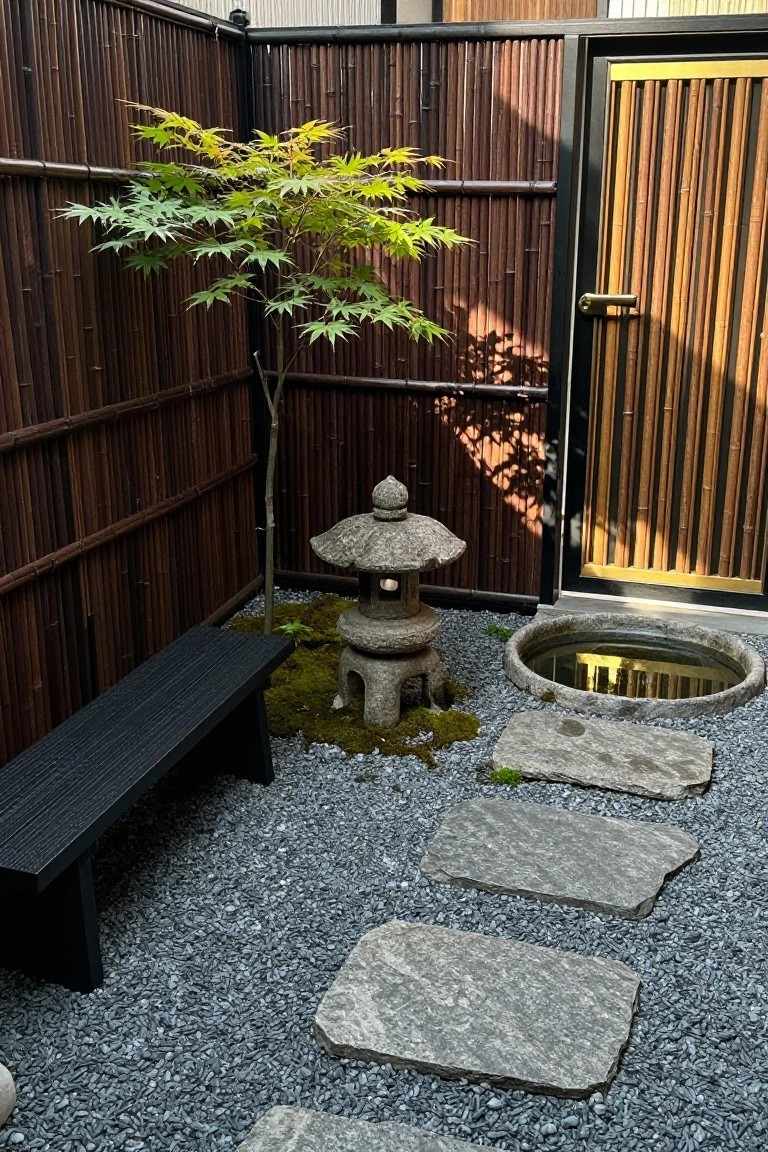
A deep brown finish on wood fencing helps a compact outdoor space feel settled without drawing too much attention. It creates a quiet backdrop that lets paths, plants, and simple features stand out instead of competing for notice.
This color works especially well in narrow side yards or small courtyards where you need enclosure but still want an open feel. Apply a stain that keeps the wood grain visible yet dark enough to recede behind gravel and stonework.
Using Gray With Natural Wood Tones
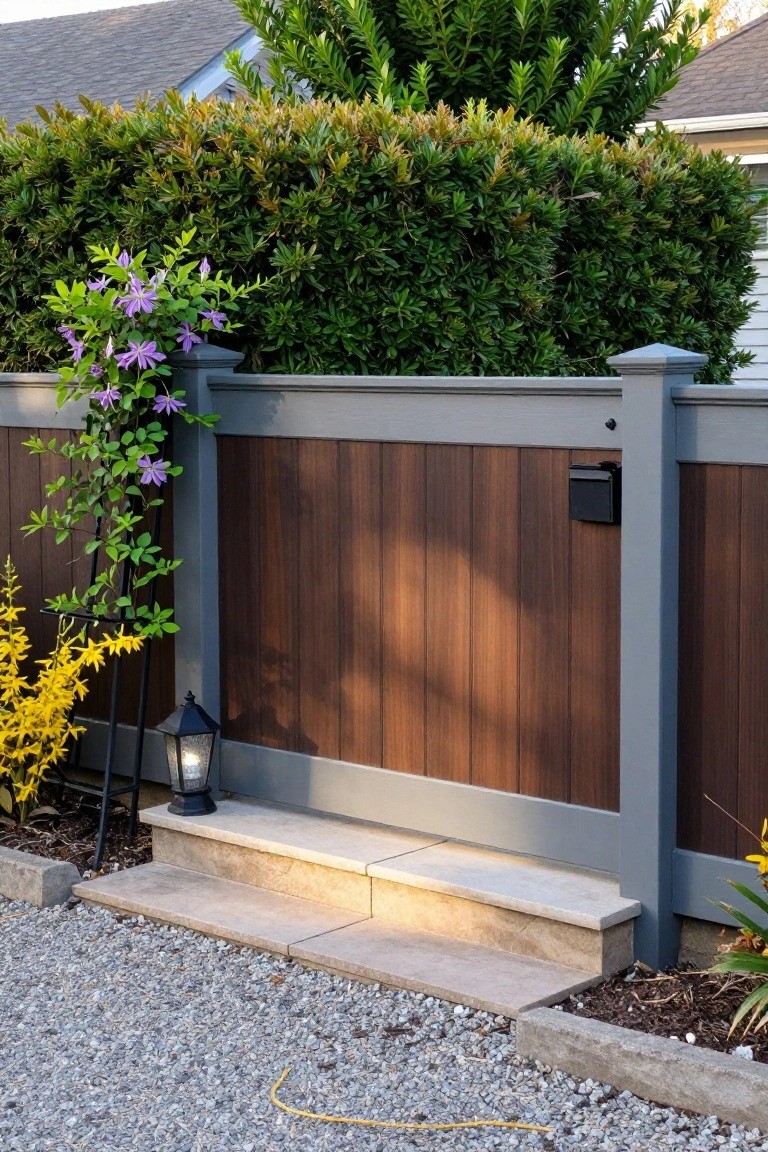
Many people like pairing a painted gray frame with warmer wood tones in the main panels. It gives the fence a clean updated look that still feels natural without needing a full replacement.
This approach works especially well along garden beds or near steps where you already have some greenery. It suits homes that want the fence to stand out a little but still fit with the surrounding plants and hardscaping.
Dark Colors Refresh Weathered Fencing
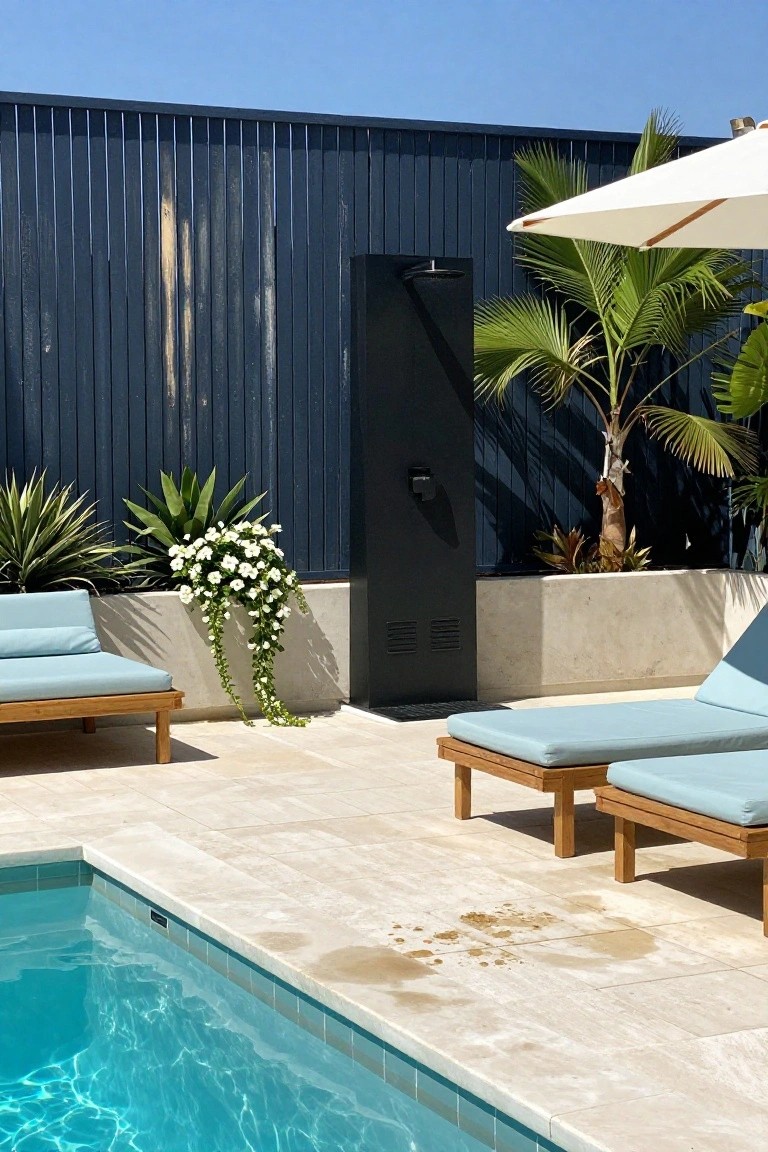
A deep dark finish on wood fencing gives an outdoor space a clean, solid backdrop. It pairs well with lighter paving and casual seating because the contrast keeps the whole area from feeling washed out or flat.
This works best on fences that already have good structure, like vertical boards that can take a solid coat of paint. It suits pool decks and patios where you want the fence to recede a bit while still defining the edges of the space.
White Paint On Wood Fencing
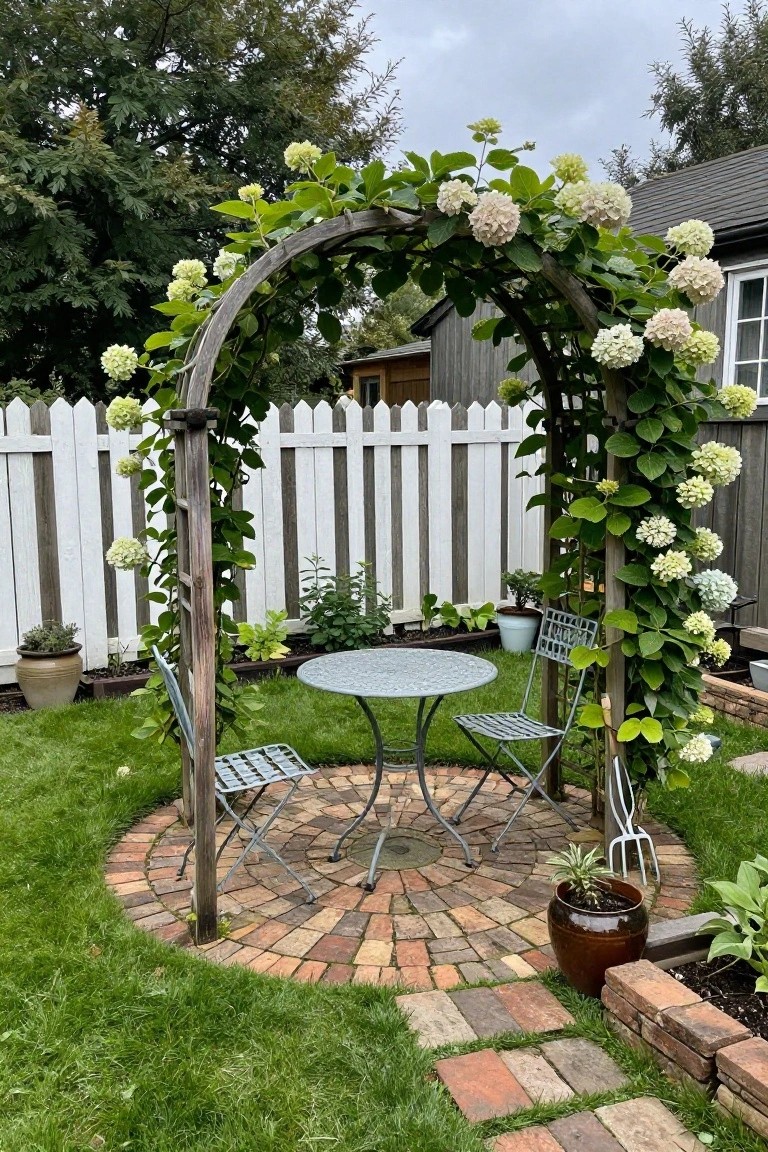
White works well on wood fences because it lifts the look of an older yard without needing major changes. It gives a clean line that lets plants and garden features stand out more clearly, especially when the fence runs along the edge of a seating area.
This finish suits smaller yards or homes with lots of greenery already in place. It needs solid prep and a good exterior paint to hold up, but the result feels simple and lasting.
Two Tone Fence Colors
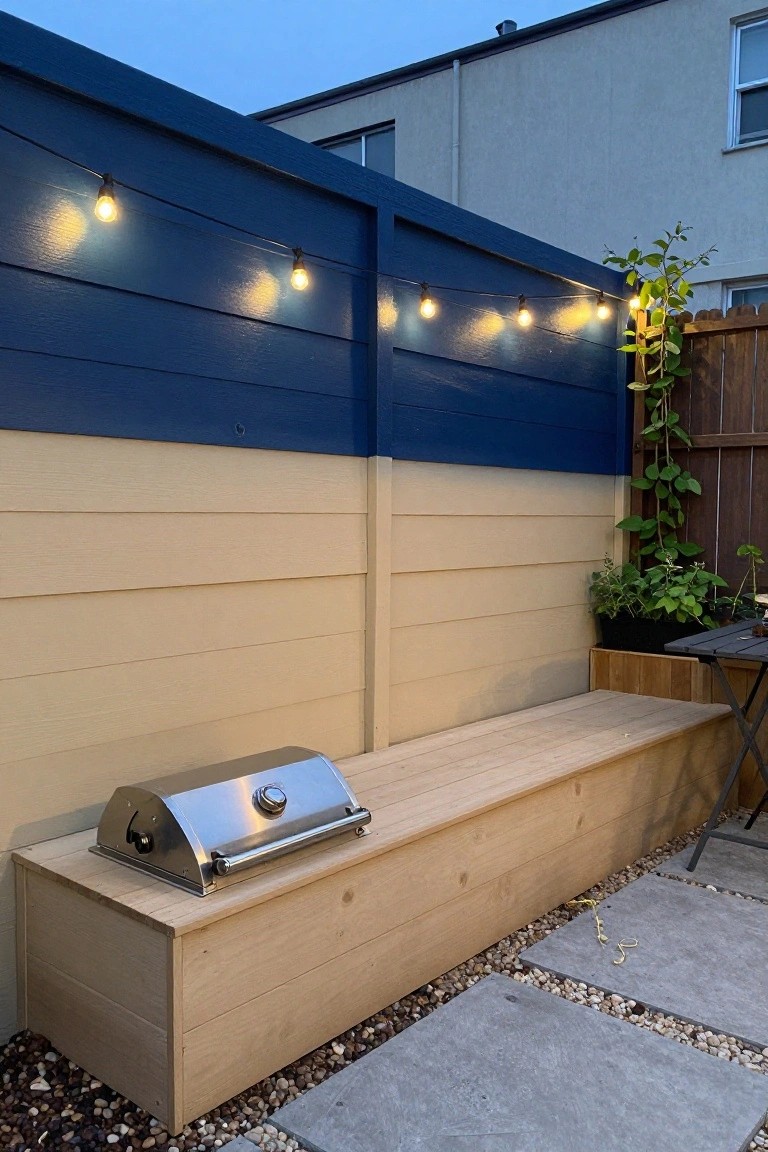
Splitting a fence into two colors gives it more presence without needing fancy details or trim. The top section takes a deeper shade while the lower boards stay lighter, which helps the whole thing feel balanced next to a patio or deck.
This works best on taller privacy fences that sit close to seating areas. It keeps the lower part from looking too heavy and lets the fence tie in with both the house and the ground level. Stick to colors that share the same undertone so the change reads as intentional rather than patchy.
Letting Wood Fences Weather to Gray
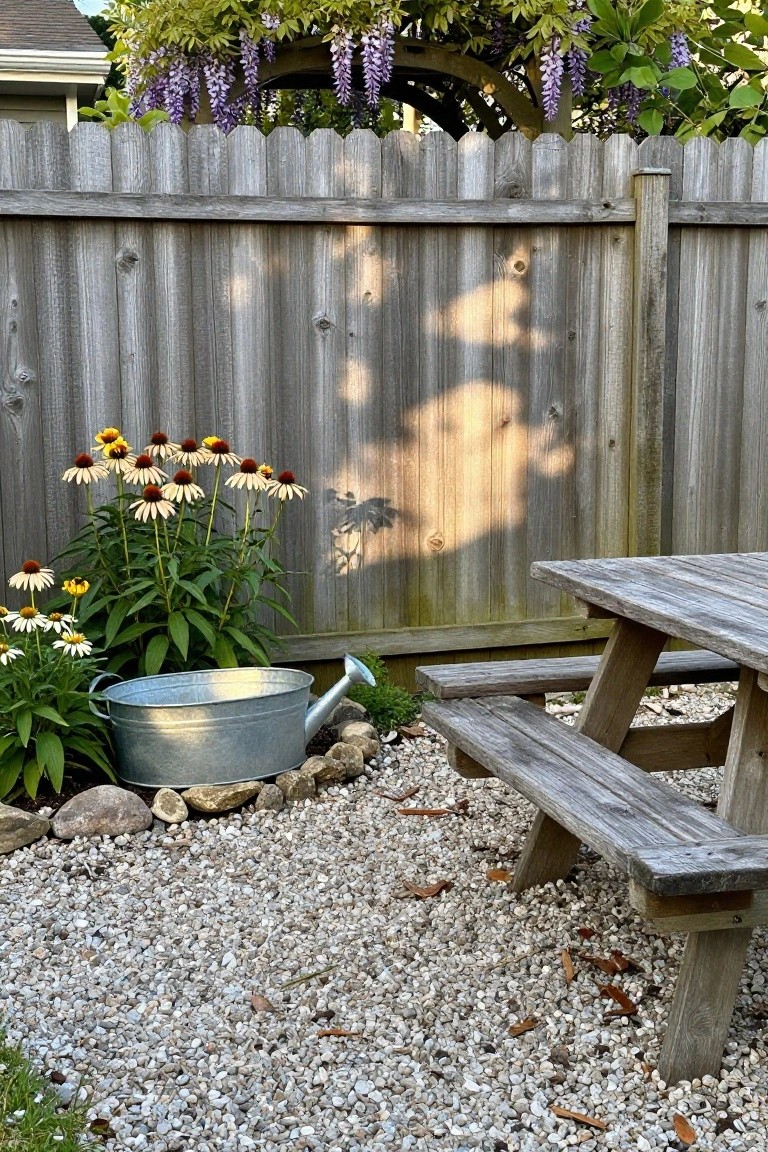
A soft gray finish on wood fencing helps it settle into the garden instead of standing out as a hard line. The color picks up tones from the surrounding gravel and plants, so the whole area feels more connected.
This works best on yards that already have a natural, low-key style. It suits homes with flower beds along the fence line and simple ground cover like gravel, though the wood still needs a good sealant to hold up over time.
A Light Blue Fence Color for Outdoor Seating Areas
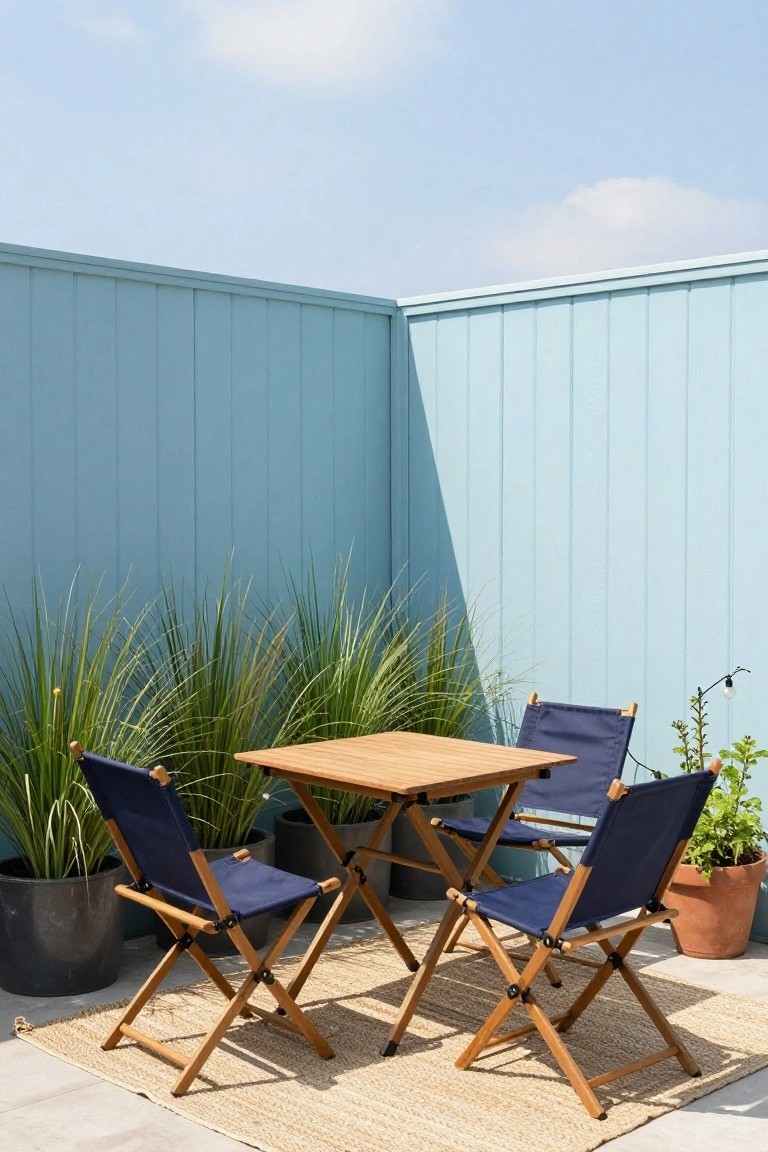
A soft blue fence can make a patio feel brighter and more open without needing a lot of extra decoration. The color sits nicely behind simple wooden furniture and plants, giving the space a clean backdrop that still feels relaxed.
This shade works well on fences that surround a small seating area or backyard corner. It suits homes that want the focus on the furniture layout rather than strong patterns or dark tones, and it holds up nicely against sun and weather when the right exterior paint is used.
Dark Fence Colors That Let Plants Stand Out
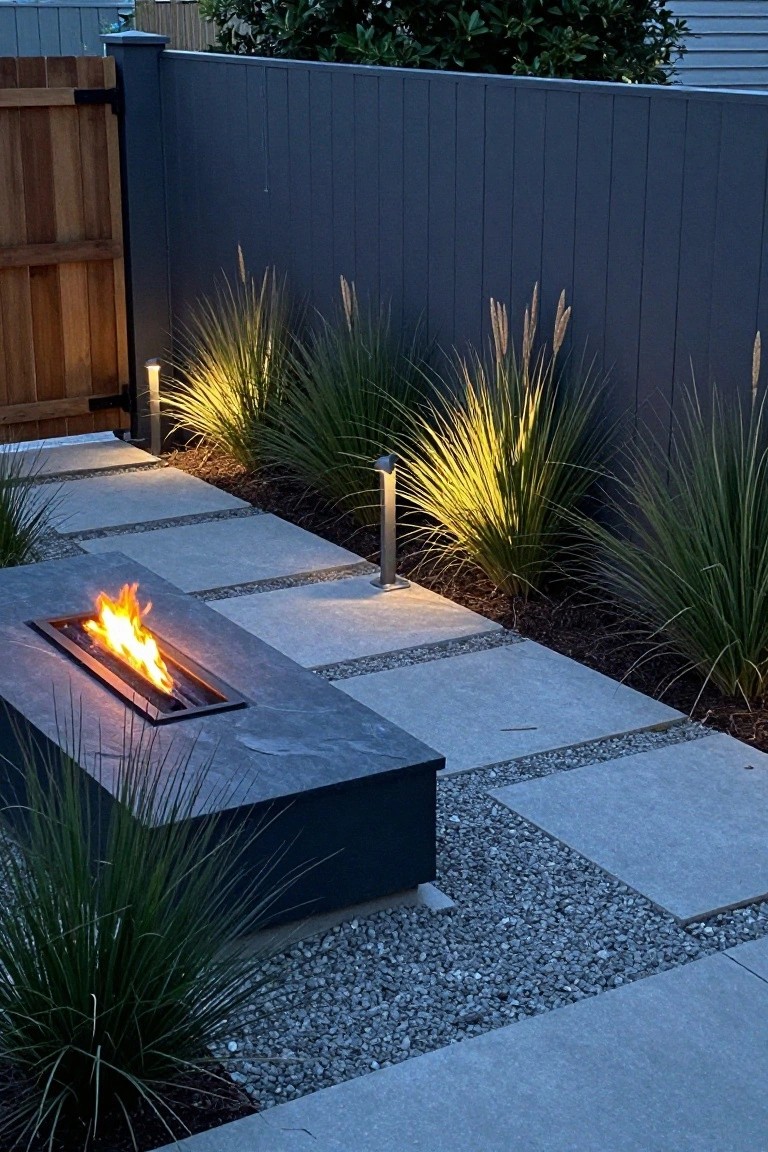
A dark fence color gives the garden a solid backdrop so the plants and hardscaping read more clearly. The deep tone keeps the focus on the grasses and paths instead of pulling attention to the fence itself.
This works best on homes with simple, structured planting where you want the garden to feel calm and organized. Keep the fence color consistent across the whole run and avoid busy flower colors right up against it.
Soft Sage Green Fence Color
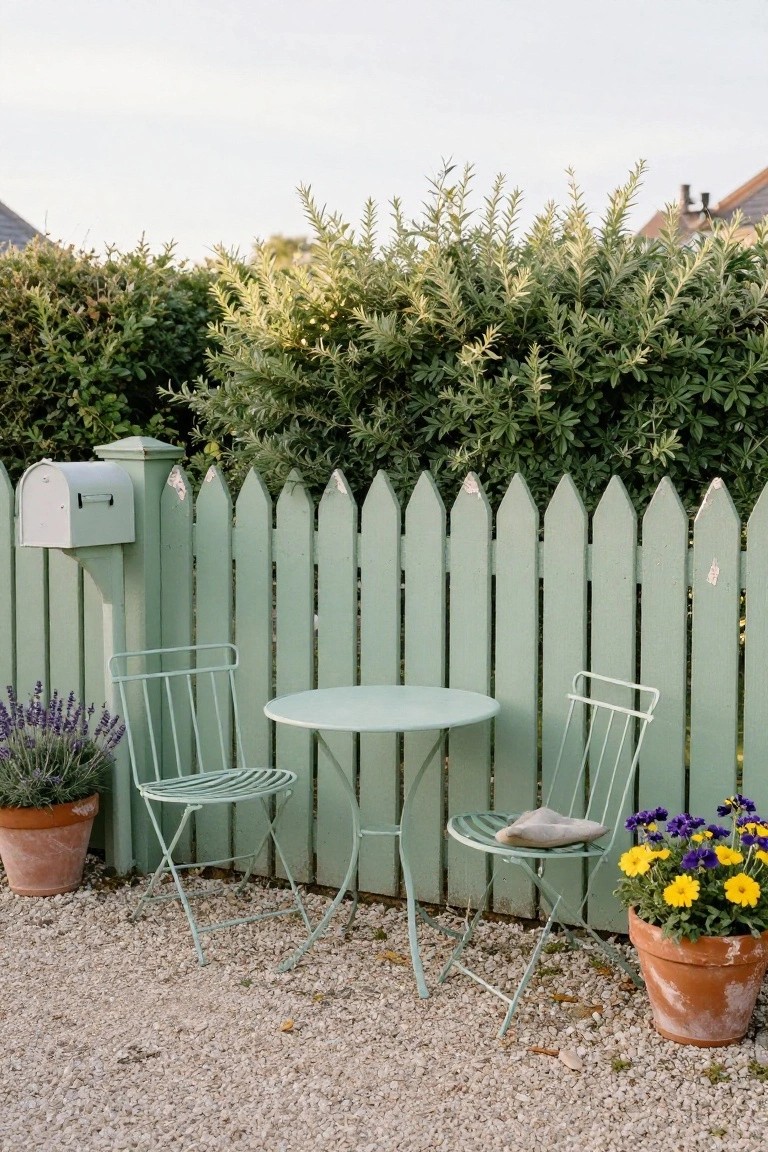
A muted sage green gives wood fencing a fresh look without standing out too much. It works especially well when the fence sits among shrubs and garden beds, because the color echoes the foliage and keeps the whole area feeling calm and connected.
This shade suits older homes with simple yards or gravel areas where you want the fence to recede a bit. Just test the paint on a small section first, since greens can shift depending on the light and the original wood tone.
Natural Wood Tone With Dark Planters
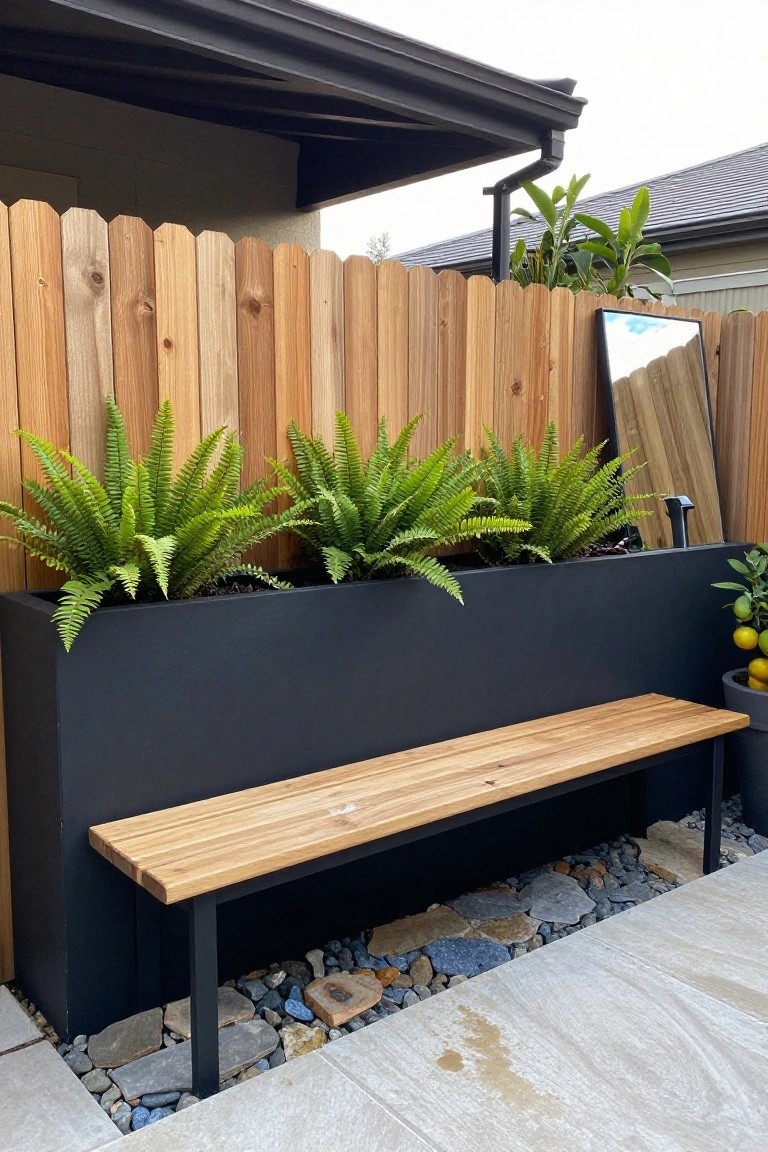
A natural wood fence holds up better visually when paired with dark modern planters. The warm grain shows through clearly and the contrast keeps the fence from looking tired or flat.
This approach suits small yards or narrow side areas where you want an easy update without painting. Use a few black containers or a low bench in the same dark finish and let the fence stay as is.
Natural Wood Tones That Work With Garden Plantings
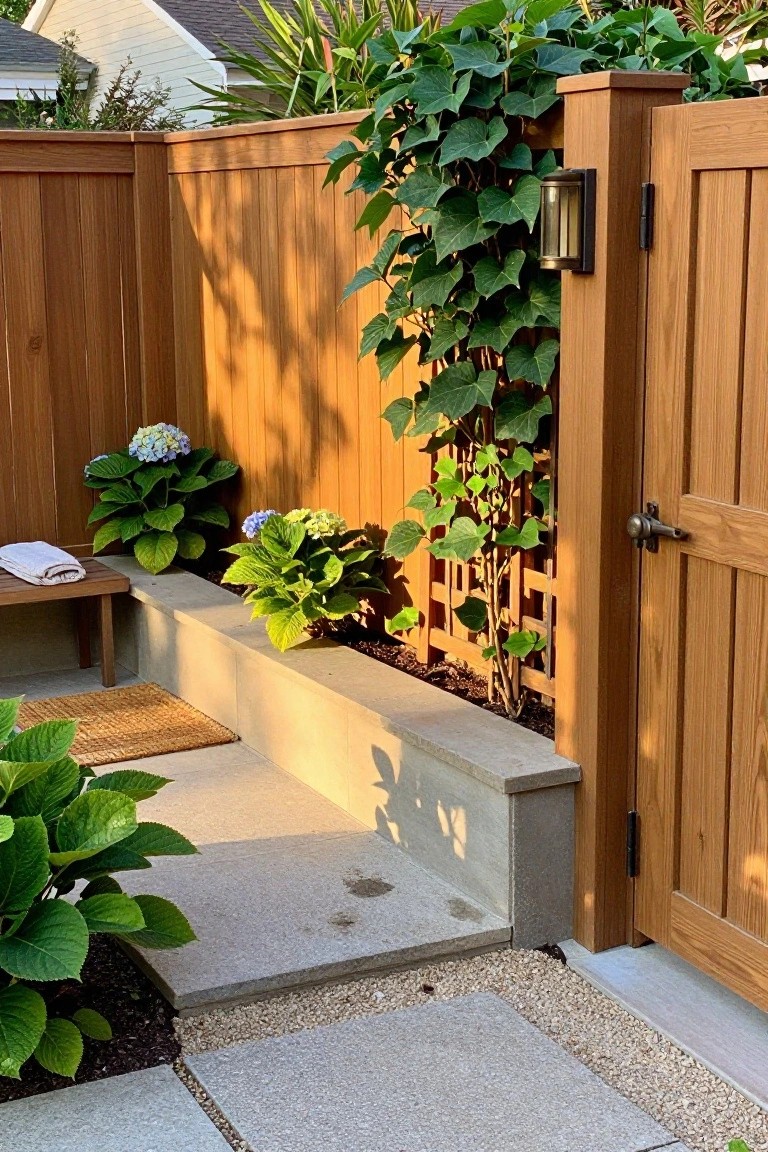
A warm natural finish on a wood fence often feels more settled than a stark painted color, especially when the fence sits right next to beds and climbing plants. The tone picks up the color of soil, stone, and foliage so the whole area reads as one space instead of separate parts.
This approach suits homes with established greenery and simple hardscaping. It works best when the stain stays in the honey to light brown range rather than going too dark or too orange, and it helps if you let a few vines or shrubs grow against the boards so the fence does not stand out as a hard line.
Frequently Asked Questions
Q: How do I choose a color that matches my house without clashing? A: Look at your siding and trim colors for cues. Earth tones often blend well with weathered wood. Grab samples and hold them up outside on a sunny day to test.
Q: Is it better to apply color in spring or fall? A: Spring works if you want it done before summer heat. Fall avoids peak sun but watch for early rains. Pick a stretch of dry days either way.
Q: What happens if I skip sealing after coloring? A: The color fades faster without protection. Add the sealer to keep it looking fresh longer.
