

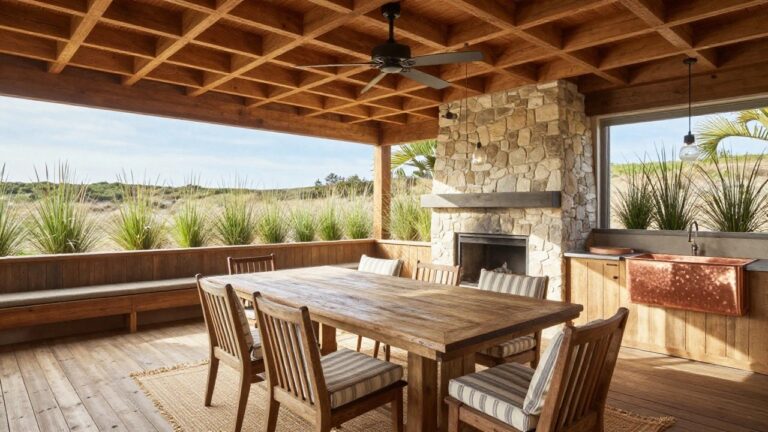
I have found that a covered wooden patio needs more than just a roof to stay comfortable through every season.
When I look at my own backyard the spaces that get used most are the ones where the wood framing actually blocks wind and lets in light at the same time.
Some setups look solid on paper but end up too dark or too open once the weather shifts.
Trying a basic wood overhang first often shows whether the area will hold up before any bigger work begins.
Small changes in how the beams sit can make the whole patio feel ready for regular use.
Wooden Bench Seating Around A Patio Table
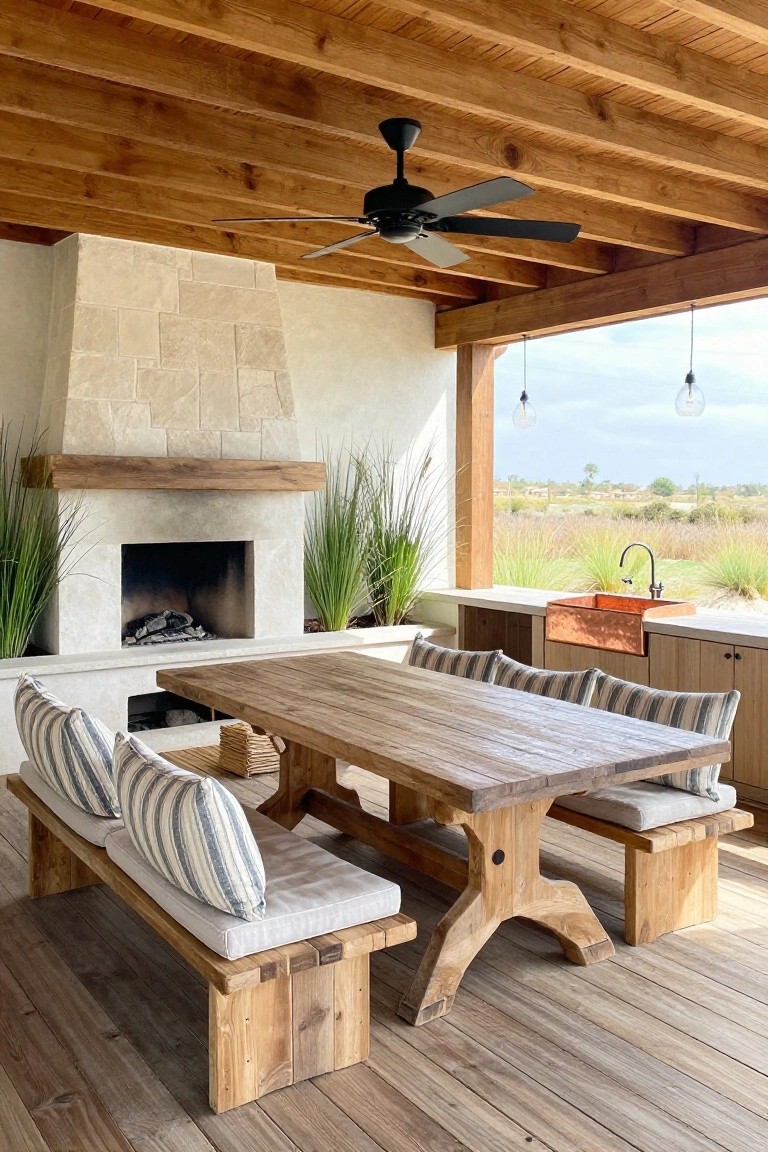
A long wooden table with matching benches gives a covered patio a solid, no-fuss place to gather. The benches keep the setup simple, seat more people without crowding the space, and hold up well outdoors when the wood is thick and treated.
This works best on patios that already have some shelter and a heat source like a fireplace. It suits homes that want casual outdoor meals without buying lots of separate chairs or worrying about weather damage.
Slatted Wood Overhead for Covered Patios
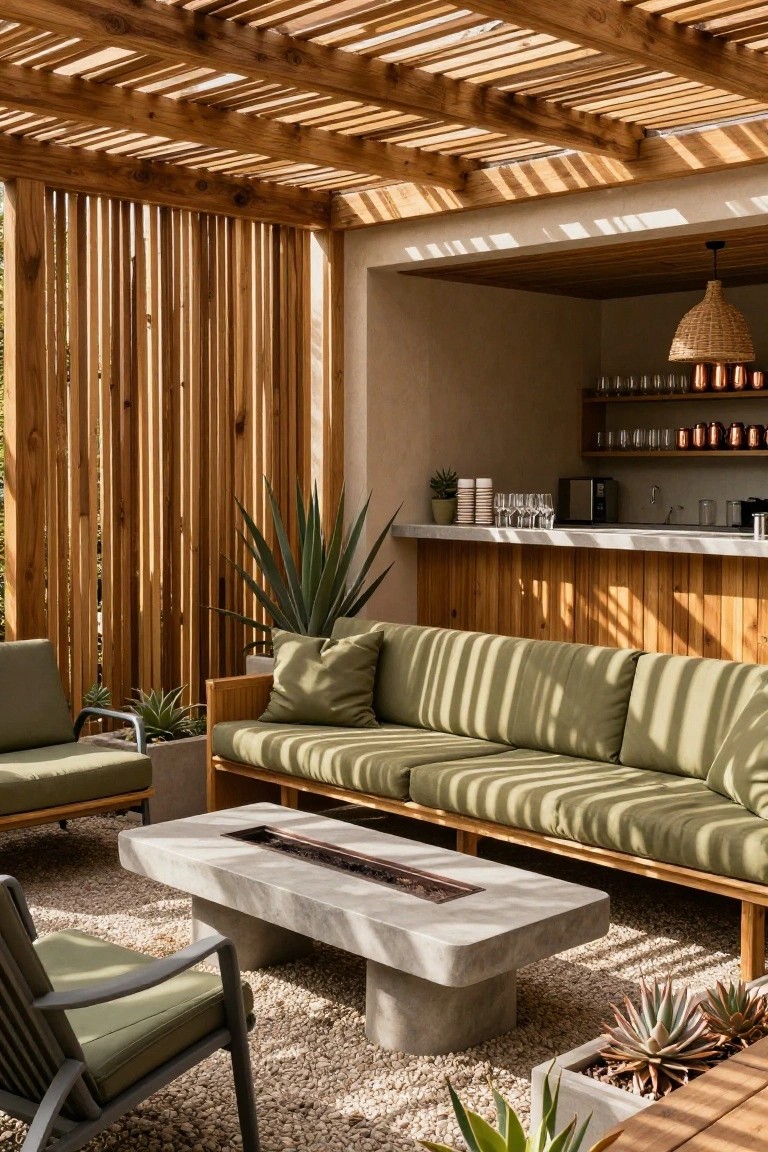
A simple slatted wood roof can give a patio real structure without closing it off completely. It filters sunlight, offers a bit of shade, and still lets in fresh air, which makes the space feel more like an outdoor room than just an open deck. Many people like this look because it works in different seasons and pairs well with a fire feature in the middle of the seating.
This setup suits homes where you want partial coverage without a full solid roof. Keep the spacing even on the slats so the light stays consistent, and make sure the seating and any tables sit comfortably underneath. It works best on patios that already have some wall or fence backing to help define the area.
Add a Fireplace to Your Covered Patio
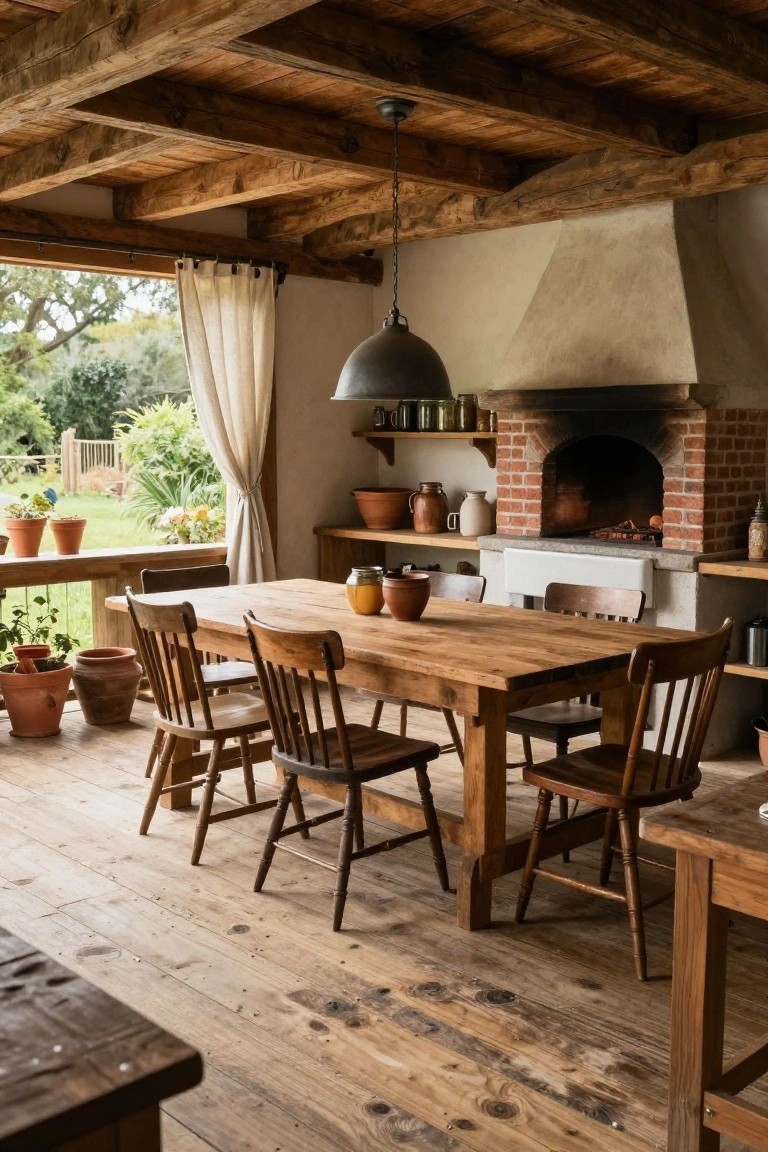
A fireplace makes a covered wooden patio feel like an extension of the house rather than a seasonal space. It adds real warmth on cooler evenings and gives the area a clear focal point that draws people together around the table.
Place the fireplace at one end so the dining table can sit close without blocking the heat. This setup works best on homes with a solid roof overhang and good ventilation so smoke does not linger. Keep the rest of the furniture simple and sturdy so the whole space stays practical through different seasons.
Built-In Benches Keep Outdoor Dining Simple

Built-in benches turn a covered patio into a space that feels ready for meals without extra furniture to move around. They save room compared with chairs and give the area a settled look that works for everyday use or bigger gatherings.
This approach fits homes where the patio already has a roof and solid flooring. Match the bench wood to the rest of the structure and add cushions so people stay comfortable longer.
Rattan Furniture on Wooden Patios
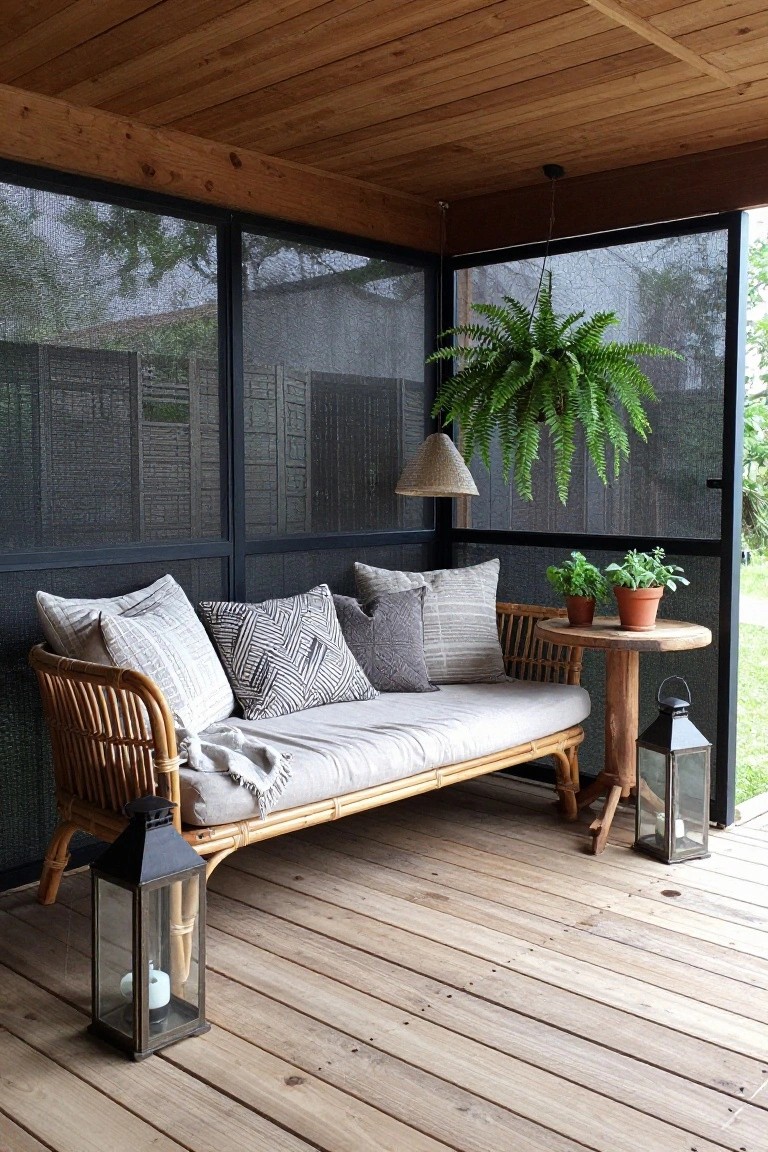
Rattan seating fits naturally on wooden patios because the light woven texture pairs well with the heavier wood tones. It keeps the space from feeling too heavy while still offering comfortable spots to sit.
This approach works best on covered decks or porches that get regular use. A long bench or sofa along one side leaves room to move around, and a few lanterns nearby add light without needing much else.
Woven Pendants Add Soft Light To Covered Patios
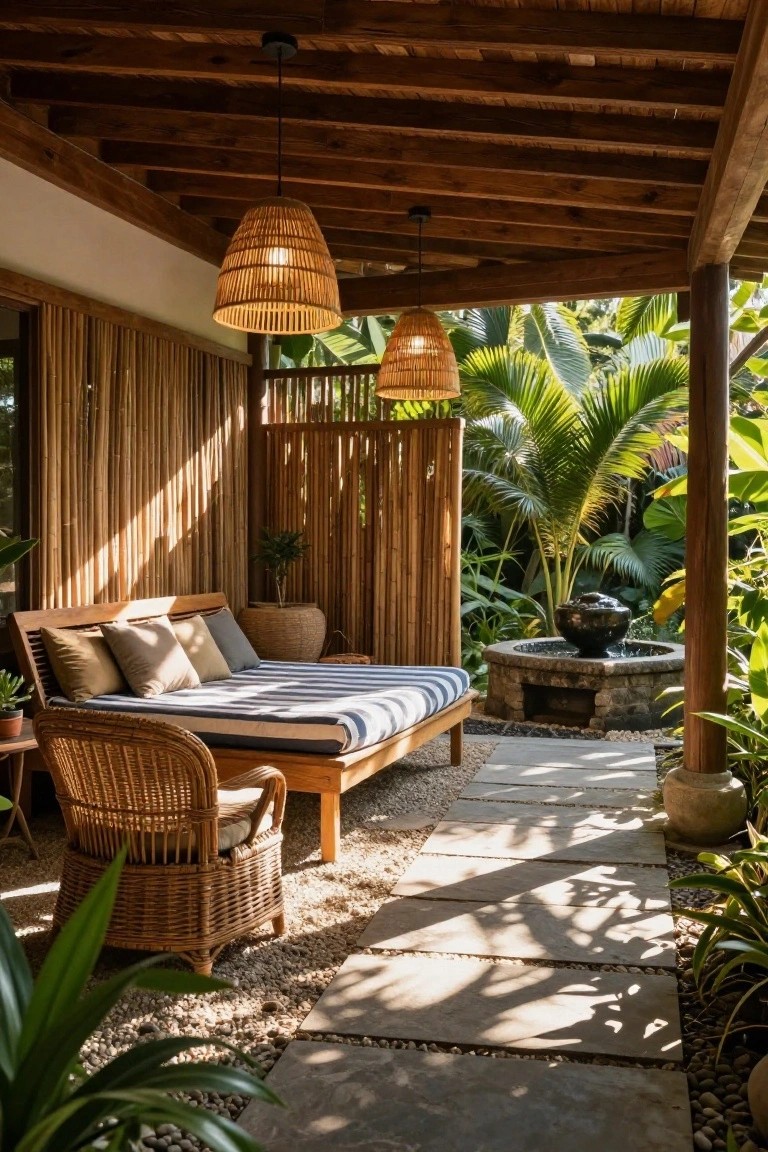
Woven pendant lights work well over seating areas on a covered wooden patio because they give a gentle glow that feels warmer than standard fixtures. They also help define the space without blocking views or making the ceiling feel heavy.
Place them at different heights above a daybed or lounge chairs and pair them with simple bamboo screens on one or two sides. This setup suits homes with tropical or natural gardens and works best when the patio already has solid wood beams overhead.
Built-In Planters Along a Covered Patio
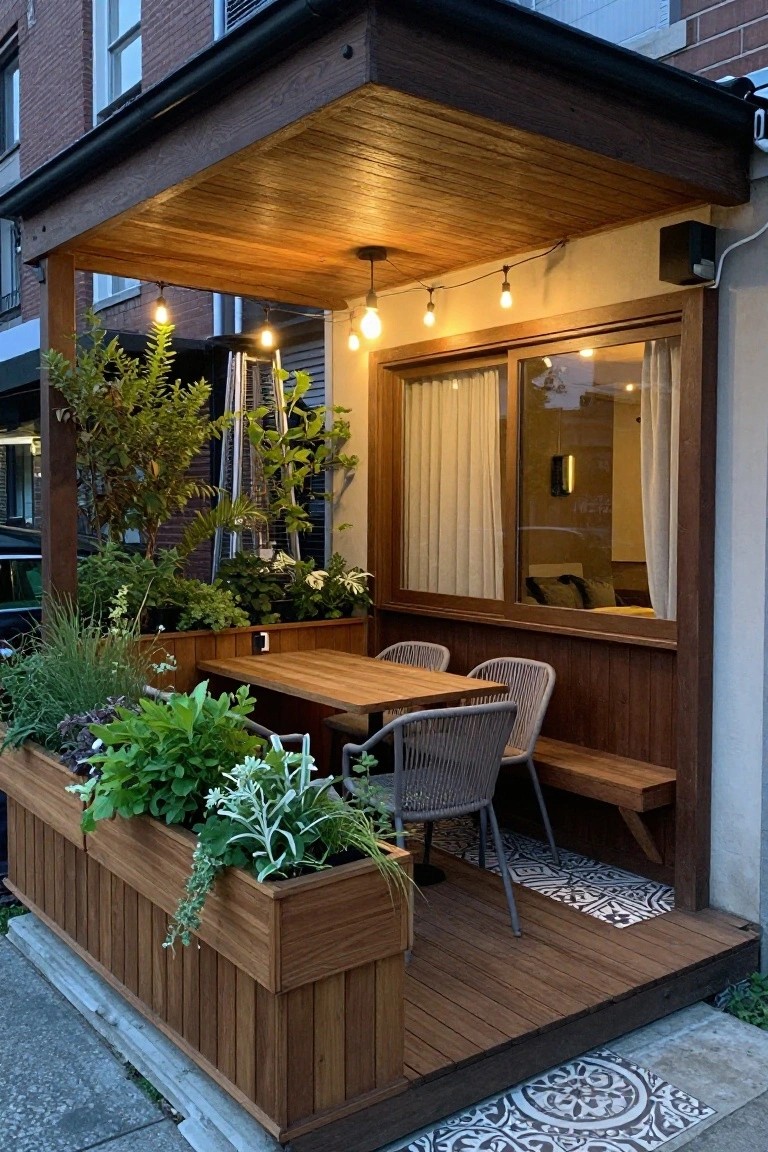
Adding built-in planters right into the edge of a covered patio keeps the space feeling open while still bringing in plenty of greenery. The plants sit at a comfortable height and do not take up floor space that could be used for seating or walking through.
This works best on smaller decks or city homes where you want some living color without crowding the area. Match the wood tones of the planters to the cover and posts so the whole thing reads as one built structure rather than separate pieces.
Wooden Beams That Turn a Patio Into a Real Room
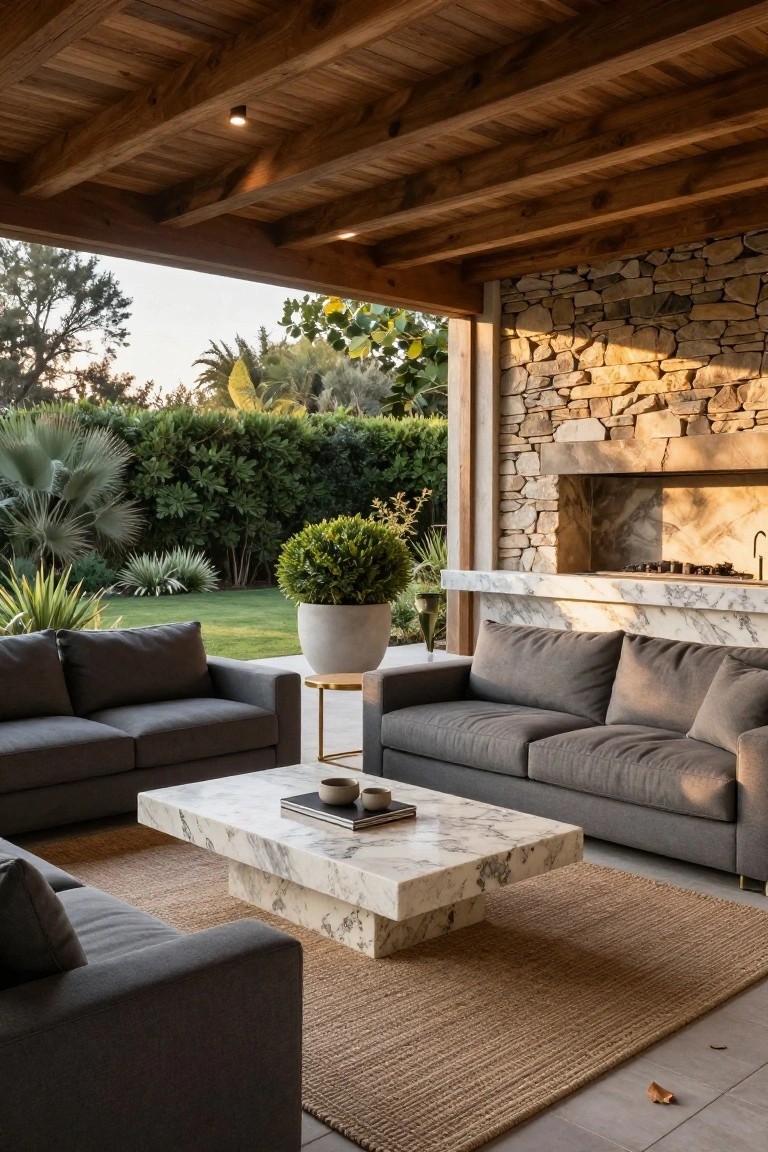
A wooden beam ceiling gives an outdoor seating area a solid sense of enclosure. The beams create clear edges and make the space feel more intentional than an open deck would.
This works best on patios that already have some protection from the elements, especially when paired with a fireplace for cooler evenings. It suits homes that use natural wood elsewhere so the cover feels like a natural extension rather than an add-on.
Grow Climbing Roses Along the Railing
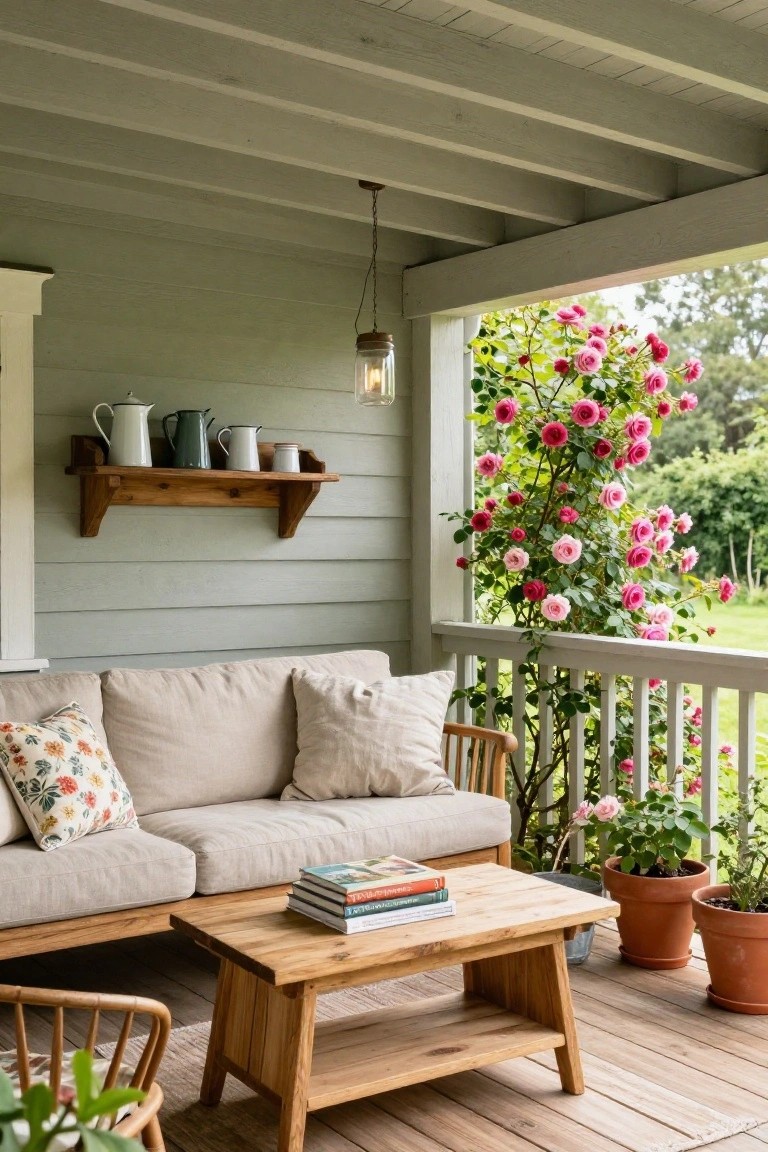
Climbing roses work well on a covered porch because they add color and softness without taking up floor space. The vines can run along the railing and bring the garden right up to the seating area, which keeps the whole spot feeling connected to the outdoors even when the weather turns.
This idea suits a simple wooden porch with a sofa and low table. Just plant the roses in pots or a narrow bed at the base of the railing and train them upward. They need some sun and regular trimming, but they reward the effort with blooms that last for months.
Wooden Ceilings for Covered Patios
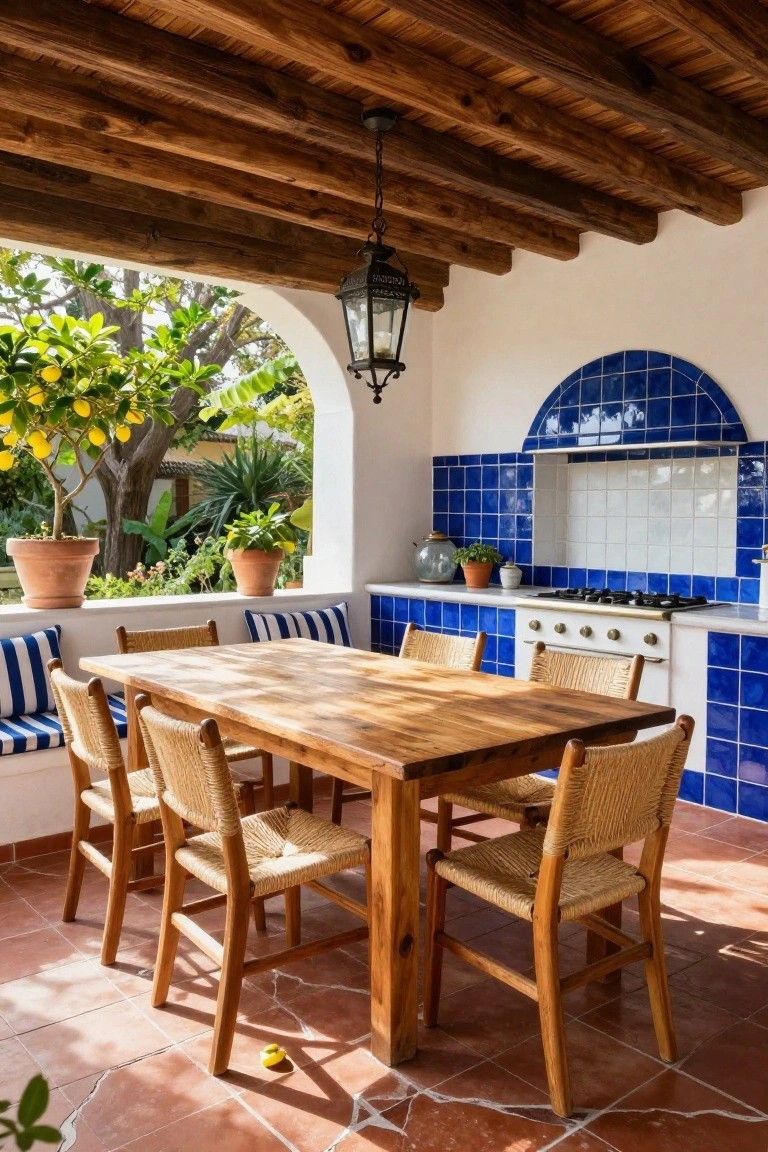
A wooden ceiling gives a patio real structure and makes the space feel more like an extra room. It protects the area from rain and sun so you can keep furniture and even a cooking setup outside without worrying as much about the weather.
This approach works best on homes where the patio sits right off the kitchen or living area. Treated wood holds up well over time, though it helps to check for good drainage and airflow so the space stays comfortable in different seasons.
Built-In Bench Seating Around a Central Table
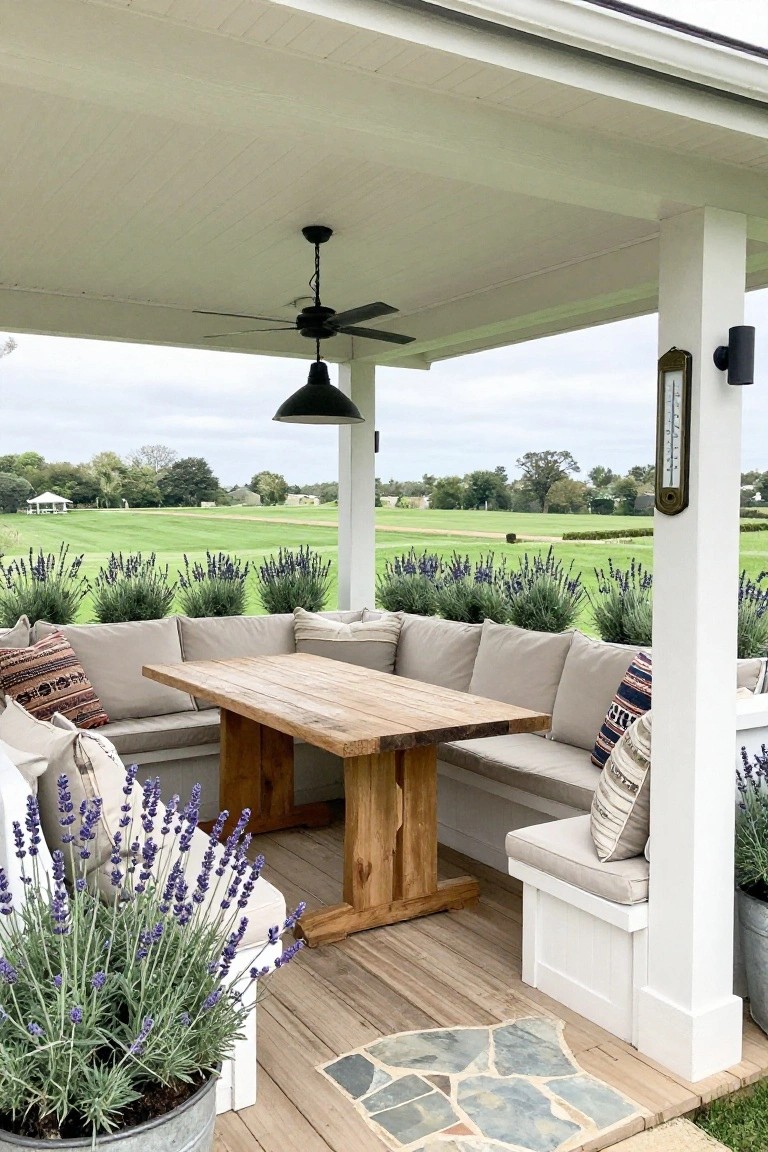
Built-in benches around a big wooden table give a covered porch a sturdy, permanent feel that works for daily use. The seating stays put through wind and weather, and it fits more people without crowding the space with loose chairs.
This layout suits homes that want an outdoor spot ready for meals in any season. Just choose cushions made for outdoor exposure and treat the wood so it lasts.
Adding a Water Feature Along the Deck

A small water element right next to the seating area gives the deck a calm feel that lasts through the seasons. The sound of running water makes the space more pleasant to sit in, especially when the deck sits low and close to the ground.
This setup works best on simple wooden platforms where you can tuck a narrow trough along one edge. It suits homes that already have some garden space nearby and want a quiet spot without adding big structures or lots of furniture.
Built-In Seating for Covered Patios
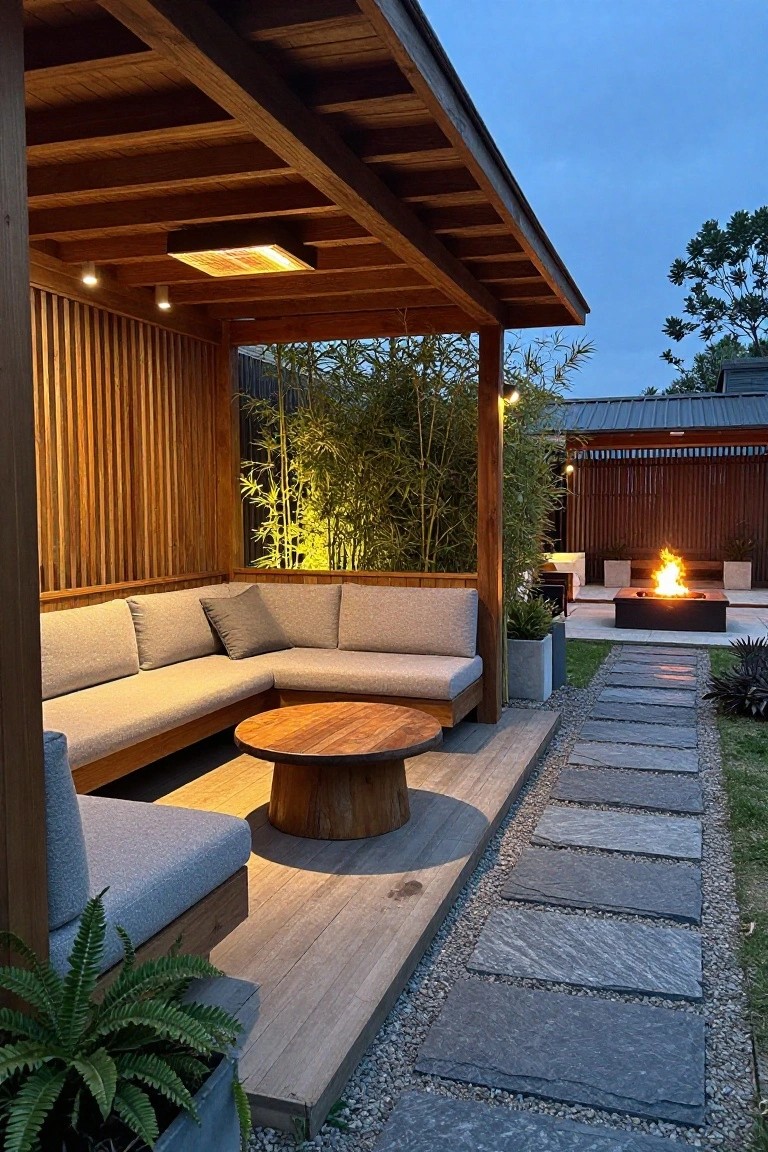
Built-in seating works well on a covered patio because it turns the space into something you can actually use without rearranging furniture all the time. The wood frame blends with the structure overhead, and the cushions make it comfortable for longer stays. It also keeps the floor clear so the area feels open even when it is small.
This setup works best on homes where the patio sits right off the main living area. Keep the cushions in neutral tones so they hold up through the seasons, and make sure the cover has good drainage if you get heavy rain. A simple round table in the middle is usually enough.
Built-In Benches Add Seating and Storage
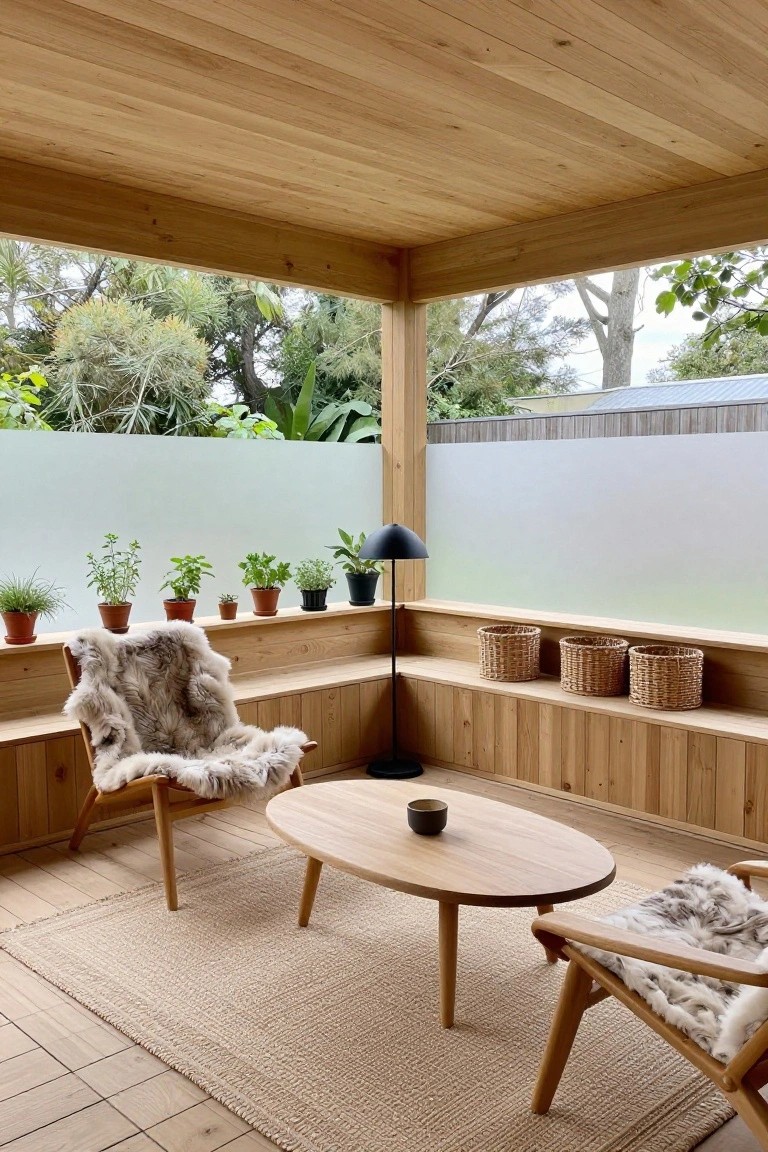
Built-in benches along the walls give a covered patio a lot more function without crowding the floor. They create steady seating for several people and often hide storage underneath for cushions or tools. Many people like how this keeps the middle of the space open for a table or just moving around.
This approach works best on wooden patios that already have some shelter from the ceiling and walls. It suits homes that want the outdoor area to feel used year-round instead of just in good weather. Make sure the wood finish holds up to damp conditions if your climate brings a lot of rain or fog.
Add an Outdoor Kitchen Under a Covered Roof
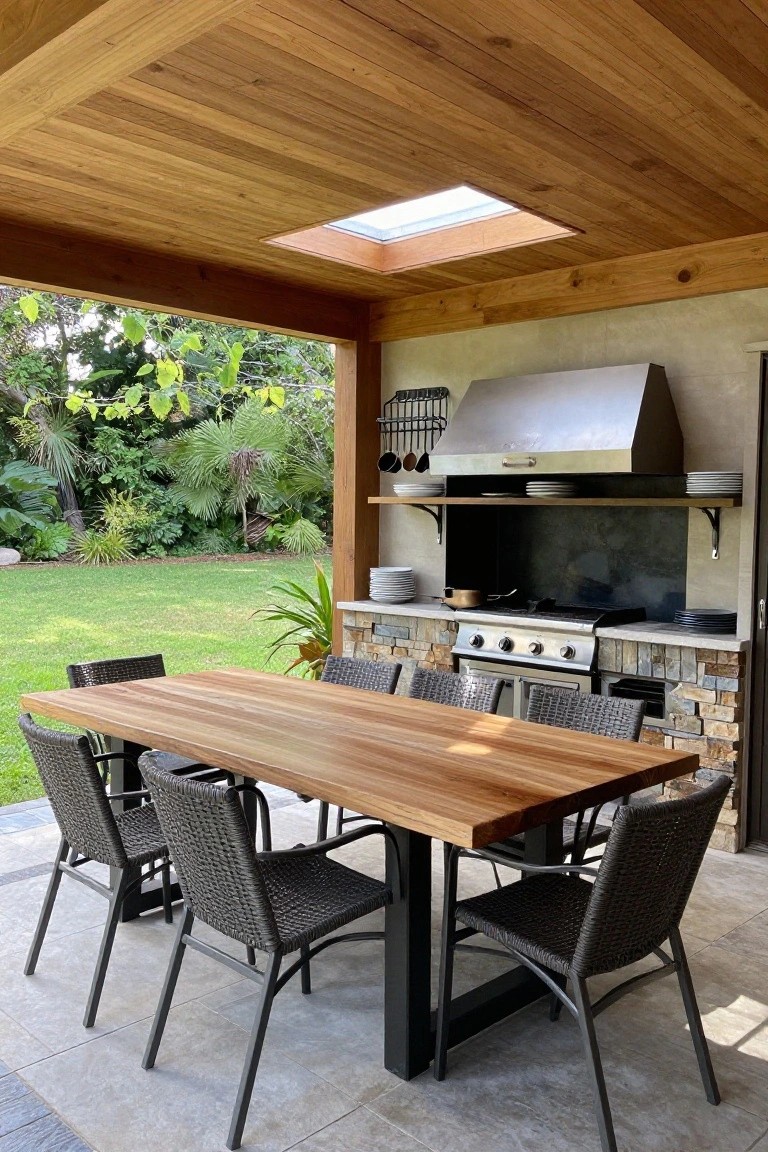
An outdoor kitchen makes sense when the patio has solid overhead cover. It keeps the cooking area dry and usable even on rainy days or in cooler months, so meals can move outside without much hassle.
This setup works best on patios that already have good structural support and enough floor space for both cooking and seating. It suits homes where the owners like to entertain regularly and want the kitchen close to the main living areas.
Hanging a Chair on Your Covered Patio
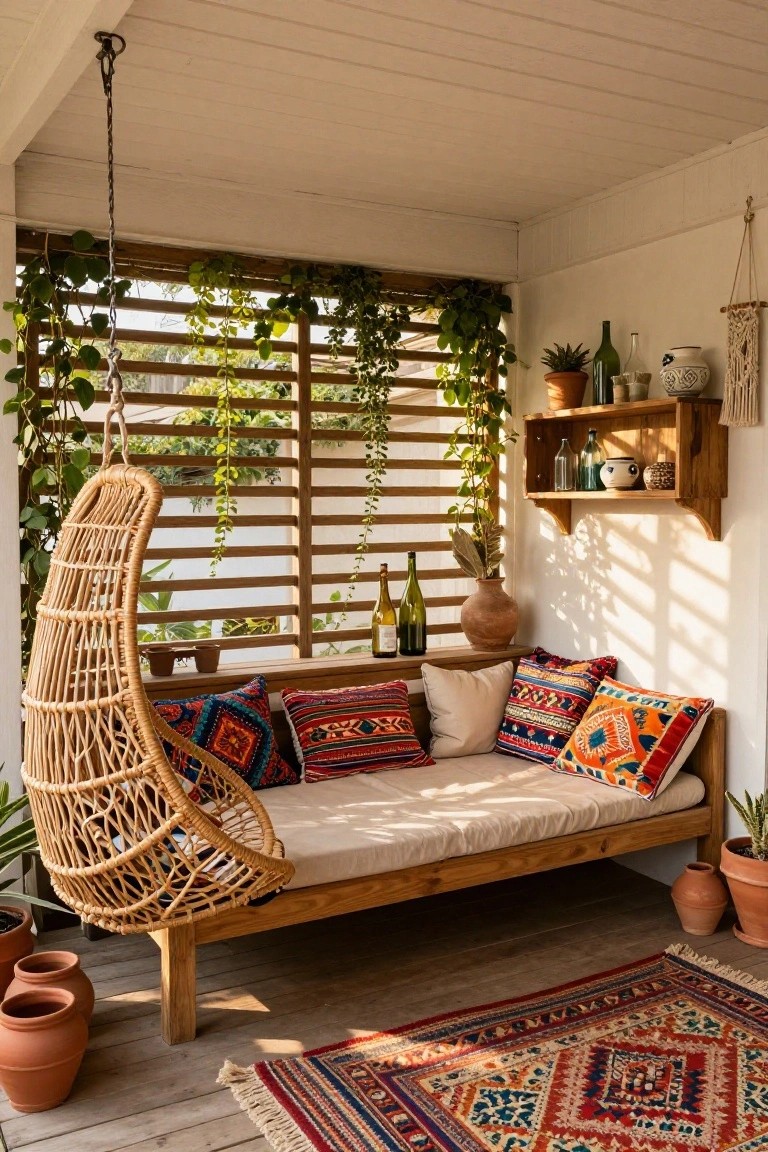
Hanging a chair from the ceiling adds a separate seat that feels different from a standard bench. It gives you a spot to sit back without crowding the main surface, and the motion makes the space feel more relaxed.
This works best on covered patios with solid beams overhead. Pair it with a long bench for extra seating, but make sure the hanging point is strong enough and the chair can handle outdoor conditions.
Stone Fireplaces In Wood Rooms
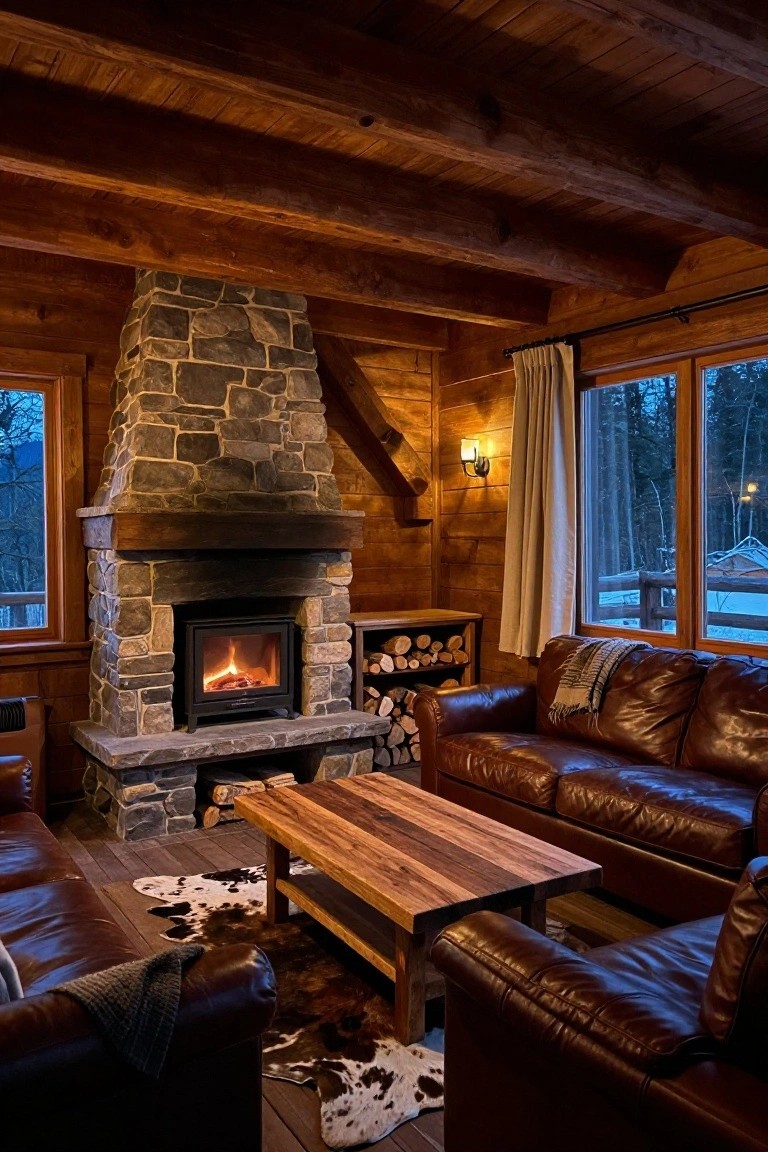
A big stone fireplace gives a wood paneled room a solid center that feels warm without much extra effort. The natural contrast between the rough stone and the smooth logs keeps the space from looking too flat or one note.
This works well in cabins or homes that already lean rustic. Keep seating low and simple so the fireplace stays the main draw and the room does not feel crowded.
Add A Ceiling Fan Overhead
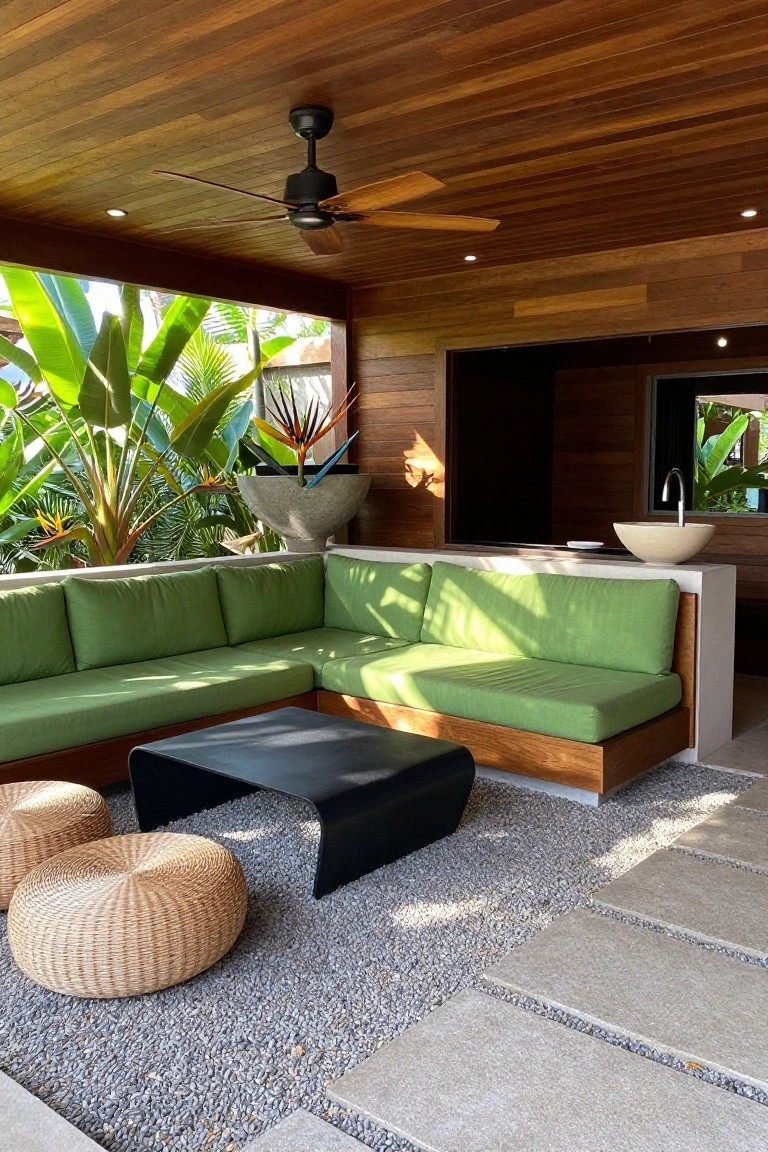
A ceiling fan makes a covered wooden patio feel much more comfortable on warm days. It keeps air moving so the space does not get stuffy, which helps people stay outside longer instead of heading back indoors.
This works best on patios that already have a solid roof and some seating built in. Mount the fan high enough to clear heads, and choose a model rated for outdoor use. It is a simple addition that fits most wooden ceiling setups without much extra work.
Using Gravel on a Covered Patio
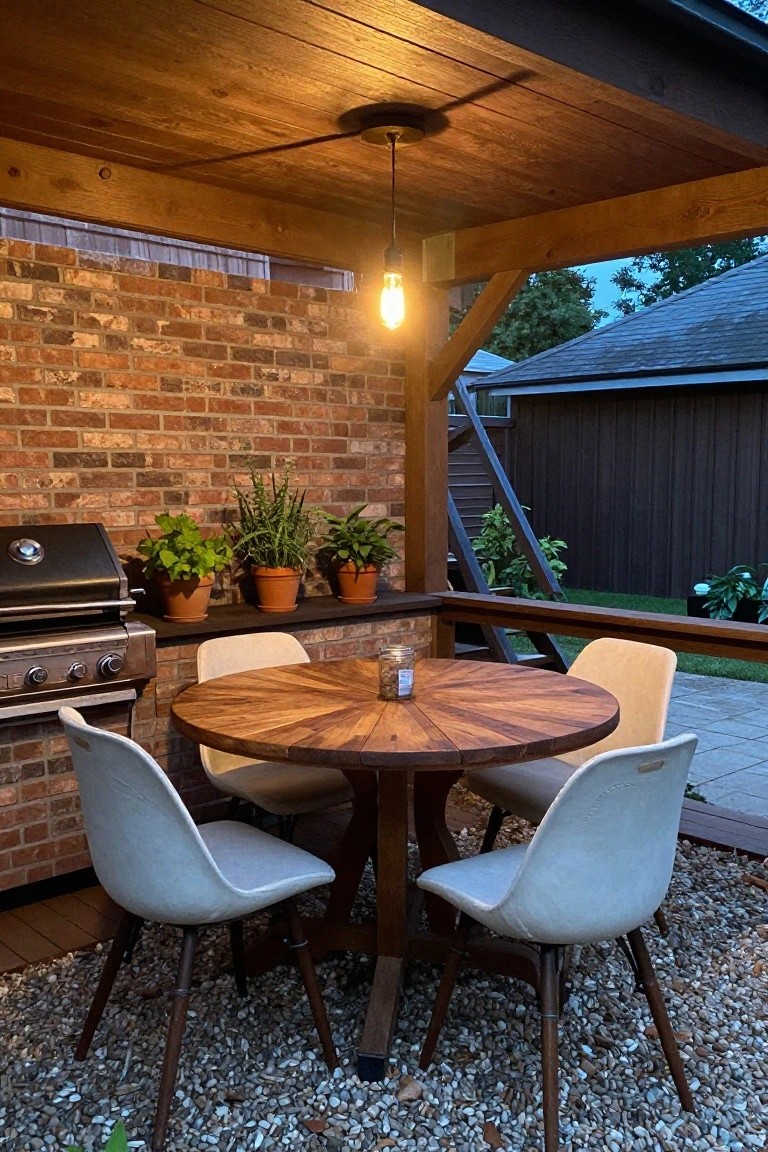
Gravel works well under a dining table in a covered space because it drains quickly after rain and gives the area a relaxed feel without needing constant sweeping. The wood overhead still provides shelter and a finished look while the loose surface below keeps things simple and low maintenance.
This setup suits homes where the patio sits right against the house or connects to a kitchen area. Make sure the gravel layer stays thick enough to stay even under chairs, and add a border if you want to keep it from spreading into nearby grass or pavers.
Include an Outdoor TV on Your Covered Patio
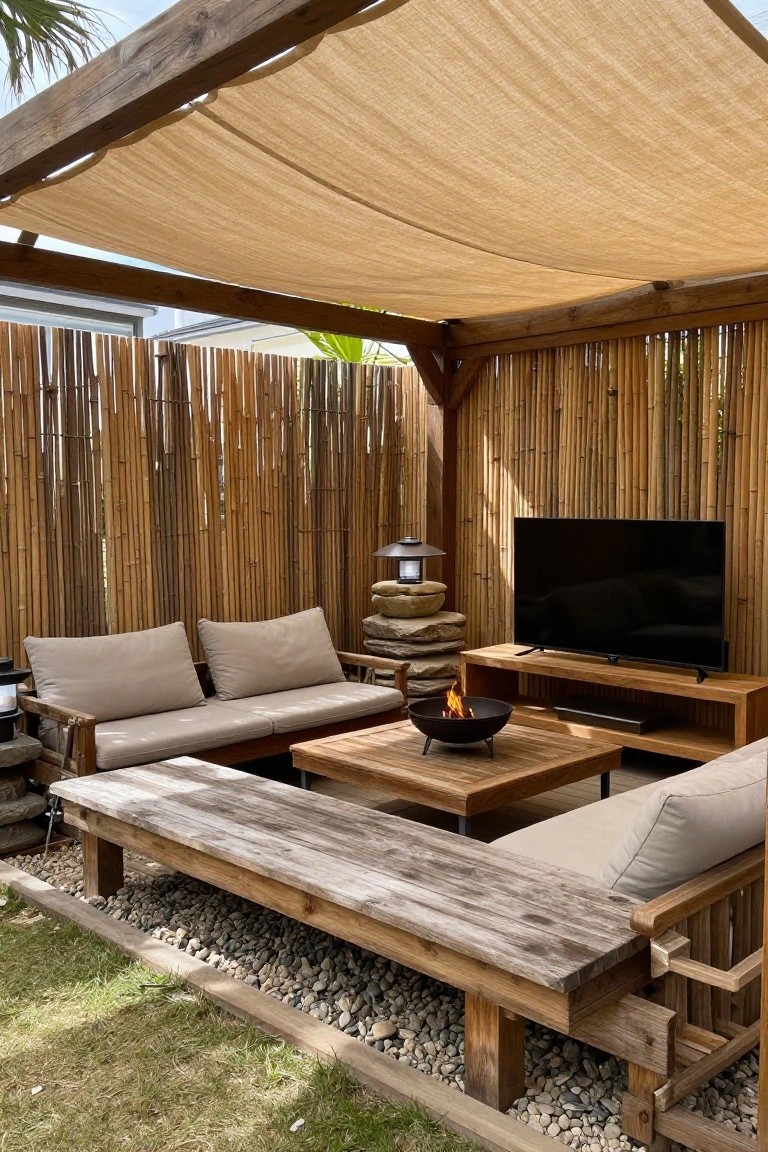
A covered wooden patio works well when you add a television because it turns the space into a true outdoor room. The roof and side screens protect the screen from weather while the fire pit keeps everyone comfortable on cooler evenings.
This setup suits homes that already have a deck or patio frame in place. Keep the TV on a low console against one wall and arrange seating so the screen is easy to see without blocking the fire area.
Add a Wooden Counter for Outdoor Cooking
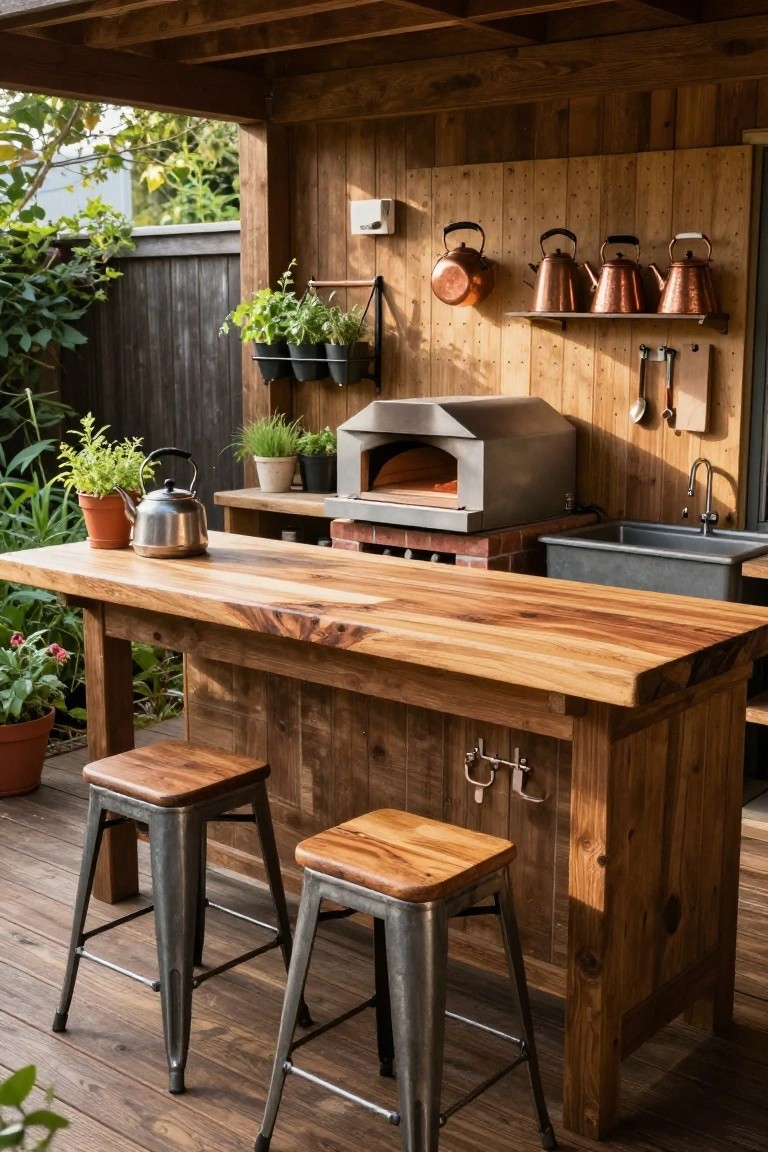
A solid wooden counter turns a covered patio into a place where you can actually cook and gather without running back inside. It gives you room to prep, serve, and keep tools close at hand while staying protected from rain or strong sun.
This works well on larger decks or patios attached to the house. Keep the counter simple and pair it with a couple of sturdy stools so people can sit and talk while the food is being made.
String Lights Under Wooden Patio Covers
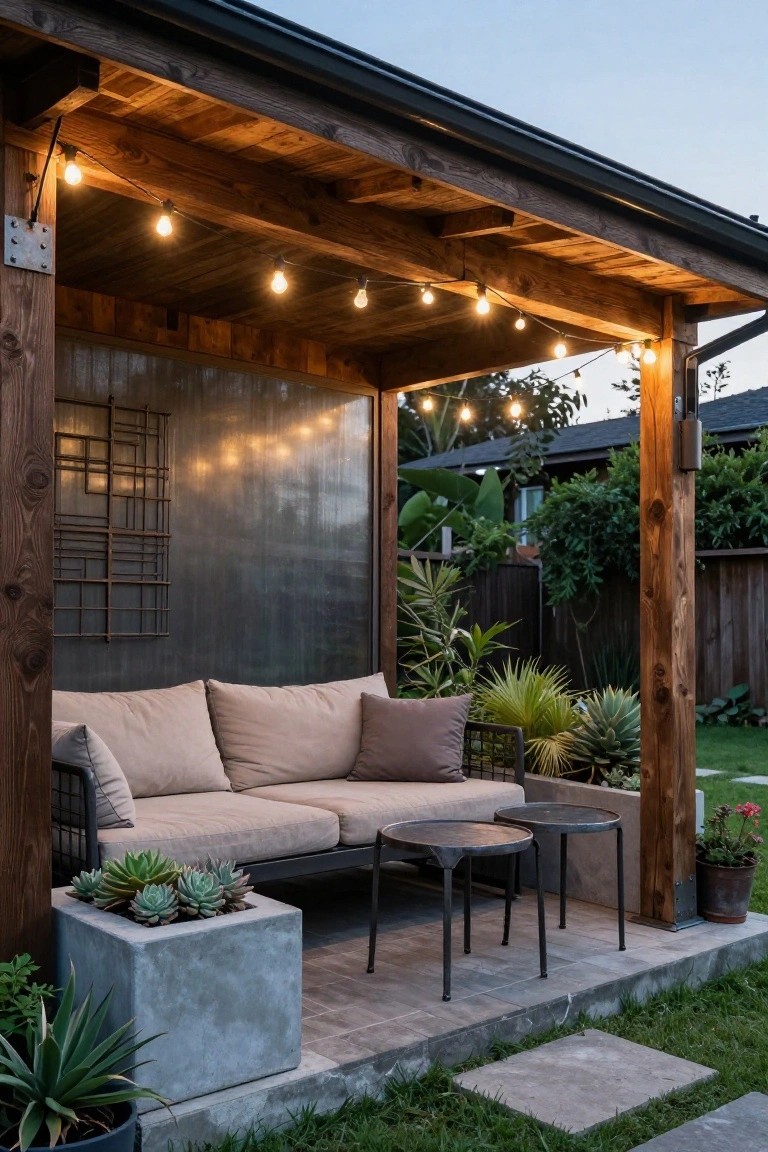
String lights make a covered patio feel usable once the sun goes down. They add a soft glow that keeps the space from going dark too early in the day.
Run them along the beams so the light falls over the seating area. This setup works on most wooden structures and fits homes that want a simple way to spend more time outside without adding much extra wiring.
Add a Built-In Bench to Your Pergola
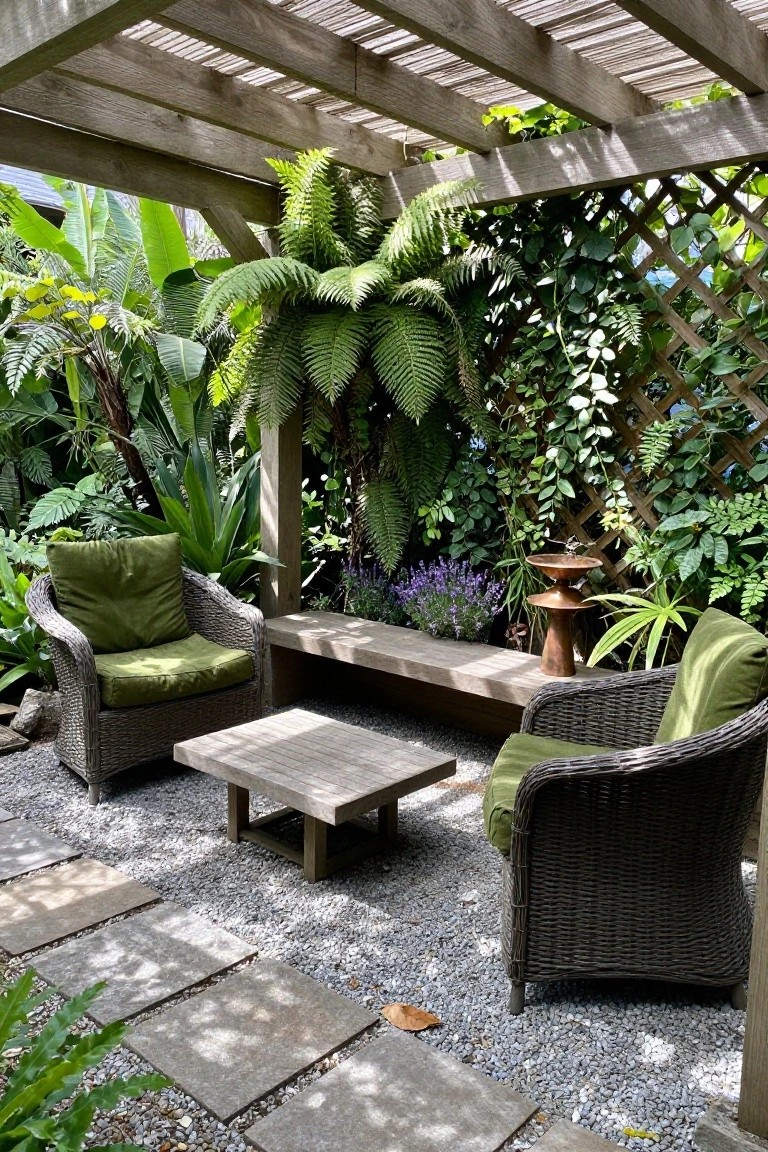
A built-in bench along the back of a pergola gives you steady seating without adding extra furniture that can crowd the space. It keeps the area open and ties the whole structure together in a simple way.
This setup works well on gravel patios where you want low upkeep and good drainage. It suits smaller yards or homes that already have a wooden overhead frame, and it leaves room for a few movable chairs when you need more seats.
A Wooden Roof Over The Patio
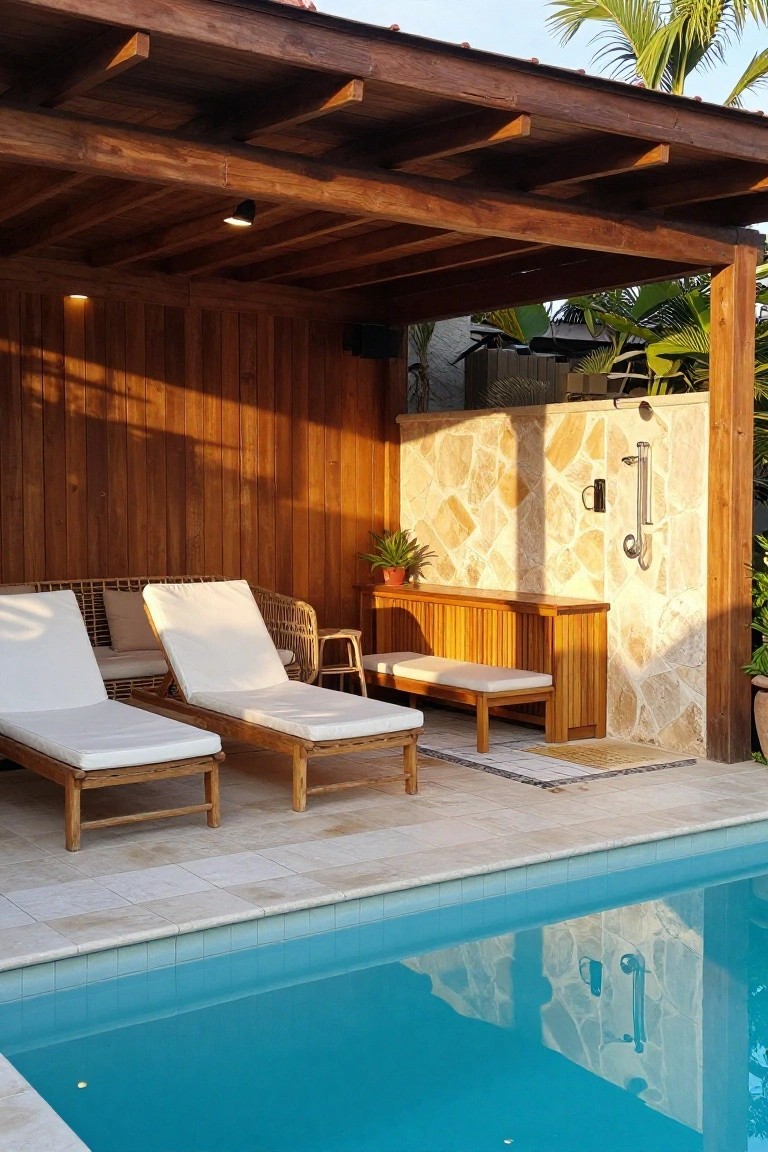
A simple wooden cover like this one makes the area next to the pool much more usable. It blocks strong sun during the day and gives enough shelter that the space stays comfortable even when the weather changes.
This kind of roof works best on patios that sit right by the water. Keep the wood natural and the posts sturdy so the whole structure feels solid without closing the area in.
Frequently Asked Questions
Q: What wood works best if I want my covered patio to handle winter snow and rain without issues? A: Cedar or redwood stands up to moisture and bugs better than pine or oak. Seal the boards every two years to protect the grain and color. This keeps the space ready for use even after storms.
Q: How can I warm up the area on cold nights without installing big heaters? A: Layer outdoor rugs and keep a stack of blankets handy to trap warmth under the roof. Add a fire pit table if you have the space. People often find these touches make evenings comfortable without much effort.
Q: Do bugs still find their way in under a covered roof? A: The overhead cover cuts down on many pests but open sides let some through. Hang lightweight mesh curtains during peak season if they become a problem. It lets you enjoy meals outside without constant swatting.
Q: What’s the easiest way to clean the wood floor on a regular basis? A: Sweep debris often and rinse with a hose when dirt builds up. Skip strong chemicals that wear away the sealant.
