

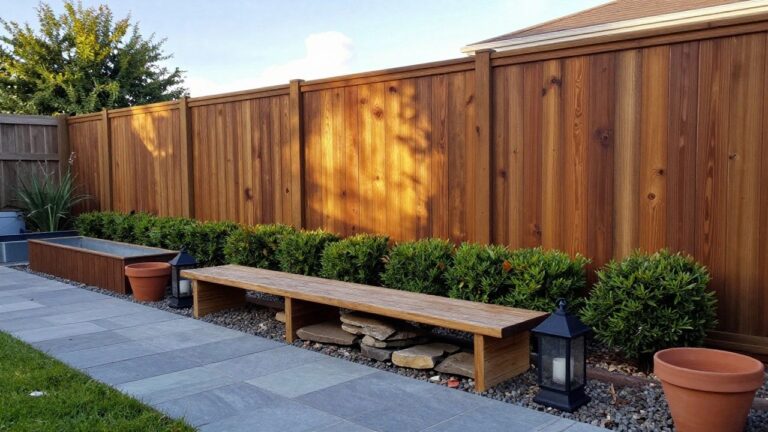
When I walk around the outside of the house the fence often sets the first clear line between the property and the street.
Some stains bring out the grain right away while others darken too fast and flatten the texture within a year or two.
That choice changes how the whole front looks in different seasons.
I have tried a couple of clear finishes on my own fence and learned that the wood needs room to breathe or the surface starts to look flat after the first winter.
The approaches that last are the ones that work with the way the boards actually age instead of fighting against it.
Keep the Base Simple to Show the Fence Grain
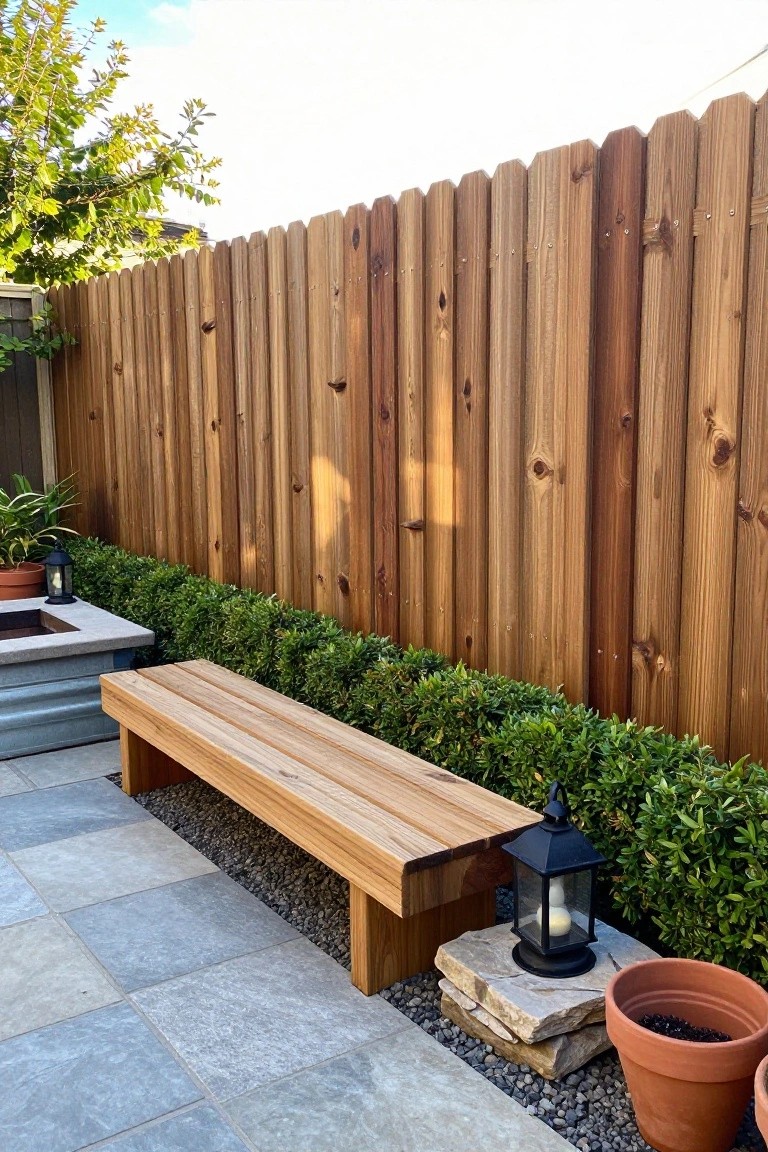
A stained wood fence already has plenty of character on its own. Letting the grain and knots stay visible works best when the ground line stays clean and low. A narrow strip of gravel with a row of shrubs does the job without pulling attention away from the wood itself.
This approach suits most backyards where the fence is the main vertical surface. It keeps maintenance low because the plants stay small and the gravel drains well. Just avoid tall flowers or wide beds right against the fence, or the texture gets lost behind the greenery.
Climbing Roses on a Stained Wood Fence
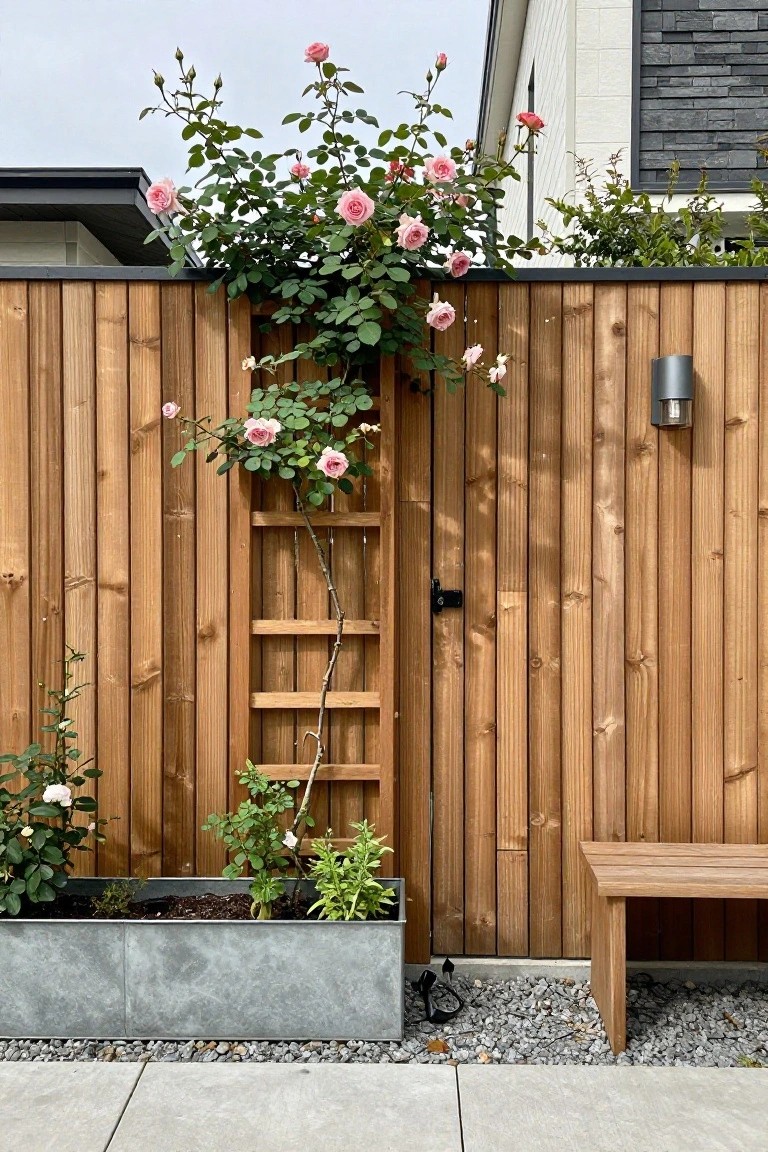
A stained wood fence already shows off its grain and texture on its own. Adding climbing roses gives the surface a living layer that changes with the seasons while still letting the wood remain the main material.
This works best along side yards or back garden edges where you want some softness without hiding the fence completely. Pick a repeat blooming variety and train the canes along the top rail so the wood stays visible lower down.
Stained Fences With Climbing Vines
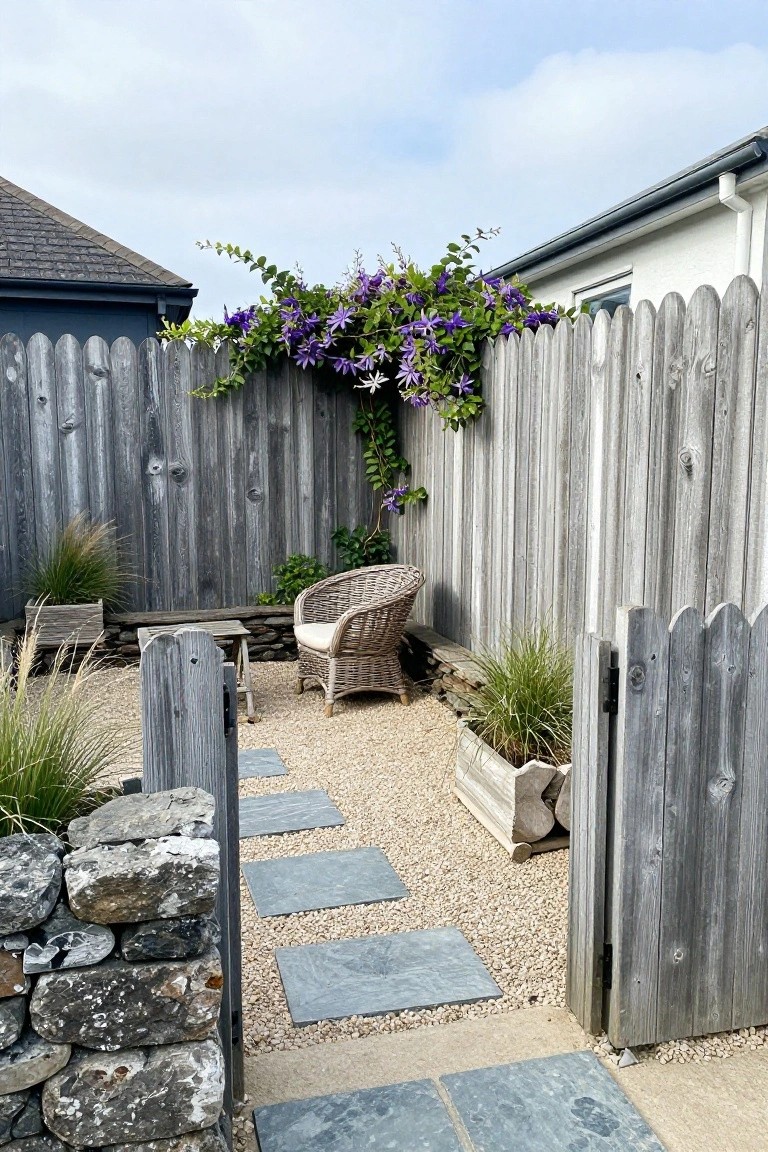
A stained wood fence can handle a bit of greenery without losing its own character. The gray tone here lets the grain stay visible even as the vines spread across the top and down the boards. That mix keeps the fence from feeling too solid or heavy in a small space.
This works best in backyards where you want some privacy but not a blank wall. Pick a stain that weathers to a soft gray rather than a dark finish, and choose vines that do not grow too thick. The wood will still show through in most spots and the plants will add color without covering everything.
Dark Stain Turns a Fence Into a Strong Backdrop
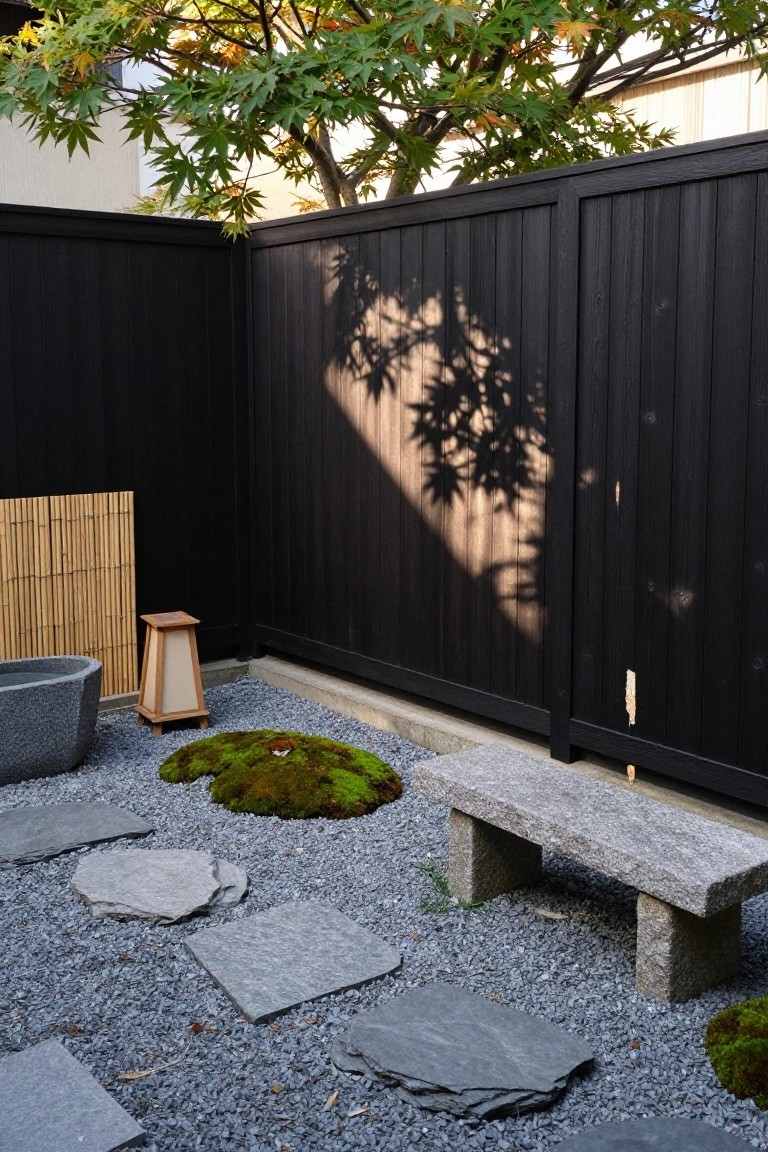
A dark stain on wood fencing gives the whole garden a clear focal point. The deep tone sets off lighter elements like gravel and patches of moss so they read more clearly instead of blending together.
This works best in small yards or minimalist layouts where you want low visual noise. It suits homes already using gravel or stone, but test the stain on a small section first since the color can shift once it weathers.
Stained Wood Fences That Serve as Planters
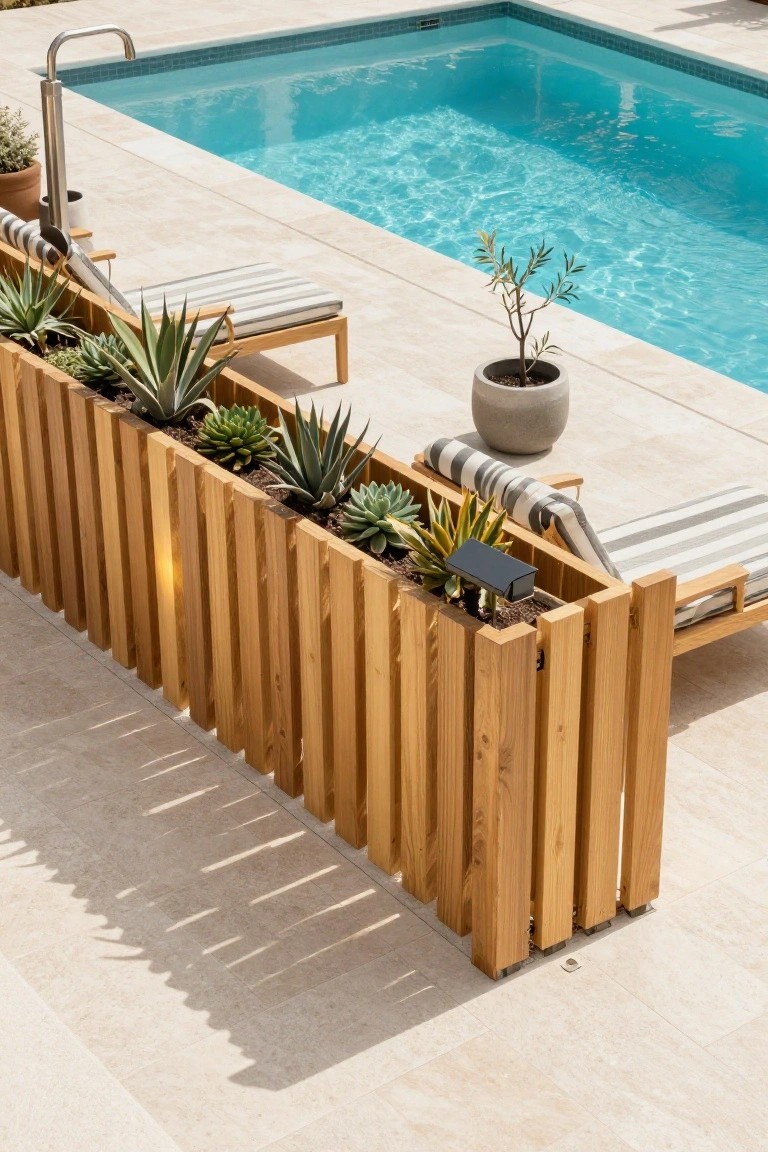
A low fence built from vertical stained boards can do more than mark a boundary. When the boards are spaced and boxed in at the base, they create a raised planter that keeps soil contained while showing off the wood grain along the sides. This setup works especially well beside a pool where you want a clean edge without a tall barrier blocking the view.
It suits homes with paved outdoor areas that need a bit of greenery without digging new beds. Keep the wood sealed to handle moisture from the pool deck and choose plants that stay compact so the fence line stays visible. Avoid making the planter too wide or the whole thing can start to feel bulky.
Warm Stain That Shows the Wood Grain
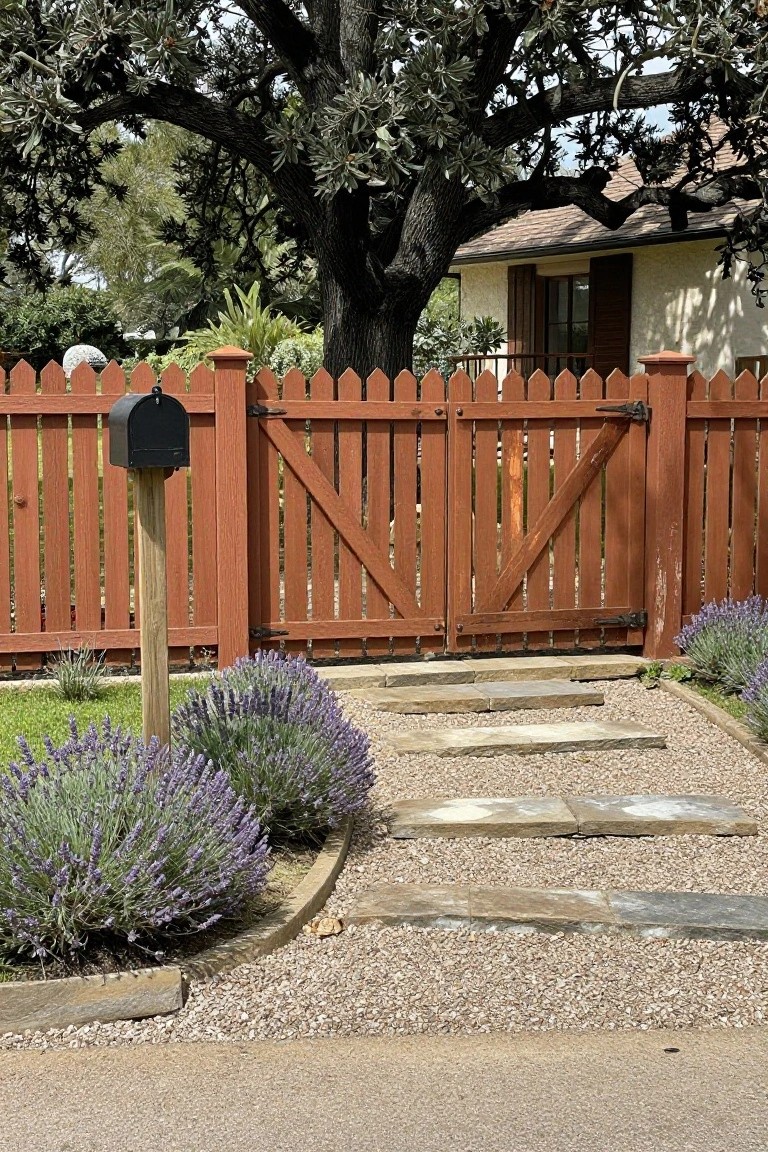
A warm stain on a wood fence brings out the natural texture without covering it up. The color stays soft enough to blend with plants and paths while still letting the grain do the work.
This finish works best on simple picket styles in front yards or along side paths. Pair it with gravel and low plantings so the fence stays the main visual element instead of competing with too much color or detail.
Dark Stains That Frame Outdoor Seating
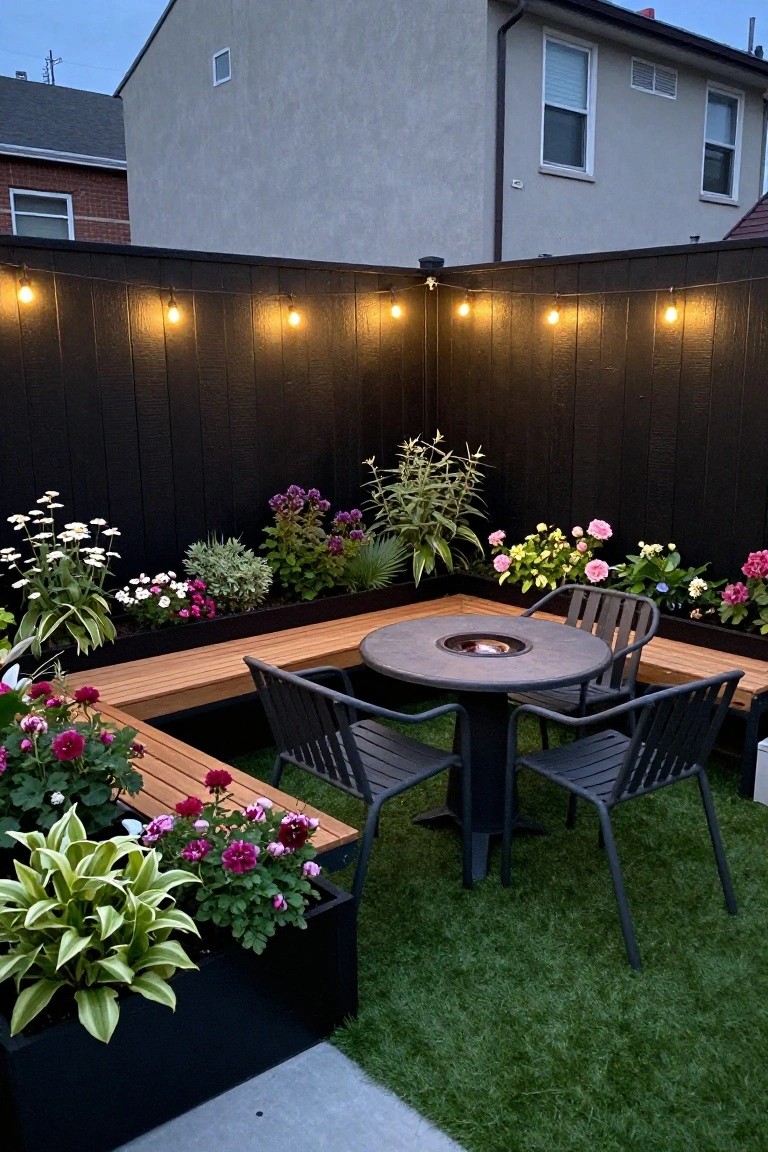
A dark stain on a wood fence gives an outdoor space a clear boundary without needing extra walls. It pulls attention to the grain and texture while making the seating area feel more set apart from the rest of the yard.
This approach works best on smaller lots or corner patios where privacy matters. Keep the benches and planters simple so the fence stays the main feature, and add a few string lights if you want the space to feel usable after dark.
Stained Wood Fences as Outdoor Kitchen Backdrops
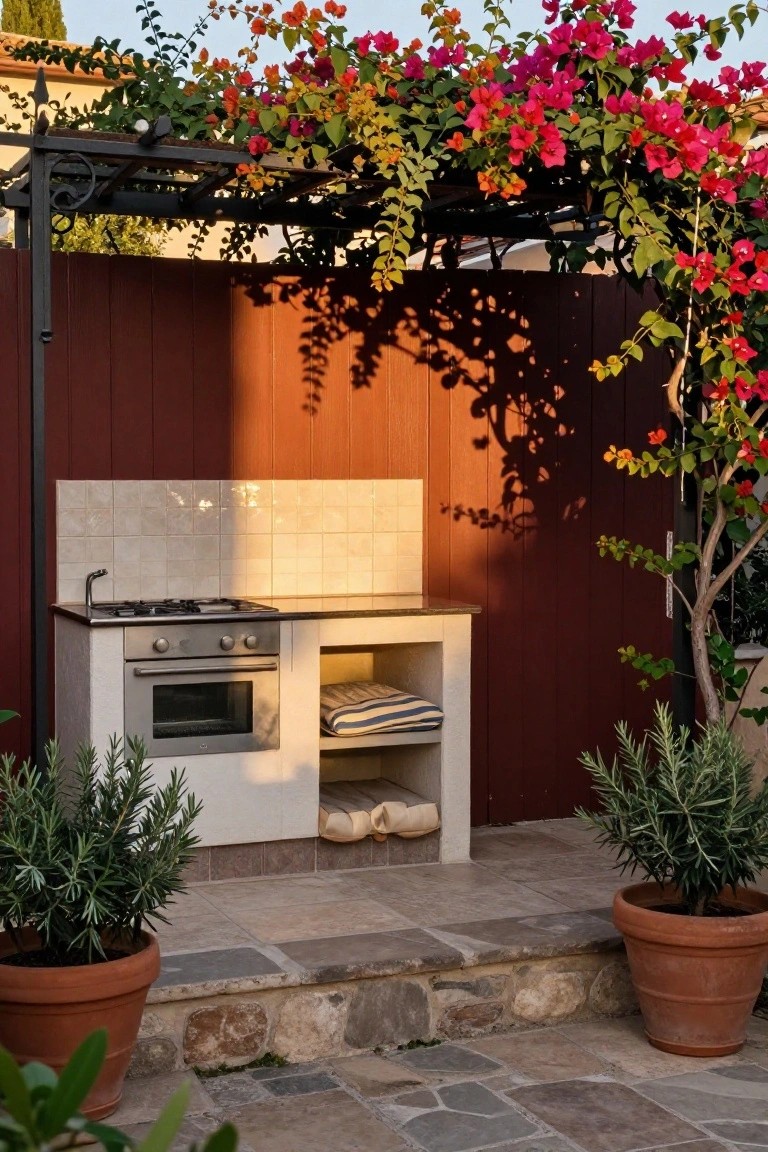
A stained wood fence makes a good backdrop for an outdoor kitchen because it adds natural texture without needing much else. The grain shows through and gives the cooking area a settled look that blends with the rest of the yard.
This setup works best in smaller patios where you want the space to feel defined but not closed in. Choose a warm stain that matches nearby decking or planters, and keep the fence height even with the counter so the cooking zone stays the main focus.
Built-In Benches Along a Stained Fence
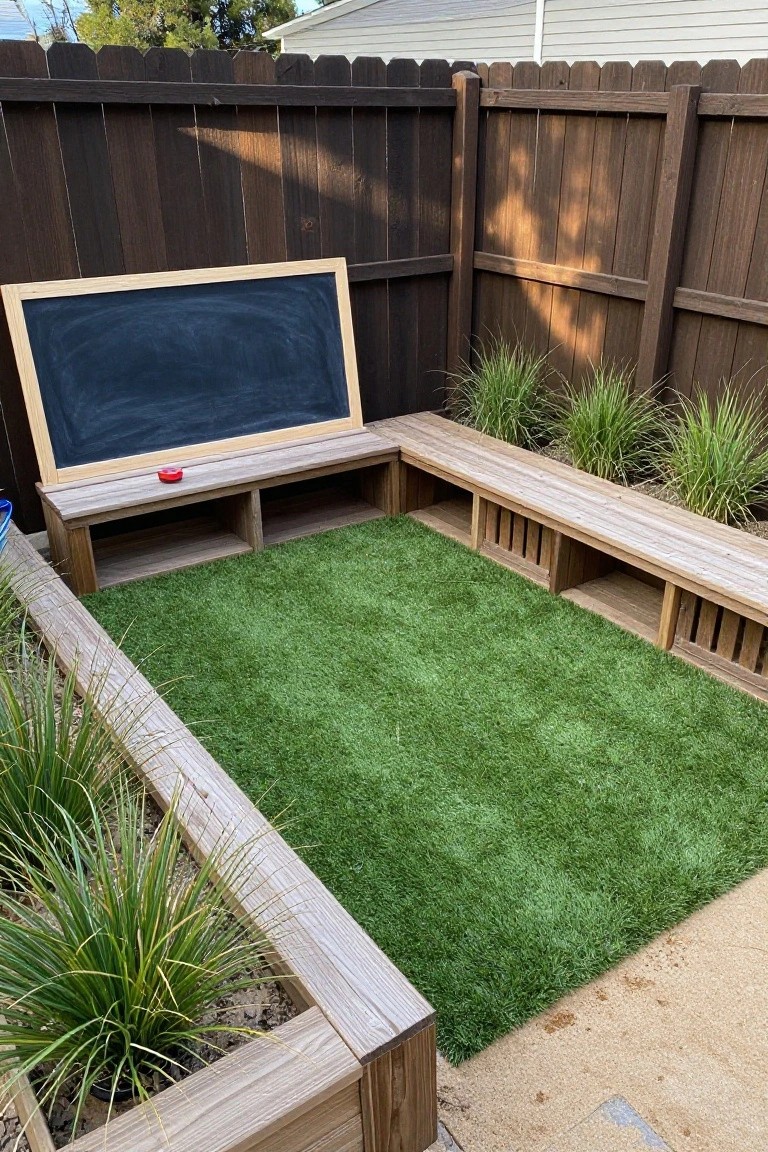
Running benches right along a stained wood fence turns the fence into more than just a boundary. The matching wood grain keeps the whole area feeling connected, and the benches add seating without crowding the space with extra pieces.
This setup works well in smaller yards or play zones where storage matters. Open cubbies under the seats hold toys or cushions, and the fence stays the main visual element while the benches make the area more usable day to day.
Raised Planter Beds Along the Fence
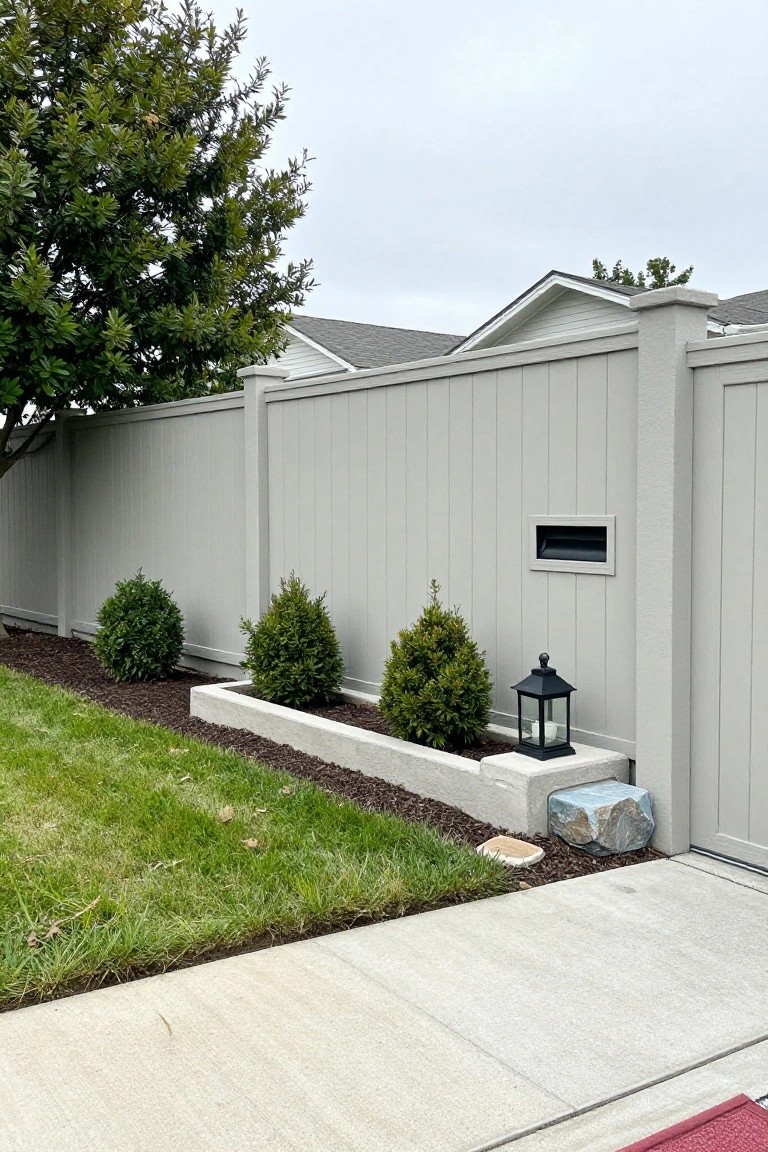
A low concrete planter built right against the fence gives the whole side yard a finished look without much fuss. It keeps the planting area contained, stops mulch from spilling onto the grass, and adds a bit of height so the shrubs stand out against the fence boards.
This setup works best on longer fence runs where you want a simple border that still feels intentional. It suits homes with narrow side yards or back fences that face a patio or driveway. Just make sure the planter height stays low enough that it does not block any fence details you want to keep visible.
A Warm Stain Shows Off The Grain
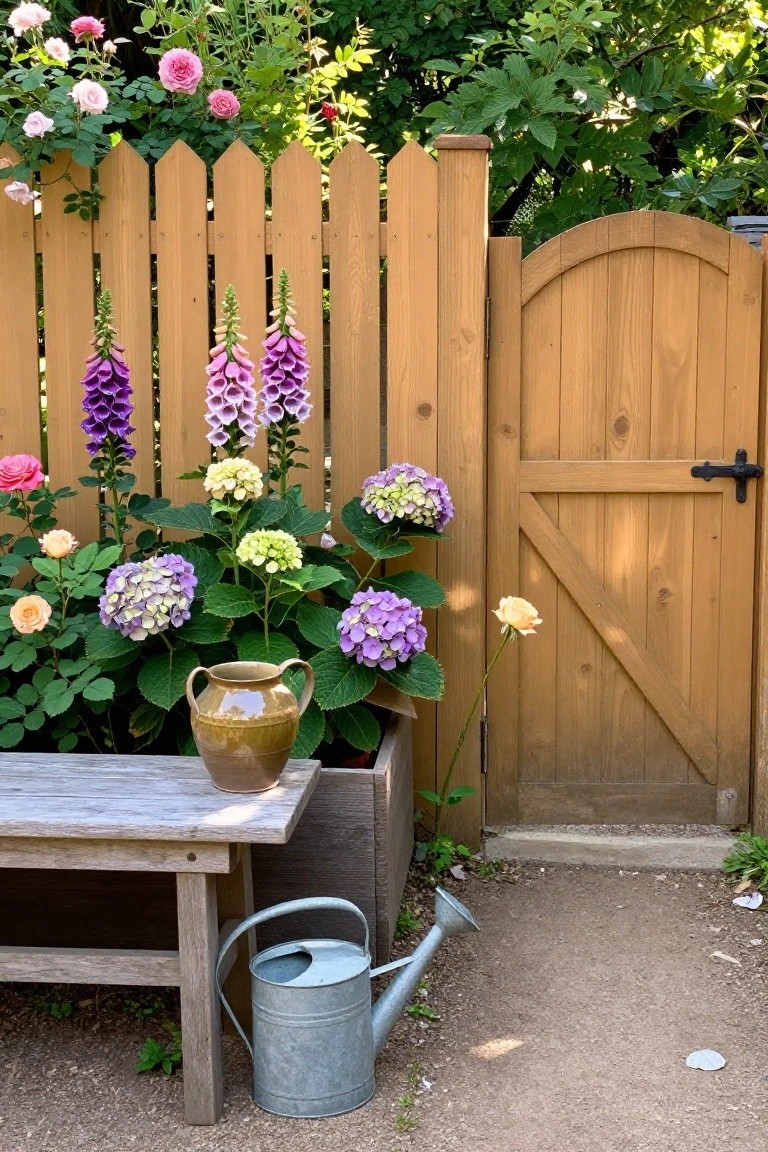
A light warm stain keeps the natural grain visible on a wood fence instead of hiding it under heavy color. This approach works especially well when the fence sits right next to layered plantings, since the wood stays quiet and lets the flowers take the lead.
It suits cottage gardens or any yard where you want the fence to feel like part of the landscape rather than a hard line. Just test the stain on a small section first so it does not come out too dark or too orange against your plants.
Vertical Slats That Show the Grain
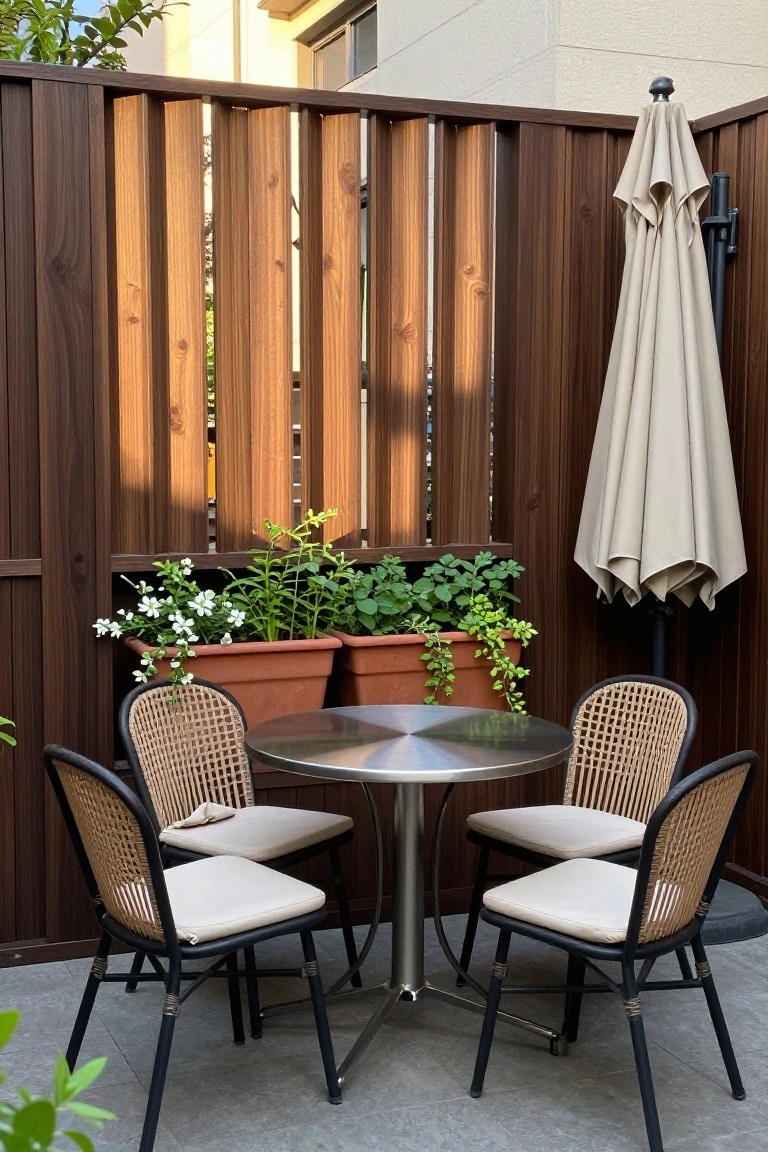
A fence made of vertical boards lets the wood grain and stain color stand out on their own. The simple layout keeps the focus on the material instead of fancy cuts or patterns.
This approach works best in smaller yards or tight patio corners where you need a clean backdrop and some privacy at the same time. It pairs easily with basic seating and a few plants without crowding the space.
Stained Wood Fences for Poolside Privacy

A vertical stained wood fence gives an outdoor lounge area real privacy while keeping the natural texture front and center. The upright slats create a clean backdrop that lets the wood grain show through, and the warm tone works especially well next to water and simple seating.
This setup works best on properties with a pool or patio where you want to block views from neighbors without building a solid wall. Use a consistent stain across the boards and keep plantings low in front so the fence itself stays the main feature.
Stained Wood Decking on Rooftop Terraces
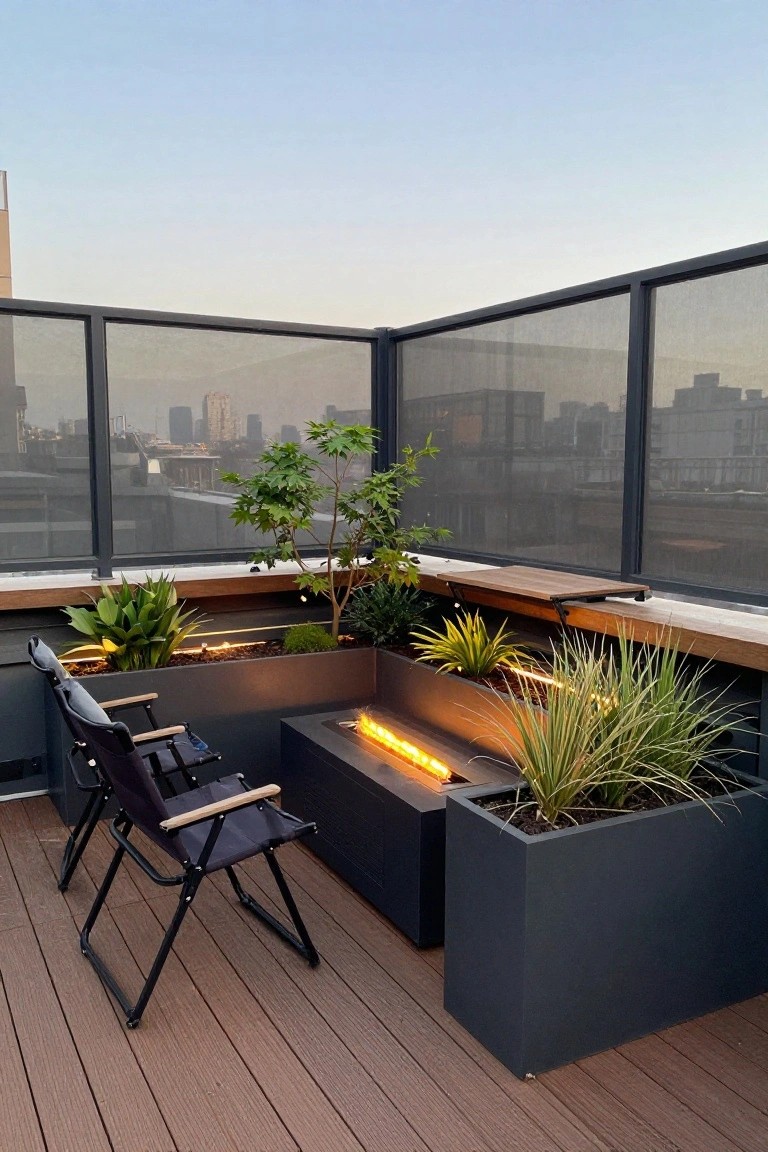
Stained wood decking gives a rooftop space a grounded feel that works especially well when the area is small and open to the sky. The natural grain shows up nicely against the darker finish and pairs easily with built-in planters that keep the layout simple.
This approach suits homes where the deck sits right against the building or railing. Keep the wood tone consistent across the floor and any attached benches so the space reads as one unit instead of a collection of separate pieces.
Stain a Fence to Edge a Garden Path
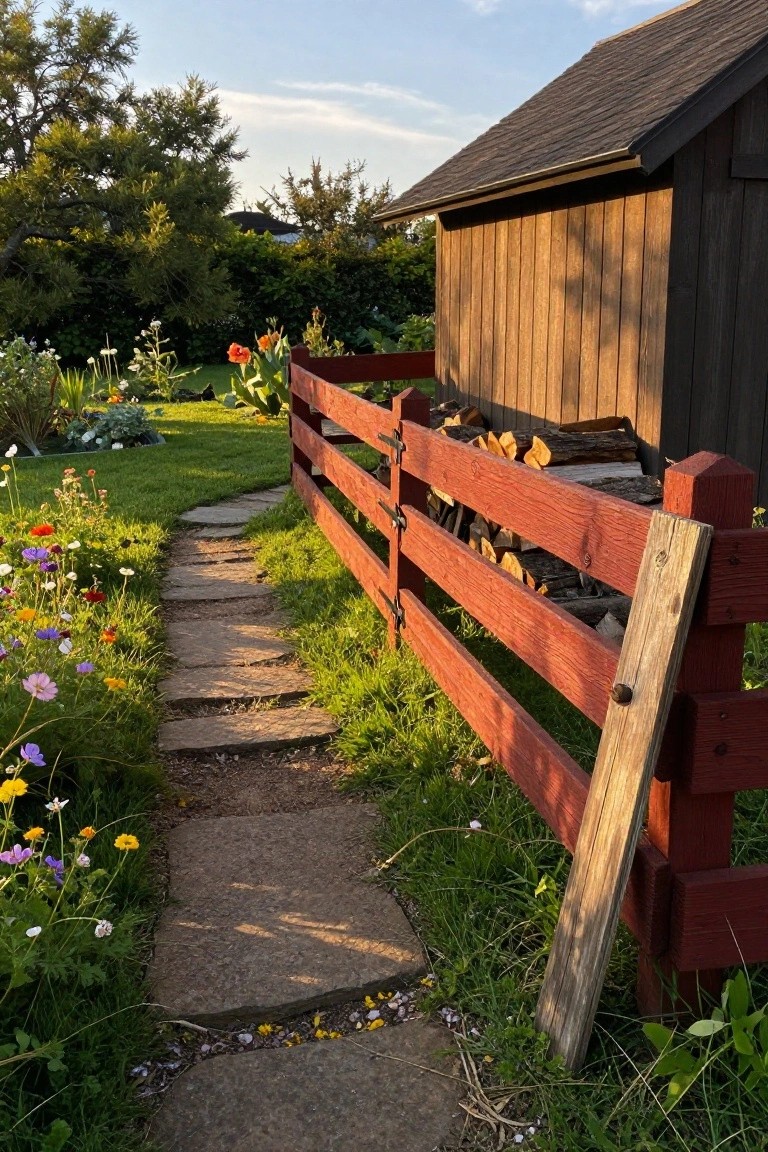
A stained wood fence gives a garden path a clear edge without making the boundary feel too rigid. The color brings out the grain in the boards so the fence still reads as wood rather than a solid wall.
This works best in smaller yards or cottage style gardens where the path already has an informal shape. Use the same stain on both sides of the fence and keep plantings low enough that the texture stays visible.
Vertical Stained Wood Fencing For Compact Patios
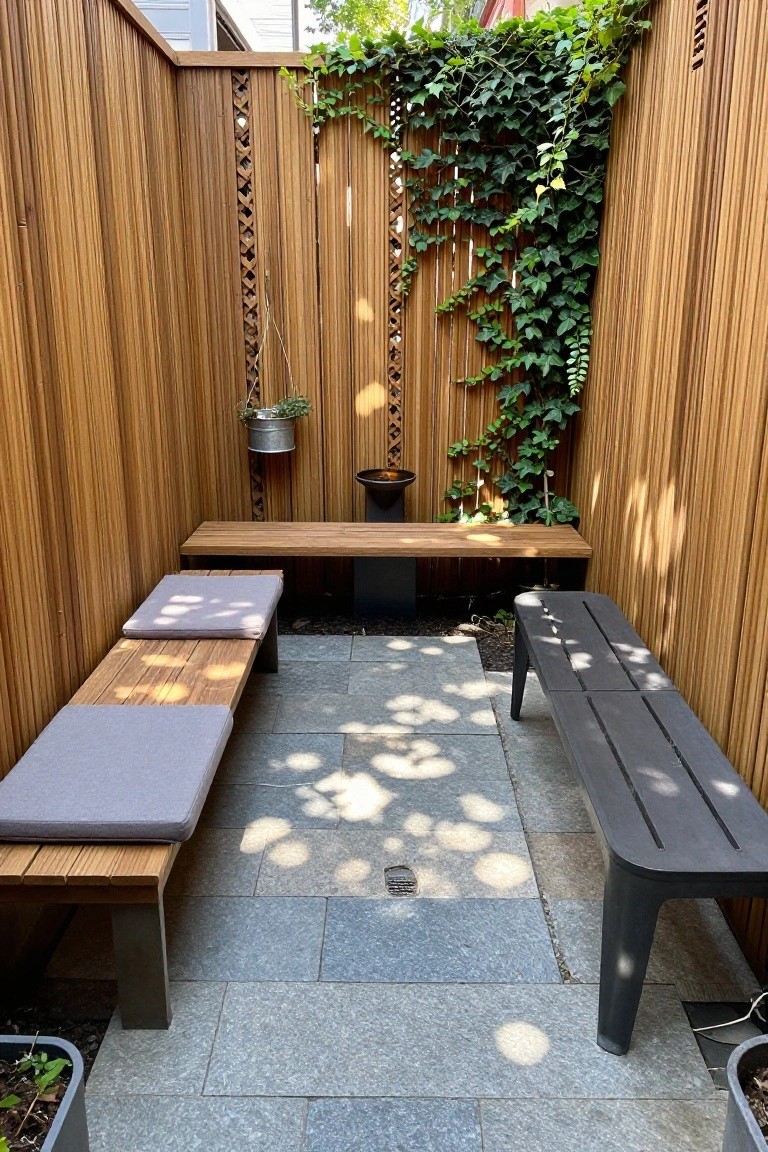
Running stained wood vertically around a small patio gives the space a clear sense of enclosure without making it feel boxed in. The grain shows up well on the upright boards and the fence acts as both a boundary and a finished wall.
This setup works best in narrow side yards or urban back areas where privacy matters more than wide open views. Keep the layout simple with a few benches and let the wood carry the look rather than adding too many extras.
Stained Wood Fences Behind Outdoor Tables
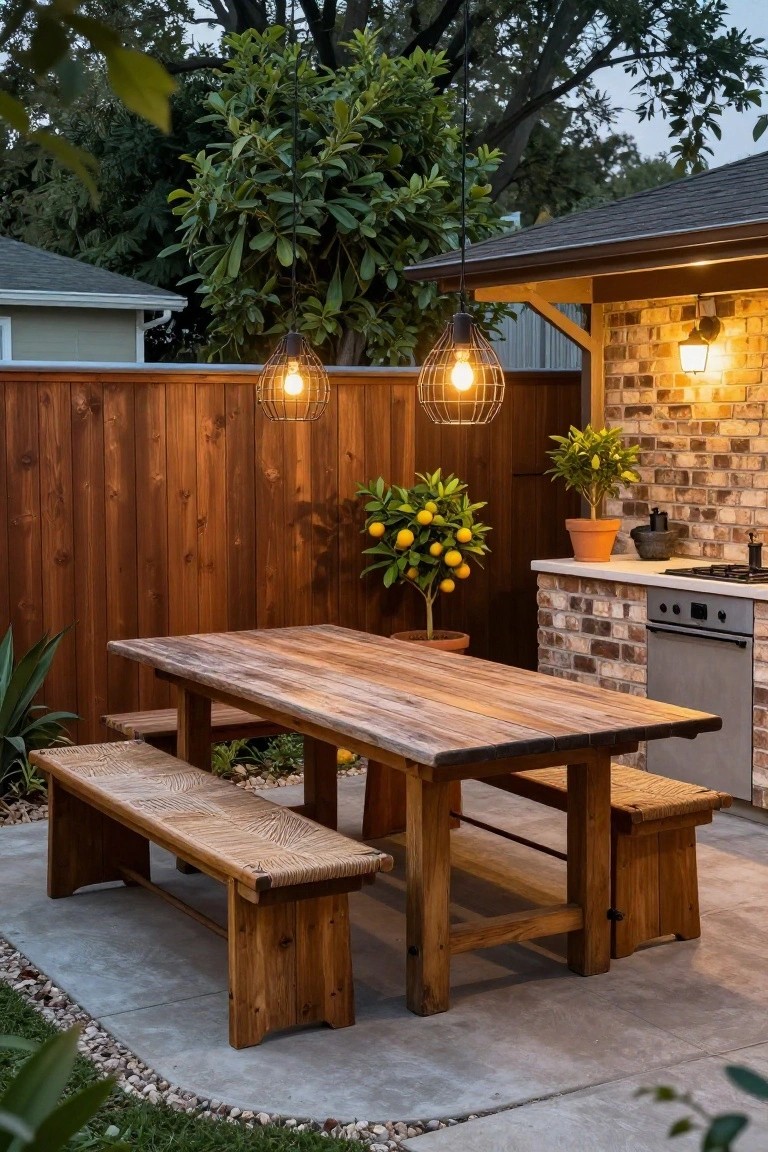
A stained wood fence gives an outdoor table and benches a simple, finished look without extra trim or plants along the base. The grain stays visible and the color pulls the seating area together so it feels like one space instead of separate pieces.
This works best in backyards where the fence sits close to the patio. Match the stain tone to the table so the wood reads as the same material family instead of fighting for attention.
Stained Wood Shelves Turn a Fence Into Garden Storage

Mounting a few simple stained wood pieces on a fence gives you extra growing space without taking up ground room. The natural grain shows up clearly on the shelves and planter box, and the whole setup feels like part of the fence rather than something added later.
This works best along a sunny fence line where you already spend time watering or weeding. Keep the wood tone consistent with the fence so the grain stays the main feature, and leave enough open wall space between the shelves for air to move around the plants.
Frequently Asked Questions
Q: Do I need to sand my fence boards before applying stain? A: Light sanding opens up the grain so the stain can soak in evenly. Focus on rough spots and wipe away all dust afterward. This step keeps the texture looking natural instead of flat.
Q: How do I choose between oil based and water based stains for my fence? A: Oil based stains tend to bring out the grain deeper on most woods. They also hold up better against weather changes. Test a small spot first to see how your fence reacts.
Q: Will the stain fade over time and lose that textured look? A: Most stains start to fade after a couple of years from sun exposure. A quick recoat every two seasons brings the color back without much effort. Skip this and the wood can start to gray out unevenly.
