

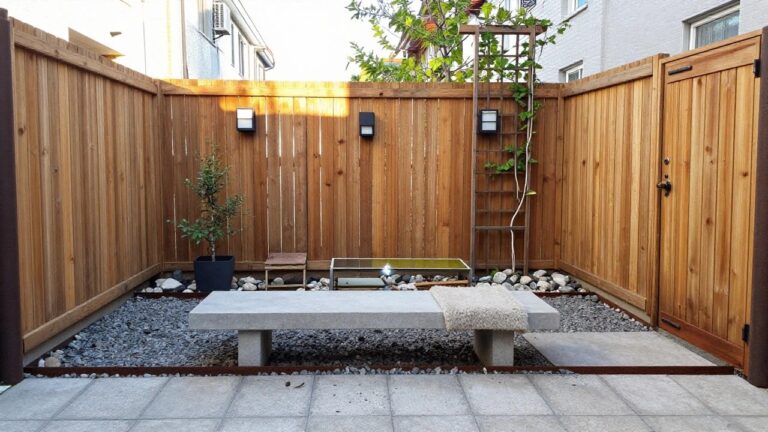
I have always noticed how the fence along the front sets the tone for how a house feels from the street long before anyone steps inside the yard.
When I look at my own place the plain chain link feels like it cuts the house off from the rest of the block rather than tying it in.
Some wood designs I have tried end up looking heavier once they are up because the posts and rails do not quite line up with the roofline or the entry path.
Mixing in a few simple panels and low planters can soften that edge without adding much extra cost or work.
I usually sketch the fence line against the actual facade first to see where the accents will actually land before I start cutting wood.
Wood Fence With Horizontal Accents
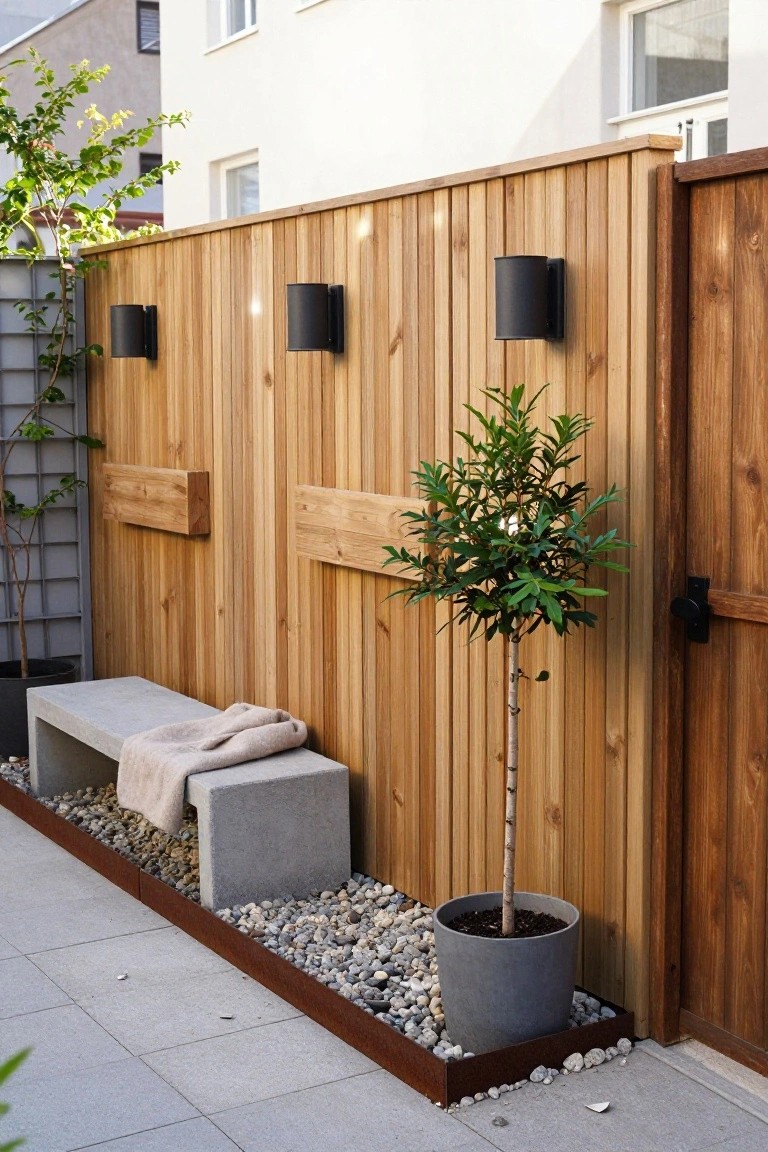
Adding a few horizontal wood pieces to a vertical fence gives the whole wall more structure without much effort. Those simple ledges break up the straight lines and create spots where plants or small items can sit, which keeps the fence from feeling too flat against the rest of the yard.
This works well along a side yard or narrow patio where you want some planting space but do not have room for big beds. Just make sure the ledges are set at a useful height and sealed well so they hold up outside.
Add Planters Along A Wood Fence
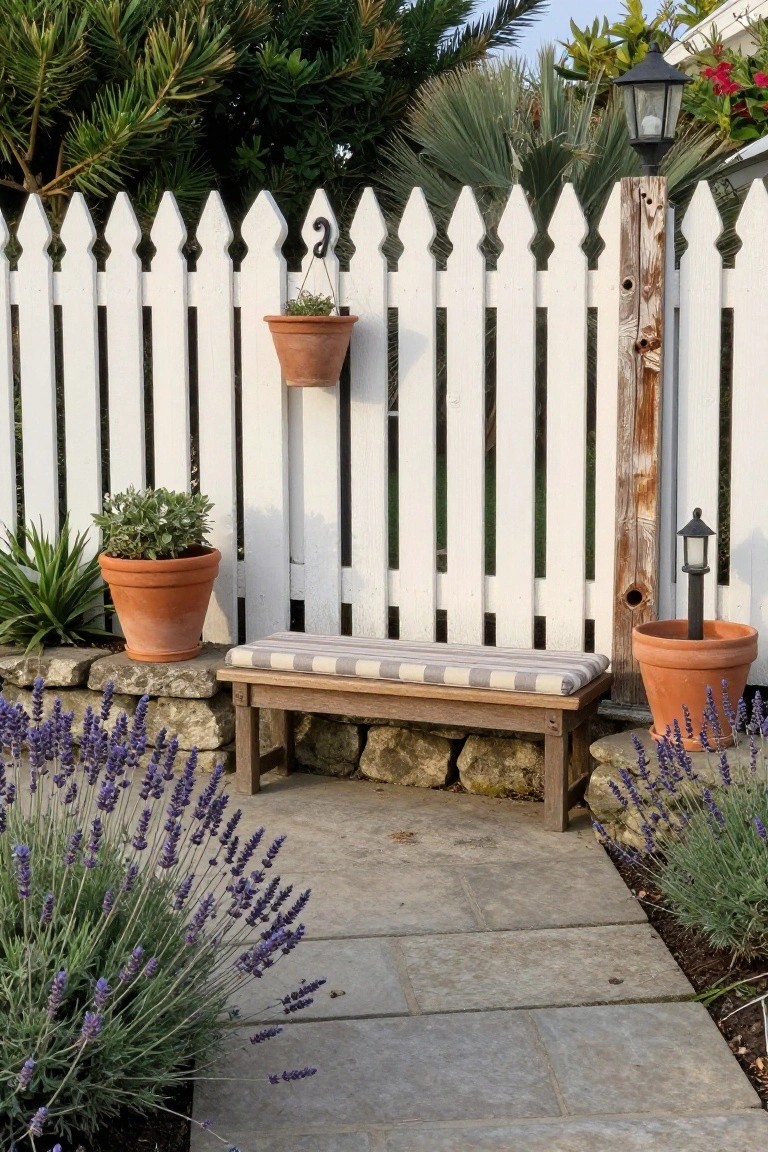
This setup turns a simple fence into a planting surface. Hanging pots and larger containers at the base let you bring in flowers and greenery without needing extra garden beds right up against the wood.
It works especially well on a narrow path or along a side yard where ground space is limited. Just check that any hanging hardware is secure and choose pots that match the fence color for a cleaner look overall.
Run a Planter Along the Base of a Wood Fence
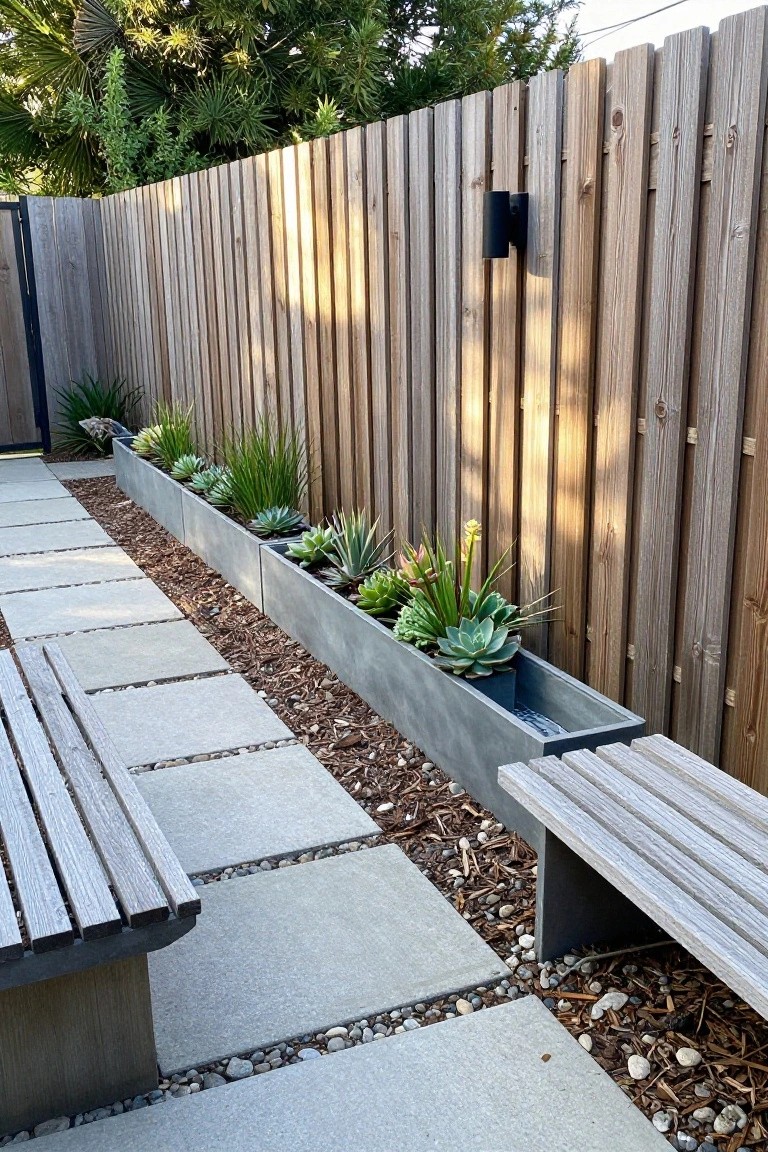
A long planter set right against a wood fence gives you a simple way to add plants without crowding the space. It keeps the fence as the main feature while turning the base into a growing area that stays neat and contained.
This setup works well in side yards or along property lines where you want some greenery but also need a solid screen. Use a durable material like concrete for the planter so it holds up and matches the fence’s vertical lines.
Use Planters Along a Wood Fence
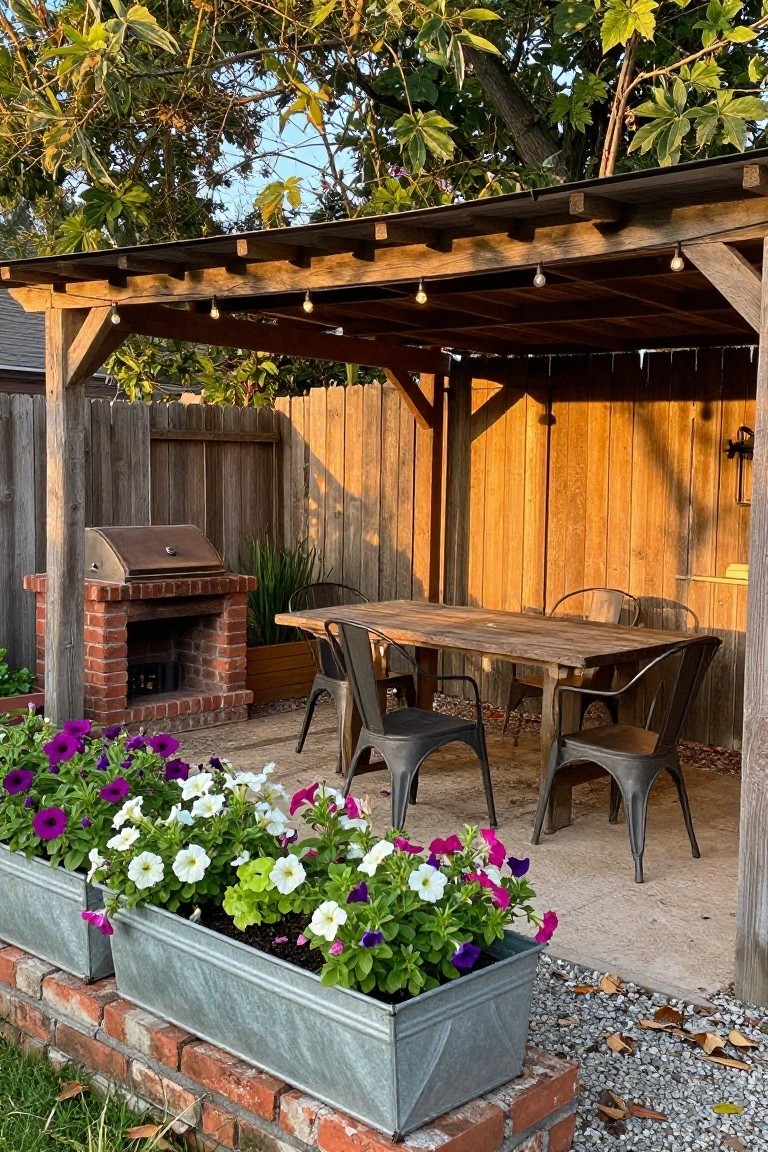
Placing planters in front of a wood fence gives an outdoor seating area some color and life without needing extra garden space. The fence still does its job for privacy, but the plants soften the look and make the whole patio feel more finished.
This setup works best on patios or decks that sit right against the fence line. Metal or wood planters set on a low ledge keep things simple and let you swap plants easily with the seasons. Just make sure the planters are deep enough for the roots and placed where they will not block foot traffic.
Wood Fence With Low Lighting And Plants
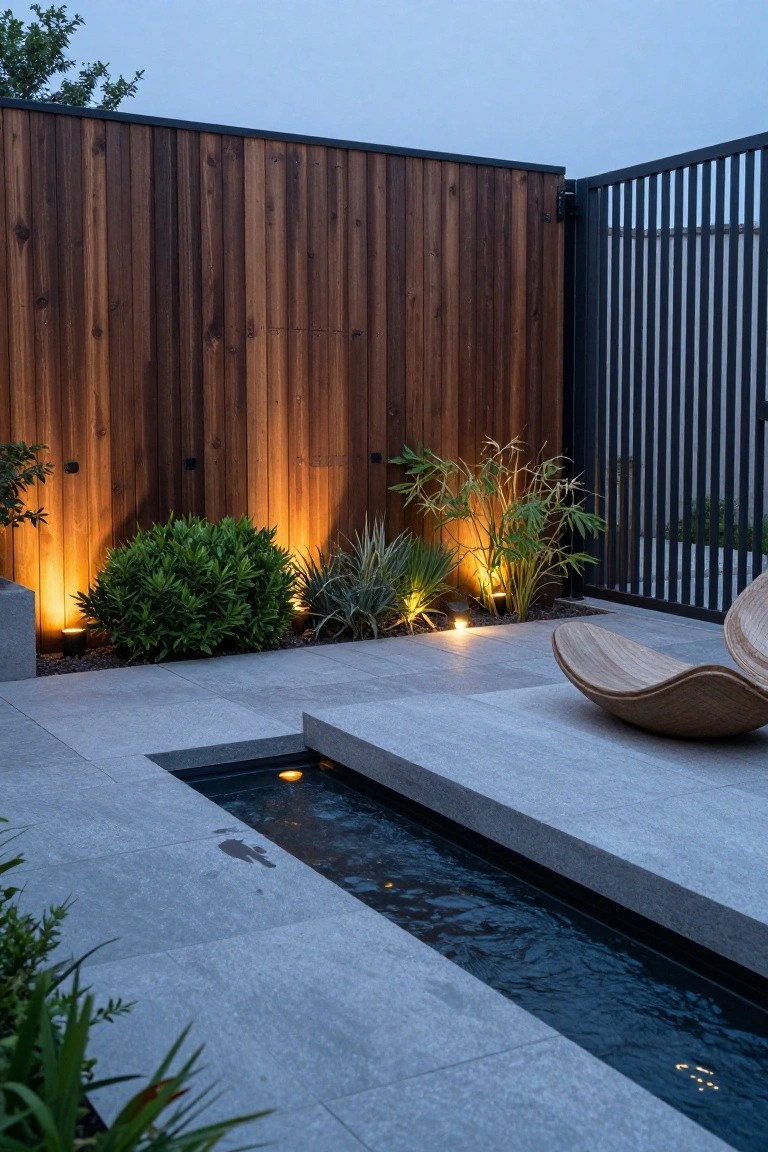
A tall wood fence can feel a bit flat on its own, but adding low lights at the base changes that quickly. The lights highlight the plants in front and give the fence a softer, more finished look once the sun goes down. It turns a simple boundary into something that feels more like part of the garden.
This works well in smaller yards where you want privacy without making the space feel closed in. Keep the planting in layers, with lower shrubs right against the fence and taller grasses or small trees mixed in. The lights should sit low and point upward so they do not create glare.
Wood Panels with Integrated Planters
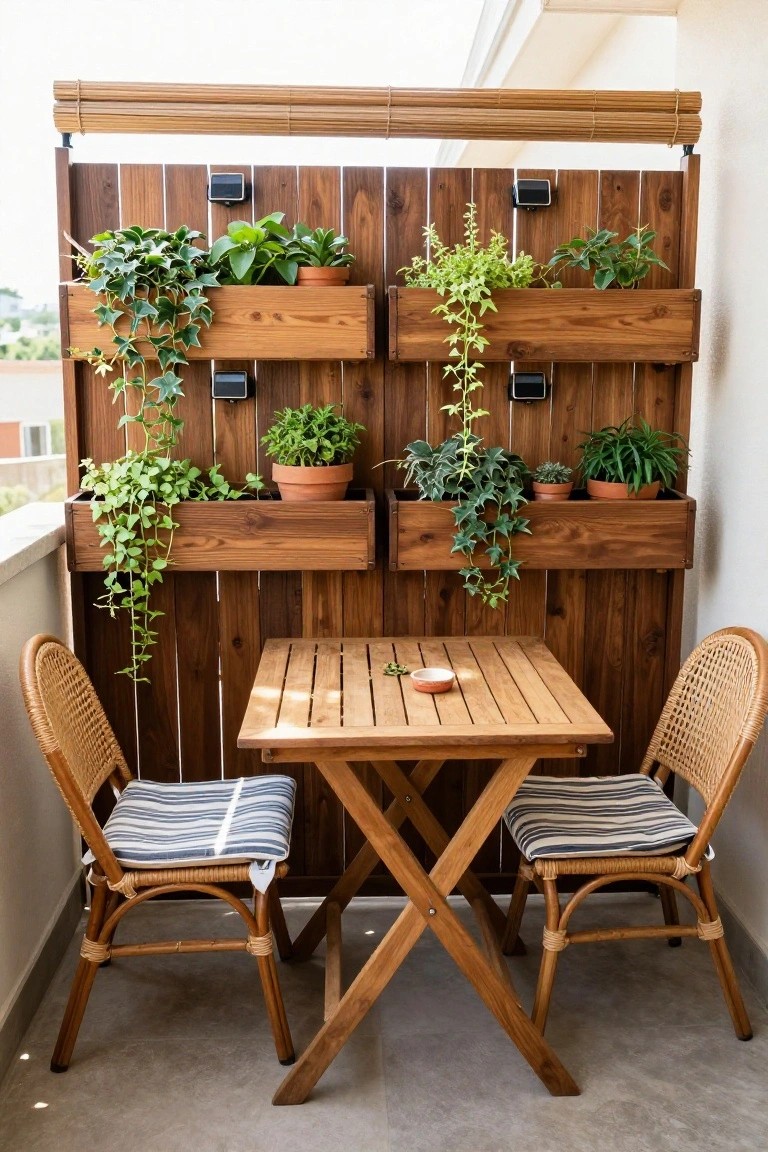
Mounting planters directly onto wood fence panels gives you a green screen without losing floor space on a small patio or balcony. The wood acts as both structure and backdrop, so the plants stand out while the fence still provides privacy.
This works best on urban balconies or side yards where ground beds are not an option. Use lightweight soil mixes and pick plants that trail or stay compact so they do not overwhelm the panels or block light.
Dark Wood Fences for Simple Garden Corners
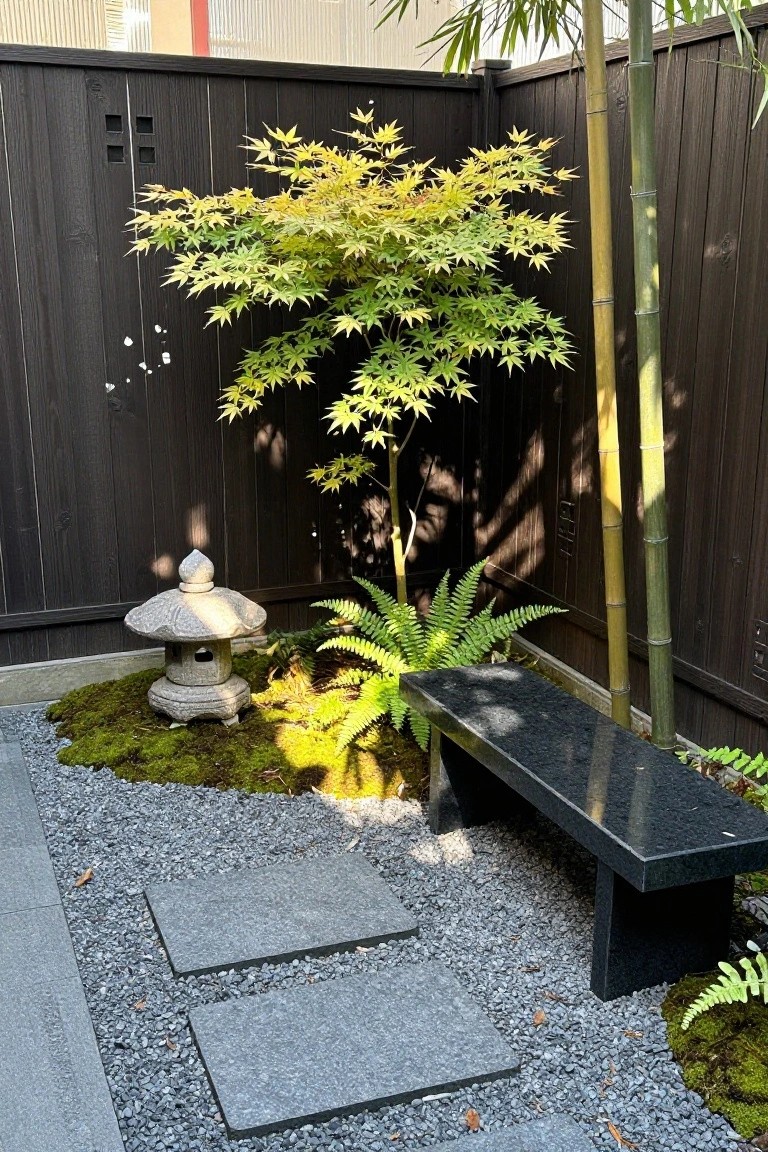
A solid dark wood fence works well when you want to create a quiet, enclosed garden spot without a lot of extra structure. The plain panels give the plants a clean background so the foliage and small accents stand out more clearly.
This approach suits small yards or side spaces where privacy is needed. Use gravel and a few stepping stones to keep the ground low maintenance, and let one or two trees or ferns do most of the planting work.
Mounting Planters On A Wood Fence
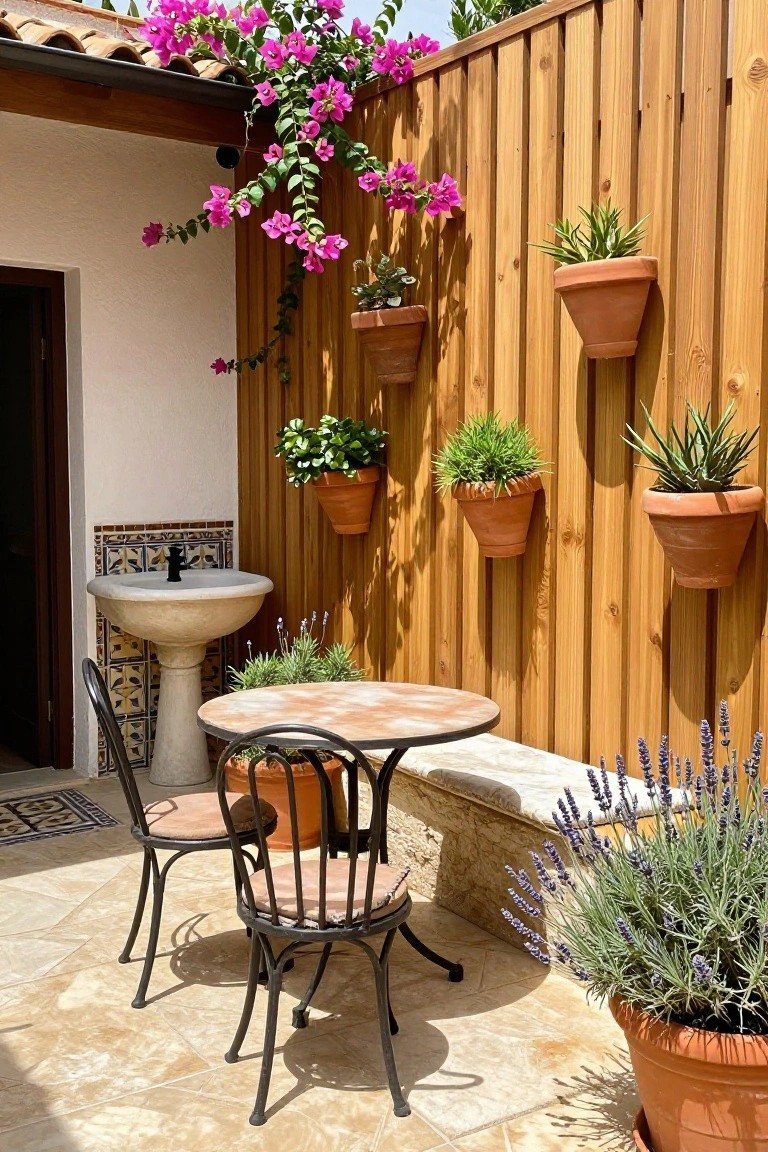
One simple way to add more greenery to a small patio is to mount pots straight onto the fence. This keeps the ground clear for seating and turns a basic wood fence into a planted feature without needing extra beds or shelves.
It works best on a sunny wall where the plants get good light. Use sturdy brackets and check the fence can hold the weight, especially once the pots are watered. Terracotta pots work well because they drain easily and suit most outdoor plants.
Wood Fence With Built In Planters
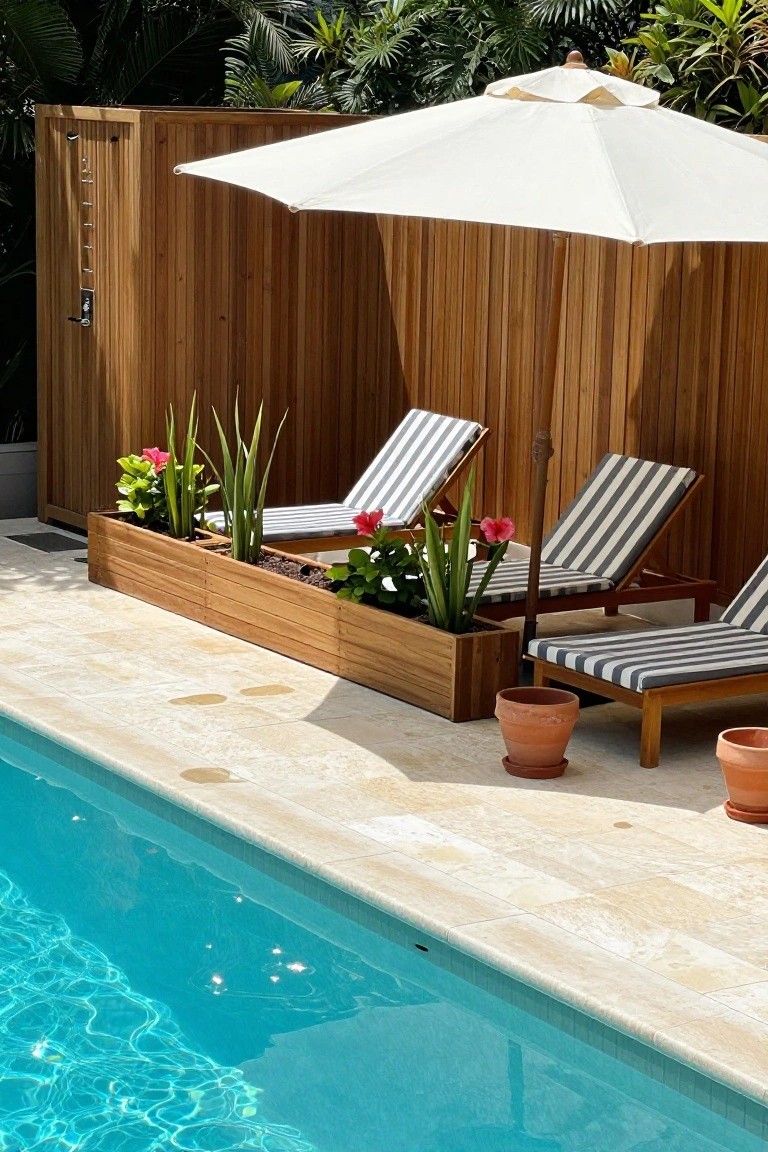
Building planters straight into a wood fence gives you privacy and planting space in the same structure. It keeps the greenery right where people gather instead of pushing it off to the side, and the fence itself stays useful rather than just acting as a barrier.
This setup works best along a pool deck or patio edge where you want shade from view but still like having flowers at seating height. Use a deep box, pick plants that handle sun and occasional splash, and seal the wood well so it holds up over time.
Line a Fence With Planters
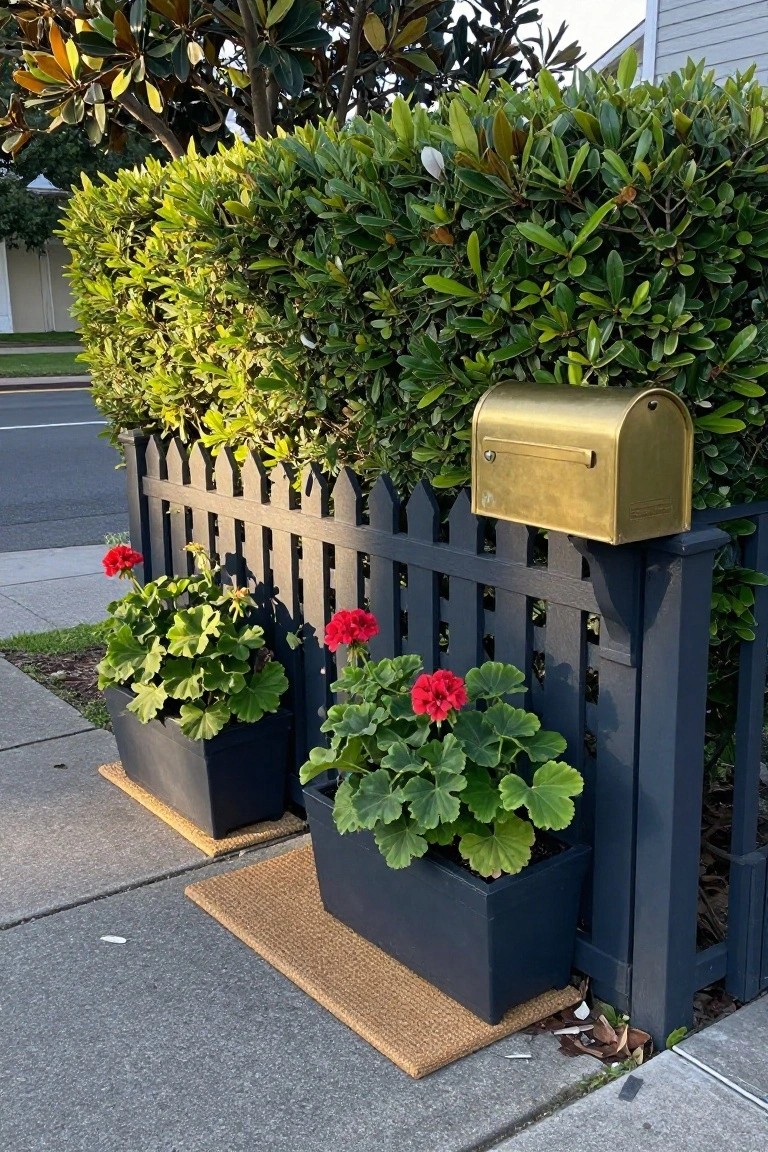
One simple way to dress up a wood fence is to set planters right against it. The dark boxes here sit flush with the picket style and bring in bright flowers that soften the straight lines of the wood.
This works best along sidewalks or narrow side yards where digging a bed is not practical. Match the planter color to the fence and use flowers that can take full sun so the whole edge stays neat with little extra work.
Hang Planters Along a Wood Fence
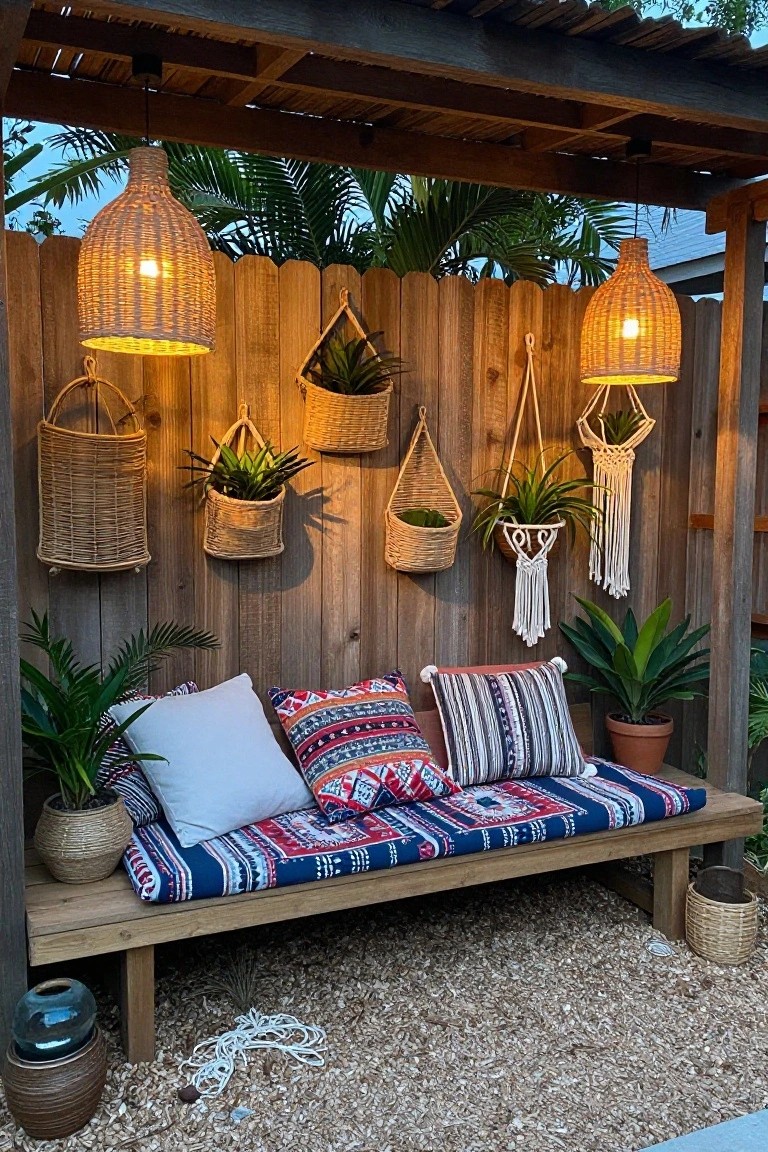
Hanging planters on a wood fence gives an outdoor seating spot more life without crowding the ground. It turns the fence into a simple vertical garden that frames the bench and keeps the space feeling open.
This works best on a patio or deck where you already have a seating area. Choose lightweight baskets and space them out so the fence still shows through. Make sure everything is hung securely if the area gets wind.
Adding Built-In Planters To A Wood Fence
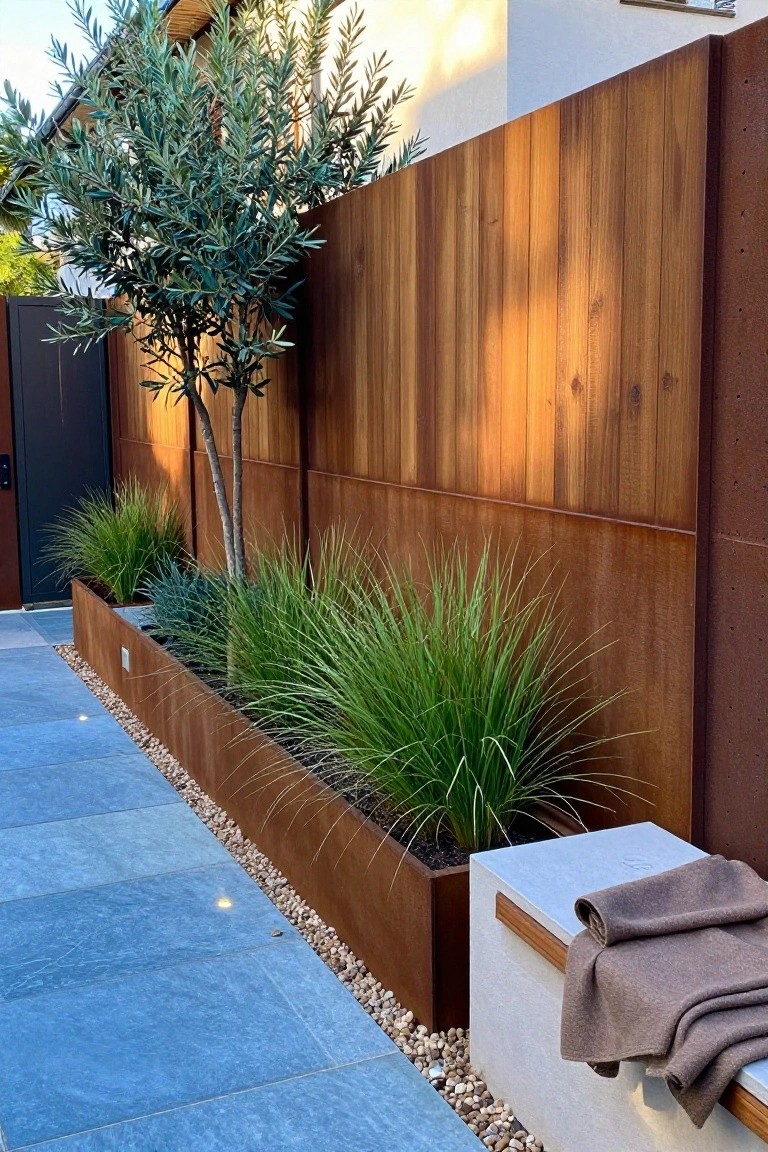
Running a long planter along the base of a wood fence gives you a clean way to add height and greenery without taking up much extra space. The tall grasses in the example soften the fence line and create a bit of privacy while the wood stays the main feature.
This setup works best along a side path or narrow yard where you need structure but do not want a full hedge. Keep the planter material simple so it reads as part of the fence rather than something added later.
Add Lights Along a Wood Fence
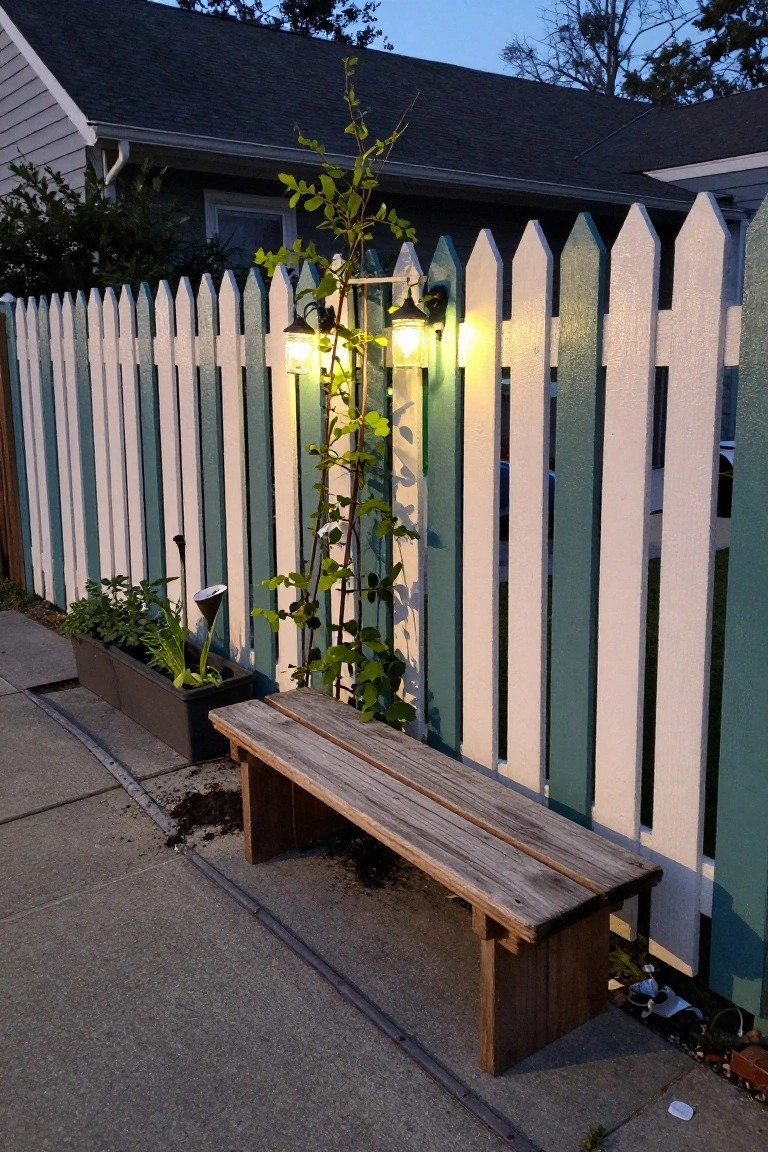
Mounting a couple of lights right on the fence is a simple way to make the whole area more usable in the evening. The lights bring out any vines or plants growing against the boards and keep the space from going completely dark once the sun goes down.
This works best on a fence that already has some height and a few plants trained up it. Keep the fixtures small, aim them downward, and use bulbs that give off a warm glow so the light stays soft rather than harsh.
Lattice Panels on Fences
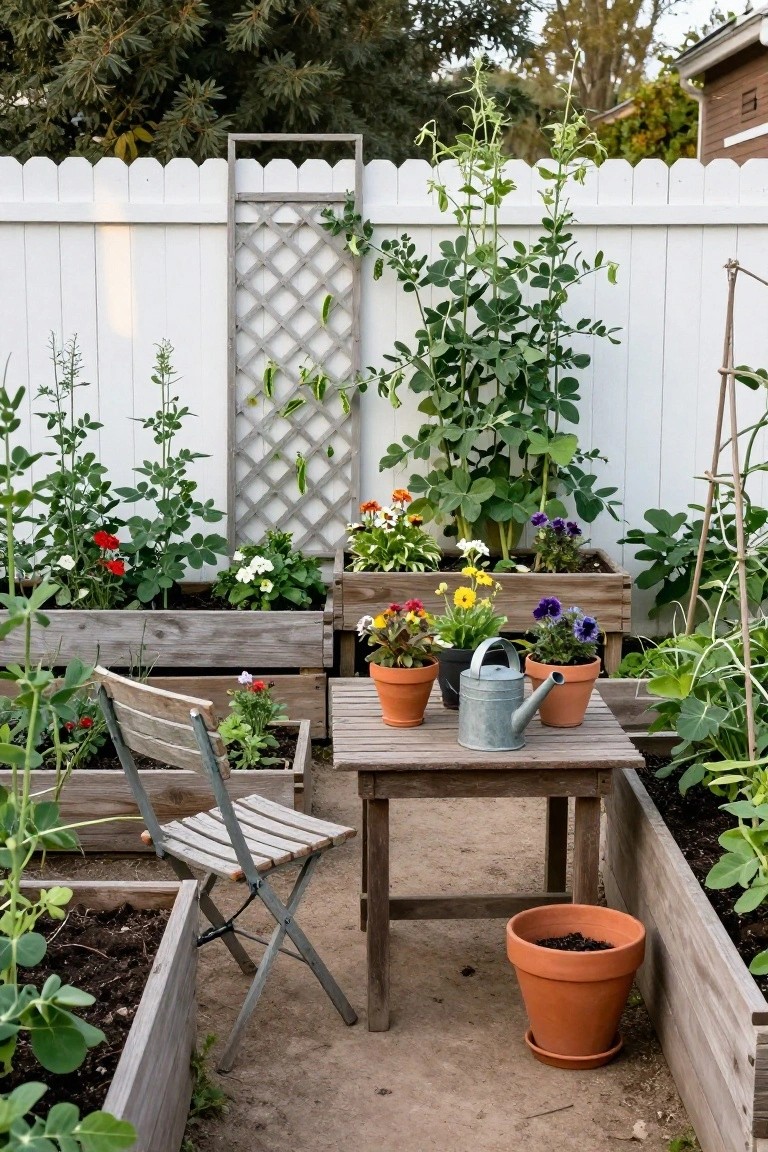
A simple lattice panel attached to a fence gives climbing plants a place to grow upward. This approach adds height and greenery without crowding the ground space, which works especially well when you already have raised beds along the same line.
It suits smaller yards or narrow side gardens where horizontal room is limited. Secure the panel directly to the fence posts and choose vines that match your climate so the look stays full without constant trimming.
Combine Chalkboard Panels With Built-In Planters
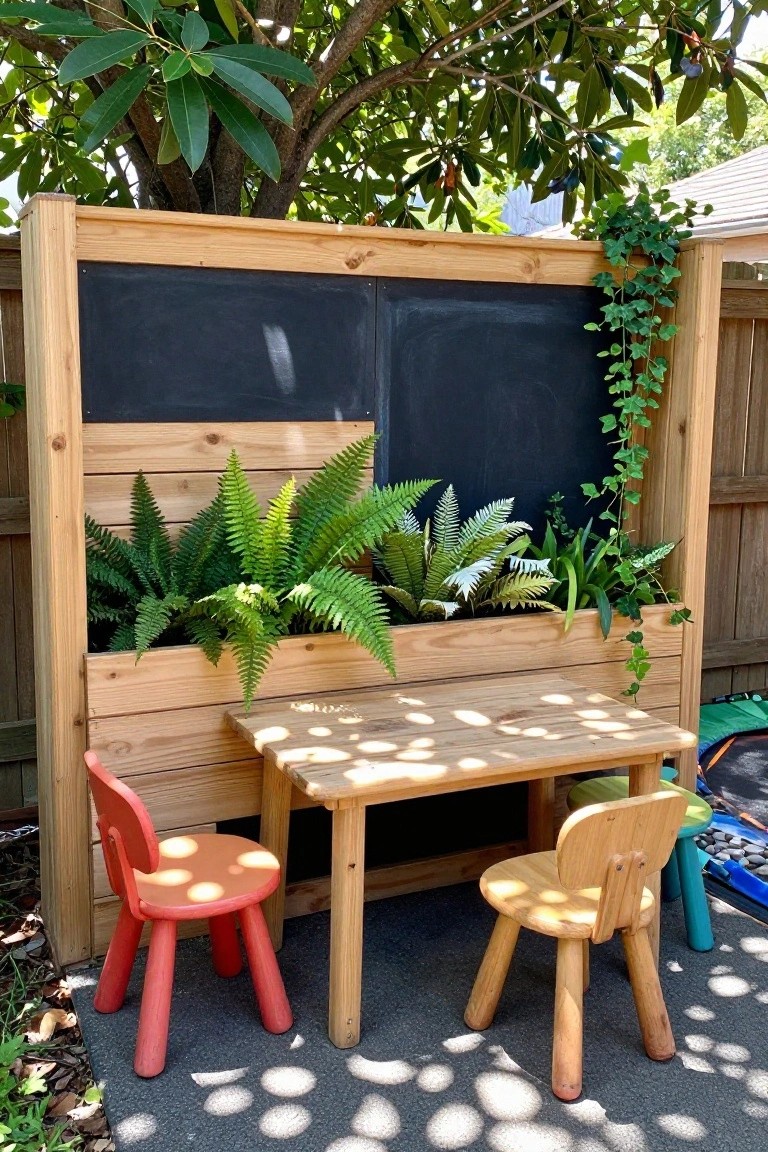
A fence can do more than mark a boundary when you add a chalkboard section and a planter box right into the same structure. This setup turns the fence into a small activity zone that kids can actually use, and the plants soften the whole thing without taking up extra yard space.
It works best in backyards where you want a defined play spot but do not have room for a separate shed or wall. Keep the chalkboard at a height children can reach and choose ferns or other low-light plants that stay green even in partly shaded areas. Just make sure the wood is sealed well so it holds up to weather and daily use.
Raised Planters Along a Wood Fence
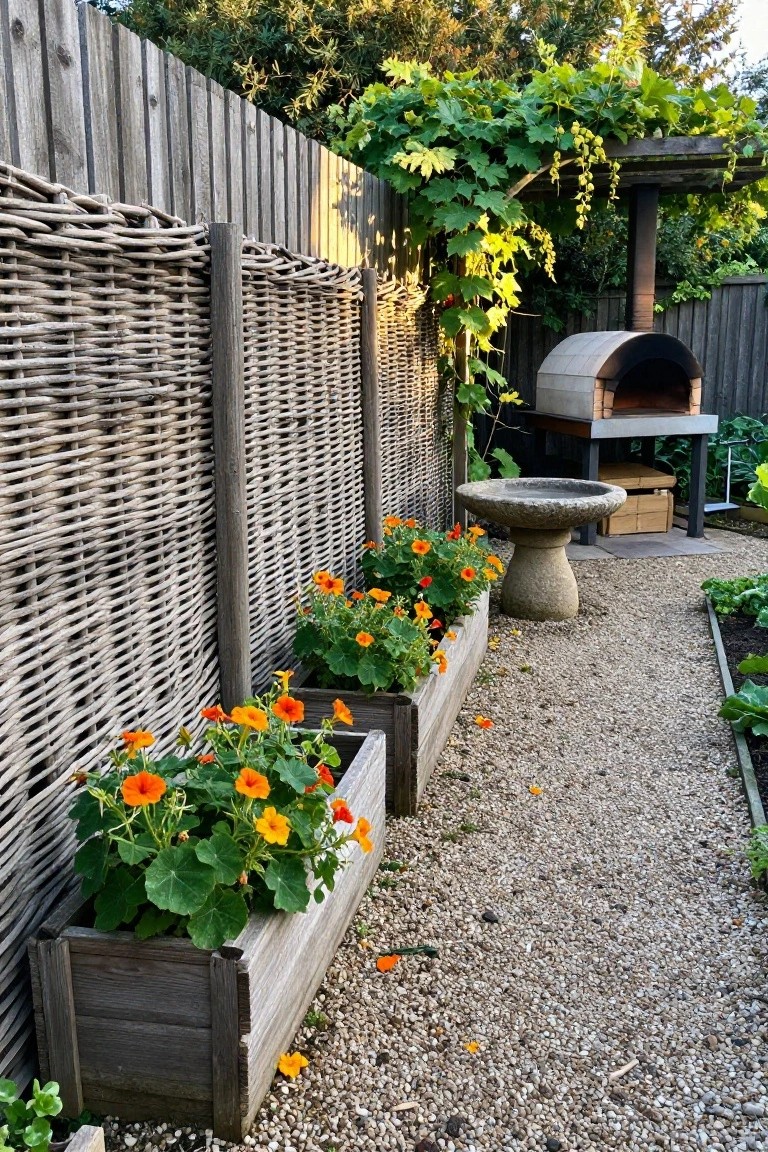
One simple way to get more from a wood fence is to set raised planters right against it. This adds planting room without eating into the rest of the garden and keeps the fence from feeling like a plain wall.
It works best in smaller yards or along narrow paths where a ground bed would get in the way. Use sturdy timber boxes, keep the soil depth generous, and pick plants that can handle the sun or shade the fence creates.
Wood Fences With Built-In Planters
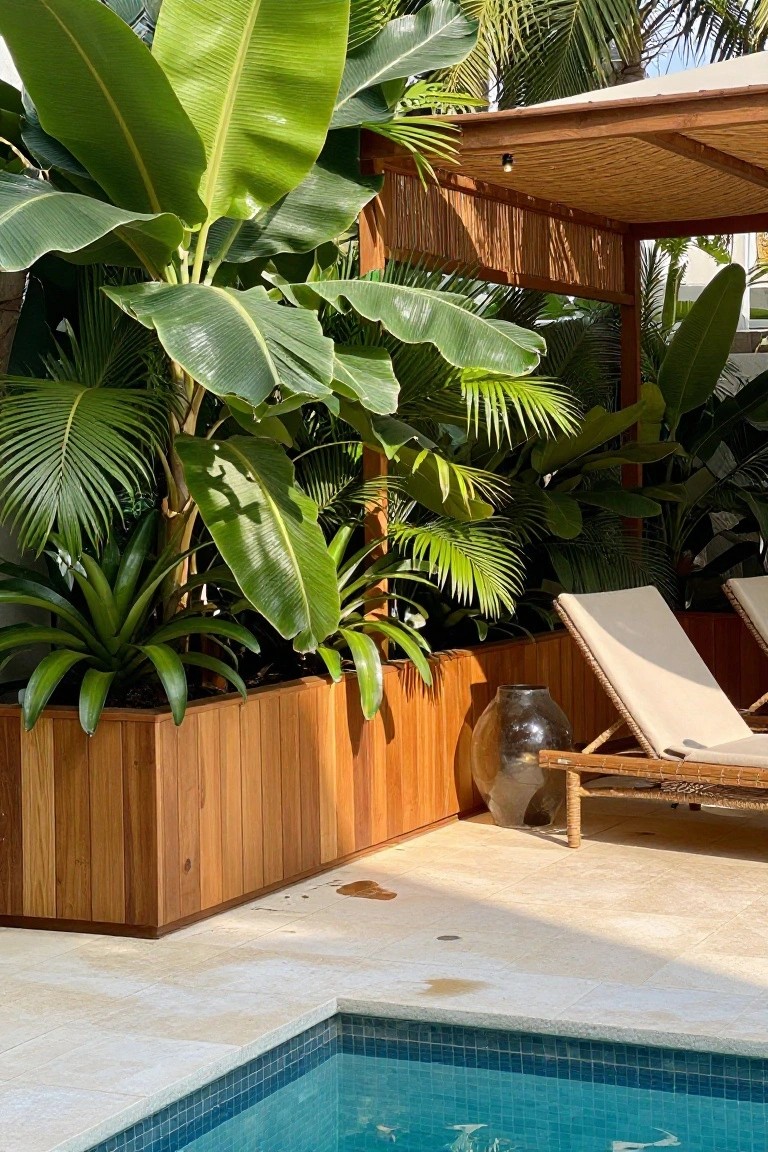
One simple way to make a wood fence feel less like a barrier is to build planters right into the structure. The wood becomes both the boundary and the base for greenery, which keeps the area from looking too stark while still giving some privacy. It works especially well around pools or patios where you want the fence to blend into the planting rather than stand apart from it.
This approach suits homes with limited ground space for separate beds, since the planters sit at fence height and can hold larger plants. Just make sure the wood is sealed well against moisture and that the planters have proper drainage so the fence lasts.
Add Planters Along a Wood Fence
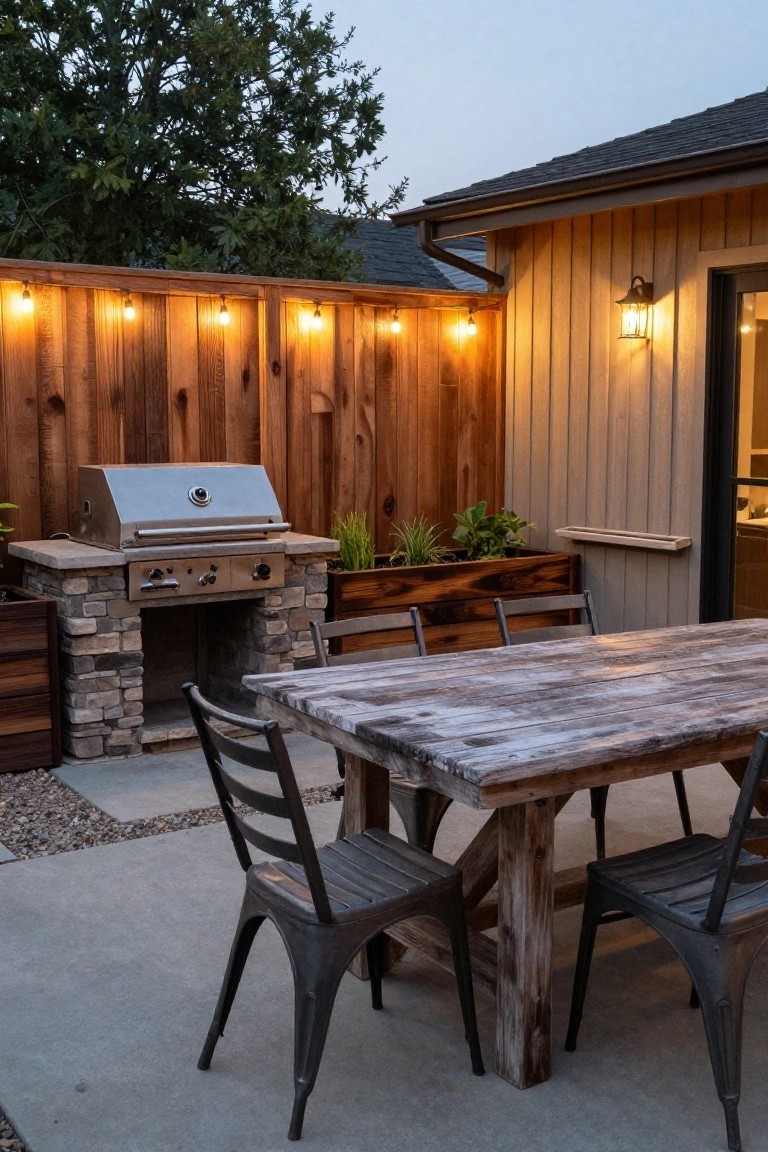
A wood fence with planters built right into it gives an outdoor dining area some greenery without eating up floor space. The plants soften the fence line and make the whole patio feel more settled and welcoming. It works especially well when the fence already serves as the main backdrop.
This setup suits smaller yards or homes where the patio sits right against the property line. Keep the planters at a comfortable height so they are easy to water and do not block the view from the table. String lights along the top of the fence add a simple layer of evening light.
Wood Fence With Built-In Planters
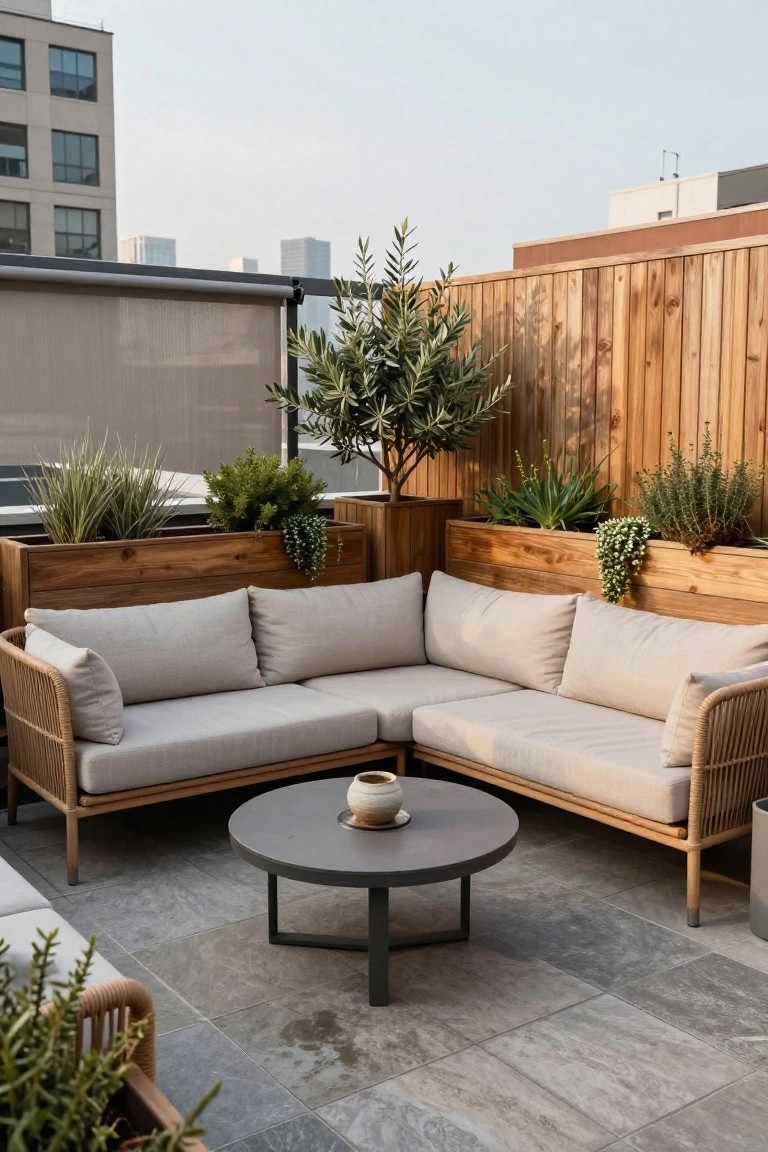
A wood fence with planters built right into it gives you privacy without making the space feel closed off. The plants soften the wood and add height where you need it most, which works especially well on a patio or rooftop where floor space is limited.
This idea suits homes with small yards or decks that need both screening and greenery. Keep the planters at a height that lines up with your seating so the fence feels like part of the layout rather than something added later.
Frequently Asked Questions
Q: Will adding planters to my fence cause the wood to rot faster? A: Mount the planters on the posts with galvanized screws and leave a small gap behind them for airflow. This setup lets water drain away instead of soaking into the fence boards.
Q: Can I swap out a few panels for a new look without taking down the whole fence? A: Unscrew just the rails holding the old panel and slide in the replacement. Match the existing stain on the new wood so the change blends without extra work.
Q: How do I stop accents like trim from peeling after one season? A: Seal the accents with an outdoor wood finish before you attach them. Touch up the sealant each spring when you notice any fading.
Q: What plants work best in fence planters without constant watering? A: Choose drought-tolerant options like lavender or succulents that thrive in shallow soil. Group them by sun needs so each section gets the right light.
