

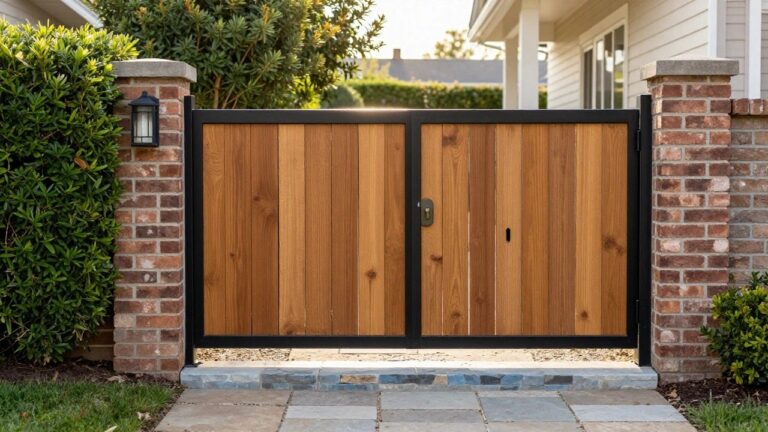
I have walked past plenty of homes where the gate either pulls the whole exterior together or leaves it feeling unfinished.
Board on board construction gives a chance to play with depth and shadow without adding extra trim or hardware.
The right choice can quietly boost curb appeal.
It also needs to function day to day when people come and go.
Lately I have been thinking about how these patterns would look on my side yard where the afternoon light hits hardest.
Board On Board Gate With A Roof Extension
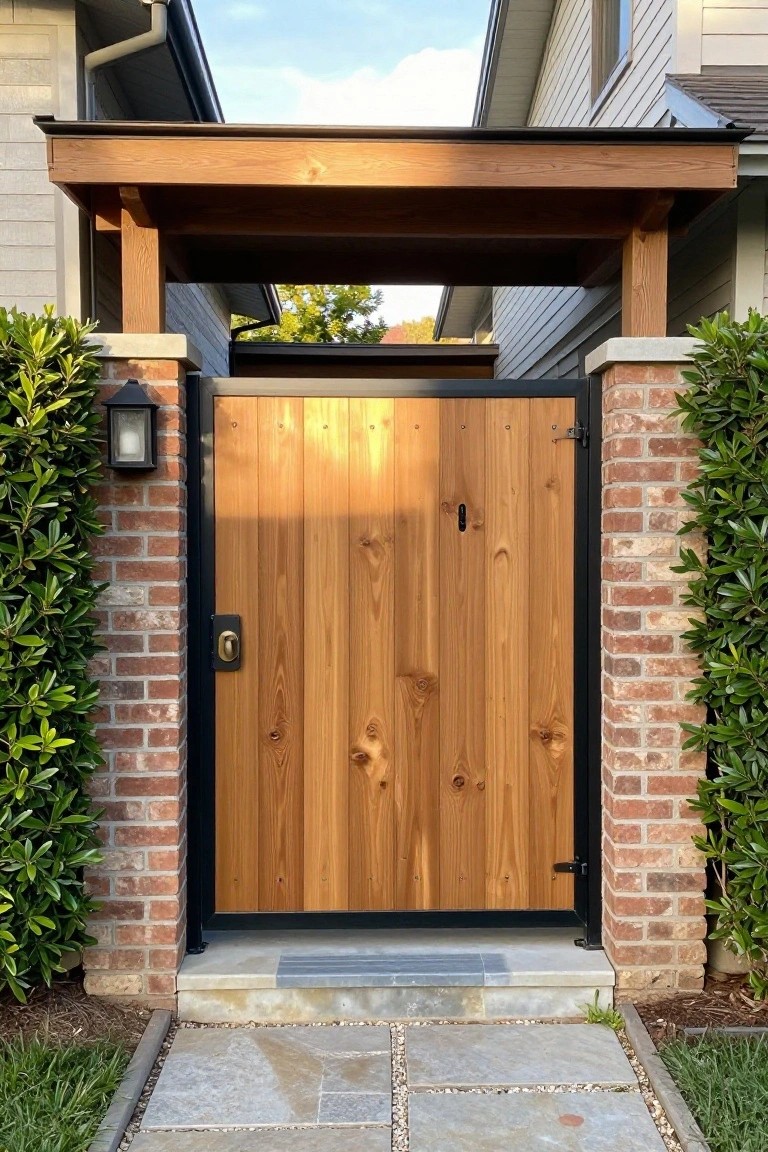
A board on board gate gives solid privacy while the vertical boards create a textured look that stands out against brick and metal. The simple roof overhang above it helps protect the wood and makes the whole entry feel more finished without adding much extra structure.
This approach works well on homes that already use brick or stone around the entry. Keep the frame dark so the wood grain shows clearly, and add low plants on either side to soften the edges without blocking the gate itself.
Add an Arbor Over the Gate
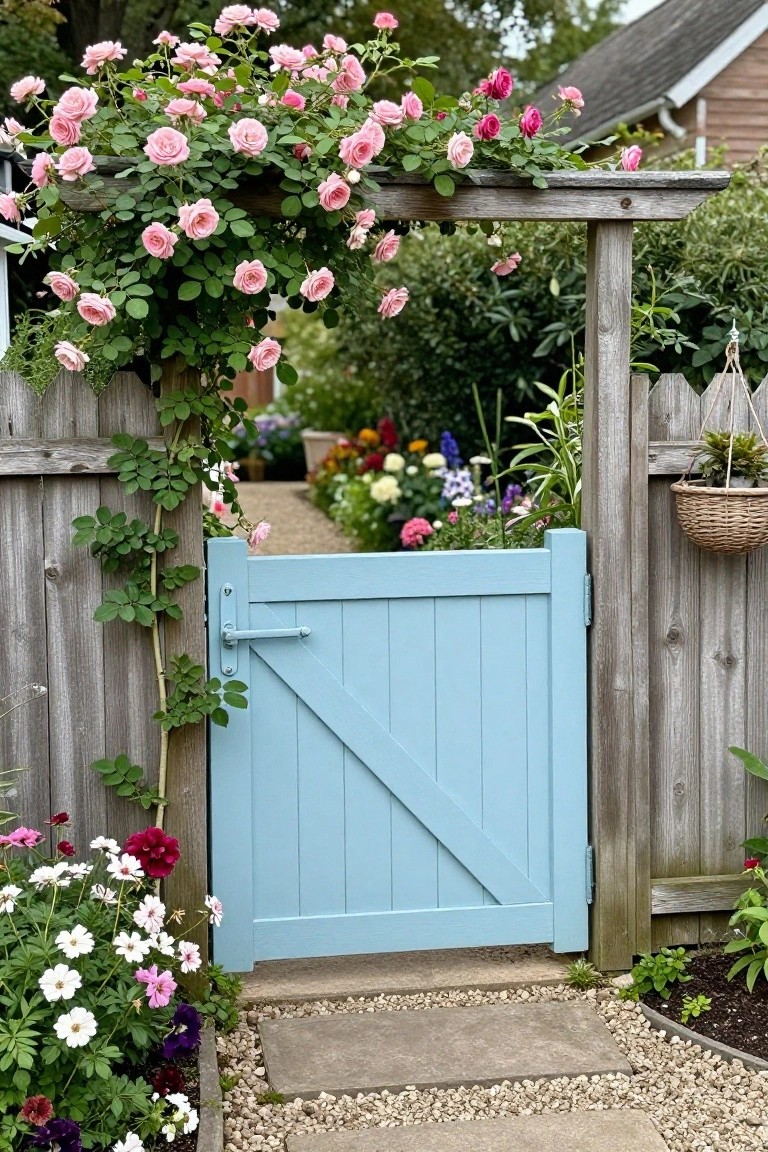
A board-on-board gate already gives solid privacy, but putting a simple arbor on top changes how the whole entry feels. The structure lets you bring in climbing plants that soften the wood and add height without taking up extra ground space.
This works well on side yards or garden paths where you want a bit more enclosure. Just make sure the arbor is sturdy enough to handle the weight of mature vines, and keep the gate color simple so the plants stay the main focus.
Mix Solid Panels With Board On Board Sections
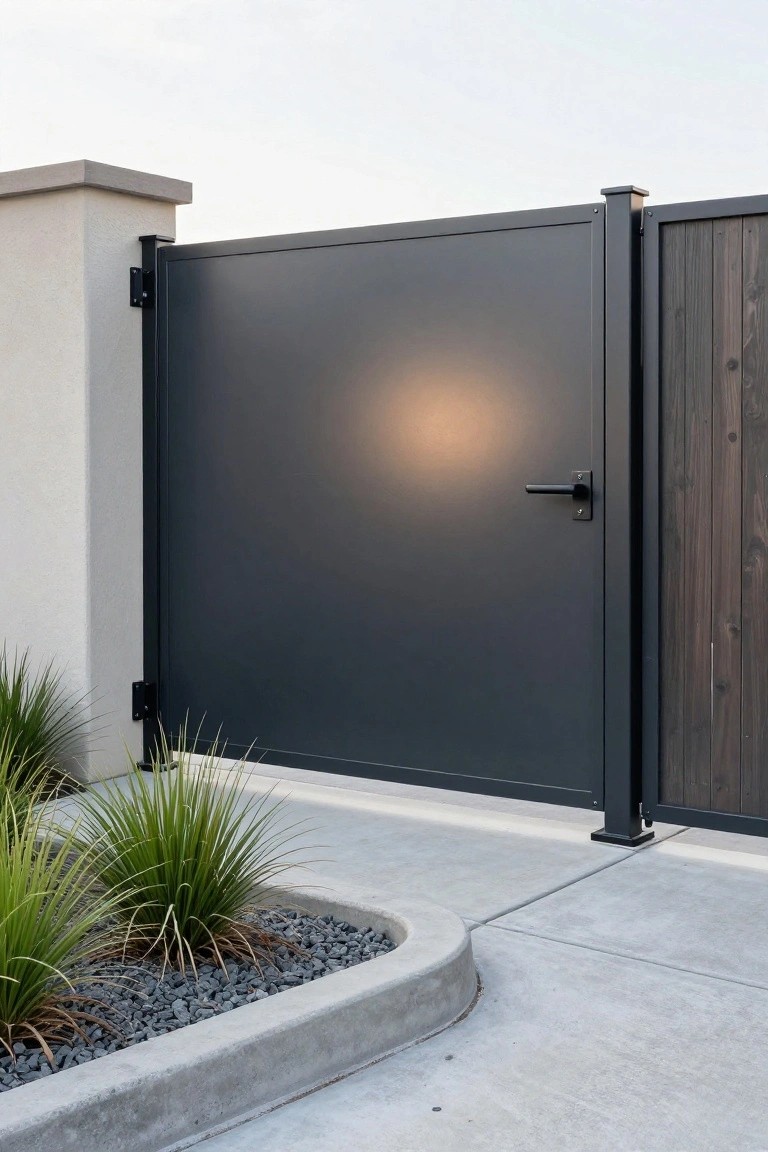
A solid gate gives strong privacy, but adding a board on board section next to it brings in texture without losing that closed off feel. The dark metal panel keeps things simple and modern, while the vertical wood boards add just enough detail to keep the gate from looking flat.
This works well on side entries or front gates where you want some visual interest but still need a solid barrier. It suits homes with clean lines and works best when the wood tone contrasts with the main gate color. Keep the wood sealed so it holds up over time.
Board on Board Gates with an Arch
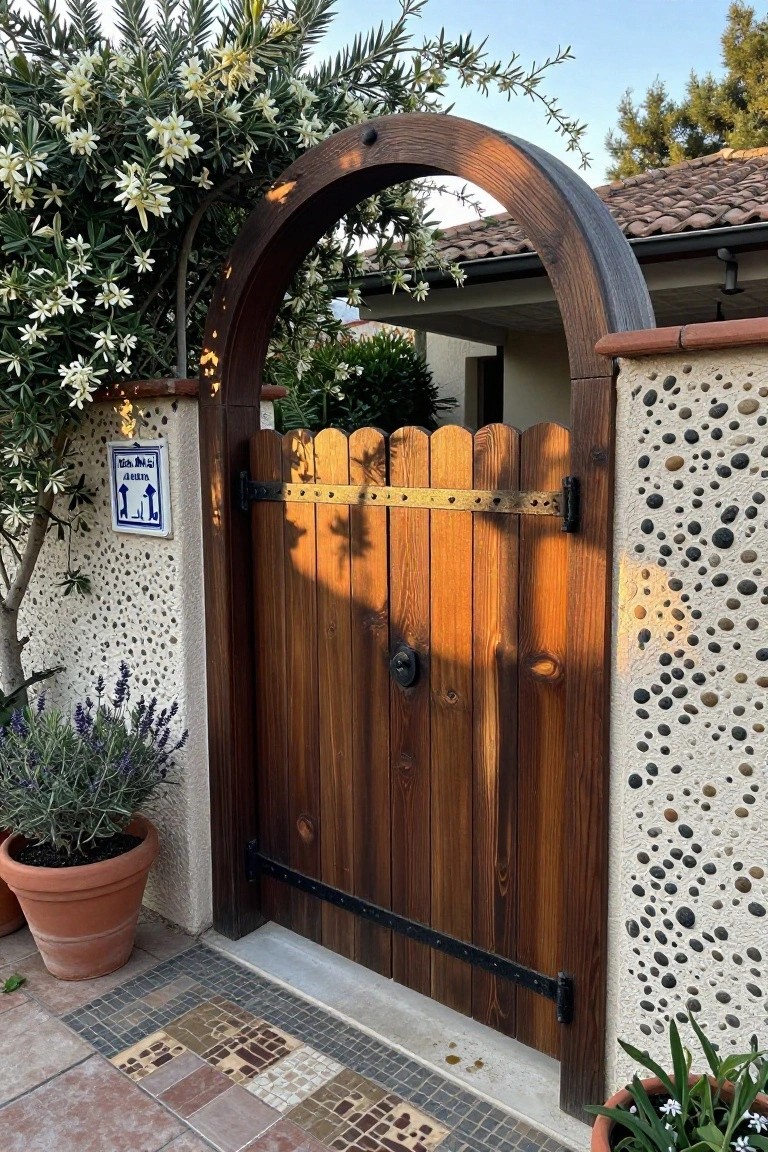
A board on board gate gives solid privacy without making the entry feel closed off. The overlapping boards create texture through the wood grain and the simple metal straps that hold everything together.
This approach works best on homes that already have some warmth in the materials, like stucco or tile. Treat the wood well if you want the gate to age nicely instead of turning gray too fast.
Board On Board Gate In A Bold Color
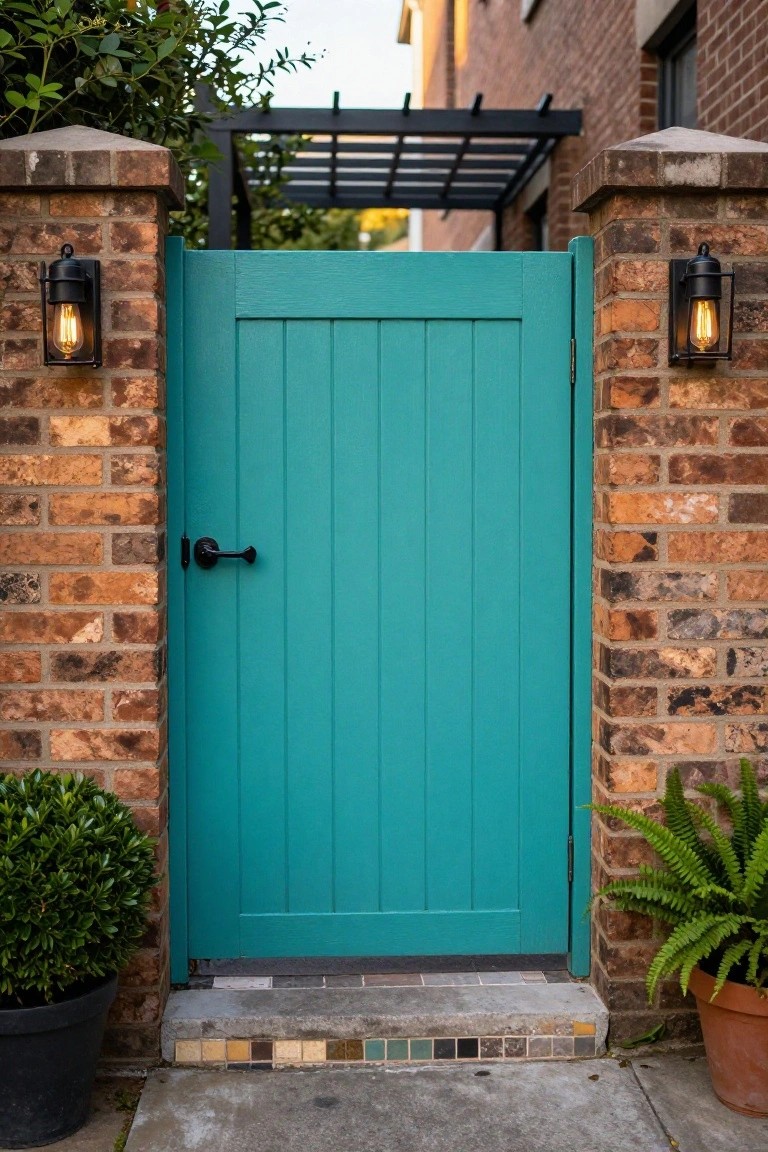
A board on board gate built with vertical boards gives solid privacy while the overlapping edges add a bit of texture that a flat panel never quite manages. Painting it a strong color like teal makes the gate stand out against brick and turns a basic entry point into something that feels more intentional.
This approach works well on side yards or front walks where you want screening without making the space feel closed in. It suits homes with simple brick or wood exteriors and pairs easily with basic lighting on the posts. Just keep the color in the same tone family as nearby plants or trim so it does not feel out of place.
Board on Board Style for Gate Privacy
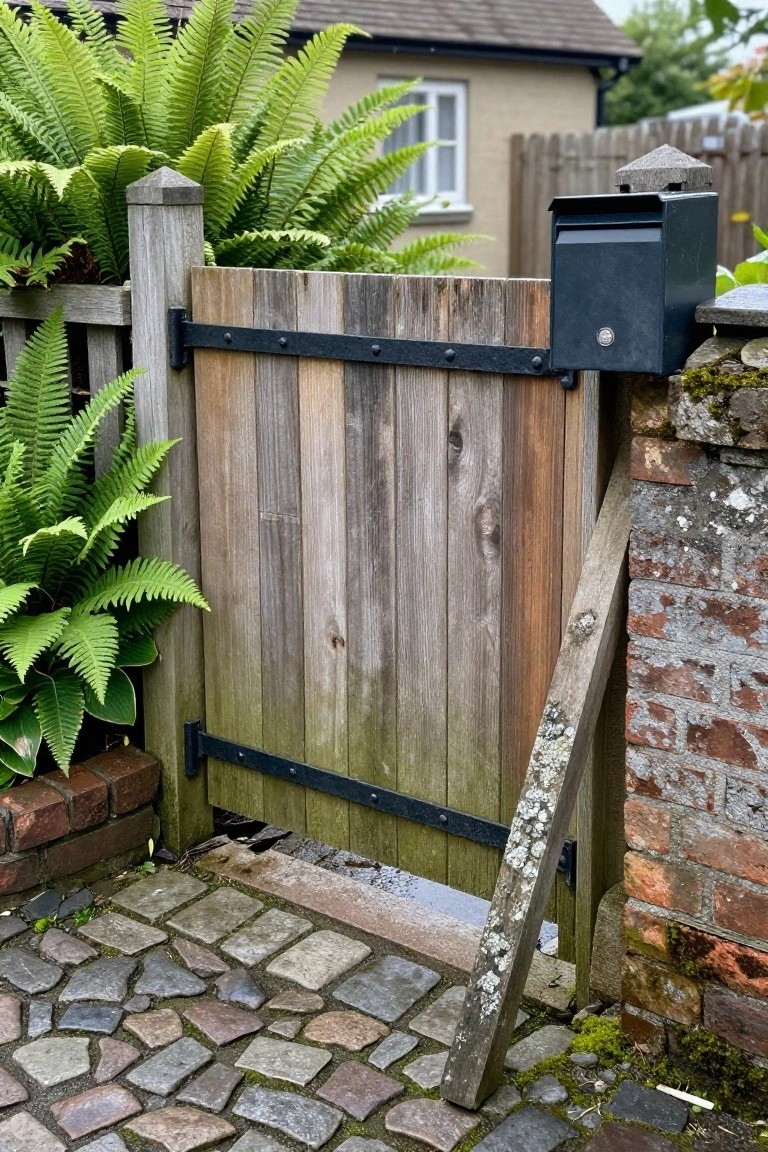
A board on board gate uses vertical planks placed close together so there are no gaps. This gives solid privacy while the slight texture from the wood grain and joints keeps the surface from looking flat. The black metal straps across the boards add a simple finished look that works with many garden styles.
This approach suits homes with existing wood fencing or brick details where you want the gate to blend in rather than stand out. It works best on side or back entries where full screening matters more than an open view. Just make sure the wood is treated for weather and the hinges can handle the extra weight from the double layer of boards.
Lattice on a Board-on-Board Gate
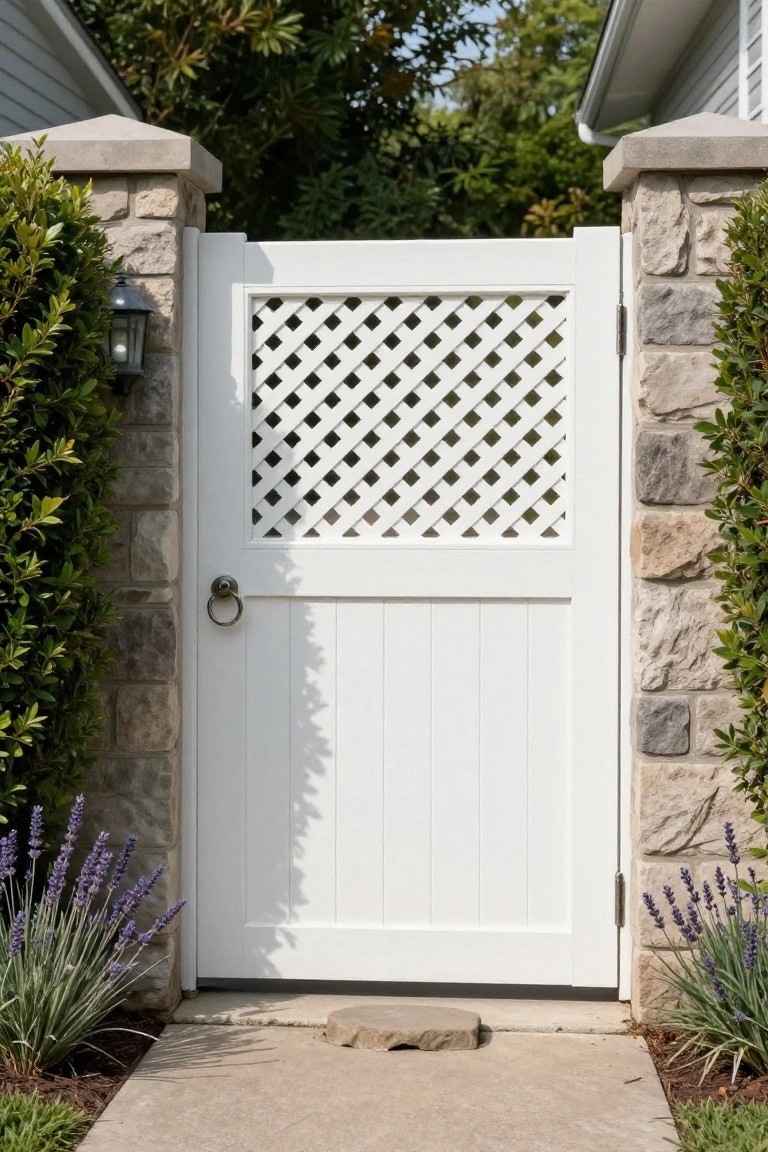
A board-on-board gate with a lattice panel across the top adds privacy where it matters most while still letting light and air through higher up. The solid lower section blocks the view, and the open lattice keeps the whole thing from feeling too heavy.
This works best on front or side entries next to stone or masonry posts. Keep the lattice pattern fairly open so it does not trap debris or look too busy against the vertical boards.
Board on Board Gates for Pool Areas
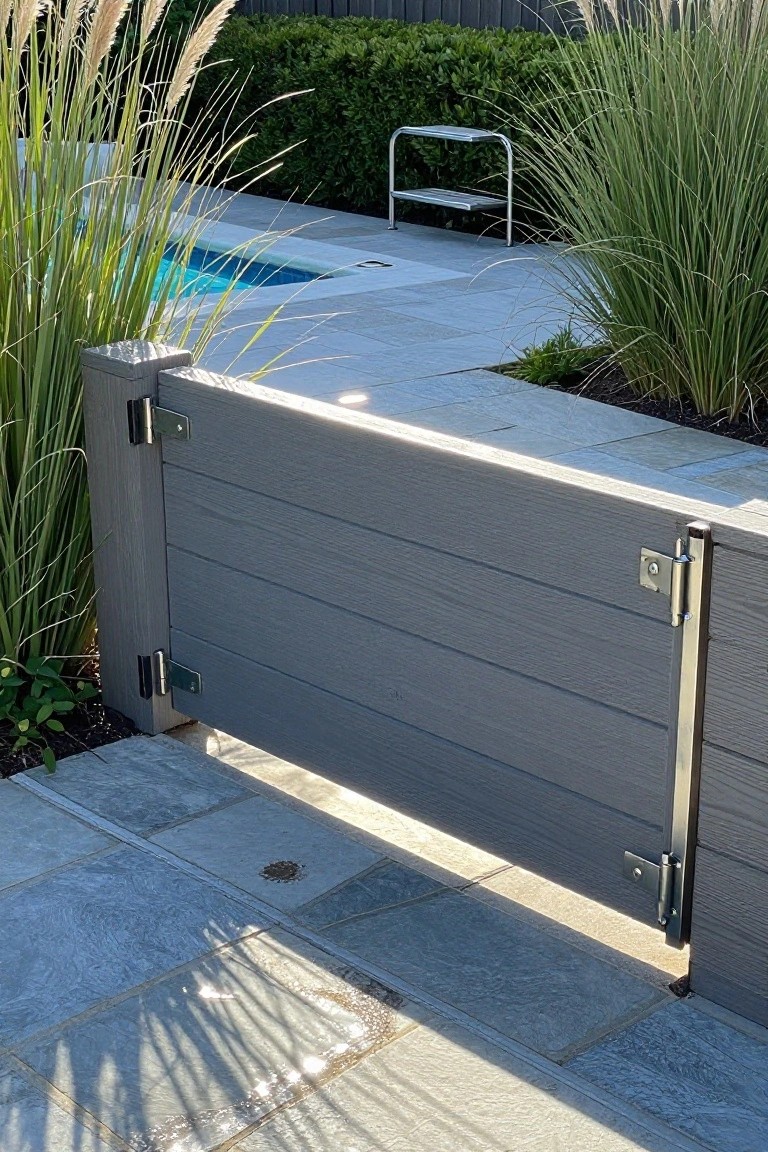
A board on board gate works well around a pool because the overlapping boards block the view from outside while still letting the wood show some texture. The horizontal lines keep it from looking too plain next to paving and plants.
This approach fits homes with smaller backyards or shared property lines. Use it where you need a clear boundary but do not want a solid wall that feels closed in. Treated wood and sturdy hinges help it last in wet areas.
Board on Board Gates for Better Privacy
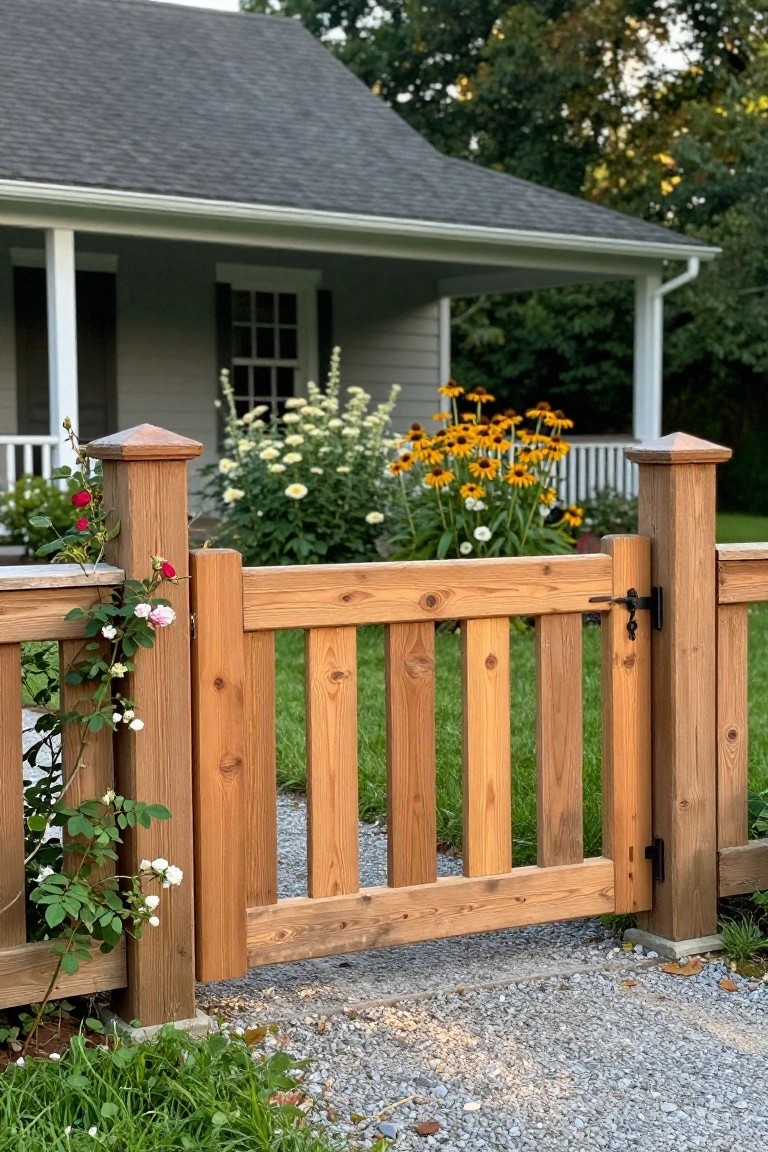
A board on board gate gives solid privacy while still showing off the natural grain of the wood. The overlapping vertical boards cut down on gaps that regular spaced pickets leave behind.
This approach works best on side yards or front property lines where you want to screen the view from the street without making the fence feel too heavy. It suits most traditional or cottage style homes and pairs easily with gravel paths or simple plantings along the base.
Board On Board Gates Add Privacy
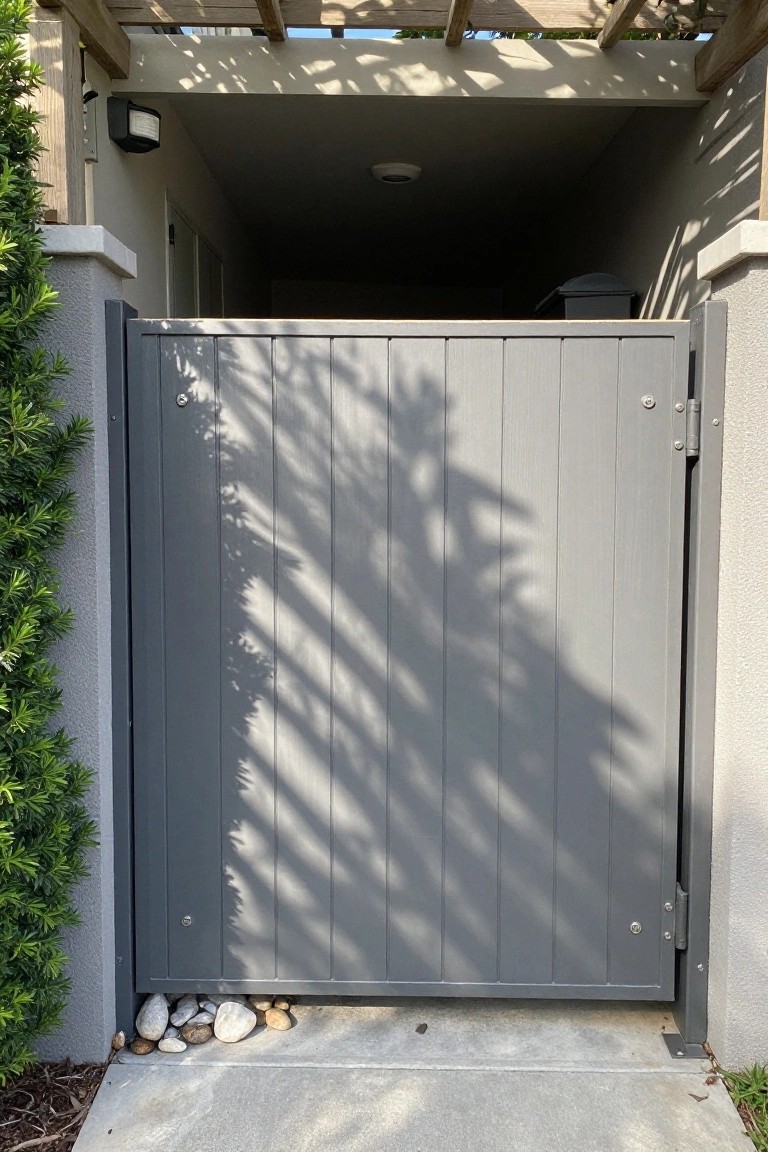
Board on board gates work well because the overlapping vertical boards block the view from the side while still letting the wood grain show through. This style gives a solid look without feeling too heavy or plain, and it holds up in most weather once the wood is sealed.
It suits side entries or narrow passages where you want to keep things private but still match the house. Just make sure the hinges and posts can handle the extra weight of the double layer of boards.
Board On Board Gates For Garden Entries
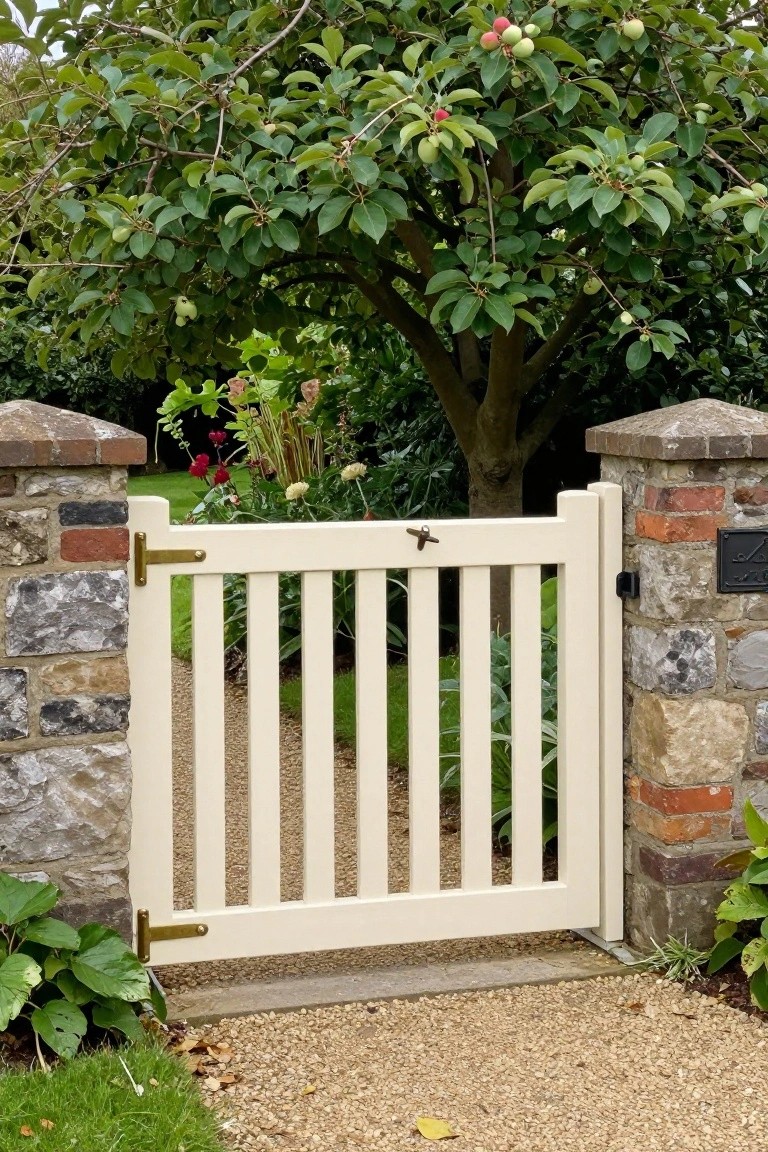
A board on board gate gives solid privacy while the vertical lines add some texture to the view. It works especially well when the gate sits between stone pillars because the wood softens the heavier look of the masonry without making the whole entrance feel closed off.
This style suits older homes or cottage style properties where you want a clear boundary but still like seeing a bit of the garden beyond. Keep the boards painted a light color so the gate does not dominate the planting around it.
Board-on-Board Gates for Simple Privacy
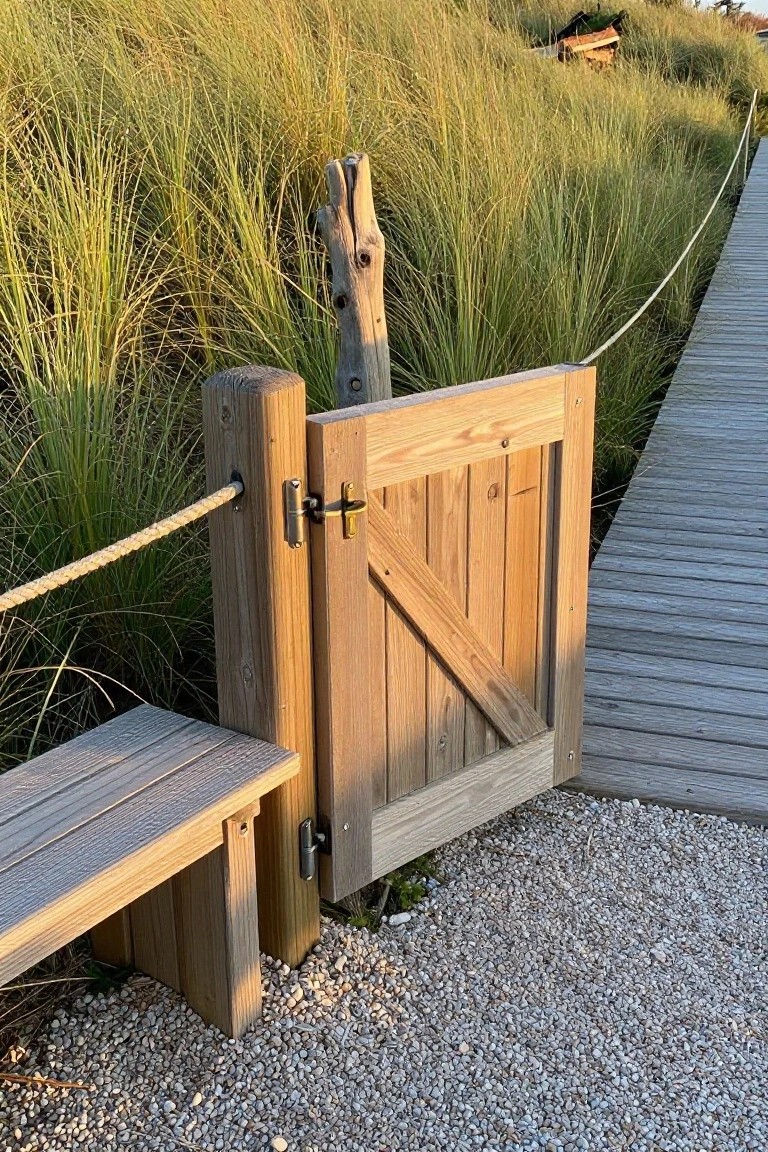
A board-on-board gate gives you solid coverage without looking heavy or closed off. The overlapping boards create a nice texture on their own, and the wood ages well in outdoor settings where it needs to handle sun and salt air.
This style works best at the edge of a yard or along a path where you want to separate spaces without blocking everything completely. It pairs easily with gravel or decking and holds up in both coastal and inland gardens as long as the wood is sealed well.
Board on Board Gates for Solid Privacy
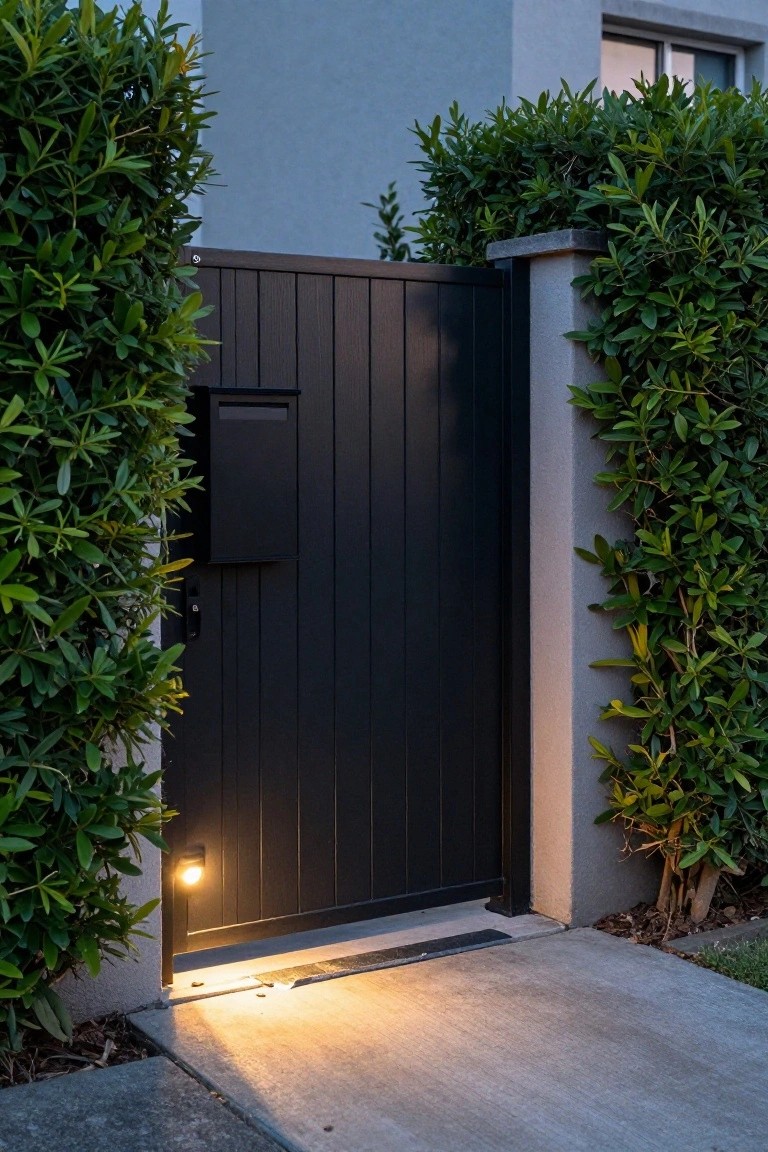
A board on board gate gives you full privacy because the boards overlap instead of sitting side by side. That overlap also creates light shadow lines across the surface so the gate does not look completely flat.
This approach works best on side yards or front entries where you want a clean modern look without gaps. It pairs well with dark stains and simple plantings that keep the focus on the gate itself rather than competing details.
Board on Board Construction for Gate Privacy
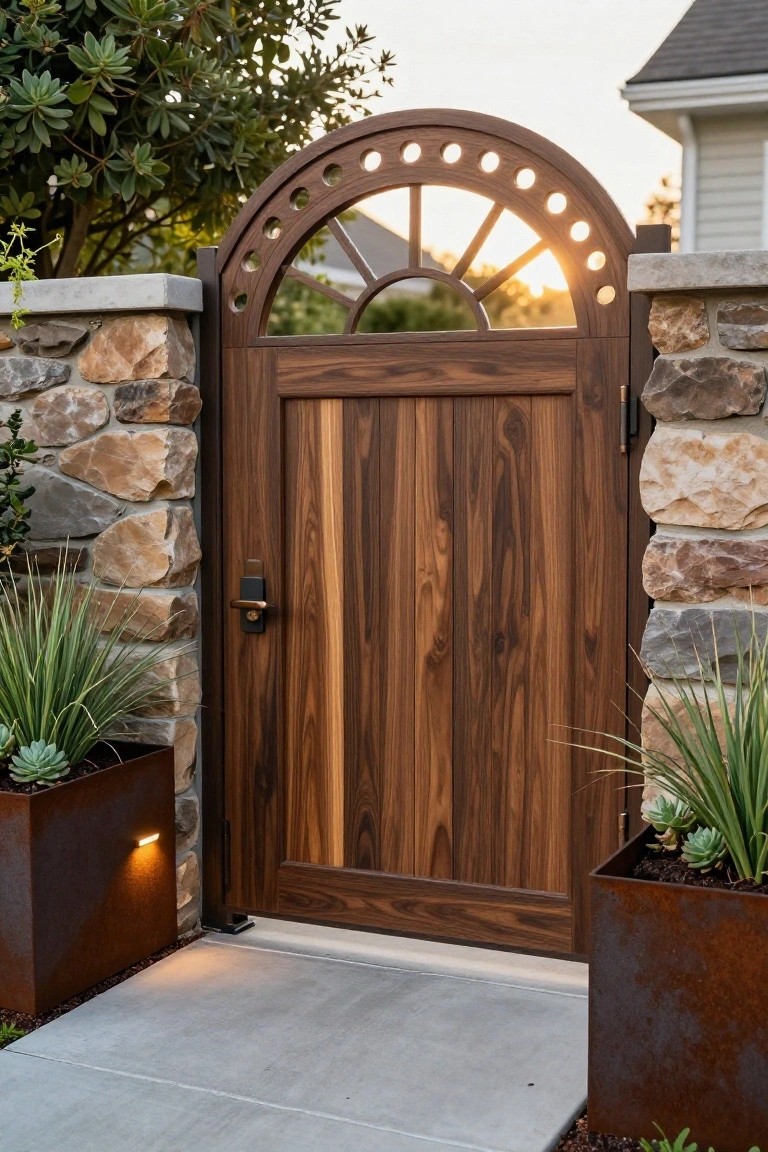
A board on board gate gives solid coverage while adding a textured look that feels more interesting than a flat panel. The overlapping vertical boards block the view from the street and create subtle shadows that change through the day.
This approach works especially well on side yard entries or front gates where you need privacy but do not want a completely blank surface. It suits homes with stone or wood fencing and pairs easily with simple hardware and an arched top detail.
Board on Board Gates With Horizontal Planks
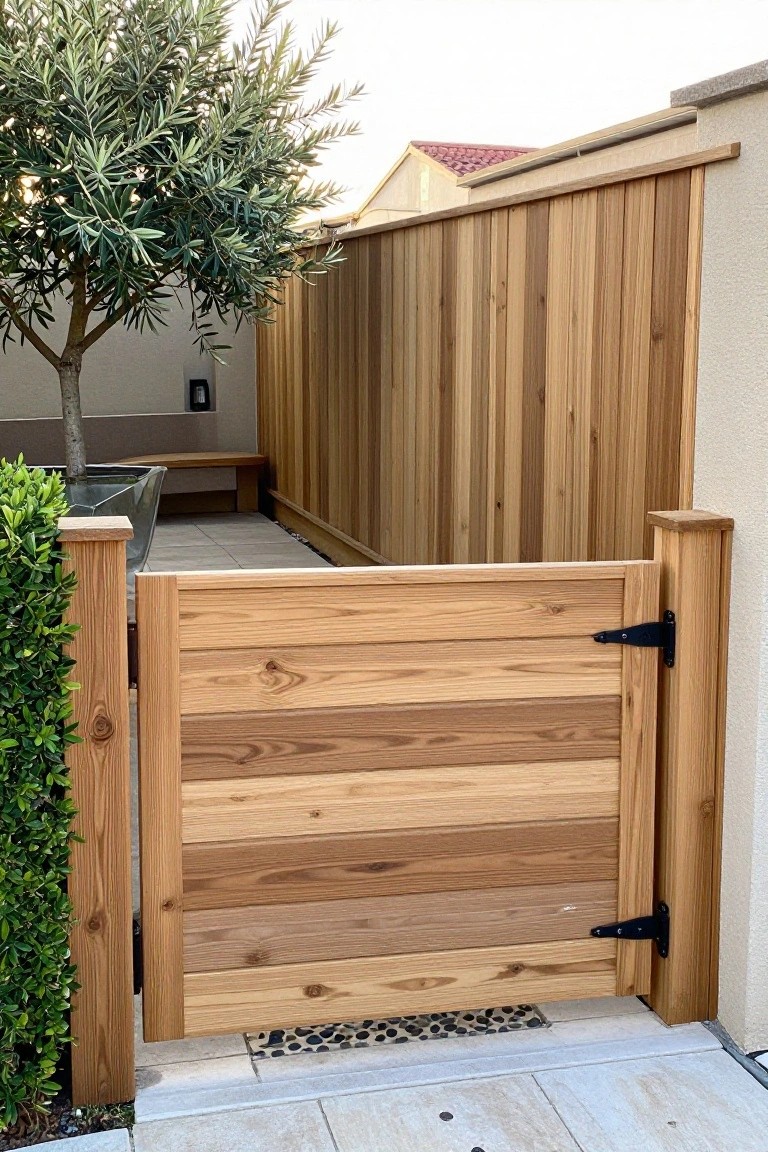
Many people turn to board on board construction for gates because the overlapping boards block the view while still showing the wood grain. The horizontal layout on this gate creates a clear contrast with the vertical fence behind it.
This approach works well on side yards or back entrances where you want privacy but do not want a flat solid panel. It suits homes that already use wood fencing and keeps the look simple.
Board on Board Gates in a Dark Finish
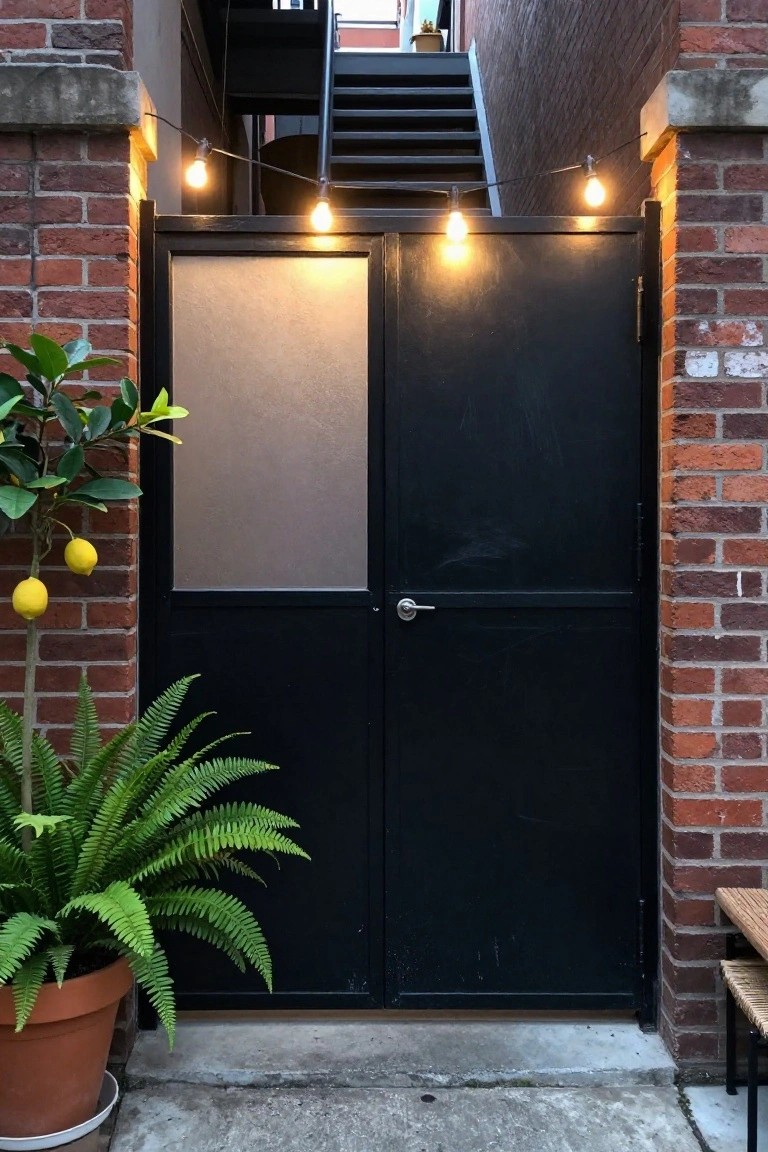
A dark board on board gate gives a clean, solid look that blocks the view while the horizontal lines keep the surface from feeling flat. The finish also helps the gate blend with brick and other dark elements around an entry without needing a lot of extra trim or detail.
This style works best on homes with simple architecture or tight side yards where you want privacy but still need a gate that feels sturdy. Keep the hardware minimal and add a single light source above so the texture of the boards stays visible at night.
Frequently Asked Questions
Q: How much should the boards overlap to stop any peeking through?
A: Go for a full inch of overlap at minimum. This hides the gaps even if the wood shifts a bit over time. Measure twice when you install them.
Q: Will the extra layers make my gate too heavy to open easily?
A: Not if you reinforce the hinges and frame from the start. Use pressure treated wood that resists warping. The added strength often makes the gate feel more solid.
Q: How do I keep the wood from rotting in rainy weather?
A: Seal every board with a good exterior finish before assembly. Reapply it every couple of years. Focus on the bottom edges where water sits longest.
Q: Is this something a beginner can build without fancy tools?
A: Yes. Start with a simple frame and attach the boards one side at a time.
