

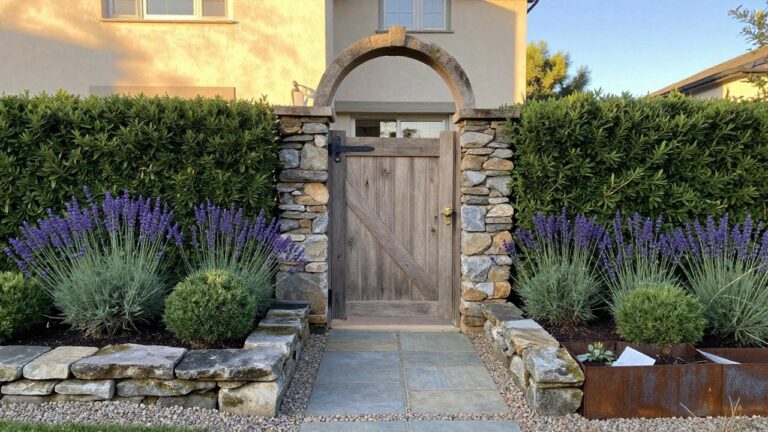
When I walk up to a house the gate often tells me right away how much thought went into the entry.
The way an arch curves over the path can soften the lines of a fence and draw the eye toward the front door in a way that feels welcoming without trying too hard.
Wood choice affects not just the look but also how the gate ages with sun and rain over the years.
Height is the part I always measure twice.
Small changes in the latch or hinge style end up changing the whole feel more than most people expect.
Frame A Gate With A Stone Arch
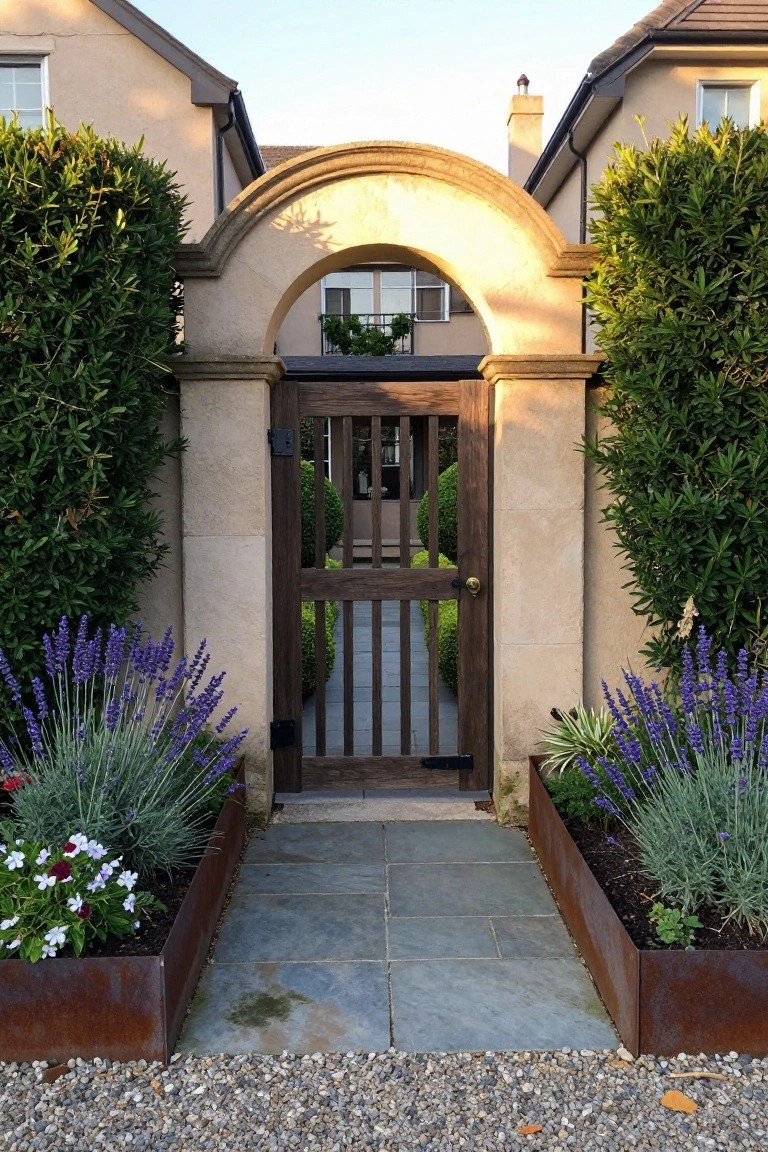
An arch over a wooden gate gives the entrance more weight and presence. It turns a basic passage into something that feels more intentional and tied to the house.
This approach works best on homes with stucco or masonry walls where the arch can sit comfortably on stone pillars. Keep the gate simple in design so the arch remains the stronger visual element.
Arched Gates with Climbing Roses
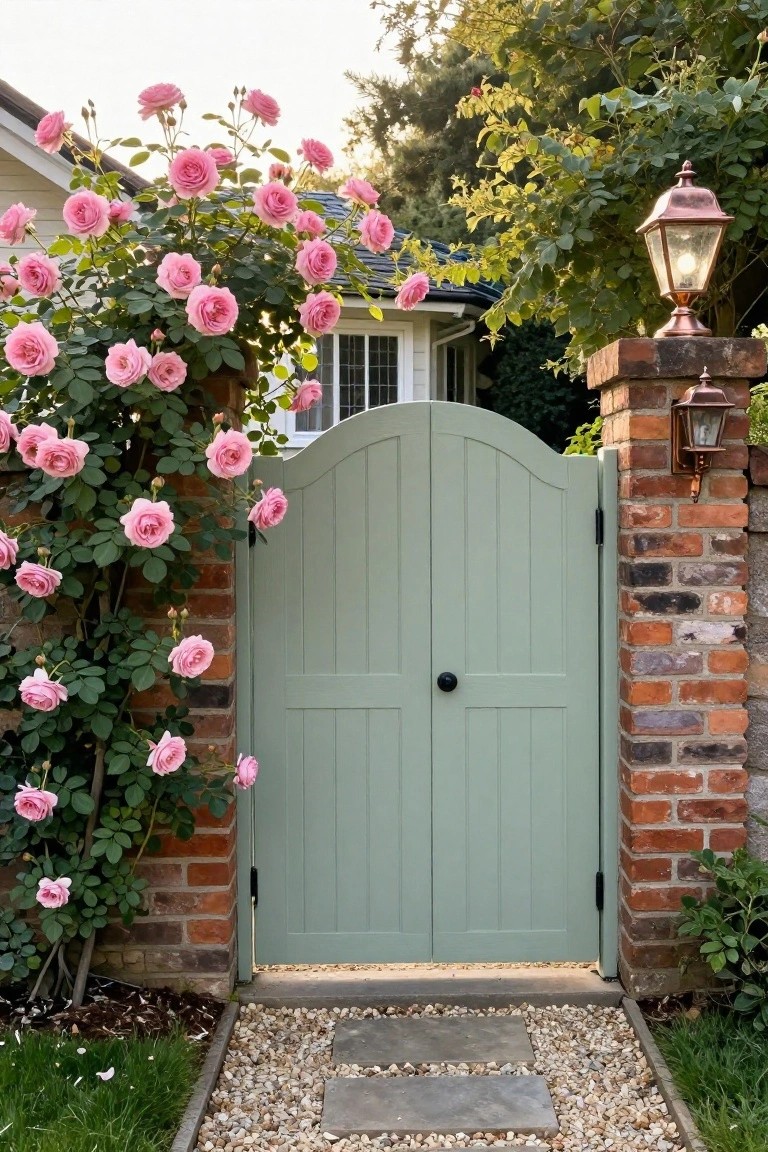
One simple way to make an arched wooden gate feel more inviting is to let climbing roses grow up the posts on either side. The flowers soften the structure and add color that changes with the seasons.
This approach works best on homes with a cottage or traditional look. Plant the roses in beds right at the base of brick or stone posts so they can climb without much extra support, and pick a gate color that stands out against the blooms.
Arched Wooden Gates For A Classic Entry
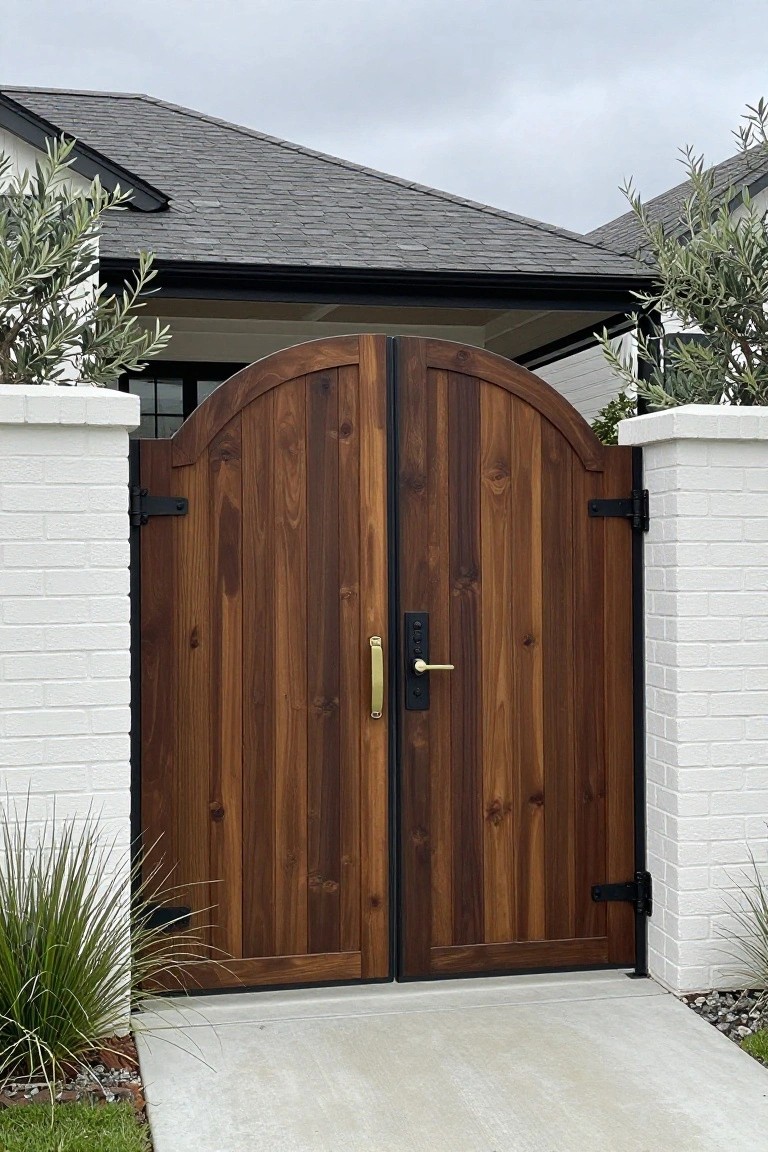
These gates give an entrance a solid, finished look that feels more intentional than a plain fence or open driveway. The wood grain shows through nicely and the gentle arch softens the whole front without making it feel fussy.
They suit homes that already have some traditional or craftsman details. Treat the wood well for outdoor use and keep the hardware simple so the gates stay the main focus instead of competing with too many other elements.
Arched Wooden Doors For A Simple Entry Upgrade
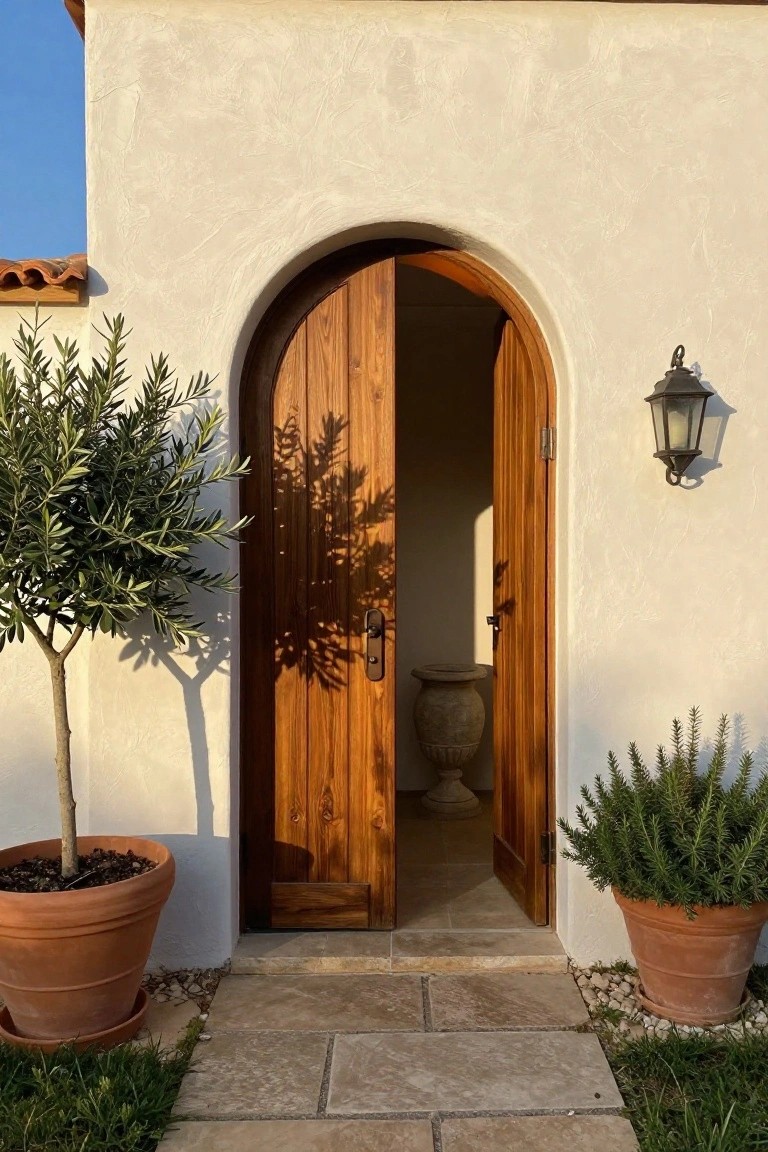
An arched wooden door gives an entry a bit more shape and presence than a plain rectangle would. The curve breaks up a flat wall nicely and the wood adds some warmth that stucco or stone alone can lack.
This approach works best on homes with Mediterranean or Spanish influences, or on newer houses that need a touch of age. Keep the doors in scale with the wall and choose a finish that handles sun and rain without constant upkeep.
Wooden Gates That Suit Natural Gardens
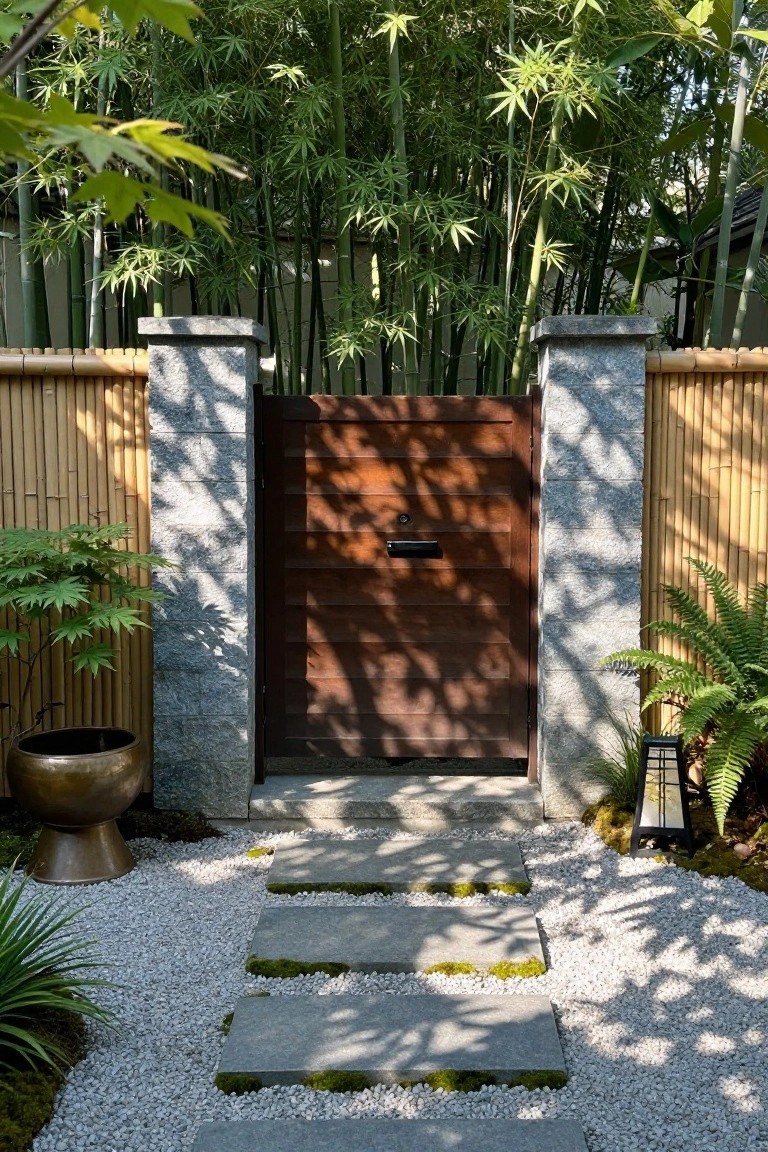
A wooden gate fits best when the surrounding plants and materials already do most of the work. In a setting heavy with bamboo and gravel, the simple wood surface and stone posts create a quiet boundary that still feels open.
This style works well for homes with Asian or woodland gardens where the goal is a soft transition rather than a bold statement. Keep the gate height modest and let the planting stay close so the whole entrance reads as part of the landscape instead of a separate feature.
Arched Wooden Gates With Horizontal Slats
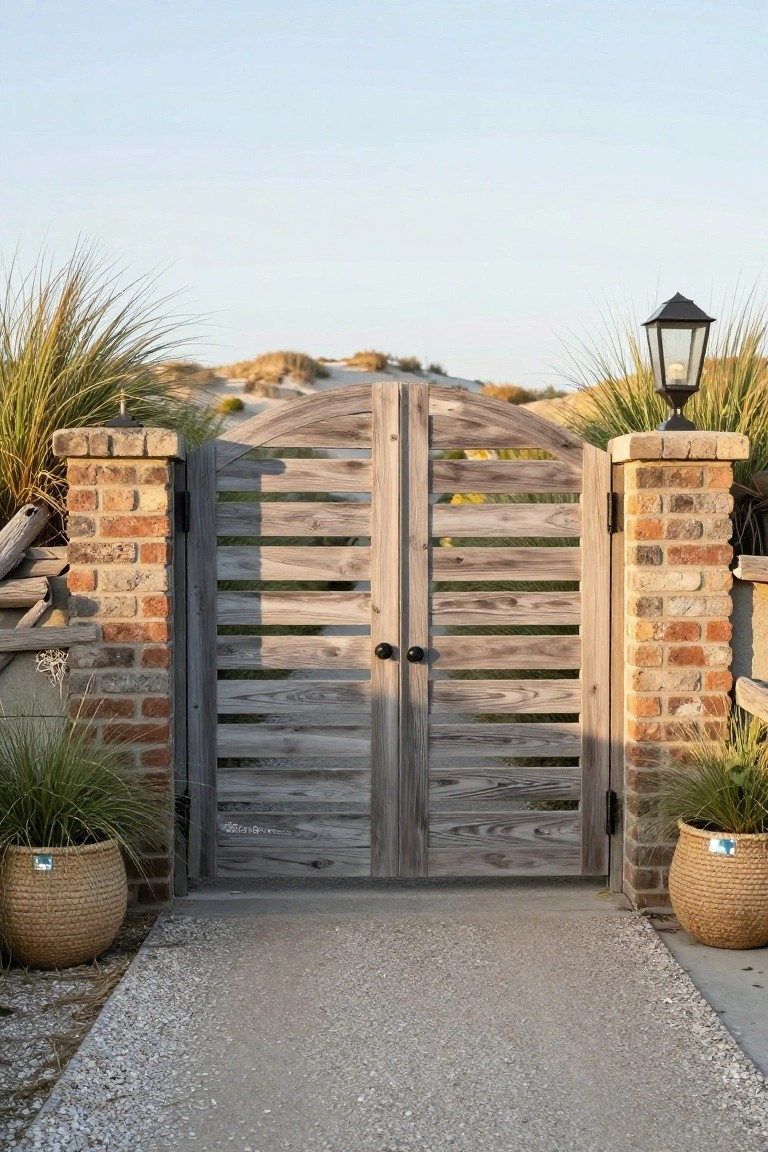
An arched wooden gate with horizontal slats gives an entry a clear shape without making it feel closed off. The wood brings a natural look that ages well, and the arch softens the overall line so the gate does not feel too heavy or formal.
This approach suits homes with simple landscaping and low plantings around the entrance. Brick or stone posts help anchor the gate, but keep the surrounding area open so the wood and curve stay the main focus.
Arched Wooden Entry Gates
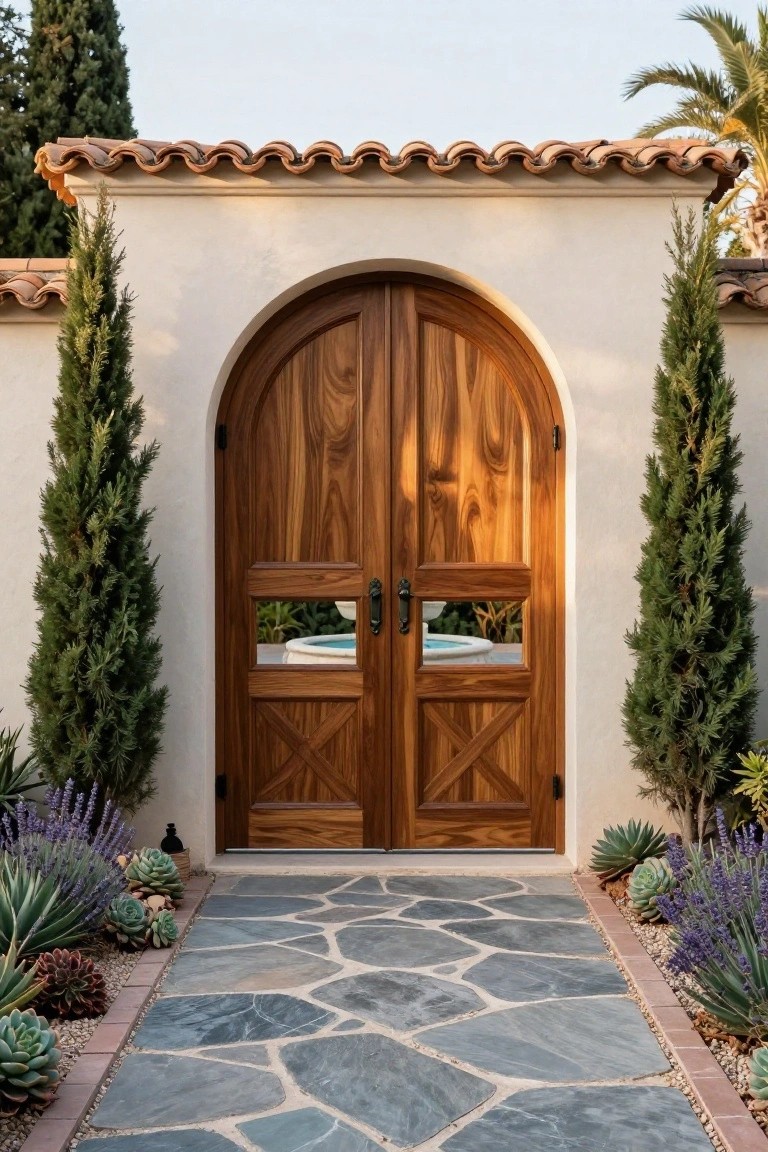
An arched wooden gate like this one gives an entry a solid, finished look that feels more intentional than a basic rectangular door. The curve softens the top of the opening while the wood grain keeps the whole thing grounded and natural. It works especially well when the gate sits in a plain stucco wall and the path leads straight to it.
This style suits homes with Mediterranean or Spanish details and pairs nicely with simple plantings on either side. Keep the hardware dark and minimal so the wood stays the main feature, and make sure the gate is wide enough to feel generous rather than cramped.
Painting an Arched Gate in a Rich Color
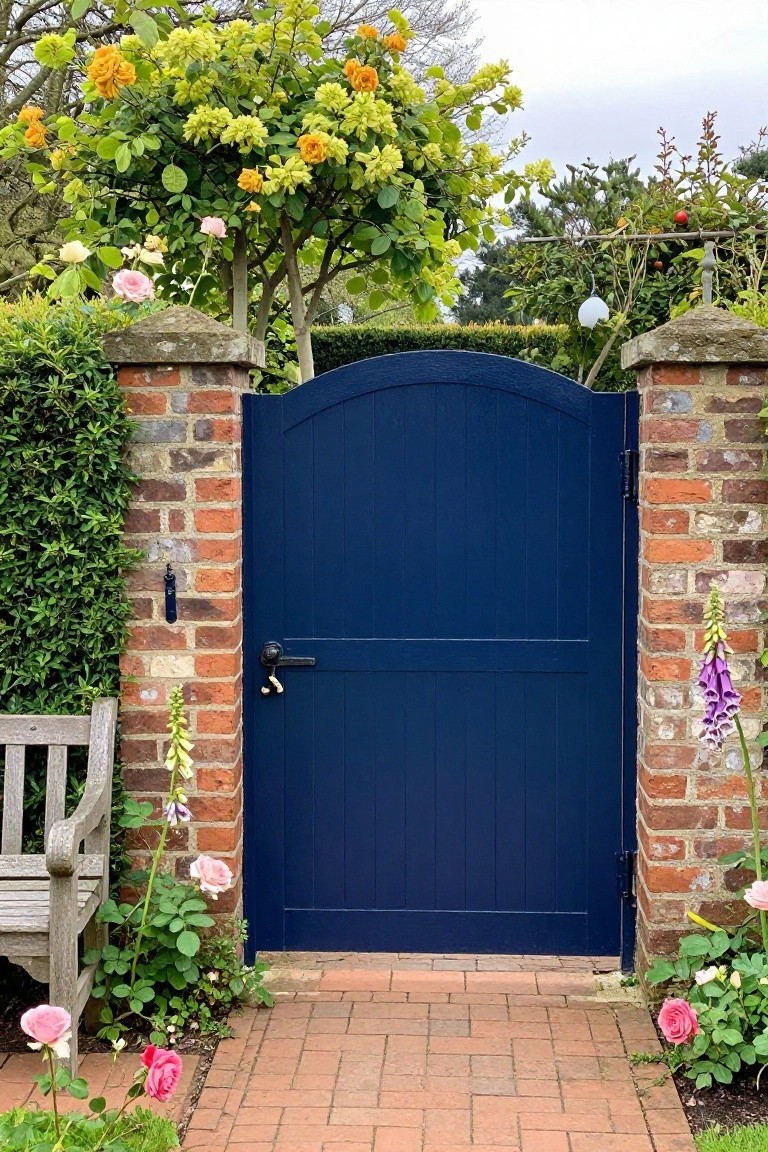
A deep color on an arched gate can make the whole entrance feel more defined without adding extra details. The strong shade stands out against brick and plants, which helps the gate become the clear focal point rather than blending into the background.
This approach works well on homes with simple garden walls or low brick pillars. It suits older properties or any place where you want the gate to feel solid and welcoming. Just make sure the color you pick holds up to sun and weather so it does not fade quickly.
Rustic Arched Gates For Garden Paths
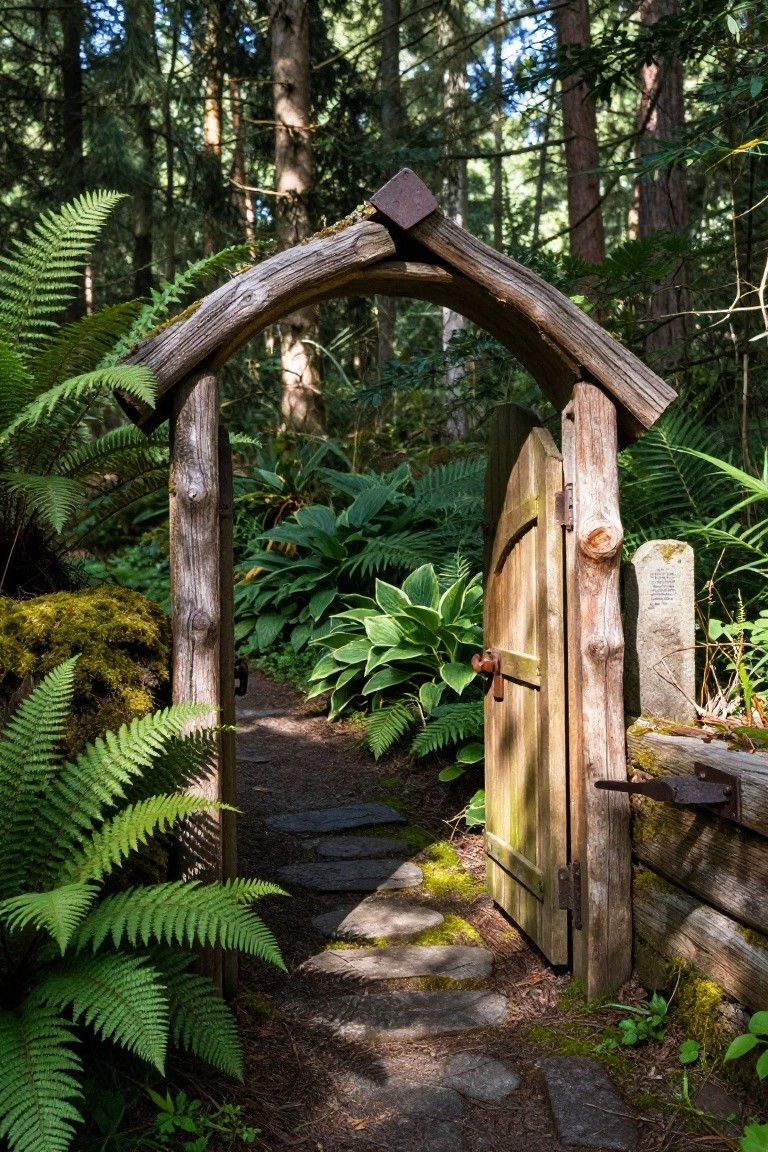
A simple arched gate made from rough timber works well when you want to mark the start of a path without making it feel formal. The wood ages naturally and sits comfortably among trees and ferns, so the gate becomes part of the landscape instead of standing out as a separate structure.
This approach suits homes with wooded lots or shaded side yards where you need a clear transition from lawn to trail. Keep the wood untreated so it blends over time, and let low plants grow up around the posts rather than trying to keep the area tidy.
Arched Gates Add A Welcoming Touch To Entries
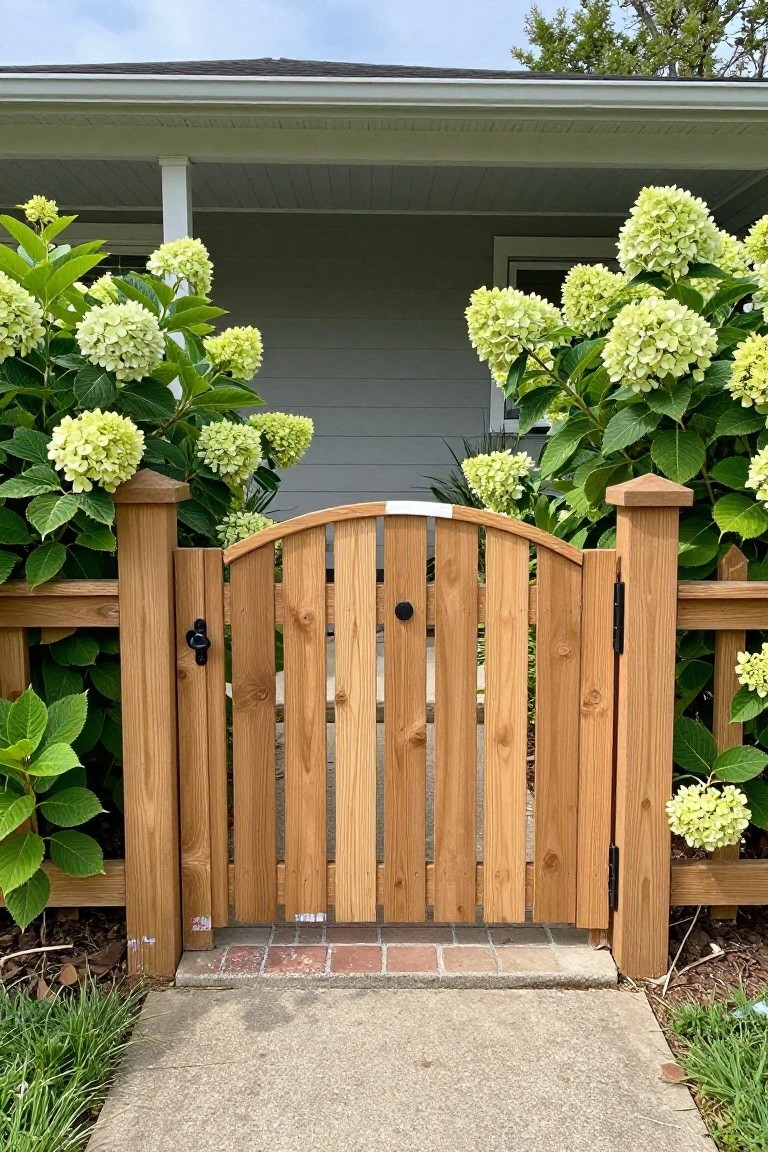
An arched top on a wooden gate gives the entrance a gentle curve that feels more open. Many people like how it avoids the boxy look of a flat gate while still keeping things simple and sturdy.
This style suits homes with a front path or garden beds on either side. Just make sure the arch matches the height of your fence so the whole thing looks balanced.
Arched Wooden Gates Built Into Stone Walls
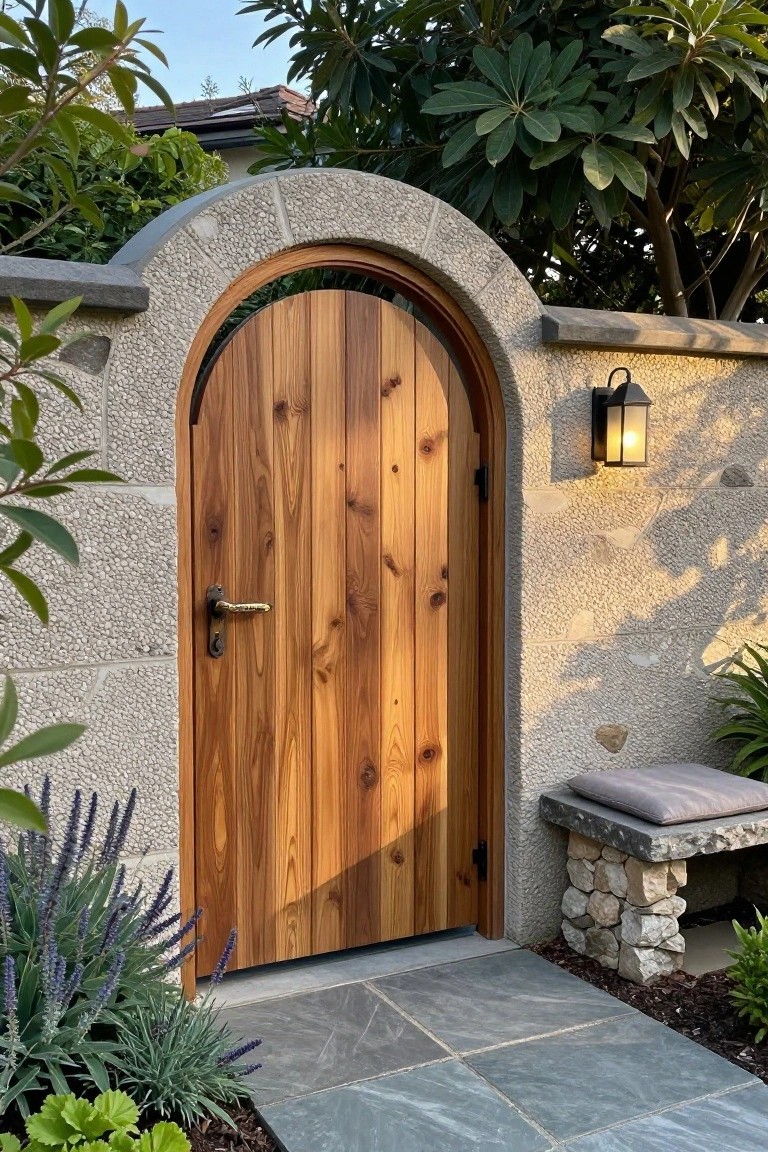
An arched wooden gate gives an entry a softer shape than a flat top. The curve works especially well when it sits inside a matching stone arch, and the natural wood grain keeps the whole thing from feeling too formal.
This approach suits homes that already have garden walls or a side entrance. Use the same stone for the surround so the gate feels built in, and choose simple hardware that does not fight the wood.
Arched Wooden Gates Over Water
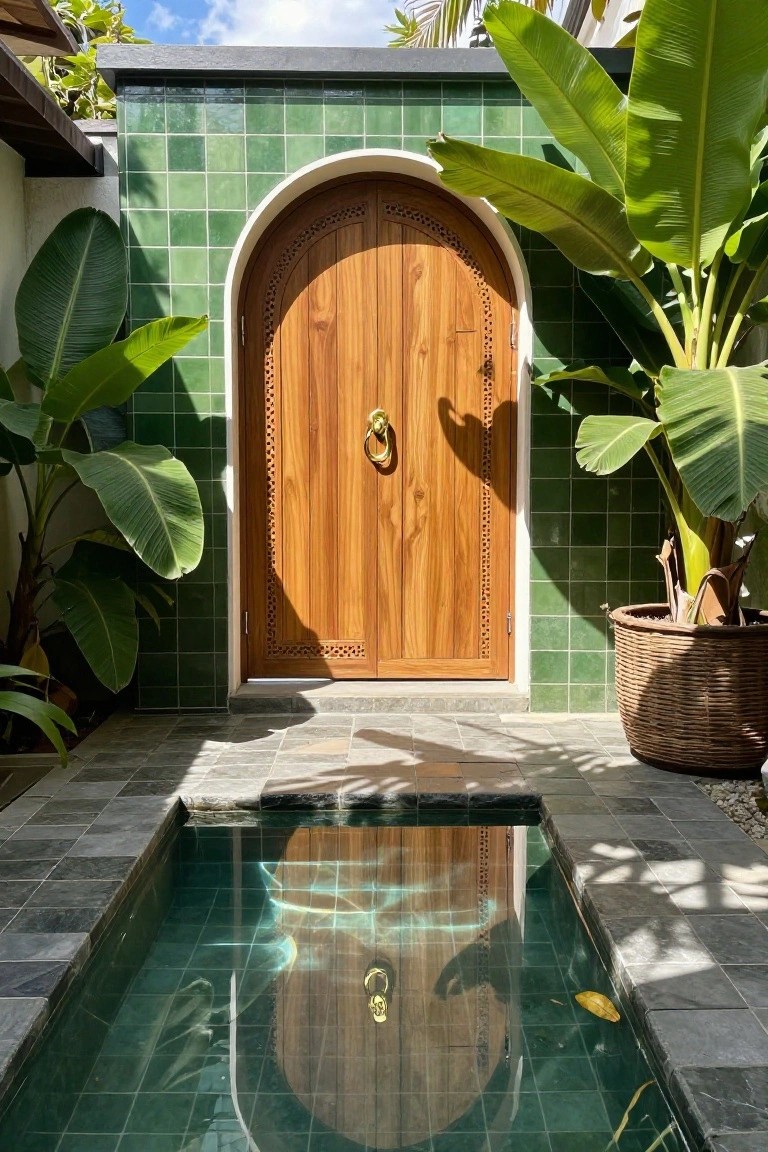
An arched wooden gate gives an entrance a clear focal point that feels both welcoming and solid. The curve softens the top line of the gate while the wood grain keeps the whole thing grounded and simple.
This setup works best on homes with a small courtyard or side garden where you can add a shallow pool right in front. The reflection makes the gate feel taller and more important without needing extra trim or hardware. Just keep the surrounding wall plain so the wood and water stay the main features.
Arched Wooden Gates For A Welcoming Entry
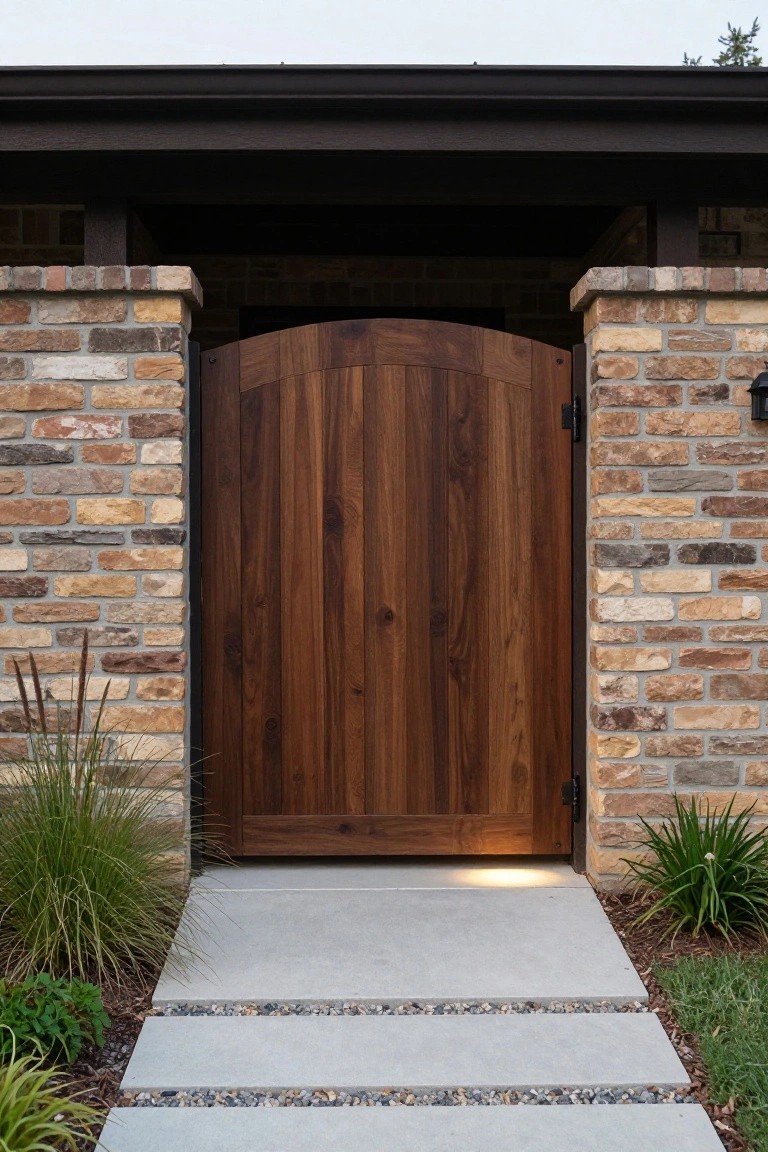
An arched wooden gate gives an entry a solid, grounded feel right away. The natural grain of the wood pairs well with stone or brick walls around it, and the curve on top softens what could otherwise feel too formal.
This style works best on homes that already have some traditional or craftsman details. It suits properties where you want the gate to stand out without needing extra ornamentation. Keep the hardware simple so the wood remains the focus.
Wooden Gates Built Into Stone Walls
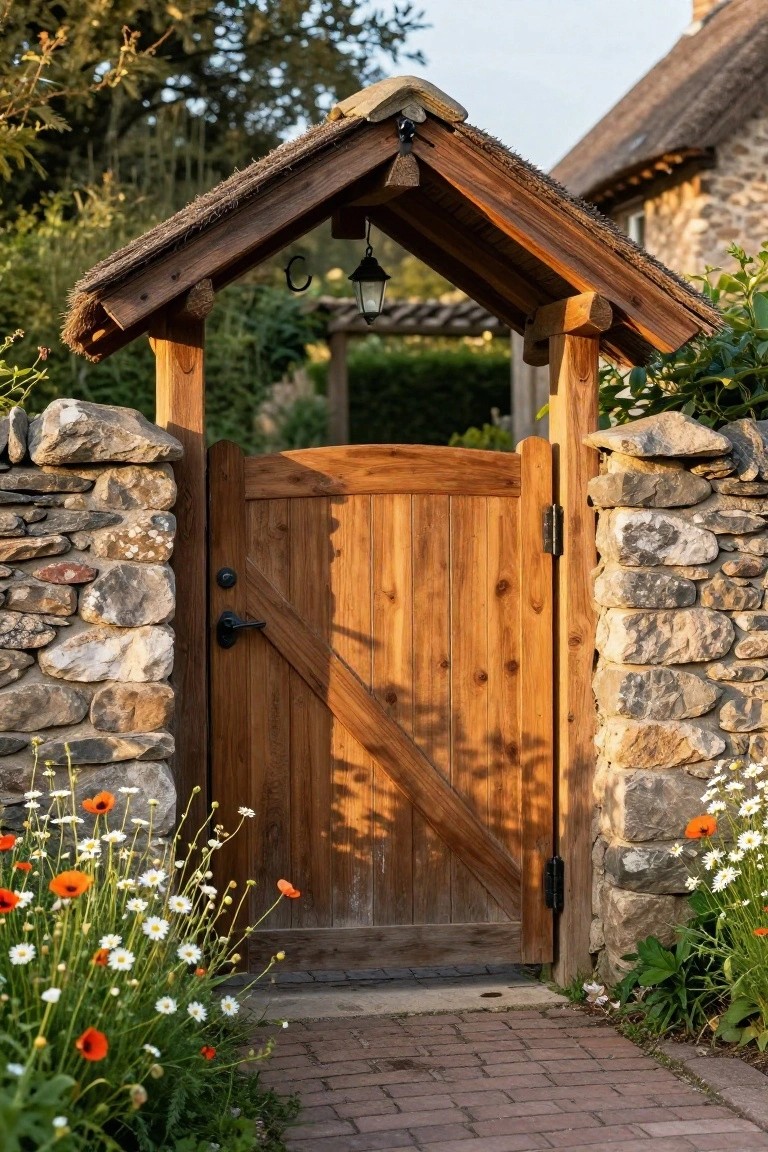
A wooden gate gains real presence when it sits between sections of stone wall. The mix of smooth planks and rough masonry creates a clear boundary without feeling heavy or formal.
This works especially well on older homes or properties with established gardens. Keep the surrounding plants low and loose so the gate itself remains easy to see and use.
Arched Gates With a Living Screen
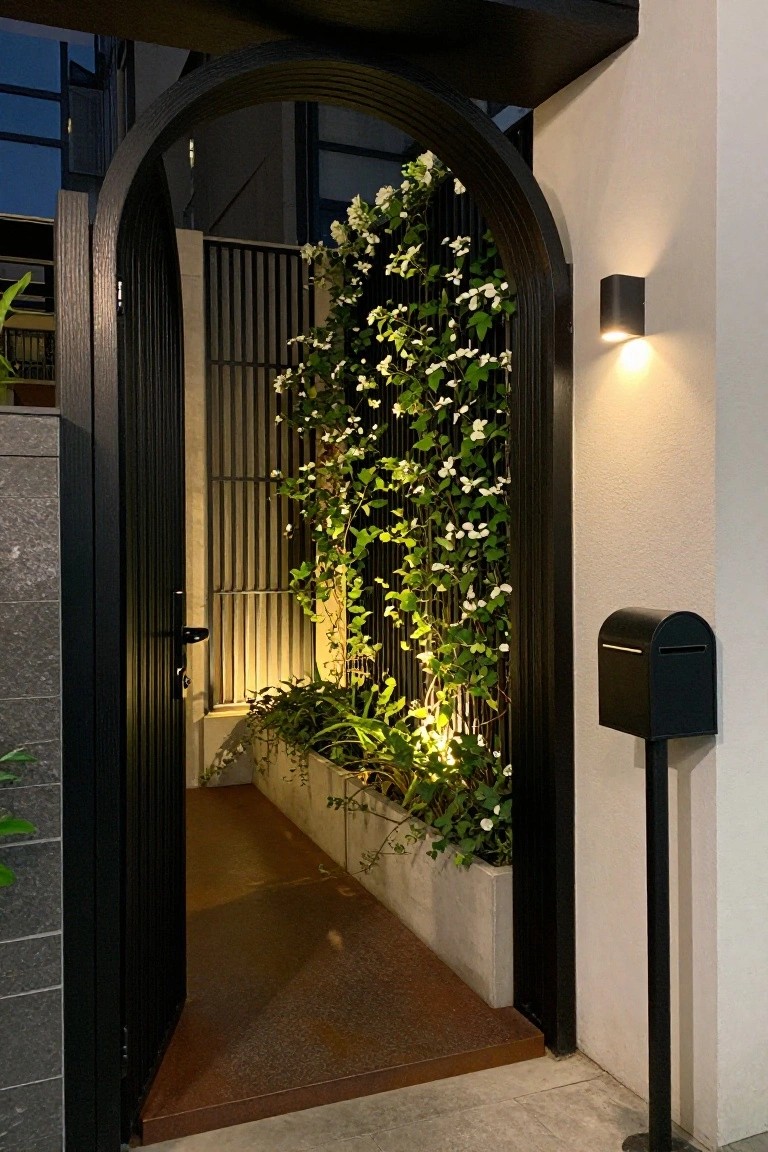
An arched wooden gate gains a lot of character when paired with a planted trellis right behind it. The vines add softness and depth without crowding the walkway, and the curve of the gate still stays the main focal point.
This approach works best on narrow side entries or modest front paths where you want greenery but have limited ground space. Use a simple vertical grid and pick climbers that handle partial shade if the gate faces away from direct sun.
Frequently Asked Questions
Q: How do I pick the right wood so my gate lasts through winter snow?
A: Cedar holds up well against moisture and rot. Start with that if snow piles up in your area. Treat it yearly with a good sealer to add extra protection.
Q: What simple fix stops a wooden gate from sagging after a year?
A: Add a diagonal brace from the bottom corner up to the top hinge side. Check the hinges too and tighten them if they loosen. This keeps the shape without much extra work.
Q: Can I add a latch that still works with the curved top?
A: Yes. Mount a standard thumb latch low on the straight section near the post. The curve stays clear and the gate still closes tight.
