

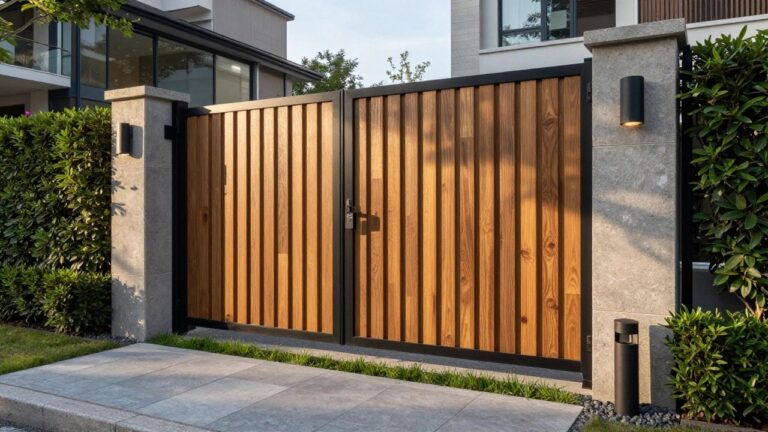
Approaching a house from the street makes it clear that the gate sets the first impression long before anyone reaches the front door.
Wood brings a warmth that can soften even the most formal facades when the style and finish align with the existing architecture.
Some gates end up looking out of place once installed.
I usually sketch a few ideas against photos of my own entryway to see which ones feel right in scale and material.
The details like hardware and how the wood weathers over time often decide whether the whole exterior reads as cohesive or not.
Vertical Wood Gates With Dark Frames
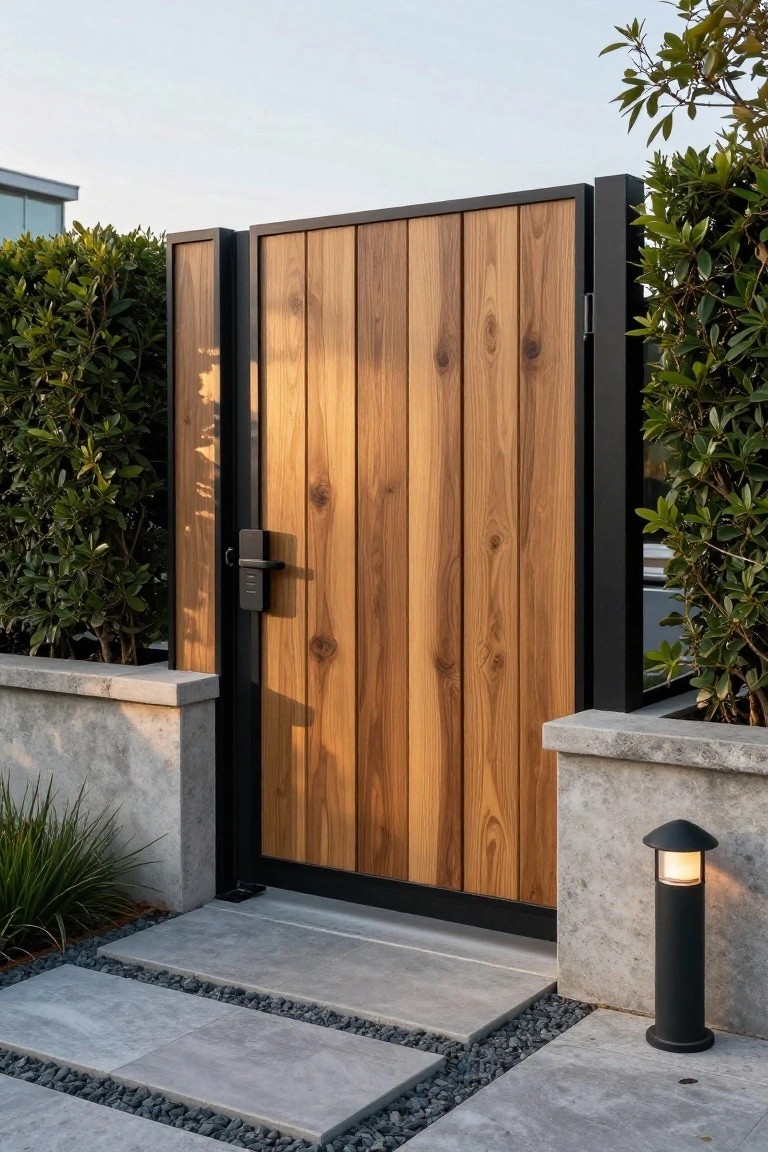
A gate made of vertical wood planks inside a dark metal frame stands out because it keeps things simple while adding real contrast. The wood brings warmth and texture, and the frame gives it structure and a modern edge that feels solid without being overly ornate.
This style works best on homes with clean lines and materials like concrete or stone around the entry. Keep the hardware minimal and match the frame color to any nearby fencing or fixtures so the whole look stays consistent.
Solid Wood Gates With Stone Pillars
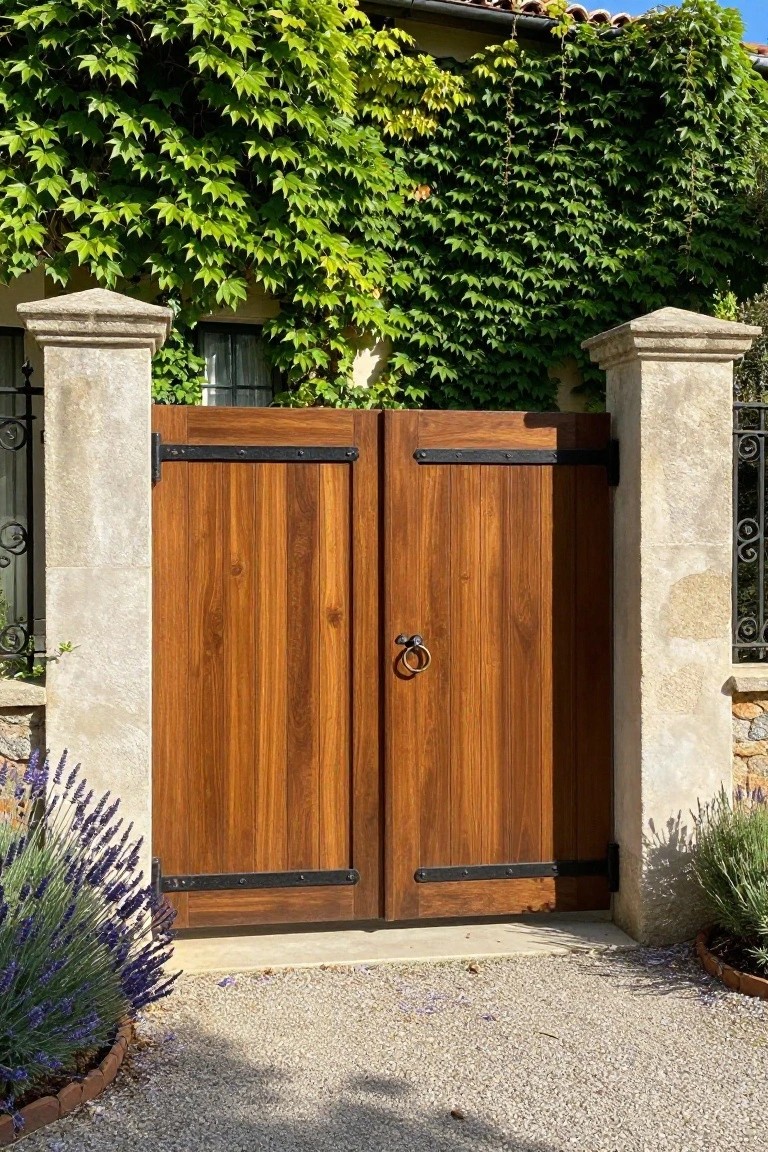
Many homes gain a stronger entry when the gates are made from solid wood rather than lighter or metal options. The wood brings warmth and weight that stone pillars alone can lack, and it holds up well against climbing plants and gravel driveways.
This setup works best on homes with a traditional or Mediterranean feel where the goal is privacy without a heavy fortress look. Choose a finish that ages evenly and keep the metal straps and hinges dark so they do not compete with the wood grain.
Carved Panels on Wooden Entry Gates
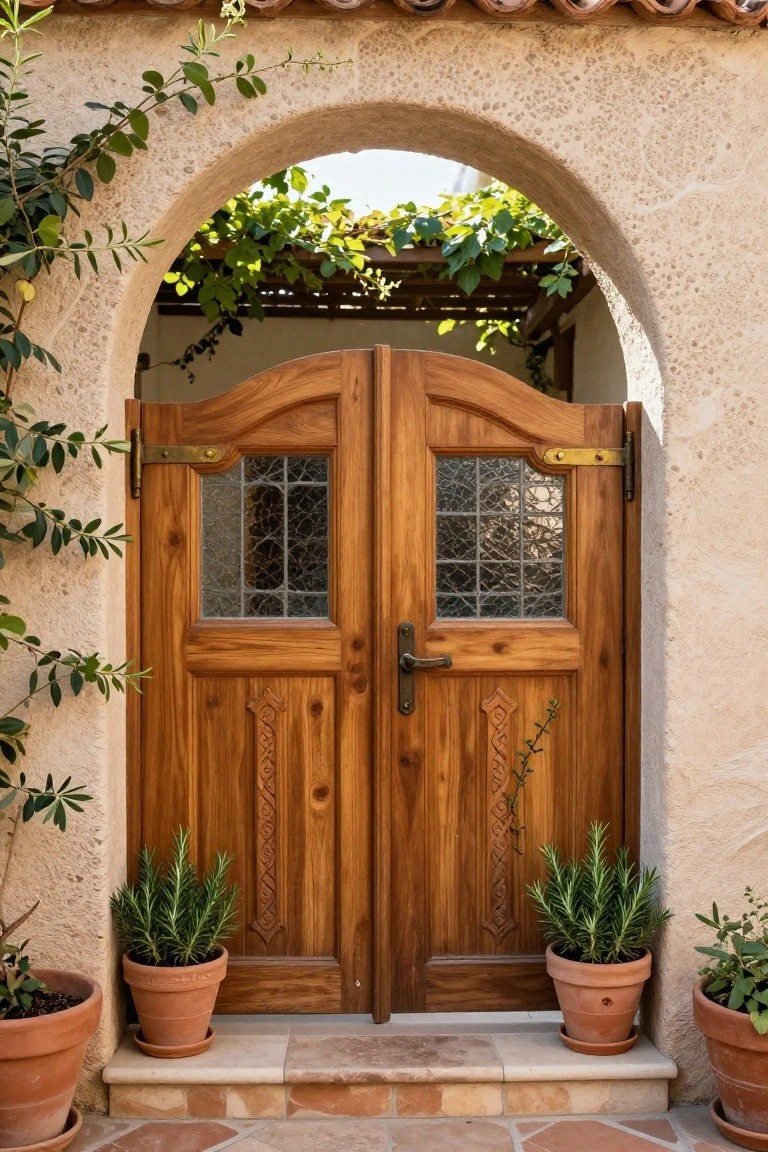
Carved details like the vertical panels on these wooden gates give an entry a custom touch that feels substantial but not fussy. The carving adds texture and breaks up the flat surface of the wood, so the gates look more interesting up close and from a distance.
This approach works especially well on stucco homes or any exterior with simple wall surfaces. Keep the carving restrained and centered, and pair it with plain hardware so the detail reads as thoughtful rather than busy.
Wooden Gates Between Stone Pillars
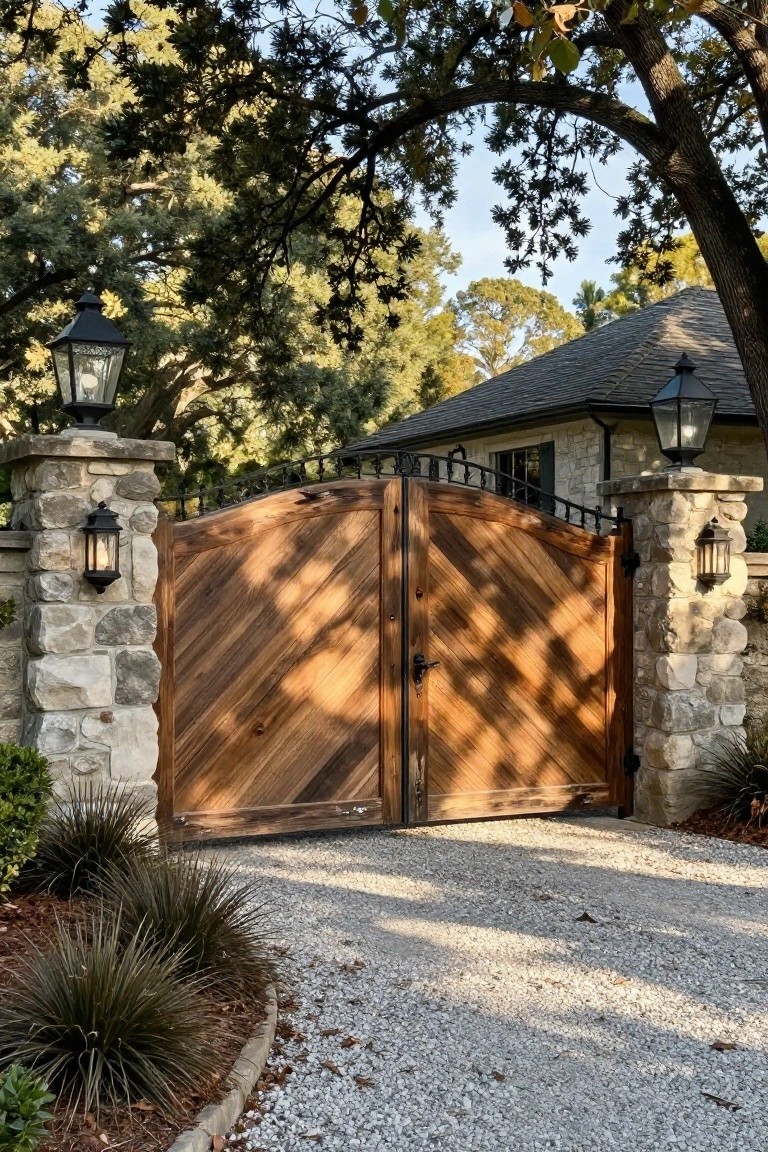
A wooden gate like this one gives the entrance real presence without trying too hard. The solid wood and simple diagonal pattern feel sturdy and welcoming at the same time, while the stone pillars on either side keep the whole thing grounded. It works especially well when the driveway is long or the house sits back from the road.
This approach suits homes with natural materials already in the exterior. Keep the wood finish fairly natural so it ages well, and make sure the gate is wide enough for cars to pass through comfortably. Lanterns on the pillars add a bit of light at night but are not required if the budget is tight.
Matching The Gate Wood To The House Siding
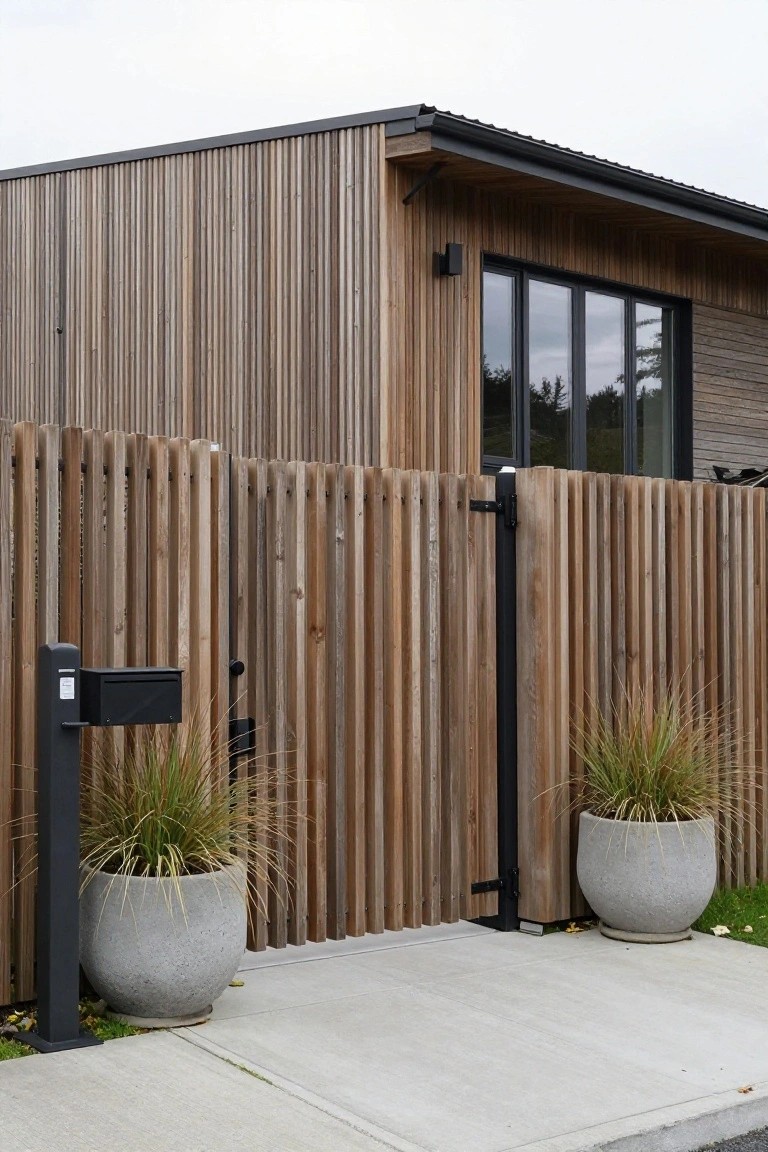
One simple way to make an entry feel more finished is to run the same vertical wood slats on the gate and fence that cover the house walls. The match keeps the whole front from looking like separate pieces added over time.
This approach suits homes with clean modern lines and works best when the wood tone stays consistent and the metal hardware stays dark and thin. It avoids the need for extra trim or color changes that can break up the look.
Wooden Gates With a Simple Hanging Accent
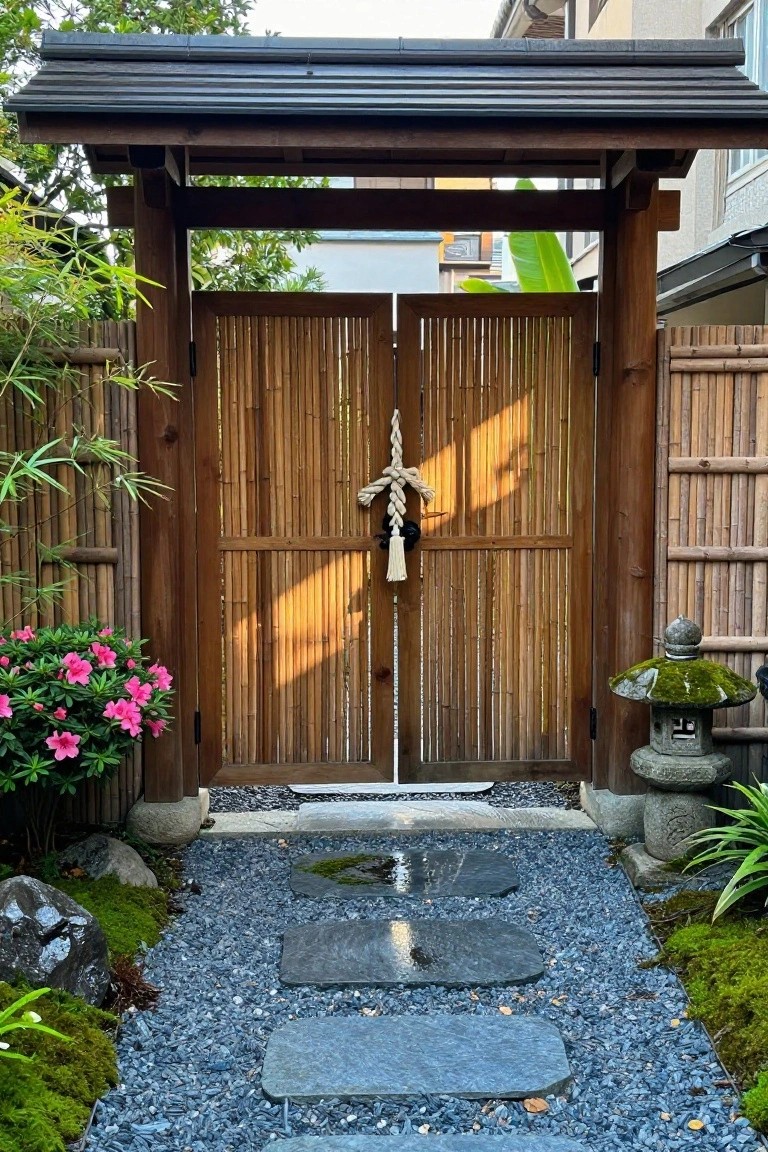
A wooden gate like this one works well because it stays understated while still feeling finished. The vertical slats keep the look clean, and the knotted rope detail adds just enough interest without drawing attention away from the wood itself. Many people like this approach because it suits homes that already use natural materials in the yard.
This style fits best on properties with gravel paths or stepping stones, where the gate can act as a quiet transition point rather than a big statement. Keep the hardware dark and minimal so the wood remains the main focus. Avoid adding too many extra ornaments, since the strength of the look comes from restraint.
Wooden Gates That Complement Stone Pillars
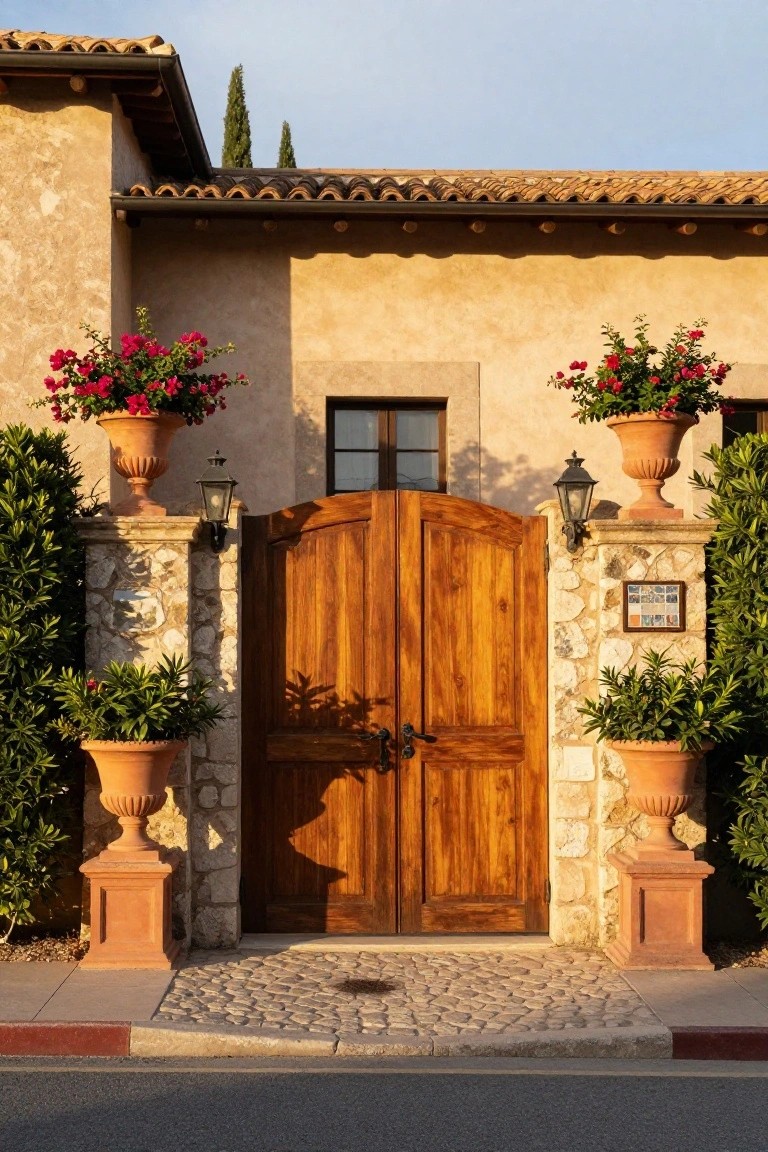
A wooden gate brings a natural warmth to an entry built with stone pillars. The grain and color of the wood stand out nicely against the rough stone and stucco walls, making the whole front feel more welcoming without any extra decoration.
This approach works best on homes with Mediterranean or Spanish styling. Keep the gate simple in design and let the material do the work, and make sure the wood tone sits close to the color of the surrounding hardscape so nothing feels mismatched.
Mixing Wood And Metal On Entry Gates
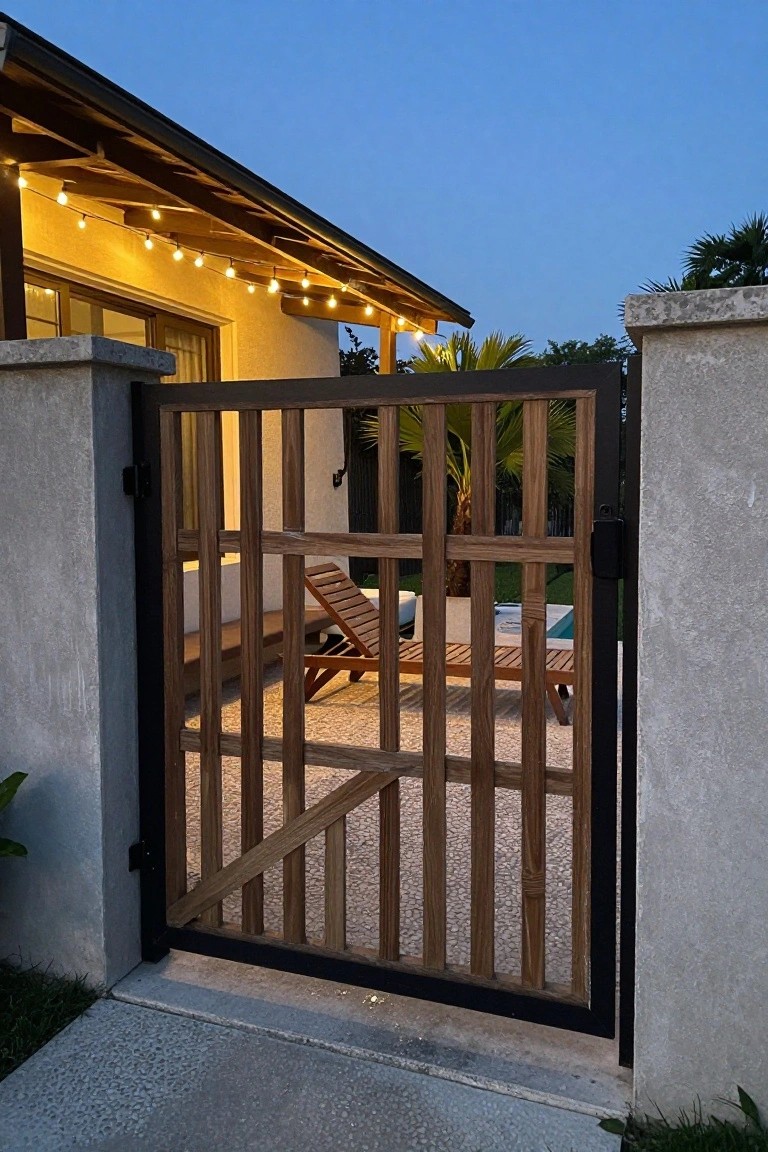
A gate made of vertical wood slats set inside a dark metal frame gives an entry a clean, finished look without blocking the view completely. The contrast between the warm wood and the sharp black frame keeps the design simple but still feels substantial next to stucco walls and concrete posts.
This approach works best on homes that already use both materials elsewhere on the exterior. Keep the wood tone natural and let the frame do the work of making the gate feel modern. Avoid adding too many extra details like heavy hardware or ornate tops, since the mix itself is what holds the attention.
Vertical Wood Slats on a Front Gate
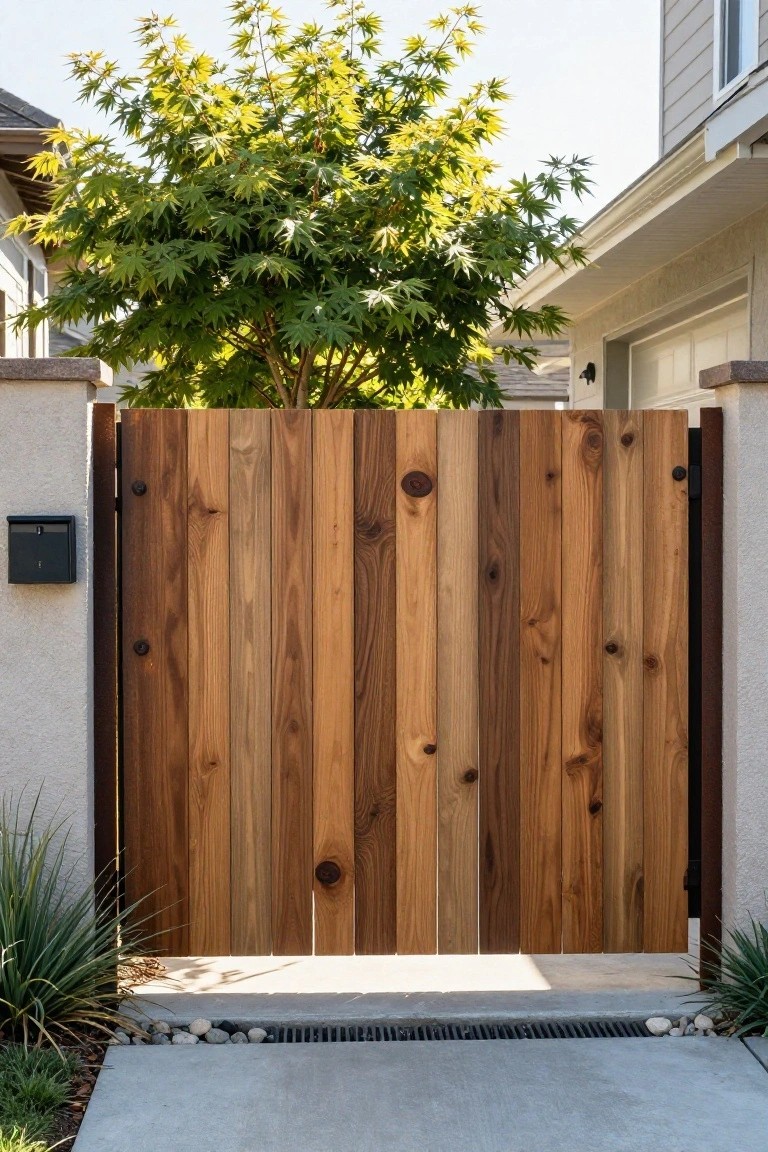
Vertical wood slats give a gate a straightforward, textured surface that feels solid without looking heavy. The mix of wood tones adds some natural variation that keeps the whole thing from feeling flat or too uniform.
This style works best on homes that already use wood or stone on the exterior. It pairs well with simple landscaping and can suit both modern and traditional houses as long as the gate stays in proportion to the opening.
Vertical Wood Gates For Modern Entries
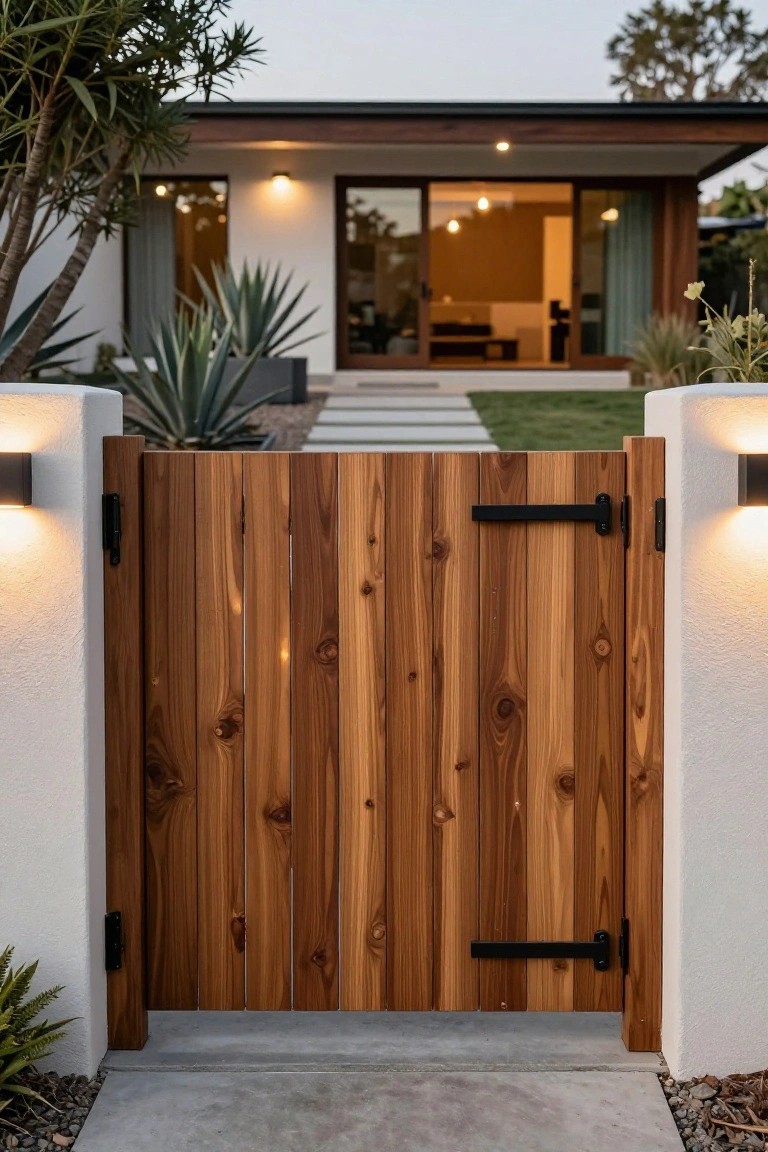
A gate built from vertical wood planks gives a modern home a natural touch without breaking up the clean lines of the facade. The simple board pattern adds texture and warmth while keeping the overall look straightforward and balanced.
This approach works best on homes with light walls and dark hardware details. It creates a clear boundary at the front without feeling heavy or ornate, and it pairs easily with basic lighting on the entry posts.
Dark Wood Gates With Simple Carvings
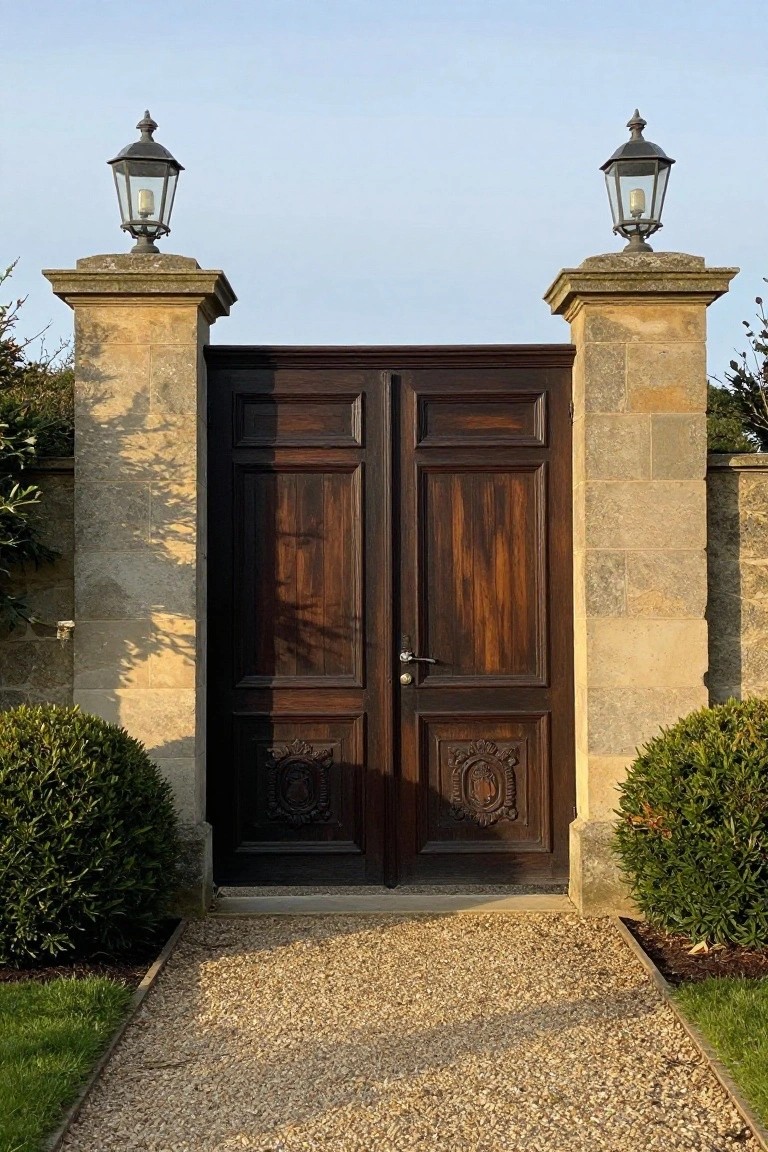
A pair of dark stained wooden gates can give an entrance real presence without needing extra decoration. The carved panels near the bottom add just enough detail to make the gates feel custom while the solid wood keeps the look substantial and lasting.
This approach works best on homes with stone or brick walls where the dark wood creates contrast. Match the stain to nearby trim or doors so the gates feel like part of the same house rather than a separate feature.
Horizontal Slat Gates For a Clean Entry
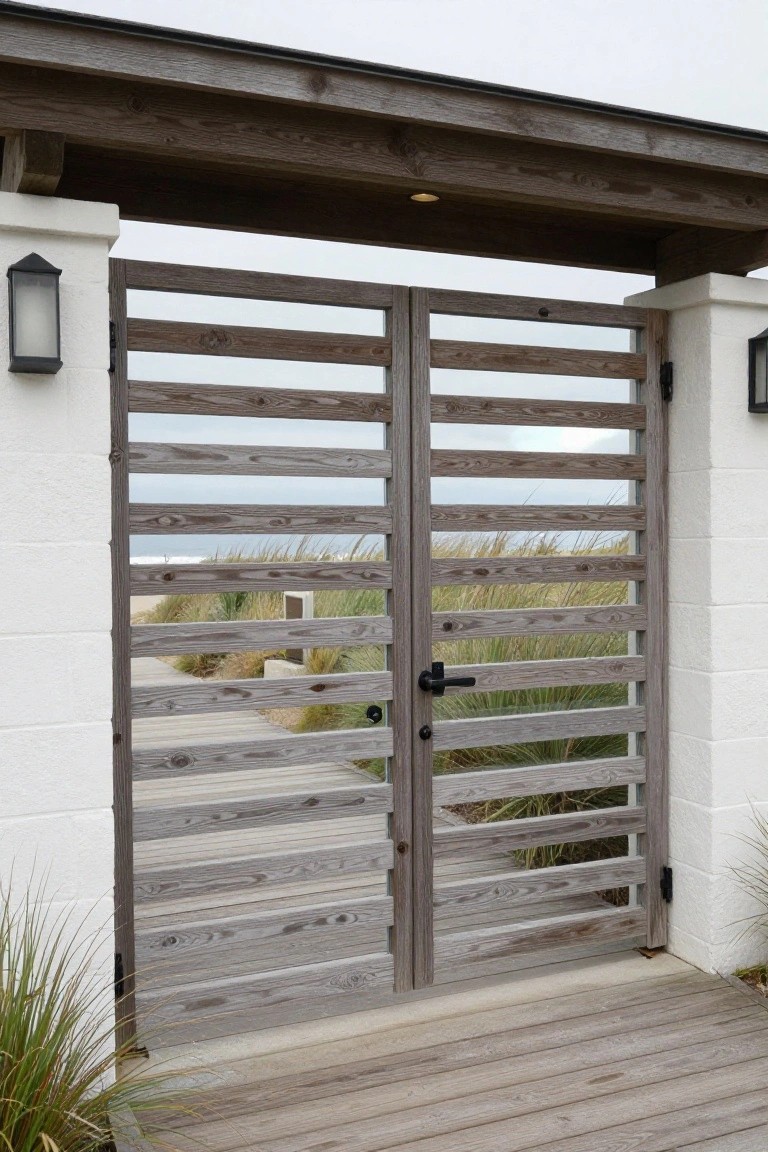
Horizontal slats on a wooden gate give the whole entrance a lighter, more modern look. They break up the solid feel of a traditional gate while still providing clear boundaries and some privacy.
This approach works especially well on homes near the coast or in contemporary styles where you want the gate to feel open rather than heavy. Keep the hardware simple and dark so it does not compete with the wood lines.
Black Frames On Wood Gates
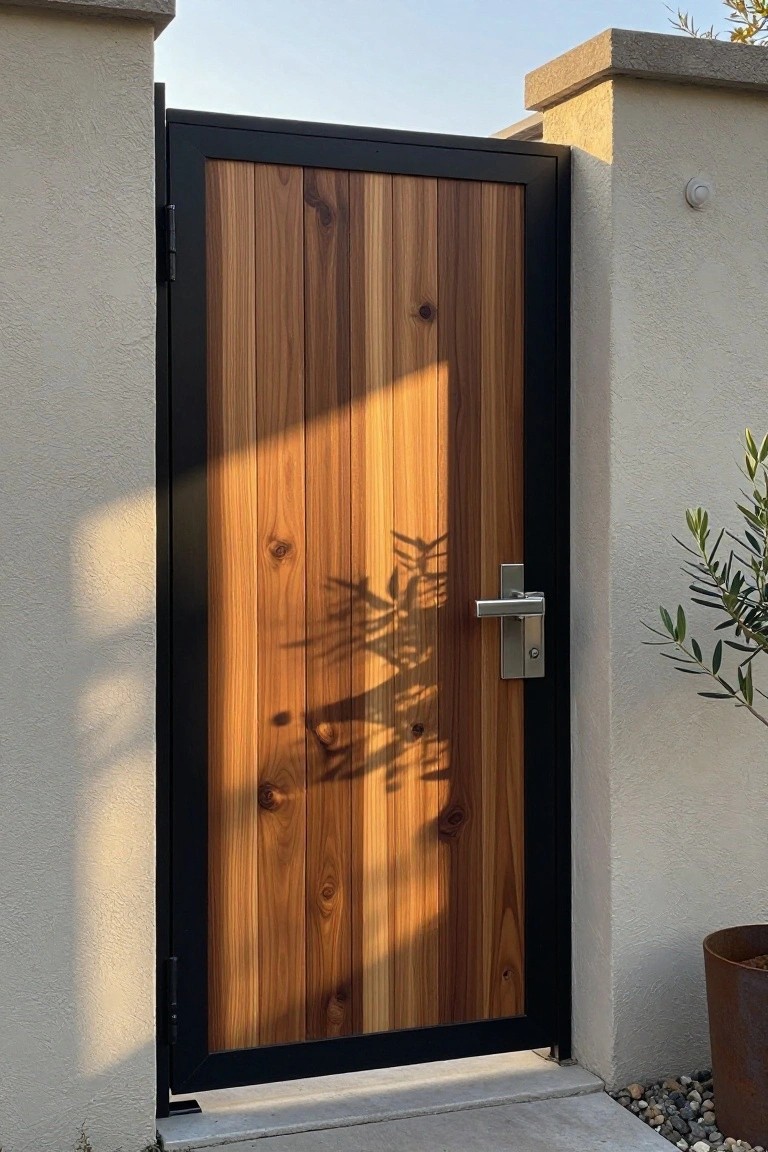
A black metal frame around vertical wood planks gives a gate a clean outline that still feels warm and natural. The dark border keeps the wood from looking too plain while adding a bit of structure that holds up well outdoors.
This style works best on homes with simple walls like stucco or concrete. Use it at a side entry or main gate where you want a modern touch without going fully metal. Keep the handle and hinges minimal so the frame and wood do the work.
Frequently Asked Questions
Q: How do I keep the wood from fading after a couple of seasons? A: Apply a UV-protectant oil every spring and wipe off the excess after it soaks in. This keeps the color rich without much extra work. Focus on the top edges where sun hits hardest.
Q: What if my yard slopes and a standard gate won’t sit flat? A: Build the frame first and trim the bottom to match the angle on site. Hinge it high enough so it clears the ground at the lowest point. That simple cut keeps everything level and swinging smooth.
Q: Will a tall wooden gate block noise from the street? A: Solid boards with tight seams cut down a fair amount of sound. Add a rubber seal along the frame edges if the road stays busy. The thicker the wood the better the result.
