

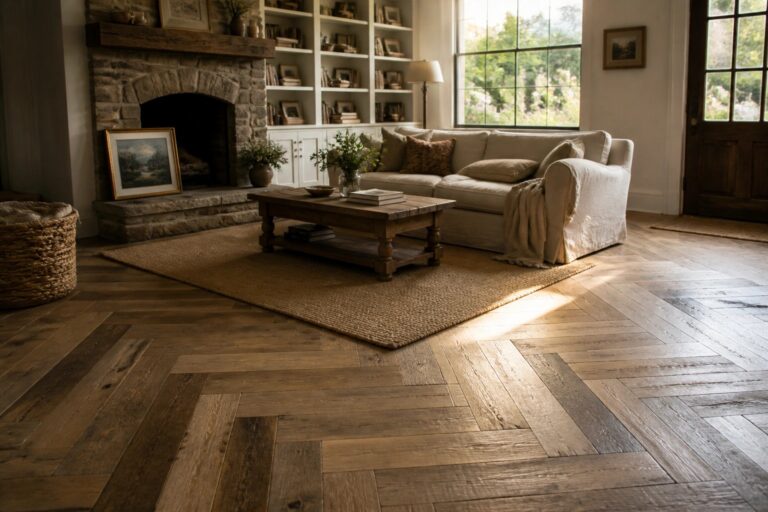
I have seen how the floor choice can shift the whole feel of a renovated room, especially when older wood brings warmth that newer surfaces tend to miss.
In my own house the reclaimed boards only settled into place once I matched their tone to the natural light coming through the windows.
Furniture arrangement then matters too because certain grains show wear faster in high traffic paths.
Some details change everything.
Testing a few of these patterns first in a small area has helped me see which ones actually suit the way we move through the space day to day.
Reclaimed Wood Flooring in Herringbone
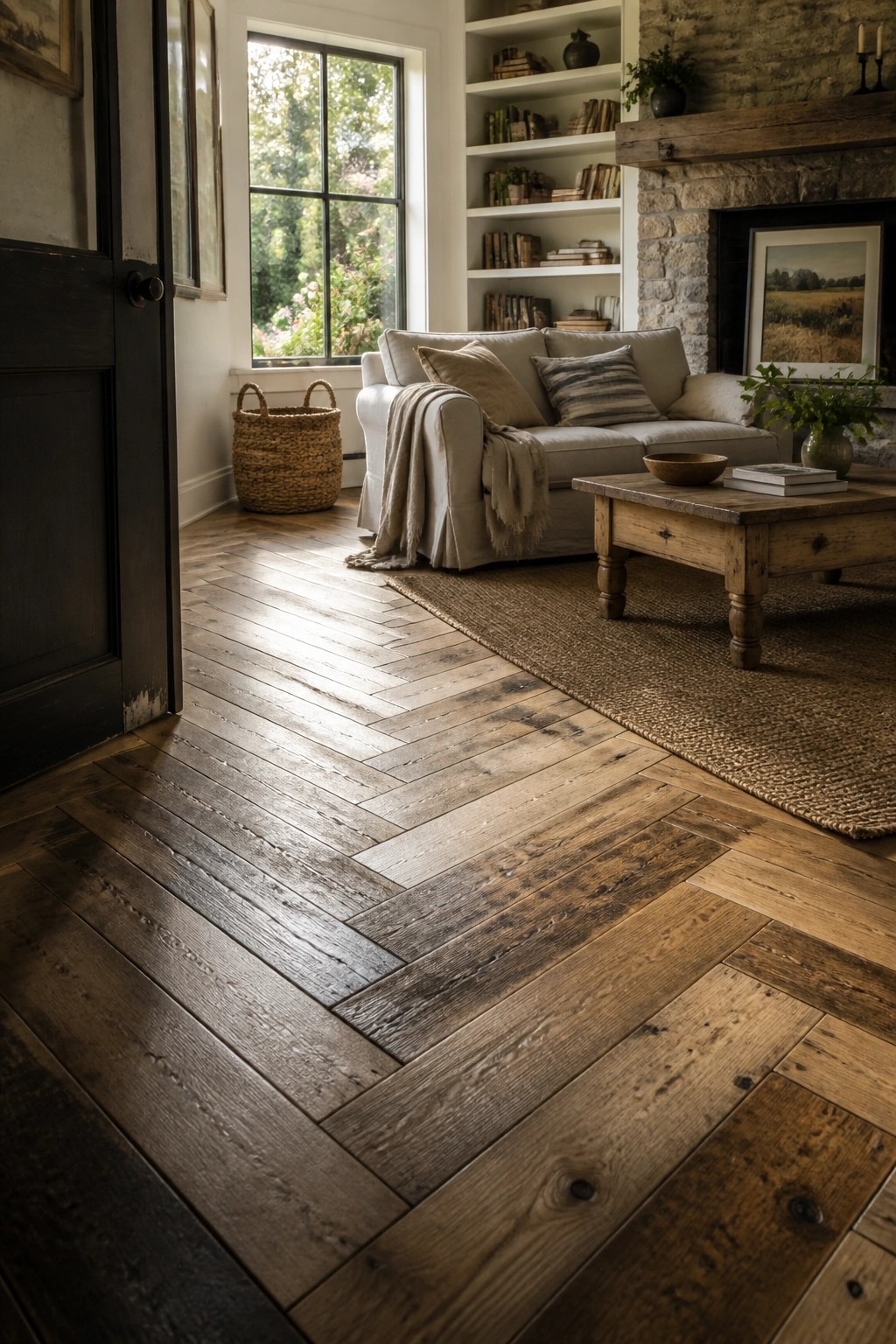
Reclaimed wood flooring stands out because it carries real age and texture that new wood cannot match. The herringbone layout turns the floor into the main feature while still letting the rest of the room feel calm and simple.
This approach works best in older homes or renovations where you want the floor to carry some history. It suits living rooms and family spaces that get steady use, as long as the boards are finished well enough to handle daily wear.
Reclaimed Wood Herringbone Kitchen Floors
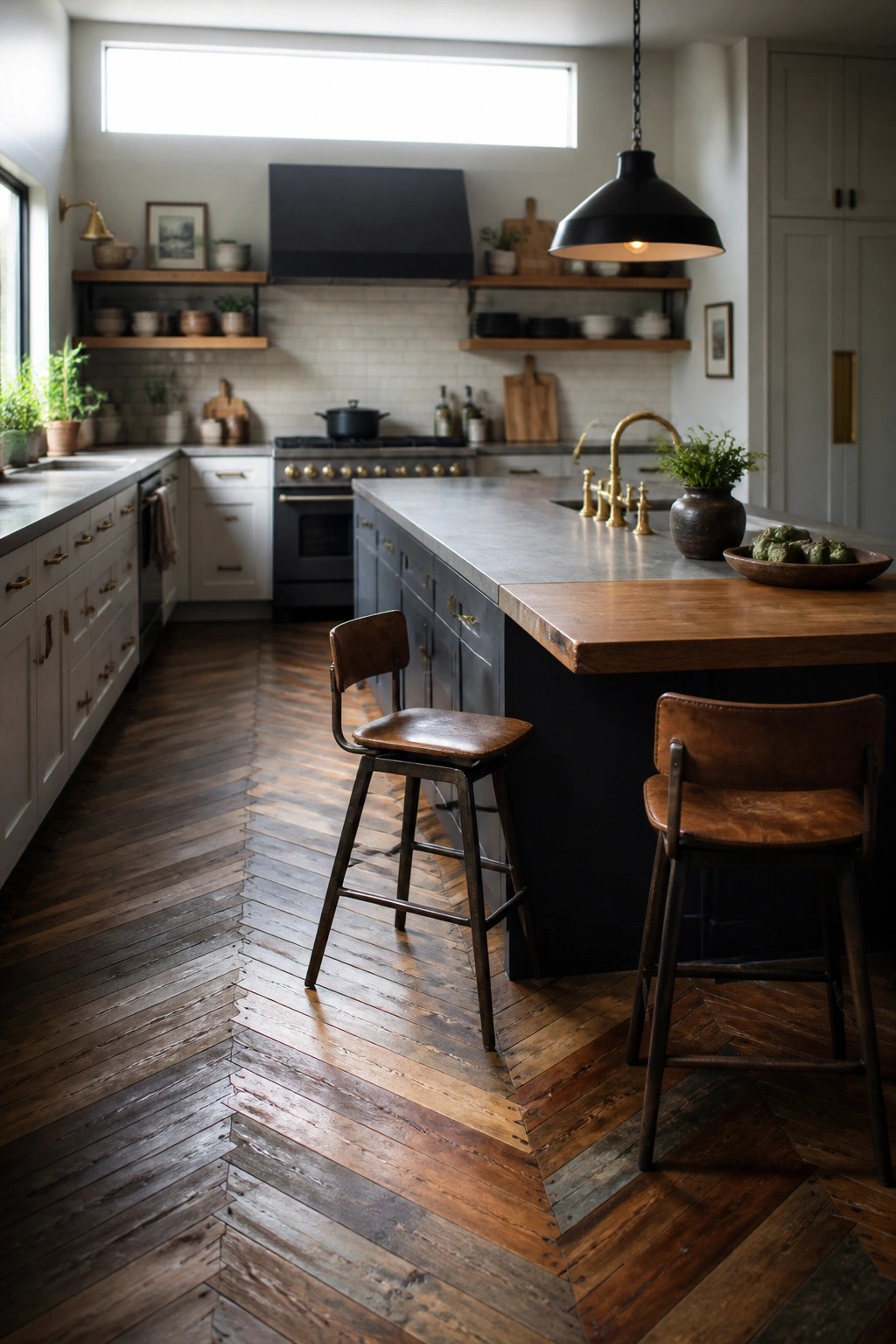
Reclaimed wood flooring in a herringbone pattern adds real character to a kitchen without much effort. The varied tones and old nail marks give the floor its own history, which helps balance out newer cabinets and clean lines.
This layout works best in homes that already lean toward natural materials. It suits both older houses getting updated and newer builds that need some warmth underfoot. Just check that the wood is finished well enough to handle spills and daily traffic.
Reclaimed Wood Flooring in Bedrooms
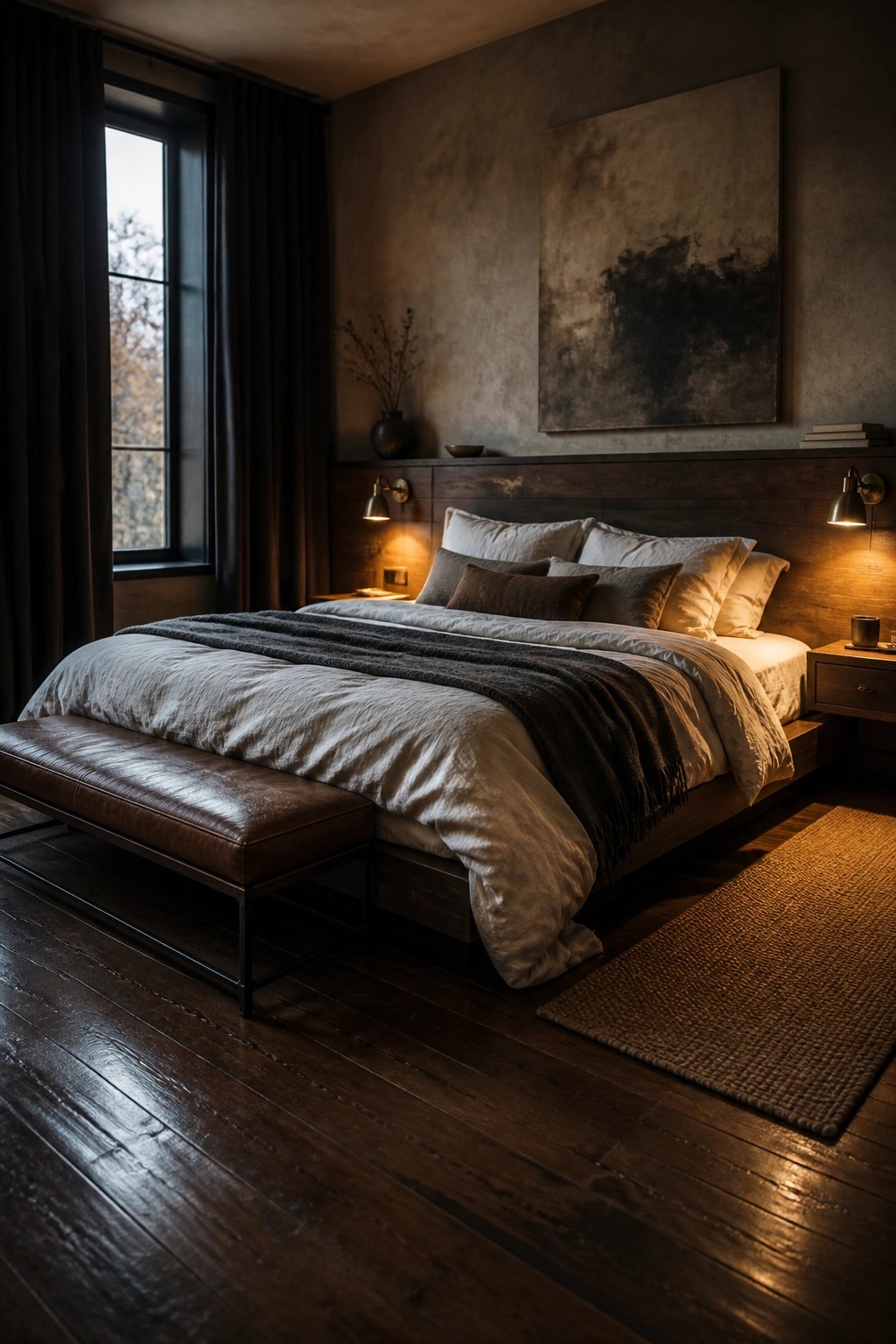
Reclaimed wood flooring brings a lot of character to a bedroom without much extra effort. The natural variations in color and grain give the room a settled, lived-in feel that new floors rarely match.
This works especially well in spaces that already use simple furniture and soft textiles. It suits homes that want a bit of history underfoot but still need something durable enough for daily use.
Reclaimed Wood Flooring For Casual Dining Rooms
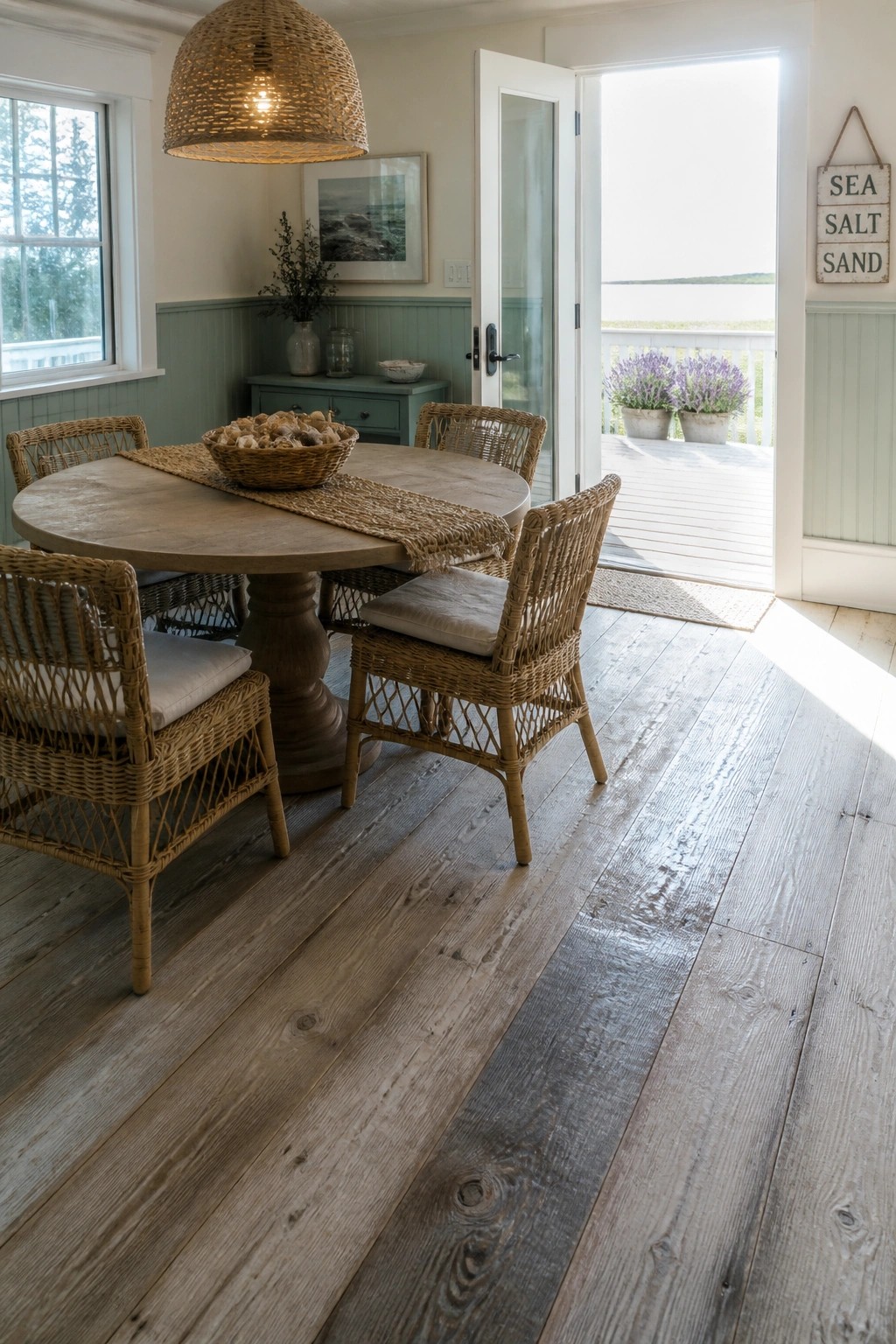
Reclaimed wood flooring gives a dining room an easy lived-in look that feels comfortable right away. The natural color variations and worn texture add character underfoot while staying practical for everyday meals and gatherings.
This choice suits homes that lean toward relaxed coastal or farmhouse styles. It pairs especially well with simple furniture and lots of natural light so the wood can show its age and grain without competing with other details.
Reclaimed Wood Flooring In A Nursery
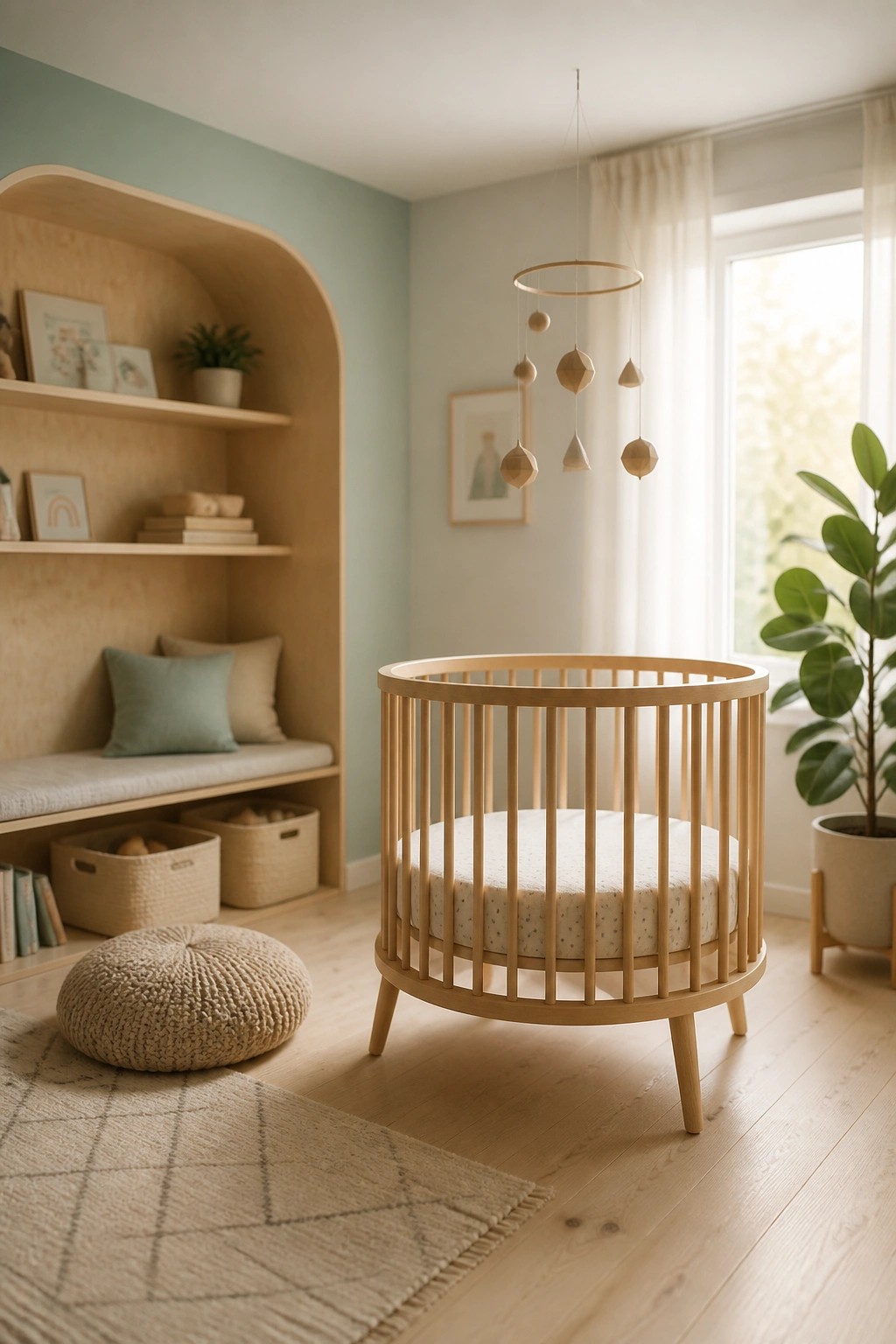
Reclaimed wood flooring gives a nursery a soft natural base that feels warmer than new wood or carpet. The light tone and visible grain keep the room calm while adding just enough texture underfoot.
It suits small homes or anyone who wants the floor to carry the character so walls and furniture can stay simple. A durable matte finish helps it hold up to spills and daily use without looking too worn.
Reclaimed Wood Flooring With Natural Color Variation
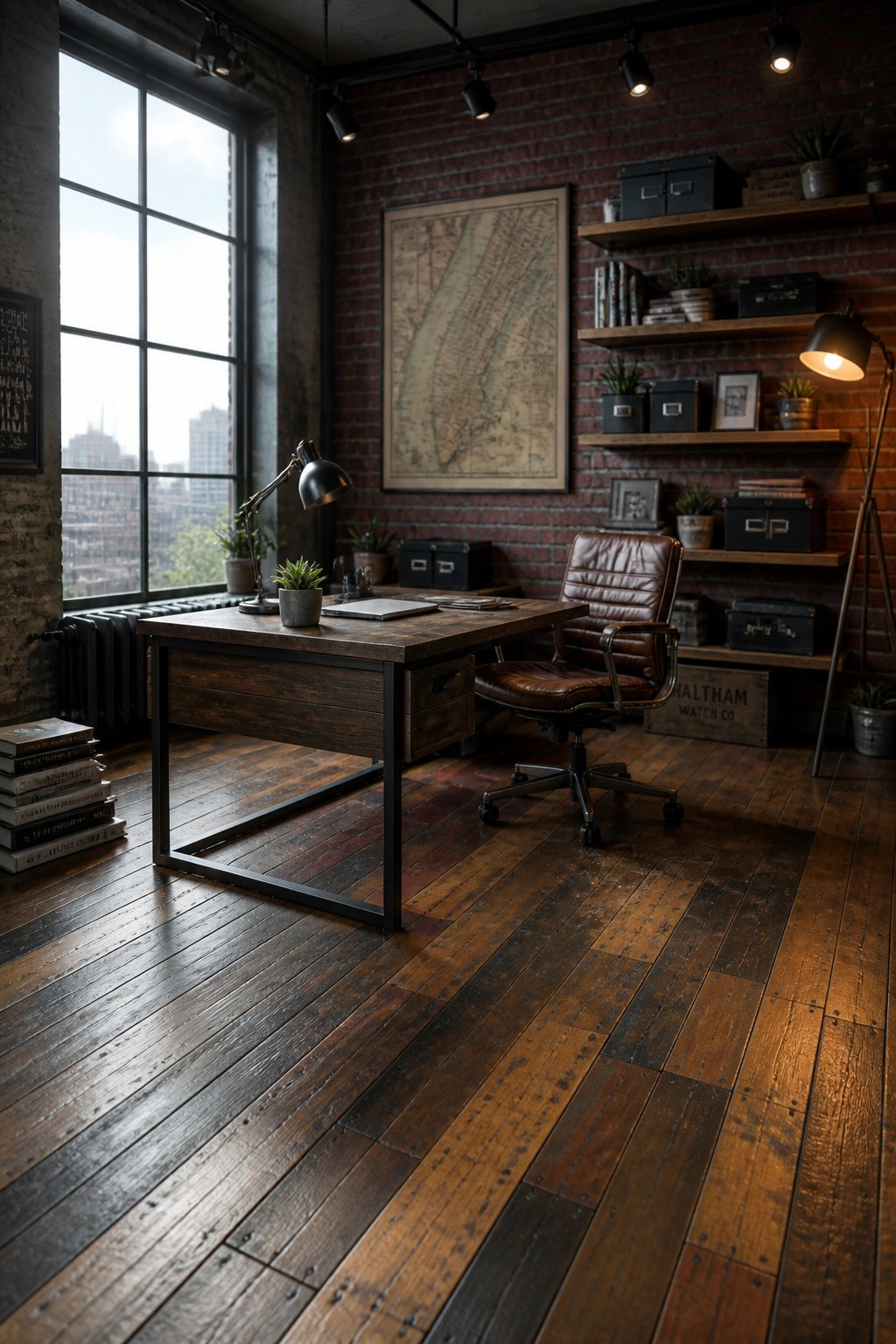
Reclaimed wood flooring stands out when the boards keep their mix of light and dark tones along with visible wear marks. That built-in variation gives the room a lived-in look that feels more interesting than a single solid color.
It works especially well in spaces that already have texture like brick walls or metal furniture. Just check that the finish protects against scratches if the area sees regular foot traffic.
Reclaimed Wood Flooring for Entry Areas
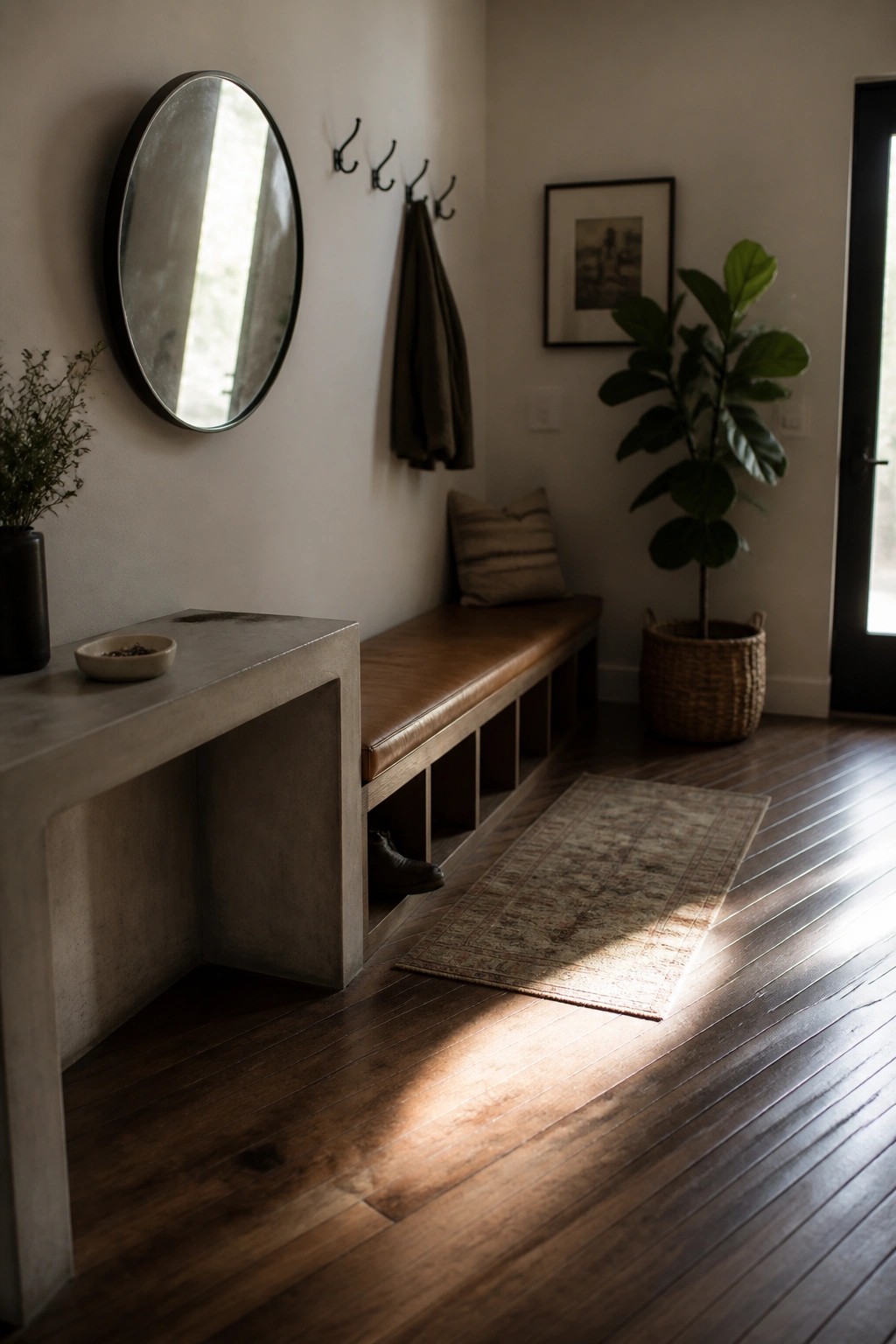
Reclaimed wood flooring stands out in entry spaces because the planks already carry marks and color shifts from their past use. Those details give the floor more presence than a uniform new material would.
This approach works best in homes that see steady foot traffic and need something durable yet welcoming. Keep surrounding pieces simple so the wood grain and tone stay visible.
Reclaimed Wood Flooring for Laundry Rooms
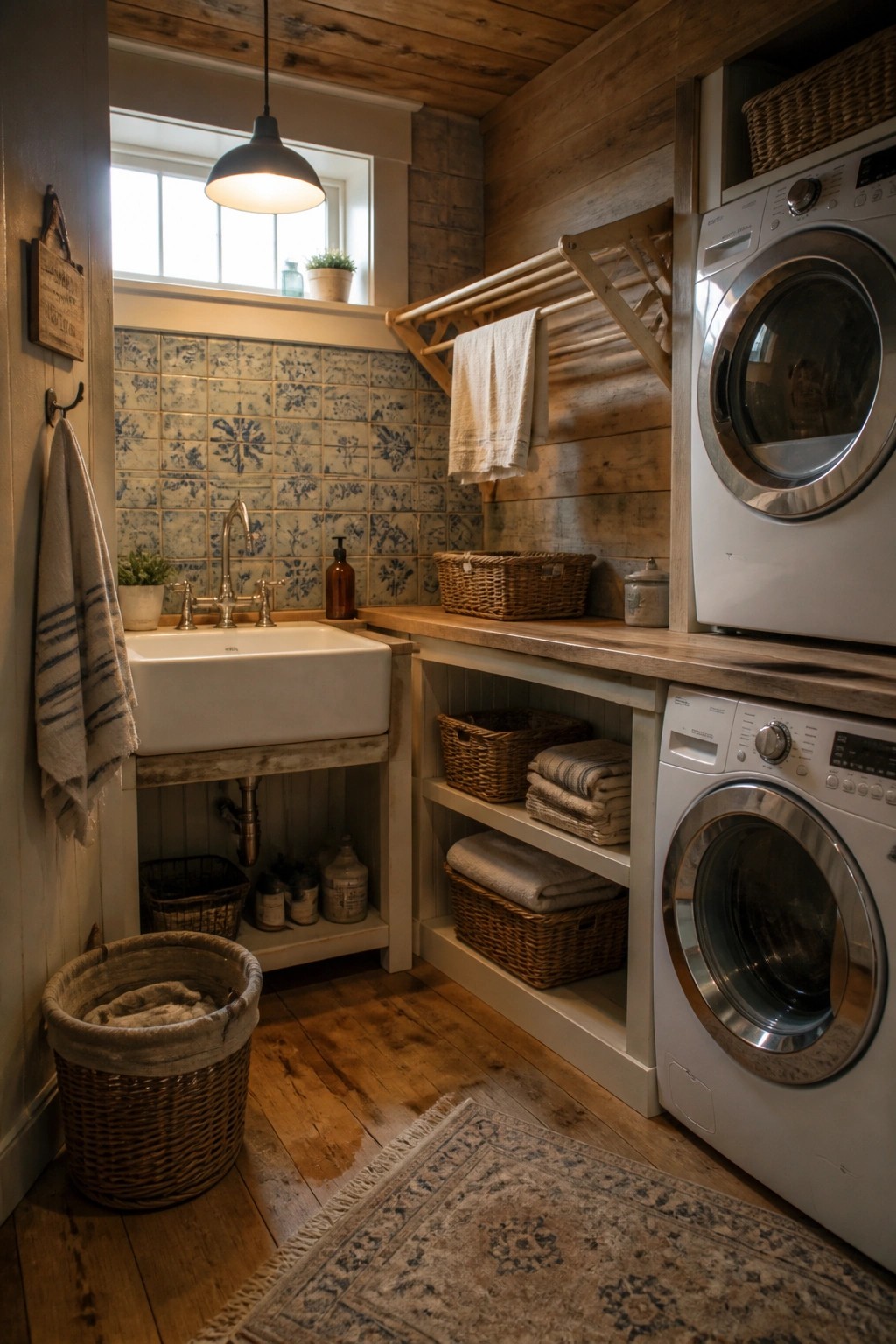
Reclaimed wood flooring brings a bit of warmth and character into laundry rooms that often feel cold and purely functional. The natural grain and slight wear give the space a lived-in look that makes the room feel more connected to the rest of the house.
This works especially well in older homes or farmhouse-style renovations where you want practical flooring that still has some personality. Just seal the wood well so it can handle occasional moisture and everyday use without issues.
Reclaimed Wood Flooring In Bathrooms
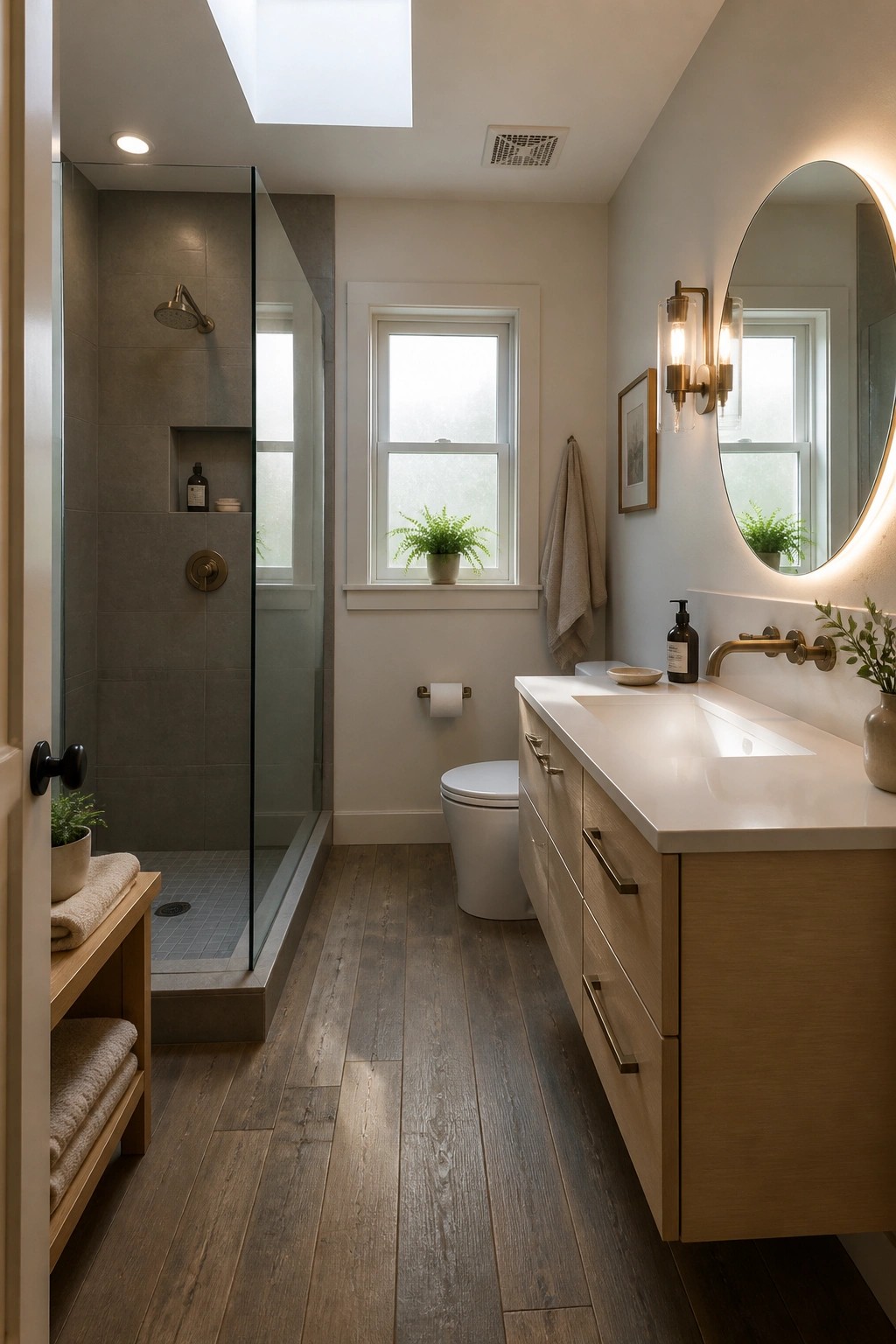
Reclaimed wood flooring brings a lot of character into a bathroom where most surfaces tend to be hard and cool. The natural grain and slight variations in tone make the room feel more grounded and lived-in right away.
This approach works especially well in smaller baths or those with simple white fixtures and cabinetry. The wood needs a good moisture seal and should be installed over a proper subfloor so it holds up to daily use without issues.
Reclaimed Wood Herringbone Dining Room Floors
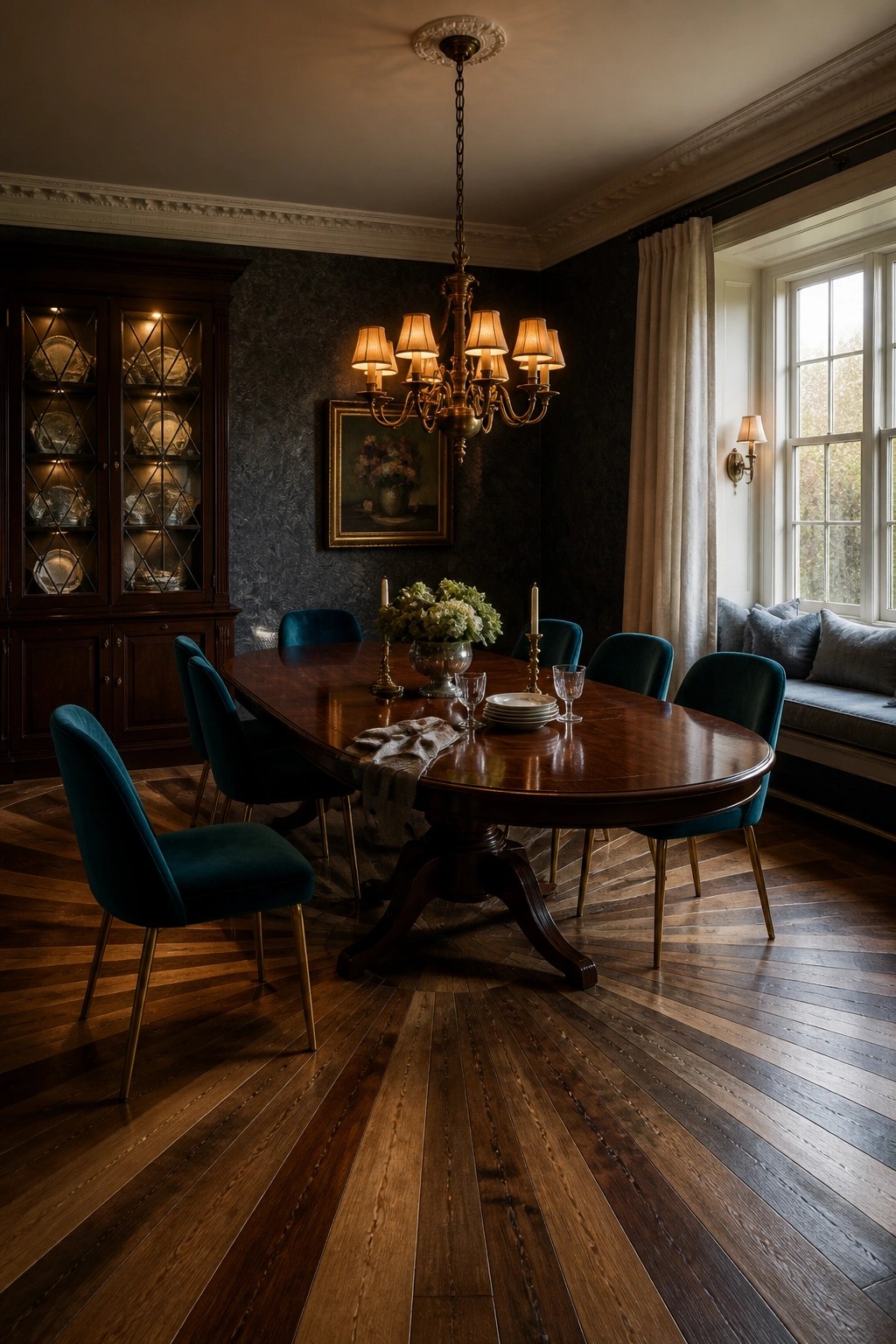
Reclaimed wood laid in a herringbone pattern gives a room real character right away. The mix of tones and visible grain keeps the floor from feeling flat even in a larger space.
This approach works best in dining rooms or other areas where the floor stays visible most of the time. It pairs well with older homes that already have some traditional trim or built-ins, though it can also add warmth to simpler renovations if the rest of the furnishings stay fairly calm.
Reclaimed Wood Floors Add Character In Renovations
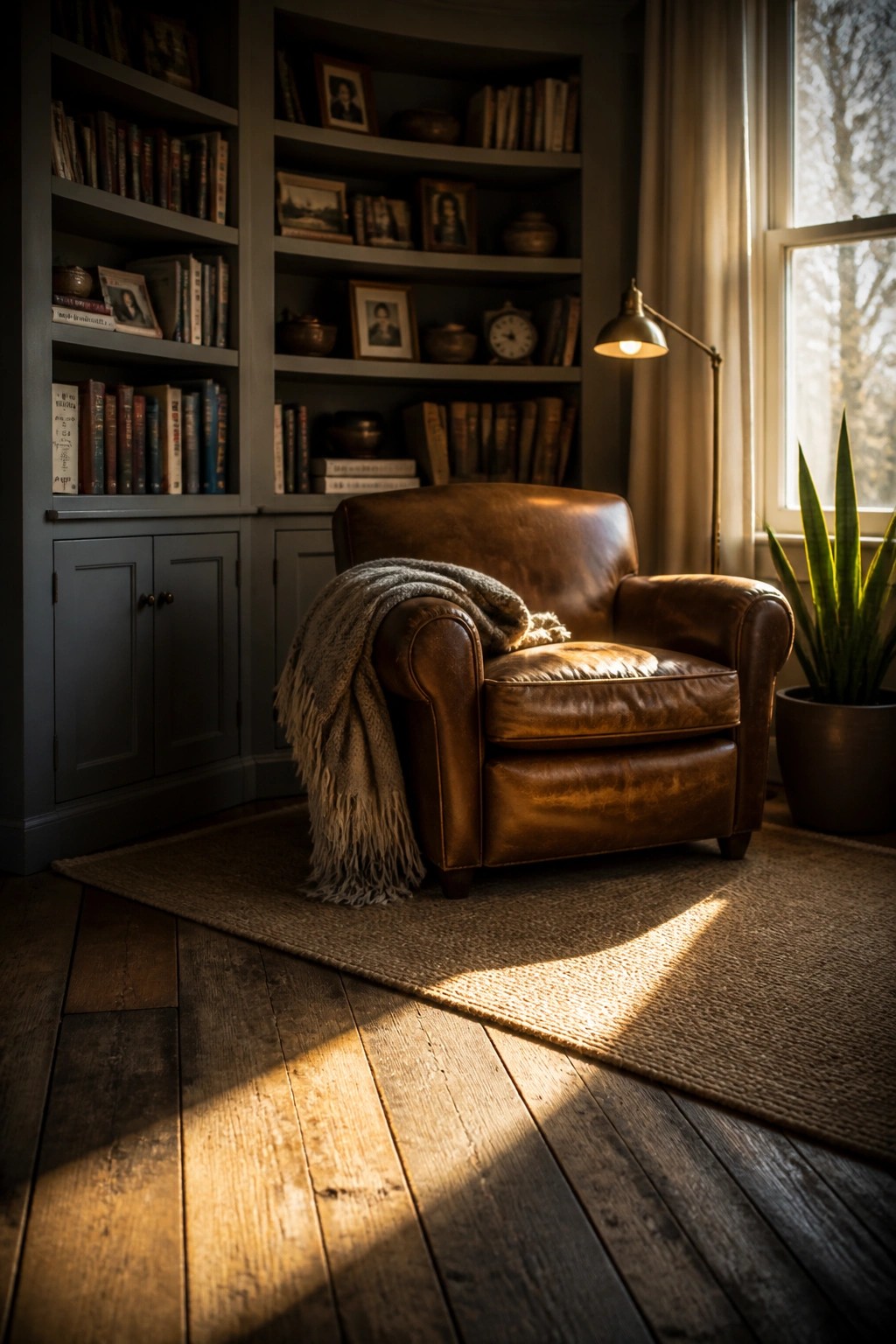
Reclaimed wood flooring gives a room instant history without much extra effort. The natural color shifts and worn edges make the space feel settled rather than brand new.
It works especially well in living areas where you already have solid furniture and a simple rug. Just keep the rest of the finishes calm so the floor stays the main feature.
Reclaimed Wood Flooring Across Open Spaces
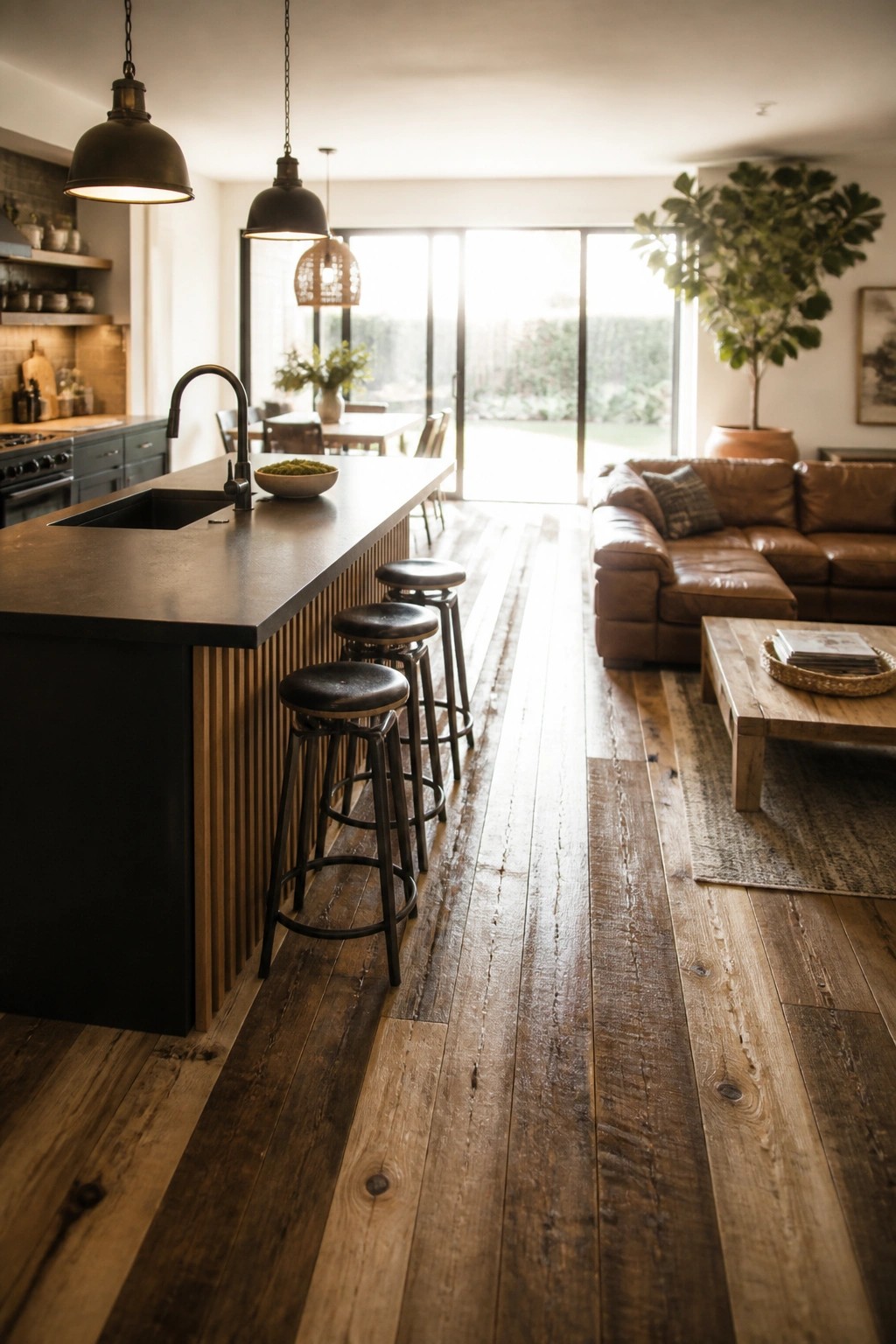
Reclaimed wood flooring stands out in homes where the kitchen and living areas share one big room. It gives the whole space a consistent surface that feels settled rather than brand new.
This choice works best in renovations that already have an open layout. The varied grain and color in the boards add character without needing extra trim or rugs to break things up. Just keep the rest of the finishes simple so the floor can do the work.
Reclaimed Wood Flooring In Hallways
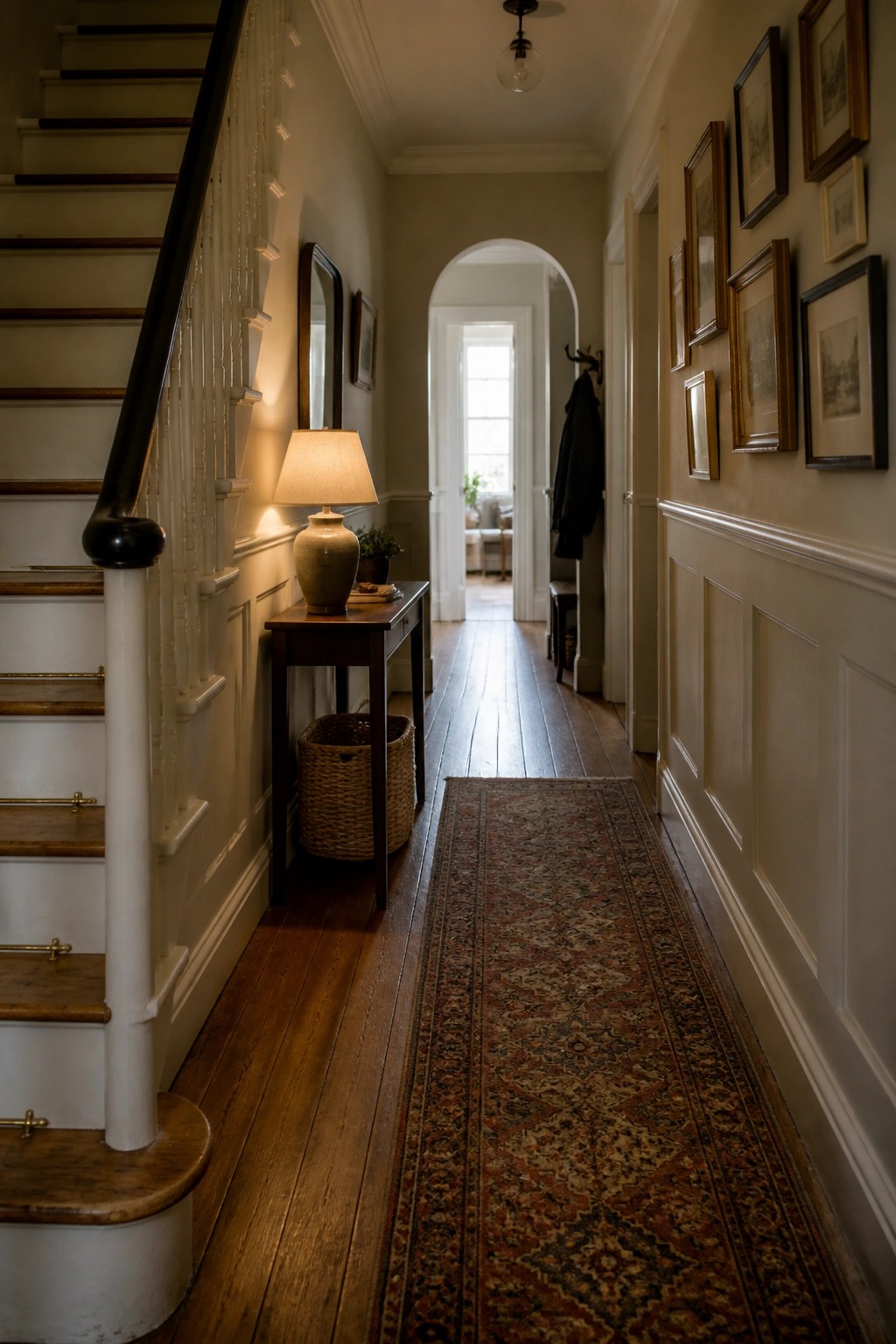
Reclaimed wood flooring brings a quiet kind of character to hallways, where there is usually not much room for other details. The worn grain and slight color shifts in the boards make the space feel warmer and more settled than a standard floor would.
This works best in older homes or renovations that already have some wood trim or simple wall details. Keep the rest of the finishes light so the floor stays the main feature, and choose a durable finish that can handle regular traffic.
Reclaimed Wood Flooring for Mudroom Entryways
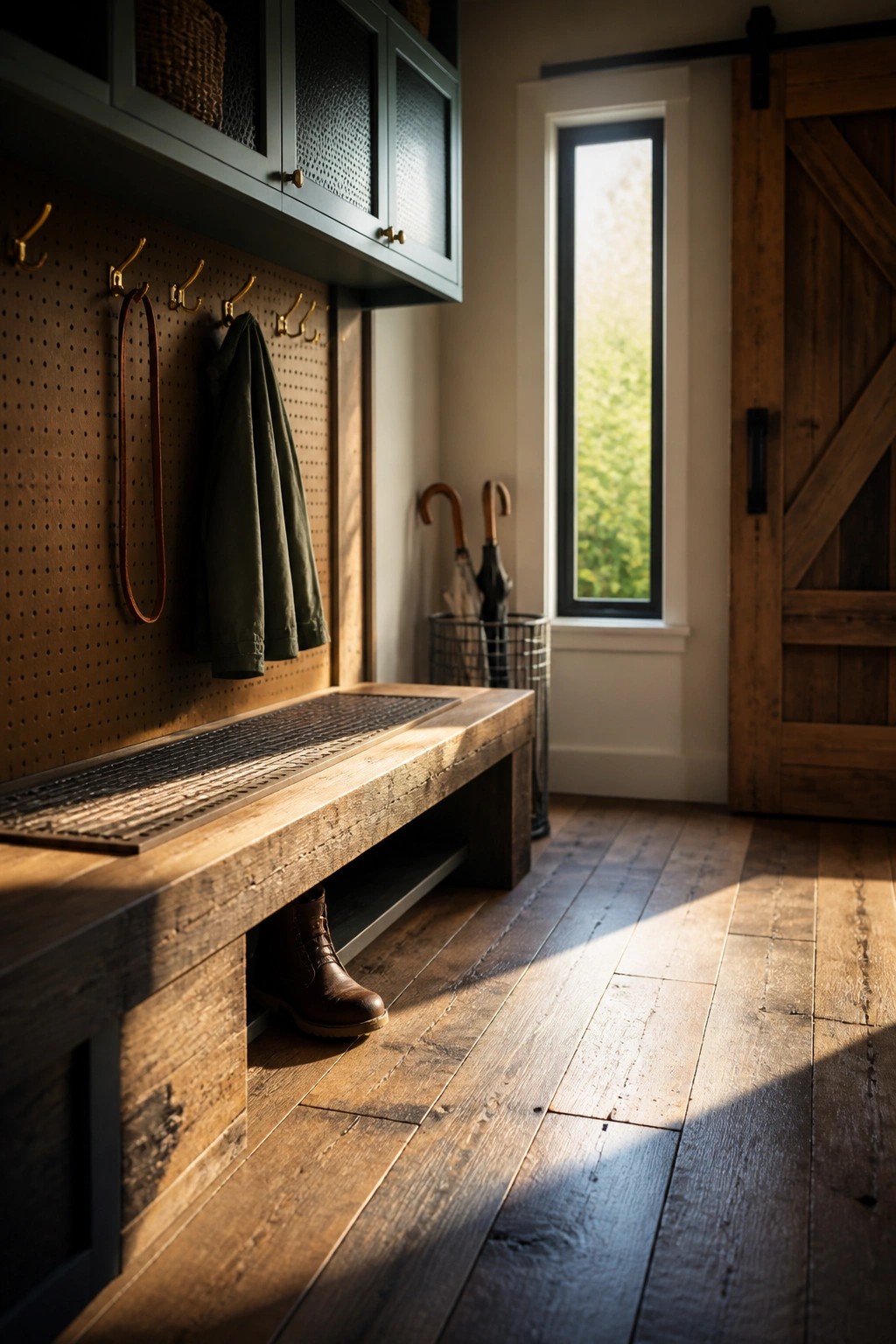
Reclaimed wood flooring brings a lot of character to an entry without needing much else around it. The boards handle boots, wet shoes, and constant traffic better than most people expect, and the natural variation in color and grain keeps the space from feeling plain.
This works especially well in homes that need a durable spot right by the door. Pair it with a simple bench for taking off shoes and keep the rest of the materials straightforward so the floor stays the focus.
Reclaimed Wood Flooring That Handles Play
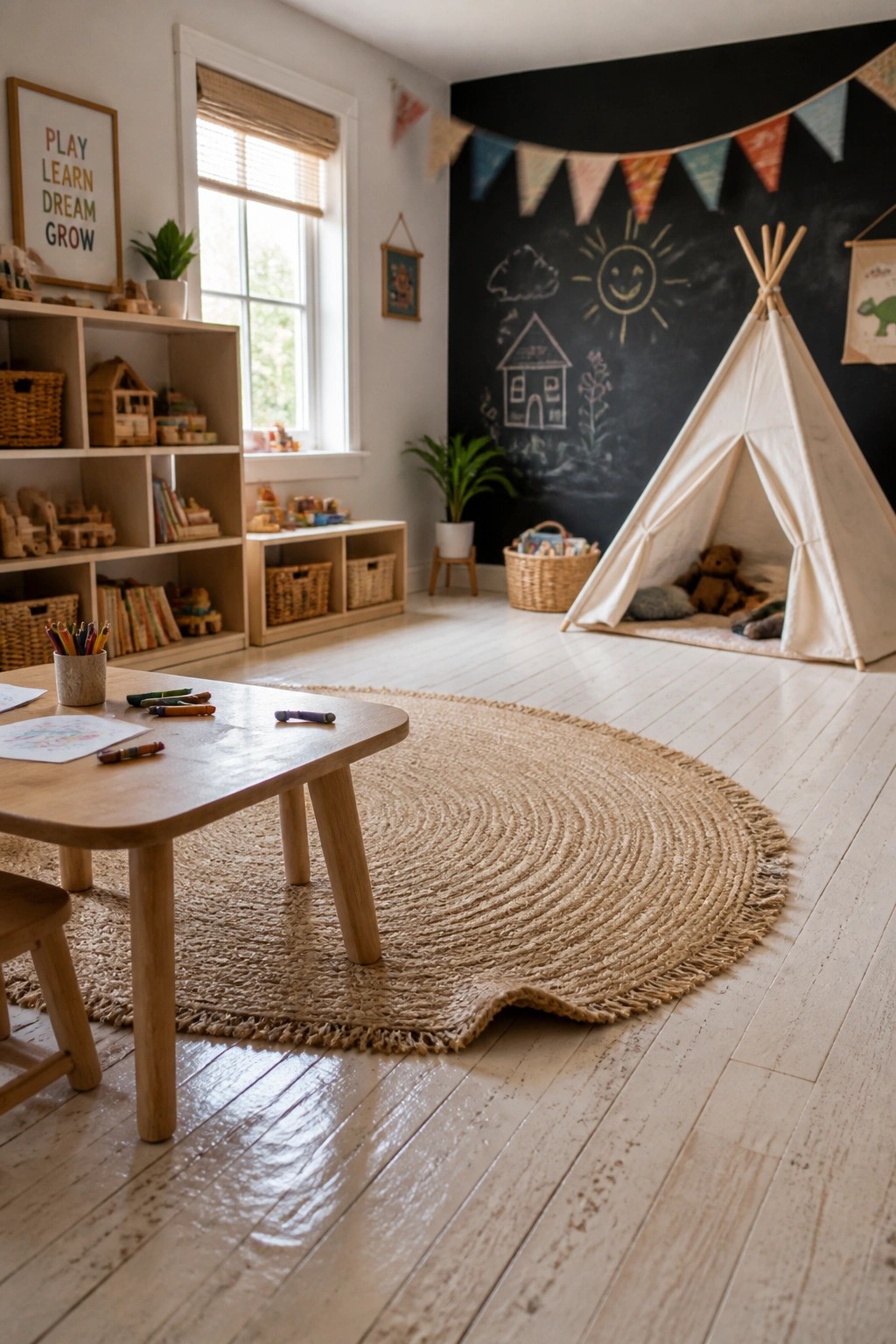
Reclaimed wood flooring brings a lot of character to rooms that get heavy use. The light, worn planks add warmth without feeling too precious, and they stand up well to the kind of traffic a play space sees every day.
This kind of flooring works best in homes with kids or pets where you want something that already looks lived in. Pair it with simple rugs that can be swapped out when they get stained, and keep the rest of the room light so the floor stays the main feature.
Rustic Reclaimed Wood Bedroom Floors
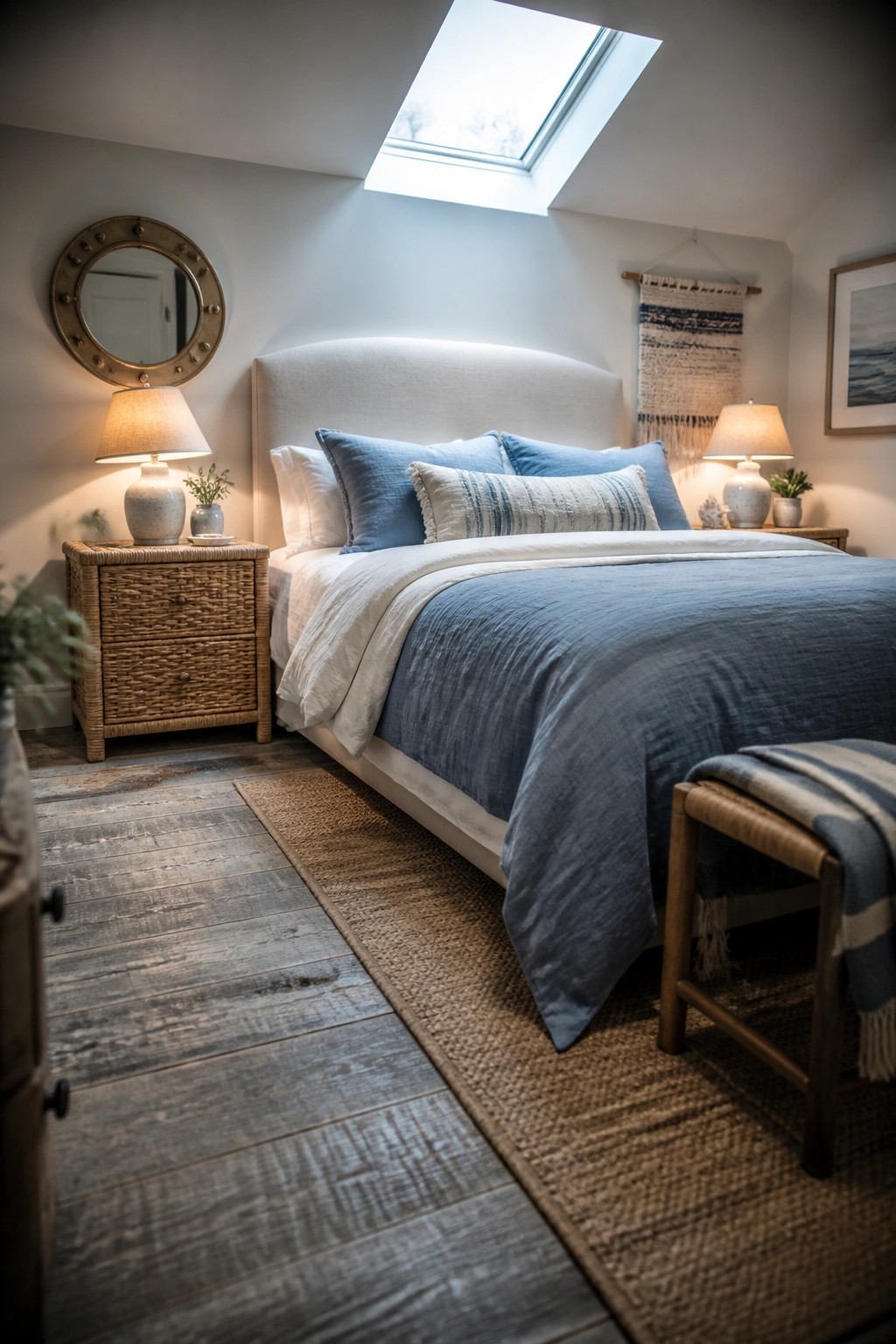
Reclaimed wood flooring brings a lot of texture and history into a bedroom. The uneven planks and natural grain give the room a settled feel that new flooring often lacks.
This choice works best in spaces where you want the floor to carry some weight visually. Pair it with simple rugs and soft textiles so the wood stays the main feature without competing with too many other patterns.
Reclaimed Wood Flooring in the Pantry
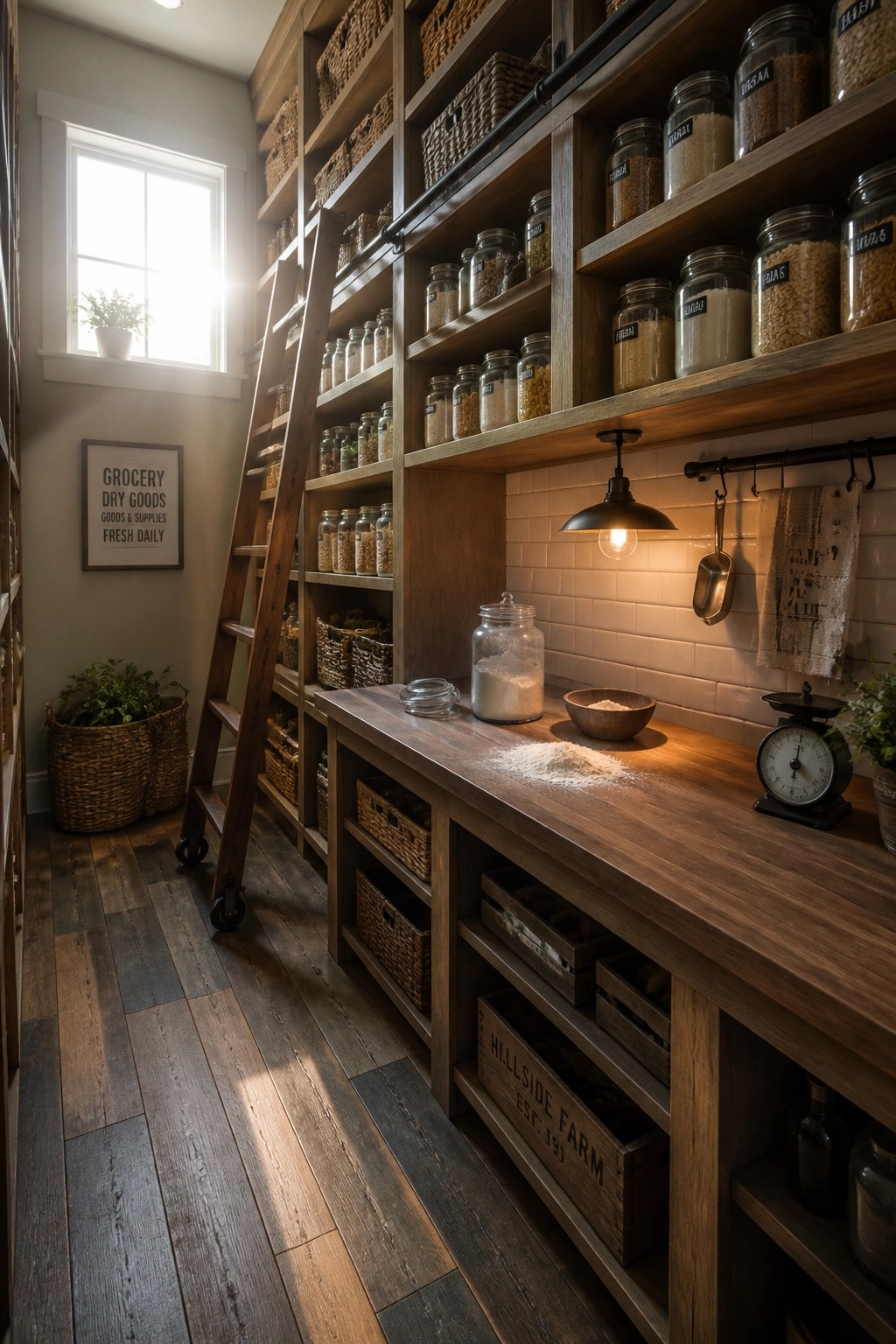
Reclaimed wood flooring brings warmth and character into a pantry without much extra effort. The natural variation in the planks keeps the space from feeling too plain or utilitarian.
This choice works well in older homes or during renovations where the goal is to carry the same flooring material into smaller rooms. It helps tie everything together while standing up to daily use.
Reclaimed Wood Flooring In A Home Gym
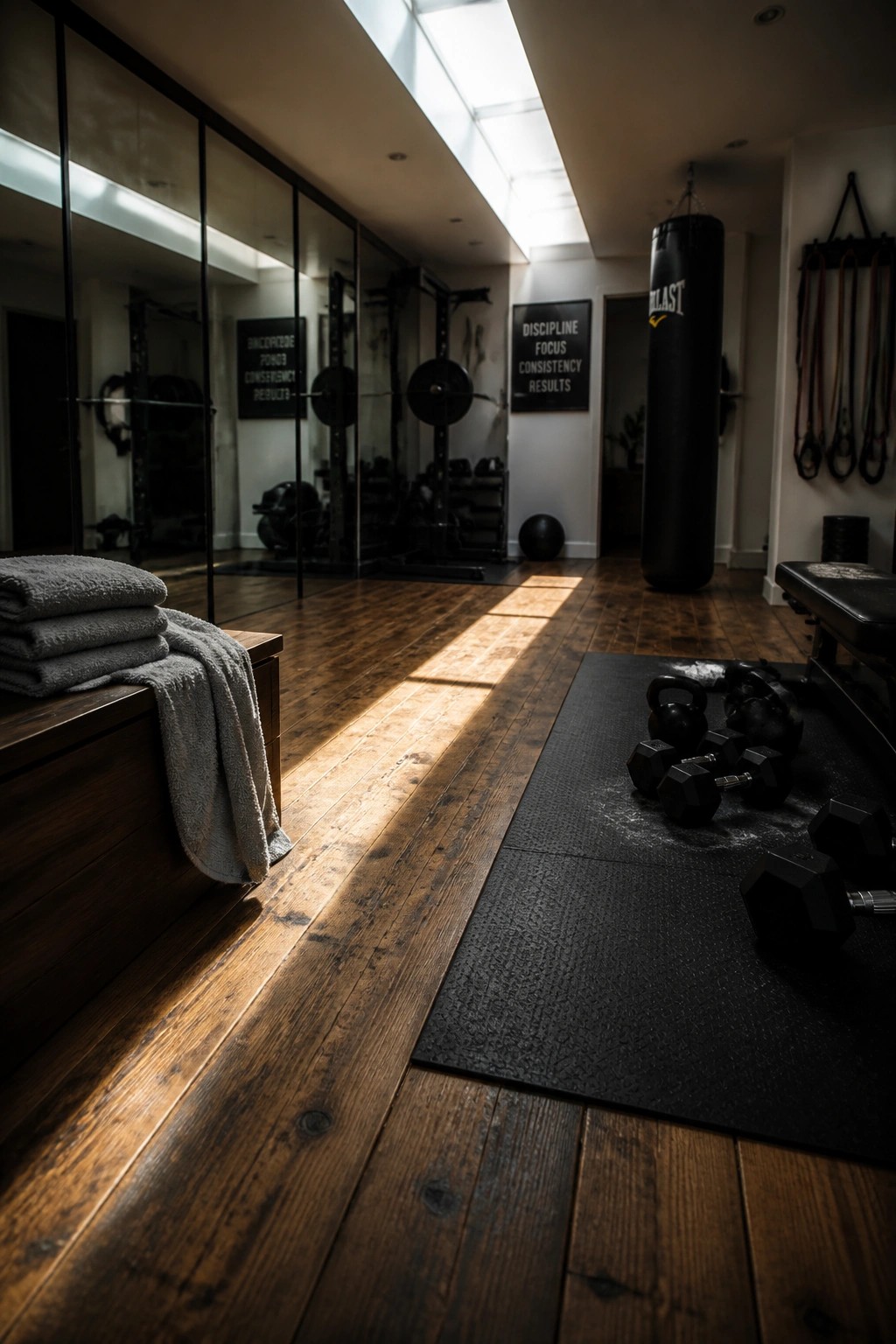
Reclaimed wood flooring adds real character to a home gym. The aged grain and darker tones give the space a grounded feel that standard gym flooring often lacks.
It suits homes where the gym shares space with living areas or sits in a converted room. Sealing the wood helps it hold up to sweat and heavy equipment without showing wear too quickly.
Reclaimed Wood Decking For Outdoor Areas
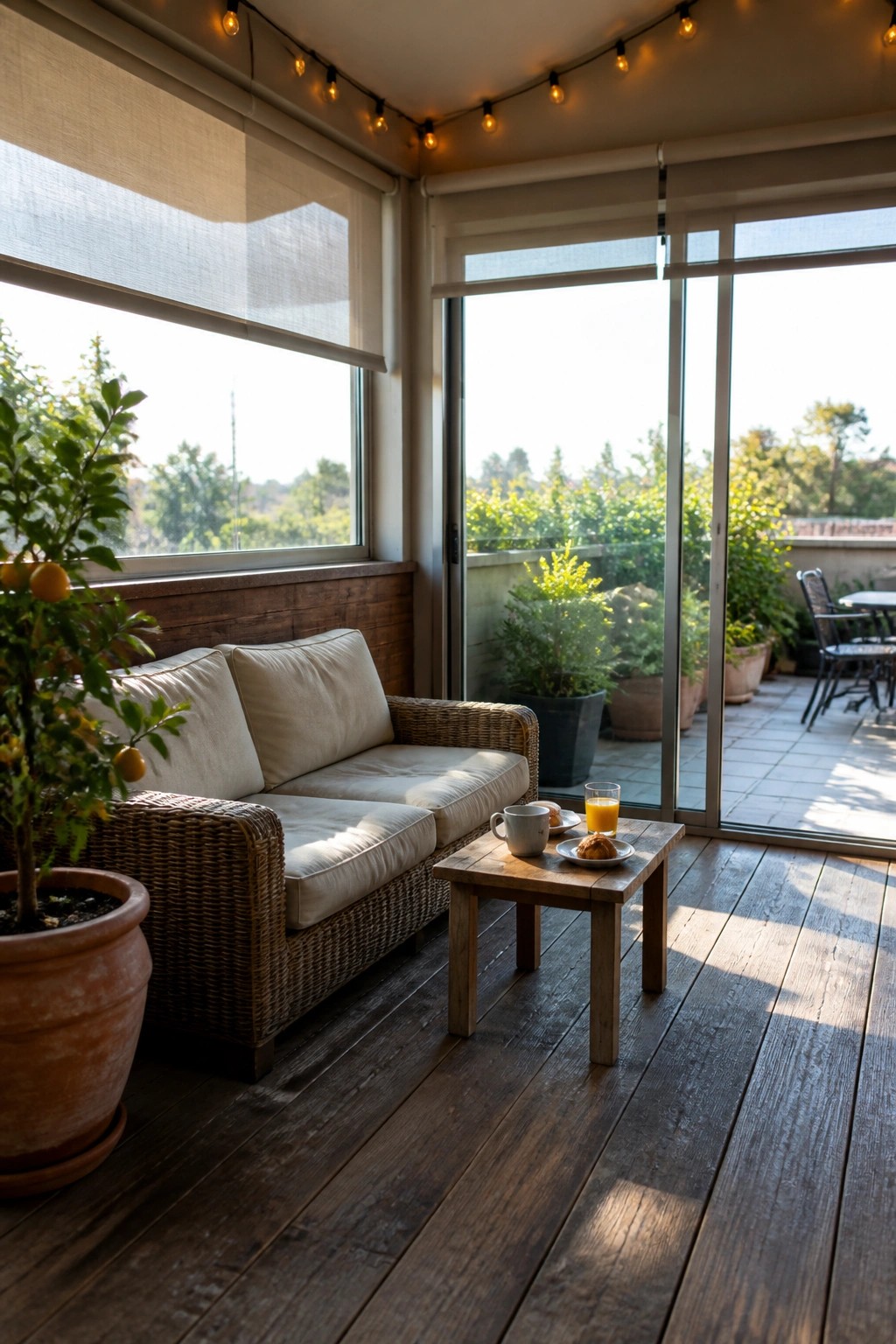
Reclaimed wood flooring brings a lot of character to a deck or balcony without trying too hard. The worn texture and darker tones help the space feel settled and comfortable rather than brand new.
It works best on homes where the outdoor area gets regular use and you want the floor to tie in with indoor wood tones. Just check that the wood has been properly sealed for weather before installing it in an exposed spot.
Frequently Asked Questions
Q: Will reclaimed wood work in a kitchen where spills happen often? A: Seal it well with a durable matte finish right after sanding. That protects against moisture without hiding the grain or color variations. Wipe up messes quickly like you would with any wood floor.
Q: How do I match reclaimed planks to my existing baseboards? A: Pull a few samples from your batch and hold them against the trim in different lights. You can stain or age new wood pieces to blend the tones. Most people find a close match without replacing everything.
Q: Can I install reclaimed flooring over concrete in a basement? A: Lay a vapor barrier first and let the wood acclimate in the space for a week or two. This stops moisture issues that could cause warping down the line. Glue or float the planks depending on your subfloor setup.
Q: Does reclaimed wood need constant oiling like some people say? A: A good initial sealant usually handles day-to-day wear without extra steps. Spot-treat any dry areas that show up after a few years.
