

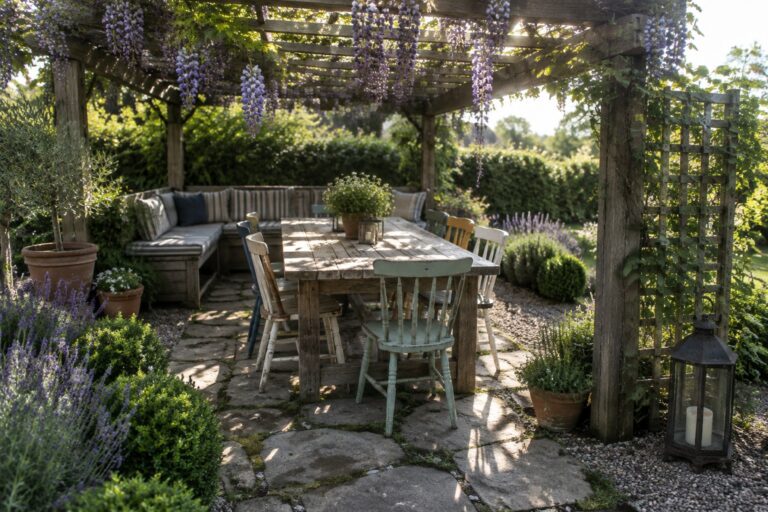
Adding a pergola for vines changes how a garden feels over the years as the plants mature and drape across the beams.
It helps to consider the eventual height and spread so the structure does not end up hidden or fighting for light with nearby trees.
Placement comes first.
I tend to sketch out the path of the vines on paper before building anything because it reveals whether the design will stay open and usable.
Watching how light moves through the space at different times of day often points to the best orientation for both shade and plant health.
Covering A Pergola With Climbing Vines
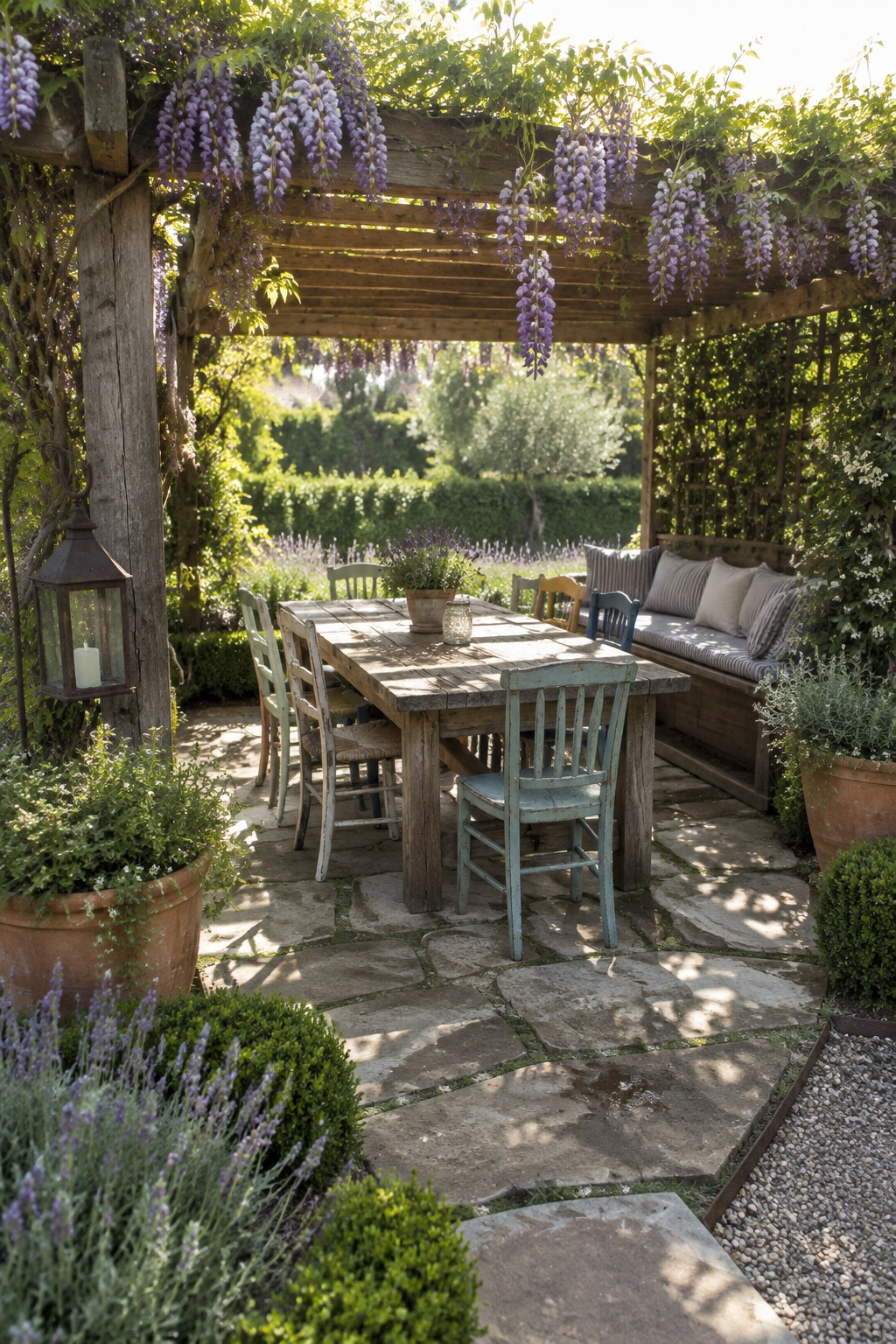
A wooden pergola gets more useful once vines start to cover it. The plants add shade without blocking all the light, and they turn a simple frame into something that feels softer and more settled in the garden.
This works best over a dining table or seating area on a patio where you want some cover from the sun. Just check that the posts and beams can handle the weight once the vines mature, and pick a variety that grows well in your climate.
Grow Vines on a Pergola to Shade Outdoor Seating
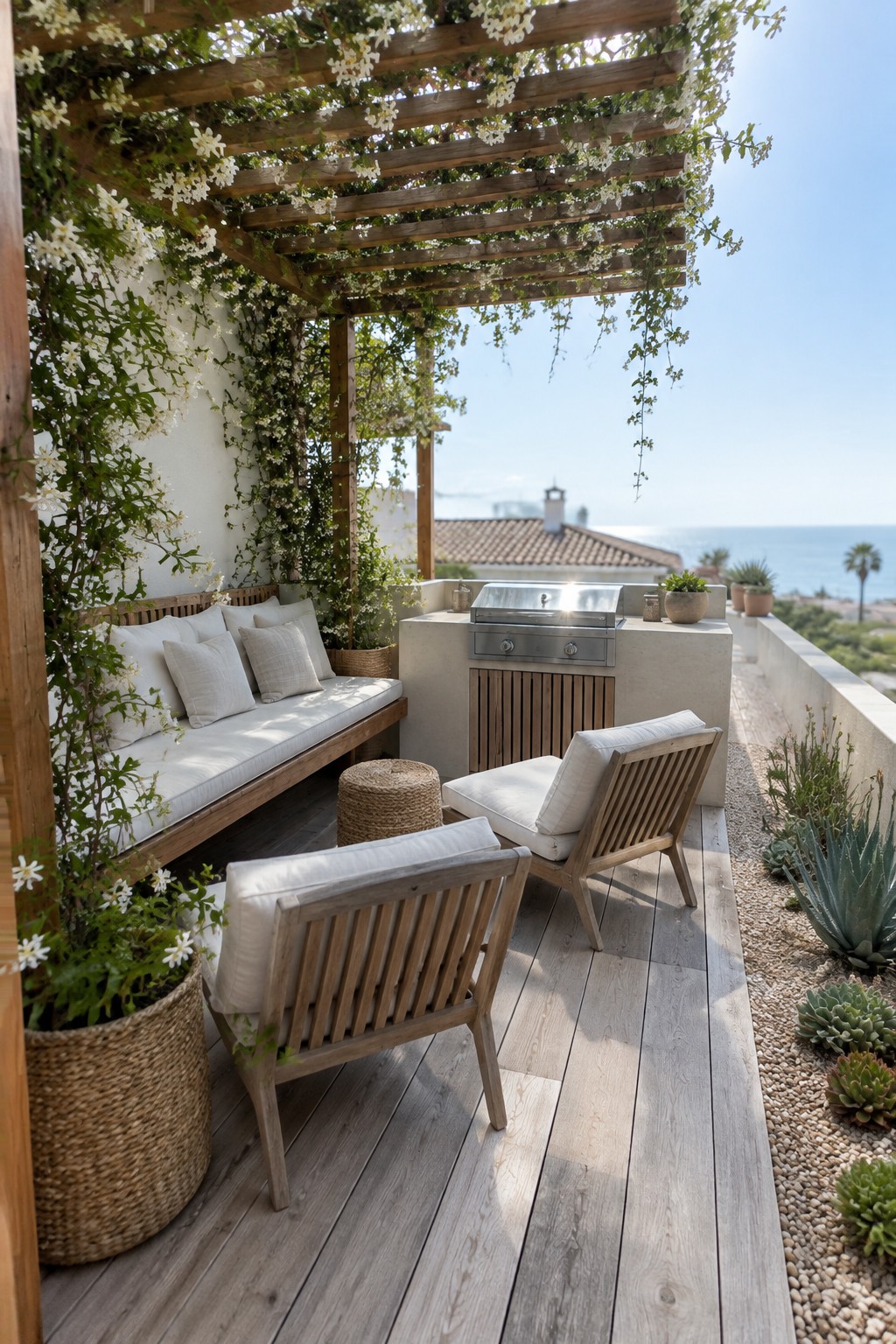
A wooden pergola makes a simple frame for climbing vines, and placing it right over a bench turns the whole area into a shaded spot without needing a roof. The vines add greenery overhead and soften the edges of the structure so the seating feels tucked in rather than exposed. This setup works especially well when the bench sits against a wall, letting the plants climb both the pergola and the surface behind it.
This idea suits decks or patios that get strong sun and already have some planting space nearby. Keep the bench simple and low so the vines stay the main feature, and make sure the pergola is sturdy enough to handle the weight once the plants fill in. It pairs easily with an outdoor kitchen or grill area since the shade stays focused over the seating rather than the whole deck.
Grow Vines on a Pergola to Create Natural Shade
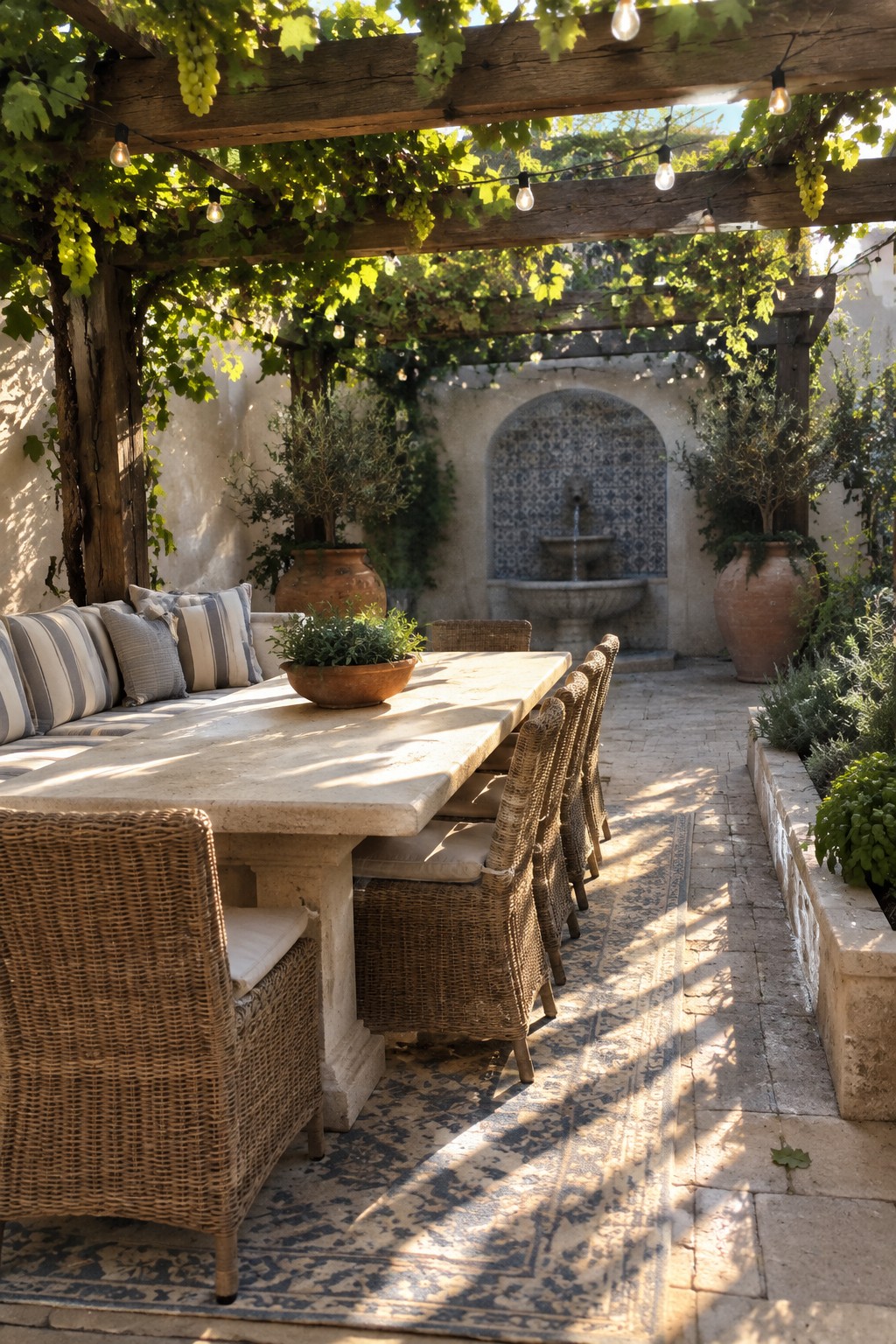
A wooden pergola gives climbing vines the support they need to spread out and form a living canopy. Over a few seasons the leaves fill in and block a good amount of sun, which makes the space underneath cooler and more comfortable during the day.
This setup works best over a dining table or seating area where people spend time outdoors. Make sure the posts and beams are solid enough to handle the weight of mature vines, and pick plants that suit your climate so the coverage stays full without constant trimming.
Grow Climbing Vines Over a Pergola
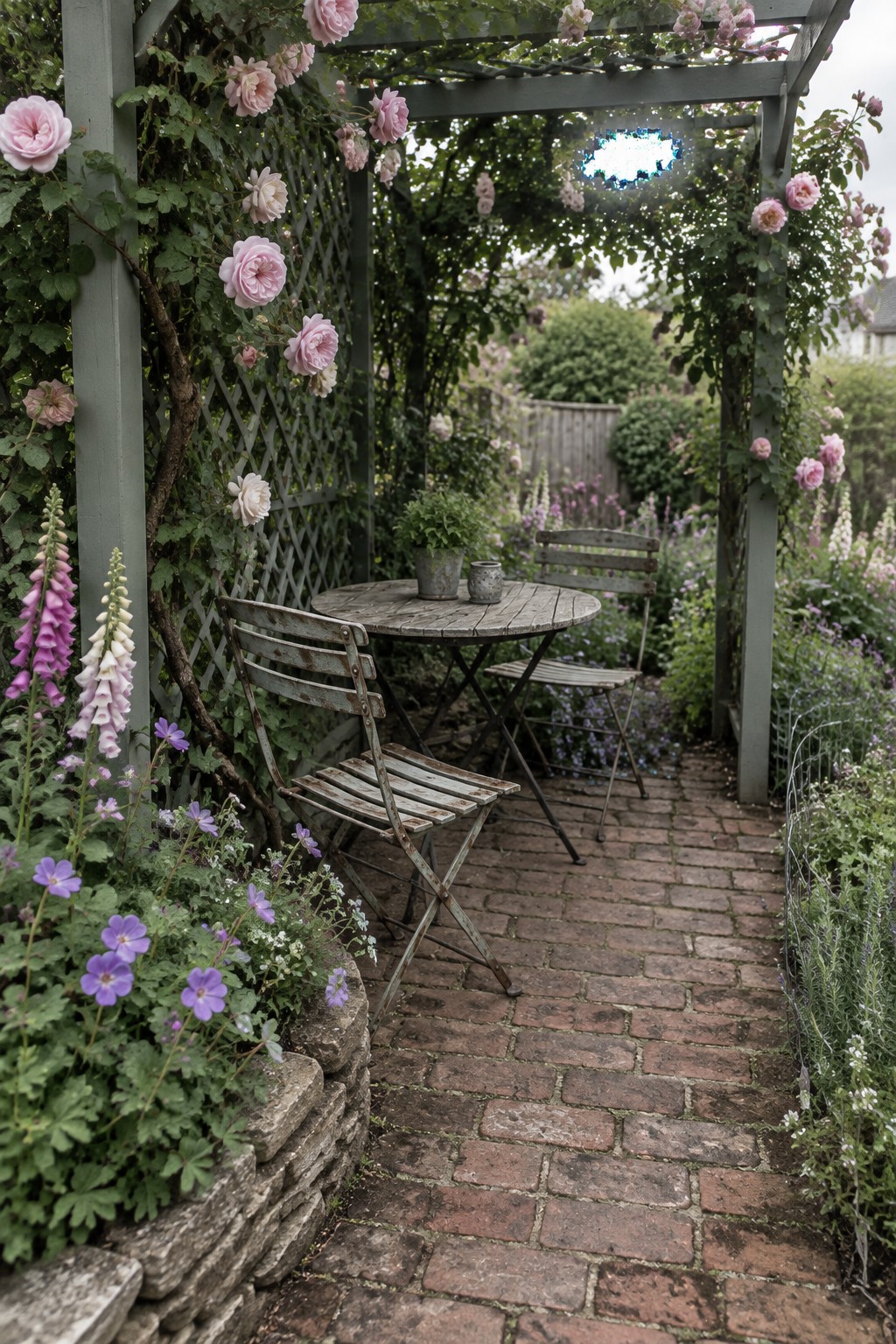
A pergola makes an easy frame for climbing roses or other vines, and it turns a basic garden path into something that feels more finished. The vines soften the wood and give the space height without needing a lot of extra planting.
This setup works best along a walkway or beside a seating area where you want light shade and seasonal flowers. Pick a sturdy structure and choose vigorous climbers that can handle the local climate so the vines fill in without constant fuss.
Cover an Outdoor Table with a Vine-Draped Pergola
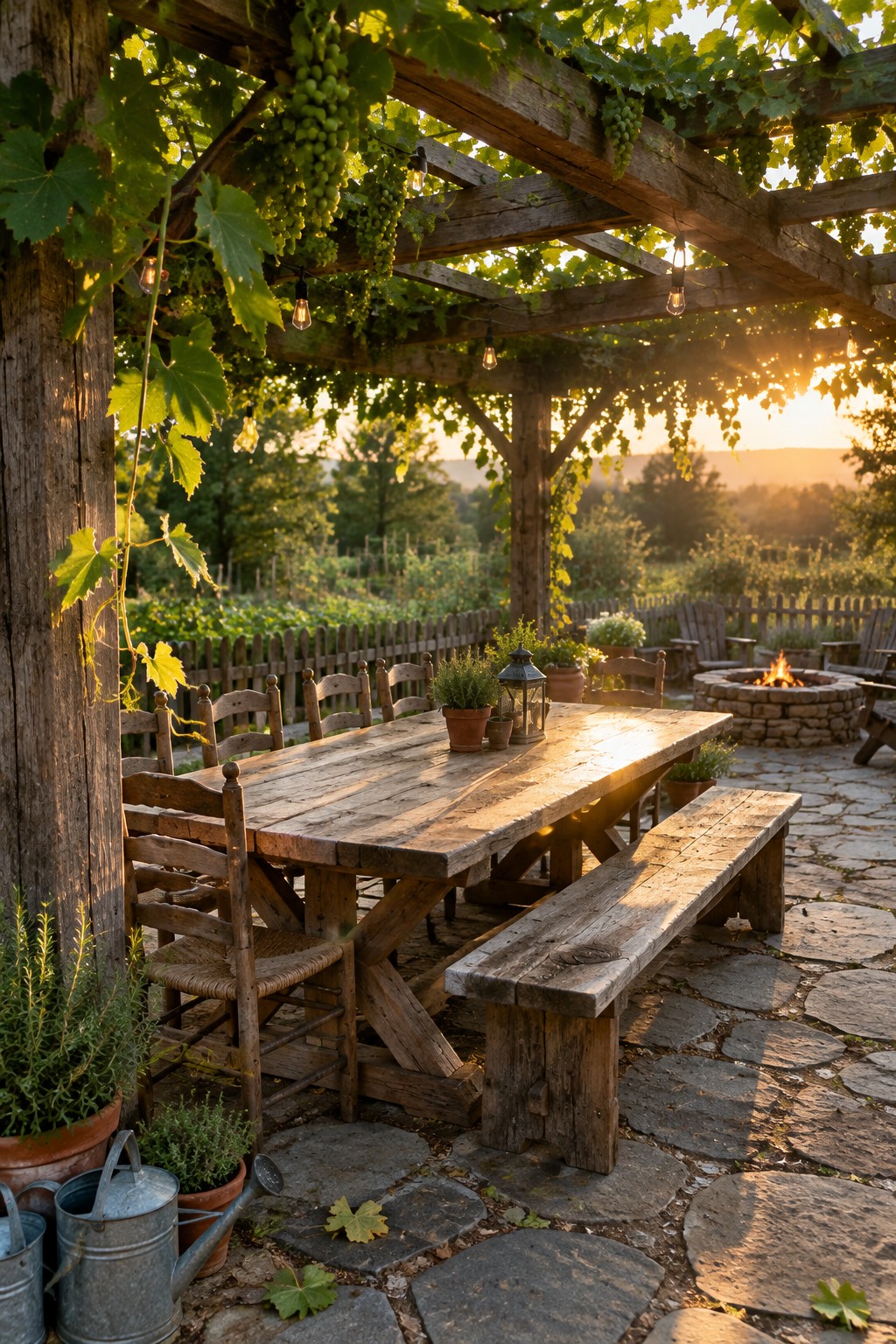
A wooden pergola with climbing vines overhead turns a simple patio table into a shaded spot that feels part of the garden. The vines bring greenery down to eye level and soften the whole seating area without needing walls or extra screens.
This works best in a backyard with room for the vines to spread and a sturdy frame to support them as they grow. It suits homes with patios or stone areas where you want some cover but still like being outdoors. Just check that the wood can handle the weight and that the vines you choose will not drop too much fruit or debris on the table.
Growing Vines Over a Garden Pergola

A wooden pergola gives climbing vines like wisteria a solid frame to spread across, turning the top into a living roof that changes with the seasons. The vines add shade and color without needing extra fabric or screens.
This setup works best in a backyard with room for a small platform or deck underneath. Use strong posts and beams so the wood can handle the weight once the vines fill in, and leave enough space around the edges for the plants to grow without crowding the path.
Let Vines Climb Over Your Pergola

A wooden pergola gives climbing vines the support they need to grow across the top and sides. Over time the plants fill in and create shade that feels softer than a solid roof.
This approach works best in sunny backyards where you want coverage that improves each season. Pick a sturdy frame and give the vines room to spread without crowding the seating area below.
Let Vines Climb Over Your Pergola
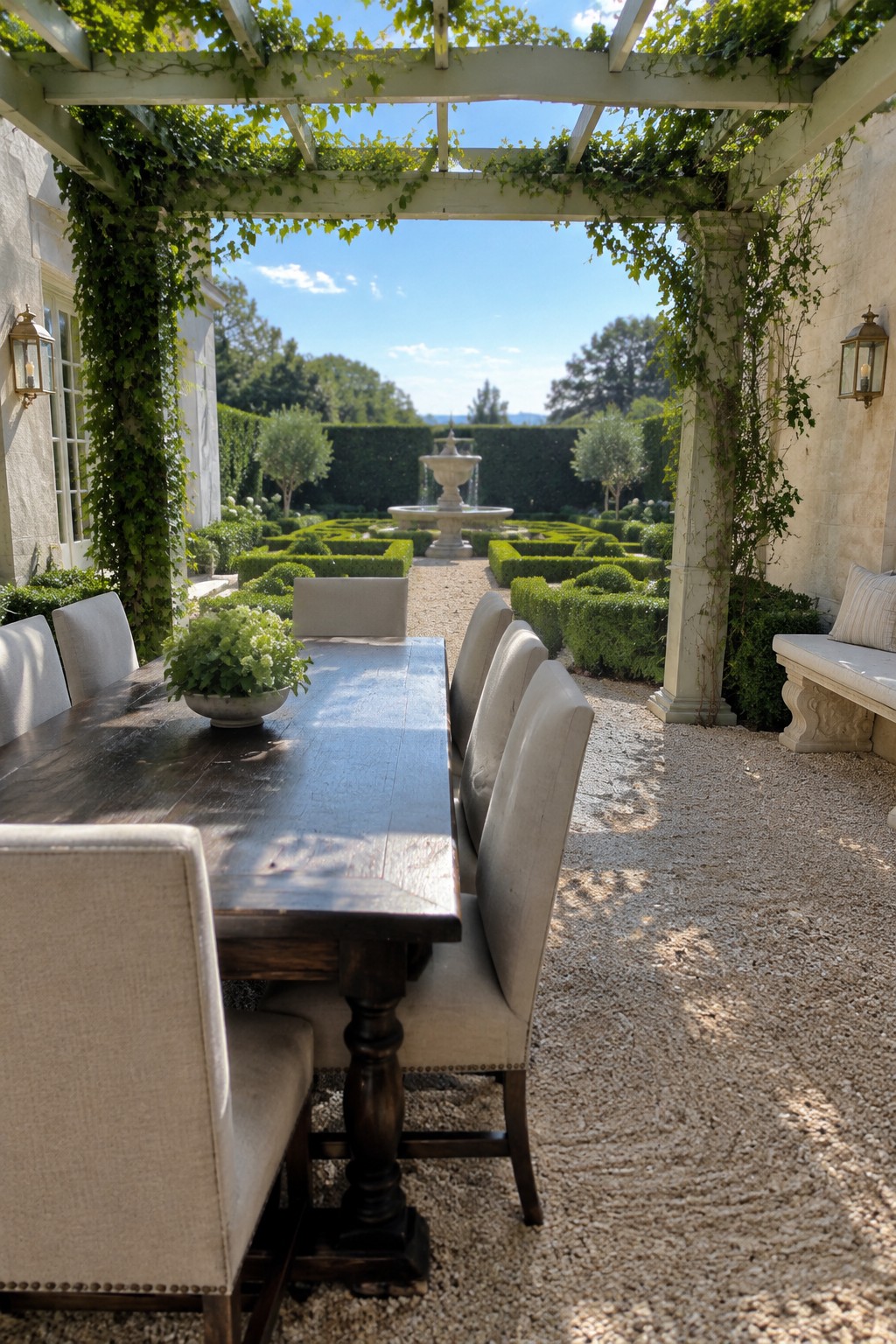
One simple way to make an outdoor dining area feel connected to the garden is to grow climbing vines across the top of a wooden pergola. The vines provide shifting shade throughout the day and help the structure blend into the surrounding planting rather than standing out as a separate element.
This approach works best in spaces where you already have a table and chairs set up on gravel or stone. Choose vigorous but manageable vines, check that the posts and beams can handle the added weight once the plants mature, and give them something to grip so they spread evenly across the top.
Grow Climbing Vines Over A Wooden Pergola

A wooden pergola with climbing vines gives shade that feels softer than a solid roof. The vines fill in over time and create a light screen that still lets some sun through. This setup works especially well next to a pool where you want cover without blocking the open feel of the space.
It suits homes with a patio or pool deck that gets strong afternoon sun. Choose a sturdy frame and vines that match your climate so they do not overwhelm the structure or drop too many leaves. Keep the seating simple underneath so the vines stay the main feature.
Growing Vines Over a Pergola
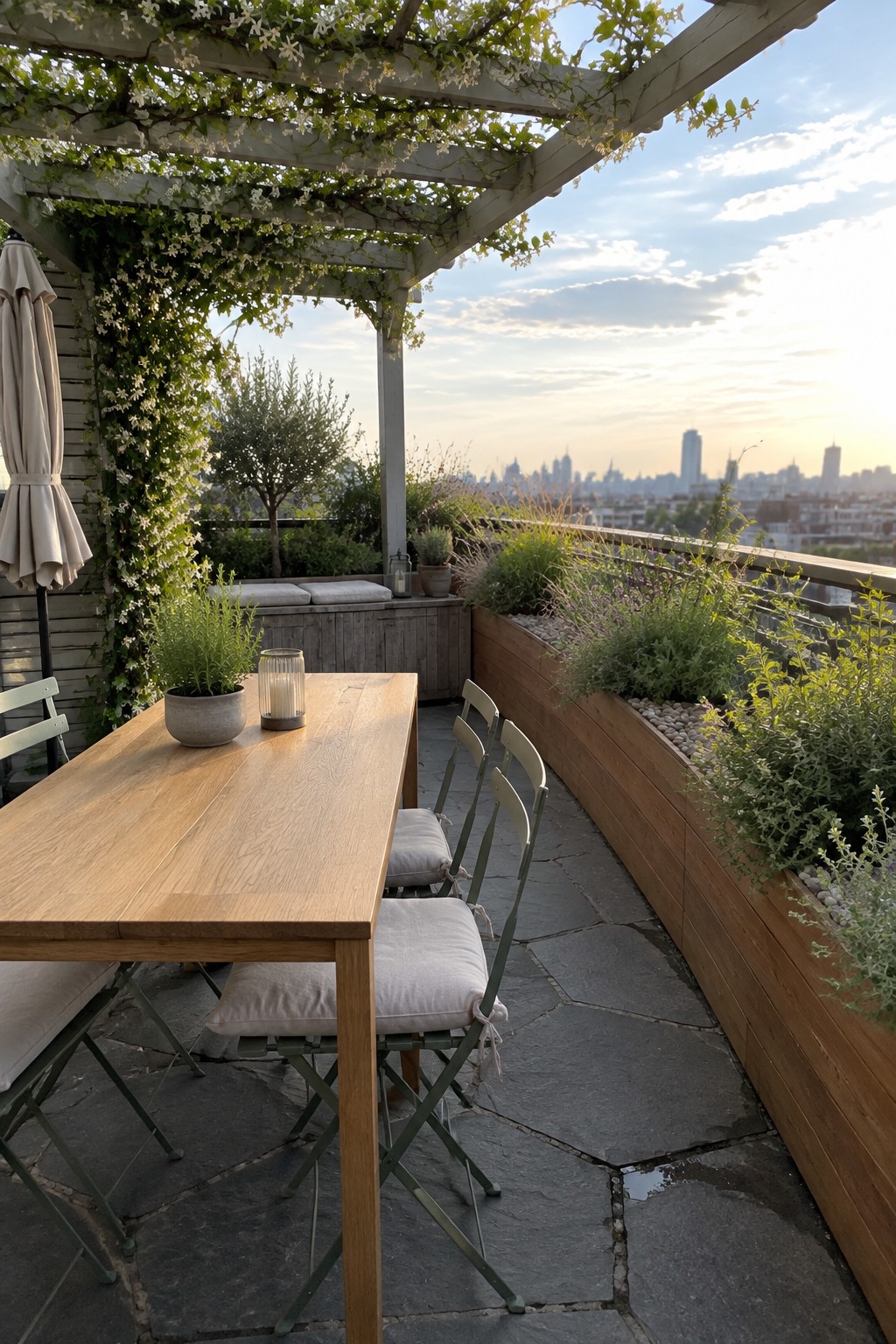
A wooden pergola gives climbing vines a solid frame to work with. The plants can spread along the beams and create their own layer of shade, which keeps the area underneath cooler and more pleasant during the day.
This setup works well on rooftops or terraces where floor space is limited. Just check that the structure can handle the weight of mature vines and pick plants that match the amount of sun the spot gets.
Adding a Bench to Your Pergola
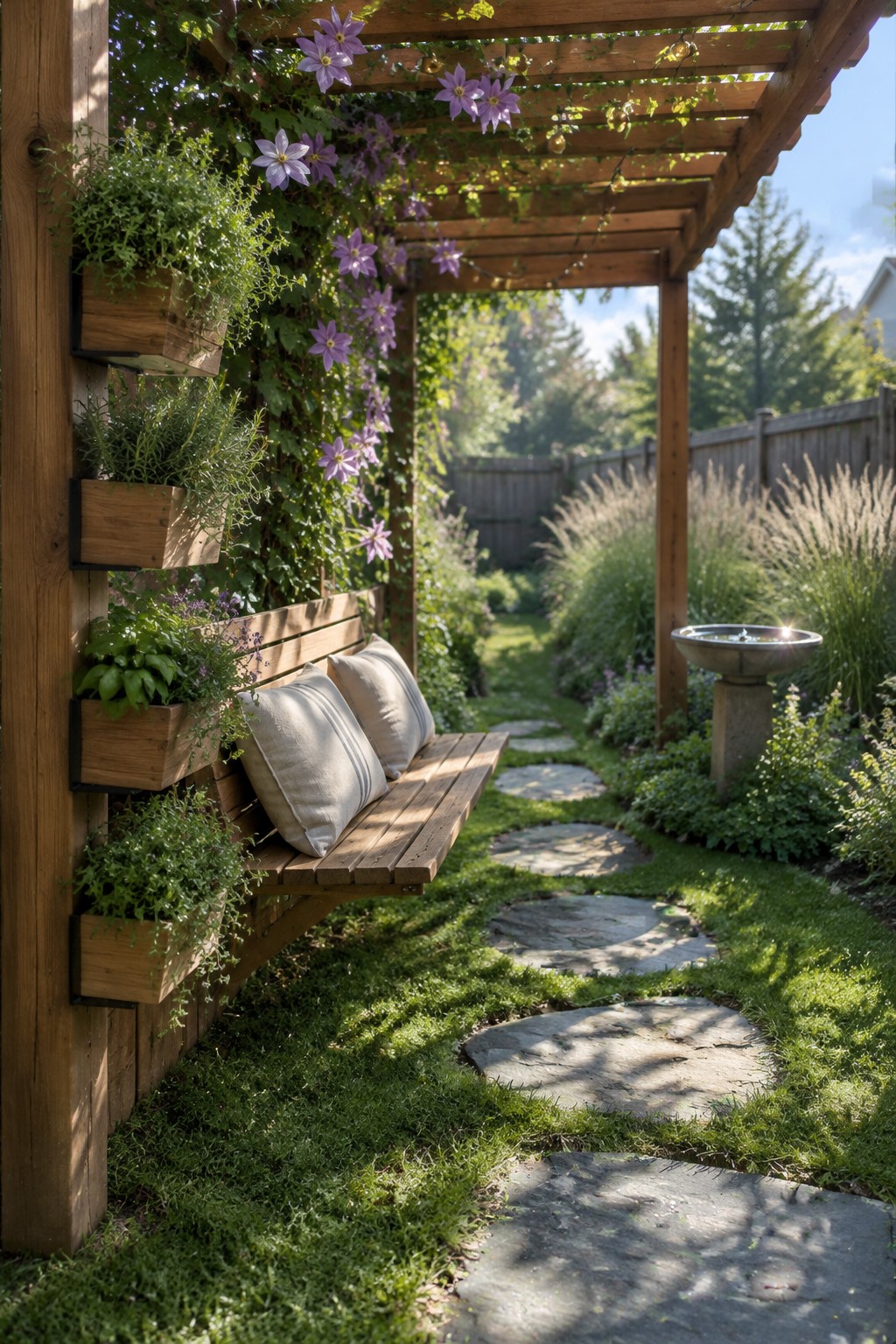
A pergola works even better when you build a bench right into the side. It turns the structure into a place to sit instead of just something to walk under. The vines still get their overhead support while the seating stays tucked in close to the planting.
This setup suits a long garden path or a narrow side yard where you want both shade and a spot to rest. Keep the bench simple and use the same wood as the posts so it feels like one piece. Just make sure the vines have room to fill in above without blocking the view down the path.
Growing Climbing Vines Over a Wooden Pergola

A wooden pergola gives climbing vines a simple structure to spread across, and the result feels easy and natural. The vines fill in the top over time and create shade without needing extra screens or fabric.
This setup works best on a sunny patio or terrace where you want cover during the day. It suits homes that already have some garden space, and the main thing to plan for is a strong frame that can handle the weight once the vines mature.
Grow Vines on a Pergola to Shade an Outdoor Kitchen
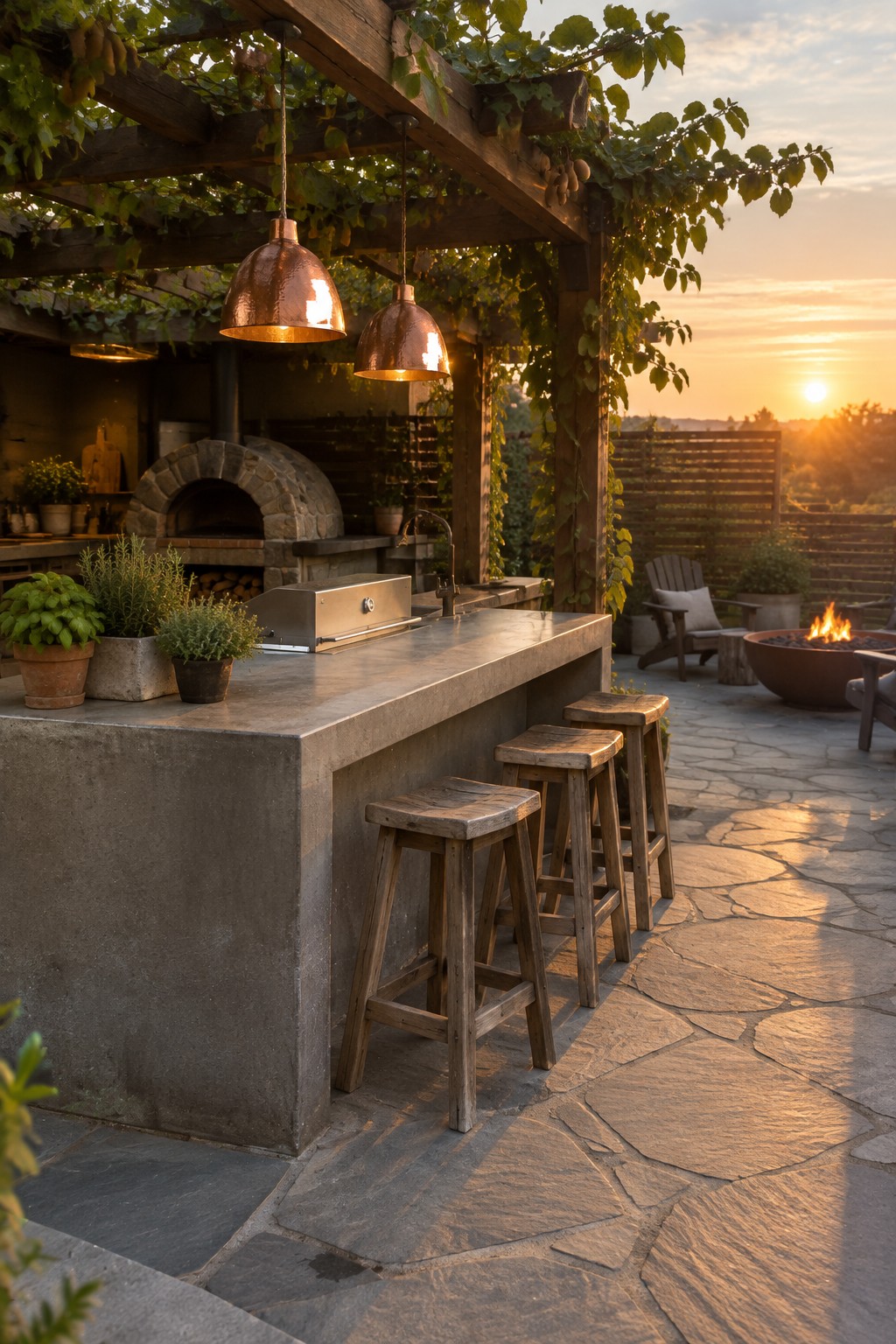
A wooden pergola with climbing vines overhead gives an outdoor kitchen or bar area real shade without closing it in. The vines soften the structure over time and help the space feel more like part of the garden instead of a separate work zone. Many people like this setup because it turns a basic patio into a place where cooking and sitting feel comfortable even on warm days.
This approach works best in sunny backyards where you already have a cooking station and want to add cover without building a full roof. Pick vines that grow well in your area and give them time to fill in. Keep the posts sturdy enough to handle the weight once the plants mature.
Growing Vines Over A Wooden Pergola

A wooden pergola gives climbing vines a steady frame to work with so they can spread and create shade on their own. The open top lets the plants reach upward and fill in gradually, which turns the structure into a living canopy instead of just a roof. In this case the vines have grown thick enough to hang down in spots and add a bit of cover without making the space feel closed in.
This setup works well on decks or patios next to pools or gardens where you want some relief from the sun. It suits homes in warm regions where the plants can keep growing through most of the year. Make sure the wood is solid and choose vines that match the local climate so they do not need constant care.
Cover a Pergola With Vines to Mark a Garden Path
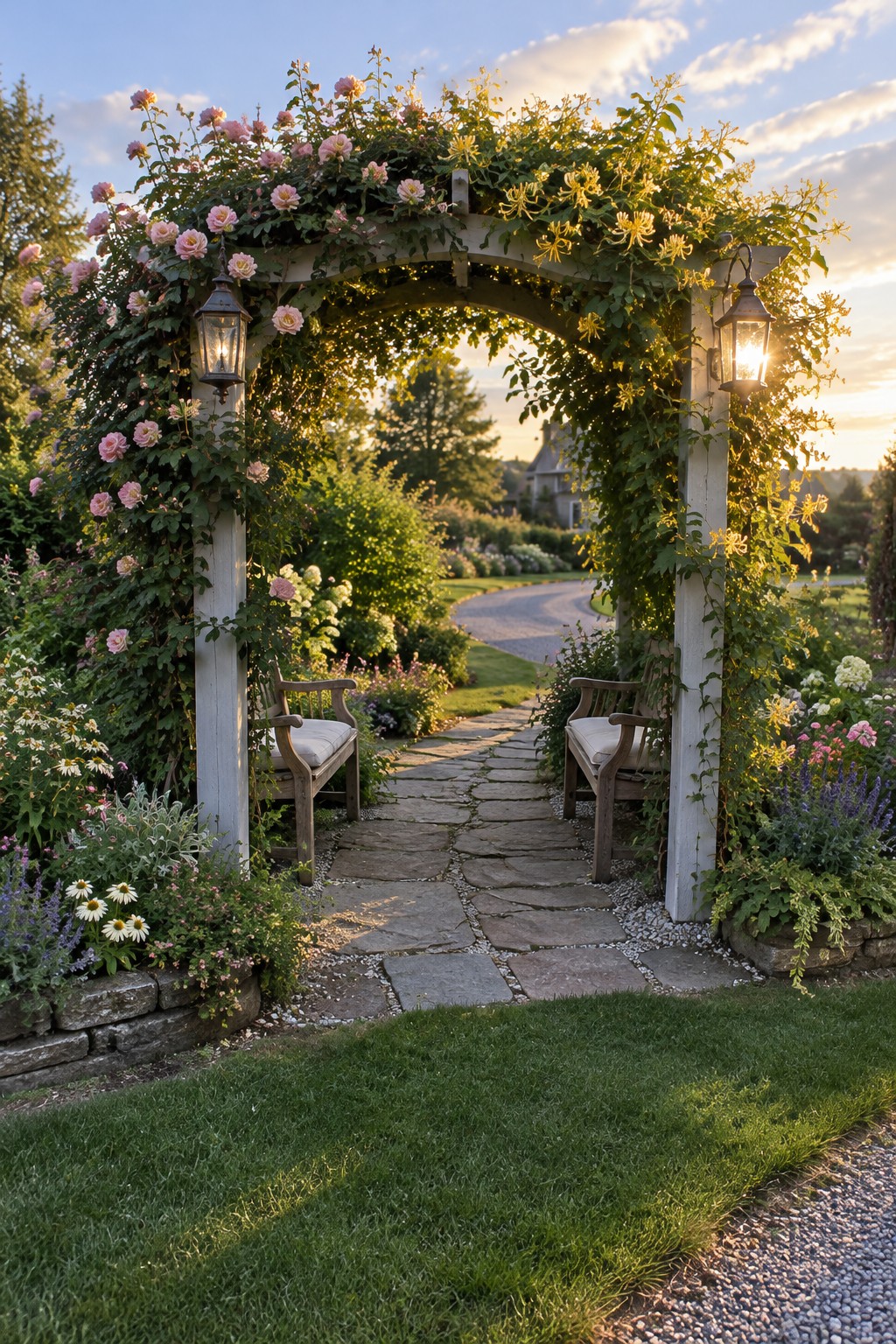
A pergola placed over a walkway gives climbing vines a clear structure to grow on. It turns an ordinary path into something more defined without needing walls or fences.
This setup works best in gardens that already have some width to the paths. Plant the vines at the base of each post and let them fill in over a season or two. Keep the path surface flat and wide enough for comfortable walking once the plants mature.
Wooden Pergolas That Support Climbing Vines
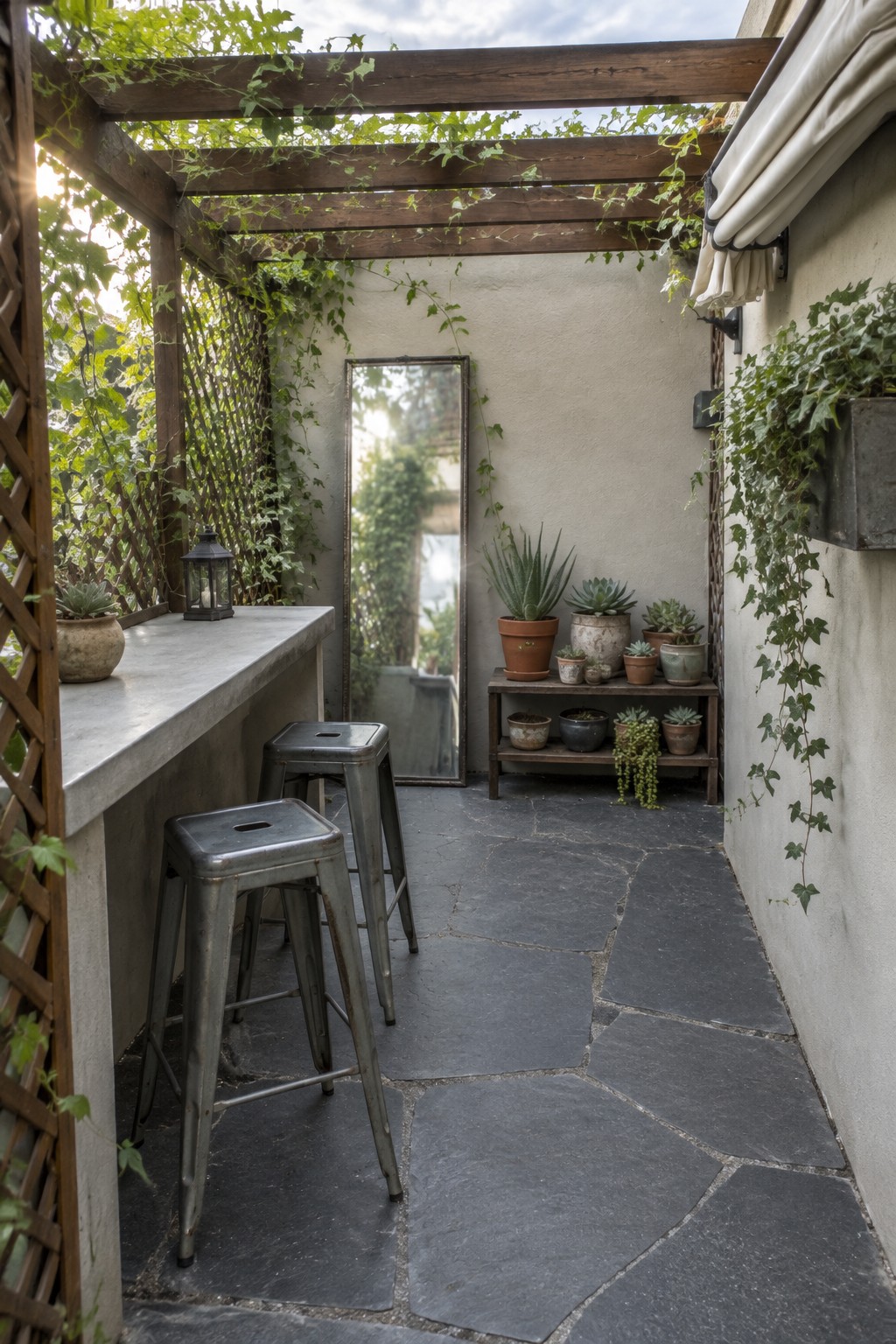
A wooden pergola gives climbing vines a solid frame to grow on and turns an open patio into a shaded spot over time. The beams create structure while the vines soften the edges and fill in as they spread.
This setup works best in a small courtyard or side yard where you want partial cover without blocking all the light. It suits homes that already have some garden space and pairs well with simple seating and a few potted plants along the edges.
Training Vines on a Wooden Pergola
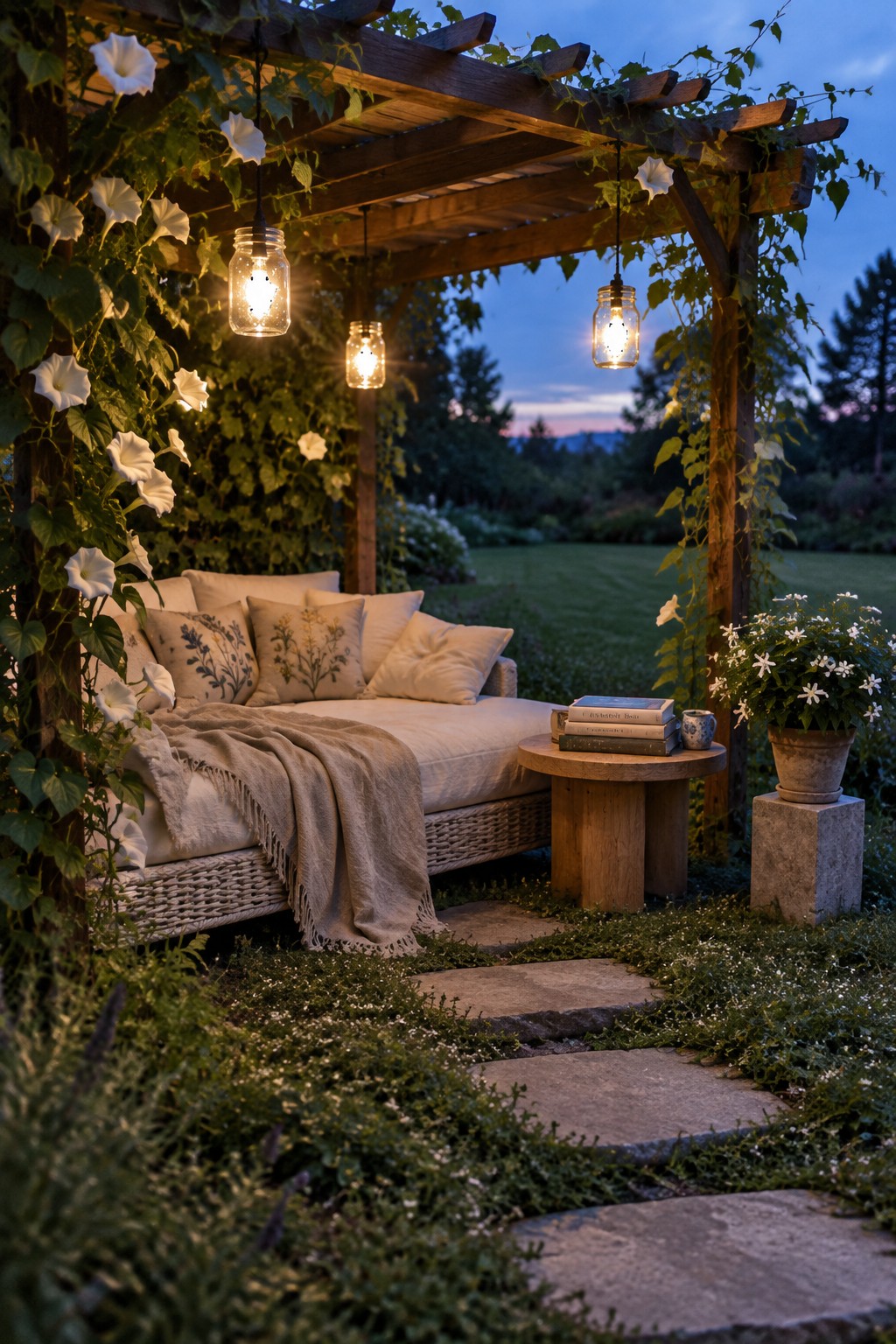
A wooden pergola gives climbing vines the support they need to grow upward and spread across the top. Over a season or two the plants fill in and turn the structure into a living roof that provides shade without any extra fabric or roofing.
This setup works best in a backyard corner or along a garden path where you can tuck a bench or sofa underneath. Keep the sides fairly open so the vines can hang down naturally, and add a few simple hanging lights if you want to use the spot after dark.
Growing Vines Over a Pergola
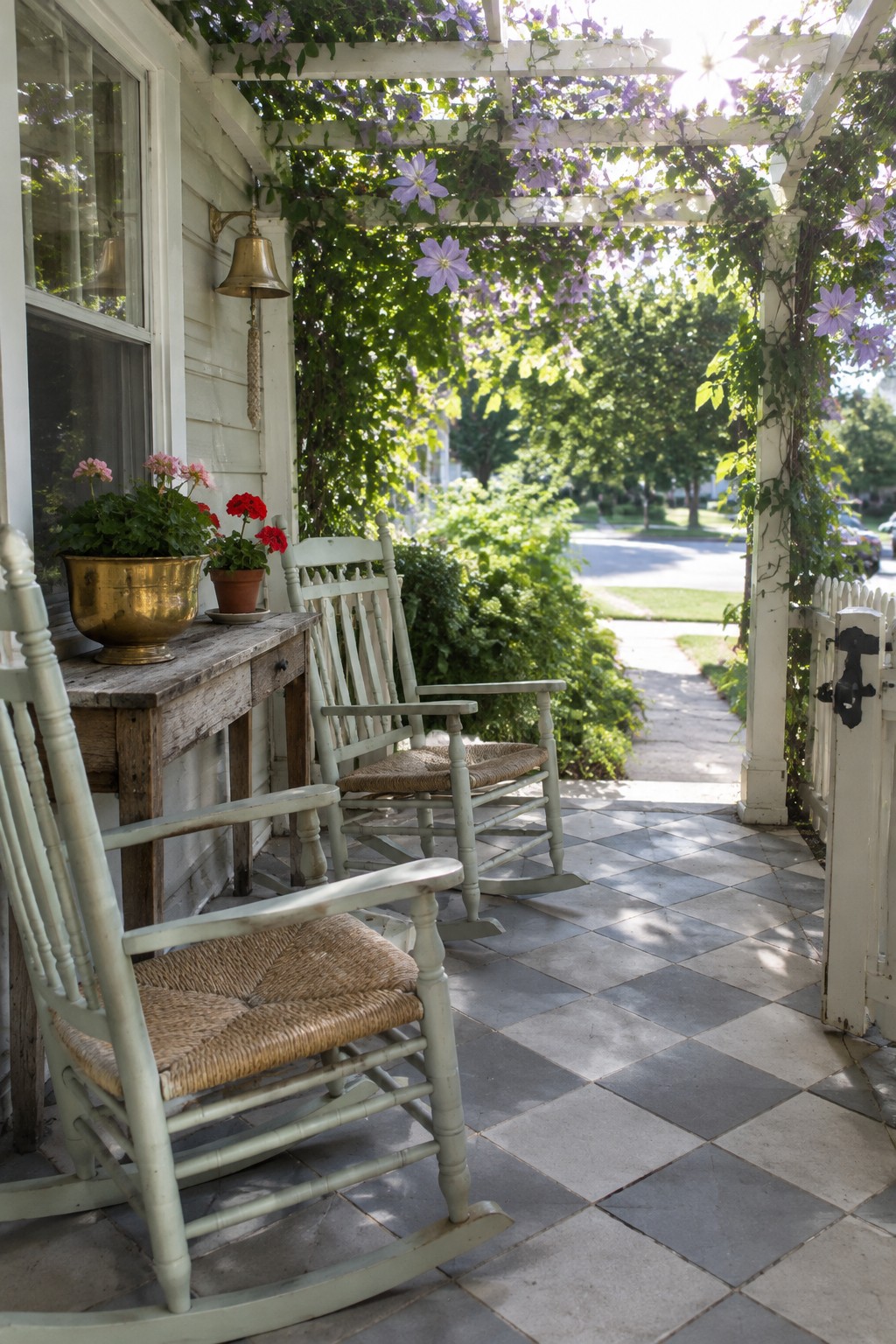
A wooden pergola becomes more useful when vines are allowed to cover it. The plants add shade that shifts through the day and give the porch a settled look without any extra structure.
This approach suits older homes or simple porches where you want some cover but still like to see the sky. Pick a vine that suits your climate, keep the wood sealed, and check the supports every year or two as the growth gets heavier.
Frequently Asked Questions
Q: Which vines grow best on wooden pergolas without taking over everything?
A: Start with something like wisteria or clematis since they climb steadily but stay manageable. Prune them back each spring to keep the growth in check. This way your pergola stays charming instead of turning into a jungle.
Q: How often should I treat the wood to protect it from rain and sun?
A: Give the pergola a fresh coat of sealant every couple of years. Check for cracks or rot spots each fall before winter hits.
Q: What happens if my vines don’t attach right away to the pergola?
A: Tie young stems loosely to the beams with soft string at first. They usually grab on within a season or two once they find their way. Patience here pays off as the plants settle in.
Q: Do I need to water the vines extra once they’re on the pergola?
A: The roots stay in the ground so normal garden watering usually works fine. Focus instead on mulching around the base to hold moisture.
