

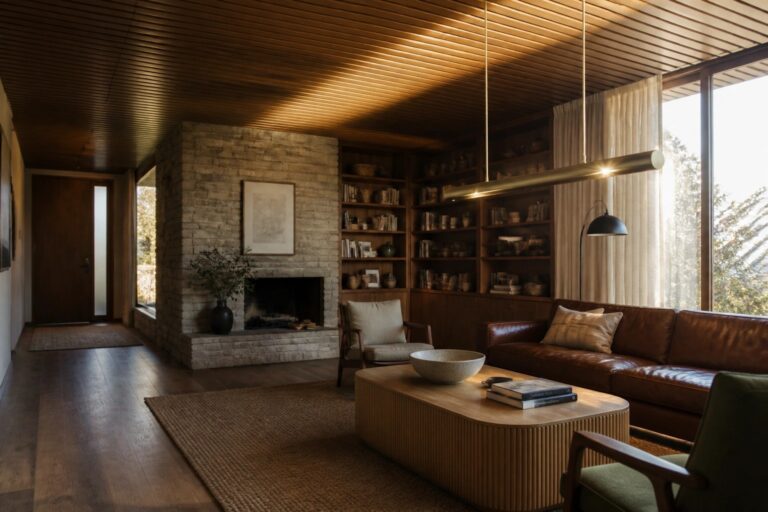
I have always paid attention to ceilings because they shape how a room feels once you step inside and influence everything from light movement to the sense of height.
Wood slats can bring a sense of order to an otherwise flat surface and make the whole space feel more considered without taking up any floor area.
The scale really matters here.
In my experience it helps to picture how the light will hit the slats at different times of day before committing to a layout that might end up feeling too busy in daily use.
A few of these setups seem practical enough to adapt even in rooms that get heavy daily use.
Wood Slat Ceilings for Built-In Rhythm
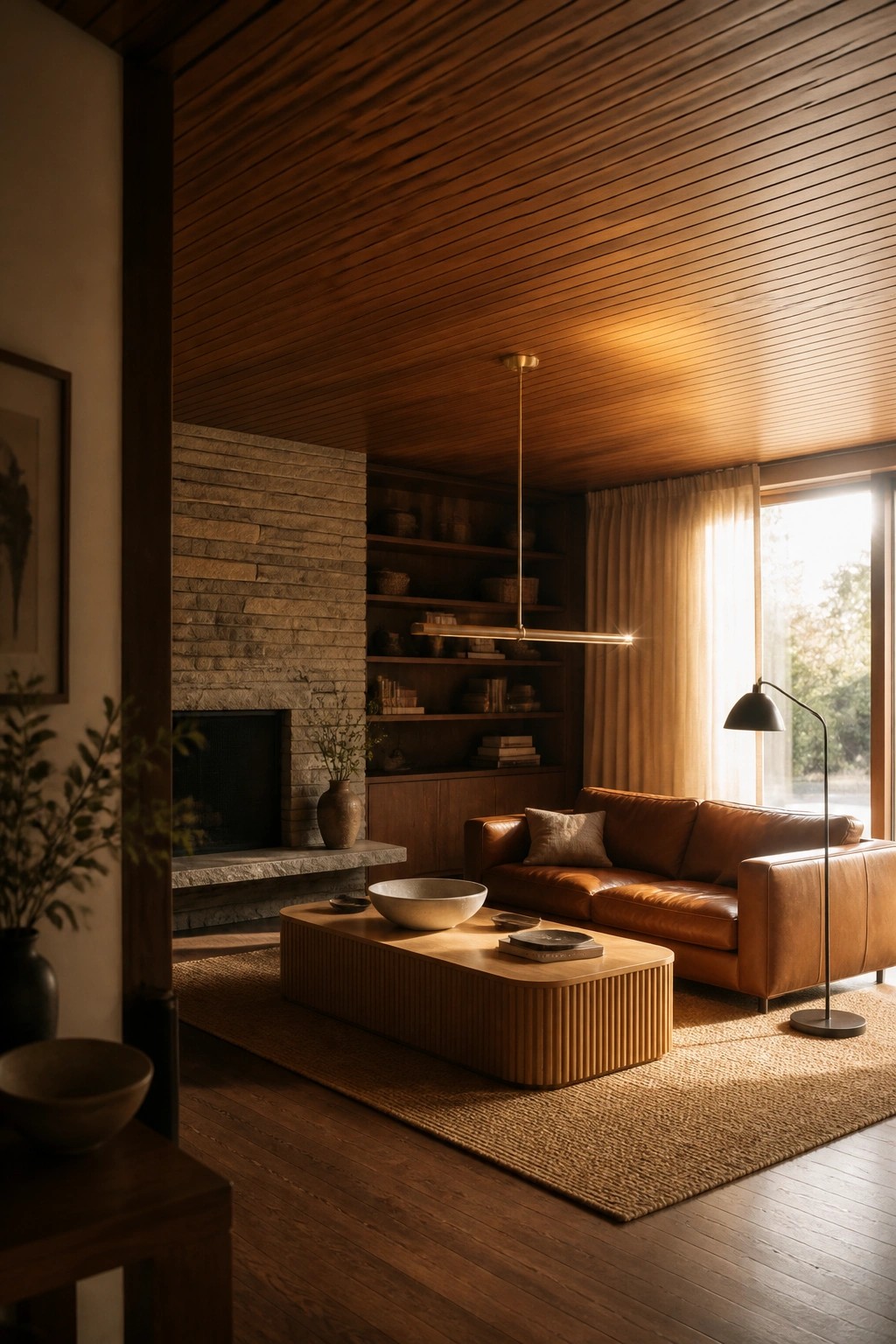
Wood slat ceilings give a room a steady sense of order without needing extra trim or bold colors. The straight lines run across the space and pull everything together, which works especially well in living rooms that already have a few strong pieces like a sofa or a low table.
This approach suits homes with decent ceiling height and simple wall colors. Keep the rest of the room fairly calm so the ceiling does the main work, and avoid overcrowding the space with too many patterns below it.
Dark Wood Slat Ceilings In Dining Rooms
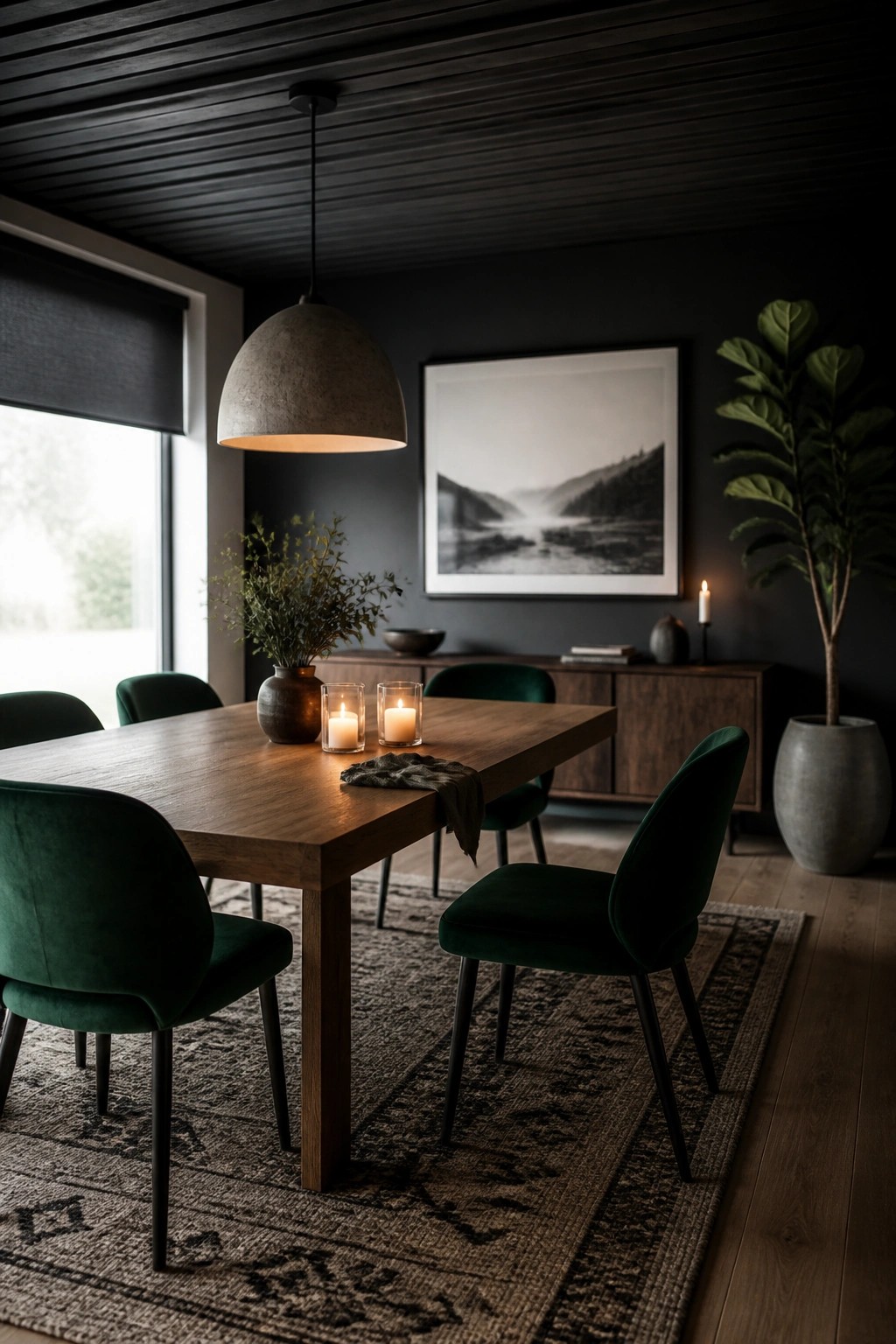
A dark wood slat ceiling adds quiet rhythm to a dining room without extra decoration. The lines run across the space and give it structure, especially when the rest of the room stays simple and low.
This works best in rooms that already feel a bit enclosed or have decent height. Keep the walls and furniture calm so the ceiling can do the work. It suits homes that want a grounded, slightly moody dining area rather than something bright and open.
Wood Slat Ceilings for Quiet Rhythm
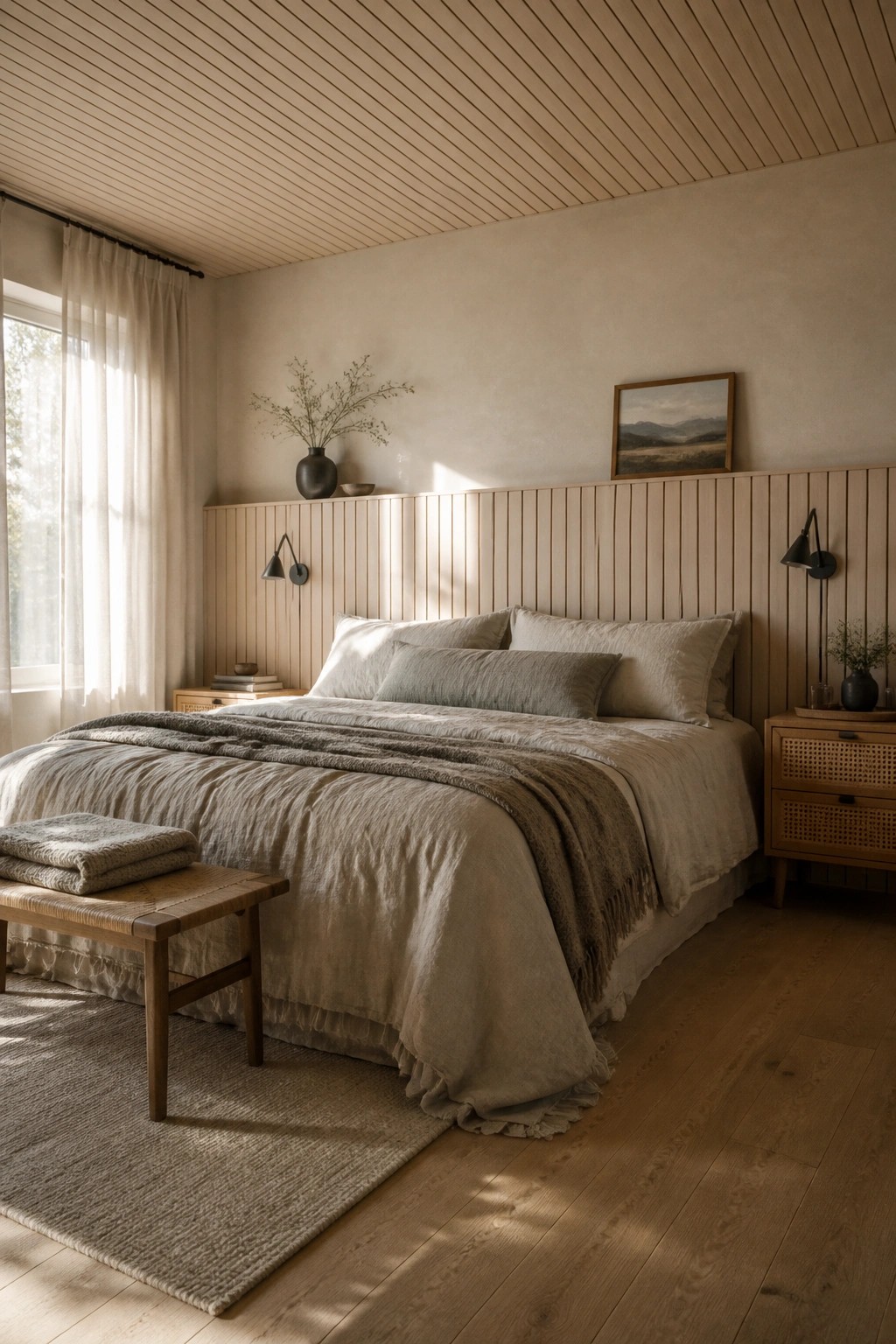
Wood slat ceilings give a room some structure without taking over. The even lines add a gentle pattern overhead that feels steady rather than busy, especially in spaces that stay mostly neutral.
This works best in bedrooms or living rooms where the ceiling height can handle the extra detail. Keep the walls and furnishings simple so the slats have room to show their effect.
Wood Slat Ceilings In Bathrooms
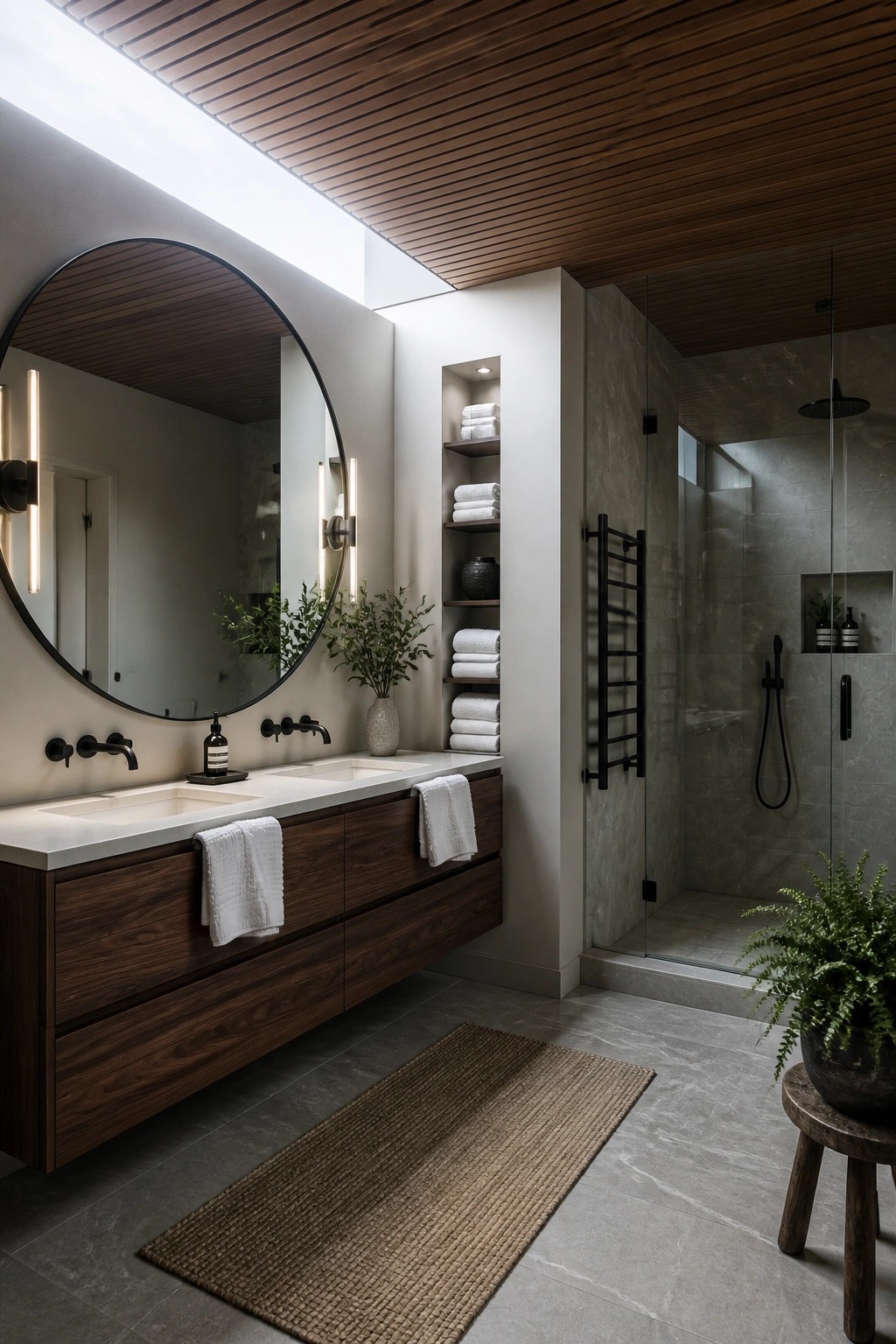
Wood slat ceilings work especially well in bathrooms because they bring warmth and texture to a room that is usually full of hard surfaces. The linear pattern adds quiet rhythm without taking up any floor space, and the natural wood tone softens the look of stone and tile.
This approach suits bathrooms with decent ceiling height and good lighting, since the slats can cast subtle shadows that make the room feel more layered. It pairs best with simple fixtures and neutral finishes so the ceiling stays the main focal point rather than competing with busy details.
Wood Slat Ceilings In Hallways
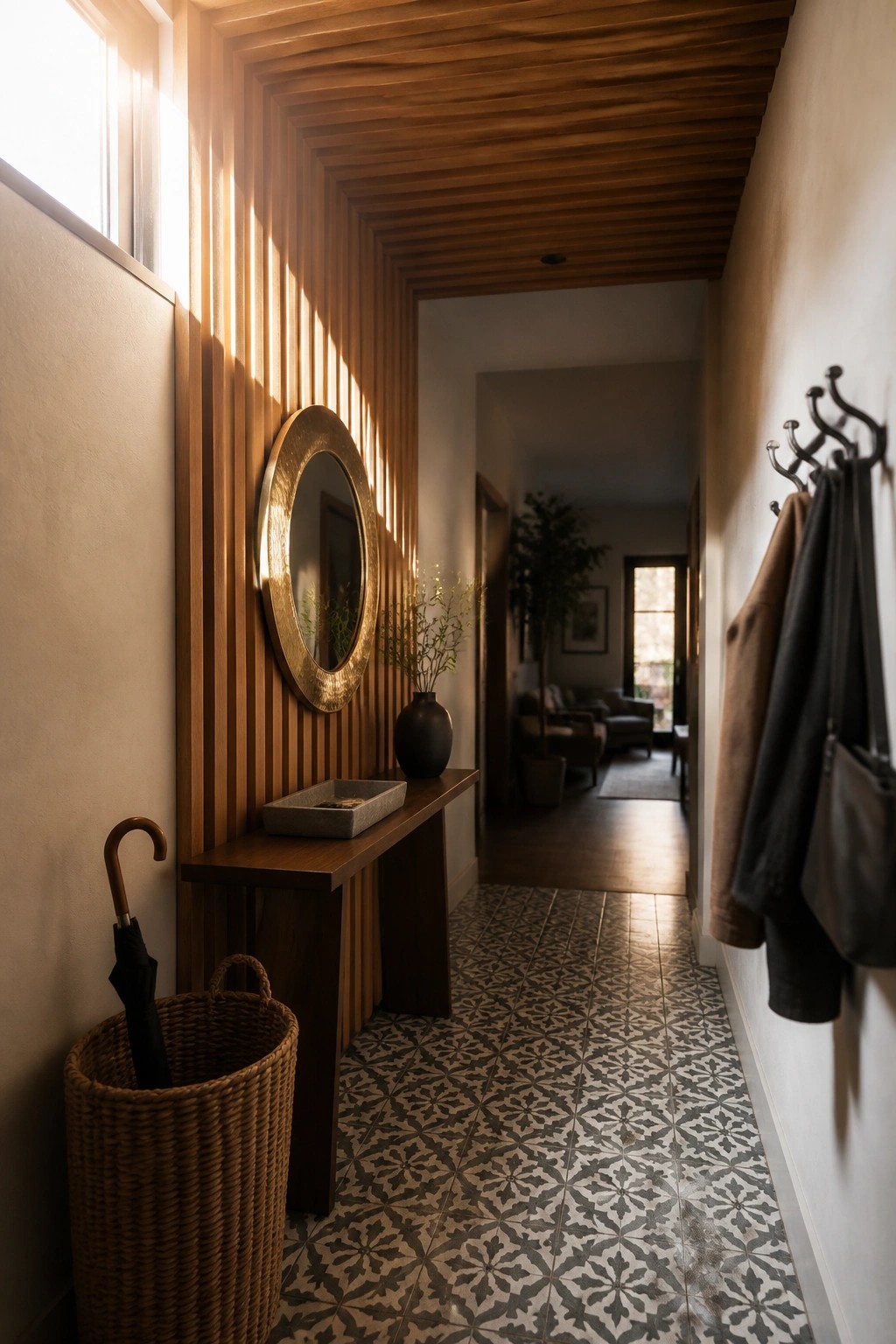
Wood slat ceilings bring real rhythm to hallways that often feel flat and forgotten. The repeating lines add structure without taking up any floor space, and the wood tone warms up what can otherwise feel like a cold corridor.
This idea works best in homes with long or narrow passages where you want some architectural weight overhead. Run the slats lengthwise to stretch the space visually, and keep the walls and floors fairly simple so the ceiling does the talking.
Wood Slat Ceilings With Integrated Lighting
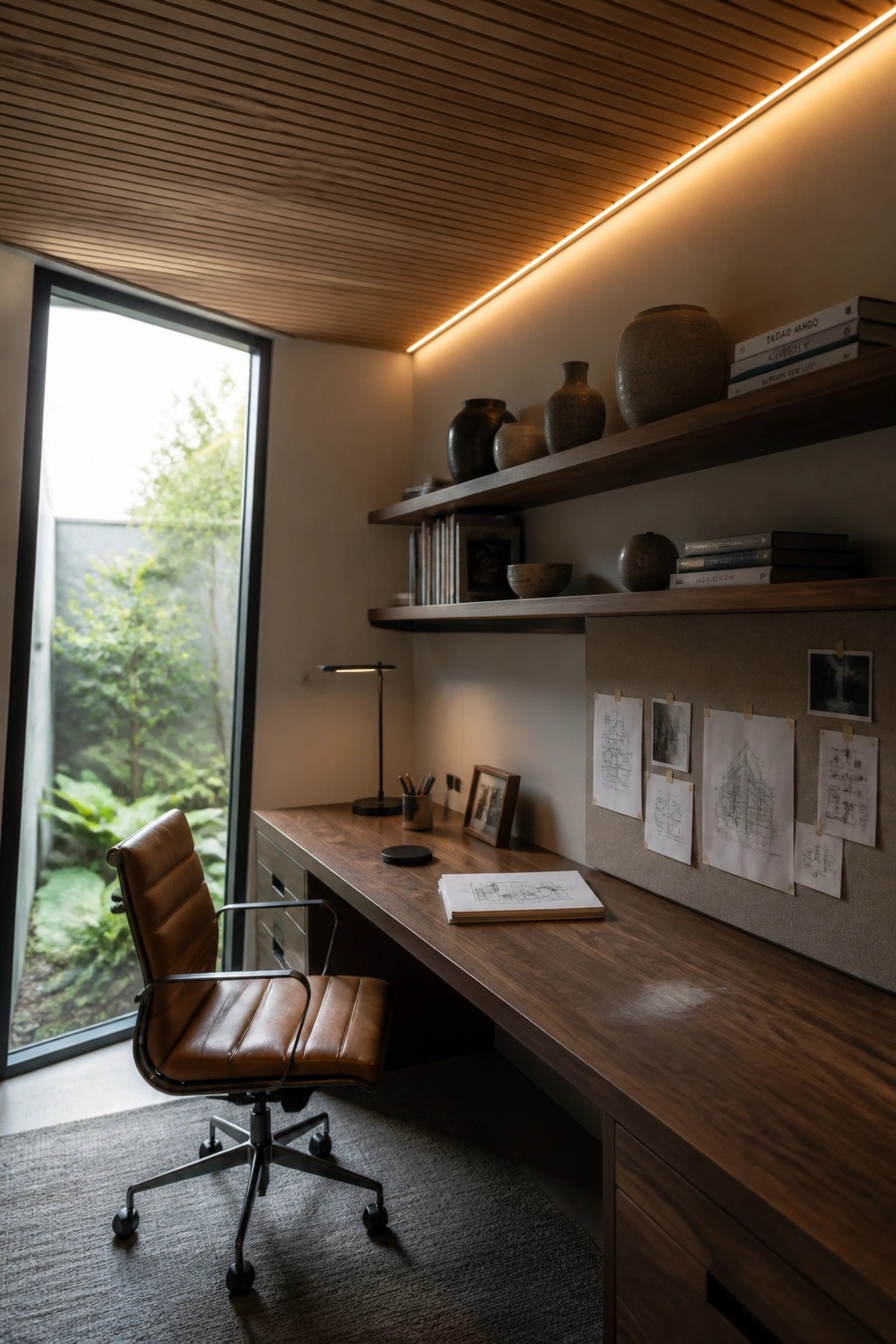
Wood slat ceilings give a room a steady sense of rhythm without needing much else. The linear pattern draws the eye along the length of the space and pairs naturally with warm lighting tucked into the edge. In a workspace like this, the ceiling becomes the main architectural move while everything below stays simple.
This approach works best in rooms that already have wood tones on the floor or furniture. It suits smaller or medium spaces where you want texture overhead without lowering the height too much. Just make sure the slats are spaced evenly and the lighting is warm rather than cool so the whole thing feels calm instead of stark.
White Wood Slat Ceilings For Gentle Rhythm
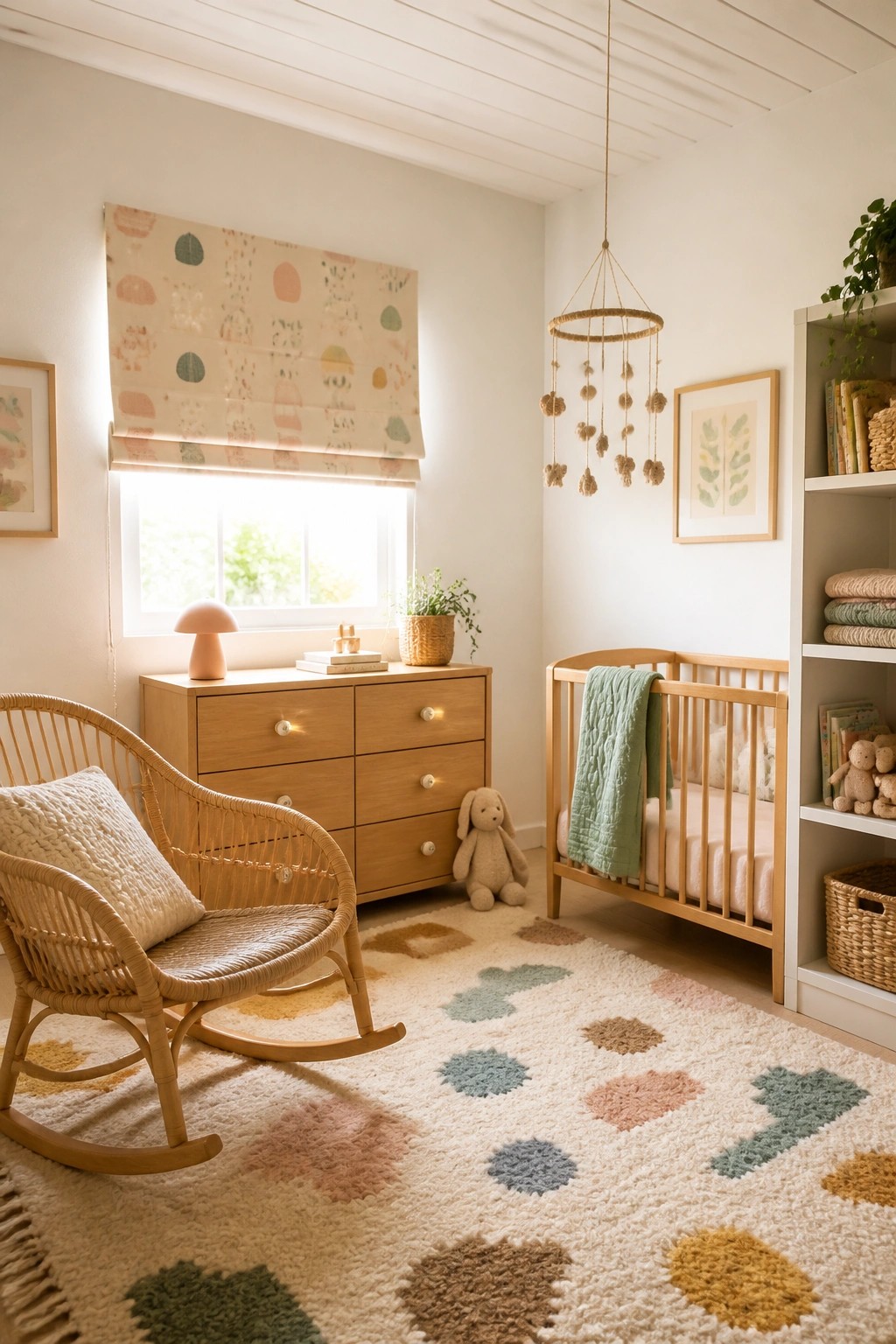
A white wood slat ceiling brings just enough texture and movement to a room without making it feel busy. In spaces that already carry soft colors and simple furnishings, the repeated lines add quiet structure overhead and keep the whole room from feeling flat.
This approach works especially well in smaller rooms or those with lots of natural light. Keep the slats narrow and evenly spaced, and paint them the same color as the rest of the ceiling so the effect stays subtle rather than dramatic.
Wood Slats On A Sloped Ceiling
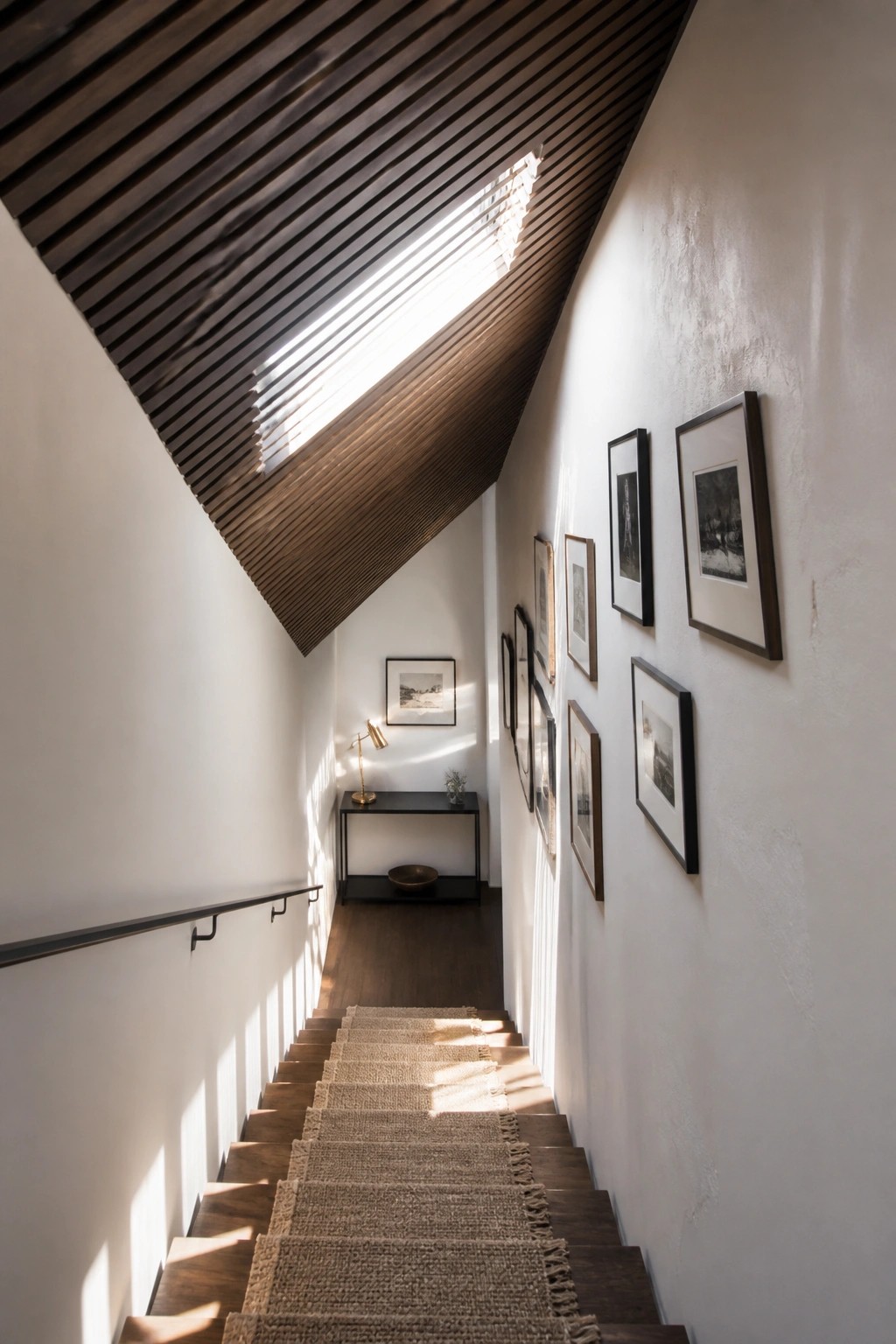
Wood slats work especially well on angled ceilings because the lines add movement without needing much else in the space. In a stairwell the repeated pattern draws the eye upward and keeps the narrow passage from feeling flat or closed in.
This idea suits homes with pitched roofs or tall stair runs where a plain ceiling would look empty. Use a dark stain on the wood to create contrast against light walls, and space the slats so light can pass through the gaps during the day.
Wood Slat Ceilings In Functional Rooms
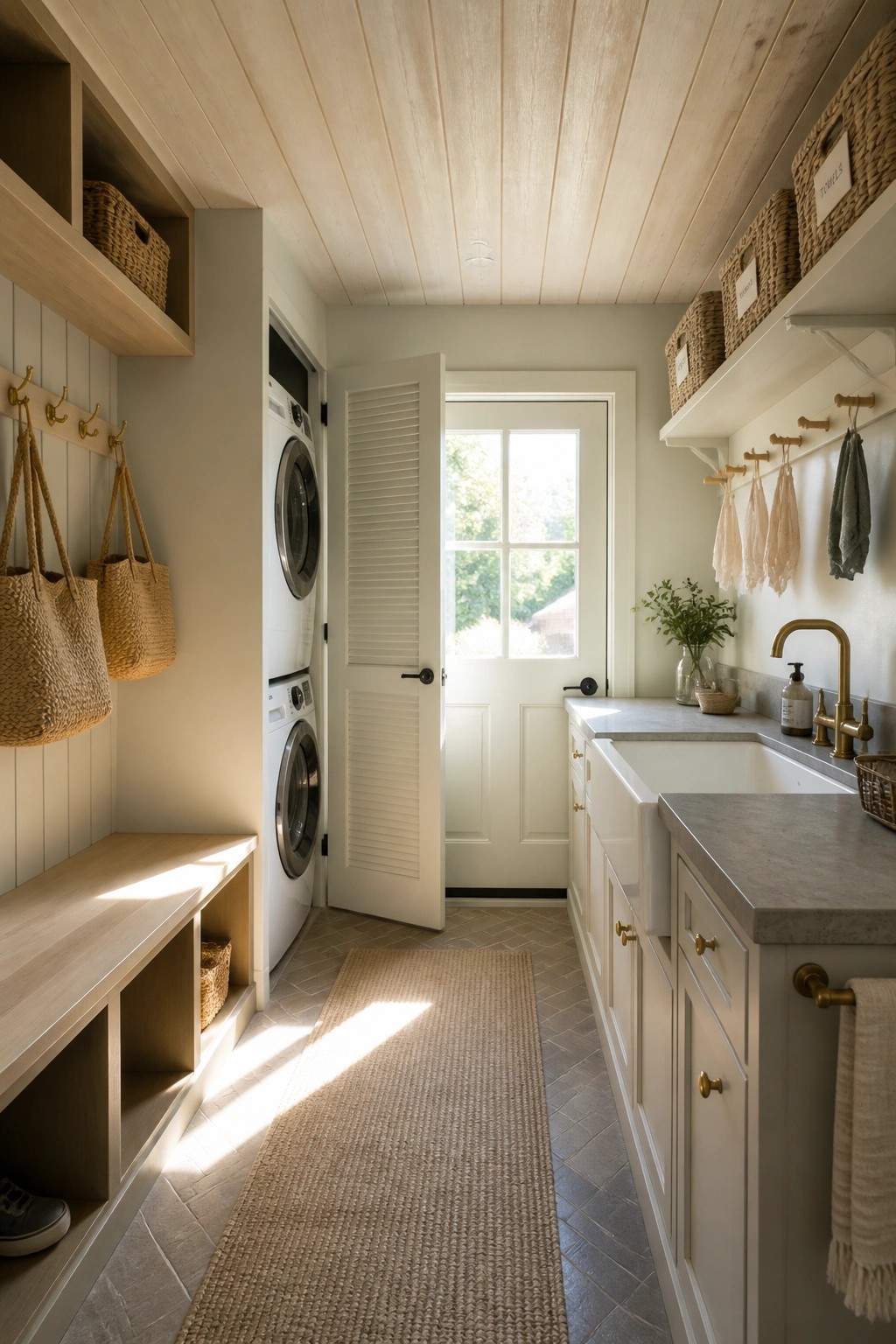
Wood slat ceilings can bring a bit of structure to rooms that usually get overlooked. The horizontal lines create a steady rhythm that makes the space feel more intentional without adding clutter or extra trim.
This works especially well in laundry rooms or similar utility spaces where you want something warmer than a flat white ceiling. Keep the wood light so the room stays bright, and let the slats run the full length to emphasize the length of the space rather than fighting it.
Wood Slats Behind The Fireplace
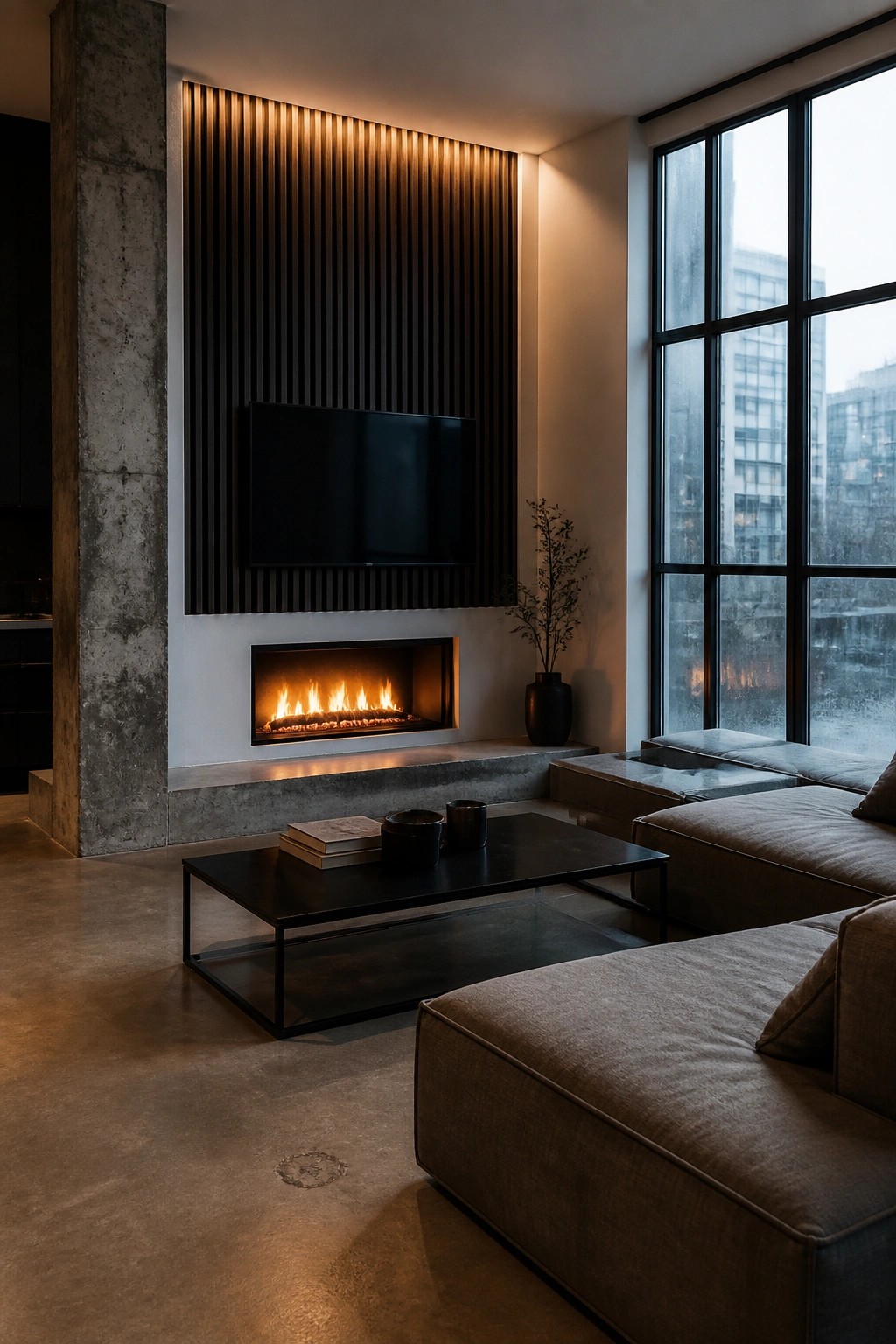
Vertical wood slats can turn a plain wall into something more structured. They give the fireplace and TV a clear frame without adding extra trim or shelves. The lines add rhythm while keeping the look simple and modern.
This approach works best in open living areas where the fireplace needs to hold its own. It pairs especially well with concrete floors and large windows. Keep the slats in a dark tone if the rest of the room stays neutral.
Wood Slat Ceilings That Add Quiet Rhythm
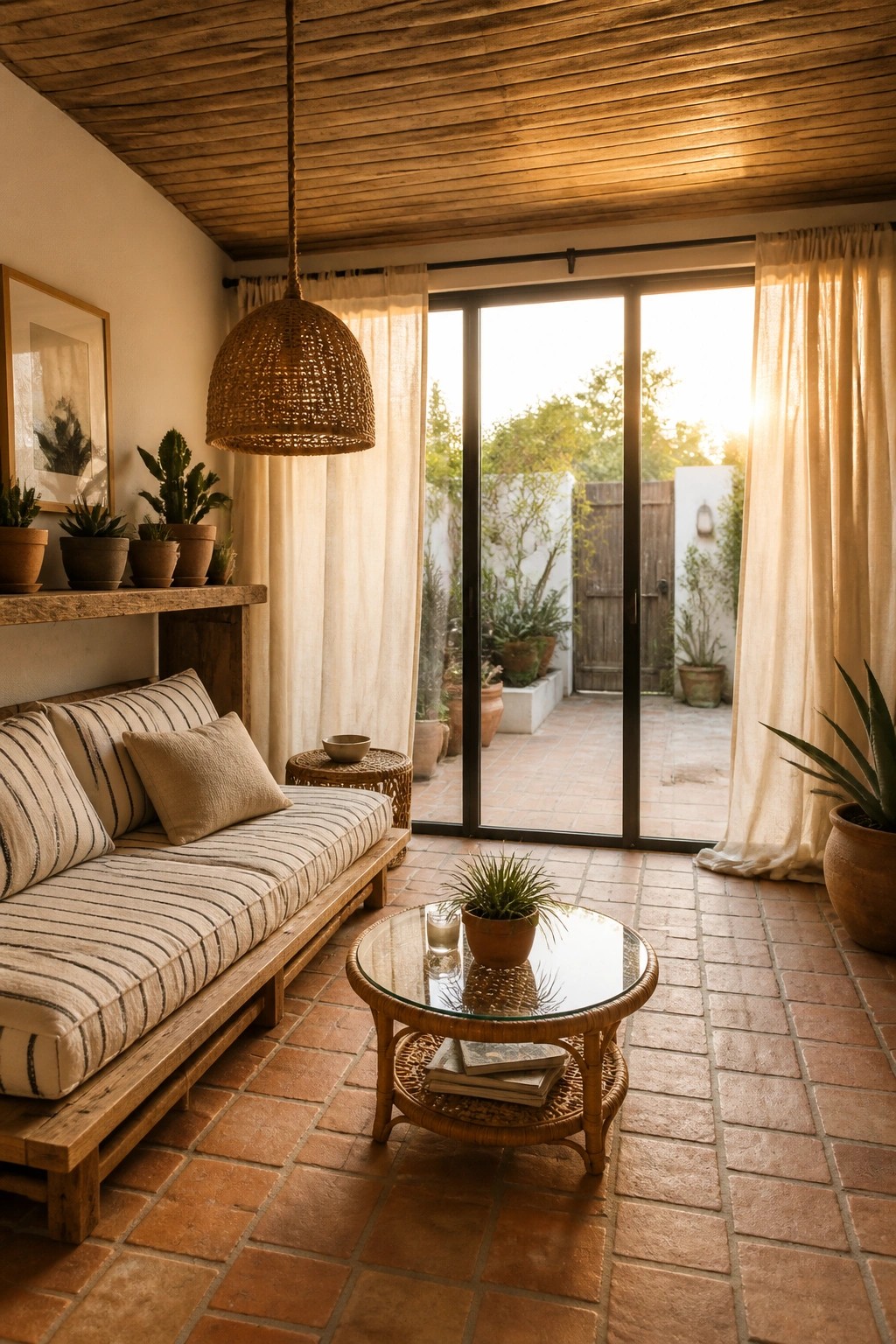
Wood slat ceilings give a room an easy sense of order without much effort. The repeating lines draw the eye upward and make the space feel more finished, especially in rooms that already have simple walls and floors.
This approach works well in sunrooms or covered porches where you want a bit of structure but still need the space to feel open. Keep the wood tone close to your flooring or main furniture so the ceiling blends in rather than stands apart.
Wood Slat Ceilings In Small Bathrooms
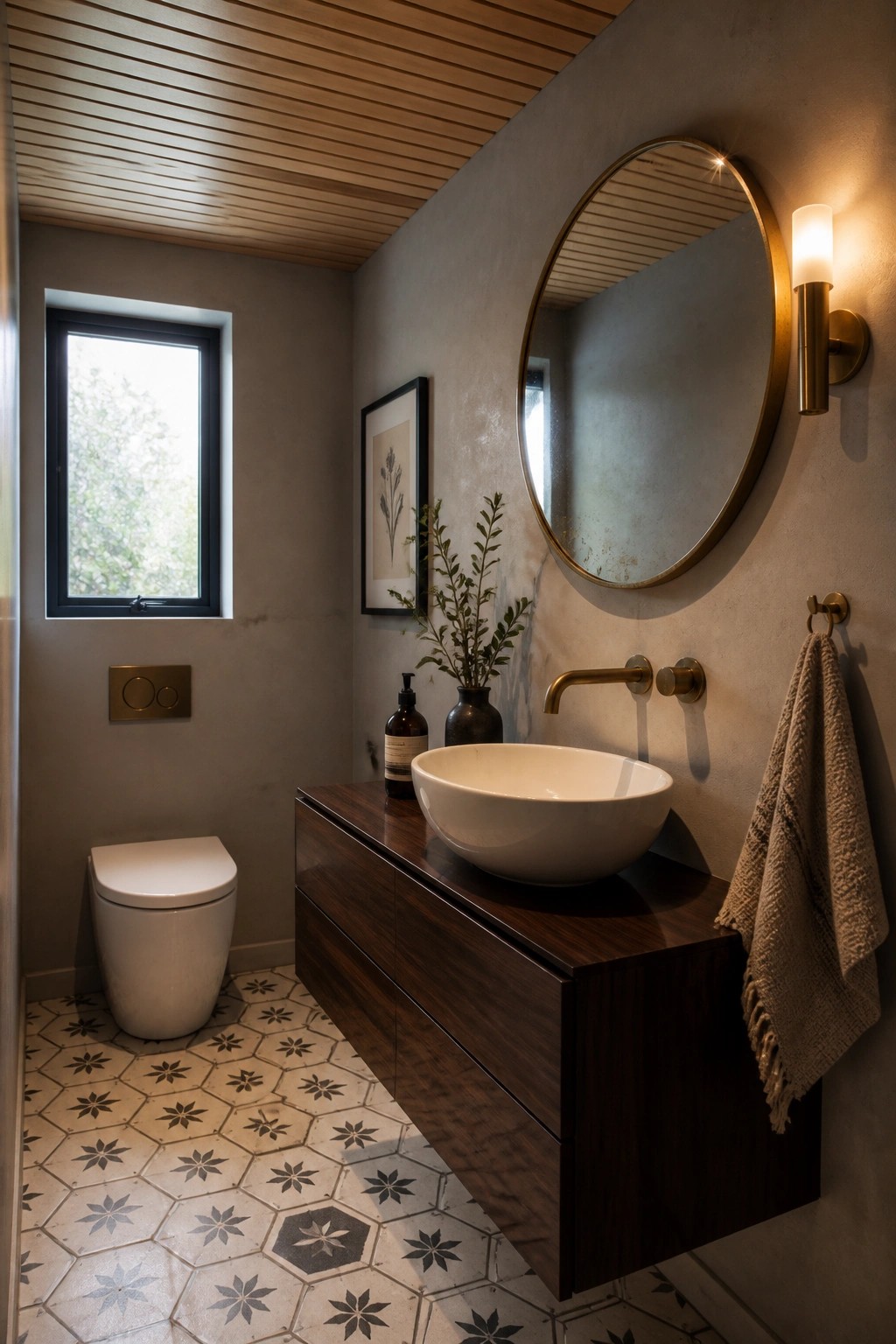
Wood slat ceilings give a room a quiet sense of order. The repeating lines add rhythm without crowding the space, which works especially well in compact rooms like bathrooms where wall options are limited.
They pair best with simple wall colors and minimal trim. Keep the rest of the materials calm so the ceiling becomes the main detail, and the lines stay the focus rather than competing with other patterns.
Curved Wood Slats For Gentle Rhythm
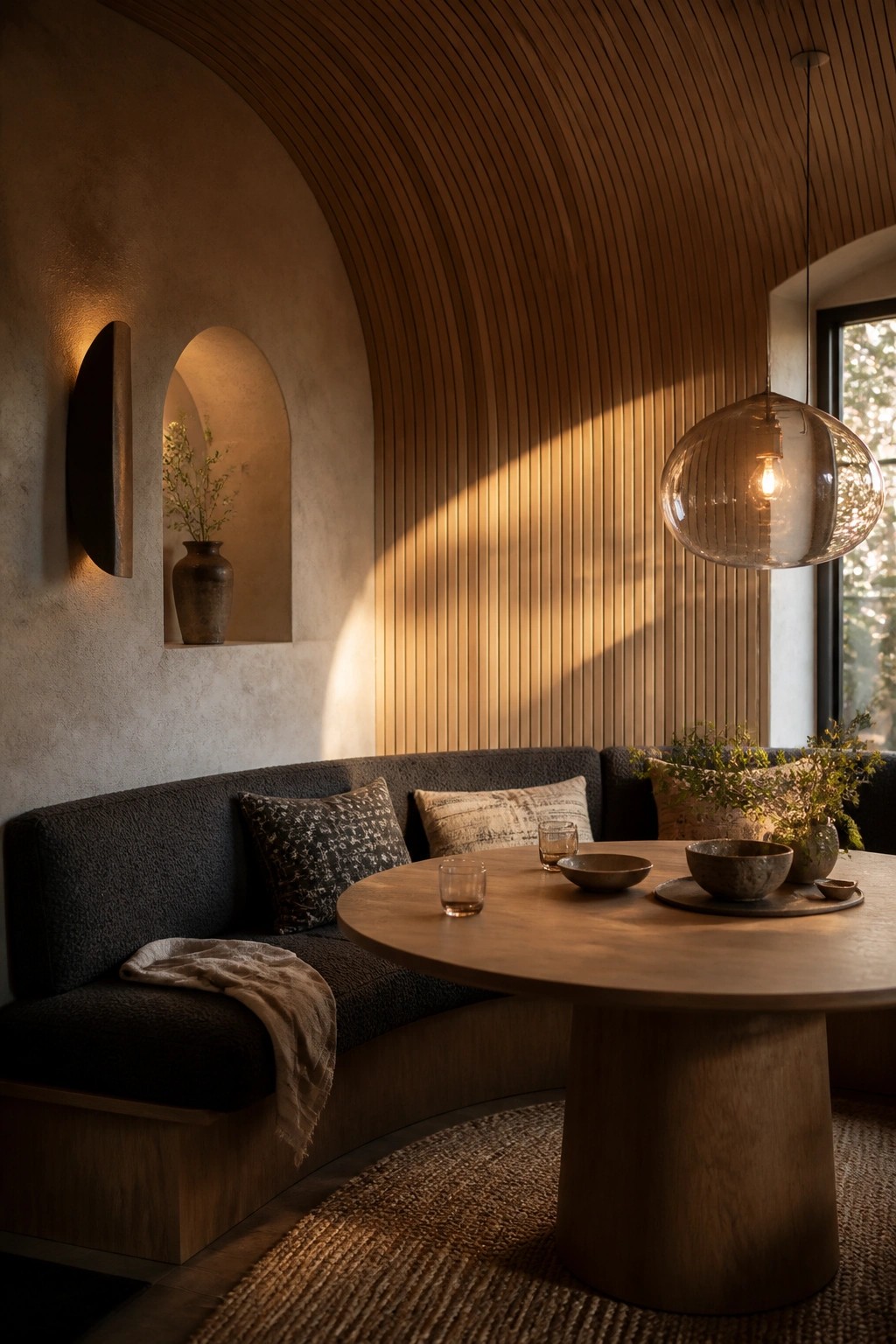
Wood slat ceilings can feel more interesting when they follow a curve instead of running straight across. The slats add movement and break up the flat plane overhead without needing extra trim or detail. This works especially well in rooms that already have rounded walls or built-in seating.
It suits homes with softer architecture rather than strict modern lines. Keep the spacing even and the finish consistent so the pattern stays calm. Avoid adding too many other textures on the walls if you want the ceiling to remain the main feature.
Wood Slat Ceilings That Add Rhythm Overhead
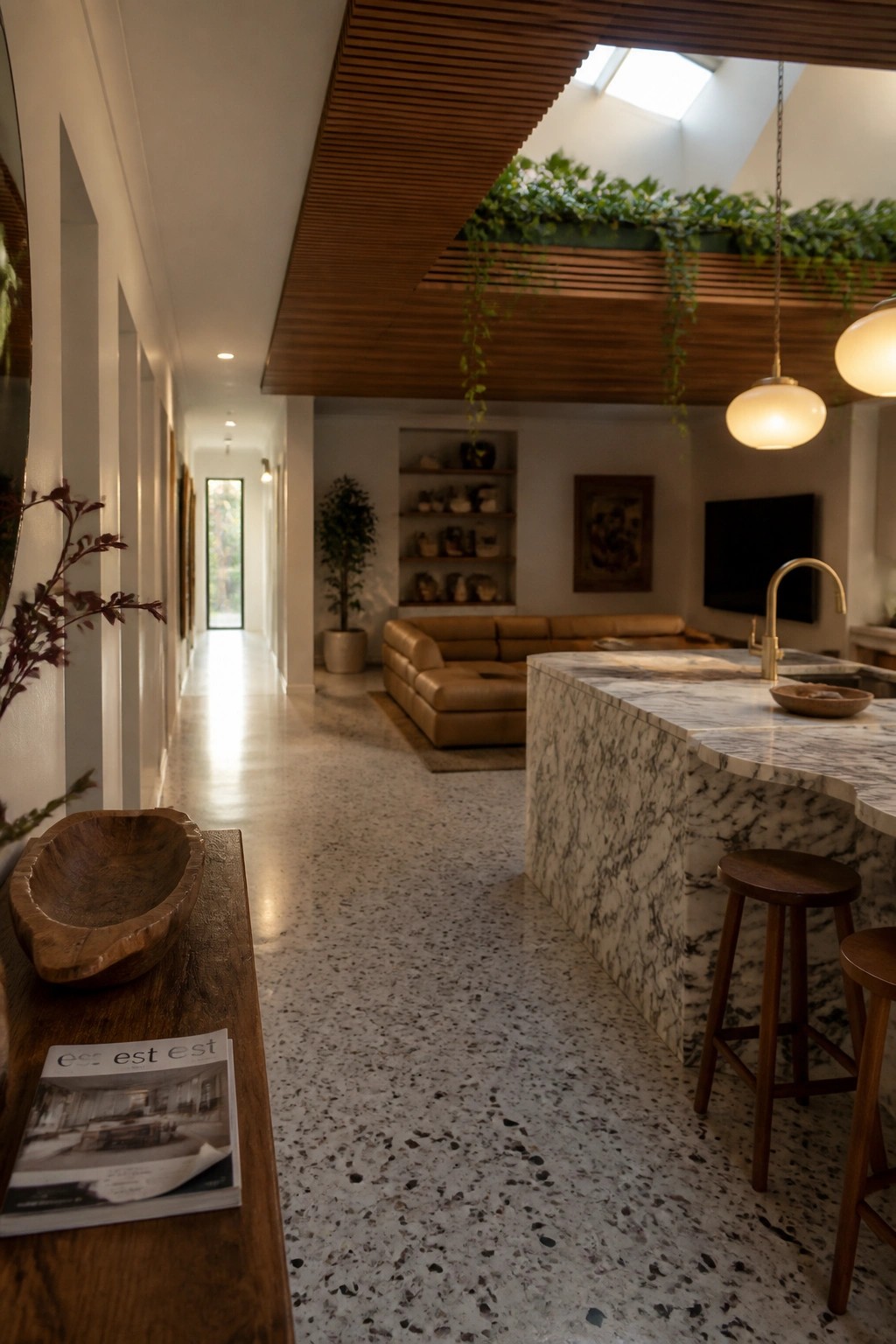
A wood slat ceiling gives an open interior more structure without adding weight. The repeated lines create movement across the space and help define the room even when walls stay open.
This works best in homes with high ceilings or skylights where the overhead detail can stand out. Keep the rest of the materials simple so the slats remain the main feature, and consider how hanging plants might interact with the lines if you want a softer layer.
Wood Slat Ceilings In Bathrooms
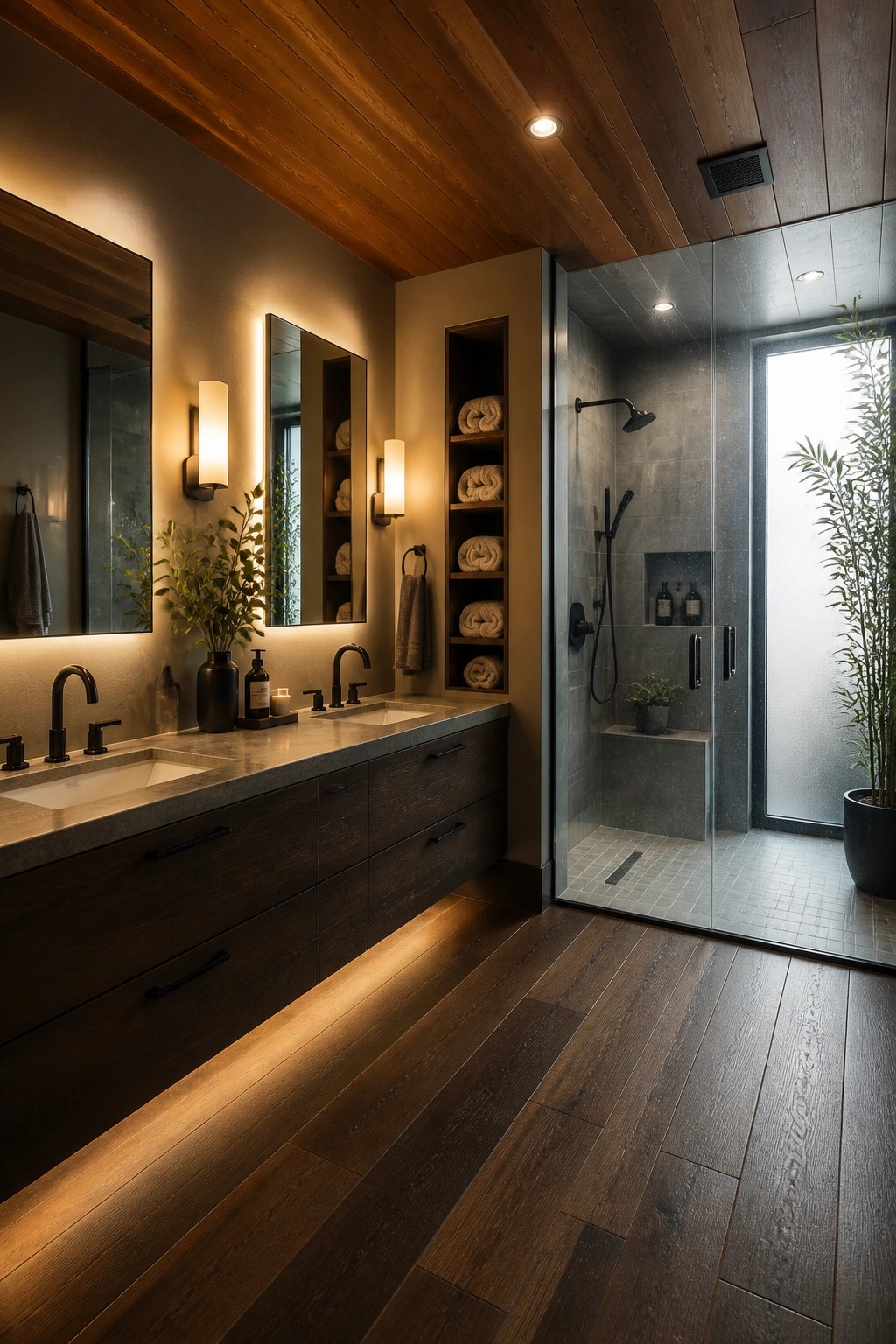
A wood slat ceiling gives a bathroom a layer of warmth that flat drywall rarely provides. The lines add subtle rhythm without crowding the space, which helps when the room already has stone counters and tile.
This works best in baths with mid-tone or darker cabinetry and fixtures. Keep the slats consistent in color with the wood tones below so the ceiling feels like a natural extension rather than an accent.
Wood Slat Ceilings In Walk-In Closets
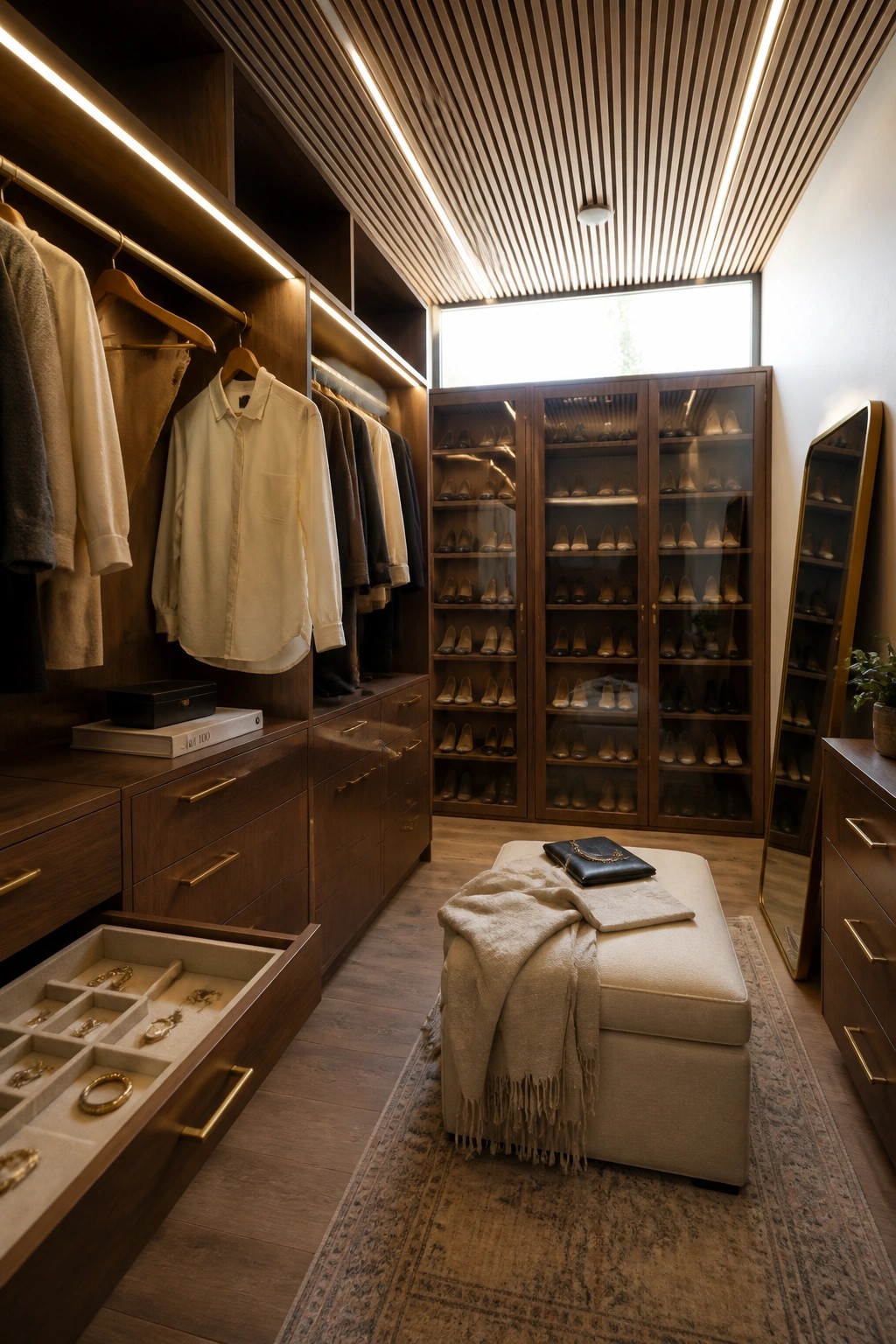
Many closets get the basics right with good storage and lighting, but the ceiling often stays plain. Running wood slats across it adds a steady rhythm that makes the room feel more complete without much extra work.
This works best in larger dressing areas where you already have wood cabinetry and want the surfaces to feel connected. Keep the slats narrow and evenly spaced, and add a simple recessed light strip between a few of them so the pattern stays visible but not overwhelming.
Wood Slats On Sloped Ceilings
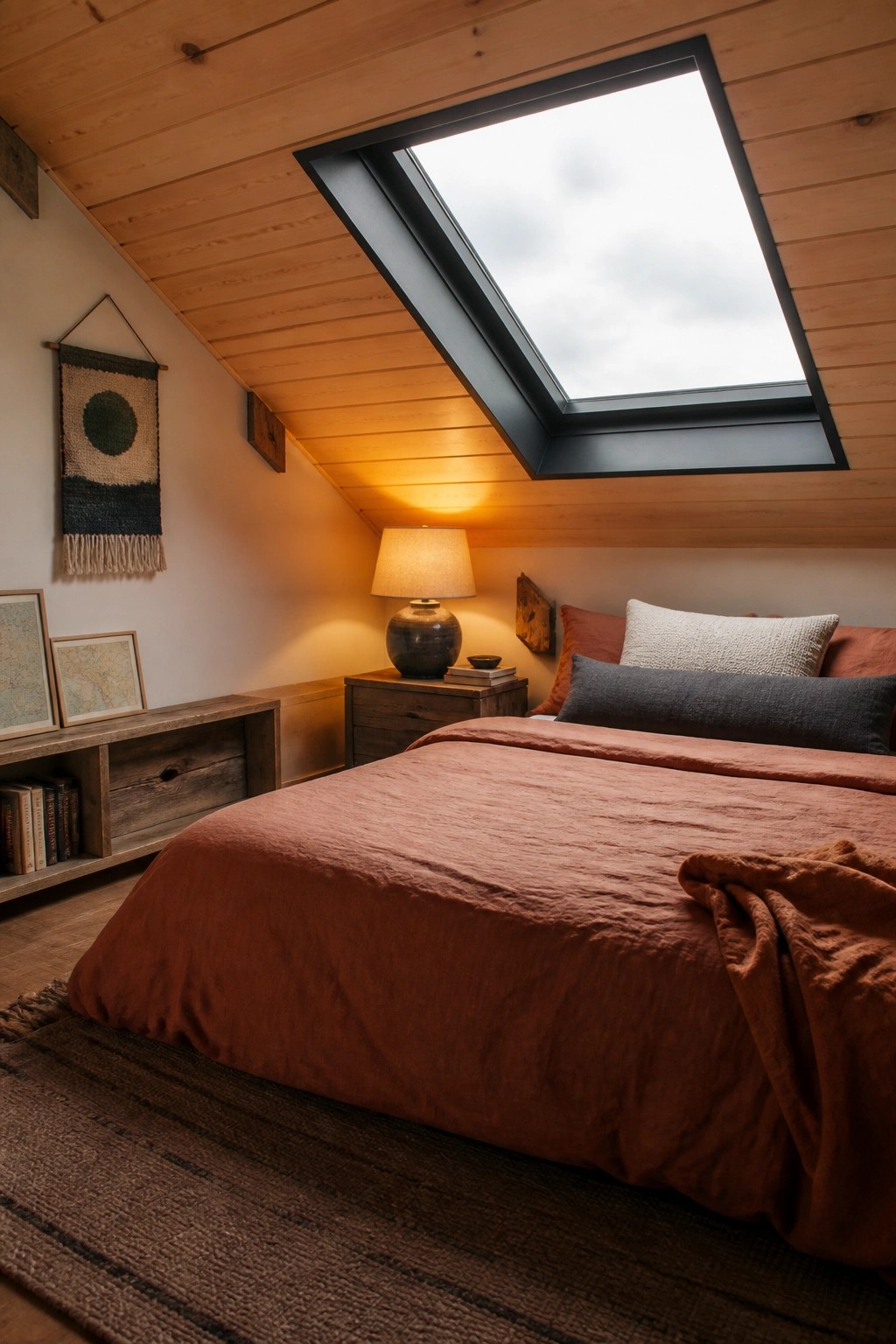
Wood slats bring structure to a sloped ceiling without making the space feel heavy. The horizontal lines follow the angle and give the room a steady rhythm that works well in smaller or tucked-away bedrooms.
This approach suits homes with exposed rooflines or attic conversions. Keep the rest of the room simple so the ceiling stays the main feature, and add a skylight if you want extra light without cutting into the pattern.
Frequently Asked Questions
Q: How do I stop wood slats from sagging after a few years? A: Pick thicker boards and secure them to sturdy furring strips every sixteen inches. Check the joists first so nothing shifts later. This setup keeps the rhythm tight without extra weight.
Q: Will these ceilings work if my room gets lots of humidity? A: Seal the wood on all sides before you hang it. Run a small fan near the ceiling on muggy days to keep air moving. The finish holds up better when moisture stays even.
Q: Can I add lights without breaking up the slat pattern? A: Tuck slim LED strips into the gaps between boards. Angle them toward the wood so the glow highlights the grain instead of casting shadows. One test row shows exactly where they look best.
Q: Do I need to repaint the whole ceiling later? A: Touch up only the exposed edges when color fades. The slats hide most wear so full recoats stay rare.
