

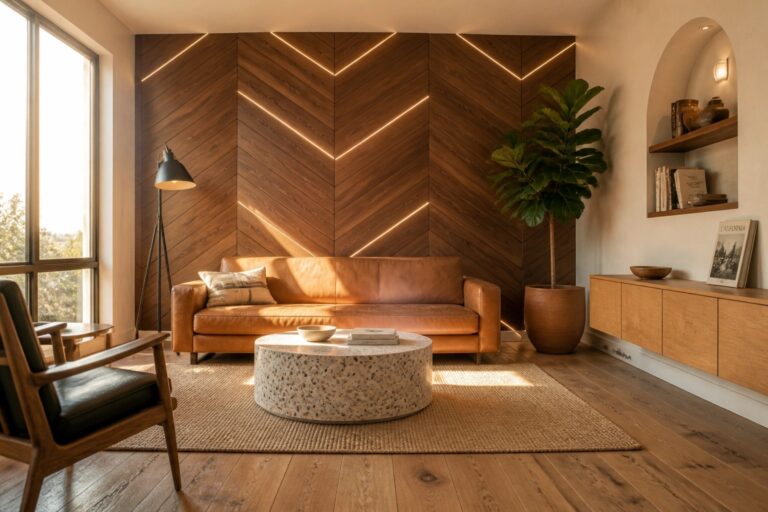
Adding wood to the walls has always struck me as one of those changes that shifts the whole balance of a room once it is in place.
Geometric designs bring lines and angles that can guide the eye without overpowering the furniture or daily use.
Some patterns just settle better than others.
I tried a simple version on one accent wall last year and noticed how the space suddenly felt more anchored during the day.
It made me pay closer attention to how the shapes interact with windows and lighting before committing to anything larger.
Hexagon Wood Wall Panels
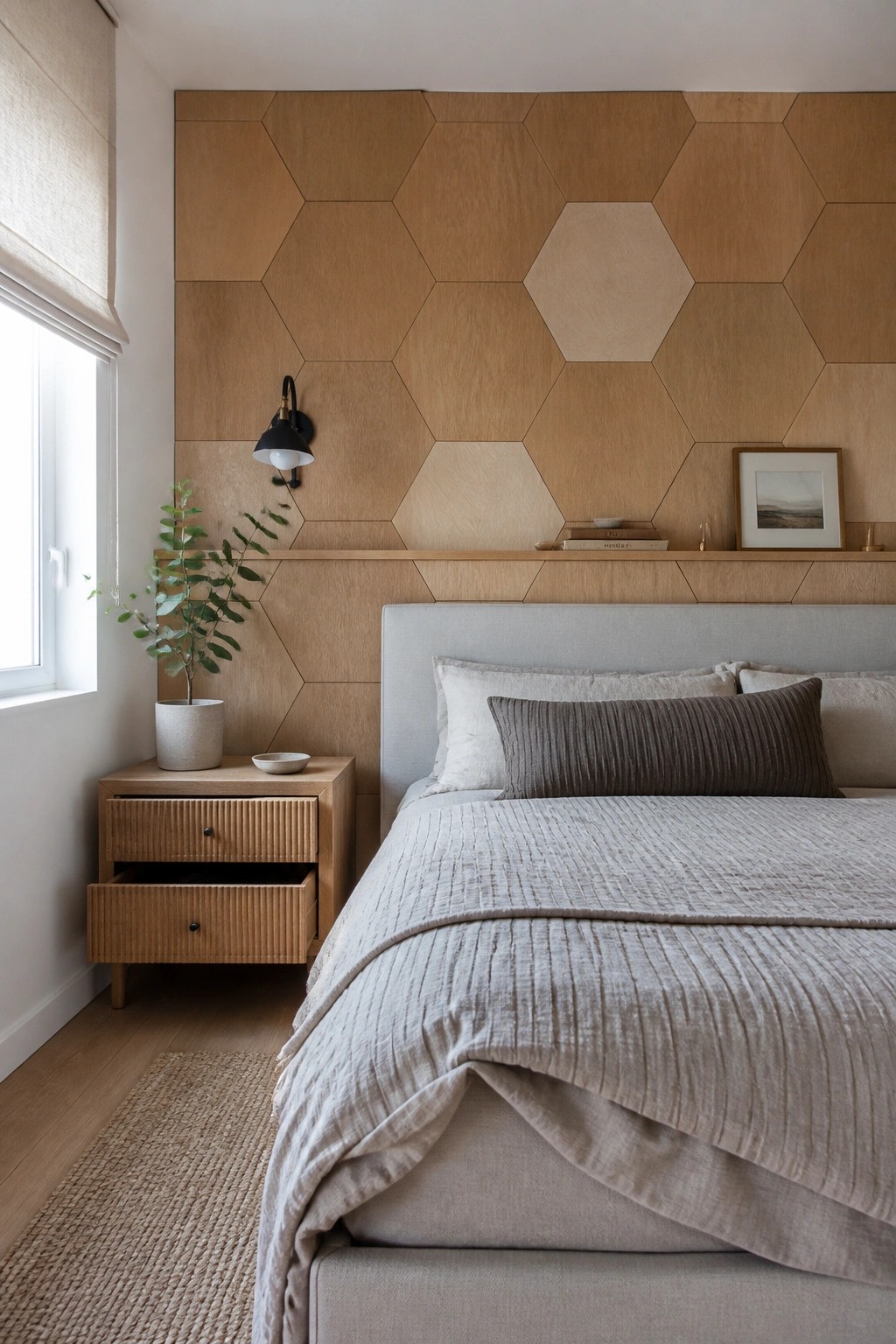
Hexagon wood panels give an accent wall a clear shape without making the room feel busy. The pattern adds texture and a sense of order that works especially well above a bed, where the eye naturally lands first.
This approach suits bedrooms with simple furniture and soft colors. It works best on a single wall so the pattern stays focused, and it pairs nicely with light wood tones that keep the overall space feeling calm rather than heavy.
Geometric Wood Walls in a Home Office
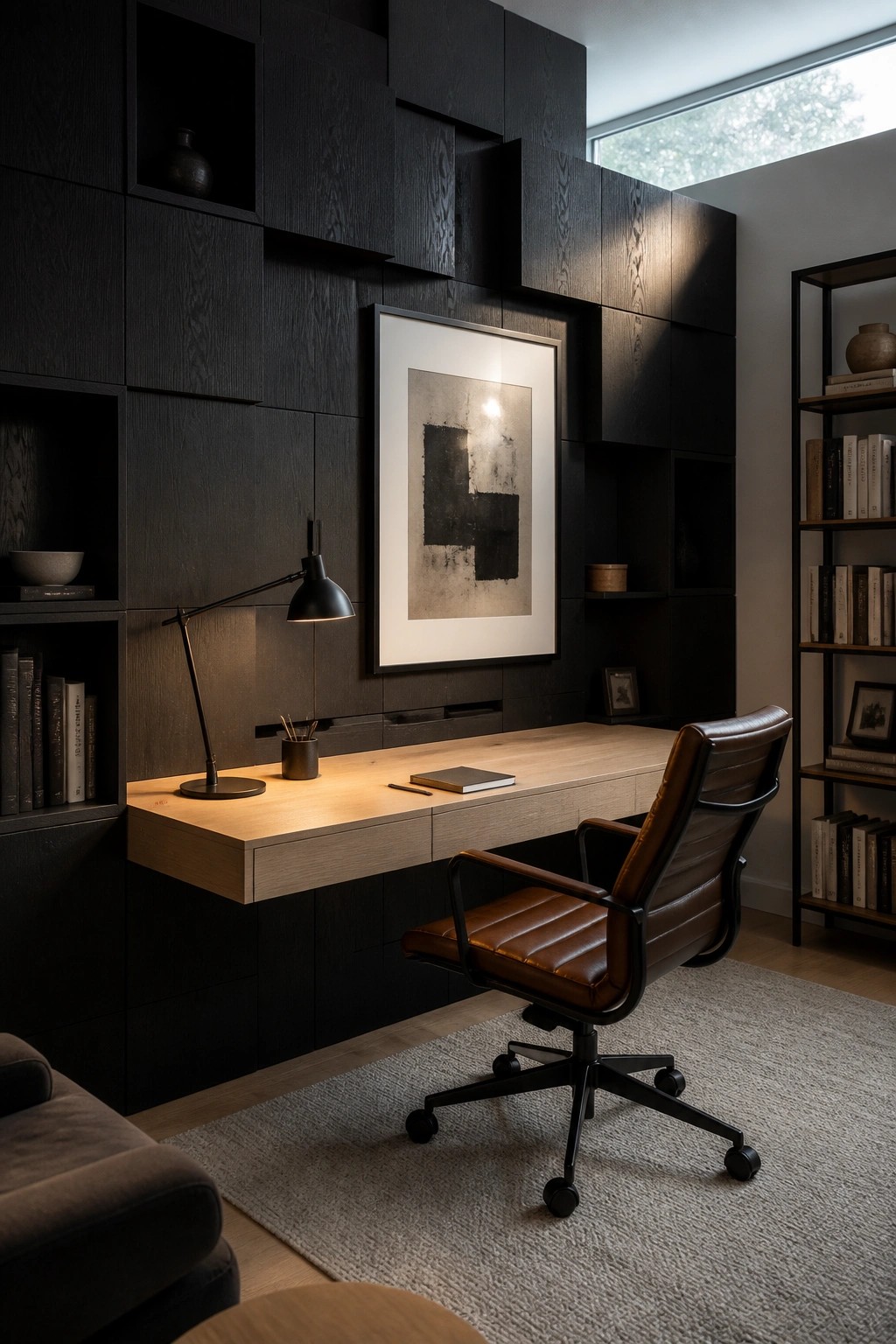
A geometric wood wall like this one works well because it gives the room structure without adding clutter. The panels sit at different depths, so the surface catches light and shadow in a way that feels built in rather than applied. It turns a plain wall into the main feature behind a desk.
This approach suits smaller work areas where you want one strong surface instead of lots of art or shelves. It pairs best with simple furniture so the wood pattern stays visible. Darker tones help the wall feel solid, but lighter finishes can open the space if the room gets less light.
Herringbone Wood Walls in Entryways
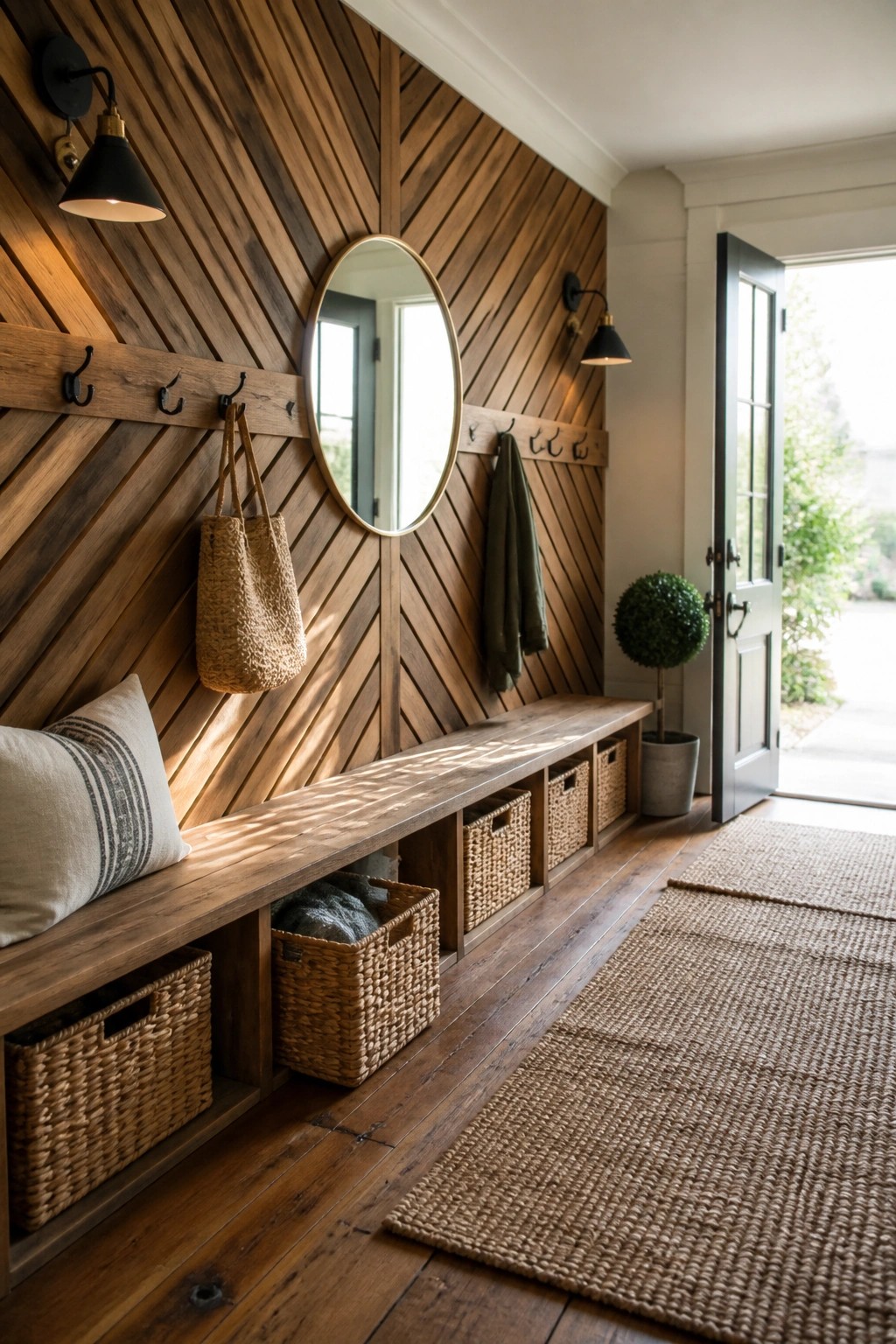
A herringbone pattern made from wood planks gives an entry wall real structure without any extra trim or paneling. The angled layout catches light in a way that makes the surface feel more dimensional, and it turns a plain wall into something that actually shapes the space around it.
This kind of wall works best in smaller transitional areas where you need one strong feature to carry the room. It pairs well with simple built-in seating and hooks because the pattern already does the visual work, so the rest of the space can stay fairly plain. Just keep the wood tone consistent with any nearby flooring or cabinetry so the pattern reads as intentional rather than busy.
Radial Wood Wall Designs Add Architectural Interest
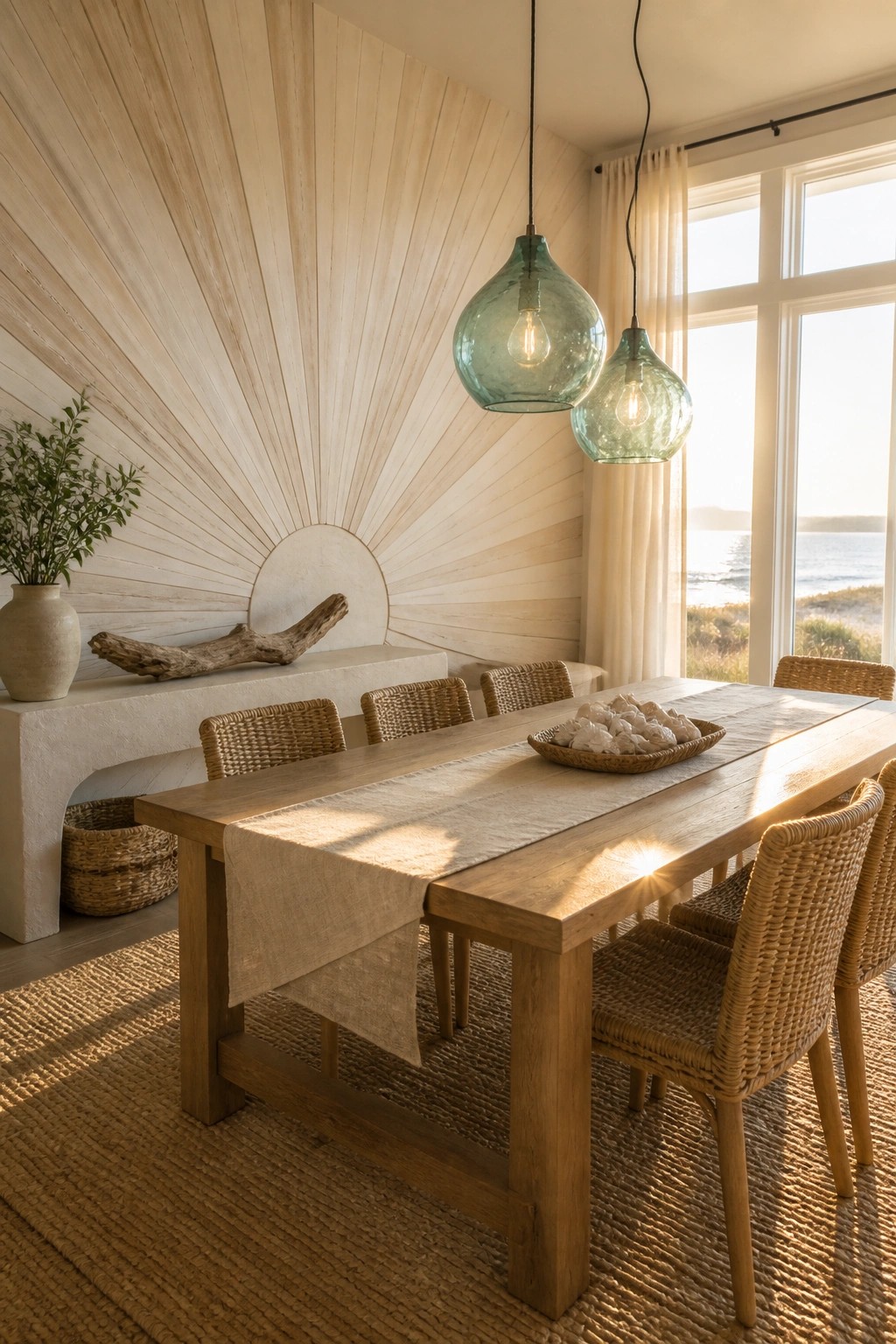
A radial wood pattern on an accent wall gives a room strong shape without needing extra trim or heavy furniture. The lines draw the eye upward and make the space feel more structured while still keeping a natural look.
This approach works best in dining areas or living rooms where the wall can serve as a quiet focal point. It suits homes that already lean toward wood tones and simple furnishings, and it helps balance out large windows or open layouts. Keep the rest of the room light so the pattern stays the main feature.
Geometric Wood Walls In Nurseries
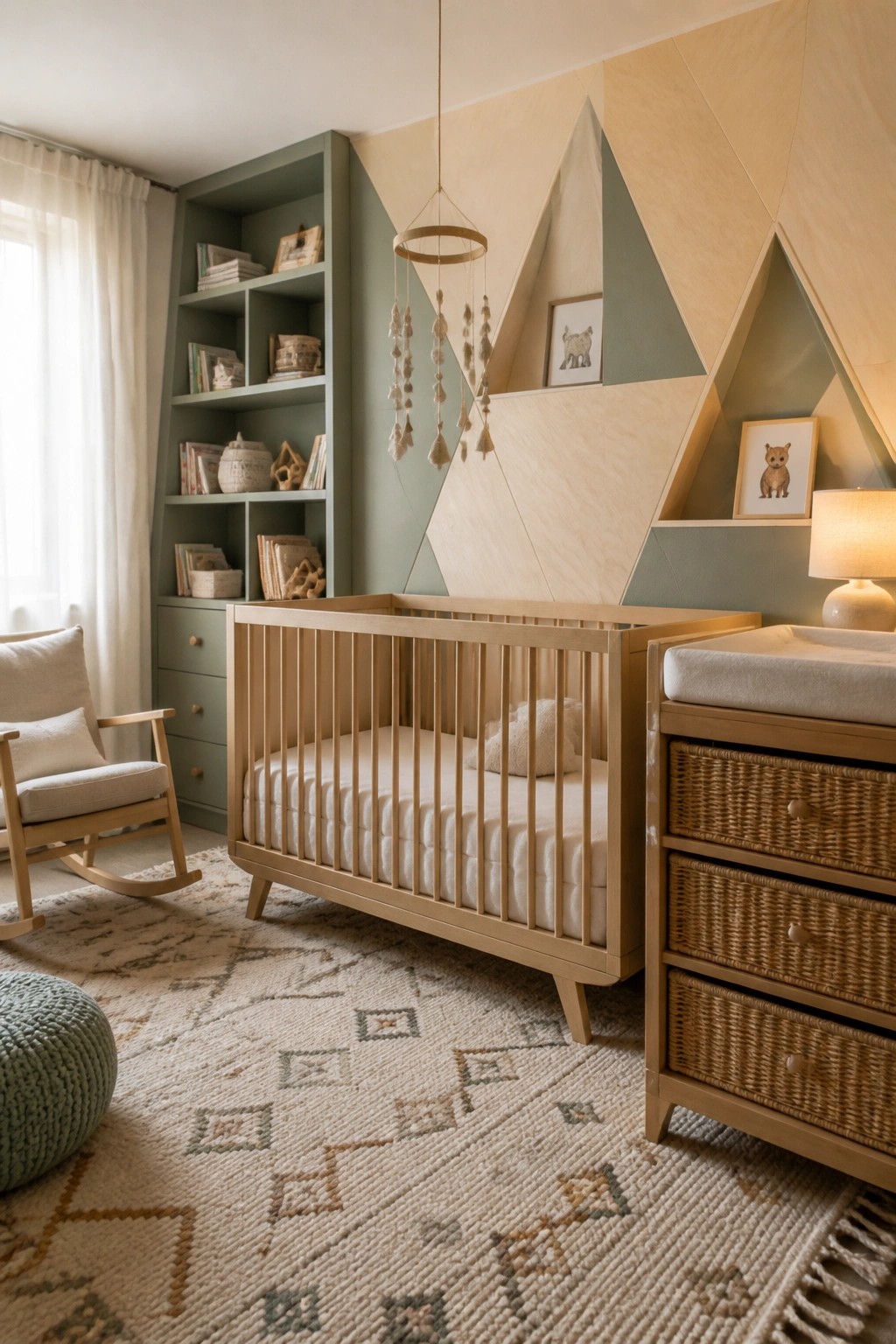
A geometric wood wall gives a nursery real structure without adding clutter. The angled panels create depth and keep the room from feeling flat, especially when the rest of the space stays simple with soft textiles and light wood furniture.
This approach works best in smaller rooms where one strong wall can carry the look. Stick to muted wood tones and avoid filling every shelf so the pattern stays the main feature.
Vertical Wood Slats Add Interest To Laundry Rooms
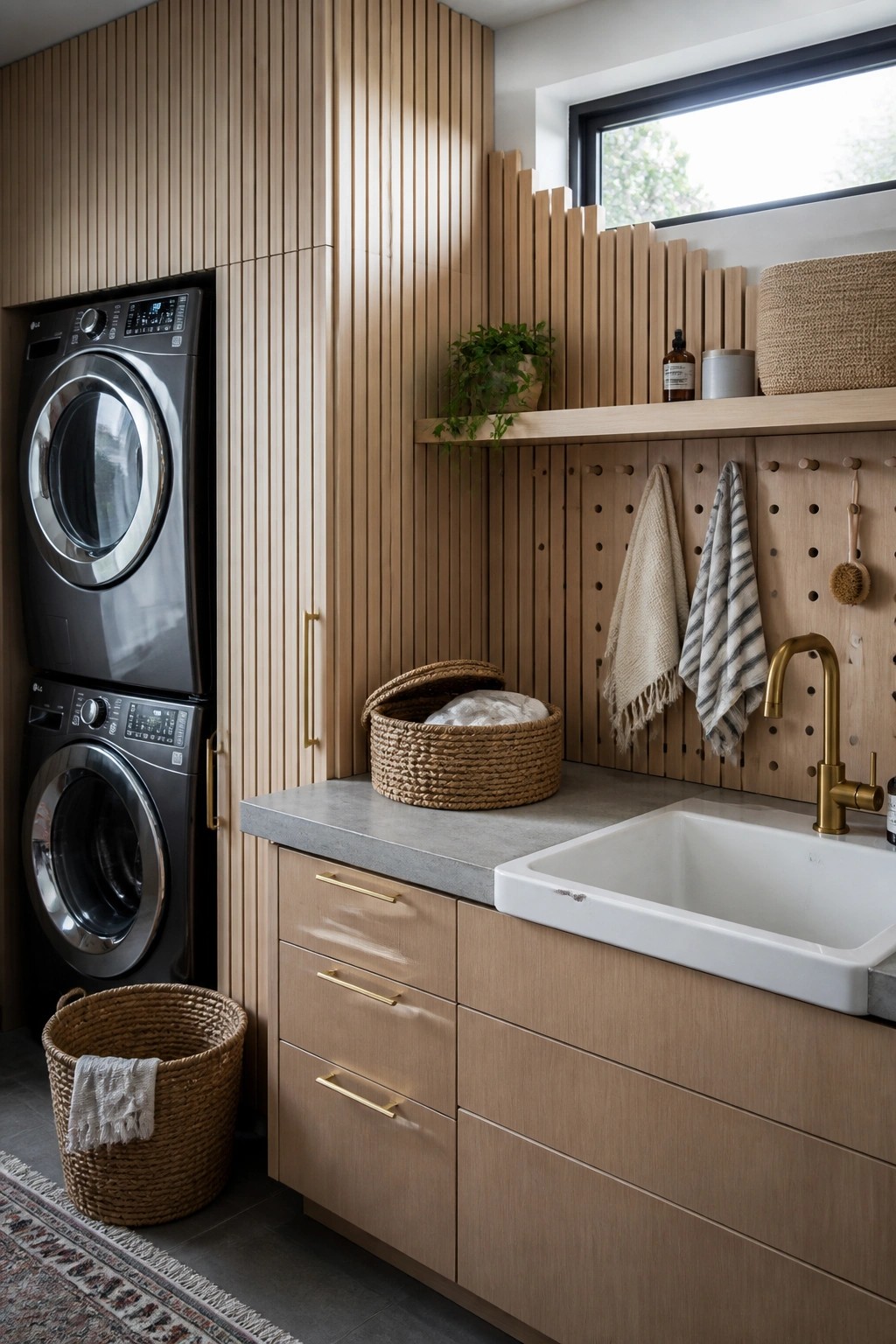
Many laundry rooms get plain walls because they feel like purely functional spaces. Vertical wood slats change that by bringing a simple linear pattern that adds architecture without crowding the room.
This approach works well when the rest of the space stays fairly simple. It pairs easily with basic cabinets and helps the room feel more finished. Just keep the wood sealed if the area sees any moisture.
Geometric Wood Walls In Bathrooms
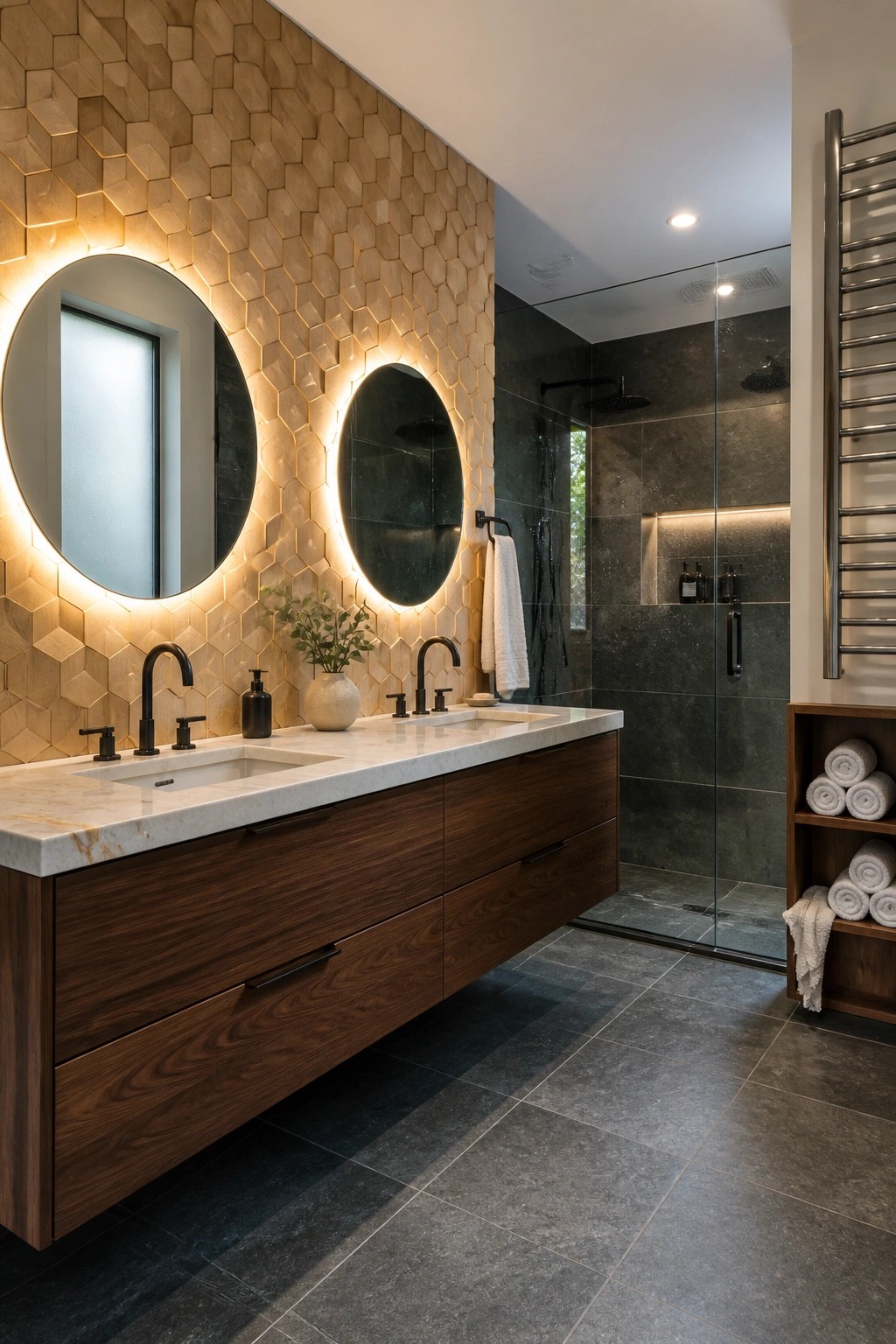
A geometric wood wall gives a bathroom real architectural weight without needing extra trim or built-ins. The pattern catches light from multiple angles and turns one surface into the clear focal point of the room.
This approach works best when the rest of the space stays simple so the wood can do the talking. It suits modern homes that already lean toward natural materials and clean lines.
Geometric Wood Paneling on Kitchen Walls
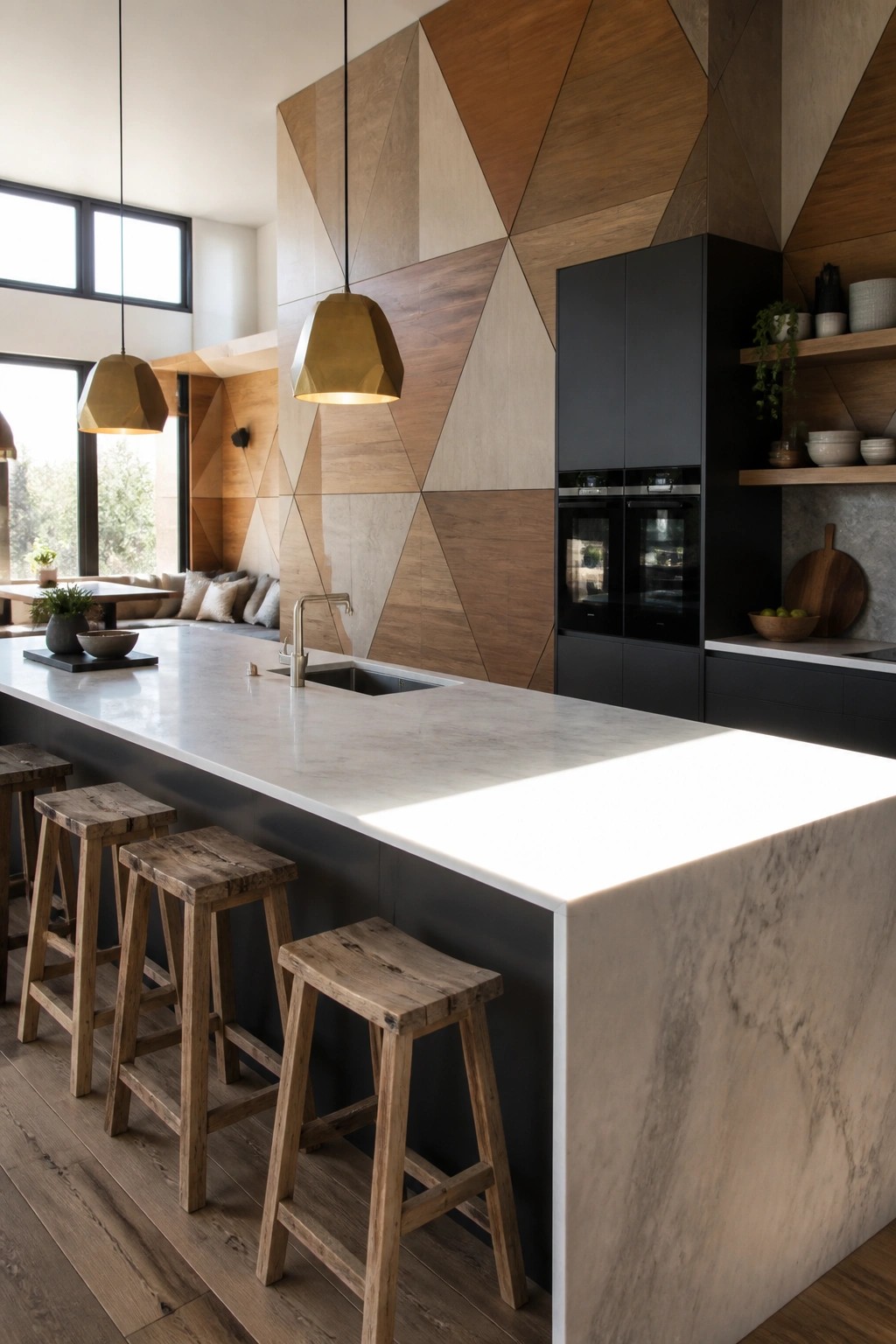
One way to add real architectural interest without a full renovation is to cover one wall with geometric wood panels. The pattern brings texture and depth while the natural wood tones keep the kitchen feeling warm and grounded.
This works especially well in open layouts where the kitchen shares space with living areas. Use it on a single wall behind the island or counters so the pattern stays focused and does not compete with cabinets or other surfaces.
Arched Wood Paneling Adds Architectural Detail
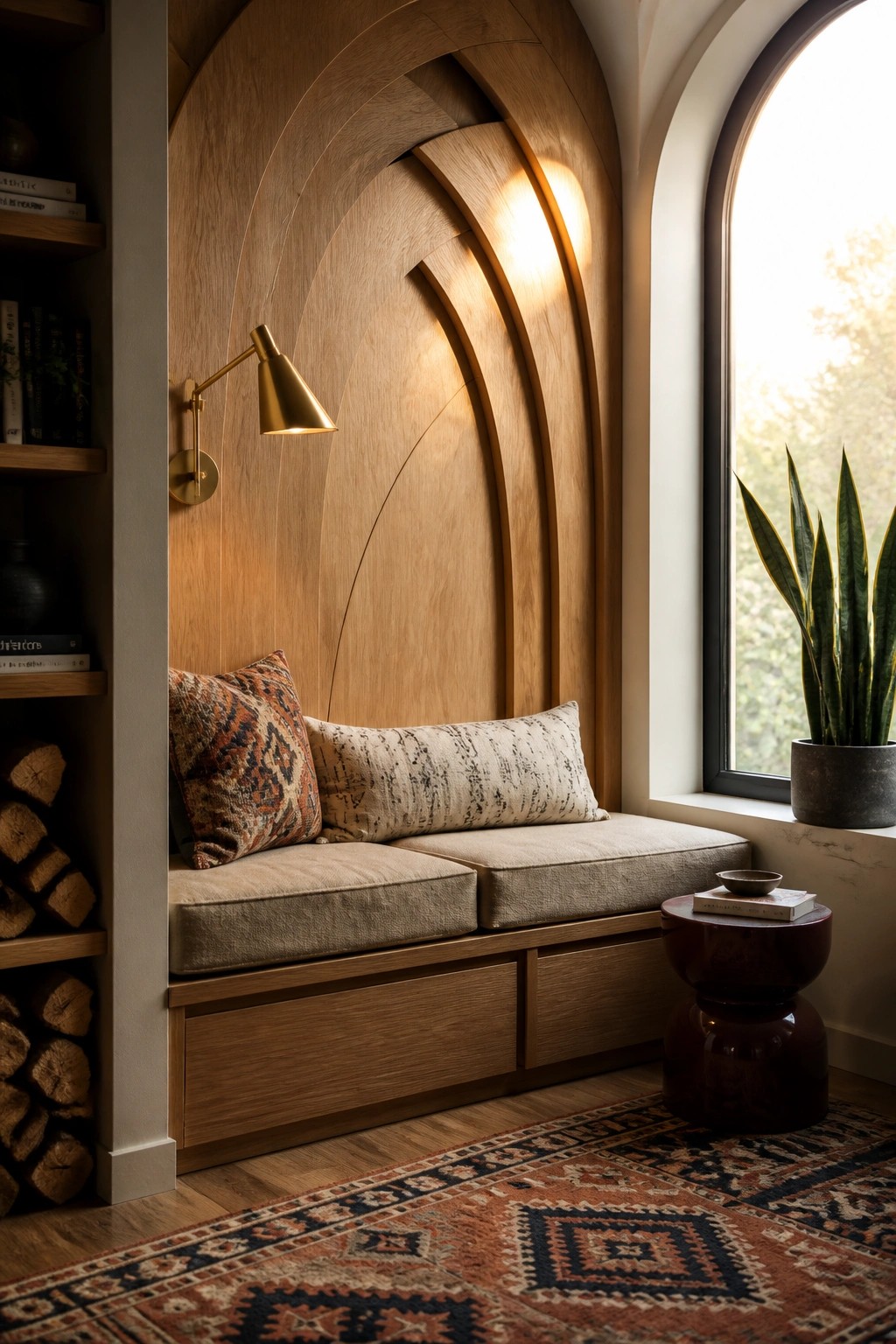
Curved wood panels arranged in a series of arches can turn a flat wall into a strong focal point. The design gives the surface depth and shape while keeping the overall look simple and natural. It works especially well when paired with a built-in bench that fits right into the lower section.
This approach suits smaller rooms or quiet corners where you want something more than plain drywall. It looks best in homes that already use wood tones or want a calm, structured feel without adding lots of separate pieces. Keep the curves clean so the pattern stays bold but not busy.
Geometric Wood Paneling On Bedroom Walls
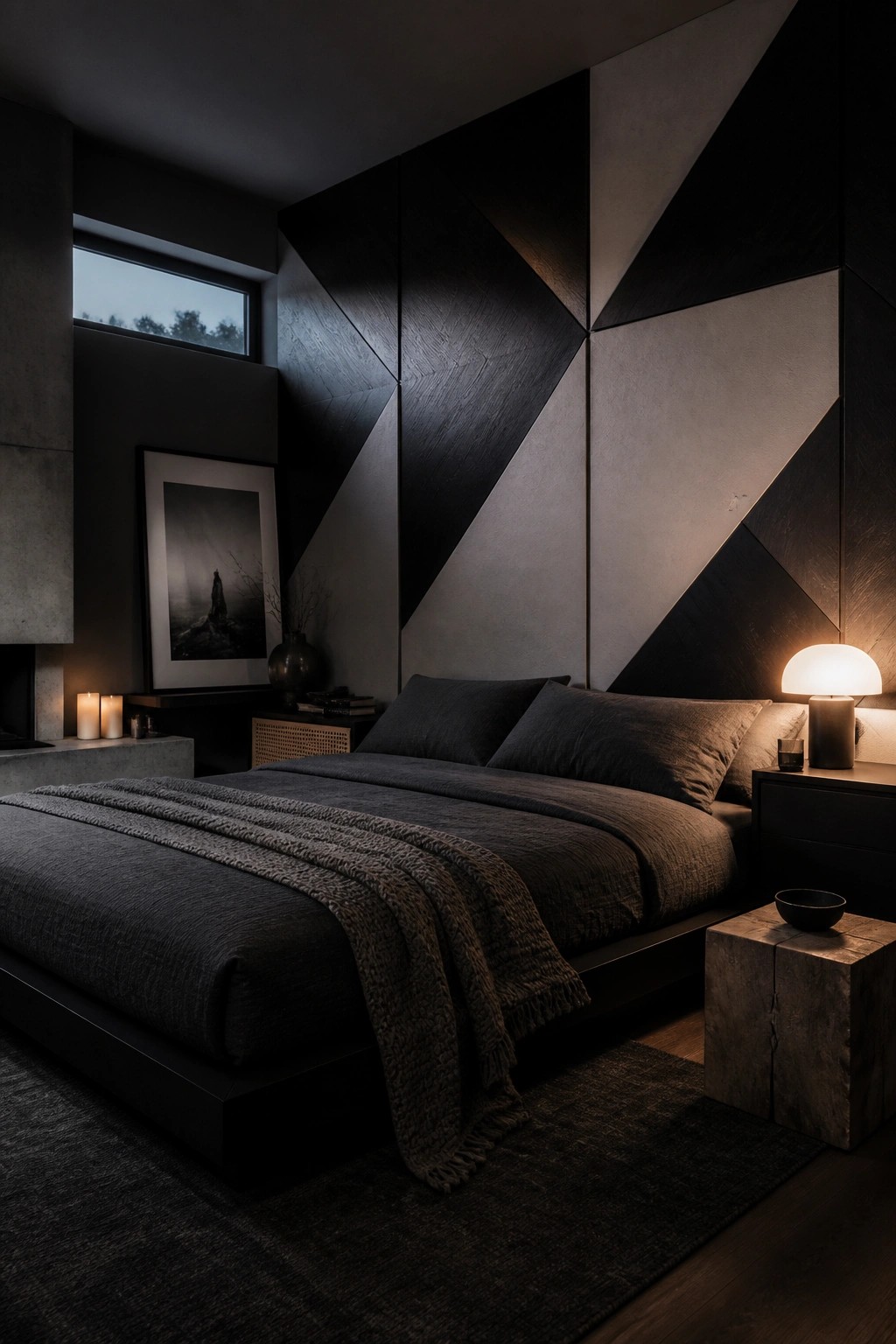
A geometric wood wall brings real structure to a bedroom without adding clutter. The angled panels create depth and movement that a flat painted wall just cannot match, especially when the wood tones stay dark and moody.
This approach works best in rooms where you want one strong focal point. Keep the rest of the space simple so the pattern does not feel busy, and test the scale first since large triangles can shrink a smaller room.
Geometric Wood Walls In Bathrooms
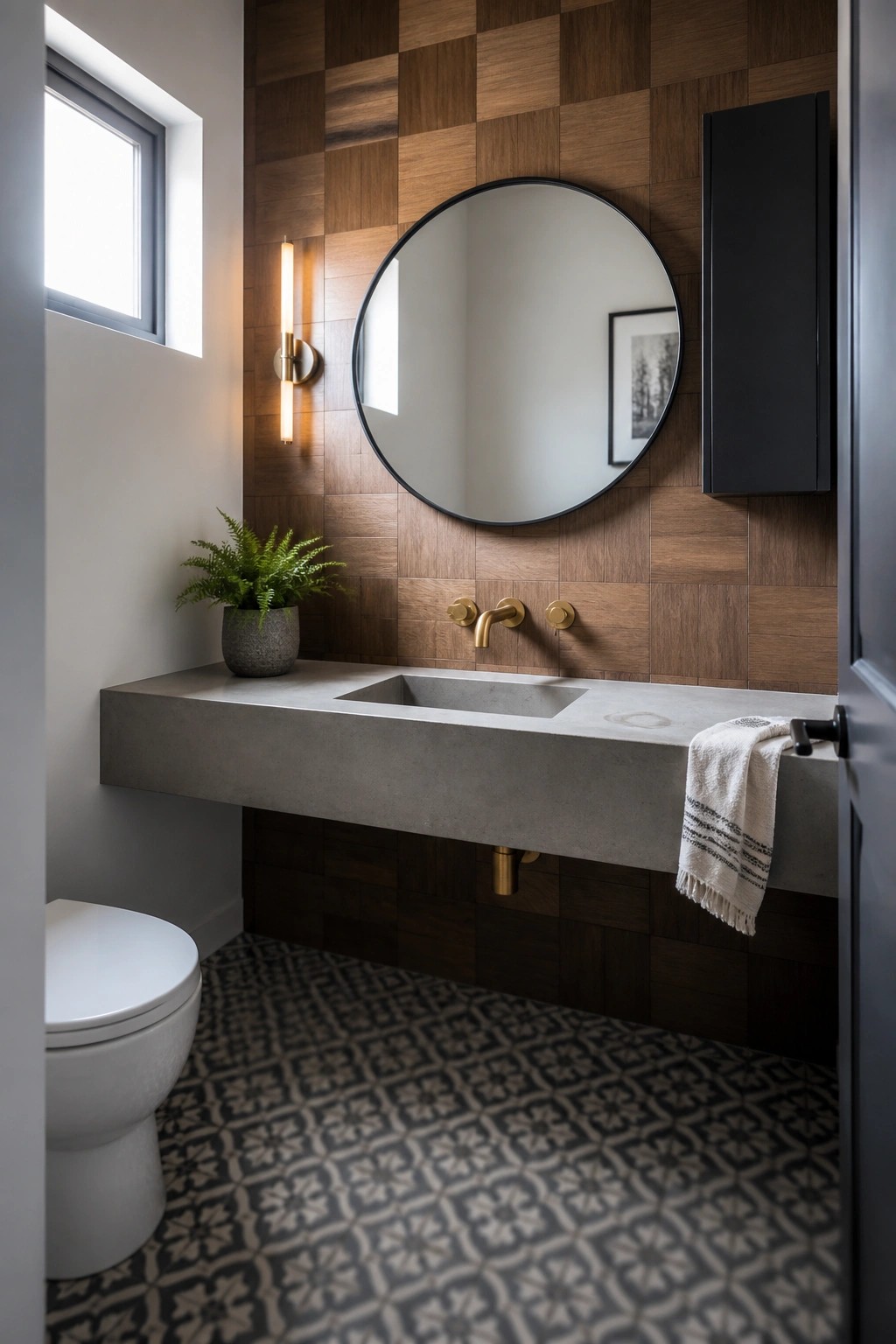
A geometric wood wall can give a bathroom real architectural presence without needing extra trim or molding. The square tiles arranged in a shifting grid add texture and depth that makes the room feel more finished and considered.
This approach works best in smaller spaces like powder rooms where the pattern can cover a full wall without overwhelming the eye. Keep the rest of the finishes simple so the wood stays the main feature.
Geometric Wood Walls Add Structure
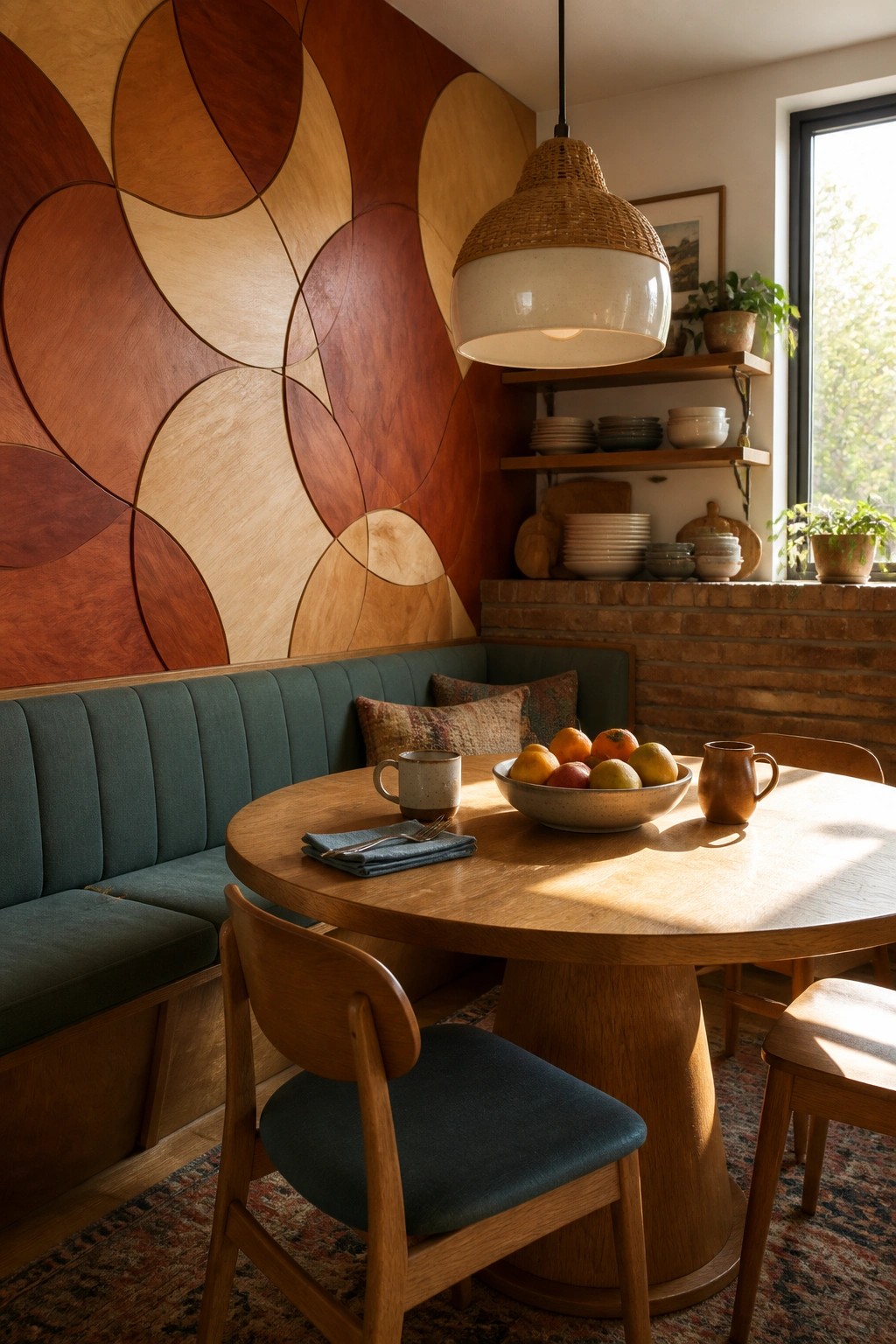
A large geometric wood wall like this one gives a room real presence without needing lots of extra trim or detail. The overlapping shapes create movement across the surface and make the space feel more finished and intentional.
This approach works best on a single feature wall in a dining area or living room. Keep the rest of the finishes simple so the pattern stays the focus, and choose wood tones that match your existing furniture for a cohesive look.
Geometric Wood Paneling Adds Depth To A Room
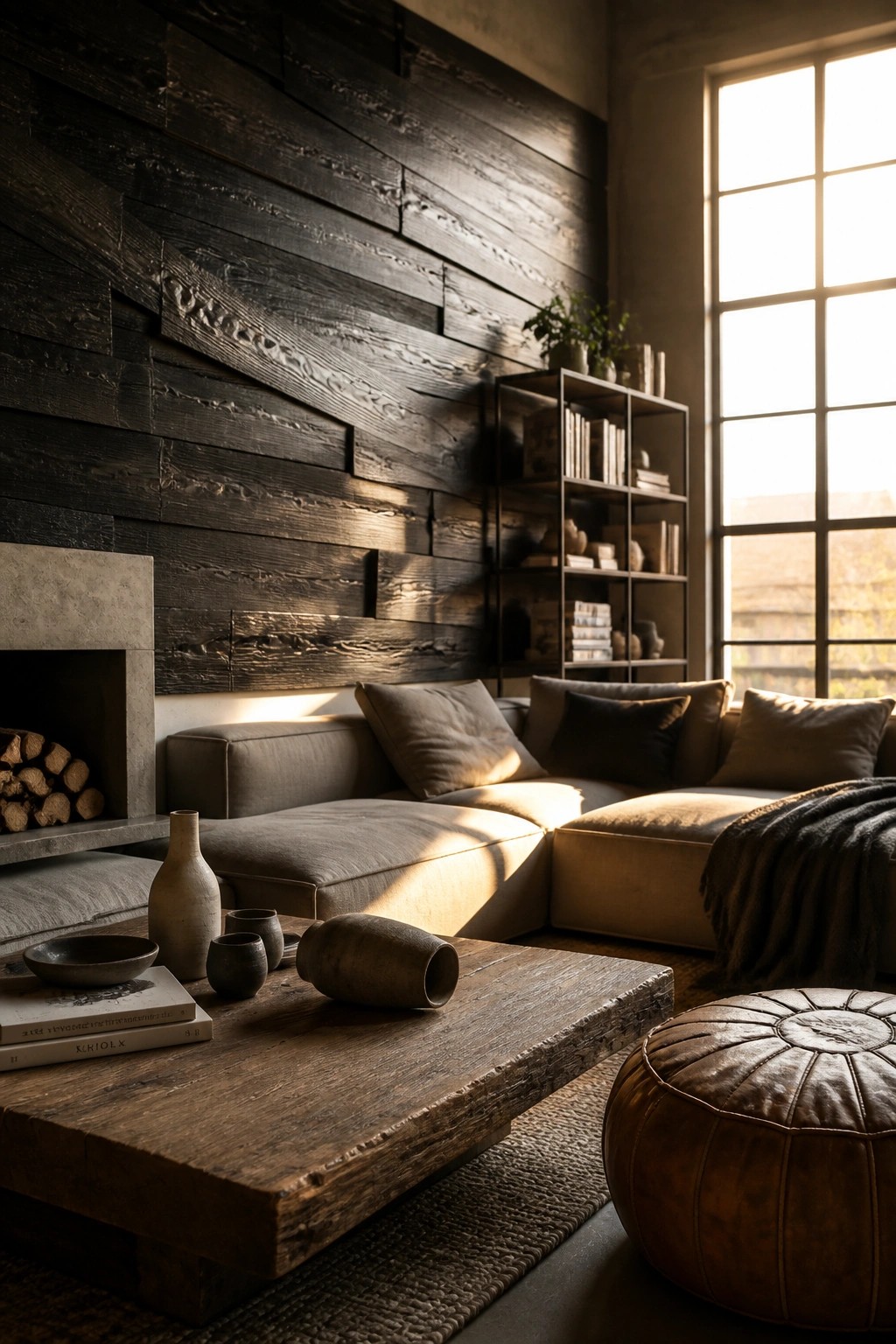
Many homes feel flat when all the walls are the same, and a geometric wood wall fixes that by giving one surface real texture and shape. The planks sit at different angles and depths so light hits them unevenly and the whole thing feels more built in than just painted drywall.
This works best in living rooms or family spaces where you already have simple furniture and neutral colors. Keep the rest of the room quiet so the wood stays the main feature, and test a small section first since the pattern can feel busy if the room is small or already full of other textures.
Vertical Wood Slats Add Depth to Hallways
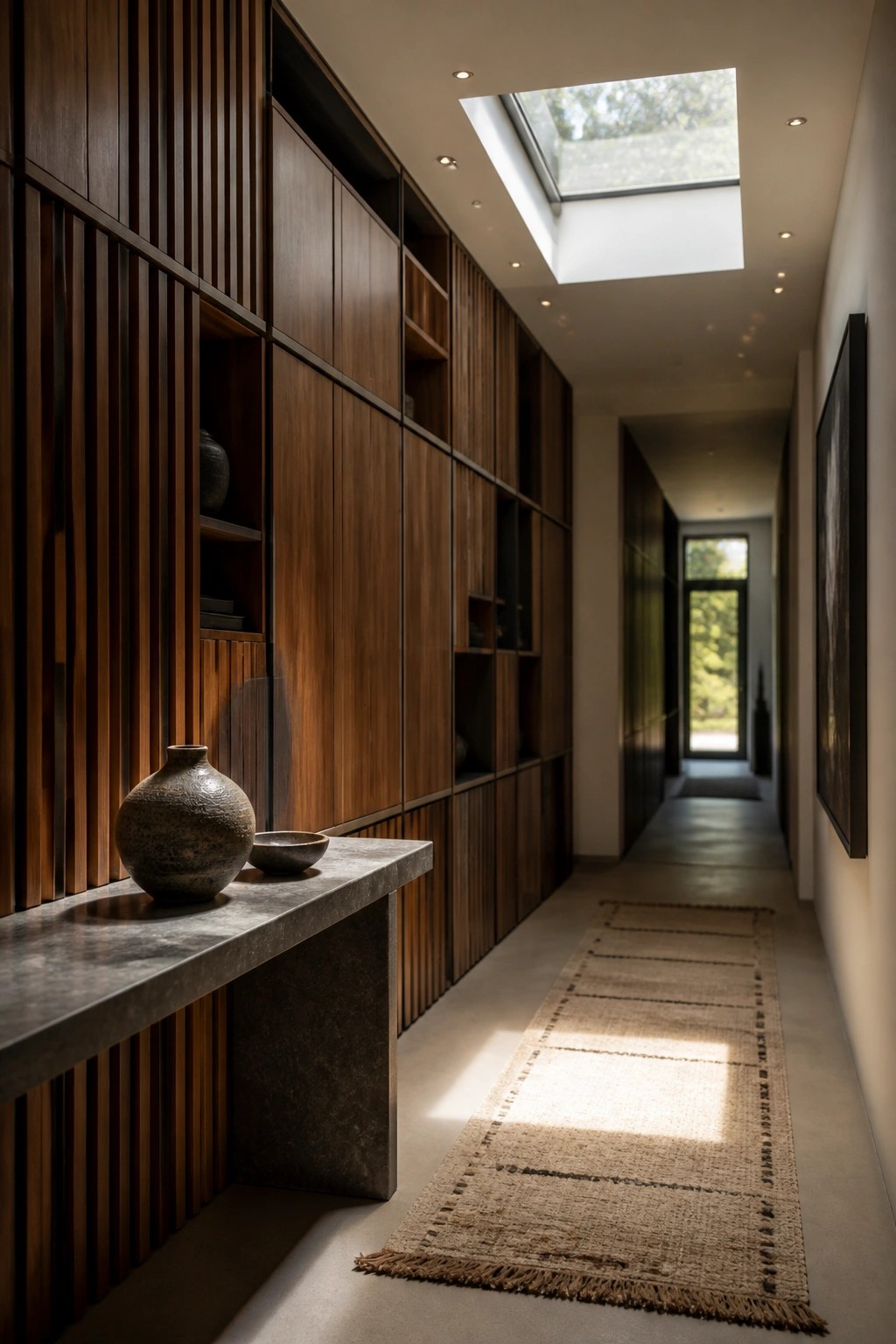
Vertical wood slats on a wall can turn a plain hallway into something more structured without much extra effort. The lines break up the length of the space and add texture that feels solid rather than flat. This approach works especially well when the slats are paired with built-in shelves so the wall serves two purposes at once.
It suits homes that already lean modern or minimalist since the clean lines keep things orderly. Try it in a narrow corridor where you want storage but do not want to add separate furniture that would crowd the floor. Keep the finish consistent so the whole wall reads as one piece rather than a collection of parts.
Angled Wood Built-Ins Add Storage And Shape
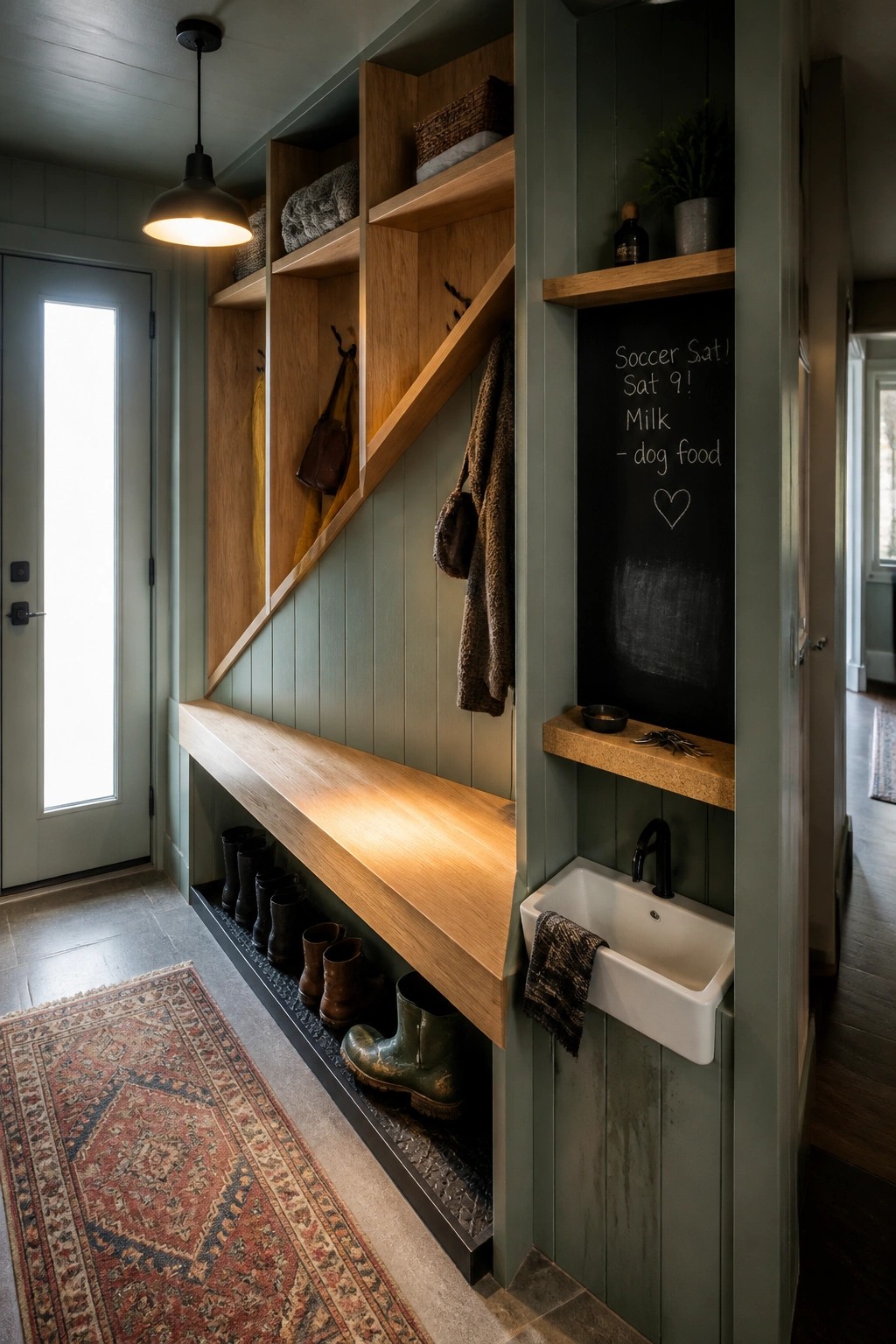
Built-in wood shelving with angled sections gives a wall both storage and a clear geometric pattern. The wood stands out against the painted surface and creates useful compartments without needing extra furniture. This approach works especially well in entry areas where coats, bags, and boots need a place to land.
It suits homes that want practical storage without a heavy look. Keep the angles simple so the shelves stay easy to use, and match the wood tone to other trim in the room. Avoid crowding the compartments or the shape can start to feel busy.
Geometric Wood Walls In The Bathroom
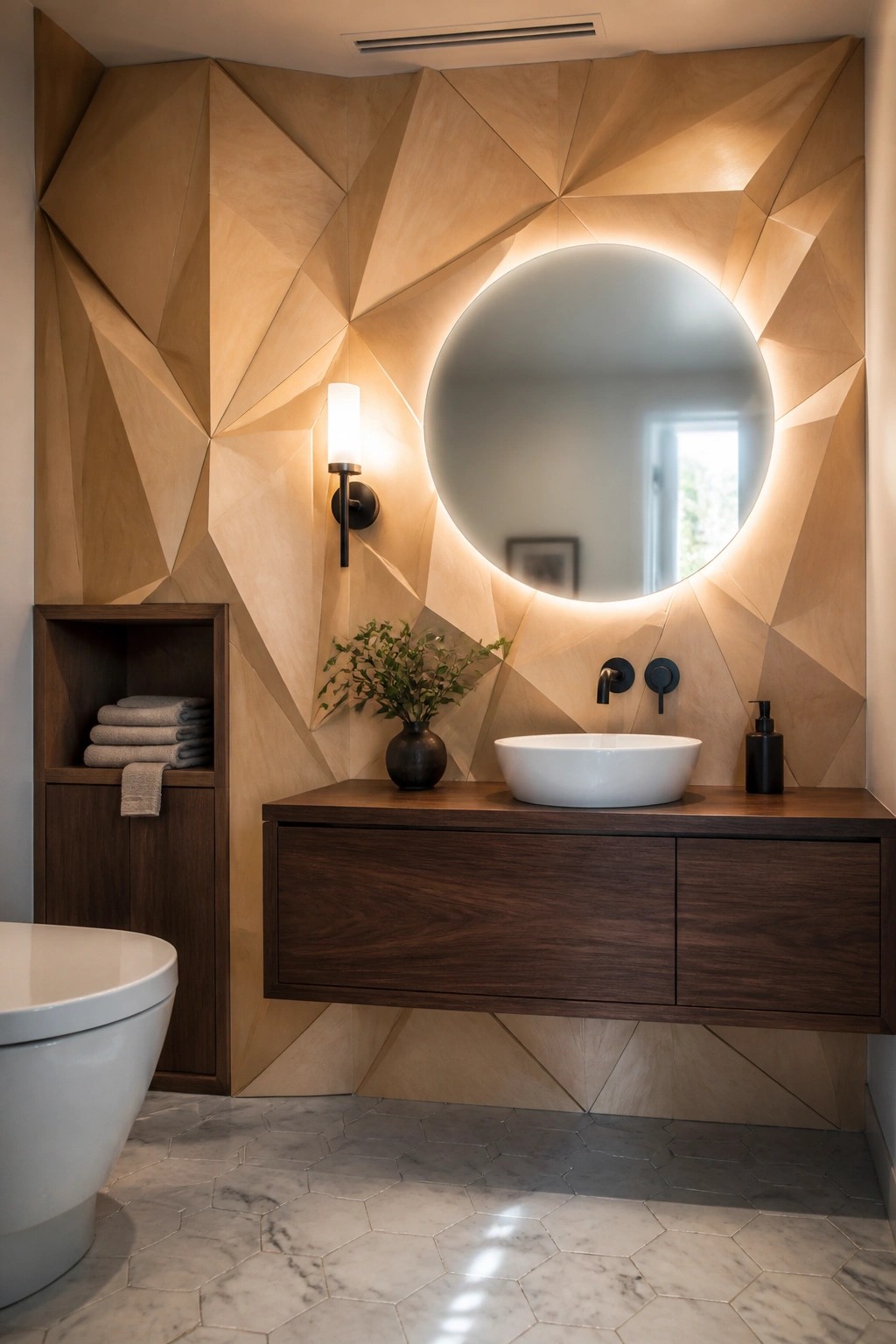
A geometric wood wall works well when you want one strong surface to carry the room. The angled panels catch light and shadow in a way that feels built in rather than added on, giving the space more depth than a flat painted wall would.
This approach suits smaller rooms like powder rooms or guest baths where you do not want to add a lot of extra trim or art. Keep the rest of the finishes simple so the wood stays the main event, and make sure the panels are sealed well if the space sees regular moisture.
Geometric Wood Walls Behind The Shower
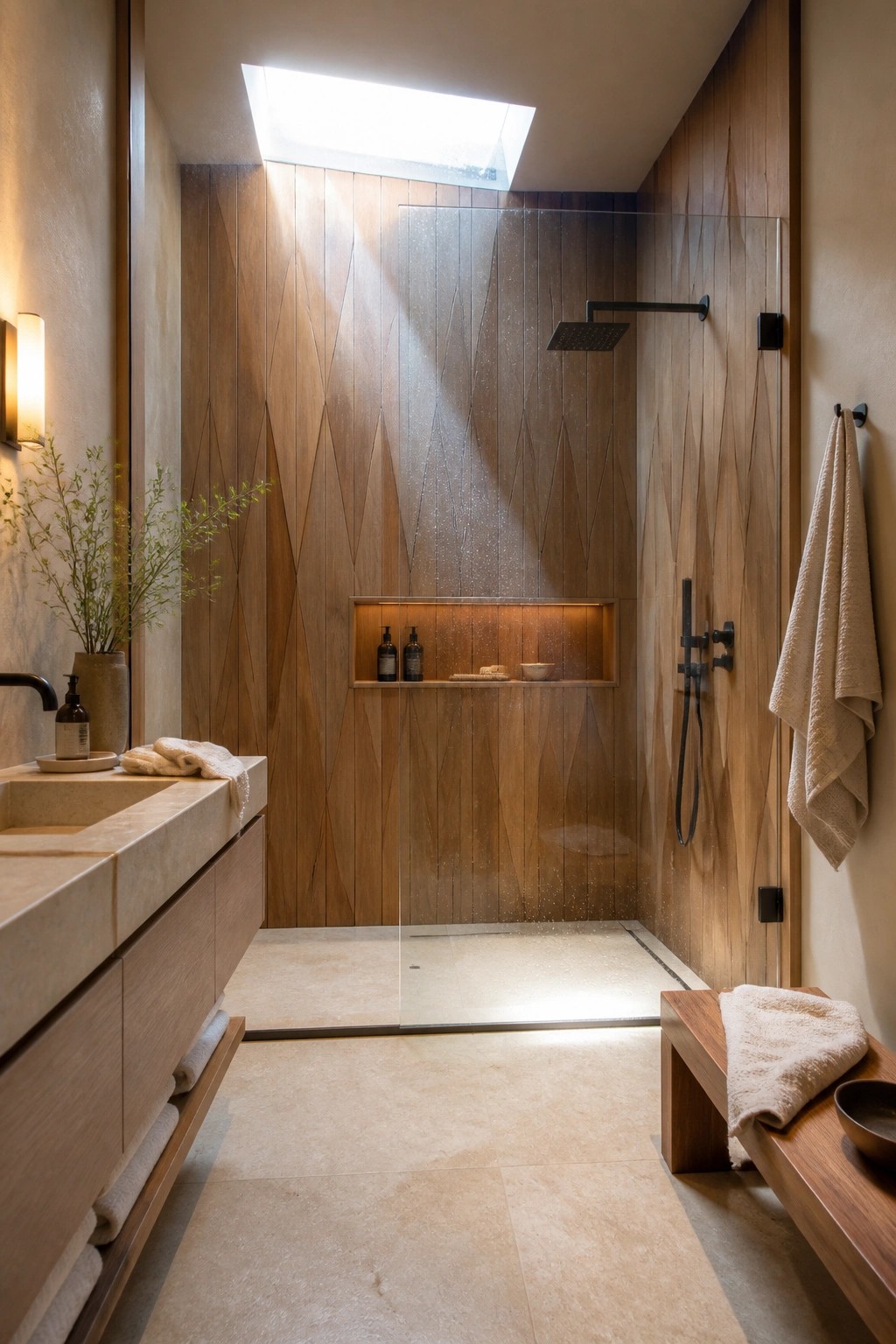
A geometric wood wall gives a bathroom real structure without needing extra trim or decoration. The pattern adds movement and breaks up the flat surface, while the wood tone keeps the space from feeling cold or sterile.
This works best in bathrooms that already have simple fixtures and neutral tones. It suits homes that want a natural material but still need some visual order. Just be sure the wood is sealed well if it sits in a wet zone.
Hexagon Cutouts Turn A Wall Into Storage
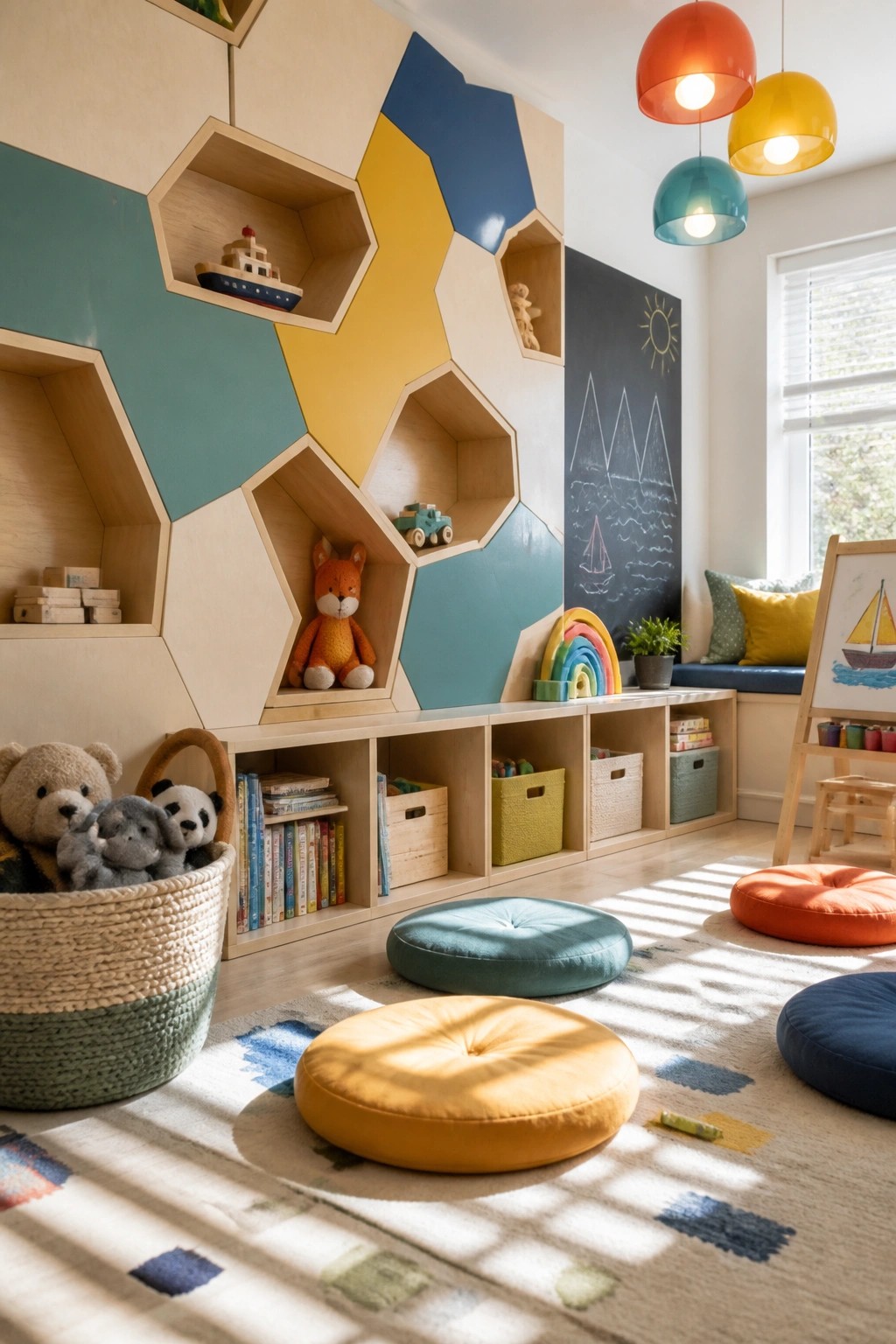
A wall built with hexagon cutouts gives you storage and pattern at the same time. The wood frame stays simple while the shapes hold books, toys, and small items without adding extra furniture.
This approach works well in playrooms or any space that needs extra room for clutter. Keep the cutouts at reachable heights and leave some empty so the pattern stays clear. It fits homes where kids already use the floor for play and you want the wall to help keep things tidy.
Geometric Wood Walls With Built-In Shelving
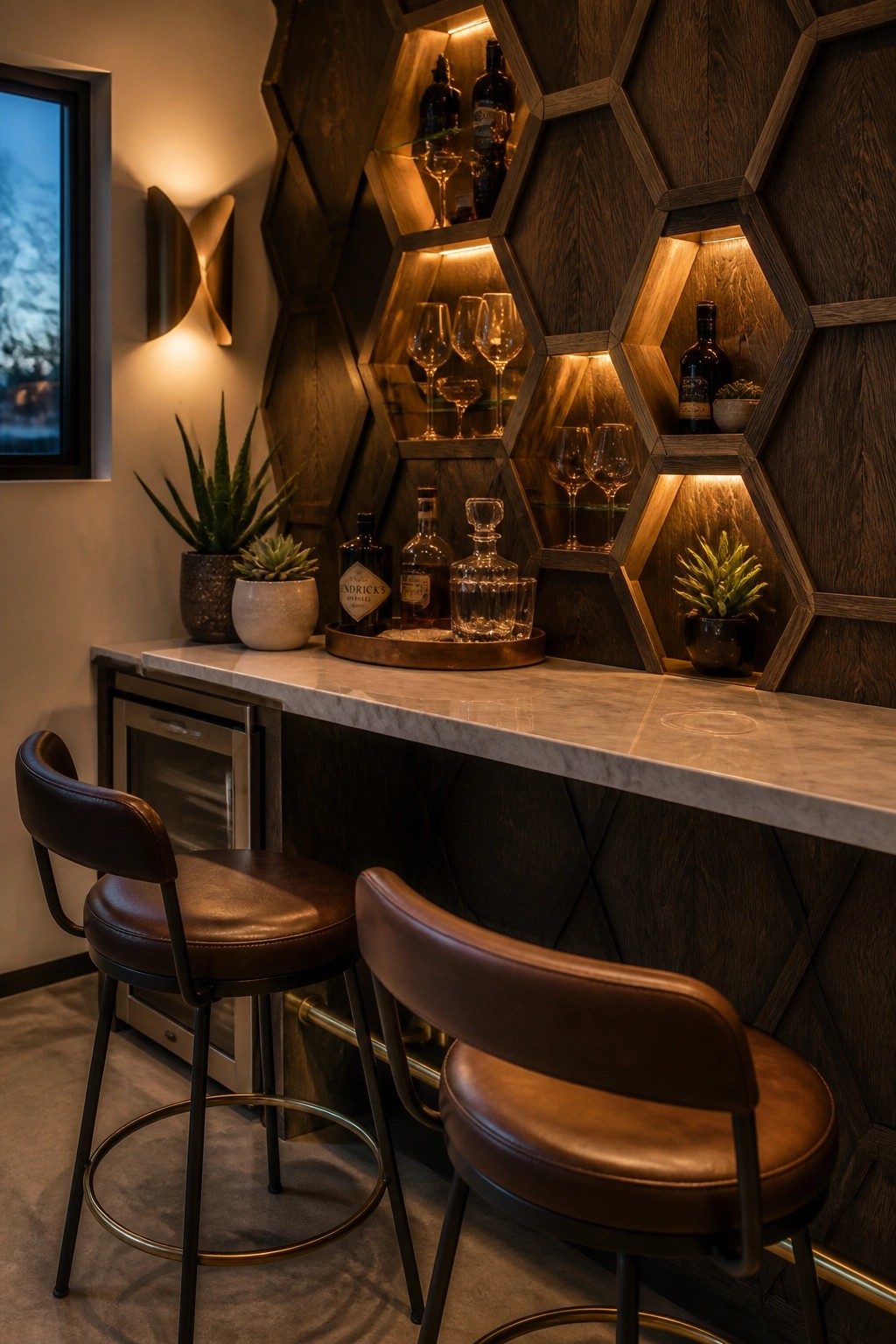
A geometric wood wall works especially well when it doubles as storage. The hexagonal pattern creates depth on its own, and the recessed niches keep bottles and glassware in place without needing extra cabinets or open shelving that can feel cluttered.
This setup suits smaller entertaining spaces or a corner of a living room where you want one strong focal point. It works best in homes that already lean modern or minimalist, since the wood grain and lighting do most of the visual work. Just watch the scale. Too many small hexagons in a large room can start to feel busy.
Geometric Wood Built-Ins That Add Shape And Storage
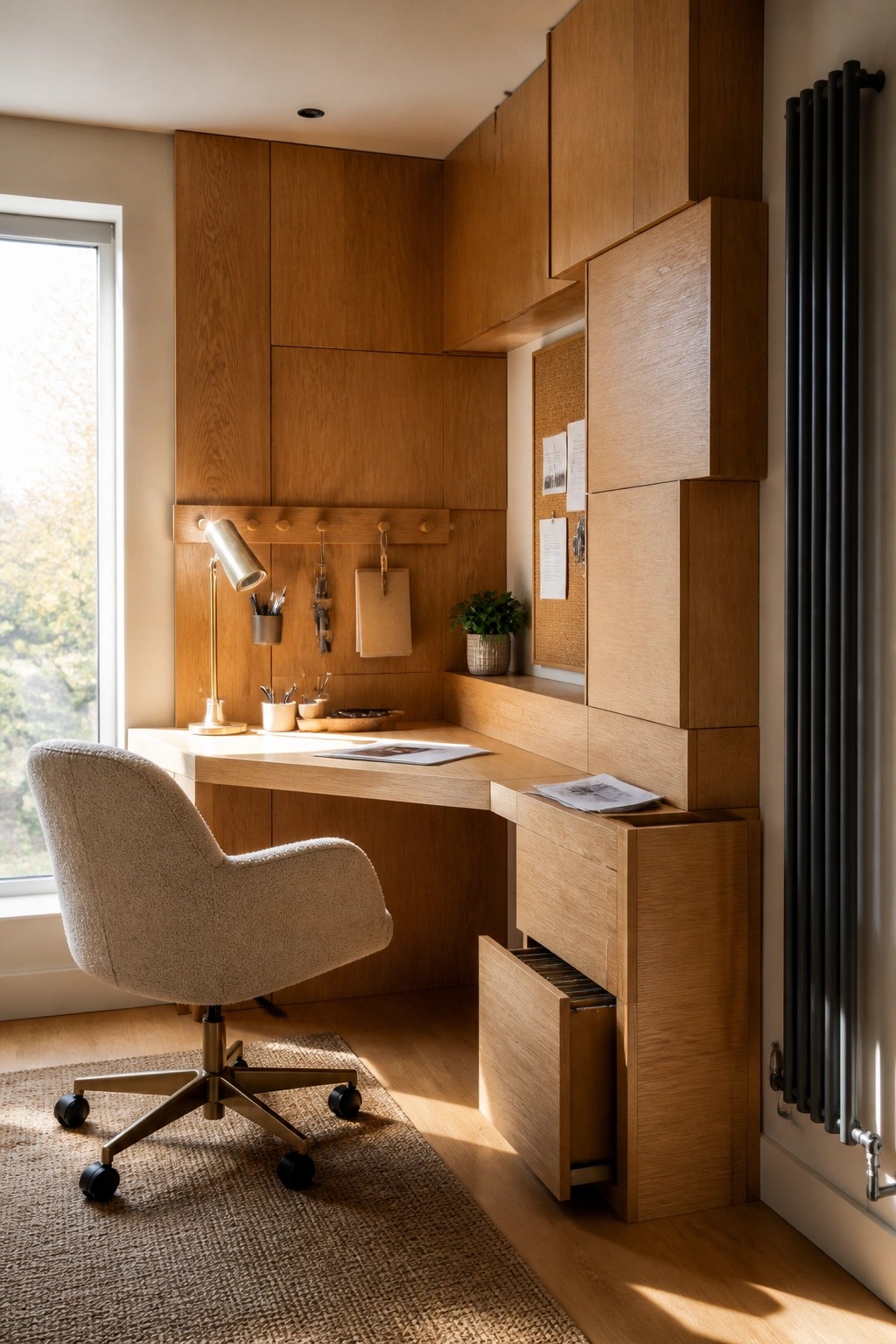
Many homes benefit from wall systems that combine storage with a bit of structure. The staggered cabinet fronts in this room create a simple geometric pattern while keeping everything practical and within reach.
This approach works best in smaller rooms like a home office or study where you need both a workspace and places to tuck things away. It suits spaces with clean lines and wood tones already in the floor or trim, and it helps avoid the need for extra freestanding furniture.
Geometric Wood Walls That Double As Dividers
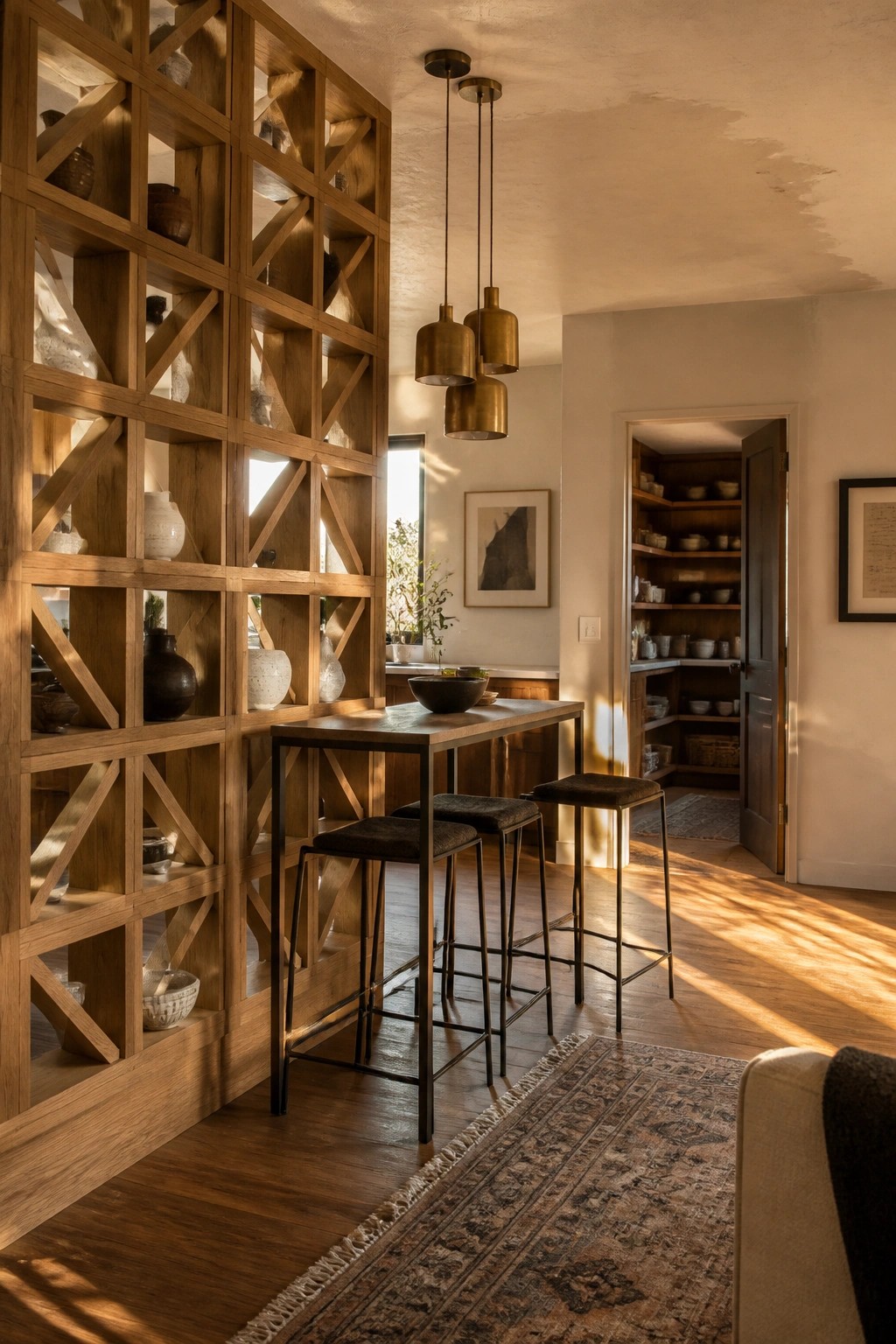
A tall wood screen with a strong geometric pattern can separate areas while keeping the room open. The cutouts let light pass through and give the wall some depth without making the space feel closed off.
This works best in homes with open layouts where you need a visual break but still want to see across the room. Keep the pattern bold but not too busy so it does not compete with everything else around it.
Geometric Wood Headboards That Add Interest
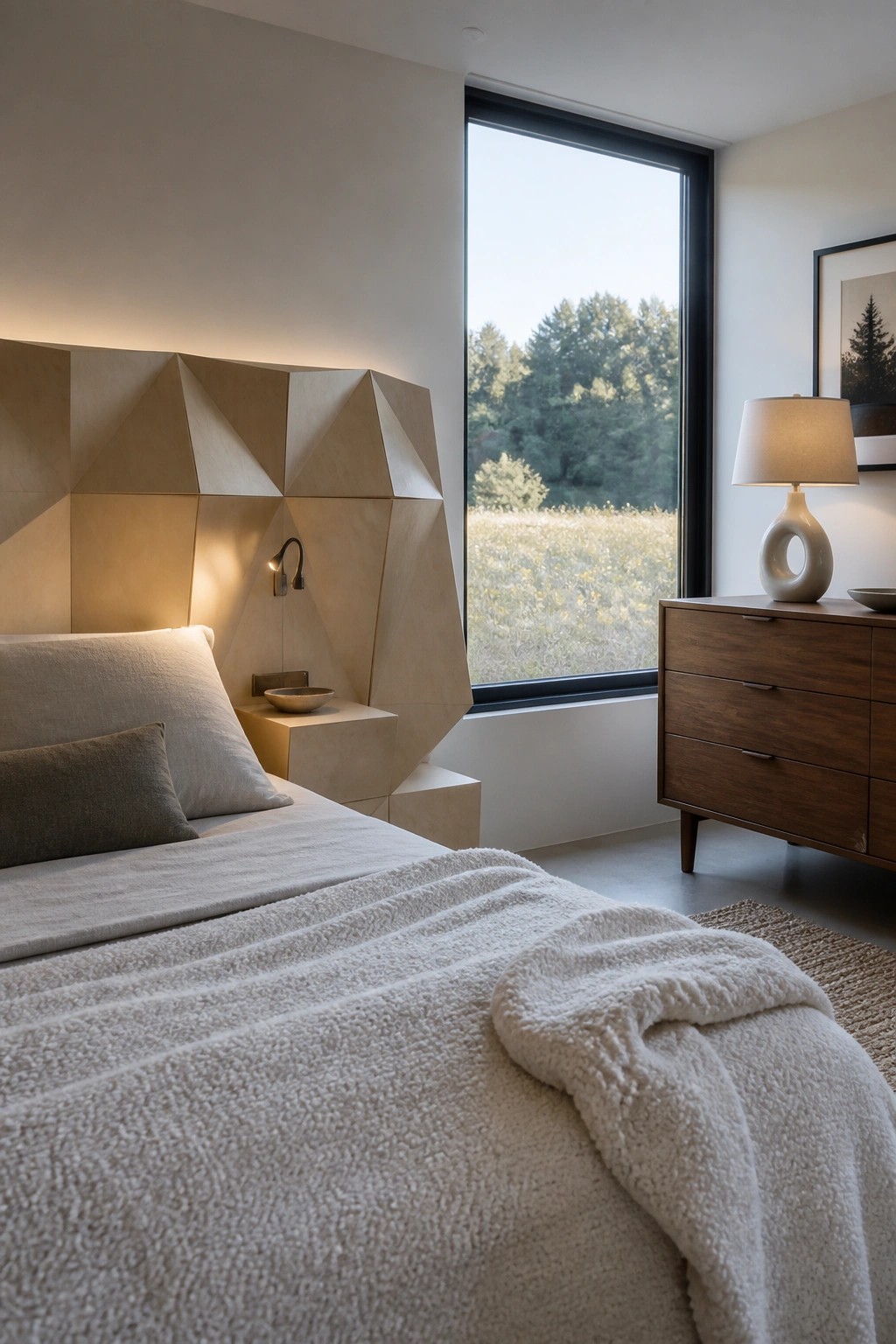
A geometric wood wall behind the bed gives the room a strong focal point without needing much else. The angled panels create shadow and depth that change with the light, making the space feel more structured and finished.
This works best in bedrooms where you want a clean look but still need some texture on the walls. Keep the rest of the room simple so the wood pattern stays the main feature, and make sure the panels are sealed well if they sit close to the bed.
Frequently Asked Questions
Q: Can I install one of these walls myself if I have basic tools?
A: Many people handle simple patterns with a saw and adhesive. Start small on an accent wall to get the hang of the cuts. Measure everything twice before you start nailing pieces in place.
Q: How do I clean dust from all those edges without damaging the wood?
A: Use a soft brush attachment on your vacuum for the grooves. Wipe with a damp cloth only if the wood has a good seal. Avoid harsh cleaners that could strip the finish.
Q: Will these designs clash with my modern sofa and rugs?
A: Geometric wood walls pair well with clean lines in furniture. Pick a pattern that echoes shapes already in your room. Keep other elements simple so the wall stands out.
