

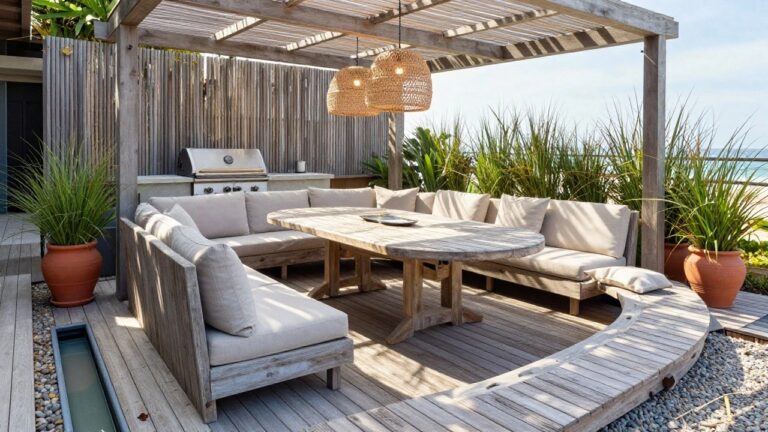
I have walked onto more than one wooden patio where the chairs ended up blocking the main walkway once everyone sat down.
Flow becomes the real test once you start using the space for meals or quiet evenings outside.
Layout changes everything.
I like to try shifting a bench or two around to see if the area opens up before committing to new furniture.
It is the kind of adjustment that makes an outdoor spot feel ready for regular use instead of just looking finished.
Central Table With Seating On Both Sides
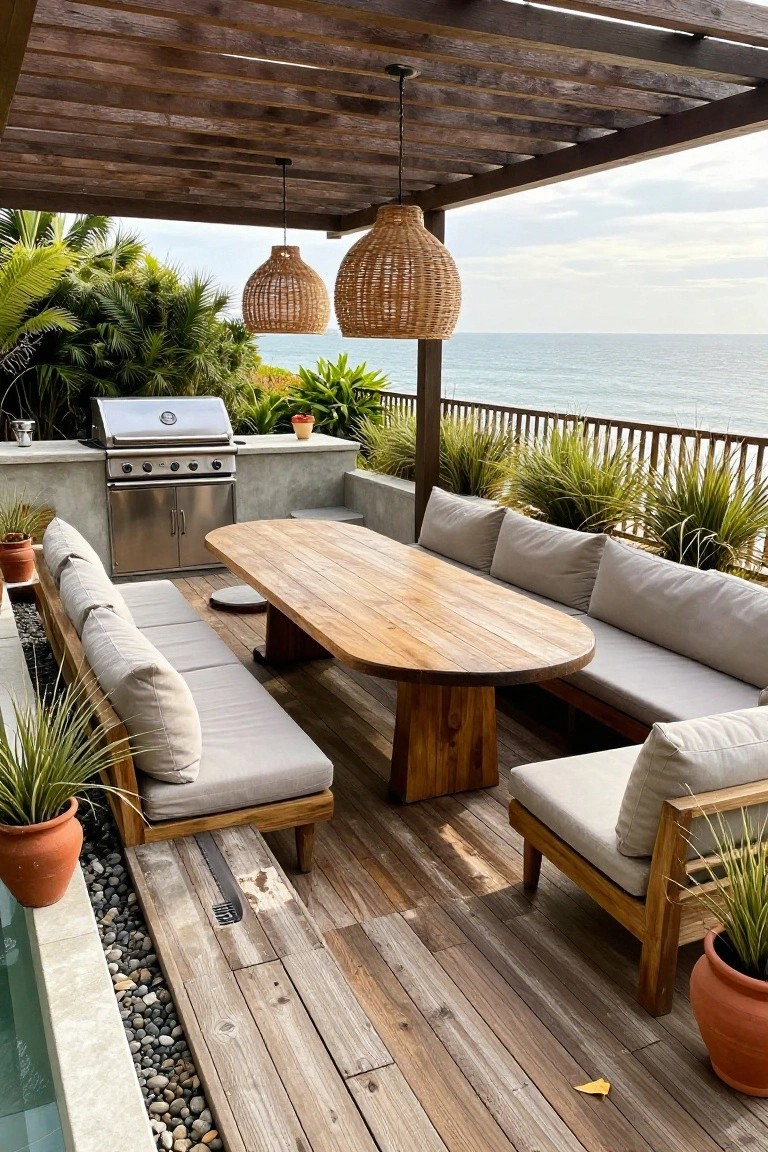
A long central table with seating running along both sides keeps the flow open while giving plenty of room for people to sit facing each other. This setup works especially well when you want the table to serve as the main gathering point without crowding the edges of the patio.
It fits best on decks or patios that get regular use for meals or conversation. The benches or sofas can be built in or kept separate, and leaving the ends clear makes it easier to move around the space when needed.
U-Shaped Built-In Seating On A Wooden Deck
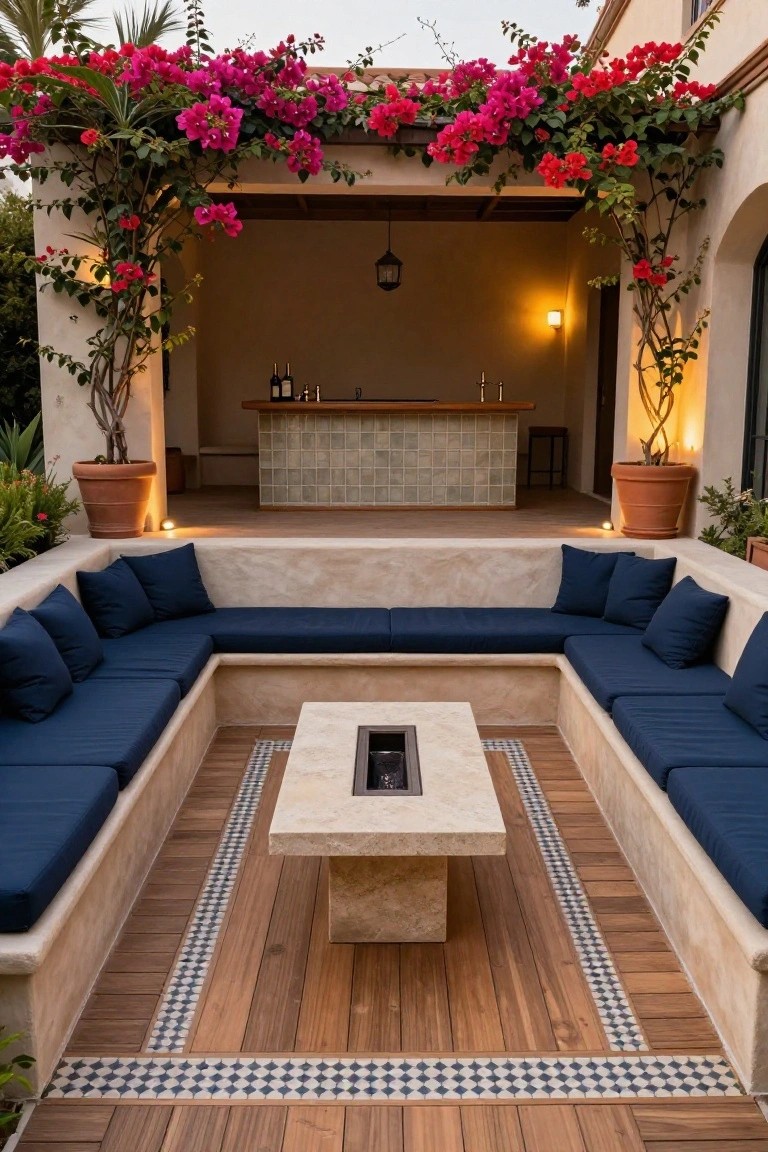
A U-shaped bench built right into the patio edges gives you plenty of seating without crowding the space. It keeps the center open for a table or fire feature, so people can face each other easily and move around without bumping into extra chairs. The wood deck underneath helps the whole area feel grounded and connected.
This layout works best on medium-sized patios where you want room for six to eight people at once. It suits homes that entertain outdoors often, though you will want to add cushions that can handle weather if the seating stays uncovered. Keep the surrounding floor simple so the shape stays clear.
Zone a Long Deck With Linear Planters
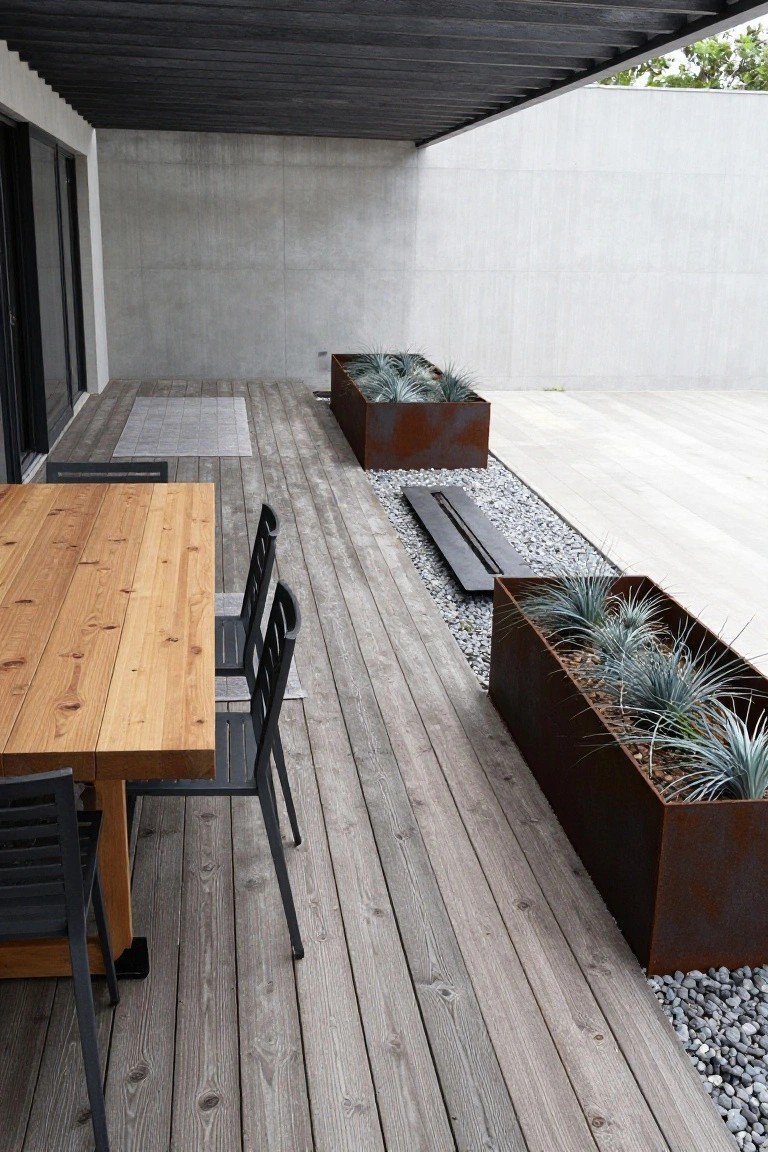
A straight row of raised planters along one edge helps break up a long deck without cutting off movement. It creates a clear boundary between the main seating zone and a narrow side path, which keeps the space from feeling like one big open slab.
This setup works best on decks that run beside the house. The planters hold the line while the open wood area stays free for a table and chairs. Keep the bed narrow and the planters at a moderate height so the flow stays easy.
Round Tables With Benches For Better Flow
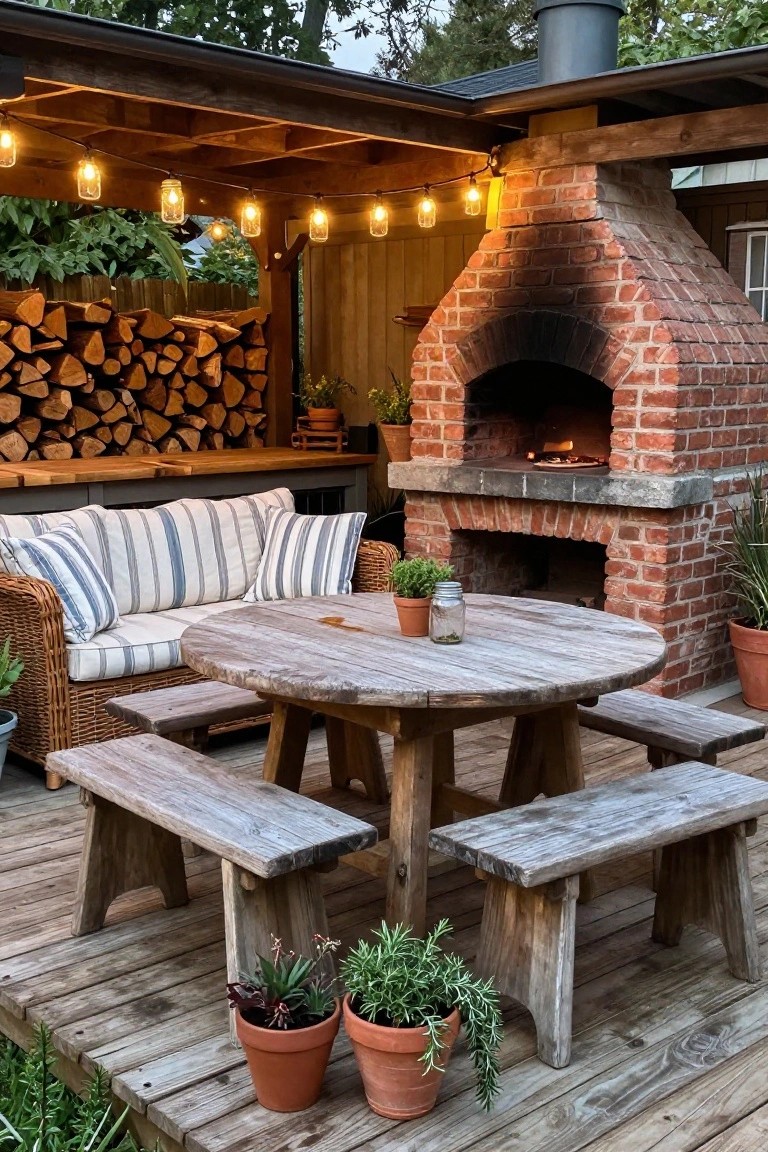
A round table with benches around it keeps the seating open and makes it easier for people to come and go. The shape avoids the blocked feeling that straight benches or too many chairs can create, especially when the patio has other features like a fire oven nearby.
This works well on medium decks where you want casual dining without crowding the walking paths. It suits homes that use the space for regular meals or gatherings and pairs nicely with simple wood finishes that age well outdoors.
Built-In Benches With Integrated Planters
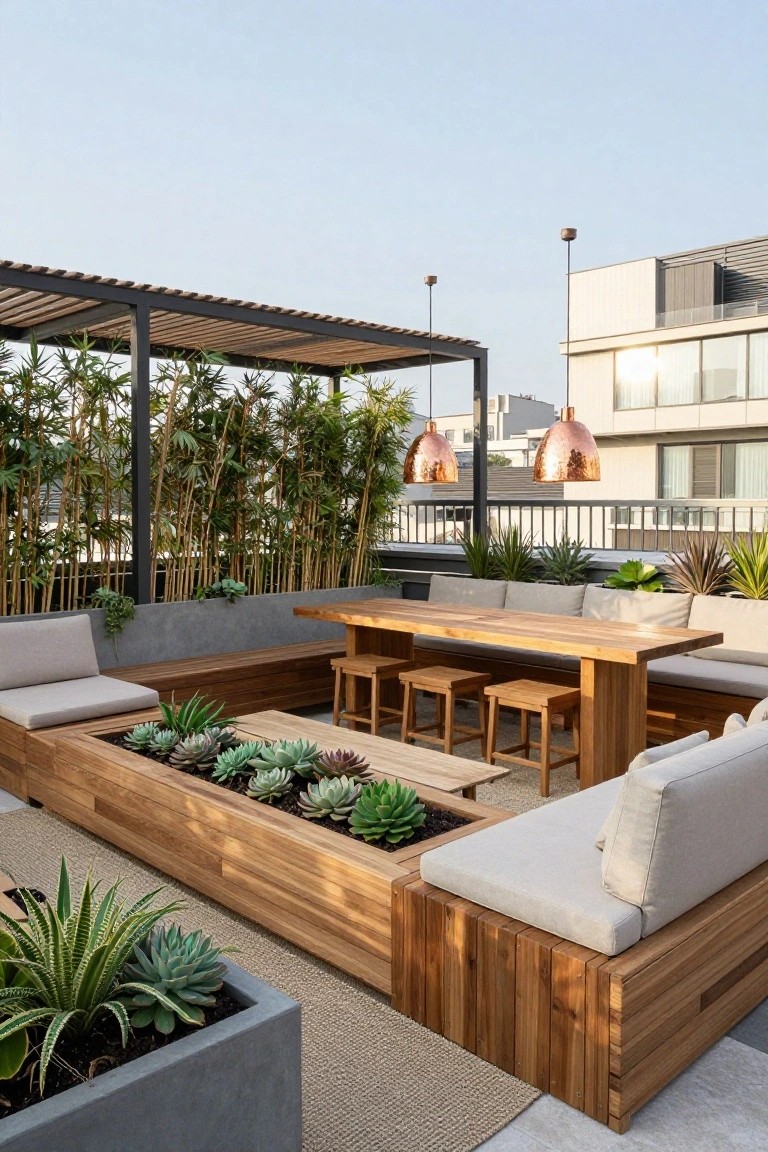
Many patios end up feeling crowded once you add loose chairs around a table. Built-in benches solve this by turning the edges into seating without taking up extra floor space, which keeps the center open for walking through.
This approach works best on rooftops or decks where every square foot counts. Match the bench wood to the planters so the whole area reads as one piece, and leave room for plants that can handle full sun without much fuss.
Wooden Pergolas Over Pool Deck Seating
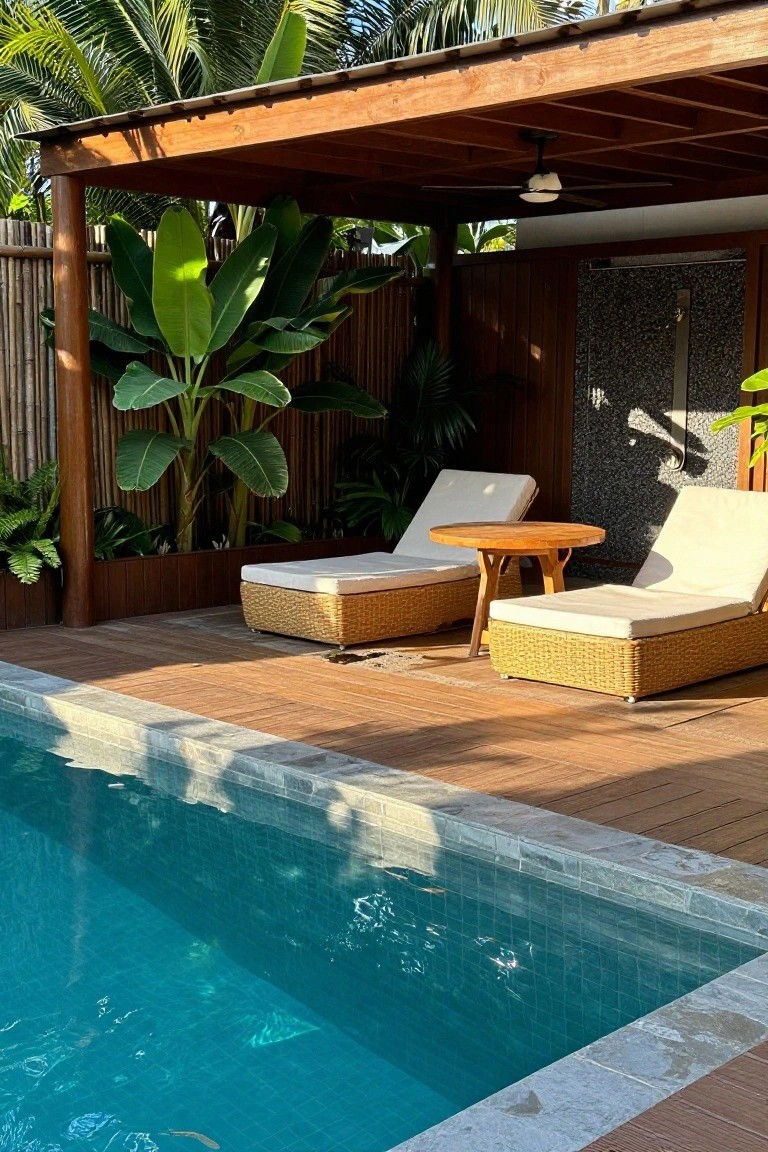
A pergola right over the lounge area gives you shade without closing off the view of the pool. It turns an open deck into a spot that feels more like a room, which makes it easier to sit outside for longer even on bright days.
This setup works best on smaller decks where you want clear zones for sitting without adding walls. Keep the furniture low and simple so the space stays open and easy to move through. The wood tones on the pergola and deck tie everything together without extra effort.
Curved Built-In Seating For Better Flow
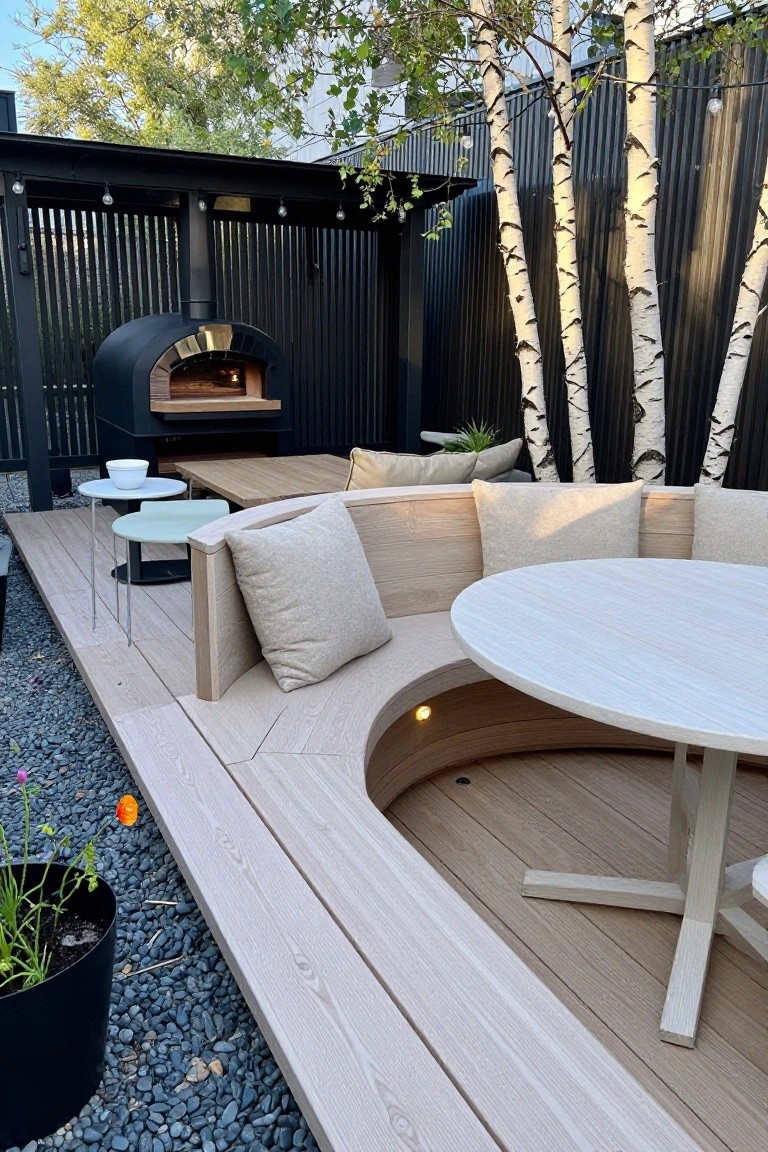
One idea that works well on wooden patios is adding curved built-in seating. It creates a natural path around the space and gives you plenty of places to sit without needing extra chairs that get in the way.
This approach suits smaller decks or areas near an outdoor kitchen. The bench follows the shape of the deck so people can move around easily, and it blends right into the wood structure.
Round Tables Help Patio Flow
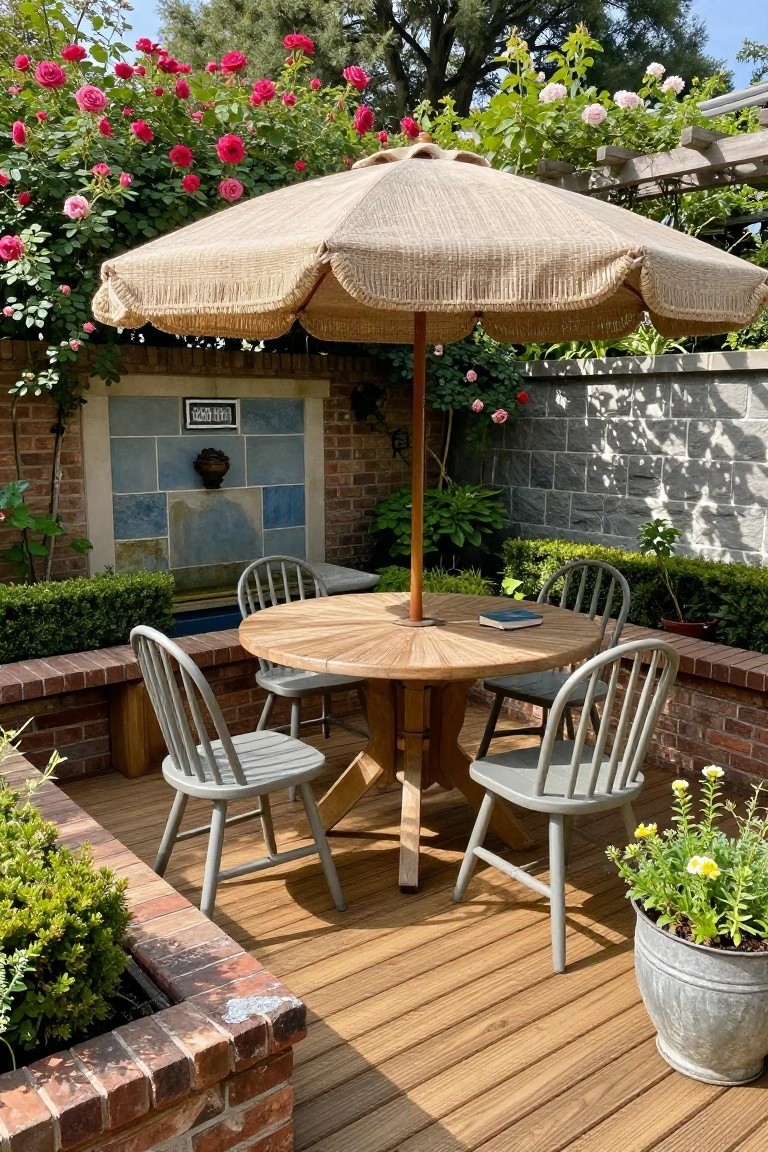
A round table lets chairs tuck in from any side without awkward corners blocking the way. On a wooden deck this creates open walking space all around and makes it easier for people to join or leave the table without rearranging everything.
It works best on medium sized patios where you want a central spot for meals or conversation. Keep the table clear of edges so traffic can move behind the chairs, and add an umbrella if the deck sits in full sun.
Build The Fire Pit Into The Deck
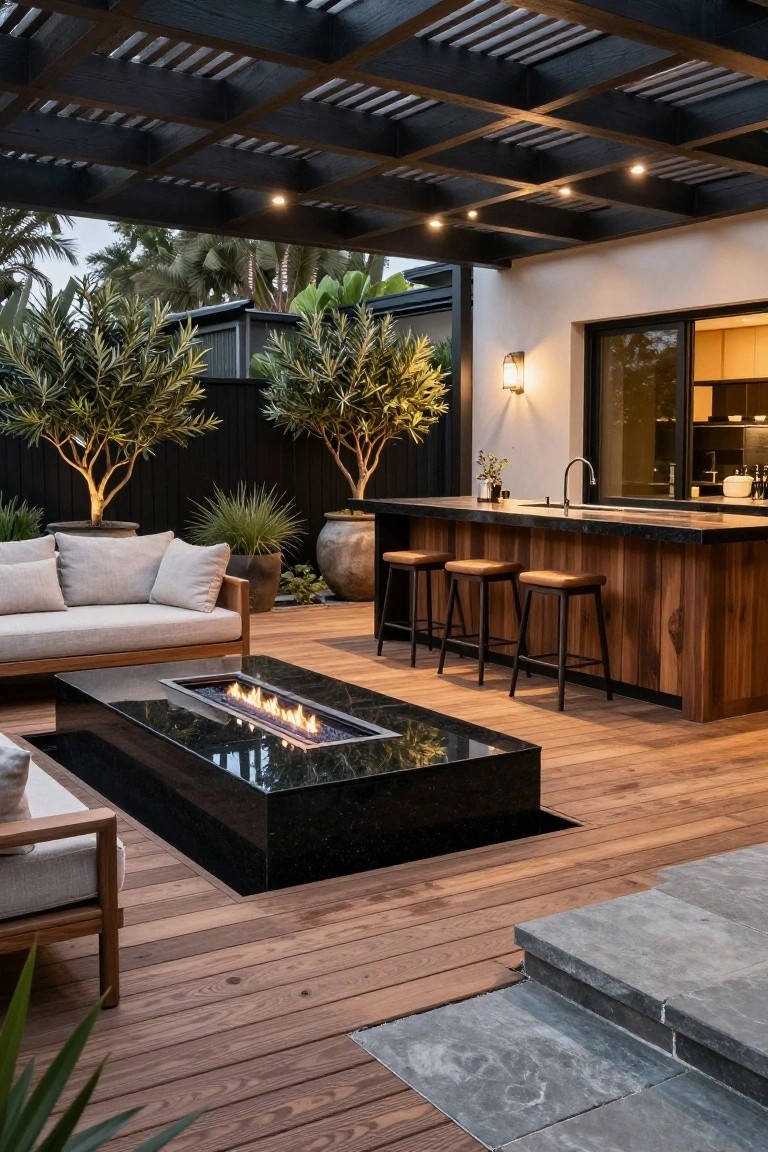
Putting the fire pit right into the deck surface keeps everything on one level. This makes it easier to move between the seating and the outdoor kitchen without steps or separate zones getting in the way. The layout feels more open and connected as a result.
This approach works best on decks that already have good wood construction and enough space for both lounging and cooking. Check local codes for clearances and use heat-safe materials around the pit so the wood stays protected over time.
Built In Benches For Narrow Patios
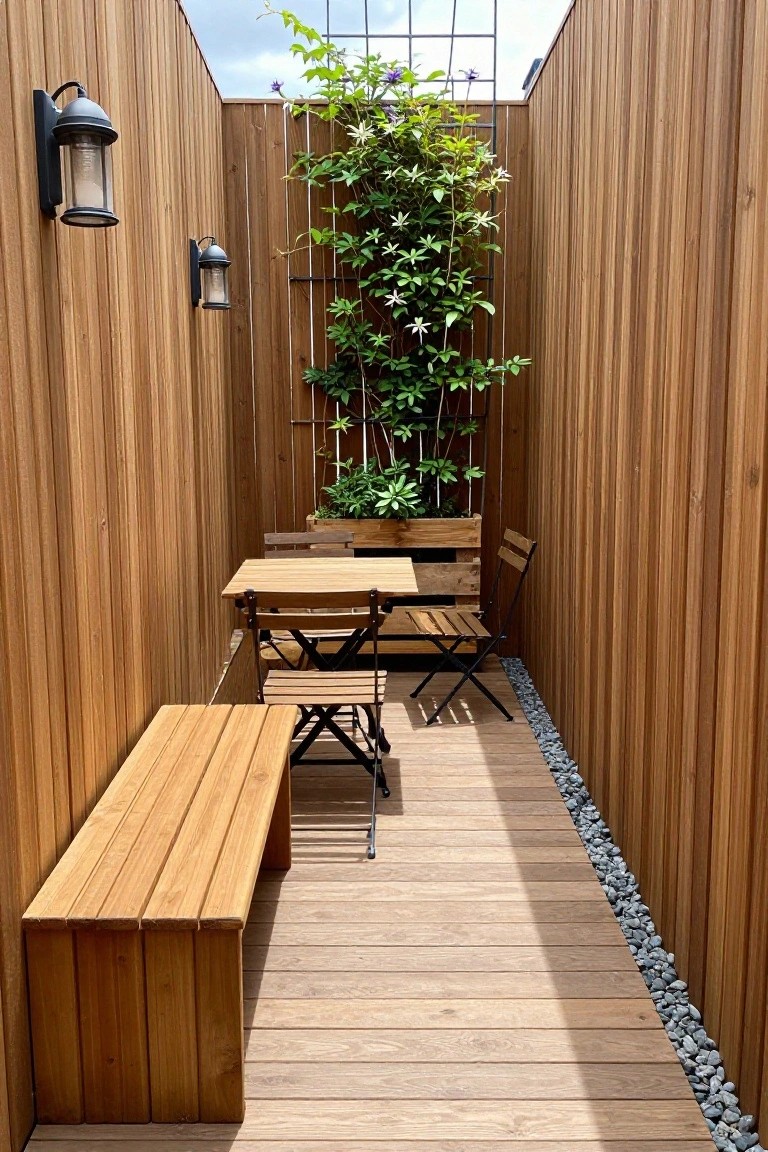
A built in bench makes the most of a long narrow patio by giving you seating without eating into the walkway. It keeps the space open while still fitting several people comfortably along one side.
This works best in side yards or townhouse decks where width is tight. Pair the bench with a compact table and a few folding chairs so you can adjust seating as needed. Keep the opposite side clear for easy movement through the area.
A Long Wooden Table for Better Flow
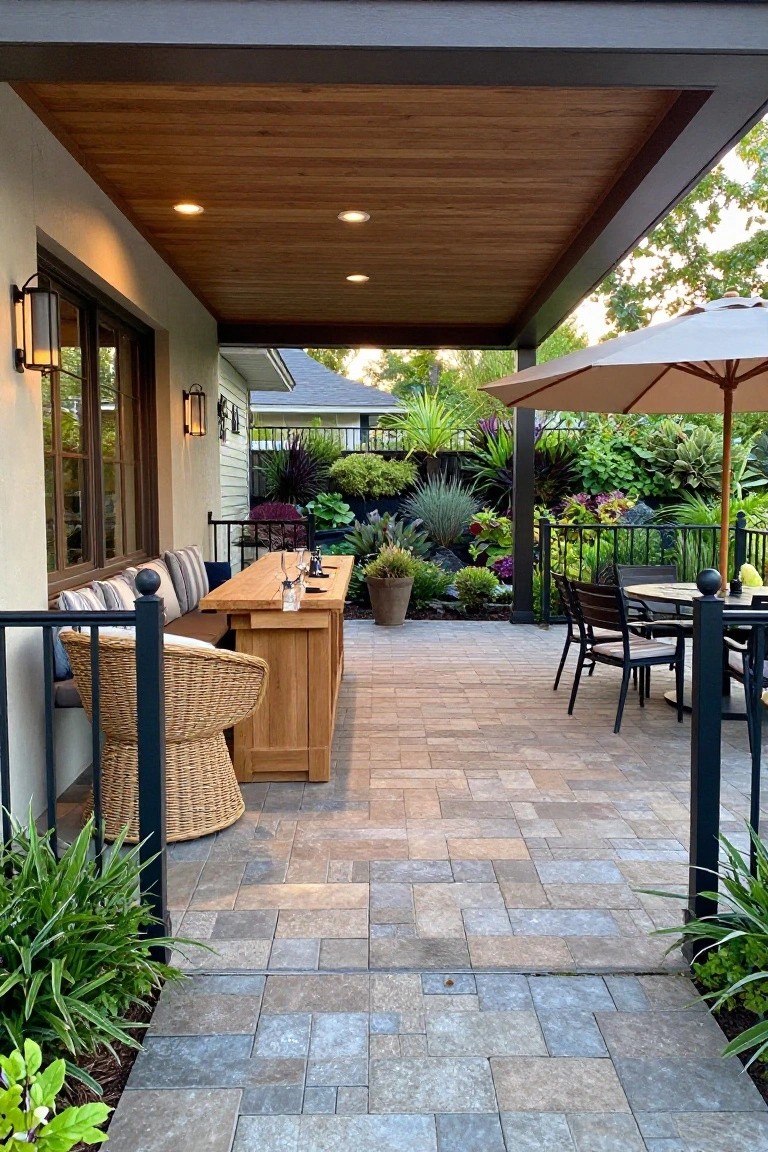
A long wooden table placed along the edge of a covered patio helps tie the seating areas together. It creates a clear path from the house out to the open space while giving people a place to set things down without blocking the main walkway.
This works best on patios that get regular use for meals or drinks. Keep the table narrow enough for easy movement on both sides and choose a height that matches nearby chairs so the whole area feels connected.
Wood Platforms That Frame Seating And Paths
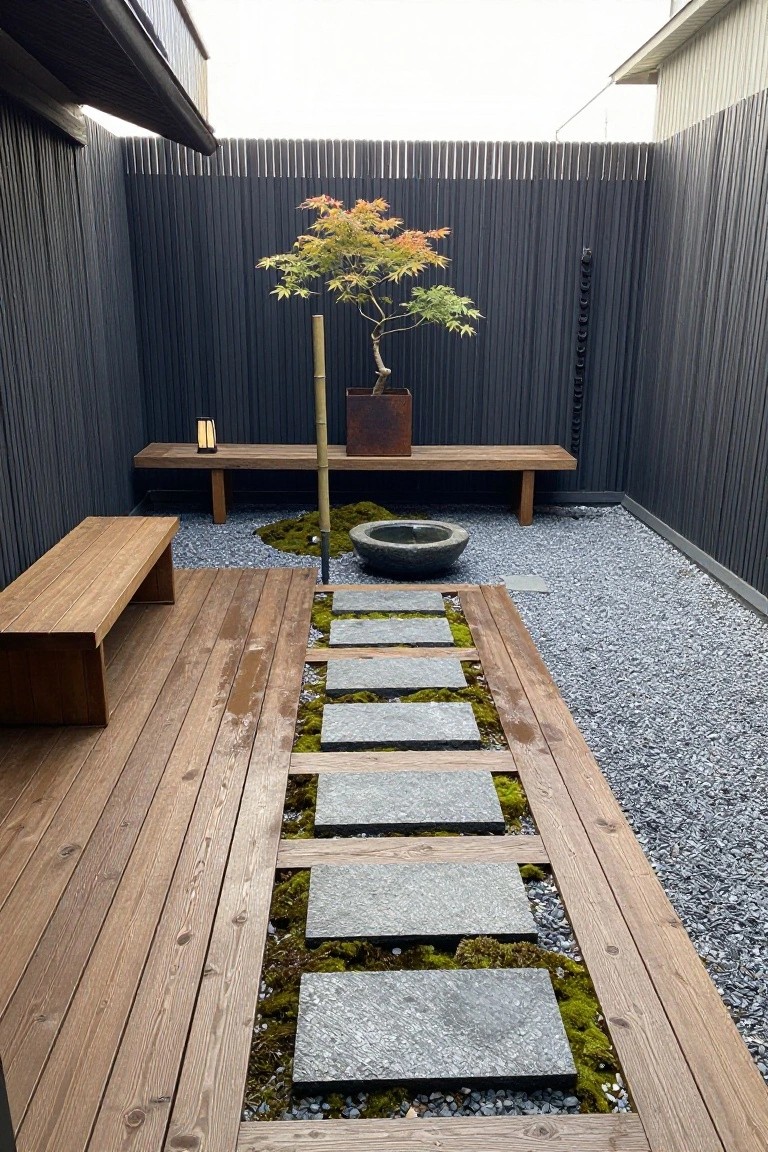
A long wooden bench set against the edge of the space works well because it gives seating without taking up much room. The low deck sections on the other side do the same job and help mark where people can sit or walk without needing extra furniture.
This layout suits a small courtyard or side yard where you want room to move but still need places to stop and rest. Keep the wood simple and let the gravel or stepping stones handle the rest of the surface so the space stays open.
Add a Built-In Water Feature Along the Deck Edge
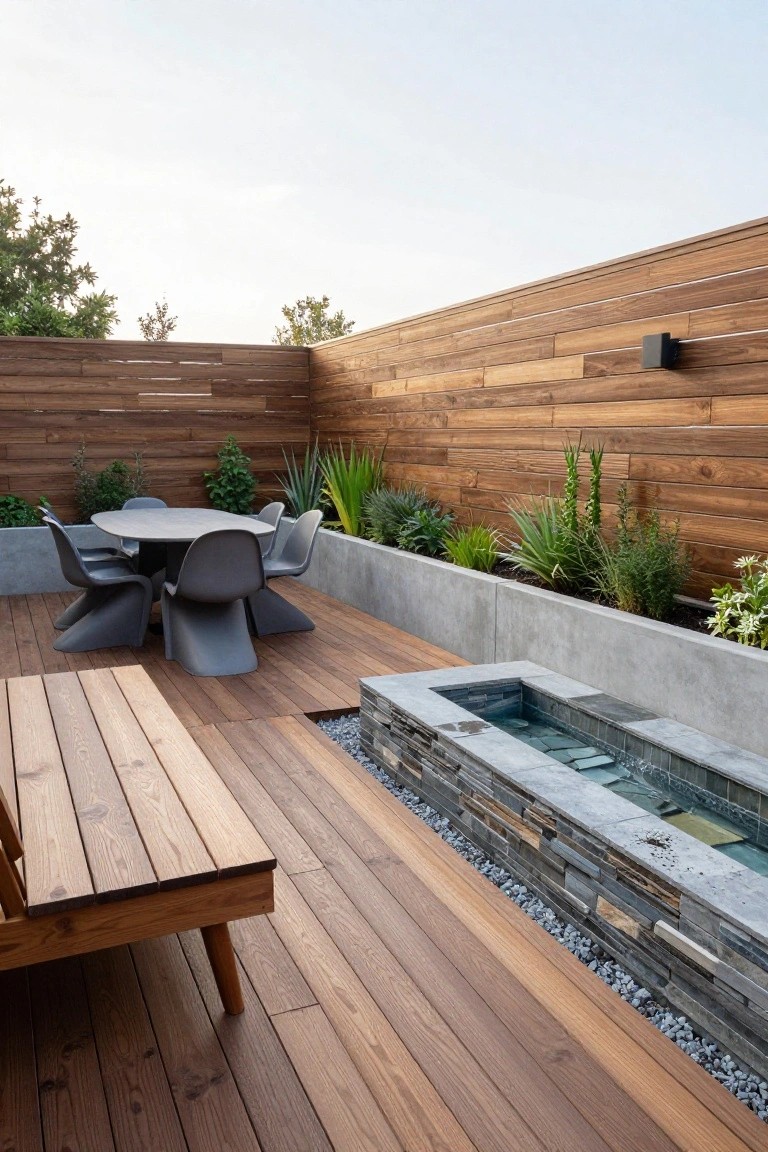
A long narrow water feature placed right at the edge of a wooden deck can help mark the boundary without cutting the space in half. It gives the patio a clear stopping point while still letting people move freely around the seating area. The wood decking stays the main surface for tables and chairs, and the water adds a quiet detail that does not compete with the furniture layout.
This works best on a mid-size patio where you want one strong side defined but still need room for a dining table or bench. Keep the water channel narrow and low so it does not block views or require extra railings. It suits homes with a flat yard and simple fencing, where the goal is to keep the deck feeling open rather than crowded with separate zones.
Curved Bench Seating Around a Central Table
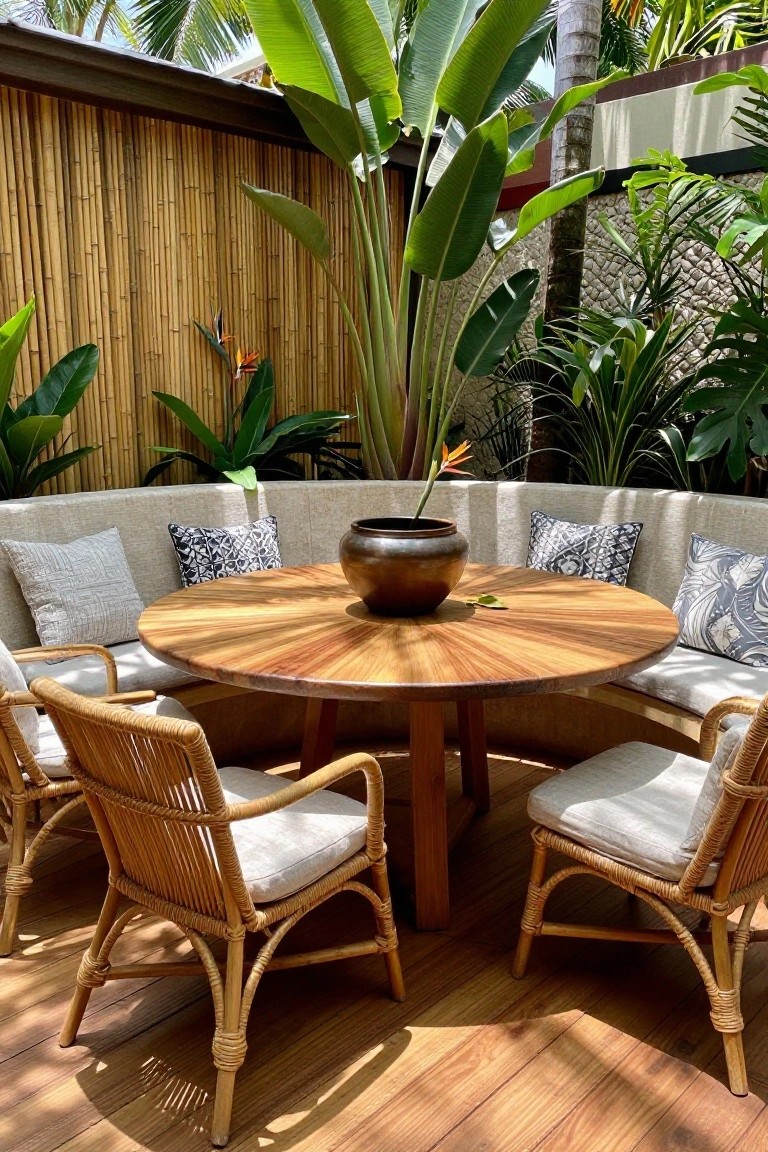
A curved bench that wraps around a round table gives the seating area a connected feel while keeping movement easy. People can slide in and out without rearranging chairs, and the shape naturally brings everyone closer together for conversation.
This layout works best on medium-sized patios or decks where you want to fit more seats without making the space feel cramped. It suits homes that use the outdoor area for meals or casual gatherings and pairs well with simple wood finishes and neutral cushions.
Round Tables For Easier Patio Flow
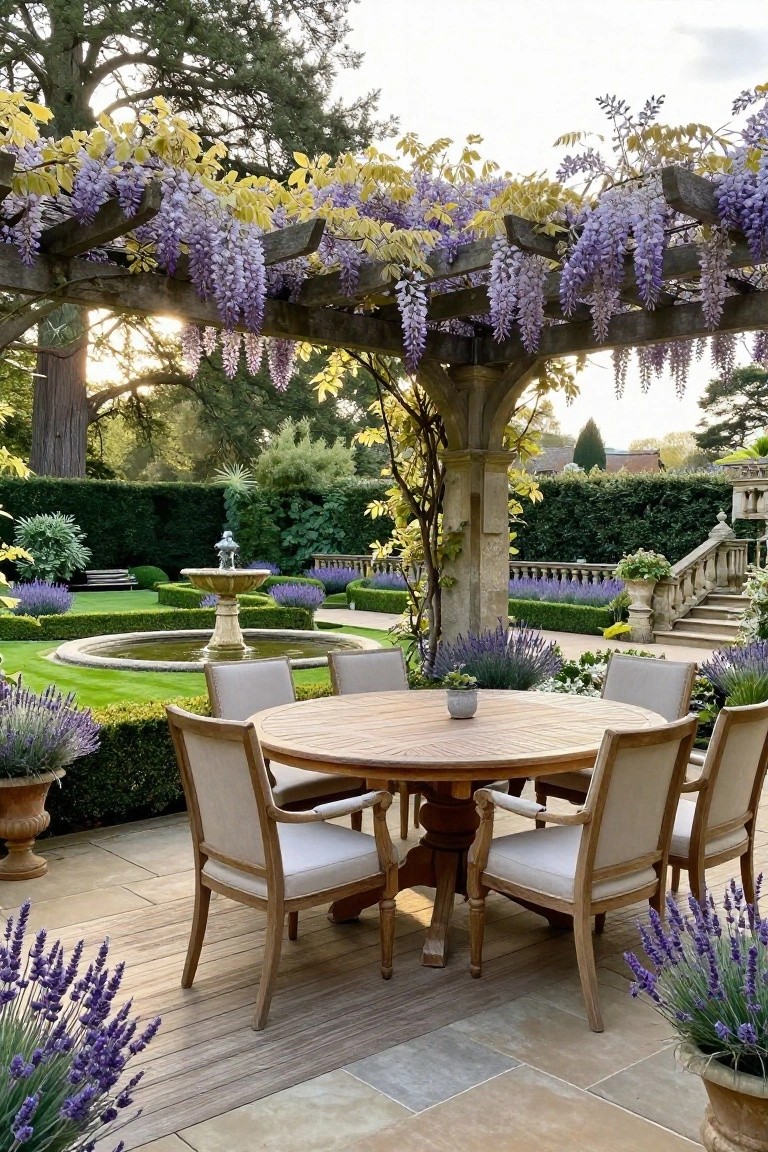
A round table keeps movement natural on a wooden patio because no one ends up stuck against a wall or rail. Chairs can slide in from any direction and the whole seating area stays open instead of feeling blocked.
This layout works best on mid-size decks where you want a central dining spot without cutting off walkways. It suits homes that already have a pergola or similar overhead structure since the round shape balances the straight lines of the deck boards.
Wooden Benches That Wrap Around A Fire Pit
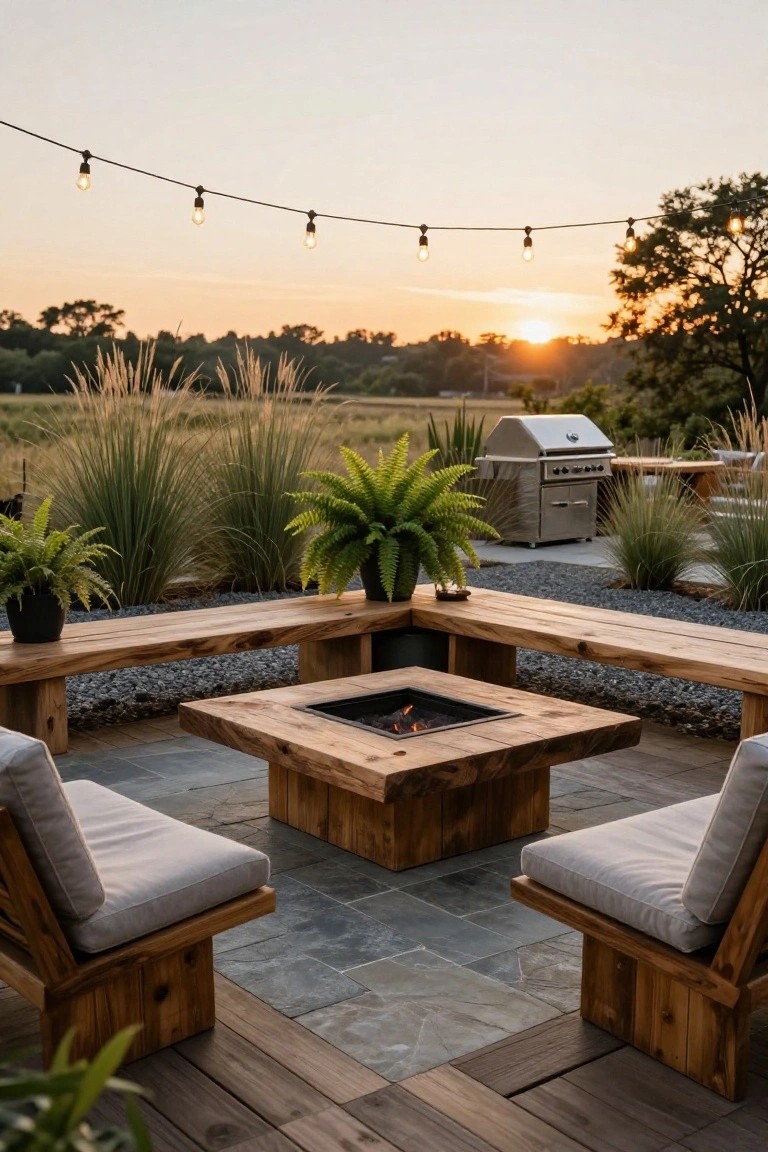
One layout that helps with flow is placing wooden benches in a continuous U shape around the fire pit. This keeps the seating connected so people can move from one spot to another without stepping over furniture or rearranging chairs.
It works best on patios that have room for a central feature like this. Keep the benches low and sturdy, add simple cushions, and leave enough space behind them for walking through or reaching the grill area.
Built-In Benches Improve Corner Flow
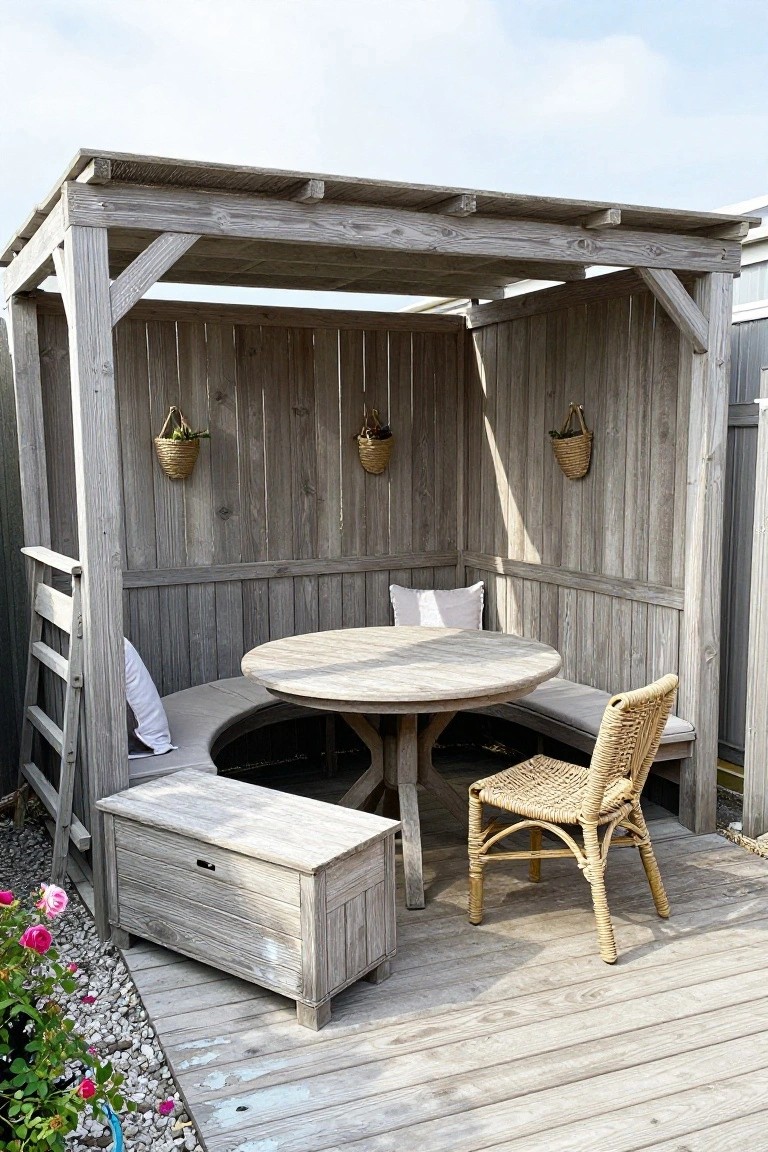
Built-in benches along the walls of a wooden patio structure can make seating feel more natural and less crowded. They use the frame of the space itself, so you avoid pushing extra chairs around every time someone sits down.
This layout works best on smaller decks or in corners where a round table needs to stay centered. The benches stay put, which keeps walkways open and makes the whole area easier to use day to day.
Round Table Seating on a Wooden Deck
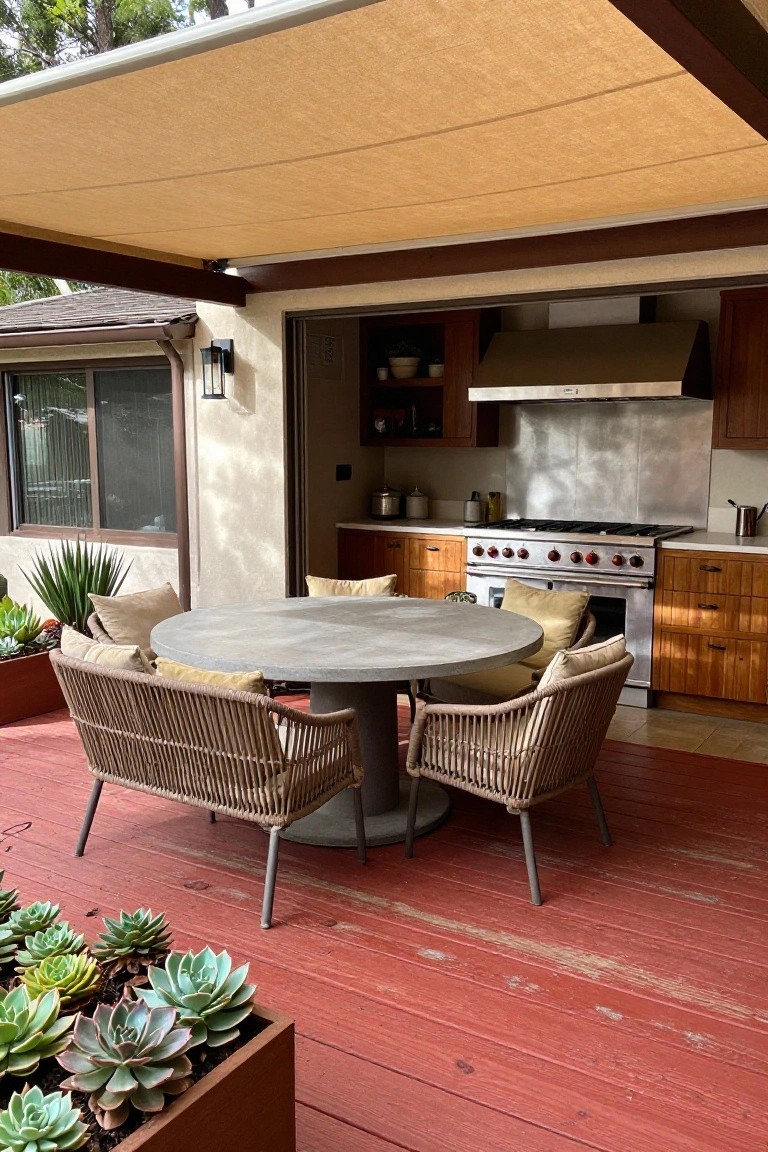
A round table makes sense on a wooden patio when the goal is easy movement and better seating flow. Without sharp corners, people can walk around the table more freely, which helps in smaller outdoor spaces that also include cooking areas.
This works best on decks that connect directly to an outdoor kitchen. Use lightweight chairs so the arrangement can shift depending on the number of guests.
Frequently Asked Questions
Q: How do I keep walkways clear when I add extra seating around the edges? A: Map your main paths first and place bigger pieces like benches only along the sides. Leave at least two feet open down the center so people can move through without stepping over feet or tables.
Q: What wood type works if I want low upkeep but still like the natural look? A: Pick cedar or redwood that already resists rot and insects. A quick sweep and occasional light oiling keeps the surface clean and the color even.
Q: Can I fit a dining table without blocking the flow to the yard? A: Set the table near one corner and angle the chairs outward. This opens a direct line from the house door straight to the lawn.
Q: How do I test if the layout actually feels comfortable before buying everything? A: Lay out cardboard cutouts of the furniture and walk the space a few times. Shift pieces until the paths feel natural and every seat has easy access.
