

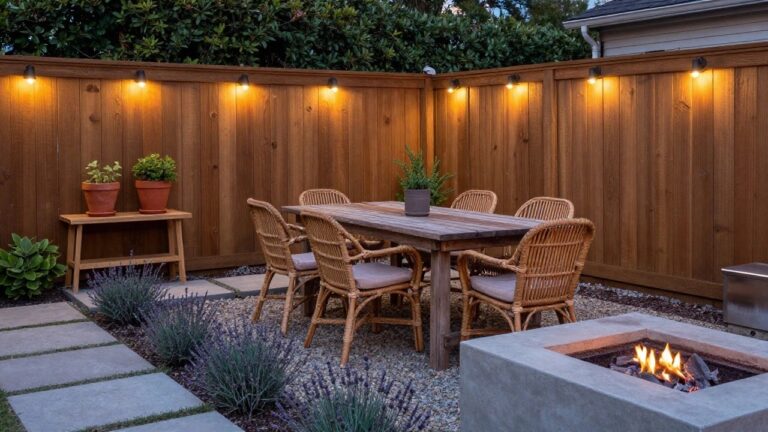
I’ve noticed that backyards often sit unused once it gets dark even when the daytime setup feels comfortable and ready for evenings outside.
Lighting a wood fence can help turn that around by giving the space a clear edge that feels more like part of the living area rather than just leftover yard.
A few placements tend to work better than others once you see them at night.
When I plan changes like this I usually test how the light hits the fence grain first because it affects whether the area reads as warm or just bright.
That step saves time later when deciding if the setup will actually keep people outside longer without feeling like an afterthought.
Mount Lights Along the Fence to Light the Patio
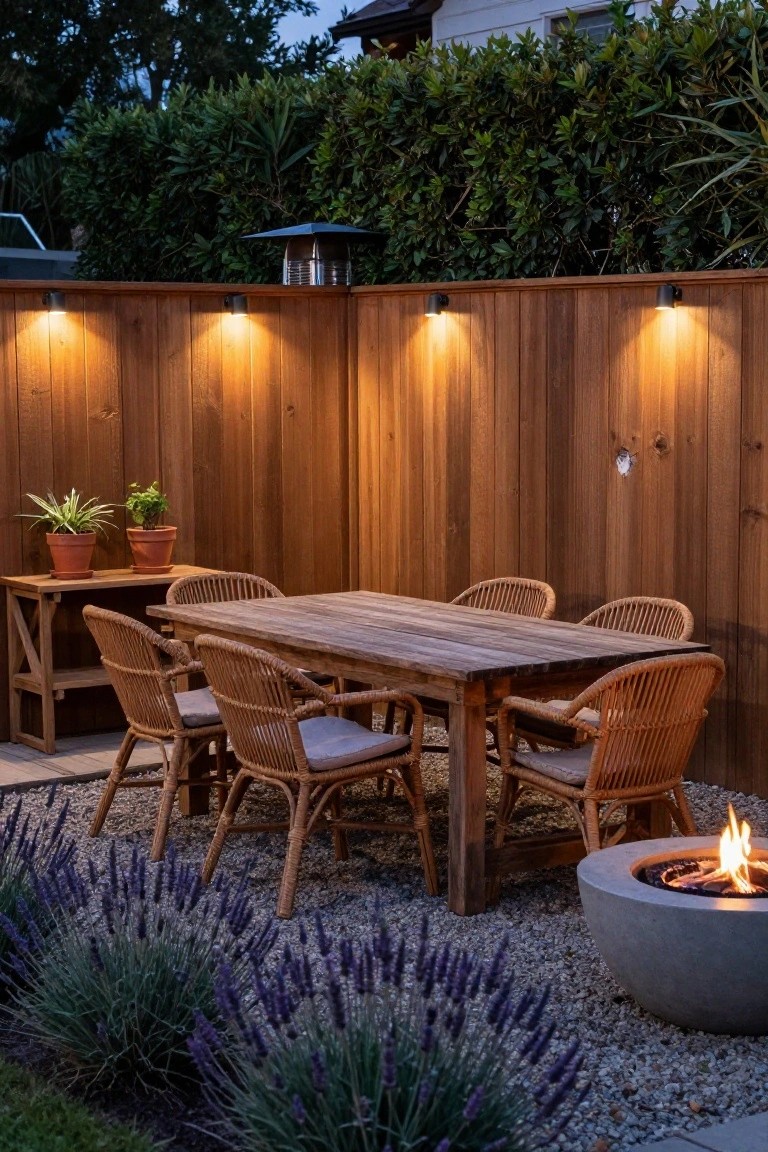
Putting lights right on the fence is a simple way to brighten an outdoor dining area without adding poles or extra fixtures. The lights sit flat against the wood and spread a steady glow over the table and chairs, so the space stays usable well after sunset.
This setup works best on a solid wood fence that already borders a patio or seating zone. Space the fixtures evenly and aim them slightly downward so the light reaches the ground without creating glare. It suits most backyard layouts where you want to keep the area open but still feel safe and welcoming at night.
Vertical Lights Built Into a Wood Fence
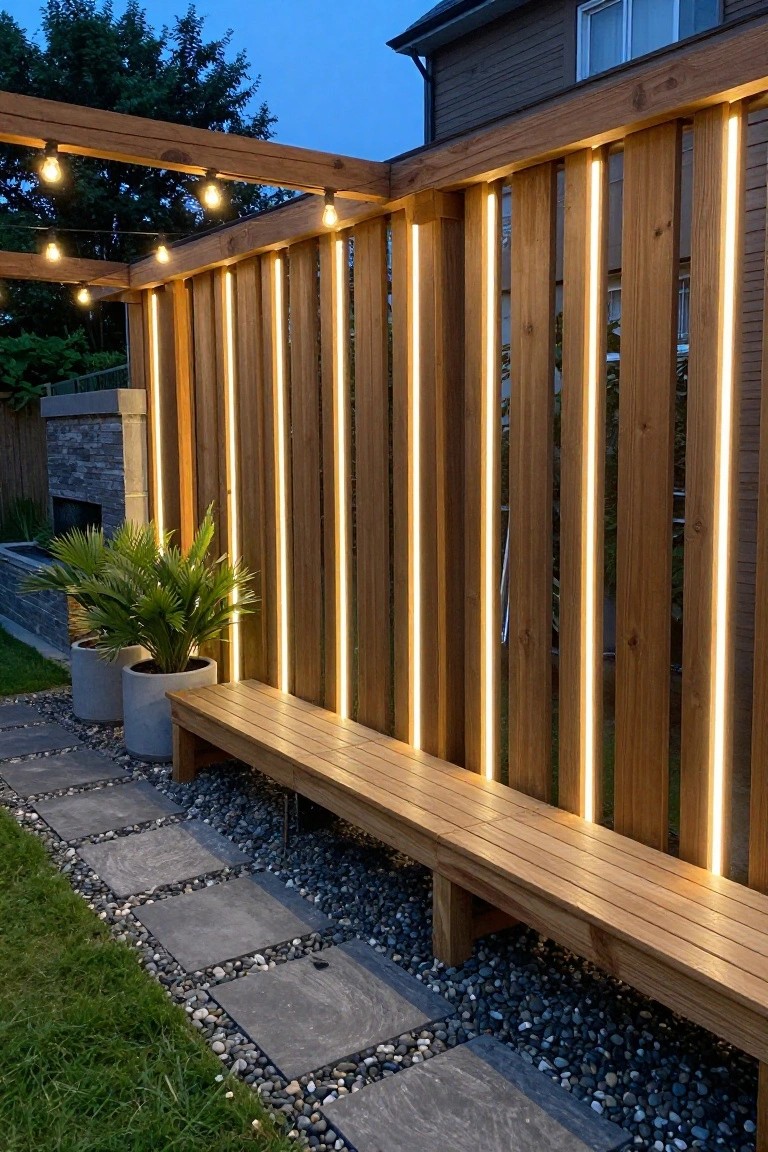
Many people like running lights right into the fence boards instead of adding separate fixtures along the top or ground. The vertical strips sit flush between the wood and create a steady wash of light that makes the whole area feel open after dark.
This setup works best on a patio or side yard where you already have seating. It keeps the space usable into the evening without extra poles or cords, though you will need to plan the wiring before the fence goes up.
String Lights Along the Fence
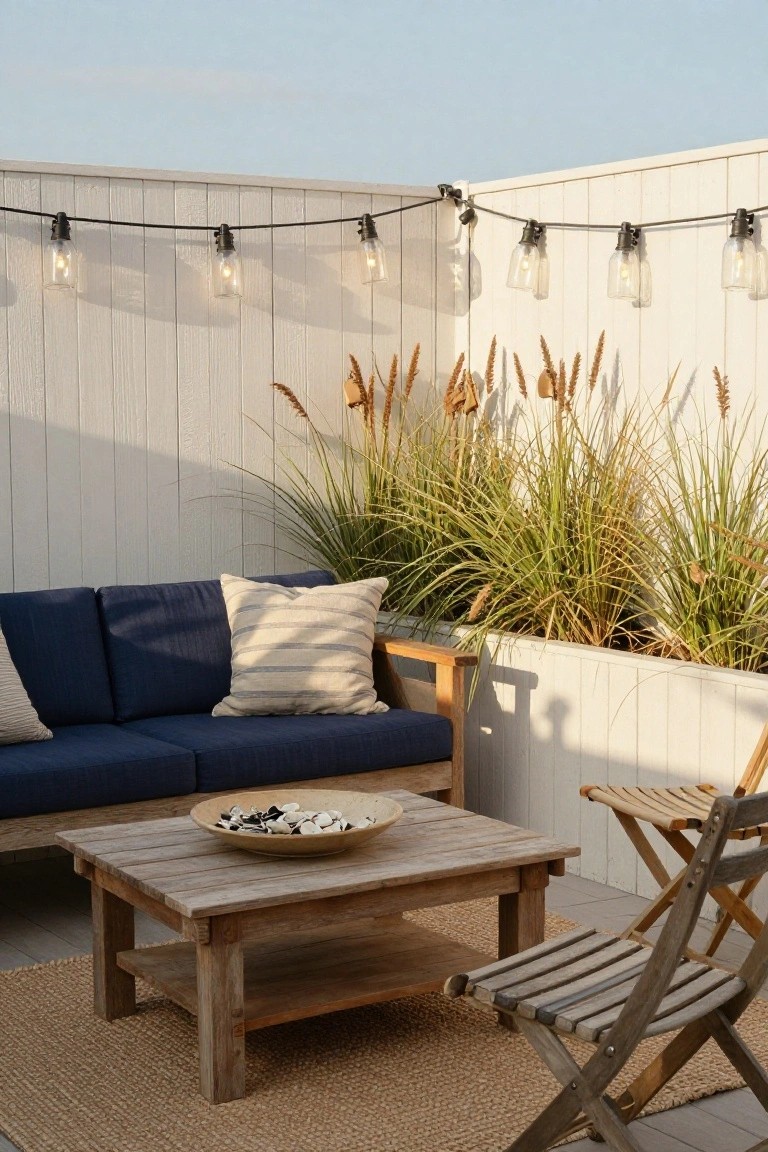
String lights are one of the easiest ways to keep a patio usable once it gets dark. They add just enough light to see without making the space feel like it is under a spotlight.
Run them along the top edge of a fence or wall that sits behind a seating area. This works well on decks and patios that need simple lighting without adding poles or heavy fixtures.
String Lights Along the Fence
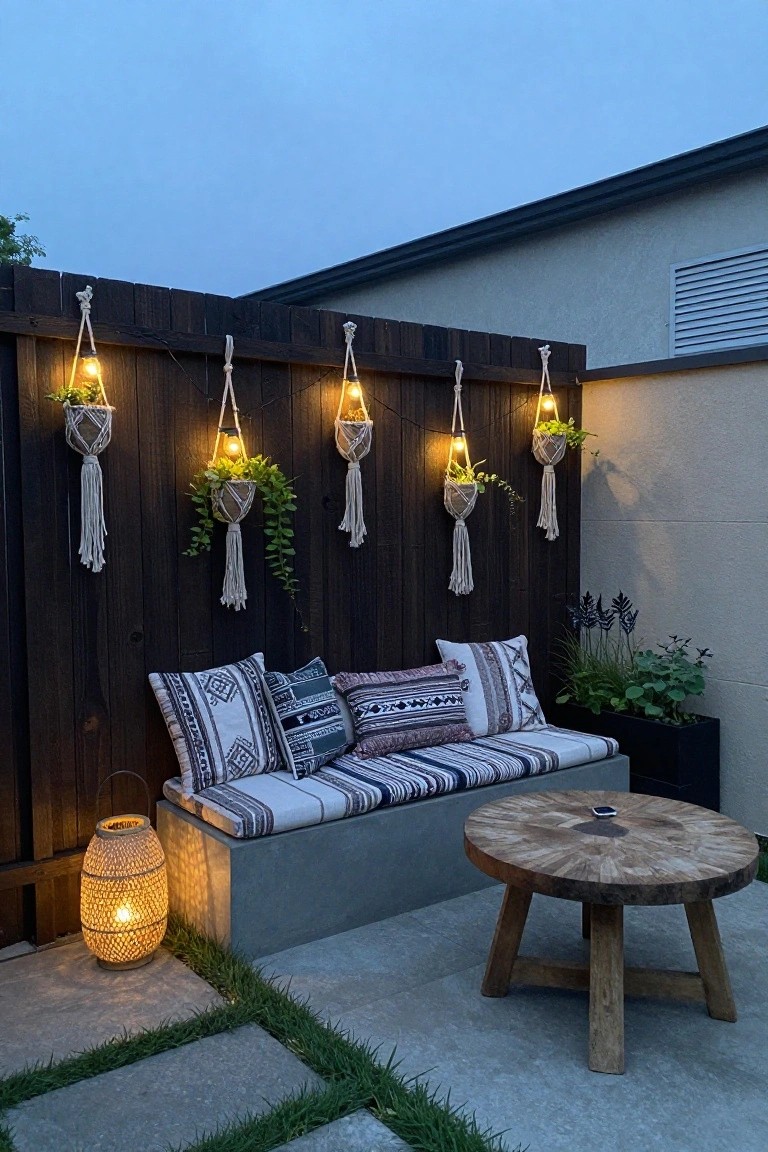
String lights make a simple way to add usable light to a wood fence without building anything extra. Running them along the top edge and mixing in a few hanging planters with lights inside keeps the glow even and low. The result is a soft layer of light that makes the bench area comfortable once the sun goes down.
This approach works best on small patios or side yards where you want light focused near seating. Use outdoor-rated strands and keep the spacing consistent so the fence does not look busy.
Mount Wall Sconces to Light the Pool Deck
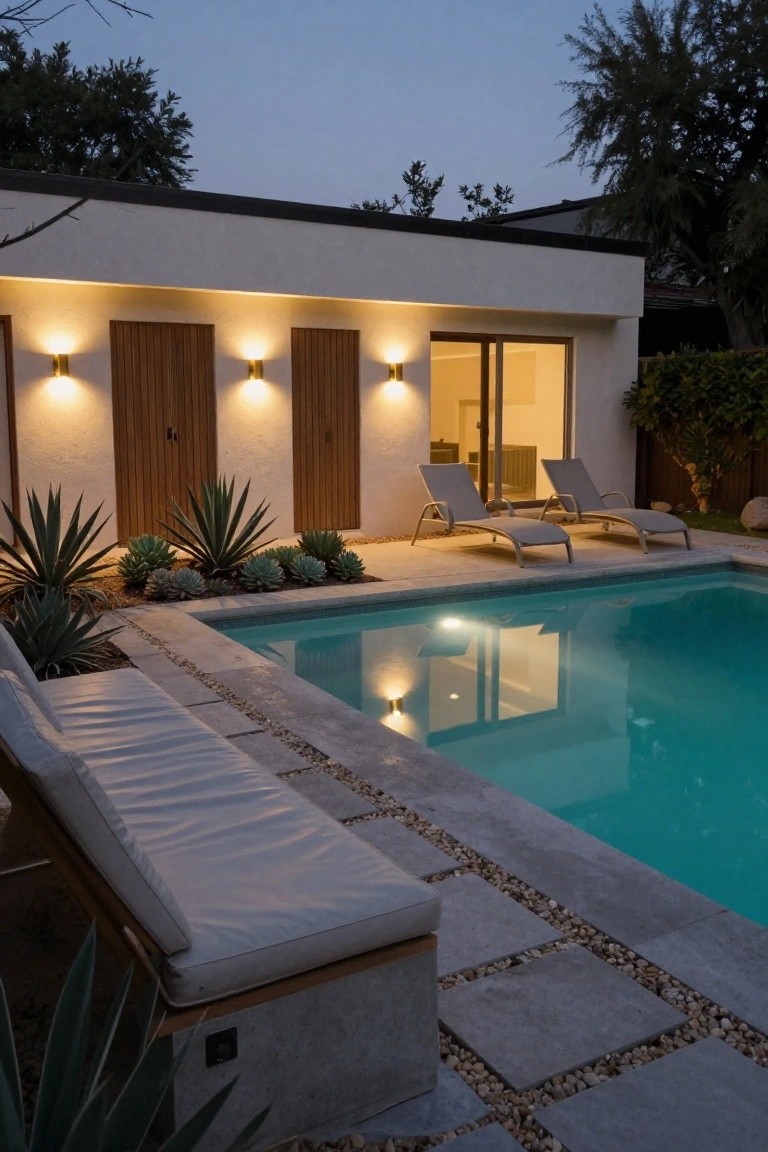
Wall sconces mounted along the house can keep a pool area comfortable after dark. They spread light across the seating and water without taking up floor space or needing extra poles that might get in the way.
This setup works best on homes with a simple stucco or painted exterior and a few wood details. Space the fixtures near doors or lounge spots, and pick models that sit low enough to avoid glare on the water.
String Lights Along a Wood Fence
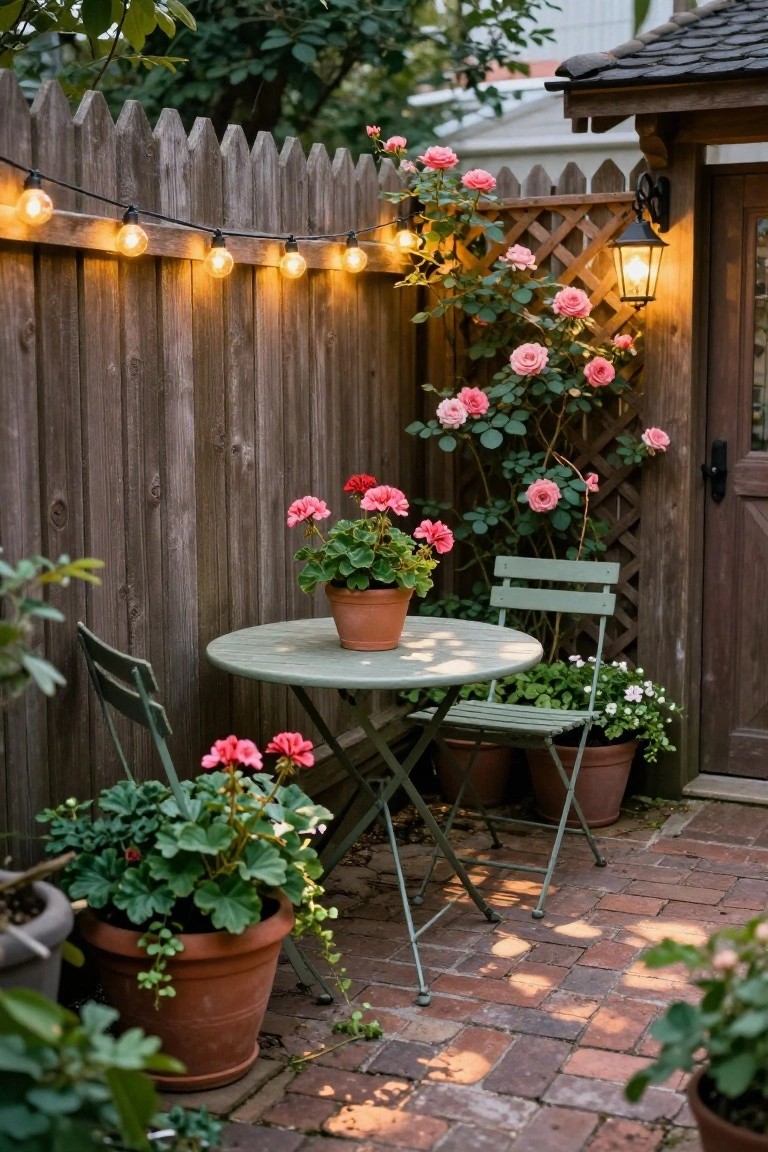
Running string lights along the top of a wood fence gives a patio just enough glow to stay comfortable after sunset. The lights stay out of the way but still reach the seating area, so you do not need extra lamps or heavy fixtures. Many people like this setup because it feels simple and does not change the fence itself.
This approach works best on smaller patios or side yards where the fence already forms one wall of the space. Keep the bulbs spaced evenly and use a warm tone so the light feels soft rather than harsh. It suits homes that already have a solid fence and want a quick way to add evening use without new construction.
Overhead Lighting Near A Wood Fence
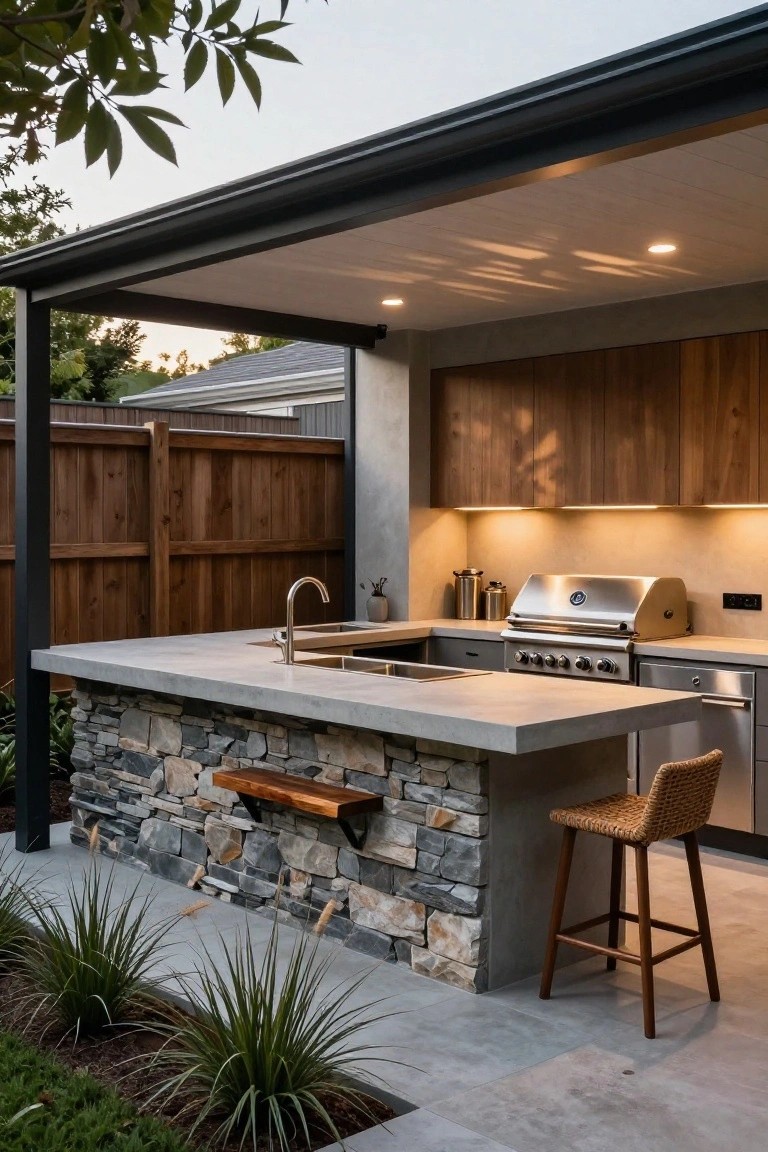
Overhead lighting makes a big difference when you want to keep using an outdoor kitchen after the sun goes down. It brightens the work area without needing extra lamps or string lights, and the wood fence helps reflect some of that light back into the space so everything feels more open.
This setup works best on a covered patio or deck where you already have a solid fence line. Run simple recessed lights or a strip under the roof edge, keep the fence natural or stained dark, and make sure the light reaches the counter height so you can actually see what you are doing while cooking or cleaning up.
Mount Lights Along Your Fence
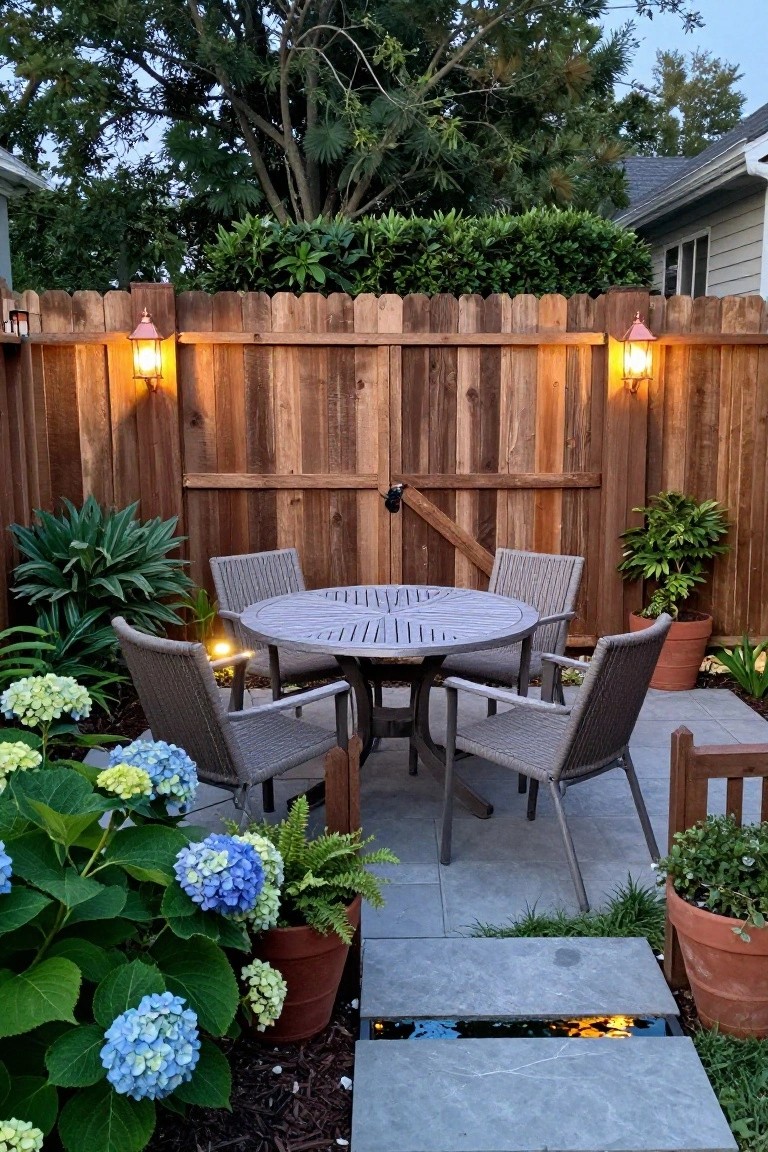
Mounting lights right on a wood fence gives an outdoor seating area a simple way to stay usable after dark. The fixtures sit low and direct light inward, so the table and chairs stay comfortable without needing extra poles or overhead structures.
This approach works best on smaller patios or side yards where you already have a solid fence in place. Choose weatherproof sconces, space them evenly, and aim them slightly downward to cut glare on the seats.
Small Lights On A Wood Slat Fence
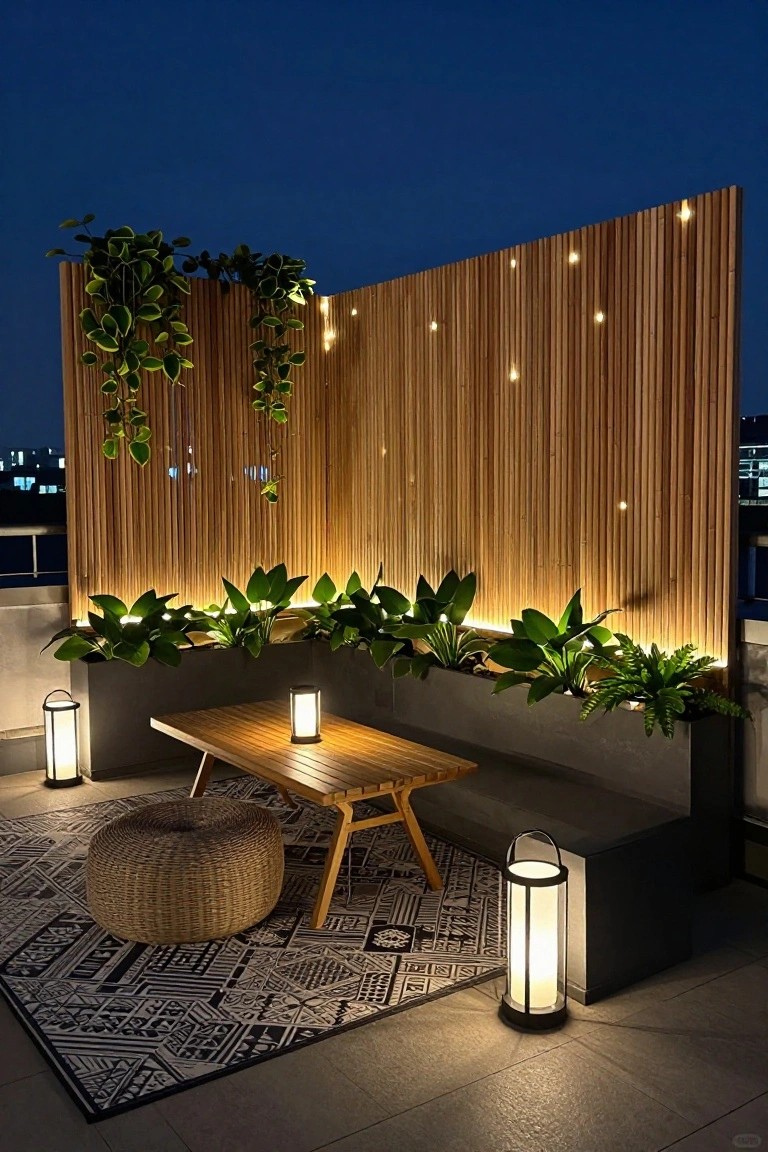
A wood slat fence can do more than just mark a boundary. When you add small lights directly to the vertical boards, the whole surface turns into a soft backdrop that makes the seating area feel finished after dark. The lights stay low and even, so they do not create glare but still show off the texture of the wood.
This works well on balconies or small patios where you want privacy without building a solid wall. Space the lights a foot or two apart and keep the color warm. Avoid overloading the fence with too many lights or the look can feel busy instead of calm.
Built-In Benches Along Feature Walls
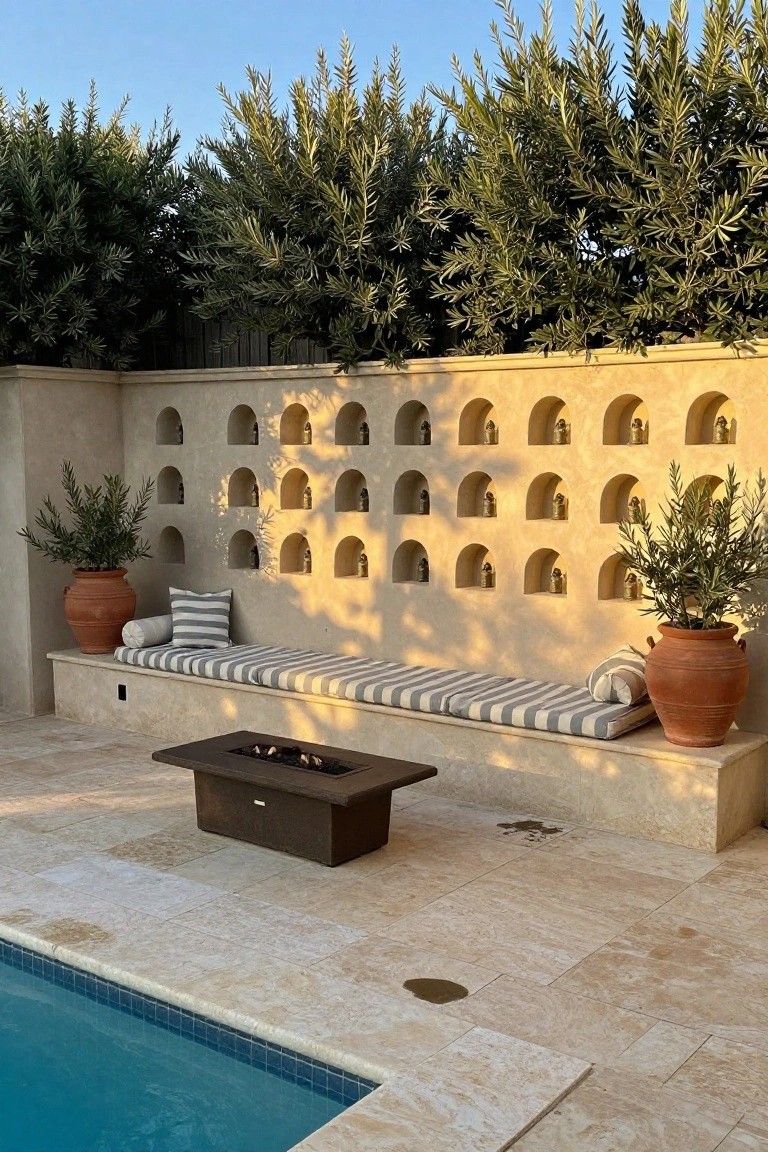
A built-in bench turns a plain wall into usable seating without taking up extra floor space. It works especially well in poolside areas where you want room to gather but still keep the layout open and simple.
This setup suits homes with masonry or stucco walls and gives you a permanent place to add cushions and pillows as needed. It also pairs naturally with a fire pit for cooler evenings, since the seating stays in place year round.
Tuck Low Lights Into Planting Beds Along a Wood Fence
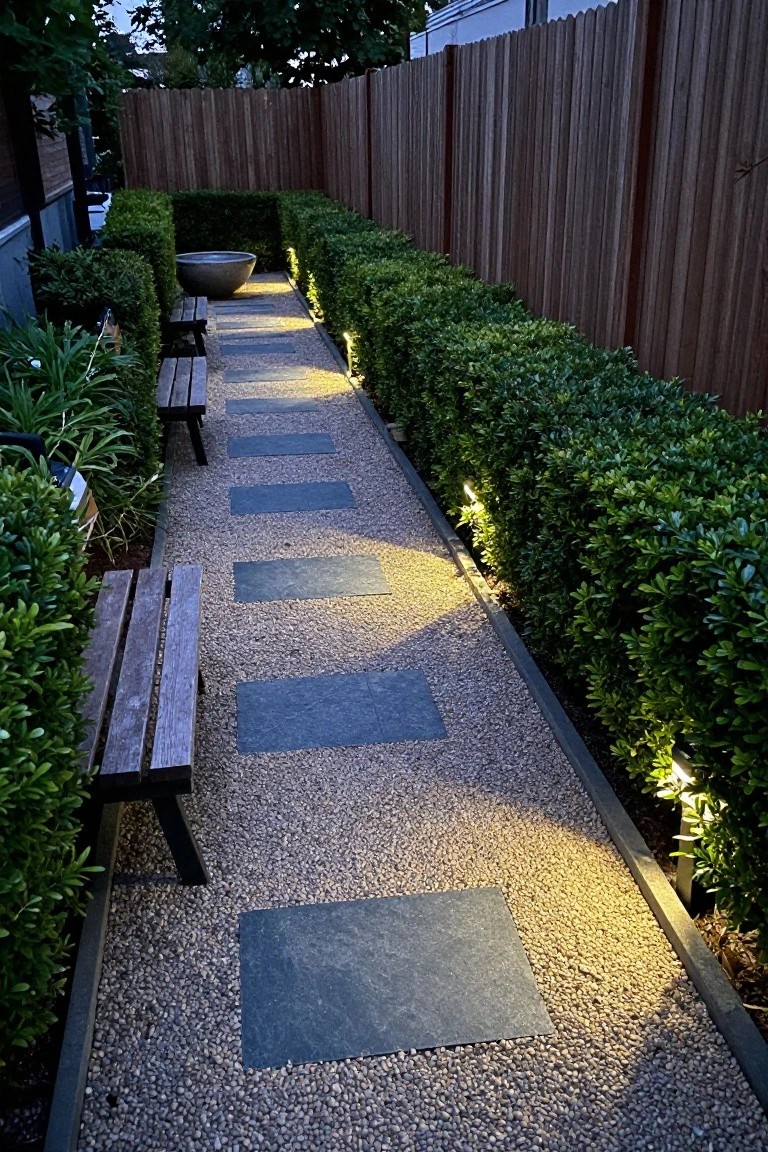
Low lights placed right at the base of a hedge make a path feel safer and more usable once the sun goes down. They stay mostly out of sight during the day and give just enough glow to follow the stepping stones without flooding the whole yard.
This setup suits narrow side gardens or long back paths where a fence already runs the length of the space. Space the fixtures evenly, aim them downward, and keep them a few inches inside the planting so they do not catch on mowers or feet.
String Lights Along Wooden Fences
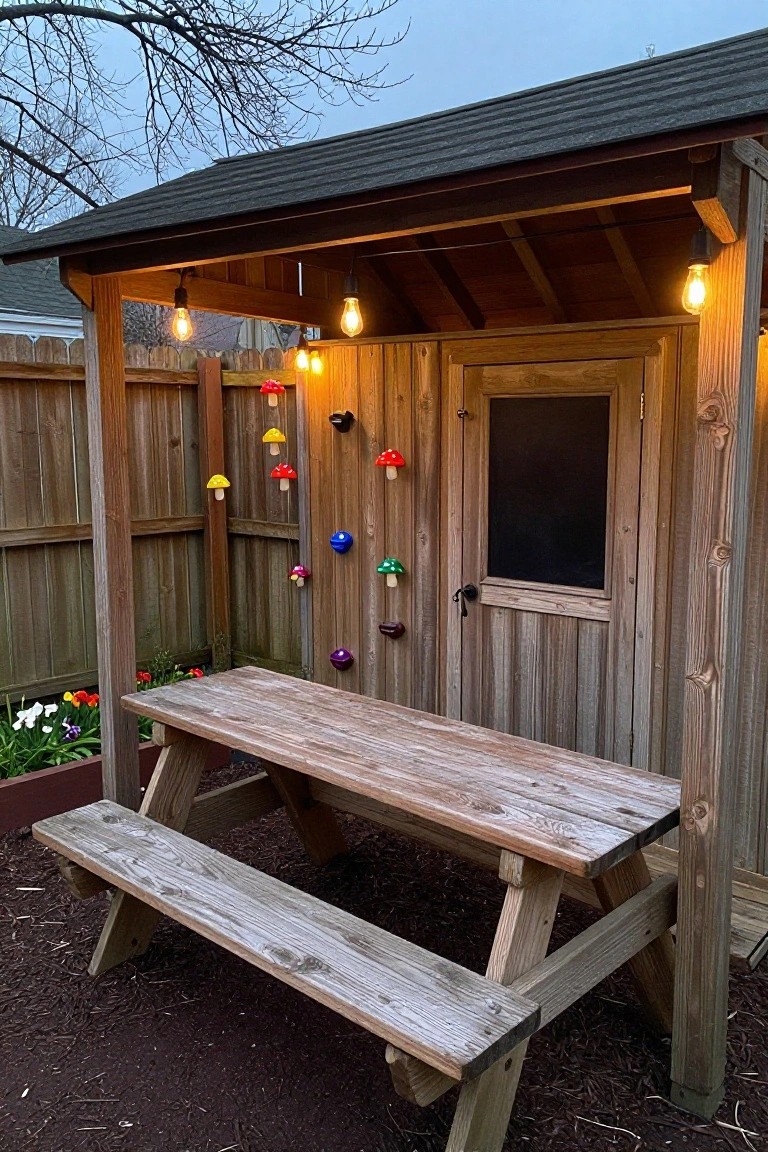
String lights make a simple fence or shed wall feel more finished at night. They spread a soft glow across the wood without needing extra fixtures or bright spots, which helps keep the space usable once the sun goes down.
This setup works best in smaller yards where a picnic table or bench sits right against the fence. Hang the lights along the roof edge or top rail, and keep the bulbs a bit spaced out so the light stays even rather than harsh. Weatherproof cords are worth the extra cost if the area stays up year round.
Hang Jarred Candles Along a Wood Fence
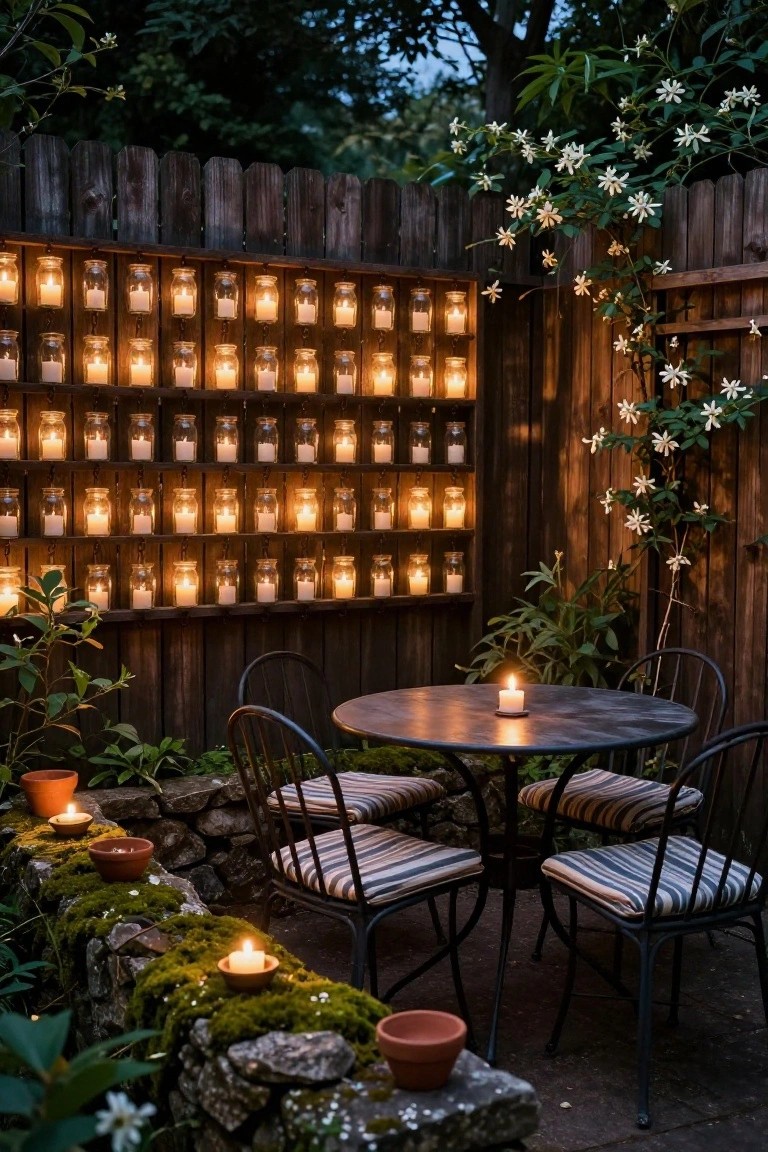
Rows of small glass jars with candles give off a steady, even light that feels warmer than most string lights. The setup works because the fence itself becomes the structure, so you do not need extra poles or wires running across the yard.
This approach suits a small patio or side garden where you already have a solid wood fence and want simple seating nearby. Use metal hooks or short chains so the jars sit flat against the boards, and choose candles in glass that will stay lit for a few hours at a time.
Uplight Vertical Panels Behind Seating
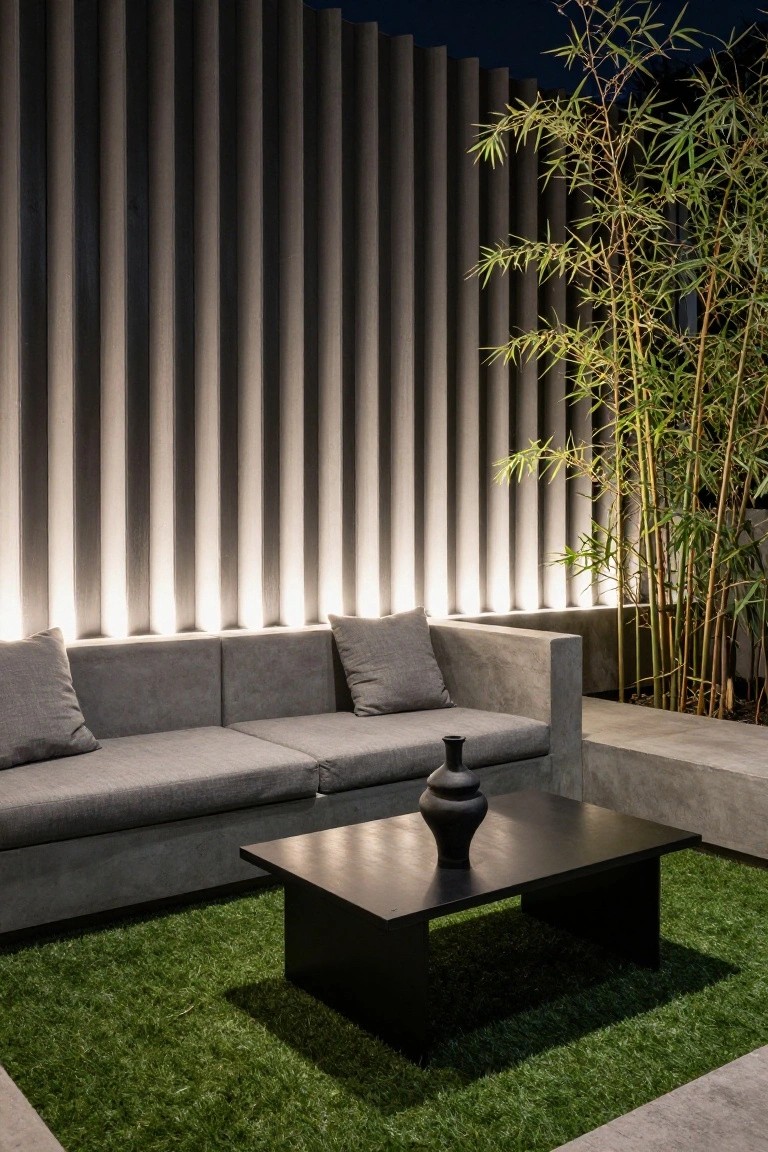
One simple way to make an outdoor seating area feel finished after dark is to add a row of lights along the base of a vertical slat wall. The light travels upward and shows off the texture without needing much extra hardware.
This works best on patios or small yards where the fence already forms the back edge of the space. Keep the fixtures low and close to the wall so the glow stays soft and the seating stays the main focus.
String Lights Along a Wood Fence
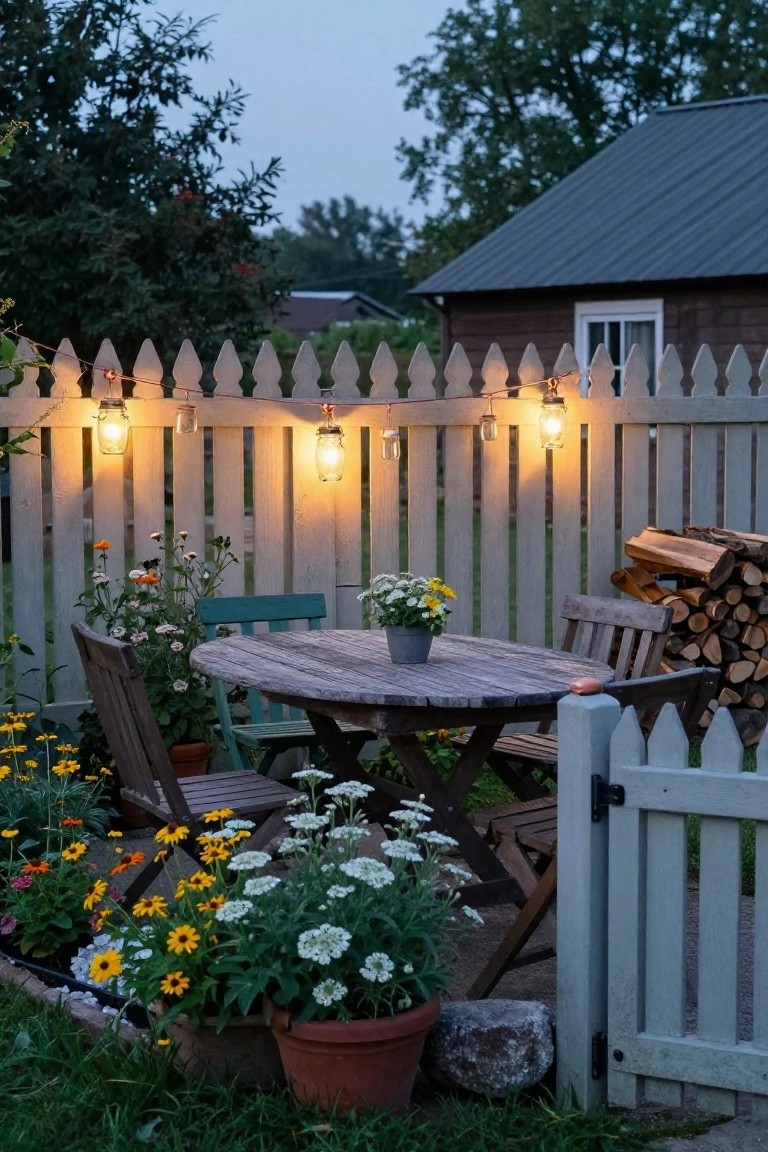
String lights hung along the top of a wood fence give an outdoor seating area a gentle glow once the sun goes down. The jars diffuse the light just enough to keep things soft while still letting you see the table and chairs clearly.
This setup works best in smaller backyards where you want to define the space without adding poles or heavy fixtures. Space the jars evenly and use warm bulbs so the light stays inviting instead of harsh.
Lanterns Along a Wood Fence
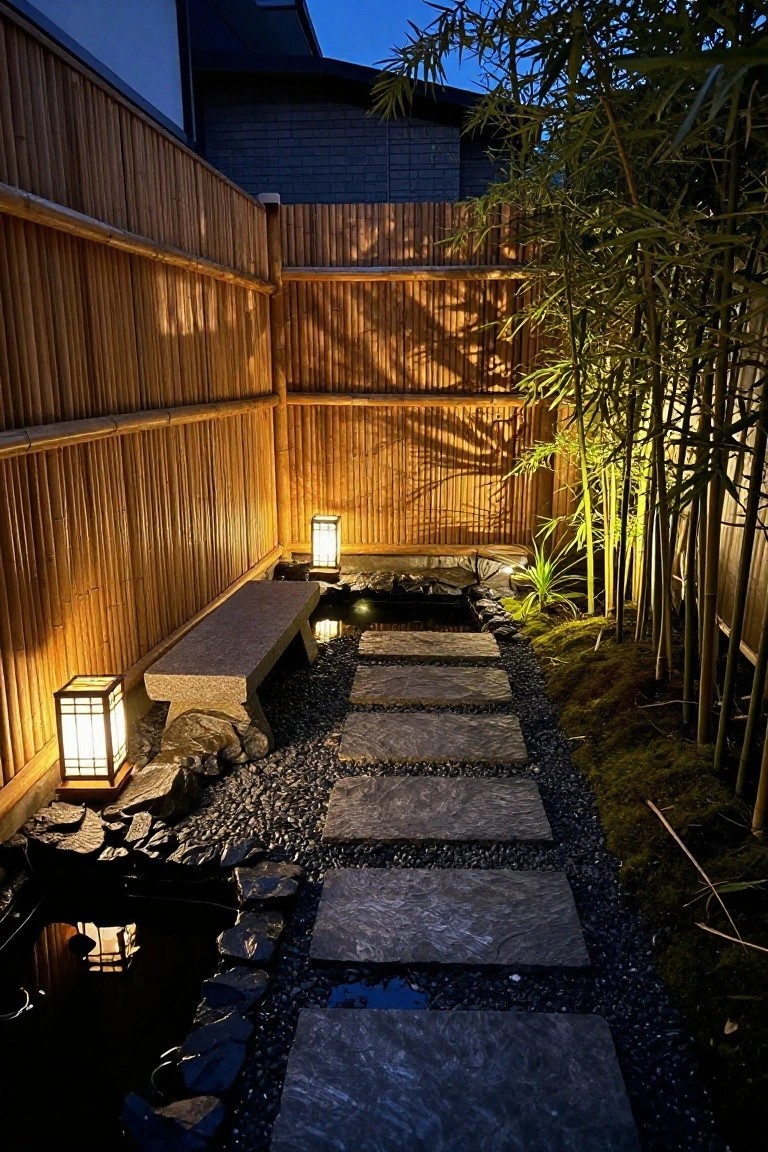
Placing lanterns along a wood fence is a simple way to light a narrow garden path after dark. The light stays low, reflects off the fence surface, and makes the stepping stones easy to follow without flooding the whole space.
This approach suits small side yards or tight passages between buildings. Space the lanterns evenly and keep them close to the fence so the path feels guided rather than brightly lit.
Mount Lights Along the Fence
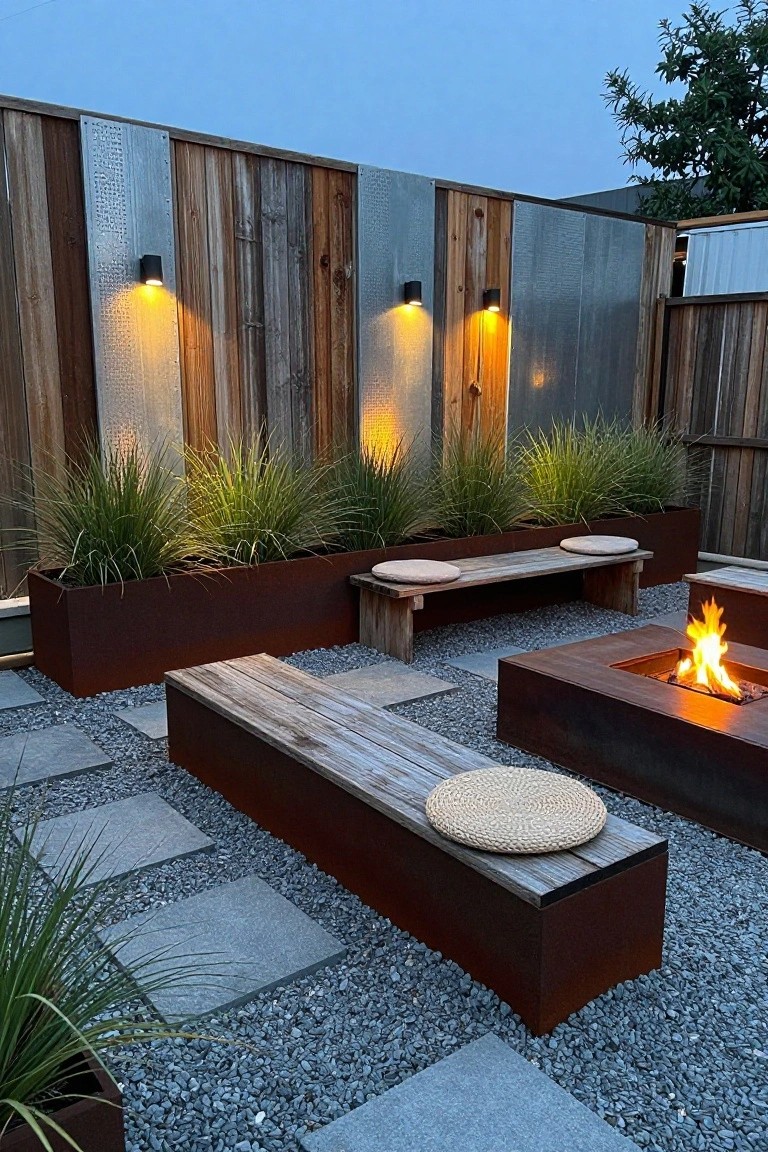
Mounting lights straight on the fence gives the whole patio a soft glow without needing tall poles or extra stands. It keeps the focus on the seating and fire pit while making the space usable once the sun goes down.
This setup works best along the back or side of a fenced yard where you already have a solid surface to work with. Space the lights evenly and stick with warm bulbs so the light feels calm instead of bright and glaring.
Vertical Lighting Strips In Wooden Structures
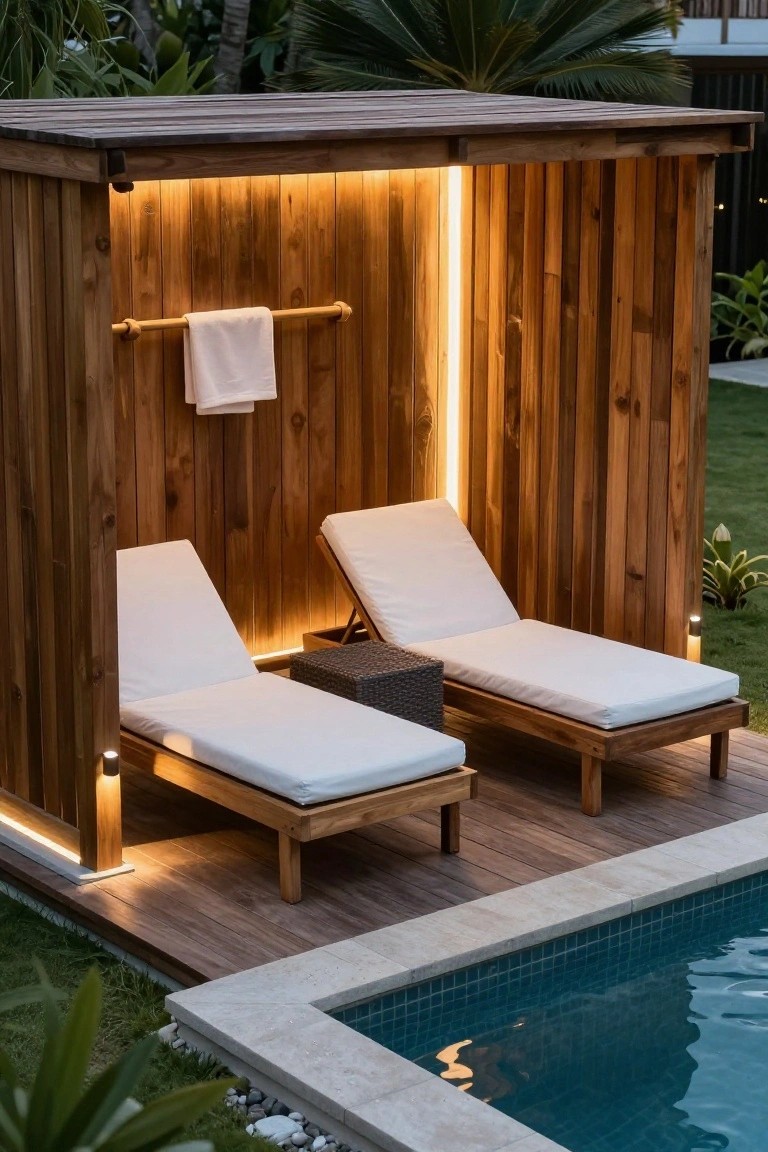
Vertical light strips tucked into wood walls give a soft even glow that makes an outdoor seating area usable well into the evening. The narrow lines of light follow the grain of the wood without overpowering it, so the space feels calm rather than bright.
This approach works best on a deck or beside a pool where you already have some privacy from the wood itself. Keep the fixtures low and choose warm LEDs so the light stays gentle on the eyes.
String Lights Along a Painted Fence
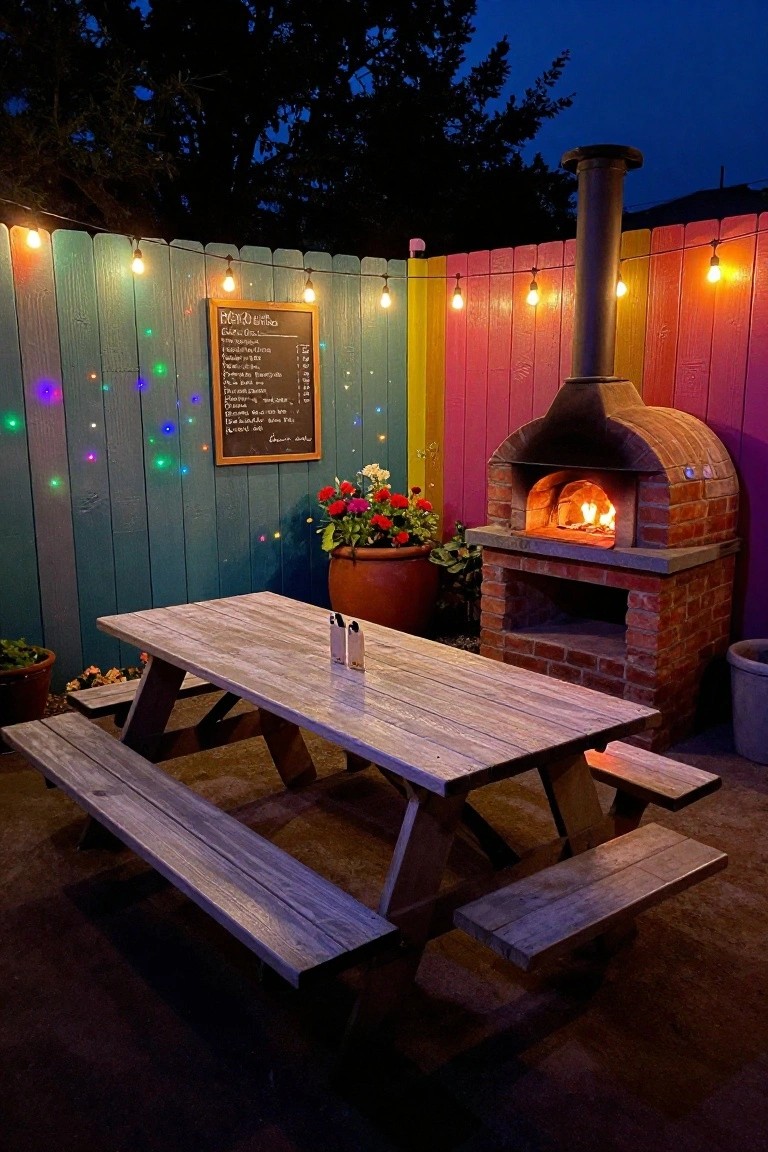
String lights make a big difference once the sun goes down. Running them along the top of a wood fence gives the whole area a soft glow without needing extra poles or fixtures. The lights bounce off the fence boards and help the space feel more like an actual room.
This works especially well on fences that are already painted in bold colors. The lights highlight the paint and keep the area usable for meals or sitting later into the evening. Just make sure the bulbs are rated for outdoor use and spaced evenly so nothing looks too dim or overloaded.
Mount Sconces Directly On The Fence
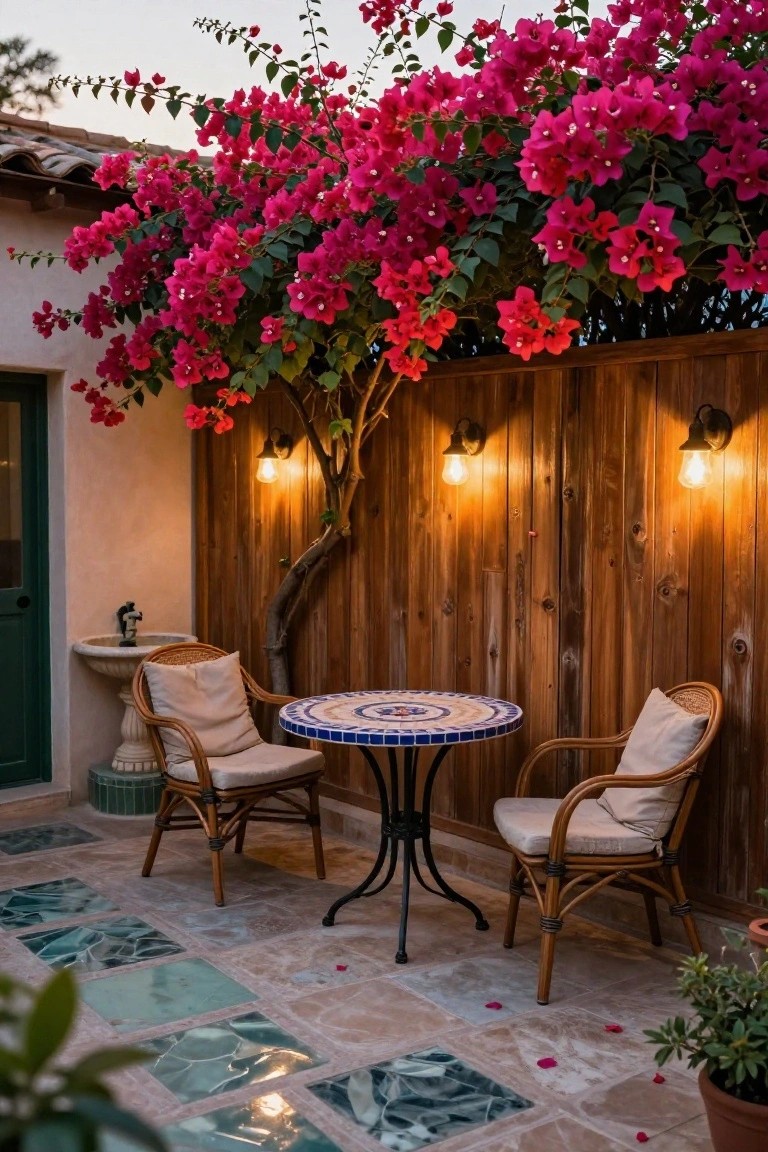
Putting lights right on the fence is one of the easiest ways to brighten a patio once the sun goes down. The sconces sit flat against the wood and throw a soft glow across the whole seating area without taking up floor space or needing extra posts.
This setup works especially well on smaller patios or side yards where you want light but still need to keep things open. Just space the fixtures evenly, use warm bulbs, and make sure the wiring stays hidden behind the boards so it stays tidy.
Path Lighting Built Into Retaining Walls
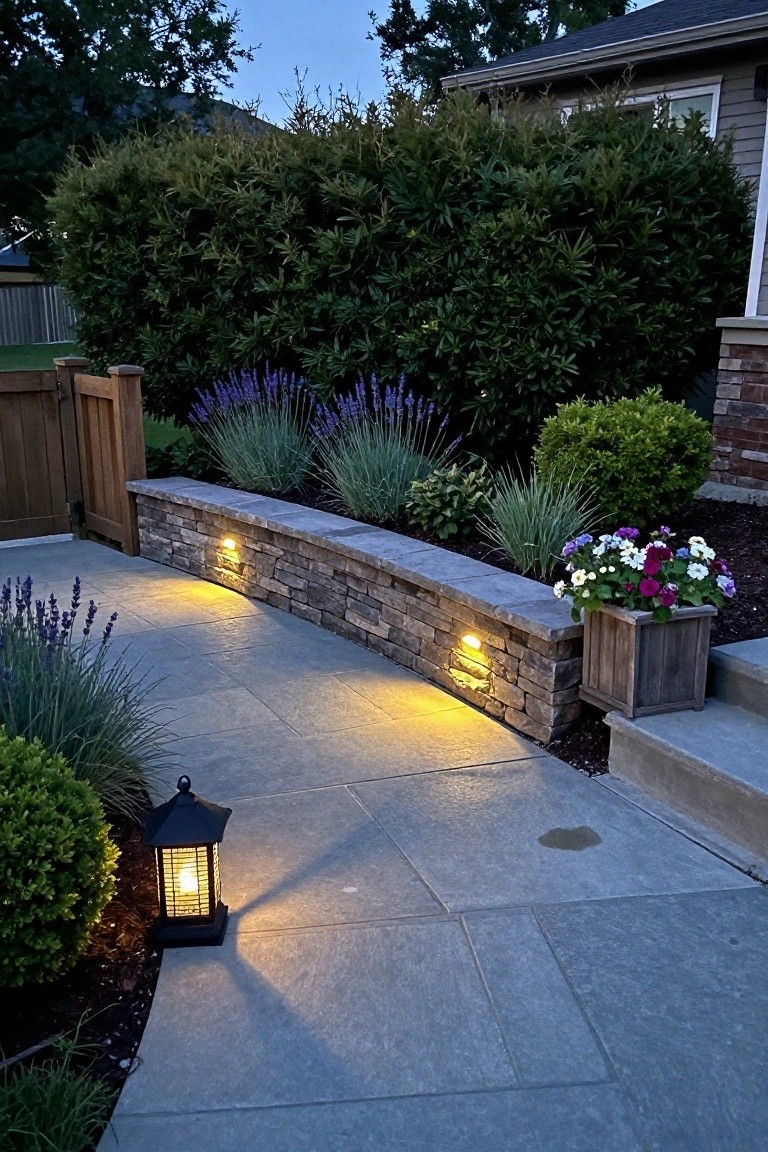
Low lights tucked into a stone wall give a path just enough glow to walk safely after dark. This approach keeps the lighting low and steady so it does not compete with the fence or plants nearby.
It works best along a side yard or entry path where the ground slopes and you already need a wall for support. Space the fixtures evenly and use a warm bulb so the light feels soft instead of harsh on the concrete.
String Lights Along A Railing
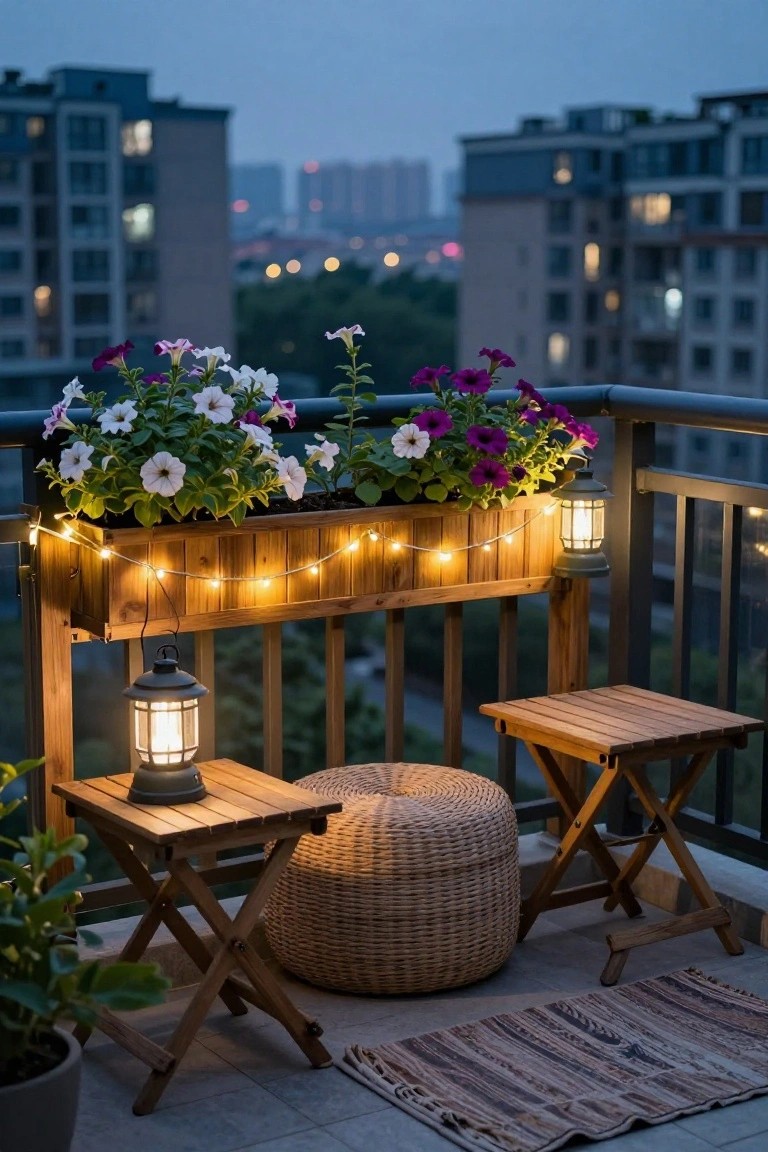
String lights work well on railings because they add a gentle layer of light without taking up floor space. On a balcony this approach keeps the seating area open while still making the space feel ready for evening use.
Run the lights along the front of a wooden planter or box and add one or two lanterns for a bit more brightness near the floor. This works on most apartment balconies and small decks where you want simple lighting that does not require wiring or heavy fixtures.
Wall Sconces On The Fence
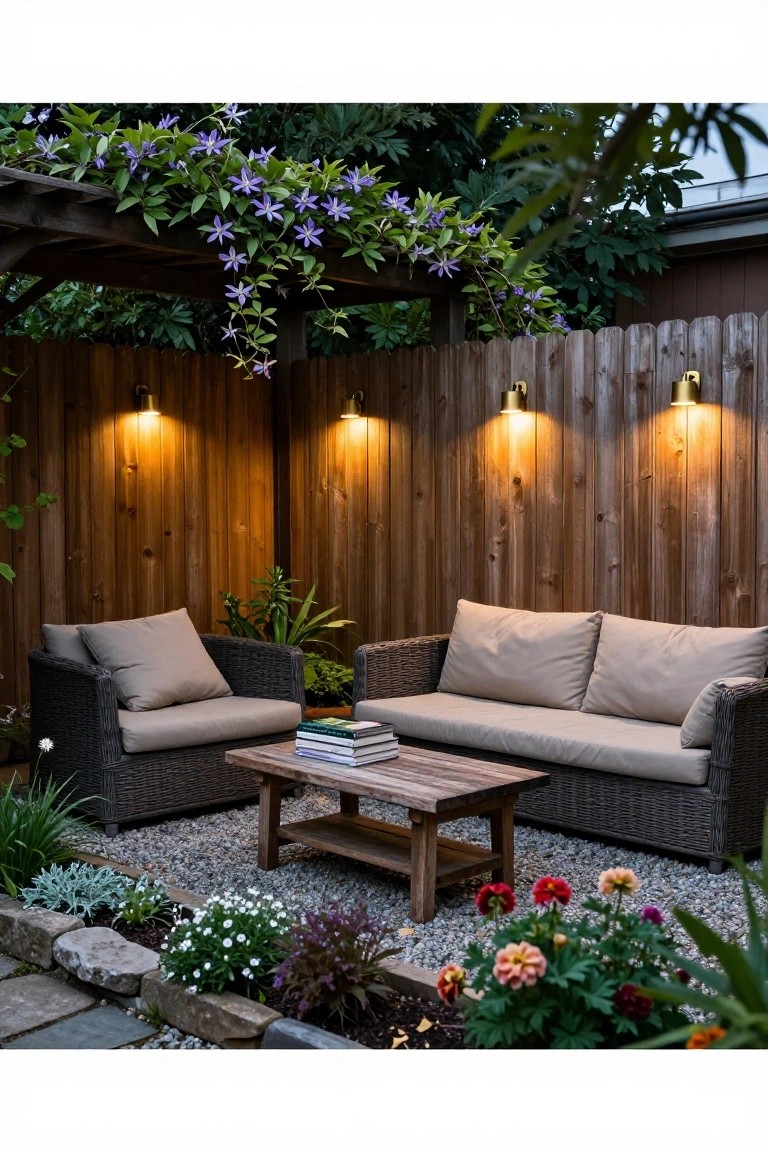
Mounting lights straight on a wood fence gives the seating area a soft, usable glow once the sun goes down. The fixtures sit low enough to light the space without shining into windows or needing extra poles.
This approach works best on a straight fence run right behind a patio or small seating group. Space the sconces evenly so the light overlaps and you avoid patchy dark spots along the edge.
Frequently Asked Questions
Q: How do I stop water from getting into the lights on my fence? A: Pick spots on the fence that already slope a bit so rain runs off the fixtures. Mount each light at a slight downward angle and check the rubber seals every few months. Swap them out as soon as they start to look worn.
Q: Do solar lights work well on a wood fence? A: You set the panels where they catch sun most of the day. Place them along the top rail or on posts that face south. They run all night once they get six solid hours of light.
Q: How do I keep the lights from pulling in bugs? A: Use bulbs with a warm yellow tone instead of bright white. Aim the beams down along the fence so they do not light up open space. This setup still shows off the wood without drawing moths.
