

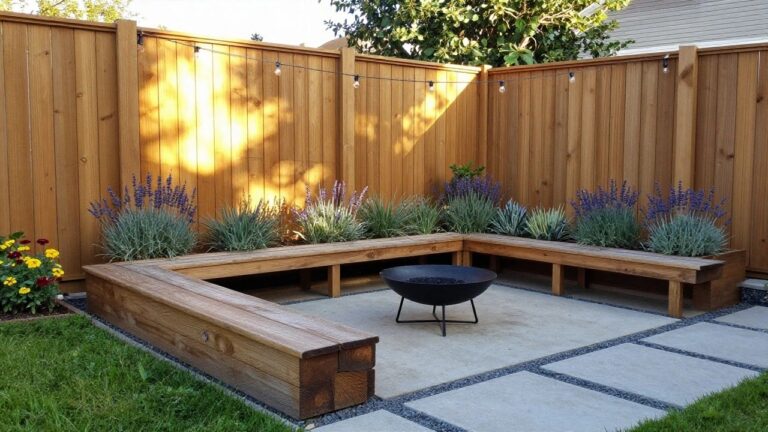
I have noticed over the years that a backyard starts to feel like an actual extension of the house once you add a fence that holds up to real weather and daily use.
Many of the wood options I have tried on my own property looked fine at first but needed constant tweaks because the posts shifted or the boards warped after a wet winter.
The spacing often matters more than the style.
When I added a simple rail along one side last spring it suddenly became easier to keep the grass cut and to set up a small seating area without it feeling exposed.
These days I look for ideas that balance cost with how the fence will age rather than how it appears in a single photo.
Horizontal Wood Fence for Simple Privacy
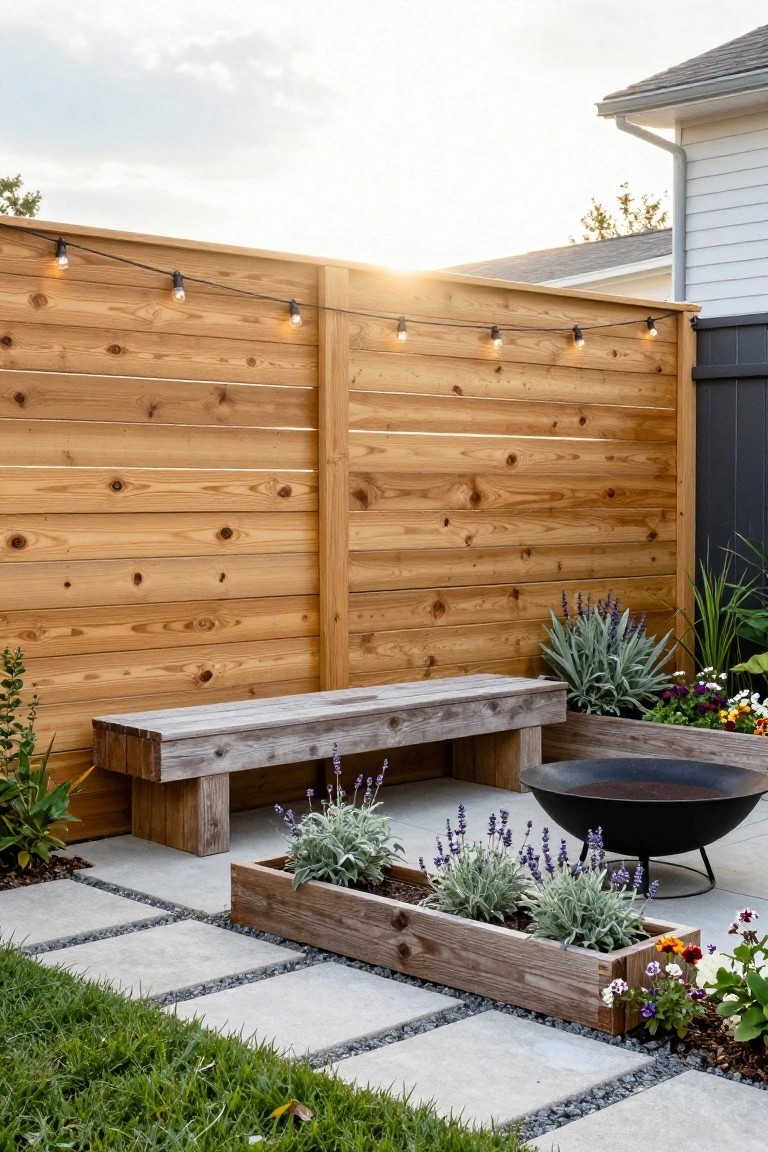
A horizontal wood fence gives a backyard seating area a clean, finished look without much fuss. It blocks the view from neighbors while still letting the space feel open and usable. Many people choose this style because the boards are easy to source and install on a basic post frame.
This works best along the back or side of a patio where you want privacy but do not need full enclosure. Keep the fence height around six feet and space the boards evenly for good airflow. It pairs well with simple paving and a few raised beds in front.
Picket Fence With an Arbor
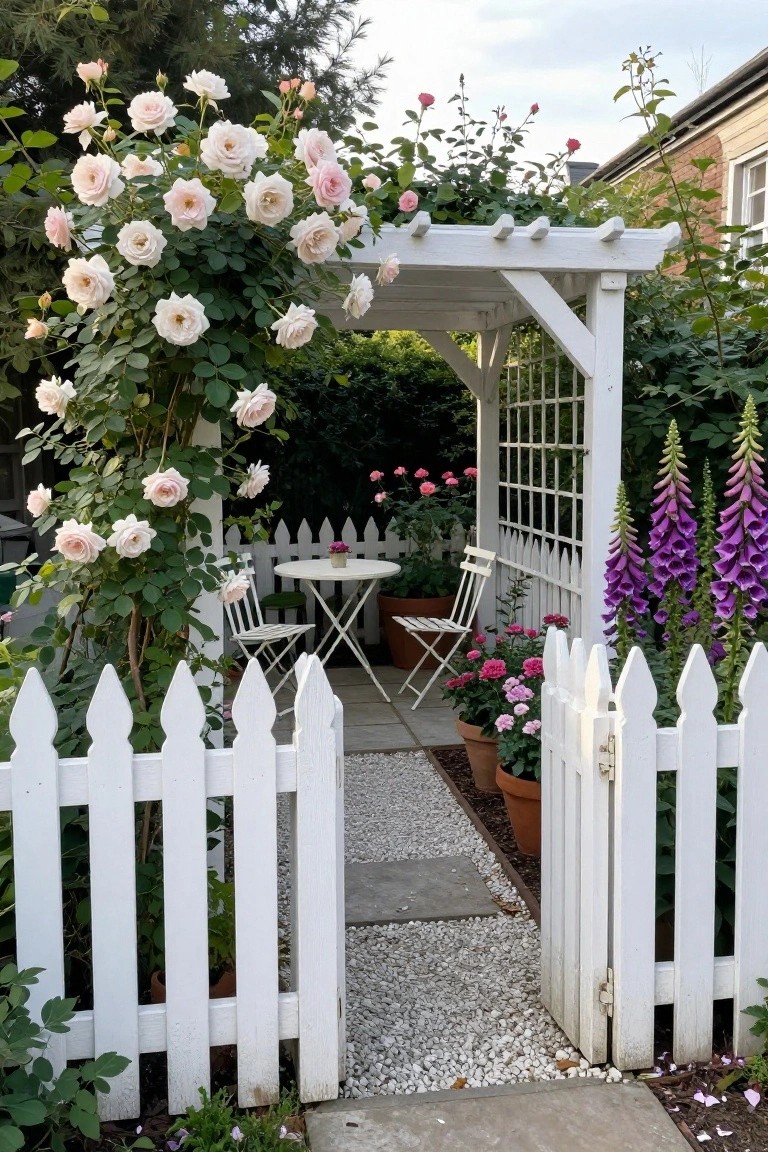
A picket fence with an arbor over the gate creates a clear entry without making the yard feel boxed in. The wood stays simple and the open slats let light through while still marking the boundary. Many people like this because it adds height and a place for climbing plants without much extra work.
This style suits small to medium yards where you want a friendly path leading in from the street or another part of the garden. Use pressure-treated lumber for the posts and keep the design basic so it stays easy to build and repaint when needed.
Use Raised Planters Along A Wood Fence
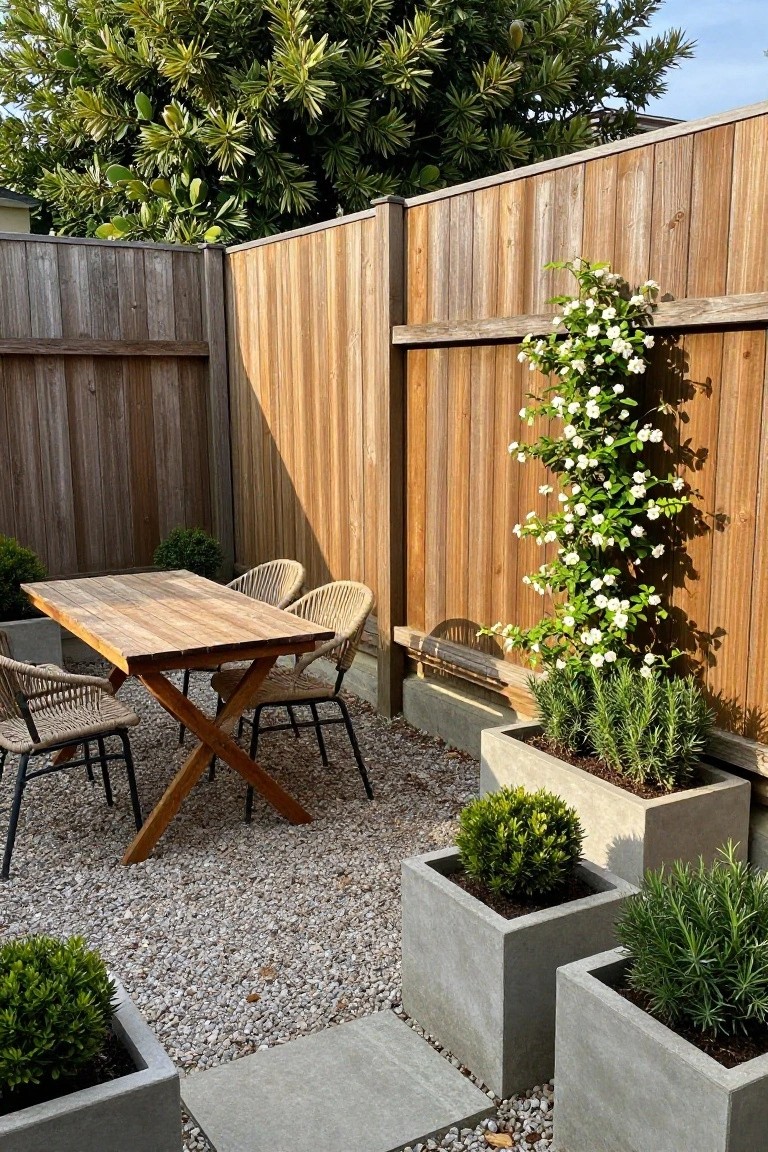
Placing raised planters right in front of a wood fence gives the whole area more structure and brings in greenery without needing to dig up the ground. It works especially well on gravel or paved surfaces where planting directly in the soil is not an option. The different heights of the planters also create a nice layered look that softens the fence line.
This setup suits small backyards or side yards where you want some privacy and color but still need to keep things low maintenance. Choose tough shrubs and a few climbing plants that can grow up the fence over time. Just make sure the planters have good drainage so the plants stay healthy through the seasons.
Hang Planters From Your Wood Fence
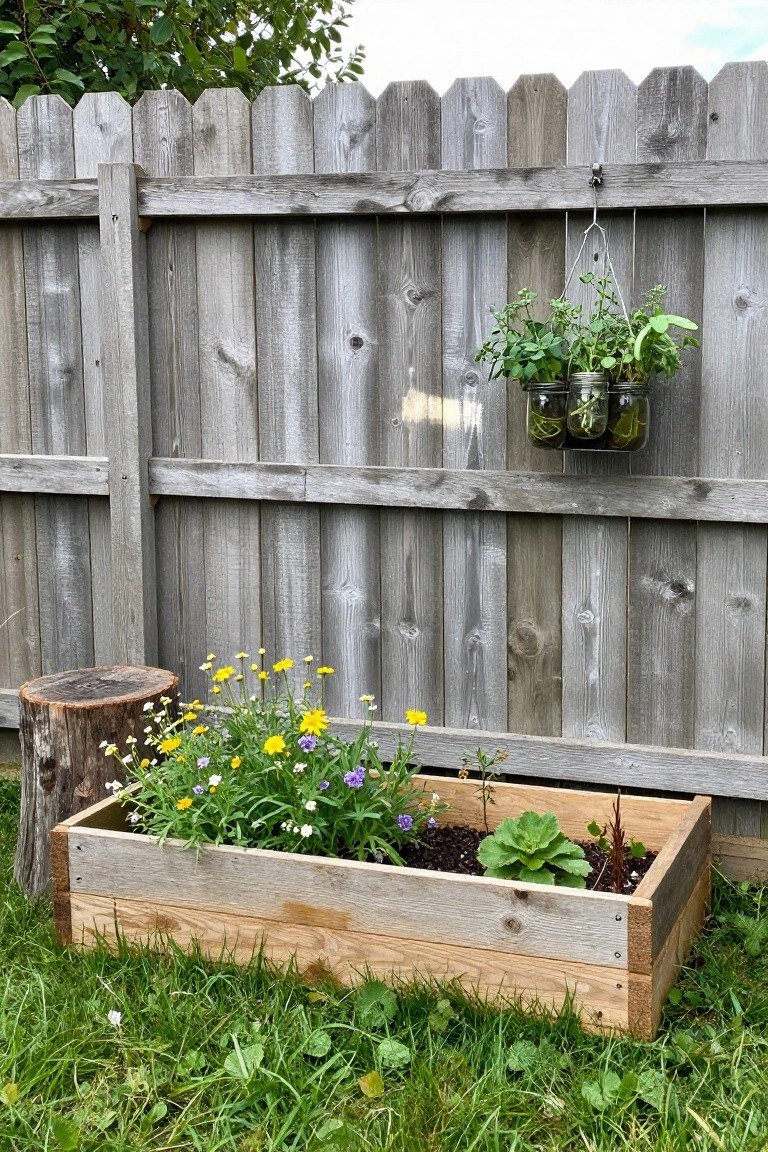
Many people like to hang small planters right on a wood fence so they can grow more herbs and flowers without using up ground space. It turns the fence into a simple vertical garden that stays out of the way but still looks full.
This works best along the back or side of a yard where you already have a fence in place. Use sturdy hooks or wire so the planters sit at a comfortable height, and check that the fence can handle a bit of extra weight once the jars or pots are filled with soil and plants.
Add a Matching Planter Box Along Your Fence
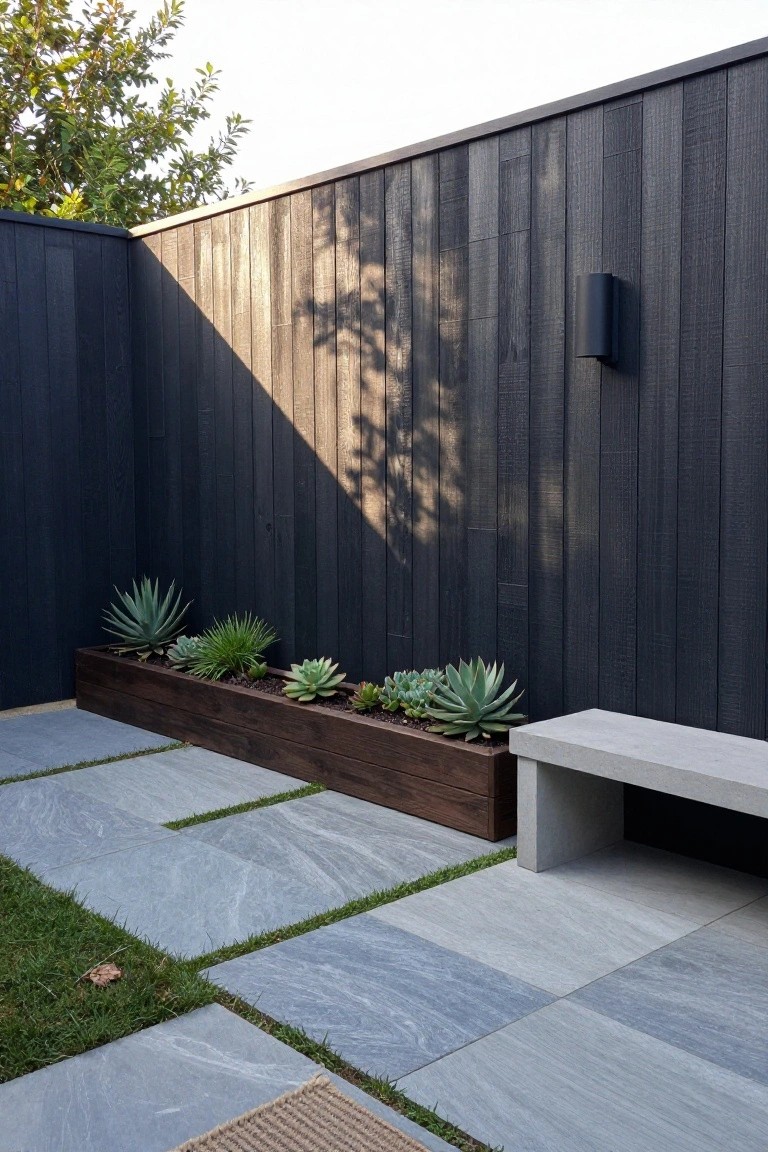
Running a wooden planter right along the base of a fence gives you planting space without eating into the yard. It also makes the fence feel more like part of the garden instead of just a wall at the edge.
This setup works best in smaller yards or along side fences where you want some greenery but need to keep things simple. Use the same wood and finish as the fence so the two read as one clean line, and stick to tough plants that do not need constant watering.
Paint Your Wood Fence a Solid Color
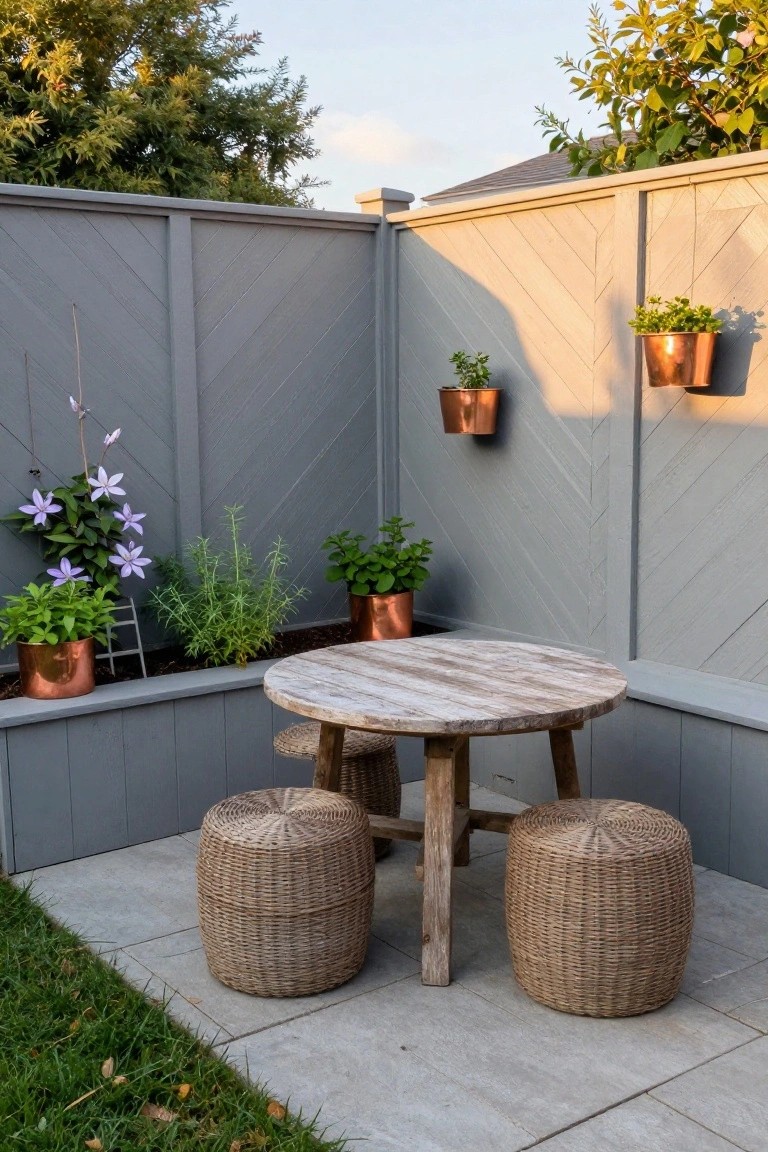
A solid paint color on a wood fence can turn a basic backyard boundary into a clean backdrop that makes the whole space feel more put together. It works especially well when you want the seating area to stand out without a lot of extra decoration or expense.
This approach suits smaller yards or corner patios where you need the fence to recede a bit visually. Stick with a neutral like soft gray and keep any added planters or seating simple so the fence stays in the background rather than competing for attention.
Add a Simple Shelf to Your Fence
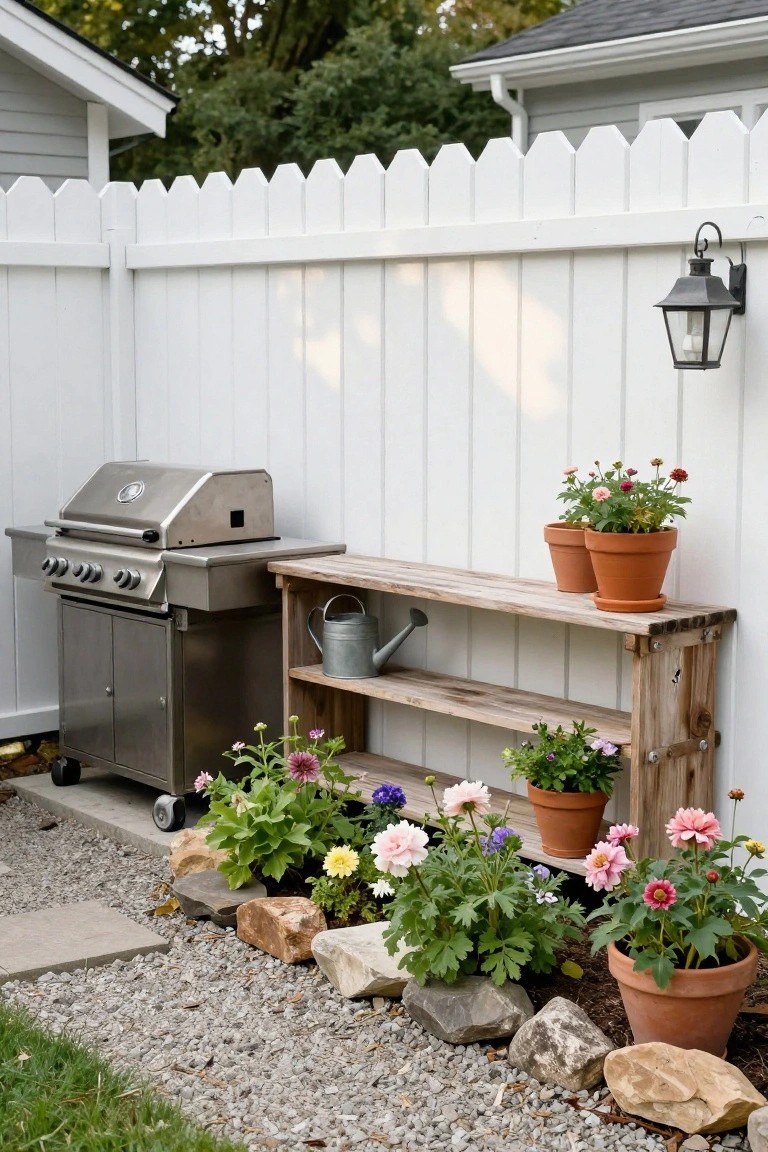
One easy way to get more use from a fence is to build a basic wood shelf that sits right against it. This creates extra room for pots and tools while keeping everything off the ground and easy to reach.
It works well along the side of a yard or near a grill area where you want some order without a full shed. Use plain lumber for the frame and shelves, then secure it lightly to the fence posts so it stays steady through the seasons.
Create an Outdoor Dining Area With a Pergola
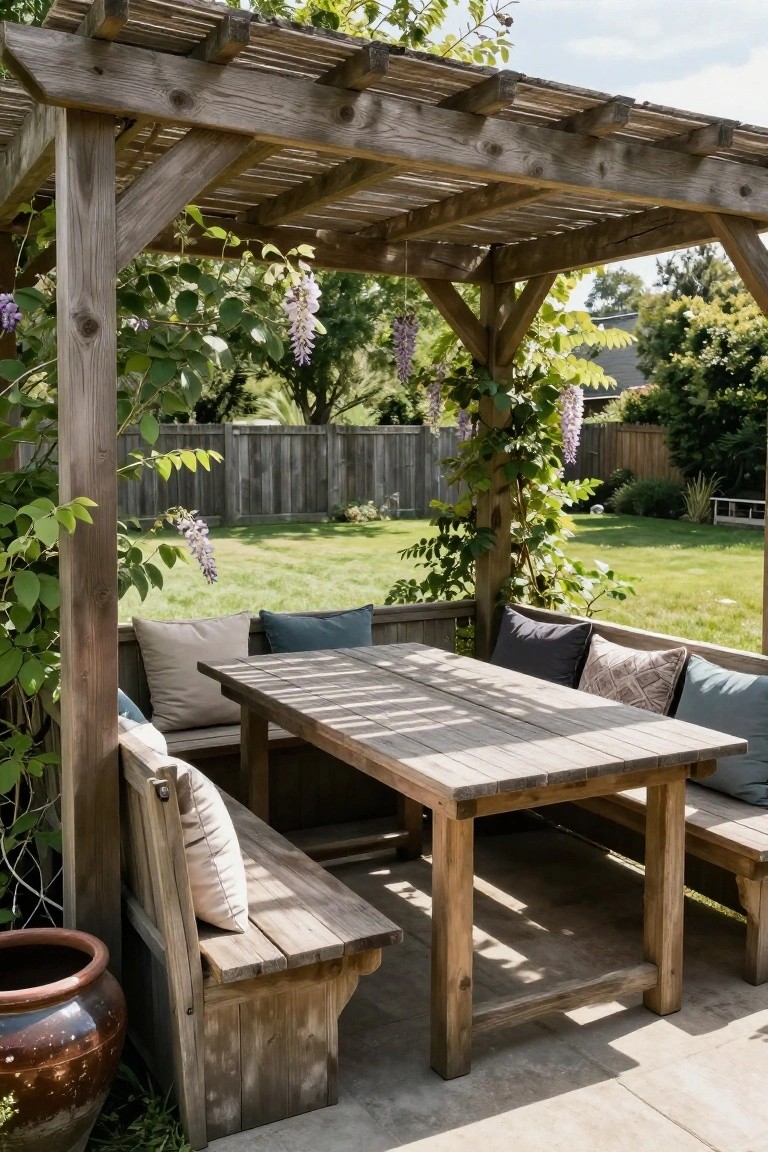
A pergola with attached benches gives you a clear spot for meals and gatherings without needing a lot of extra furniture. The wood frame provides shade once vines grow in, and the built-in seating keeps the layout simple and sturdy.
This setup works well in a medium or large backyard where you want one defined area for eating. Use pressure-treated lumber for the posts and beams, and keep the table size modest so it fits the space without crowding the lawn around it.
Create Privacy with a Basic Wood Fence
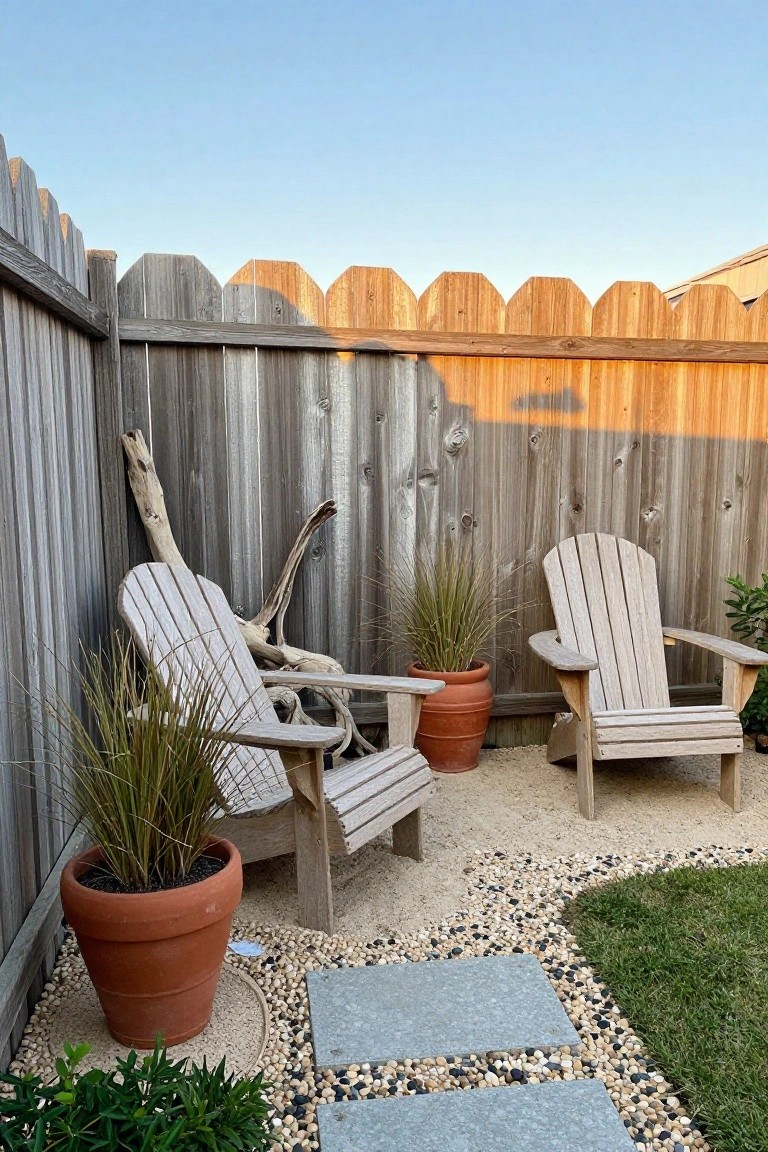
A simple wood fence turns an open backyard into a more usable space by blocking views and giving you a defined area for seating. It works especially well when you want privacy without adding structures or plants that need extra care.
This approach suits small or narrow yards where you need quick enclosure on a budget. Use standard boards and posts, then leave the wood natural or apply a light stain so it blends with the rest of your outdoor setup.
Add a Simple Gate to Your Wood Fence
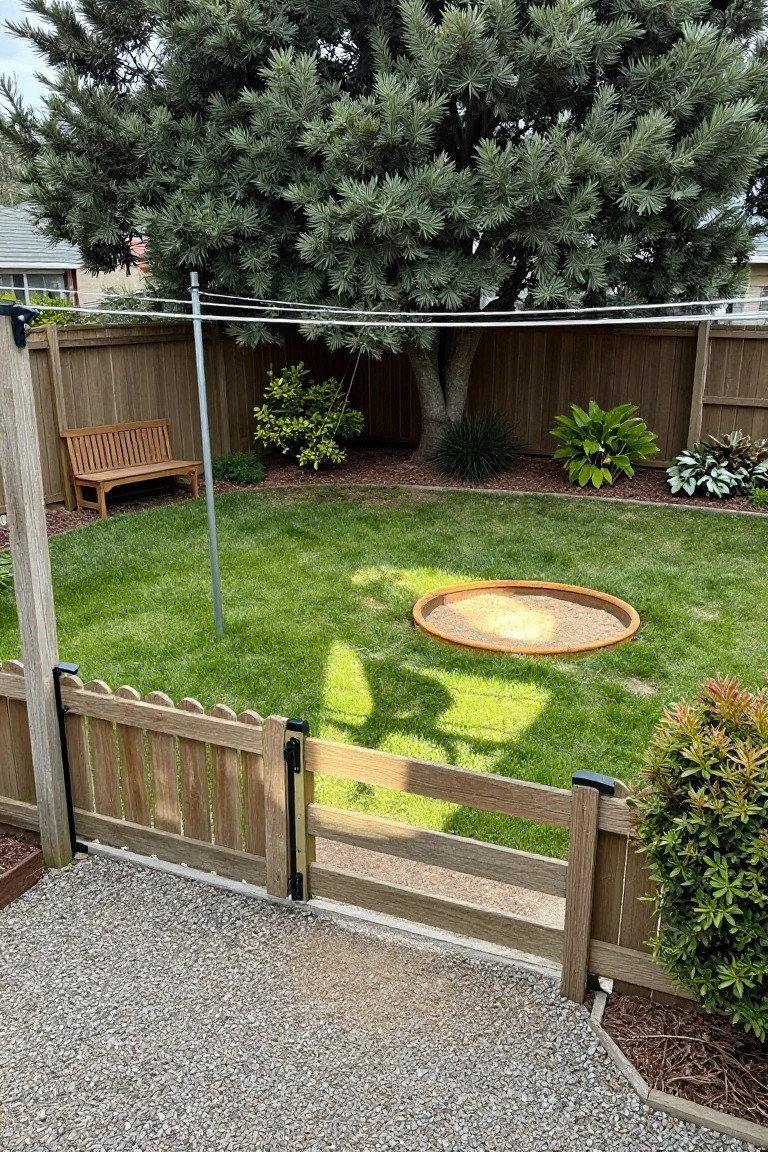
A basic wood gate makes a fence more practical without adding much cost. It creates a clear entry point while keeping the whole structure looking consistent and keeping pets or kids contained.
This works especially well on side yards or back corners where you need occasional access from a driveway or path. Use the same lumber and rail style as the fence so everything matches, and keep the hardware simple so it stays easy to maintain over time.
Lattice Panels Open Up A Basic Wood Fence
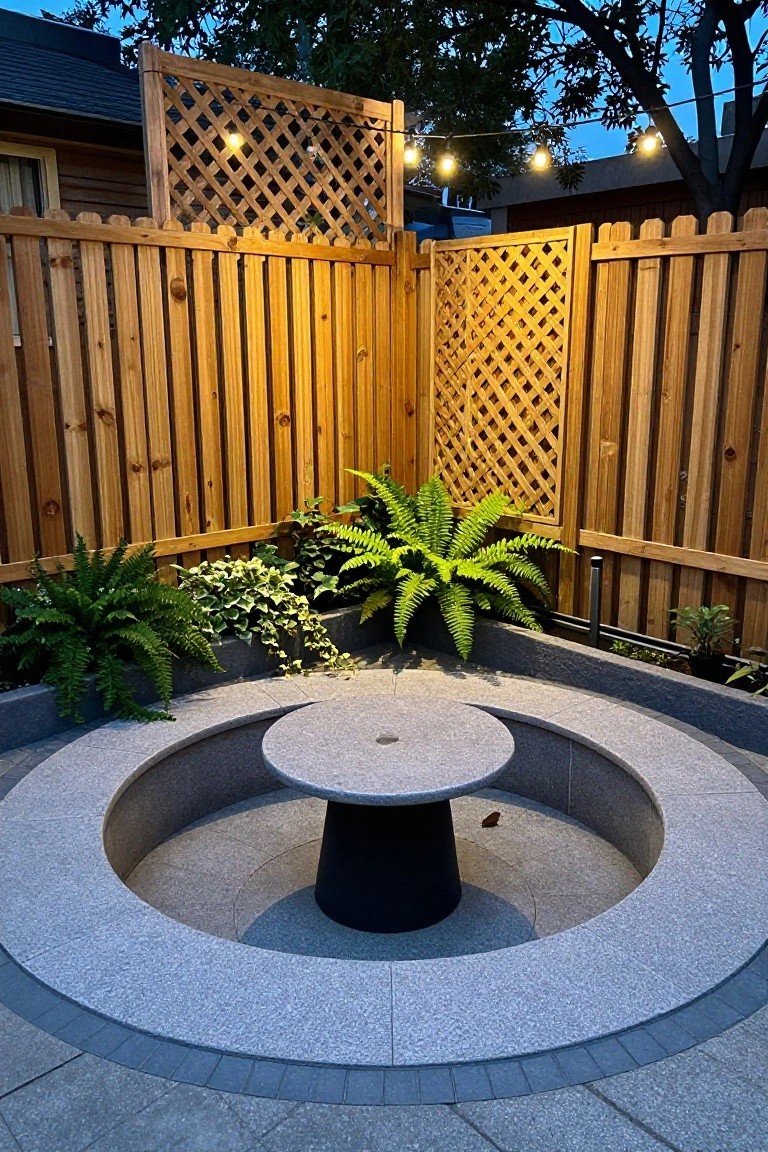
Many backyard fences feel too solid once they go up, and that is where lattice panels help. They let some light and air move through while still giving privacy, and the open pattern makes the whole fence look less heavy.
This approach works best along the back or side of a yard where you also want a spot for climbing plants or vines. You can build the lattice sections yourself with simple lumber and attach them between solid boards, which keeps the project affordable and gives the fence a bit more character without extra cost.
Add a Storage Bench Along the Fence
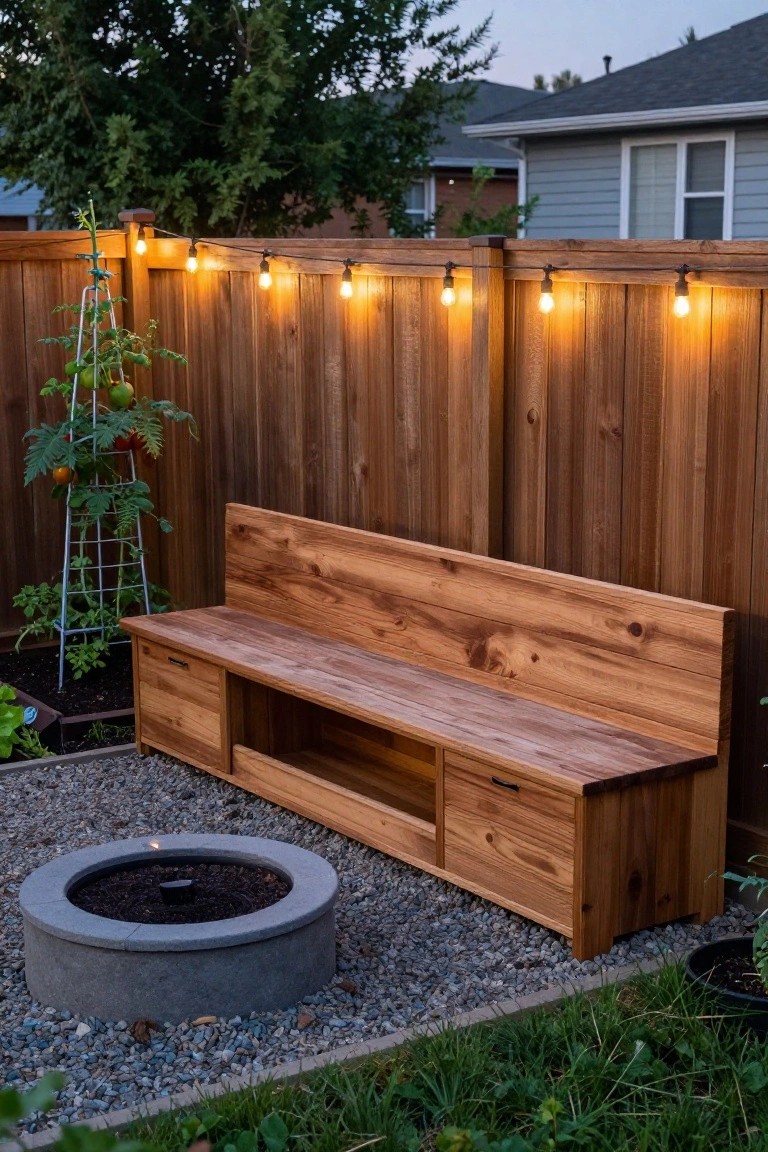
A bench with built-in drawers and open shelves makes good use of the fence line. It turns a blank wall of wood into a place to sit while also holding garden tools or outdoor cushions without extra furniture cluttering the yard.
This setup works best along a straight fence section where you have room for a fire pit or small patio in front. It suits homes that already have a wood fence and need both seating and storage in one simple build.
Vertical Wood Fences For Simple Privacy
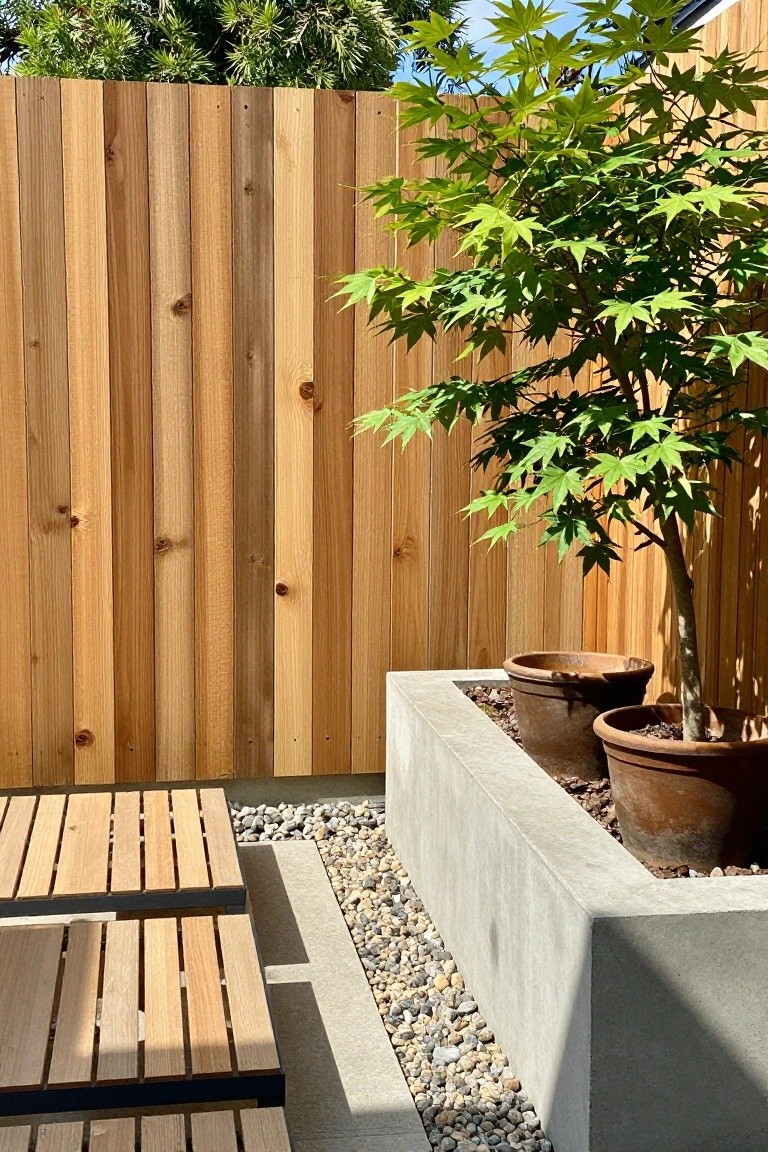
A vertical plank fence like this one gives a backyard clear boundaries without costing much. The straight lines and natural wood tone create a calm backdrop that works well in smaller spaces where you want some separation from neighbors or the street.
It suits homes with tight yards because the fence takes up little ground space and pairs easily with gravel beds or raised planters. Just make sure the wood is treated for weather if you want it to last without much upkeep.
Woven Wood Fences For Garden Borders
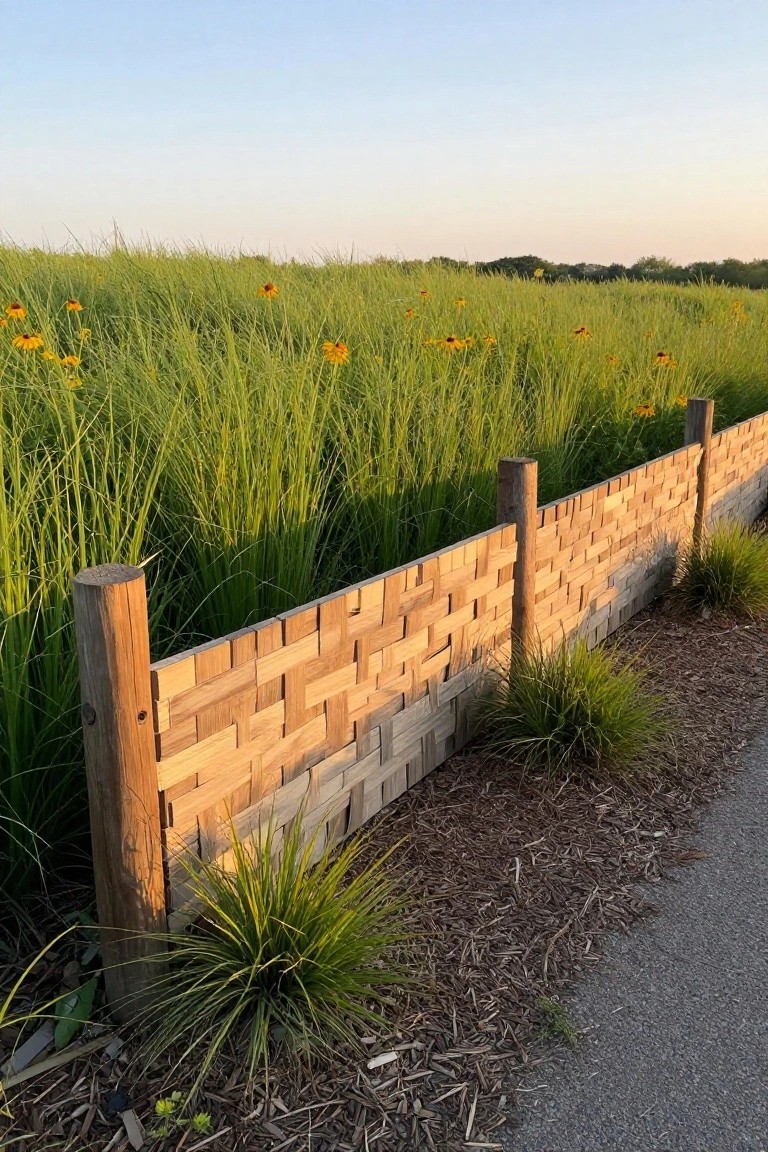
A woven wood fence gives a yard a softer edge than standard panels. The overlapping strips create texture while still letting some light and air pass through, which helps it blend into the surrounding plants instead of cutting them off.
This approach works best along paths or at the edge of a larger garden area where you want a clear boundary without a heavy wall. Use basic lumber and simple weaving to keep costs down, and space the posts evenly so the fence stays straight over time.
Add Built In Bench Seating To Your Fence
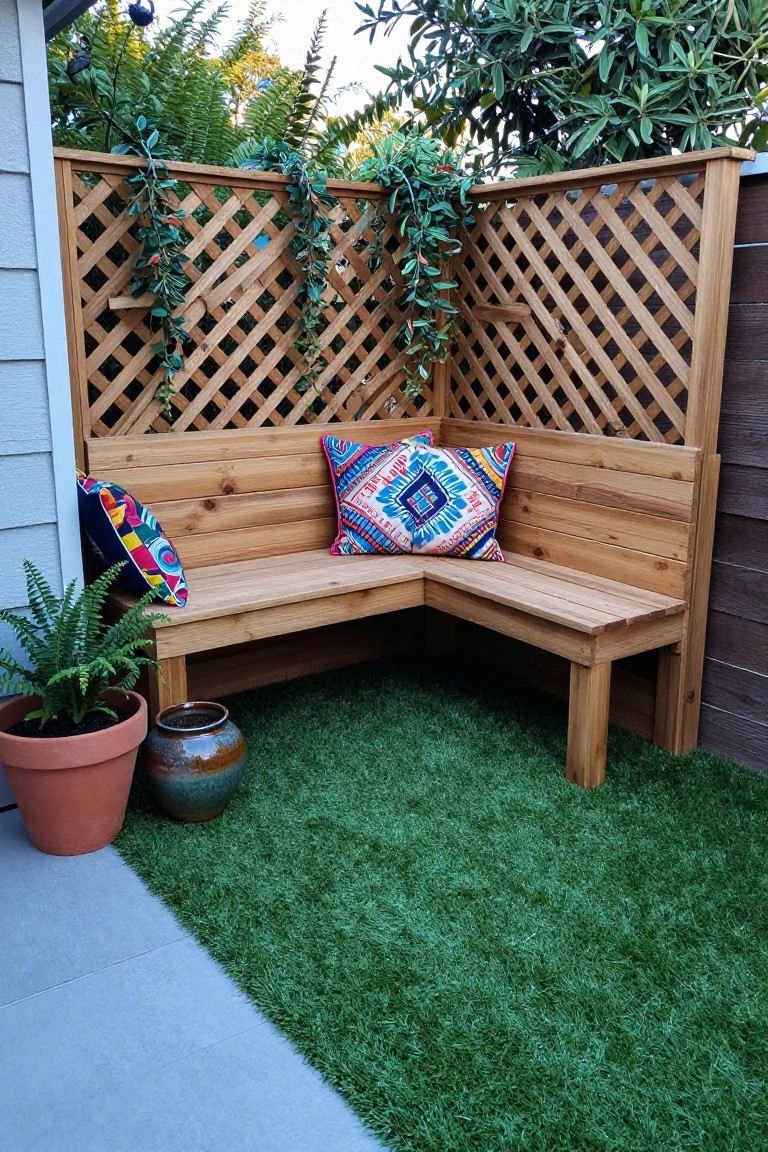
One simple way to stretch a fence project is to add a bench along the base. It turns the fence into a place to sit instead of just a boundary, and it works especially well in corners where space is tight.
This setup suits smaller yards or side areas that need a quiet spot without buying separate furniture. Keep the bench height comfortable and use the fence panels above for a bit of privacy while still letting light through.
Vertical Wood Fence Boards
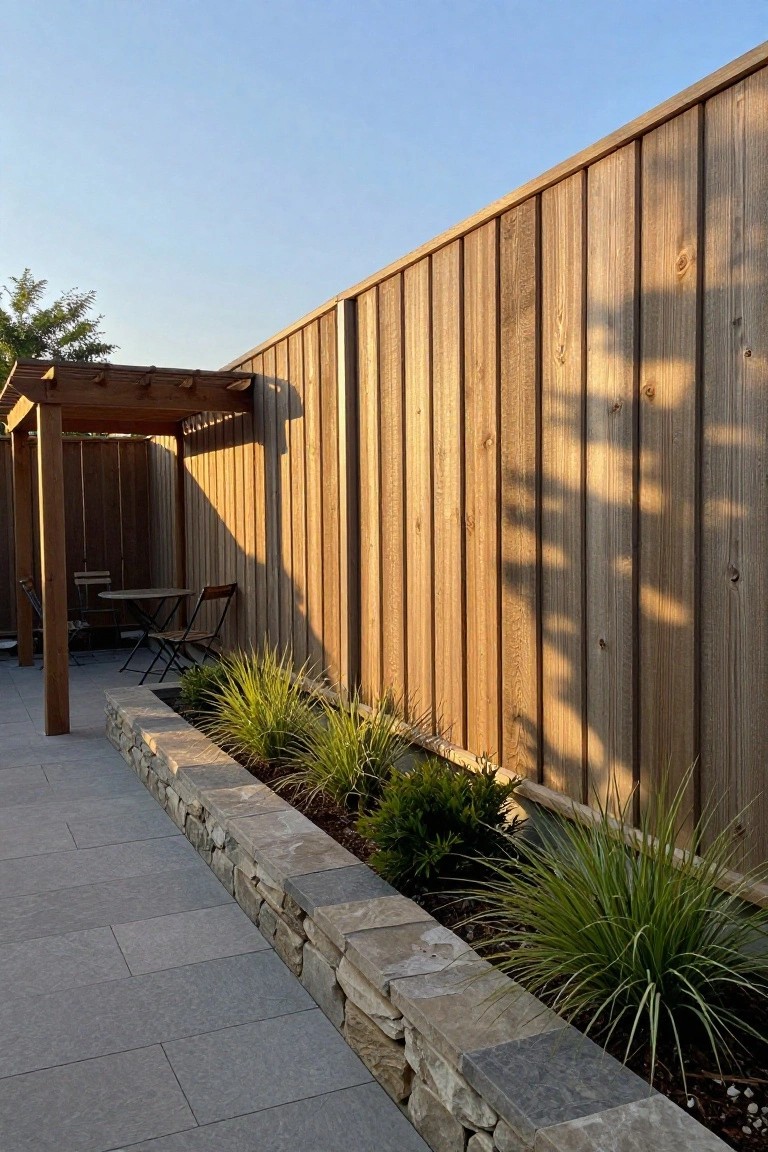
A vertical wood fence like this gives solid privacy without needing fancy cuts or extra framing. The straight up and down boards are simple to install and work well on a long run beside a patio or side yard.
It suits most homes that need a quick backyard screen on a budget. Set the fence first, then add a low stone edge and a few grasses or shrubs in front so the base looks finished and the wood does not sit right on the ground.
Tall Wood Fences For Pool Privacy
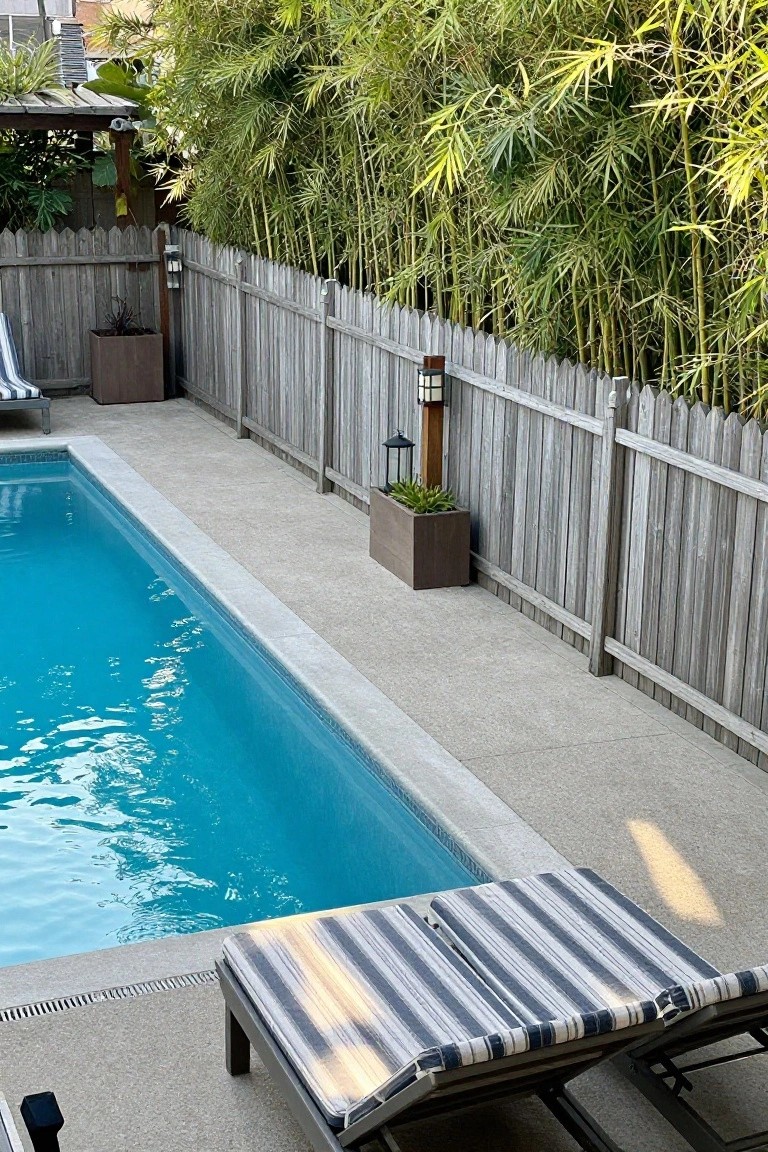
A tall vertical board fence gives a pool area the privacy most people want without needing anything fancy. It blocks the view from the sides and creates a clear boundary that makes the whole backyard feel more contained.
This approach works best in smaller yards or homes with neighbors close by. You can keep the fence simple and add a few tall plants along the back if you want extra screening.
Build a Planter Into the Base of Your Fence
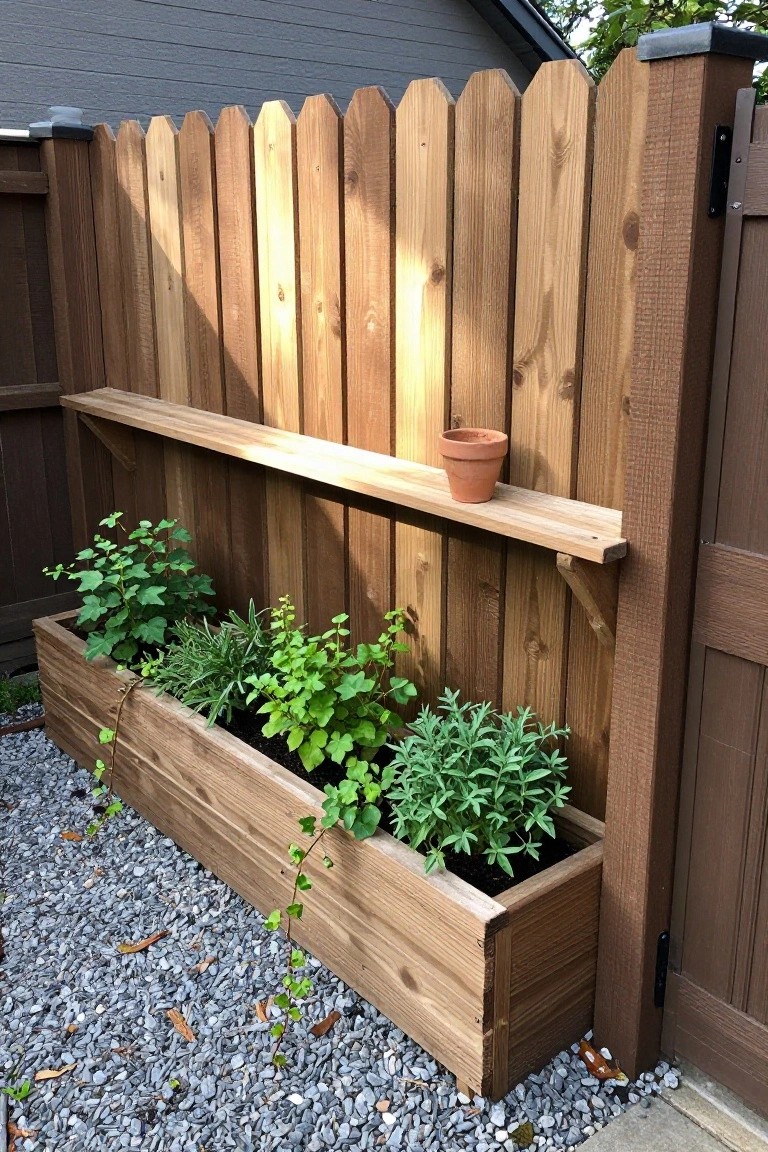
One simple way to add growing space without losing yard room is to run a planter box right along the bottom of the fence. It turns the fence into a useful garden edge instead of just a divider.
This setup works best in narrow side yards or small backyards where every bit of ground counts. Use treated wood that matches the fence so it blends in, and keep the box narrow enough that you can still reach the plants easily from one side.
Frequently Asked Questions
Q: Which wood should I grab first if I want to stay under budget? A: Pressure-treated pine works well for most backyard fences and costs less than cedar or redwood. Shop around at local yards for offcuts or end pieces to save even more without losing strength.
Q: How deep do the posts really need to go for a simple fence? A: Dig each hole about one-third the height of your fence plus a foot for gravel and concrete. That keeps things steady in wind or rain without overdoing the work.
Q: Will the fence hold up if I skip fancy sealers at the start? A: A basic water-repellent stain once a year is enough for most woods. But untreated pine can gray out faster so touch it up when it looks dry.
Q: Can one person handle the whole build or is help needed? A: You can set posts and attach panels solo if you work in sections and use temporary braces. Grab a friend just for the heavy lifting on the first few posts to stay safe.
