

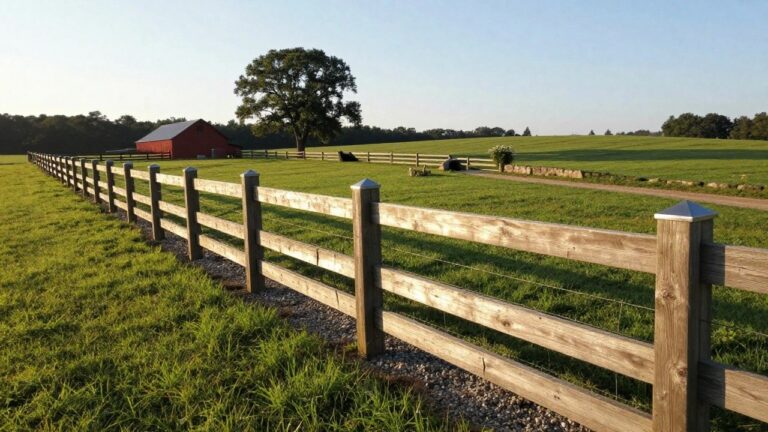
On acreage and ranches the right fence lines can guide how the eye moves across open ground and keep the space feeling organized without closing it in.
I have noticed that classic wood rails tend to age into the setting in a way that newer materials rarely match.
Placement comes first.
After that the details like rail height and how the posts sit against the slope decide whether the whole thing feels settled or added on later.
I would try a few different rail patterns on a smaller stretch before deciding what works with the rest of the property.
Gravel Strips Along Rail Fences
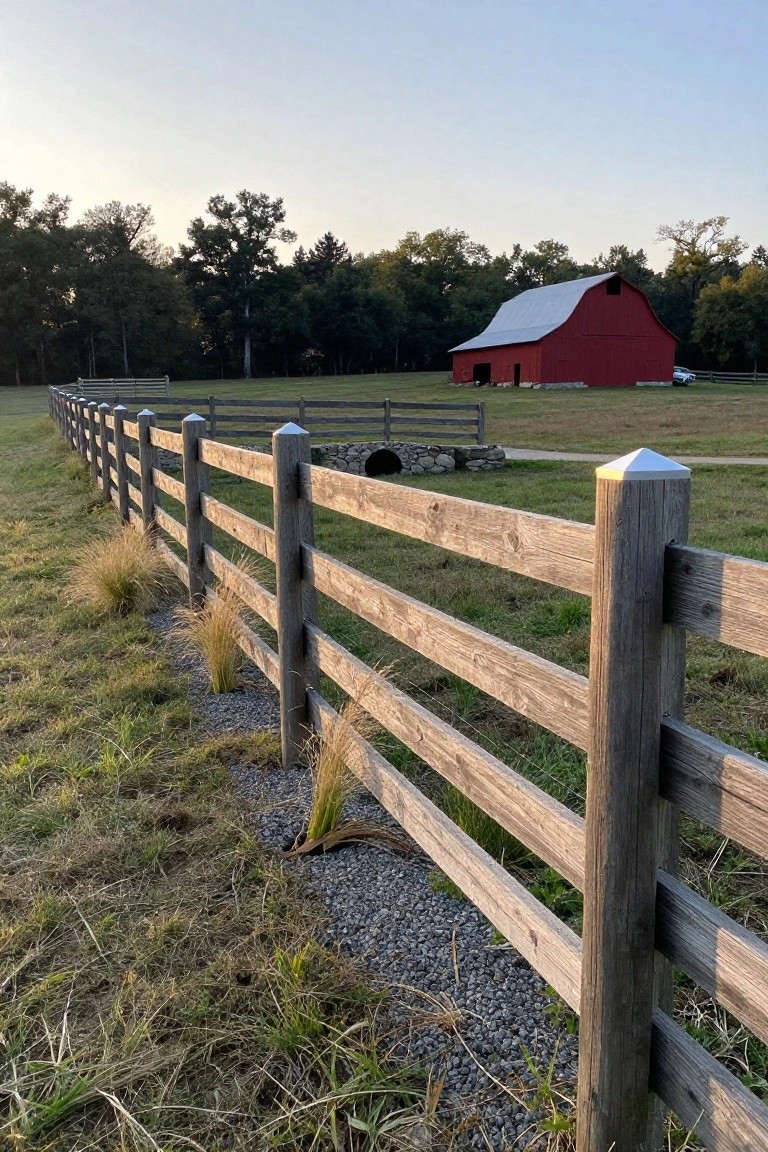
A gravel strip at the base of a wood rail fence helps keep grass and weeds from growing right up against the posts. On larger properties this small detail cuts down on trimming time and keeps the fence line looking neat without much extra work.
It works best on acreage or ranch settings where fences run for long distances. Lay landscape fabric first, then add a few inches of gravel so water drains well and the wood stays drier over time.
Wood Posts With Metal Rails
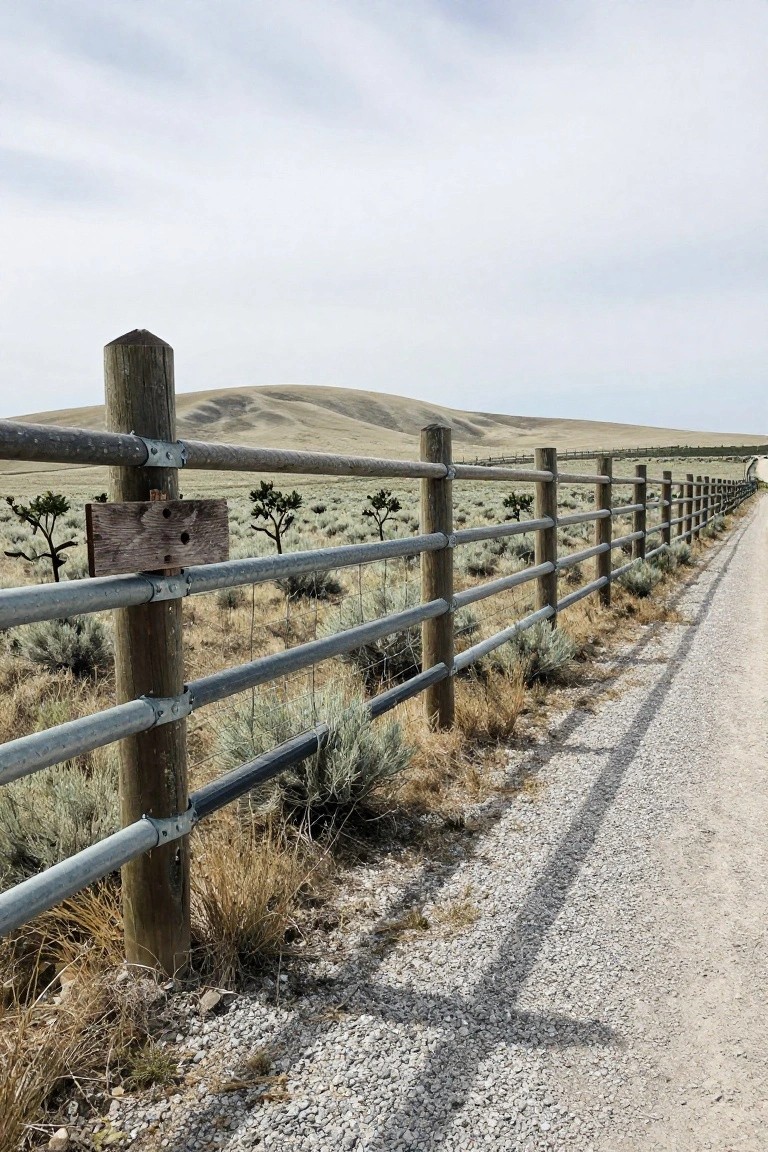
This setup pairs solid wood posts with metal rails to create a fence that feels traditional but holds up better in exposed areas. The wood gives that classic ranch look while the metal adds strength and cuts down on long-term repairs.
It suits acreage and open landscapes where the fence needs to follow long stretches without blocking views. Space the posts evenly and keep the rails level so the line stays clean even when the ground slopes.
Rail Fences That Follow the Land
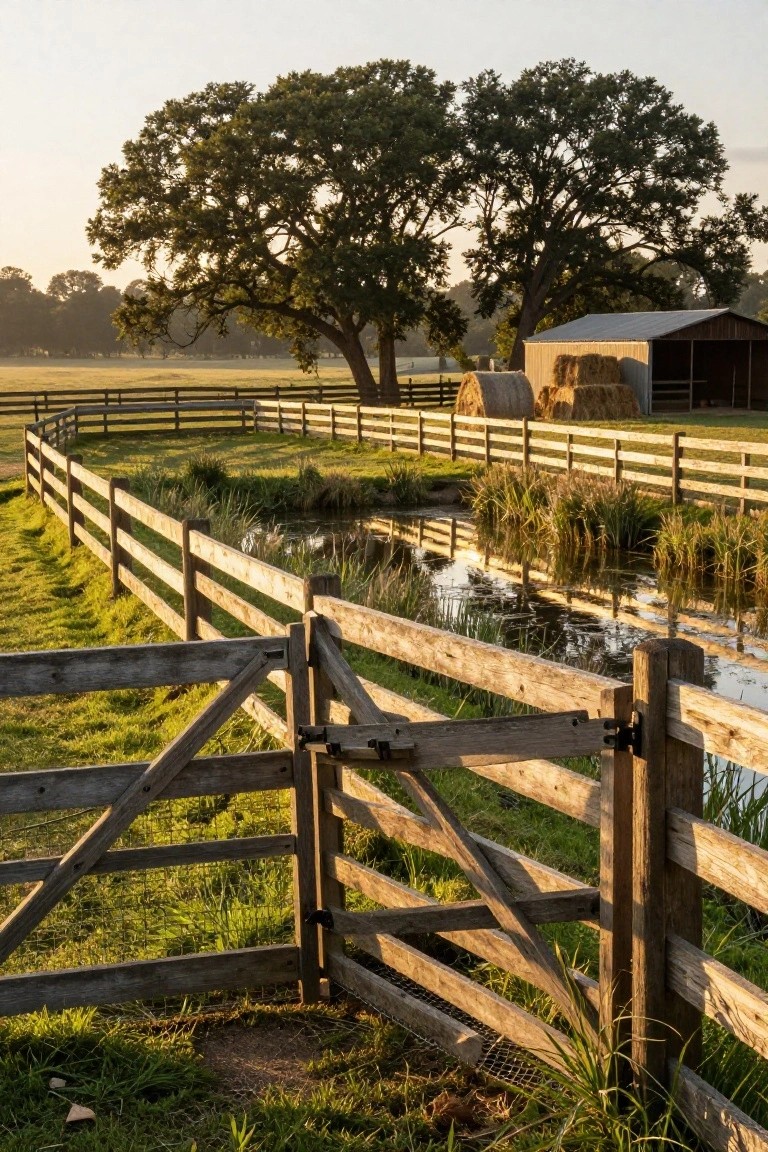
A wood rail fence can run right along the edge of a pond or dip without needing a straight line or level ground. The open rails let grass and water keep flowing through, so the fence feels like part of the landscape instead of something added on top.
This style works best on bigger properties where you need to mark areas but still want open views and easy movement for animals or equipment. Keep the rails simple and let the fence follow the natural slope or water line rather than forcing the ground to change.
Wood Rail Gates Mark the Garden Entrance
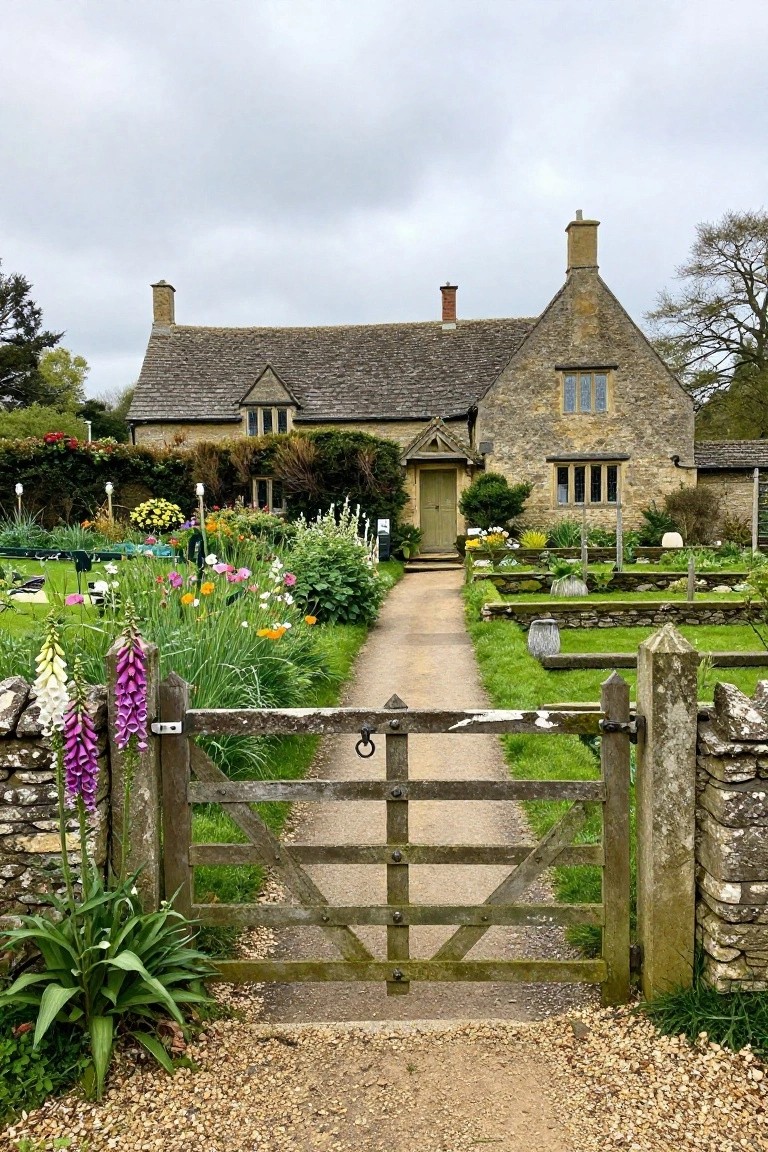
A simple wood rail gate like this one adds a clear starting point to a garden path. It feels natural with the surrounding plantings and keeps the view open toward the house instead of blocking it off.
This approach works well on properties that have a bit of depth in front, whether that is acreage or a large cottage garden. Keep the gate and fence low and weathered so they blend with stone walls and beds without overpowering the landscape.
Horizontal Rail Fences
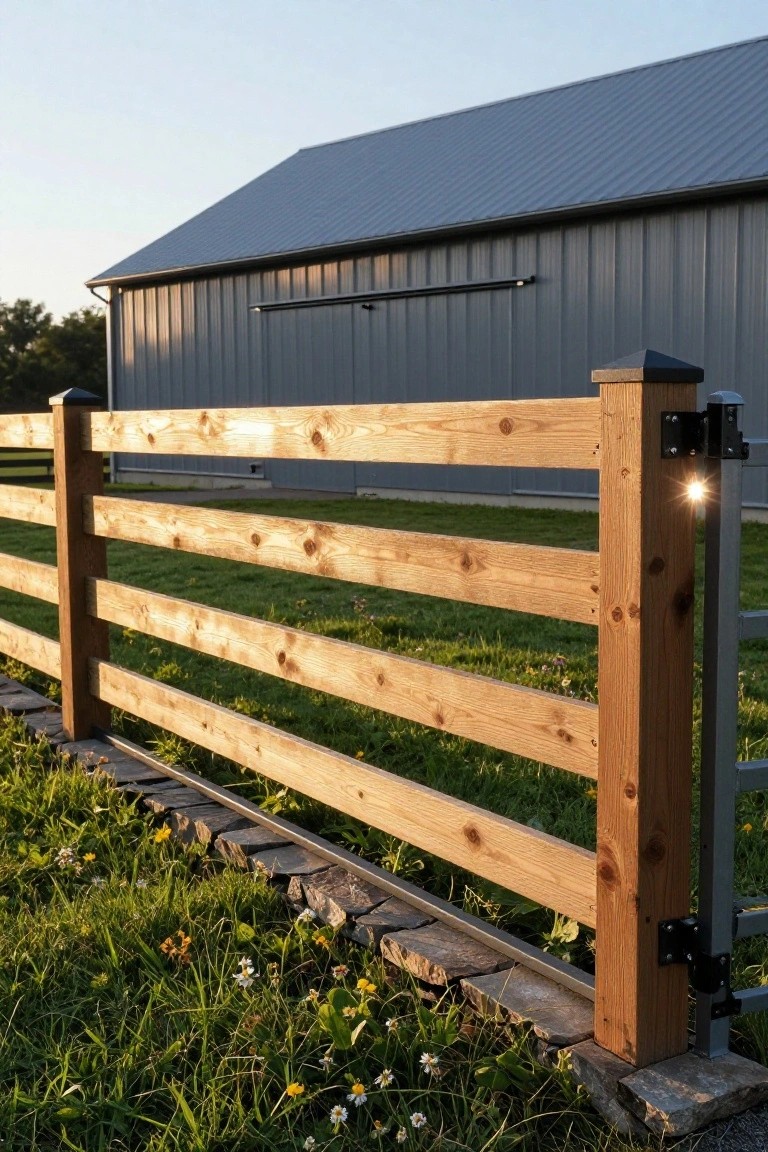
Horizontal rail fences give a clean boundary that still feels open. The straight lines across the posts keep the view clear while marking the edge of the property in a simple way that holds up over time.
This approach works best on acreage or ranches where you need to define space without adding bulk. The wood can be left to weather or sealed for longer life, and adding a low stone base helps with drainage and keeps grass from creeping under the rails.
Woven Branch Fences Along Water Edges
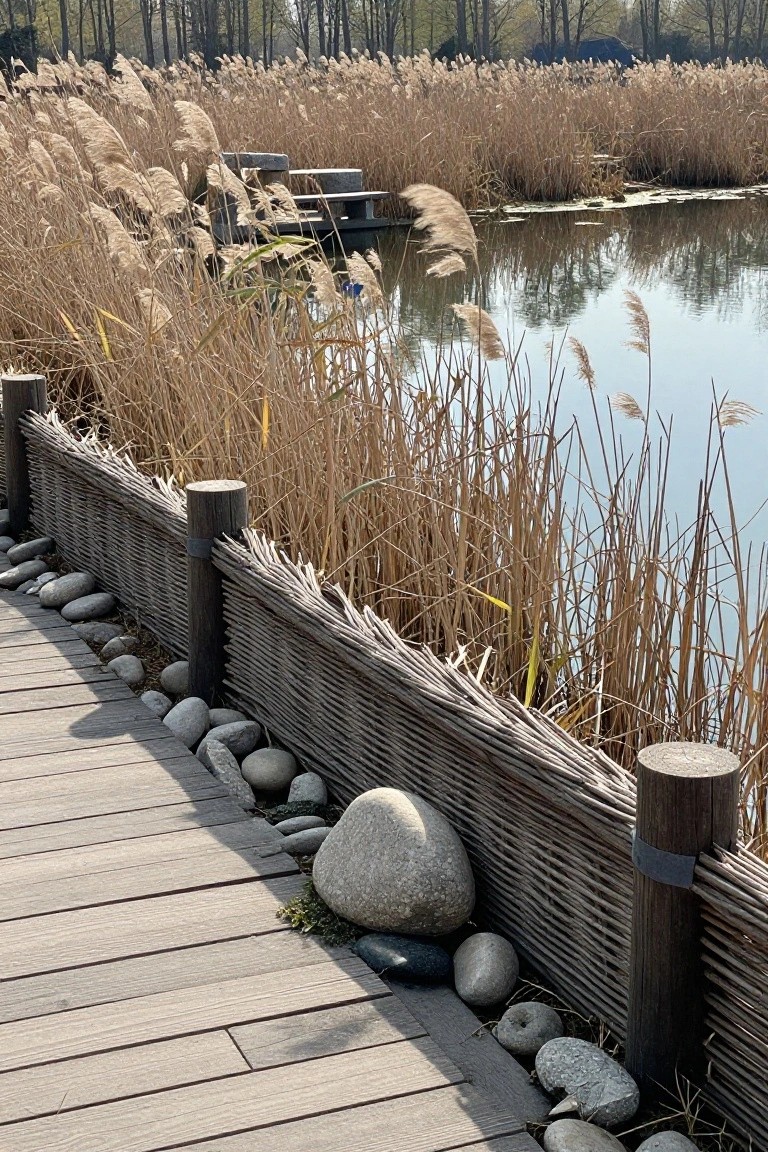
A woven fence made from thin branches creates a gentle boundary that blends right into the surrounding plants. It guides the path without cutting off the view or looking too built up, which works especially well near water where the landscape already feels open and natural.
This style suits acreage or ranch settings that border wetlands or ponds. Place it low along paths or edges so the reeds and grasses can grow up around it. The posts give it structure while the weaving keeps everything looking light and tied to the site.
Stone Pillars With Wood Rail Fences
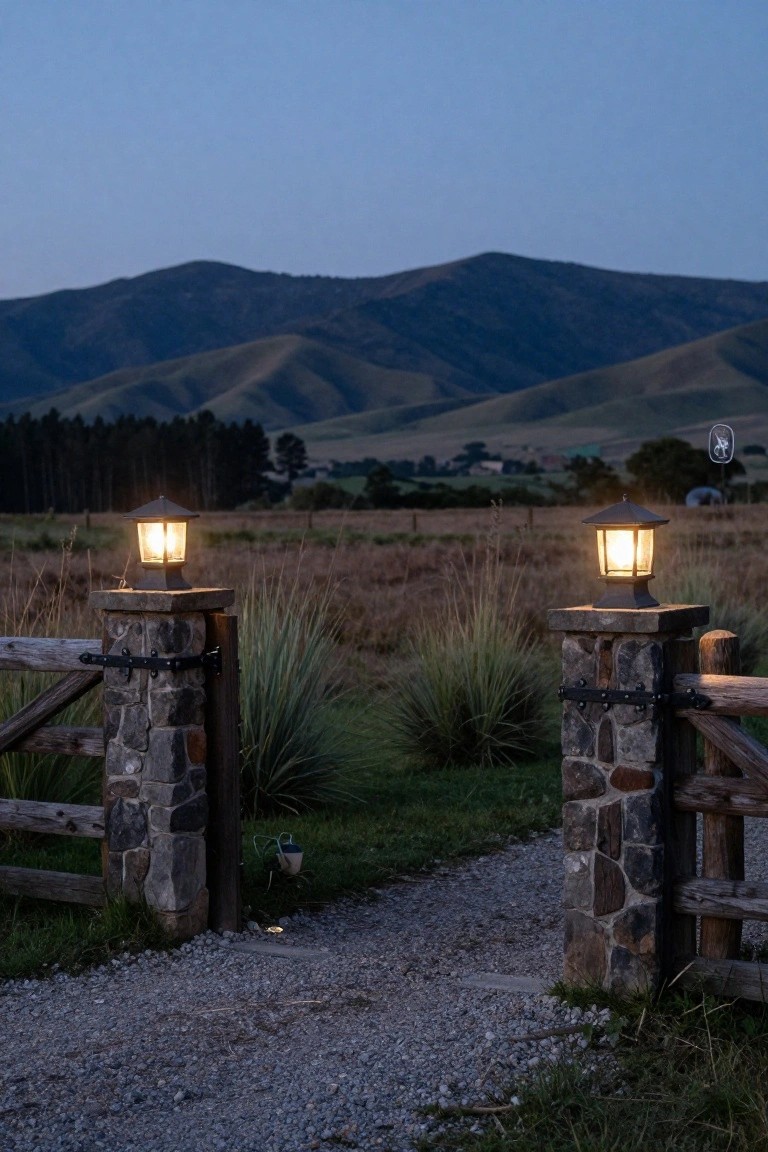
Stone pillars give a wood rail fence more presence and strength, especially at an entrance. They keep the gate area from looking too light or temporary while still letting the fence stay simple and classic for open land.
This works best on acreage or ranch properties where the fence runs long distances. Set the pillars at the gate only and keep the rest of the fence on wooden posts. Add a light on each pillar if you want the entry visible after dark.
Metal Caps on Wooden Posts
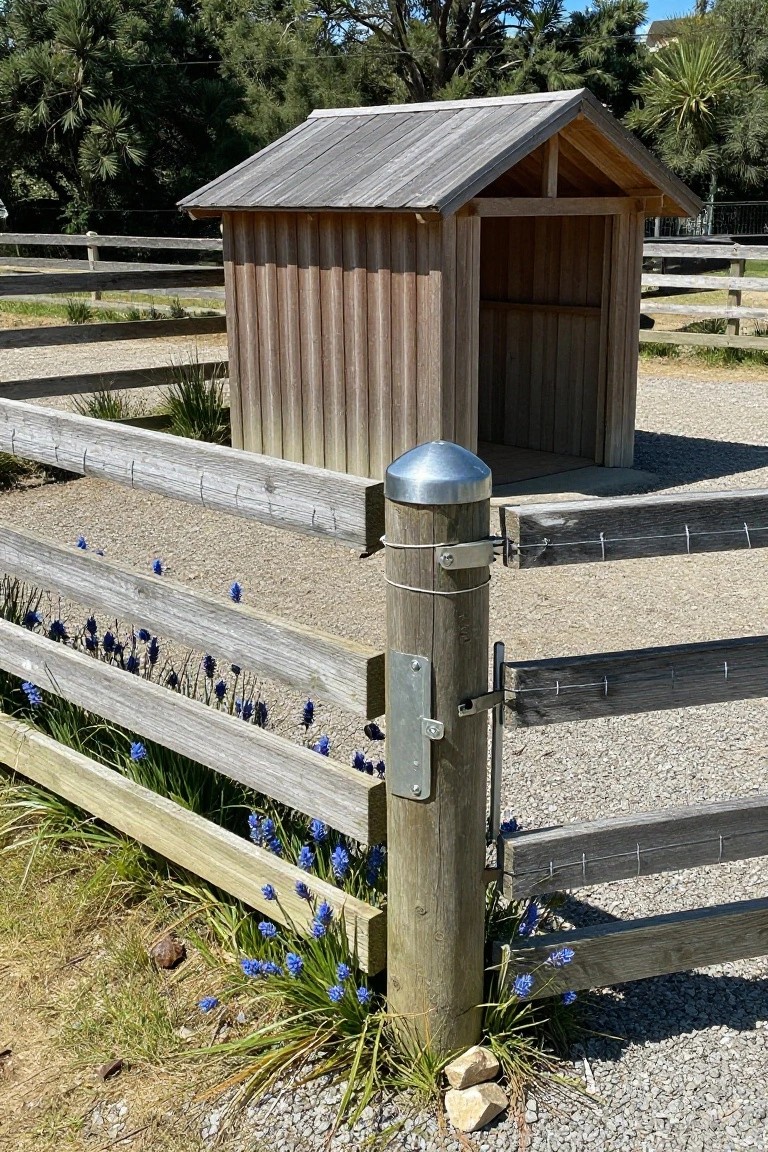
Wood rail fences take a lot of weather, and the tops of the posts are the first spots to split or rot. A simple metal cap keeps water off the end grain and gives the whole fence a more finished look without changing the classic style.
These caps work especially well on acreage where the fence runs long distances and you want it to last. They pair easily with the horizontal rails and any added wire, and they suit ranch settings that need to look neat but still feel practical.
Rail Fences For Open Land
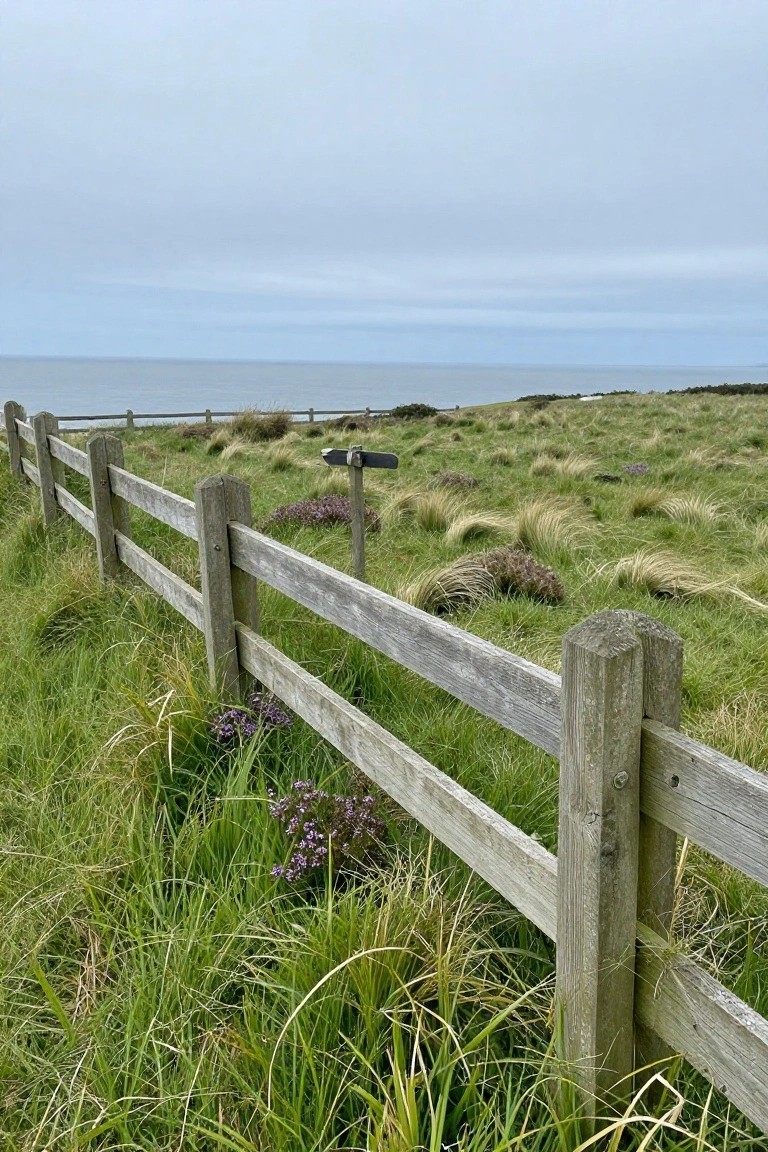
A basic wood rail fence gives a clear boundary while still letting the landscape feel wide and open. The simple lines sit low against the grass and follow the natural roll of the ground without blocking the view beyond.
This approach works best on acreage or coastal properties where you need to mark edges but do not want anything tall or solid. Keep the rails weathered or lightly sealed so the fence stays in the background rather than standing out.
Metal Brackets For Secure Rail Joints
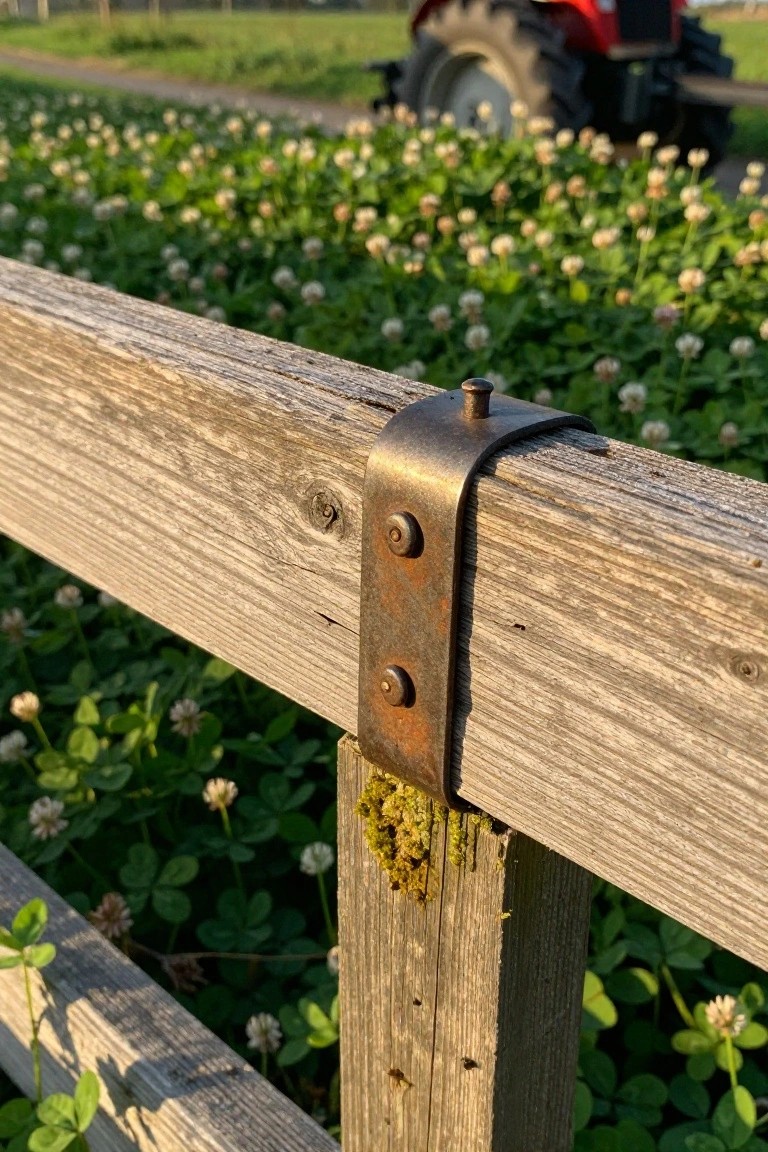
Many wood rail fences on larger properties use simple metal brackets to hold the rails in place. This keeps the joints tight and helps the whole fence stay straight even after years of weather and use.
The approach works best on acreage or ranch land where the fence needs to handle real wear. Choose brackets that sit flush against the wood and let the natural grain show through.
Rail Fencing Along Gravel Driveways
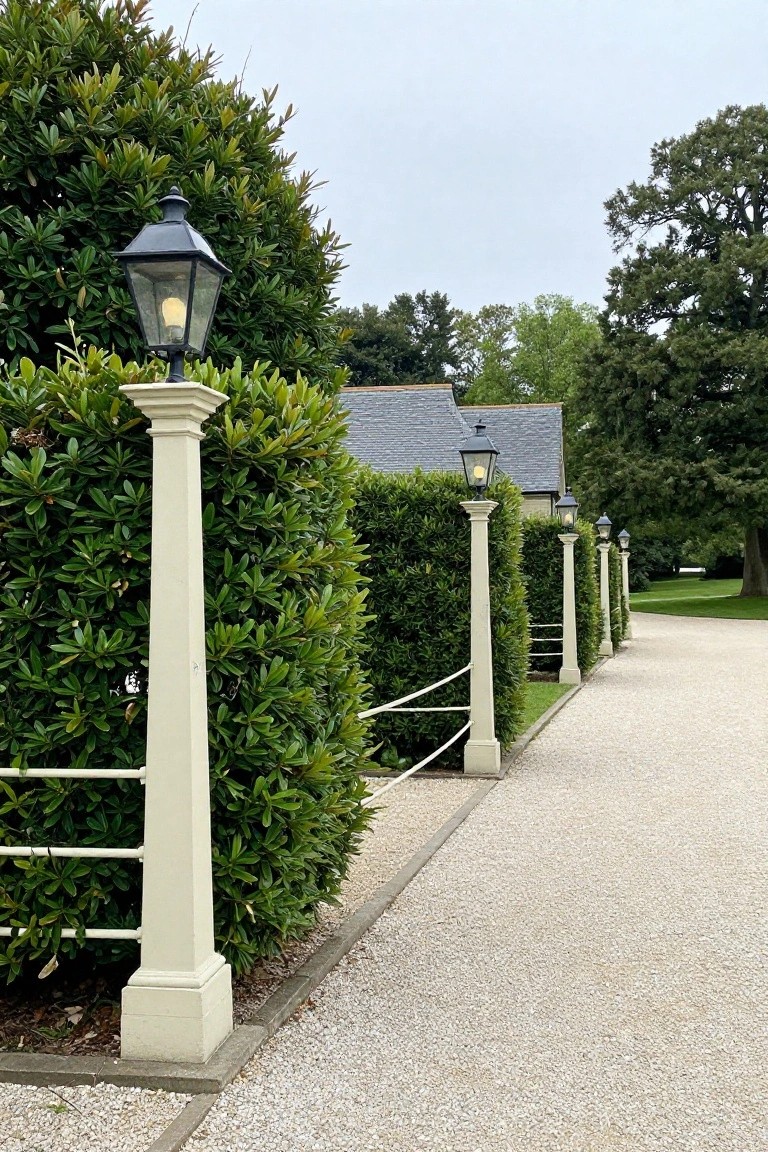
A white rail fence works well when you want to mark the edge of a gravel drive without closing off the view. It stays low and simple, so the landscape still feels open while the path stays clearly defined. The posts can also carry lights if you need guidance after dark.
This style suits larger properties where the drive runs a long way in from the road. Keep the rails straight and evenly spaced, and match the post height to the scale of the house and plantings. Avoid adding too many extras, or the clean look gets lost.
Cross Braced Wood Gates Between Stone Posts
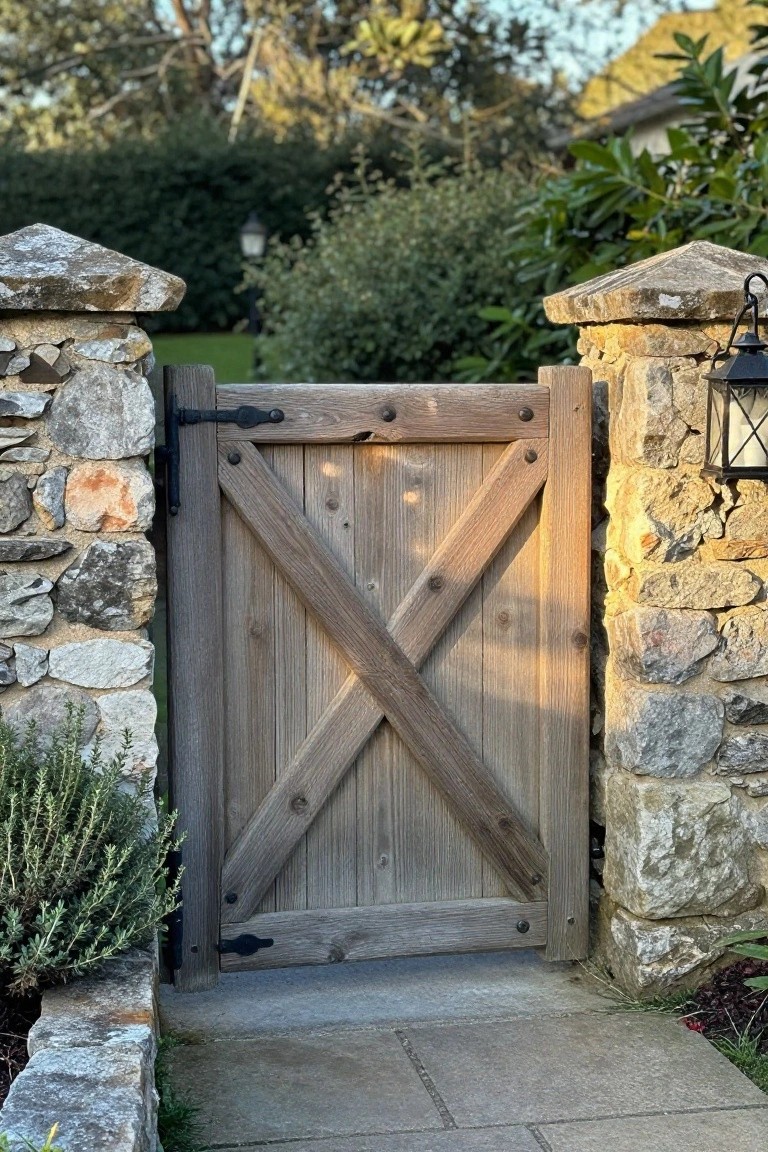
A cross braced wood gate adds real strength to a fence line without looking heavy or overbuilt. The diagonal boards keep the gate from sagging over time, which matters on acreage where gates get used every day. Stone posts on each side give the whole entry a solid base and help the wood last longer in changing weather.
This works best along driveways or garden paths on ranches and larger properties. Keep the wood natural or lightly weathered so it matches split rail fencing nearby. Avoid painting it bright colors if you want it to blend into the landscape.
Rail Fences For Open Acreage
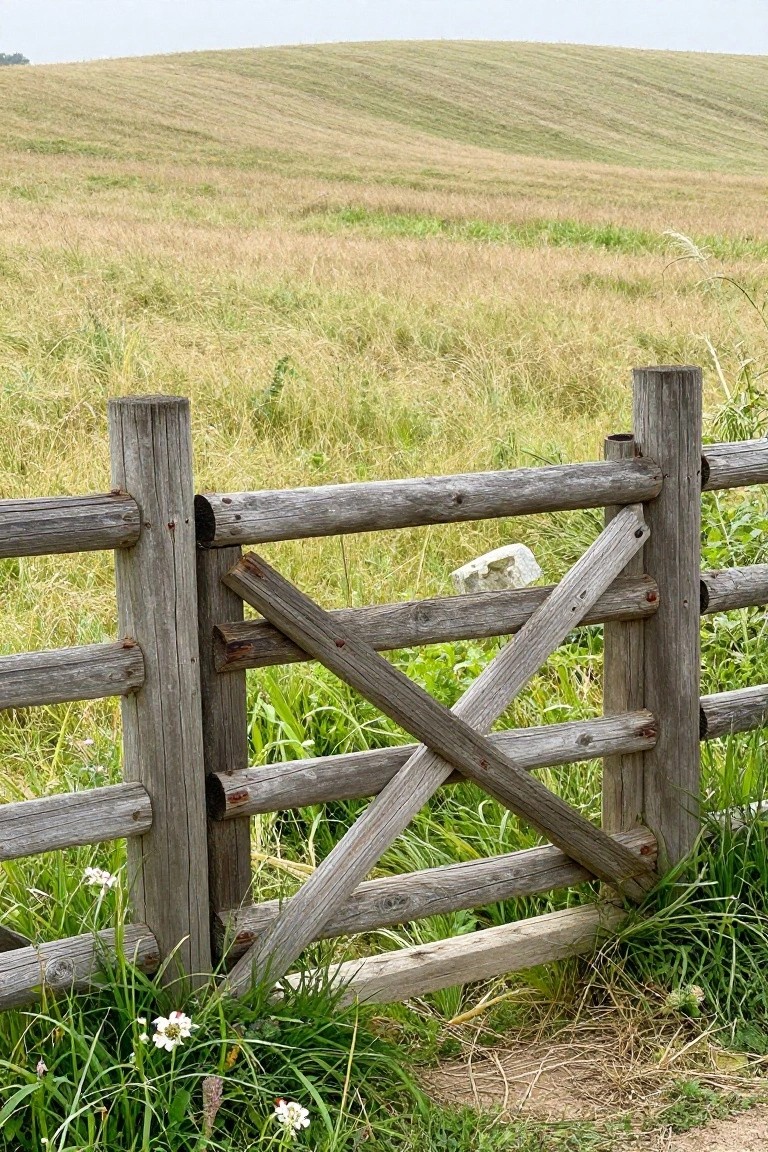
A basic wood rail fence works well when you need to mark land without changing how open it feels. The simple lines and natural wood let the field and hills stay the main view.
This style fits best on ranches or larger properties where you want something sturdy that still blends in. The crossed braces on the gate add strength without adding weight, and the fence can follow gentle slopes without much extra work.
Painting Rail Fences A Bold Color
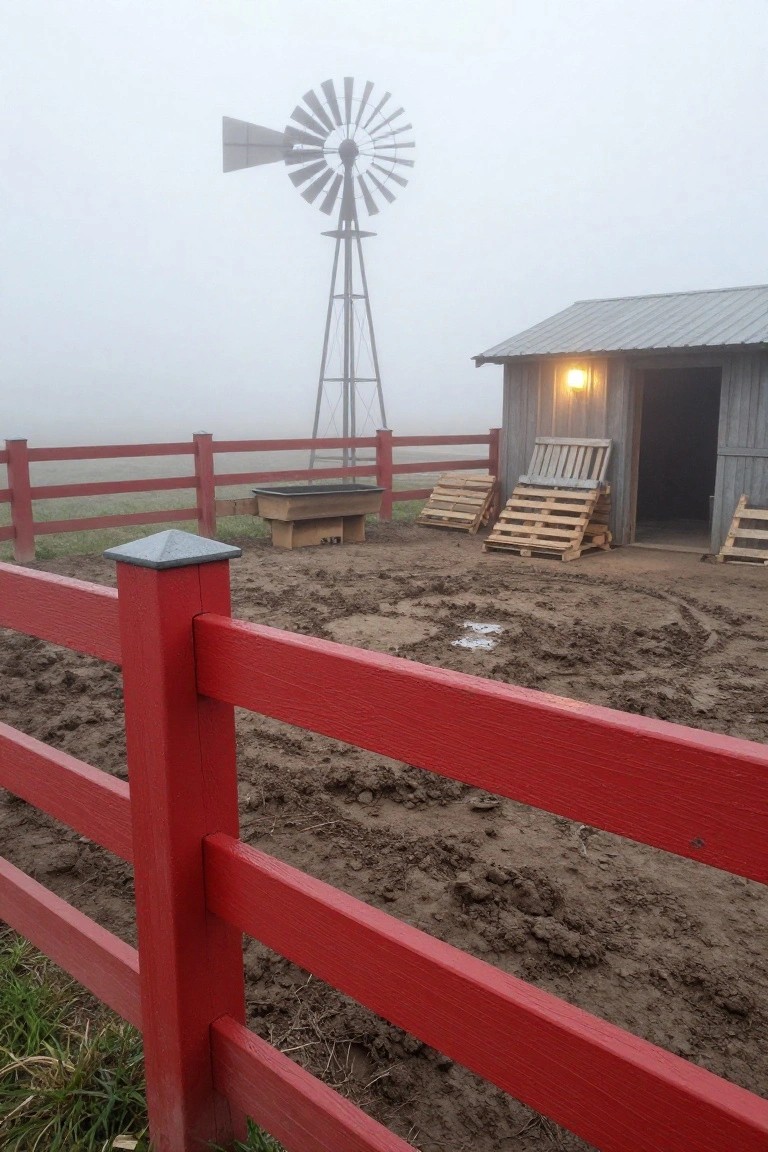
A bright paint color on a wood rail fence helps it stand out across open land. It makes the boundary easy to see even when fog rolls in or the ground stays bare.
This approach suits ranches and acreage where you need clear lines without adding height or solid panels. Use exterior paint made for wood and pick a shade that contrasts with the surrounding grass and dirt.
Pairing Wood Rail Fences With Stone Walls
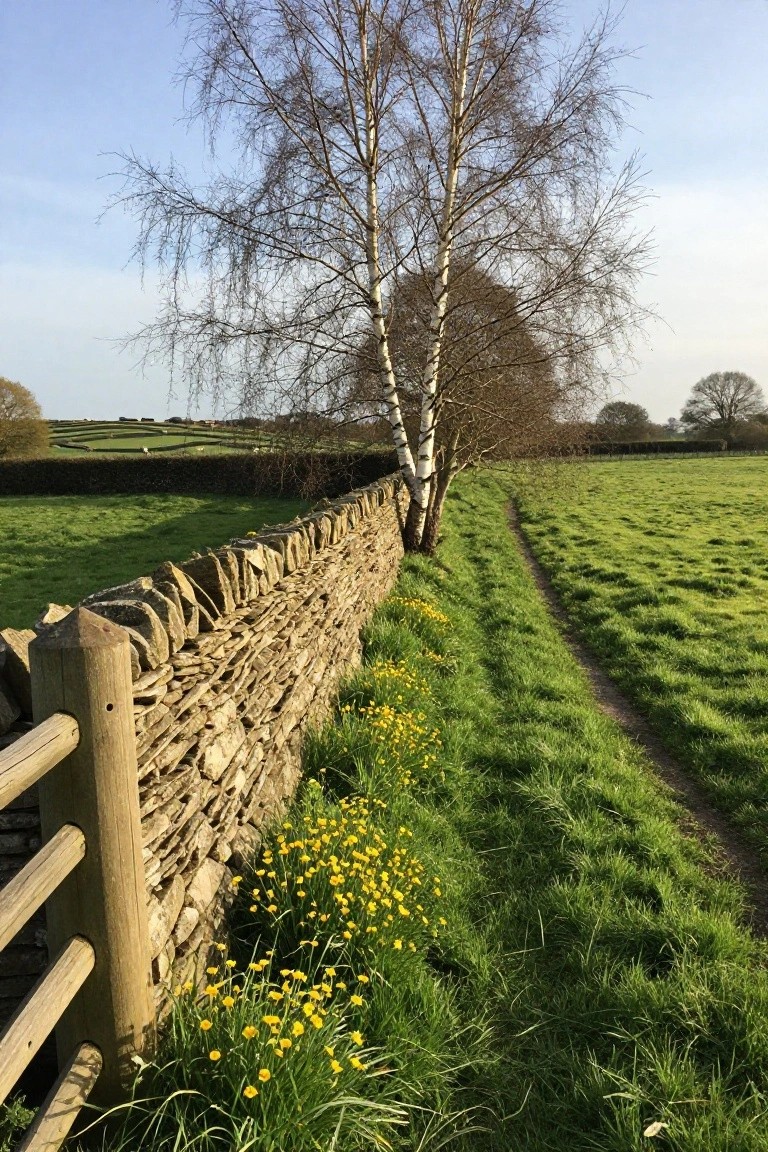
A wood rail fence next to a stone wall creates a simple boundary that feels solid without looking heavy. The stone handles the lower edge while the rails keep the top light and open.
This setup works best on acreage where paths run along field edges. Use it where you want a clear line that still lets grass and wildflowers grow right up to the base.
Horizontal Wood Fences for Clean Edges
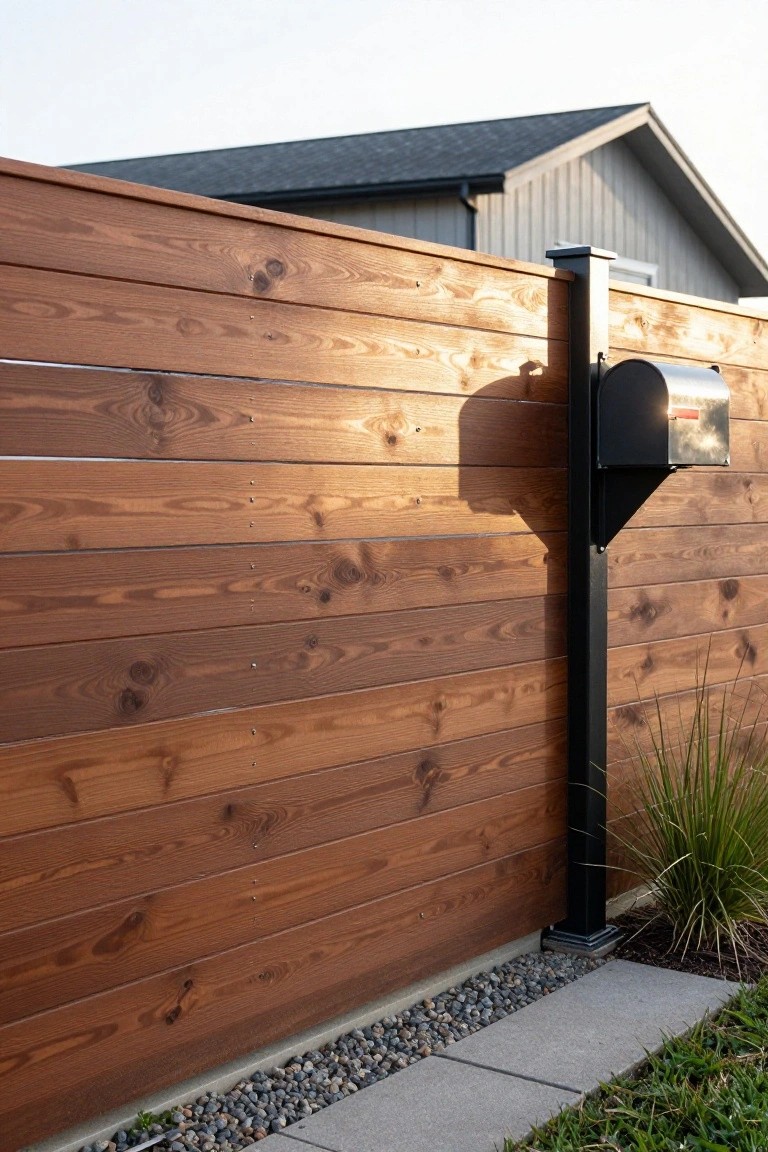
Horizontal wood fences give a solid look that feels straightforward and modern at the same time. The even rows of planks create a strong visual line along the property without extra trim or detail.
This approach works well on acreage or ranch settings where you want privacy and a place to mount the mailbox on the same post. It suits homes with simple architecture and holds up in open landscapes when the wood is properly sealed.
Picket Gates For Defined Garden Entries
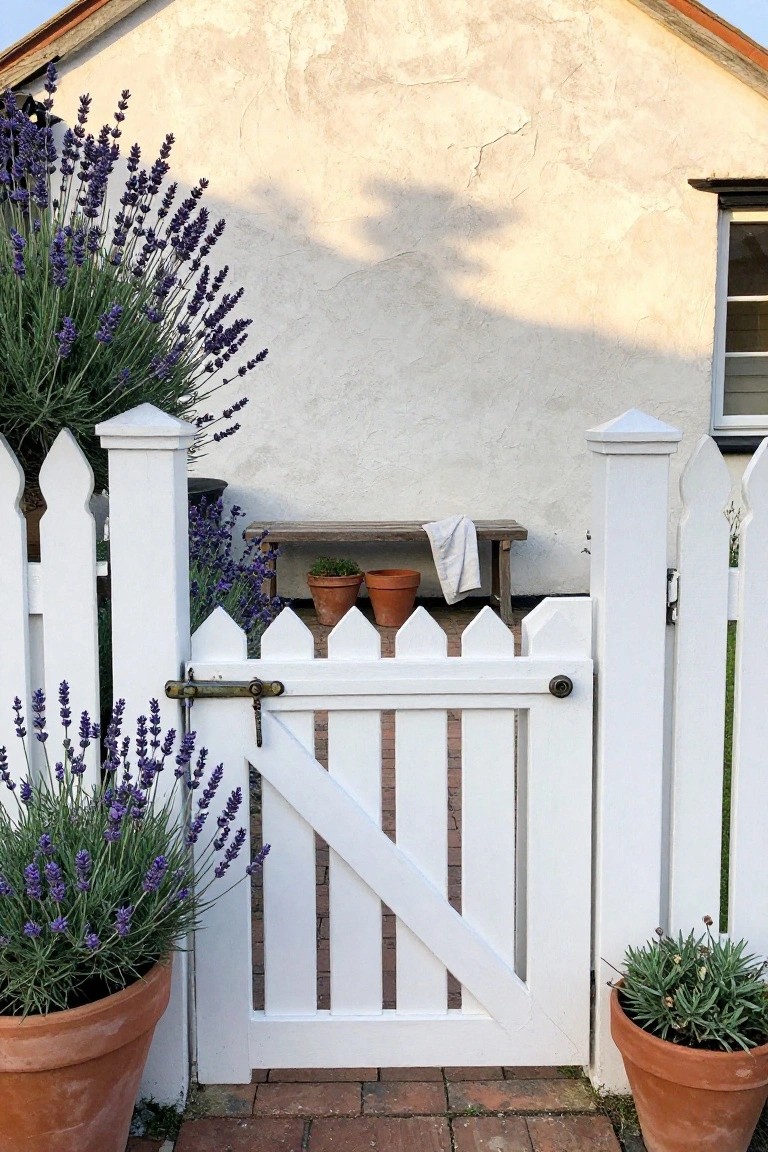
A white picket gate gives a clear sense of entry without blocking the view or making the space feel closed in. The open slats and simple latch keep things practical while the painted finish makes the fence stand out against plants and paths.
This works best in smaller front yards or cottage style gardens where you want a bit of structure. Paint the wood white, add a diagonal brace for strength, and place a few pots nearby so the fence feels tied into the planting rather than standing alone.
Wood Posts With Metal Rails Along Paths
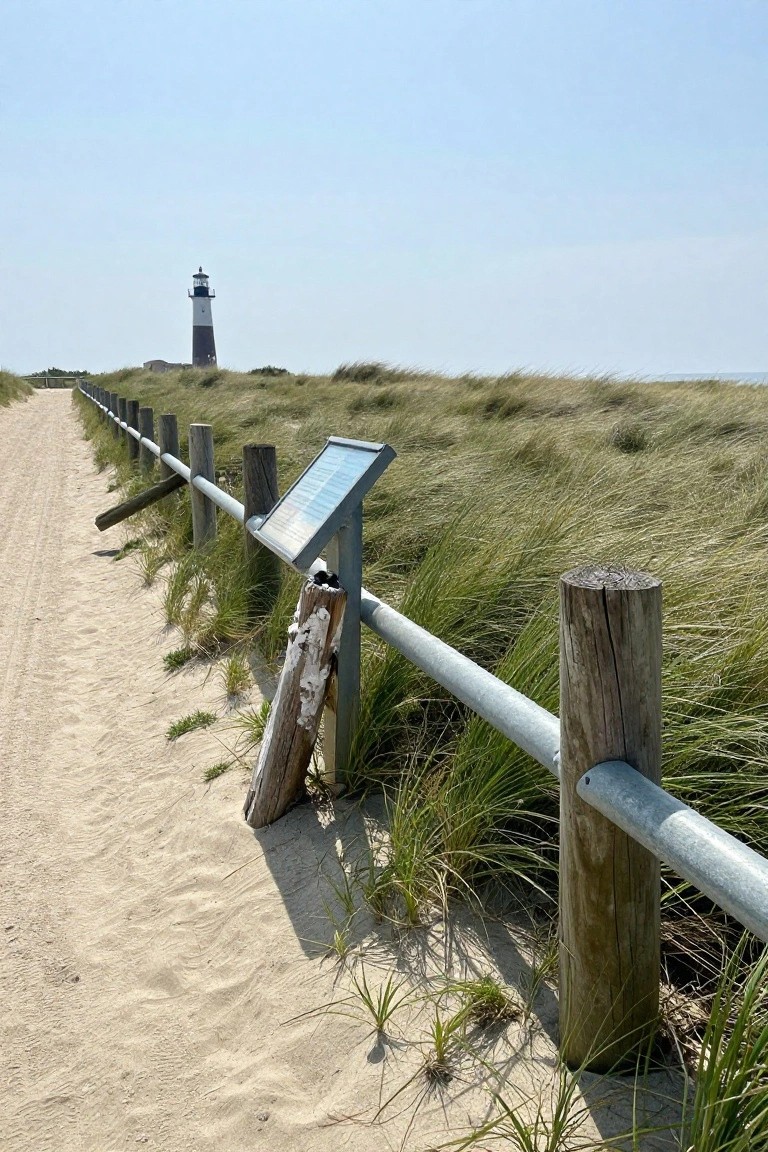
A fence made from wooden posts and simple metal rails works well when you want to mark a path without blocking views or adding too much structure. The wood gives a natural look that fits into grass and sand, while the metal keeps the whole thing sturdy and low to the ground.
This style suits open acreage or ranch land where paths wind through dunes or fields. Keep the rails at a modest height and let the posts weather naturally. It stays practical in windy or sandy spots and needs little upkeep beyond checking the posts every few years.
Wood Rail Fences For Open Boundaries
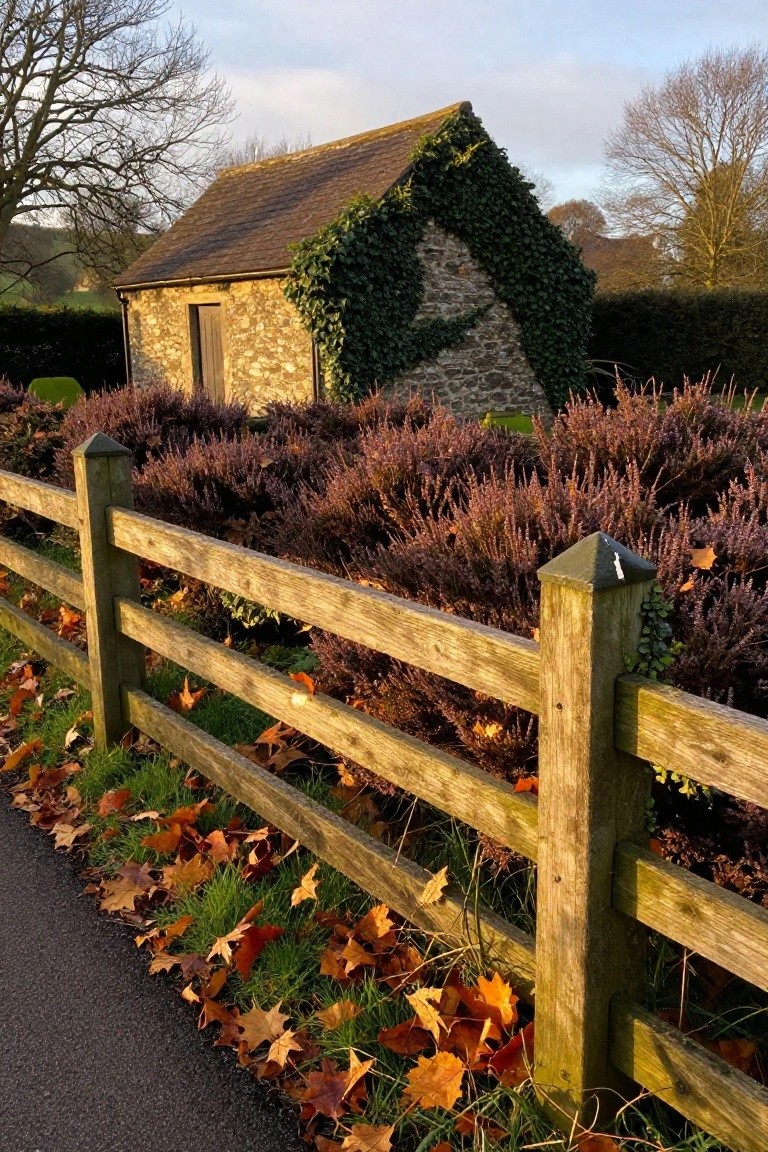
A simple wood rail fence marks the edge of a property without closing it in. It works well on larger lots because it lets the landscape stay visible while still showing where one area ends and another begins.
This approach fits acreage and ranch settings best. Set the fence along a road or field line and let nearby shrubs and seasonal plants grow around the posts so the whole thing settles into place over the years.
Adding Rock Borders To Wood Fences
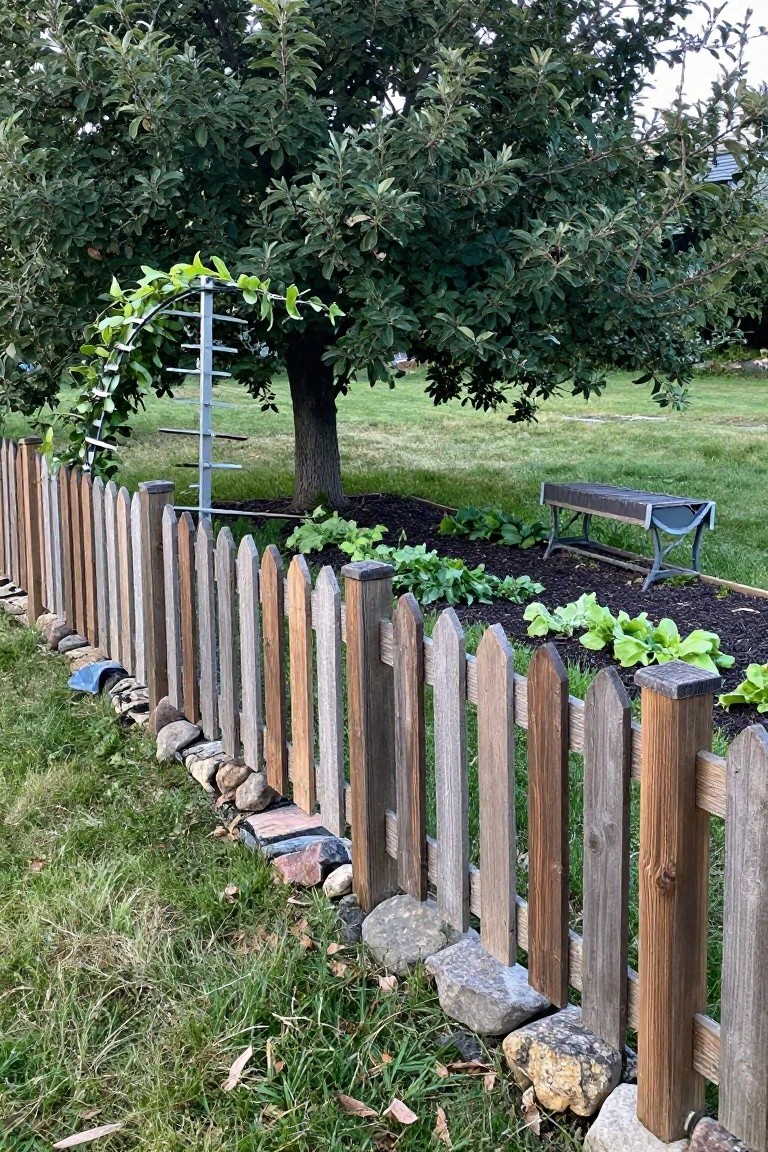
A rock border along the bottom of a wood fence keeps grass from creeping into garden beds and gives the line a cleaner finish. It also helps the fence blend into the surrounding landscape without adding extra trim or edging materials.
This approach works especially well on larger properties where you want to mark off planting areas while keeping maintenance low. Place the stones right against the fence base and let them settle naturally over a season or two.
Post Lights Along Wood Fences
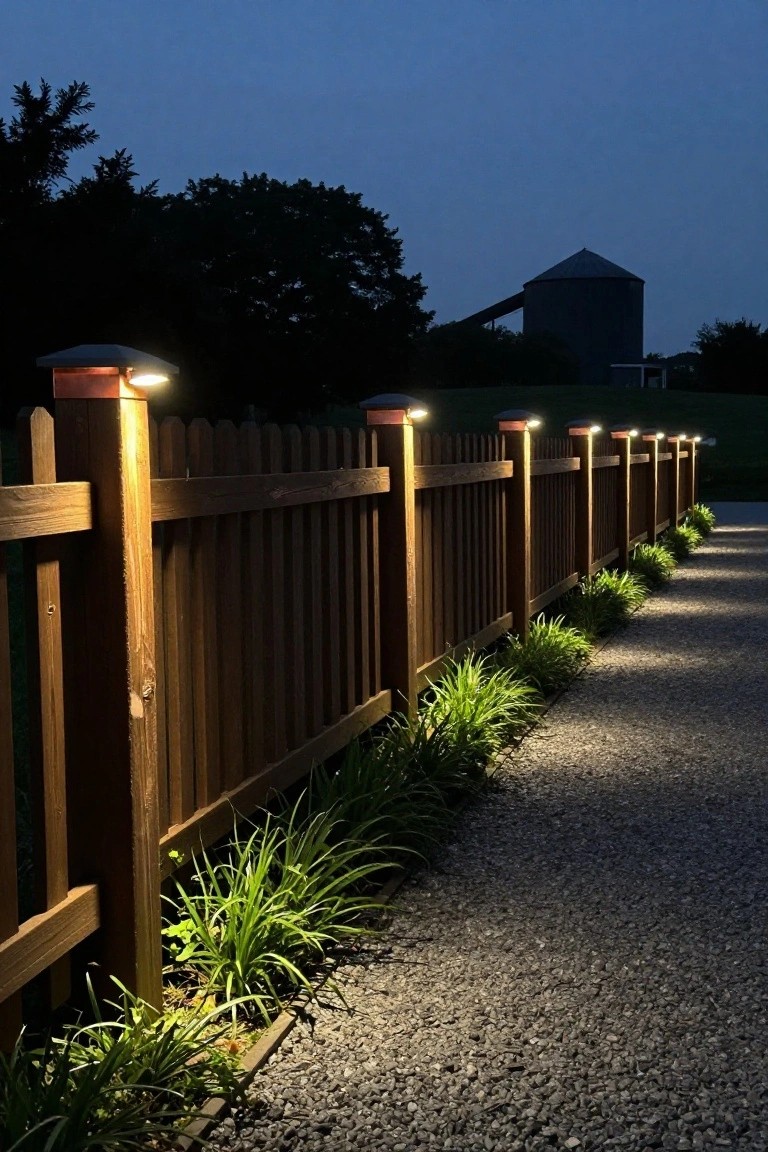
Many acreage owners add lights directly to the fence posts when they want to light a long boundary at night. It creates a simple path of light without adding extra poles or fixtures that clutter the landscape.
This approach works best along gravel paths or driveways where you need both safety and a clear edge after dark. Keep the lights modest in brightness and focused downward so they guide people without washing out the open feel of the surrounding land.
Woven Branch Fences for Informal Boundaries
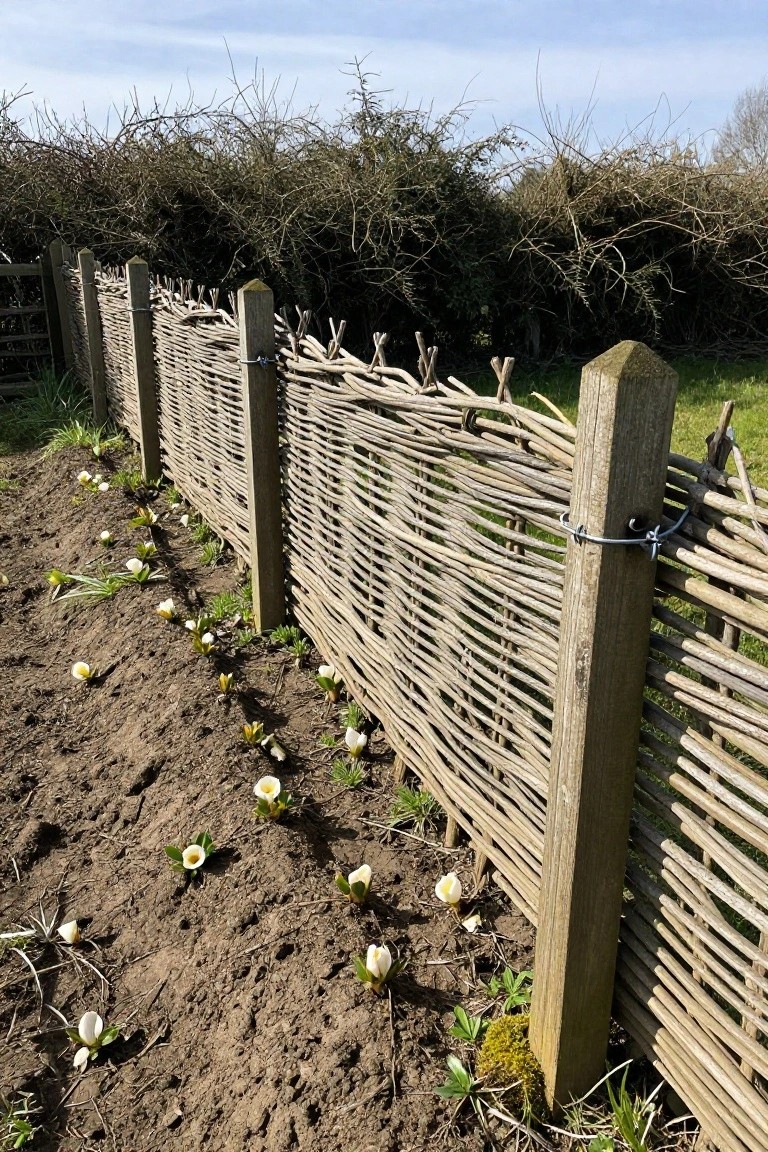
Woven branch fences give a soft edge to open land without the stiff look of standard rails. The branches bend and tuck between posts, so the fence follows the ground and feels like it belongs there rather than sitting on top of it.
This approach suits acreage or garden borders where you want a natural screen that still lets light and air through. Keep the weave tight near the bottom and let low plants fill in along the base over time.
Rail Fences For Open Acreage
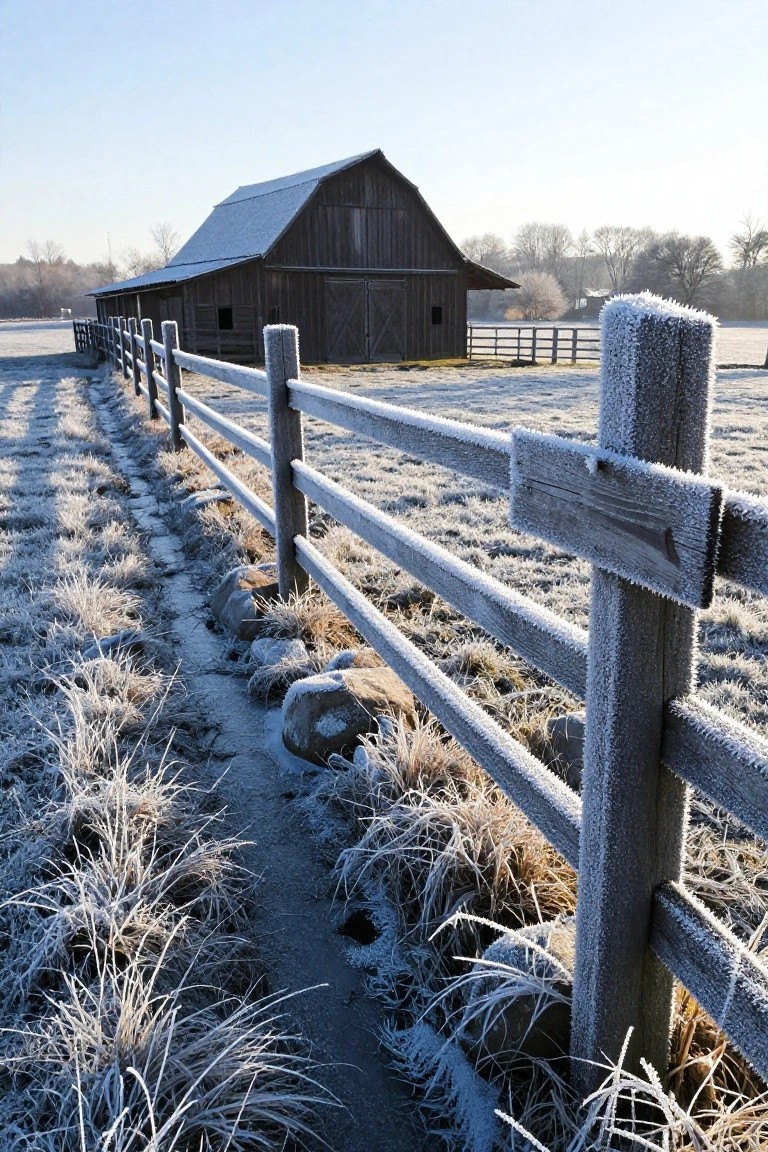
A simple rail fence does a good job of marking boundaries on large pieces of land without cutting off the view. It stays low enough to let the landscape feel open while still giving a clear edge that works for animals or just defining your space.
This kind of fence suits ranches and wide properties best. It holds up in rough weather, needs little upkeep, and looks right at home next to dirt paths or fields that stay natural most of the year.
Frequently Asked Questions
Q: How far apart should I set the posts for rail fence on open acreage? A: Space them about eight feet apart so the rails stay straight and strong. Dig each hole at least two feet deep and tamp the dirt tight around the base. This spacing works well for long runs without sagging.
Q: Will a simple three-rail fence keep cattle in place? A: Set the bottom rail low enough that calves cannot slip under. Strong corner posts and straight runs help the whole fence take the pressure from bigger animals. Walk the line once a month to spot any loose rails early.
Q: What if the land slopes in spots along my property line? A: Step the rails to match the grade instead of trying to level everything. Adjust each section as you build so the fence follows the ground naturally (nothing fancy needed here). This keeps the look clean and avoids weak spots.
Q: How soon should I treat the wood after putting up the fence? A: Wait a few weeks for the lumber to dry out. Then brush on a clear sealer to slow weathering from sun and rain. One coat now saves extra work later.
