

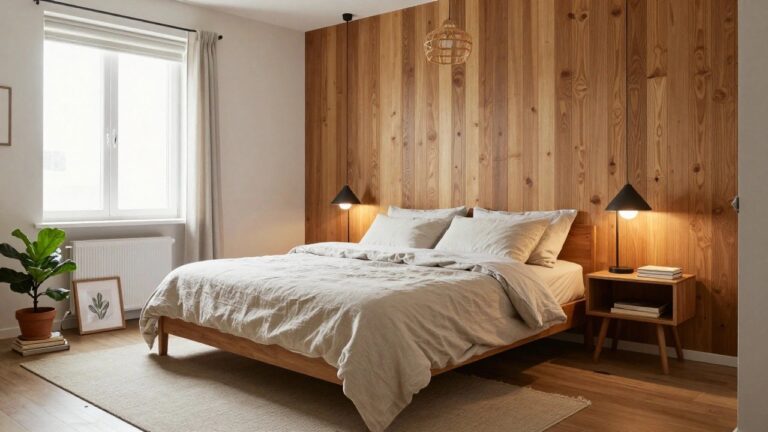
In a bedroom the wall right behind the bed often sets the tone for how the whole space feels when you wake up or wind down.
Adding wood there can bring a sense of warmth that painted walls rarely match on their own.
I have found that the way the wood grain catches light changes the room more than I expect at first.
Not every pattern lands the same way.
Looking at different approaches helps me picture which ones might suit the actual size and light in my own room.
Wood Accent Walls Behind the Bed
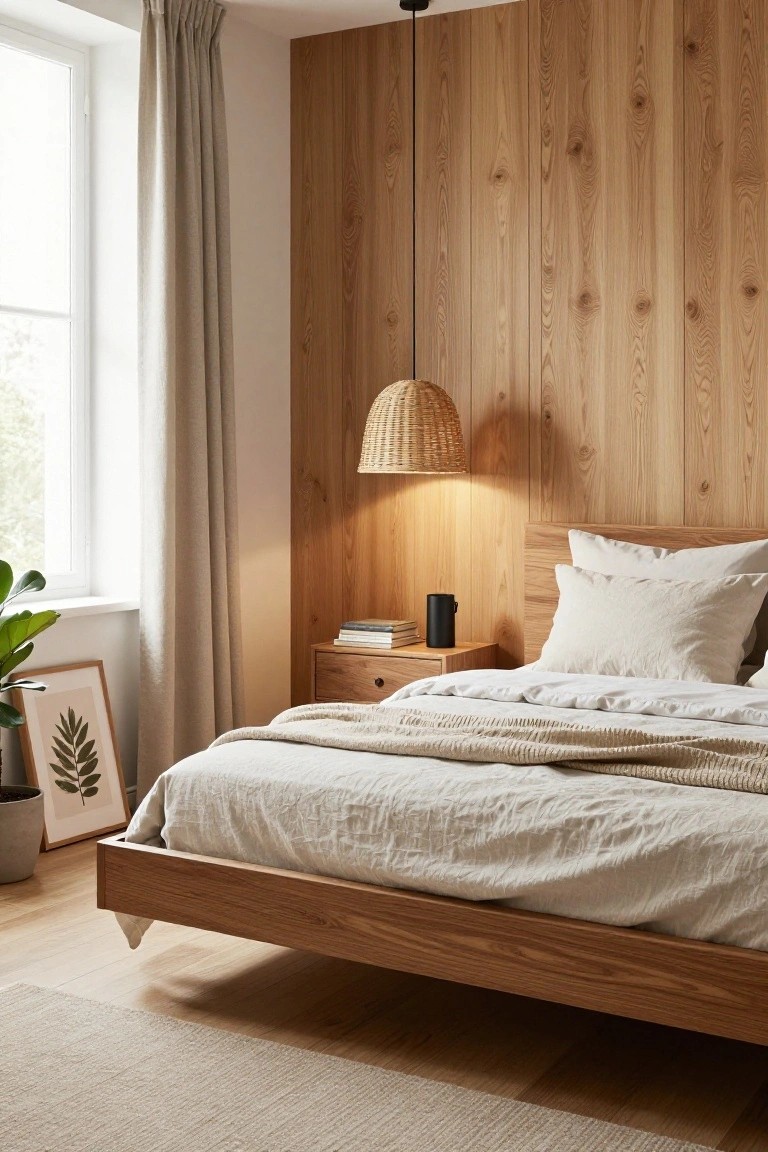
A wood accent wall right behind the bed brings warmth and texture to the room without much extra effort. The vertical grain adds a quiet natural element that works especially well when the rest of the space stays simple and light.
This idea suits smaller bedrooms or rooms where you want one clear focal point. Keep the wood tone fairly light and limit other patterns so the wall stays the main feature rather than competing with too many colors or shapes.
Vertical Wood Paneling Behind The Bed
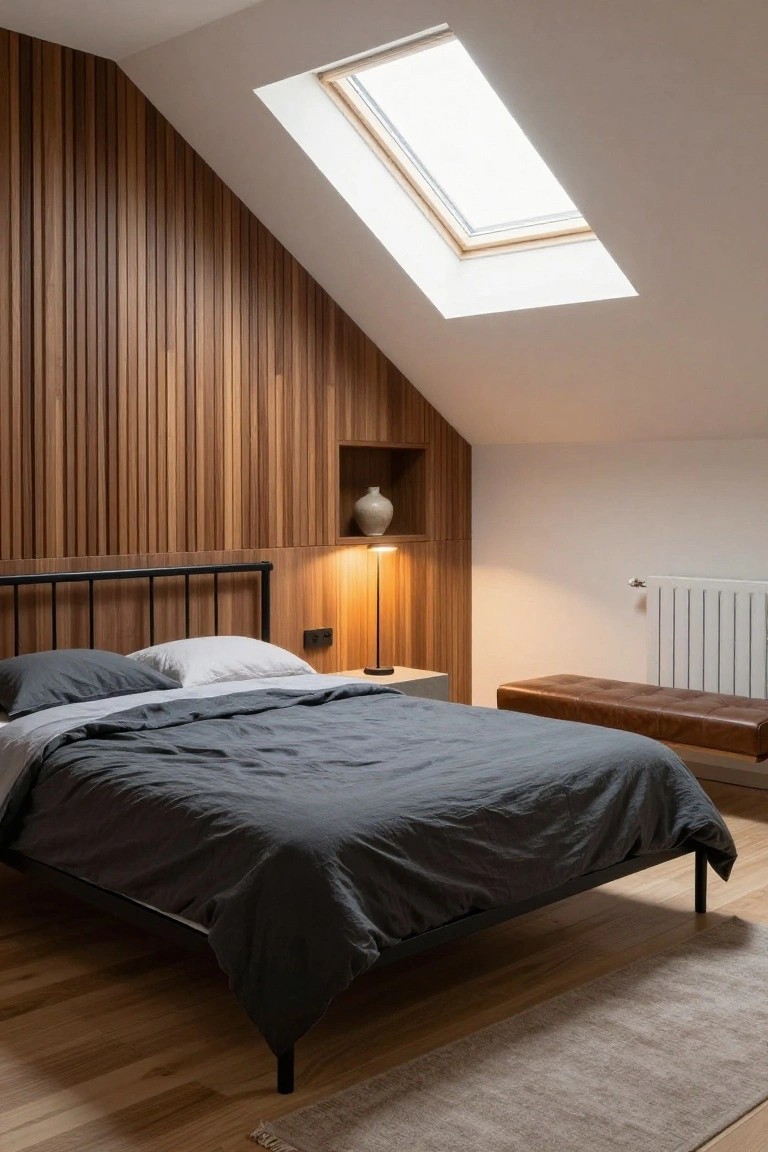
A wood accent wall behind the bed adds texture without making the room feel busy. Vertical slats keep the look simple and give the space a bit more warmth than a plain painted wall would.
This works well in bedrooms with angled ceilings or limited floor space, since the lines help the room feel taller. It suits most bed styles as long as the wood tone stays fairly neutral and the rest of the furnishings stay low key.
A Reclaimed Wood Accent Wall In The Bedroom
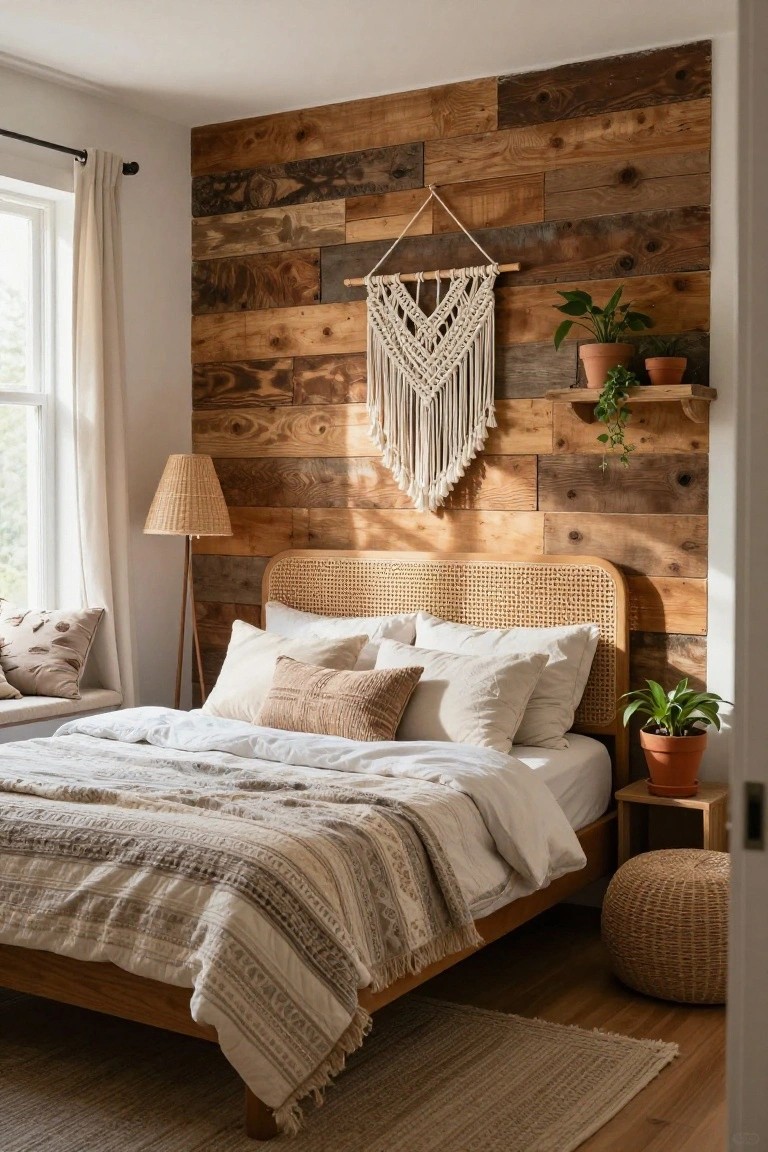
A wall of mixed reclaimed planks behind the bed adds texture and warmth in a way that feels grounded. The varied tones and grain patterns keep the surface interesting without needing much else on the wall. It works especially well when the rest of the room stays simple and light.
This approach suits homes that already lean toward natural materials. It pairs easily with neutral bedding and basic wood furniture. Just make sure the planks are sealed well if they come from older stock, since dust can collect in the gaps over time.
Dark Wood Accent Walls Behind The Bed
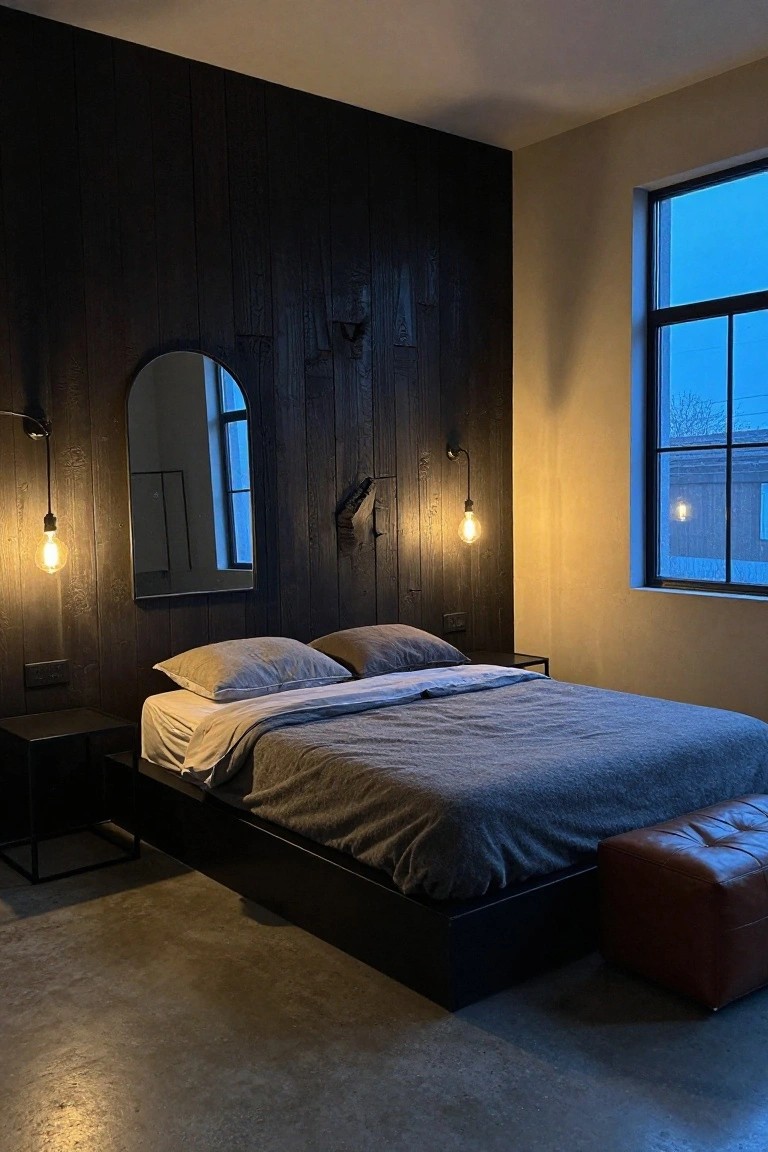
A dark wood accent wall gives the bed wall real presence without extra layers of decoration. The vertical boards add texture and depth, and the color contrast with light bedding keeps the room from feeling flat or overly busy.
This works best in bedrooms with high ceilings or simple furnishings, where the wall can stand out on its own. Use it in modern or industrial homes, and keep other walls light so the wood stays the main focus.
Vertical Wood Slats Behind the Bed
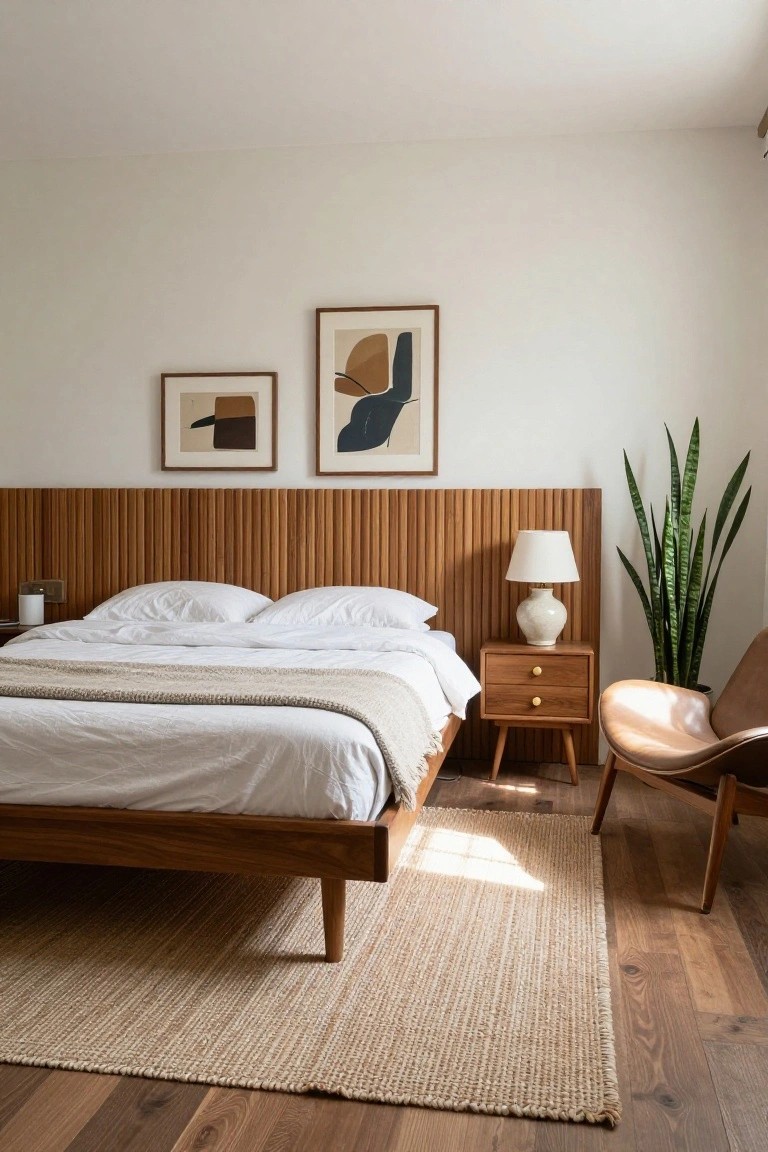
Vertical wood slats give a bedroom wall a quiet texture that feels solid without being heavy. The even spacing adds some depth while still keeping the surface clean enough for simple bedding and art to stand out.
This works best in rooms where you already have wood floors or furniture, since the slats can pull the tones together. Match the wood color to the bed frame and keep other surfaces light so the wall does not feel too dark or closed in.
Shoji Screens as Wood Accents for the Bed
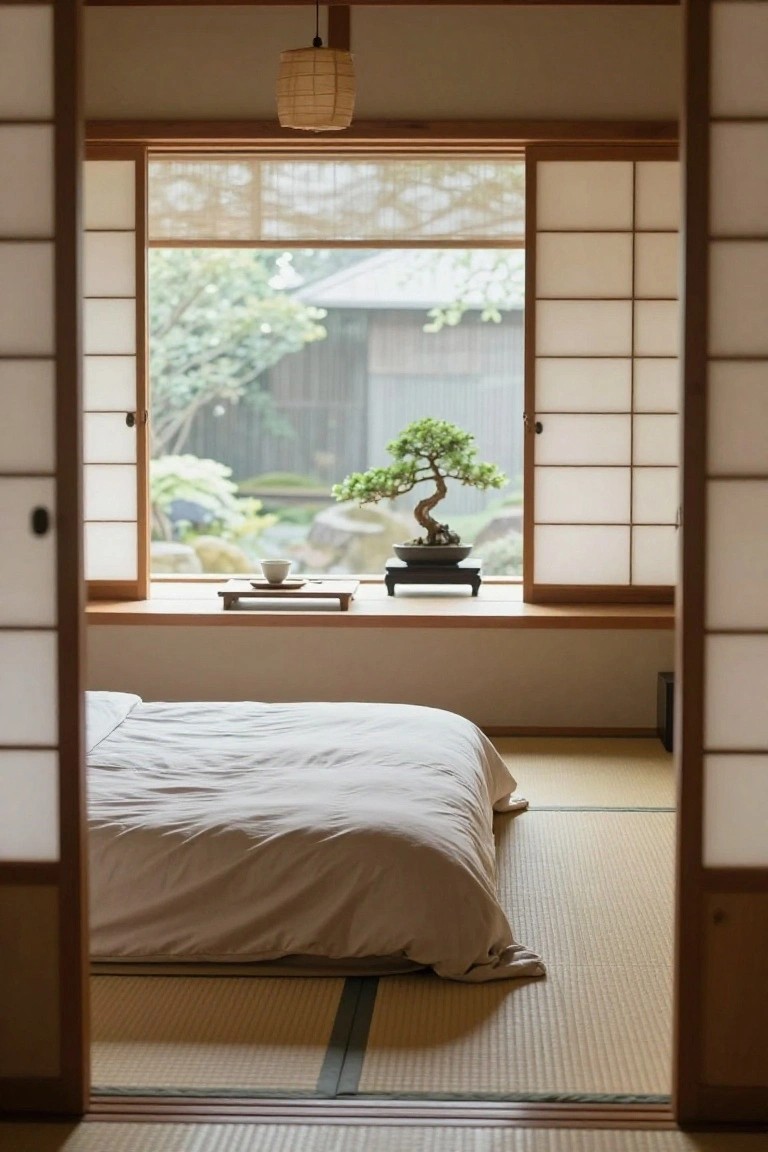
Many bedrooms feel calmer when wood is used to frame the bed rather than cover the whole wall. Shoji screens bring in natural wood tones and a soft grid pattern that defines the sleeping area without making it feel heavy.
This approach works best in smaller rooms or homes that already lean toward simple, light interiors. Keep the bed low and the rest of the walls plain so the screens become the main wood detail people notice.
Herringbone Wood Accent Walls
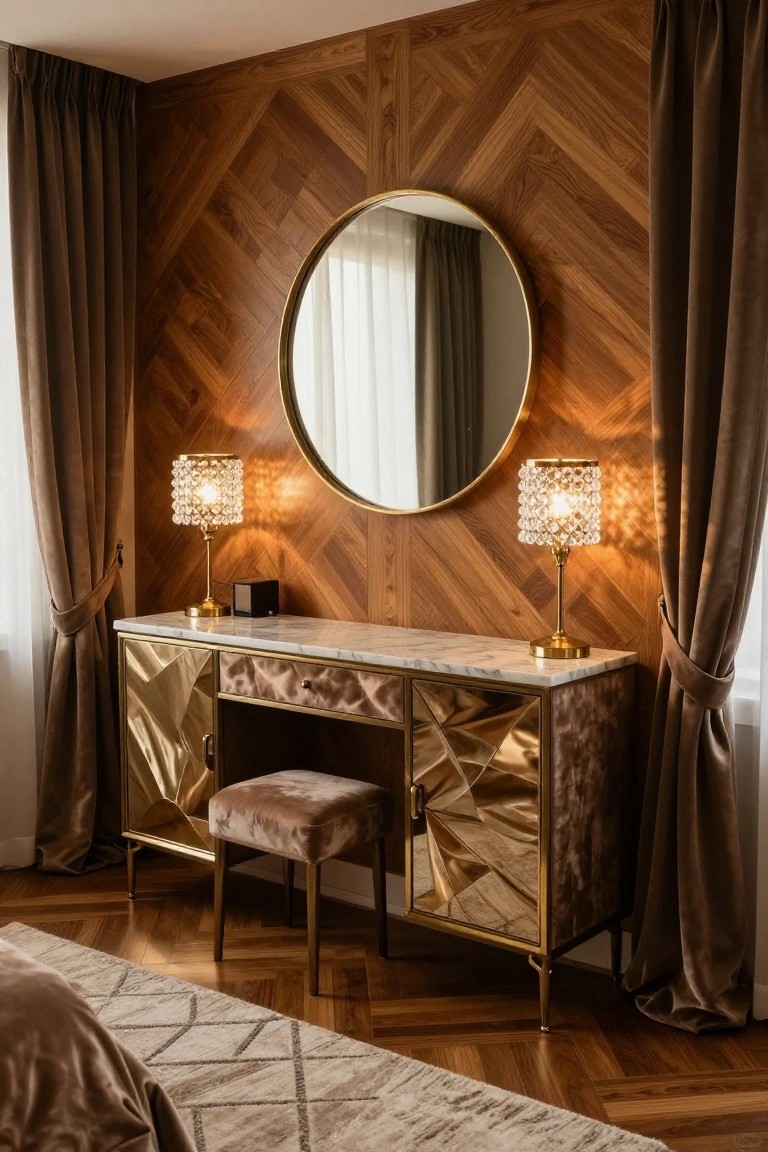
A herringbone wood wall adds texture and depth that flat paint or simple paneling just cannot match. The pattern brings movement to the surface while still feeling calm and grounded in a bedroom setting.
This works best in rooms that already have wood tones in the floor or furniture. Keep surrounding pieces simple so the wall stays the focus, and make sure the pattern runs at a scale that fits the height of the room.
Pairing Wood Furniture With Painted Walls
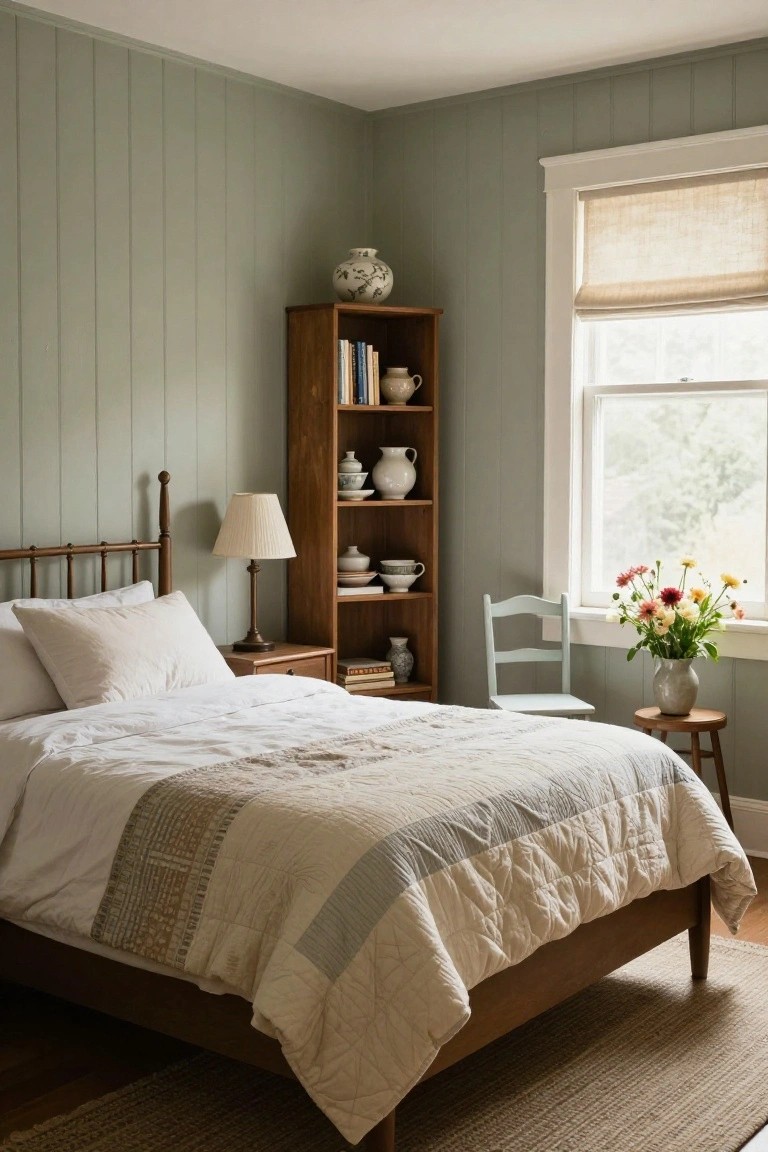
Many bedrooms feel more inviting when the walls stay painted and the wood comes in through the furniture instead. A simple bed frame, a low nightstand, and one tall open shelf can add enough natural tone without turning the whole room into a wood box.
This approach works well in older homes or any space where you want the walls to stay light and calm. Keep the wood tones similar across the pieces so they read as a set, and leave plenty of breathing room on open shelves so the look stays relaxed rather than busy.
Wood Accent Wall with a Floating Shelf
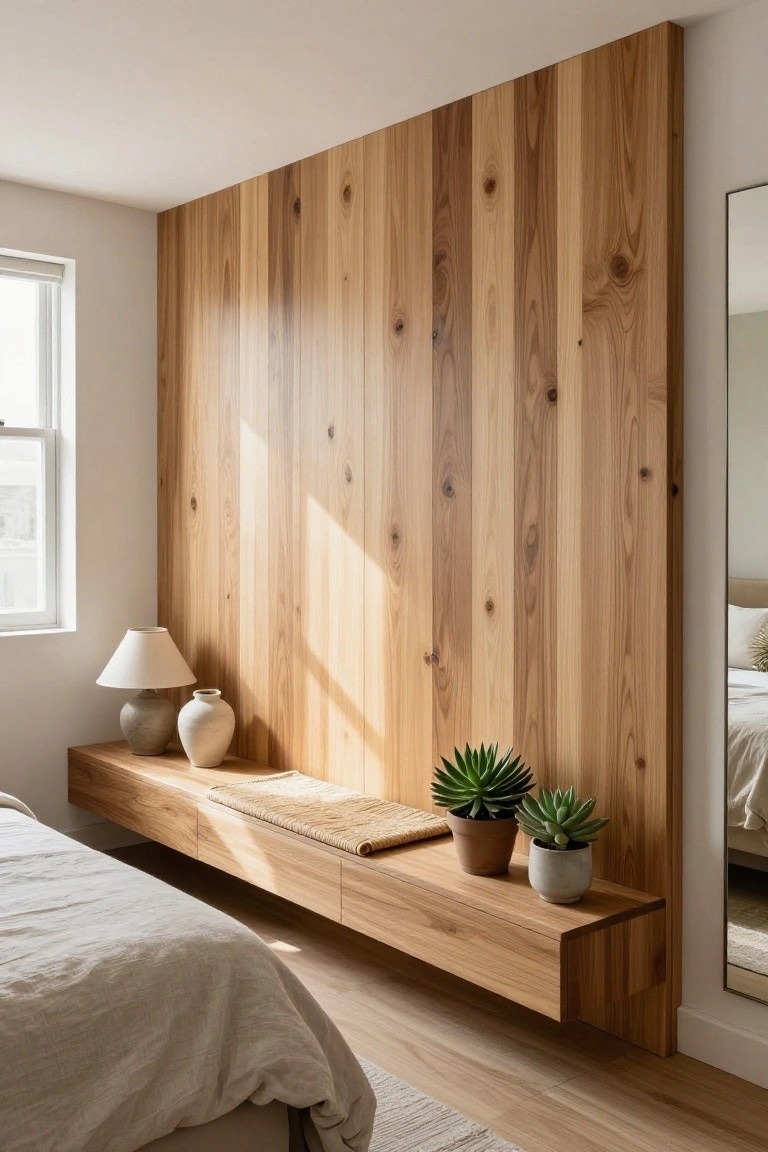
A wood accent wall already adds warmth to a bedroom. Pairing it with a floating shelf along the bottom makes the wall more useful without adding extra pieces of furniture. The shelf gives you a place to set lamps, plants, and everyday items while keeping the floor open.
This idea works best in smaller bedrooms where you want storage but not clutter. It suits simple, modern spaces and keeps the focus on the wood itself. Just be sure the shelf is mounted securely and at a height that feels comfortable for daily use.
Adding Natural Wood Pieces for Warmth
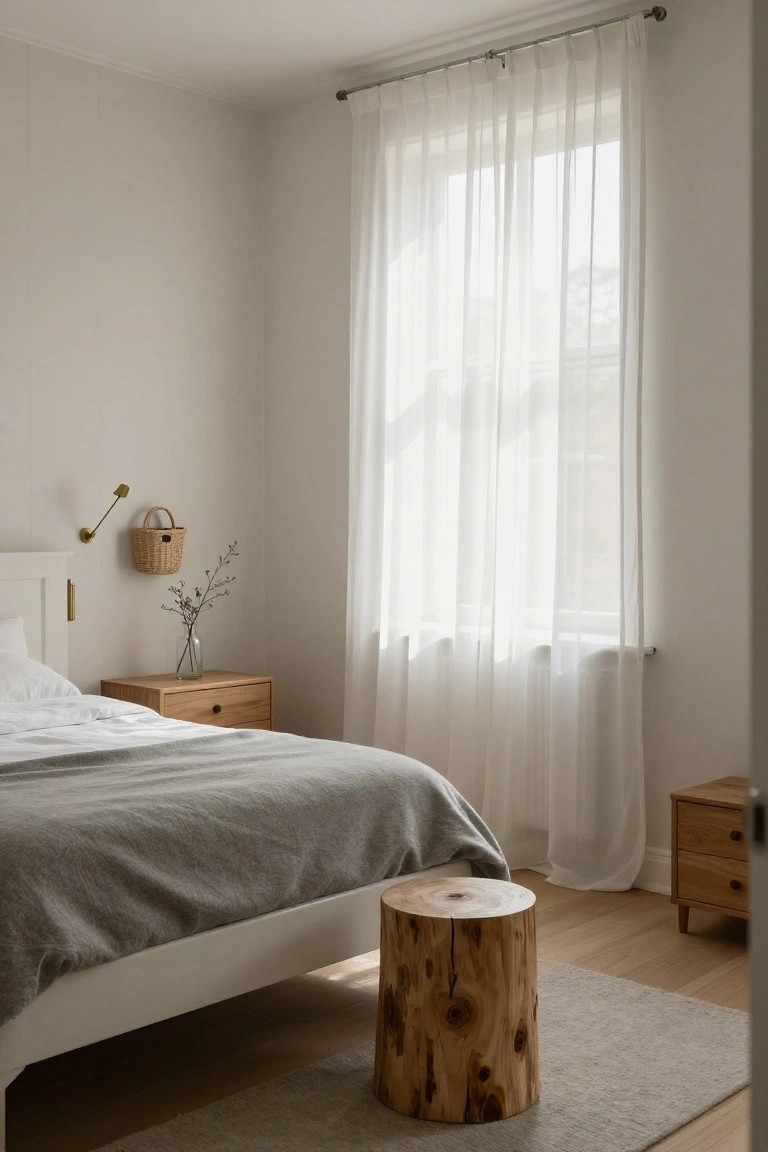
Many bedrooms feel too stark with all white walls and simple bedding. Adding a few pieces of raw wood, like a chunky stump or light oak nightstands, brings in texture and a bit of nature without needing bold color or busy patterns.
This works best in smaller rooms or spaces where you want things to stay calm but not cold. Keep the wood tones light and unfinished looking so they blend with the rest of the room instead of taking over.
Horizontal Wood Paneling on the Bed Wall
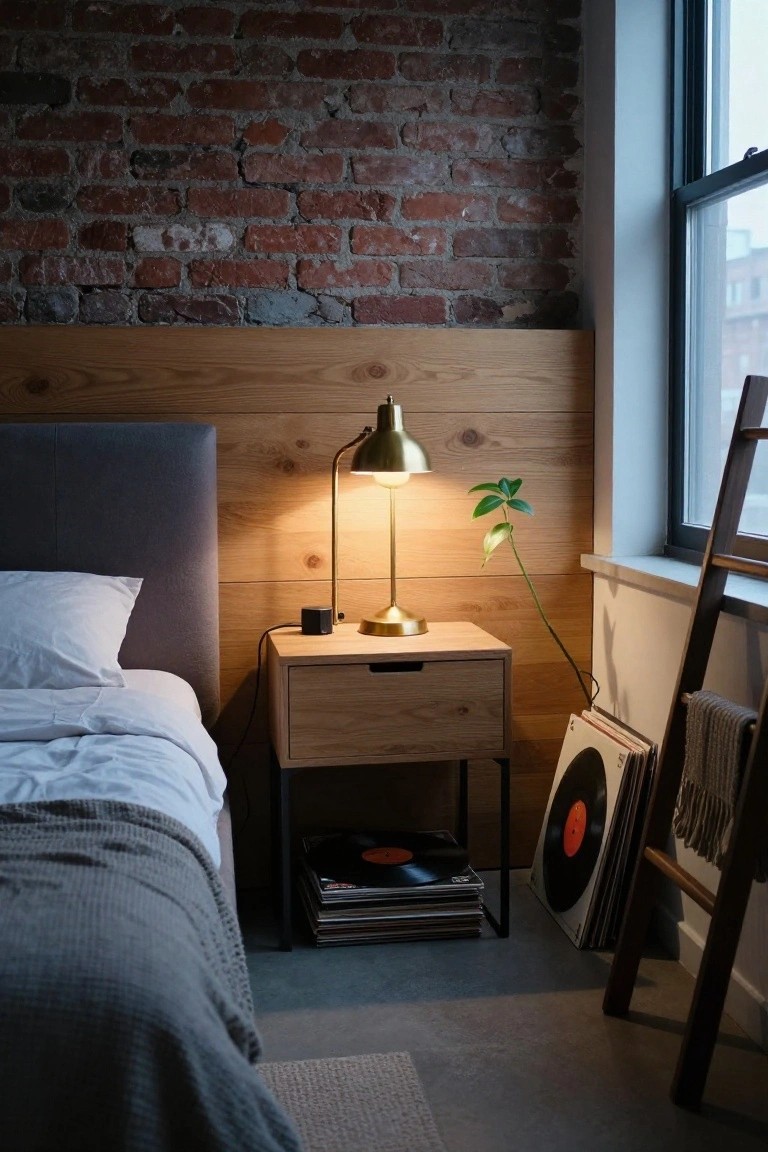
Many people like adding horizontal wood panels directly behind the bed because it gives the wall a clean, structured look without much effort. The panels create a warm surface that makes the bed feel more settled in the room.
This works best in spaces that already have some texture elsewhere, like brick higher up on the wall. Keep the panels light in tone so the room stays bright, and use them mainly on the bed wall rather than all around the room.
A Four-Poster Bed in Natural Wood

A four-poster bed made from solid wood can bring enough warmth and presence to a bedroom without needing a full accent wall behind it. The frame itself becomes the main feature, giving the space a grounded feel while the rest of the room stays simple.
This approach works best in rooms with light walls and minimal furniture. Keep other wood tones to a minimum so the bed frame stays the clear focal point.
Wood Walls With Built-In Shelves

A wood accent wall works especially well behind the bed because it brings in warmth and texture without crowding the space. Adding a built-in shelf right into the wall keeps books and small items close at hand while keeping the surface clean and simple.
This setup suits bedrooms that already have fairly plain furniture since the wood and shelf together create the main interest. It works best in rooms where you want a calm, grounded feel rather than lots of separate decor pieces. Keep the shelf height in line with the top of the headboard so the whole wall reads as one unit.
Wood Walls Behind the Bed
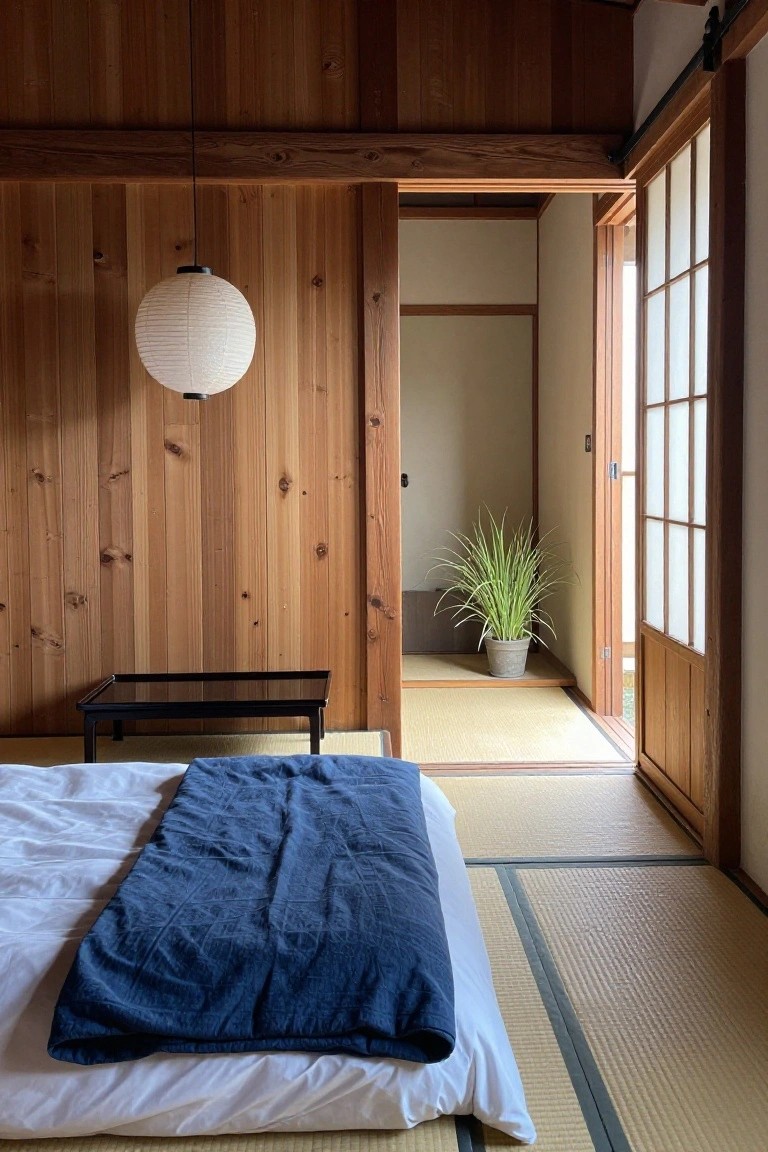
Many bedrooms feel calmer when the wall right behind the bed is finished in wood instead of paint or wallpaper. The vertical planks bring natural texture and warmth that works well with simple bedding and low furniture.
This approach suits smaller rooms or homes that already use natural materials throughout. Keep other surfaces light and the furnishings minimal so the wood does not compete with too many other elements.
Floating Shelves on a Painted Bed Wall
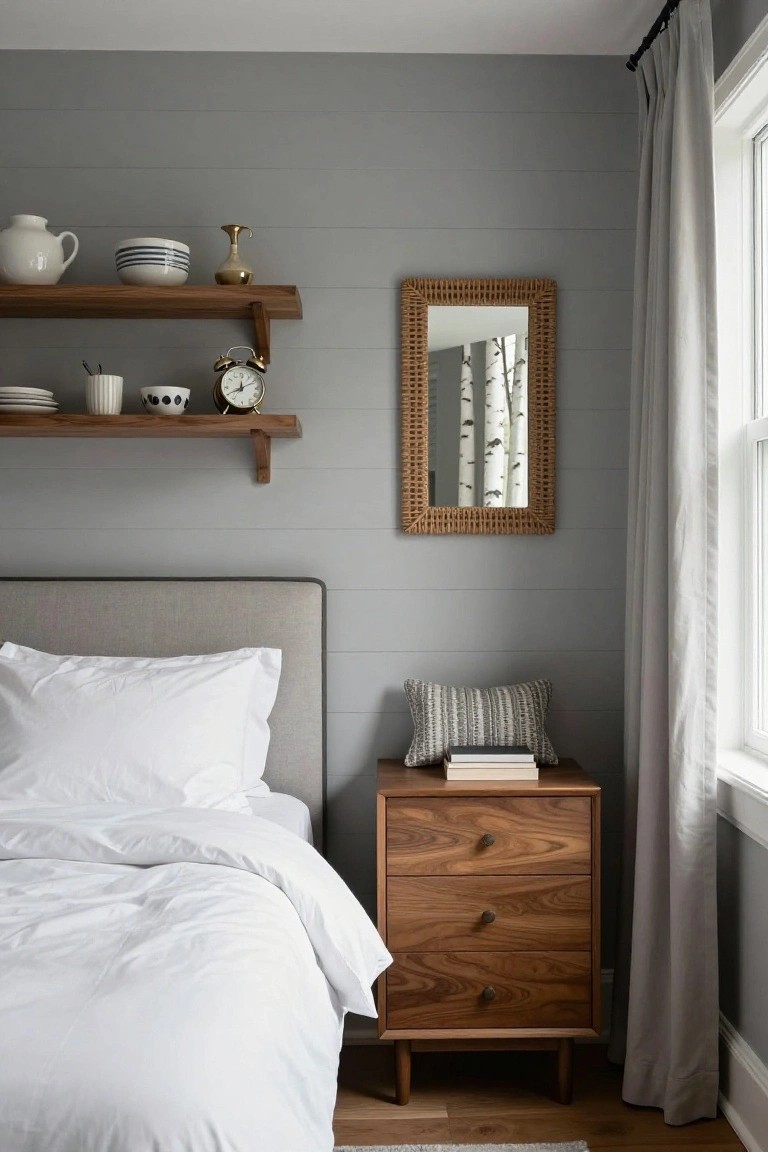
Many bedrooms feel calmer when the wall behind the bed stays painted or paneled instead of covered in wood. Floating shelves add the warmth of real wood without turning the whole surface into a big statement.
They suit rooms that need a little extra storage but do not have space for tall bookcases. Keep the items on the shelves simple and useful so the wood reads as a quiet accent rather than a busy display.
Create A Bed Nook With Wood
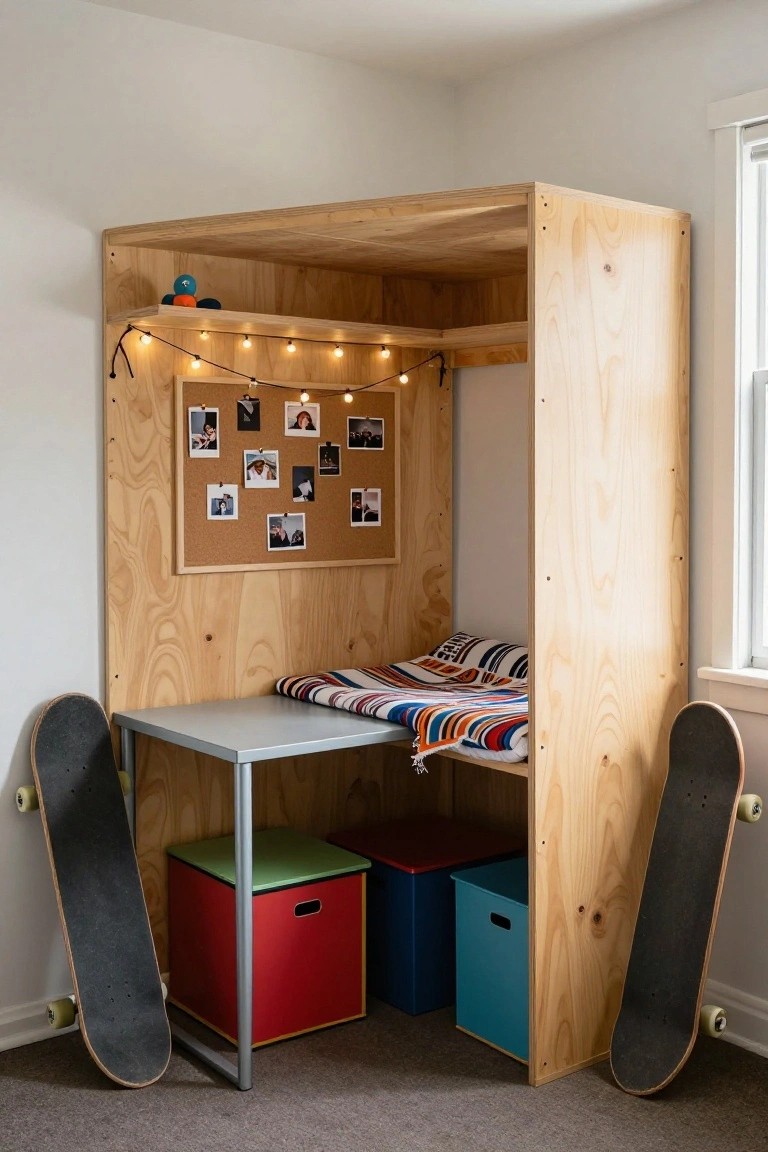
Building a wood structure around the bed turns the wall into a small enclosed area that feels separate from the rest of the room. It gives you a place to sleep plus room for a desk and storage without needing extra furniture taking up floor space.
This works best in smaller bedrooms or rooms where you want to fit sleeping, studying, and storage into one spot. Plywood is easy to work with and keeps the project simple, and you can add bins or shelves underneath the bed as needed.
Full Wood Plank Walls Behind the Bed

A wood accent wall that covers the entire bed wall gives the room a steady, natural base without much extra styling. The vertical planks bring warmth and texture that works especially well when the rest of the room stays simple and light.
This approach suits bedrooms that need one strong material choice to anchor the space. It works best in homes that already lean toward natural finishes, and it helps if you keep other furniture low and minimal so the wall does not feel crowded.
Painted Wood Paneling Behind the Bed
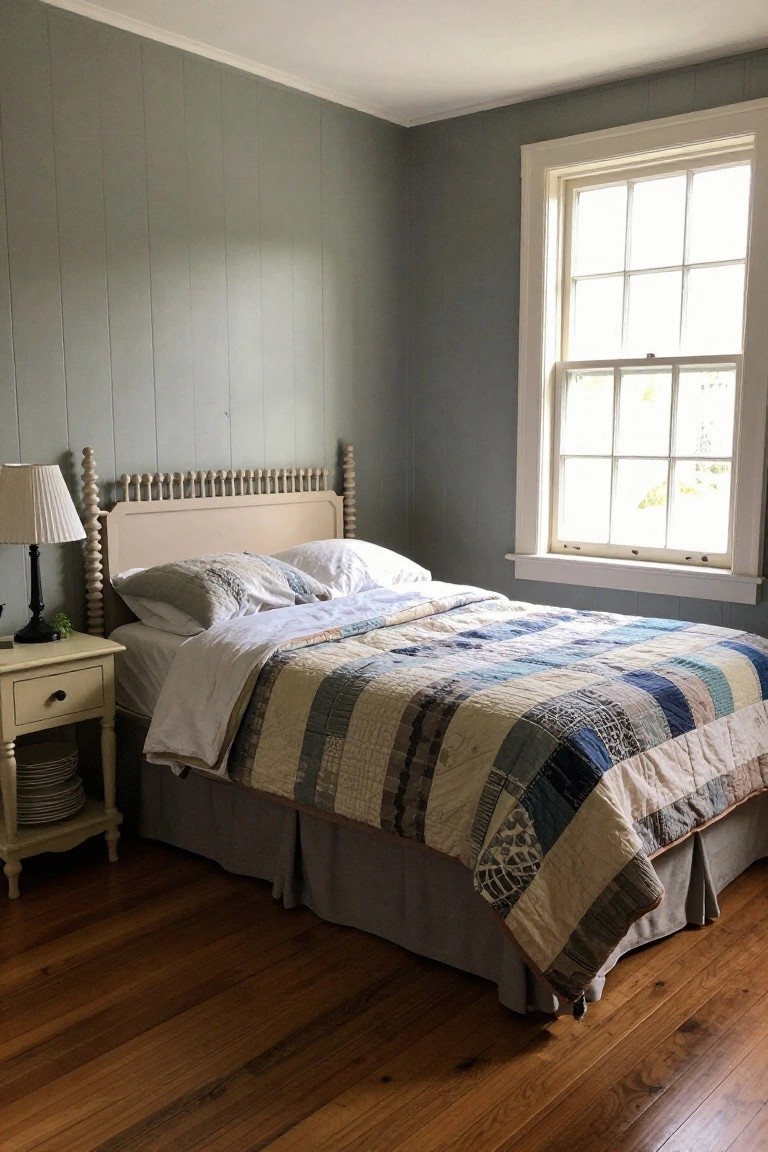
Many bedrooms feel more finished when the wall behind the bed gets a simple layer of wood paneling. Painted in a soft color, it adds quiet texture and a bit of depth that plain drywall often lacks.
This works best in rooms that already have some age or character, since the vertical lines echo older trim details. Keep the color muted so the paneling stays in the background and does not compete with the bedding or furniture.
Wood Walls Around a Fireplace Niche
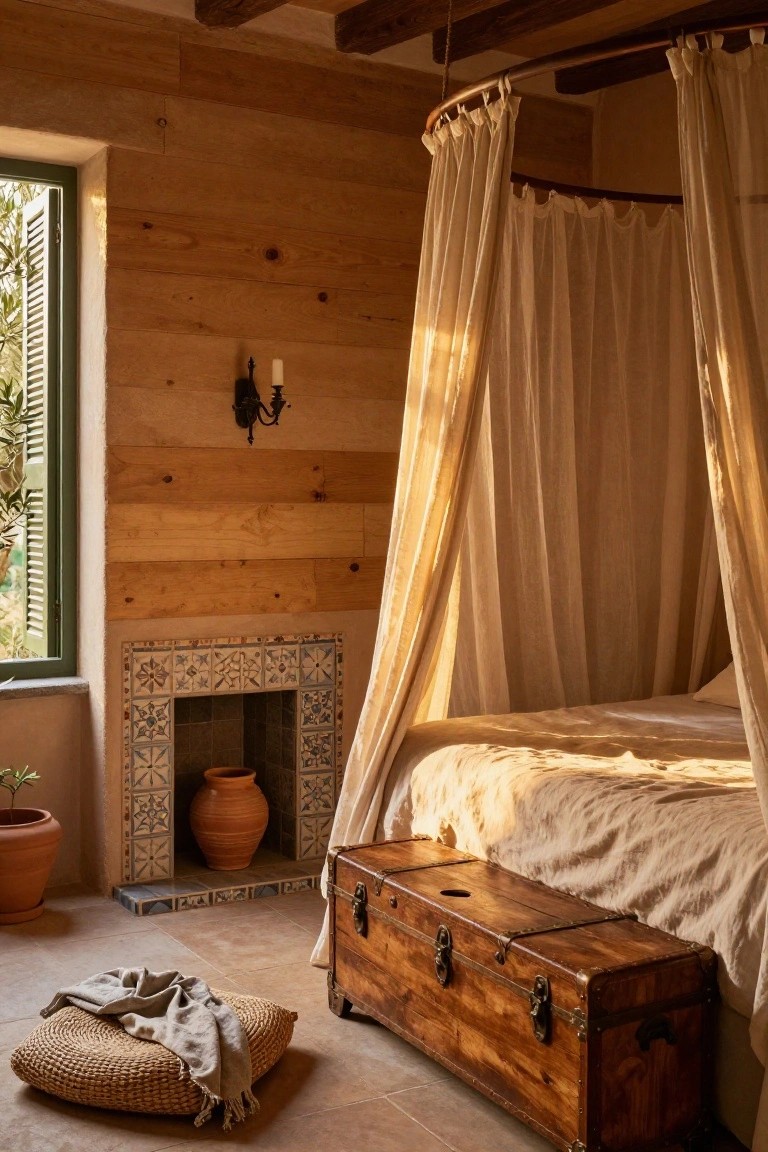
Wood on the accent wall brings a steady, natural feel to a bedroom without much extra effort. Horizontal planks give the surface some movement and pair nicely with a recessed fireplace that has its own tile surround.
This setup suits homes that already lean rustic or simple. Keep the rest of the room light so the wood and the fireplace stay the main features rather than competing with too many other textures.
Painted Vertical Wood Paneling Behind The Bed
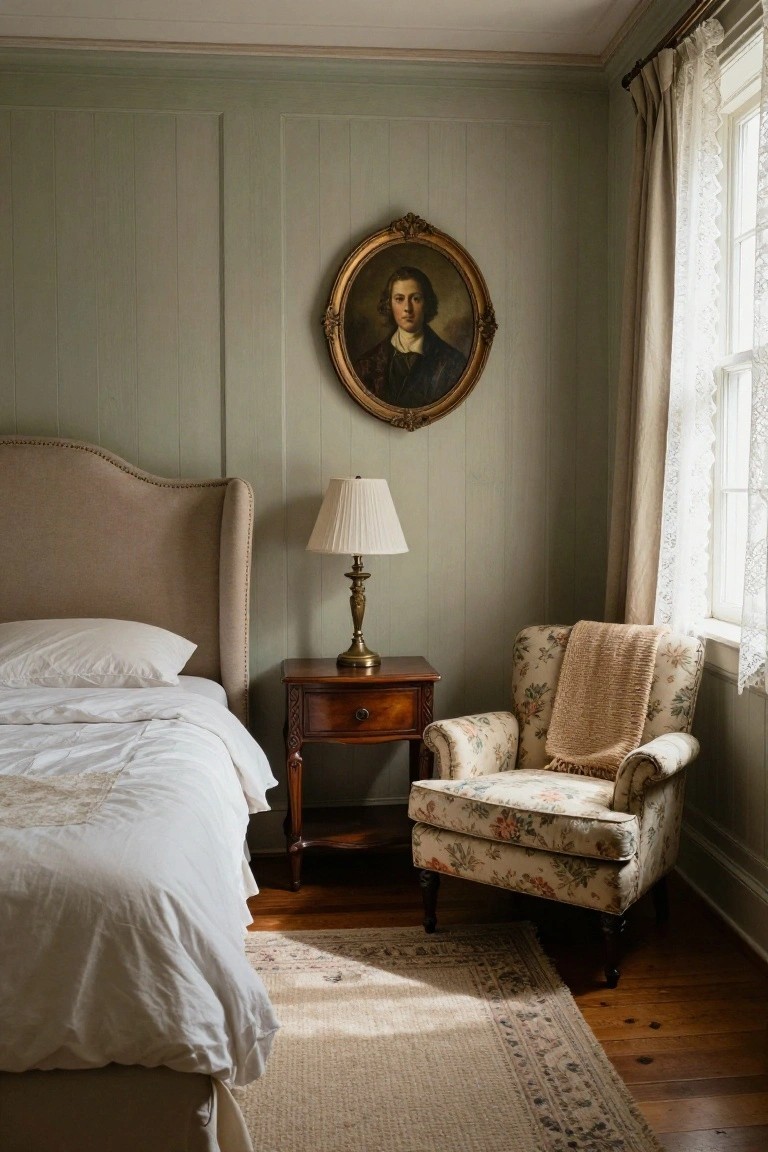
Vertical wood paneling on the wall behind the bed gives a bedroom a quiet sense of structure. The lines add texture while the soft painted color keeps the whole wall feeling calm instead of heavy.
This works best in rooms that already have some trim or older details. Use a muted tone so the wood grain stays visible, and keep the rest of the furnishings simple so the paneling remains the main feature.
Soft Green Painted Wood For Bed Walls
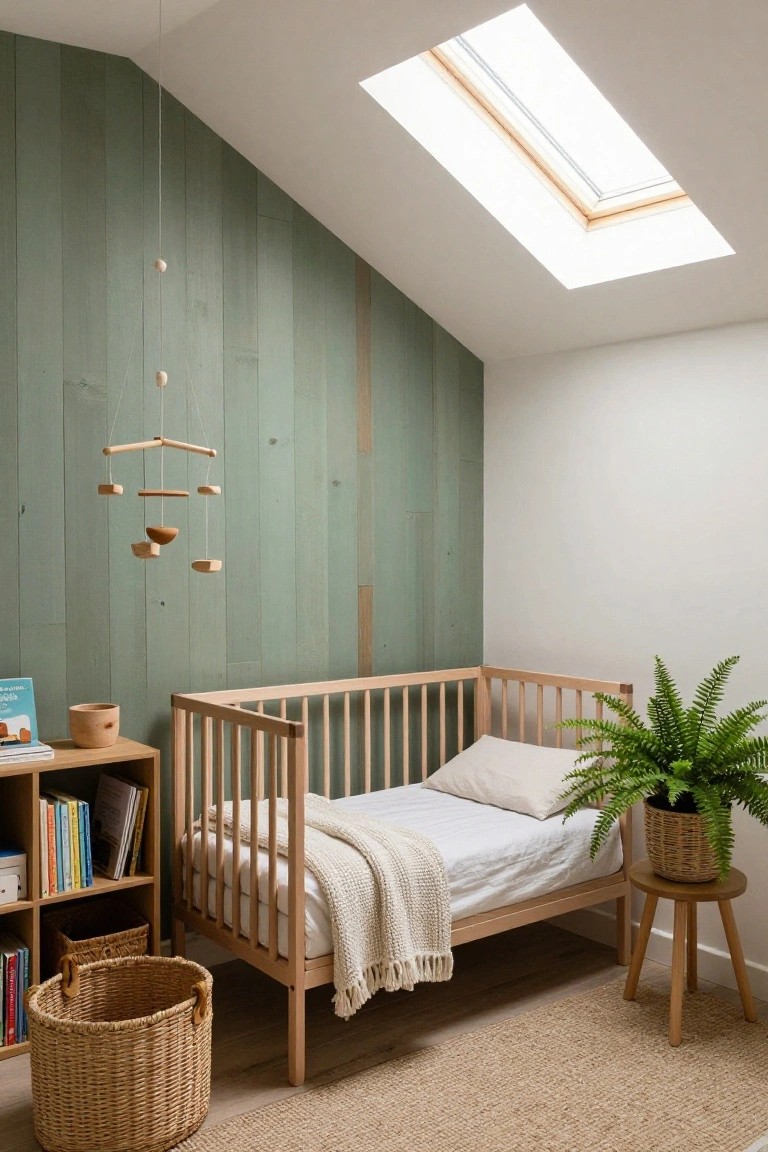
Painting wood planks in a soft green gives a bedroom a quiet, natural feel without making the space feel heavy. The vertical boards add texture that flat paint cannot match, and the color stays gentle enough to work with light furniture and simple bedding. Many people like this approach because it brings warmth while still keeping the room bright and calm.
This idea works especially well in smaller bedrooms or spaces for kids, where you want some character on the bed wall but do not want strong patterns. Choose a muted green with a bit of gray in it so the wall does not compete with other colors in the room. Keep the rest of the finishes light so the painted wood stays the main feature.
Frequently Asked Questions
Q: How do I keep the wood from shifting after a few seasons?
A: Choose kiln dried boards and let them sit in the room for a week before you hang them. This helps them settle to your home’s humidity level first.
Q: Can I install the accent wall myself with just basic tools?
A: Start with tongue and groove planks if you want fewer cuts. They lock together quick and hide small gaps without extra trim.
Q: What if my bed already has a bold headboard?
A: Keep the wood simple and let the headboard stand out. A flat shiplap style in a mid tone works without fighting for attention.
Q: How do I clean the wall once dust builds up?
A: Wipe it down with a dry microfiber cloth every couple weeks. Skip wet cleaners since they can raise the grain over time.
