

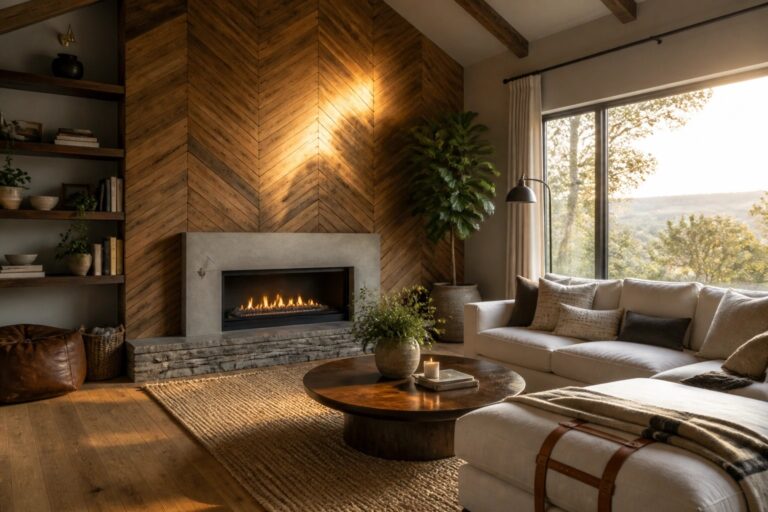
Large rooms often feel incomplete when the walls stay flat and offer no real sense of depth.
Wood with actual texture can bring warmth and structure that helps tie furniture and lighting into a more settled whole.
I once added a simple wood panel behind a sofa in an oversized family room and noticed how the space stopped echoing the way it used to.
Considering the direction of light and the height of the ceiling first usually shows which grain or relief will sit comfortably in the room.
A quick sample on the wall tells you more than any plan.
Herringbone Wood Walls For Large Rooms
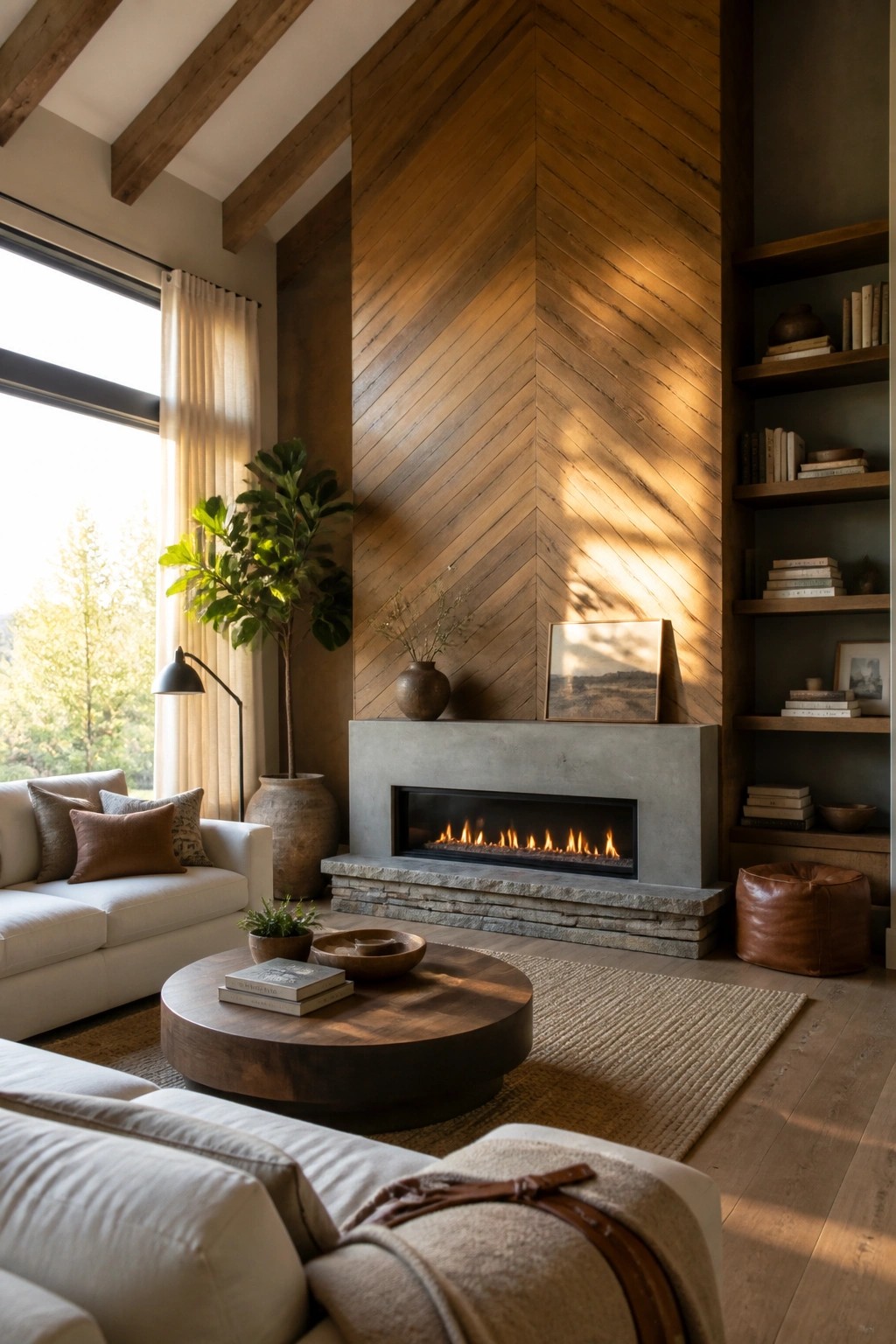
A herringbone wood wall can give a big living room the structure it needs without adding clutter. The pattern brings texture and movement to an otherwise plain surface, and it works especially well when paired with a simple fireplace surround. The wood tones also help the space feel warmer and more grounded.
This approach suits homes with high ceilings or open floor plans where one wall can carry the visual weight. Use it on the main focal wall and keep the rest of the finishes calmer so the texture stands out without overwhelming the room. It also works in new builds where you want to add character that feels permanent rather than added on later.
Vertical Wood Slats on a Curved Wall
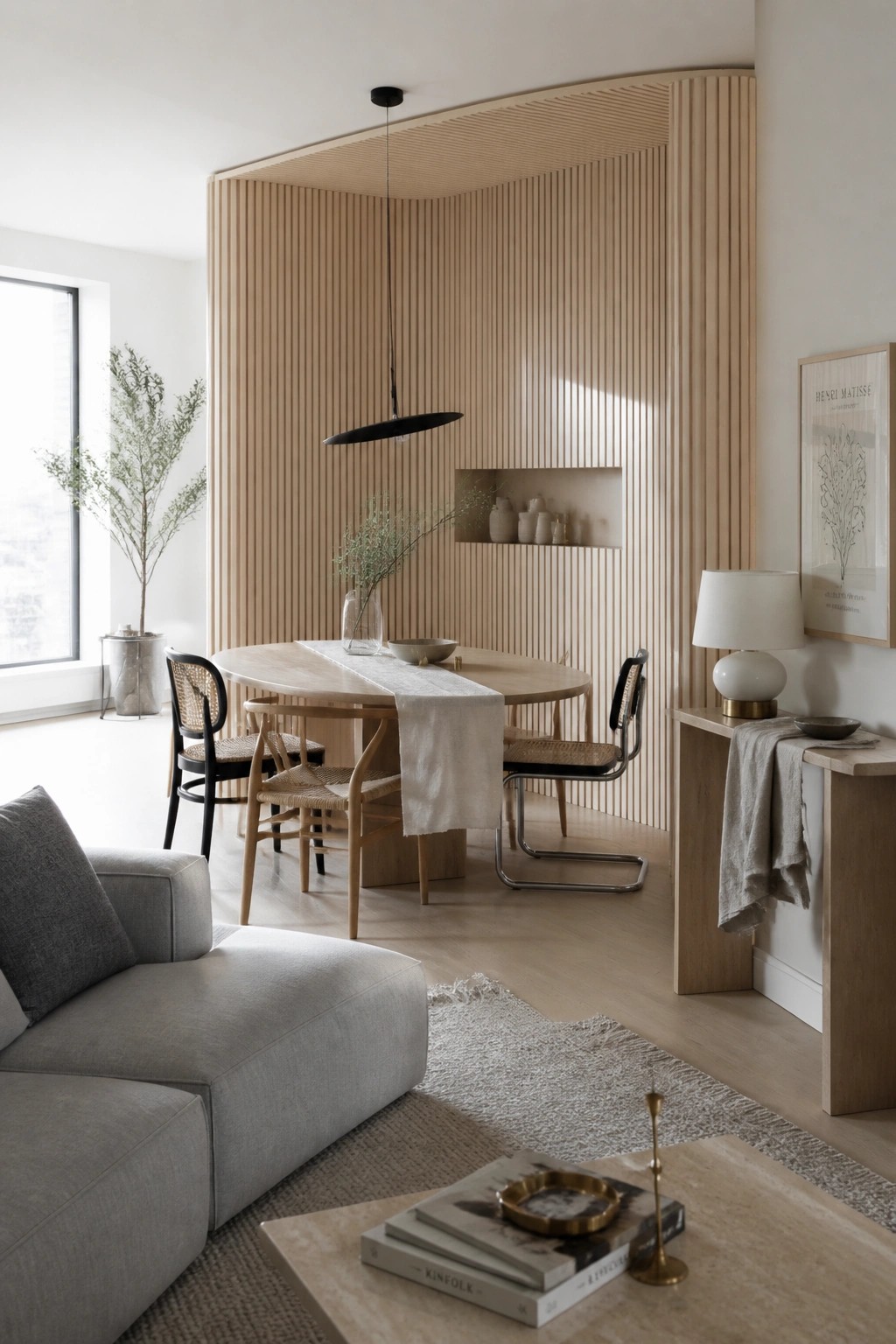
Vertical wood slats wrapped around a curved wall give a large room structure without closing it in. The texture breaks up empty wall space and makes the area feel more finished, especially when the room has high ceilings and open sightlines.
This works best in open-plan homes where you need a soft divider between living and dining zones. Keep the wood light and the curve gentle so the wall adds warmth instead of feeling like a heavy feature.
Vertical Wood Slats Behind the Bed
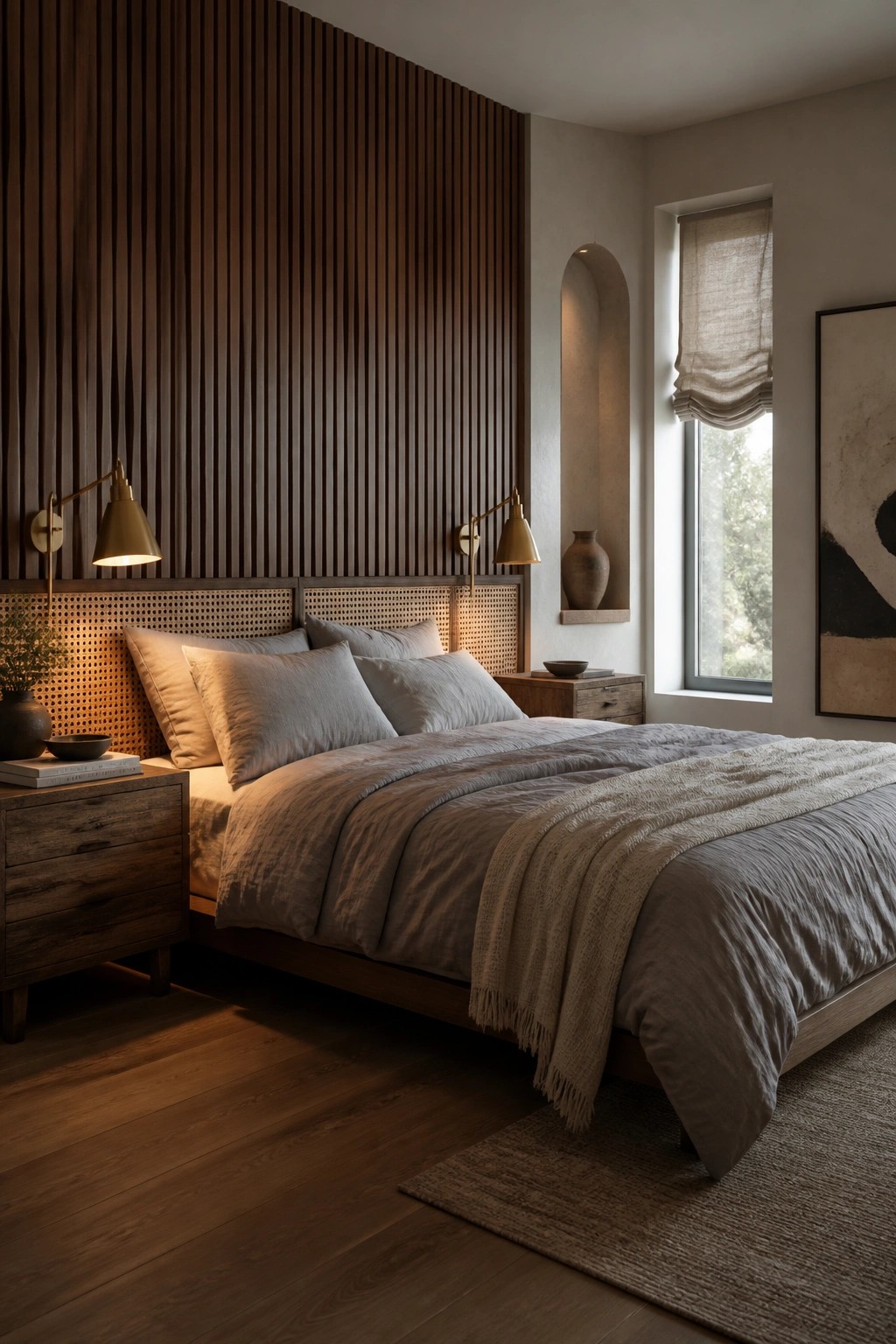
A vertical wood slat wall gives a large bedroom something solid to rest against. The texture breaks up empty wall space and makes the room feel more complete without adding clutter.
This works best in spaces where the bed sits on a wide wall. Keep the bedding and side tables simple so the slats stay the main feature.
Vertical Wood Slats Add Texture to Big Walls
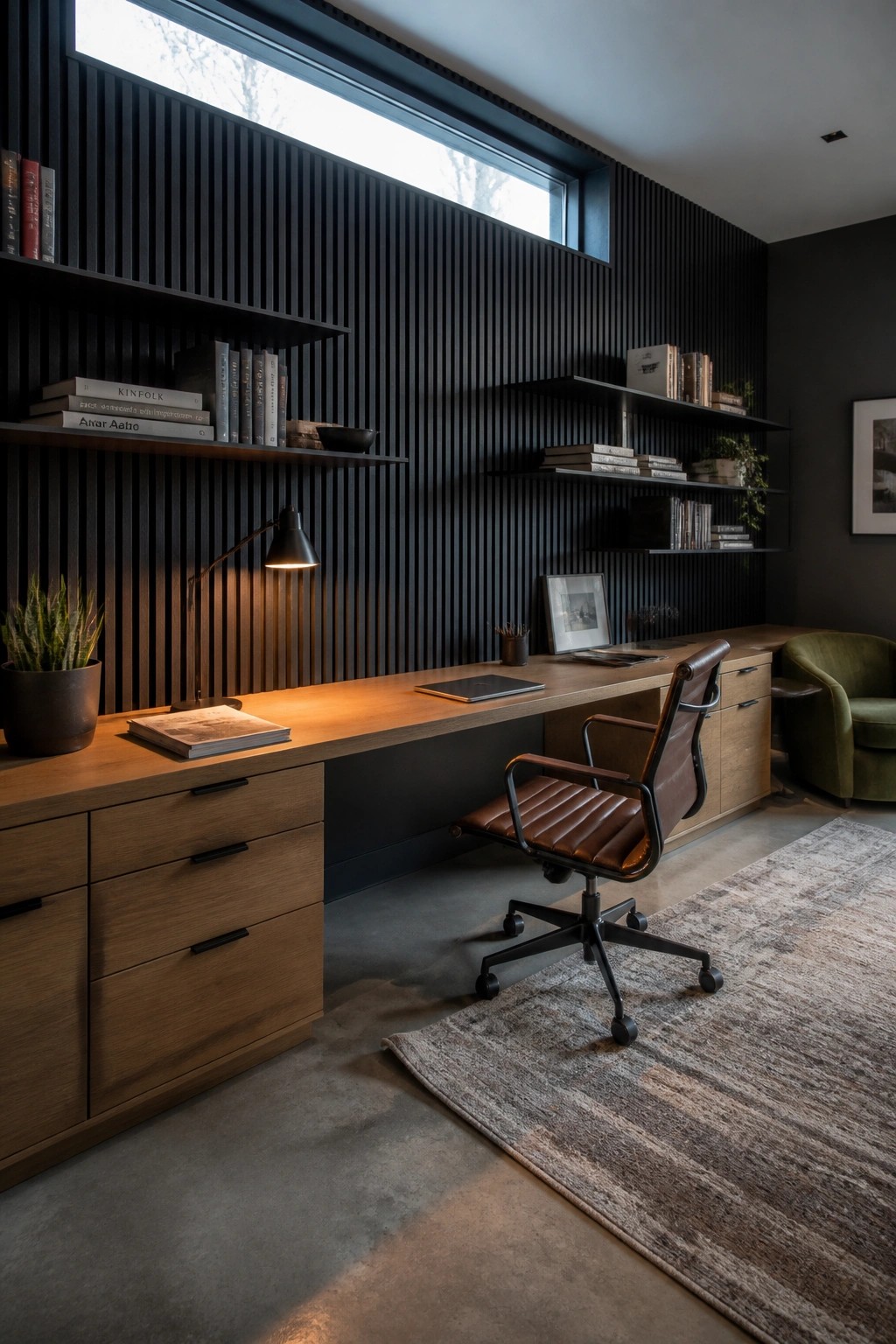
Vertical wood slats give a large wall something flat paint can never match. The repeated lines catch light and create shadow, which breaks up the blank space and makes the room feel more finished without adding clutter.
This works especially well behind a desk or in any area where the wall is the main focus. Darker finishes keep the look grounded, and the texture adds warmth that suits both modern and traditional homes. Just be sure the slats are spaced evenly so the effect stays clean rather than busy.
Textured Wood Walls Make Large Rooms Feel Finished
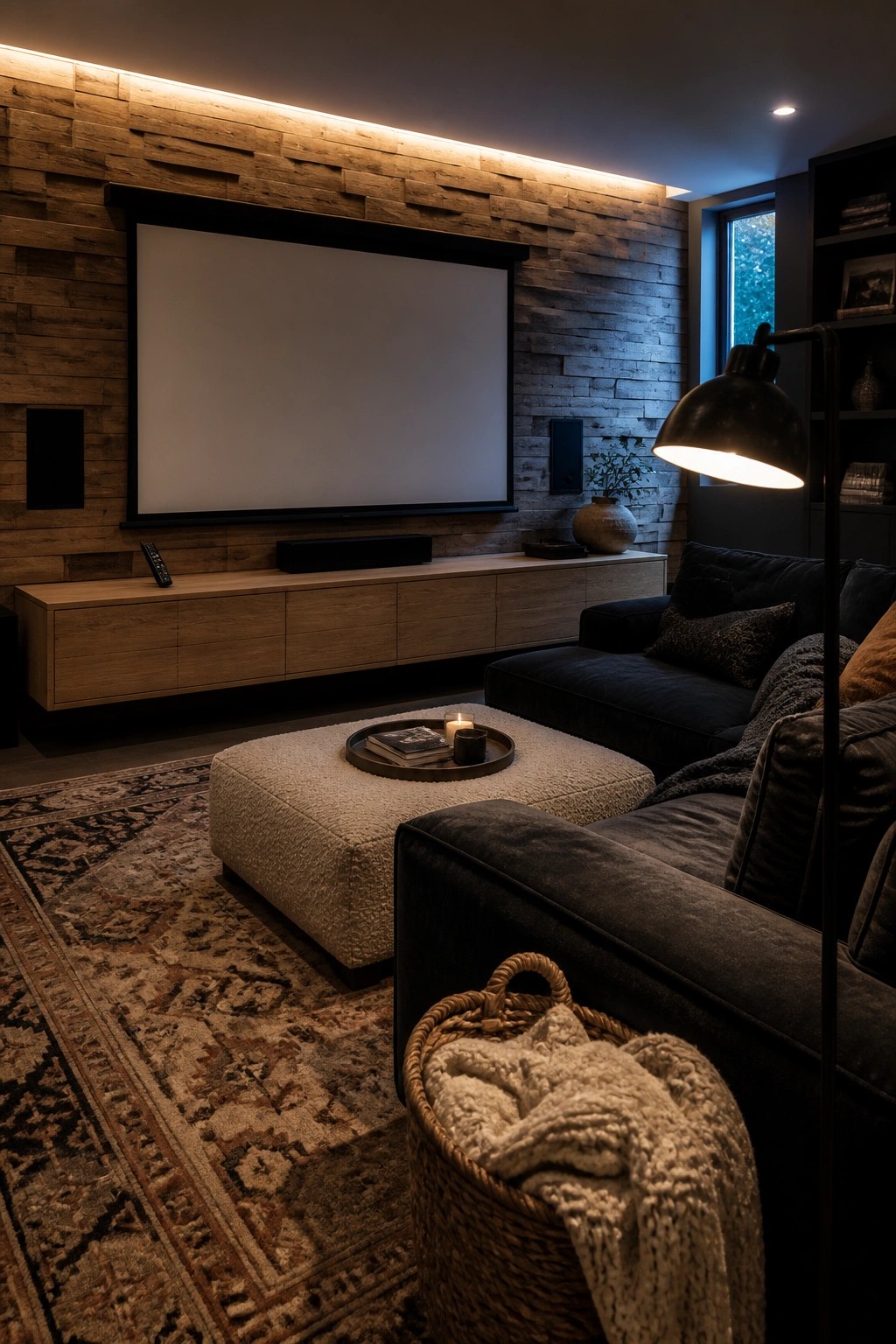
A wall of textured wood planks behind a big screen gives a large room something solid to hold onto. The layered grain and natural tones add depth that paint alone rarely achieves, and the effect keeps the space from feeling empty or echoey.
This works best in media rooms or open living areas where one wall can carry the visual weight. Keep other surfaces simple so the wood reads as the main feature rather than one more layer in a busy room.
Horizontal Planks For A Finished Wall
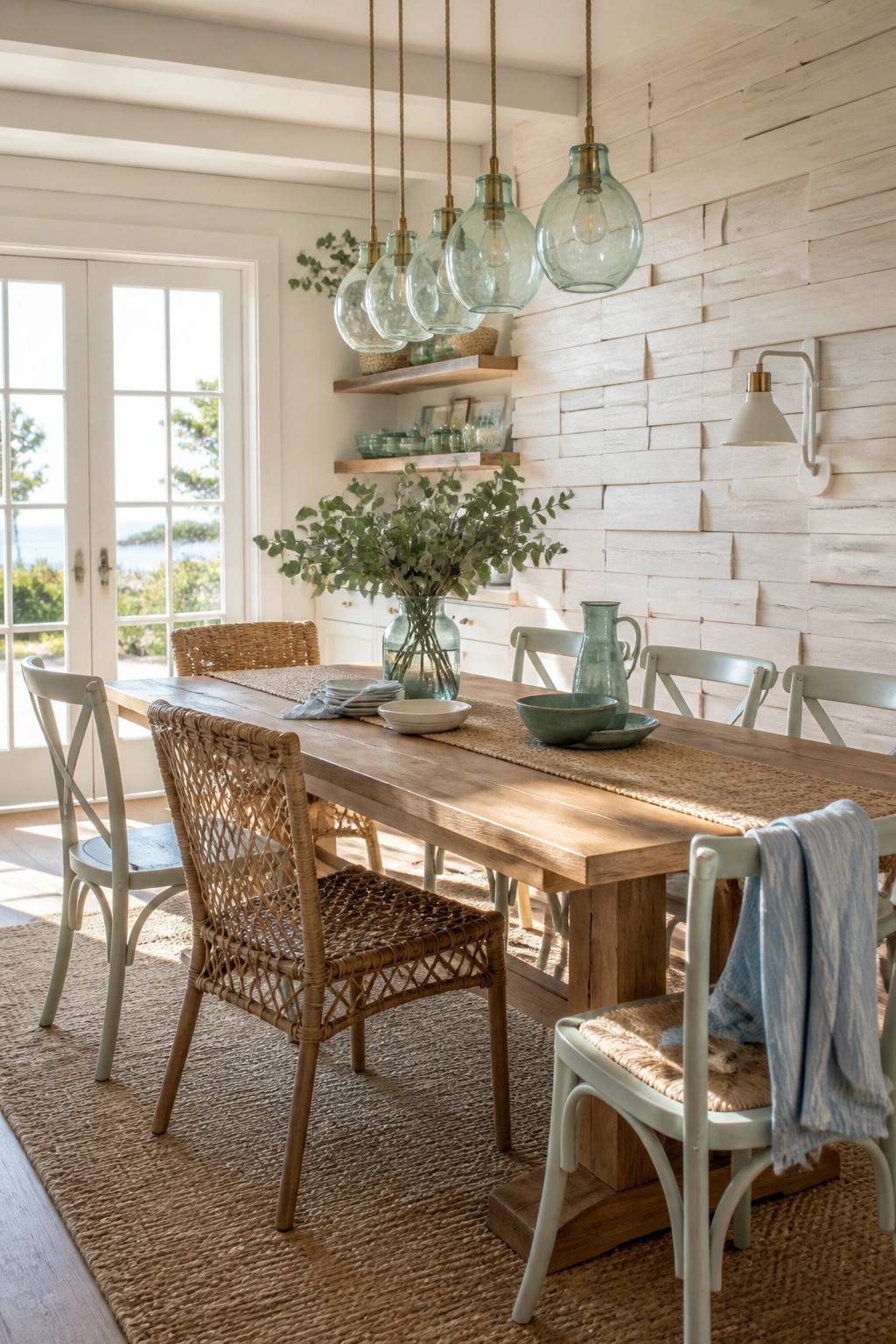
Horizontal wood planks give a large room that settled feeling without adding clutter. The staggered layers catch light in a way that makes the wall feel more present and complete, especially in spaces that otherwise lean open and plain.
This works best on an accent wall in dining rooms or living areas where you already have a table or seating grouping to anchor the space. Stick with a light finish if the room gets good natural light, and keep other surfaces simple so the texture does the main job.
Vertical Wood Slats Add Texture To Large Walls
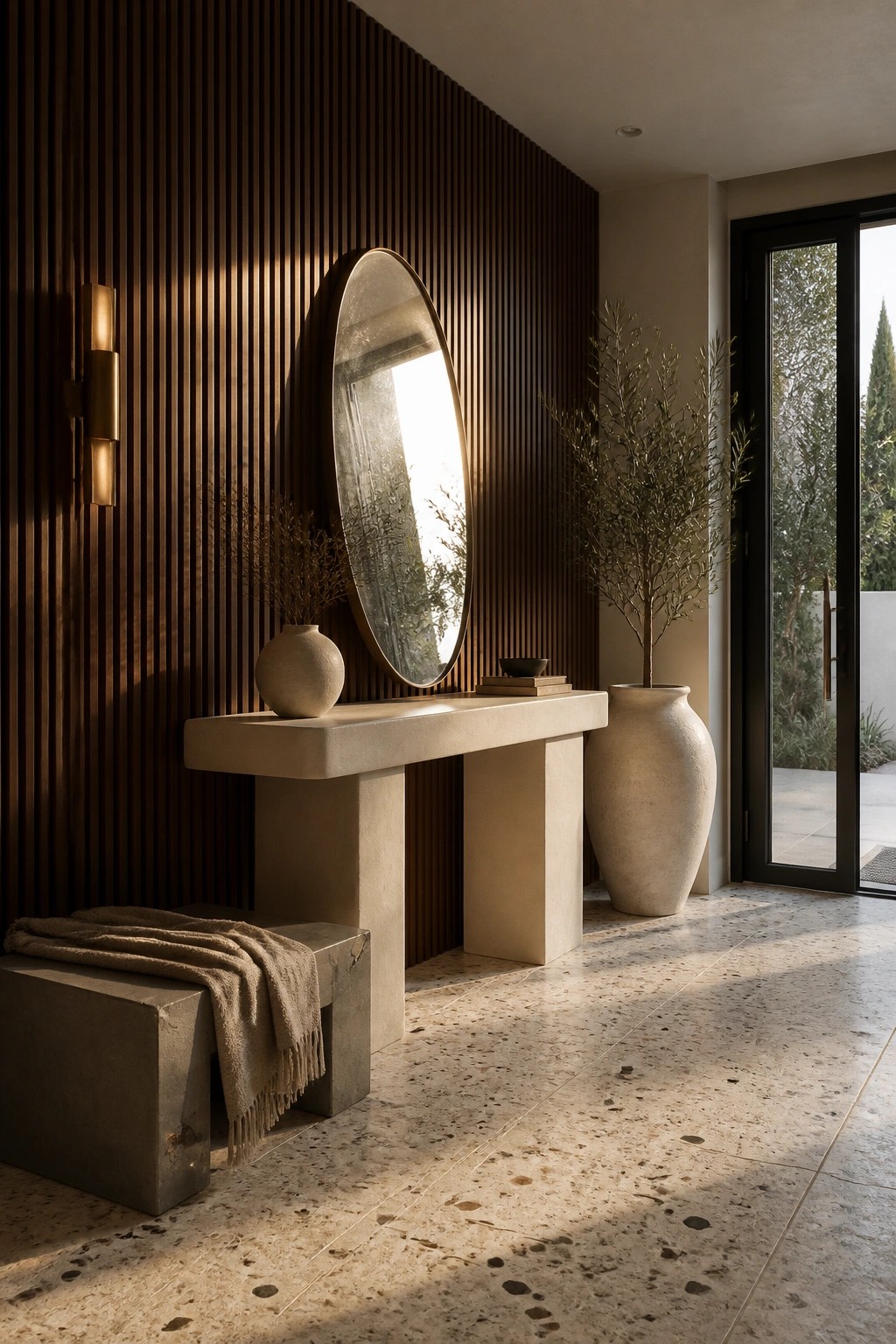
Vertical wood slats give a plain wall some real depth without needing much else. They break up big flat surfaces and help a room feel more finished, especially in spaces that can feel empty on their own.
This approach works well in entryways or open living areas where you want warmth but still like clean lines. Keep the spacing consistent and let natural light hit the edges so the texture shows up clearly during the day.
Horizontal Wood Planks For Accent Walls
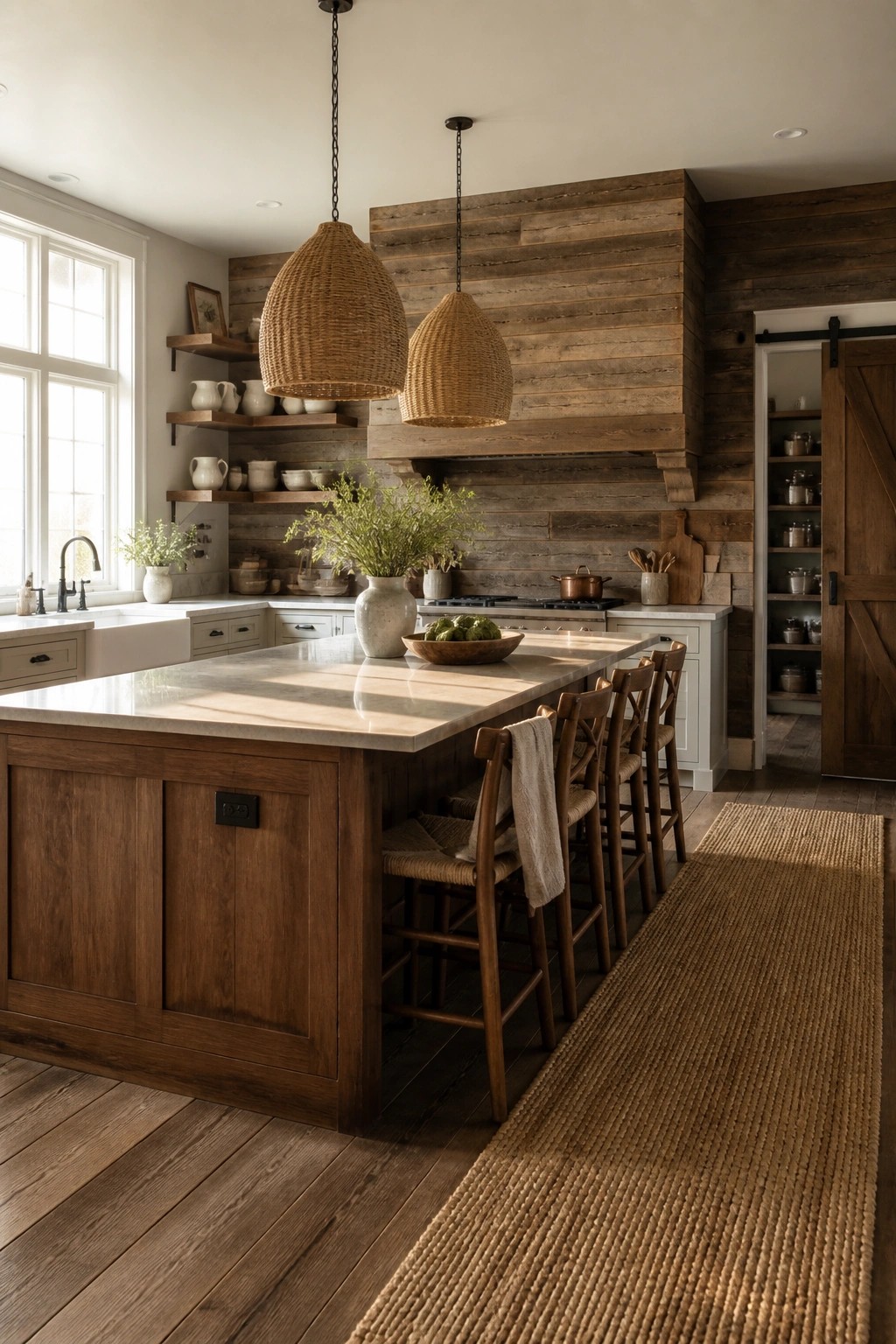
Many kitchens with big open layouts can feel unfinished until one wall gets a layer of textured wood. Horizontal planks add depth and warmth that painted drywall alone often lacks.
This works best in rooms that already have wood tones in the floors or cabinetry. Keep the other walls light and simple so the planks become the main feature without making the space feel smaller.
Textured Wood Cylinder Walls for Added Depth
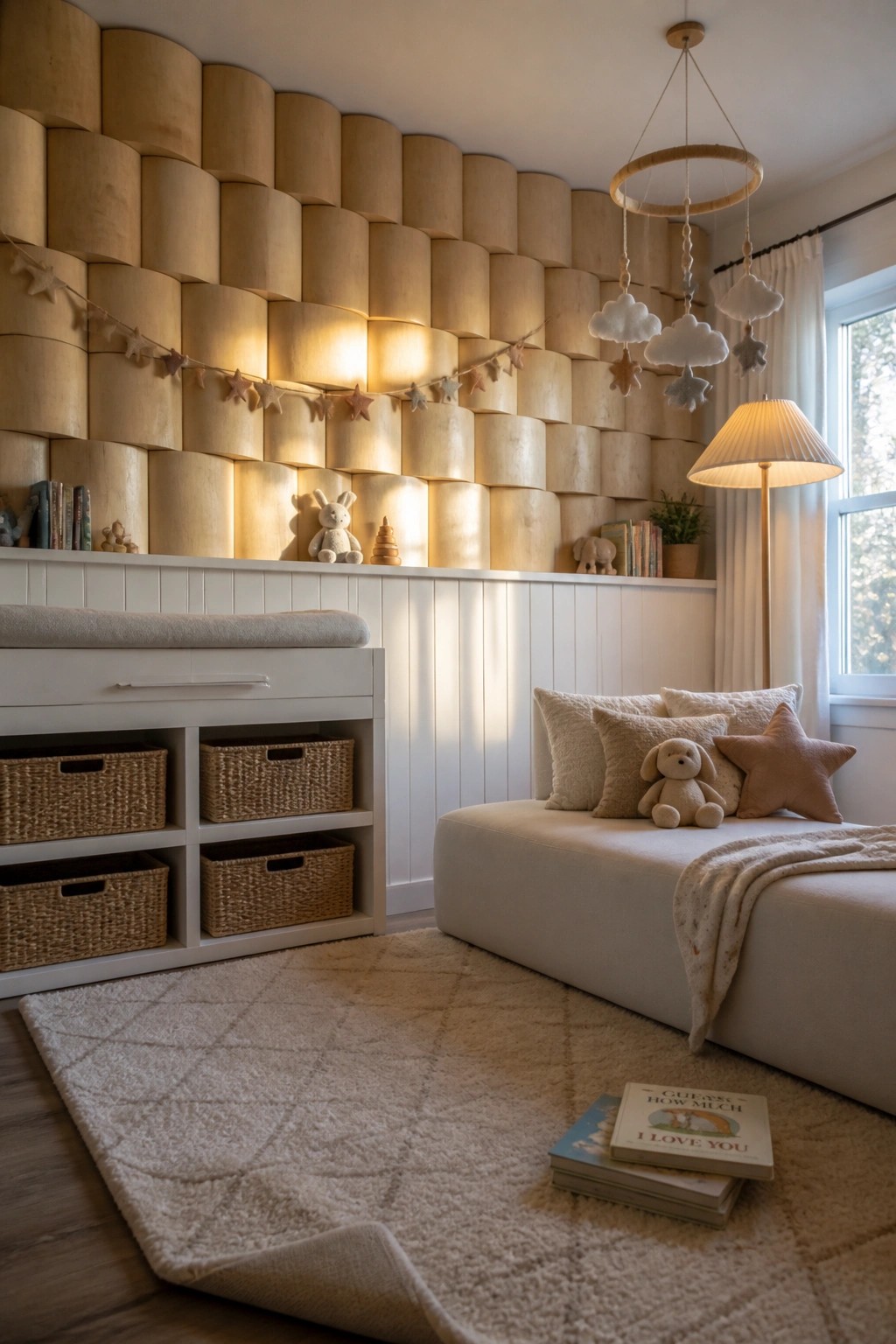
Many large rooms still feel unfinished even after the furniture is in place. A wall built from repeating wood cylinders adds natural texture and soft shadows that help the space feel more complete without extra decoration.
This treatment works best in rooms that need warmth, such as playrooms or family spaces. Pair it with simple trim below and keep other surfaces light so the wall can stand out on its own.
Diagonal Wood Paneling for Feature Walls
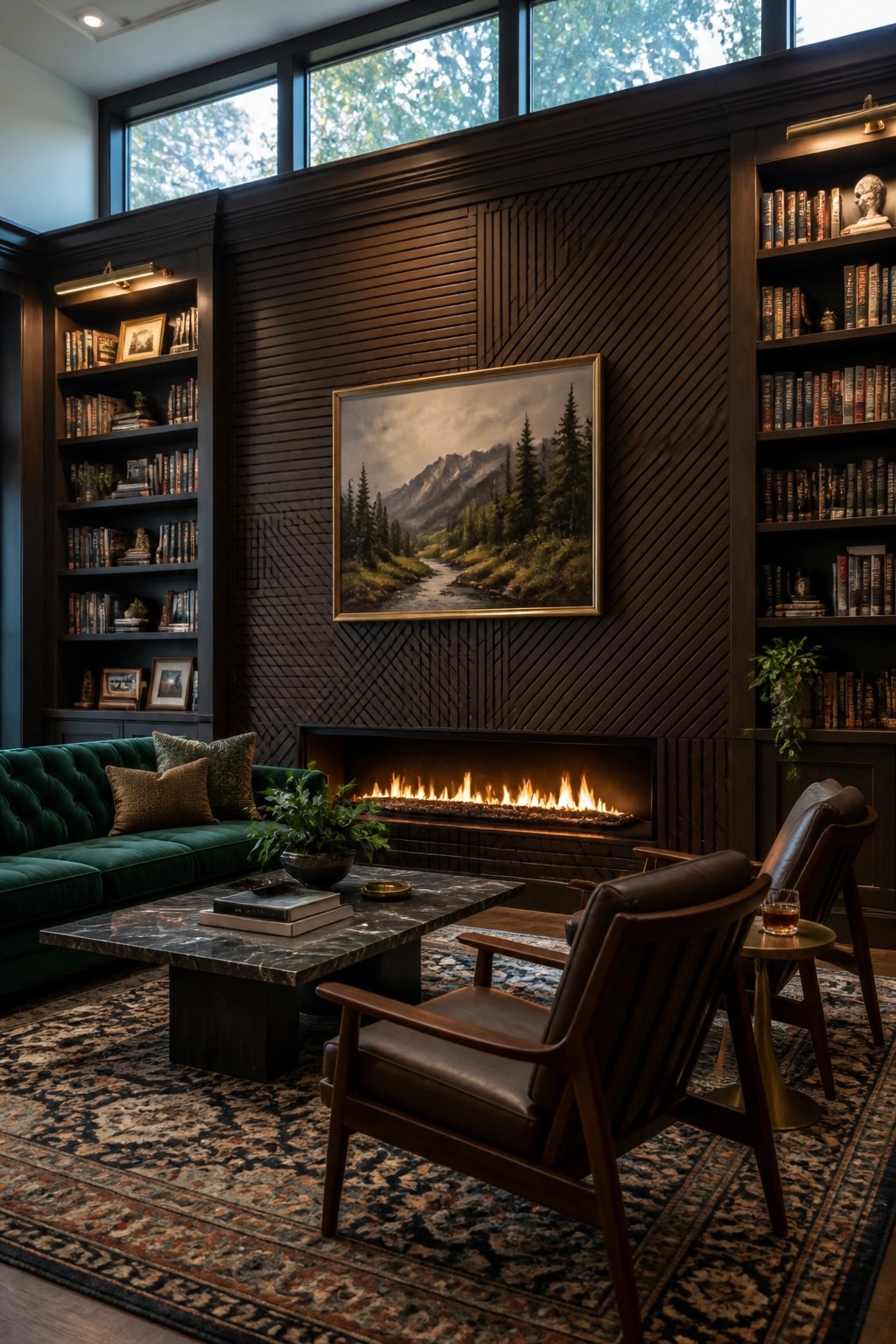
A textured wood wall with angled patterns can help a large room feel more grounded and complete. The lines add movement and depth across a big surface, so the space does not rely only on furniture or art to hold it together.
This approach works best on a main wall like the one behind a fireplace, where the texture can be seen from most of the room. Use it in homes with open living areas or high ceilings, and keep surrounding elements simple so the paneling does not compete with too many other details.
Vertical Wood Slats On The Wall
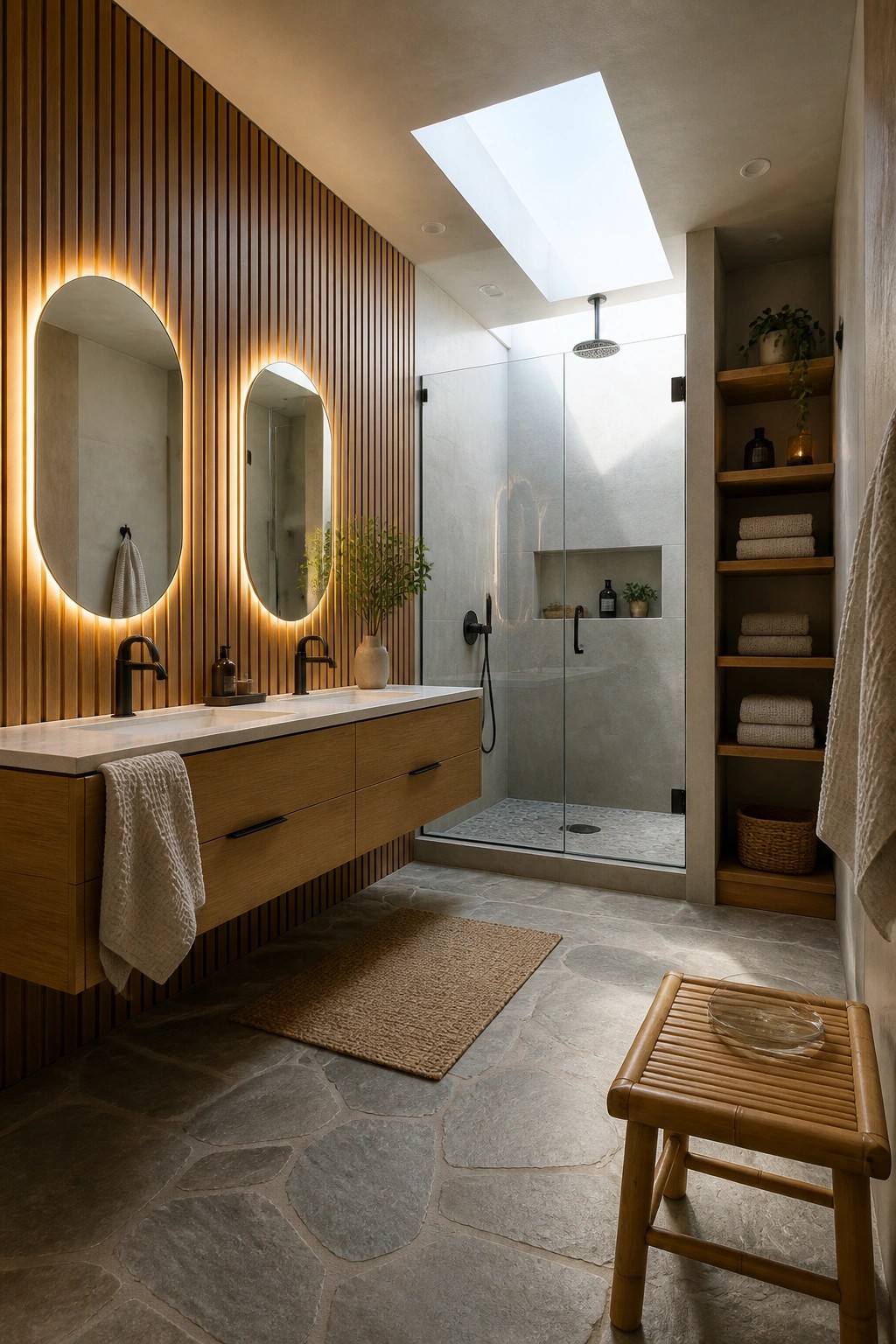
Vertical wood slats give a large bathroom a finished surface without making it feel heavy. The texture breaks up the flat wall plane and adds warmth that plain drywall often lacks. Many people use this approach when the room has plenty of open space and needs something to hold the eye.
It works best on the main wall behind a vanity or along a long stretch of tile. Keep the slats narrow and evenly spaced so the look stays clean. Pair them with simple fixtures and avoid crowding the surface with too many shelves or art.
Textured Wood Panels On Feature Walls
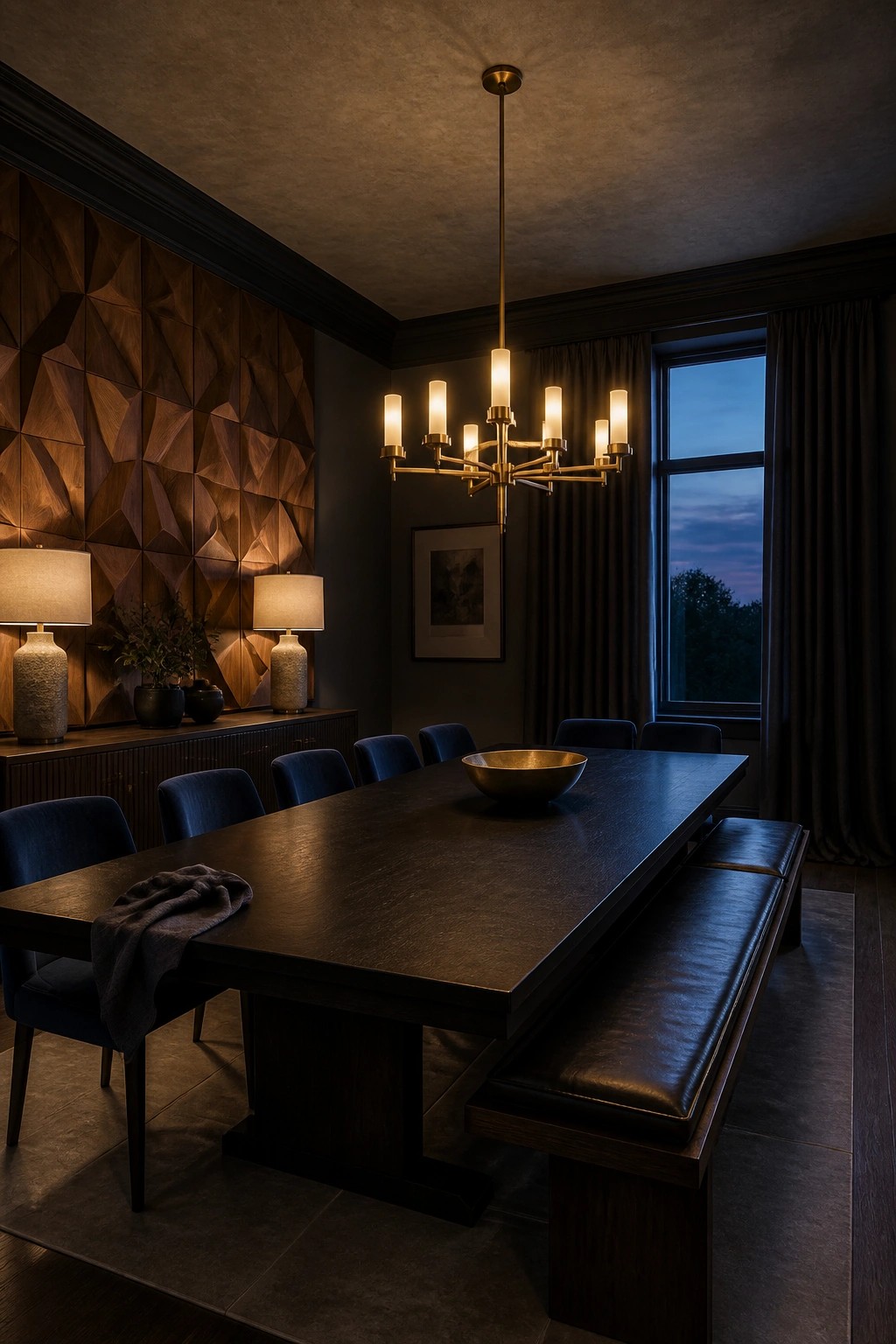
Textured wood panels give a large dining room something solid to hold onto visually. The raised geometric pattern adds dimension and warmth that a flat wall just does not provide, especially when the room has high ceilings and big windows.
This approach works best in spaces that already have dark wood furniture or deep wall colors. Keep the rest of the room fairly simple so the panels stay the main point of interest rather than competing with too many other textures.
Herringbone Wood Walls
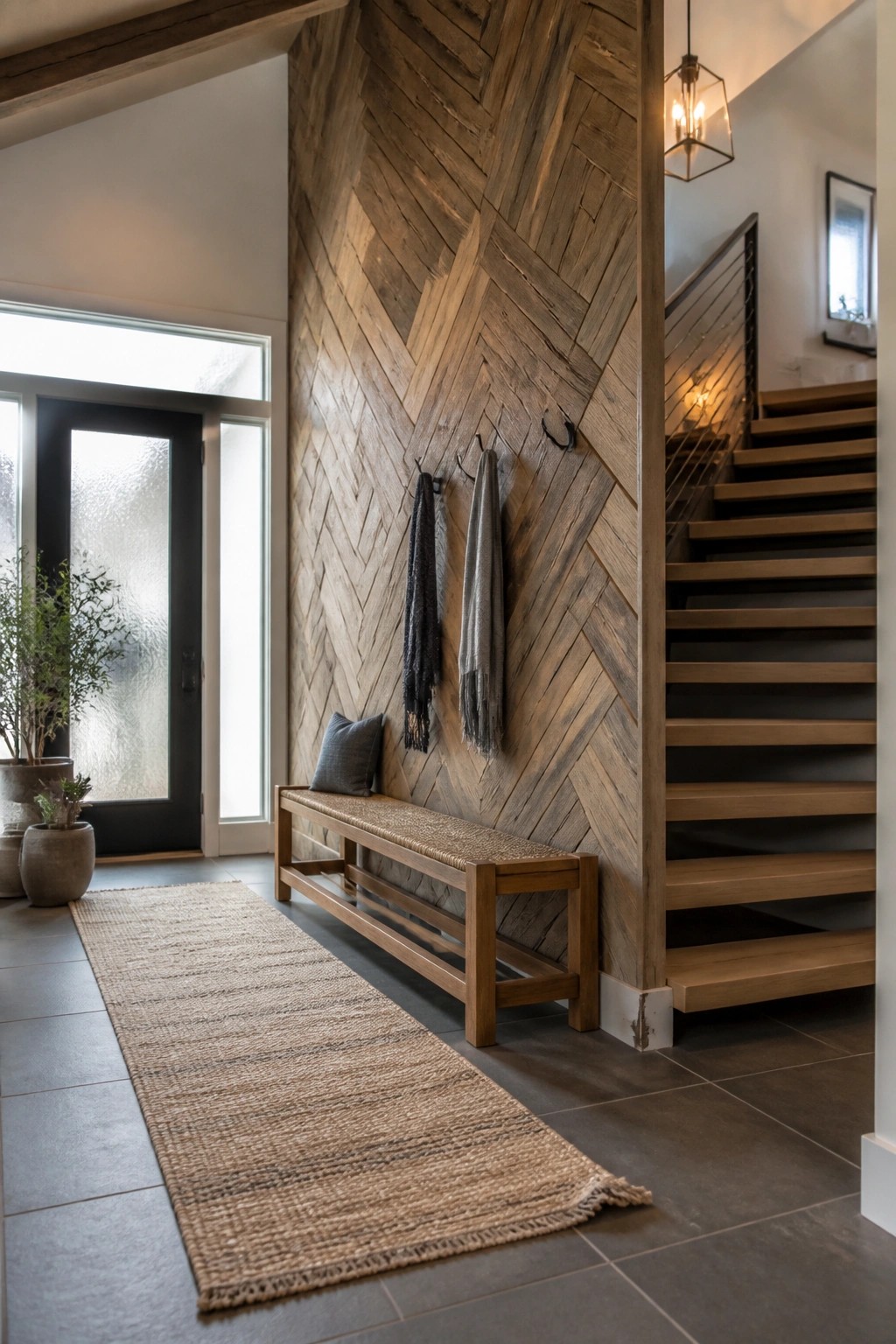
A herringbone wood wall gives a large entry or hallway real texture that plain paint cannot match. The angled pattern breaks up the height and makes the space feel more complete without adding clutter.
This works best in homes with open layouts and high ceilings. Keep other surfaces simple and let the wood handle the interest, especially near a bench or hooks where people actually use the area every day.
Vertical Wood Slats Behind Storage Cubbies
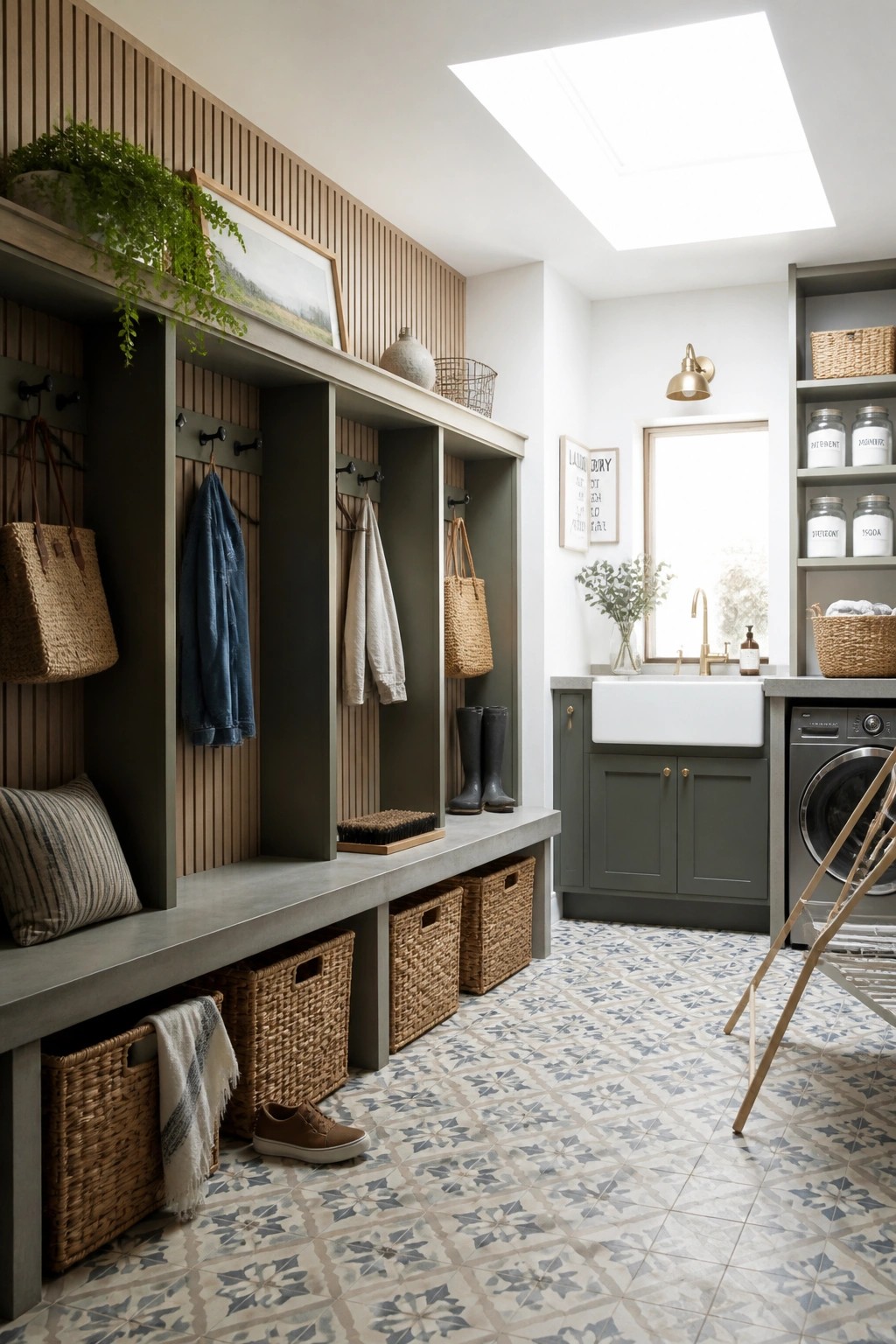
Vertical wood slats give a mudroom or utility space a finished look without making it feel heavy. The texture breaks up large wall areas and helps the built-in cubbies blend into the room instead of standing out as plain cabinetry. It also adds some warmth to rooms that often end up looking cold and overly practical.
This approach works best in homes where the mudroom or laundry area sits open to other living spaces. Keep the slats in a natural wood tone and pair them with simple painted cabinet fronts so the texture stays the main feature. Avoid covering every wall with the same pattern or the room can start to feel busy.
Vertical Wood Slats For Added Texture
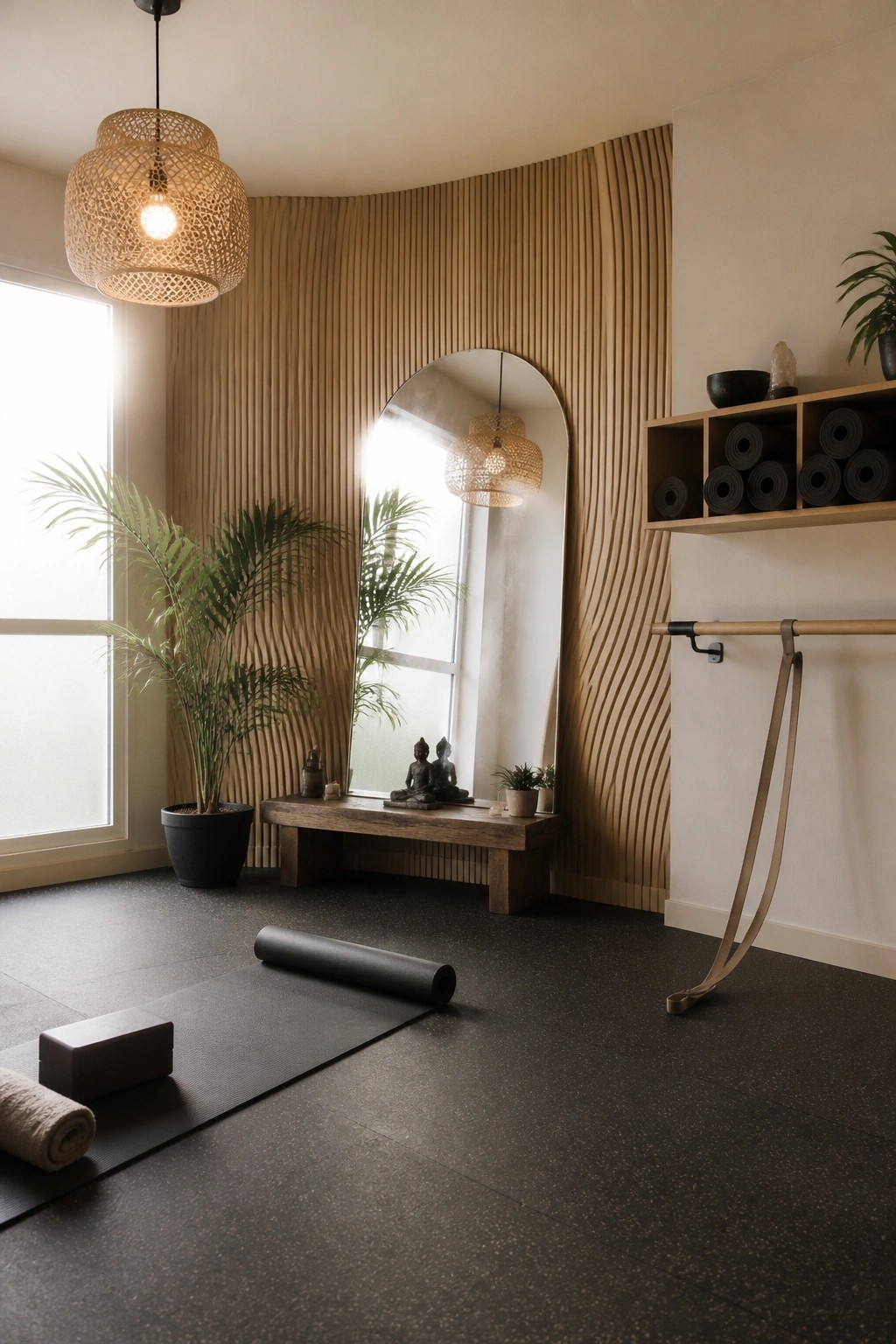
Vertical wood slats give a large room a finished look without adding clutter. The lines create depth and make the walls feel more substantial, which helps the space feel grounded rather than empty.
This approach works best in rooms that already have a calm purpose, like studios or reading areas. Keep other surfaces simple so the texture can do the work, and run the panels from floor to ceiling for the strongest effect.
Dimensional Wood Panels in Large Closets
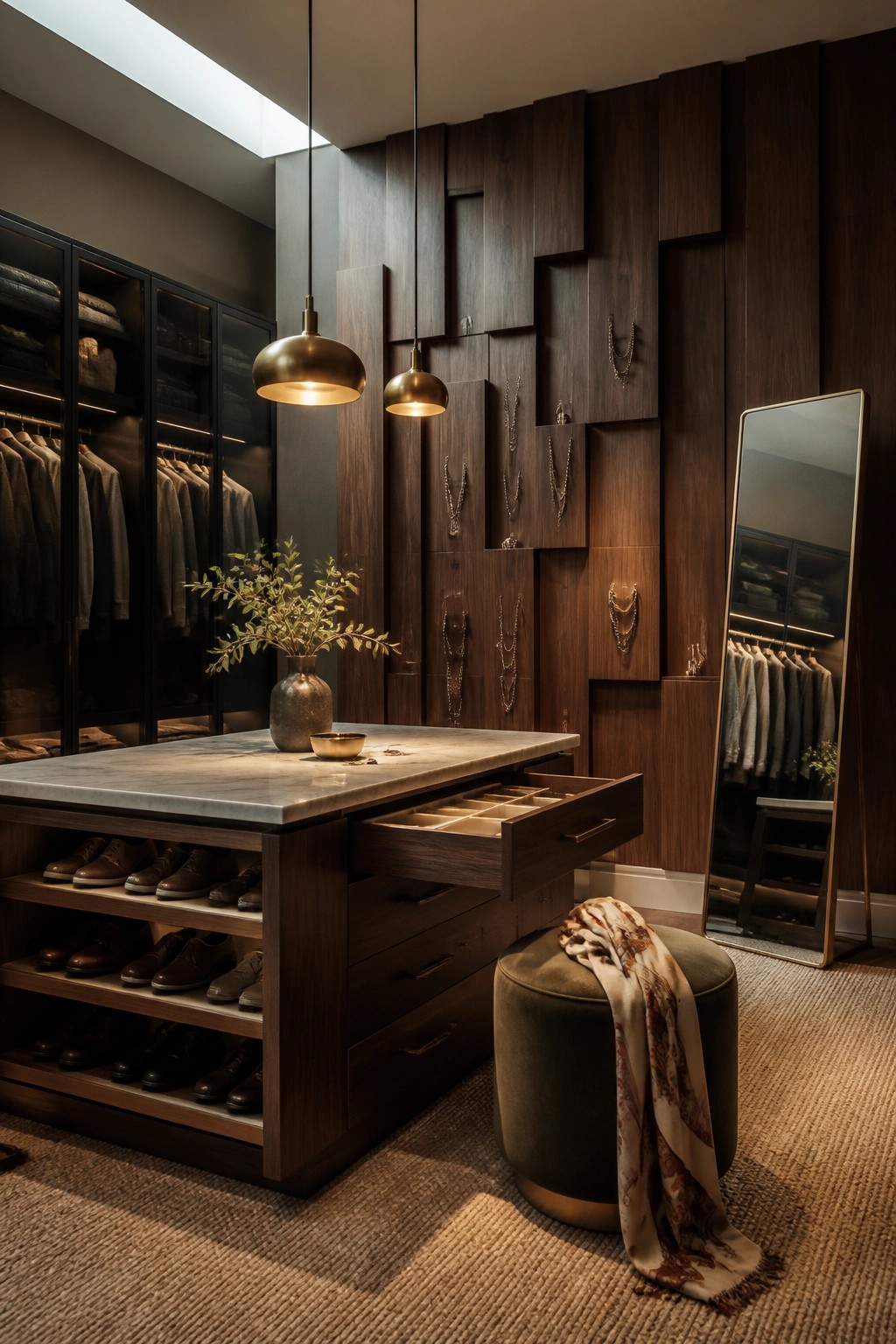
One way to finish off a big dressing room is with wood panels that have real depth and dimension. The raised geometric shapes break up the wall surface and give the space structure without adding clutter or extra furniture.
This works best in rooms that already have open storage and a central work surface. Keep the rest of the finishes simple so the wall texture can do the main job of making the room feel complete.
Wood Slice Walls Add Texture to Large Living Rooms
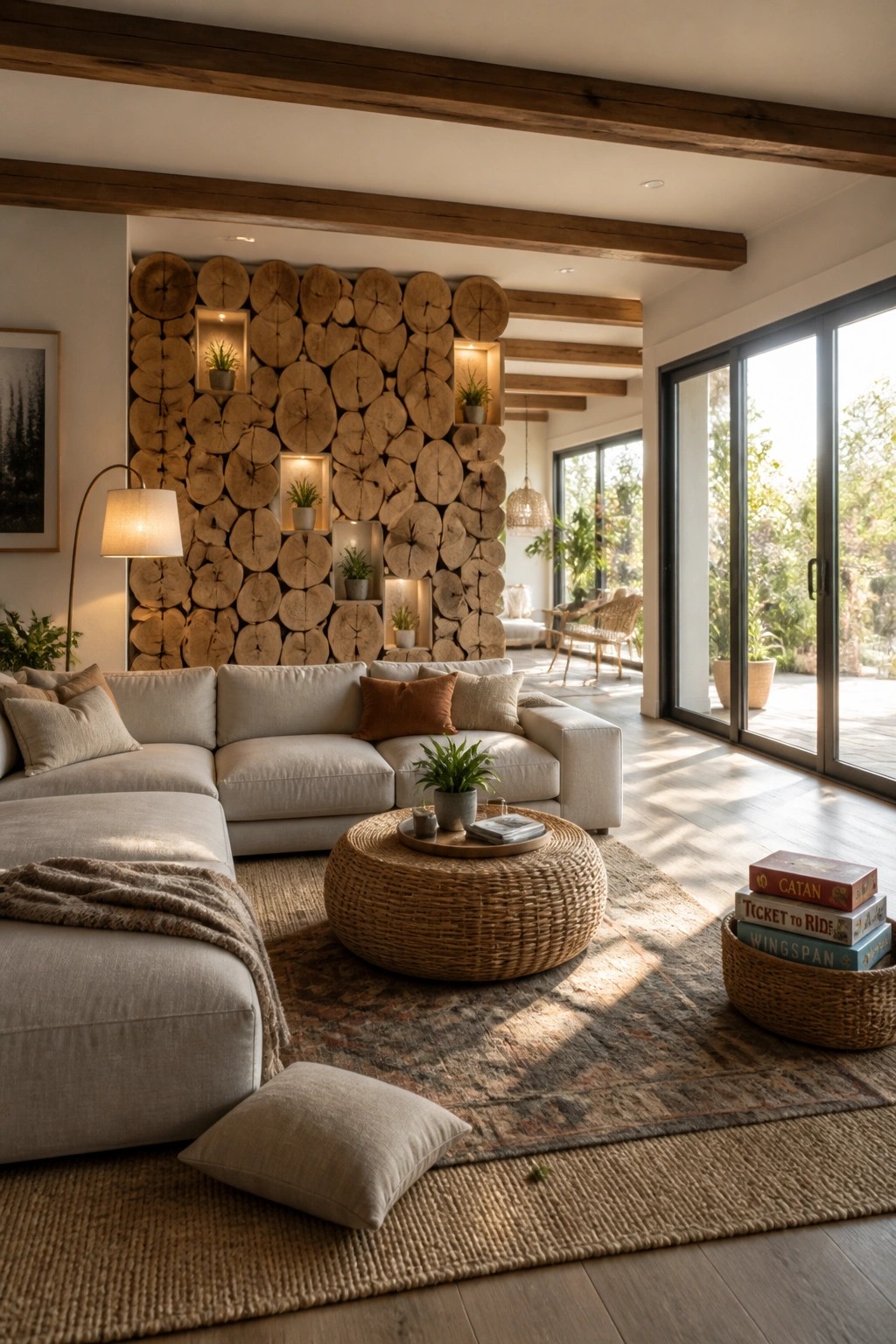
A wall made from cross sections of logs gives a big room something solid to rest against. The varied circles and natural grain break up empty wall space and make the whole area feel more settled without adding extra furniture or color.
This approach works best in open living spaces where the main seating area needs a quiet focal point. Keep the surrounding finishes simple so the wood stays the main feature, and add a few small recessed spots if you want places for plants or lighting.
Textured Wood Walls in Compact Spaces
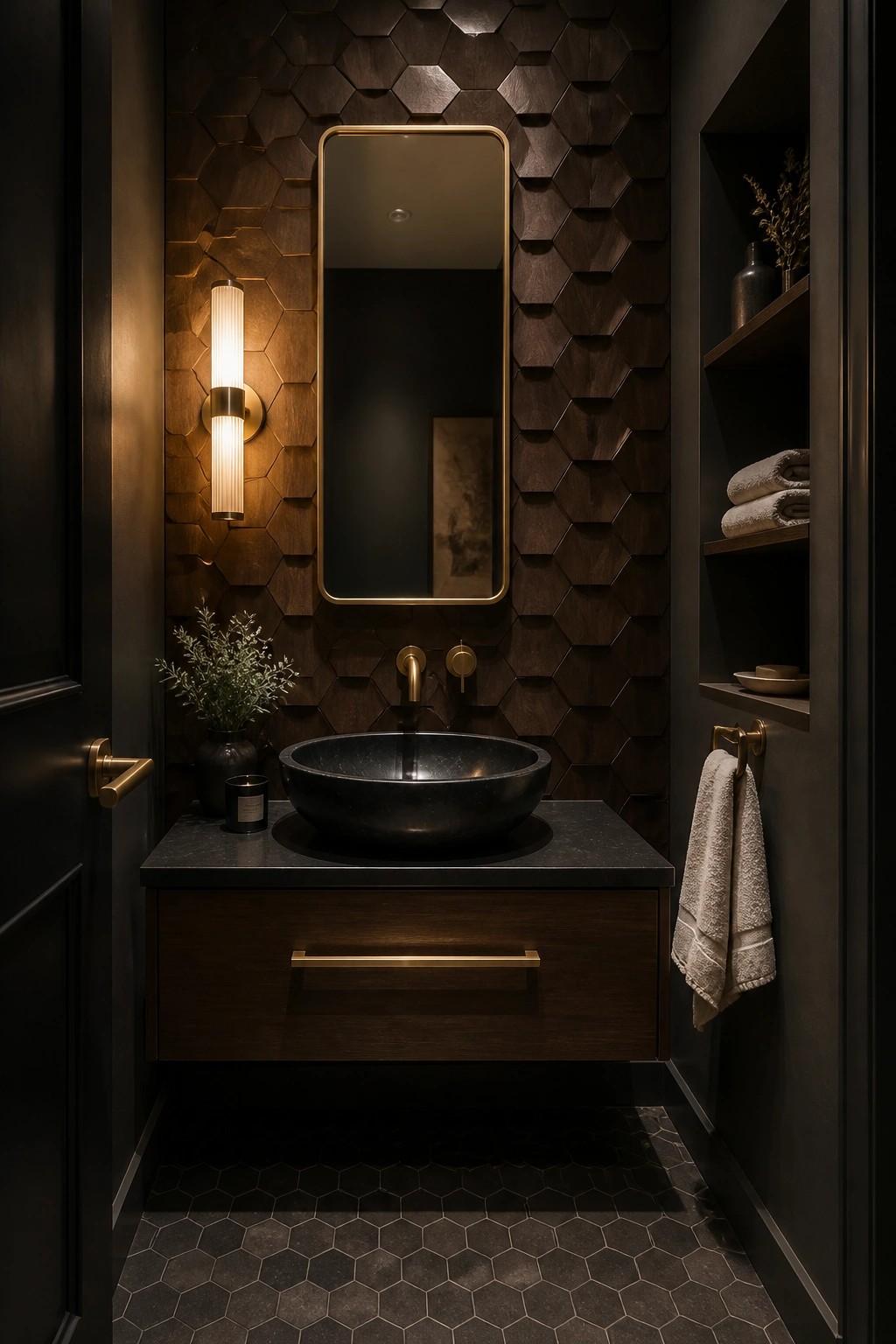
A dimensional wood wall can give a small room like a bathroom the same finished feel that larger spaces get from similar treatments. The raised pattern adds depth and breaks up flat surfaces without crowding the layout.
This approach works best when the rest of the room stays simple. Dark wood tones pair well with stone counters and minimal hardware, but the same idea can adapt to lighter woods in other styles. Just keep the pattern bold enough to read from a distance.
Textured Wood Walls for Large Rooms
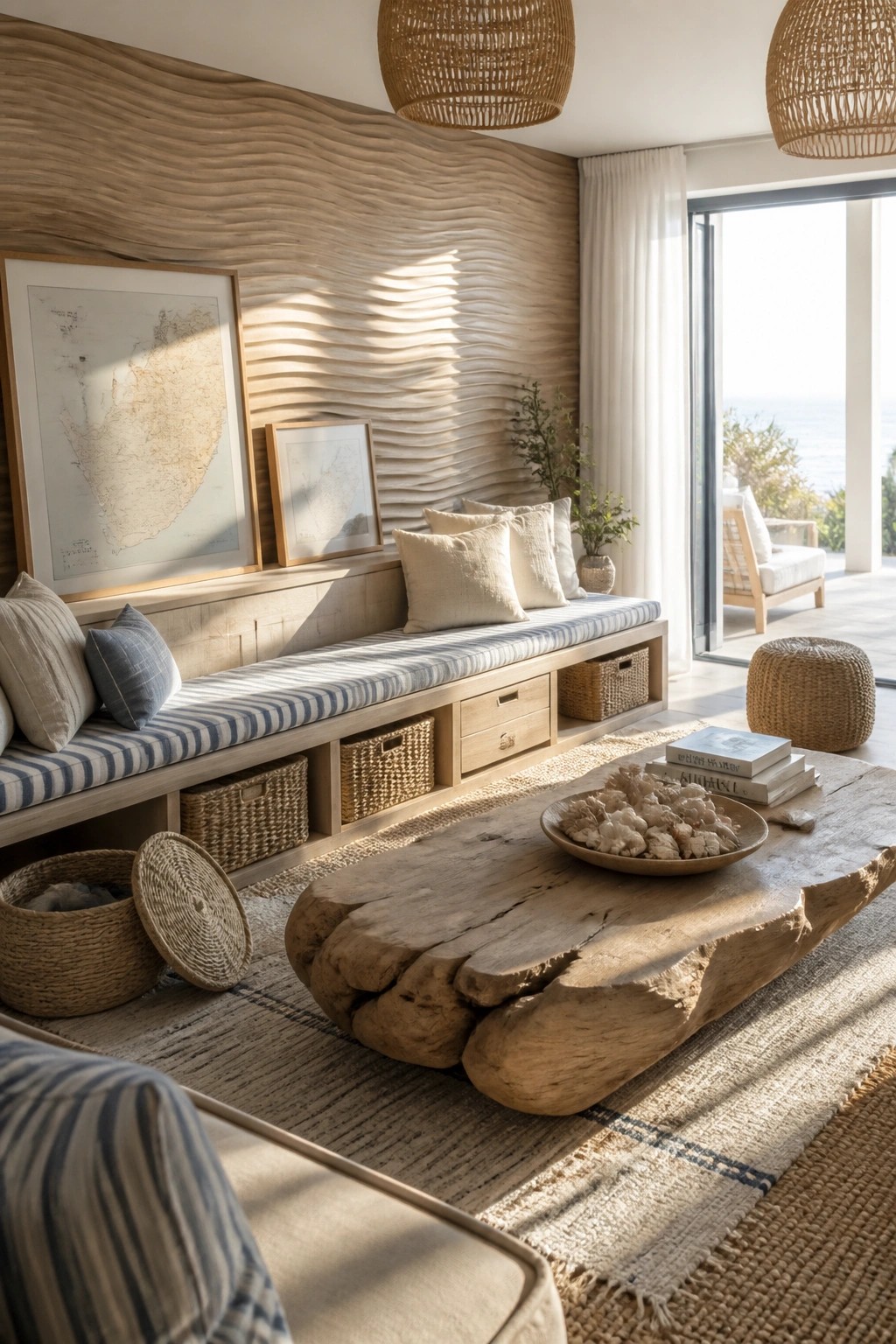
A carved wood wall like this one gives a big room something to rest on visually. The raised texture breaks up the flat surface and makes the space feel more complete without adding clutter.
This approach works best behind a long bench or sofa where the wall can run uninterrupted. Keep the rest of the room simple so the texture stays the focus and does not compete with too many patterns or colors.
Vertical Wood Planks For Texture
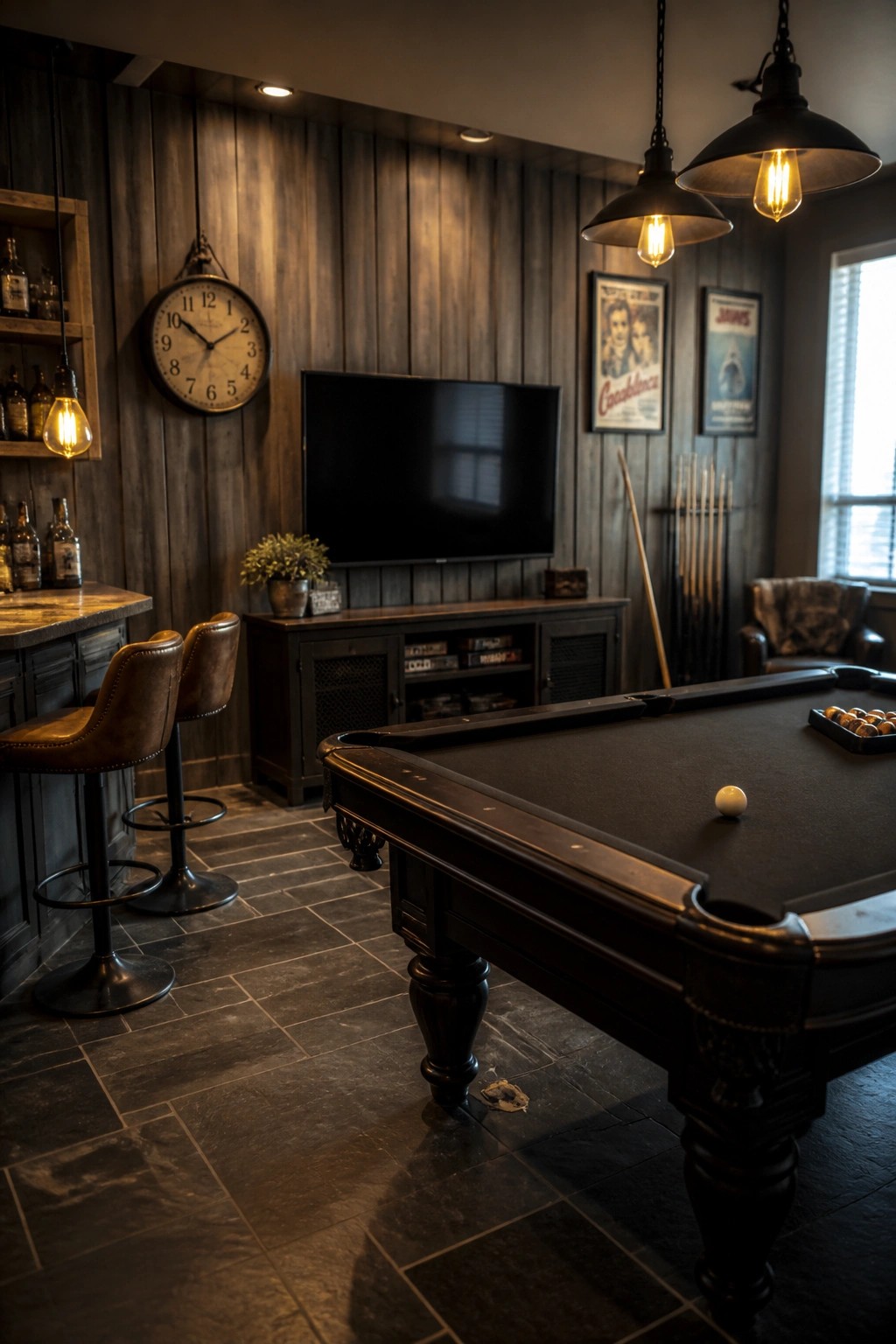
Vertical wood planks bring real depth to large rooms that often feel bare on the walls. The texture breaks up flat surfaces and gives the space a finished look without needing lots of extra trim or art.
This approach works especially well in basements and game rooms where the walls can look overwhelming. Use a consistent stain across the planks and keep furniture low so the texture stays visible rather than getting lost behind bigger pieces.
Vertical Wood Slats Around A Built In Nook
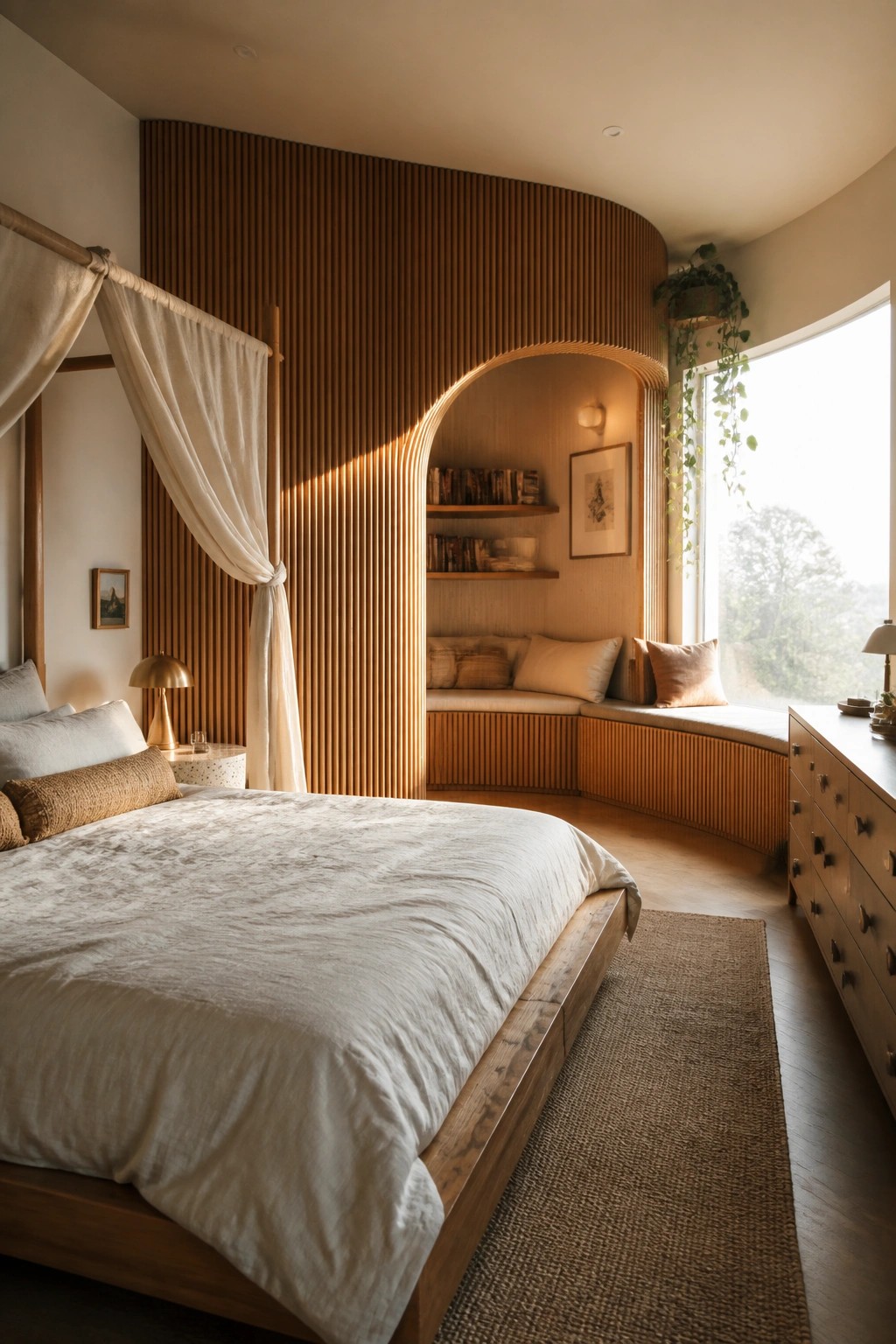
A tall wall of vertical wood slats can turn an open corner into something that feels more settled. The ribs catch light and add texture without needing extra furniture or heavy decoration. In a big bedroom this kind of wall keeps the space from feeling empty while still letting the room breathe.
It works best when the wood wraps a window seat or small built-in area so the slats do double duty as both wall treatment and frame. Keep the rest of the room simple so the texture stays the main feature. Pale or mid-tone wood tends to feel calmer in bedrooms than very dark tones.
Frequently Asked Questions
Q: How do I pick a wood texture that won’t overwhelm a big room?
A: Start with subtle grain patterns on the larger walls. This keeps the space feeling open while adding depth. Test a small sample first to see how it catches the light.
Q: What if I only want to cover part of the wall?
A: Focus on the area behind a sofa or bed for impact. Partial coverage still adds texture without a full commitment. It works well in rooms with high ceilings.
Q: Do textured wood walls need special sealing?
A: Apply a clear matte finish after installation. This protects against moisture and dust.
