

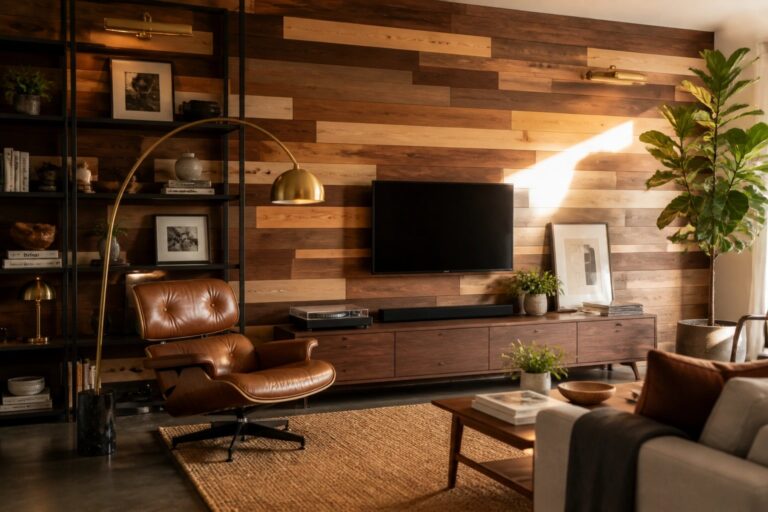
I’ve found that mixing wood tones on an interior wall changes how the rest of the room settles around it, especially once furniture and daily light are factored in.
In my living room the first attempt at a patterned accent wall felt heavier than planned because the grains competed instead of settling into one another.
Balance matters more than I expected.
Trying out a few sample boards first showed me which combinations kept the space from feeling chopped up or overly busy once everything was installed.
Some of the simpler pattern shifts might be worth testing on a smaller wall before committing to a larger one where the effect has to hold up over time.
Mixing Wood Tones on an Accent Wall
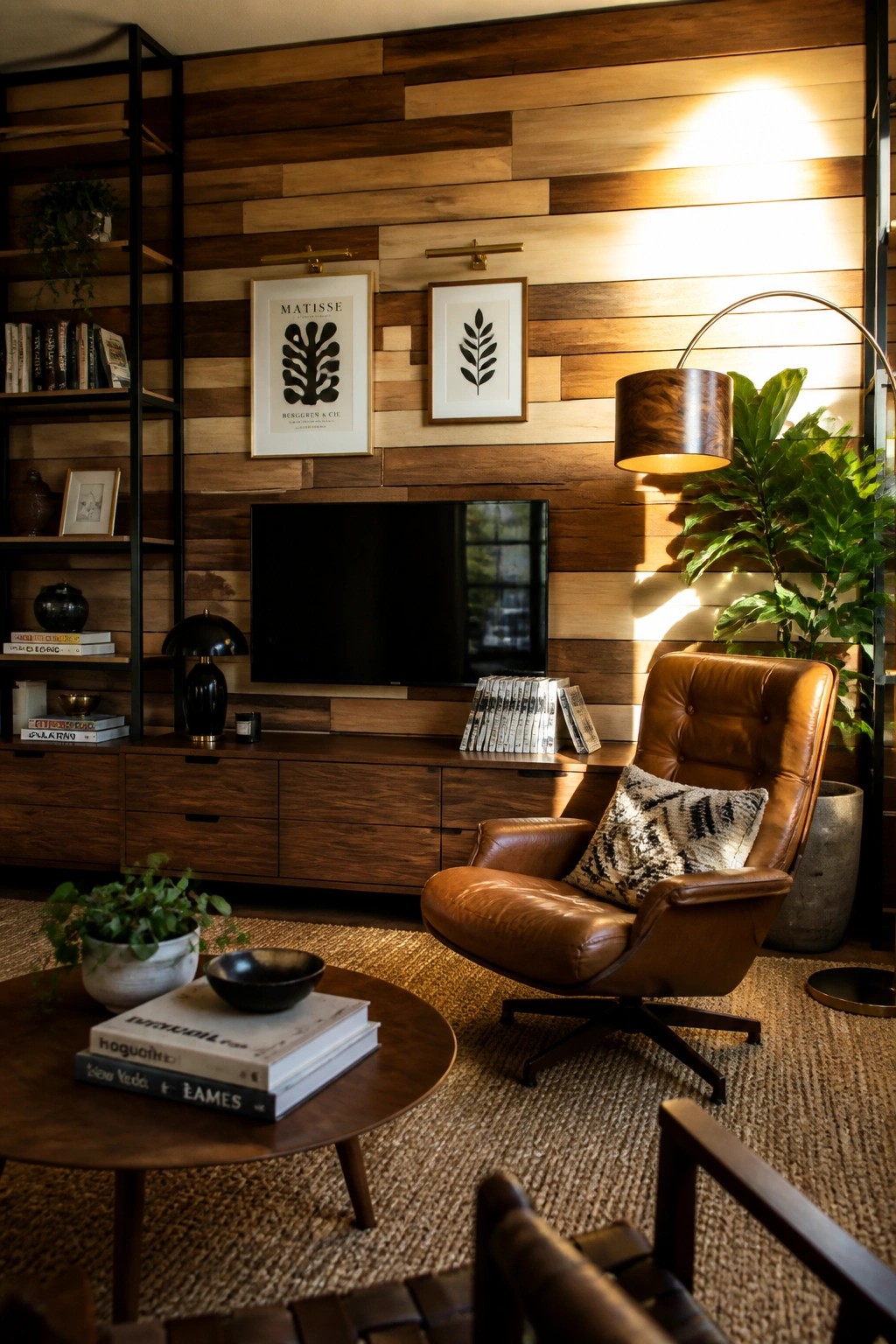
A wood accent wall gains more character when it uses several tones and grain patterns instead of one uniform finish. The mix keeps the surface interesting while still feeling calm and natural in the room.
This approach works best in living areas where the wall sits behind seating or a television. Limit the mix to three or four tones at most so the effect stays balanced rather than busy.
Mixing Wood Tones And Patterns On An Accent Wall
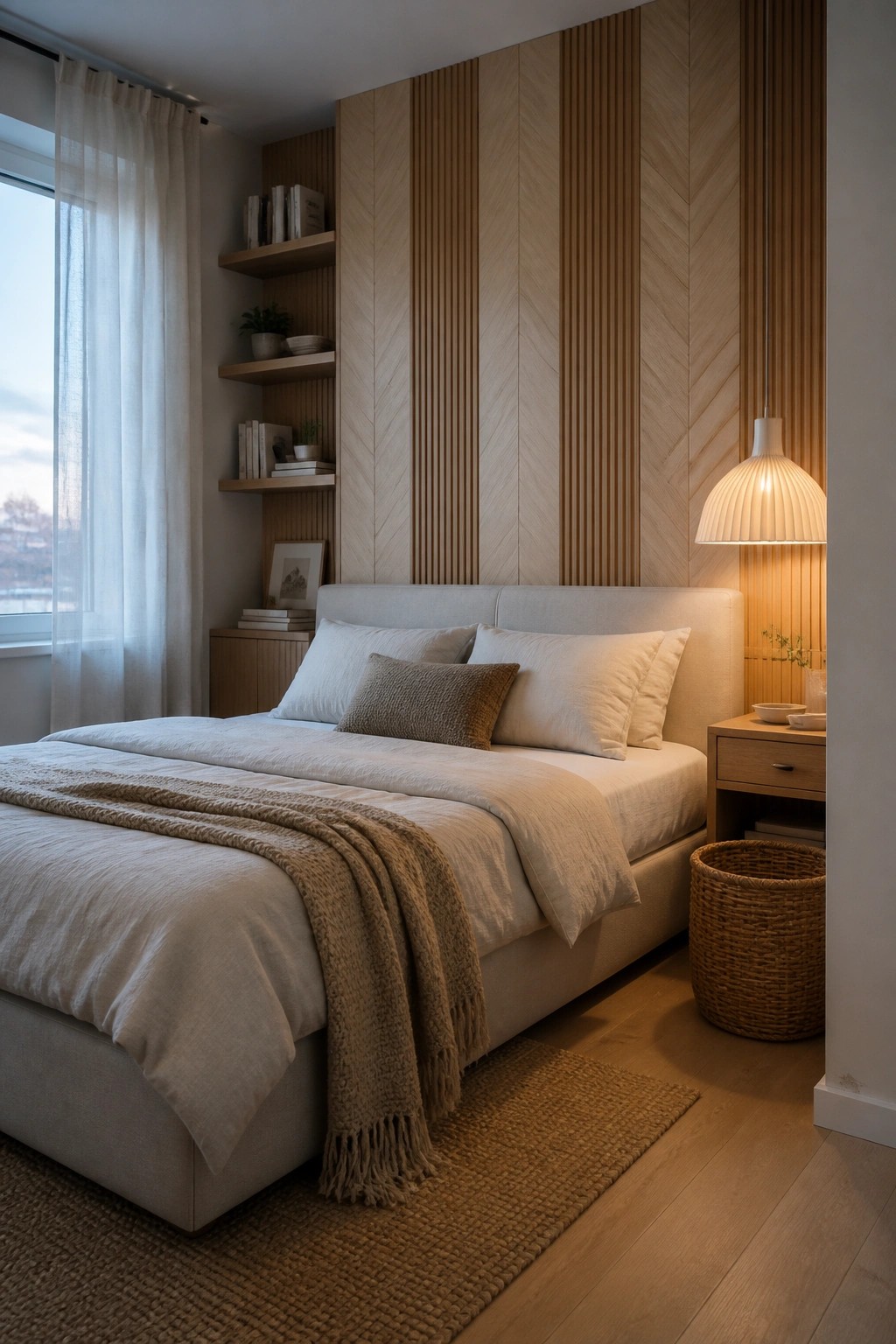
Mixing wood tones and patterns on one wall gives a bedroom depth without needing lots of extra pieces. The vertical slats paired with angled sections create movement while the similar light woods keep the look soft and cohesive.
This works well in spaces that already have simple furniture and neutral bedding. It suits homes that lean toward natural materials and want one strong wall without going too dark or busy. Place it behind the bed so the rest of the room stays calm.
Herringbone Walls With Mixed Wood Tones
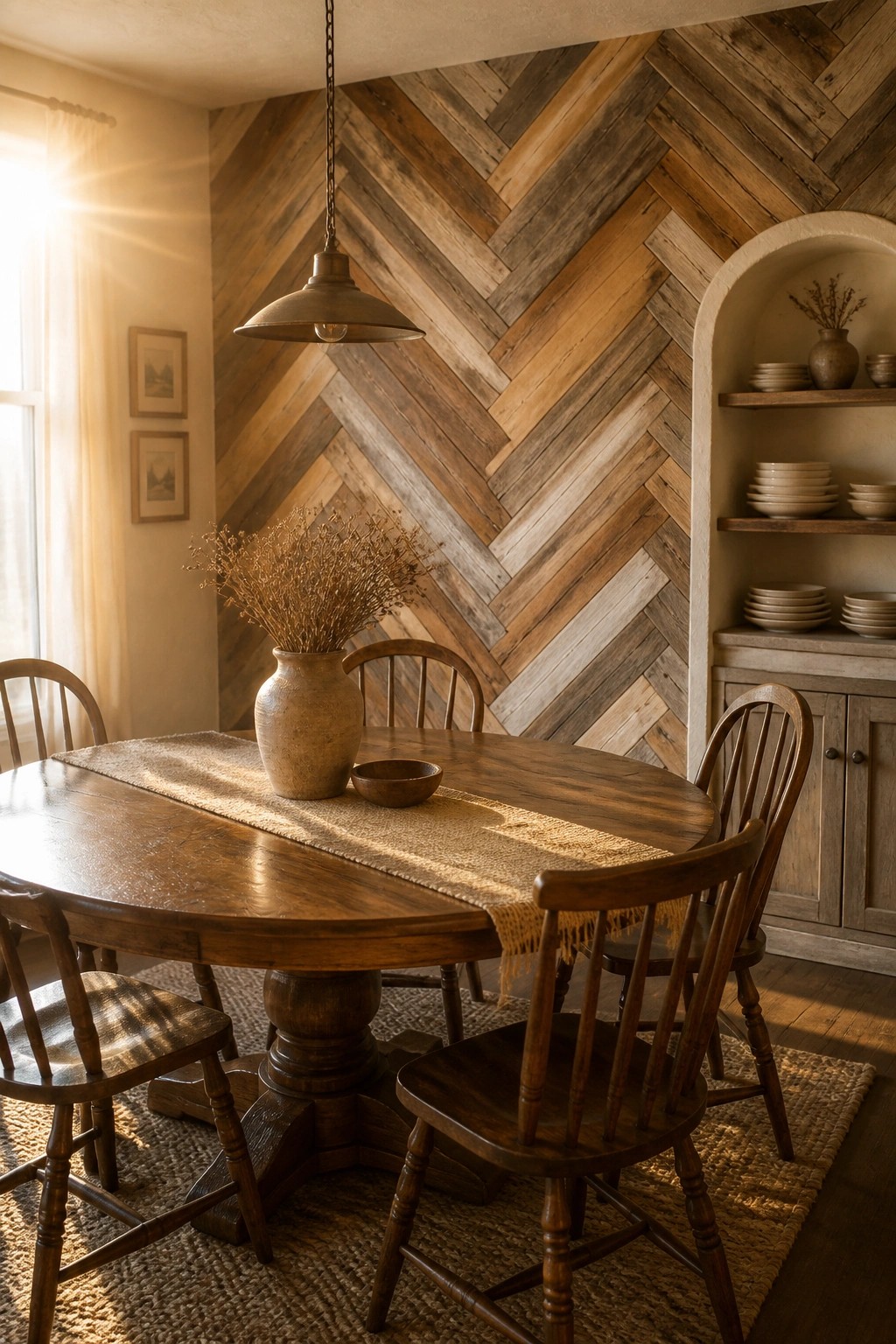
A herringbone wall built from several wood tones gives a room depth without needing lots of extra decoration. The pattern breaks up the surface while the mix of light and dark boards keeps things from looking too uniform or flat. Many people like this approach because it feels warm and a little rustic yet still works with simple furniture.
This kind of wall suits dining areas or living rooms where you want one strong feature but not a lot of clutter. It works best in homes with wood floors or natural textures already in place. Keep the rest of the room fairly plain so the wall stays the main focus.
Mixed Wood Accent Wall for a Kitchen
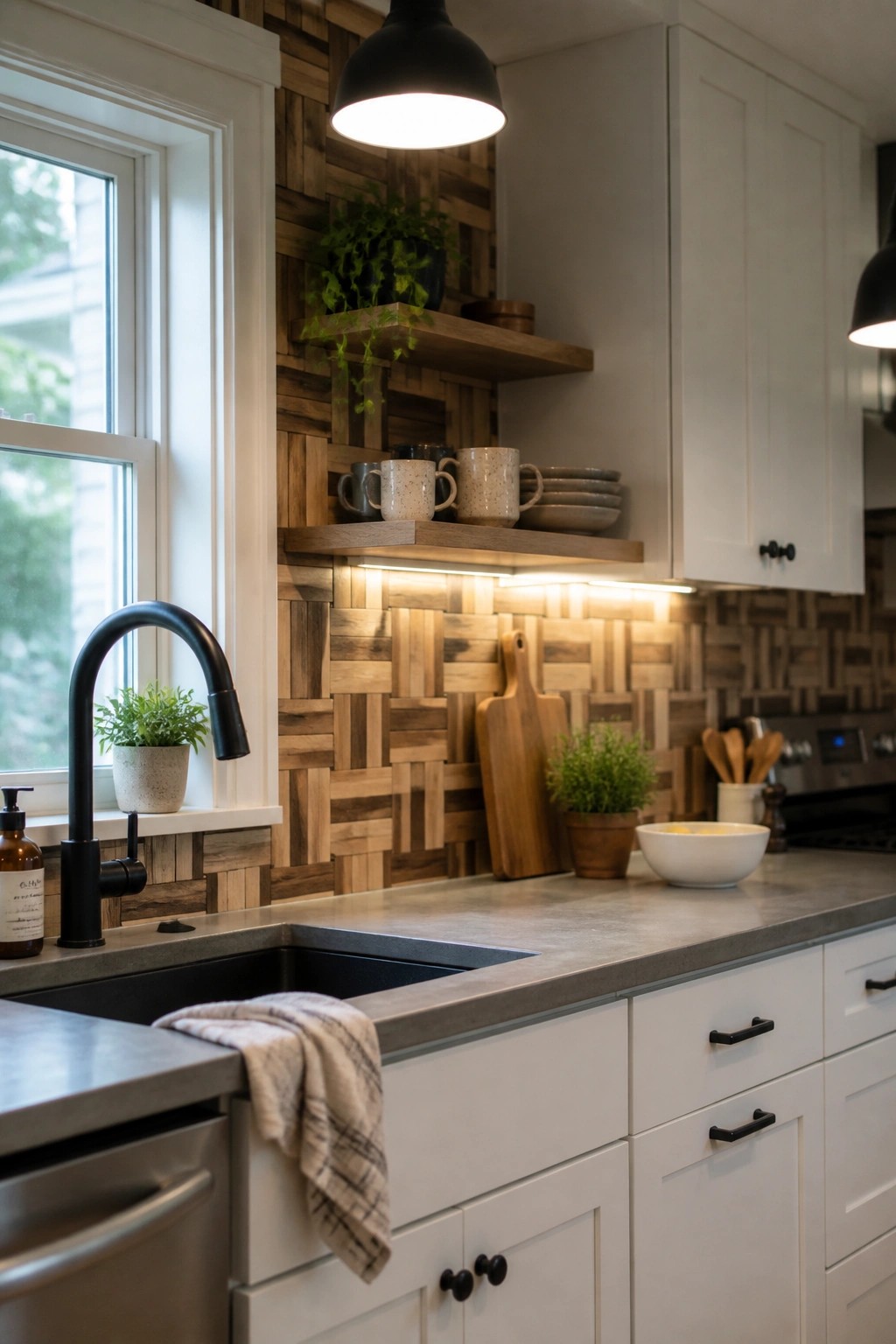
Mixing different wood tones and cuts on one wall adds warmth and texture to a kitchen without much extra effort. The varied grains and shades create visual interest that stands out against simpler cabinetry and counters.
This works best in spaces with light or neutral finishes where the wood can provide contrast. Keep the rest of the room simple so the wall remains the main feature.
Vertical Slats In Mixed Wood Tones
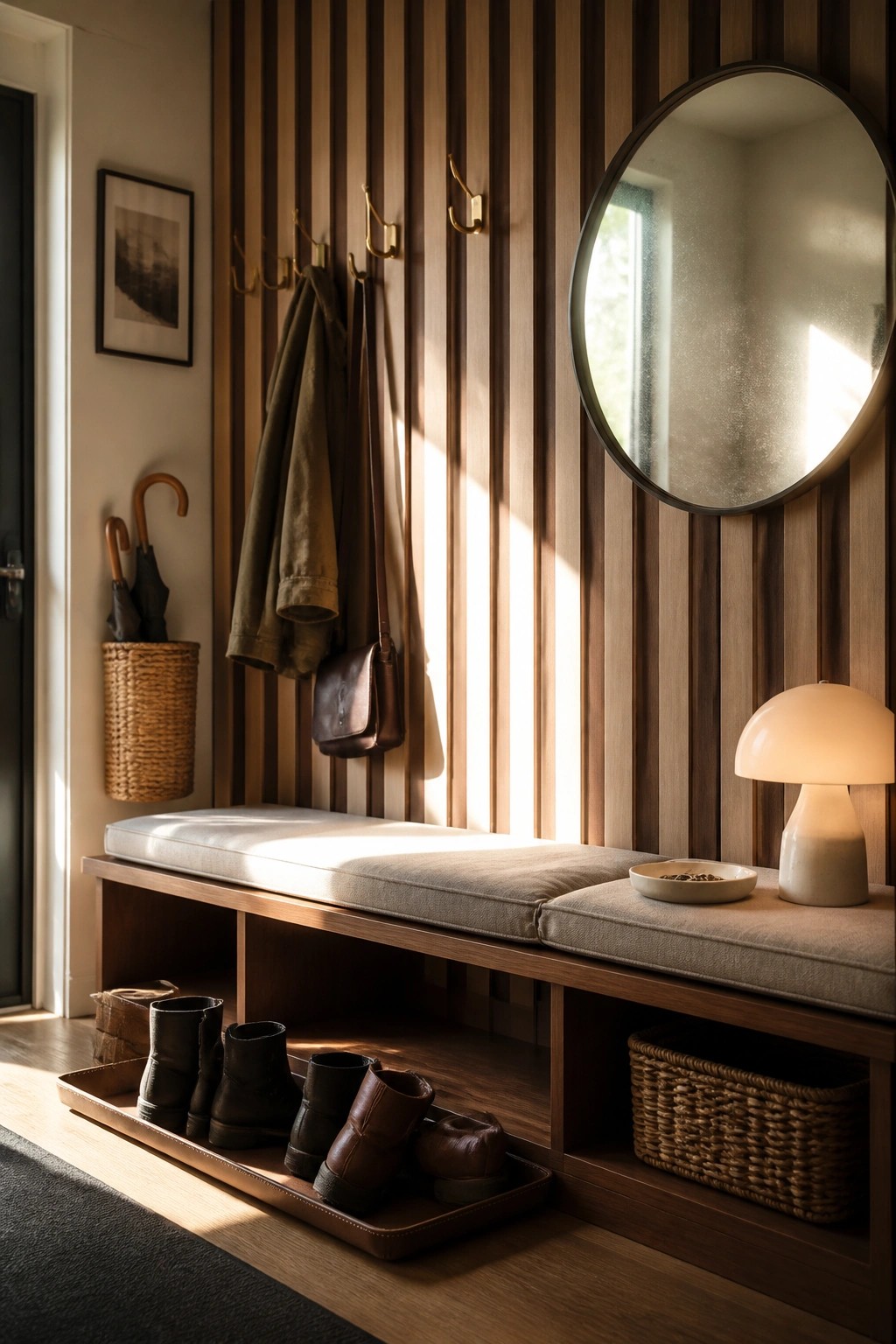
Vertical wood slats in different brown tones give an entry wall quiet texture and warmth. The mix keeps the pattern from feeling too uniform while the vertical lines add height without taking up floor space.
This works best on one accent wall in an entry or hallway where you want some character but still need the area to feel open. Keep the rest of the room simple so the wood stays the focus.
Mixing Wood Tones On Horizontal Planks
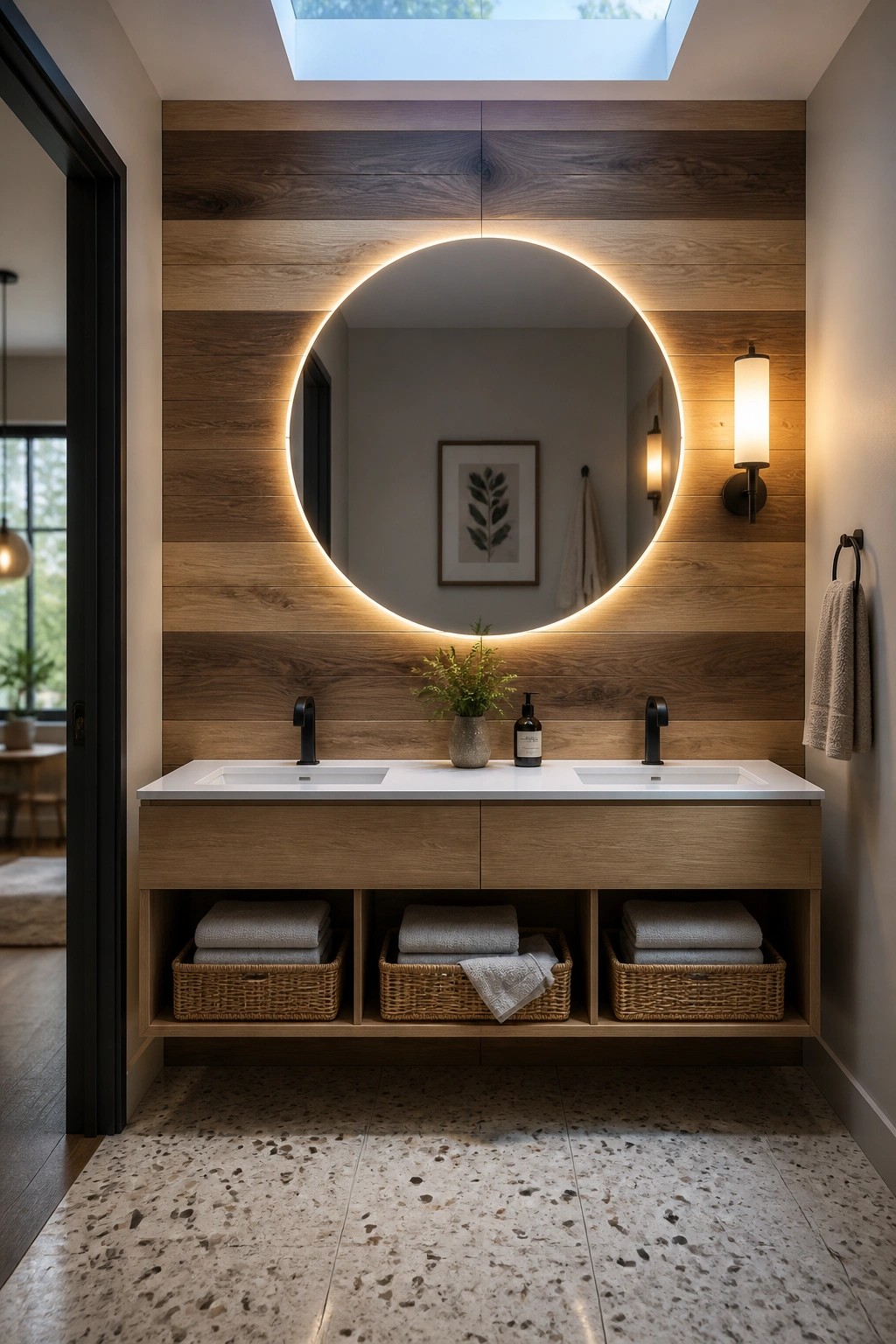
A bathroom wall built from horizontal planks in several wood tones can feel warmer than a single finish. The variation adds some depth without needing extra color or pattern elsewhere in the room. It works especially well behind a vanity where the eye lands first.
This approach suits smaller spaces that need a bit of texture but still want to stay calm. Keep the tones close in value so the mix reads as one surface rather than a busy patchwork. Avoid very dark and very light boards side by side if you want the wall to feel restful.
Mixing Wood Tones In Checkerboard Patterns
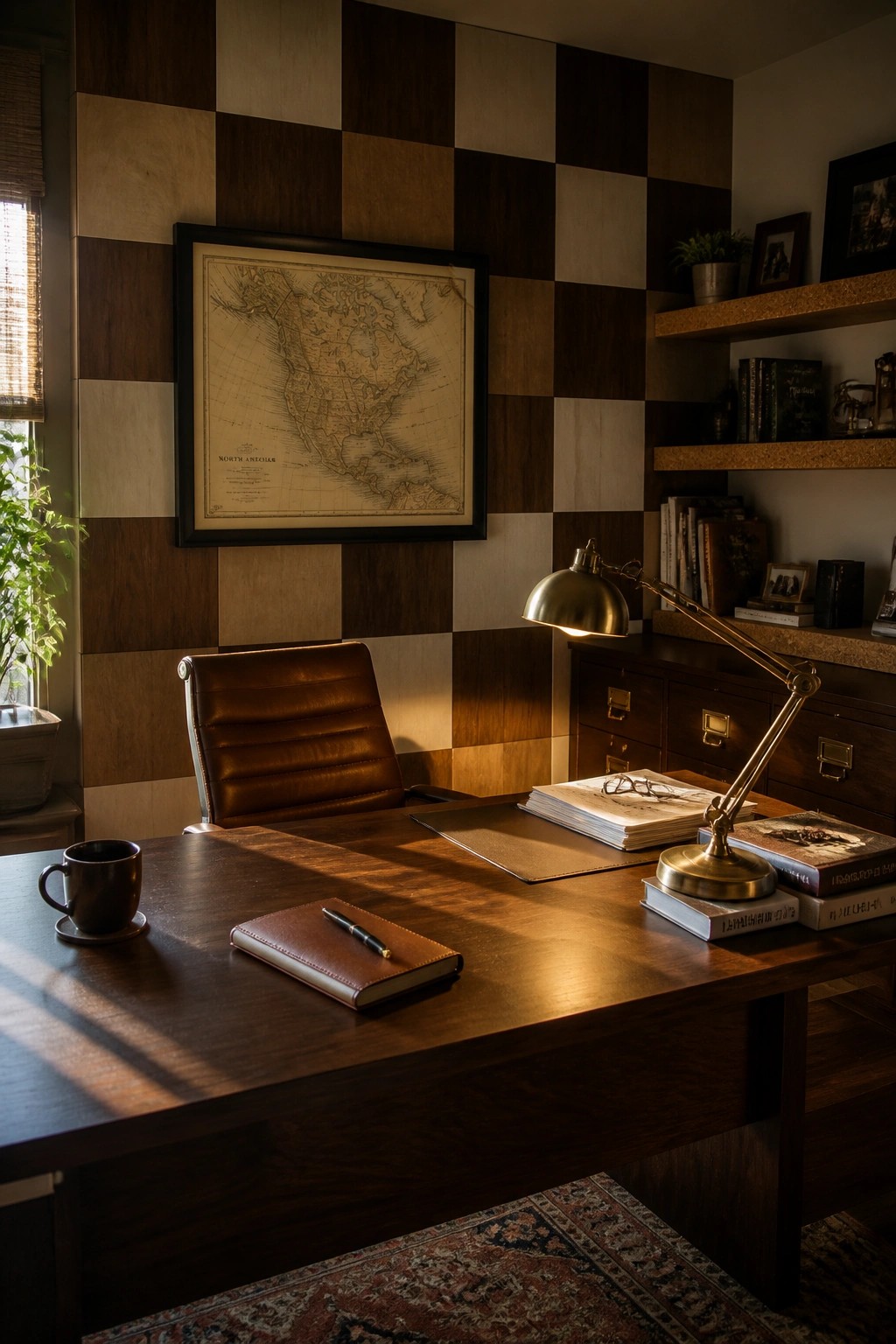
A checkerboard wall made from different wood tones brings quiet variety to a room without needing much else. The mix of darker and lighter squares keeps the surface interesting while the overall brown palette stays calm and grounded. It works especially well behind a desk where you spend long hours.
This approach suits home offices or studies that already have wood furniture. Keep the rest of the room simple so the wall can stand out. Avoid overcrowding the pattern with too many other textures or bright colors.
Mixing Wood Tones on a Utility Wall
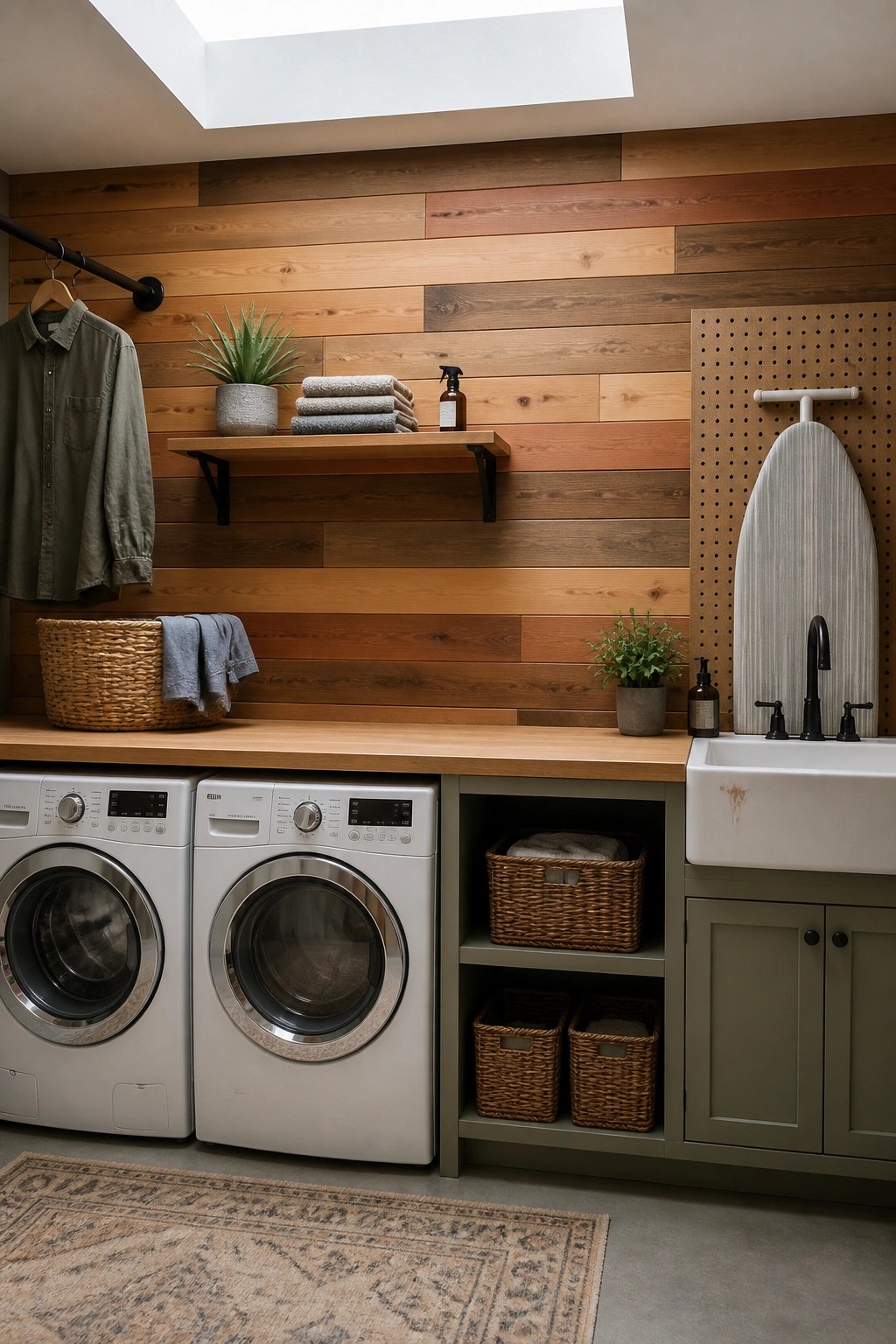
One simple way to make a laundry room feel less stark is to cover one wall with planks in several wood tones. The mix of colors and grain patterns adds warmth without any extra decoration, and it works especially well in rooms that already have a lot of white appliances and hard surfaces.
This kind of wall looks best when the planks run horizontally and stay fairly wide. It suits homes that already use wood elsewhere, and it pairs easily with open shelving or a countertop since the wood itself carries most of the interest.
Mixing Wood Tones on Vertical Planks
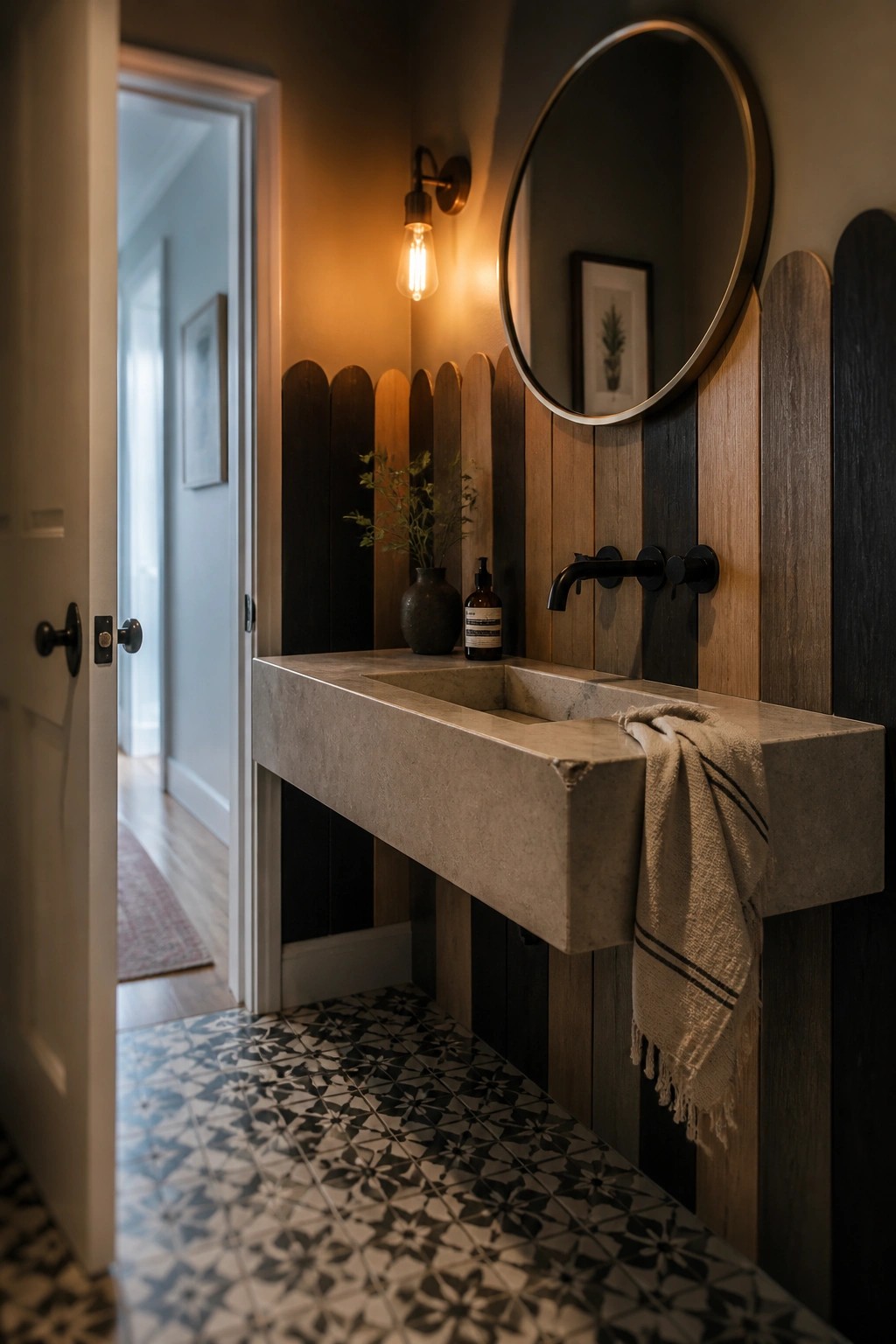
Covering a wall with vertical planks in different wood tones gives a space more depth than a single finish ever could. The mix of light and dark boards breaks up the surface so it feels layered instead of flat, and the vertical lines help the room feel taller.
This approach works best in smaller rooms like bathrooms where you want some warmth but still need the space to feel open. Keep the rest of the surfaces simple so the wood stays the focus, and vary the board widths slightly if you want a little more movement.
Mixed Wood Wall With Varied Plank Widths
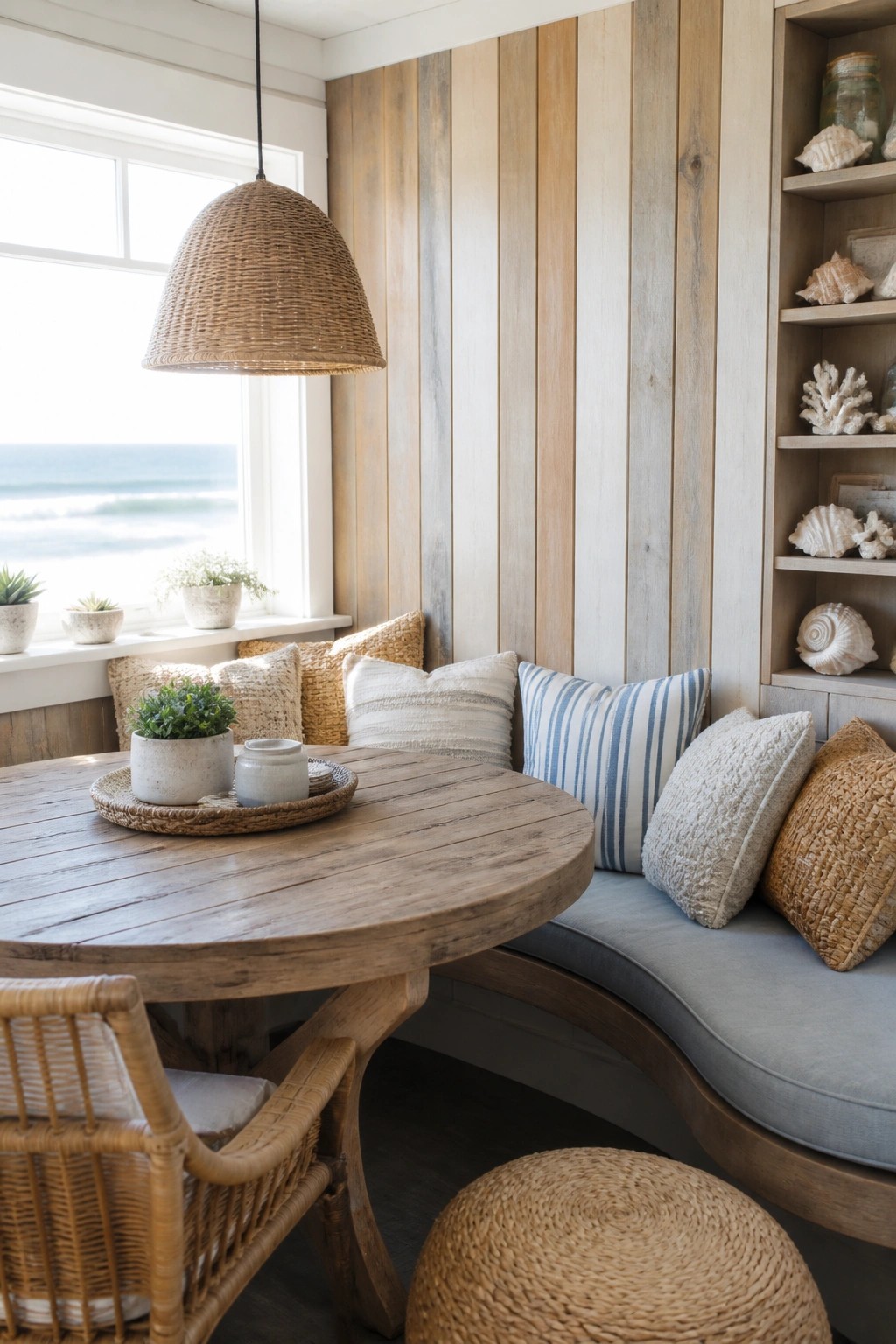
Mixing wood tones and plank widths on a single wall adds quiet depth without needing extra color or pattern. The different shades catch light at different angles, so the surface feels warmer and more textured than a single tone would.
This approach works especially well in smaller rooms where you want the walls to do the work. Stick to woods that share a similar undertone and keep the variation subtle so the mix feels natural rather than busy.
Mixing Wood Tones In A Herringbone Wall
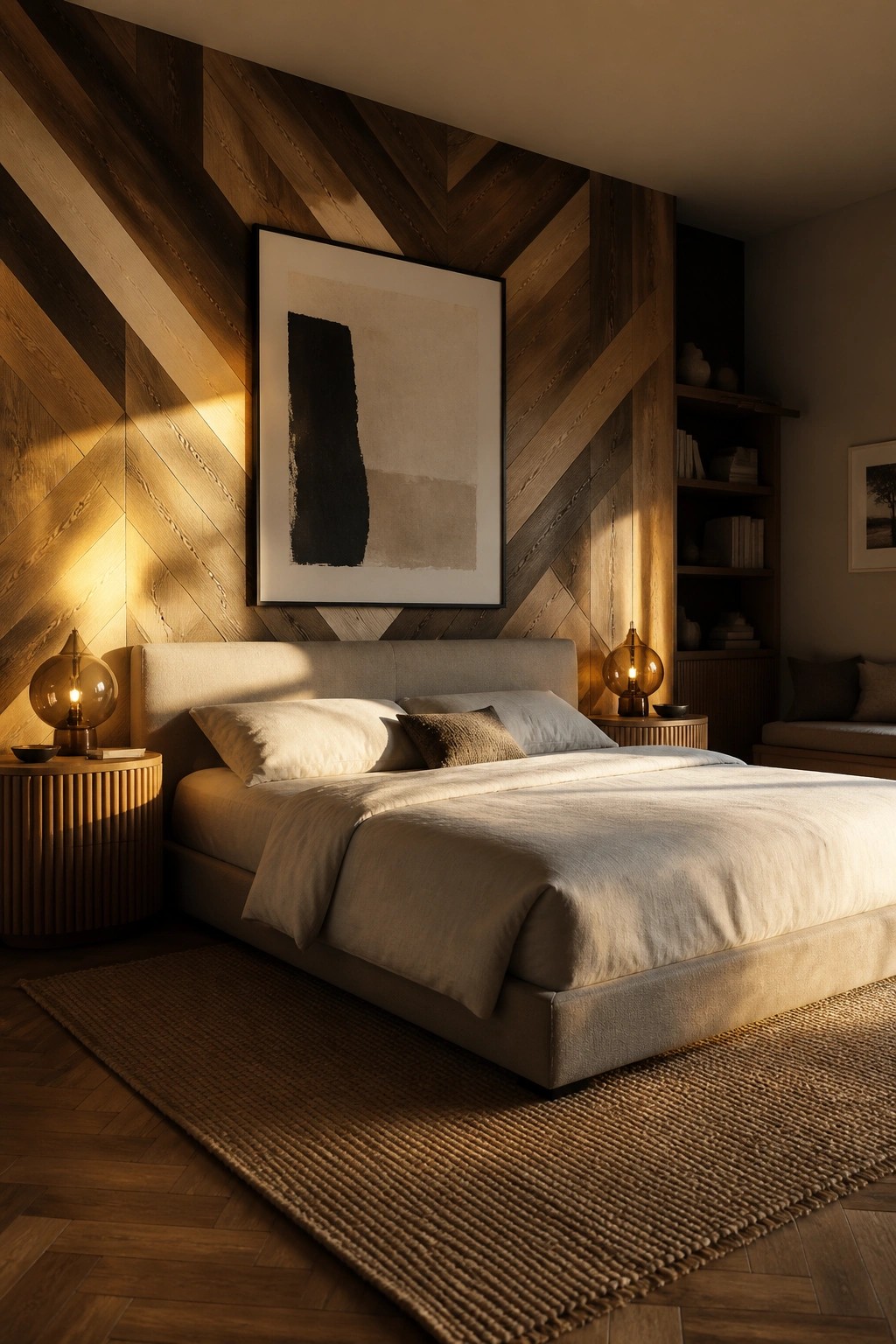
A herringbone wall made from several wood tones adds depth without needing extra color or decor. The shift between light and dark pieces keeps the pattern interesting while the overall warmth stays soft and restful.
This works best in a bedroom or living room where the wall sits behind a bed or sofa. Keep the rest of the room simple so the wood stays the main feature, and choose tones that stay within the same color family to avoid a patchy look.
Bedroom Wall With Mixed Wood Planks
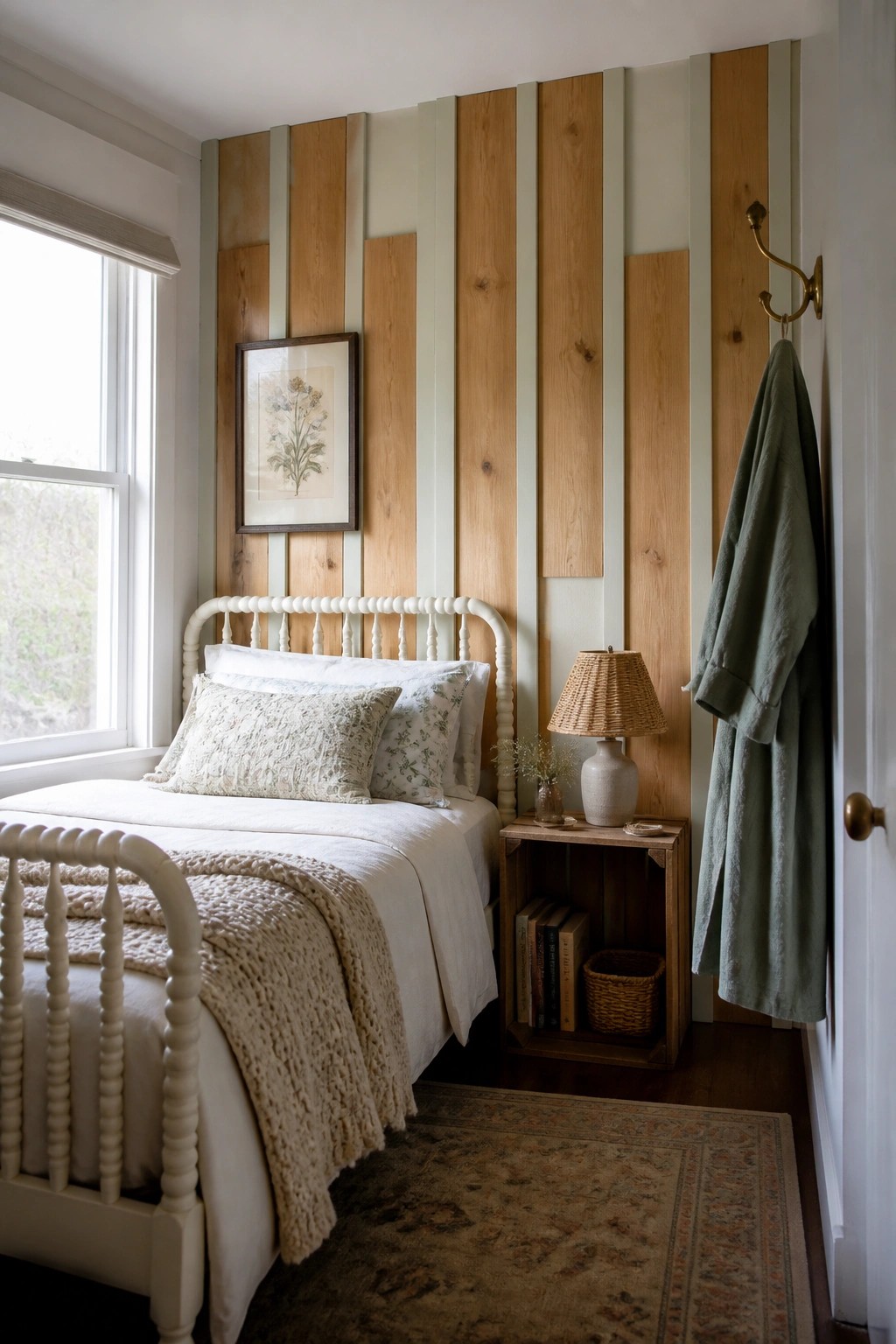
Mixing several wood tones on one wall gives a bedroom quiet depth without much effort. Different plank widths and natural shades break up the surface so it feels layered rather than flat.
This works best in smaller rooms that need some texture but still want a calm feel. Keep the rest of the space simple with light fabrics and basic furniture so the wall can carry the look.
Mixing Wood Tones On A Feature Wall
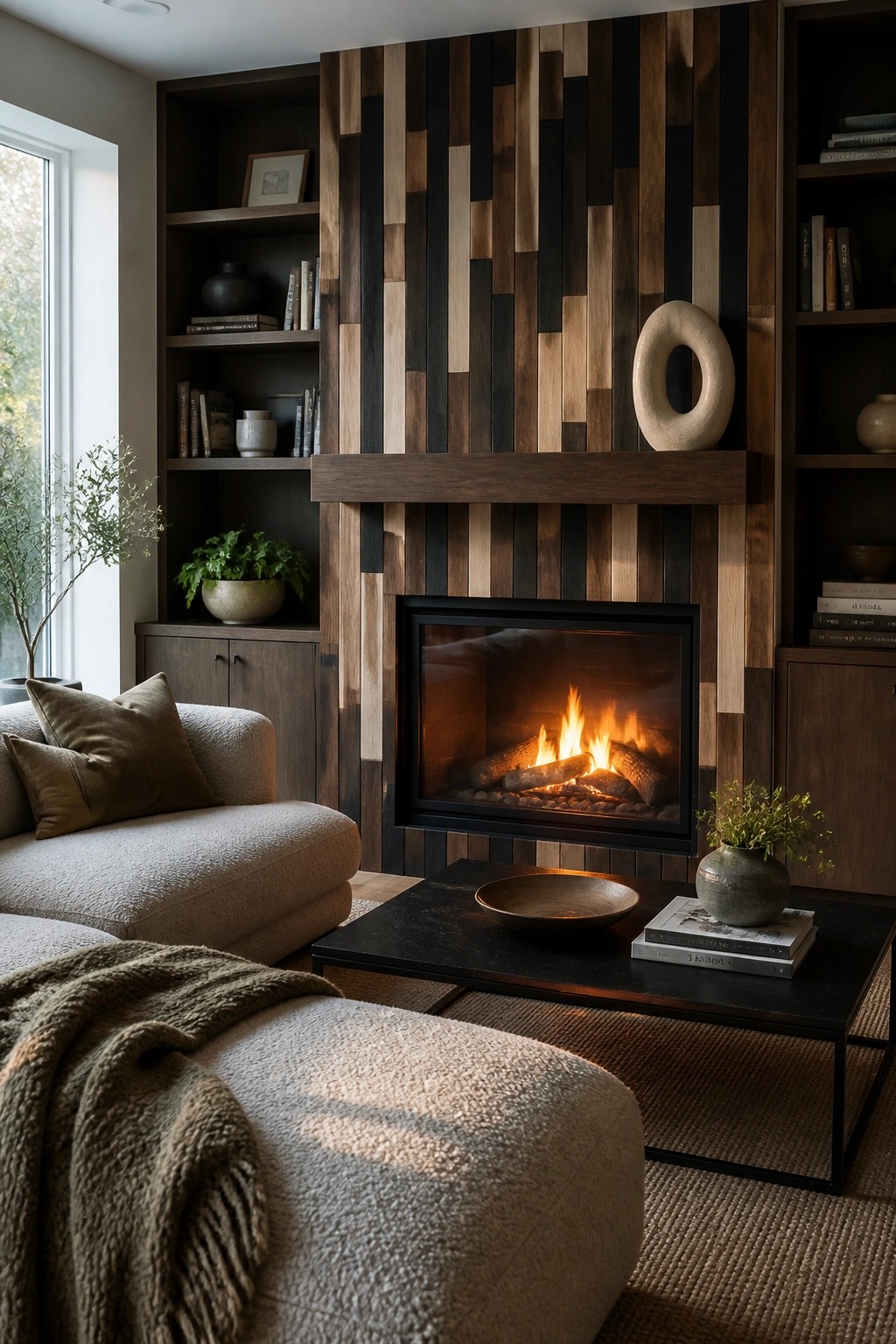
Mixing wood tones in vertical strips gives a wall more life than a single shade ever could. The changes in color and grain add texture that feels natural and settled rather than designed.
This works best behind a fireplace or other built-in element where the eye already lands. Keep the rest of the room simple with neutral furniture so the wall carries the interest without competing.
Mixing Wood Tones In A Patterned Wall
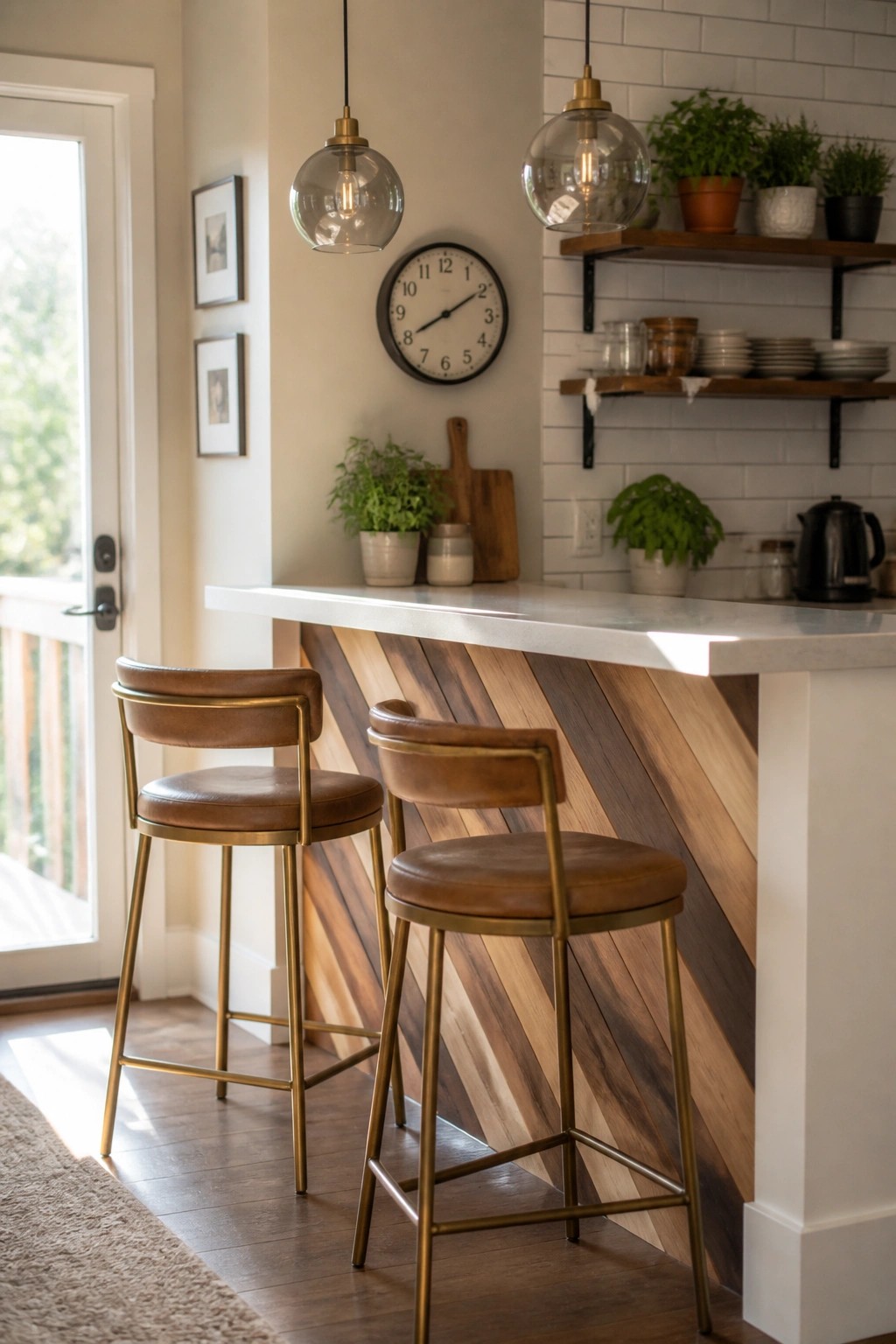
Mixing wood tones in one wall can add warmth and texture without making a space feel busy. The different shades and grains play off each other, especially when arranged in a simple angled pattern that catches the light.
This works best in kitchens or casual dining spots where the wall sits behind a counter or island. Keep the surrounding finishes light so the wood stays the main focus and does not compete with other materials.
Mixing Wood Tones On Built-In Bookshelf Walls
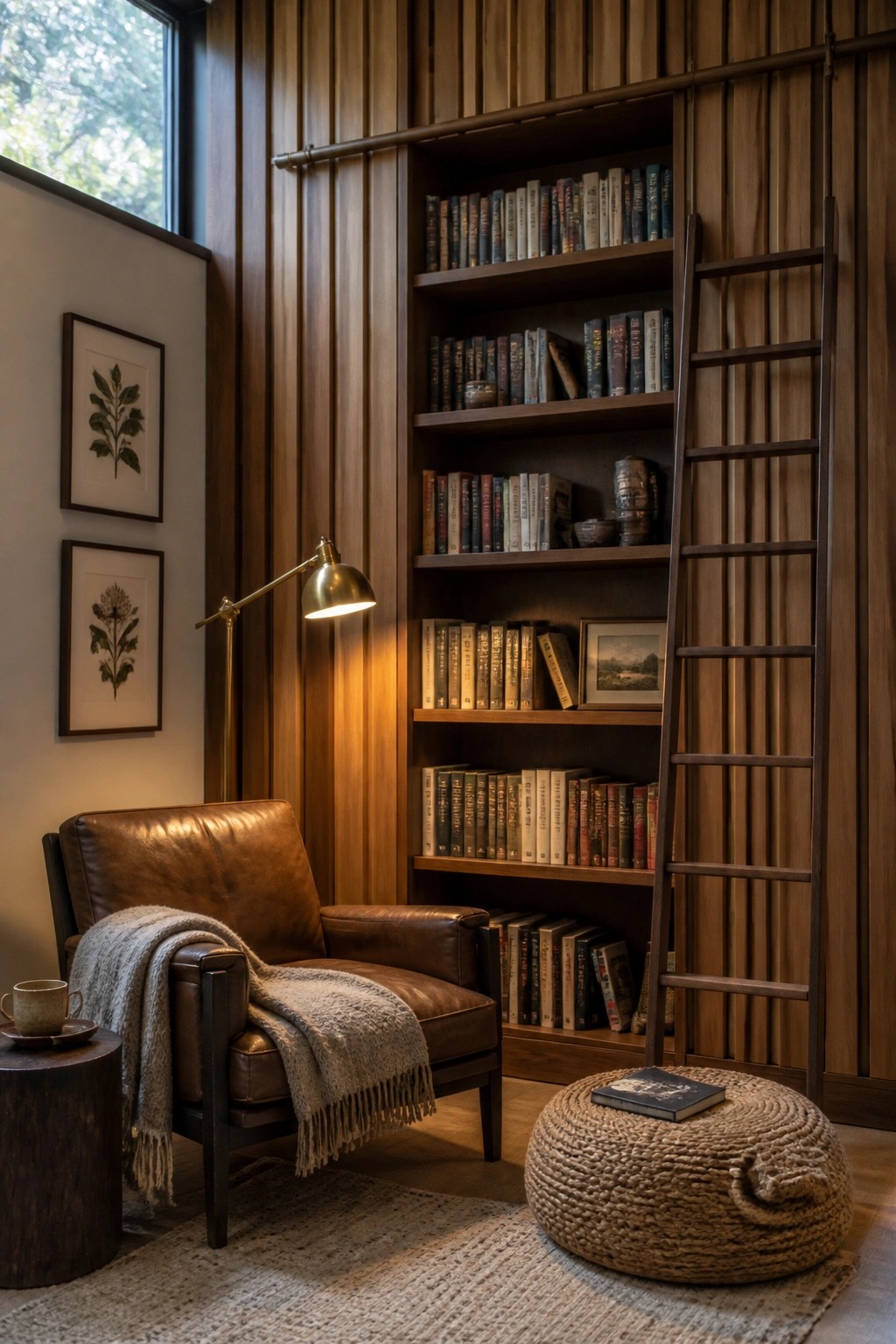
One simple way to add interest to a wood wall is by using vertical panels in slightly different tones right next to a built-in bookshelf. The change in grain and color keeps the surface from feeling flat while still looking like one material.
This works best in smaller rooms or quiet corners where the wall can stand out on its own. Stick to a narrow range of browns so the mix feels natural instead of busy, and let the shelves take up most of the space.
Mixing Wood Tones on a Stairwell Wall
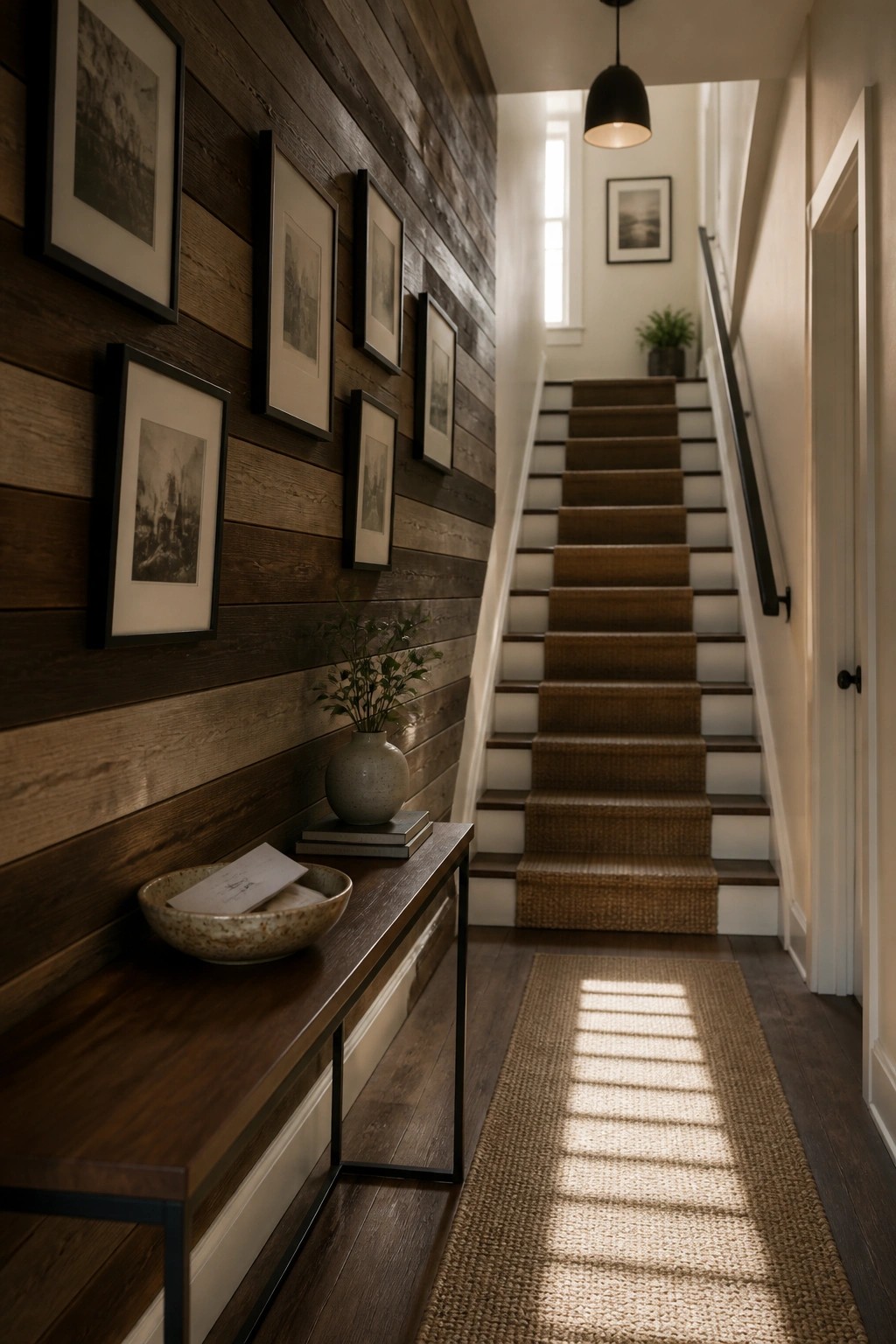
A stairwell wall can handle more variation in wood than most people expect. Using planks in a few close but different tones keeps the surface interesting without turning busy, especially when the rest of the space stays simple.
This works best in homes with painted trim and darker floors, where the wood wall can add warmth along the vertical run. Stick to planks of similar width and let the tone differences do the work rather than adding too many angles or layouts.
Mixing Wood Tones On A Kitchen Accent Wall
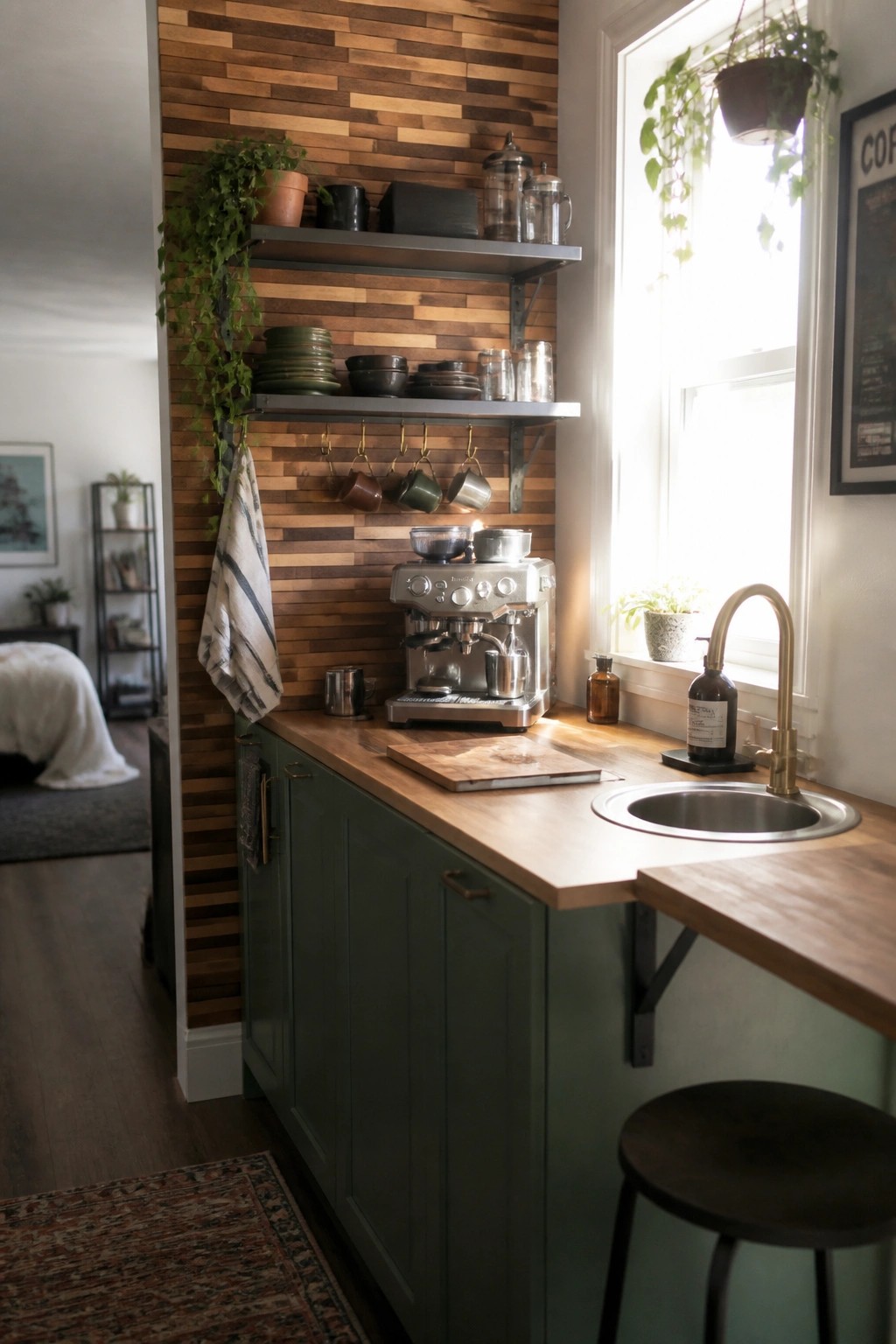
A wall built from planks in different wood tones can add interest to a kitchen without crowding the space. The mix of widths and shades keeps the surface from feeling flat while still letting other elements like cabinets and open shelves stand out.
This works best in smaller kitchens or along a short run of wall where you want to highlight a coffee area or storage. It pairs easily with solid painted cabinets and needs little extra decoration once the wood is up.
Mixing Wood Tones With Horizontal Planks
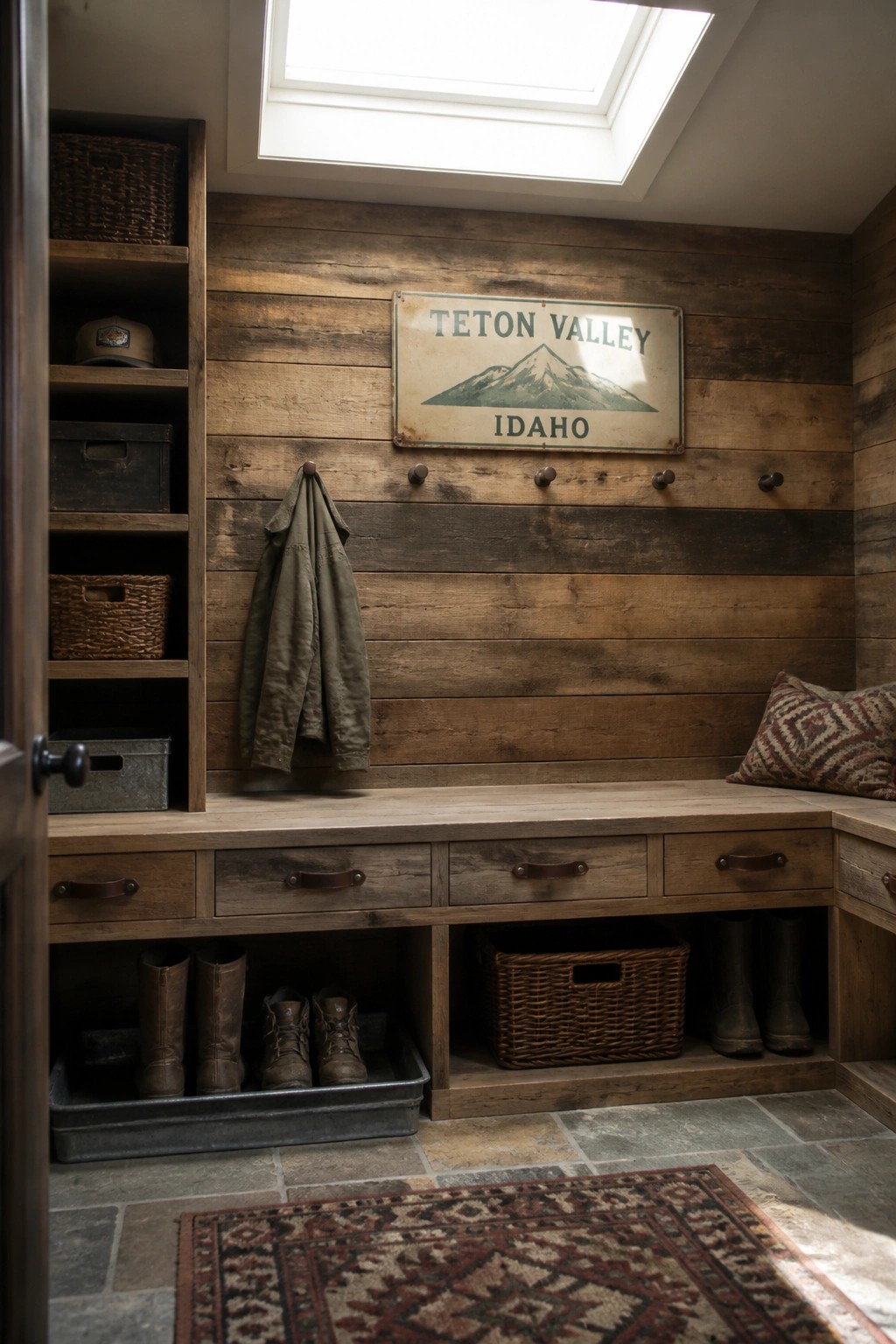
One way to add interest to a wall without extra color is to use planks in several different wood tones. The mix of lighter and darker boards creates a layered look that feels natural and lived in.
This works best in spaces like entryways or mudrooms where the wall also holds hooks and storage. It suits homes with a rustic style and helps the room feel warmer and more practical at the same time.
Living Room Feature Wall With Mixed Wood
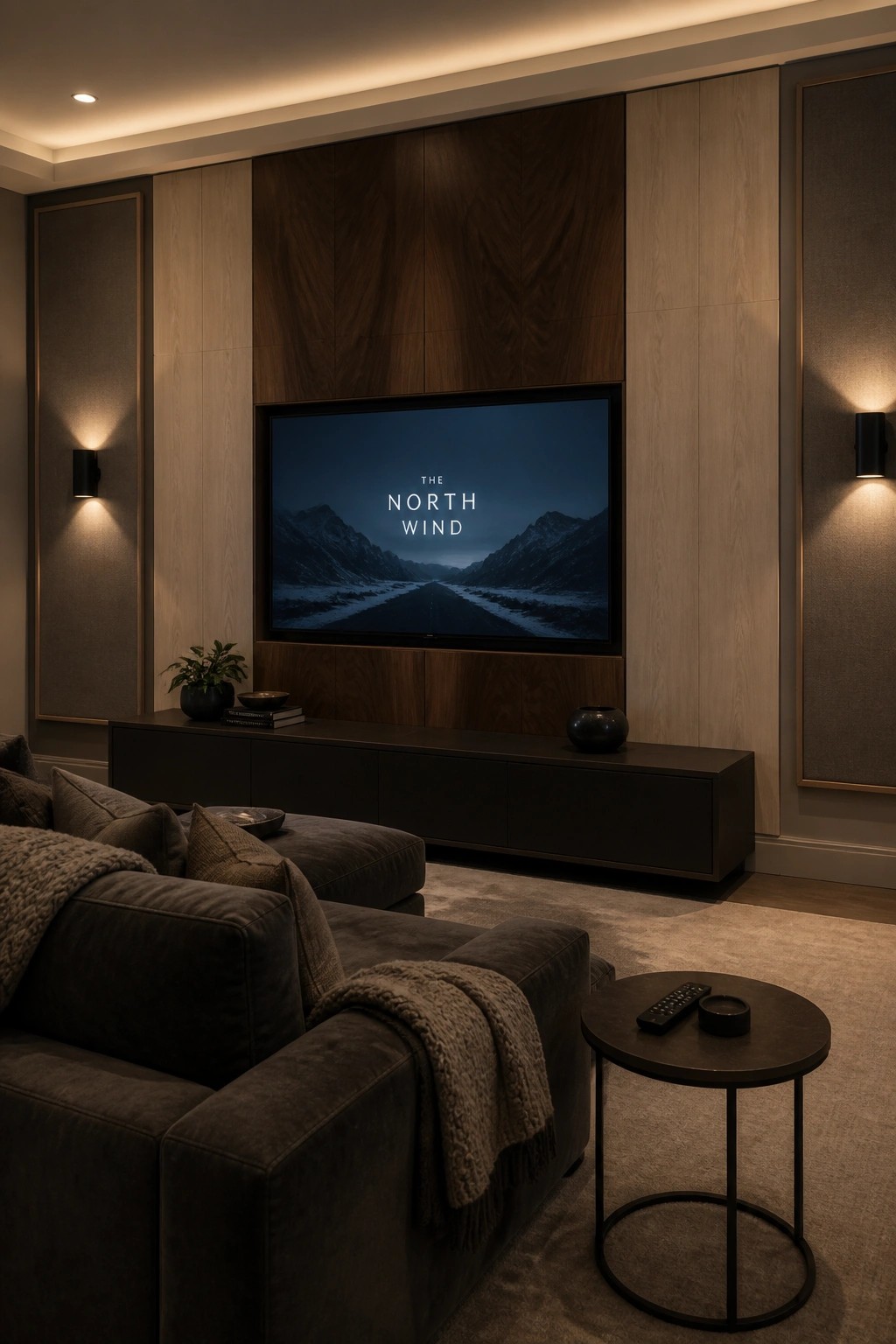
Mixing wood tones on one wall can give a room more depth without adding clutter. The contrast between lighter and darker panels keeps the surface interesting while still feeling calm and grounded.
This approach works well in living rooms where the wall needs to support a television or other focal point. It suits homes with neutral furniture and soft lighting, since the wood itself carries most of the visual weight. Keep the mix to two or three tones at most so the pattern stays easy to live with.
Mixing Wood Tones On Closet Walls
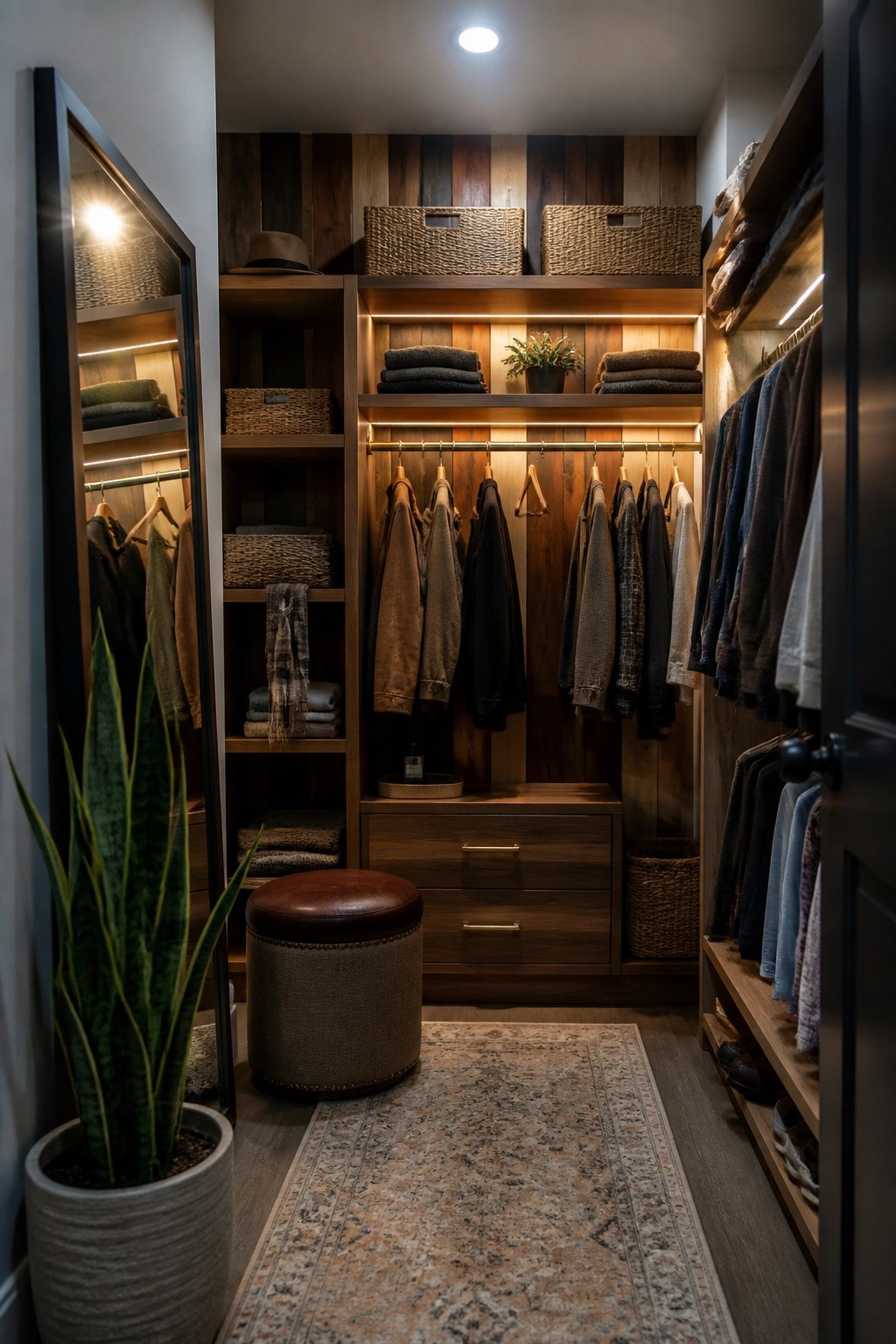
Mixing wood tones and patterns on a wall can turn a plain closet into something that feels more finished and inviting. The varied shades and grain directions add depth so the space does not feel like just storage.
This works especially well in walk-in closets where you have open shelving and hanging space. Keep the mix to three or four tones at most so it stays calm rather than busy.
Mixing Wood Tones on Sloped Attic Walls
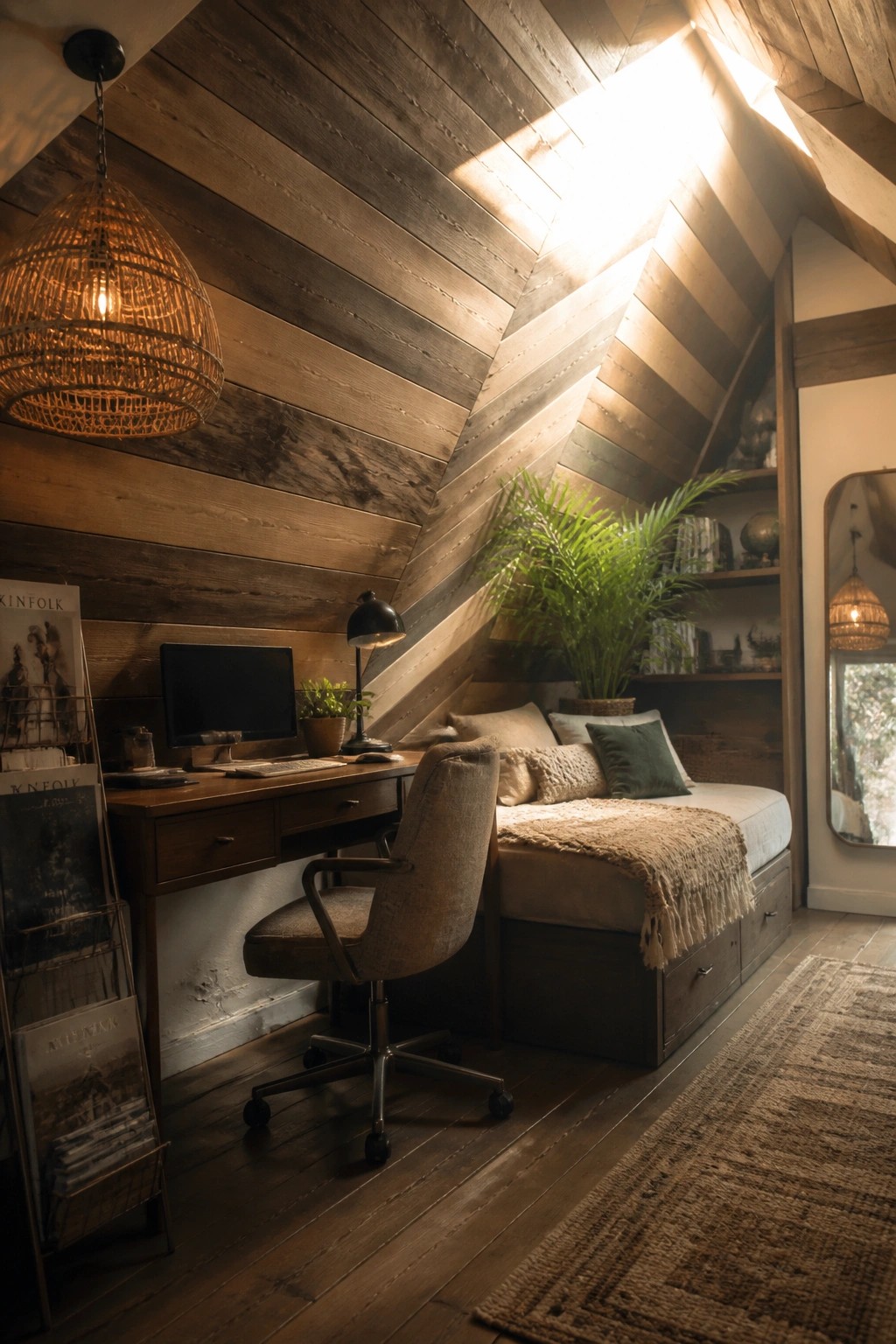
Mixing wood tones and plank directions gives an attic room more character without needing extra layers or colors. The varied boards on the angled walls keep the space from feeling flat even though the ceiling cuts in sharply.
This works best in smaller rooms or spaces with odd angles where one wood tone might look too plain. Stick to a simple furniture layout so the walls can stand out on their own.
Frequently Asked Questions
Q: How do I start mixing light and dark woods without the wall looking too busy?
A: Pick one tone as your main color and use the others in smaller patches or strips. Lay a few boards on the floor first to see how they sit next to each other. This keeps the mix simple and lets the patterns stand out.
Q: What if the wood I like clashes with my existing floor?
A: Choose a middle tone that sits between the floor and your wall colors. Add a thin transition strip along the base if the jump still feels sharp. Most people find this pulls the whole room together fast.
Q: How do I keep the boards straight when patterns change direction?
A: Mark a light grid on the wall with a pencil before you start. Work row by row and check the level every few pieces. Small adjustments early save a lot of trouble later.
