

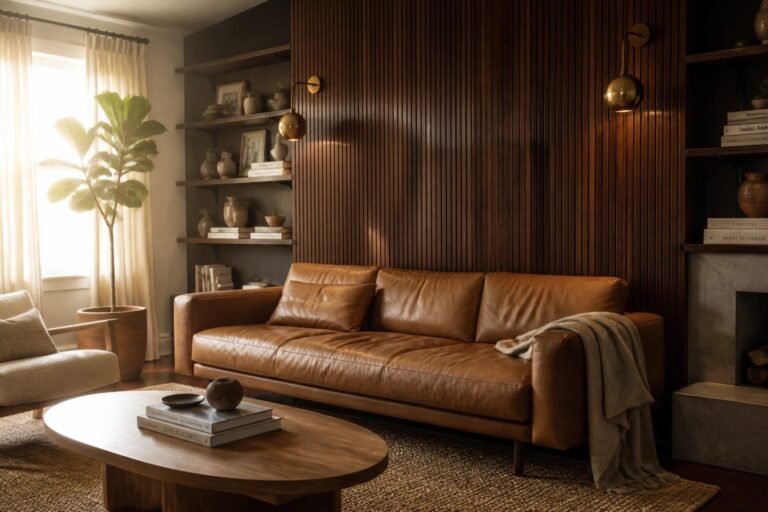
I have noticed that dark wood paneling tends to anchor a room in a way lighter walls rarely manage, especially once furniture and daily use start filling the space.
When I added a similar finish to one wall in my study, the room felt more settled but only after I moved a few pieces around to keep the light from getting trapped.
Balance matters most here.
Many people find that rich tones can either deepen a room’s character or make it feel smaller, depending on how the paneling meets windows, doors, and the ceiling height.
A couple of these ideas look like they could be adapted on a single accent wall before trying anything larger.
Vertical Dark Wood Paneling In Living Rooms
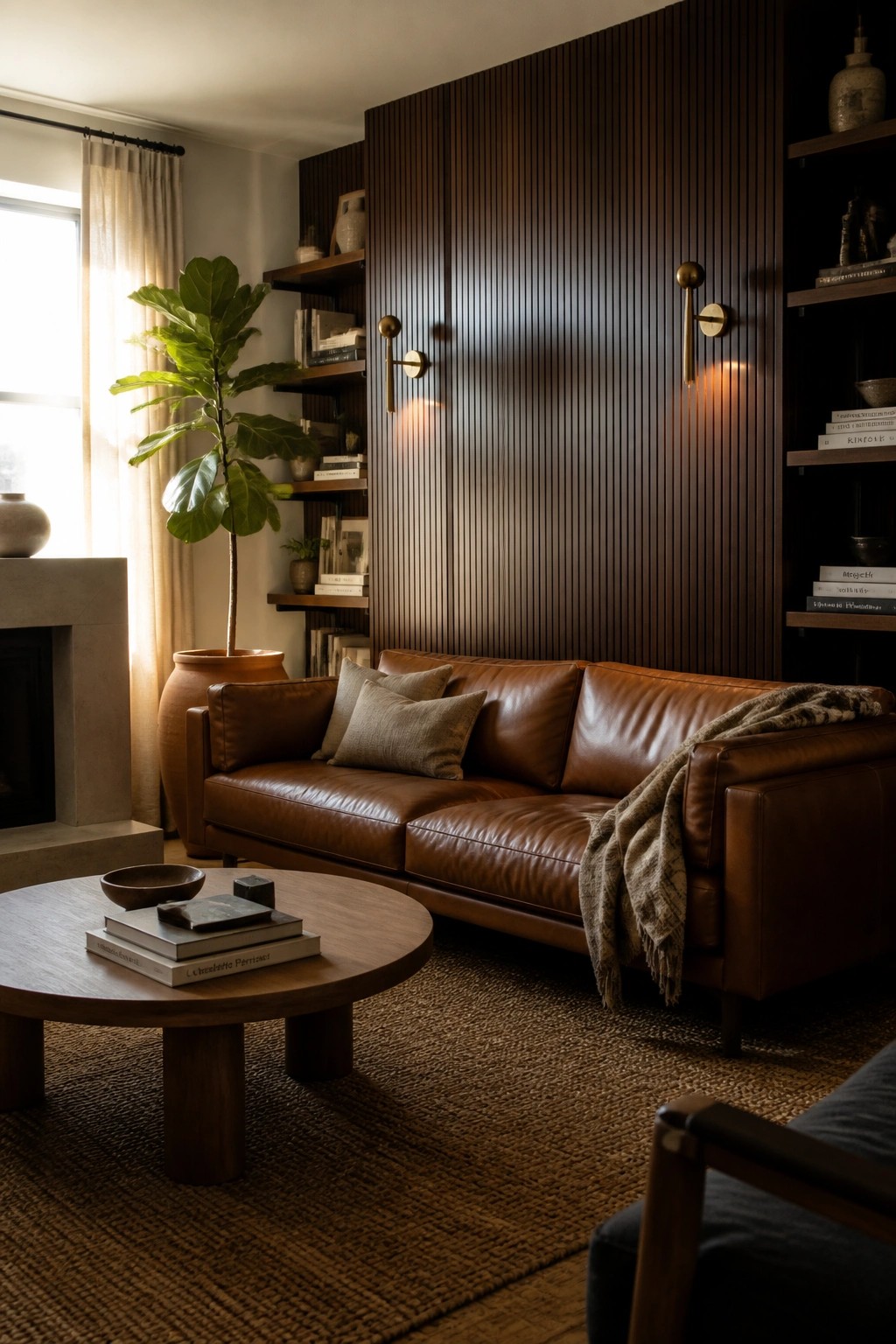
Many homes use vertical dark wood paneling on one main wall to add texture without much extra work. It brings a quiet warmth that pairs well with leather seating and simple wooden furniture, and it helps the room feel more grounded.
This works best in spaces that already lean toward natural materials and mid tone woods. Keep surrounding walls light and limit the paneling to one area so it does not close the room in too much.
Dark Wood Paneling Behind the Bed
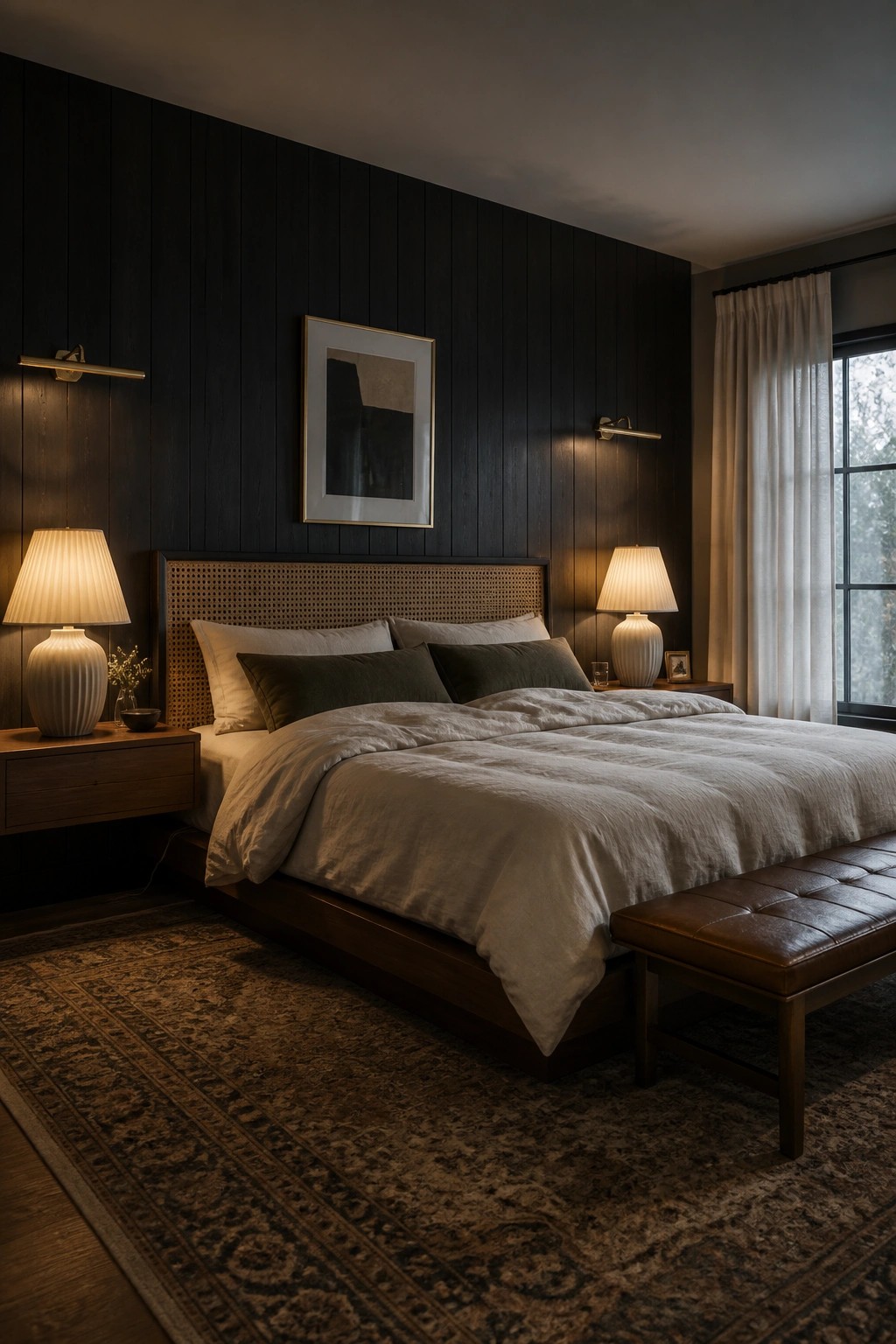
Dark wood paneling makes a strong choice for the wall behind a bed. It brings in warmth and texture that feels solid and settled, especially when the panels run vertically from floor to ceiling.
This look works best in rooms that already lean toward natural materials and deeper tones. Keep the rest of the space lighter so the paneling stays the main feature instead of turning the whole room too heavy.
Dark Wood Paneling Throughout The Kitchen
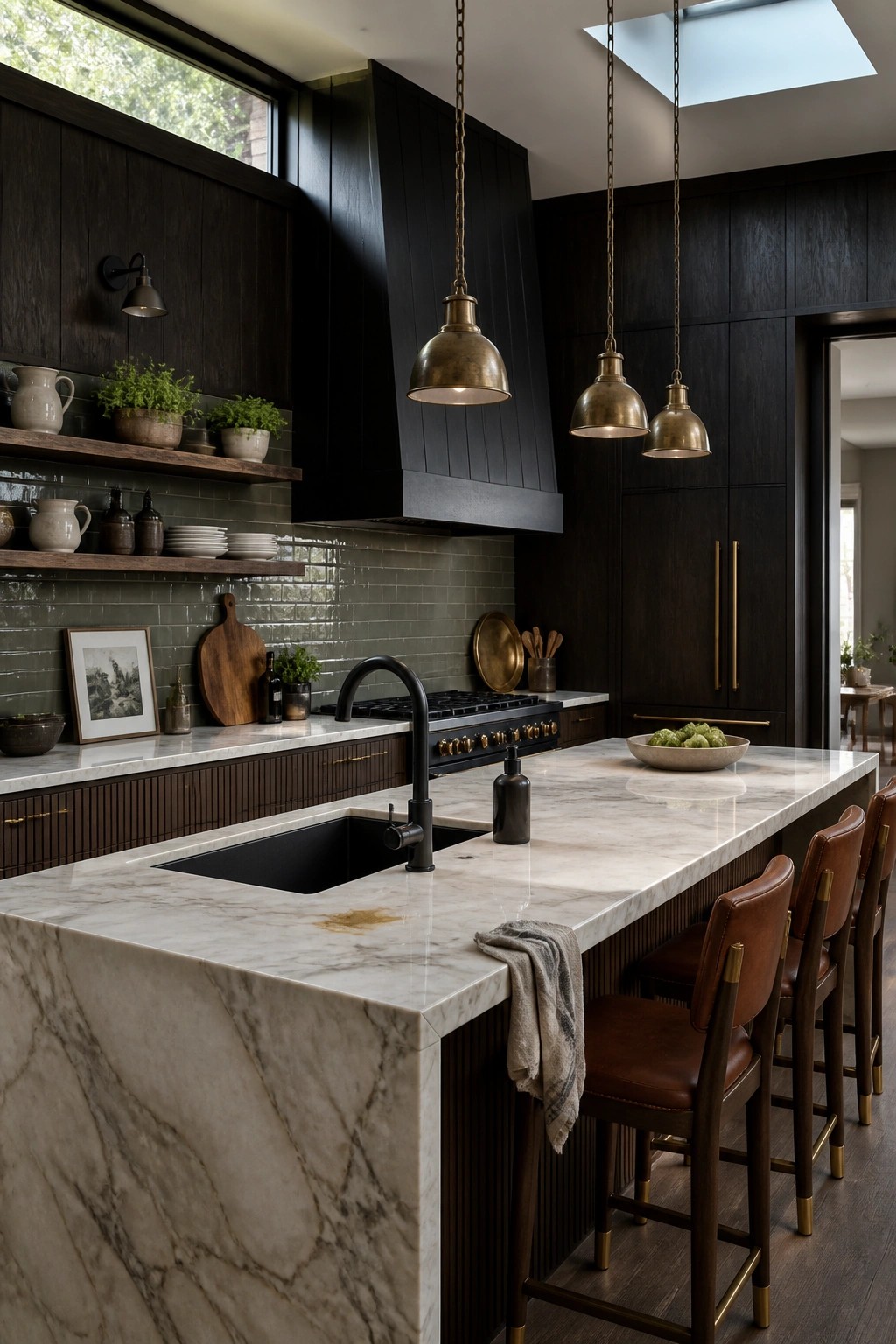
Dark wood paneling works well when it covers most of the vertical surfaces in a kitchen. It gives the room weight and a steady background that holds up against busy counters or daily use. The finish feels substantial without needing a lot of extra decoration.
This approach suits homes that already lean toward deeper tones or want a clear contrast with lighter stone or tile. Keep the paneling simple in profile so it reads as a single material rather than a collection of details. Pair it with open shelving or a few metal accents if the space starts to feel closed in.
Dark Wood Paneling For Bathroom Walls
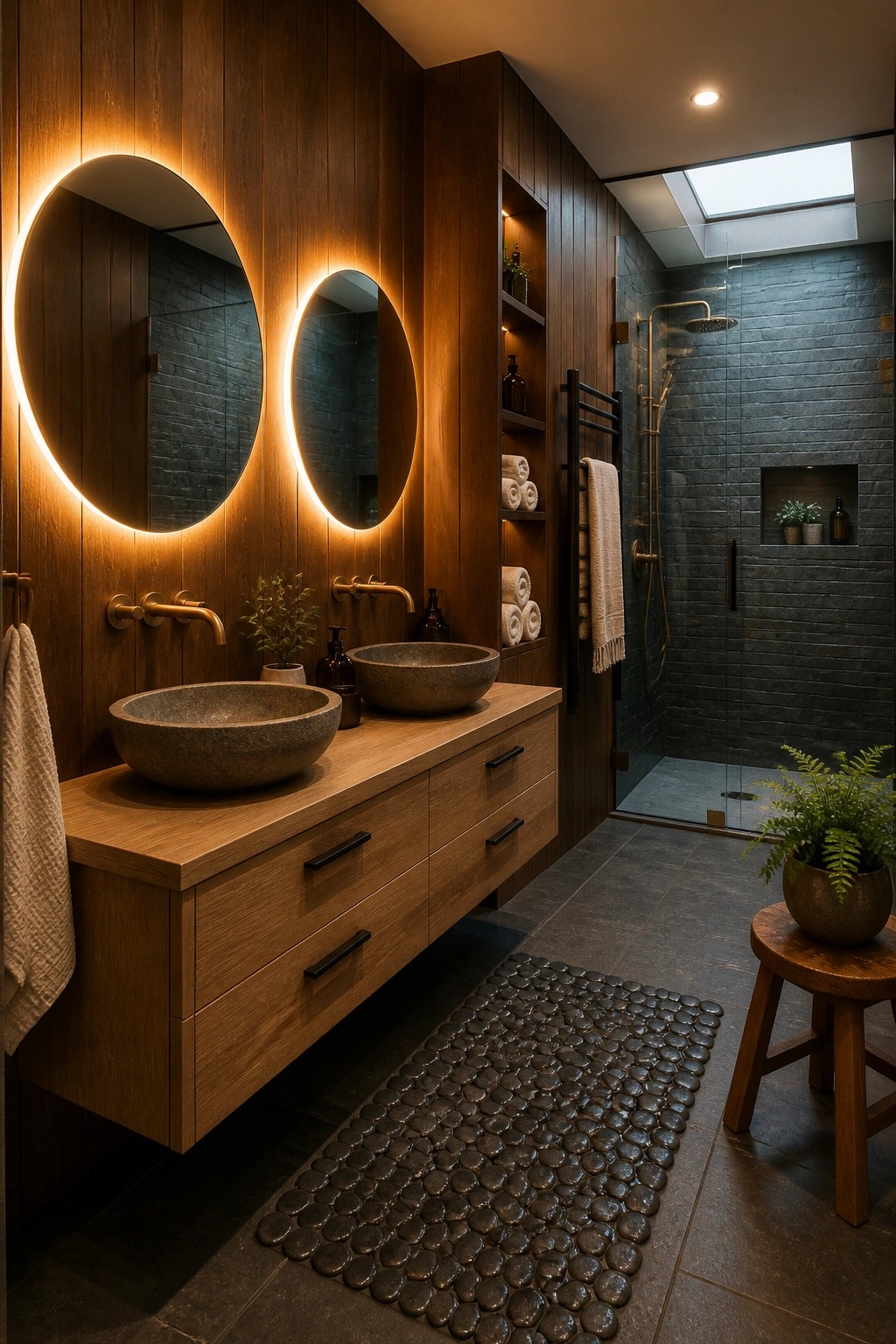
Dark wood paneling gives a bathroom a grounded and substantial look that lighter finishes often miss. Vertical planks in a deep brown tone cover the main wall area and help the space feel warmer without adding clutter.
This works best in rooms that already use natural materials like stone or wood. It suits transitional or modern homes, but keep other surfaces simple so the paneling stays the main feature.
Dark Herringbone Paneling for Dining Rooms
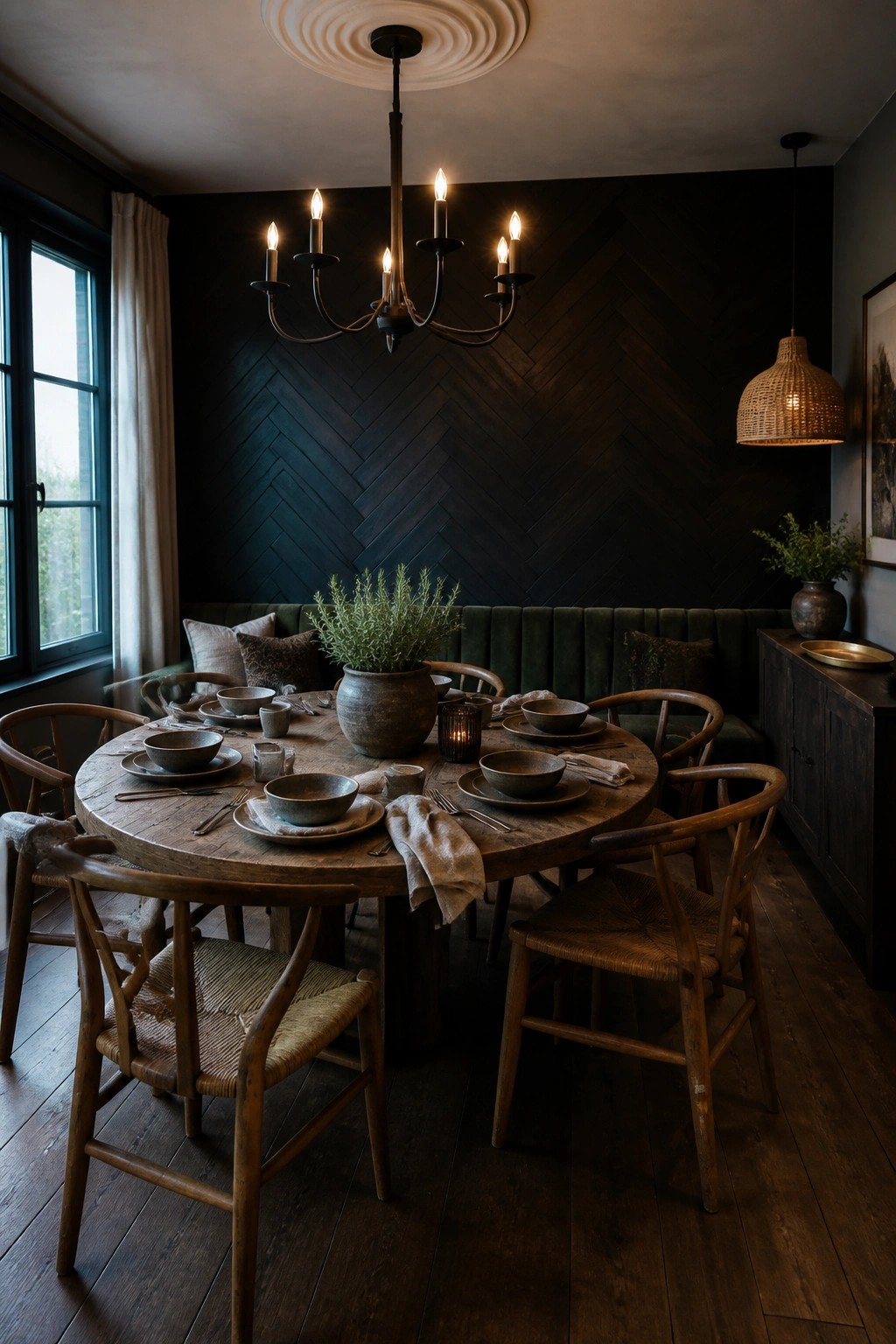
Dark herringbone wood paneling gives a dining room a grounded and enclosed feel that works especially well for evening meals. The pattern adds movement across the wall while the deep tone keeps the space from feeling too bright or open.
This approach suits homes with wood tables and chairs already in place. Keep other surfaces simple so the paneling stays the focus rather than competing with too many colors or textures.
Dark Wood Paneling In Entries
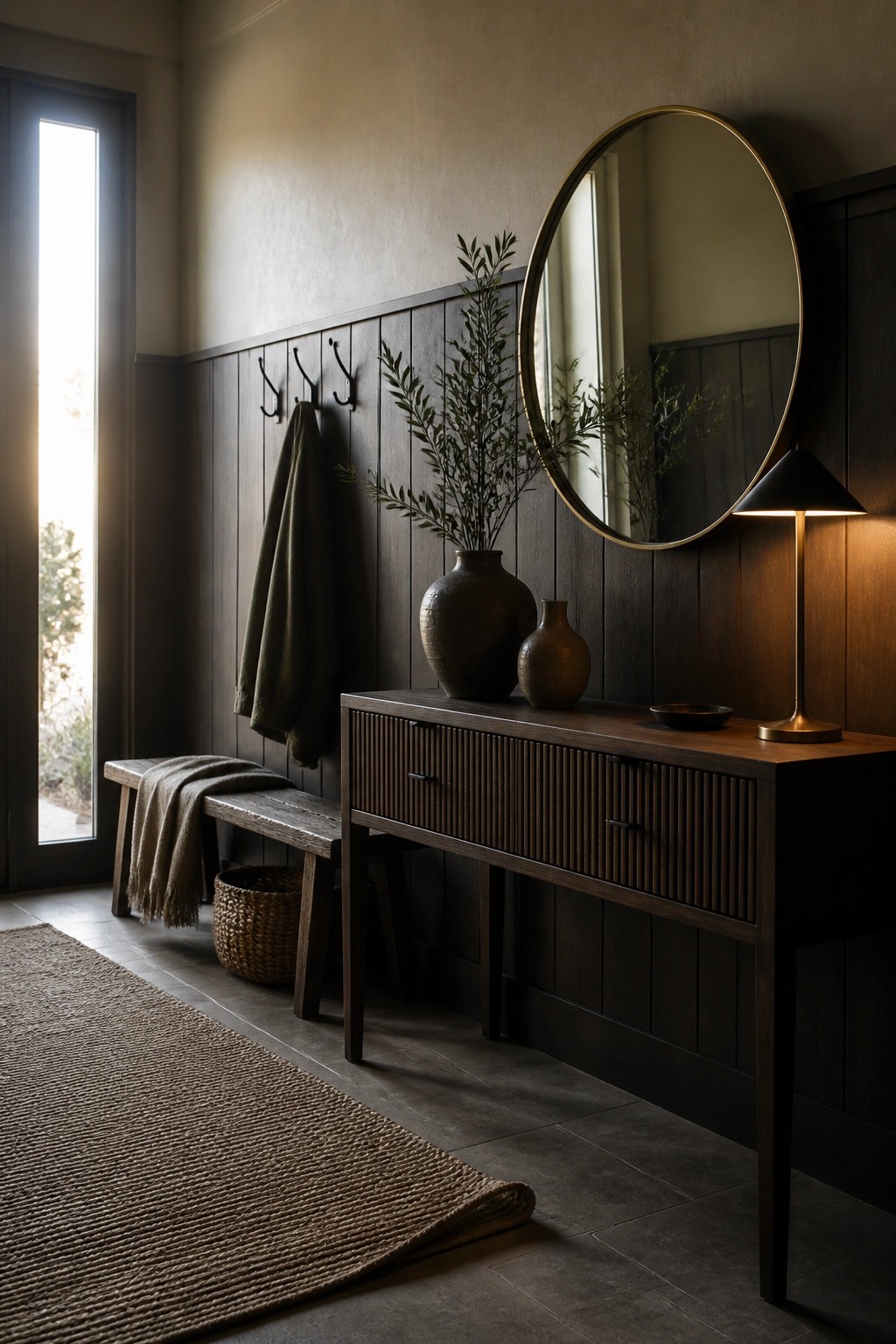
Dark wood paneling works especially well in entries because it gives the space a solid, finished feel without extra decoration. The vertical lines keep the look simple while the deep tone makes the whole area feel warmer and more pulled together.
This approach suits homes that already have wood floors or trim in similar tones. Keep the rest of the furnishings light in number so the paneling stays the main feature instead of competing with too many other pieces.
Dark Wood Paneling With Built-In Shelving
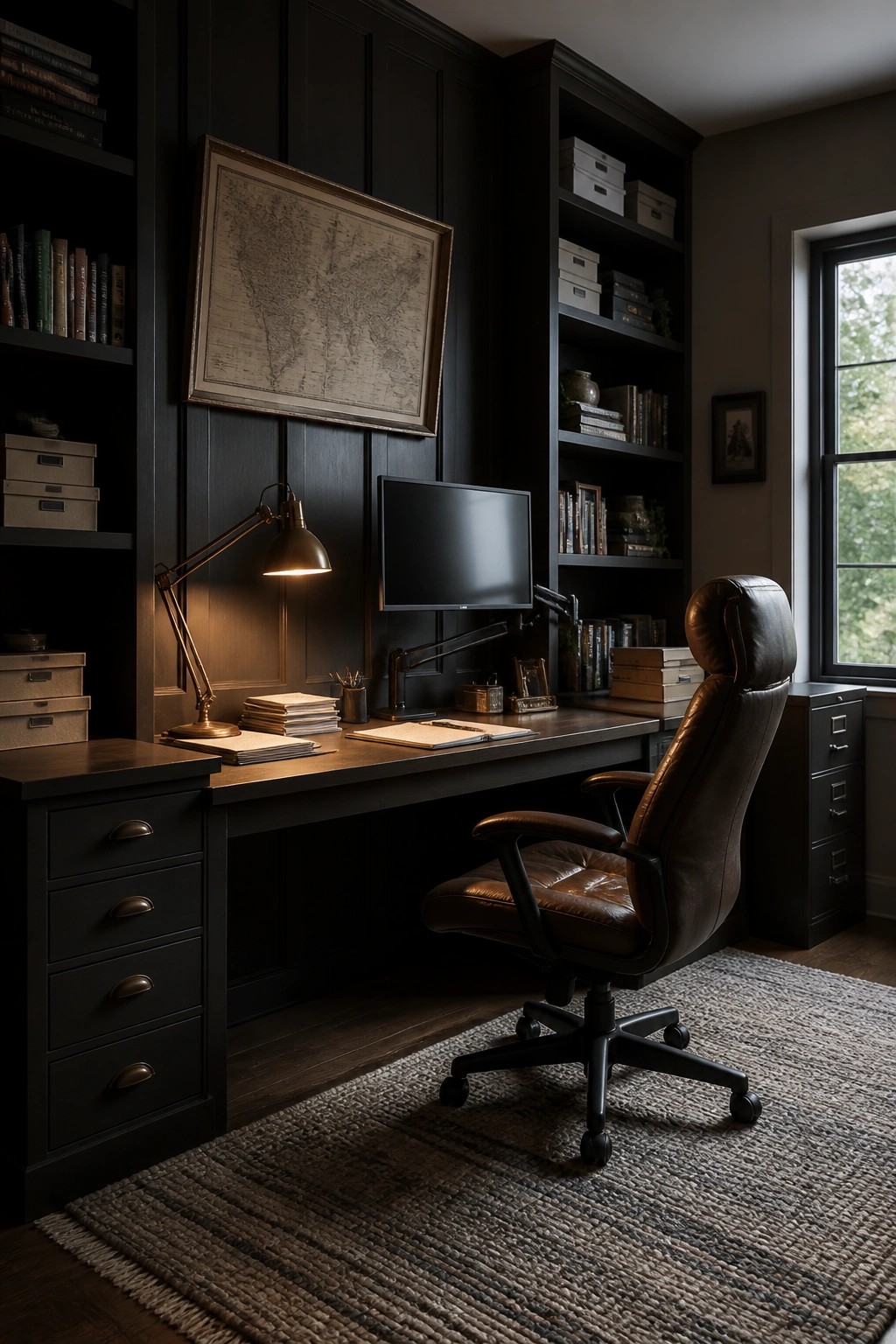
Dark wood paneling covers the walls in this office and turns the whole space into something more enclosed and purposeful. The finish gives the room weight without needing a lot of extra decoration.
This approach works well in rooms that already have decent height and some natural light. Match the paneling to built-in shelves so the storage feels like part of the wall rather than something added later.
Dark Wood Paneling as an Accent Wall
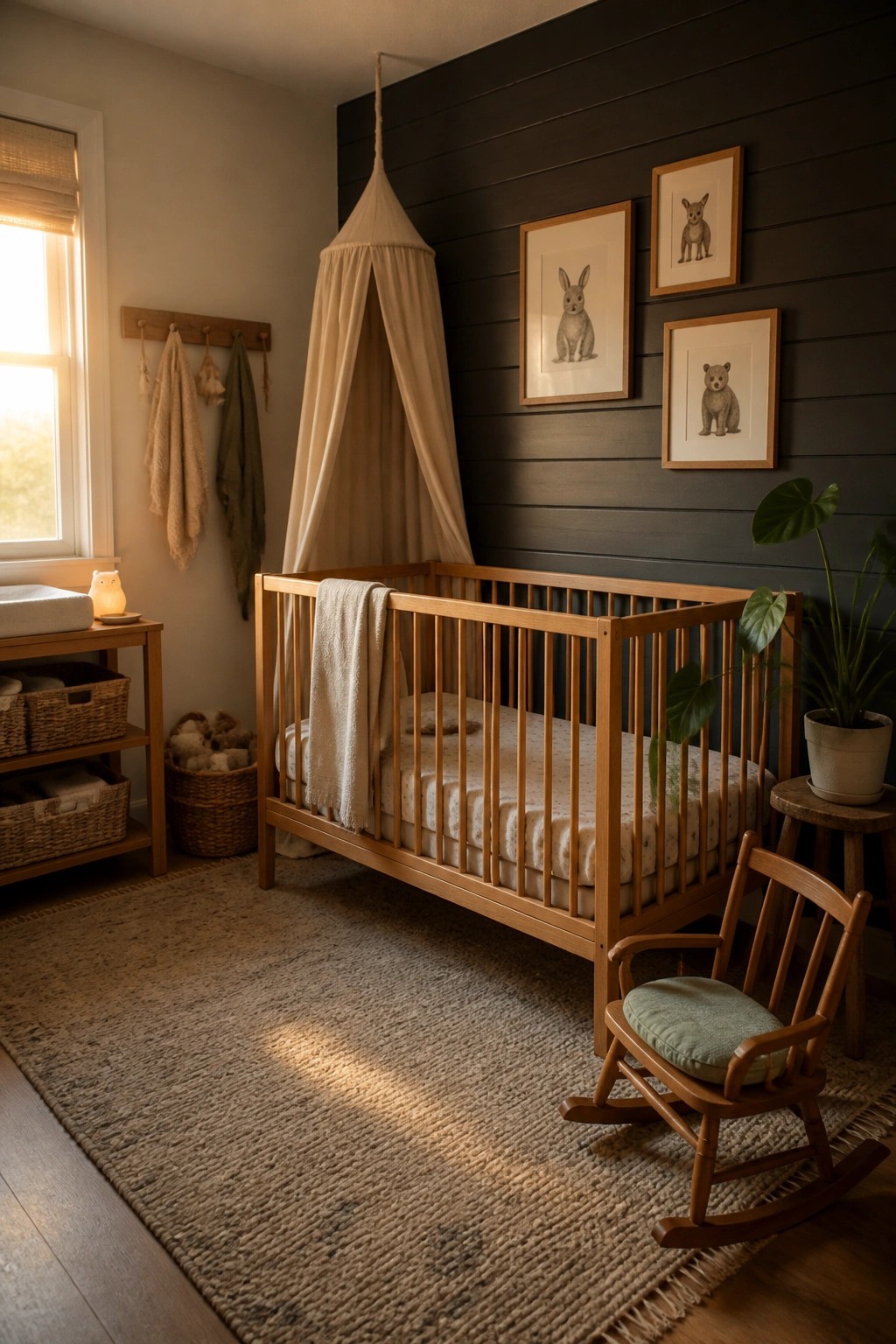
Dark wood paneling can give a nursery a grounded feel without overpowering the space. The horizontal boards create a simple backdrop that pairs well with lighter walls and natural wood furniture.
This works best in rooms that get good daylight. Stick with one wall only and keep the rest of the finishes soft so the darker tone adds warmth rather than weight.
Dark Wood Paneling In Laundry Rooms
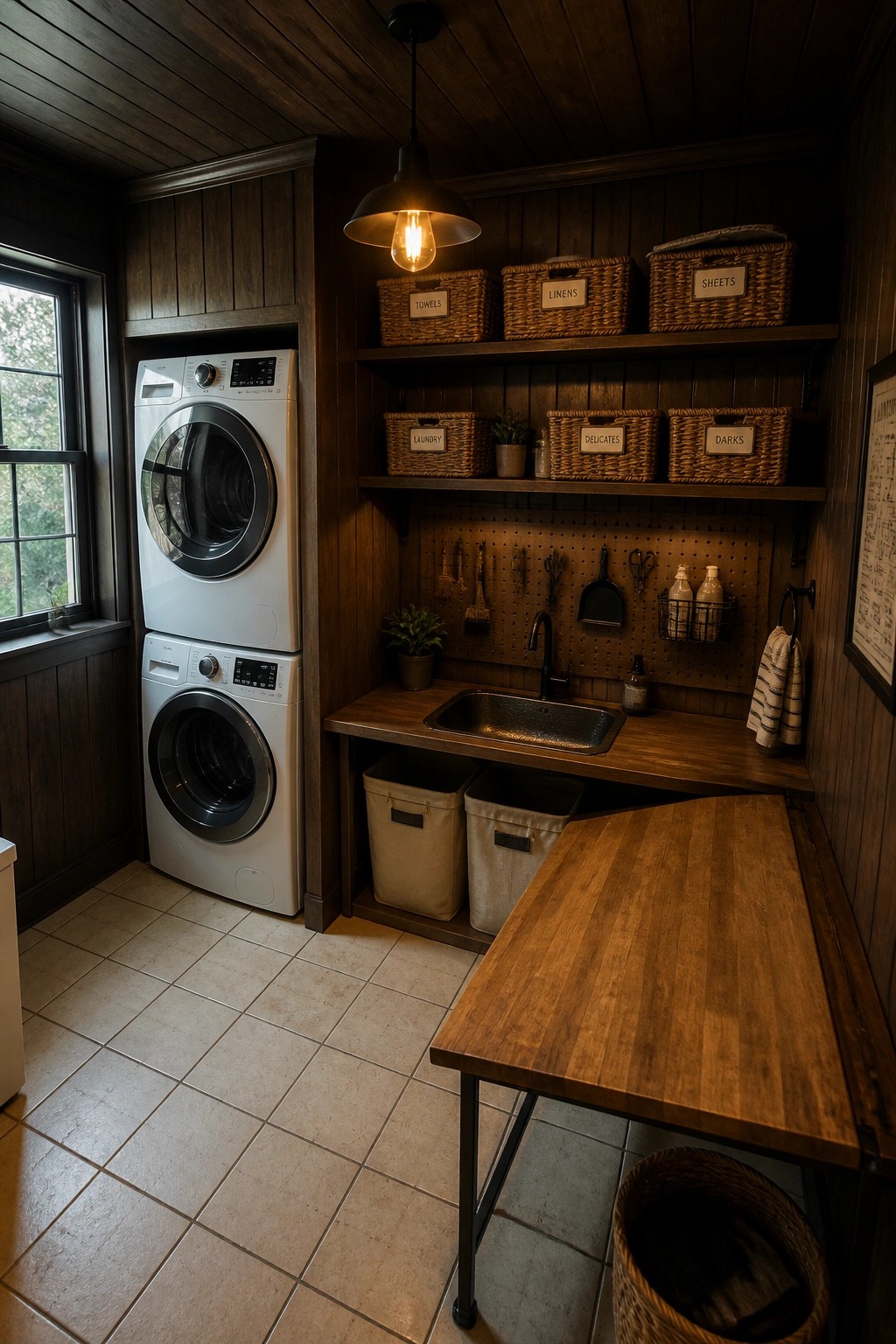
Dark wood paneling gives a laundry room a finished look that most people do not expect in a utility space. The deep tones make the room feel warmer and more connected to the rest of the house instead of like a leftover corner.
This approach works best in homes that already use wood tones elsewhere so the paneling does not feel out of place. Keep counters and shelves in matching wood and limit brighter colors to small accents so the paneling remains the main feature.
Dark Wood Paneling Along Hallways
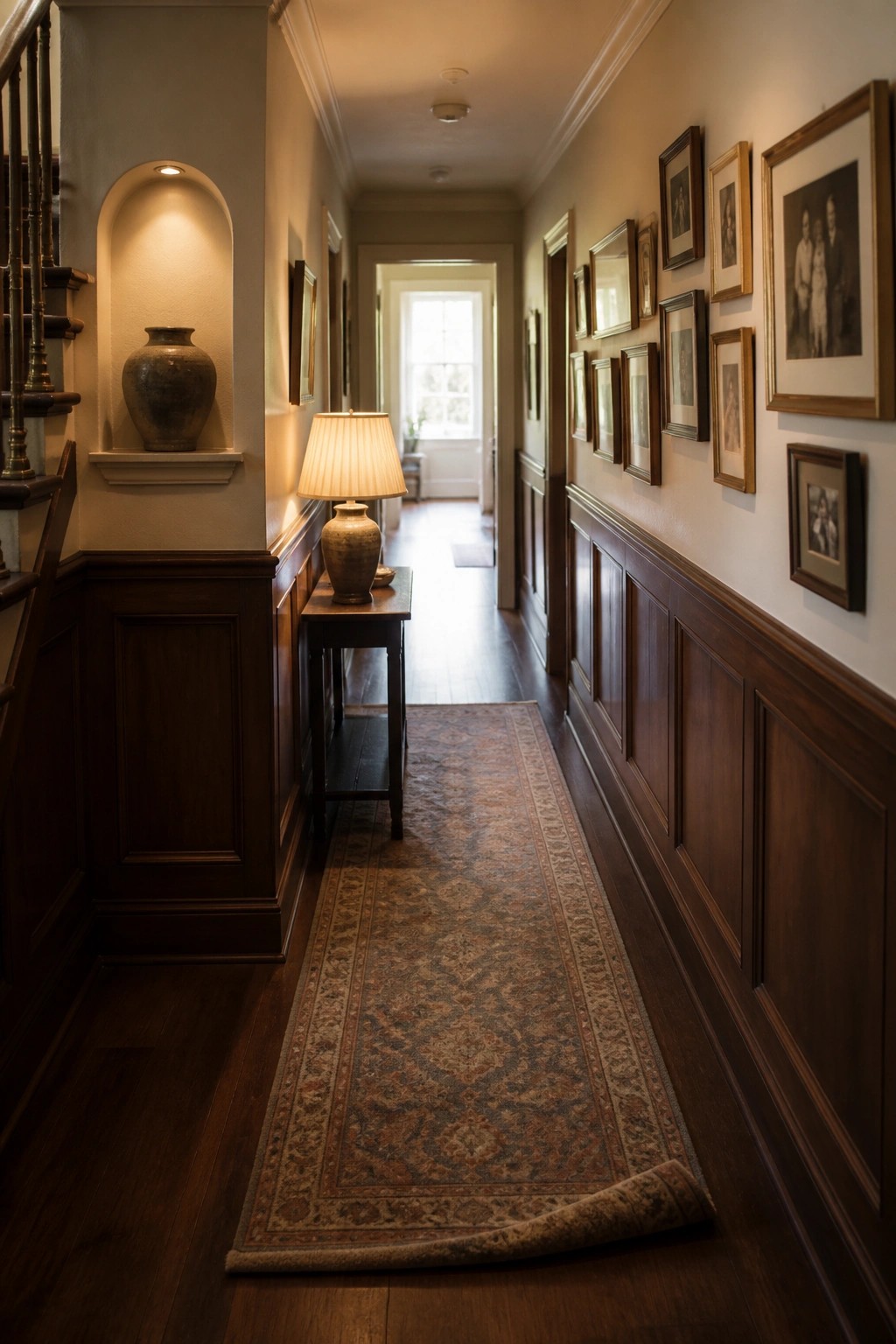
Dark wood paneling gives hallways a finished look that feels more intentional than plain walls. The lower half of the wall gets a rich tone that holds up well to daily traffic and scuffs.
This approach works best in homes that already have some traditional trim or older details. Keep the paint above the paneling light so the hallway stays open instead of feeling boxed in.
Dark Wood Paneling For Built-In Seating
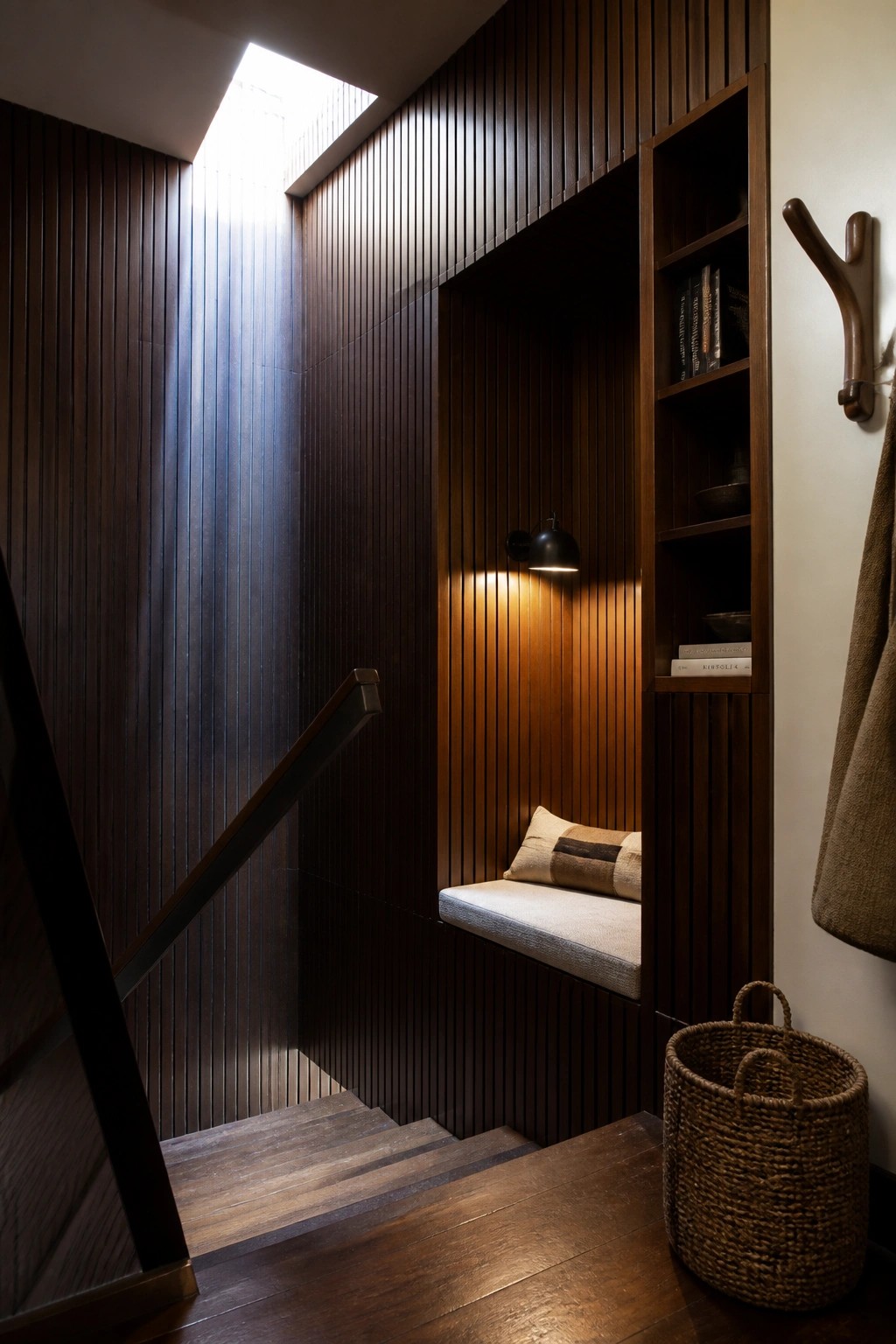
Narrow spaces around stairs often get ignored or left plain. Dark vertical wood paneling changes that by turning the same area into a warm spot for sitting or reading.
A recessed bench with a simple cushion fits neatly into the paneling, and a couple of open shelves above it keep the look practical. This works best in homes where stairs run along a hallway or landing and you want the wood tone to carry through without adding extra furniture.
Dark Wood Paneling In Bathrooms
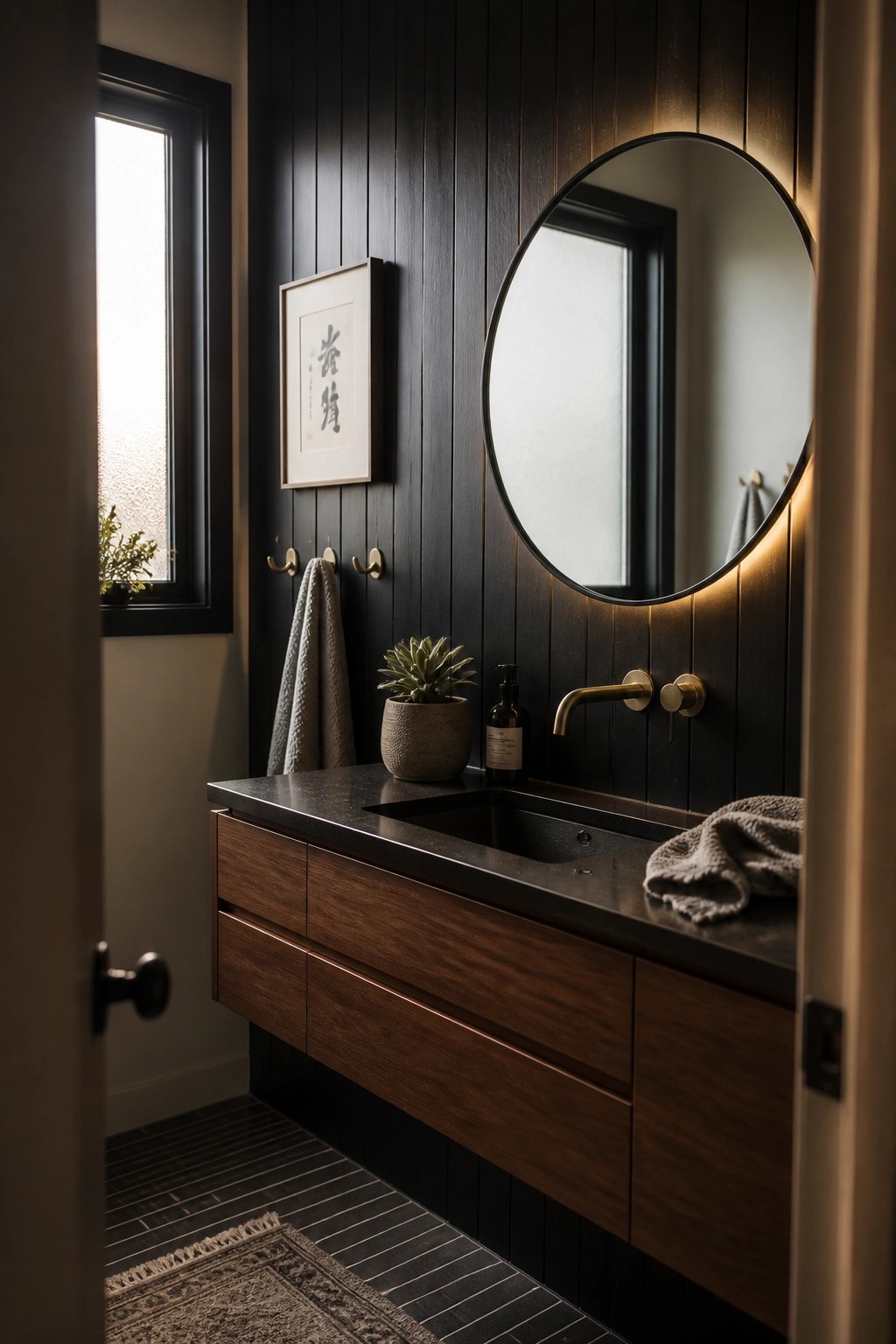
Dark wood paneling gives a bathroom a grounded and enclosed feel that works especially well in smaller spaces. The vertical lines add height while the deep tone creates a quiet richness that pairs naturally with wood vanities and stone counters.
This approach suits homes with a modern or minimalist lean where you want the walls to carry the warmth. Choose a finish that handles moisture and keep surrounding elements simple so the paneling remains the main feature.
Dark Wood Paneling For Built-In Closet Storage
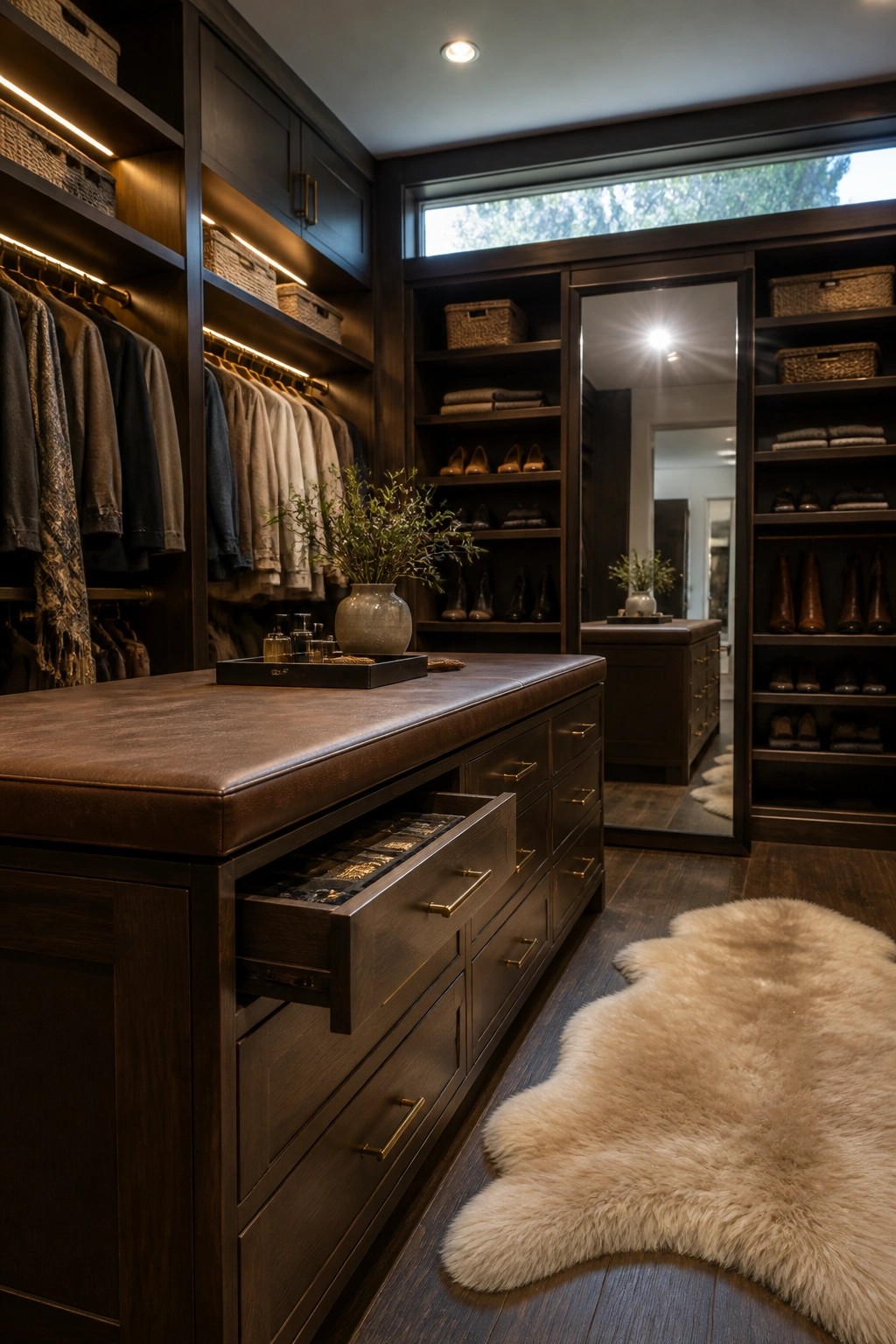
Dark wood paneling turns a closet into something more like a piece of furniture than just a room with shelves. The consistent finish across walls, doors, and drawers creates a calm, enclosed feeling that makes the space feel intentional rather than purely functional.
This works best in walk-in closets that have enough room for the wood to read as a full surface rather than just trim. Keep the hardware simple and add one soft element like a leather-topped island so the dark tone does not feel too heavy.
Dark Wood Paneling for a Cozy Bedroom Feature
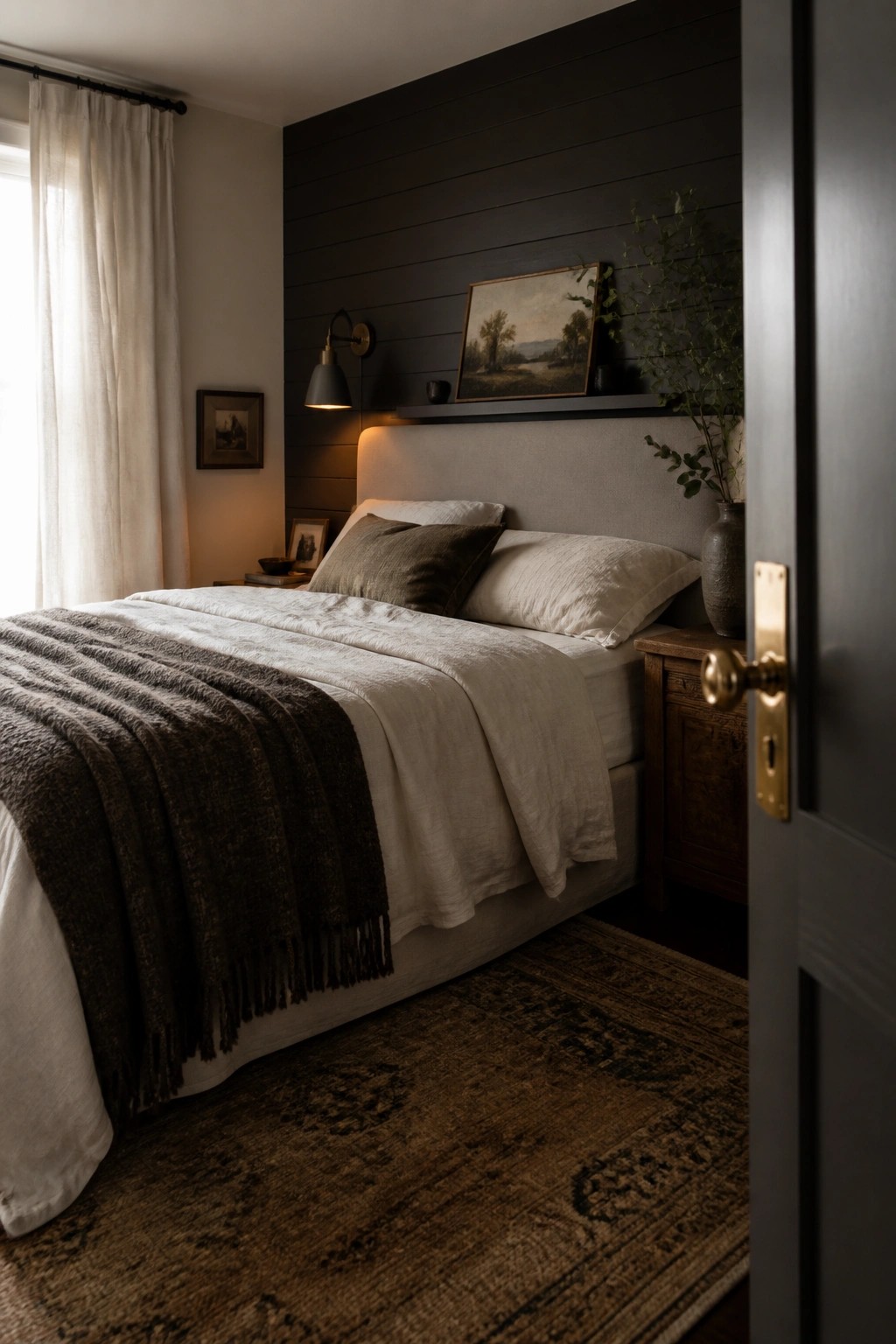
Dark wood paneling gives a bedroom a solid, grounded look when it covers the wall right behind the bed. The vertical boards add subtle texture and make the space feel a little more enclosed and restful without closing it in completely.
This works best in rooms that already have some natural light or warm lamps to keep the tone from feeling too heavy. It pairs well with simple bedding and a few lighter pieces so the paneling stays the main feature rather than competing with everything else.
Dark Wood Paneling in a Small Dining Area
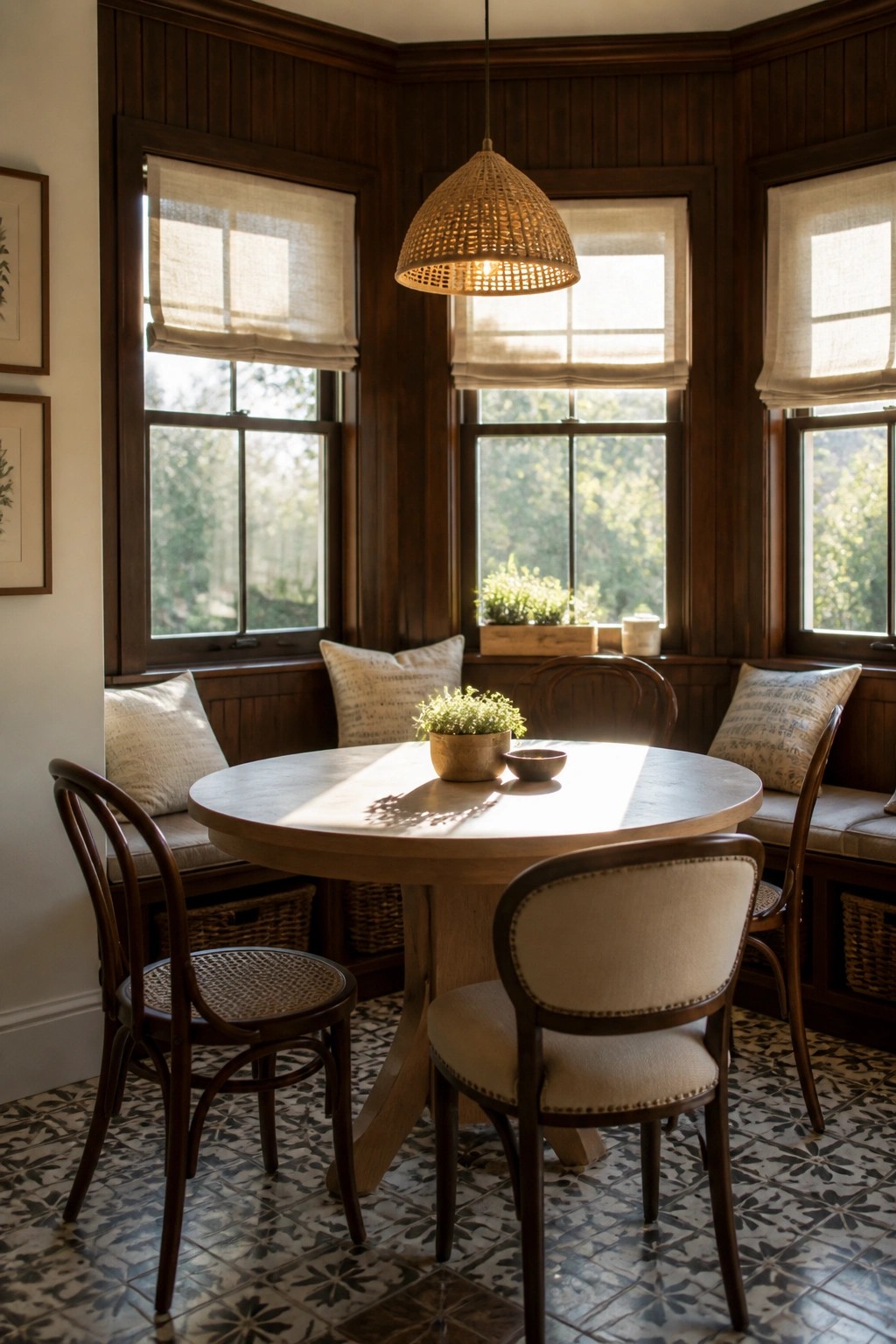
Dark wood paneling works well when you want a dining spot to feel enclosed and calm. It adds depth without needing much extra color or pattern, and it pairs naturally with simple furniture and light window treatments.
This approach suits older homes or any space with built-in seating around the edges. Keep the paneling consistent on all walls so the room reads as one piece rather than a collection of separate surfaces.
Dark Wood Paneling For A Traditional Study
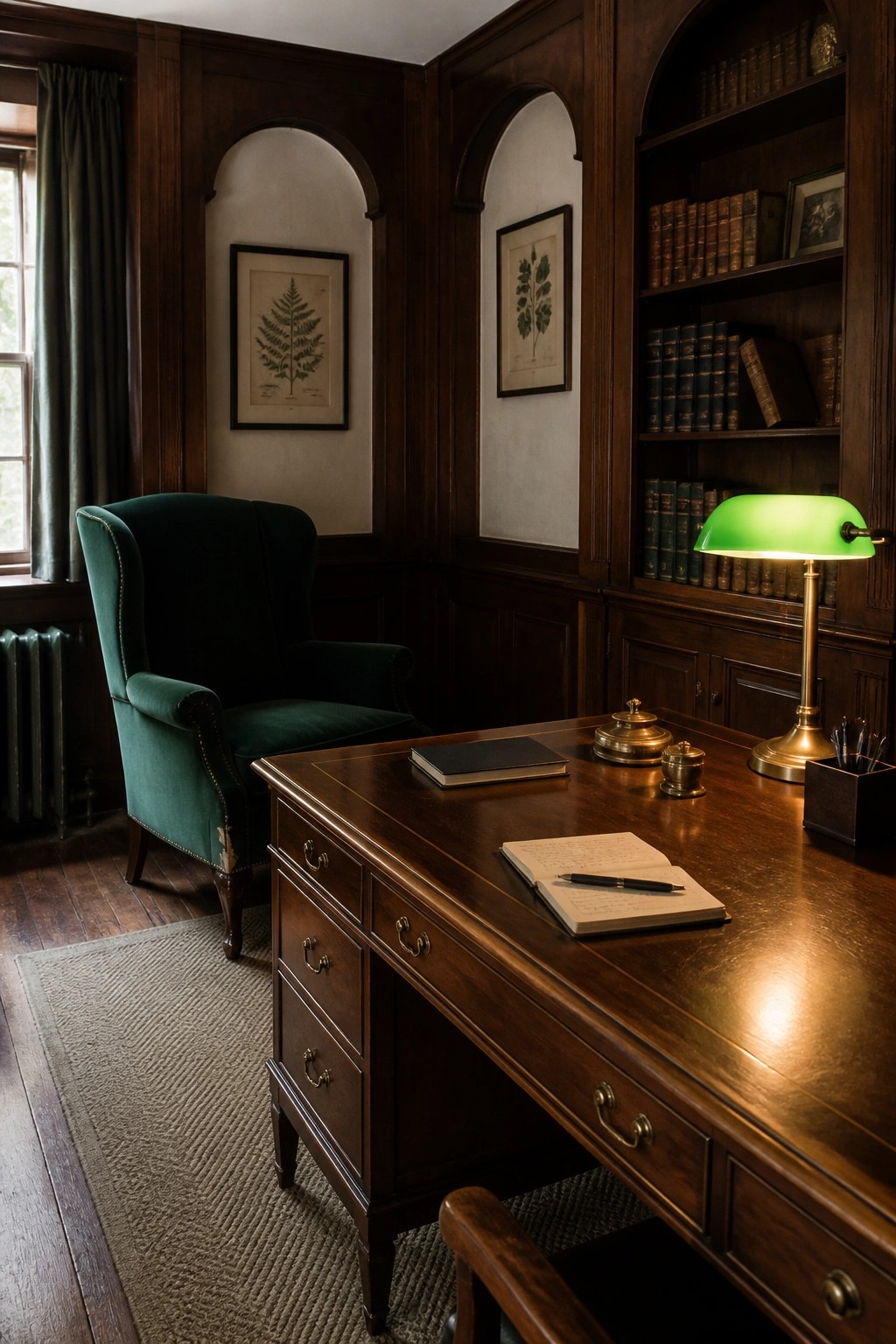
Dark wood paneling turns a study into a room that feels solid and enclosed. The full wall coverage and deep finish help the space read as a place meant for quiet work rather than casual use.
This look works best in older homes or any room where you already have built-in shelves and want the paneling to match them. Keep other finishes simple so the wood stays the main material.
Dark Wood Paneling for a Home Bar
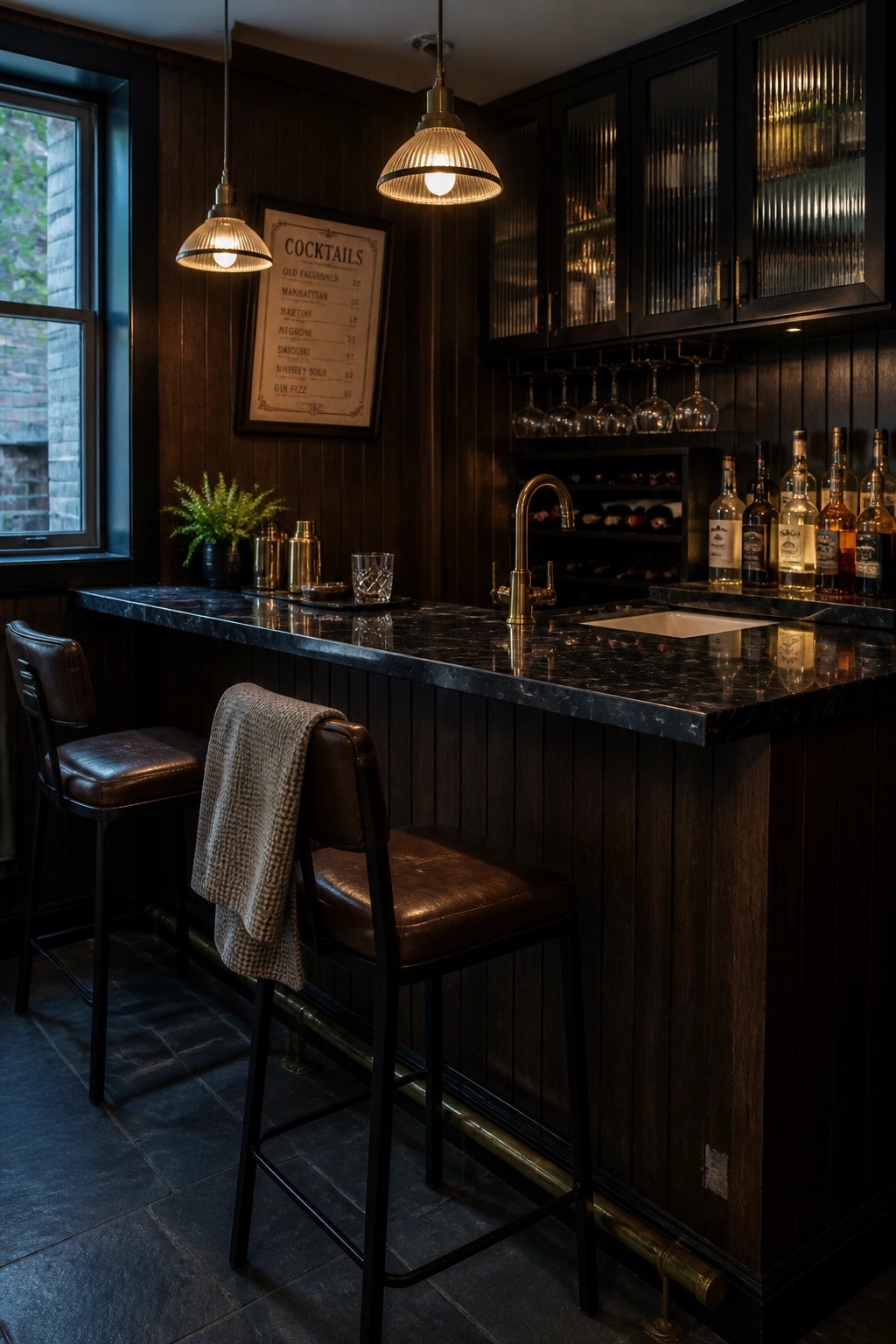
Dark wood paneling gives a home bar that enclosed, club-like feel many people want. The vertical boards wrap the whole space and make the counter area feel more intentional than just a corner with shelves.
It works best in rooms that already have some depth or low light. Keep the finish consistent on the walls and the bar front, then add a dark stone top so the tones stay grounded instead of competing.
Dark Wood Paneling for Mudroom Storage
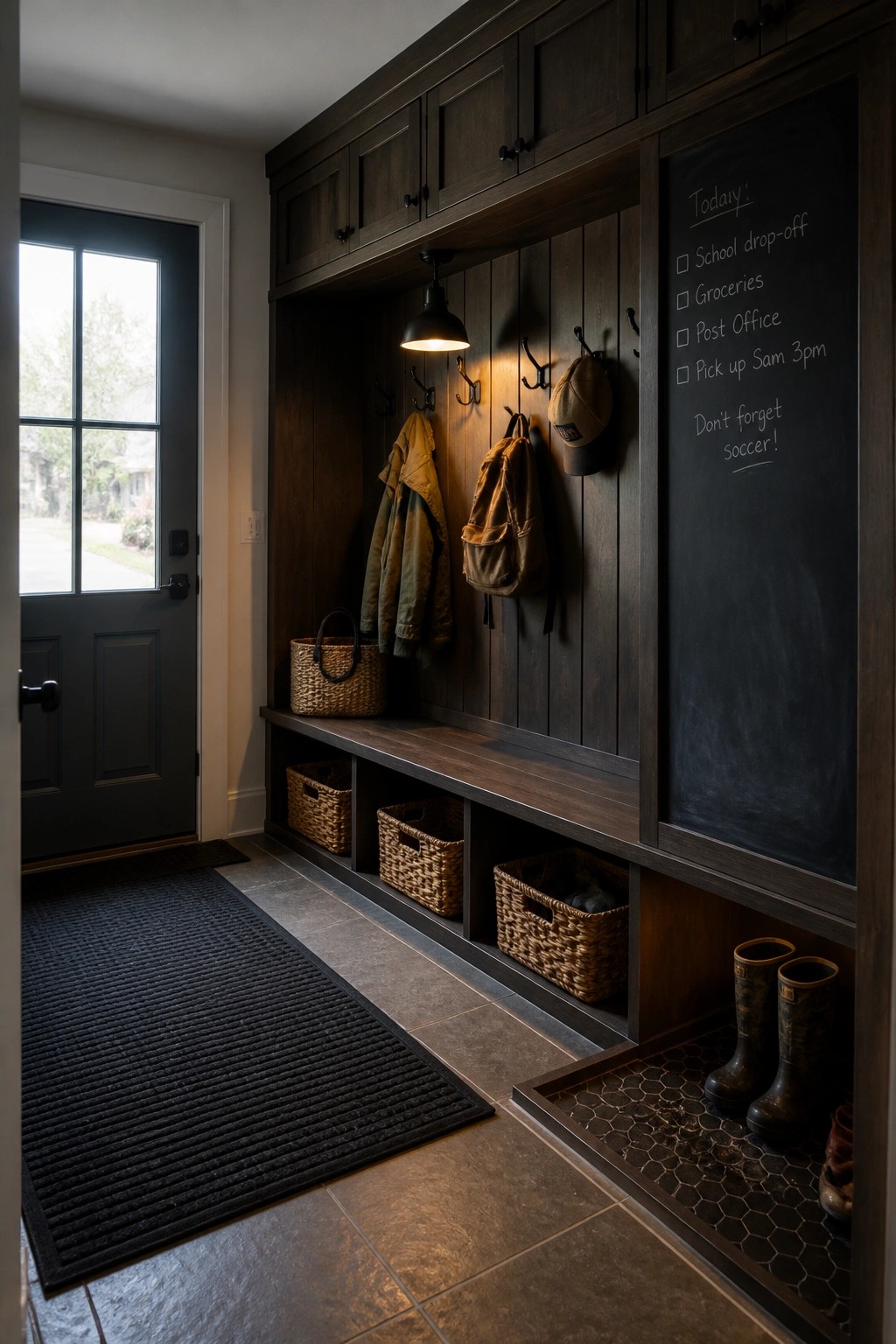
Dark wood paneling holds up well in busy entry spaces where coats, bags, and shoes come in every day. The deep tone helps hide wear while giving the area a solid, finished look that lighter materials often lack.
This setup works best in homes that need real storage near the door. Keep the paneling simple and pair it with hooks, open cubbies, and a low bench so the space stays practical instead of just decorative.
Dark Wood Paneling Around A Window Seat
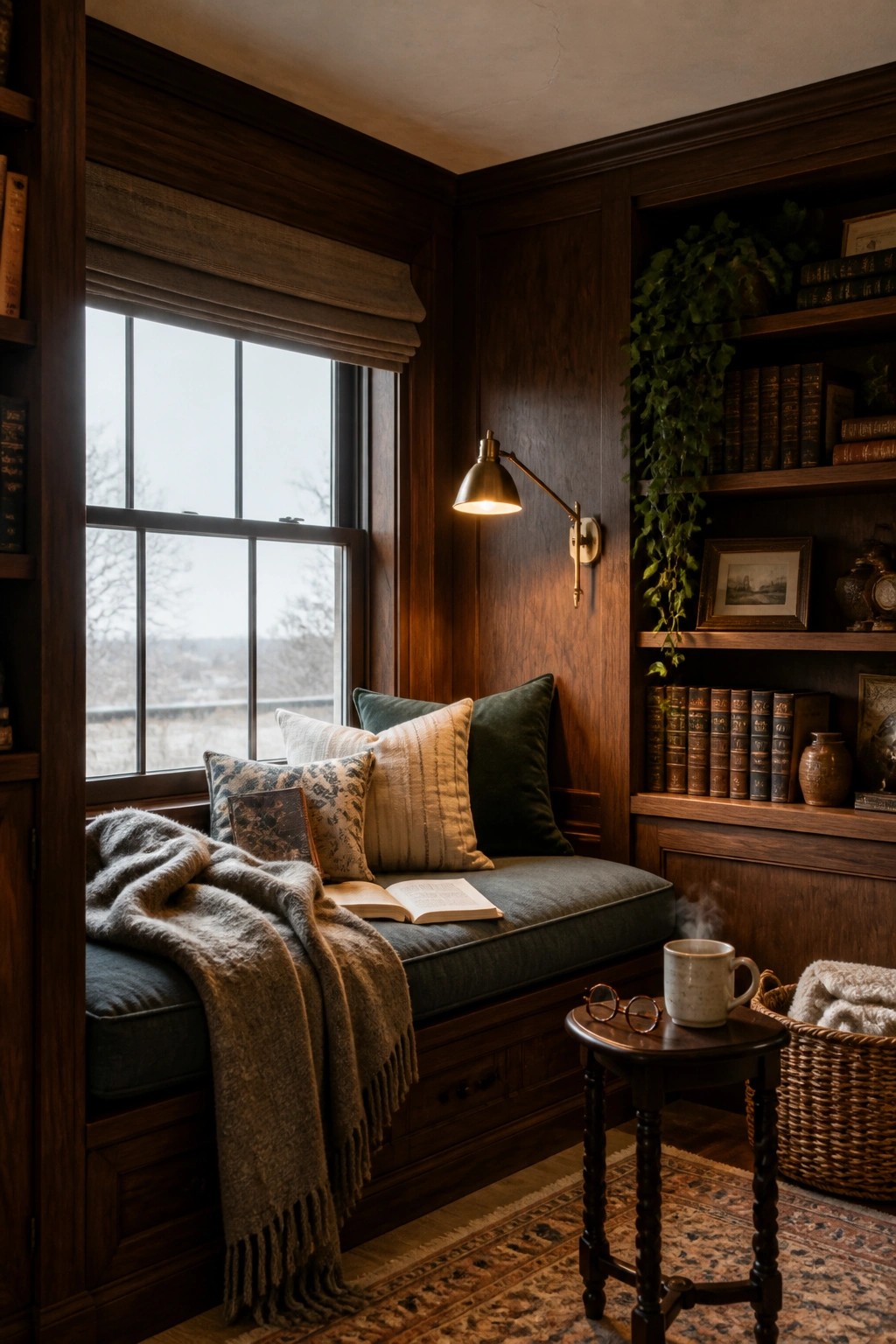
Dark wood paneling can turn a basic window into a real destination by wrapping the whole corner in the same rich tone. The finish makes the space feel enclosed and quiet, which works well for reading or just sitting.
This idea suits homes with traditional details or any room where you want to add warmth without adding clutter. Match the paneling to nearby built-ins so the nook feels intentional rather than added on later.
Dark Wood Paneling In Media Rooms
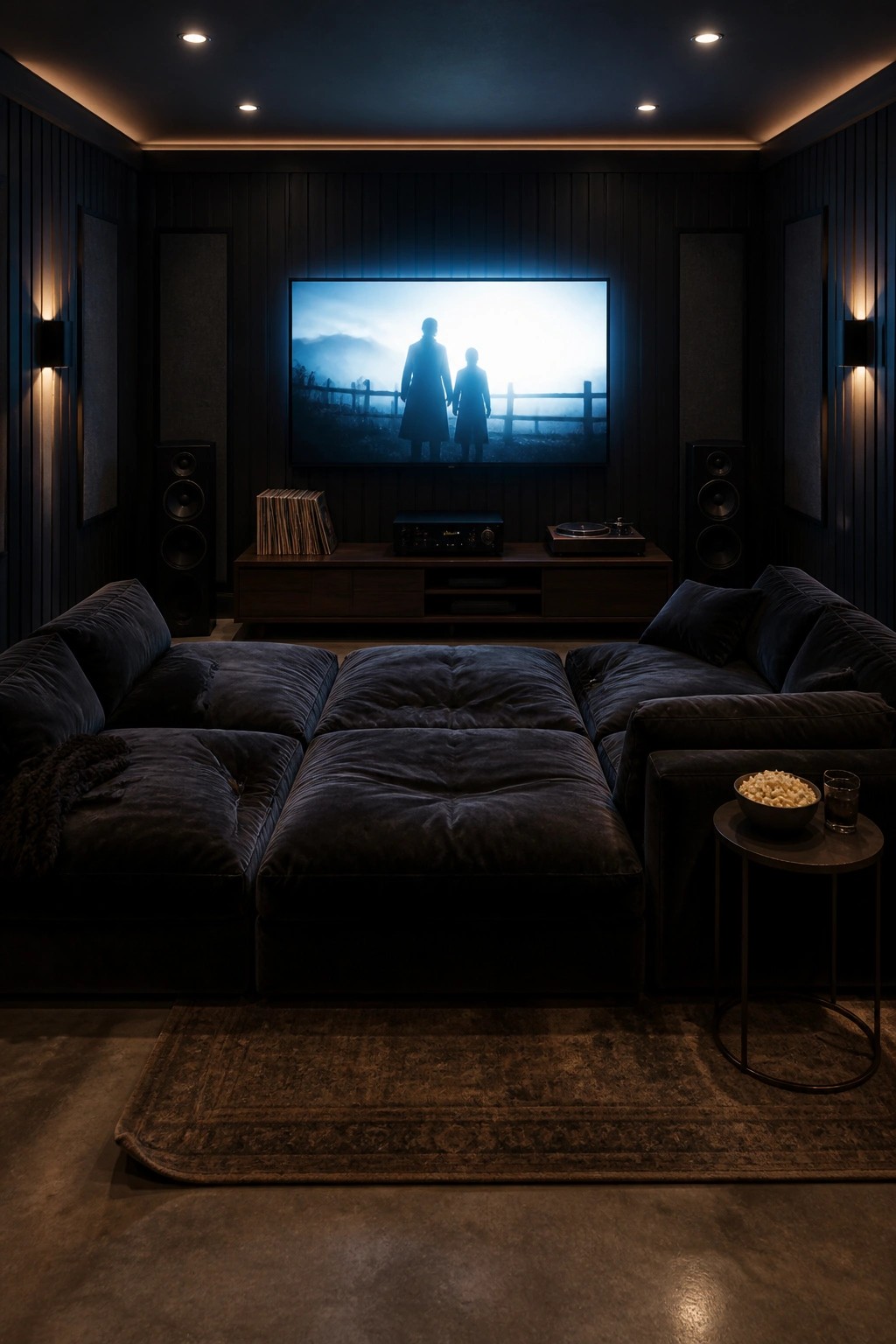
Dark wood paneling works well in media rooms because it helps control light and keeps the focus on the screen. The vertical grain adds some texture without pulling attention away from what is playing.
This finish suits lower-level rooms or spaces that can stay fairly dark during the day. Keep the rest of the furnishings simple so the paneling sets the mood without making the room feel closed in.
Vertical Dark Wood Paneling in Kitchens
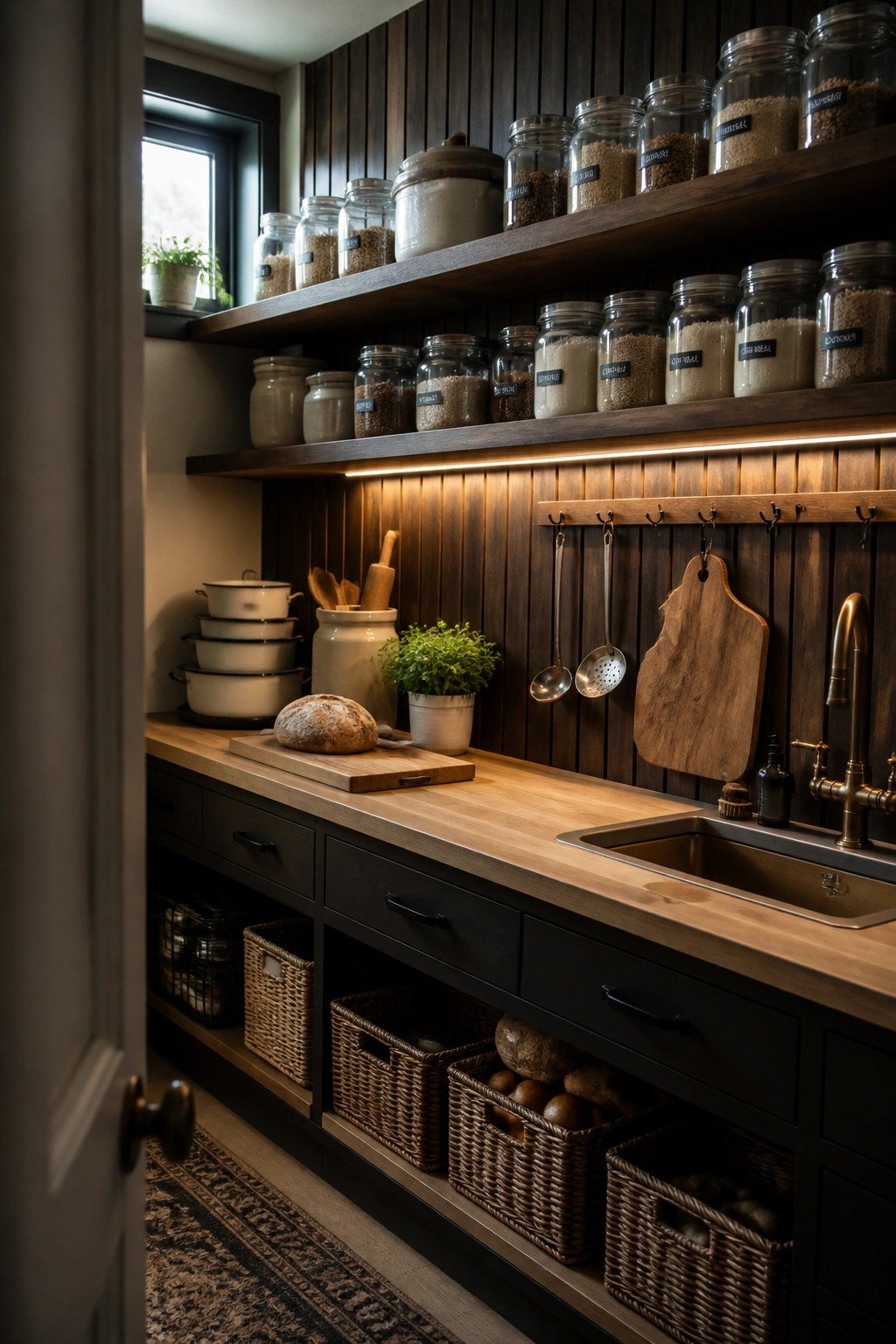
Dark wood paneling works well on kitchen walls because it brings warmth and texture while keeping the space feeling organized. The vertical lines also help the room feel a bit taller, which is useful in areas with lots of open storage.
This approach fits homes that already lean rustic or traditional. Match the wood tone on the counter and shelves so the whole area reads as one material rather than several competing finishes.
Frequently Asked Questions
Q: Does dark wood paneling show dust and fingerprints more than lighter finishes?
A: A quick wipe with a microfiber cloth every week or so keeps it looking fresh. Skip the sprays that leave residue and just use a damp cloth for smudges. The grain actually hides minor marks better than you might expect once it settles in.
Q: Will dark paneling shrink the feel of a smaller room?
A: It often does if you cover every wall without breaks. Leave one wall lighter or add a big mirror to bounce light back into the space. People usually end up liking the cozy depth once the furniture is in place.
Q: What lighting works without making rich wood tones look flat?
A: Place lamps at different heights so the light hits the grain from a few angles. Overhead fixtures alone tend to wash out the color. Warm bulbs bring out the depth without any extra tricks.
