

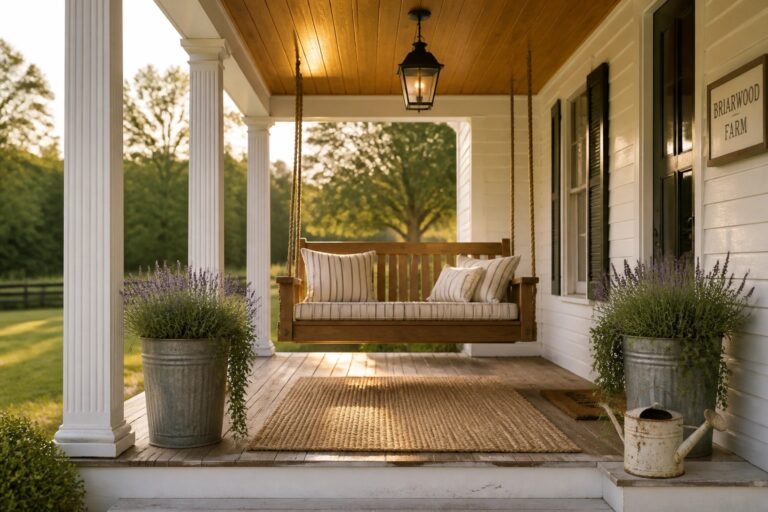
Porch ceilings often get overlooked until you start thinking about how a house presents itself to the street.
Choosing wood brings in natural grain and depth that can soften the lines of a roof overhang.
Details like this add up quickly.
I usually check how the boards run and whether the finish will age evenly before committing to a style.
It helps to see what works on houses similar to your own rather than copying something from a different region.
Painted Wood Ceilings On Porches
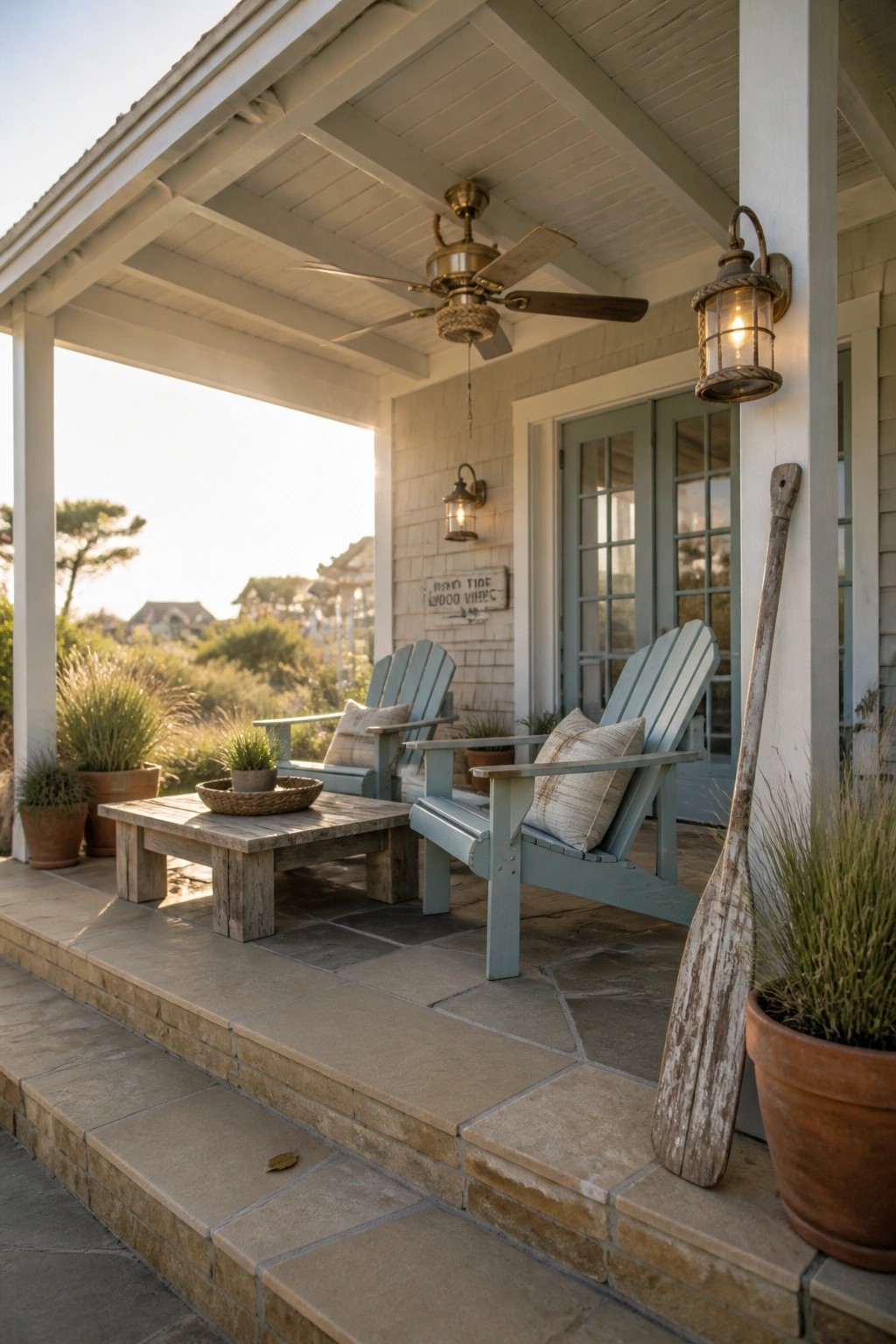
A painted wood ceiling gives a porch a clean, finished look that still feels natural. It brightens the space and adds just enough texture to keep the area from feeling bare or temporary.
This approach works best on homes with simple rooflines and plenty of natural light. Stick with a light color to avoid darkening the porch, and add a ceiling fan if you want extra comfort during warmer months.
Herringbone Wood Porch Ceilings
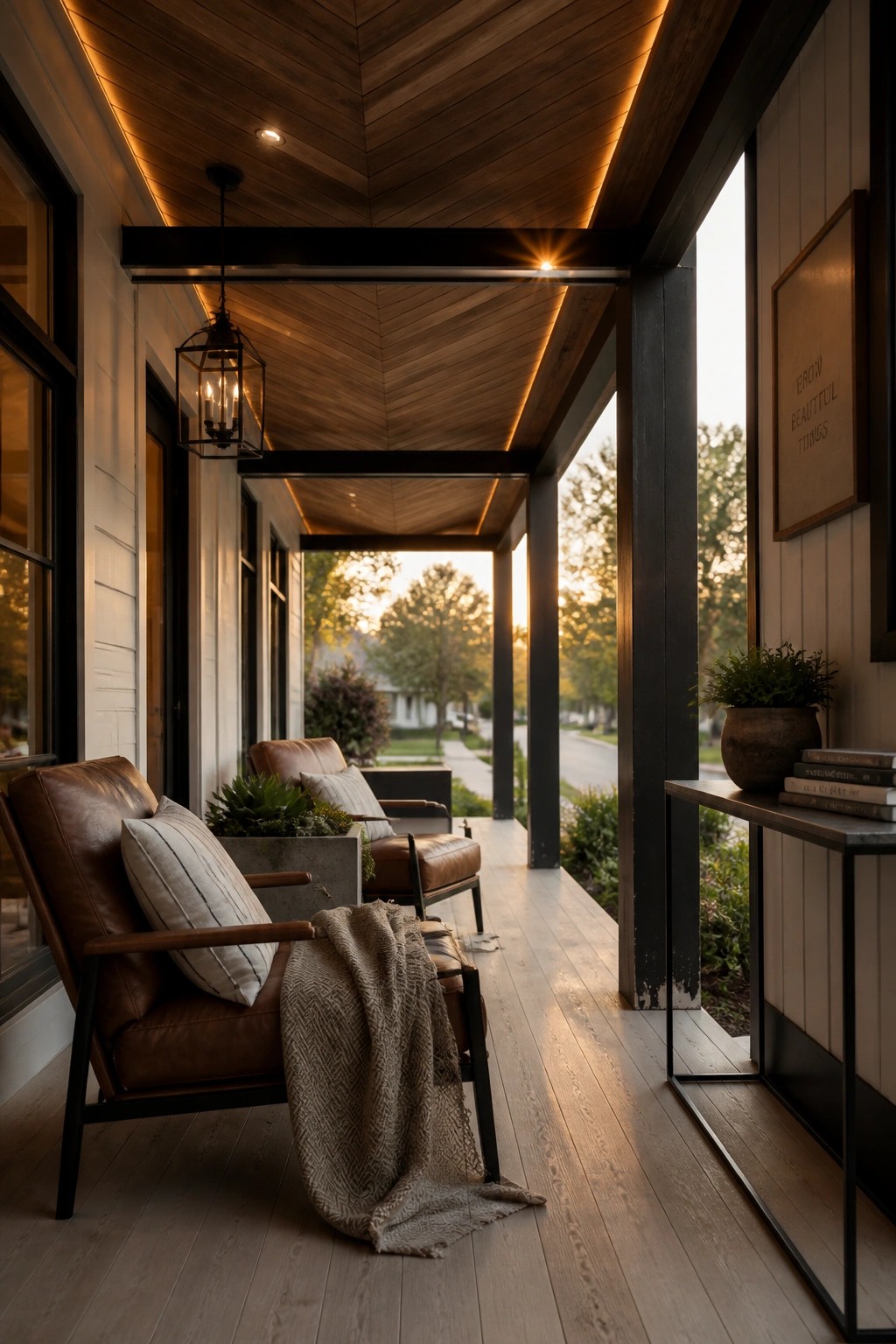
A herringbone pattern on the porch ceiling gives the space more structure and visual interest than a plain wood surface. The angled layout draws the eye along the length of the porch and pairs well with simple lighting tucked into the beams.
This approach works best on porches that already have a solid roof structure. Use it on homes with straightforward siding and keep the wood tone consistent so the ceiling becomes the main detail rather than competing with other elements.
Dark Wood Ceilings For Porches
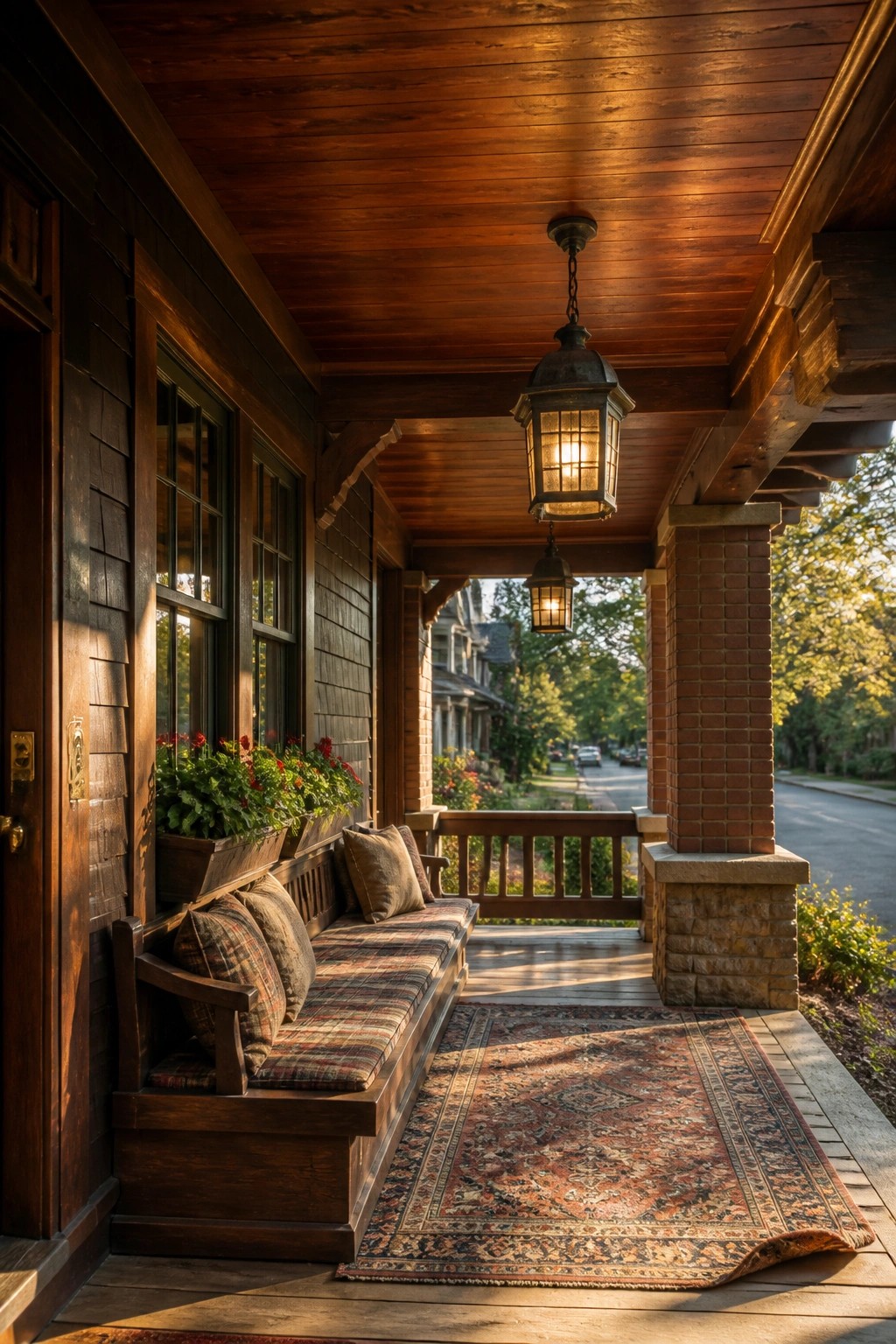
A stained wood ceiling gives a porch real presence without needing a lot of extra decoration. The planks add warmth and make the space feel more finished, especially when the wood has some depth in the grain and tone. It works well on older homes or any porch that gets regular use.
This approach suits homes with traditional or craftsman details and holds up in most climates as long as the wood is sealed properly. Keep the rest of the porch simple so the ceiling stays the focus, and use a couple of hanging lights to bring out the color at night.
Light Wood Ceilings for a Brighter Porch
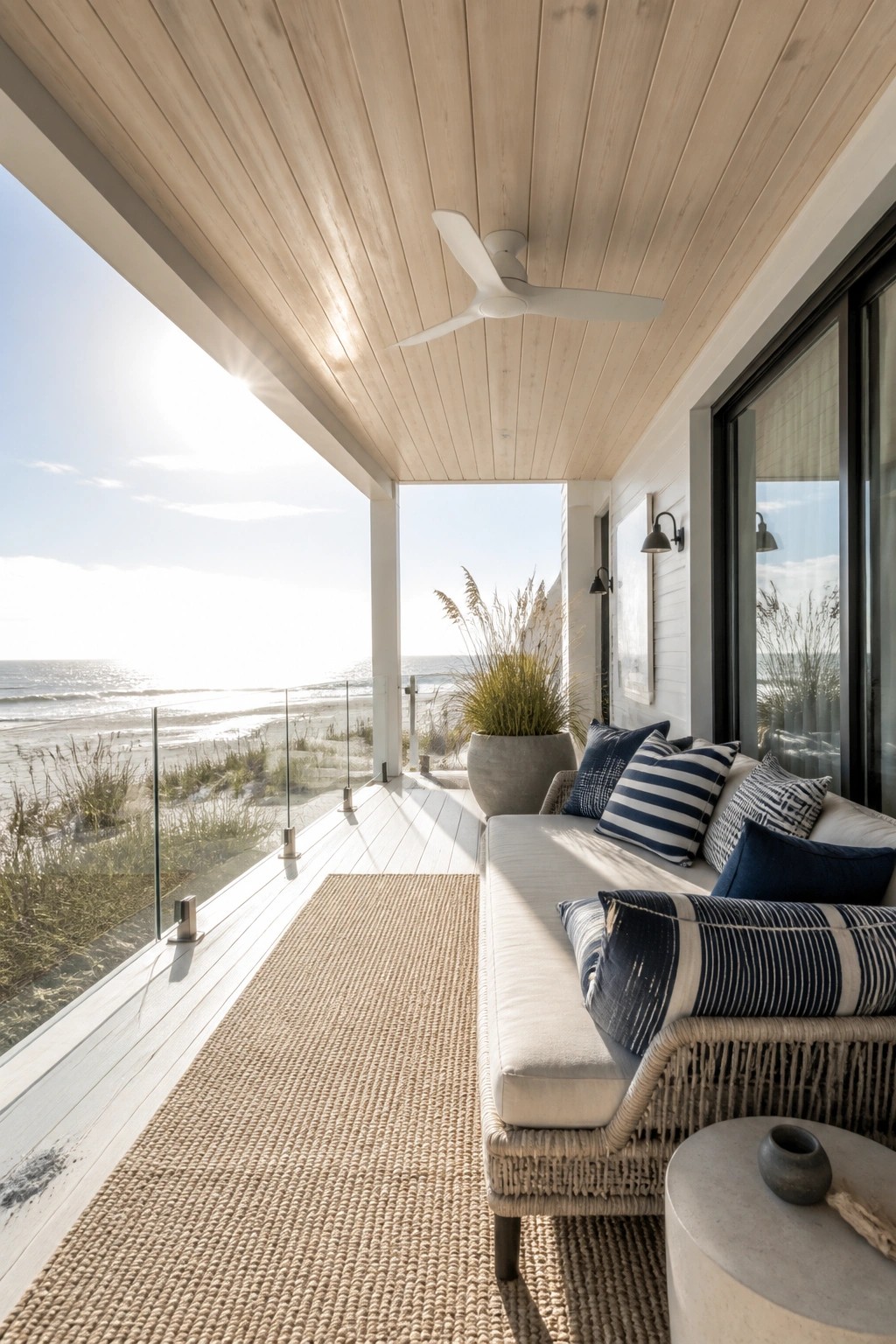
A light wood ceiling helps a porch feel more open without adding weight. It reflects sunlight instead of soaking it up, which keeps the space from feeling closed in even when the roof structure sits low.
This approach works well on covered decks or porches that face water or open views. It suits homes where you want the ceiling to blend with the surroundings rather than stand out, and it pairs simply with white trim or painted beams.
Warm Wood Ceilings for Covered Entries
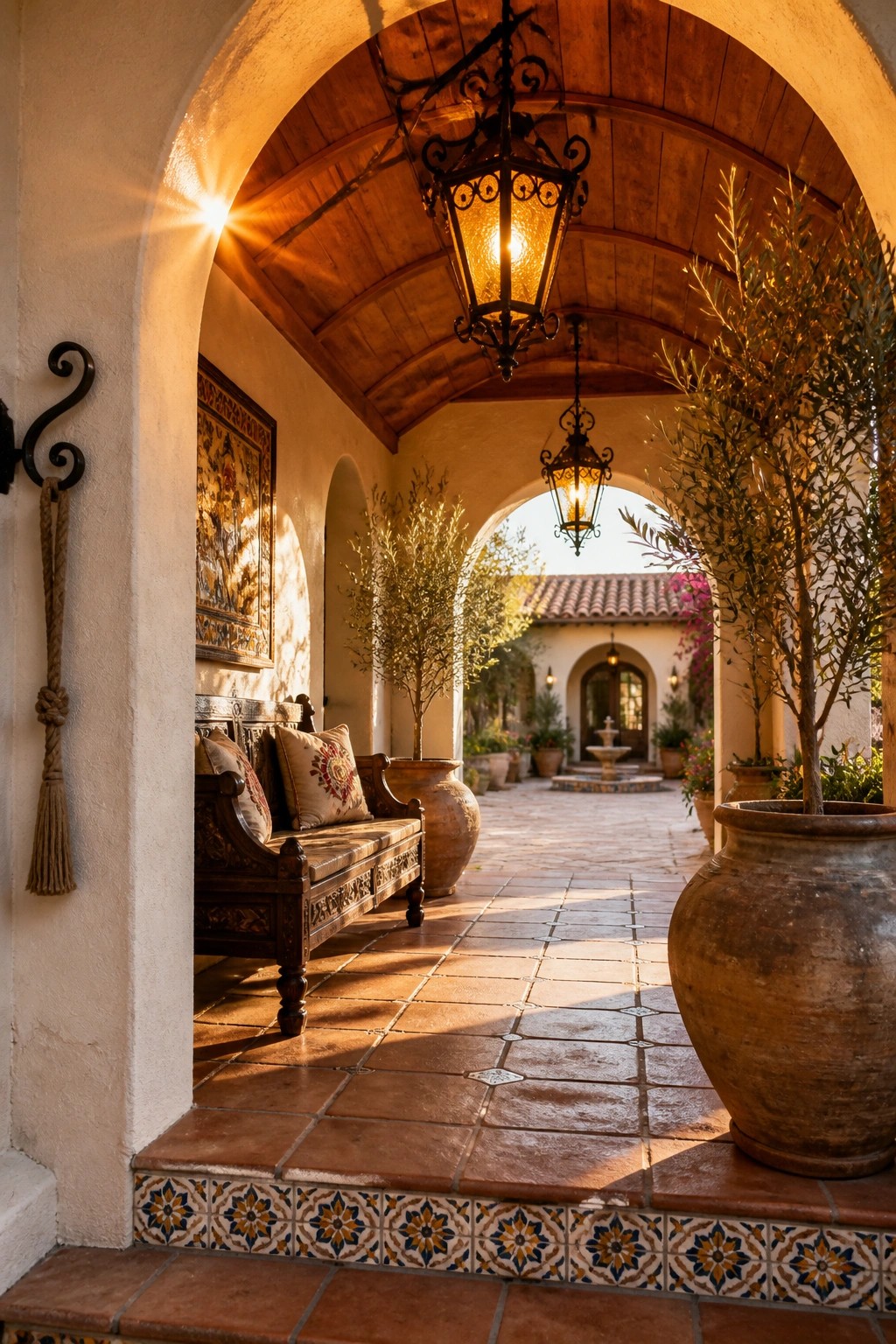
A wood ceiling adds real warmth to a covered porch or walkway. The natural tones and visible grain soften the look of stucco and tile, making the space feel more finished and comfortable rather than just a pass-through.
This works best on homes with traditional or Mediterranean details. Keep the wood a medium to warm finish, add simple hanging lights for evening use, and avoid painting it if you want the material to do the work.
Bamboo Ceilings For Porches

Bamboo ceilings give a porch a lighter feel than solid wood while still providing shade. The thin strips let a bit of light through and create a soft pattern overhead that feels easy and natural.
This works best on covered porches in warm climates where you want some airflow and a relaxed look. Keep the rest of the space simple with basic wood furniture so the ceiling stays the main feature.
Natural Wood Ceilings On Porches
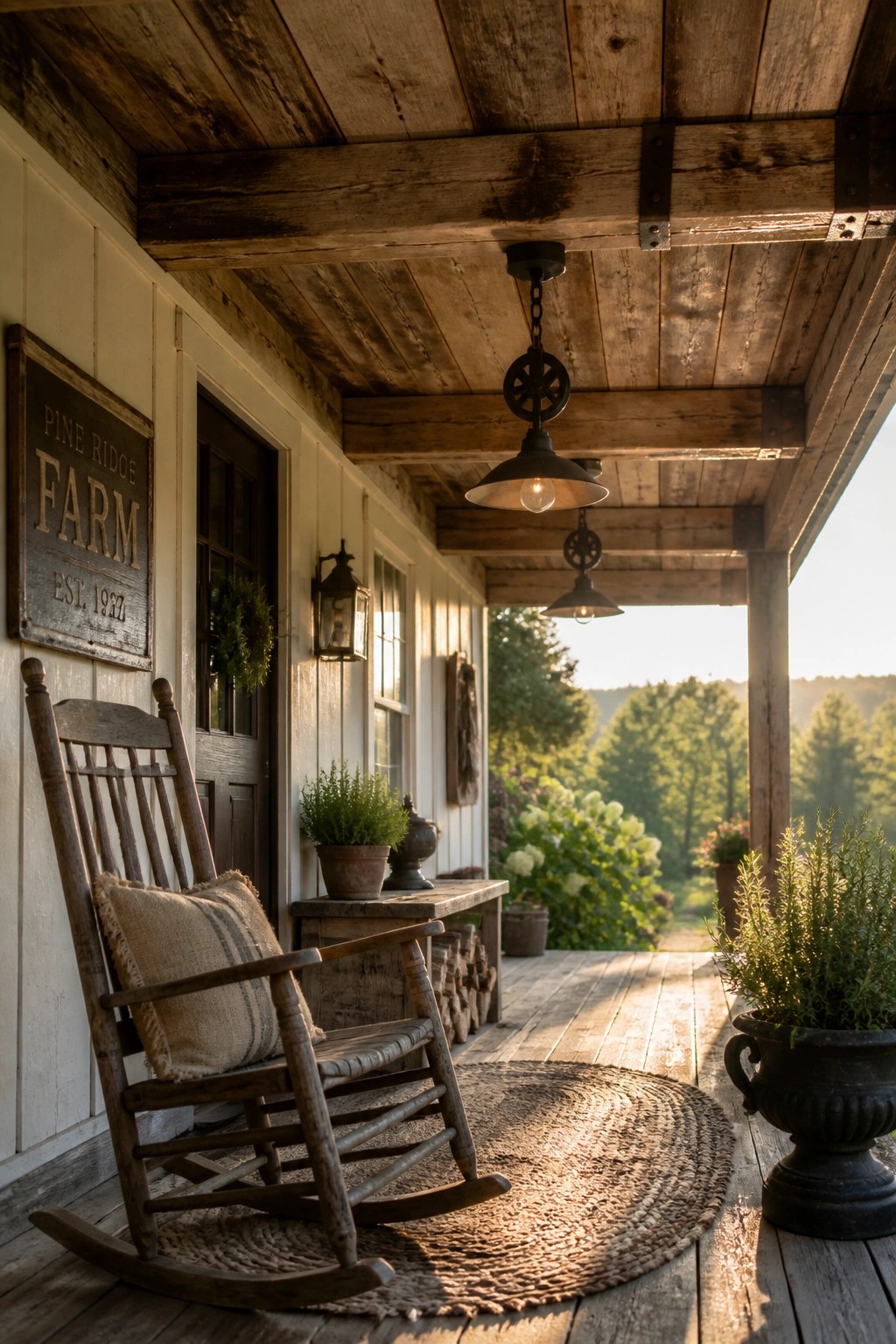
A wood ceiling gives a porch an instant sense of warmth and structure. The planks and beams keep the space from feeling too open or temporary, and the material holds up well over time when it is properly finished.
This works best on homes that already lean rustic or traditional. Keep the rest of the porch simple so the ceiling stays the main feature, and choose a finish that can handle some sun exposure without fading too quickly.
Light Wood Ceilings on Porches
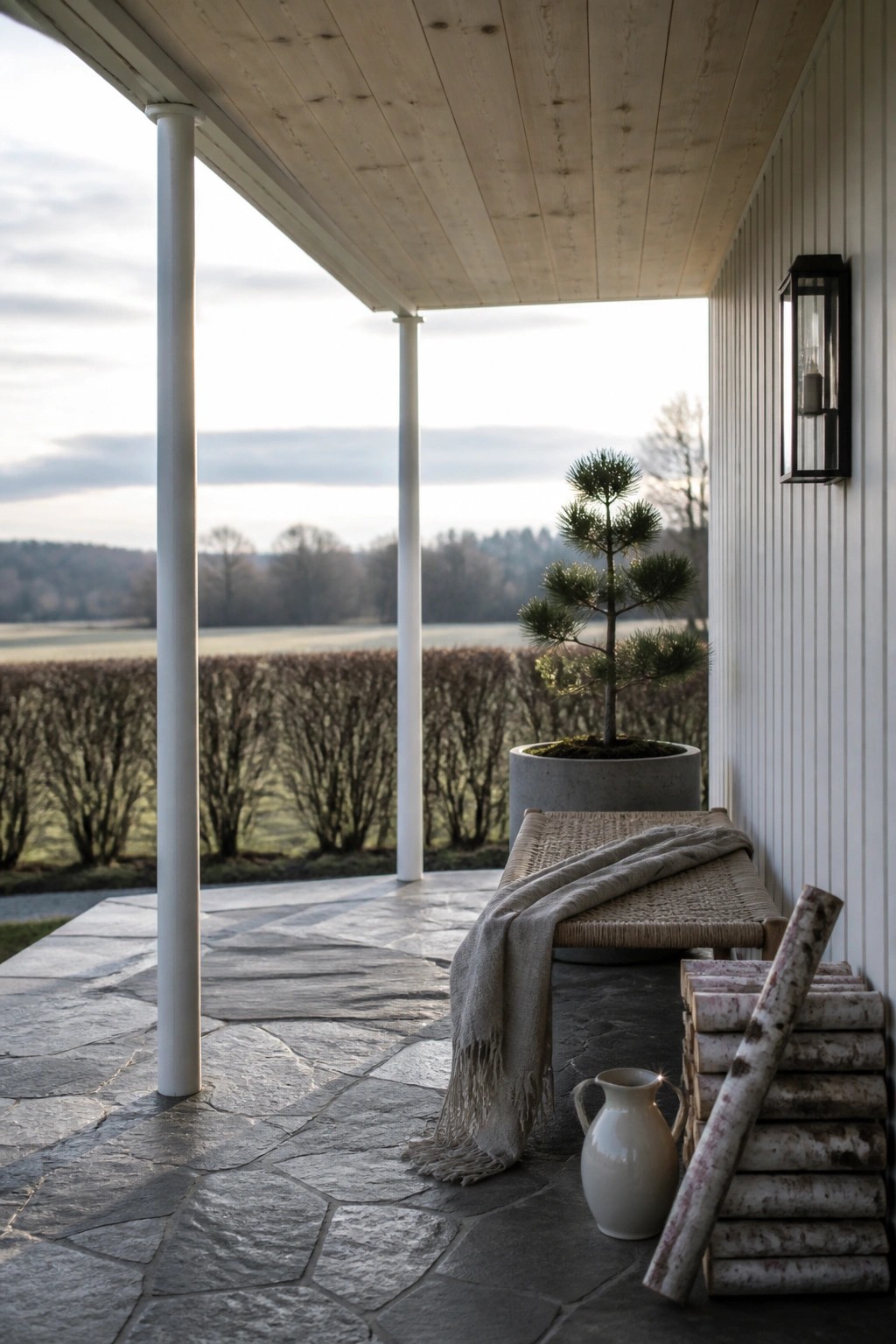
A light wood ceiling gives a porch a clean, open feel without making the space look heavy. The pale tone reflects light well, which helps smaller or shaded porches feel bigger during the day.
This works best on homes with simple trim and neutral exteriors. Keep the finish natural so the wood can age evenly, and pair it with white posts or beams if you want the ceiling to stay the main focus.
Paint the Porch Ceiling a Soft Color
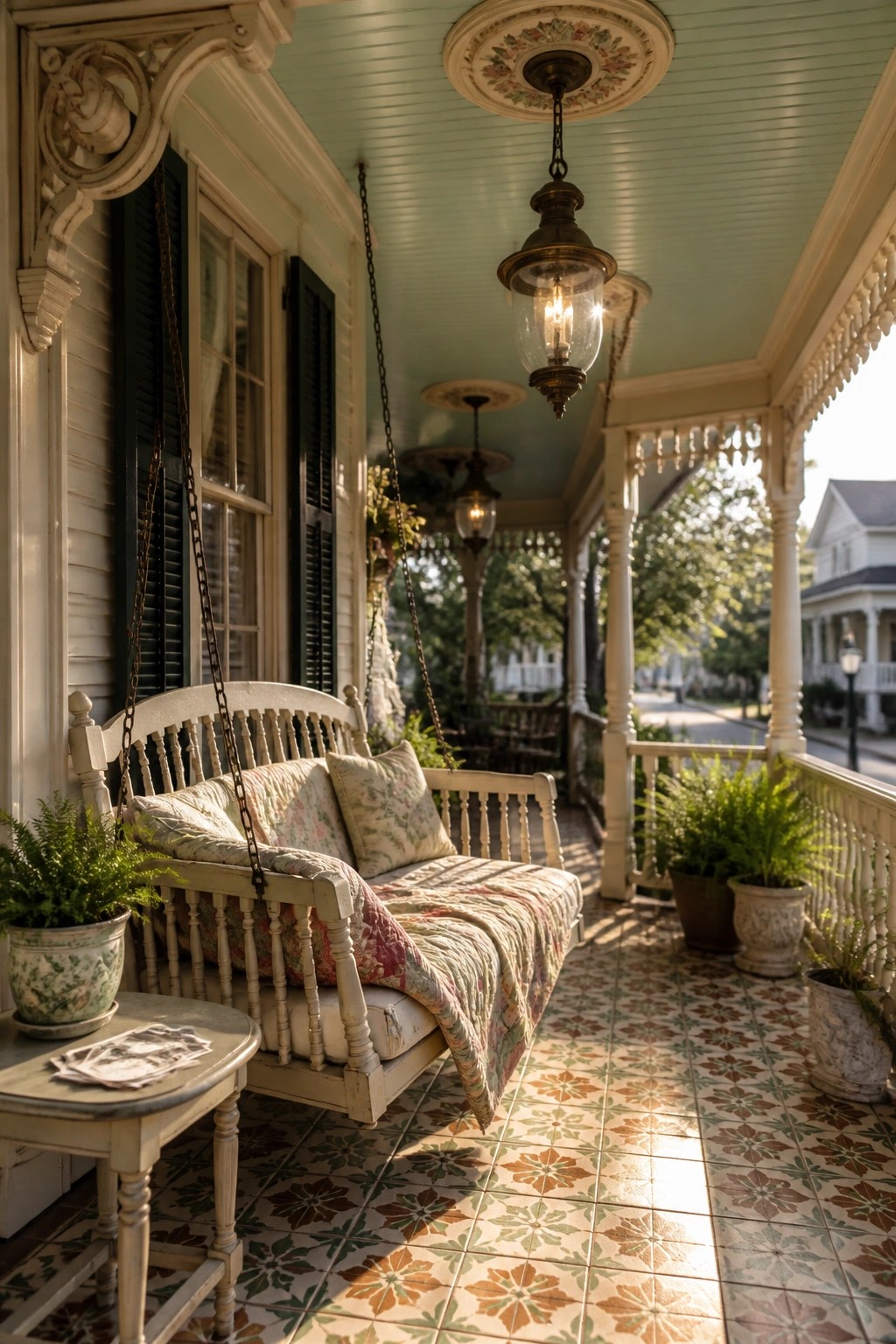
A soft color on the ceiling gives a porch an easy lift that feels fresh but still calm. Many older homes already have wood ceilings that take paint well, and a gentle shade like pale green or sky blue adds just enough interest while keeping the space light.
This approach works best on covered porches that get steady shade, since the color stays protected from harsh sun. Stick with exterior-grade paint and test a small patch first so the final tone matches the trim and any nearby siding.
Dark Wood Beams For Porch Ceilings
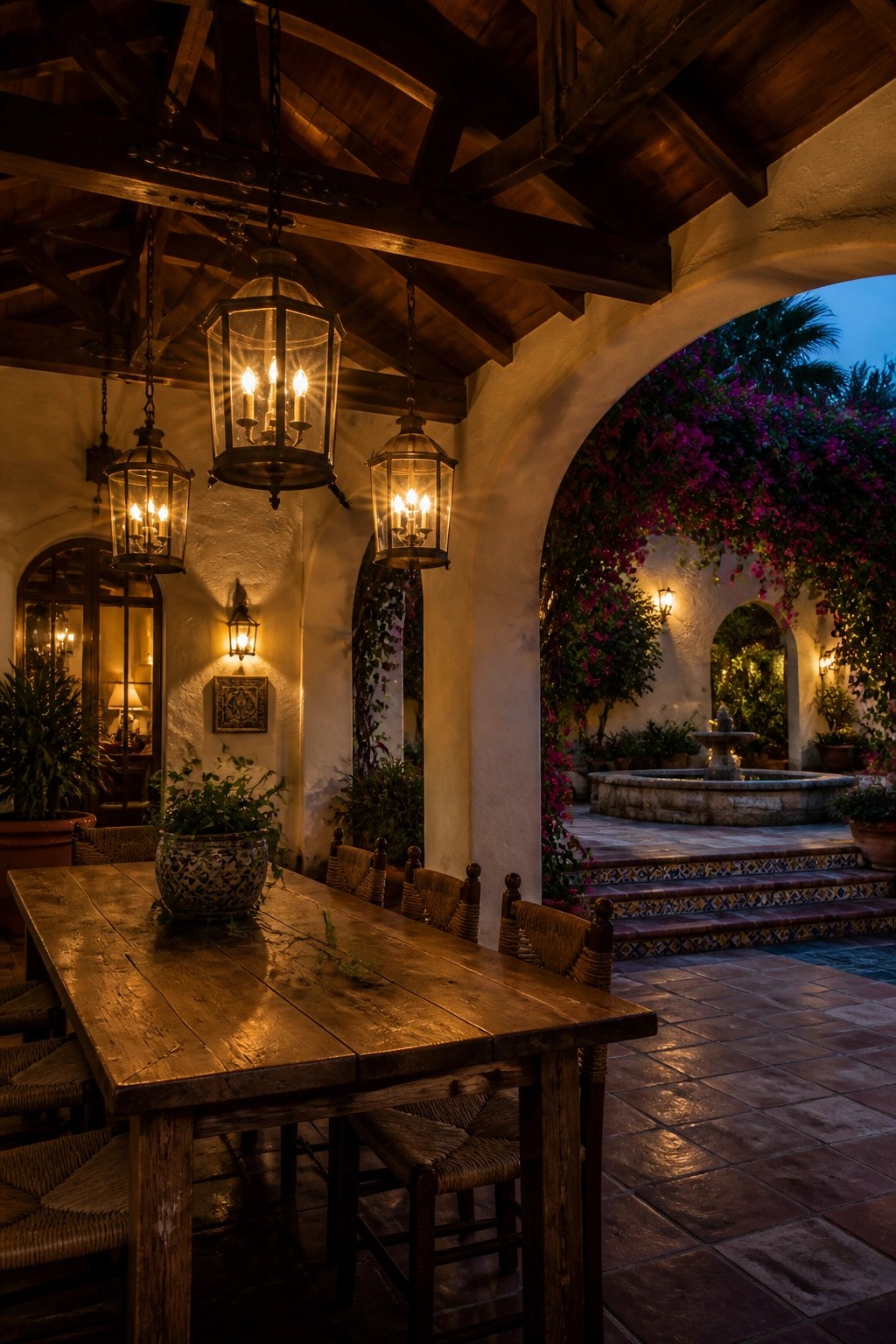
A dark wood ceiling with thick exposed beams adds warmth to an outdoor space without much extra effort. It turns a covered patio into something that feels more finished and connected to the house.
This approach suits homes with stucco walls or Mediterranean details. Keep the beams simple and let the wood carry the look. Pair it with basic hanging lights rather than trying to fill the space with too many other materials.
White Painted Ceilings On The Porch
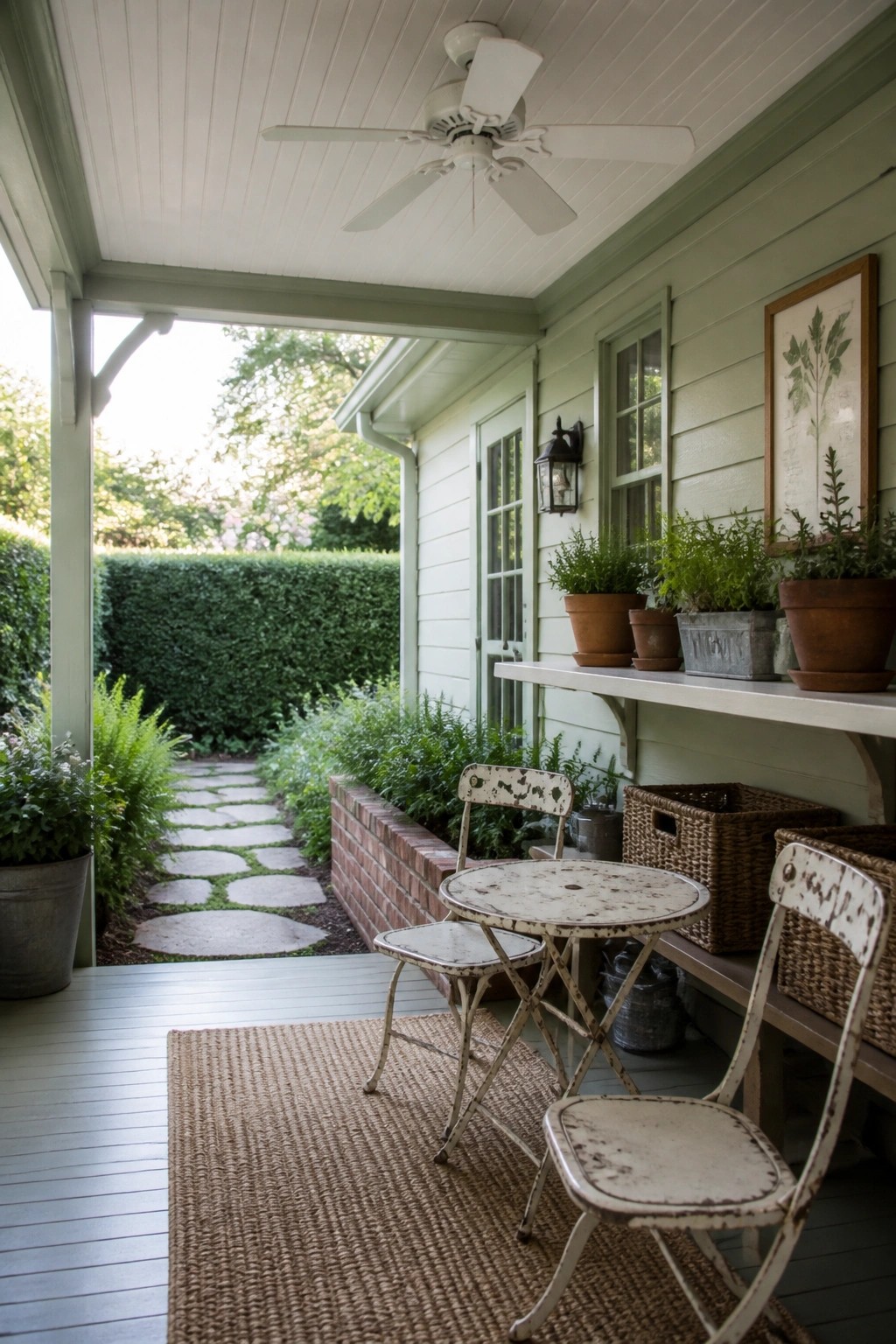
A white ceiling helps a porch feel brighter and more open, especially when the space sits under a deep overhang. The light color bounces daylight back down and keeps the area from feeling closed in during the day.
This works best on homes with soft exterior colors and simple trim. Use exterior-grade paint on wood planks or beadboard, and add a ceiling fan if the porch gets much use in warmer months.
Wood Ceilings Add Natural Warmth To Porches
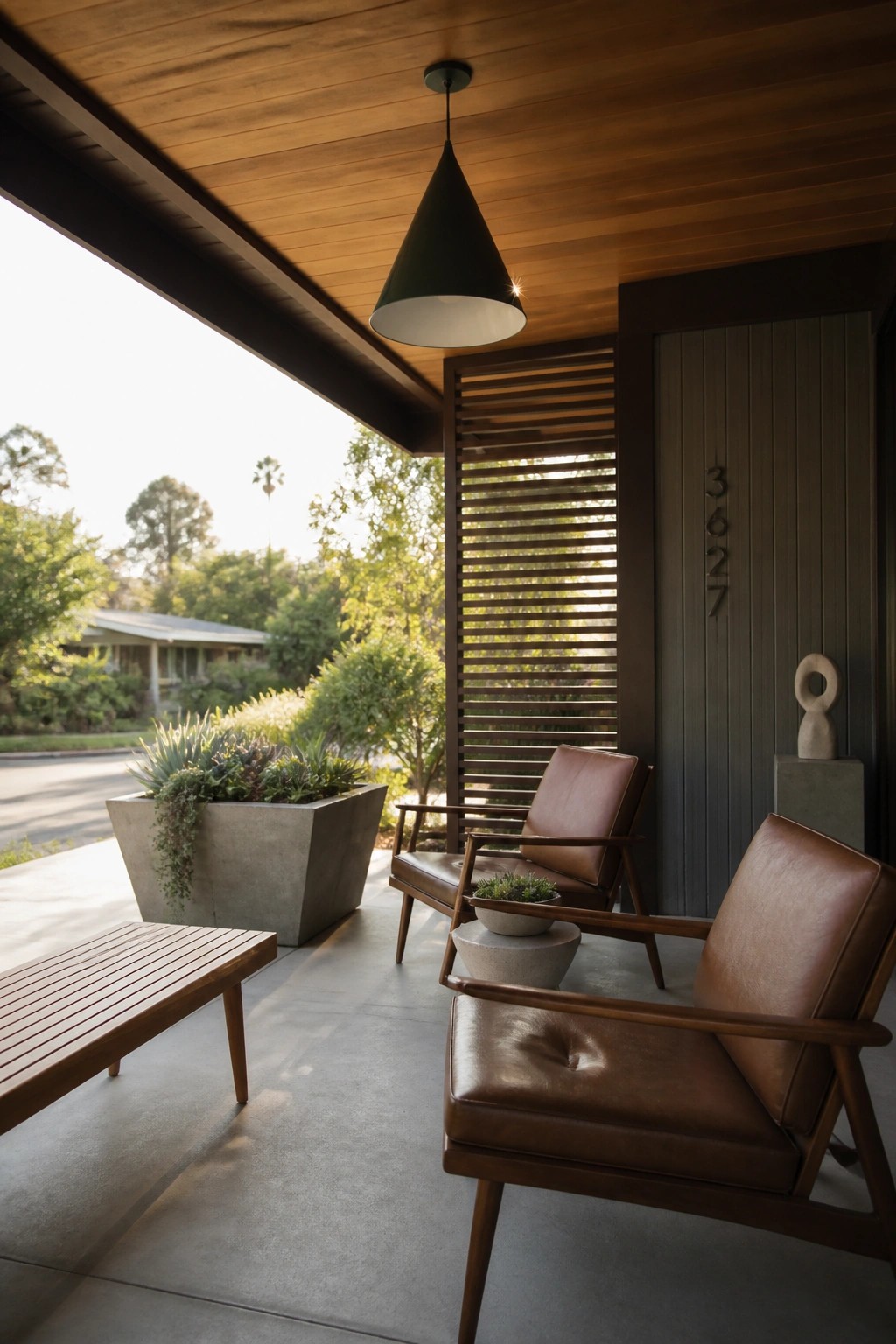
Many people forget to do much with a porch ceiling, yet wood makes the space feel finished in a simple way. The planks bring texture and a bit of warmth that painted ceilings often lack, and they help tie the whole outdoor area together.
This approach works best on homes with clean lines or midcentury details. Keep the wood tone consistent and run the planks straight across so the ceiling stays calm rather than busy. A single hanging light is usually enough to finish the look.
Painted Patterns on Wood Ceilings
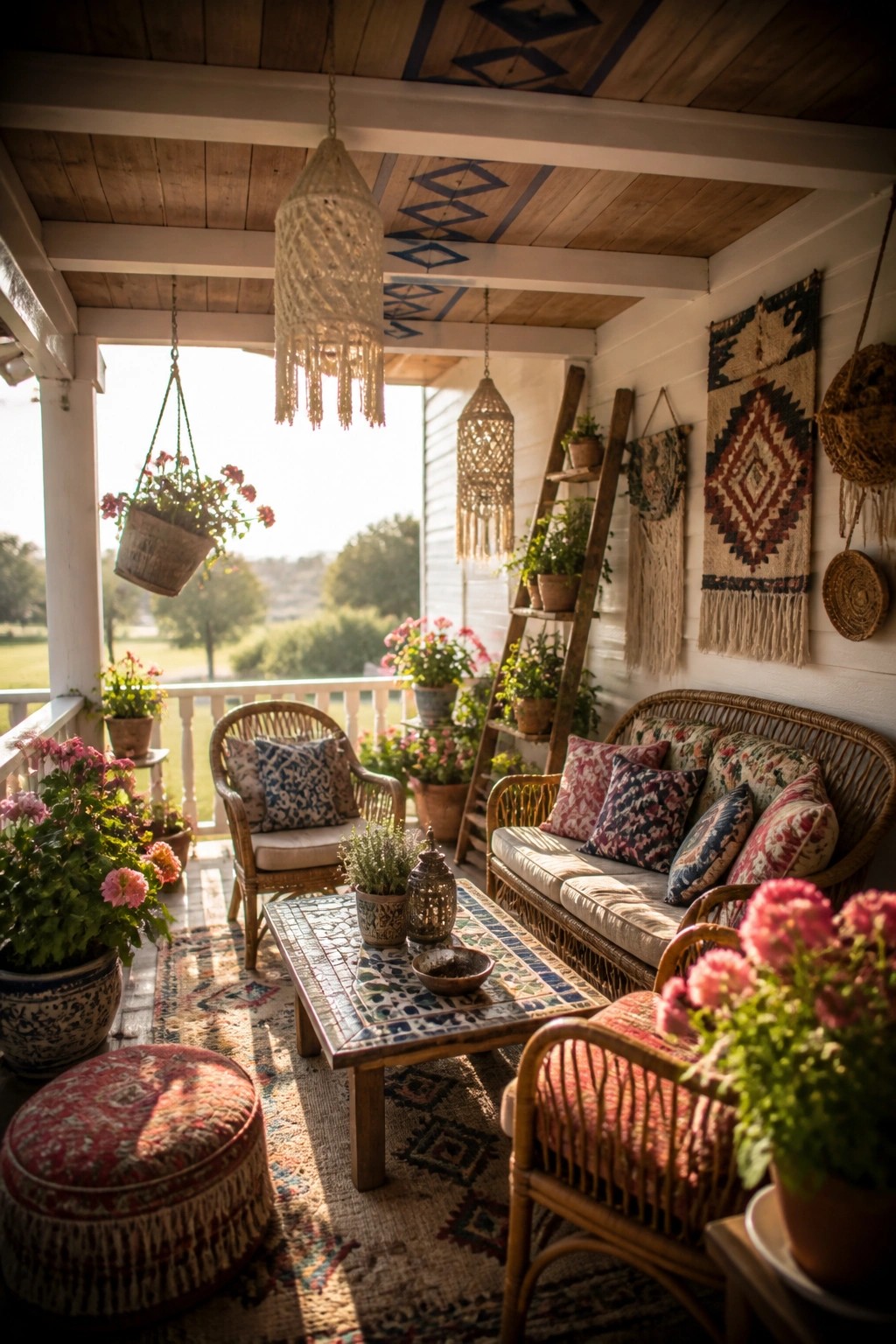
Painting simple geometric designs onto a wood porch ceiling adds character without covering up the natural material. The contrast between the wood tones and a few bold lines or shapes makes the space feel more finished and personal.
This approach works best on covered porches that already have good light. Stick to two or three colors max so the pattern stays easy to live with, and test the paint on a small board first to see how it looks against your particular wood.
Dark Wood Ceilings For Porches
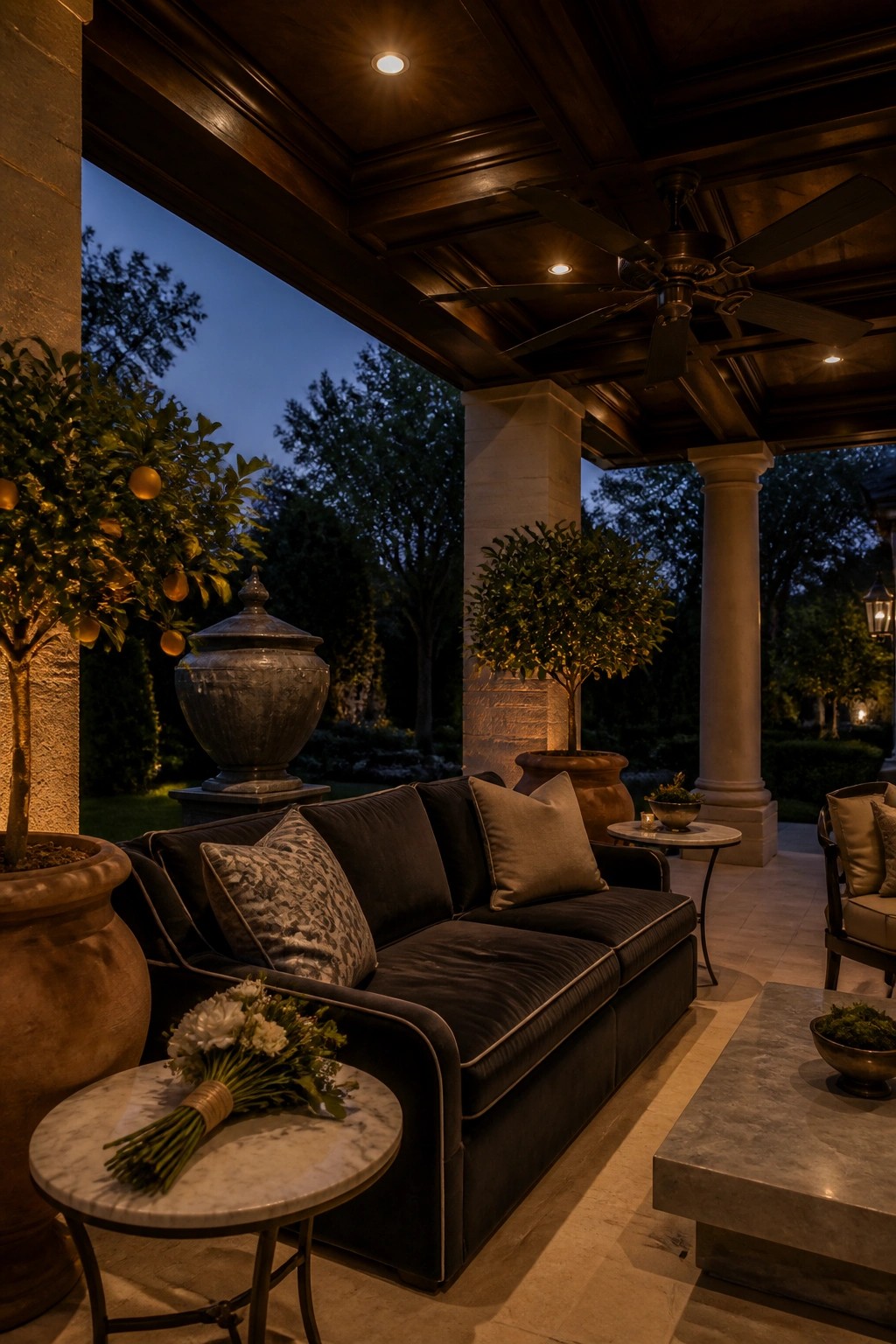
A dark wood ceiling can make an outdoor porch feel more finished and a little more like an actual room. The deep tone draws the eye upward and gives the space a solid, grounded look that lighter ceilings often miss. It works especially well when you want the porch to feel usable from late afternoon into the evening.
This approach suits homes with traditional or transitional architecture and pairs nicely with stone or brick columns. Keep the wood tone consistent with any beams or trim so the ceiling does not feel like an afterthought. A ceiling fan in a matching finish helps keep the look simple and functional.
Exposed Beams On A White Porch Ceiling
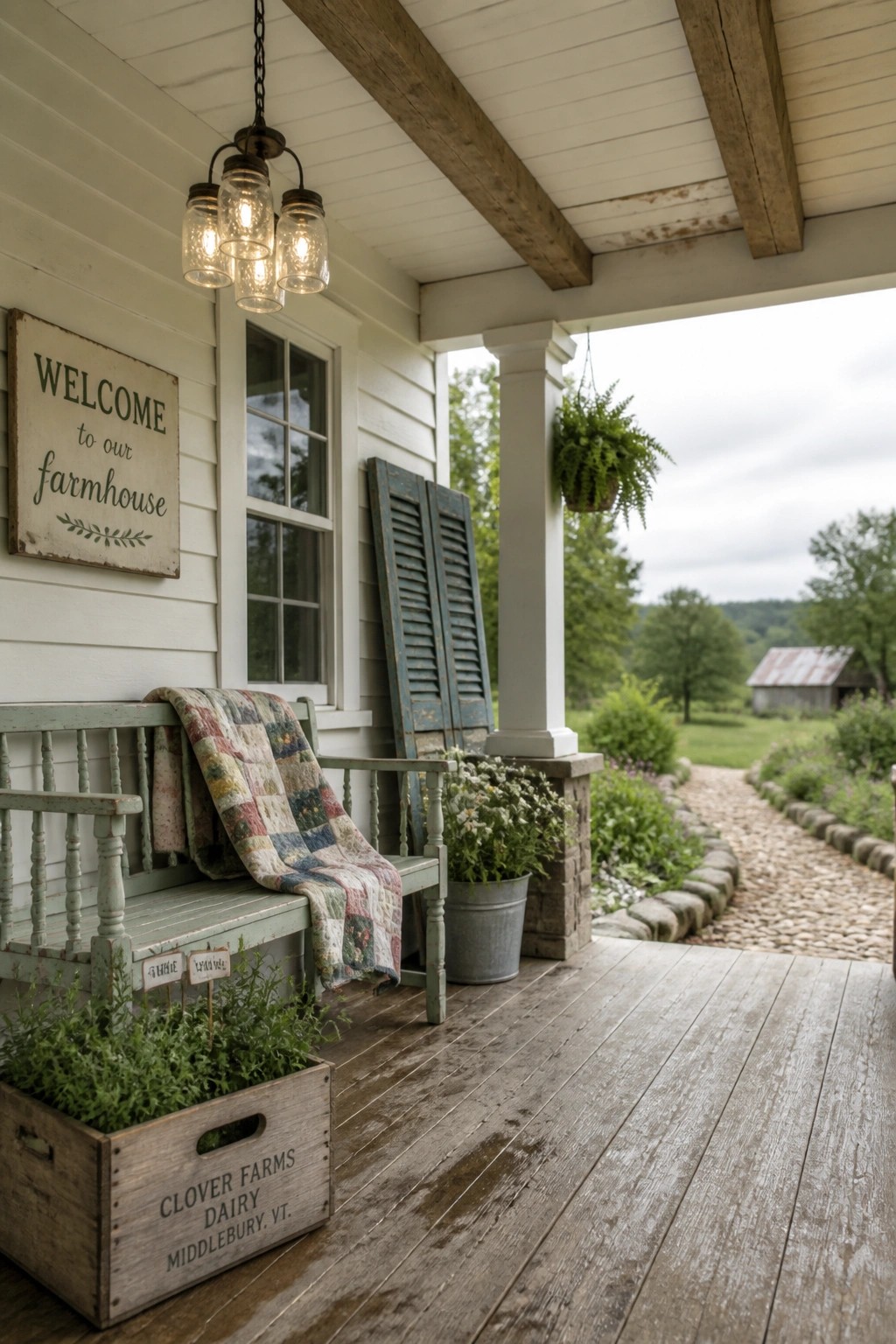
A white ceiling with the beams left natural is a simple way to keep a porch from feeling too closed in. The wood adds some weight and texture so the space still feels like it belongs to the house instead of just floating above the deck.
This works best on farmhouses or older homes where you want a bit of structure without painting everything the same color. Seal the beams well if they are going to see rain or sun, and keep the rest of the ceiling bright so the porch does not get gloomy.
Exposed Beams In A Wood Porch Ceiling
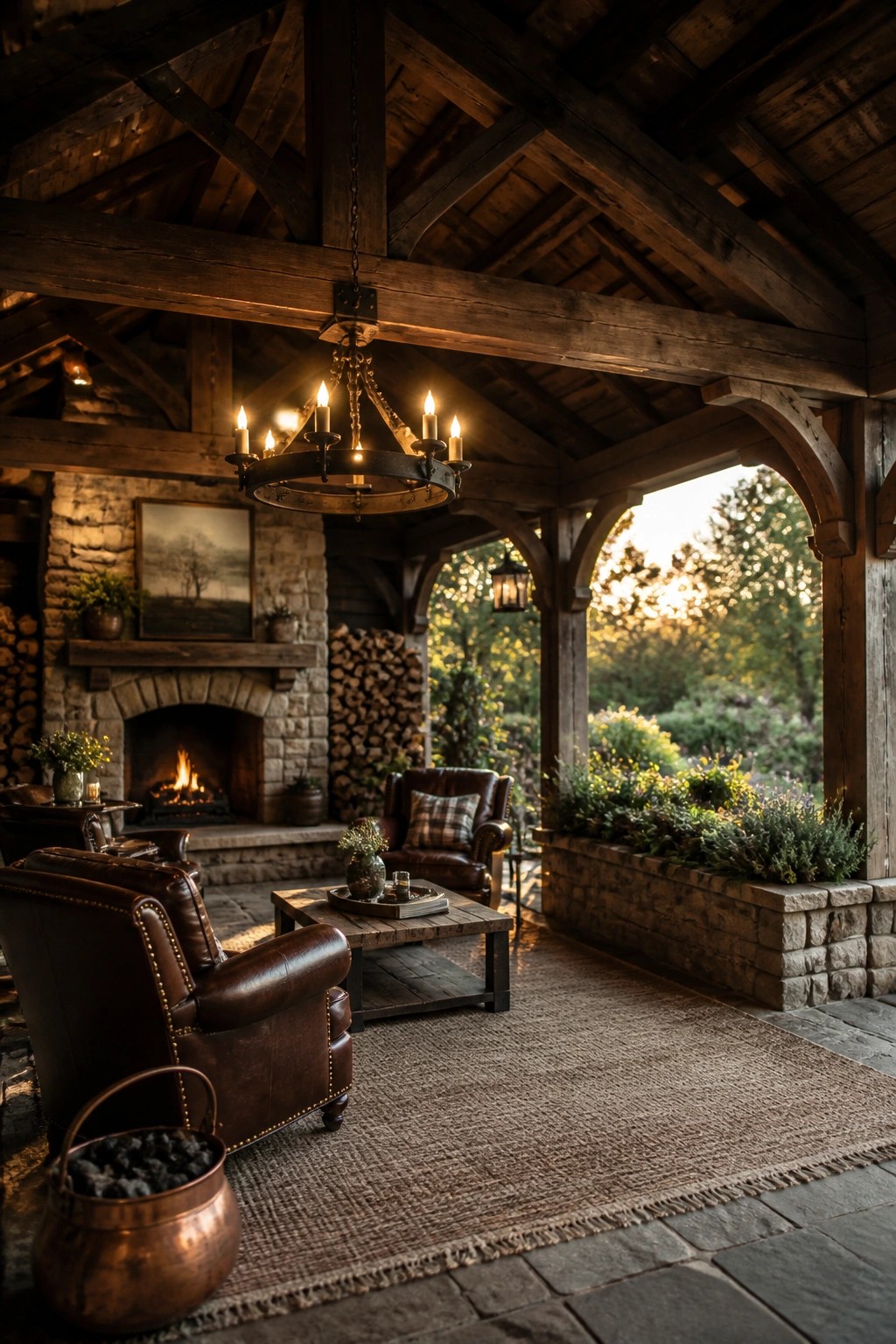
Exposed beams give a porch ceiling real presence. They turn what could feel like a flat surface into something with weight and structure, especially when the wood is left dark and the beams are spaced to show the roofline.
This approach works best on porches with enough height to let the beams stand out. It suits homes that already lean rustic or traditional, and it pairs naturally with stone fireplaces or simple outdoor furniture. Just keep the rest of the ceiling clear so the beams stay the focus.
Slatted Wood Ceilings

A slatted wood ceiling works well on a porch because it adds texture without making the space feel closed in. The boards run in one direction and let the structure show through, which keeps the area feeling open while still giving it some depth and warmth. This approach suits homes that already use wood elsewhere outside, since it ties the ceiling into the rest of the materials.
It works best on covered porches or patios that get steady use, especially when you want something a little more finished than plain drywall or exposed beams. Pair it with simple lighting that hangs down from the slats so the ceiling stays the main feature. Darker stains hold up better in sunny spots and show less dust over time.
Gentle Paint Colors For Wood Porch Ceilings
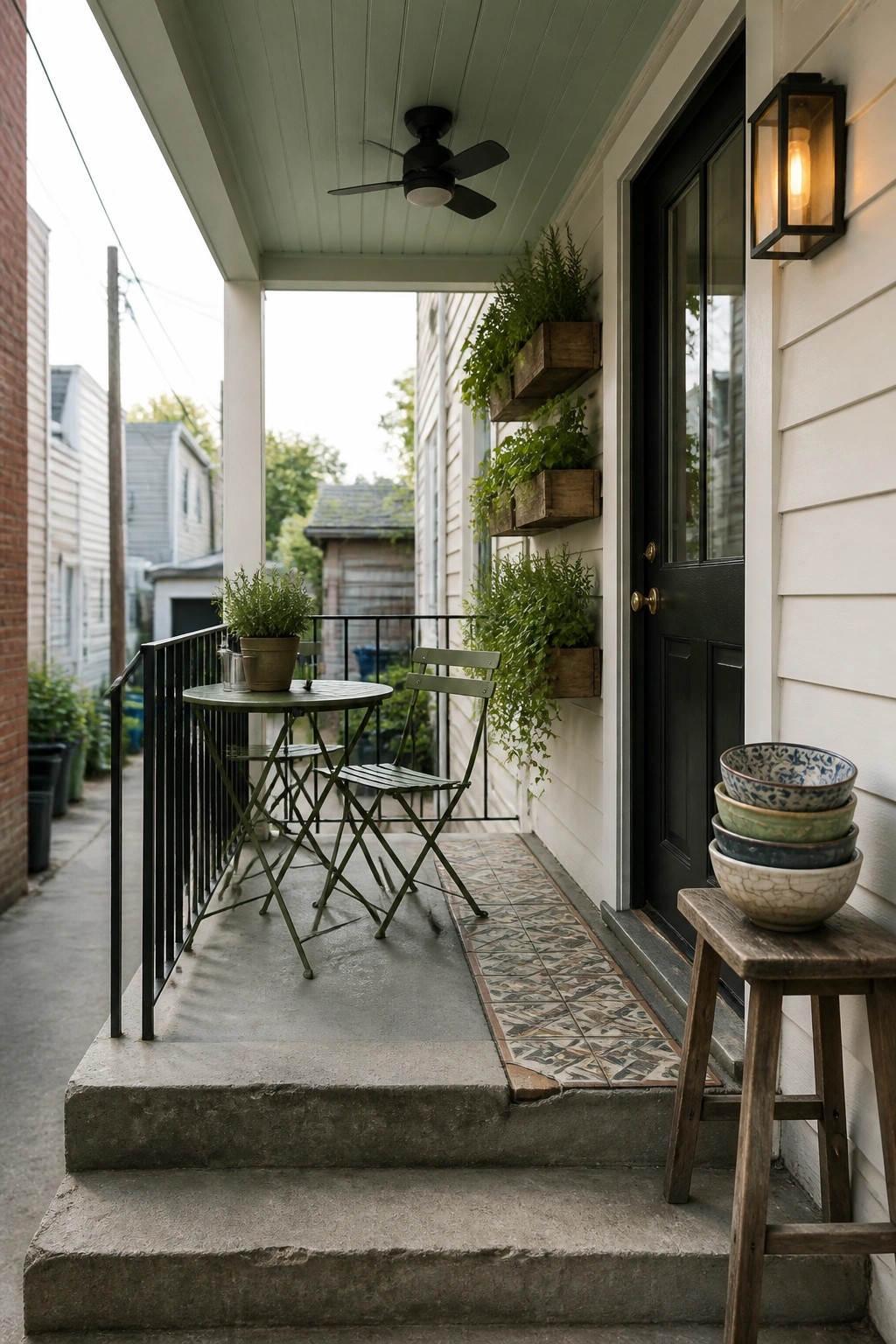
A light paint color on a wood porch ceiling can make the whole space feel brighter and more welcoming without much effort. It keeps the natural texture of the wood while adding a soft tone that works well with the rest of the exterior. Many people overlook the ceiling, but a simple color choice here often makes the porch feel more finished.
This approach works best on older homes or porches that already have wood ceilings in decent shape. Stick with muted shades that pick up on other colors around the house, like trim or shutters. Avoid anything too dark or bright, since it can make the space feel smaller or dated faster than a softer option.
Frequently Asked Questions
Q: How do I know if my porch can handle the weight of real wood boards?
A: Check the joists first by looking for any sagging or soft spots from below. Most standard porches support tongue and groove boards fine as long as you space them properly and avoid heavy hardwoods in older structures.
Q: Will cedar turn gray fast if I skip the finish?
A: It will weather to a soft gray over a season or two but stays sound without rot. A clear sealer slows that shift if you want to keep the warm tone longer.
Q: Can I swap out just the ceiling without tearing down the whole porch?
A: Pull the old panels down and check the framing for damage. New boards go up with basic screws once you add furring strips to level everything out.
