

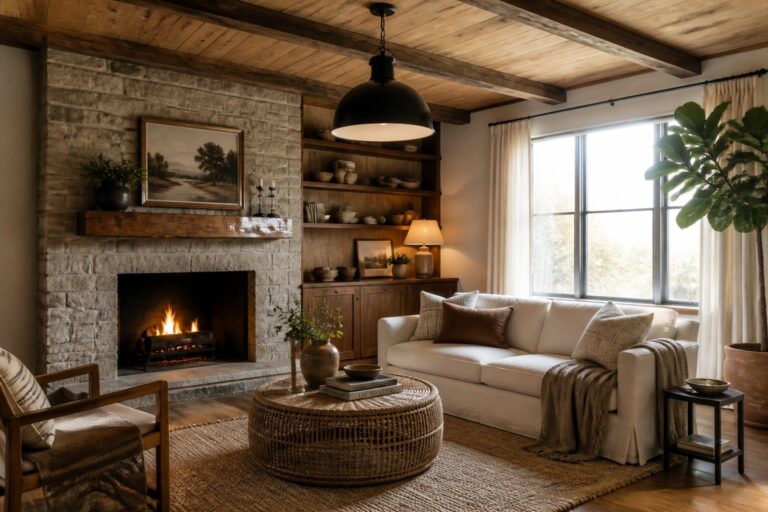
I often find that the ceiling sets the tone for how comfortable a room feels once you live in it for more than a few weeks.
Wood adds a layer of natural texture that can balance out cooler elements like metal fixtures or stone floors without making everything feel heavy.
When I updated my own living room the grain and finish mattered more than I expected because they changed how the light moved across the space during the day.
Light plays a big role too.
It helps to picture how the wood will look against your existing furniture and whether the boards will make the room feel taller or more closed in once everything is in place.
Exposed Wooden Beams
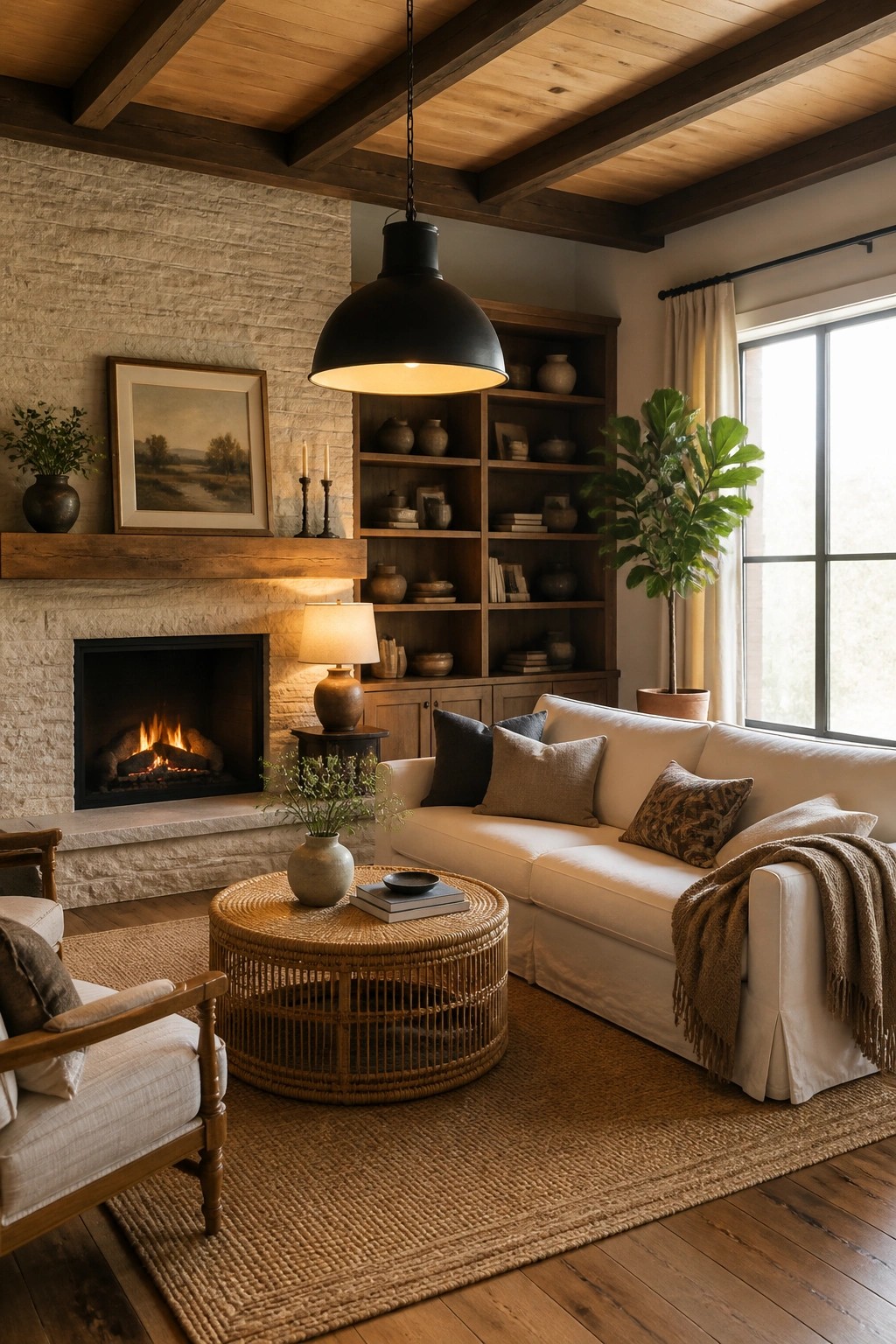
Exposed wooden beams bring a simple kind of warmth that painted ceilings often lack. They add texture and a sense of structure without needing much else to make the room feel finished.
They suit homes with taller ceilings or open layouts where the wood can stand out against lighter walls. Keep the tone close to your floors or trim so the beams blend in rather than fight for attention.
Wood Ceilings That Add Natural Warmth
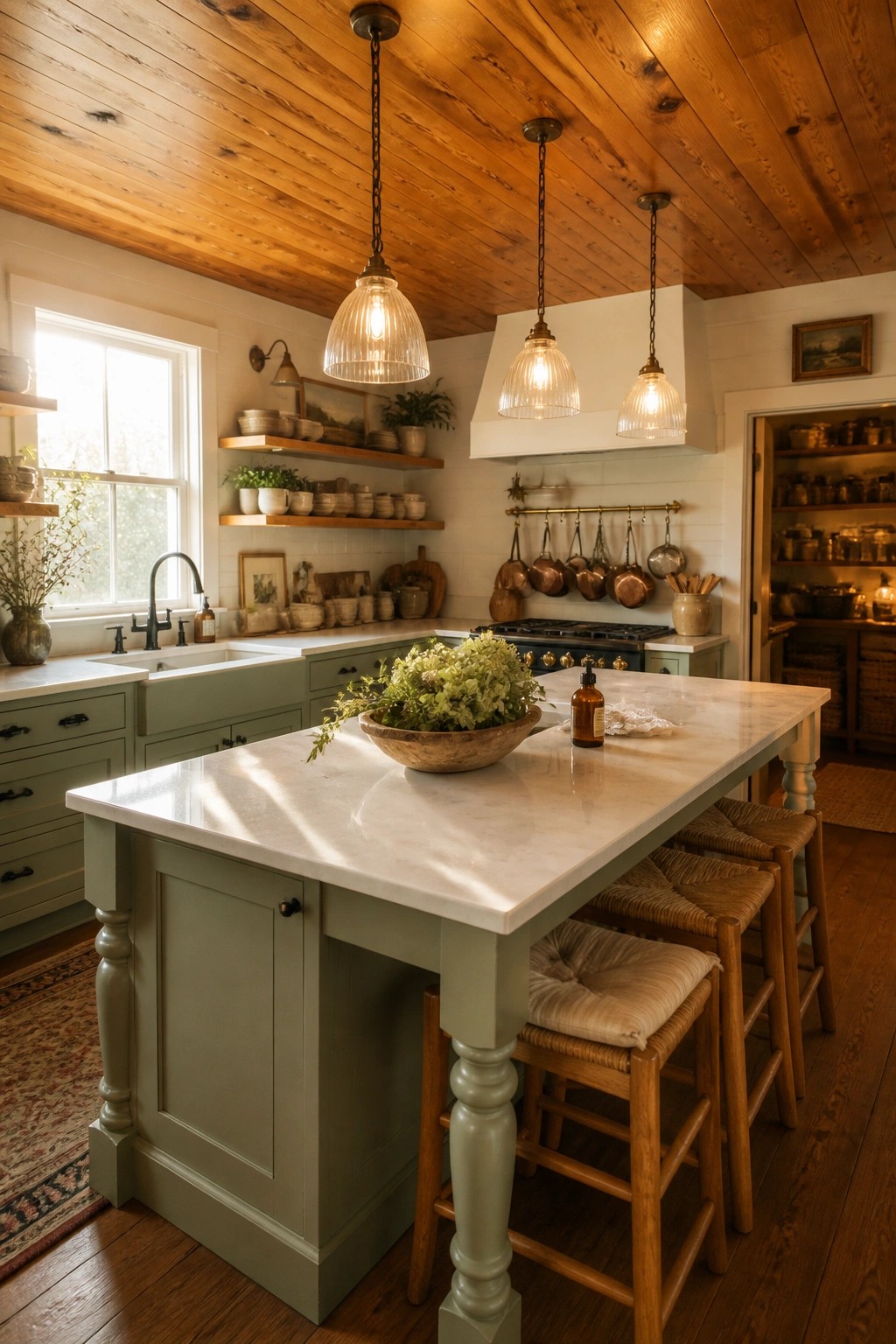
A wooden ceiling gives a kitchen an immediate sense of warmth that is hard to get from paint alone. The planks add texture overhead and help balance the cooler tones of cabinetry and stone surfaces below.
This works best in homes that already lean on natural materials elsewhere. Pair it with light walls and simple trim so the ceiling feels like a quiet addition rather than the main event.
Dark Wood Ceilings For Everyday Warmth
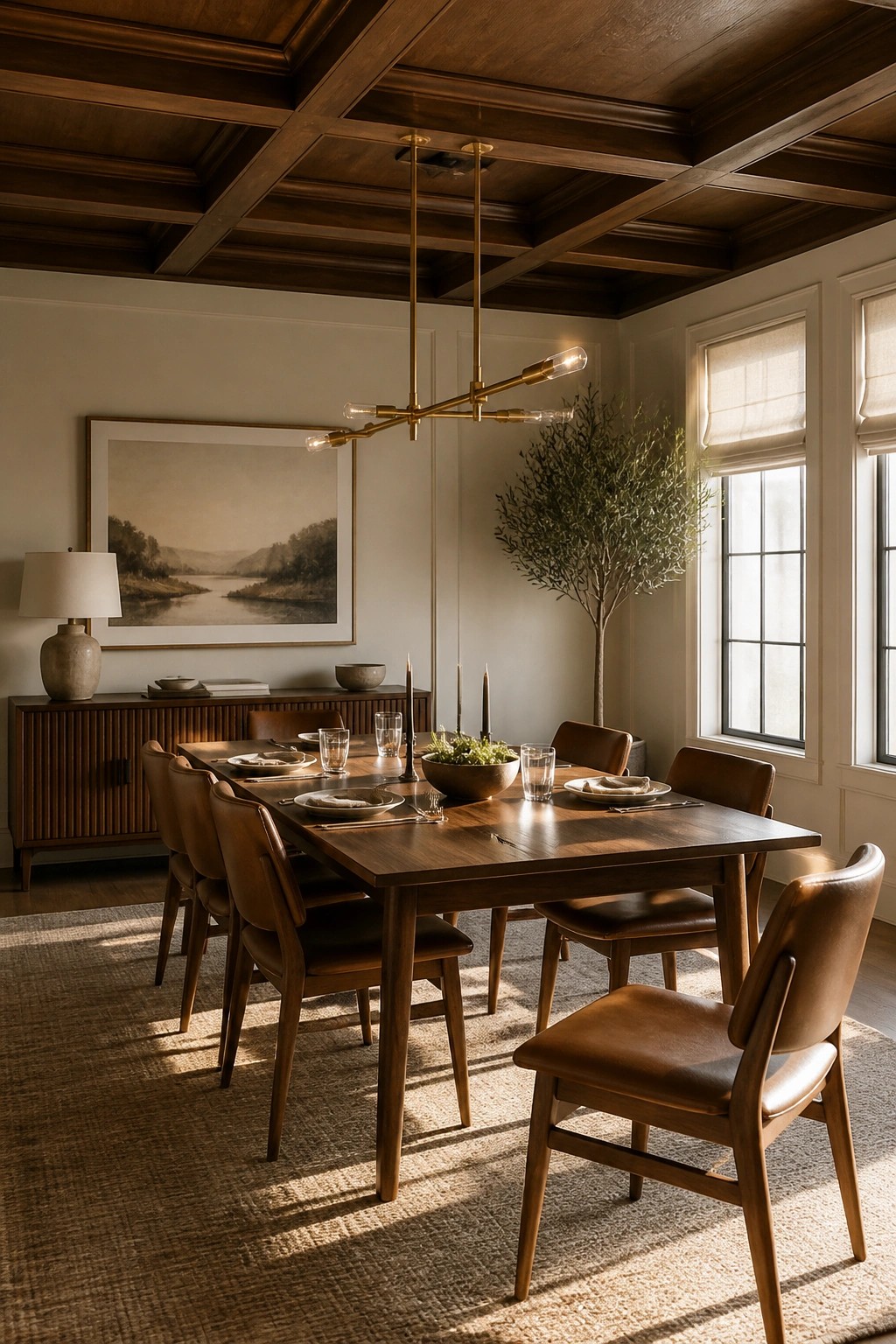
A dark wood ceiling can make a dining room feel settled and comfortable without much extra effort. The panels create a strong sense of enclosure that works well when the rest of the room uses natural wood tones and simple furnishings. It turns the overhead space into an active part of the design instead of leaving it blank.
This approach suits homes that already lean toward wood floors, tables, and chairs. It works best in rooms that get steady daylight so the ceiling does not feel too heavy. Keep the walls lighter and limit extra patterns so the wood stays the main feature.
Wood Slat Ceilings For Natural Warmth
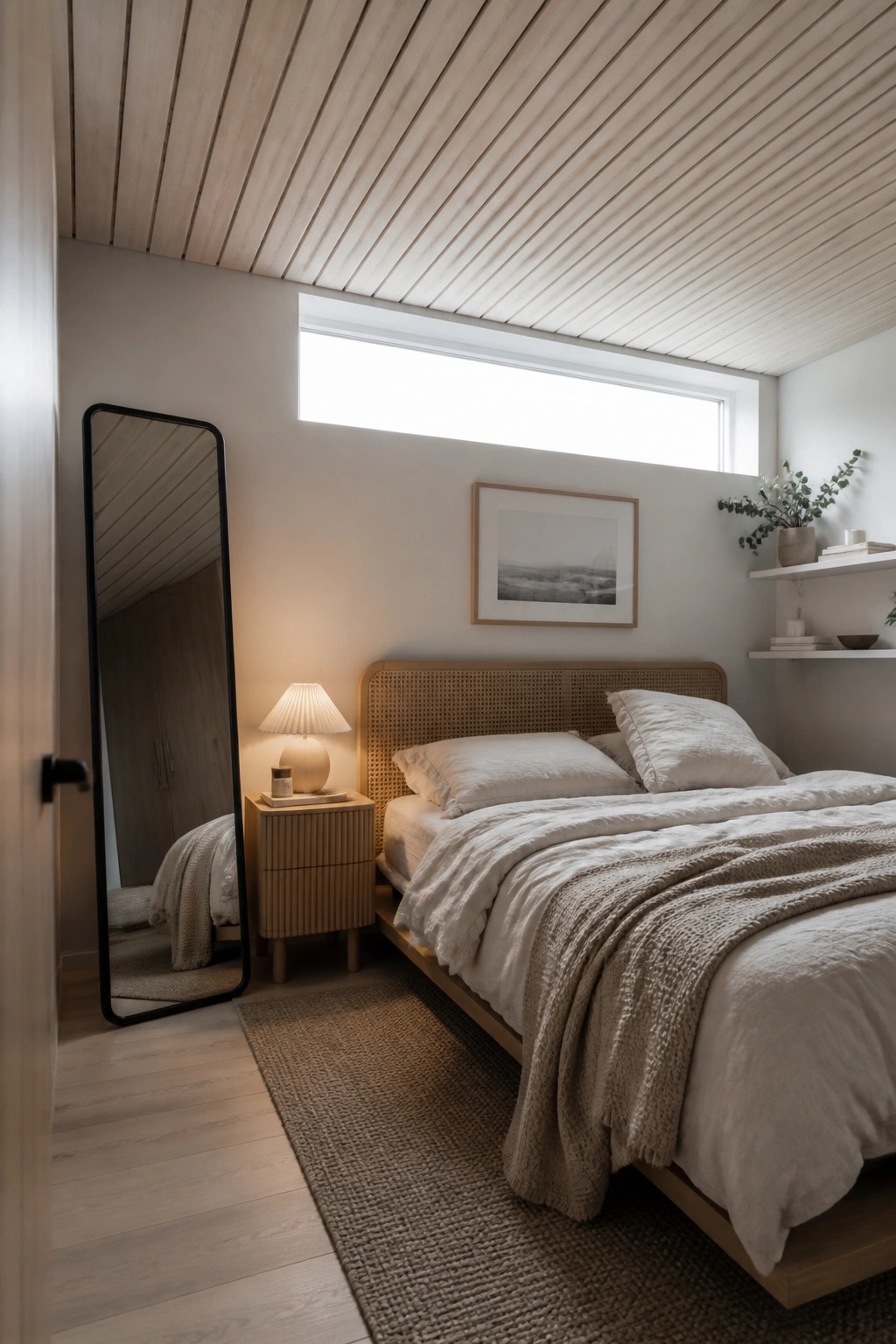
A wood slat ceiling gives a bedroom an easy layer of texture that feels grounded without taking over the room. The light wood tone and simple lines keep things calm while adding that natural material people often want in a sleeping space.
This works best in rooms with mostly neutral walls and bedding. Keep the rest of the finishes light so the ceiling can stand out on its own, and make sure the slats run in the direction that makes the room feel longer or wider depending on the layout.
Wood Ceilings For Vaulted Bedrooms
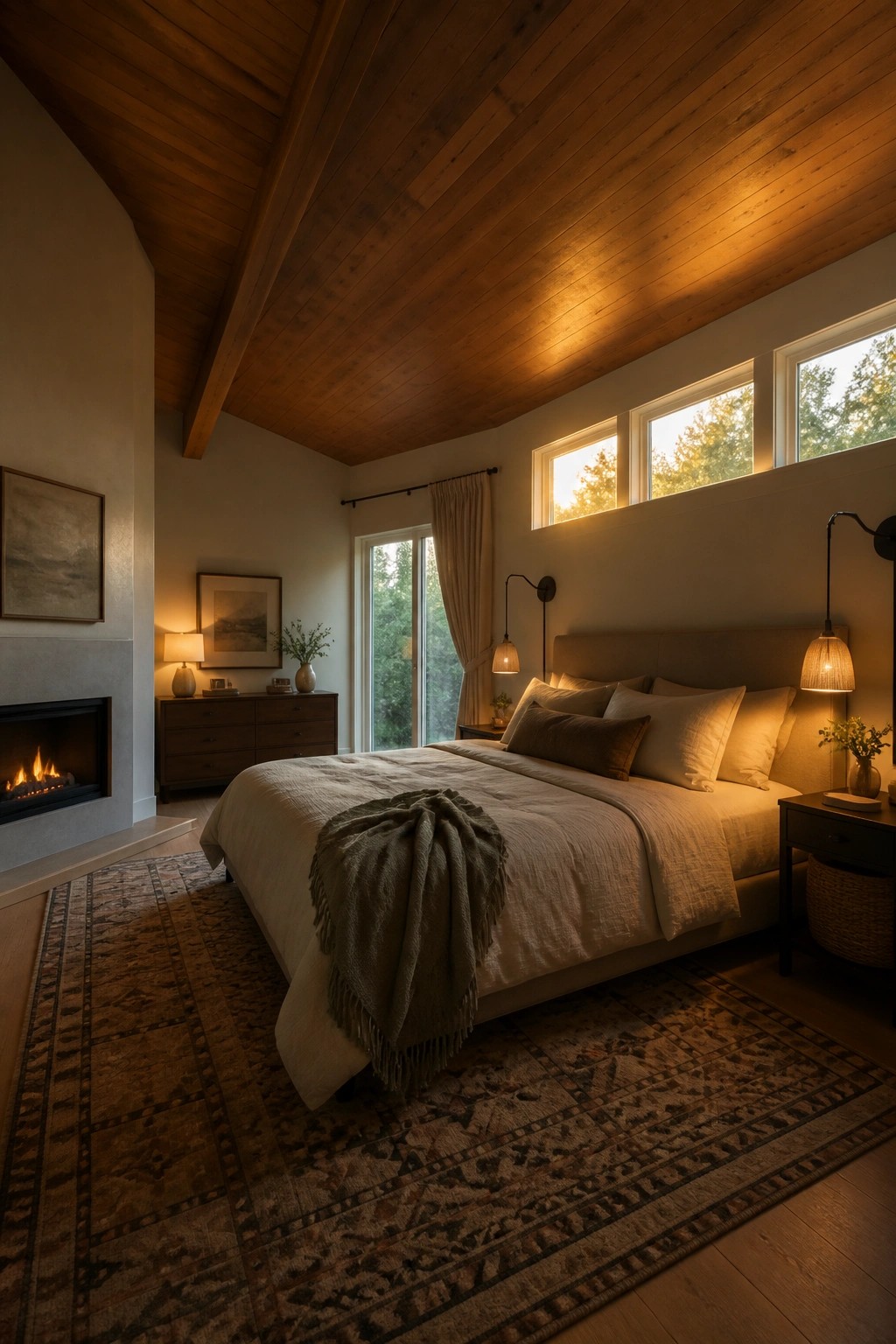
A wooden ceiling works well when you want a bedroom to feel grounded and calm without adding much else. The grain and tone of the wood bring in texture that stays visible even when the rest of the room stays simple and light.
This approach suits homes with vaulted or angled ceilings where paint can feel flat. Keep the walls and furnishings in soft neutrals so the ceiling remains the main source of warmth rather than competing with other details.
Wood Ceilings For Natural Texture In Bathrooms
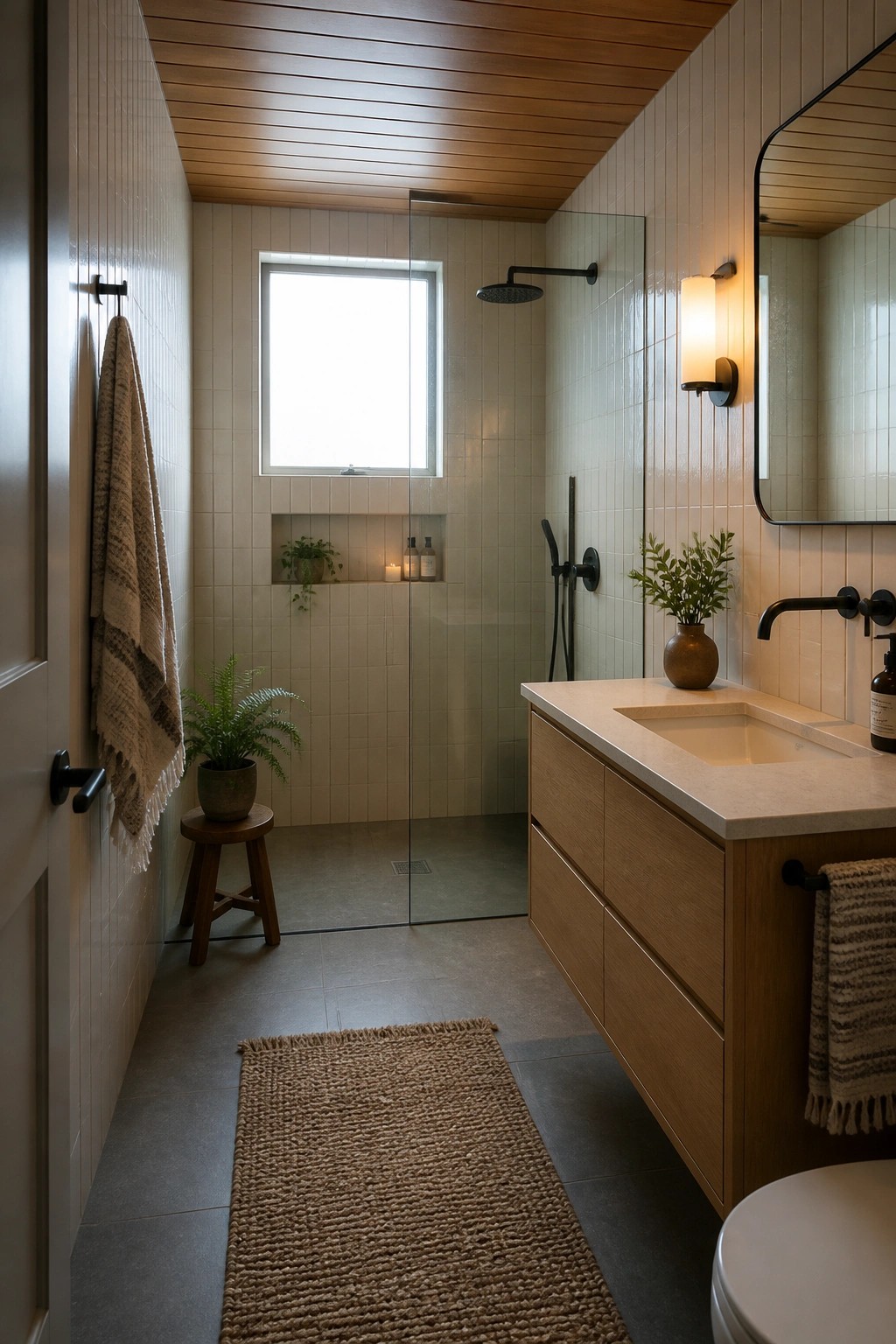
Wood ceilings bring a simple kind of warmth to bathrooms that tile and stone alone often miss. The horizontal lines add texture overhead and help soften the cooler surfaces below without adding clutter.
This works best in smaller bathrooms or those with mostly hard finishes. Keep the rest of the space fairly plain so the ceiling can do its job without competing.
Vaulted Wood Ceilings In Hallways
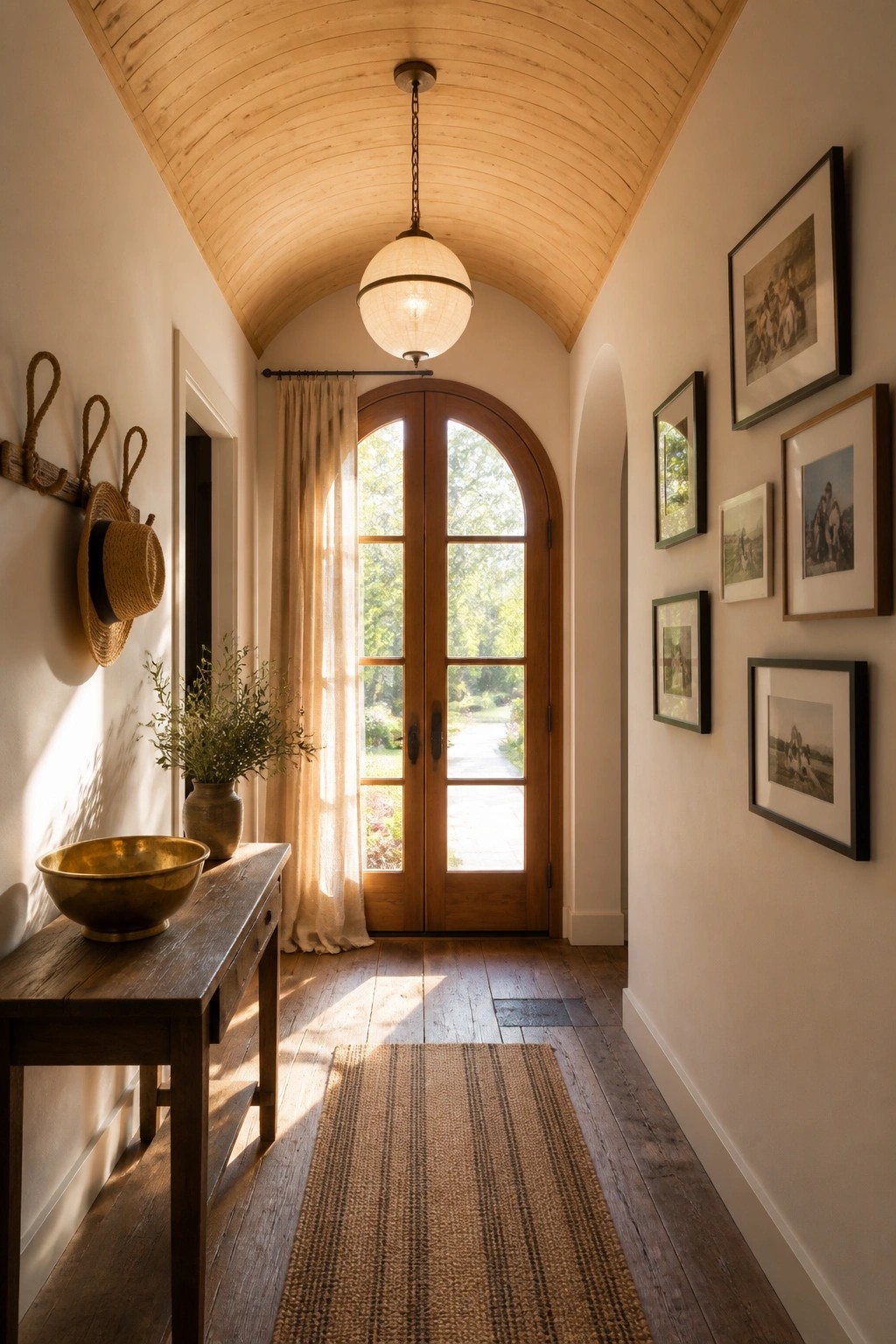
A vaulted wood ceiling can change how a narrow hallway feels by adding height and a clear sense of natural material. The gentle curve keeps the wood from looking too heavy while still showing off its grain and warmth.
This approach works best in homes with traditional or craftsman details where the ceiling can become the main feature. Keep the rest of the space simple so the wood stays the focus instead of competing with busy walls or dark floors.
Wood Slat Ceilings
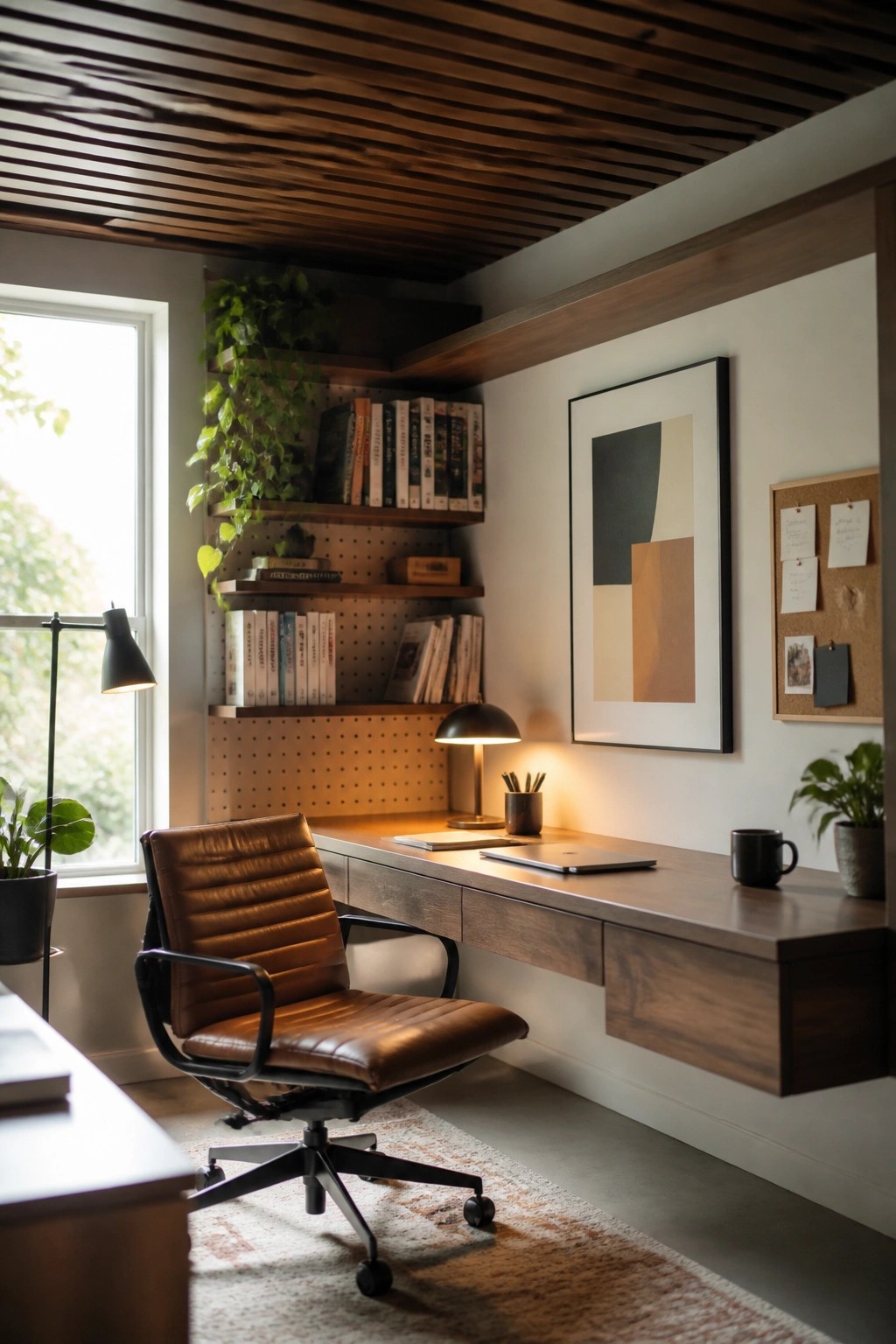
Wood slat ceilings give a room that extra layer of natural texture without much fuss. The horizontal lines break up the flat surface overhead and help the space feel warmer, especially when the rest of the room stays fairly simple.
This works best in smaller rooms like home offices or reading areas where the ceiling can stand out on its own. Match the wood tone to other built-ins or furniture so the look stays consistent rather than busy.
Wooden Ceilings For Natural Warmth
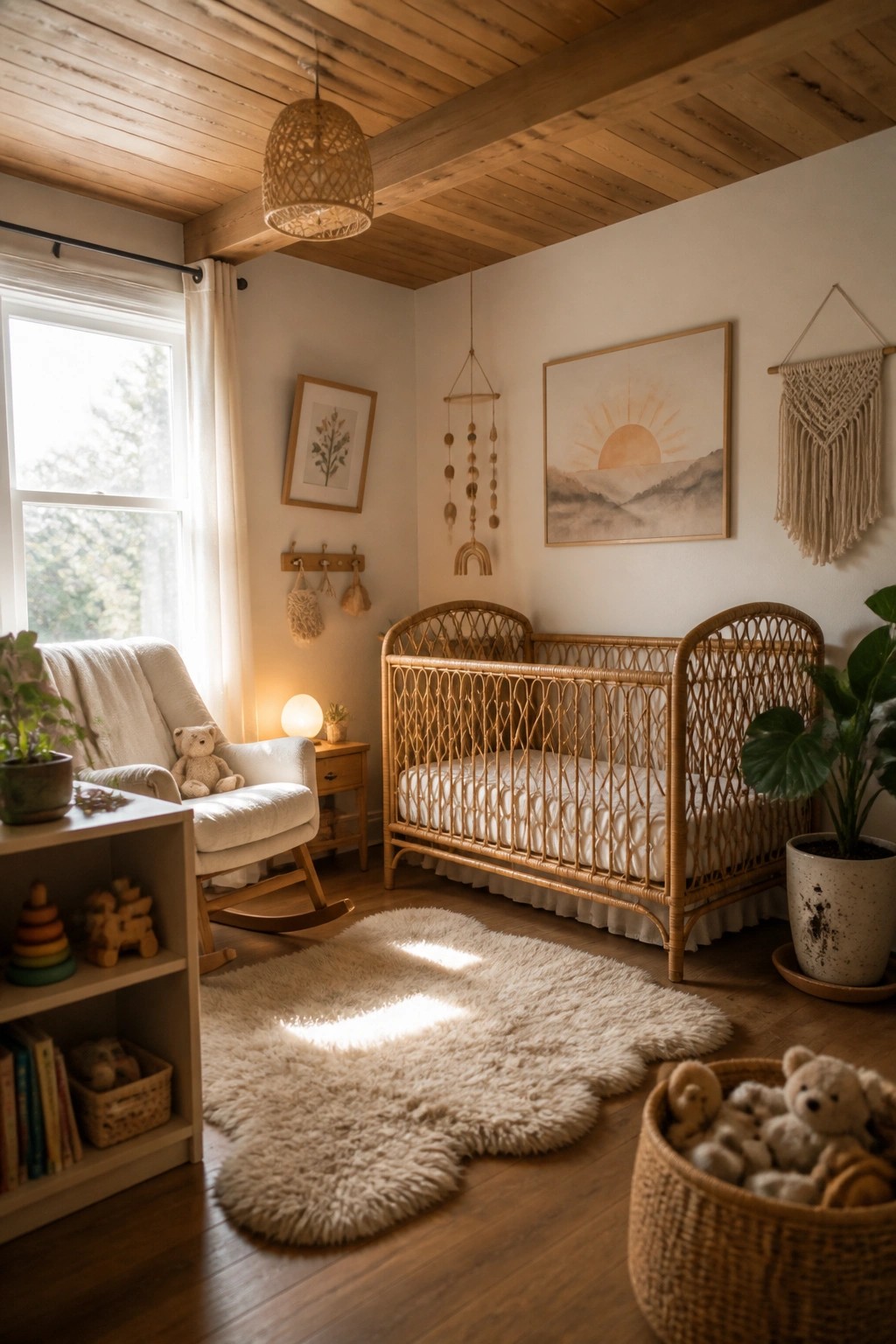
A wooden ceiling adds a steady layer of warmth that works especially well in rooms kept light and simple. The natural grain and tone soften the space without any extra effort, and it pairs easily with pale walls and minimal furniture.
This idea suits bedrooms or nurseries where you want a calm background. Keep the rest of the room quiet so the ceiling can carry the texture without competing with too many other elements.
Wooden Ceilings In Laundry Rooms
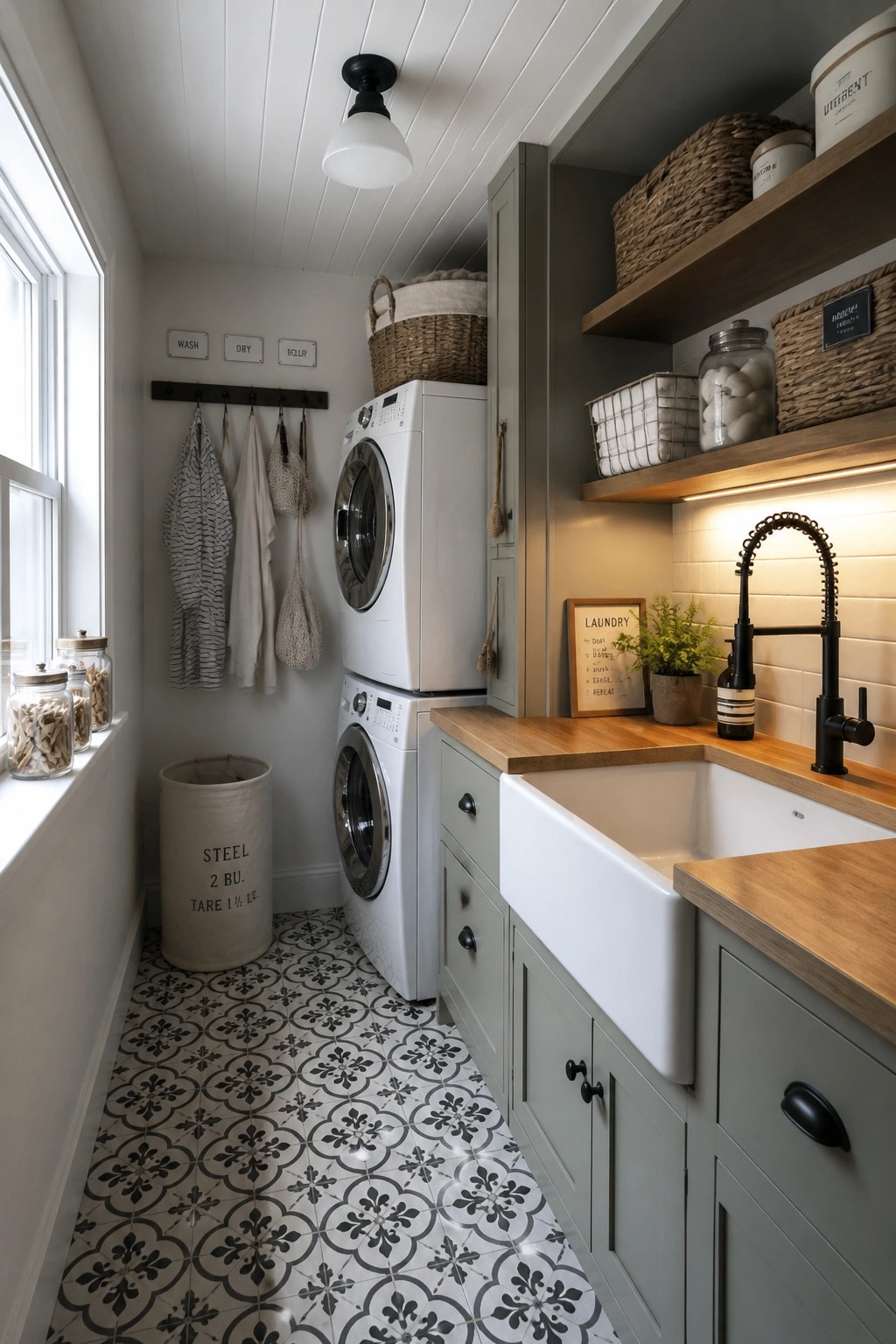
A wooden ceiling adds a layer of warmth to a room that usually gets none. In a laundry space the planks keep things feeling calm even when the floor is busy with baskets and machines.
This works best in smaller rooms where you want texture without adding clutter. Paint the wood white or a very light tone so it reflects light and pairs easily with simple cabinetry and basic fixtures.
Wooden Ceilings In Hallways
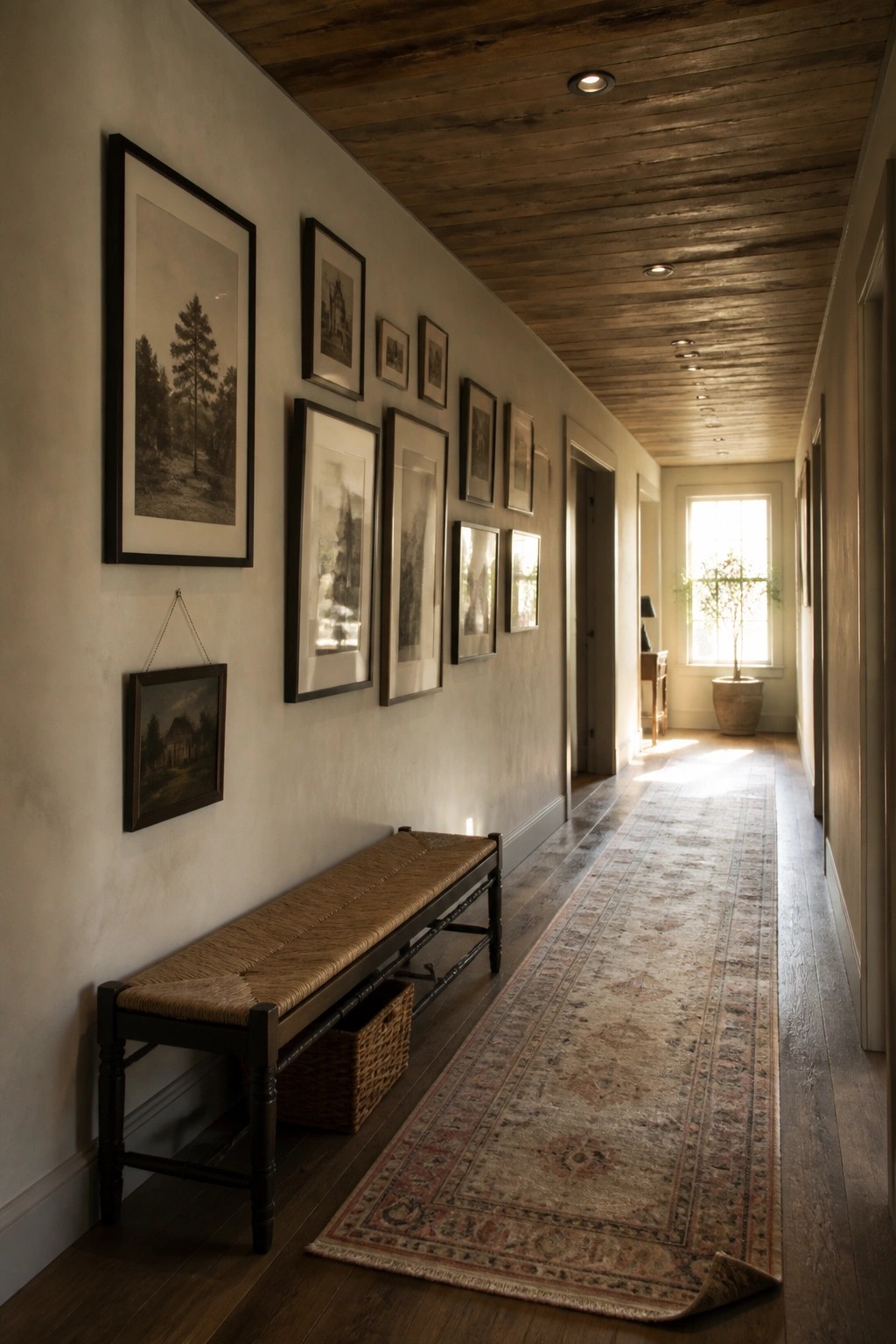
A wooden ceiling works well in a hallway because it adds warmth without taking up any floor space. The natural grain and tone help a long narrow space feel less stark and more finished, especially when the walls stay light and simple.
This approach suits homes with basic trim and older architecture. Keep the ceiling planks in a medium tone so the wood reads as texture rather than a heavy feature. Avoid dark stains if the hallway gets limited daylight.
Wooden Ceilings Add Natural Warmth To Bathrooms
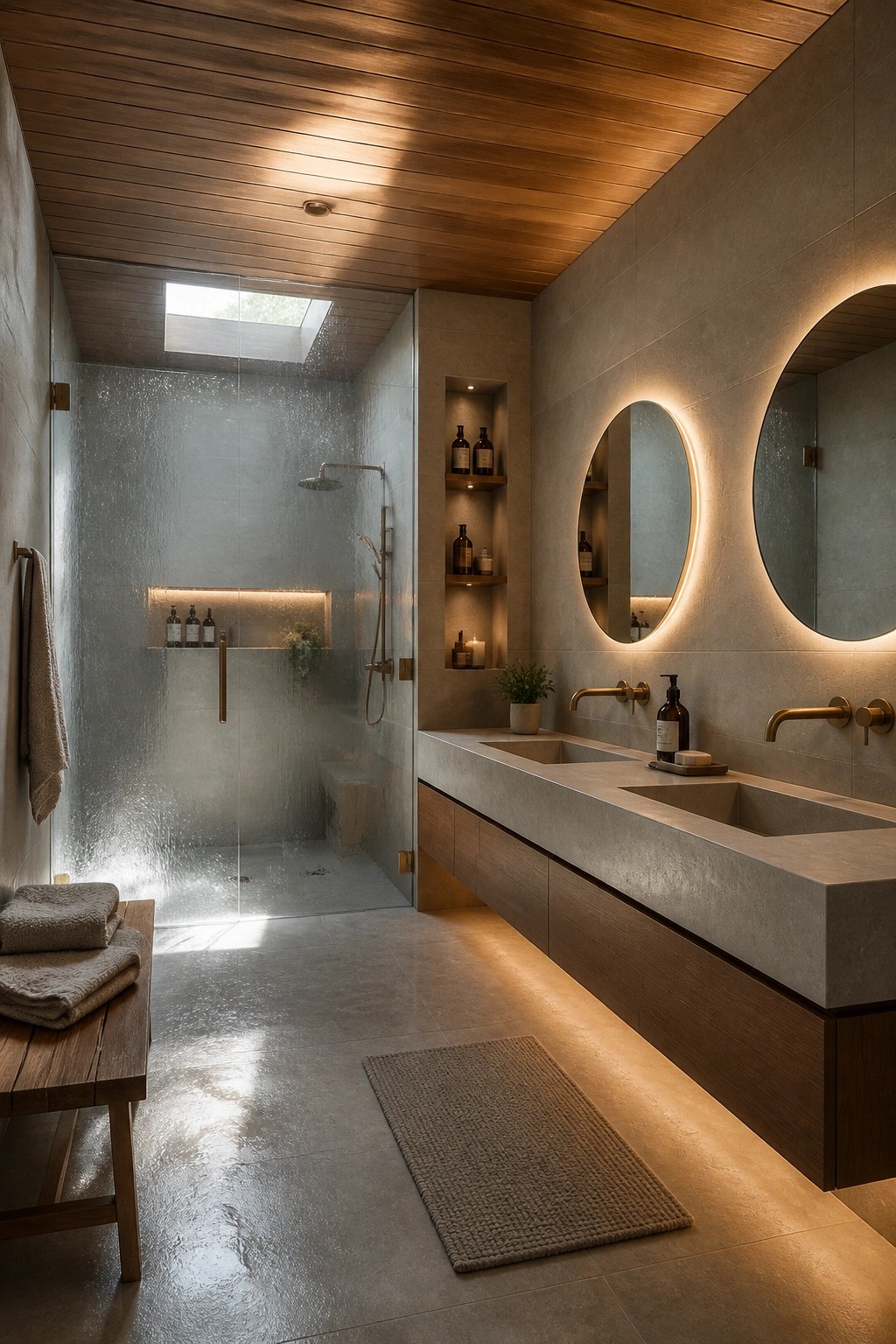
A wooden ceiling can change how a bathroom feels without needing a lot of extra wood elsewhere. The warm tone and texture stand out against cooler surfaces like concrete or stone, making the space feel more balanced and comfortable.
This works best in modern or minimalist bathrooms where you want one strong natural element. Keep the rest of the finishes simple so the ceiling carries the warmth without competing with too many other materials.
White Wooden Ceilings for Vaulted Kitchens
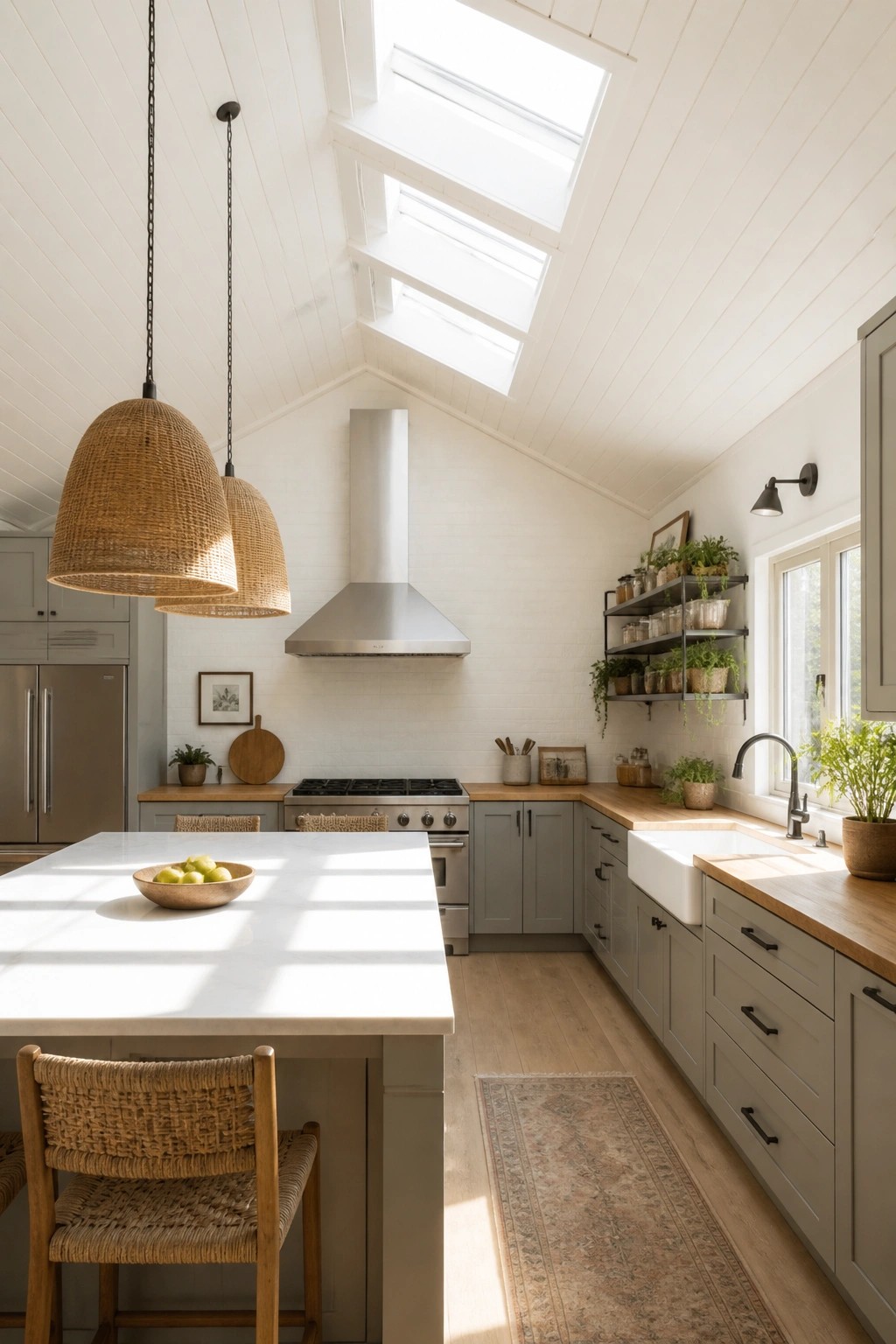
A white wooden ceiling brings natural texture into a space without making it feel dark or heavy. In rooms with tall ceilings, the painted wood shows its grain while bouncing light around, which keeps the whole area open and airy.
This works best in kitchens or similar spaces where you already have good natural light. Pair it with simple cabinetry and light countertops so the ceiling texture stays noticeable but never overpowering.
Exposed Wooden Beams For Natural Texture
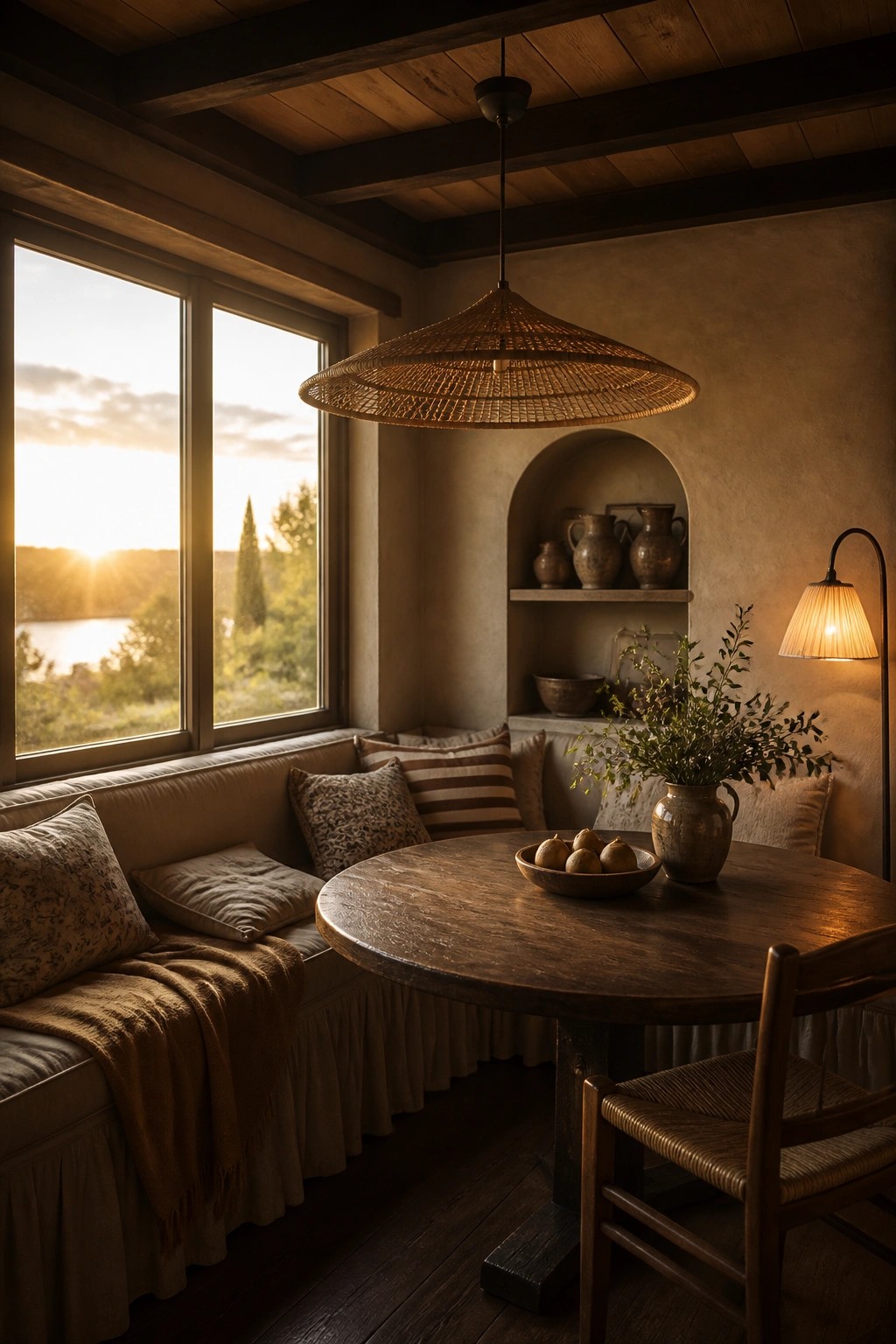
Exposed wooden beams give a ceiling real presence without much extra effort. They bring out the warmth in the wood itself and make the whole room feel more grounded, especially when the beams sit against simple plank boards overhead.
This works best in spaces that already lean toward natural materials. Match the tone of the beams to your floors or main furniture pieces, and avoid painting them if you want the texture to stay noticeable over time.
Coffered Ceilings In Natural Wood

A wooden ceiling stands out most when the rest of the room uses darker tones. The natural grain adds warmth and a bit of light that helps balance deep wall colors and heavy furniture without needing extra decoration.
This approach works best in studies or libraries where you want a traditional feel that still feels grounded. Keep the wood tone simple and let the ceiling handle the main contrast rather than adding too many other wood pieces.
Dark Wood Ceilings For Warmth
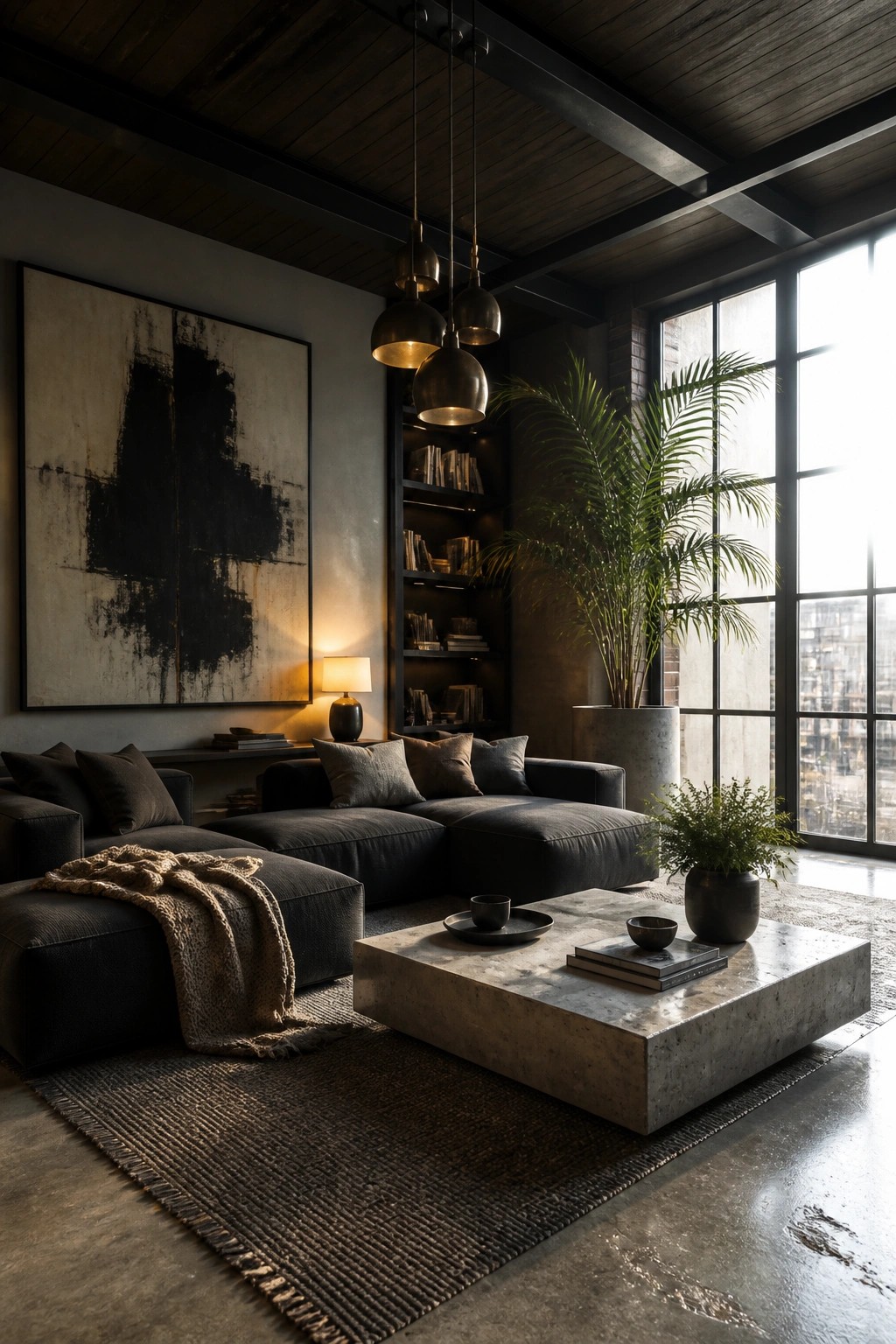
A dark wood ceiling can bring real warmth to a room that might otherwise feel too cool or stark. The deep tone works especially well when the rest of the space uses concrete, metal, and dark upholstery, because the wood softens those harder surfaces without adding clutter.
This look suits open living areas with decent ceiling height. Keep the walls fairly light so the ceiling reads as a deliberate choice rather than just another dark surface.
Painted Wood Ceilings On Sloped Walls
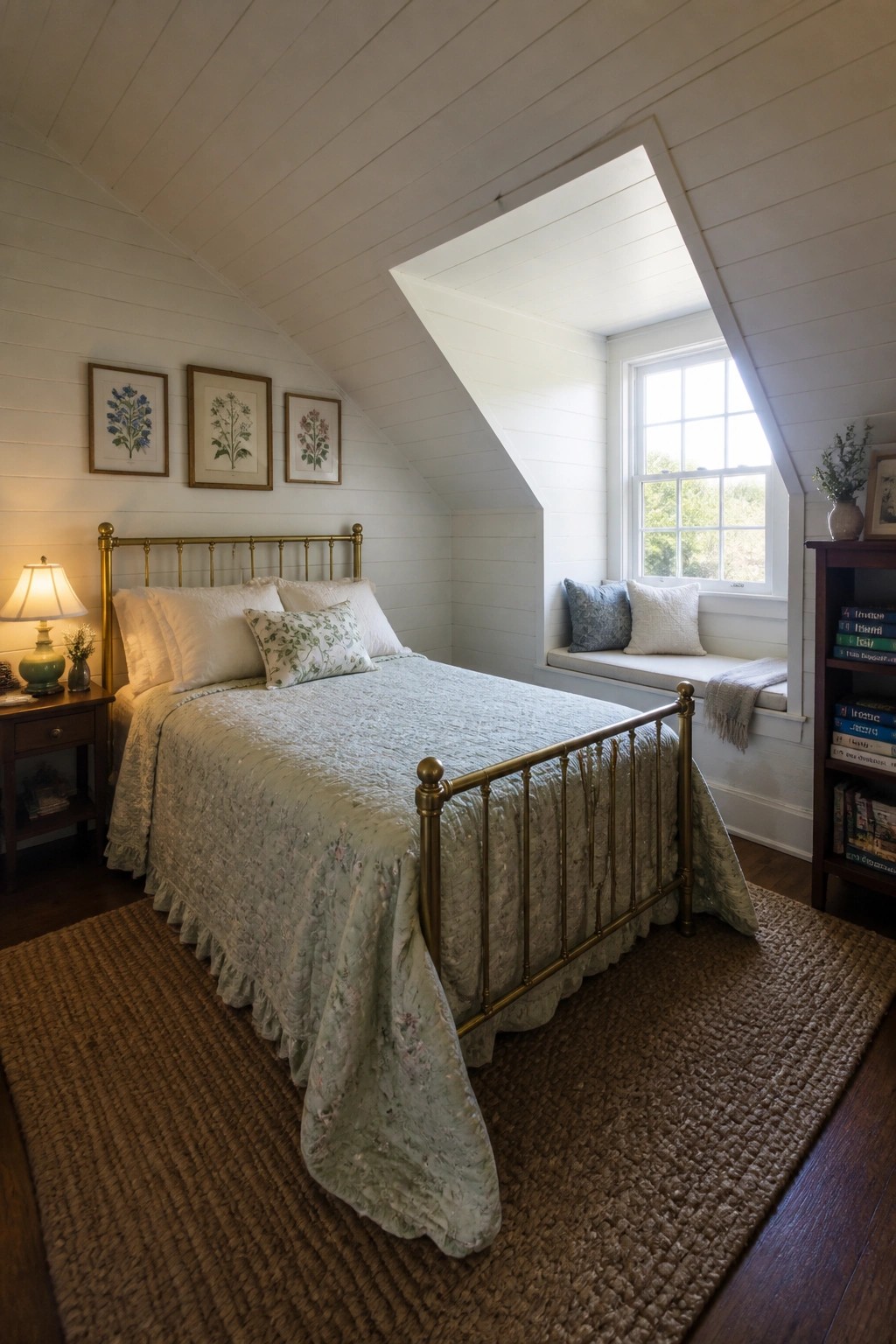
Many people choose painted wood planks for sloped ceilings because the grain still shows through and adds quiet texture without darkening the room. It keeps the space feeling open while giving the overhead surface more character than flat drywall.
This works best in attic bedrooms or rooms with angled walls where you want a bit of warmth overhead. Stick with a light paint color and let the natural wood texture do the rest rather than trying to cover it completely.
Wood Ceilings In Walk In Closets

A wood ceiling can change how a closet feels without adding much clutter. The planks bring natural grain and warmth overhead, which helps the space feel less like a plain storage room and more like part of the home.
This works best in closets that already have wood cabinetry or flooring. Keep the rest of the finishes simple so the ceiling stays the main texture. Linear lighting tucked between the boards helps the wood show without looking busy.
Wood Slat Ceilings In Dark Rooms
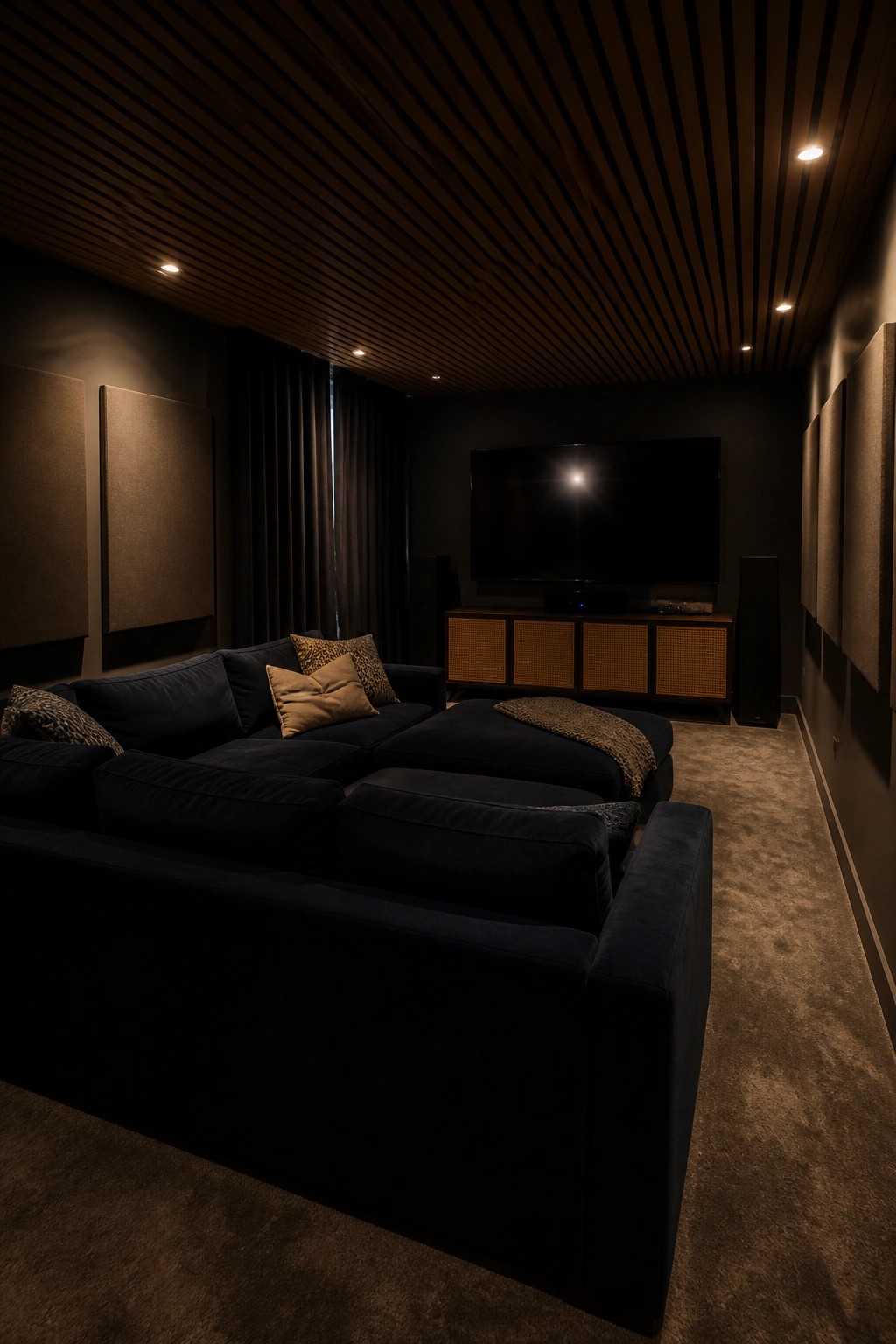
A slatted wood ceiling can bring some natural texture into rooms that stay on the darker side. It works especially well in media spaces where you want warmth without adding a lot of light colors or busy patterns.
This idea fits homes that already lean modern or minimalist. Keep the wood tone fairly consistent with any other natural finishes in the room, and let the ceiling carry most of the texture so the rest of the space stays simple.
Whitewashed Ceilings Keep Things Bright
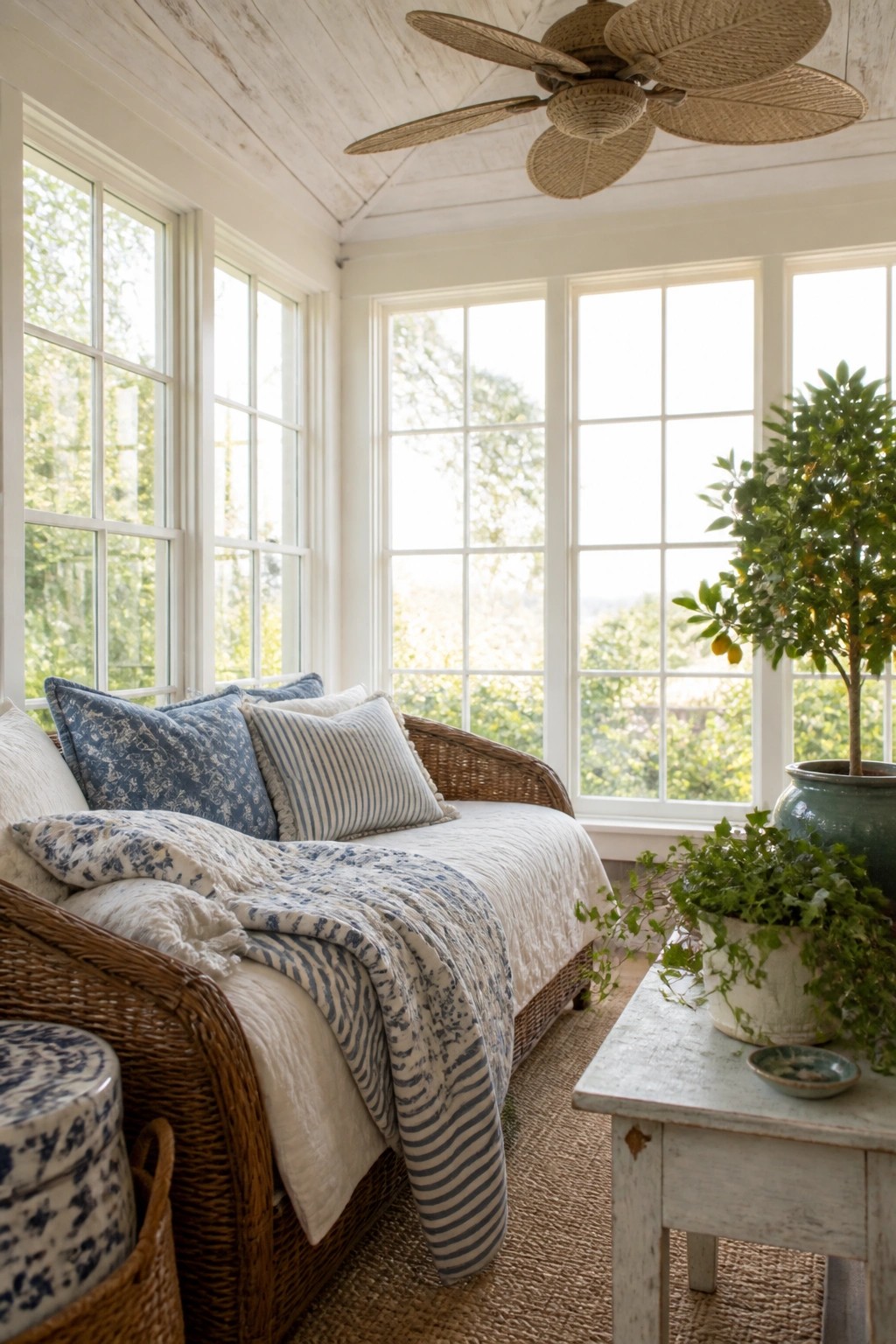
A whitewashed wood ceiling helps a room feel open even when it has lots of windows and natural light pouring in. The pale finish bounces light around instead of soaking it up, so the space stays airy without losing the warmth that comes from real wood.
This works especially well in sunrooms or enclosed porches where you want brightness but still need some texture. Add one natural woven element overhead, like a rattan fan, to bring in that soft contrast without fighting the light color.
Wood Ceilings In Mudrooms
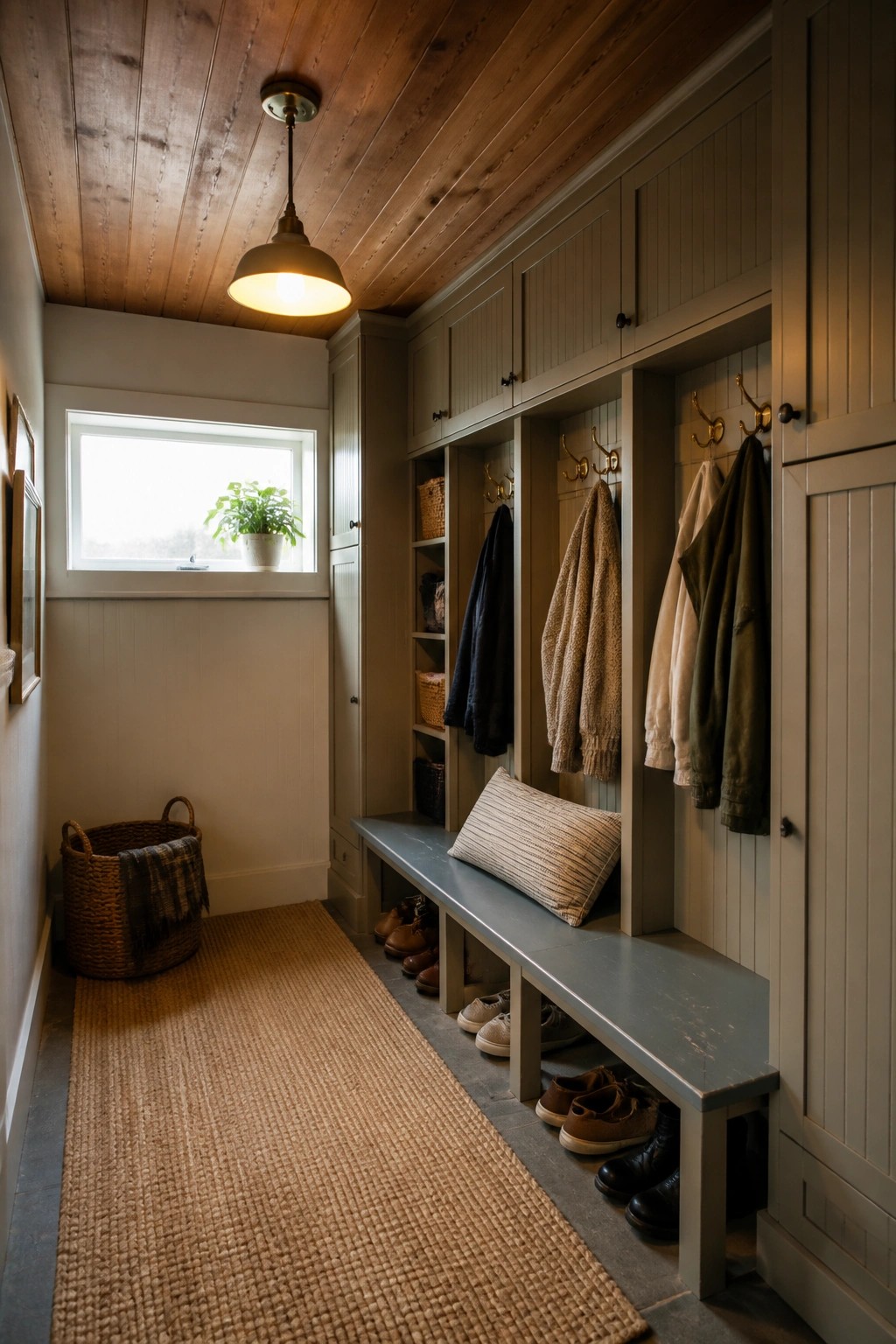
A wood ceiling brings a simple kind of warmth to a mudroom that most other finishes cannot match. The natural grain keeps the room from feeling too cold even when it is filled with storage, hooks, and hard flooring.
This approach works best in homes that already lean on natural materials elsewhere. Pair it with painted built-ins and a simple bench so the ceiling remains the main source of texture without competing with everything else in the room.
Wooden Ceilings in Attic Rooms
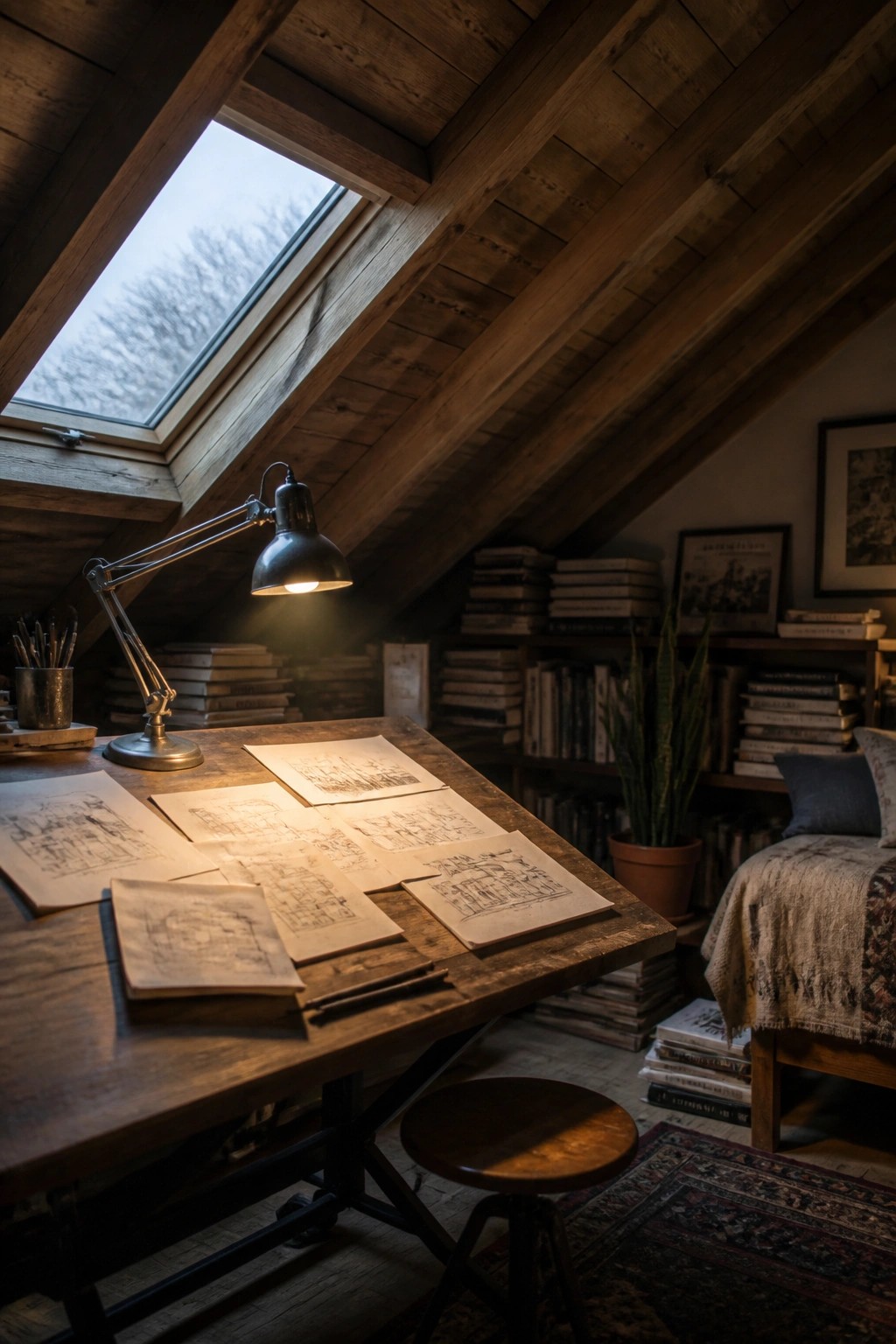
Many people turn to natural wood on a sloped ceiling because it brings warmth and texture into spaces that can otherwise feel tight or plain. The wood grain and beam lines add character without needing much else in the room.
This works best in homes with existing rafters or attic conversions. Keep furnishings low and simple so the ceiling remains the main feature rather than competing with other elements.
Dark Wood Ceilings For Natural Warmth
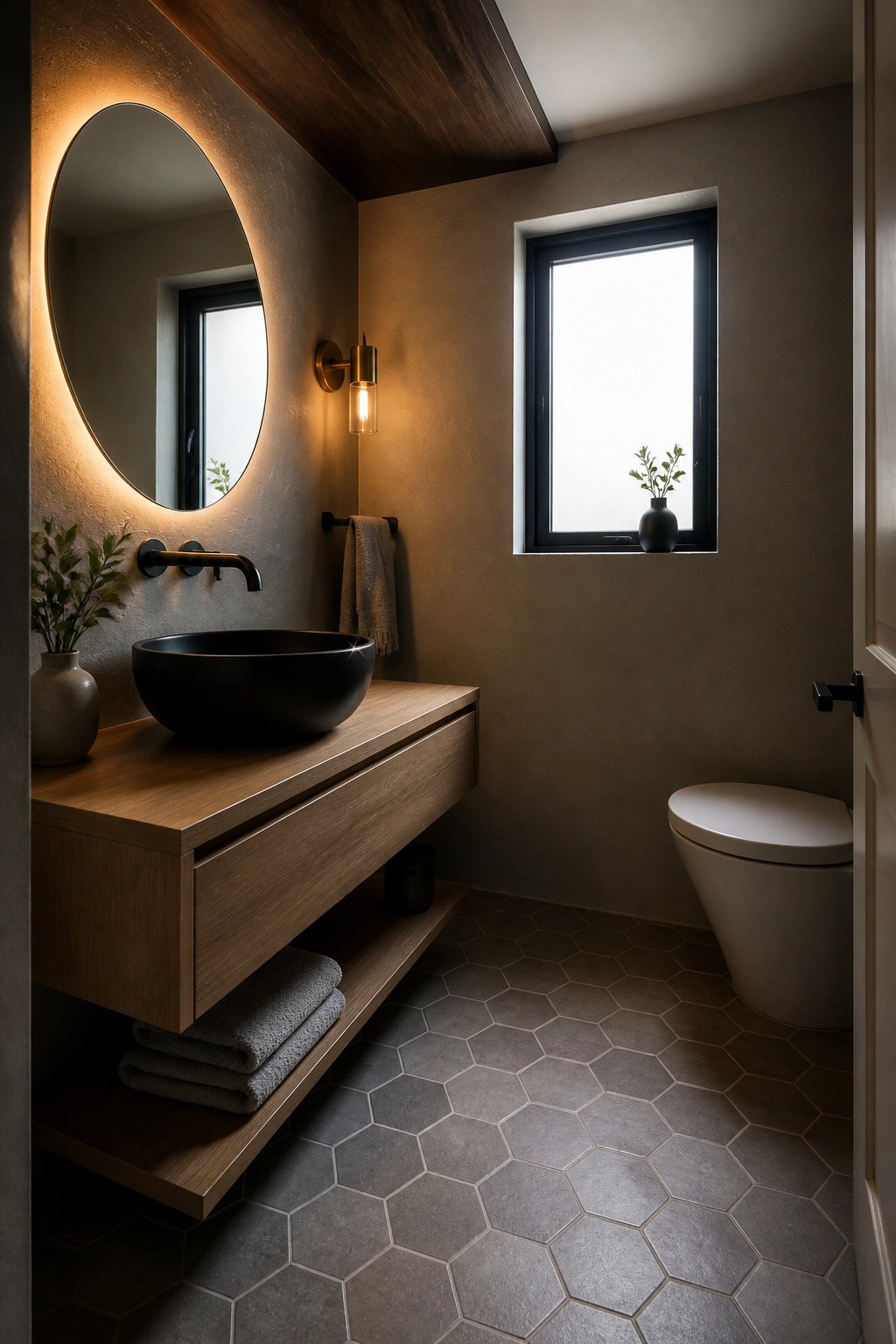
A dark wood ceiling stands out in a bathroom because it brings real texture and a grounded feel that lighter materials often miss. The grain and tone add depth without needing extra color or pattern on the walls. It works especially well when the rest of the room stays simple and neutral.
This approach suits smaller or window-lit bathrooms where you want the space to feel enclosed but still warm. Keep the wood tone consistent with any vanity or shelf to tie the room together. Avoid it in very low ceilings if you prefer a lighter look overall.
Wood Ceilings in Storage Rooms
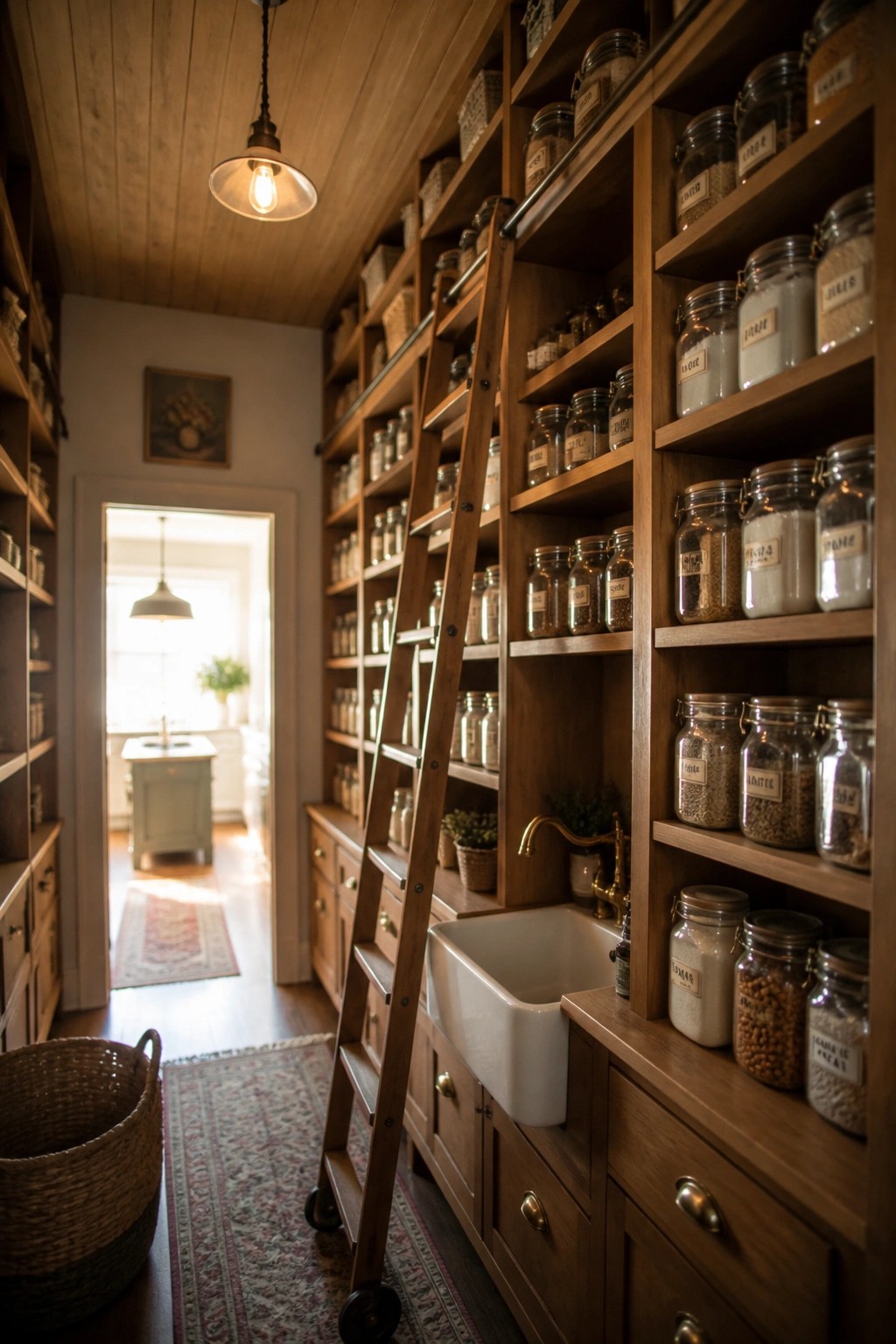
A wood ceiling brings the same warmth into a pantry or storage area that it does in living spaces. The planks add texture without needing much else, and they help a narrow room feel less like a plain box and more like part of the house.
This works best in homes where the rest of the ceilings are already wood or where you want a quiet material link between main rooms and utility spaces. Keep the finish simple so the ceiling does not compete with open shelving or rows of jars.
Frequently Asked Questions
Q: How do I choose wood that matches my existing floors? A: Look for similar tones in the grain. Test a small sample board against your floor first. This keeps the natural texture flowing throughout the room.
Q: What about cleaning wooden ceilings? A: Use a vacuum with a soft brush attachment. Wipe down with a damp cloth if needed. Skip anything abrasive that could scratch the surface.
Q: Do these ceilings need special lighting? A: Warm bulbs bring out the wood grain best. Place fixtures to cast gentle shadows across the texture. Avoid cool lights that wash out the natural tones.
