

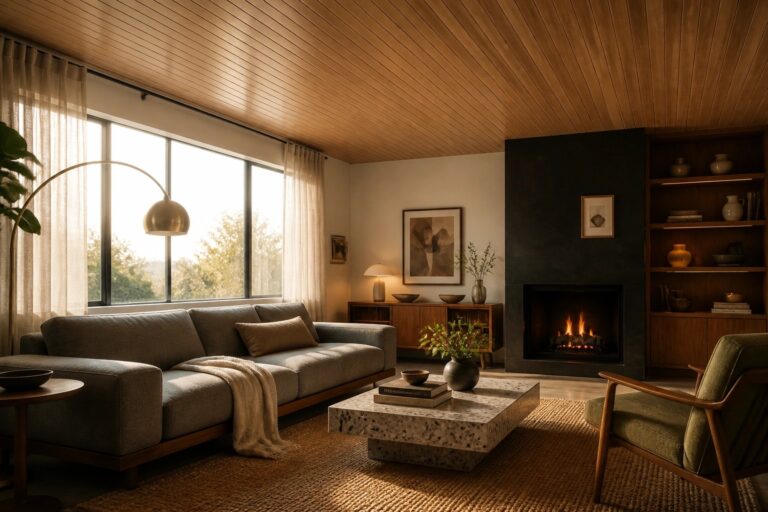
I have always paid attention to how a ceiling can shift the entire mood of a room once the walls and floors are in place.
Wood adds a layer of warmth that painted surfaces often miss, especially when the grain runs in clean directions.
Some ceilings work better than others in everyday living.
Trying a few of these approaches showed me which details hold up once the furniture moves in and the light changes throughout the day.
It helps to picture the room in use rather than just from the floor looking up.
Wood Ceilings That Add Warmth Without Extra Details
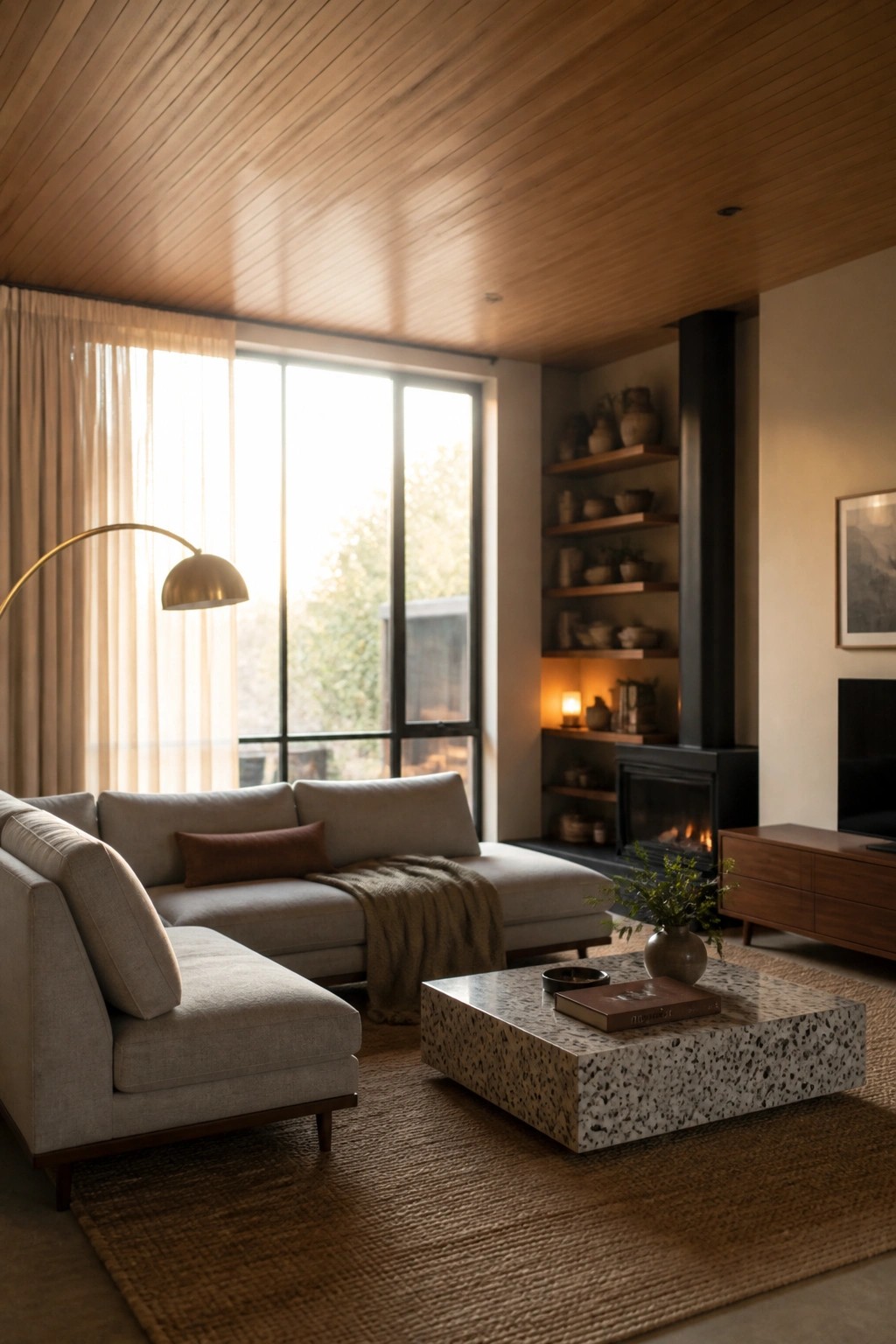
A wood ceiling can soften a modern room that might otherwise feel too cool or flat. The planks bring natural texture overhead while keeping the lines clean and simple.
This approach works well in living spaces with large windows and neutral furniture since the ceiling quietly anchors the room. It suits homes that already lean contemporary but need a bit more warmth to feel lived in.
Light Wood Ceilings For A Softer Modern Look
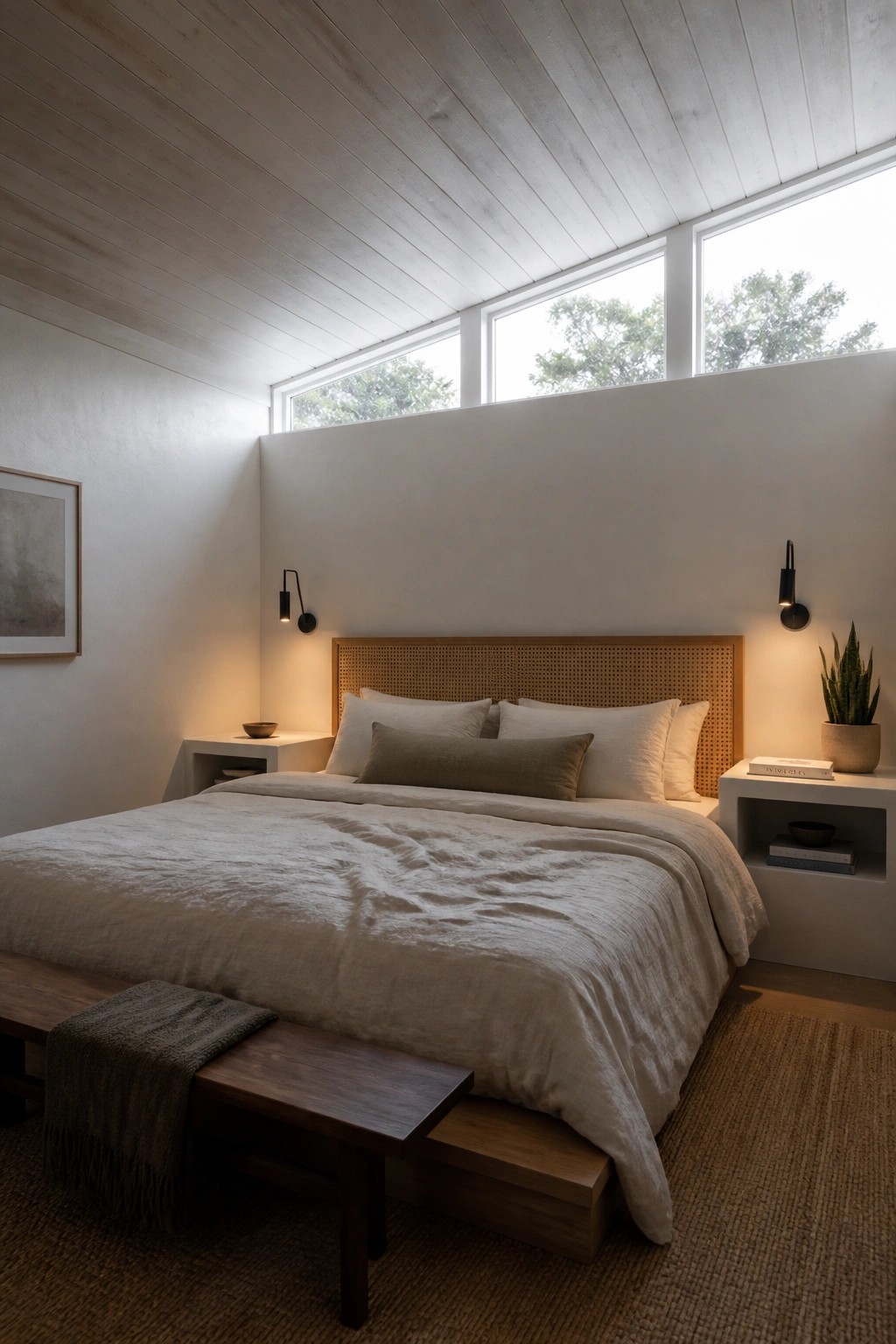
A wood ceiling can bring a bit of natural texture into a room without making it feel busy. The light tone and simple plank layout keep the space feeling open while adding warmth that painted drywall often lacks.
This approach works well in bedrooms or other quiet rooms where you want some material interest overhead but still need the rest of the space to stay calm and uncluttered. It suits homes that already lean toward neutral colors and clean lines.
Linear Wood Ceilings for Open Kitchens
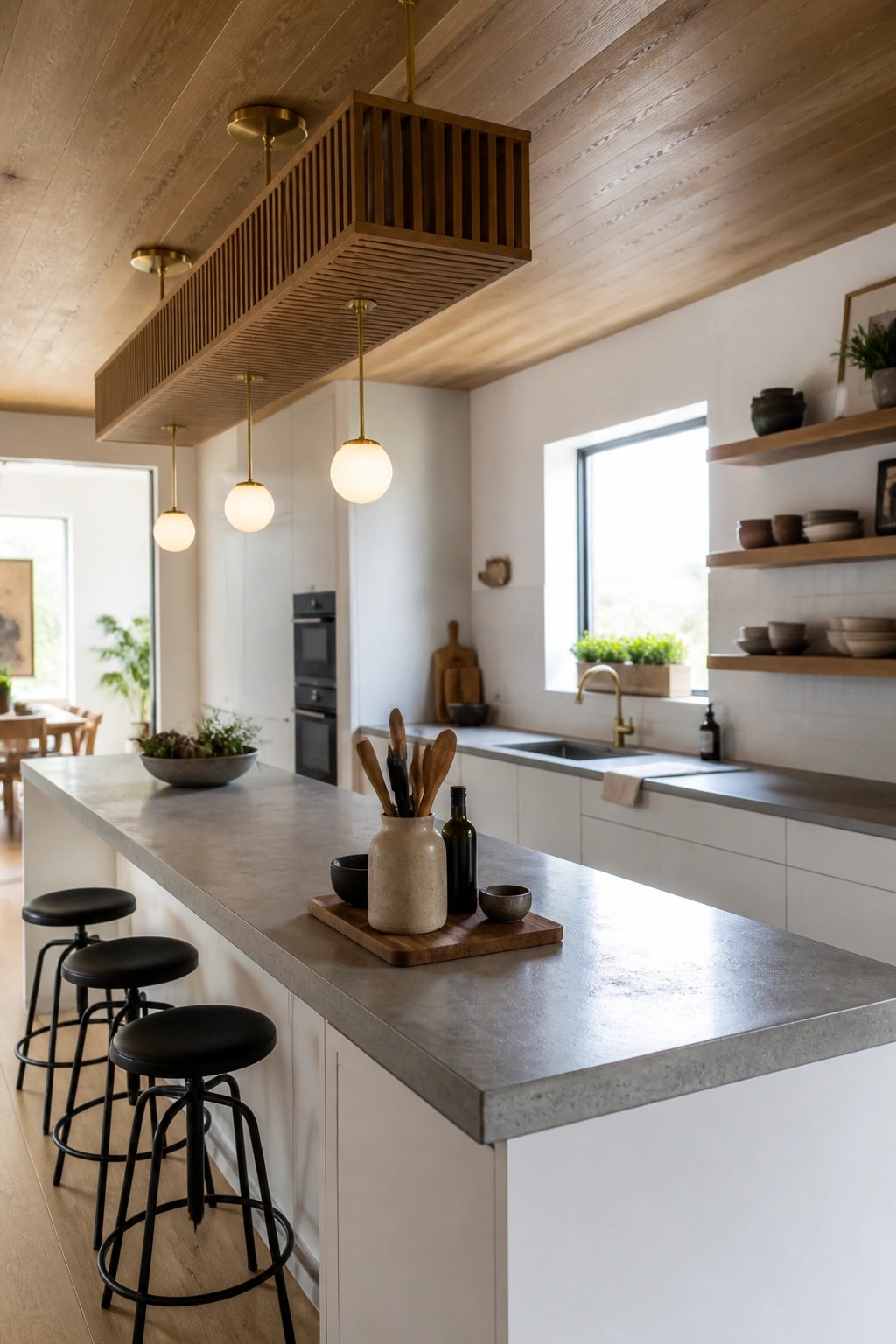
A linear wood ceiling works well when you want warmth without adding clutter. The slats run in one direction and keep the lines simple, which helps the whole room feel calm and put together. It suits spaces that already have clean walls and minimal trim.
This approach fits best in kitchens or open living areas where the ceiling is visible from several angles. Pair it with simple lighting and avoid too many competing textures overhead. It also helps if the wood tone stays close to other natural elements in the room so nothing feels forced.
Wood Ceilings With Clean Geometric Lines
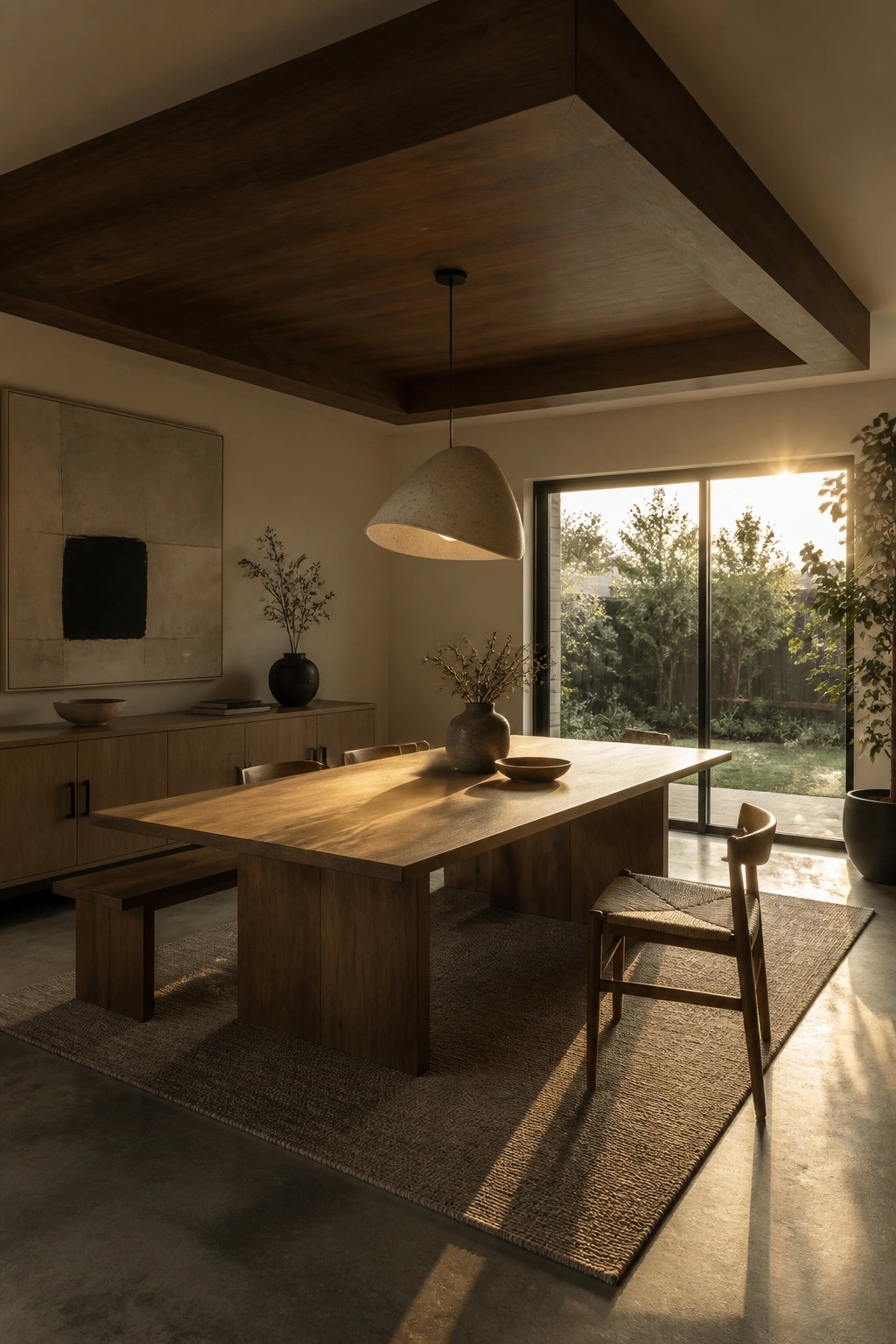
A wood ceiling with strong angles can help shape an open dining space without adding walls or extra furniture. It brings warmth through the material while keeping the lines sharp and simple, which works especially well when the rest of the room stays fairly quiet.
This kind of ceiling suits homes with higher ceilings and open floor plans. It looks best when the wood is treated as a built-in feature rather than just a surface, so the angles read as part of the architecture instead of decoration.
Horizontal Wood Ceiling Slats
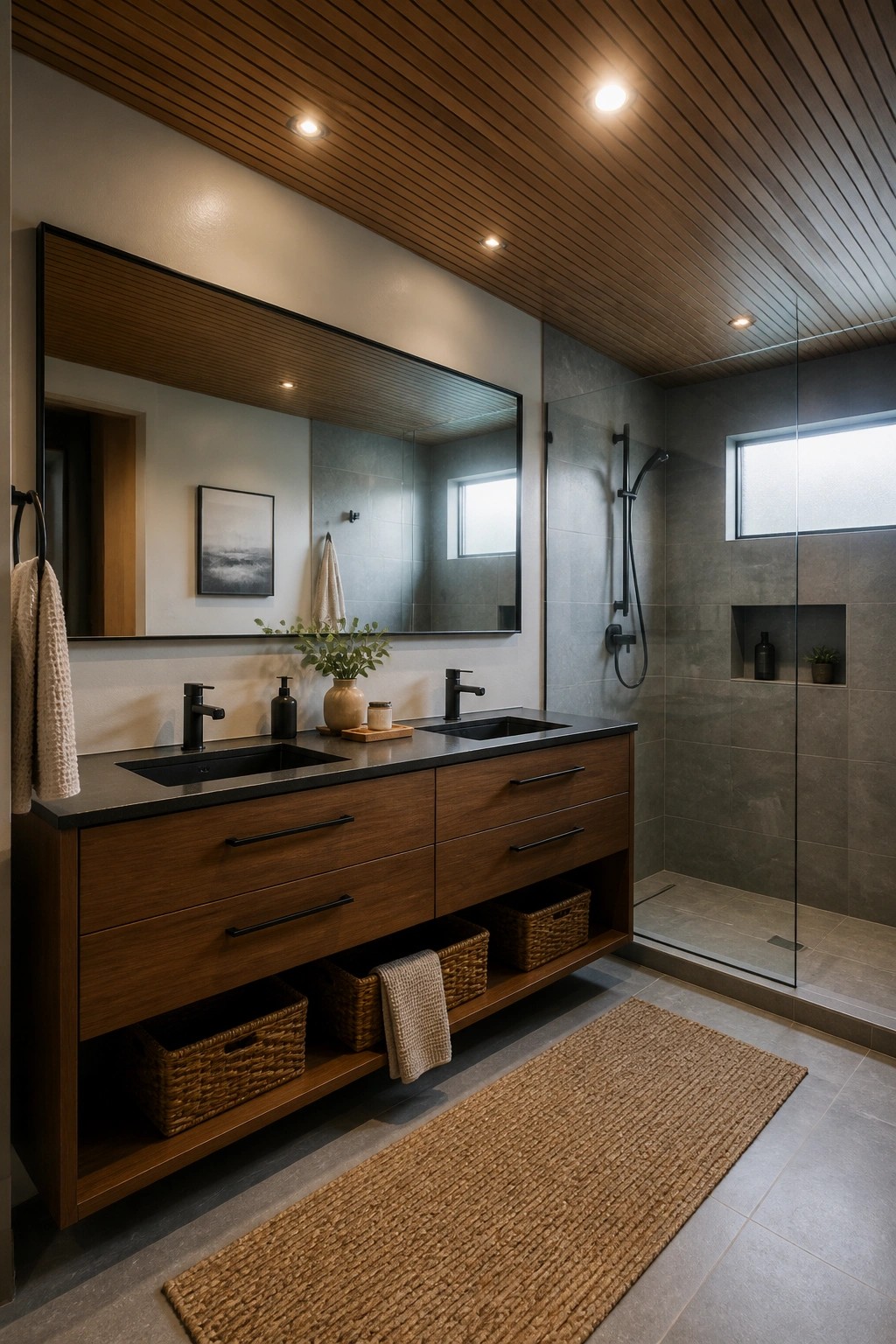
Many bathrooms feel cold when everything is tile and stone, so adding wood overhead brings a bit of warmth while keeping the look clean. The horizontal slats create steady lines that run the length of the room and help the space feel more put together without adding extra decoration.
This approach works best in contemporary homes where you want the ceiling to do some of the visual work. It suits smaller baths especially well because the simple pattern does not overwhelm the room. Just make sure the wood finish is sealed properly for moisture.
Light Wood Ceilings For Narrow Hallways
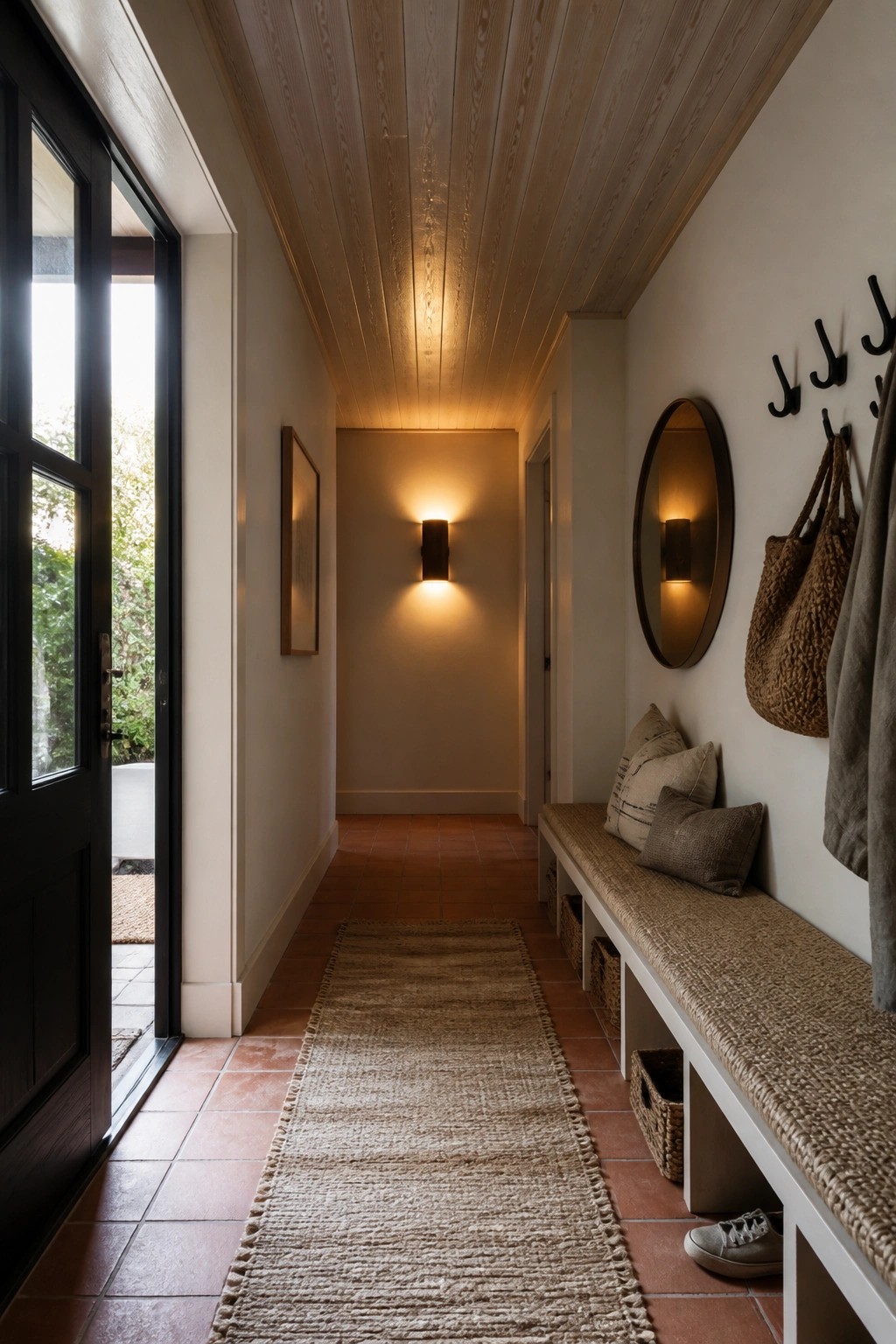
A light wood ceiling gives a hallway some warmth while keeping the look simple and open. The planks run lengthwise and help the space feel a little taller and less closed in.
This approach works best in homes with tile or stone floors where you want a bit of natural texture overhead. It suits modern and transitional interiors and works especially well in long, tight passages where you need something quiet but still interesting.
Light Wood Ceilings Keep Small Rooms Feeling Open
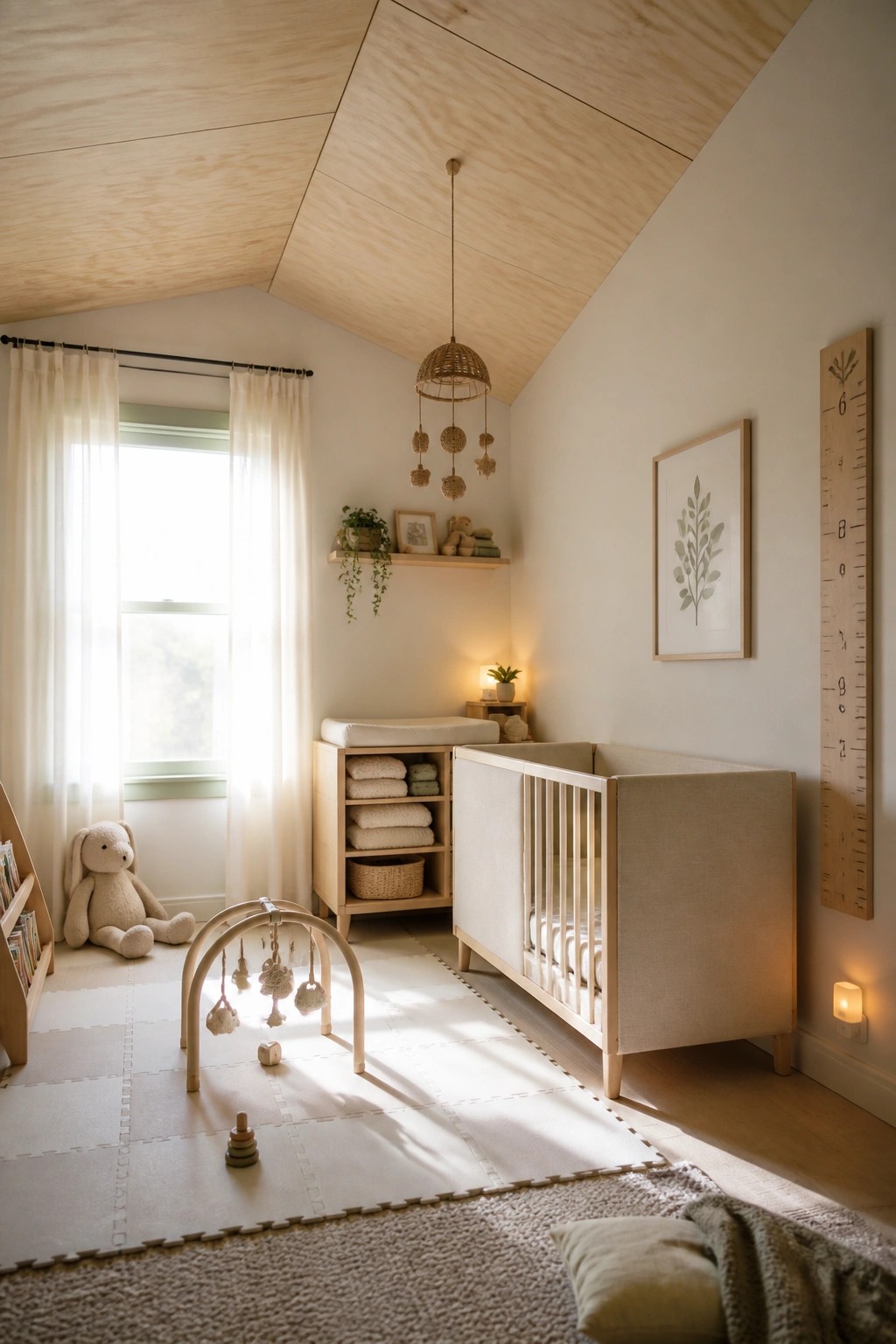
A light wood ceiling works well when you want some natural texture but still need the space to stay bright. In rooms with low light or smaller footprints, the pale tone reflects what light is there instead of soaking it up the way darker wood can.
This approach suits nurseries, bedrooms, or any space where you want a calm base without adding heavy beams or dark stain. Keep the walls and trim light too, and let the ceiling be the only wood element so it does not compete with the rest of the room.
Wood Ceilings With Linear Lighting
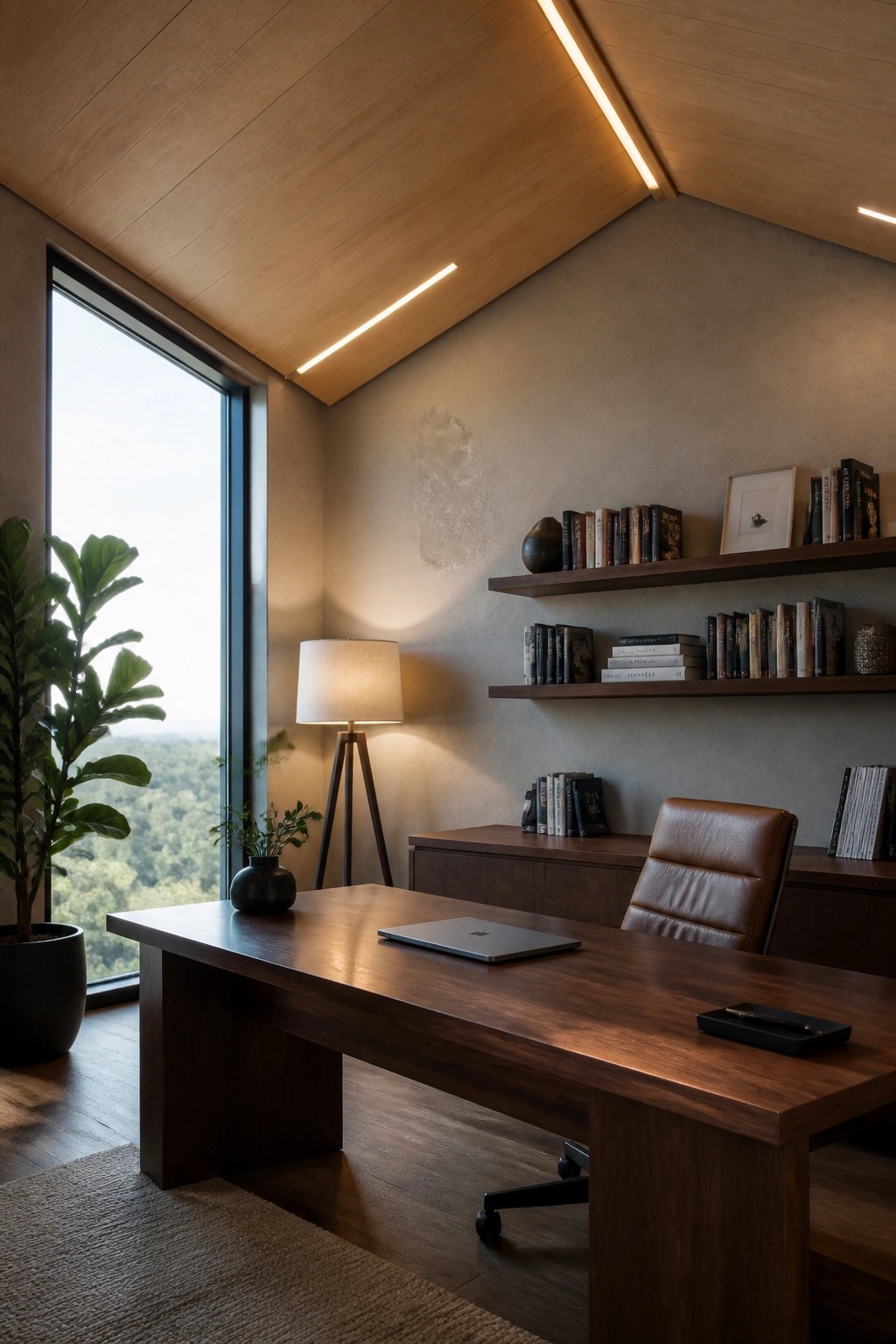
A wood ceiling with thin strips of light set into the surface keeps the lines simple and the room feeling open. The wood brings some warmth while the lights stay out of the way and do not add extra fixtures or clutter.
This approach works best in rooms with angled or high ceilings where you want the upper part of the space to feel finished but not busy. It suits home offices or living areas that already have wood furniture or flooring, since the ceiling can tie everything together without needing extra trim or molding.
Dark Wood Ceilings For Clean Lines
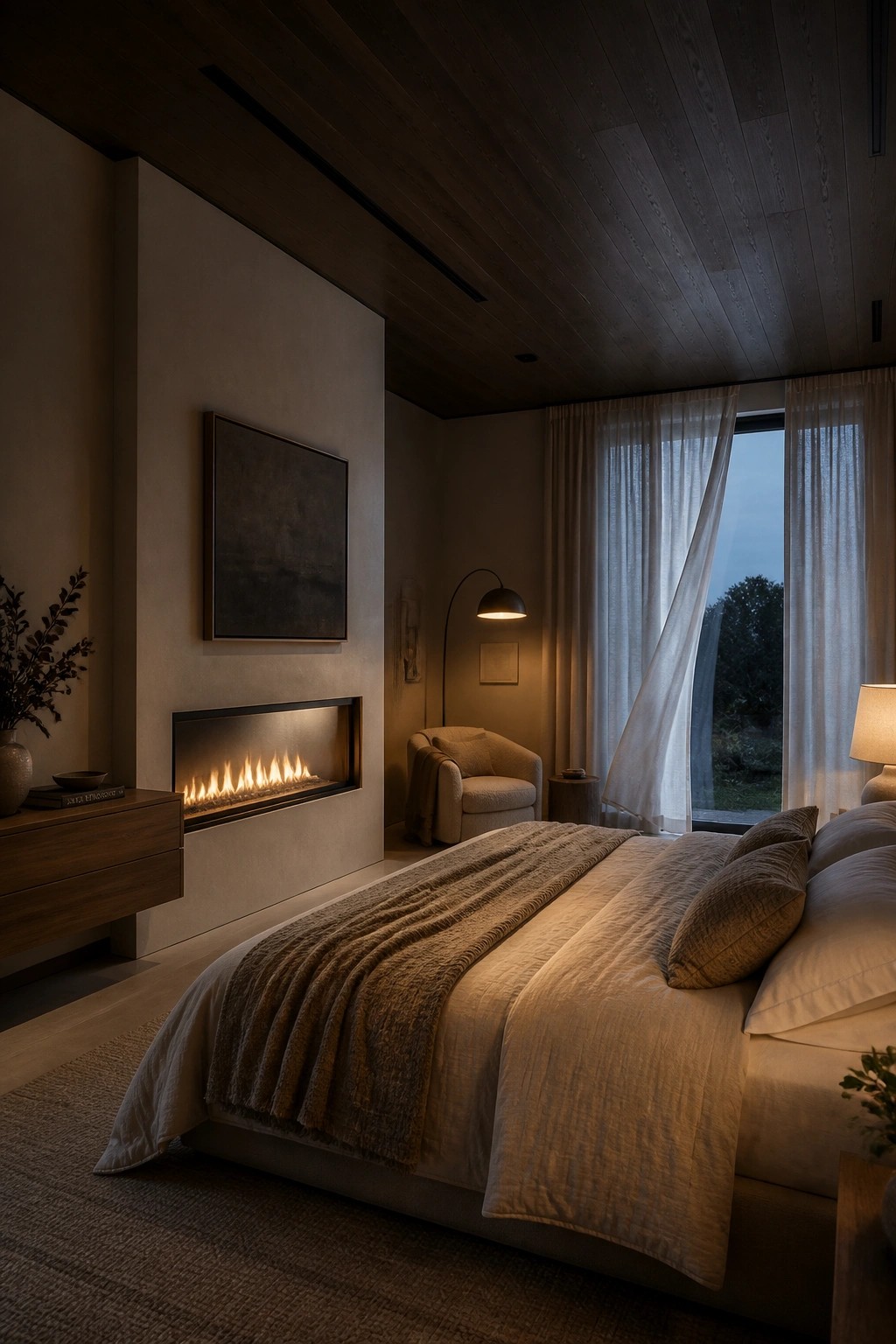
A dark wood ceiling gives a bedroom a solid, quiet base without needing much else on the walls. The planks run straight and simple, which keeps the room feeling open even when the color sits overhead.
This works best in spaces with light walls and low furniture so the ceiling can lead without crowding the room. Pair it with soft bedding and minimal accents to avoid weighing things down.
Wood Slat Ceilings For Clean Lines
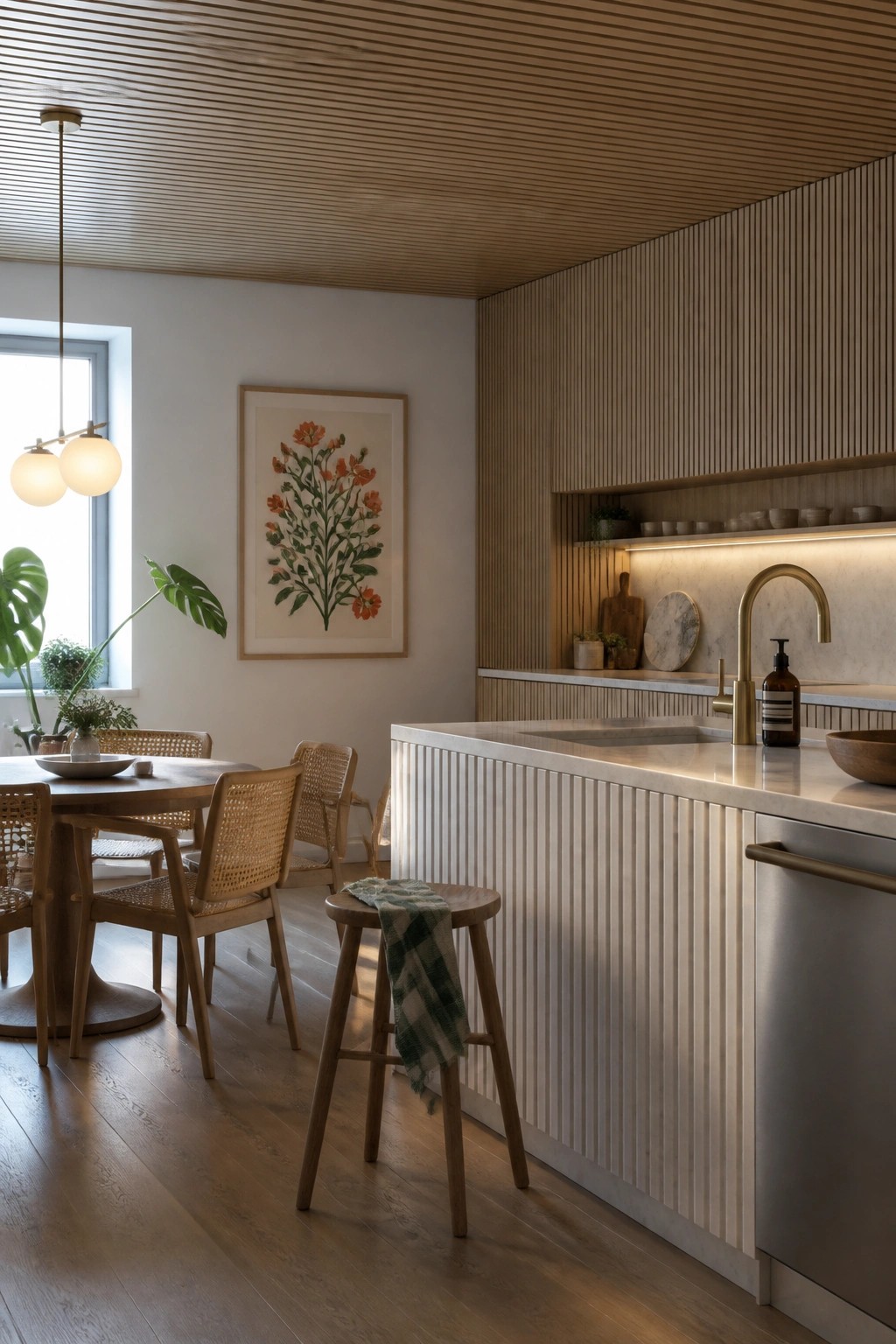
Wood slat ceilings work well when you want structure without adding heavy beams or dark tones. The even lines keep the space feeling open while adding warmth through the wood itself, especially in rooms that already use lighter materials on the walls and floors.
This ceiling treatment suits open kitchens and dining areas where you want one material to connect the zones without extra trim or molding. It pairs best with simple cabinetry and neutral counters so the ceiling stays the main linear detail rather than competing with other patterns.
Wood Ceilings For Compact Rooms
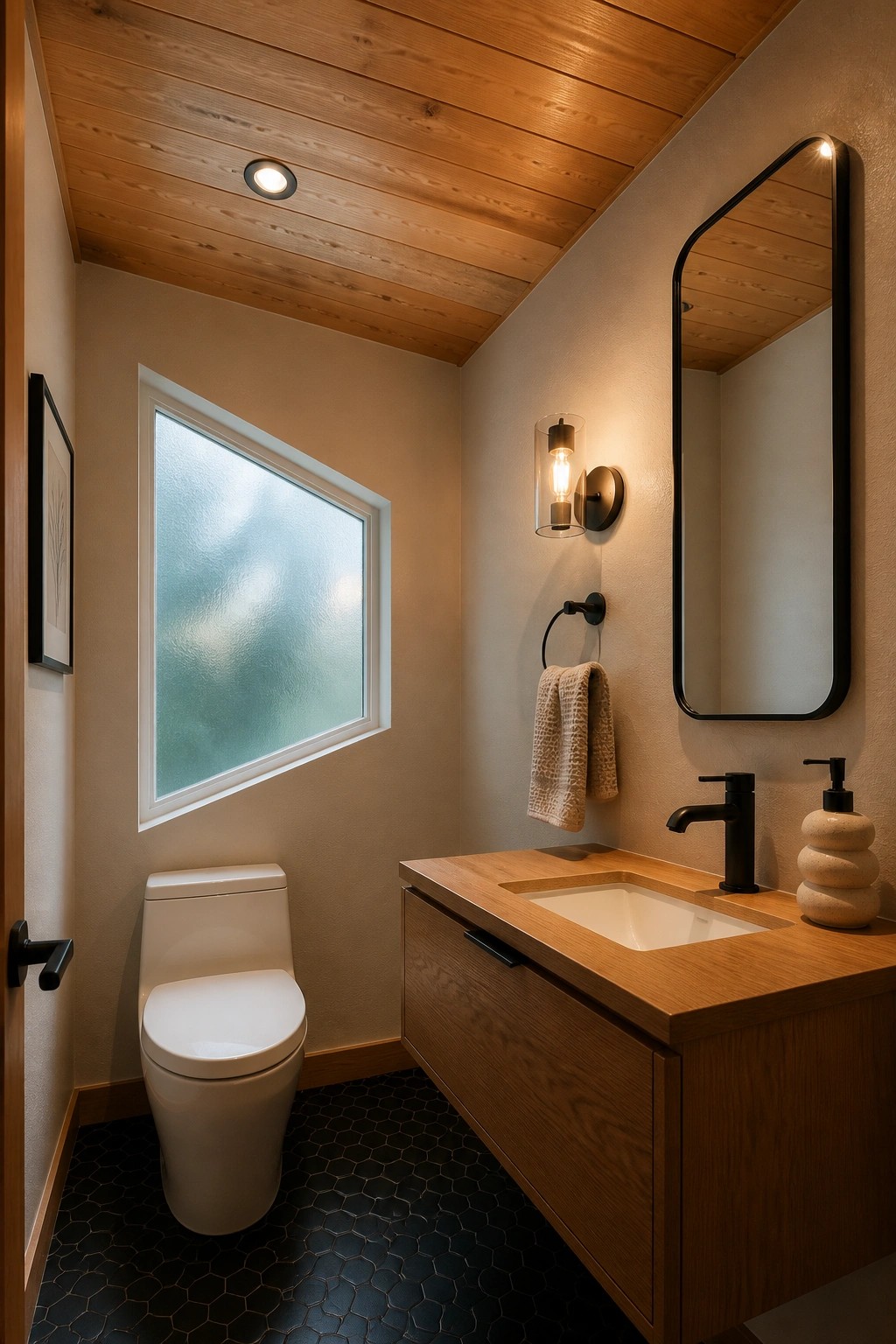
A wood ceiling can make a small room feel more finished and a little warmer without adding clutter. The horizontal planks keep the look clean and modern while the natural tone softens what would otherwise be a plain, hard surface overhead.
This approach works best in bathrooms or other tight spaces where you want some texture but still need the room to feel open. Keep the rest of the finishes simple and let the ceiling carry the main material interest.
Wood Ceilings In Compact Laundry Rooms
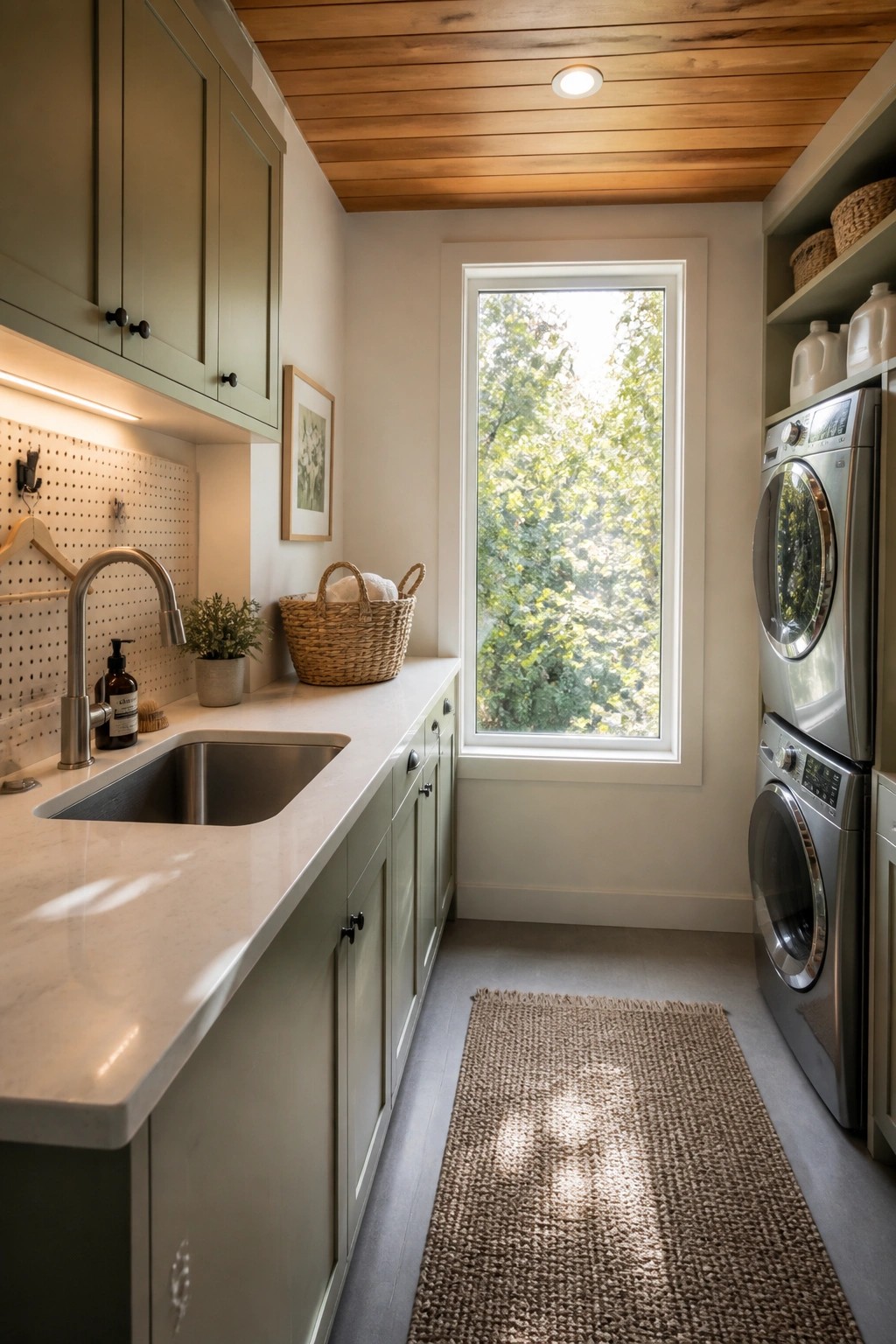
A wood ceiling can make a small laundry room feel more finished without adding much visual weight. The simple horizontal planks bring warmth and texture that balance the hard surfaces below, like counters and appliances, while keeping the overall look clean.
This works best in narrow or windowless utility spaces where you want a bit of natural material but still need the room to feel open. Use a light to mid wood tone and keep the rest of the finishes simple so the ceiling reads as a quiet upgrade rather than a focal point.
Dark Wood Ceilings For Added Warmth
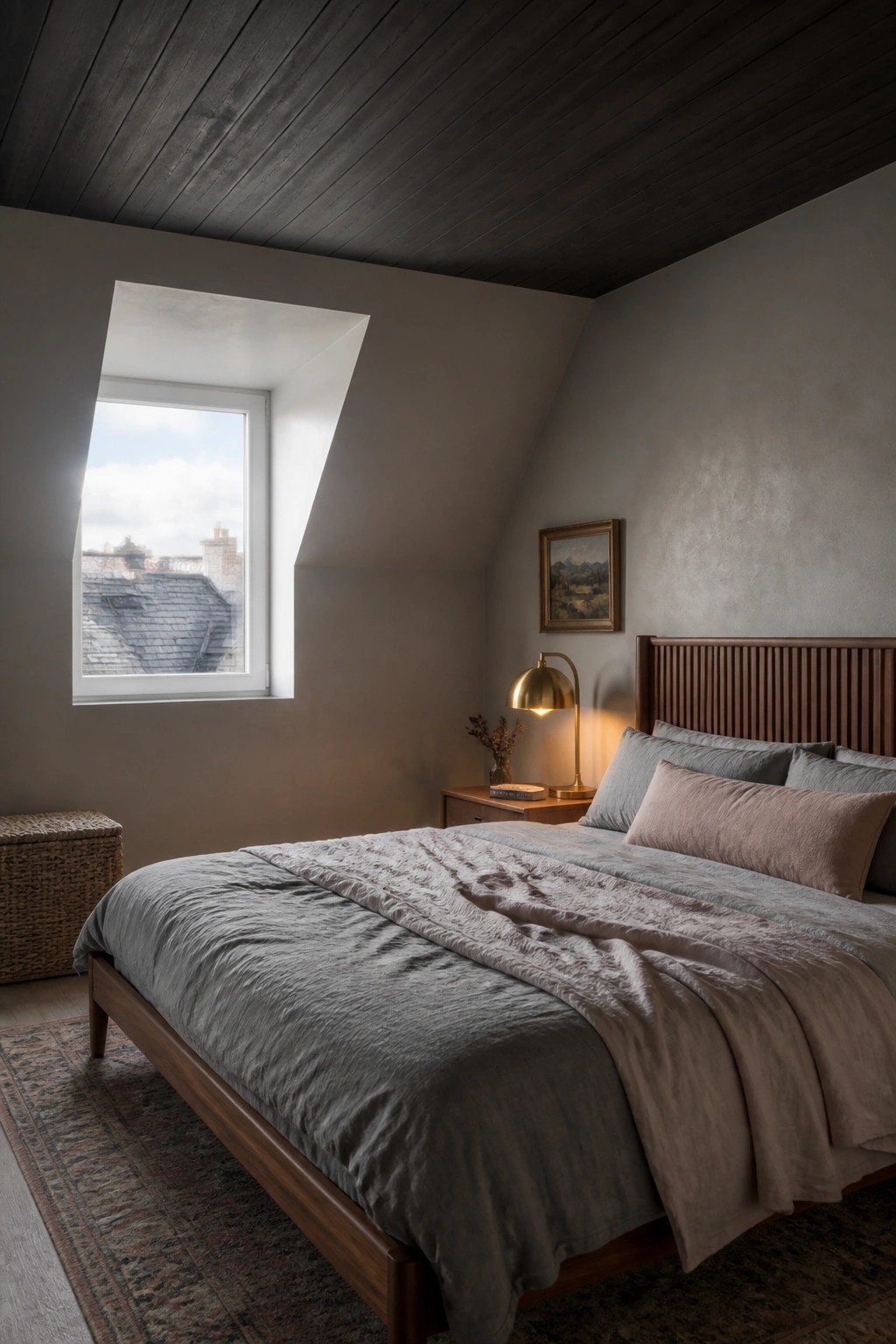
A dark wood ceiling brings a quiet sense of enclosure to a bedroom. The deep tone contrasts with lighter walls and keeps the space from feeling too open or cold, especially in rooms with angled ceilings.
This works well in homes where the roofline already creates interesting shapes. Keep the rest of the room simple so the ceiling becomes the main material statement rather than competing with too many other finishes.
Wood Ceilings In Narrow Hallways
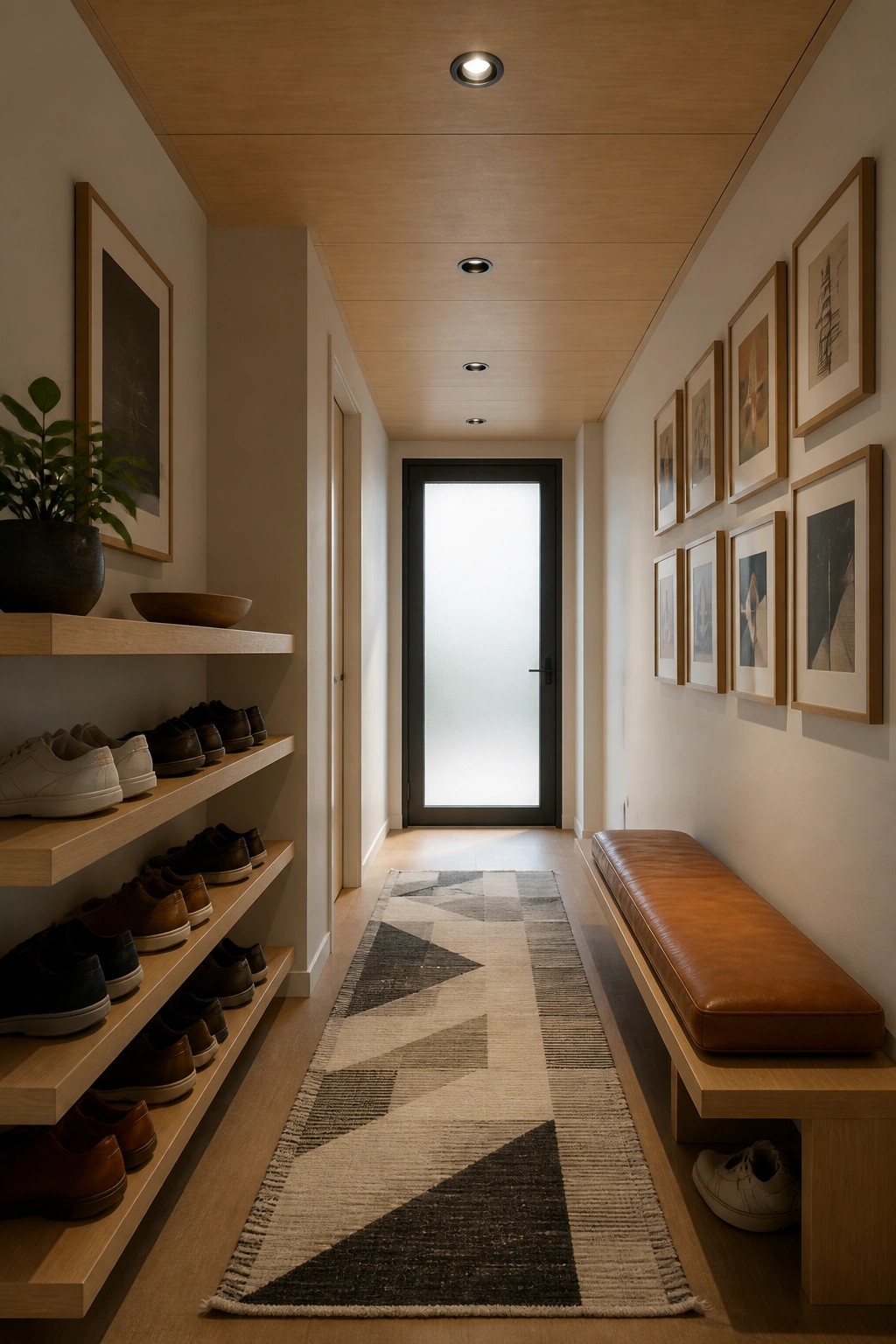
A wood ceiling brings a quiet warmth to a narrow hallway without crowding the space. It adds a natural material that softens the hard lines of the walls and floor while keeping the overall look clean and simple.
This approach works best in modern homes where hallways can feel a bit stark. Use recessed lights to avoid breaking up the surface, and keep the rest of the materials light so the ceiling does not feel heavy.
Dark Wood Ceilings For Clean Contemporary Interiors
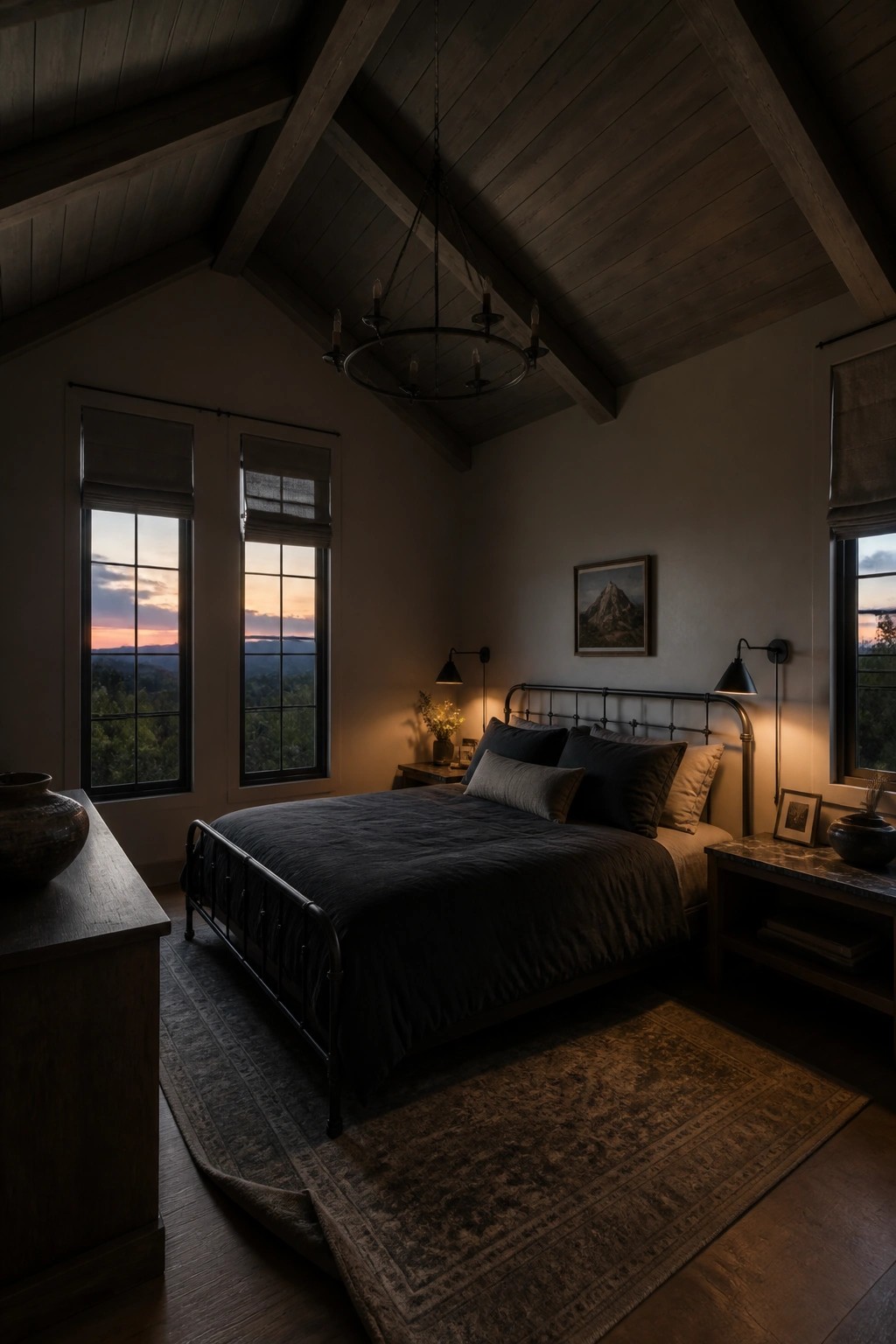
Dark wood ceilings work well when you want modern lines without losing warmth. The deep tone gives the room structure and helps tie together other dark elements like bedding and lighting fixtures.
This approach suits taller rooms where the ceiling becomes part of the architecture rather than just a surface overhead. It pairs best with light walls and minimal furnishings so the wood reads as a deliberate choice instead of an afterthought.
Exposed Wood Beams For Clean Lines
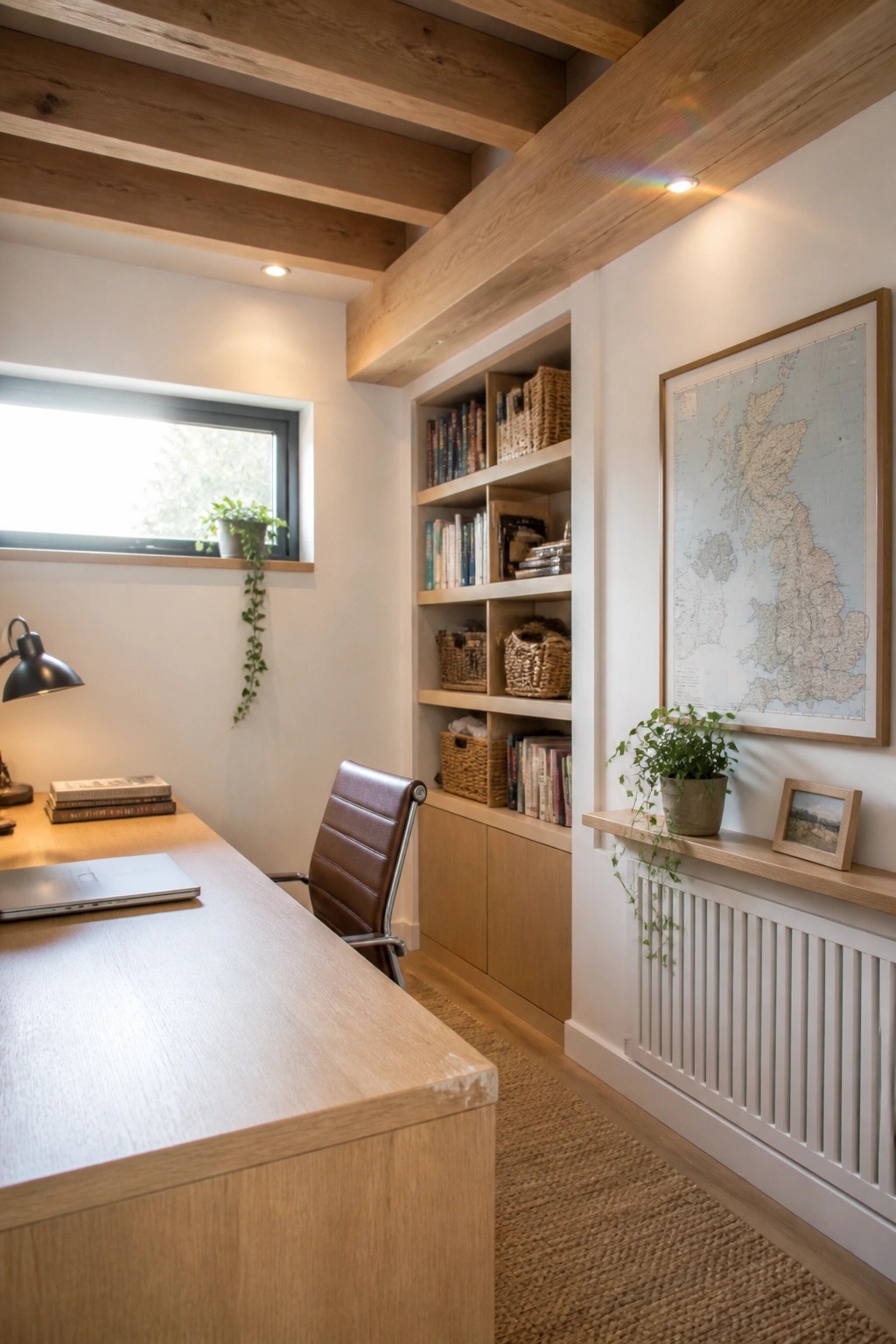
Exposed wood beams give a ceiling structure without adding much visual weight. They work best when the rest of the room stays light and open so the beams can define the space from above.
This setup suits smaller rooms like home offices or studies. Keep the walls and trim pale and let the wood grain do the work. Avoid packing too many other wood tones into the same area or the beams can start to feel busy.
Sloped Wood Ceilings With Skylights
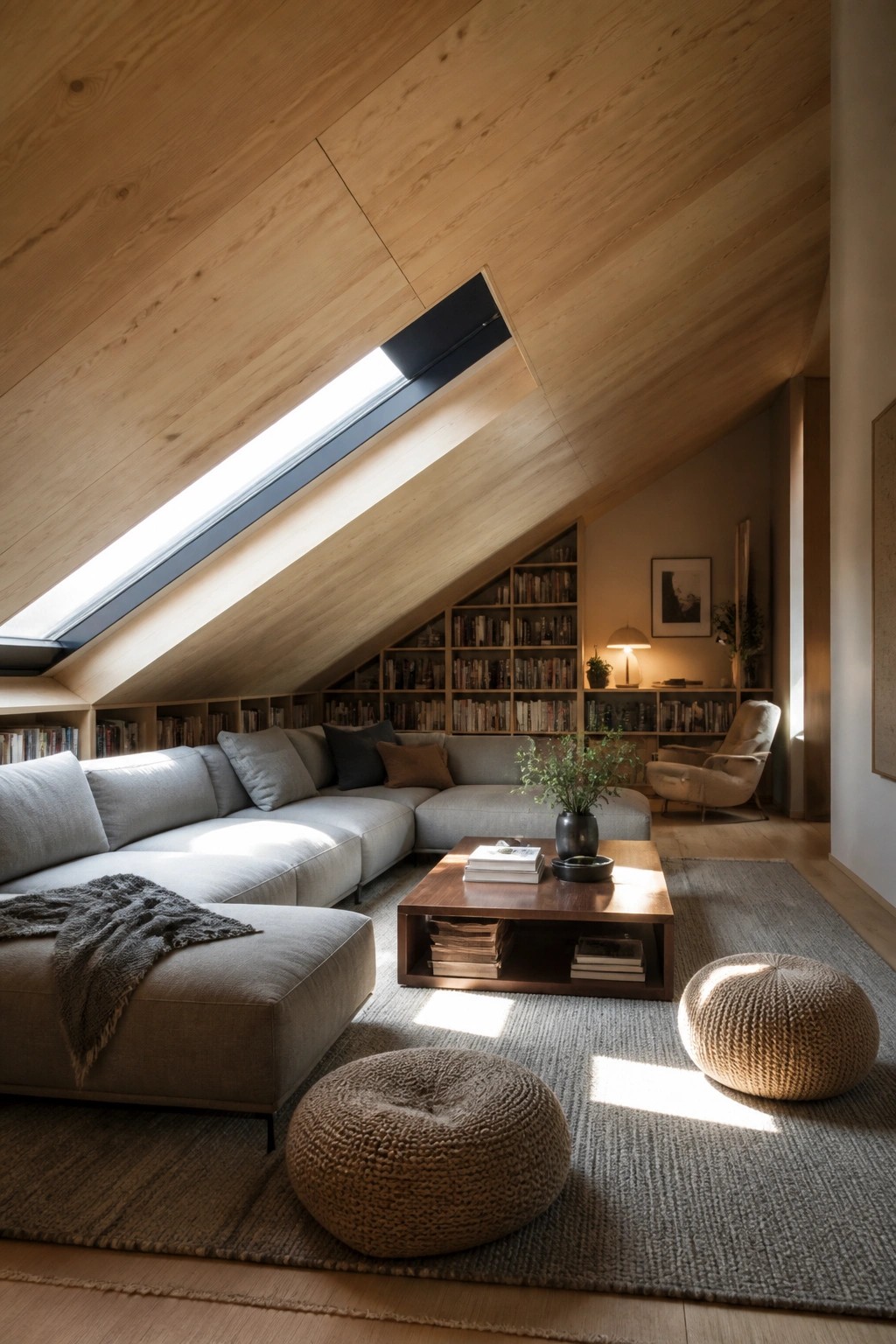
A sloped wood ceiling works well when you want to keep an attic space open and bright. The light tone of the wood helps the room feel larger, and the skylight cuts through the angle to bring daylight all the way down to the seating area.
This approach suits homes with unused attic space or rooms under the roofline. Keep the wood finish simple and avoid heavy beams if you want the clean lines to stay the focus.
Light Wood Ceilings For Play Areas
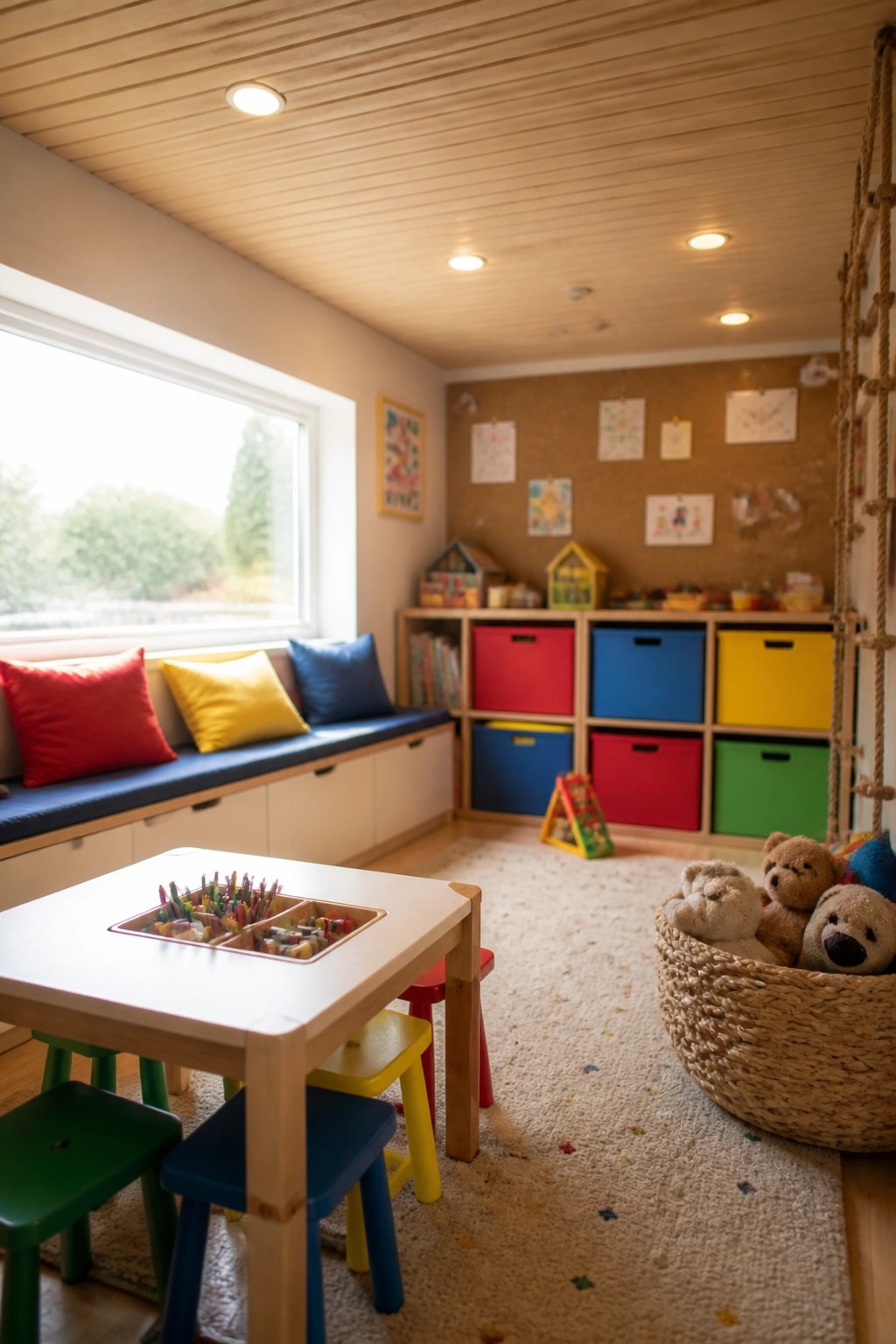
A light wood ceiling works well in rooms that need to stay calm even when the rest of the space is full of color and activity. The simple planks keep the overhead plane quiet and let the brighter elements below feel less overwhelming.
This choice suits smaller or multi-use rooms where you want some natural texture without adding weight. Use a pale finish and keep the boards running in one direction so the ceiling stays clean and the room feels a bit taller.
Wood Ceilings In Laundry Rooms
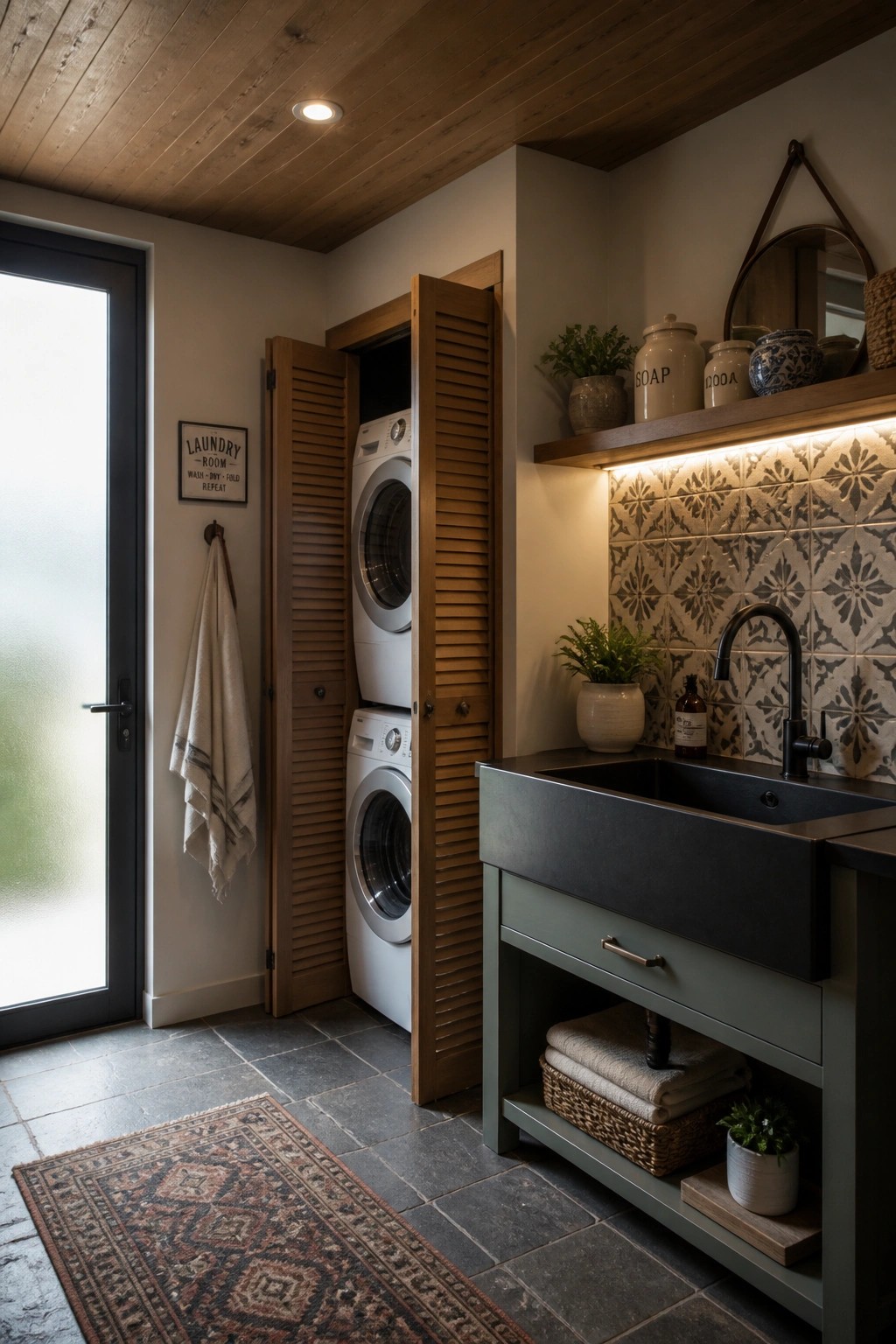
Wood ceilings can give laundry rooms a calmer, more finished feel without adding much visual noise. The material brings warmth and a sense of continuity, especially when the room opens off a main living area.
This works best in homes that already use wood ceilings elsewhere. Keep the rest of the finishes simple, and the ceiling will quietly tie the space together without making it feel busy.
Dark Wood Ceilings with Skylights
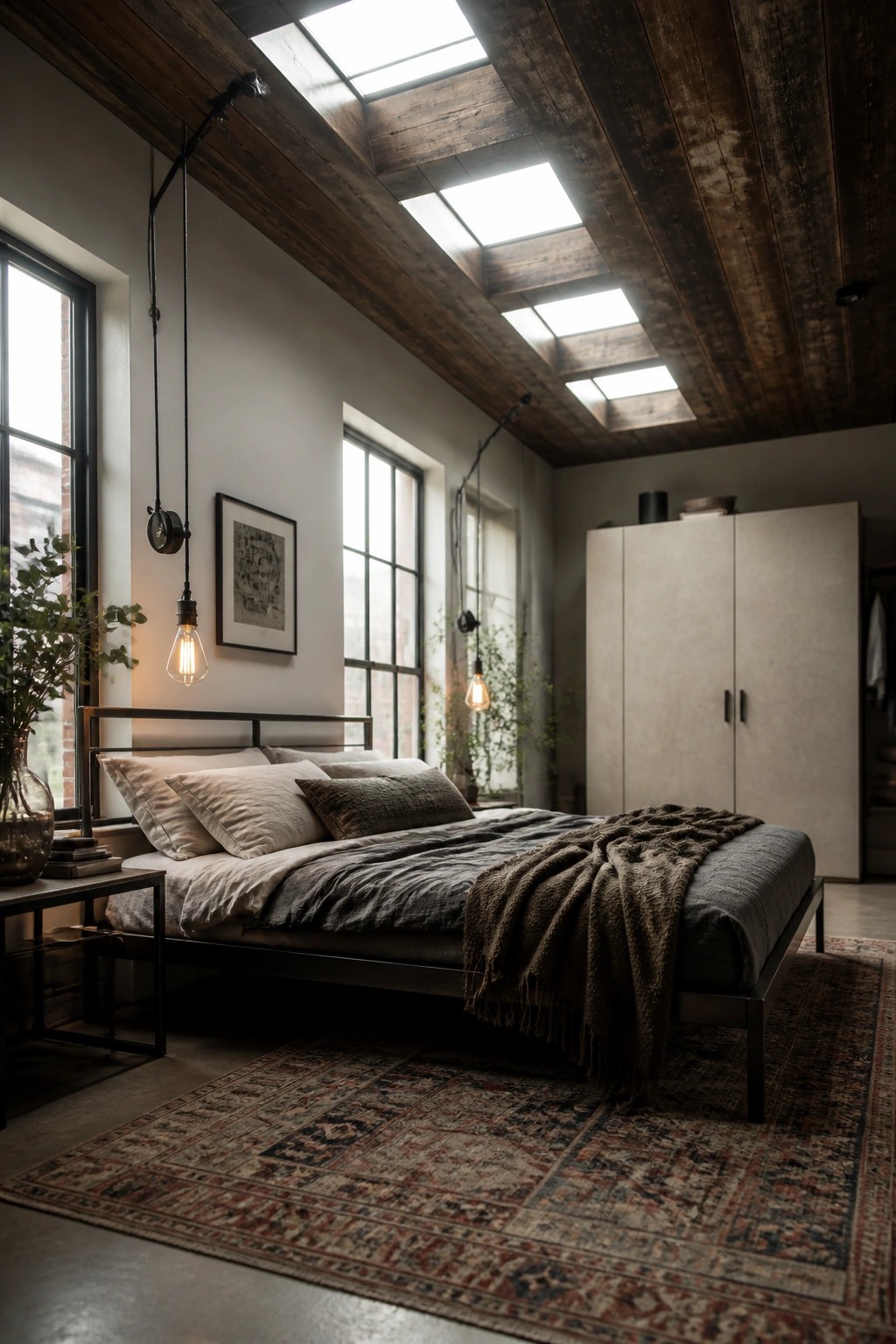
A dark wood ceiling gives a room weight and structure without needing much else. The planks and beams create clean lines that feel modern while the tone adds a bit of warmth that lighter finishes often lack.
This works well in spaces with tall ceilings where the wood can read as a strong architectural feature. It suits homes that already lean contemporary or industrial, and it pairs best with simple walls and minimal furnishings so the ceiling stays the focus.
Frequently Asked Questions
Q: Should the wood on my ceiling match the floor exactly? A: Skip an exact match. Go for a lighter tone overhead to bounce light around and stop the room from feeling boxed in. The contrast keeps the look sharp and modern.
Q: How do I stop a wood ceiling from making the space feel darker? A: Pick a finish with some sheen so it catches light from windows or lamps. Add a few more recessed lights than you think you need. This keeps the ceiling bright while still showing off the grain.
Q: Can I install wood planks myself if the room has tricky angles? A: Start with smaller panels that fit together like a puzzle. Measure twice around vents and corners before you cut. It saves time and avoids gaps that stand out later.
