

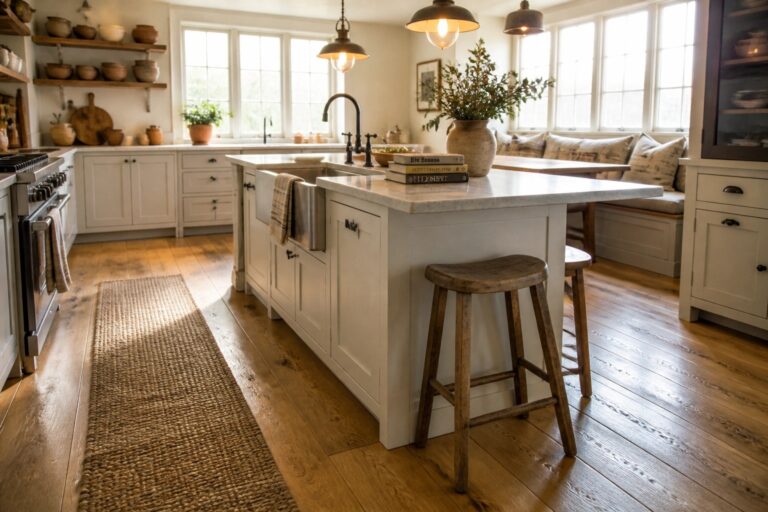
Kitchens see more daily wear than most rooms, so the flooring choice sets the tone for how the space holds up over time.
I have found that wood can look warm and inviting but it needs to handle spills and heavy foot traffic without showing every mark right away.
Some options stand out because they balance that practicality with a finish that feels part of the home rather than an afterthought.
The real test comes in how it feels underfoot after a few months of regular use.
I usually check how the grain and finish interact with the room’s lighting before committing to anything.
Wide Plank Hardwood For Kitchen Floors
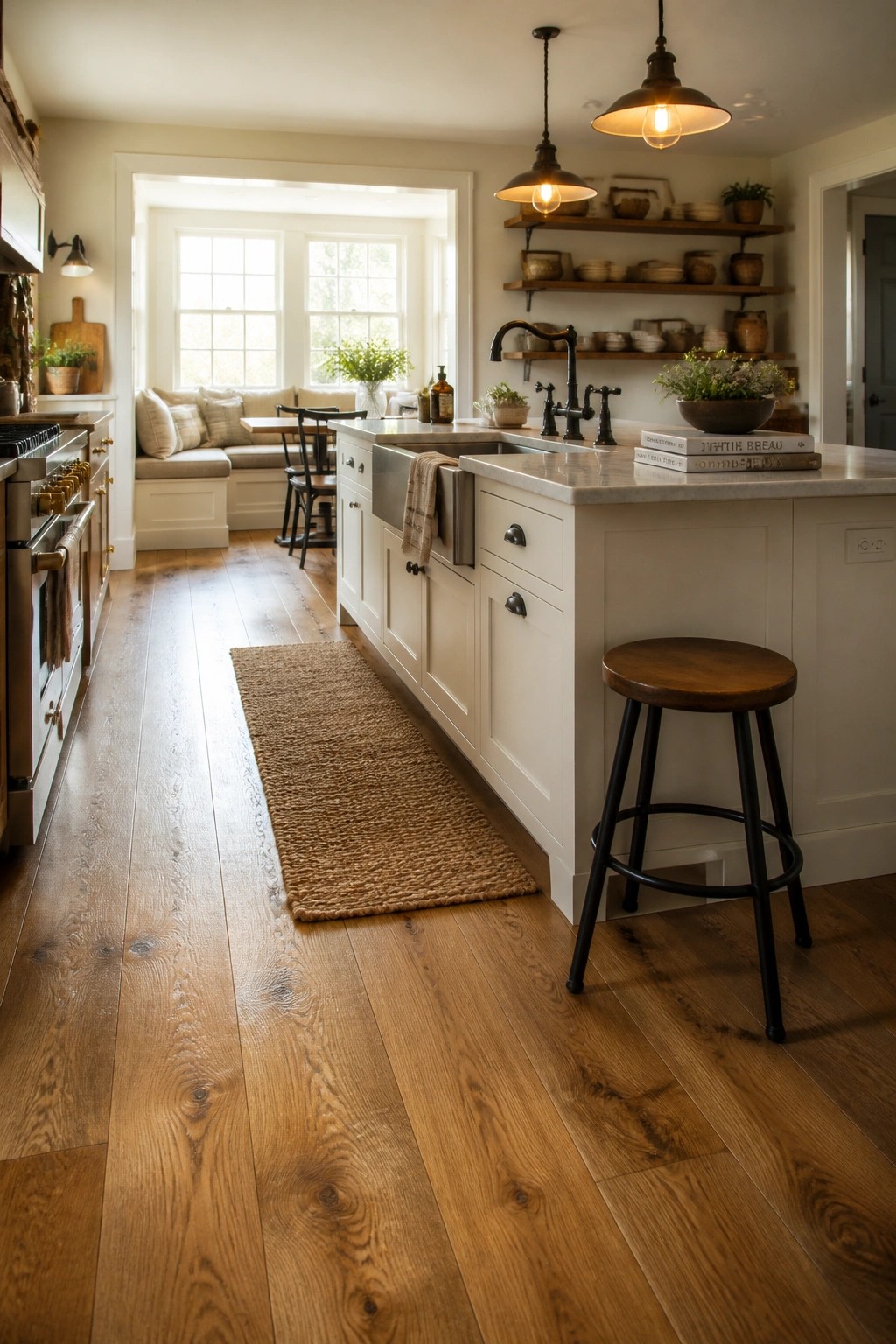
Wide plank hardwood holds up well in kitchens because the thicker boards resist wear from foot traffic and daily activity. The natural grain also gives the space a grounded feel that pairs easily with both painted cabinets and stone surfaces.
This flooring choice suits homes that already use wood in other rooms so the kitchen stays connected to the rest of the house. Look for harder species and a good finish if you cook often or have kids and pets.
Wide Plank Wood Flooring That Handles Daily Use
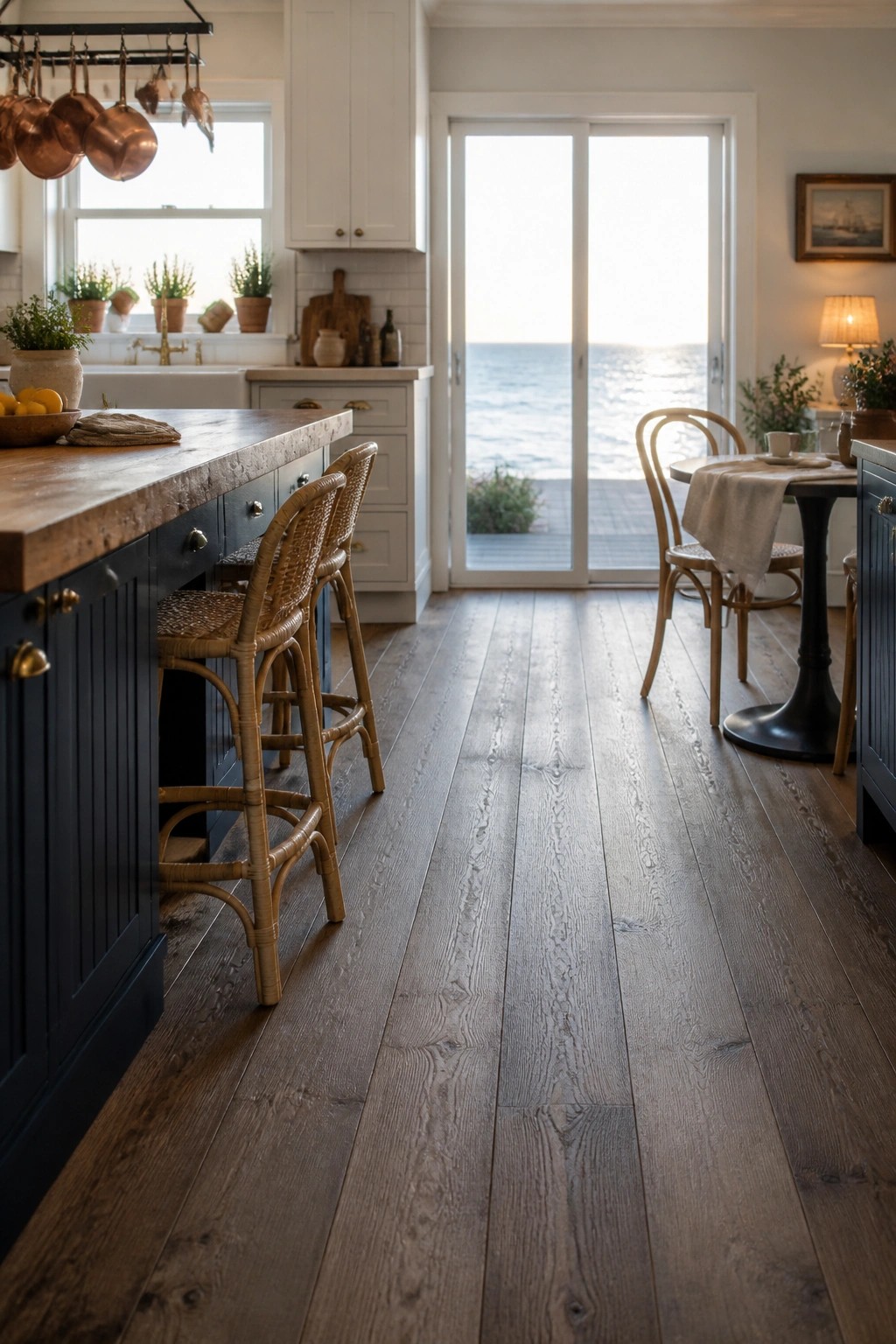
Wide plank wood floors work well in kitchens because they stand up to spills, dropped items, and constant foot traffic without showing wear quickly. The long continuous boards also help the kitchen feel connected to nearby rooms instead of sectioned off.
This approach suits homes where the kitchen opens into living or dining areas. It looks best with a medium to dark stain that hides minor marks, and it pairs nicely with simple cabinetry and minimal rugs. Just make sure the wood has a tough finish rated for wet areas.
Dark Wood Flooring In Modern Kitchens
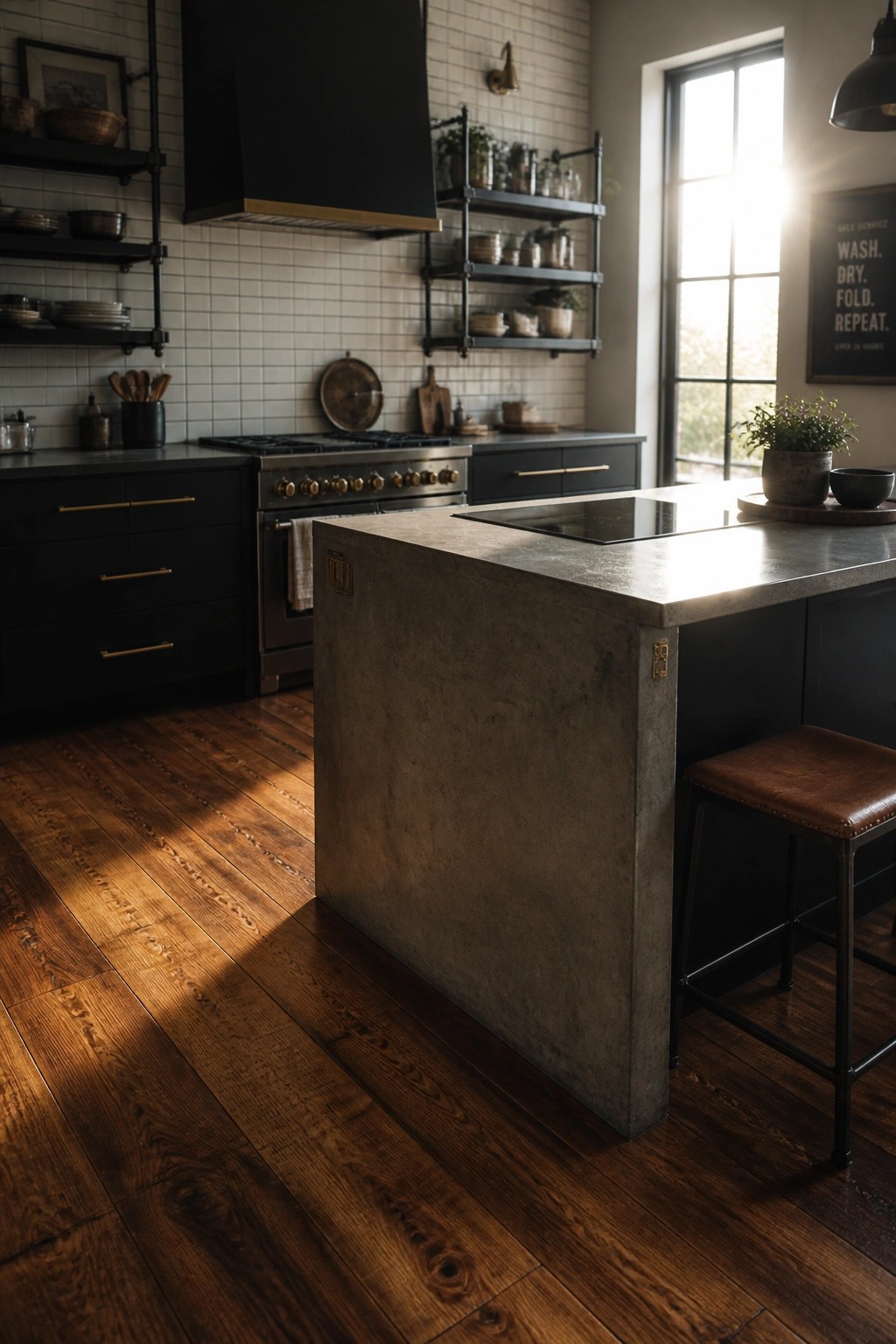
Dark wood flooring gives a kitchen a solid base that feels warm without turning heavy. It handles daily use well and keeps the space from looking too cold when paired with concrete or metal surfaces.
This choice works best in homes that mix modern finishes with a bit of traditional texture. Keep the rest of the palette simple so the floor can carry the warmth without competing with too many other materials.
Light Wood Flooring for Narrow Kitchens
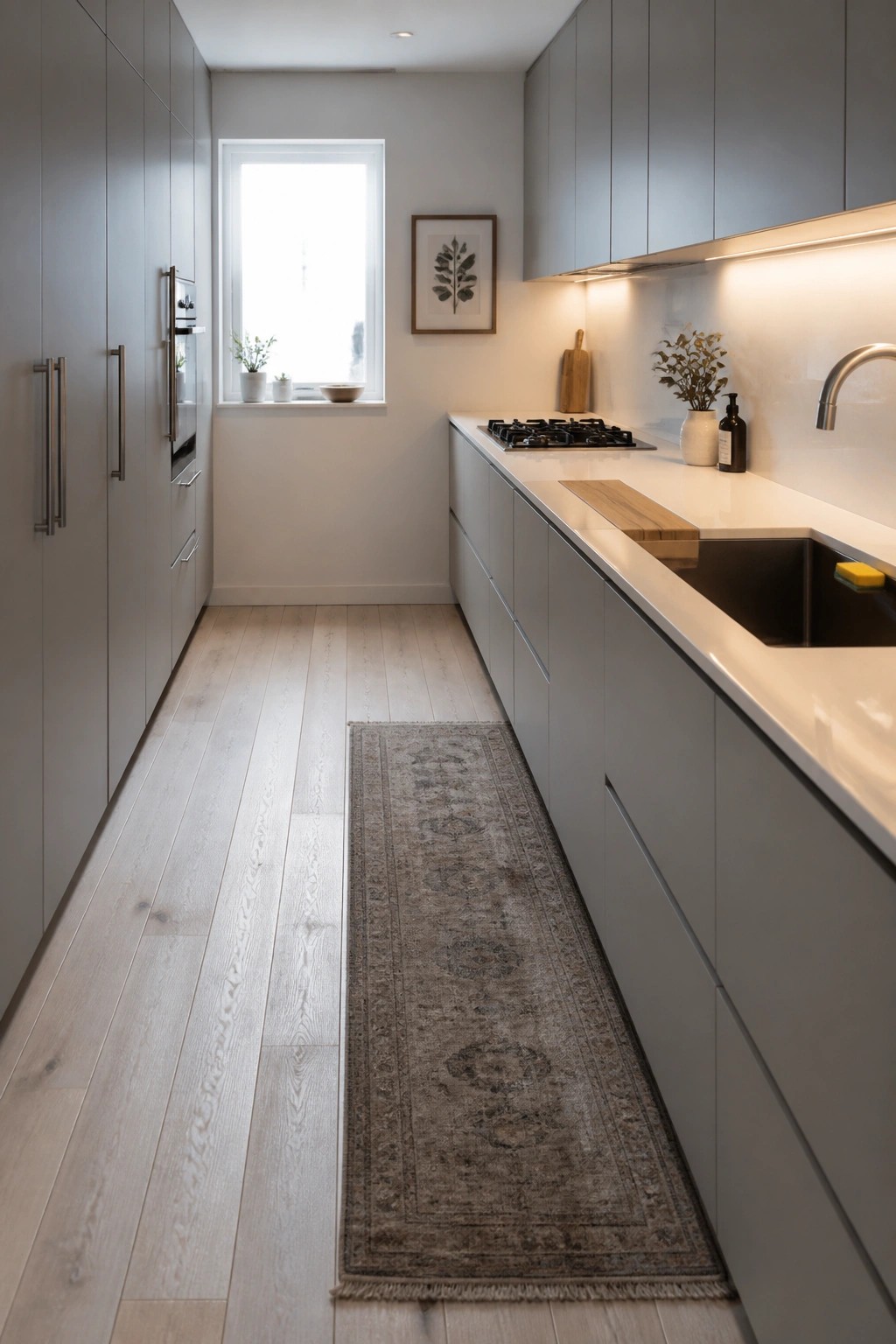
Light wood flooring works well in a tight kitchen because it reflects light and keeps the space from feeling closed in. The pale planks run the full length of the room and help tie the cabinets and counters together without adding visual weight.
This approach suits homes that get good natural light and see regular use. A simple runner down the center protects the wood from spills and foot traffic while still letting the floor show through.
Herringbone Wood Flooring In Kitchens
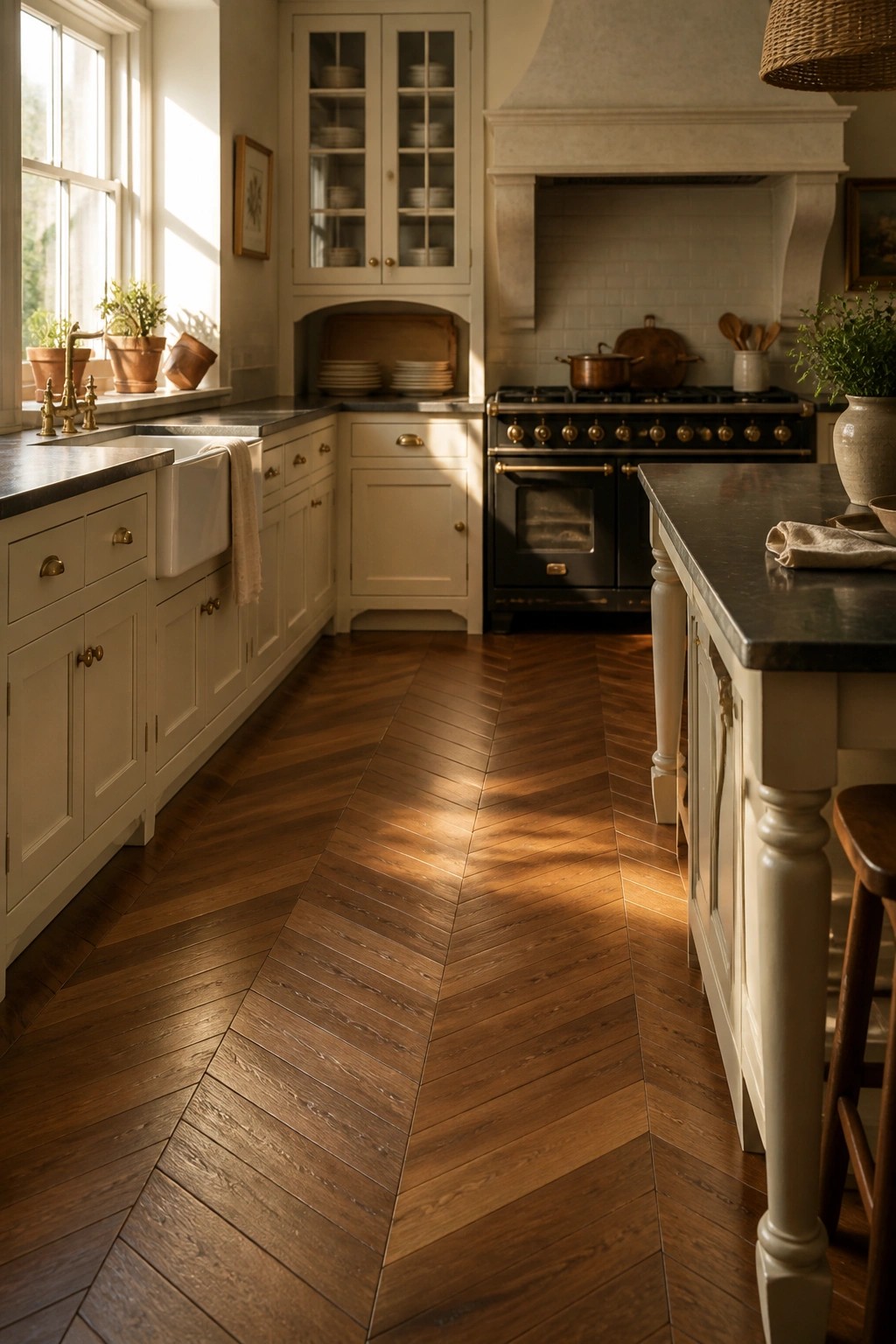
Herringbone wood flooring gives a kitchen both durability and a bit of character without feeling fussy. The angled pattern holds up better to heavy foot traffic than straight planks, and it hides minor scratches and wear over time.
This layout works best in homes that already lean traditional or transitional. It pairs easily with painted cabinetry and dark stone counters, though it needs a tough finish to handle spills and daily use.
Light Wood Flooring For Busy Kitchens
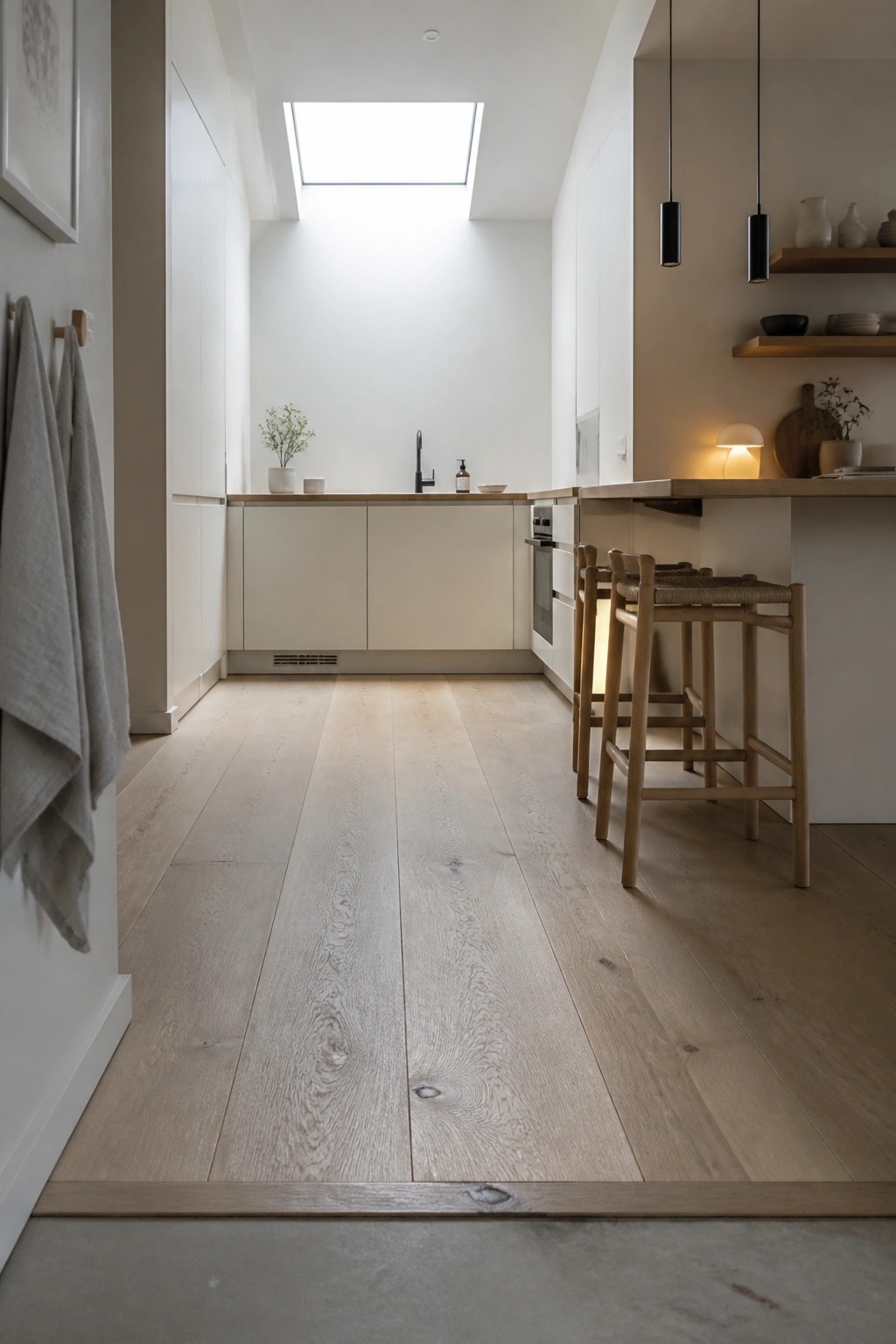
Light wood floors can make a kitchen feel more open without much effort. The pale tone bounces light around the room, which helps smaller or narrow spaces look less cramped. It also tends to hide everyday dust and crumbs better than very dark wood.
This option suits homes that get steady use in the kitchen. Pick a durable finish and wider planks so the floor holds up to spills and foot traffic without showing wear too quickly.
Wide Plank Wood Floors for Kitchens
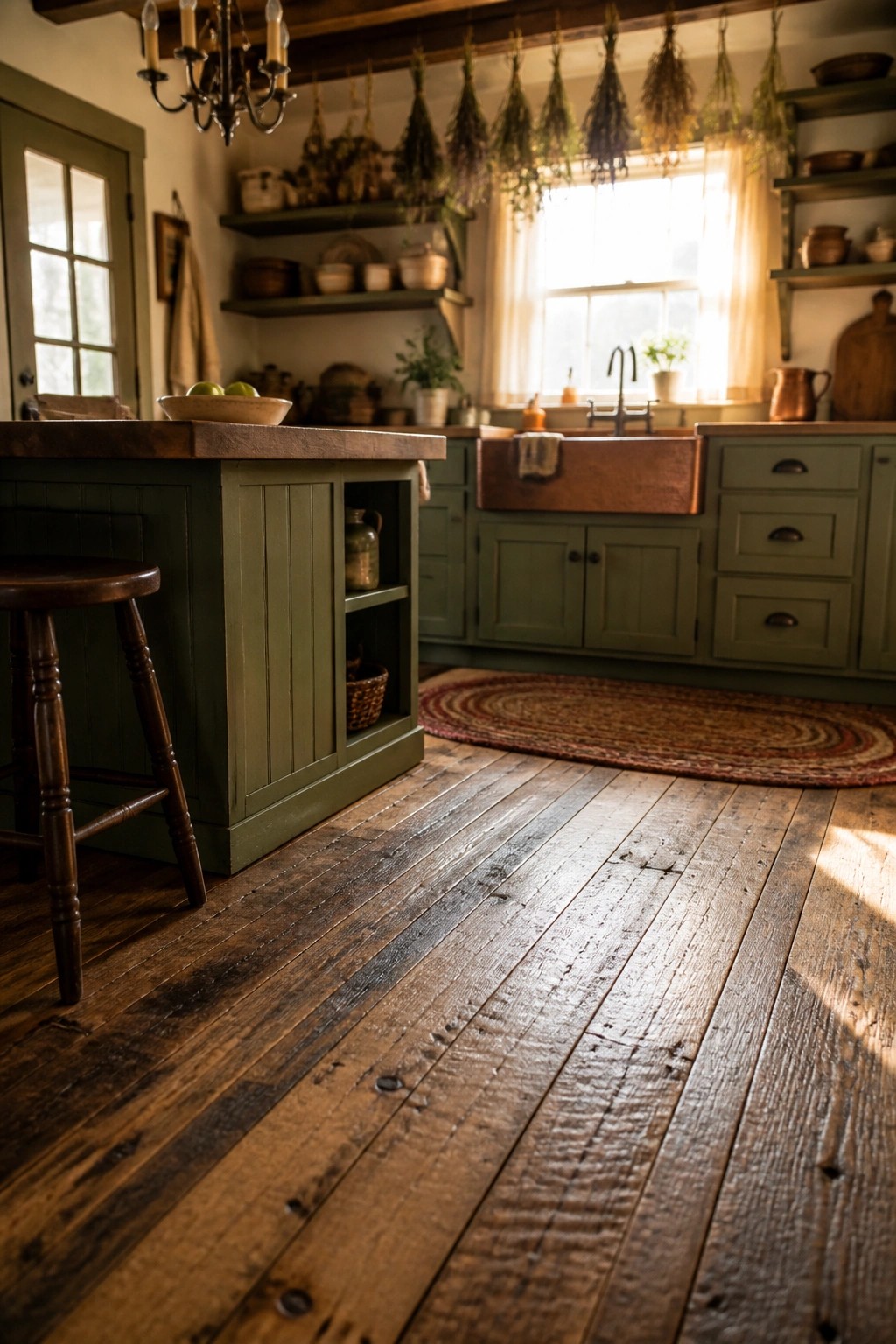
Wide plank wood floors bring a lot of character to a kitchen without needing much fuss. The boards shown here have that worn, lived-in look that hides daily wear and still feels warm underfoot. Many people like this choice because it pairs durability with a softer appearance than tile or vinyl.
This style works best in homes that already lean rustic or traditional. It holds up well to spills and foot traffic as long as the finish is tough enough for kitchen use. Keep the rest of the room simple so the floor stays the main feature.
Durable Wood Flooring For The Kitchen
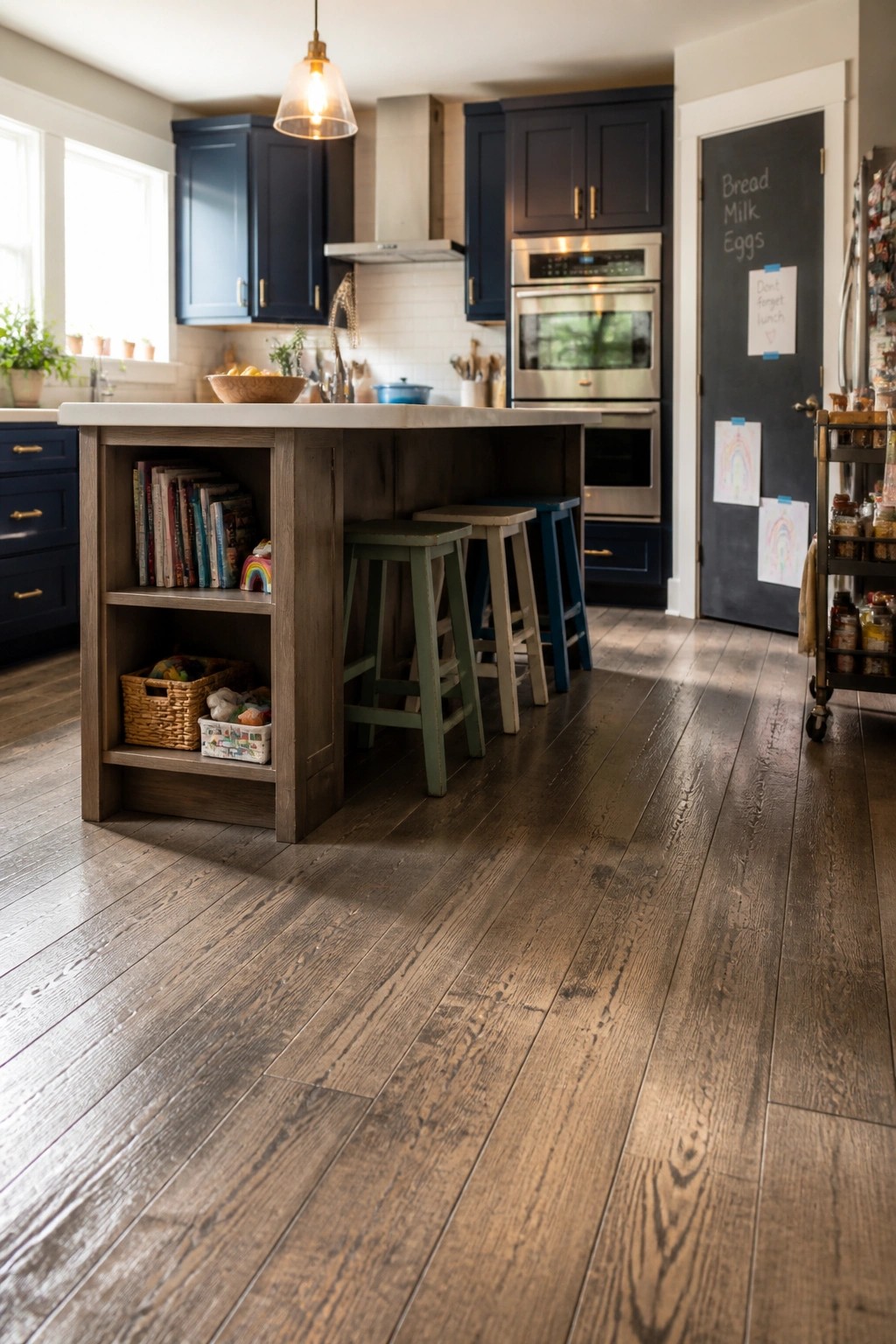
Wood floors can work well in a kitchen when they are thick enough and properly finished. The wide planks here show how a darker tone can hide everyday wear while still feeling warm underfoot. Many people like this look because it avoids the cold feel of tile without giving up too much strength.
This choice suits homes where the kitchen sees constant use. It pairs best with simple cabinet styles and works across both older homes and newer builds. Just make sure the finish is rated for moisture and foot traffic so it does not show water spots or scratches too quickly.
Dark Wood Flooring In Kitchens
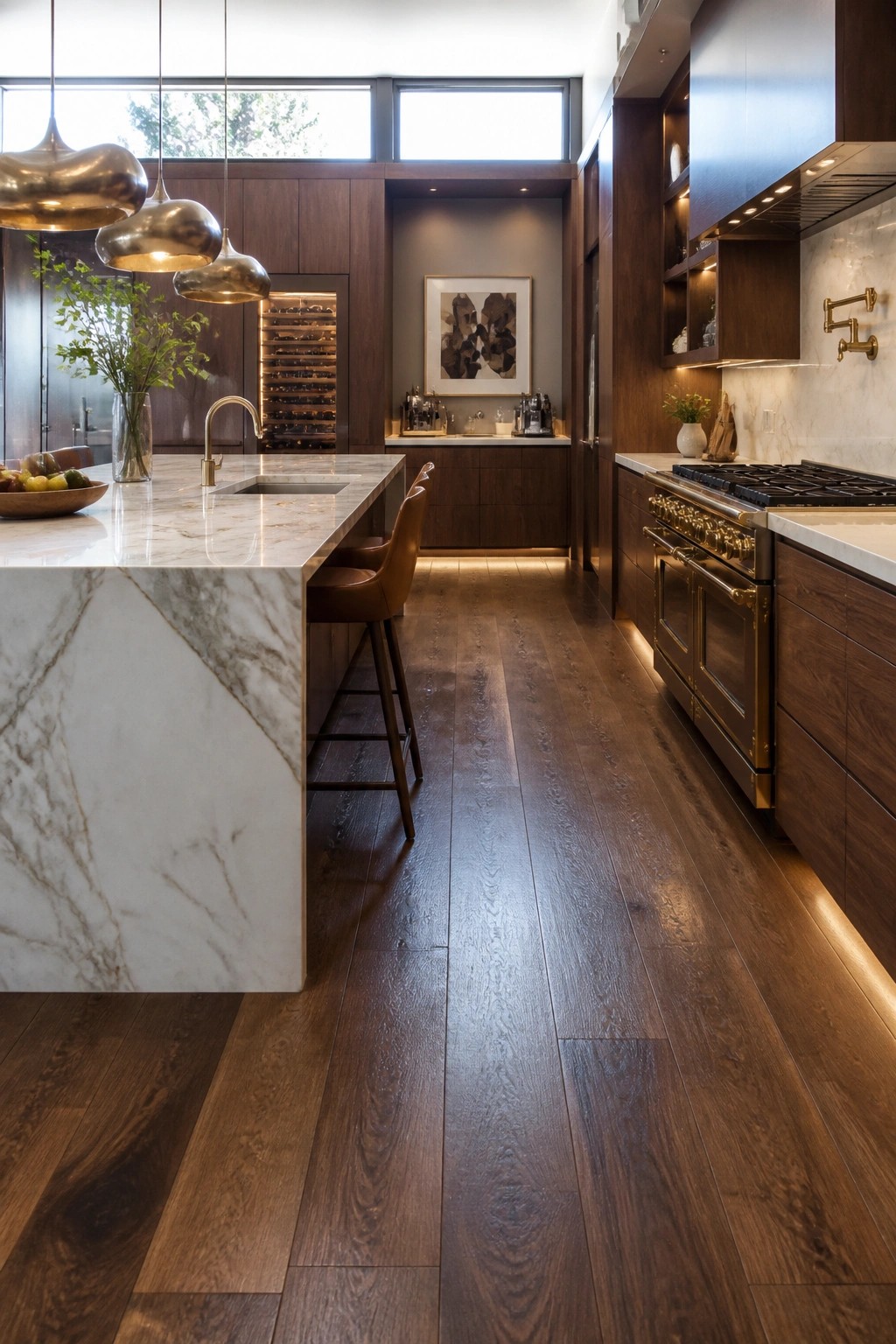
Dark wood flooring gives a kitchen a grounded feel that holds up well under daily use. The wide planks add warmth without making the space feel heavy, and they pair naturally with matching cabinetry to keep everything connected.
This approach works best in homes where the kitchen opens into living areas. It handles spills and foot traffic better than lighter tones, though it does show dust more, so regular sweeping helps.
Light Wood Flooring In Open Kitchens
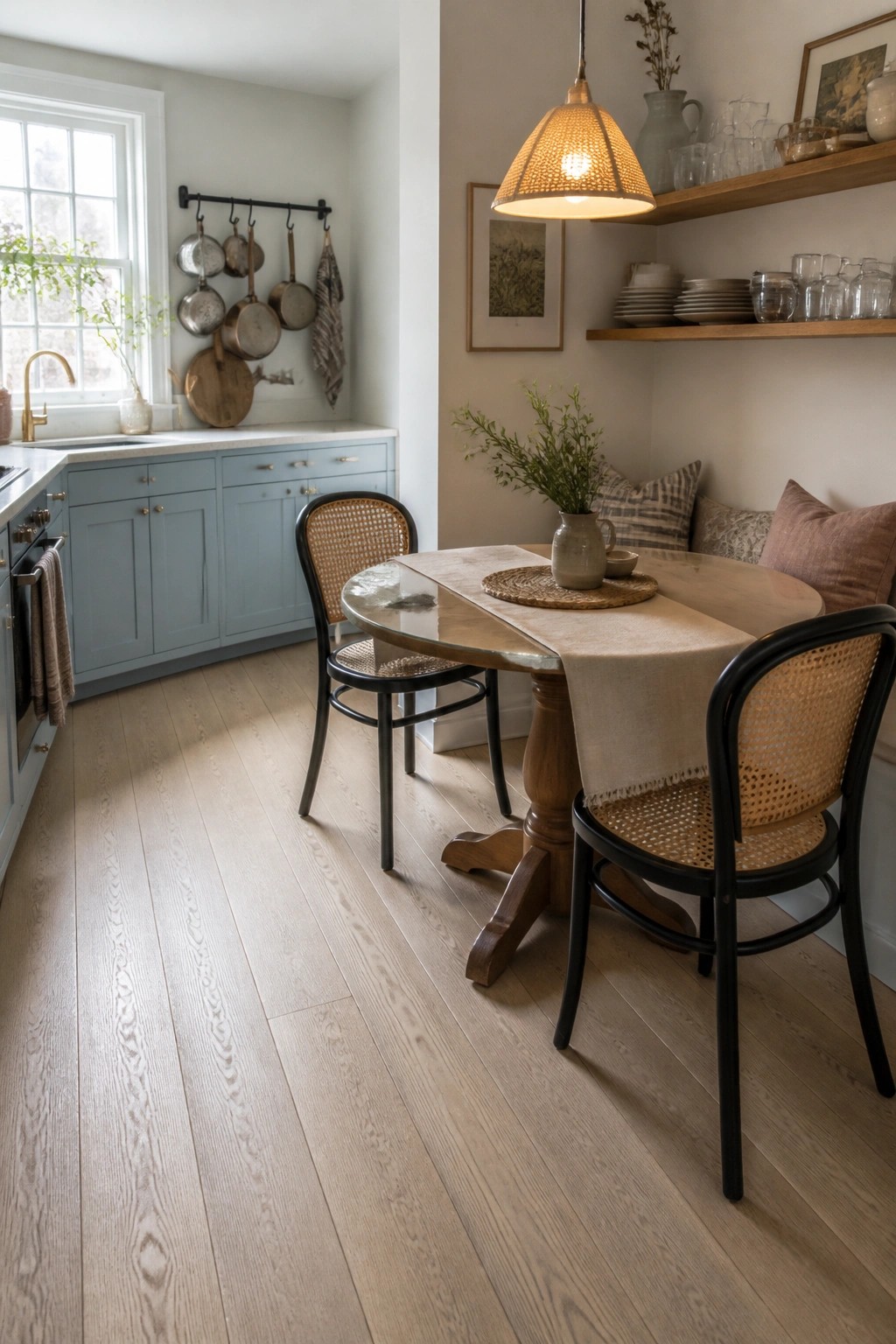
Light wood flooring gives kitchens a bright, open feel while holding up to daily spills and constant traffic. The pale tone reflects light from windows and helps the room feel larger, which matters when the kitchen connects to a dining space.
This approach works best in homes that want simple maintenance without giving up warmth. Choose a finish rated for moisture and wear, and keep the rest of the room light so the floor stays the main practical feature.
Herringbone Wood Flooring For Kitchens
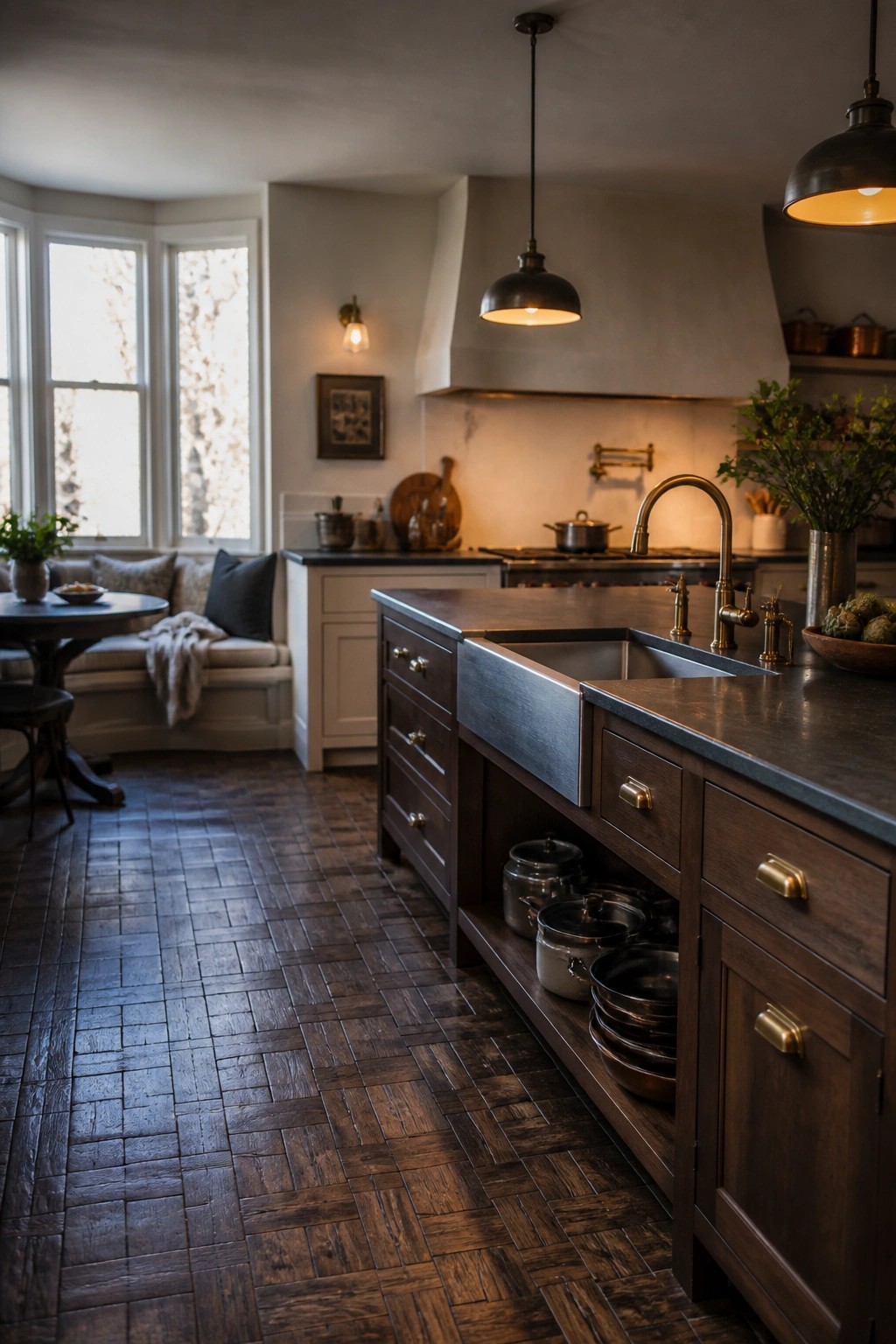
Dark wood floors with a herringbone pattern bring both durability and character to a kitchen. The tight weave of the planks helps hide everyday wear while the deeper tone keeps the space feeling grounded and warm rather than stark.
This style works especially well in homes that already lean traditional or transitional. It pairs easily with wood cabinetry and holds up under heavy foot traffic as long as you choose a finish rated for kitchens.
Wood Flooring That Handles Daily Kitchen Use
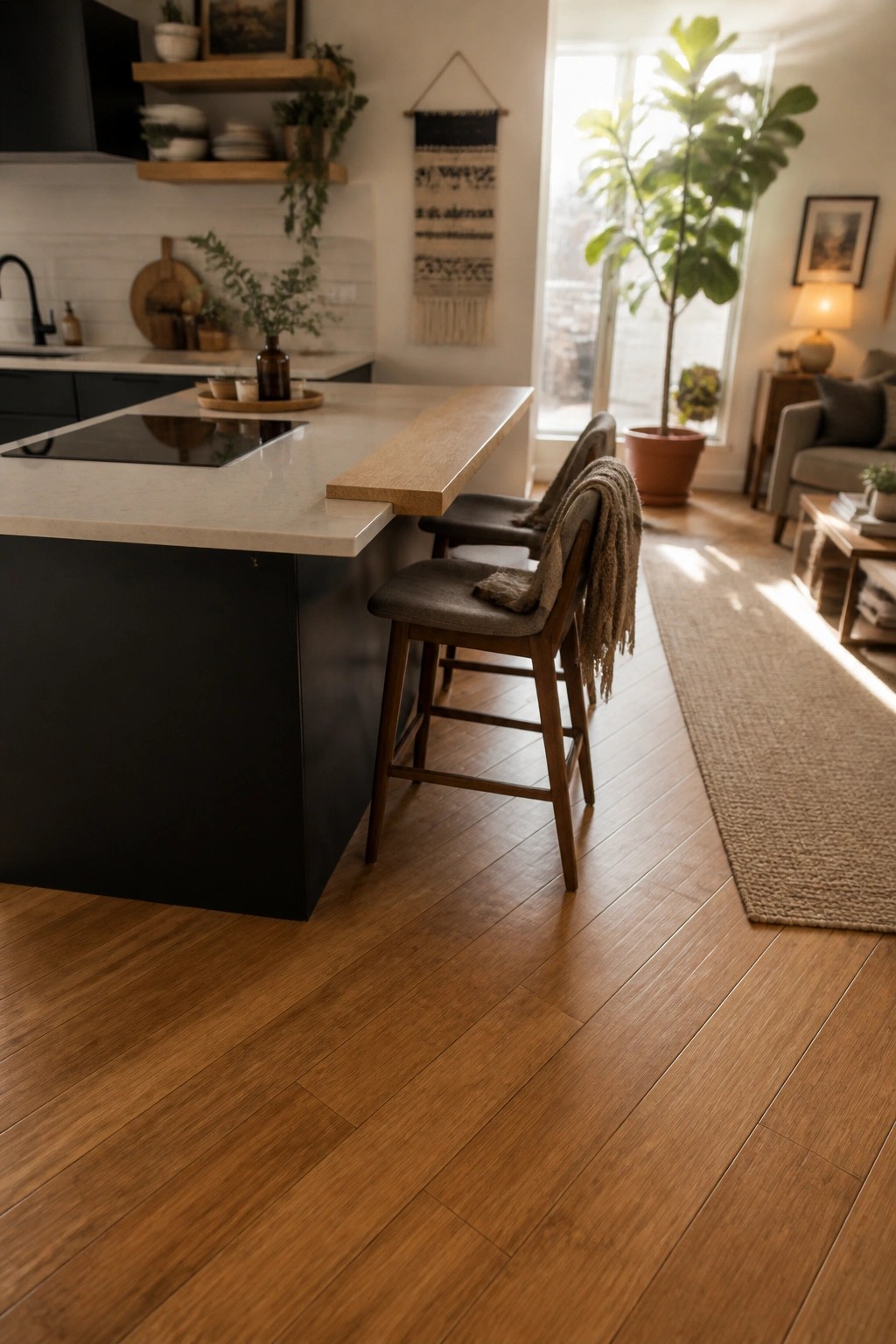
Many kitchens get a lot of foot traffic, spills, and dropped items, so choosing wood that can take it matters. The floor here shows a warm tone that still feels practical rather than too delicate for the space.
This style works best in open layouts where the kitchen flows into living areas. Engineered wood with a durable finish tends to hold up better than solid wood in these spots, especially if you keep a simple mat near the sink.
Hardwood Floors That Stand Up To Kitchen Use
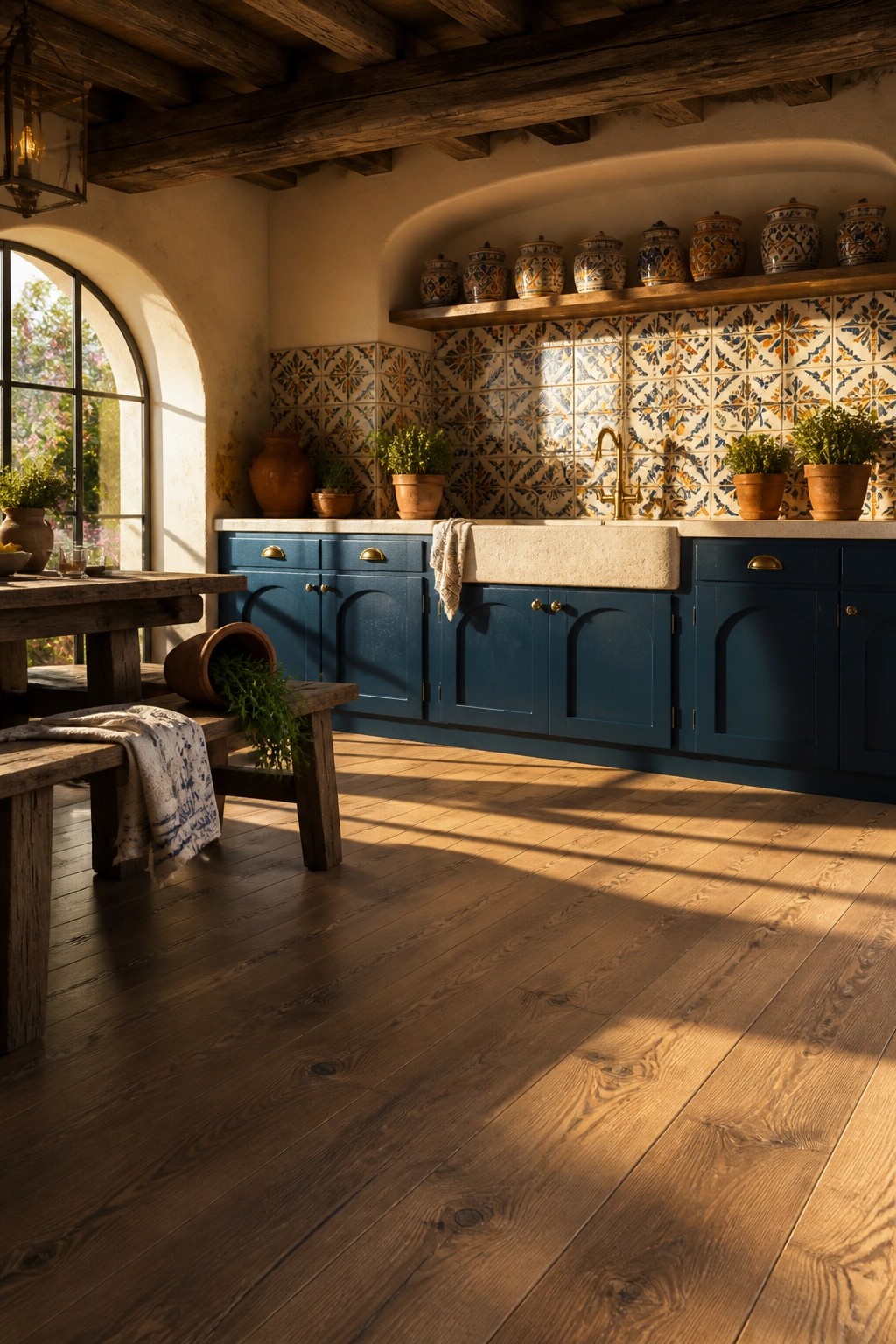
Wood flooring brings a warm, grounded feel to a kitchen while still holding up to daily use. Wide planks in a darker tone help hide scuffs and spills better than lighter finishes, and the natural grain adds character that does not feel too polished.
This choice suits traditional or farmhouse homes where the floor needs to blend with painted cabinetry and simple details. Pick a durable species and finish it well so it can handle moisture near the sink without showing every mark.
Dark Wood Flooring in Modern Kitchens
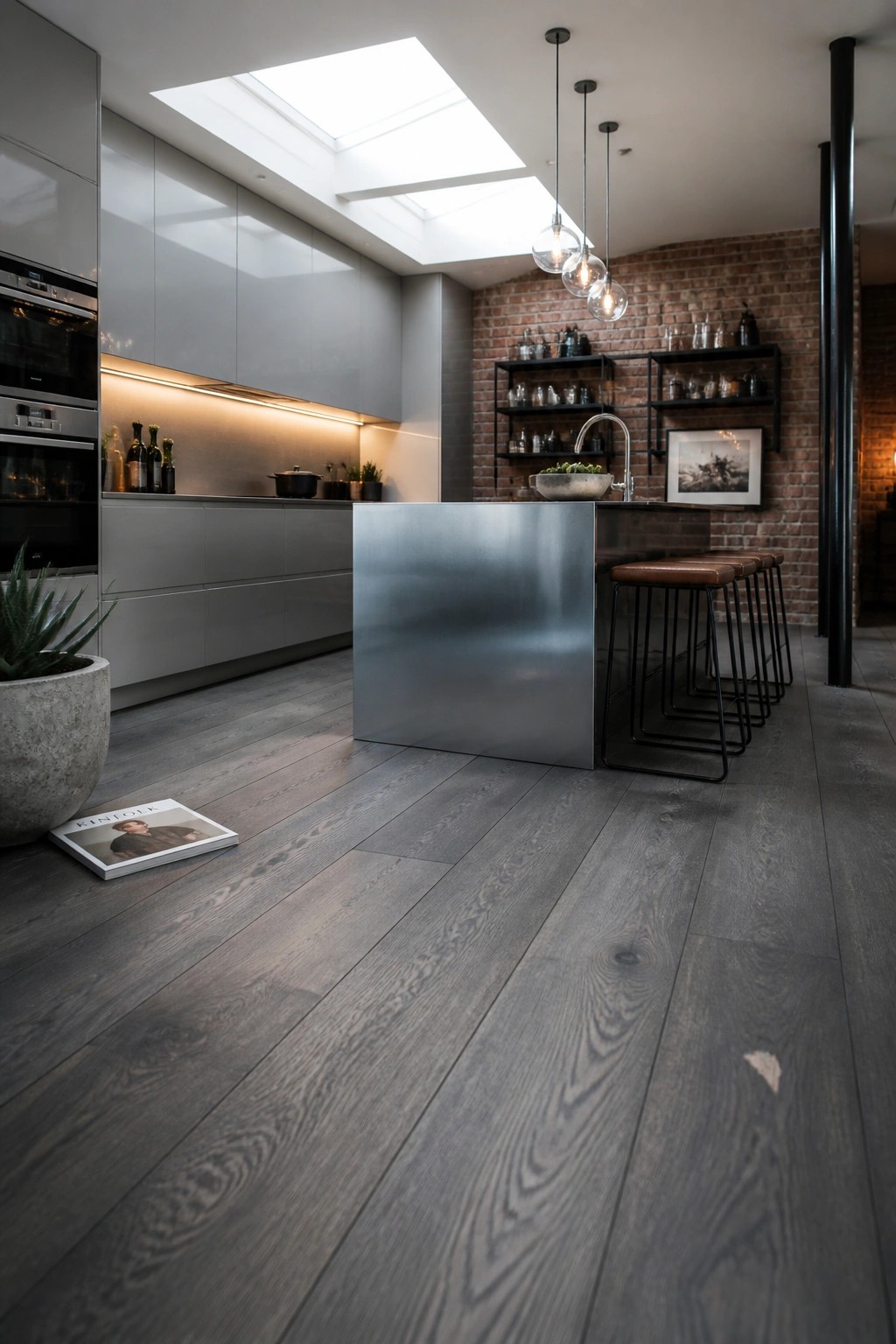
Dark wood floors bring a natural warmth to kitchens that otherwise lean cool and minimal. The grain and tone soften the look of gray cabinets and metal surfaces without adding clutter or pattern.
This choice works best in homes with steady traffic and open layouts. A durable finish on the planks helps them handle spills and daily use while still showing the character that lighter floors often lack.
Painted Wood Floors For Kitchens
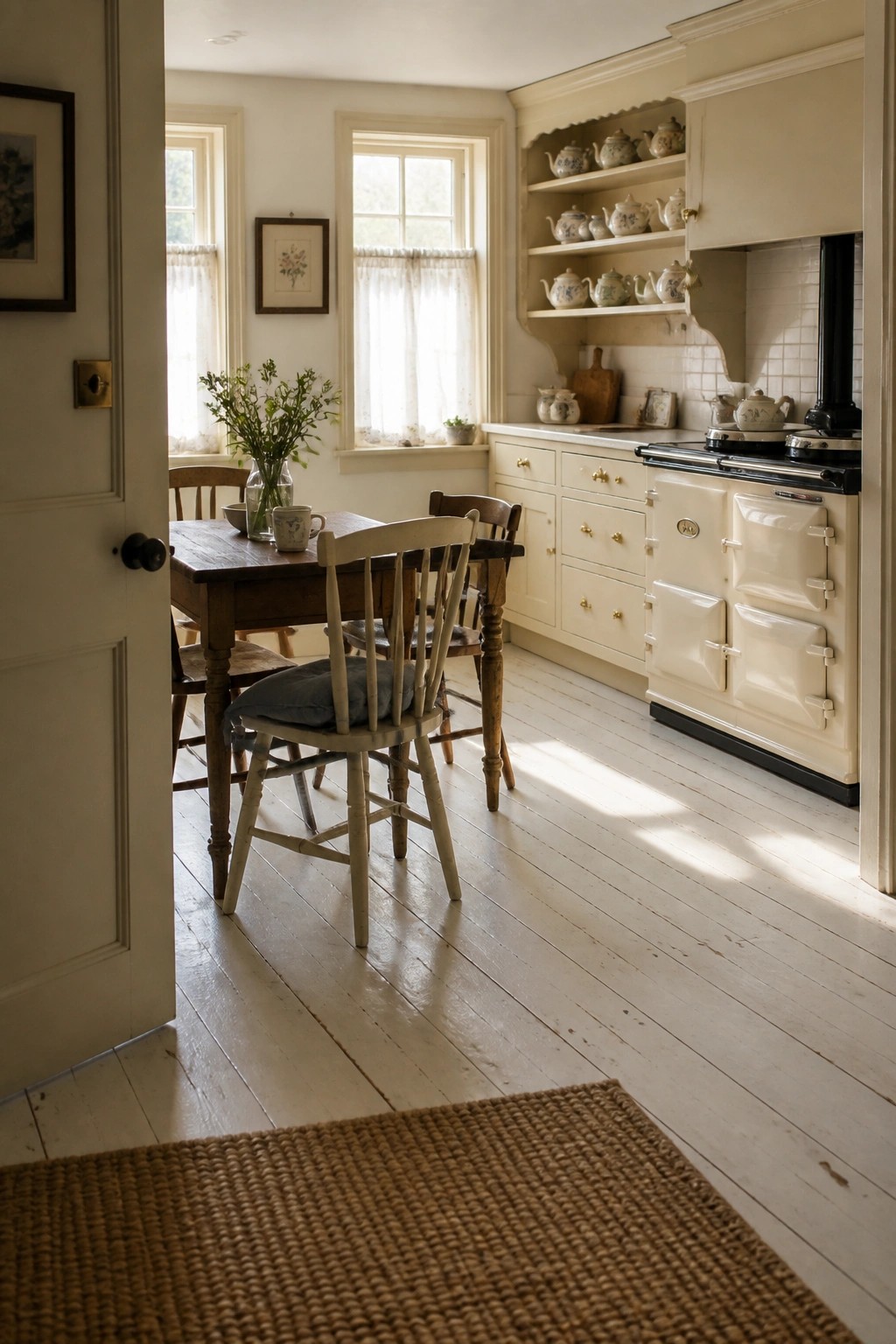
Light painted wood floors can make a kitchen feel much brighter and more open. The pale tone reflects light from the windows and helps balance darker cabinets or heavy furniture without making the room feel cold.
They also stand up well to daily use when finished properly. Many older homes already have floors like this, and a fresh coat of paint can refresh them while keeping the natural grain visible underneath.
Dark Herringbone Wood Floors
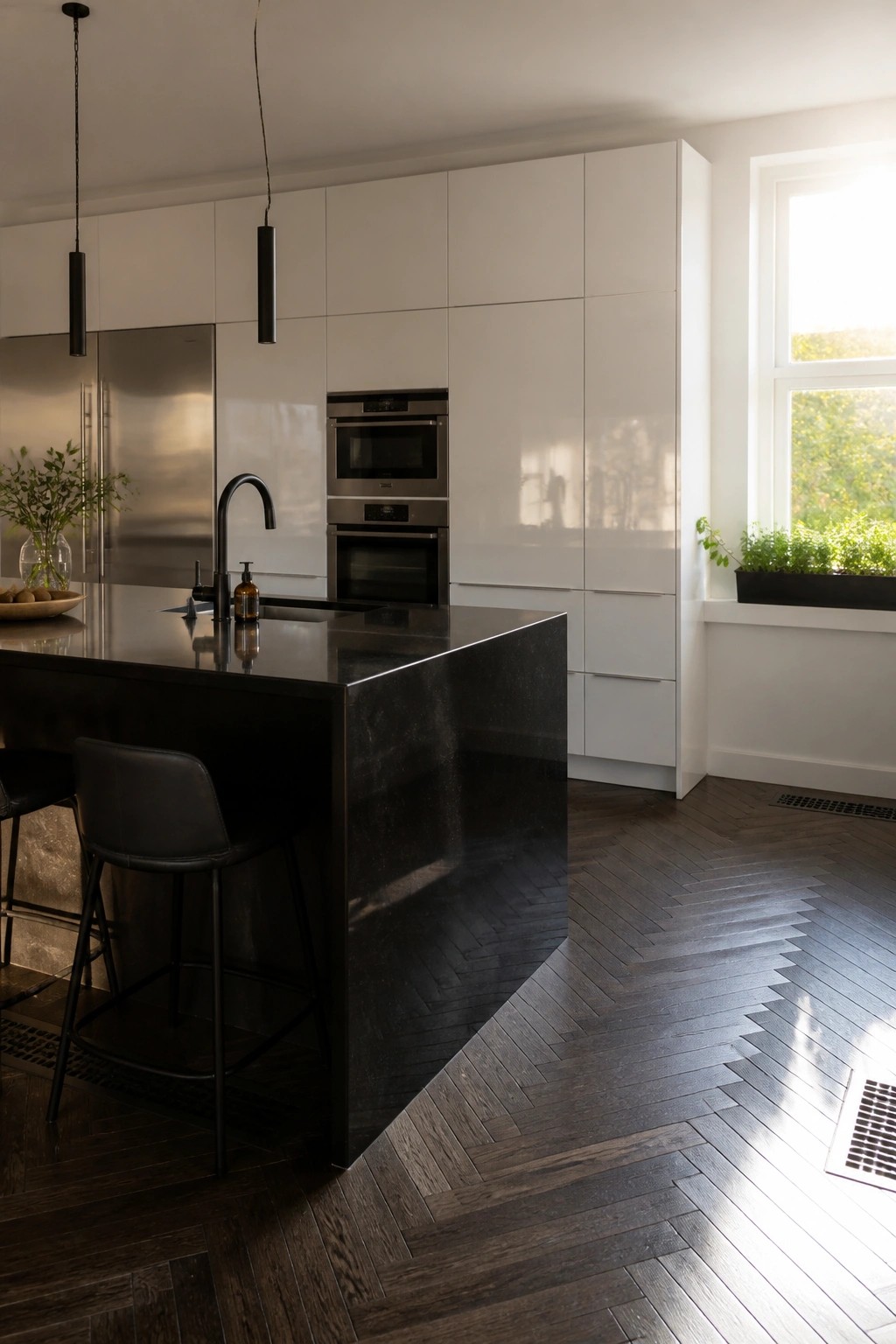
Many kitchens benefit from a dark wood floor in a herringbone pattern because the color hides daily wear and the layout adds subtle movement underfoot. It gives the room a grounded feel without competing with the rest of the design.
This choice suits homes that want something practical yet still interesting. It works especially well with lighter cabinets and a dark island, though the wood should be sealed well to handle spills and heavy use.
Reclaimed Wood Flooring For Busy Kitchens
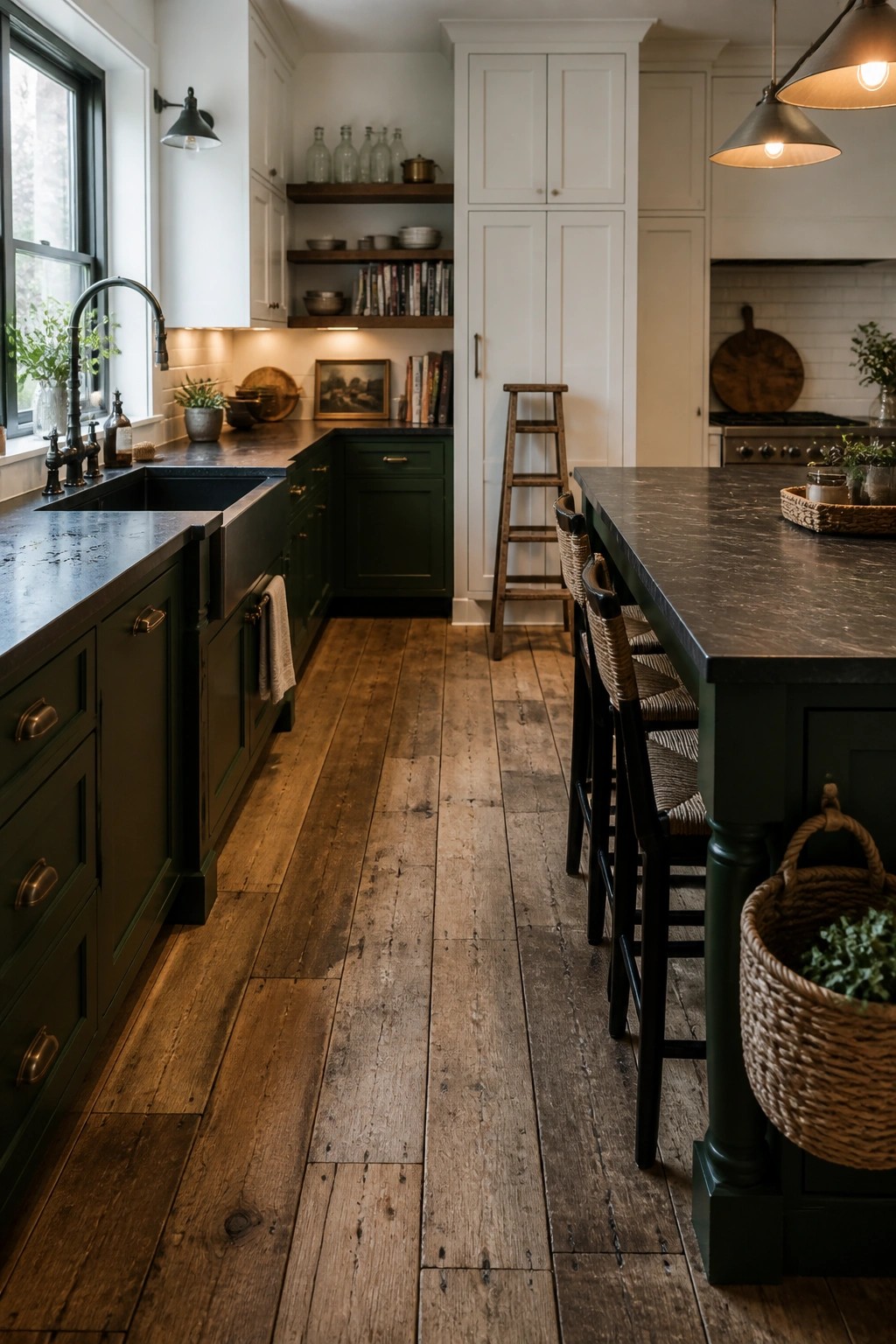
Reclaimed wood floors bring a warm, lived-in look to kitchens without sacrificing strength. The wide planks hold up to daily foot traffic, spills, and dropped items better than many expect when the wood is properly sealed and thick enough.
This choice works especially well in homes that want a natural feel paired with dark cabinetry and stone counters. Just make sure the finish can be touched up over time rather than requiring a full refinishing every few years.
Dark Hardwood Floors That Hide Wear in the Kitchen
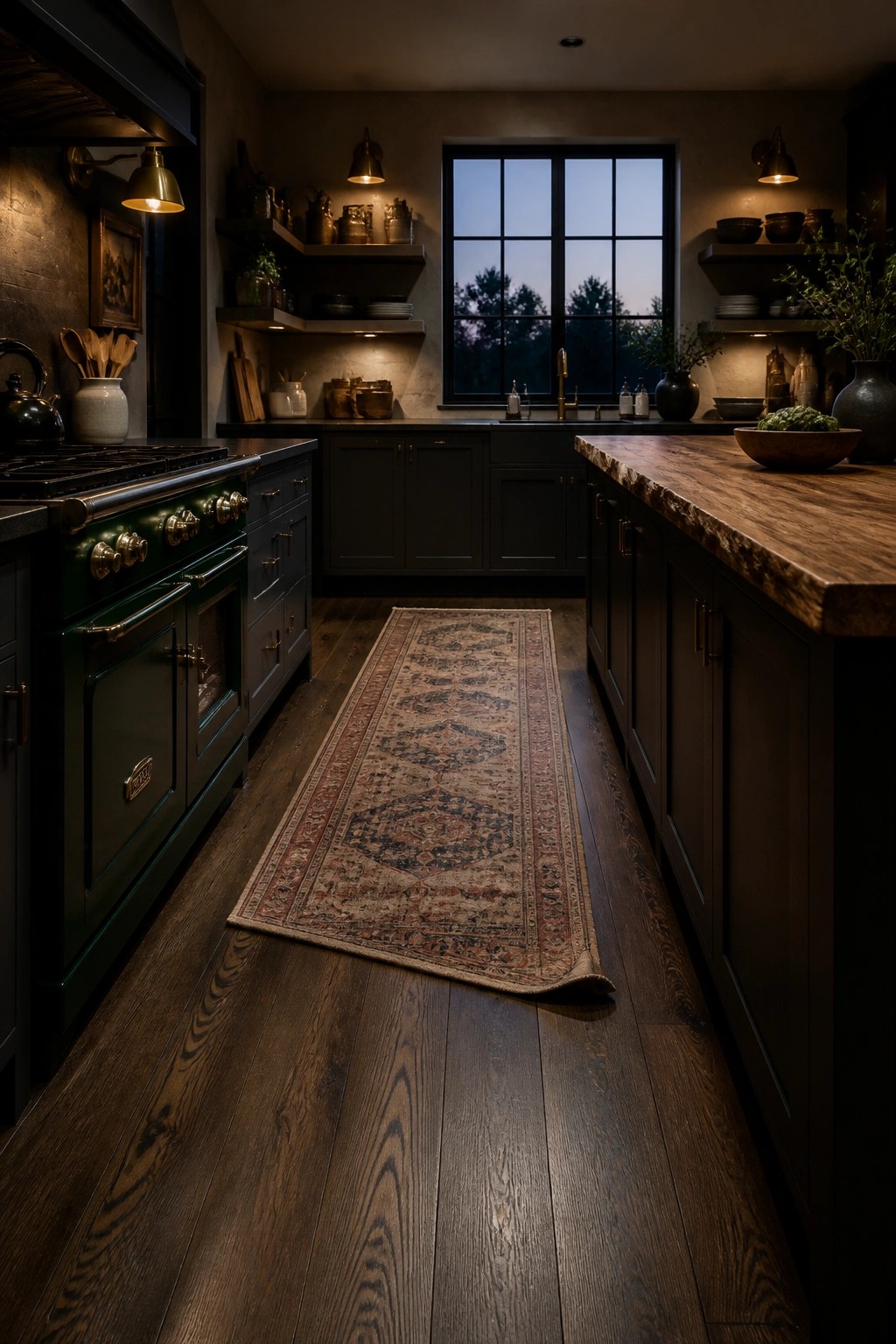
Dark hardwood floors give a kitchen a grounded look while handling the spills and scuffs that come with regular cooking. The deeper tone keeps small marks from standing out the way they would on lighter wood.
This style suits homes that already lean toward moody or traditional finishes. A runner along the main path adds a layer of protection without covering the floor completely.
Wood Flooring With a Runner for Protection
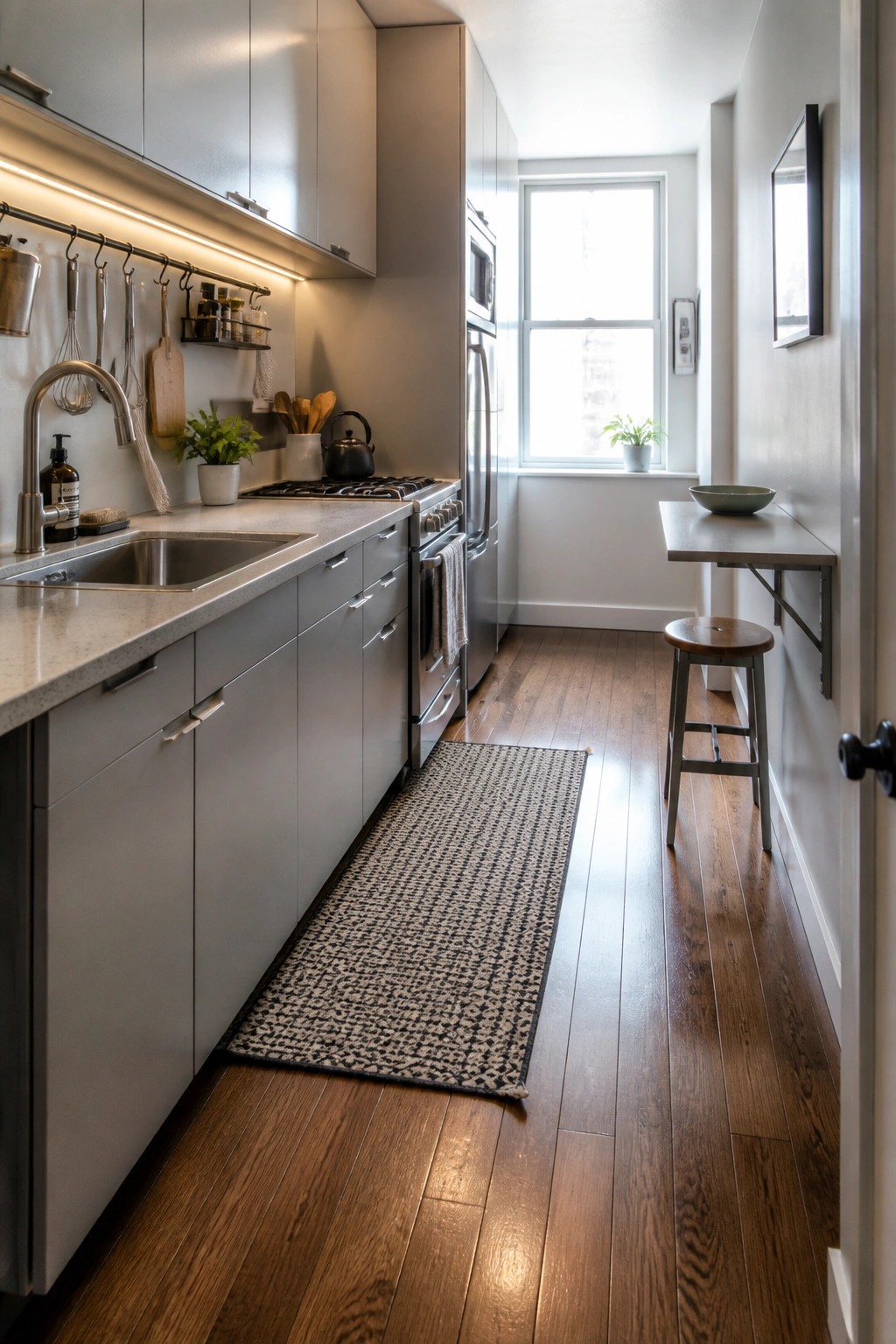
Wood floors hold up well in kitchens when you give them a little help. A long runner down the main path takes most of the daily wear and makes the wood last longer without changing how the floor looks overall.
This works best in narrow or galley kitchens where foot traffic follows one clear line. Choose a flat-weave or low-pile runner that is easy to clean and replace when needed. Keep the wood finish simple so the floor still reads as the main surface.
Wood Flooring That Blends With Cabinetry
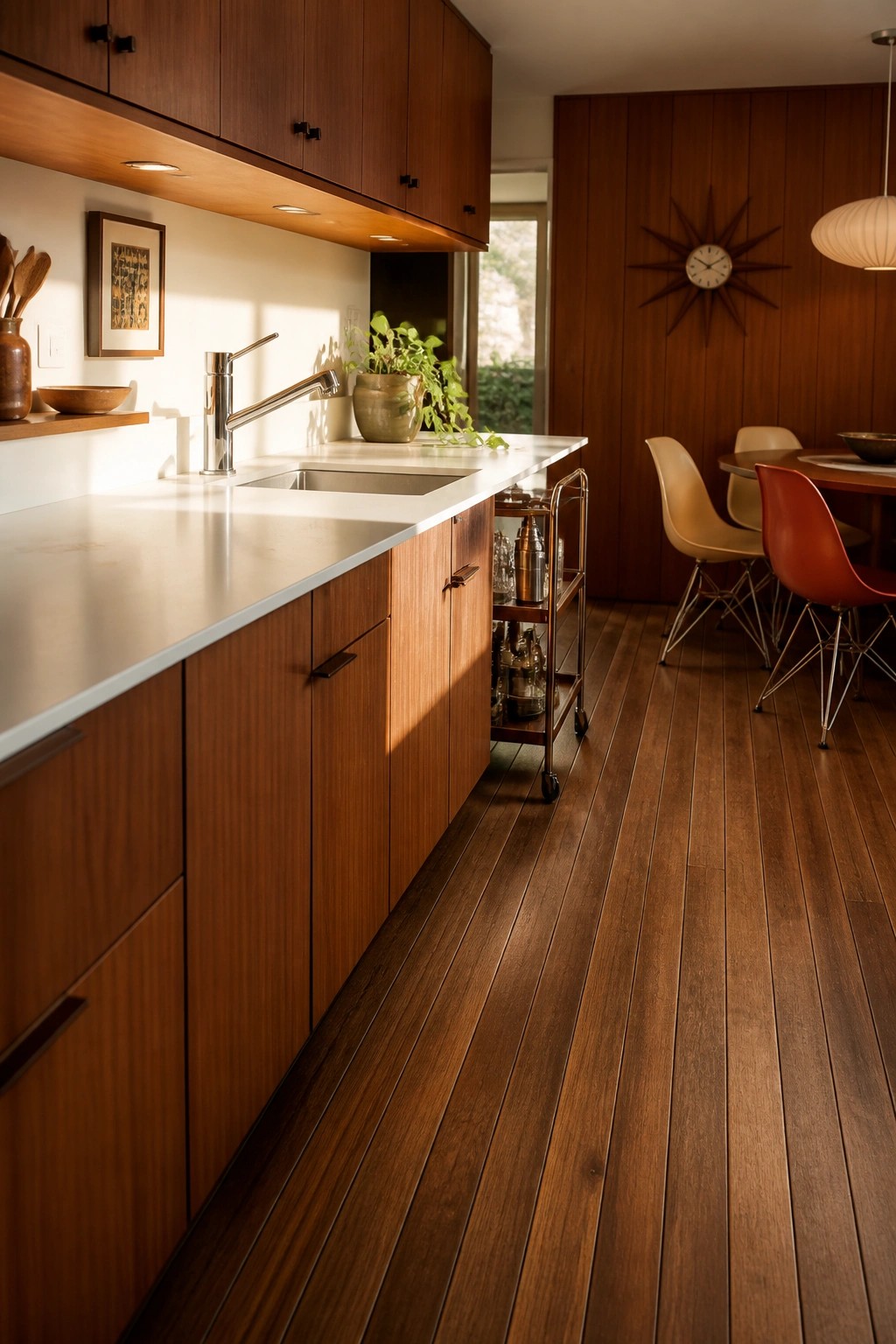
Many kitchens feel more pulled together when the floor and cabinets come from the same wood family. The matching tones keep the space from looking chopped up and give it a steady, grounded look that holds up over time.
This approach works best in homes with open kitchen and dining layouts. Choose a durable species that can handle spills and traffic, and keep the finish consistent so the floor does not fight the cabinets for attention.
Light Wood Flooring For Busy Kitchens
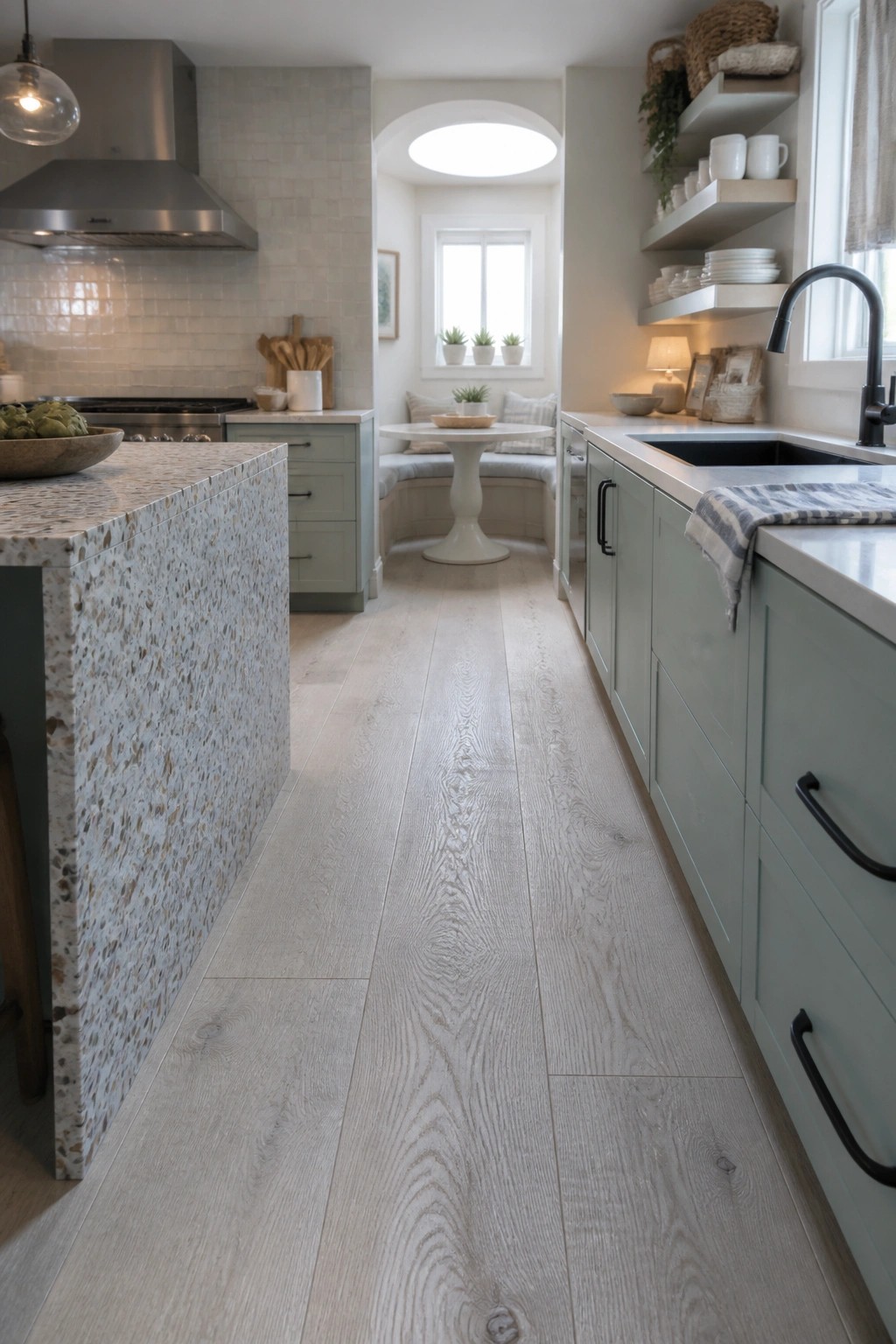
Light wood flooring brings a calm base to a kitchen without making the room feel cold. The pale tone helps the space stay bright even on cloudy days, and the natural grain adds just enough warmth to balance painted cabinets and stone surfaces.
This style works best in homes that see daily use, since lighter shades tend to mask minor scuffs better than dark wood. It pairs easily with simple cabinet colors and keeps the focus on the rest of the room rather than the floor itself.
Dark Wood Floors That Handle Heavy Use
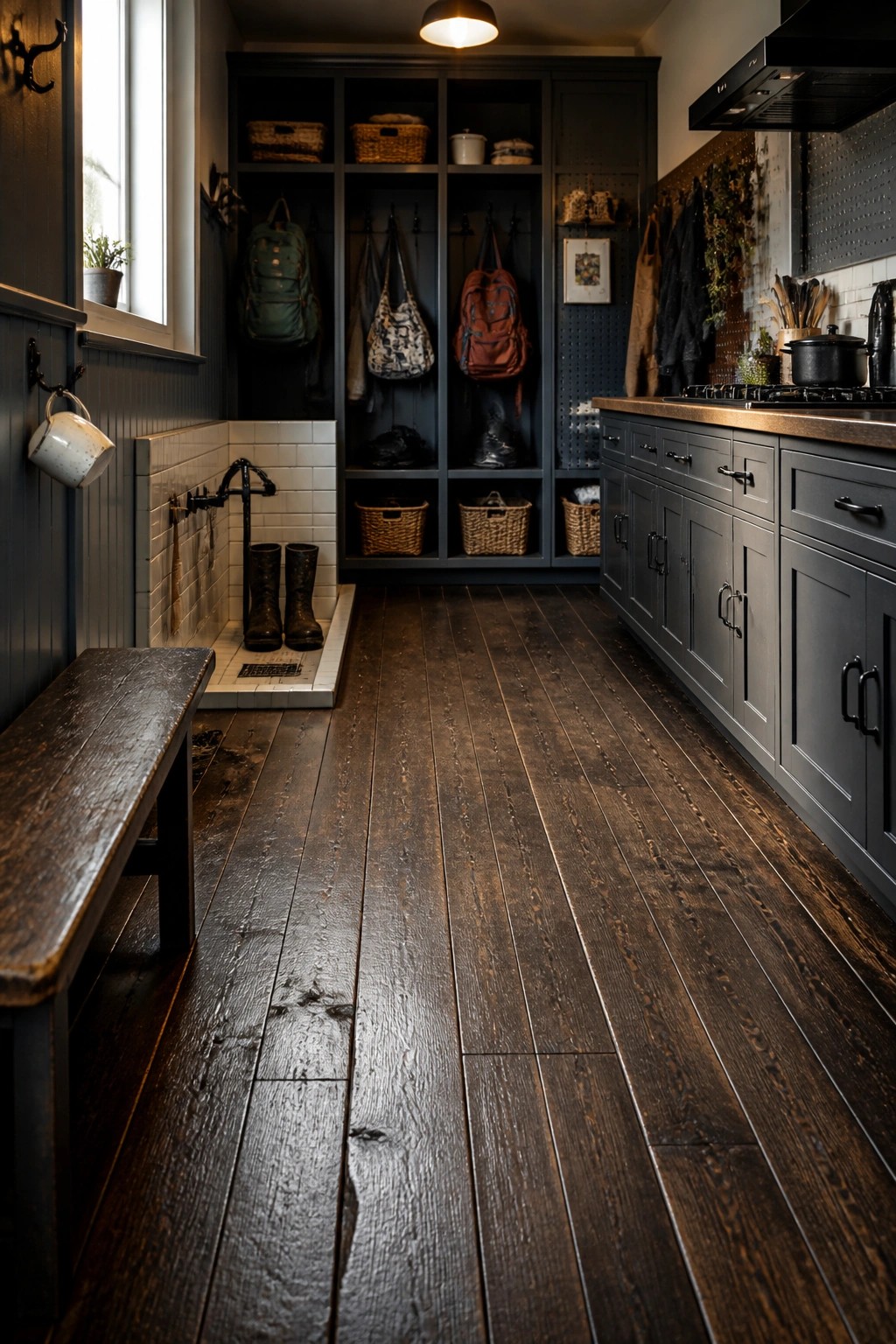
Dark wood flooring works well in spaces that connect directly to the outdoors. The rich tone hides dirt and scuffs from boots and daily traffic better than lighter finishes, and it still feels warm underfoot.
This choice suits entry areas or open kitchen plans in active homes. Look for a hardwood with a durable finish and consider how the color will tie into nearby cabinetry without making the room feel too closed in.
Frequently Asked Questions
Q: What wood type handles kitchen moisture the best without issues? A: Oak works well because it resists swelling from occasional spills. Seal the edges properly during install. Always clean up messes fast to keep it looking new.
Q: How do I stop chair legs from scratching my new wood floor? A: Attach rubber or felt protectors to every chair bottom. Check them every few months for wear. This keeps the surface smooth for years.
Q: Should I choose wide plank wood for my kitchen? A: Wide planks show off the grain nicely in open kitchens. They need stable humidity to avoid gaps though. Stick with narrower boards if your space gets very dry in winter.
