

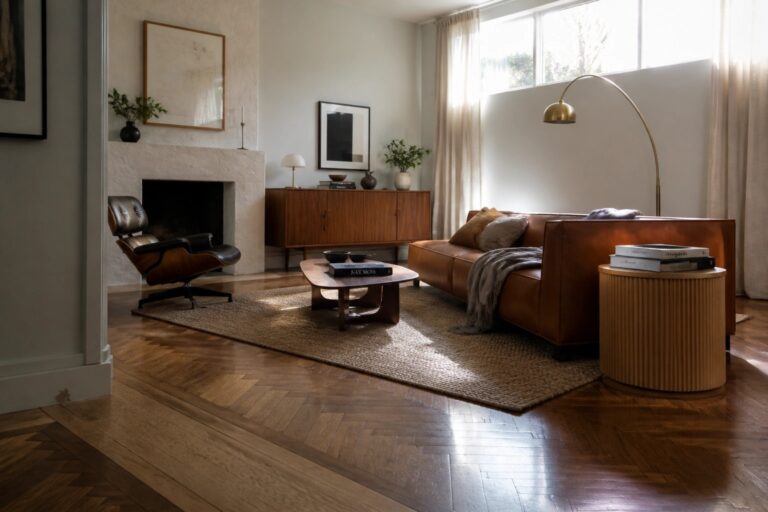
When I step into a finished room the floor often decides how the rest of the space settles around it.
Herringbone changes that effect because the angles pull the eye across the width and length at once.
The pattern can make a modest room feel more grounded once the furniture is in place.
I usually test a sample board against the actual light before I decide on the wood tone or the direction of the runs.
That step has saved me from choices that looked fine on paper but felt off once the room was lived in.
Herringbone Flooring in a Living Room
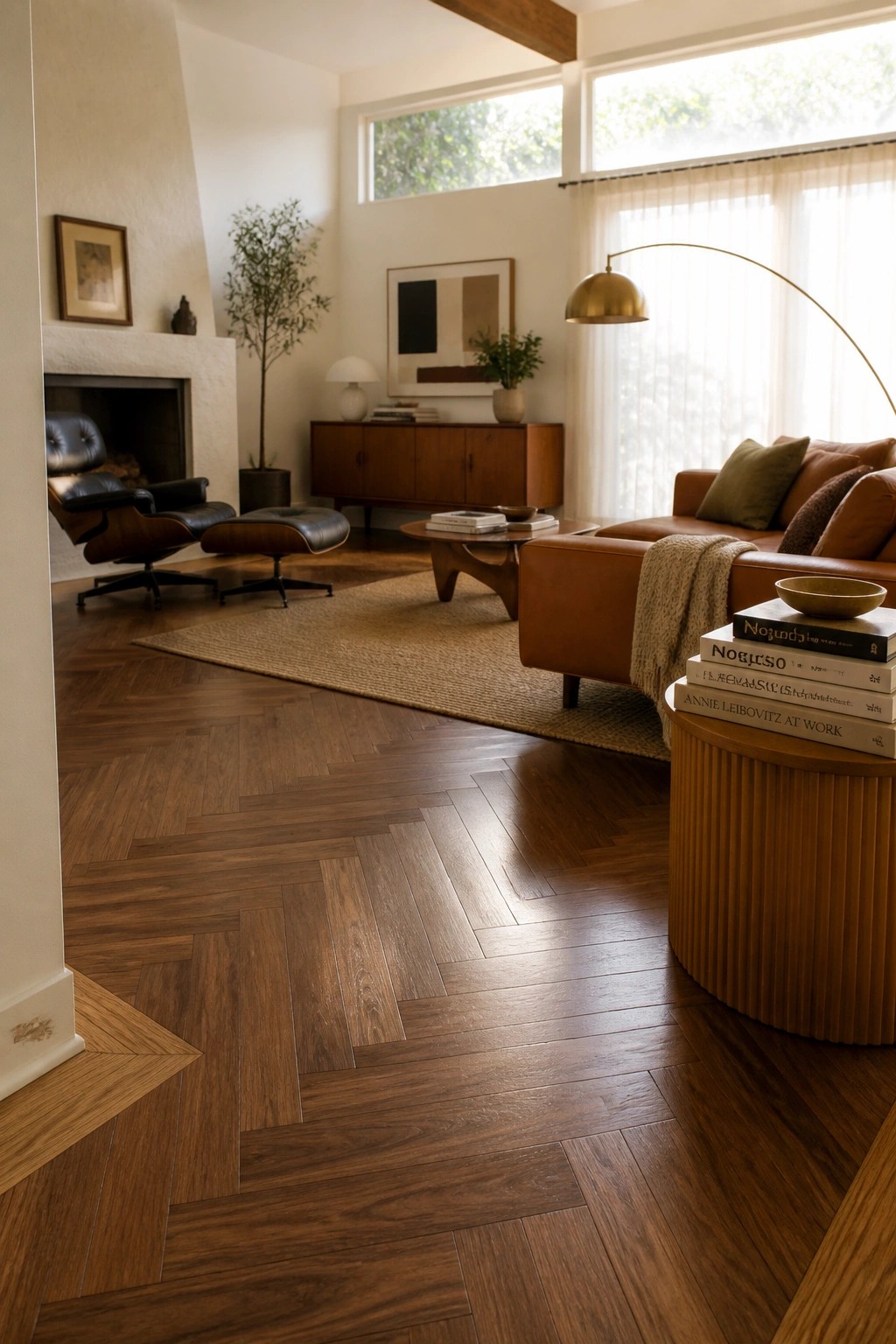
Herringbone wood flooring gives a room some quiet structure that holds up over time. The angled pattern adds movement across the floor while staying calm enough to work with all kinds of furniture.
It suits homes that already lean traditional or mid-century. Keep the rest of the room simple so the floor can do its job without competing with heavy rugs or busy walls.
Herringbone Flooring In Light Bedroom Spaces
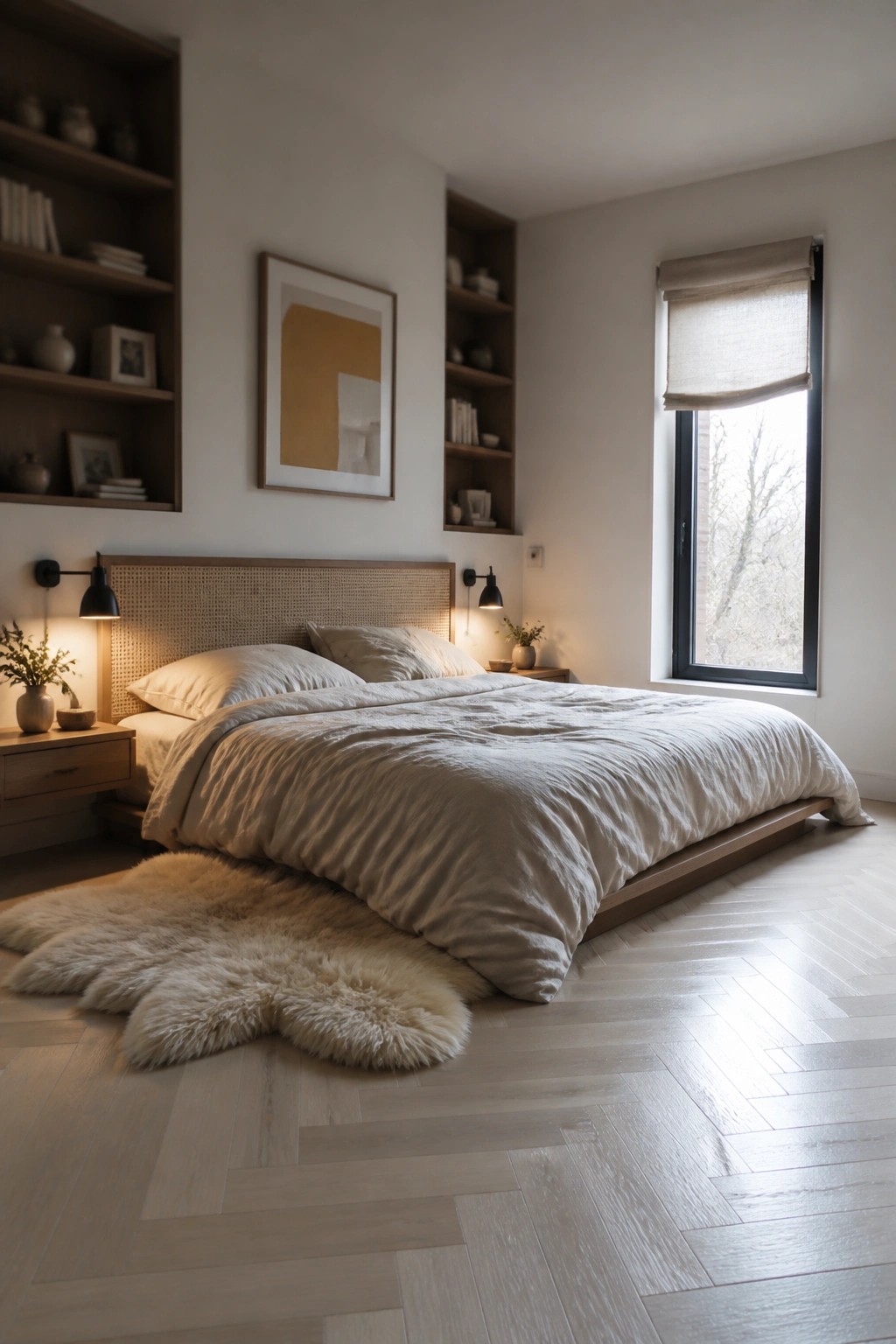
Herringbone wood floors work well in bedrooms when you want a bit of pattern without making the room feel busy. The light tone and simple layout keep things calm while still giving the floor some character that flat boards would miss.
This approach suits spaces with mostly neutral colors and low furniture. It works best when the rest of the room stays simple so the floor can show up without competing for attention.
Herringbone Wood Flooring In Dining Rooms
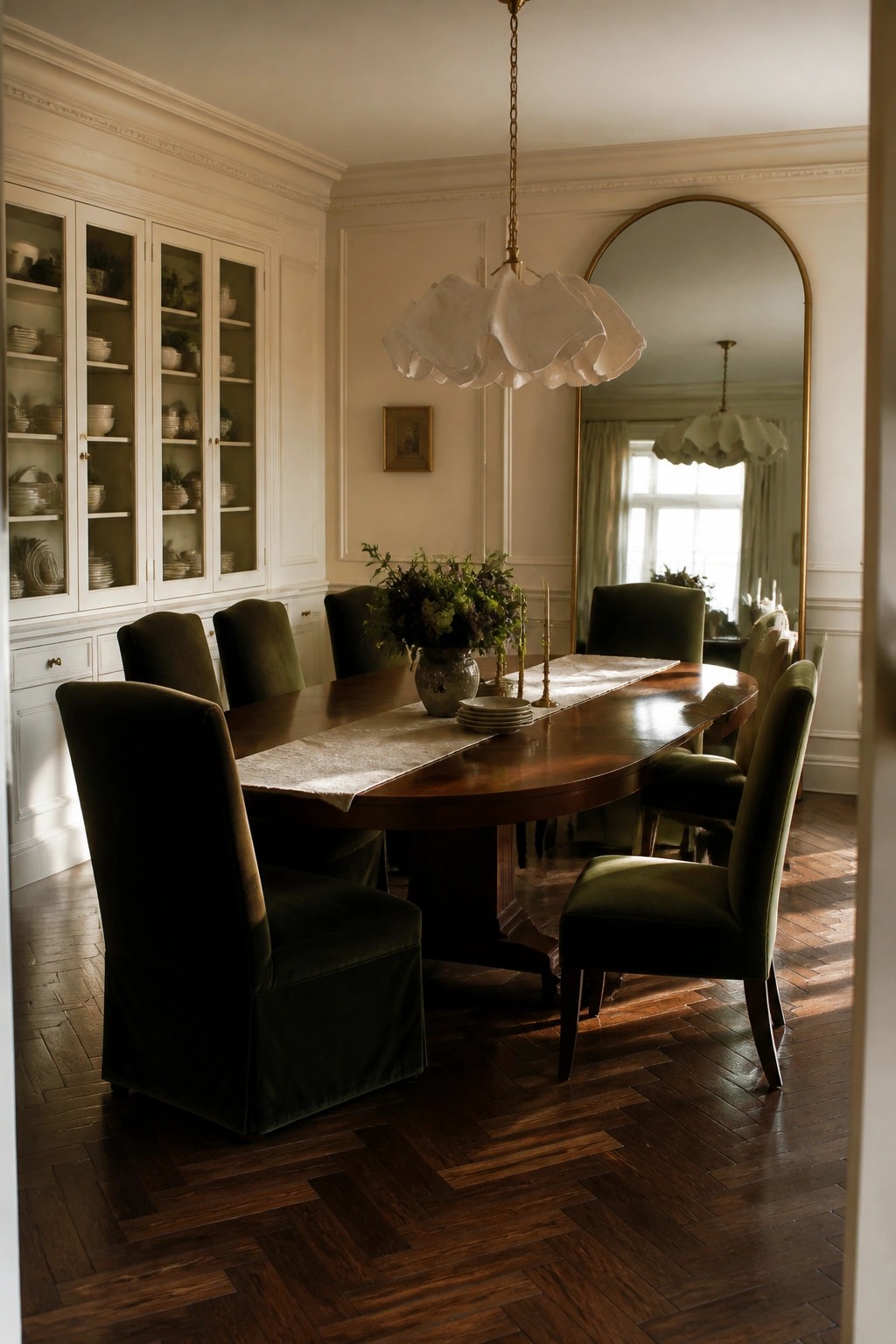
Herringbone flooring brings a quiet rhythm to a dining room without needing much else going on. The angled pattern adds movement underfoot and helps the space feel more finished, especially when the rest of the room stays fairly calm.
This style works best in homes with classic trim or larger rooms where the floor gets noticed. Keep furniture lines simple and let the wood carry the interest. Darker tones like the one shown here hold up well to daily use and still read as timeless.
Herringbone Wood Flooring In The Kitchen
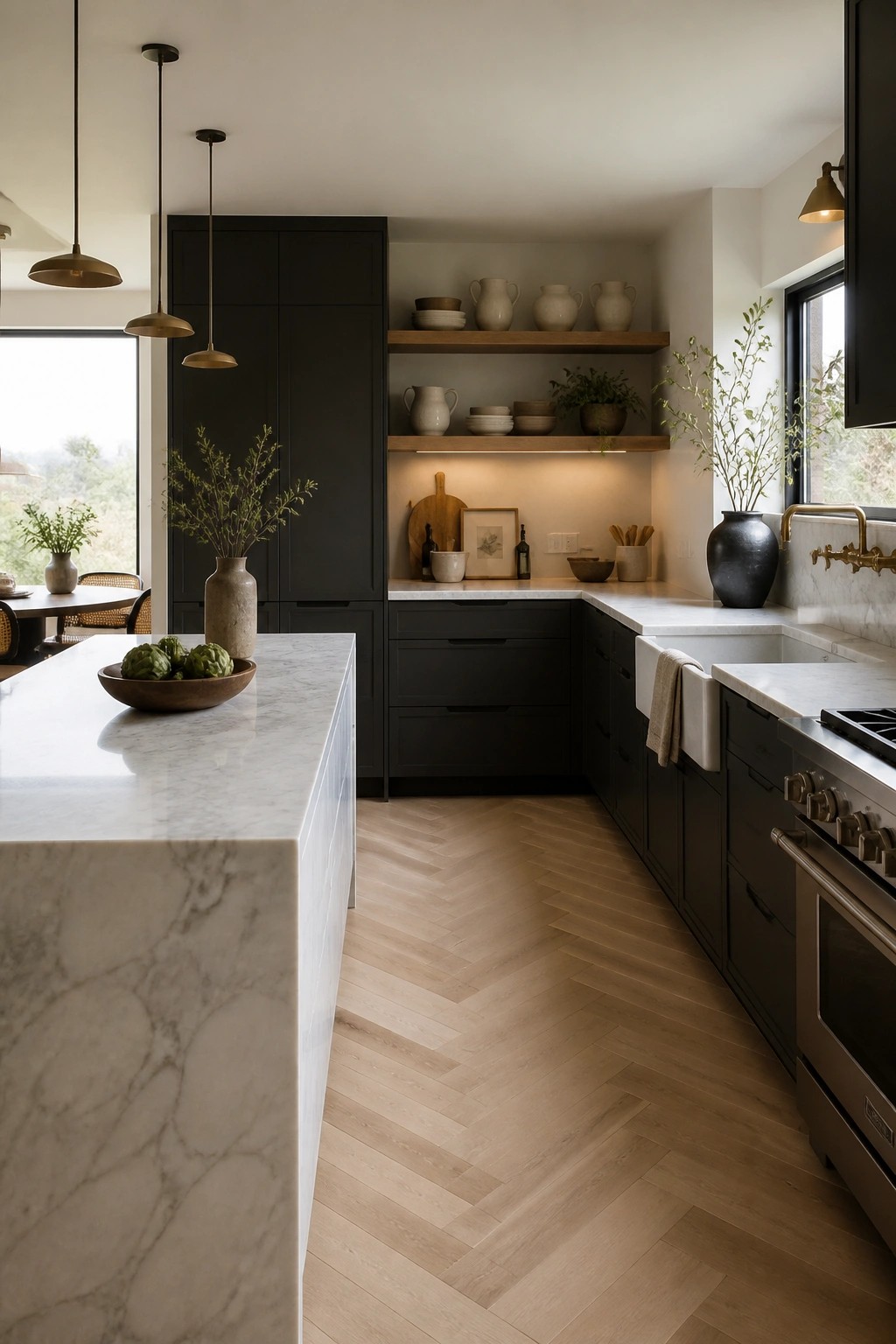
Herringbone wood flooring gives a kitchen a quiet sense of movement that flat boards rarely achieve. The pattern shows up clearly against the dark cabinets and marble counters without competing with them.
This approach works best in homes that already lean toward simple, solid materials. It adds interest underfoot while still letting the rest of the room stay calm. Keep the tone of the wood light if the cabinets are dark, and make sure the scale of the pattern fits the size of the room.
Herringbone Flooring In The Bedroom
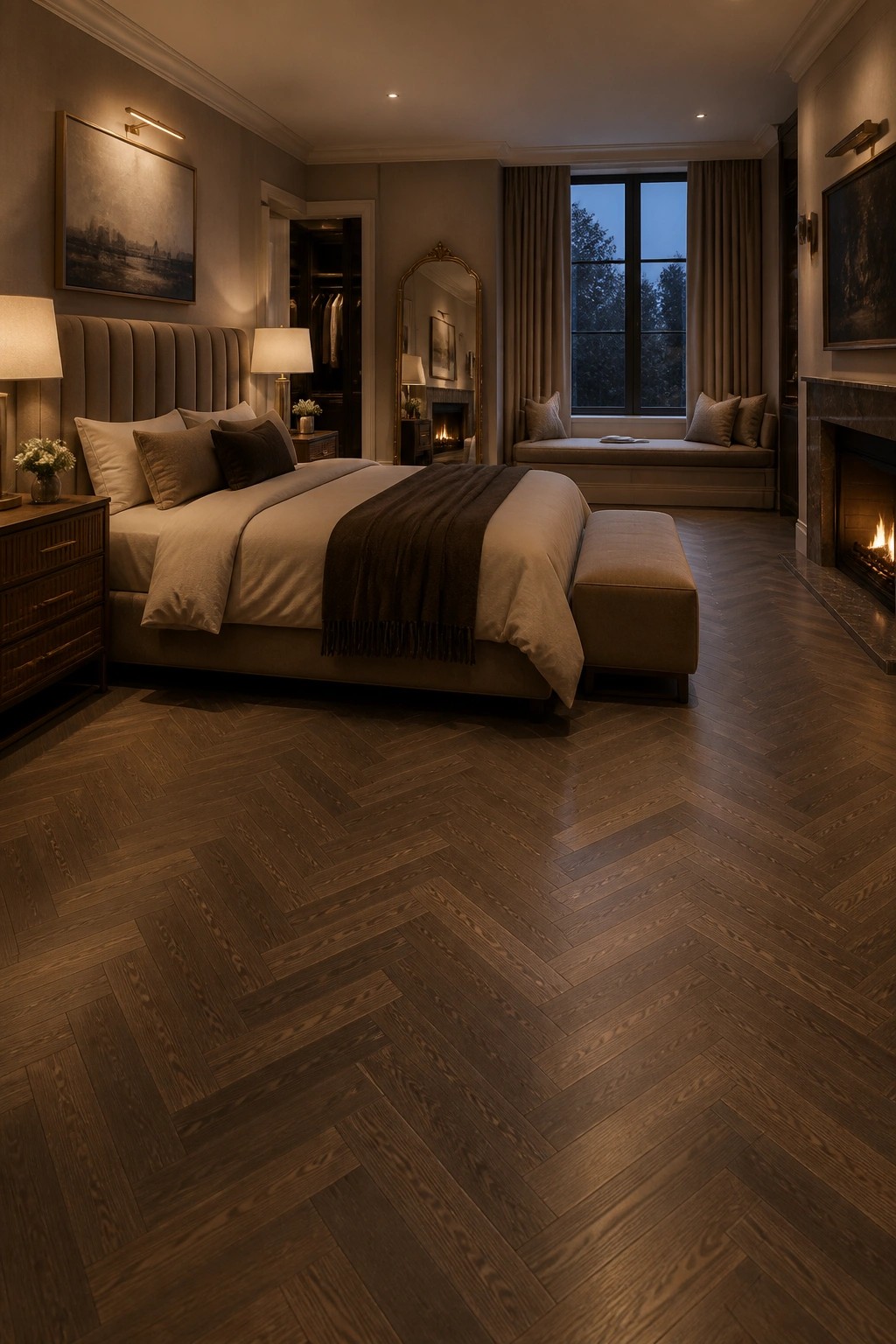
Herringbone wood flooring gives a bedroom a quiet pattern that feels more interesting than plain boards. It stands out most when the rest of the room stays calm and neutral, so the floor becomes the main detail without taking over.
This approach works best in medium to large bedrooms where you can see the full layout. It suits homes that already lean traditional or transitional, though very dark tones can make smaller rooms feel closed in if there is not enough light.
Herringbone Flooring In Entry Halls
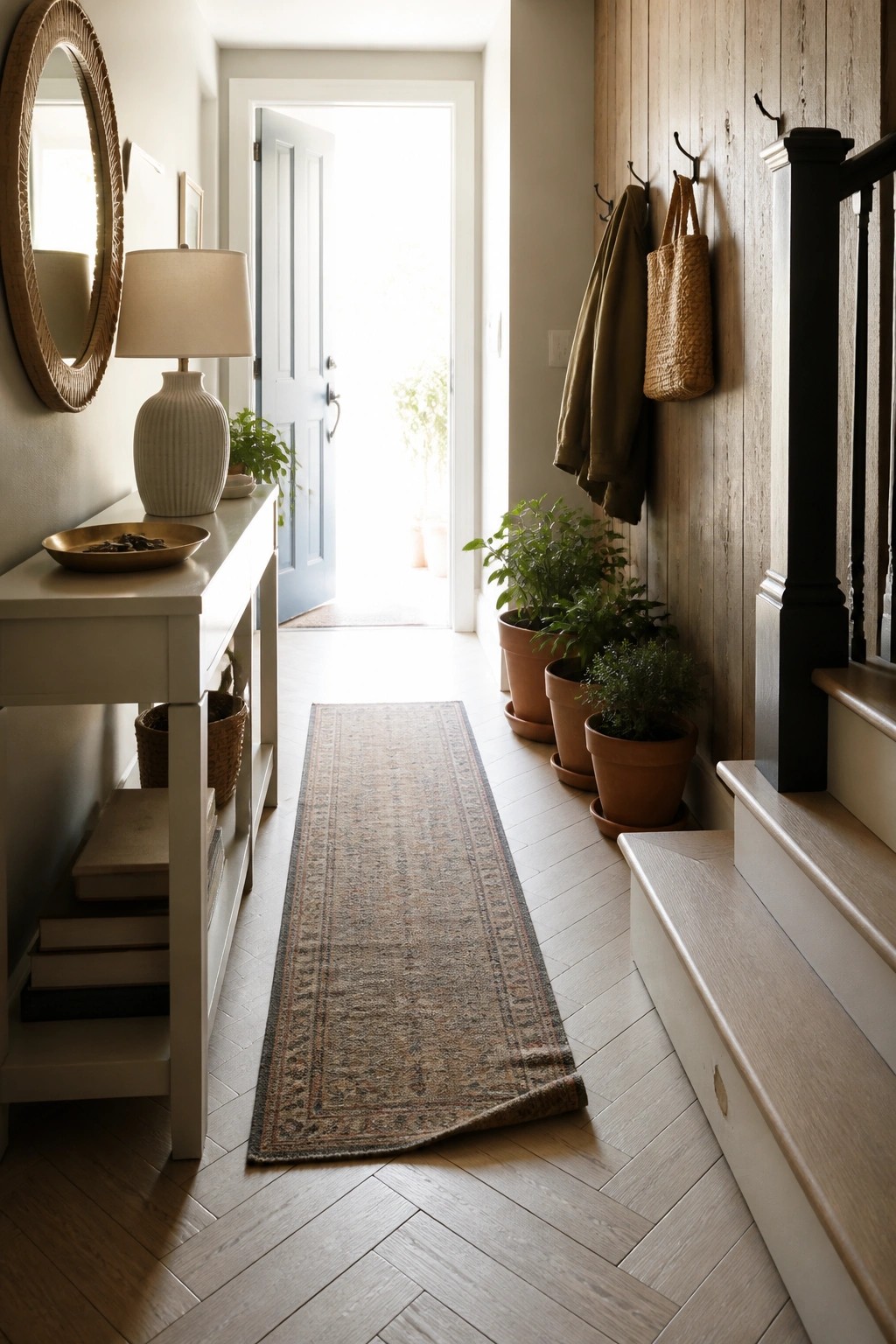
Herringbone wood flooring brings a quiet pattern to narrow spaces like this entry hall without feeling busy. The angled layout helps the floor look longer and more interesting underfoot, especially when light hits it from the open door.
It works well in homes that already have wood floors elsewhere, since the pattern can start right at the front door and carry through to other rooms. Keep the rest of the space simple so the floor stays the main detail.
Herringbone Flooring In Calm Rooms
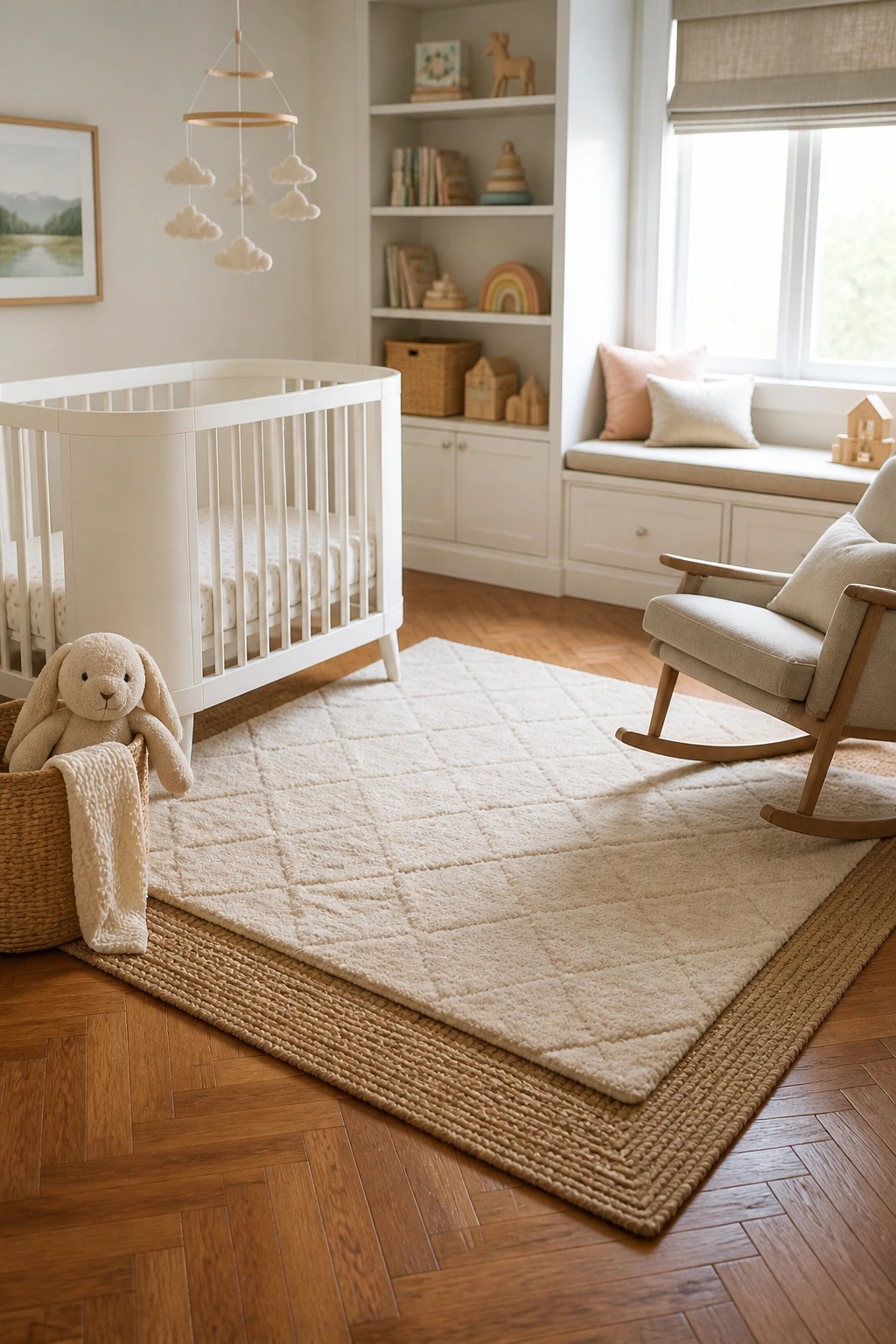
Herringbone wood flooring brings a quiet pattern to spaces that stay mostly soft and simple. In a room like this nursery the floor adds just enough texture to keep the space from feeling flat while the rest of the design stays light and low key.
It works especially well in smaller rooms or rooms meant for rest where a bold pattern would feel too busy. Keep the colors pale and let a simple rug sit on top so the floor shows through without taking over.
Herringbone Flooring In A Traditional Study
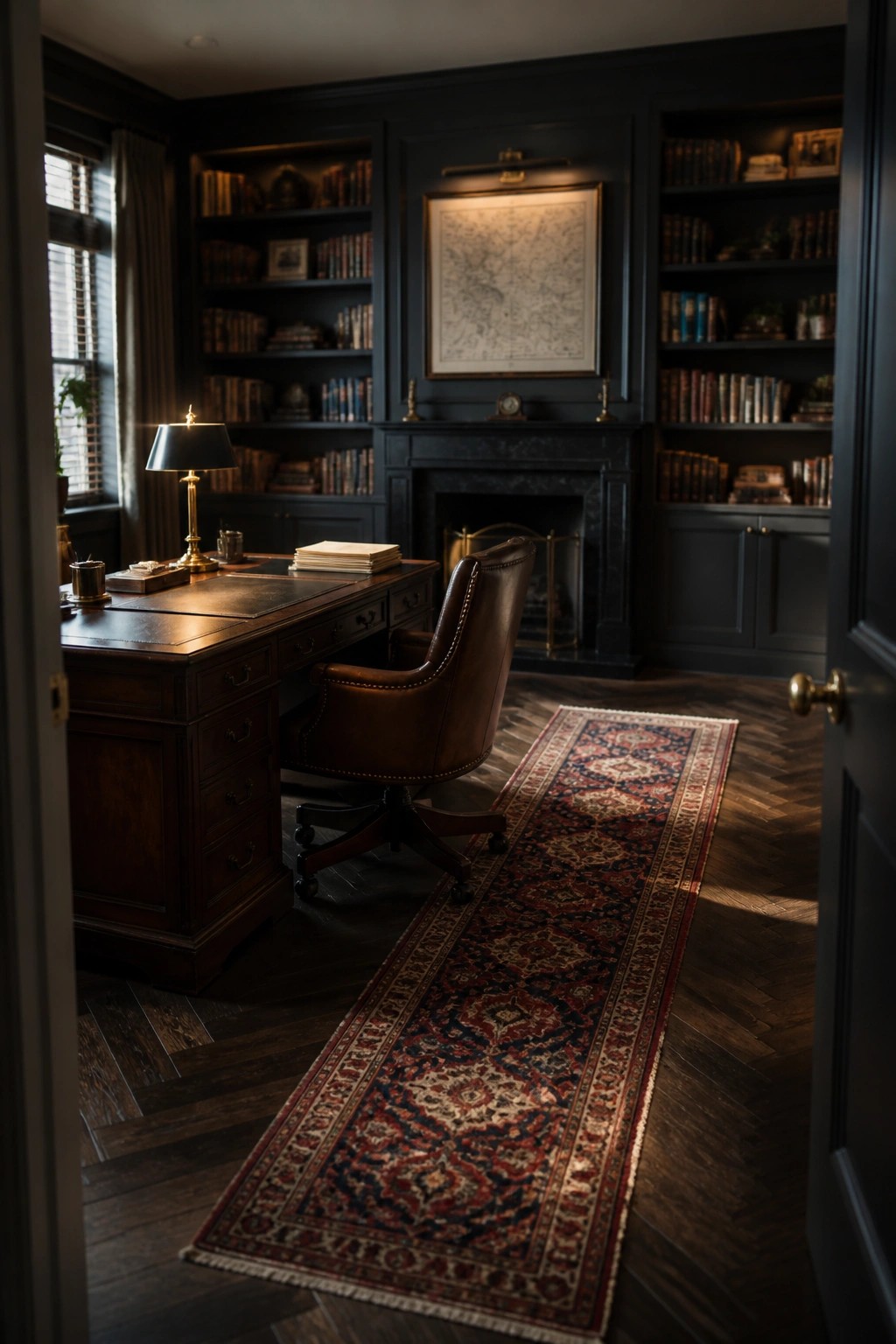
Herringbone wood flooring adds quiet movement to rooms that already carry a lot of weight in their details. In a dark study with paneled walls and built-in shelves, the pattern keeps the floor from feeling flat while still letting the furniture and rugs take the lead.
This approach suits older homes or any space meant to feel settled and formal. Use a medium to dark stain so the pattern shows without becoming the main focus, and let area rugs cover most of the floor so only the edges and walkways reveal the herringbone.
Herringbone Wood Flooring In Laundry Rooms
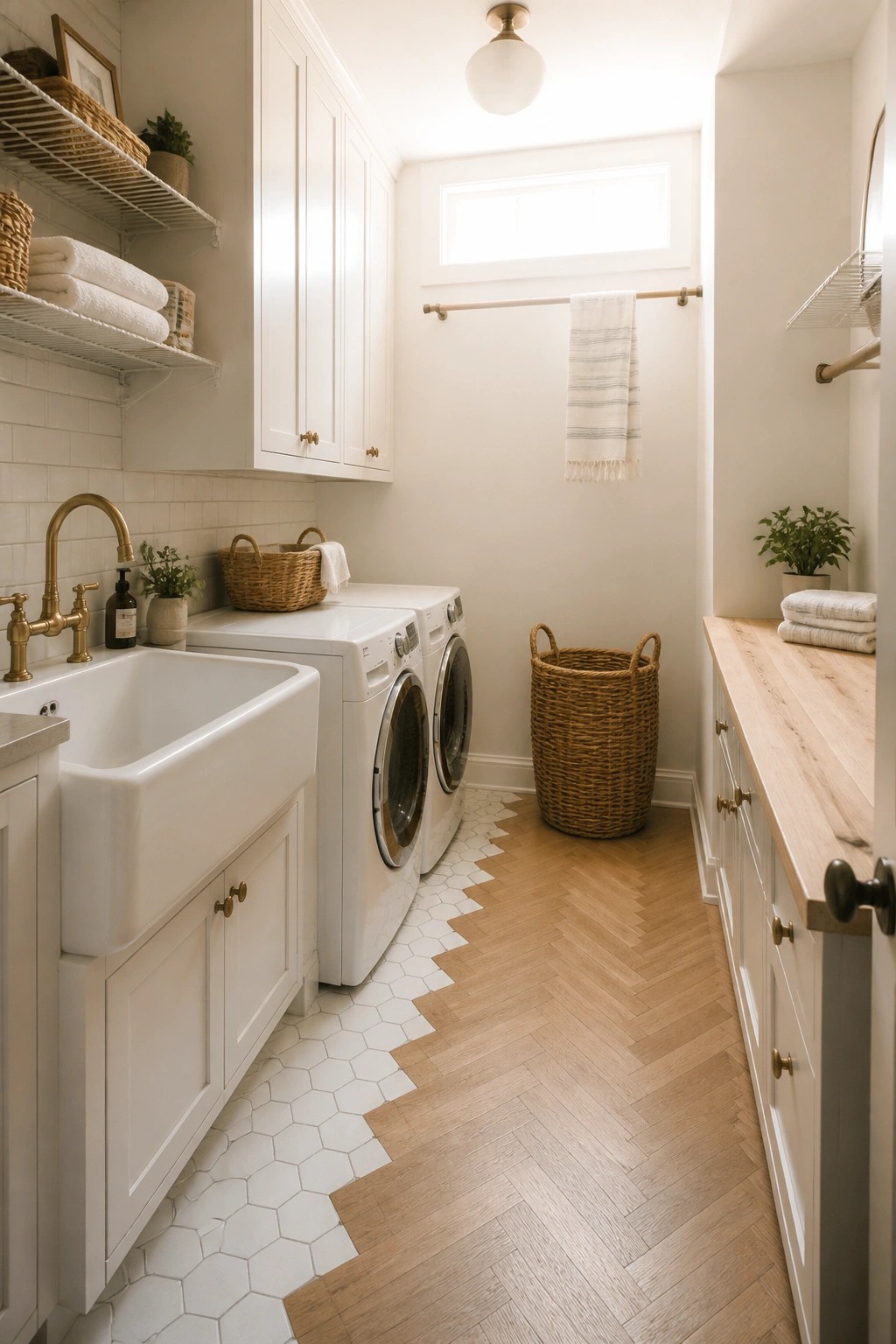
Laundry rooms tend to stay plain because they are mostly about function. A herringbone wood floor can still add some visual interest without getting in the way of daily use.
It works well when the rest of the room stays simple, like white cabinets and basic fixtures. The pattern shows up best against a plainer material such as tile near the sink, so the wood does not feel lost in a small space.
Herringbone Flooring In Hallways
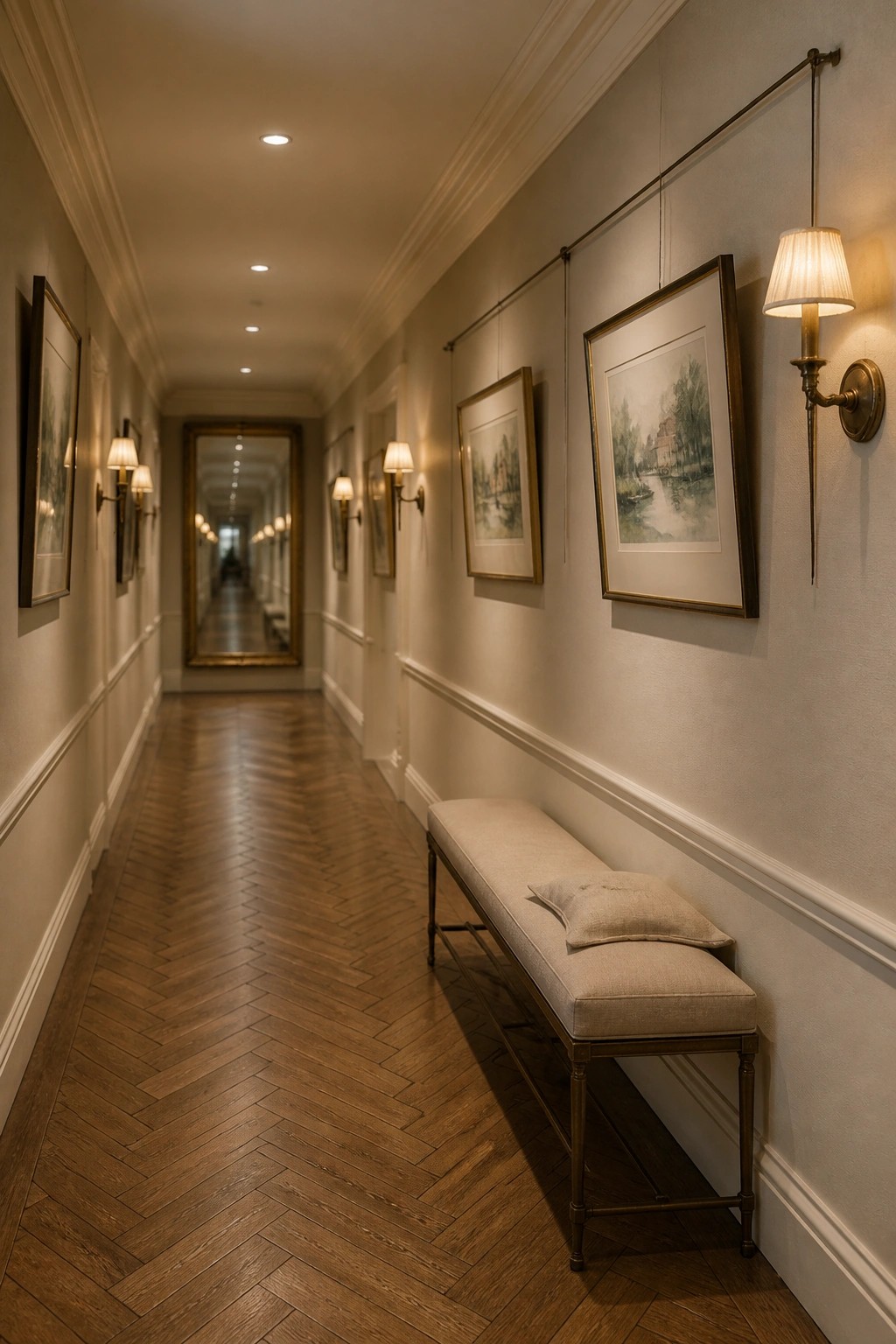
Herringbone wood floors bring quiet movement to a long hallway without making it feel busy. The angled pattern gives the space more character than a straight layout would, especially when the rest of the room stays simple.
This approach works well in homes that already have traditional trim or classic details. Keep the walls light and the furniture minimal so the floor can do its job without competing with anything else.
Herringbone Flooring In Bathrooms
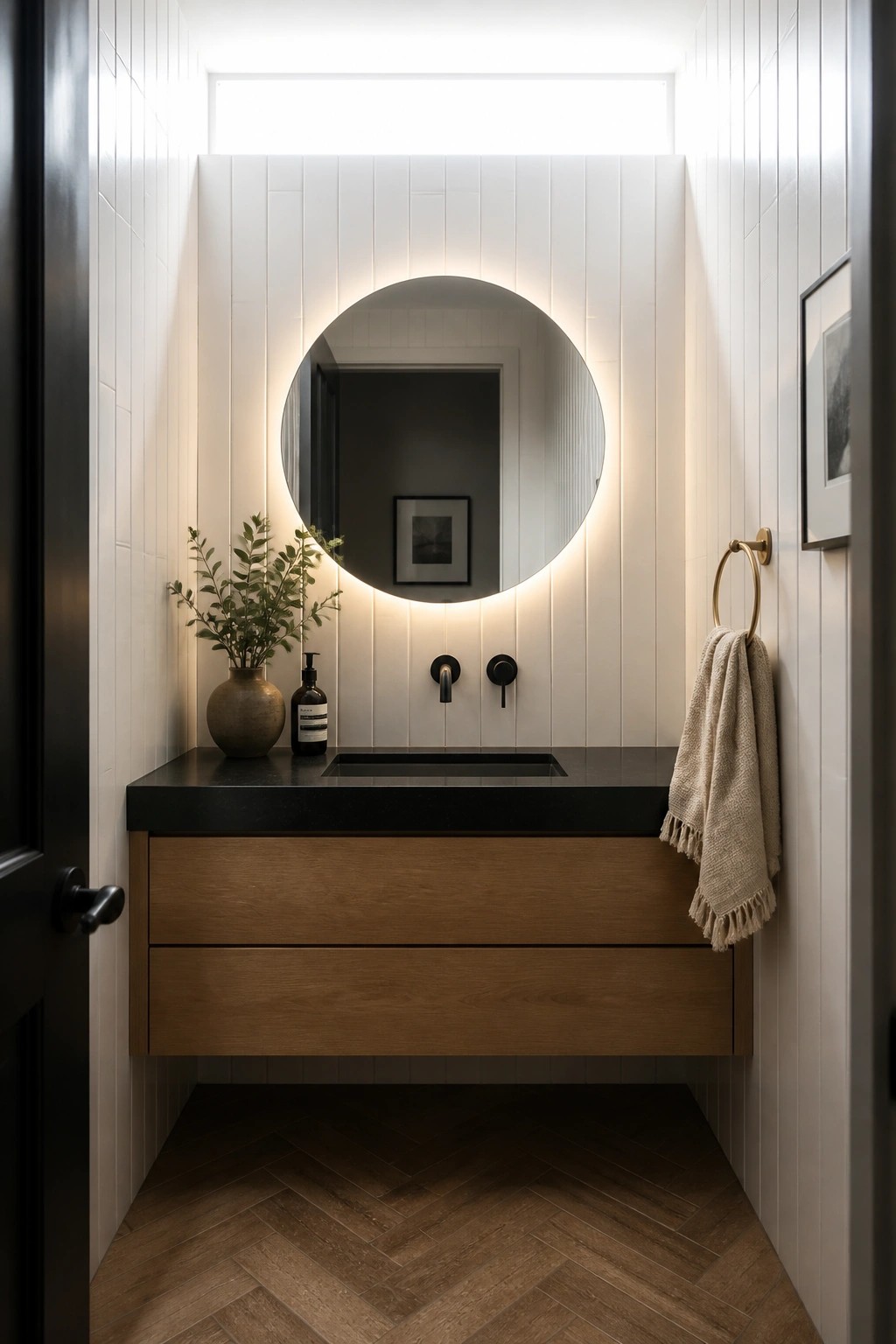
Herringbone wood flooring adds a classic layer of interest to a bathroom without needing extra decoration. The angled pattern breaks up the floor plane and gives the room more depth, which helps in smaller or narrow spaces.
It pairs best with simple wall treatments and darker wood tones that hold up to moisture. This approach works in homes that already use wood floors elsewhere and want the bathroom to feel connected rather than separate.
Herringbone Flooring In Nursery Bedrooms
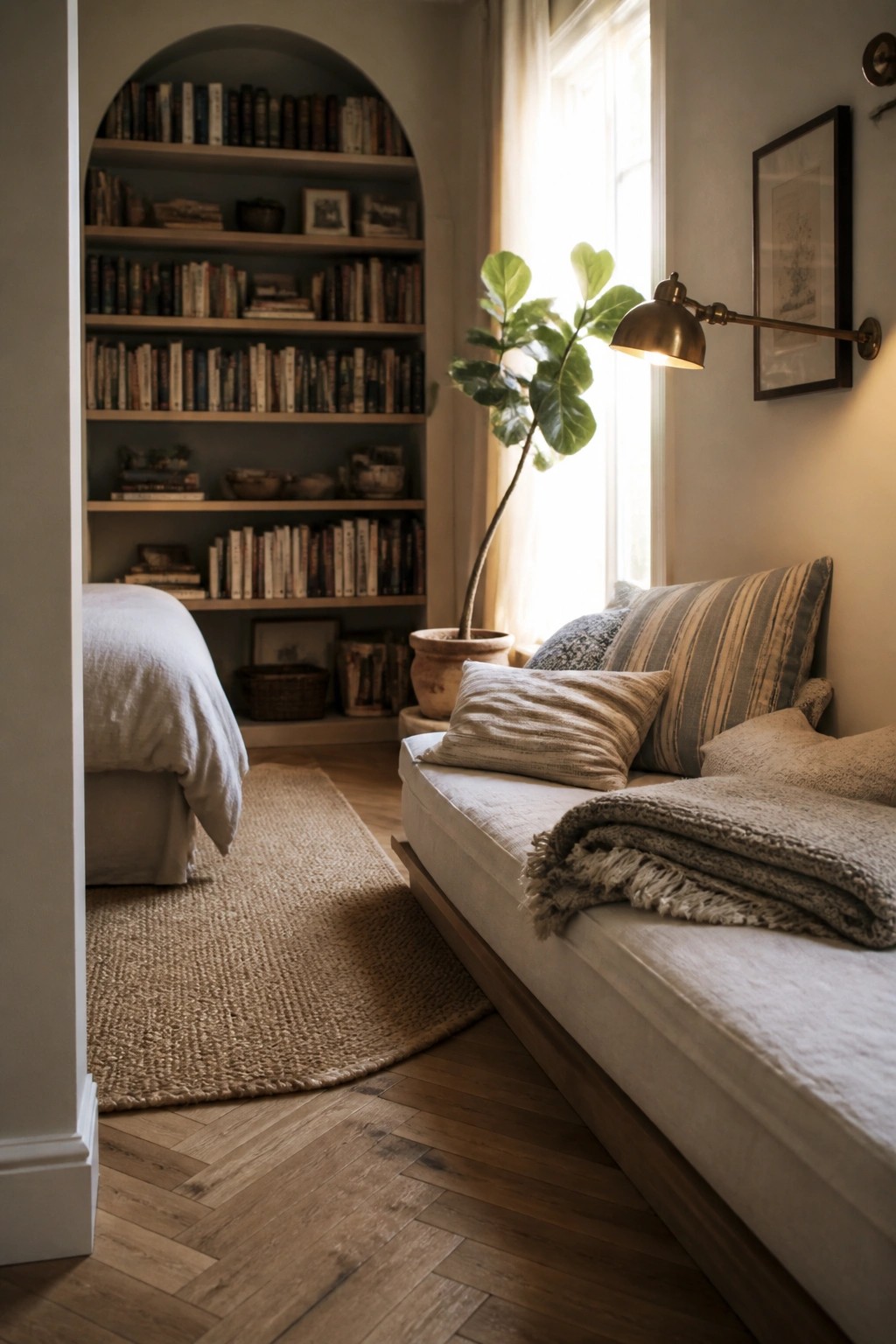
Herringbone wood floors bring a quiet pattern that feels steady and classic. The layout draws the eye along the grain without making the room feel busy or overdone.
This style suits bedrooms and smaller living spaces where you want some texture underfoot. It works best with simple furnishings and soft layers so the floor stays the main point of interest rather than competing with everything else.
Herringbone Flooring In Open Concept Kitchens
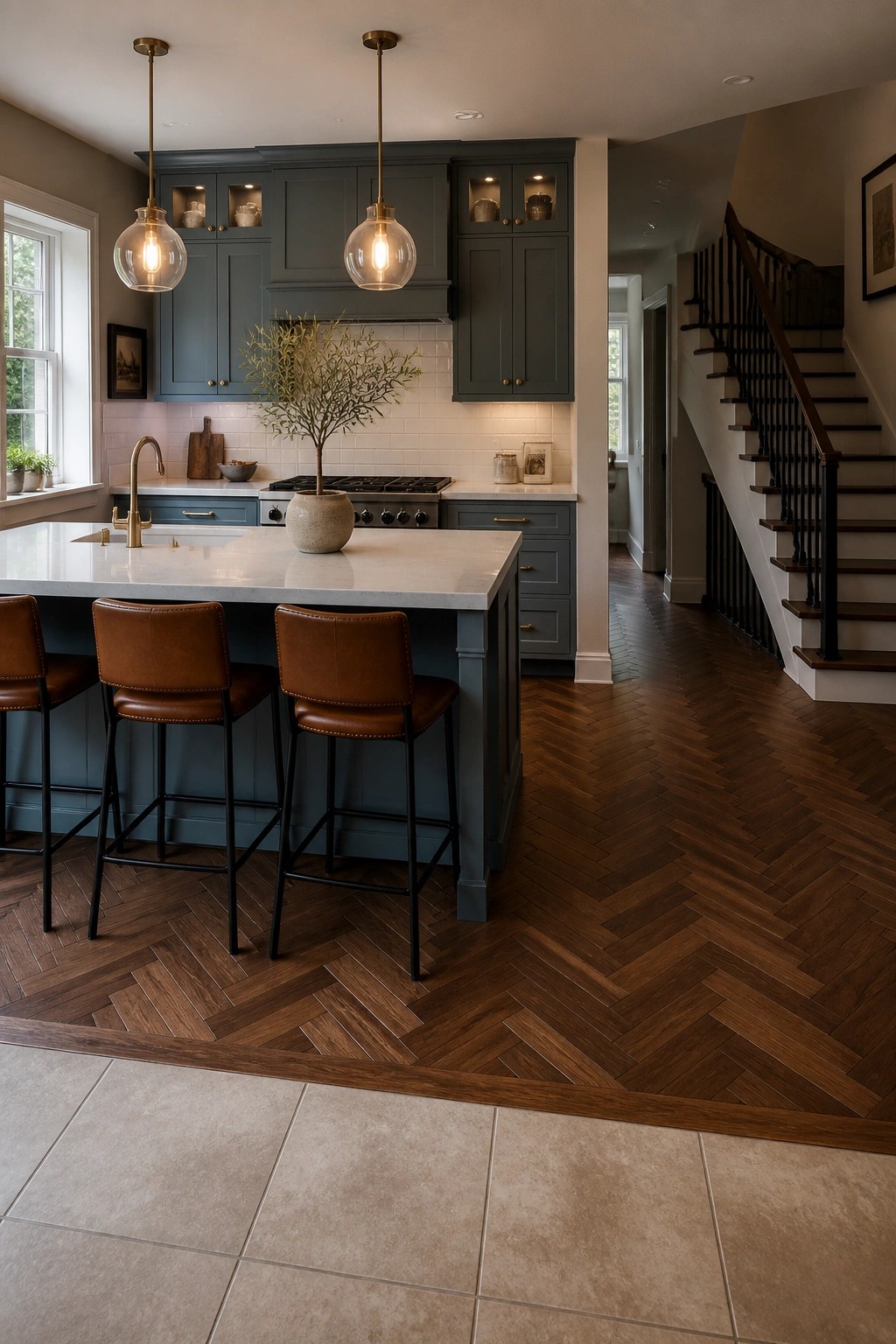
Herringbone wood flooring adds movement to a kitchen without extra colors or busy details. The pattern stands out most when the cabinets and counters stay simple and solid.
It works well in homes that want a bit of classic detail while keeping the space practical for daily use. The floor can run through the kitchen and into nearby hallways, as long as the wood tone stays the same throughout.
Herringbone Flooring In Sunlit Bedrooms
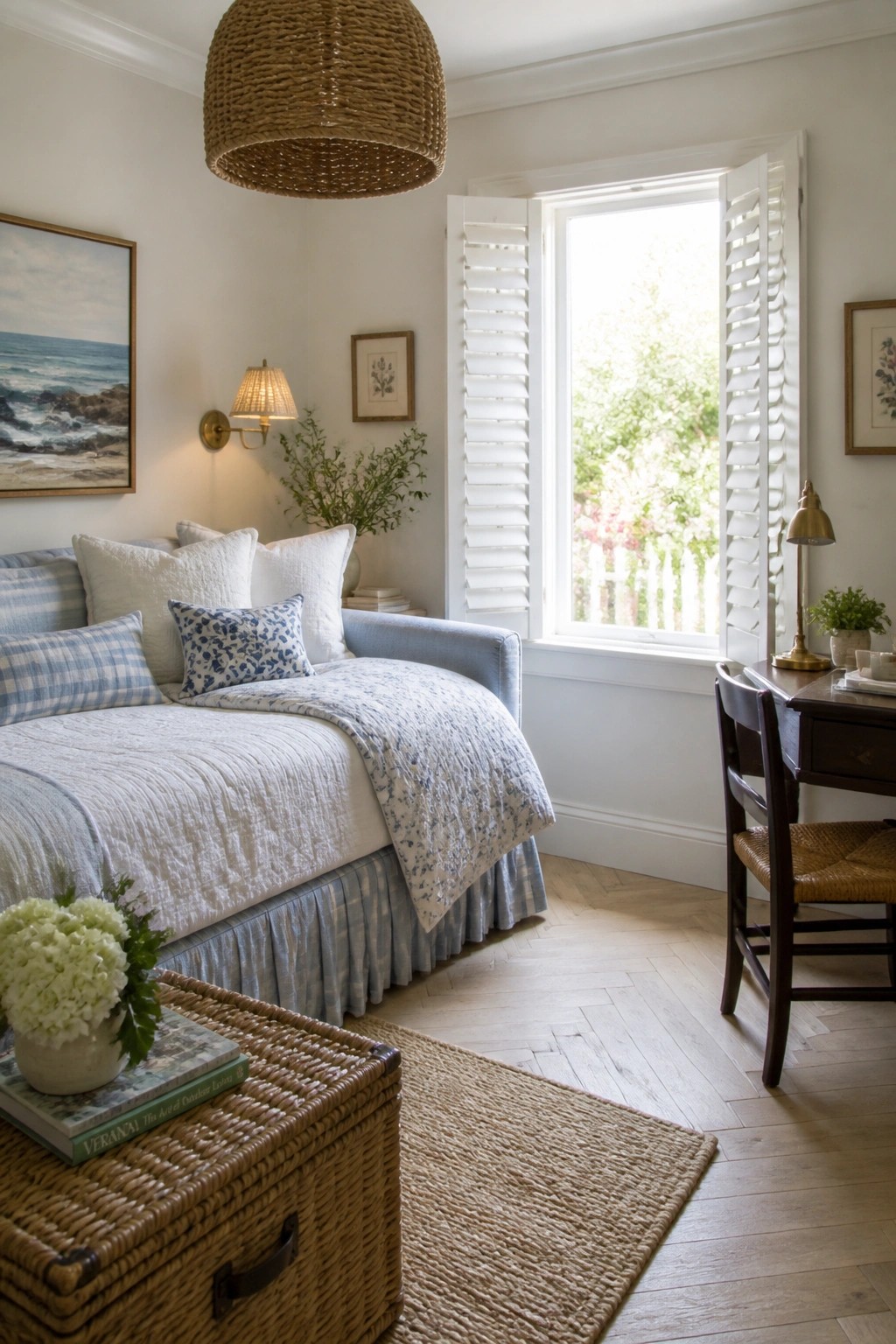
Herringbone wood floors bring a quiet bit of pattern to a bedroom without making the space feel busy. The light tone keeps the room feeling open and soft, which works especially well when the rest of the space stays simple and pale.
This flooring choice suits homes that already lean toward quiet colors and natural textures. It shows up best in rooms with good daylight, and it holds its own without needing bold furniture or strong contrasts to make the pattern noticeable.
Herringbone Wood Flooring In Home Libraries
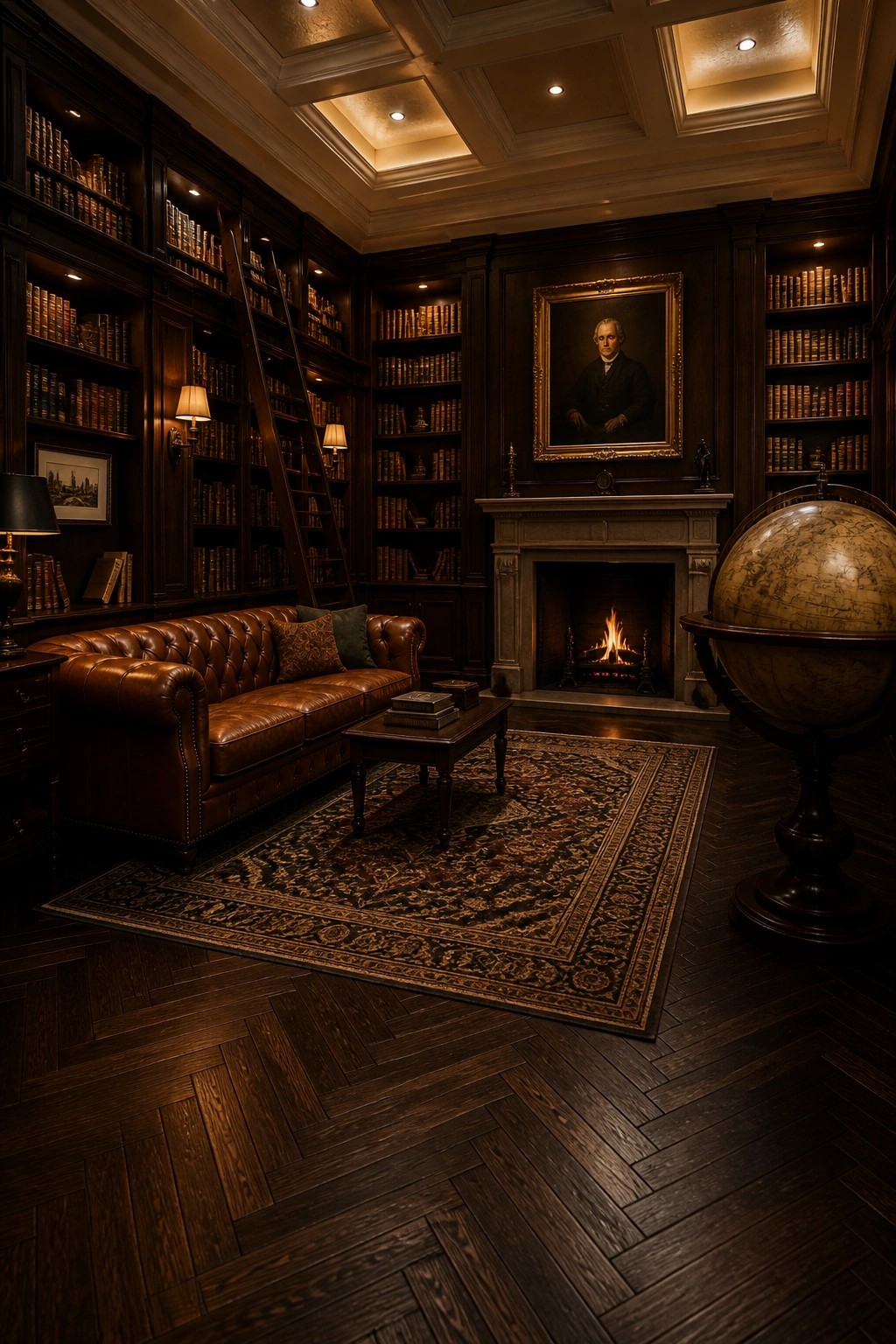
Herringbone flooring gives a room subtle movement without any extra effort. The angled pattern breaks up the flat surface and adds quiet visual interest, especially when the wood is a deep, rich tone that matches the rest of the furnishings.
This approach works well in studies, libraries, or any formal space that already leans classic. It pairs naturally with built-in shelves and leather seating, but it can feel heavy in smaller or brighter rooms, so it helps to keep the rest of the palette warm and simple.
Herringbone Flooring Around Round Dining Tables
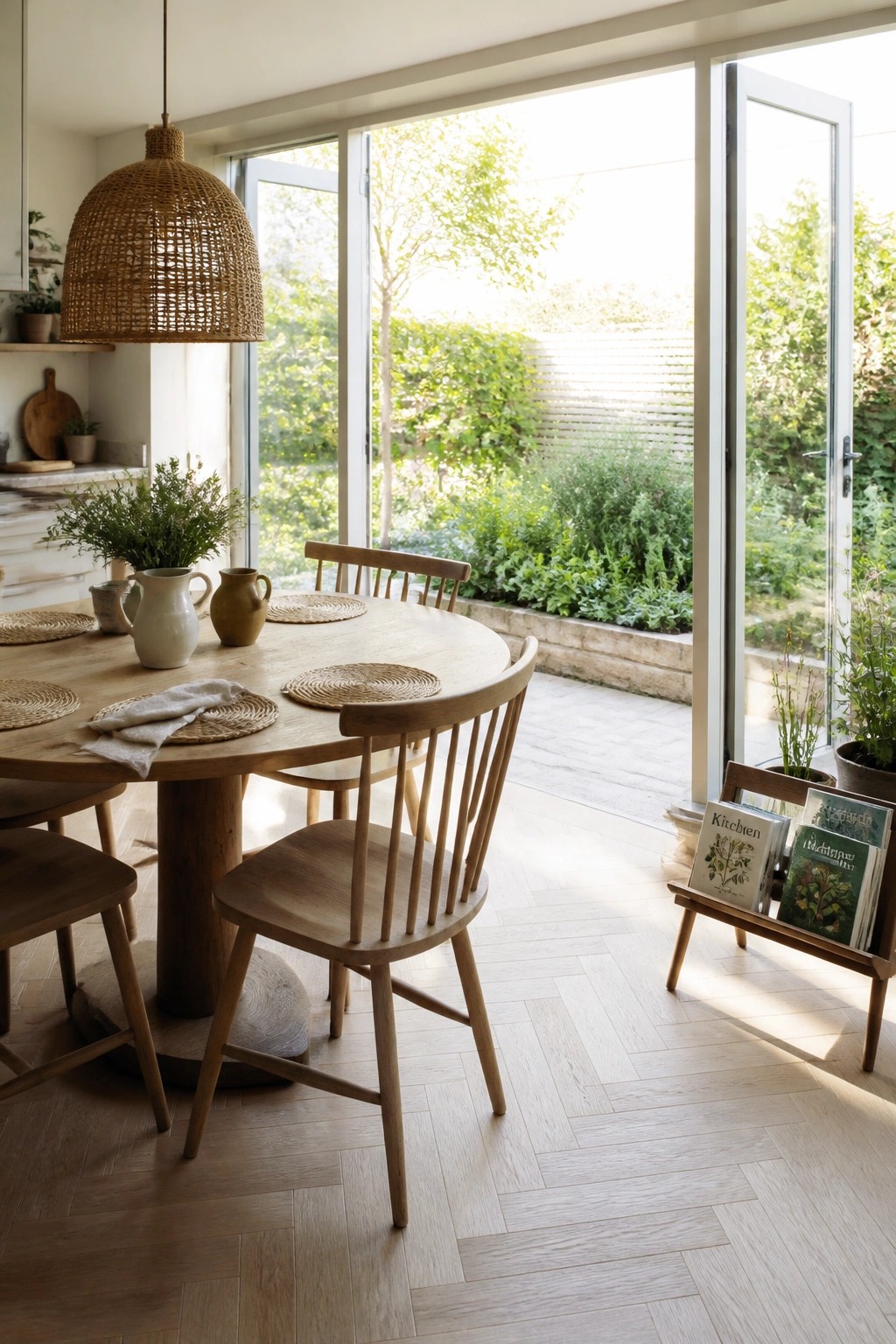
Herringbone wood floors bring a quiet pattern that lifts a simple dining space without making it feel busy. The layout works especially well around a round table since the angles of the floor keep the eye moving and stop the room from looking flat.
This approach fits homes that want a bit of classic detail in everyday rooms. It pairs best with light wood tones and minimal furniture so the floor stays noticeable but still practical underfoot.
Dark Herringbone Flooring In Living Rooms
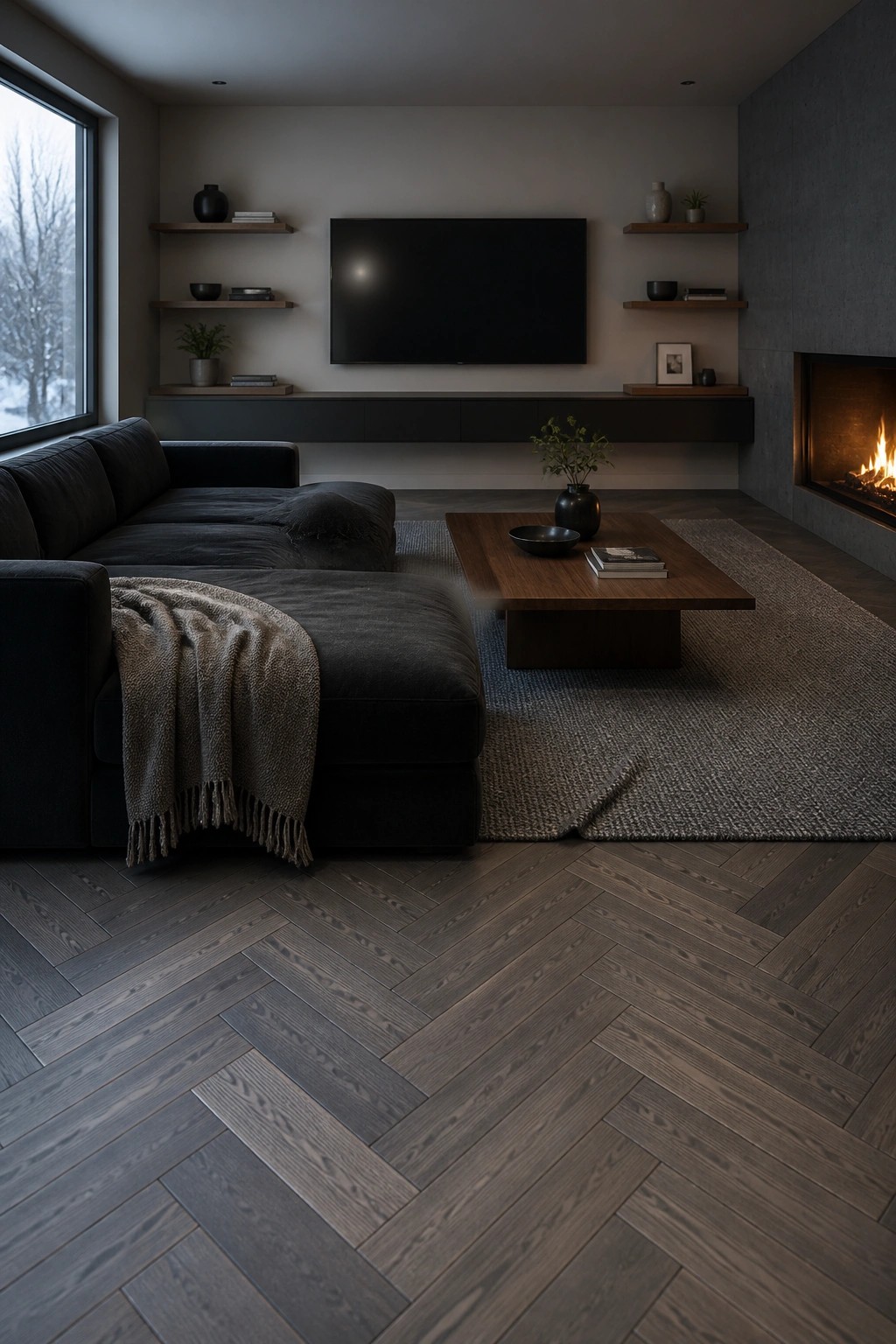
Dark herringbone wood flooring gives a room structure and movement without extra decoration. The pattern shows up clearly against the rest of the space and keeps things from feeling flat even when the furniture stays simple.
It suits living rooms with darker seating and built-in storage because the floor becomes the main visual element. Keep the scale of the pattern in mind so it does not feel too busy in smaller rooms.
Light Herringbone Flooring In Bathrooms
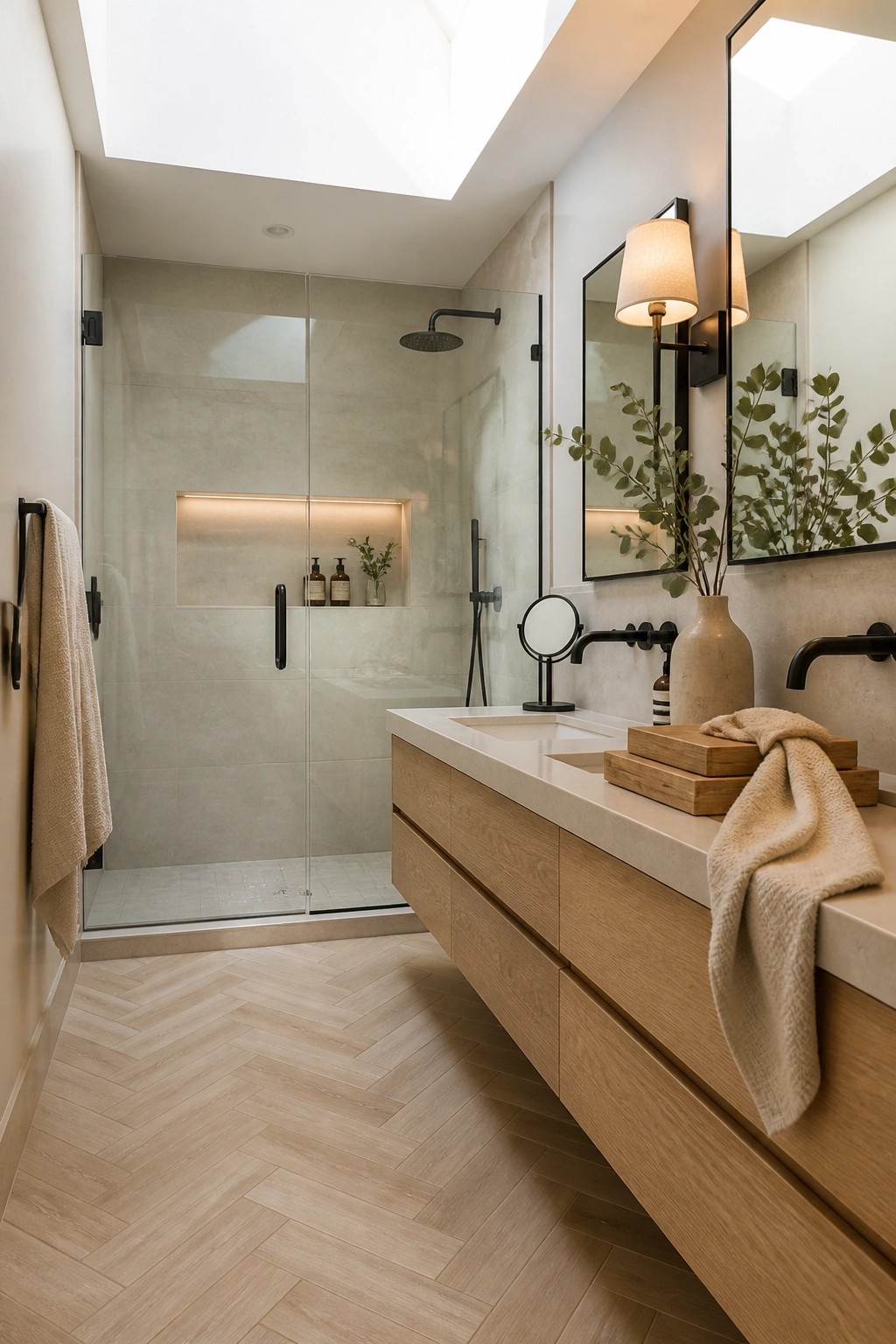
Herringbone wood flooring adds a classic touch to a bathroom without making the space feel busy. The light tone and simple pattern give the room a bit of texture underfoot while keeping everything feeling open and calm.
This works best in homes that already lean modern or transitional. Seal the wood well if it sits close to the shower, and keep the rest of the finishes fairly plain so the floor can stand out on its own.
Herringbone Flooring In Walk-In Closets
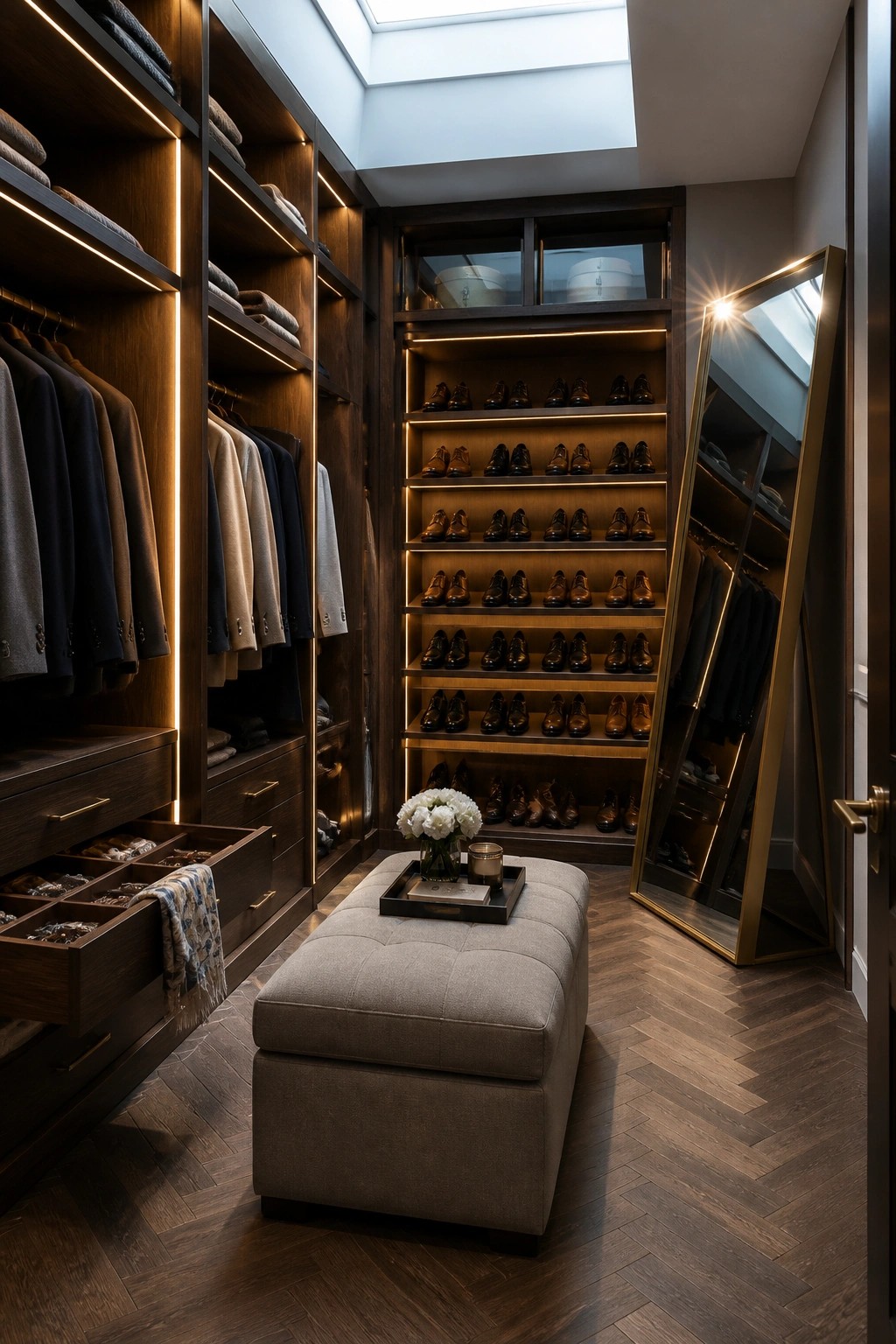
Herringbone wood flooring can turn a basic closet into something that feels more finished. The pattern adds movement underfoot without needing bold colors or extra decoration, which works well in spaces that already have a lot of storage and clothing.
This approach suits larger dressing rooms or custom closets where the floor stays visible most of the time. It pairs best with simple built-ins and neutral tones so the pattern does not compete with everything else in the room.
Herringbone Flooring In Mudroom Entries
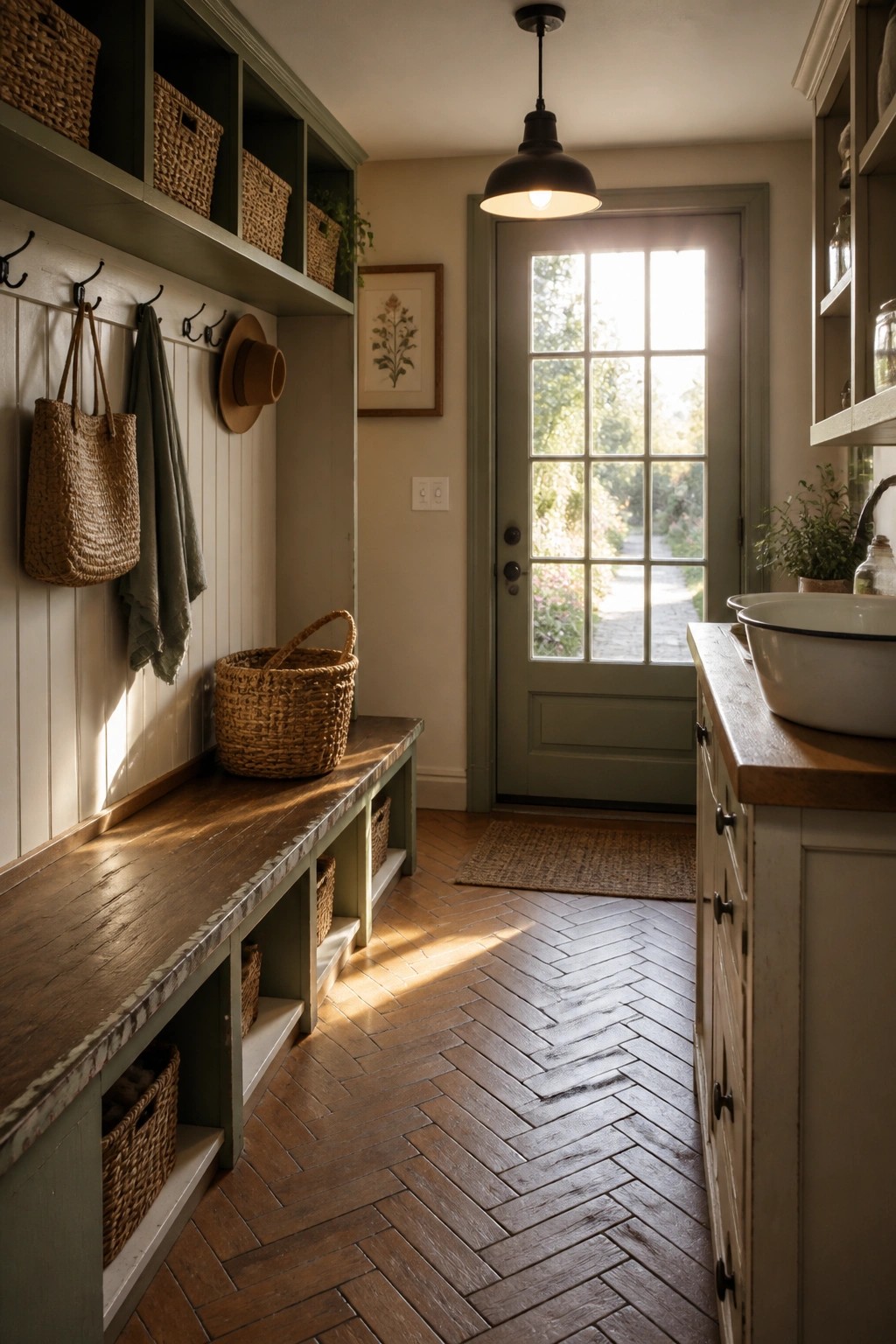
Herringbone wood flooring adds a quiet pattern that holds up well in a space like this. The layout keeps the room from feeling plain while still working with the everyday traffic that comes through an entry.
It suits homes with simple built ins and painted woodwork. Keep the rest of the room fairly plain so the floor can do the work without competing.
Traditional Herringbone Wood Flooring In Bedrooms
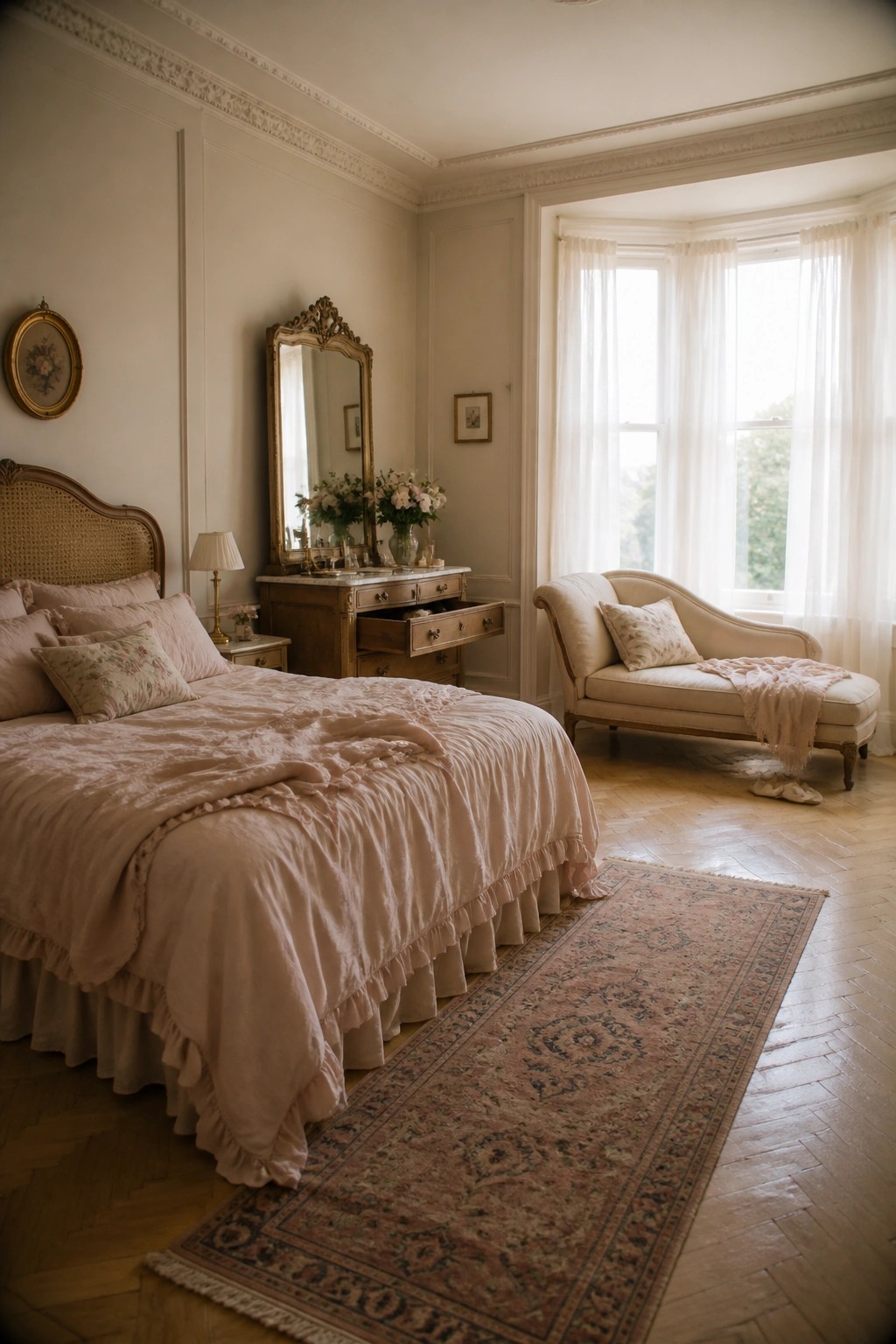
Herringbone wood flooring adds a gentle pattern that feels right at home in a bedroom. The subtle direction changes in the wood keep the floor interesting even when the rest of the room stays calm and light.
This choice works well in spaces that already lean traditional. Pair it with soft colors and a simple rug so the pattern shows without taking over the whole room.
Frequently Asked Questions
Q: Will herringbone make a small room feel cramped? A: Lighter wood tones keep the pattern from closing in the space. Run the chevrons toward the main window so light travels along the lines and stretches the room visually.
Q: How do I keep the floor from showing every scuff mark? A: Pick a matte finish instead of high gloss. Sweep often and wipe spills right away with a barely damp cloth to stop water from raising the grain.
Q: Can I lay herringbone over my existing hardwood? A: Only if the old floor is solid and level. Glue and nail a new plywood layer first so the pattern stays flat and the boards do not shift later.
