

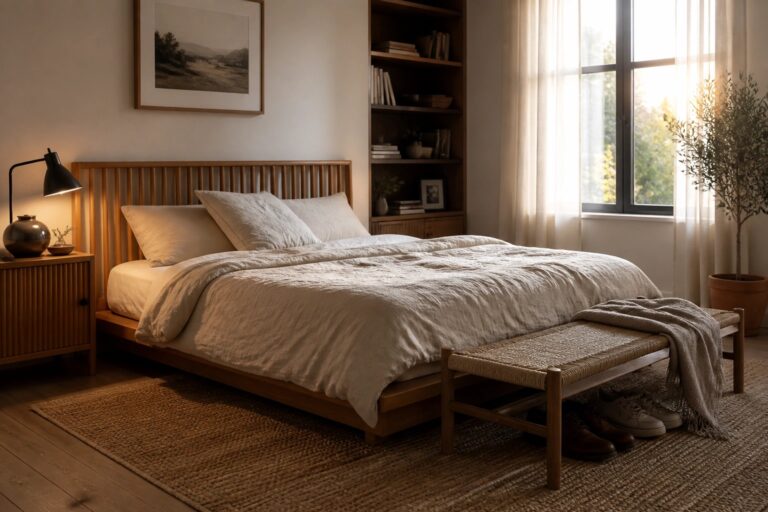
I have noticed that wood in a bedroom often changes how the space settles at the end of the day.
When the tones sit well with the light coming through the windows the whole room tends to feel more settled.
Wood works only when the scale of each piece fits the actual floor space.
People often overlook how the direction of the grain can make a bed frame feel either open or closed in.
I usually test one wood piece in the room first before deciding on the rest.
Warm Wood Bed Frames
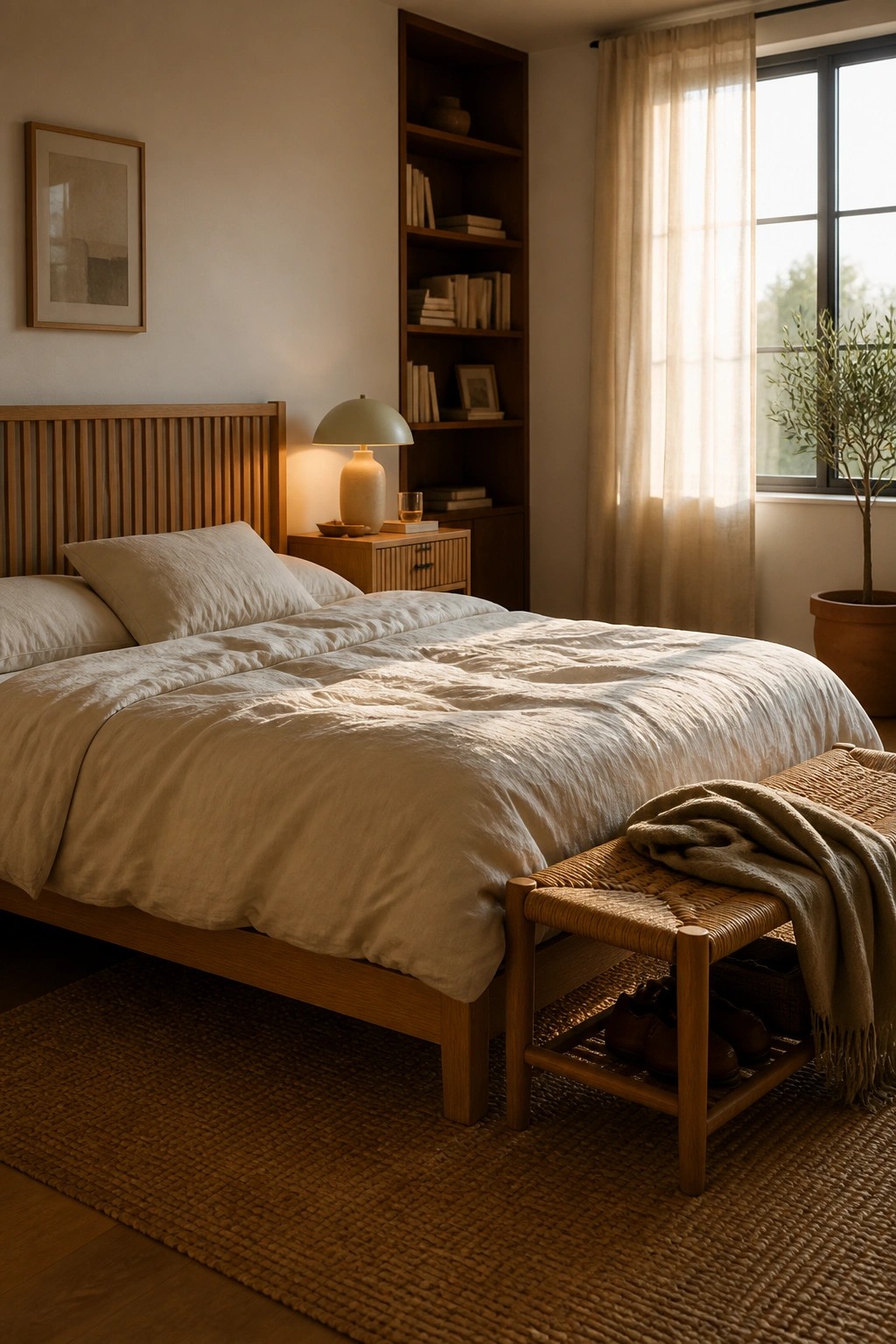
A bed frame in warm wood tones gives the whole room a grounded, calm feeling. It works especially well when the rest of the furniture, like nightstands and built-ins, stays in the same finish so nothing feels out of place. The vertical slats on the headboard add just enough detail without making the space look busy.
This approach suits smaller or medium bedrooms where you want the bed to feel substantial but still welcoming. Keep the bedding simple in light neutrals and add one textured piece, like a woven bench at the foot, if you need extra seating or a spot to store shoes underneath. Avoid mixing in too many dark or painted pieces, or the natural warmth can get lost.
Exposed Wood Beams For Warmth
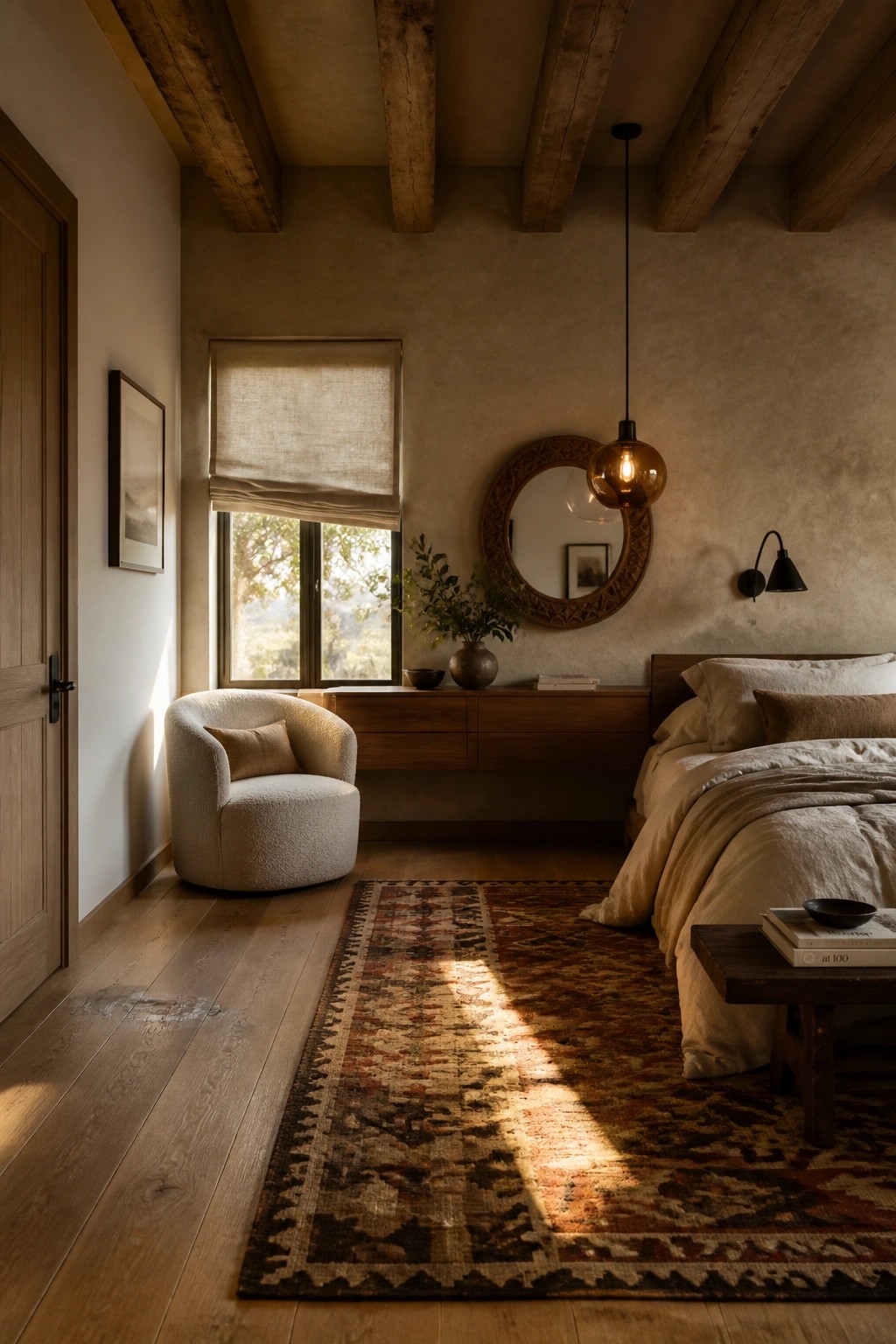
Exposed wood beams bring a natural structure to a bedroom that feels both solid and relaxed. They add texture overhead without needing much else to make the space feel finished.
This approach works best in rooms with decent ceiling height where the wood can stand out against lighter walls and bedding. Keep the beams in their natural tone and let the rest of the room stay simple so the wood does the main work.
Warm Wood Furniture For The Bedroom
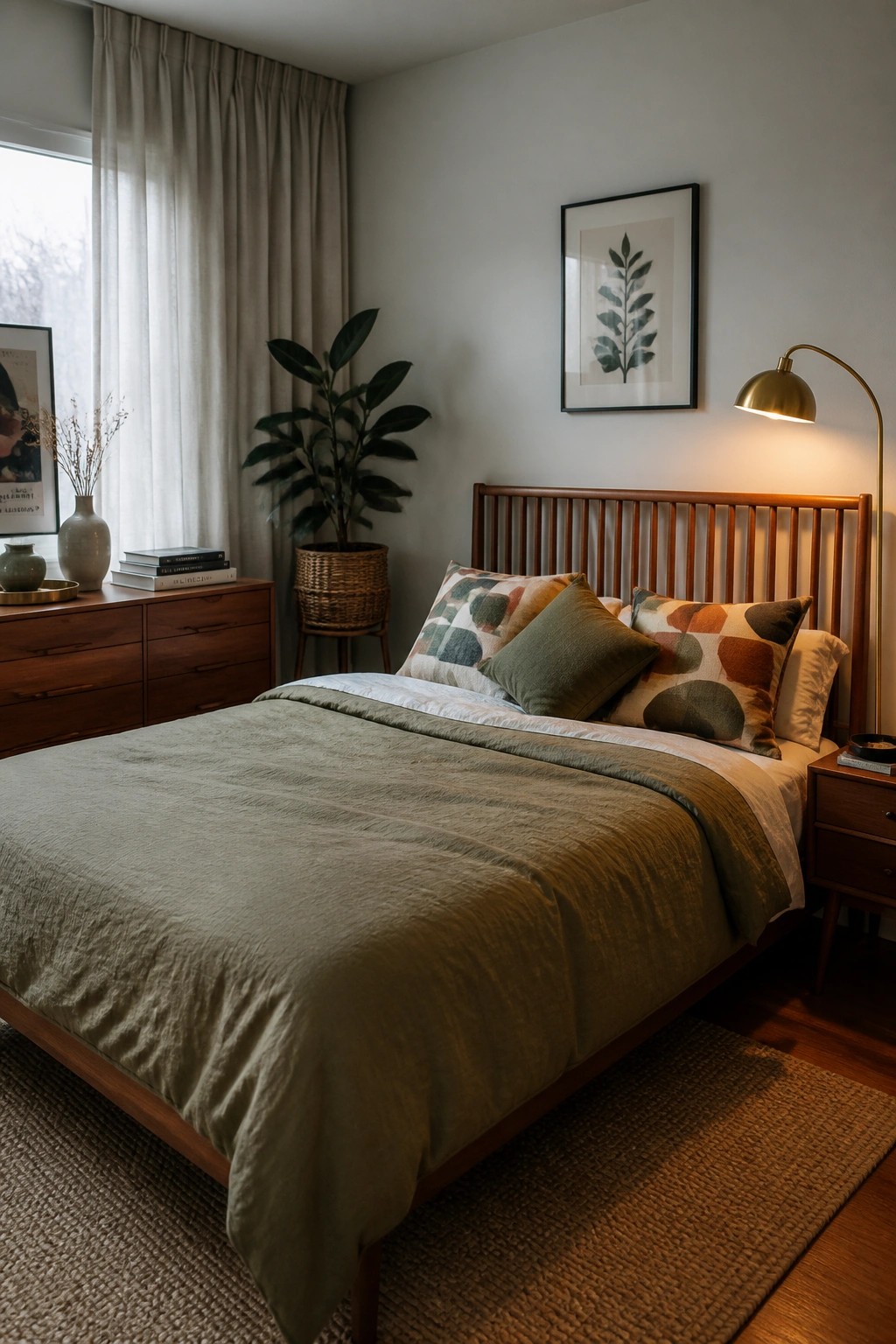
Wood furniture gives a bedroom a steady, grounded feel that works especially well when you want the space to feel calm at night. A simple bed frame in a medium wood tone sets the main direction and pairs easily with a matching dresser or nightstand.
This look works best in rooms that already have some natural light or soft wall colors. Keep the wood tones close but not identical so the pieces feel connected without looking too matched.
Low Wood Platform Beds
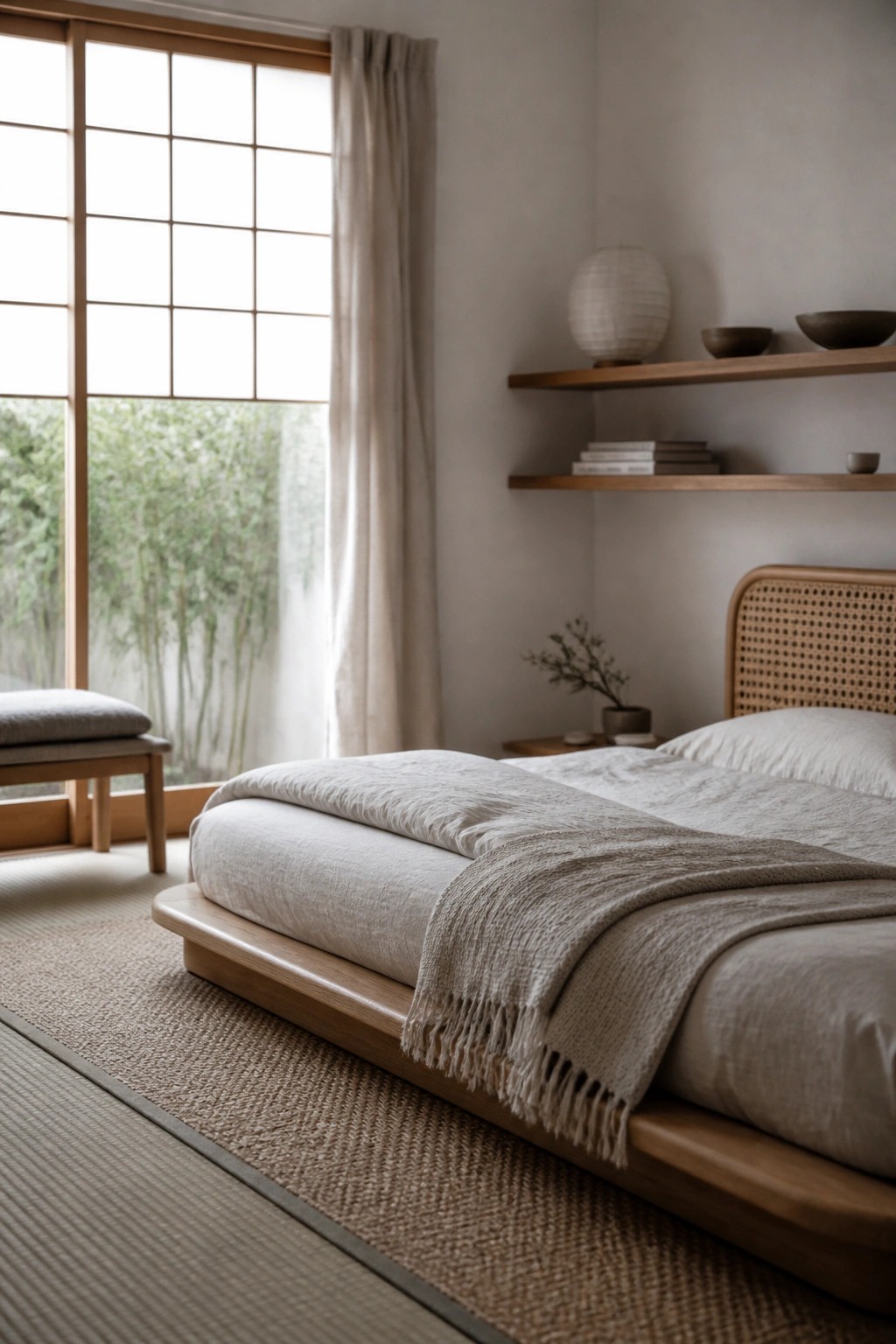
A low platform bed in natural wood gives the bedroom a simple, grounded base. The clean lines and warm tone keep the room feeling open while the material itself adds the softness people want in a cozy space.
This style works best in smaller rooms or calmer layouts where you want to avoid heavy furniture. Keep the bedding light and add just one or two wood pieces nearby so the wood tone stays the main focus without crowding the floor.
Natural Wood Bed Frames
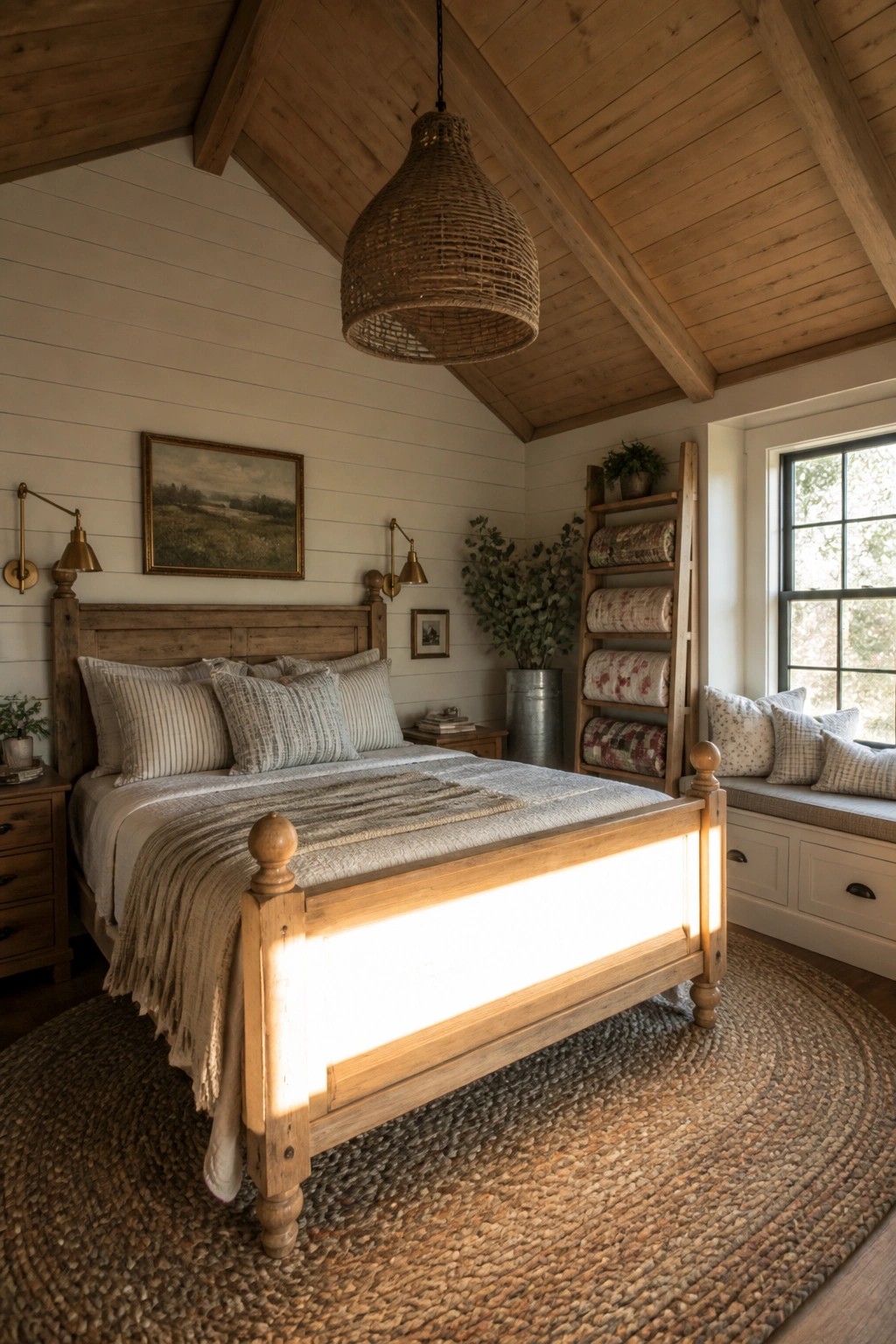
A wooden bed frame stands out as one of the easiest ways to bring warmth into a bedroom. It adds a solid, grounded feel that pairs well with white walls and soft textiles, and the natural grain keeps the space from looking too plain.
This approach works best in homes that already have some wood tones elsewhere, like ceiling beams or simple side tables. Stick to one main wood finish and let the bed be the main piece rather than adding too many other wooden items.
Warm Wood Floors In The Bedroom
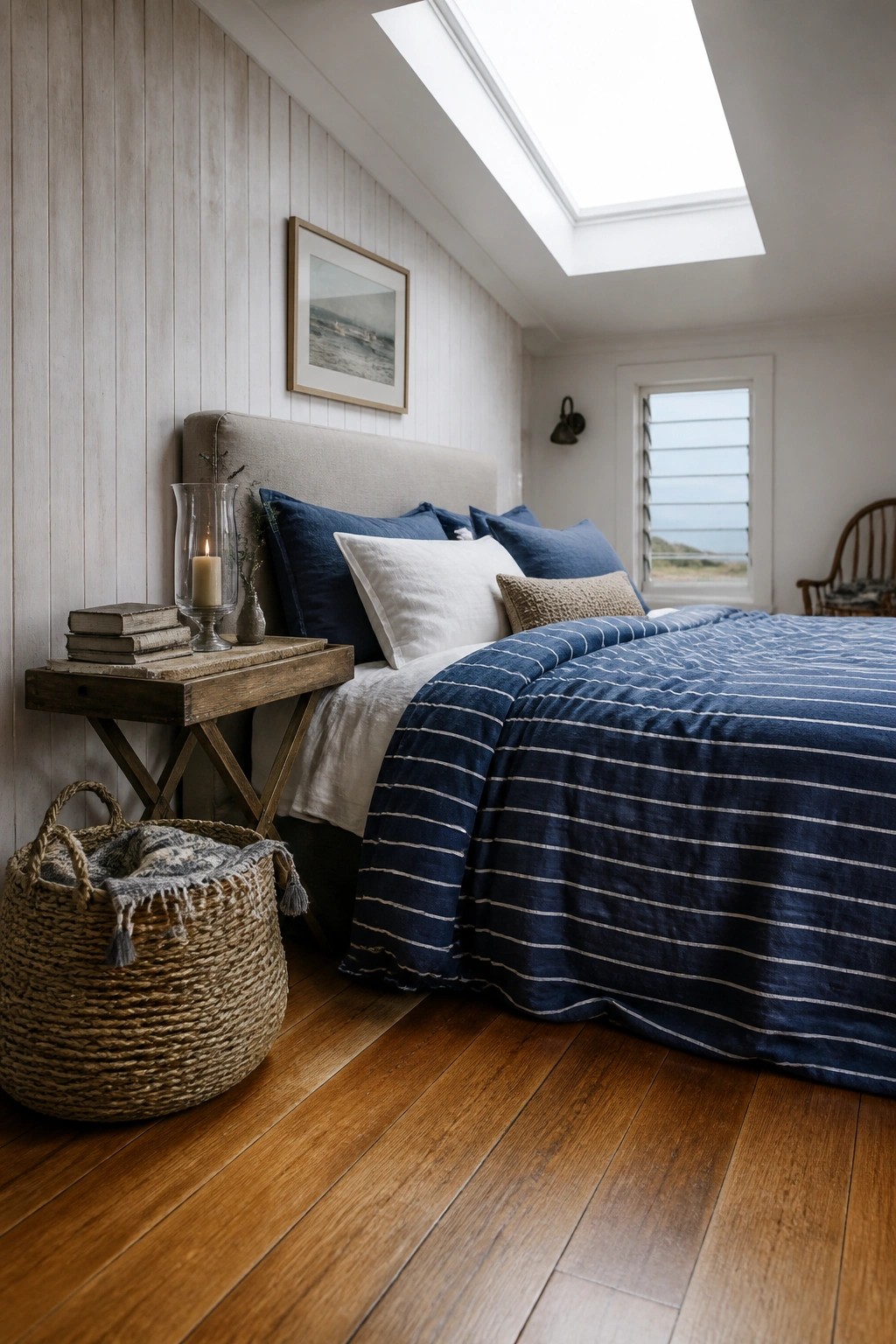
Wood floors give a bedroom a grounded feel that works especially well when the rest of the room stays simple. The natural tone adds warmth without extra layers or heavy furniture.
They suit spaces that get good light and pair easily with soft bedding and basic wood pieces. Keep the finish matte so the floor does not compete with other textures in the room.
Using a Wooden Canopy Bed to Anchor the Space
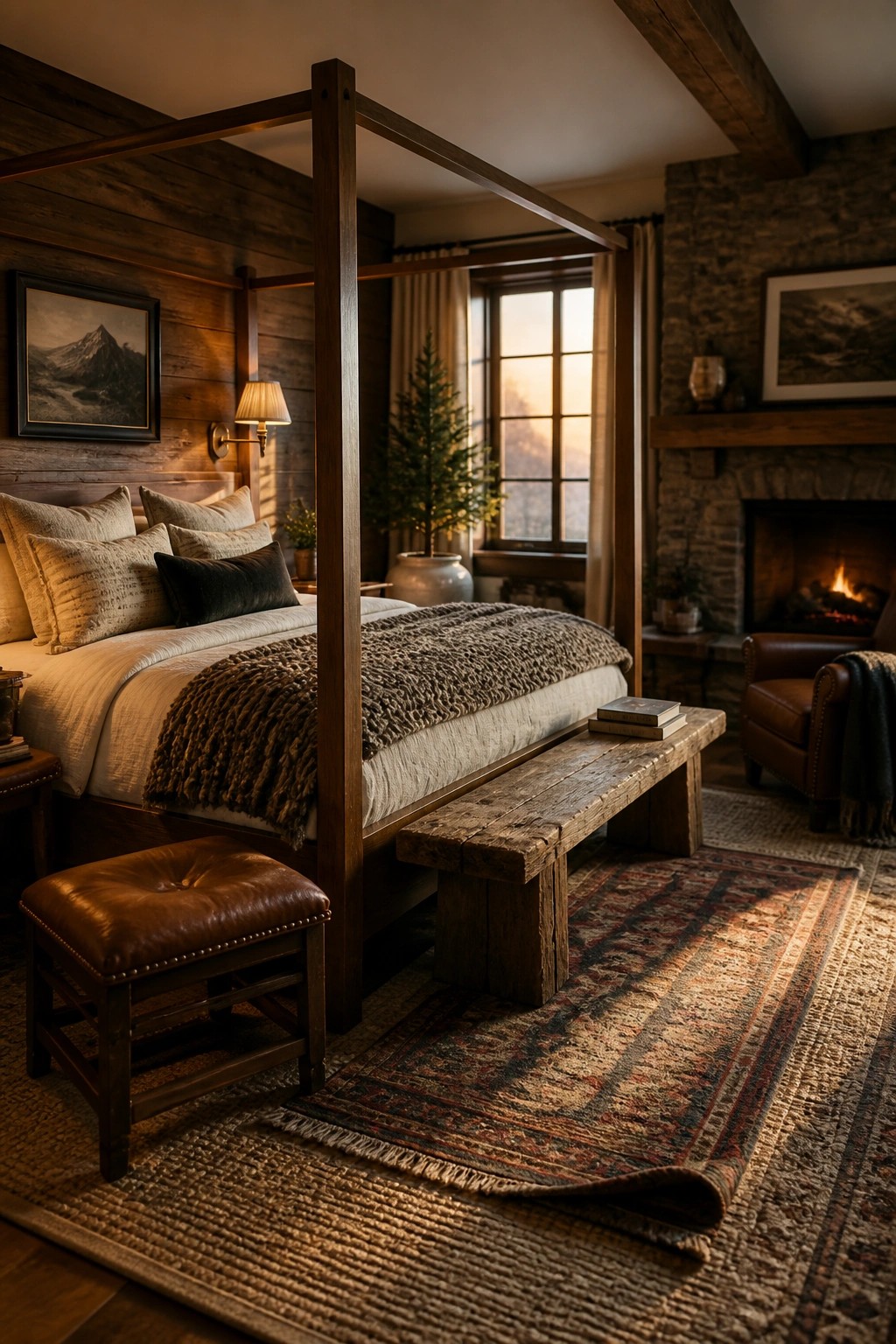
A large wooden canopy bed gives the room a clear center without needing much else. The solid frame adds weight and warmth that lighter beds often lack, especially when the rest of the room uses similar wood tones on the walls and floor.
This works best in spaces that already have some age or texture, like older homes or cabins. Keep the surrounding pieces simple, such as a low bench at the foot of the bed, so the wood remains the main feature rather than competing with too many extras.
Wood Slat Walls for Warmth
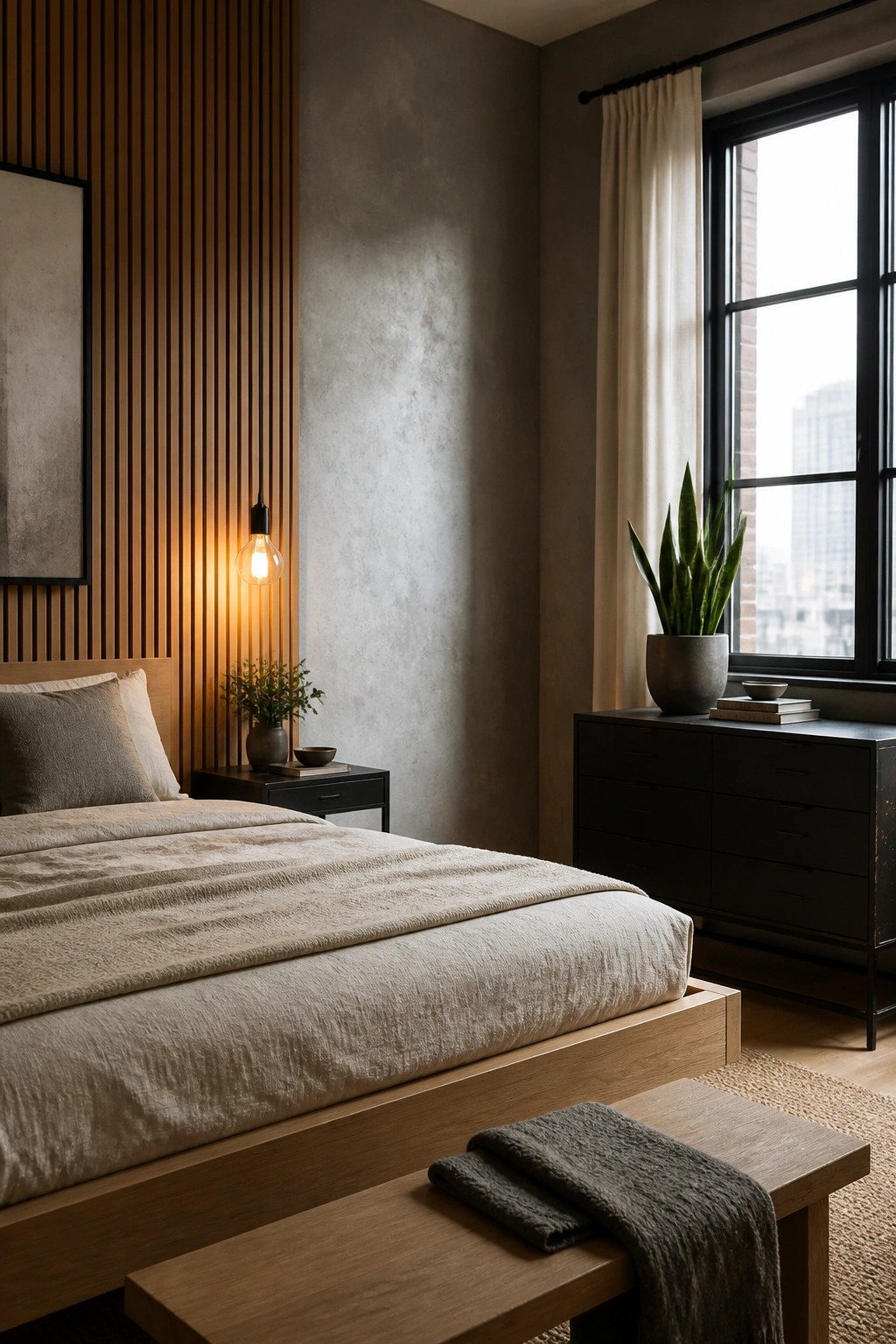
A wood slat wall can bring natural texture and a sense of warmth into a bedroom without making the space feel heavy. In rooms with cooler surfaces like concrete, the vertical lines and wood tone help balance the look and make the area feel more inviting to spend time in.
This works well in smaller bedrooms or those with limited natural light. Keep the rest of the room simple with neutral bedding and a few wood pieces so the slats stand out without competing for attention.
Carved Wooden Headboards

A carved wooden headboard adds instant warmth to a bedroom because the natural grain and detail give the space character without needing lots of extra pieces. It works especially well when the rest of the room already leans on wood tones and soft layers.
Keep the wall behind it plain so the carving can stand out. This choice suits smaller rooms that need one strong element to hold everything together.
Wood Paneling for Bedroom Warmth
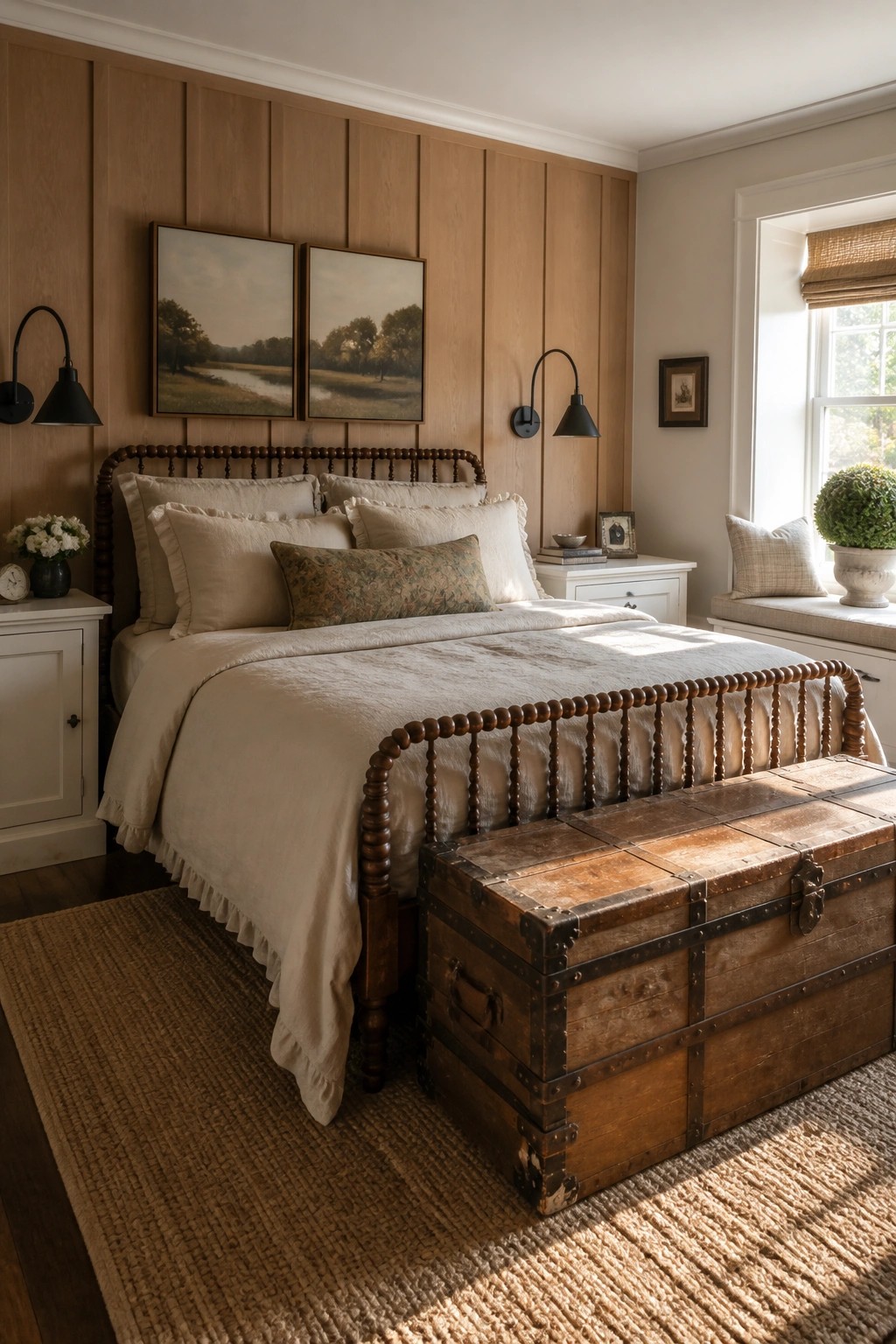
Wood paneling on the walls gives a bedroom a steady, grounded feel that works well with simple bedding and wood furniture. The vertical planks add texture without needing extra colors or patterns.
This choice suits homes that already lean toward natural materials. It works best in rooms where you want to keep things calm and avoid a cold or empty look.
Built-In Wood Cabinetry Around the Bed
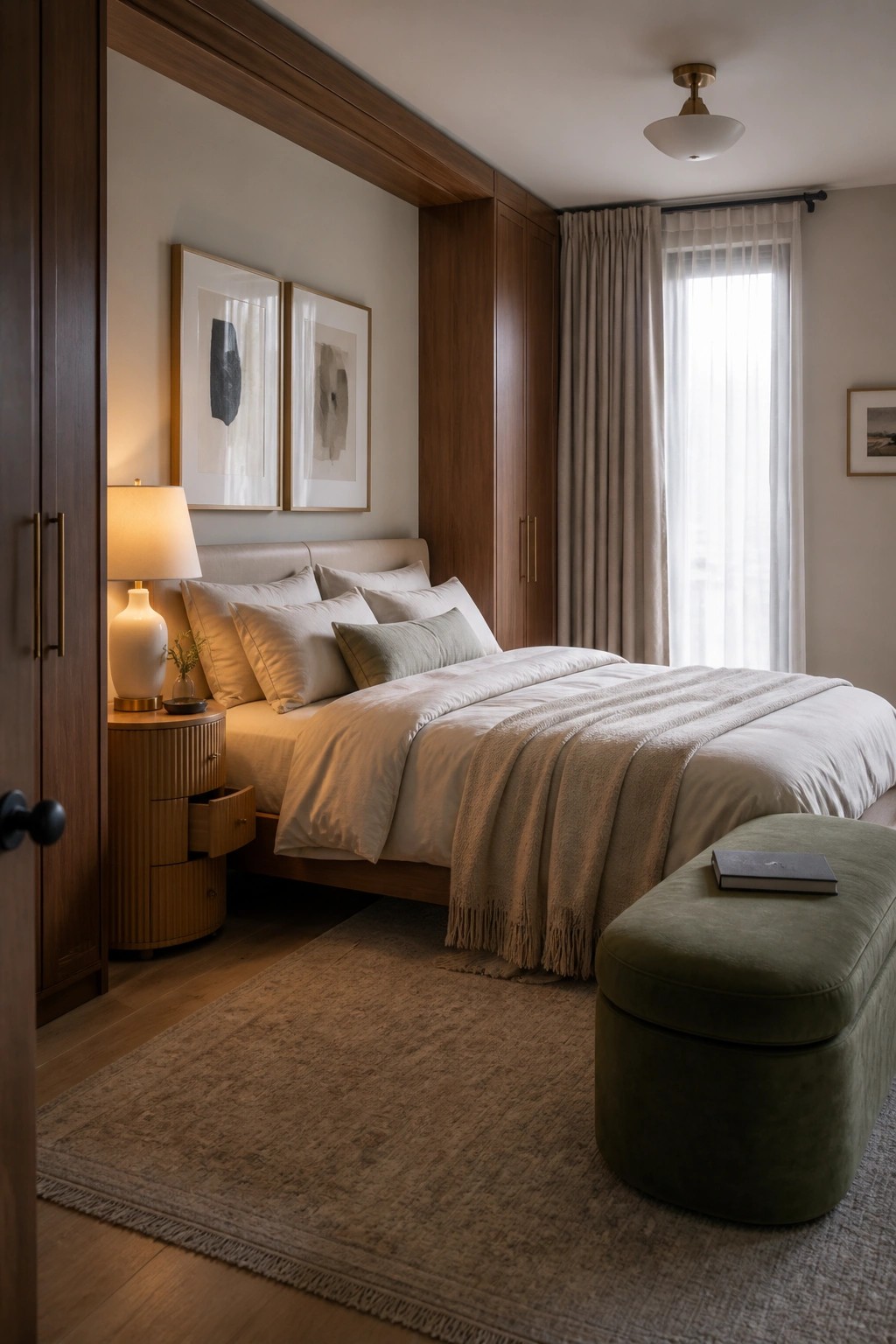
Built-in wood cabinetry on either side of the bed gives the room a settled, cozy feeling. The wood wraps the sleeping area without making it feel closed in, and it adds storage that stays out of the way.
This approach works best in bedrooms that already have wood floors or trim. It pairs well with simple bedding and a few soft layers so the wood stays the main feature rather than competing with too many colors or patterns.
Wood Ceilings In Attic Bedrooms
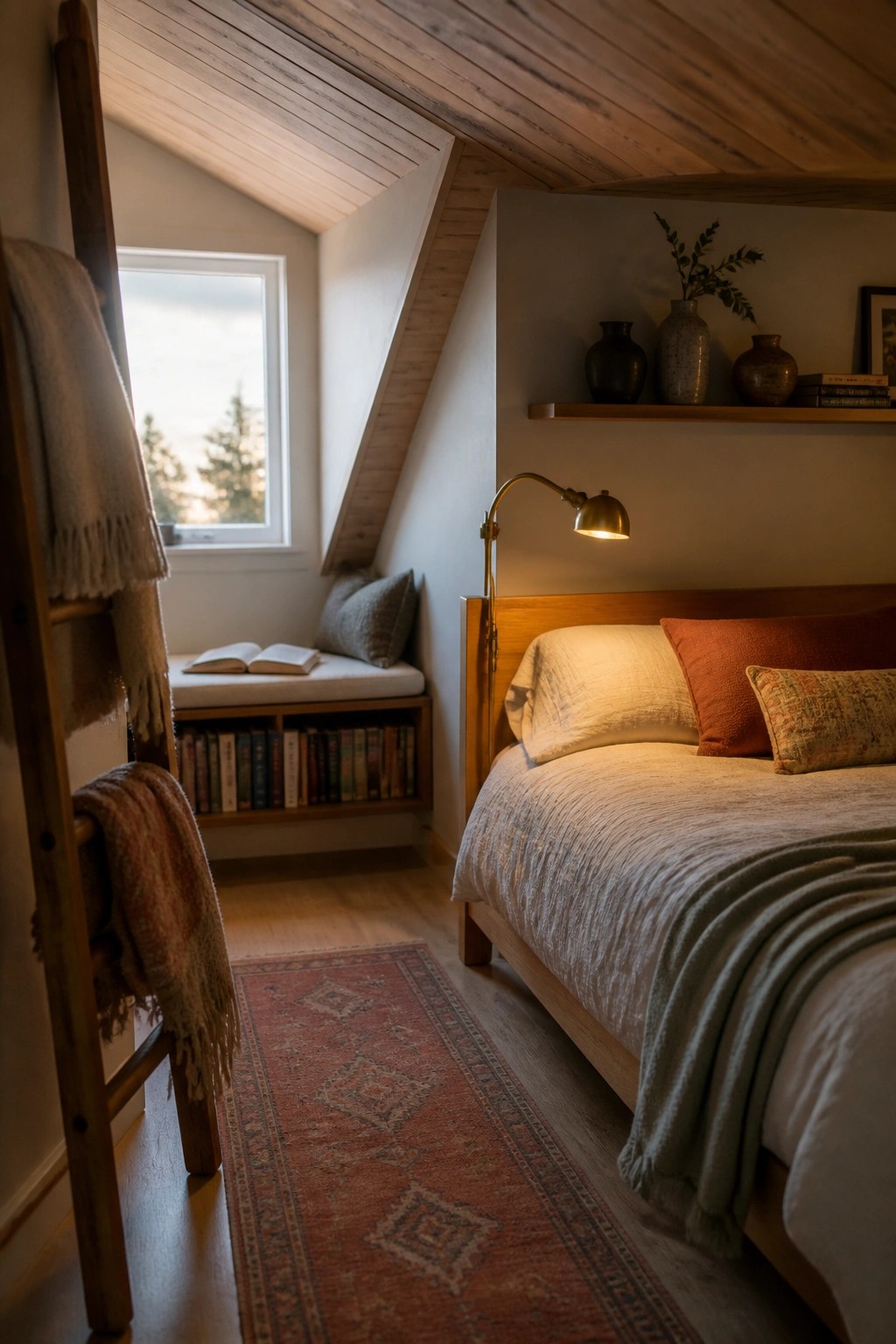
Sloped ceilings often make a bedroom feel tight or unfinished. Running warm wood across them softens the angles and pulls the whole room together without needing much extra furniture.
This approach works well in smaller upstairs rooms where you already have exposed beams or limited headroom. Keep the rest of the surfaces simple and let the ceiling set the tone. A wooden ladder or low bench can add storage without crowding the floor.
Vertical Wood Paneling on Bedroom Walls
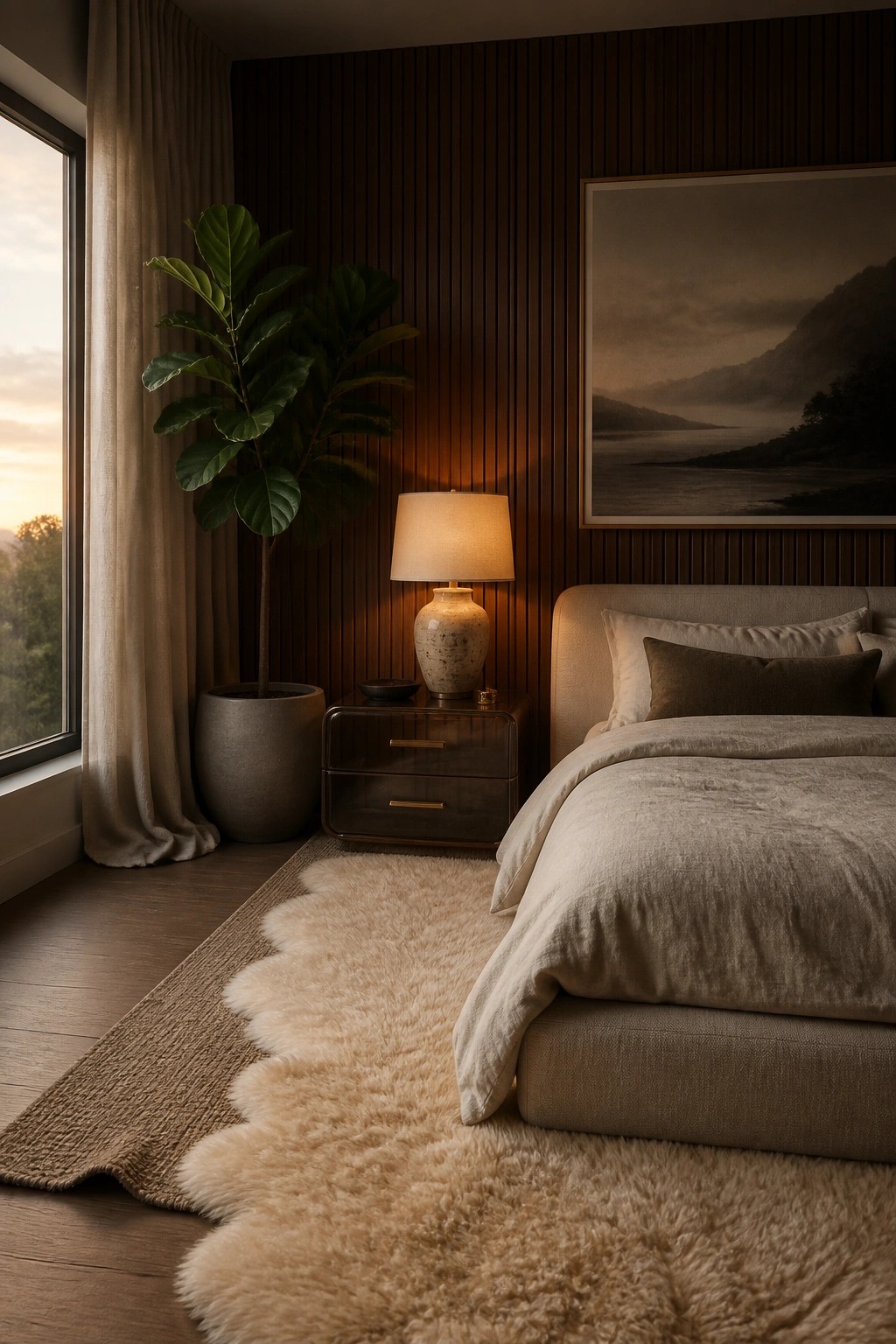
Vertical wood paneling gives a bedroom a grounded, enclosed feeling that works well for a cozy retreat. The rich tone of the wood adds natural depth without needing much extra color or pattern, and it pairs easily with soft bedding and simple furniture.
This approach suits rooms that already have wood floors or want a bit more warmth than plain drywall. Keep the rest of the palette neutral so the paneling stays the main feature, and avoid overcrowding the wall with too many pieces.
Low Wooden Platform Beds
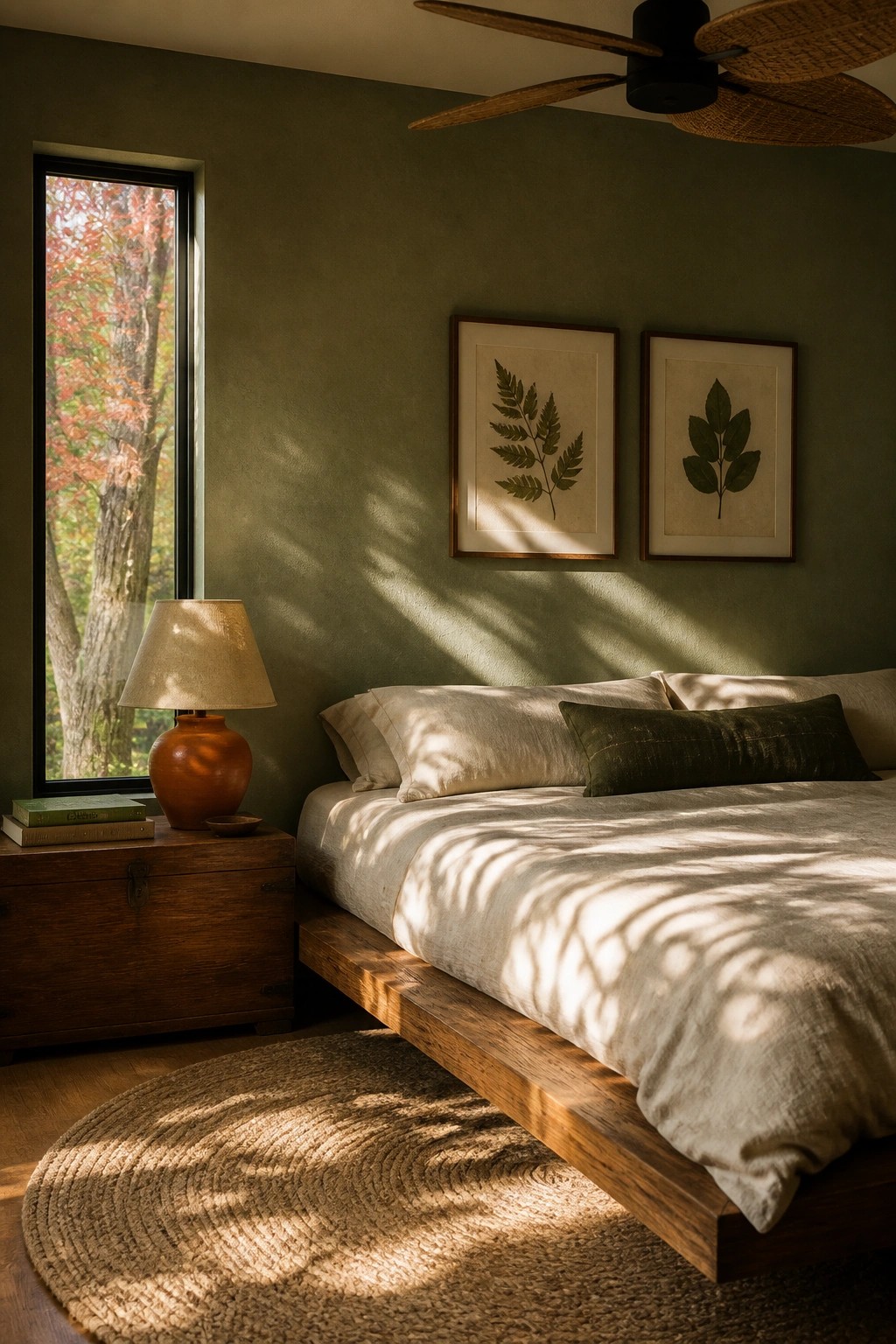
A low wooden platform bed keeps the room feeling open while adding natural warmth through its simple lines and material. It works especially well when the rest of the space stays light, so the wood becomes the main source of coziness without crowding the floor.
This style suits smaller bedrooms or anyone who wants the bed to feel more like part of the room rather than a big block of furniture. Pair it with soft bedding and a few other wood pieces nearby, but avoid stacking too many dark tones that could make the space feel heavy.
Low Platform Beds With Dark Wood Walls
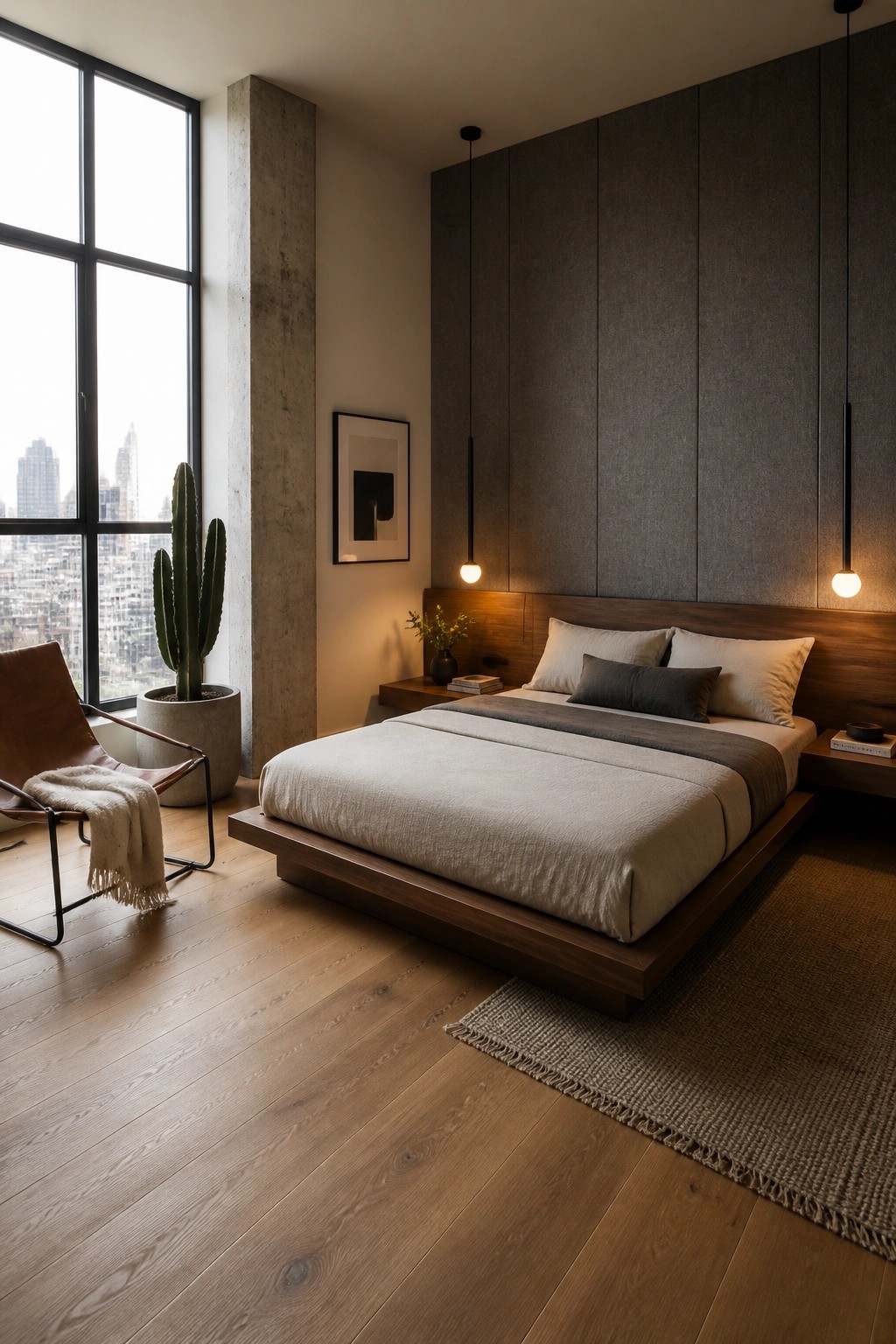
A low platform bed against a dark wood wall gives the bedroom a steady, grounded feel without adding bulk. The warm wood on the floor and bed frame helps soften the darker surface and keeps the space from feeling too stark.
This setup works best in rooms with plenty of natural light or tall ceilings. It suits modern homes where you want simple lines but still need some warmth to make the space comfortable for everyday use.
Built-In Bunk Beds With Storage
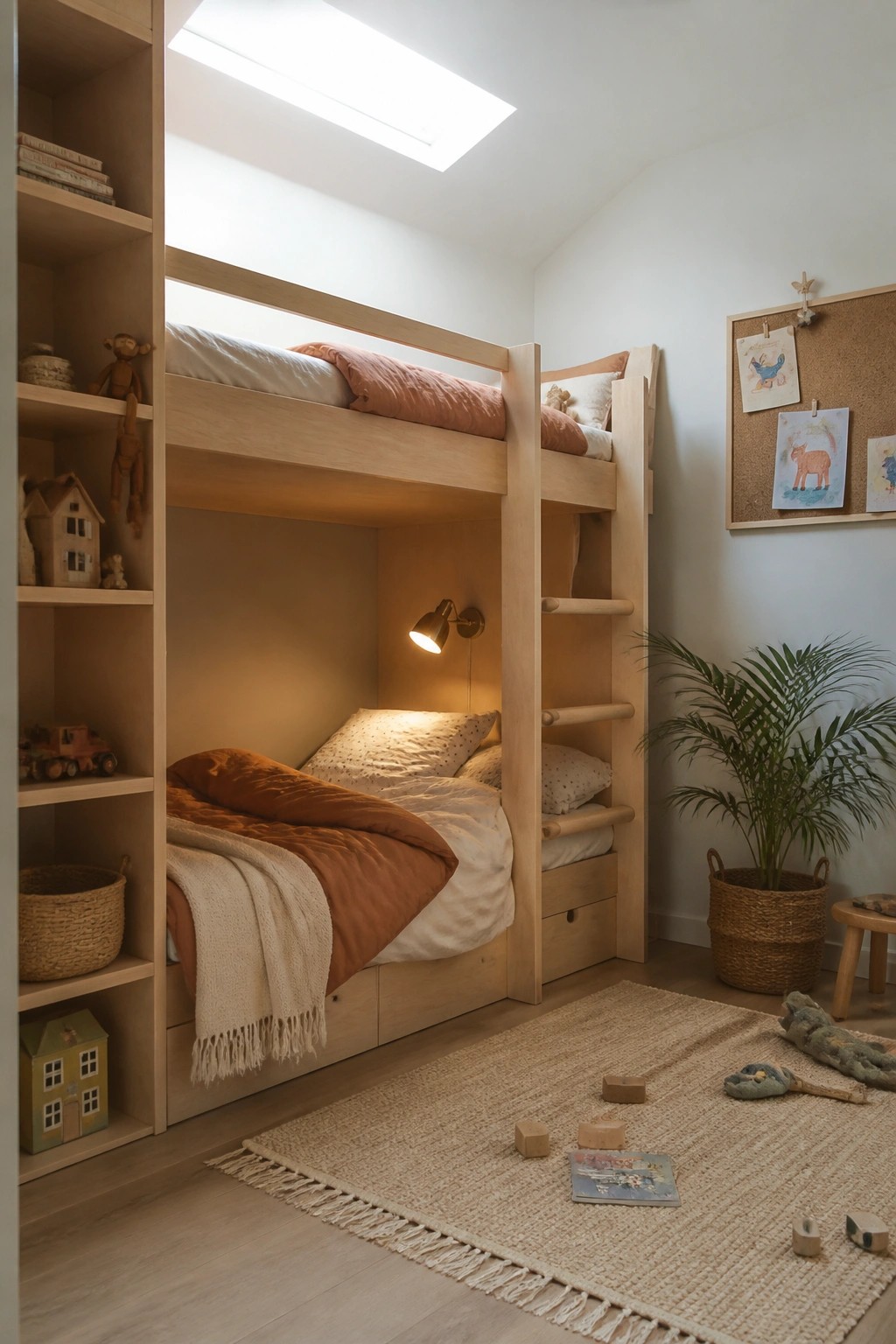
Built-in bunk beds in light wood give a small bedroom both extra sleeping space and places to keep things tucked away. The shelves and drawers built right into the frame cut down on clutter while keeping the room feeling warm and simple.
This works best in kids rooms or guest spaces where you need function without crowding the floor. Choose a pale wood tone and add soft bedding so the whole setup stays calm rather than busy.
Dark Wood Paneling Behind the Bed
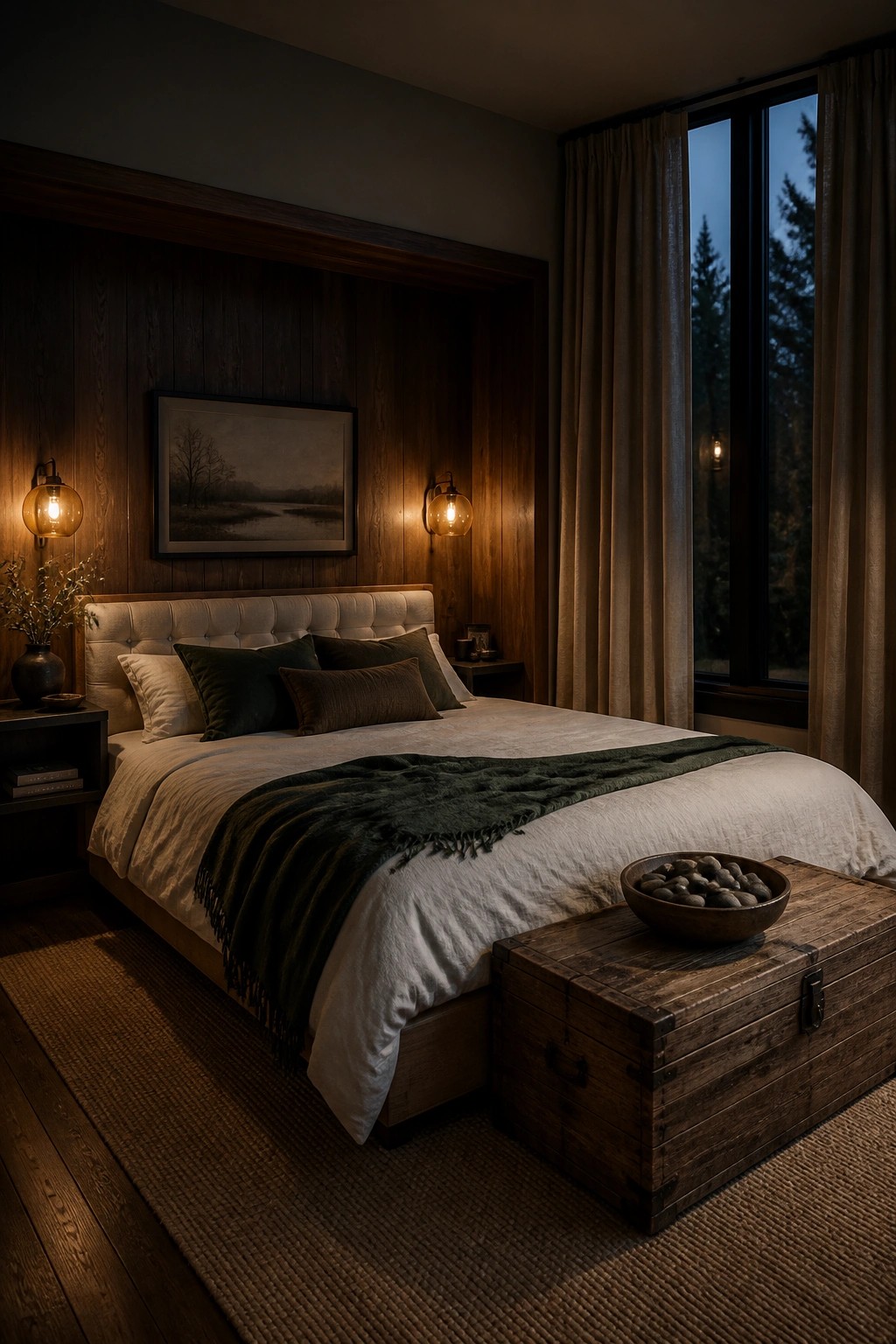
Dark wood paneling around the bed gives the whole room a grounded, enclosed feel that works especially well for bedrooms. It turns the sleeping area into its own little zone without needing extra walls or dividers.
This approach suits rooms that already have some height or decent window light. Pair it with lighter bedding and flooring so the wood stays the main feature instead of closing the space in too much.
Warm Wood Bed Frames for Everyday Comfort
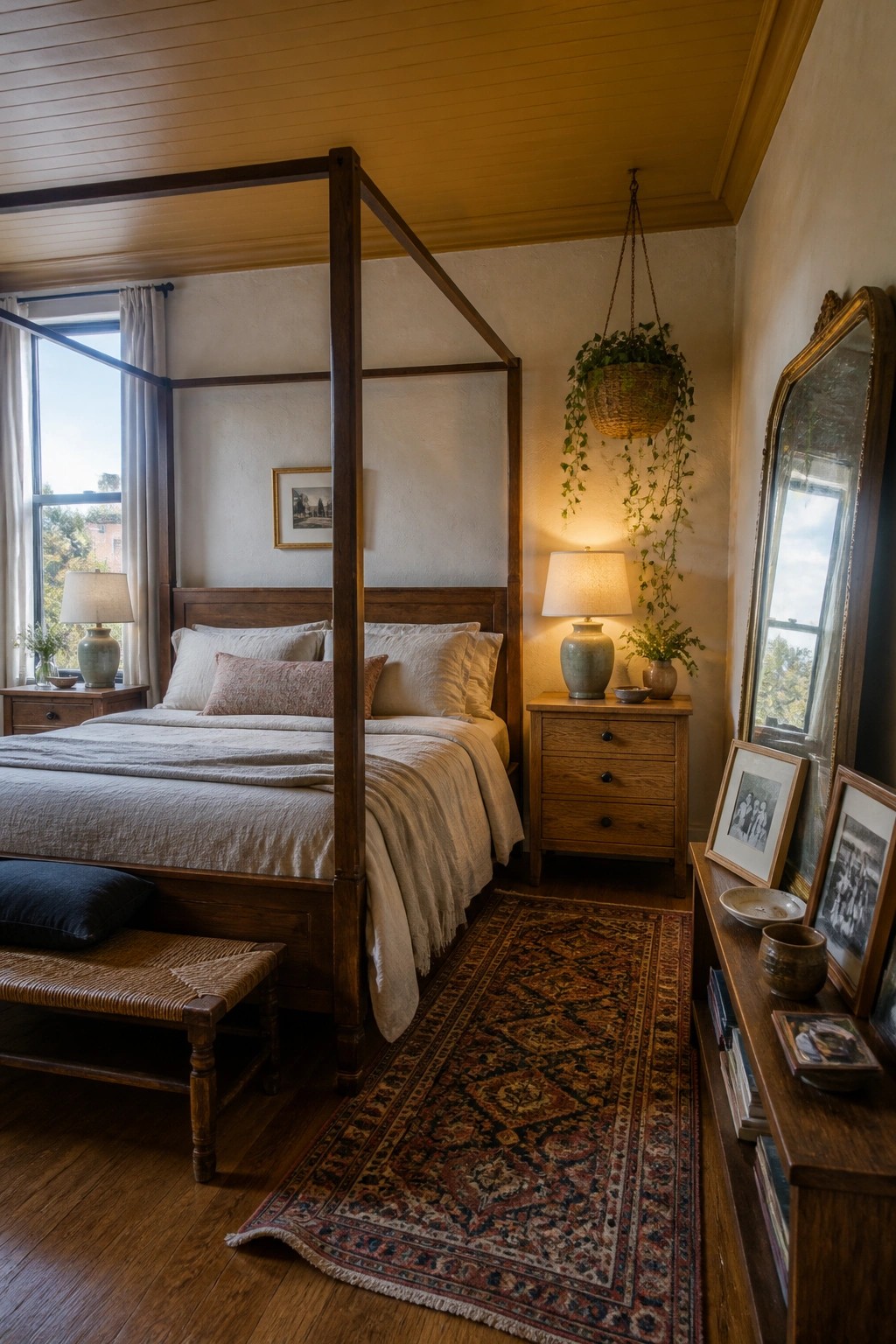
A wooden four-poster bed gives a bedroom a solid base that feels steady and inviting. The dark tone of the frame stands out against lighter linens and walls, which helps the whole space feel warmer without extra layers or heavy colors.
This works best in rooms that already have wood floors or trim. Pair it with matching nightstands and a simple bench at the foot of the bed so the wood tones connect naturally across the space.
Frequently Asked Questions
Q: What wood tone should I choose if my bedroom gets little natural light?
A: Go for lighter oak or maple to reflect what light you have. These shades keep the space feeling open while still adding that warm wood texture. Darker options can close things in fast.
Q: How do I mix wood furniture with my existing metal bed frame?
A: Pick one or two wood pieces like a dresser or bench to balance the metal. Stick to similar wood tones throughout so nothing fights for attention. This keeps the cozy feel without a mismatched look.
Q: My wood floors already look worn. Should I replace them for this style?
A: No need to rip them out. A fresh coat of light stain revives the surface and ties into the warm theme. Add a soft rug in the center to hide any deeper scratches.
Q: Can I bring in wood details without a full furniture overhaul?
A: Try wooden wall panels on one accent wall or simple floating shelves. These small touches add the retreat vibe quickly. Keep the rest of the room light so the wood reads as intentional.
