

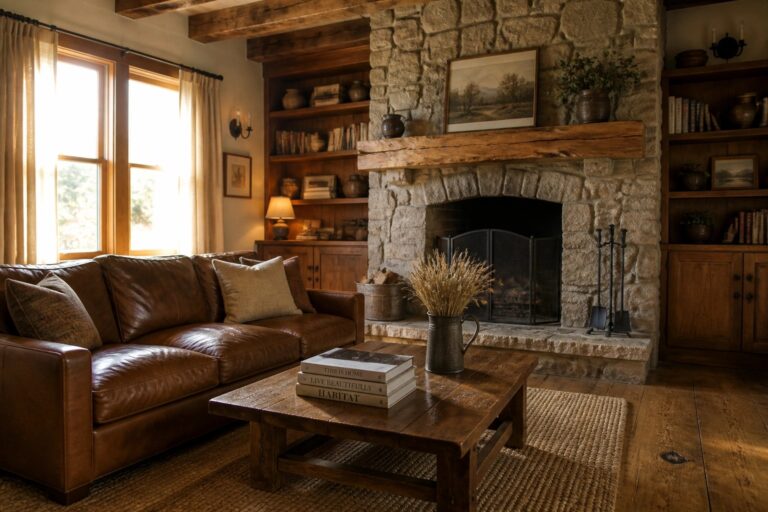
Rustic wood has a way of softening hard angles in a room while still letting the architecture show through clearly.
I have seen it pull together mismatched furniture more effectively than any coat of paint ever could, because the tones sit naturally against leather, linen, and stone.
The key is choosing pieces that already carry some age, since fresh cuts can look too sharp until they settle into daily use.
Balance matters most.
In my own home I usually start with the floor or a single accent wall before adding larger built-ins, just to see how the light moves across the surface first.
Exposed Ceiling Beams
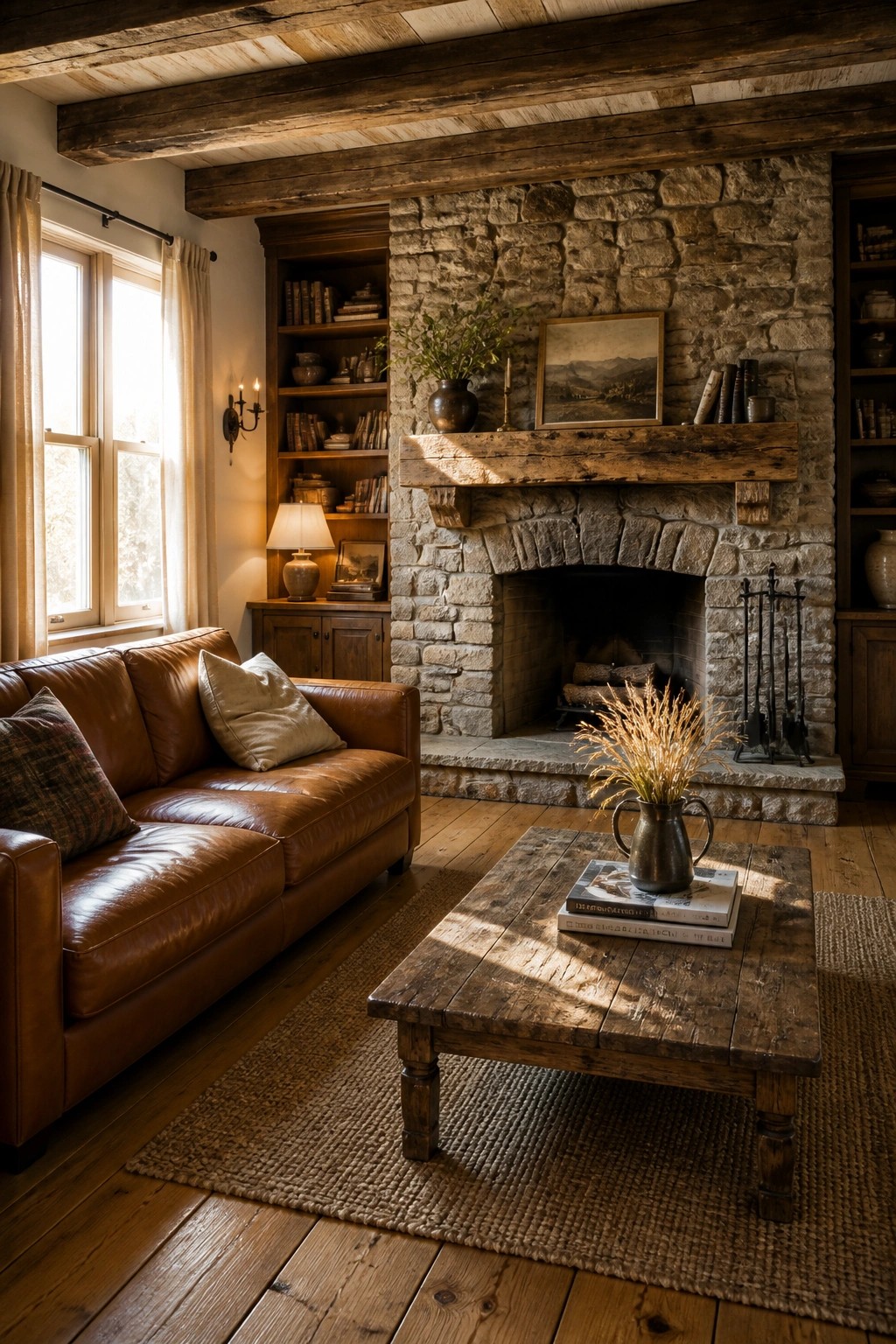
Exposed ceiling beams give a room that solid, grounded feel that works especially well in rustic wood interiors. They add structure and warmth without needing much else to make the space feel complete. In this living room the dark beams sit against lighter walls and tie the whole look together with the wood floor and mantel.
They suit homes with higher ceilings best, where the beams can sit naturally without crowding the space. Keep the finish simple and match the tone to your other wood elements so everything reads as one material family rather than a collection of accents.
Rustic Wood Kitchen Islands
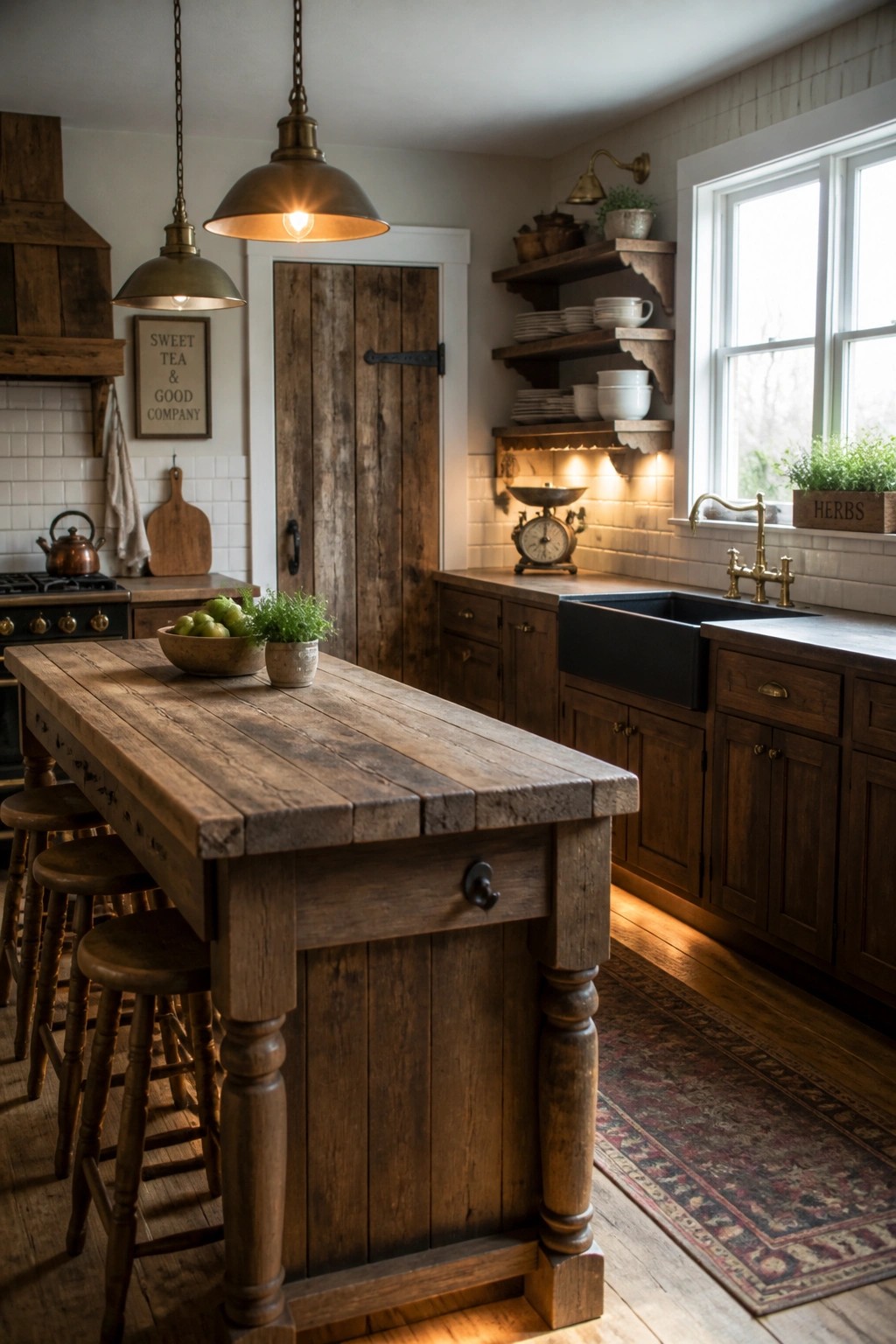
A big wood island often becomes the heart of a kitchen because it adds warmth and a place to gather without much extra effort. The grain and texture keep the space feeling lived in rather than styled.
This idea works best in homes that already lean toward natural materials. Keep the island simple, match the wood tone to nearby cabinets or floors, and avoid crowding it with too many decorations so it stays practical day to day.
A Wooden Headboard For Natural Warmth
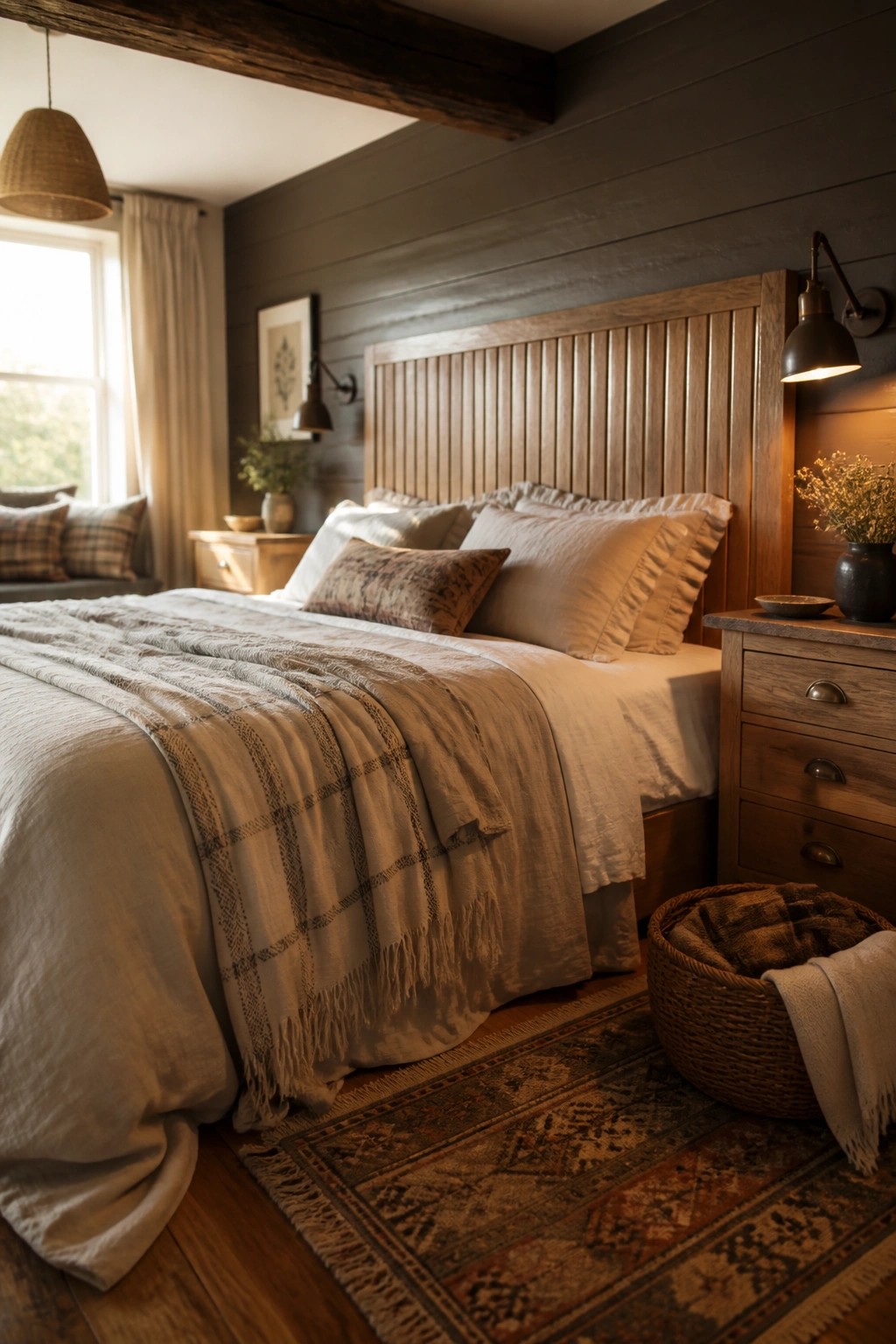
A wooden headboard gives a bedroom a solid focal point without needing extra layers of decoration. The grain and tone add texture that feels steady next to darker walls and soft bedding.
This choice works well in homes that already lean rustic or simple. Keep the surrounding fabrics light and let the wood carry the weight so the room stays balanced rather than heavy.
A Solid Wood Dining Table As The Anchor
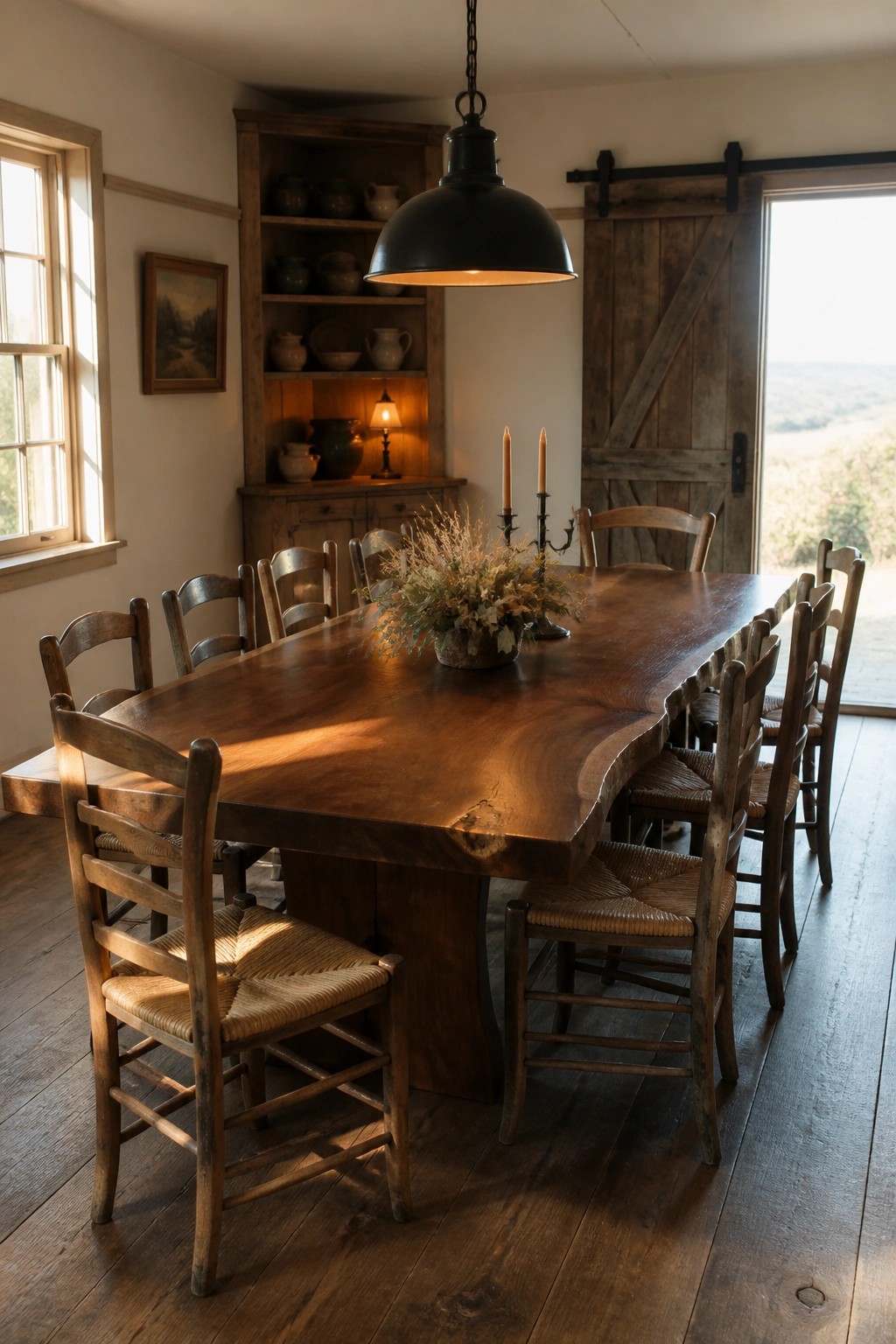
A big solid wood table gives a dining room real presence without needing much else around it. The natural grain and weight of the wood do most of the work, especially when the room has wood floors and simple walls.
This works best in homes that already have some wood tones and want a practical centerpiece for daily meals. Keep the chairs simple and the rest of the furnishings light so the table stays the main feature.
Built-In Storage Benches For Entryways
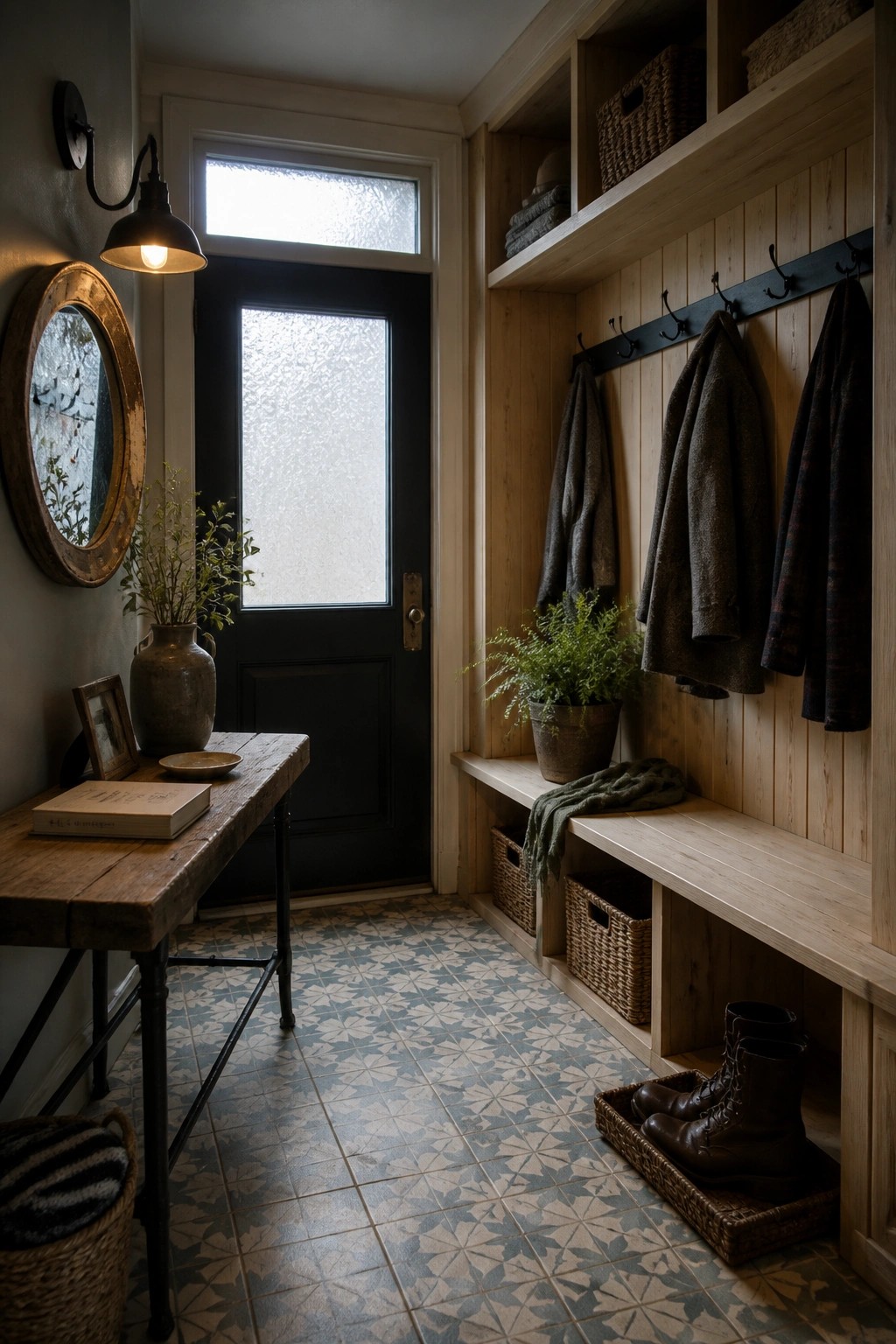
Many homes gain a lot from adding a simple built-in bench with hooks and baskets right inside the door. It keeps everyday items off the floor while giving the space a sturdy, practical feel that matches rustic wood styles.
This works best in smaller entry areas or mudrooms where traffic is heavy. Use a natural wood finish and keep the design low so it does not crowd the room.
Built-In Wood Shelving For Bathroom Storage
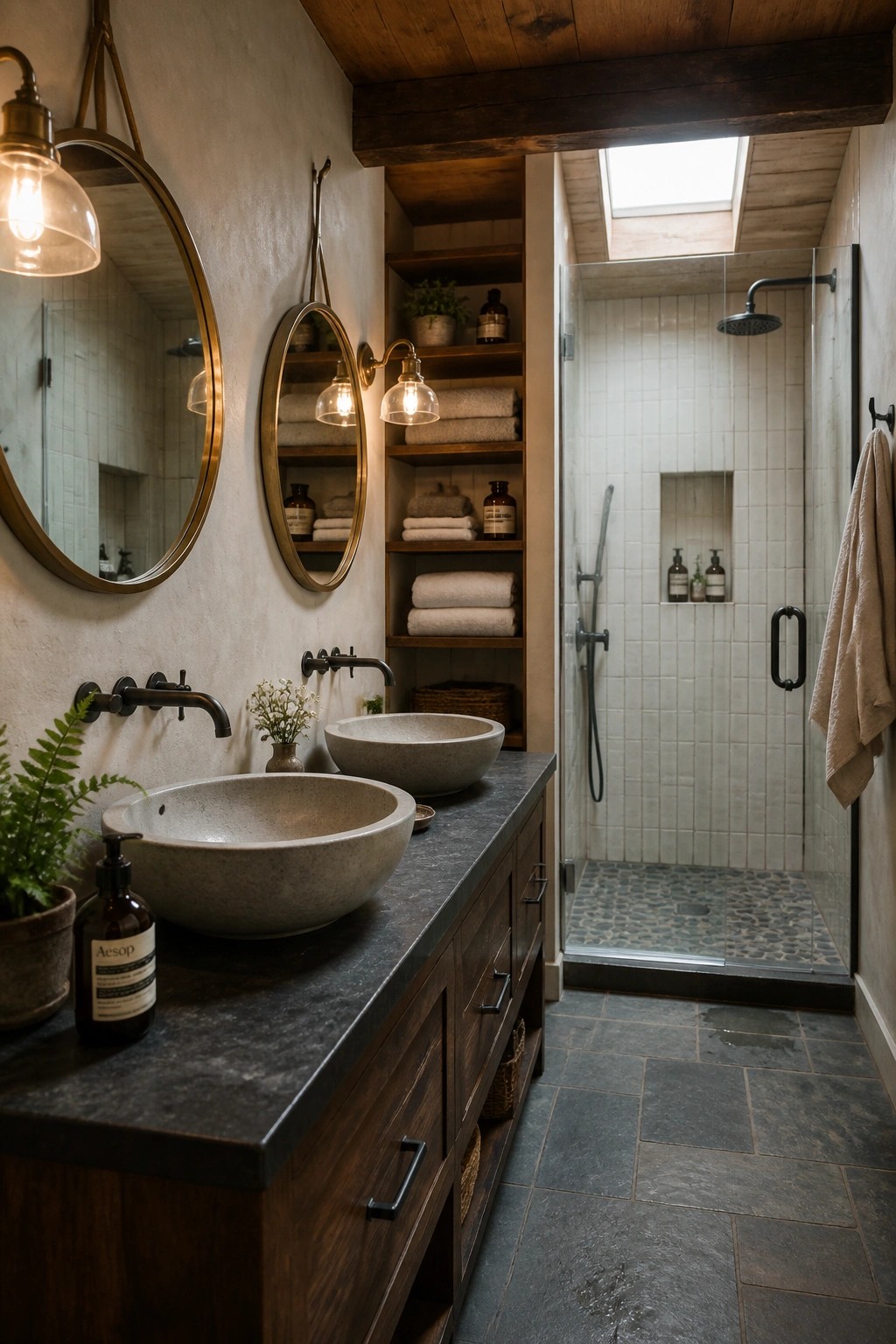
Built-in wood shelves work well in bathrooms because they tuck storage right into the wall without taking up floor space. The wood adds that warm rustic feel while keeping towels, bottles, and other items neatly on display instead of scattered across the counter.
This approach suits smaller bathrooms or any space where you want the wood tones to feel intentional rather than added on later. Place the shelves near the vanity or in a recessed wall area, and choose a finish that handles moisture. Seal the wood well and keep the shelves at a comfortable height for daily use.
Rustic Wooden Desks For Everyday Workspaces
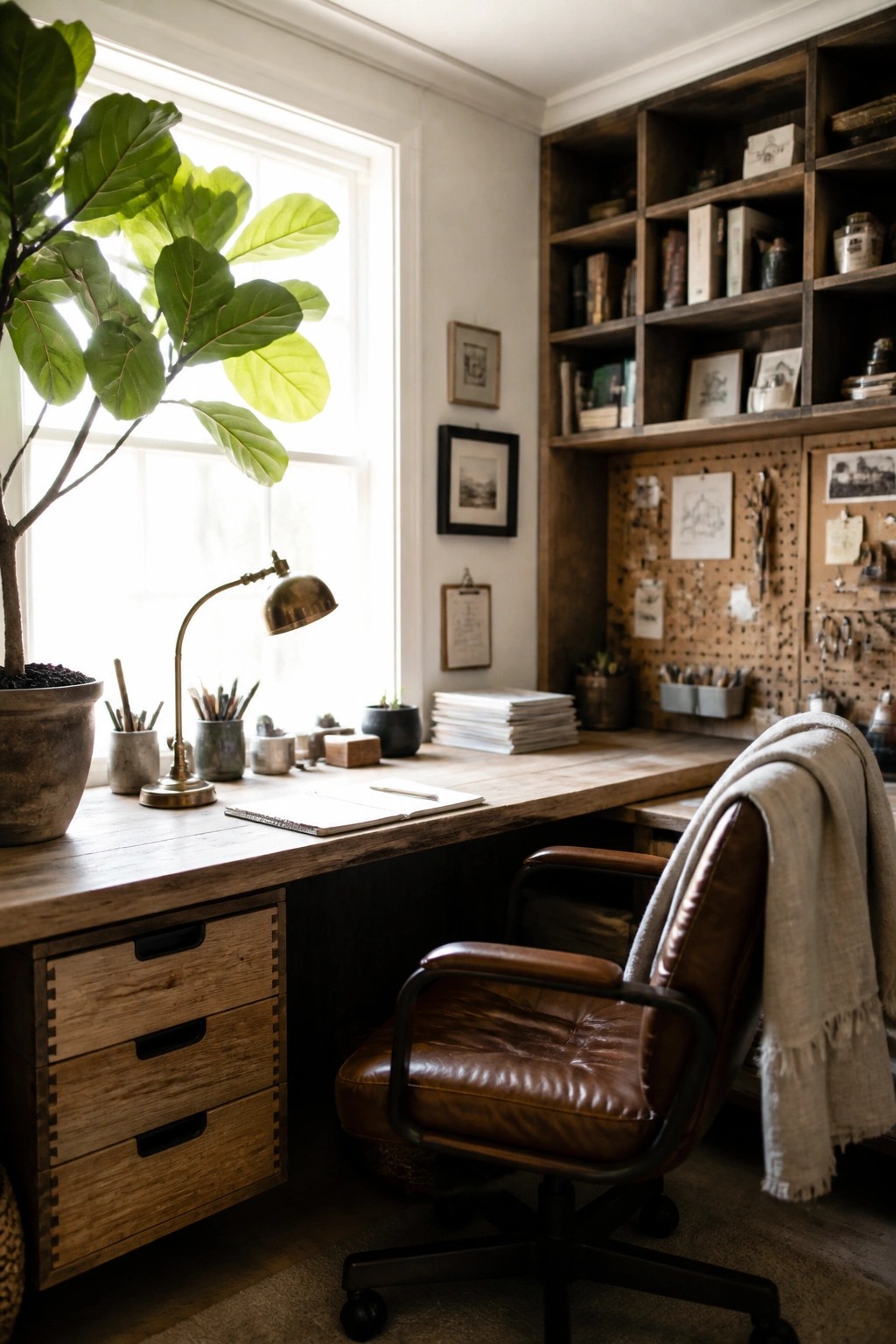
A large wooden desk with built-in drawers gives a workspace real presence without extra pieces. The natural grain and simple construction keep the room feeling grounded and useful at the same time.
This approach works well in smaller rooms where you need both a work surface and storage in one spot. Match the wood tone to nearby shelves or trim so the whole area reads as one calm zone rather than a collection of separate items.
Wood Paneling in a Nursery
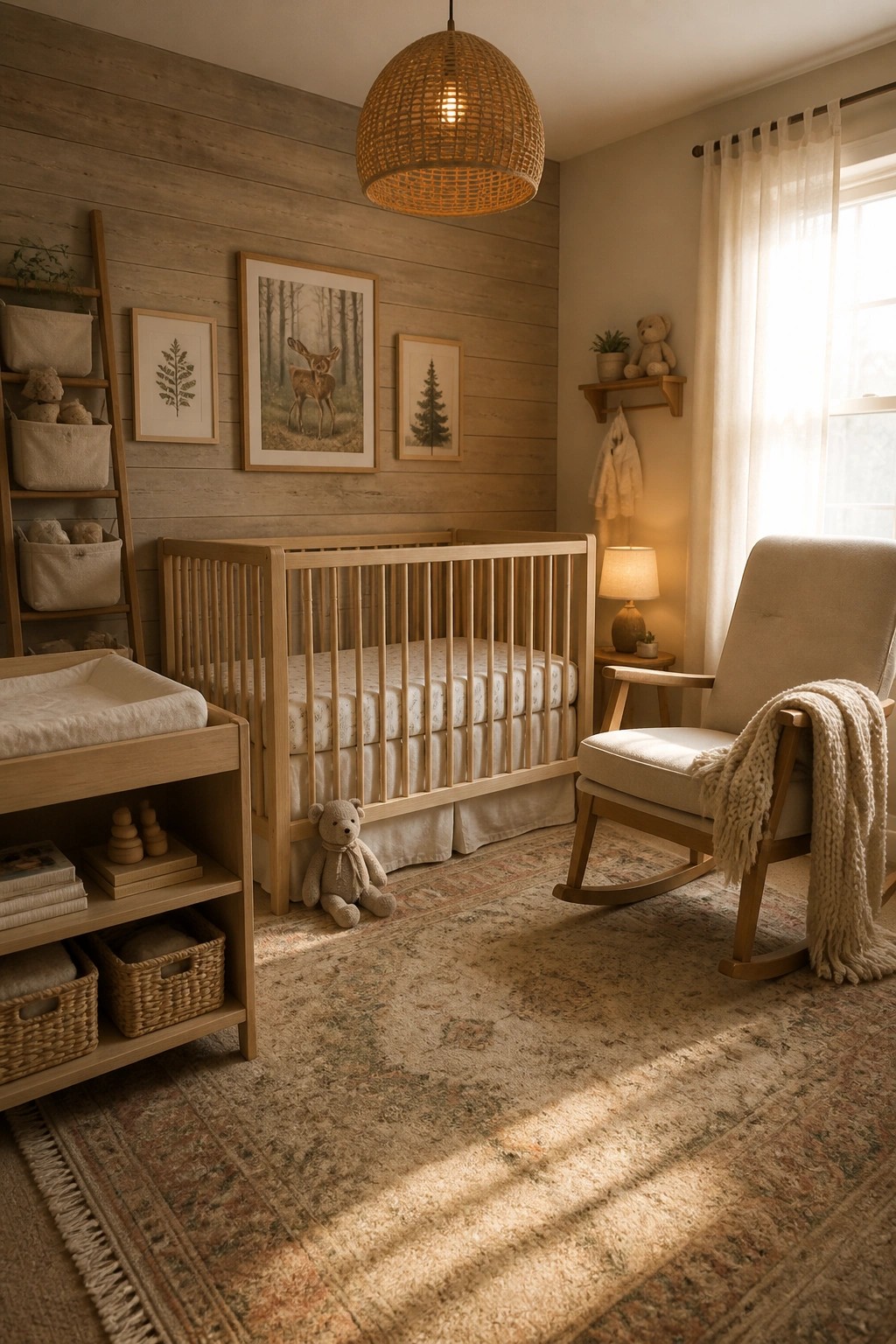
Wood paneling works well in a nursery because it adds texture and a natural feel without making the room feel heavy. The light tone keeps things calm while the grain adds interest that lasts as the child grows.
This approach suits smaller rooms or spaces with plenty of natural light. Keep the rest of the furnishings simple so the wood stays the main feature rather than competing with too many patterns or colors.
Rustic Wood Countertops In Utility Spaces
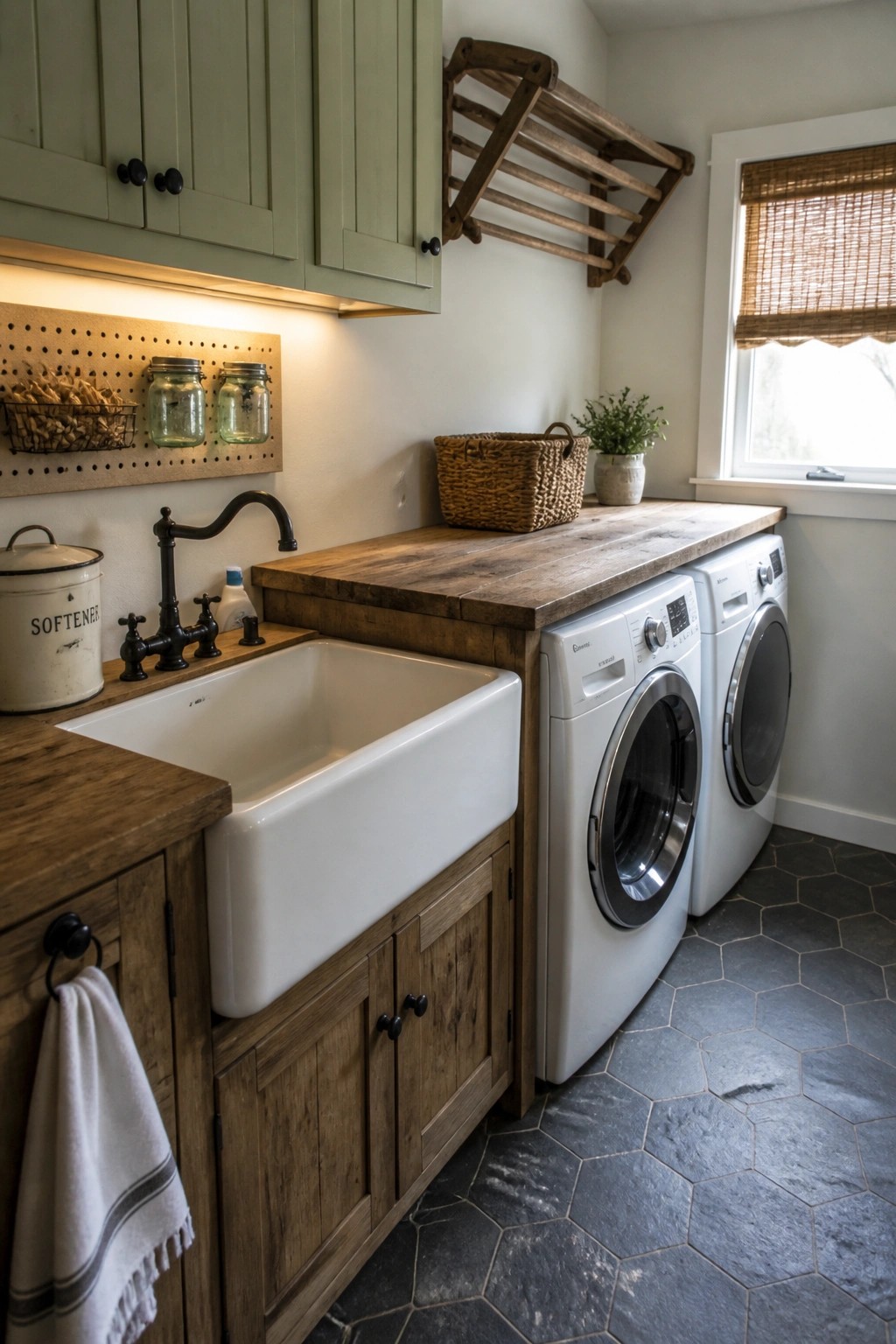
Many people skip wood in laundry rooms because they assume those spaces need to stay plain and practical. Adding a thick wood countertop and matching lower cabinets brings warmth and makes the room feel more connected to the rest of the house.
This approach works best in homes that already lean rustic or traditional. Keep the wood finish simple and pair it with basic black or oil-rubbed fixtures so the surface does not compete with the appliances.
Wood Covered Porches
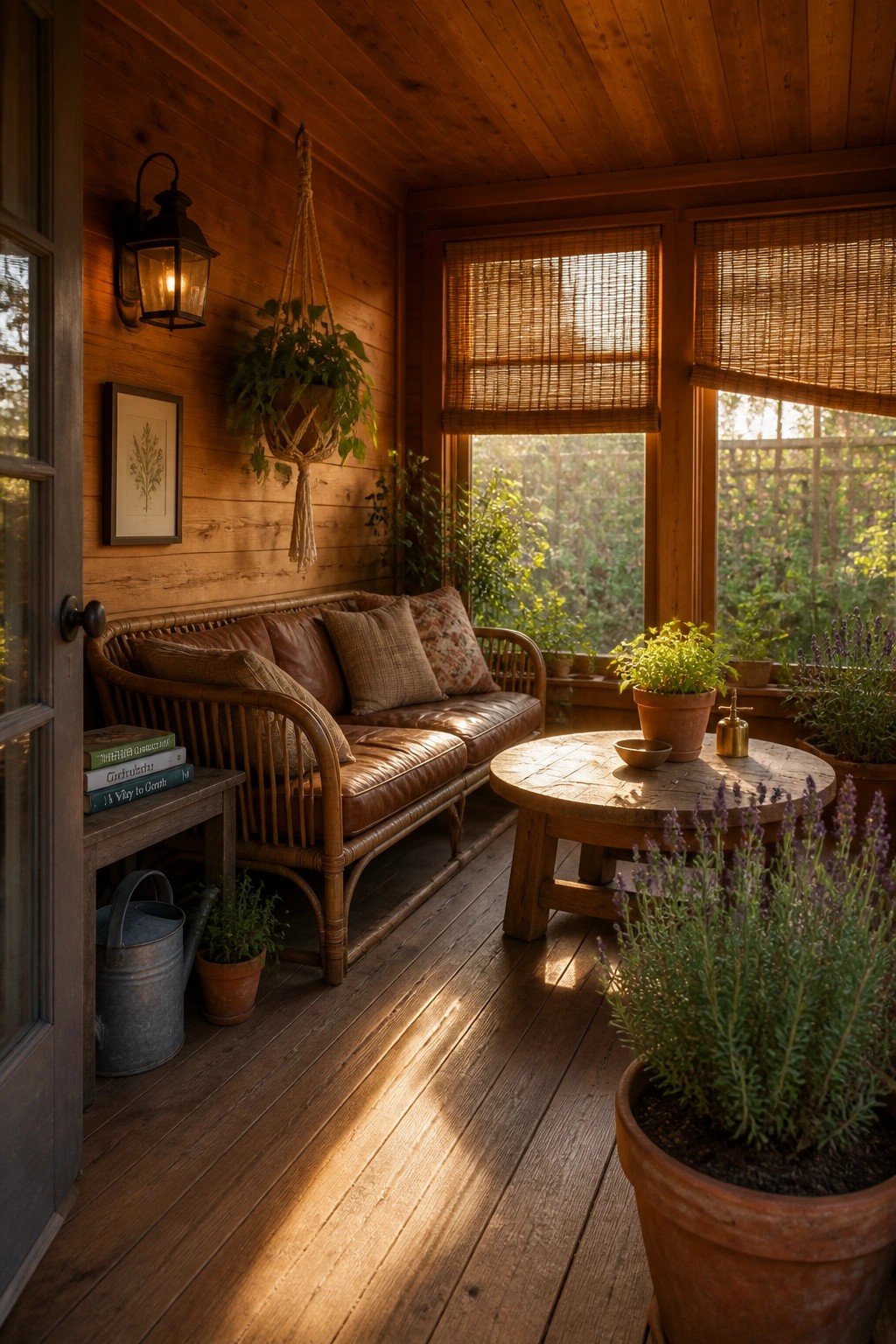
Wrapping a porch in wood gives it a settled, comfortable feel that holds up over time. The ceiling, walls, and floor all share the same material, which keeps the space looking simple instead of busy.
This works best on homes that already use wood inside or on those that want an easy transition from indoors to out. Stick with basic seating and a few plants rather than adding too many extras.
Rustic Wood Paneling Along Stair Walls
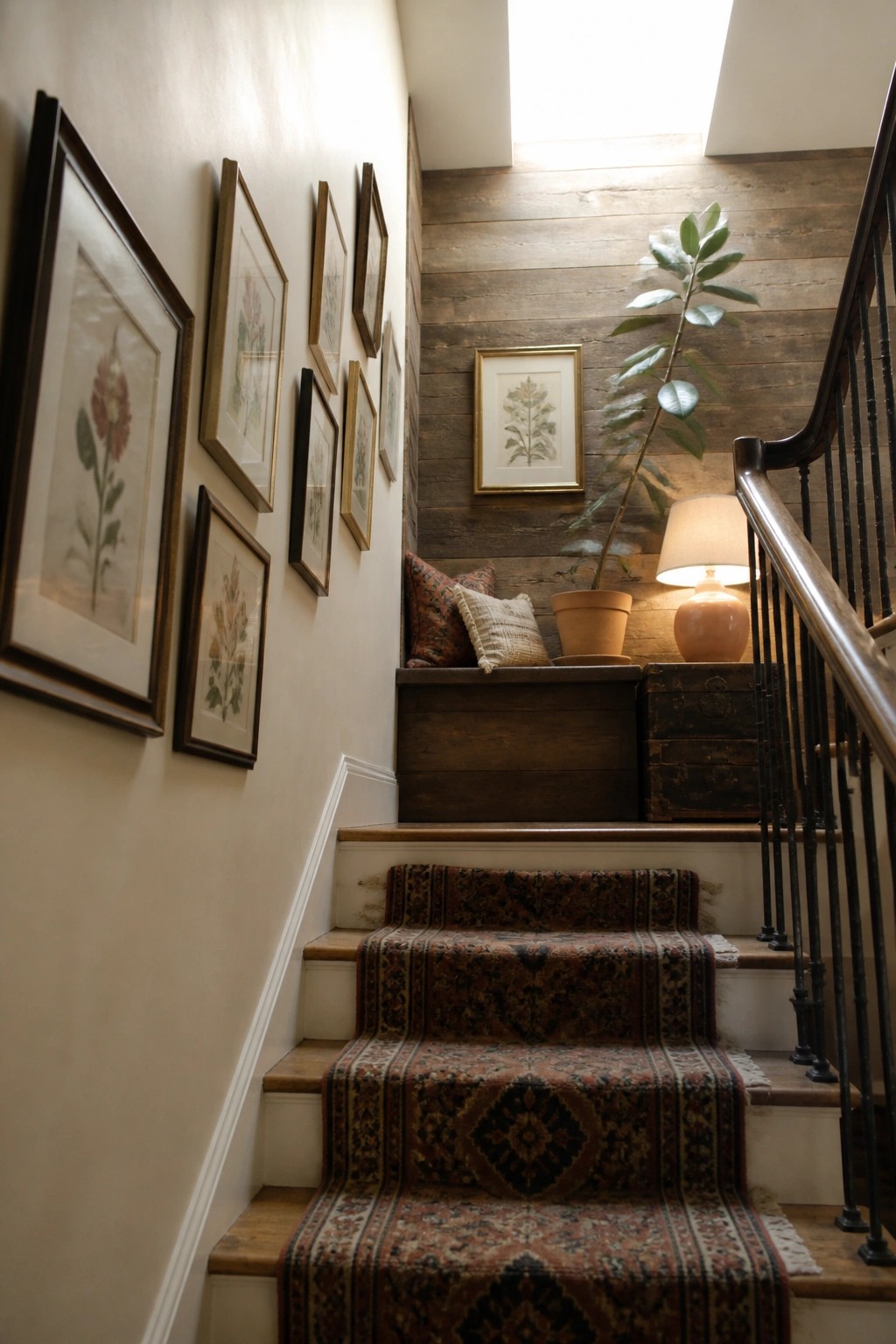
Many older homes already have stairwells that feel a bit blank. Covering one wall in simple wood planks gives the space warmth without any extra work. It also ties in nicely with the wood on the stairs and trim.
This approach works best in homes that already lean traditional or farmhouse. Keep the planks in a medium or dark tone so the space does not feel too bright, and let the wood run the full height of the wall for the cleanest look.
Rolling Ladders With Open Shelving
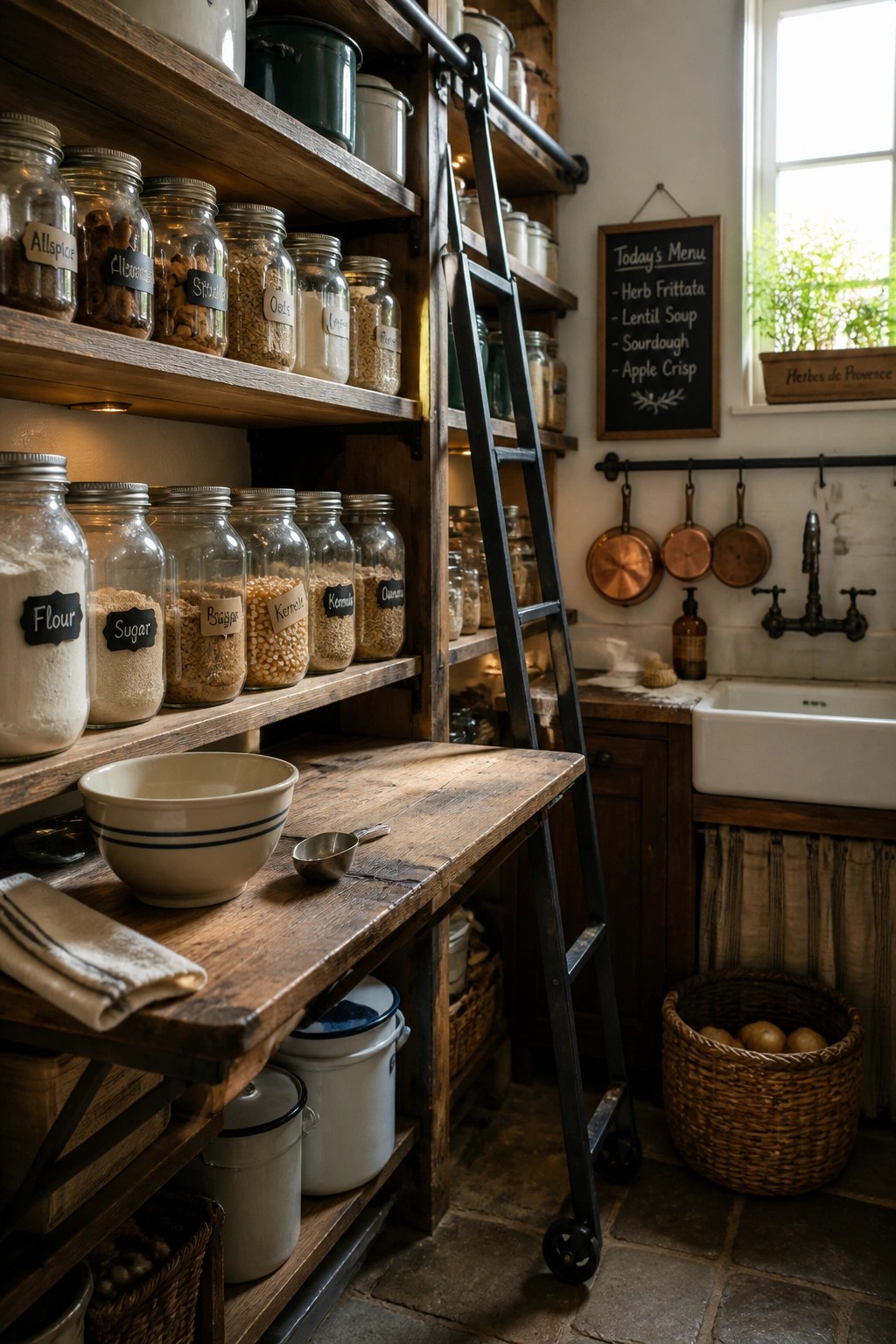
Open wooden shelves can hold a lot, but reaching the top rows often turns into a hassle. A rolling ladder fixes that by giving easy access without needing extra cabinets or step stools nearby.
This setup works best in kitchens or pantries where you store jars, dry goods, and supplies on display. Keep the ladder on a track so it stays out of the way when not in use, and make sure the shelves are sturdy enough to handle the weight.
Built-In Wood Shelves With Bench Seating
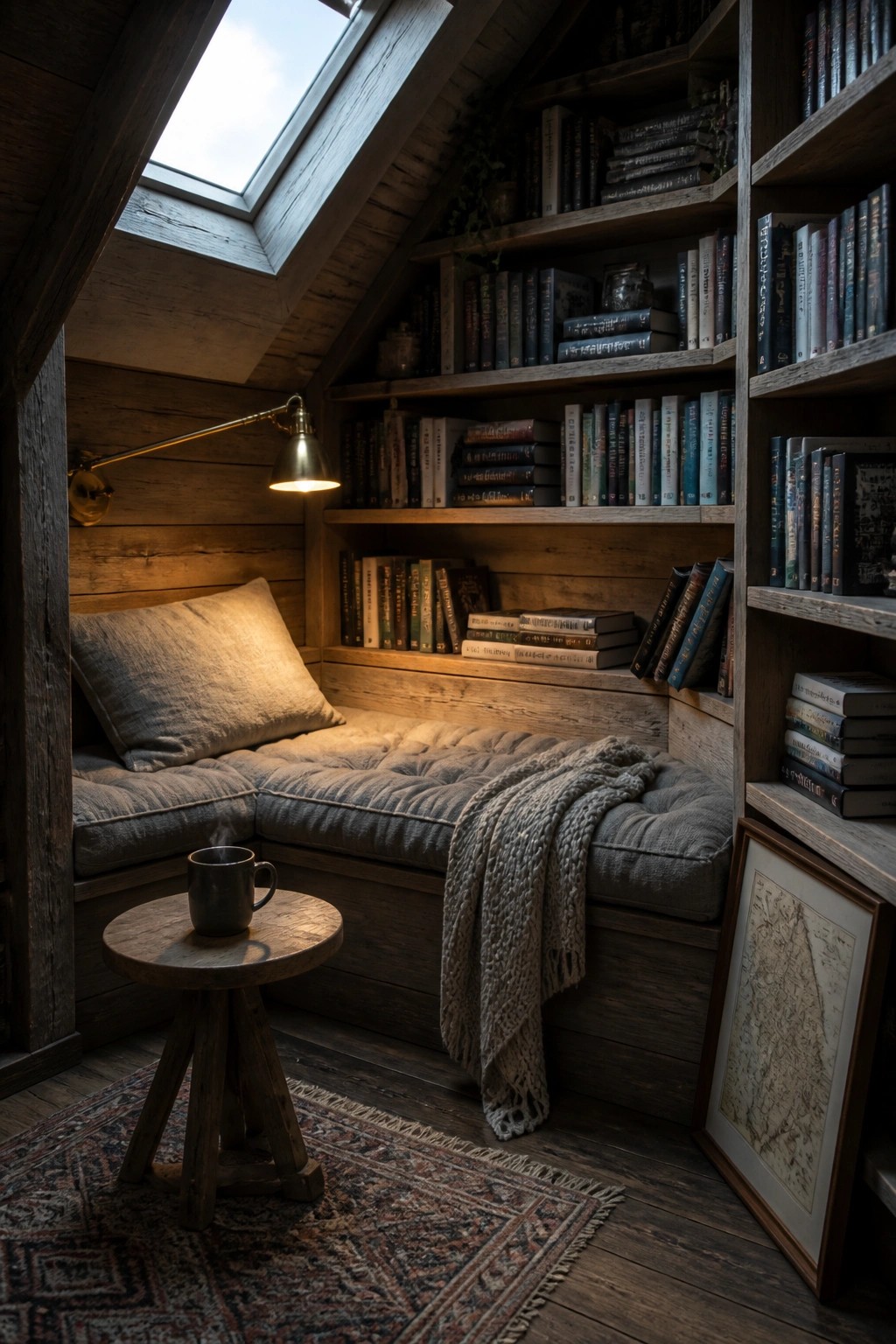
Built-in shelves paired with a bench make good use of awkward spaces like attics or rooms with sloped ceilings. The wood ties everything together and gives plenty of storage without crowding the floor.
This setup works best in smaller homes or cabins where you want a quiet corner for reading. Keep the bench cushion simple so the wood remains the main feature.
Cane Webbing On Wood Bed Frames
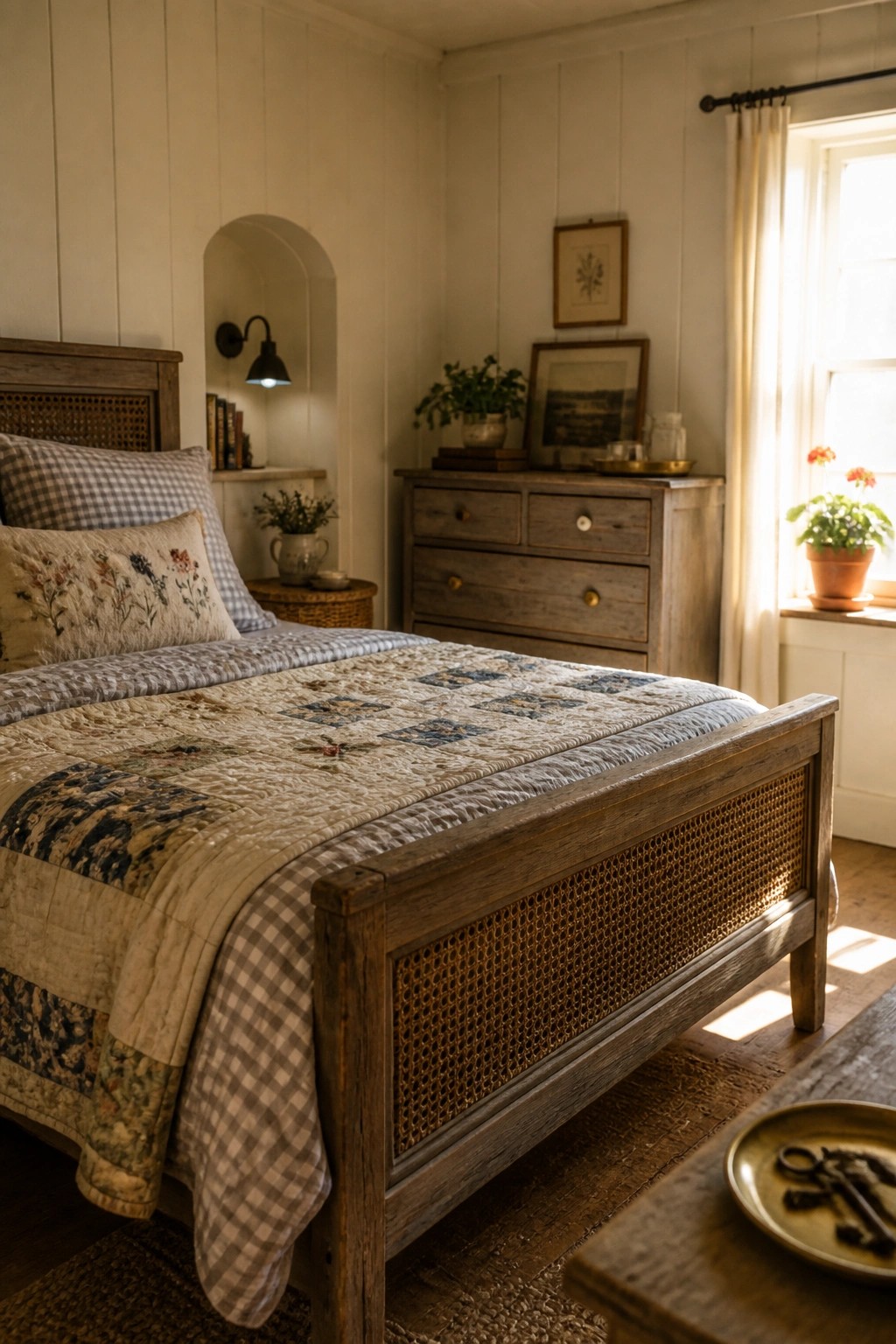
Cane webbing gives a wood bed frame some texture without making it feel heavy. It breaks up the solid look of the wood and adds a bit of pattern that pairs well with simple bedding and soft colors.
This detail works in bedrooms that already have wood furniture and white walls. Keep the rest of the room fairly plain so the cane shows up without competing with too many other textures or patterns.
Add A Center Island For Extra Storage
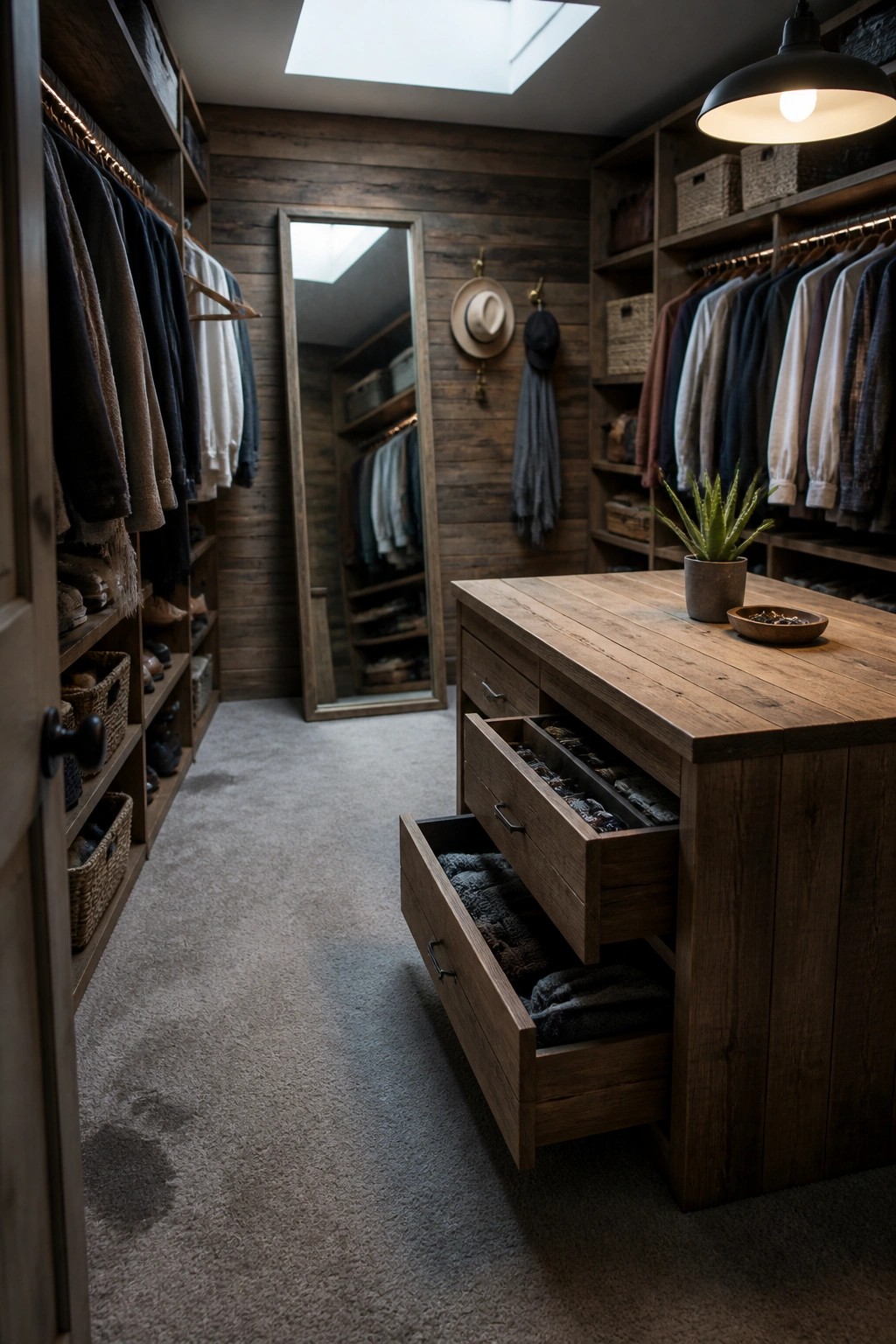
A center island adds useful storage without crowding the walls. The drawers give you a place for folded items and smaller pieces that might otherwise end up on shelves or in bins.
This setup works well in medium to large walk-in closets where you need more than just hanging space. Keep the island simple in wood so it blends with the rest of the room instead of standing out.
Rustic Wood Console Vanities
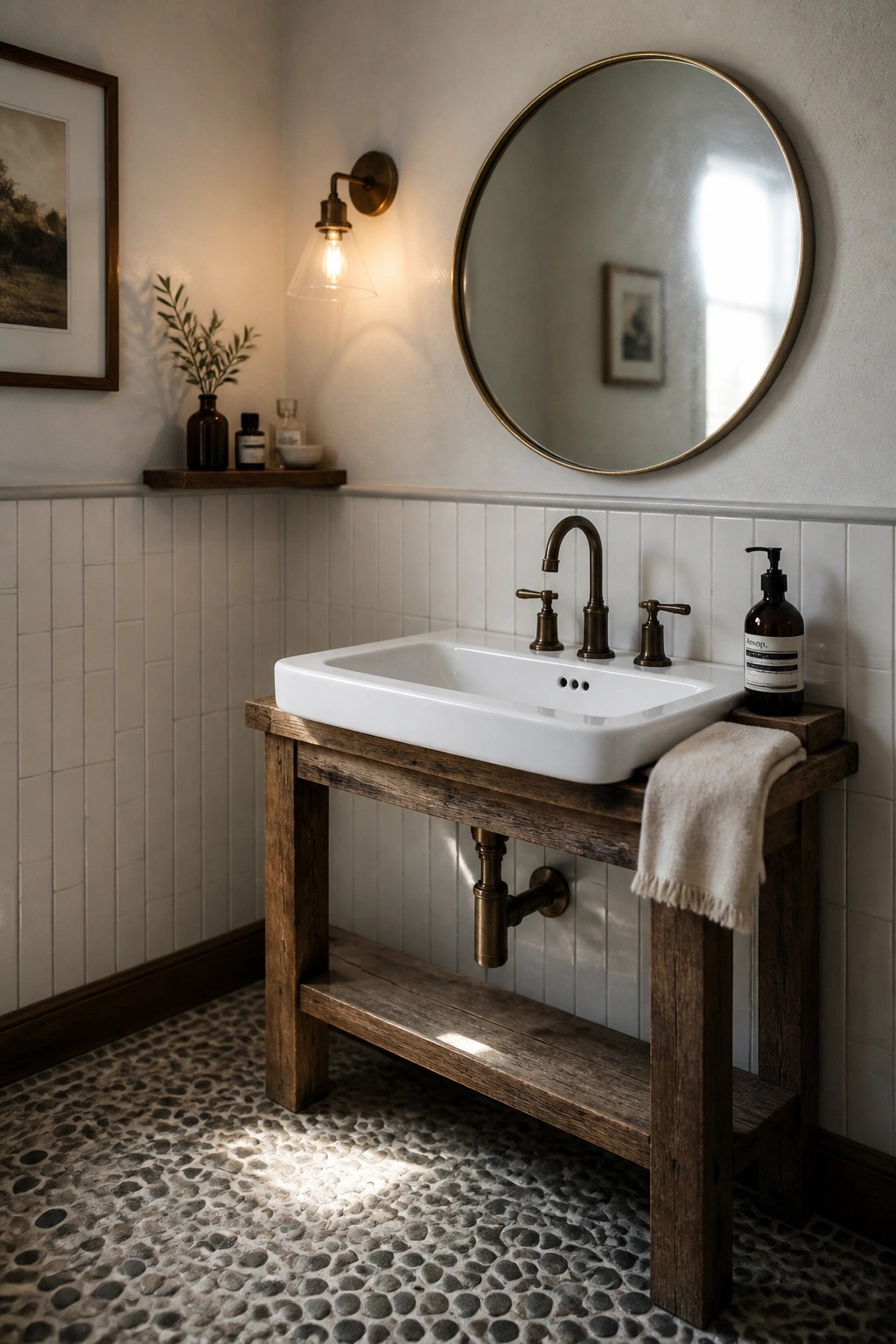
A wooden table base under the sink gives a bathroom an easy rustic feel without needing custom cabinetry. The simple legs and open lower shelf keep the space from feeling boxed in while adding natural texture that works with both old and newer homes.
This approach suits smaller bathrooms best where you want storage without bulk. Seal the wood well if it will see regular water, and pair it with a standard sink size so everything lines up cleanly.
Round Tables With Built In Bench Seating
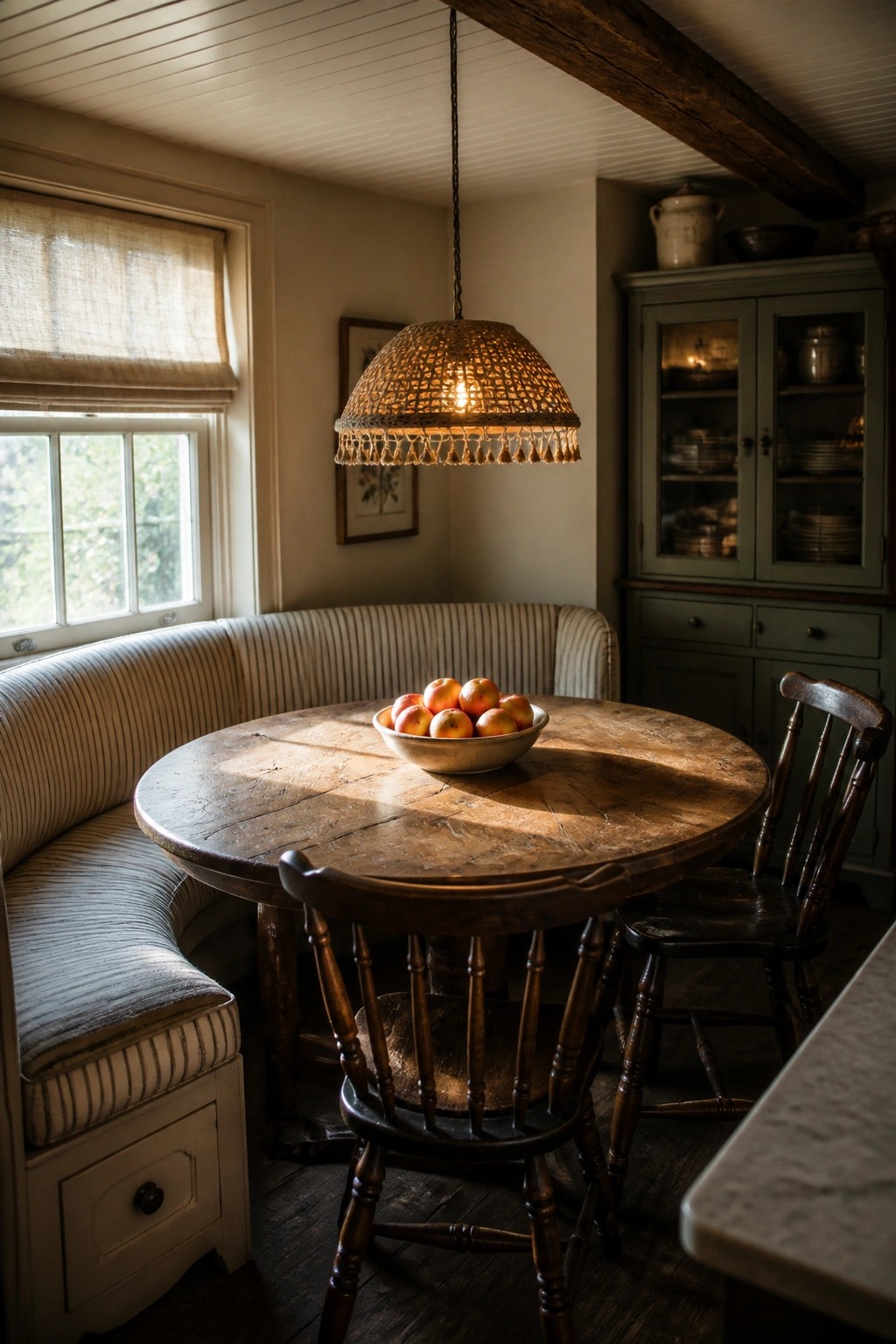
A round wood table works especially well when you add a curved built in bench along one side. It softens the look of the room, saves floor space, and gives the area a settled, comfortable feel that straight chairs alone cannot match.
This setup suits smaller dining spots or open kitchens where you want seating for several people without crowding the floor. Keep the bench simple in a neutral fabric and let the wood table carry the rustic character. Just be sure the curve follows the table shape closely so the whole arrangement feels balanced rather than forced.
Add A Wooden Home Bar Counter
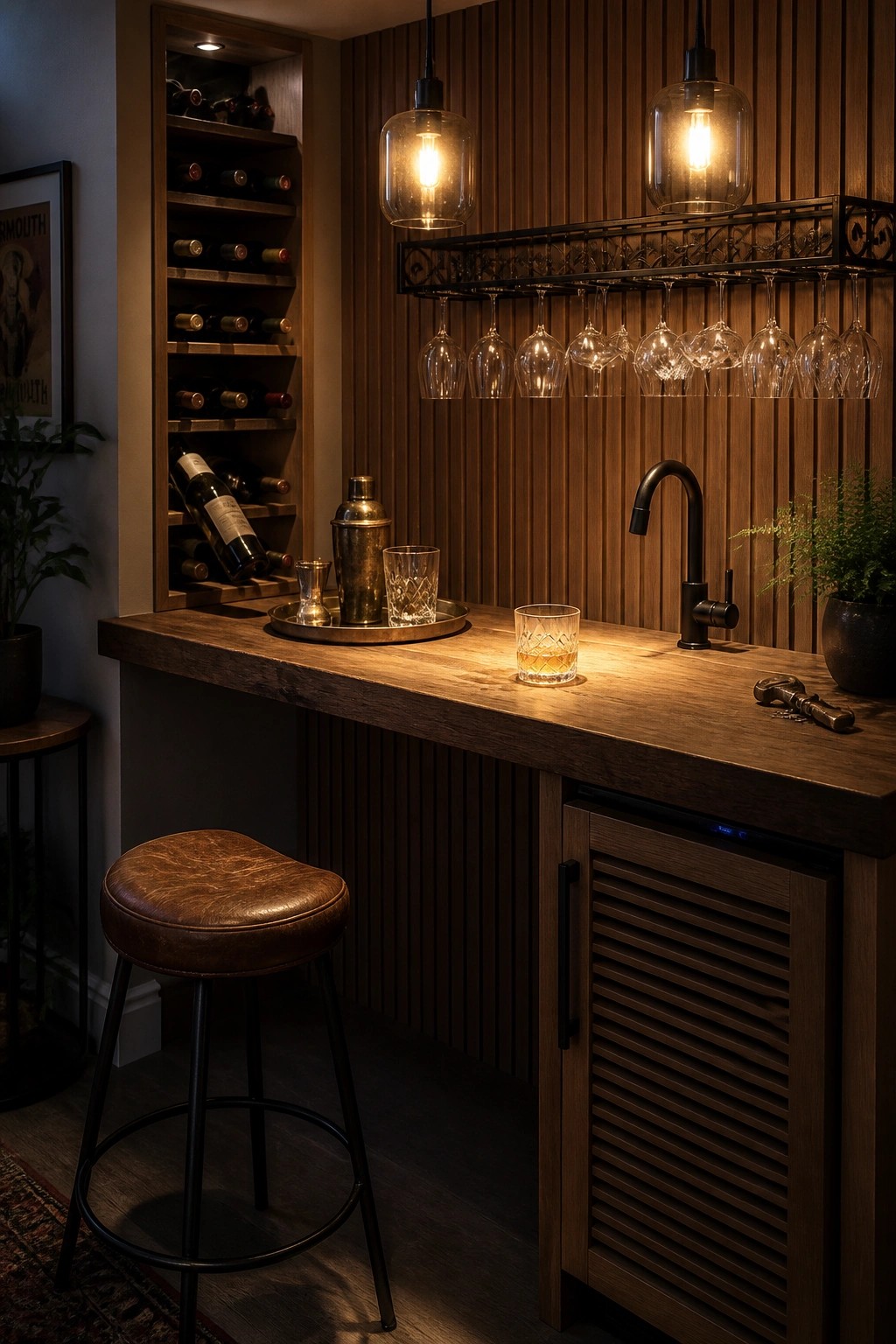
A wooden bar counter adds warmth and a practical spot for drinks without needing a full room overhaul. The solid surface and natural grain give it staying power that works across different styles of homes.
It suits spaces with a bit of wall room or an underused corner. Keep the wood tones consistent with nearby cabinetry or shelves, and add simple seating so the area feels ready for use rather than just for show.
A Rustic Wood Work Table For Creative Rooms
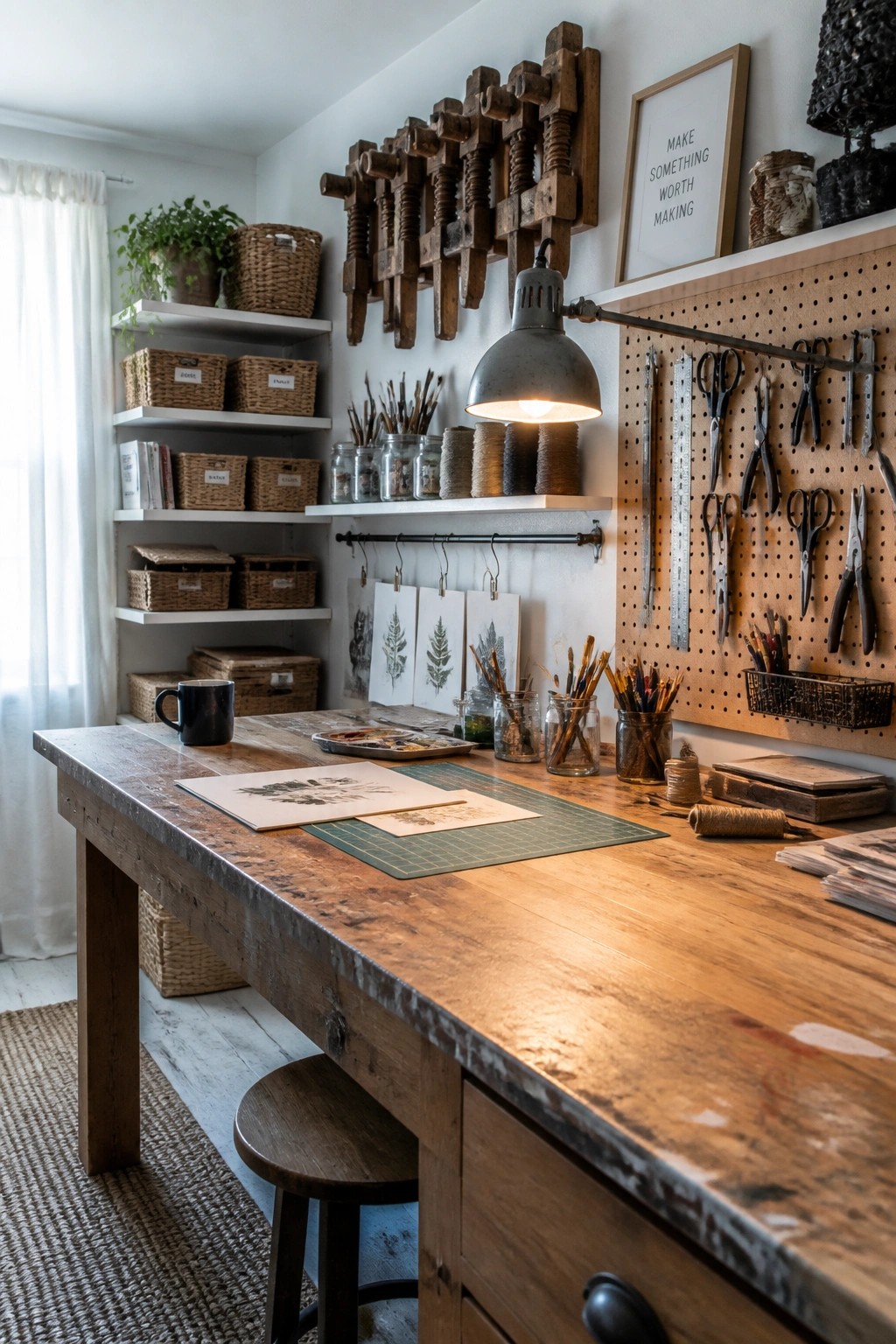
A big, solid wood table gives a craft room or home studio the kind of surface that actually holds up to daily use. It adds warmth through its natural grain and color while keeping the focus on function rather than decoration.
Place one in any room where projects need space to spread out. Add simple wall storage nearby so tools stay within reach but off the tabletop. This setup works especially well in older homes or any space that already leans toward natural materials.
Rustic Wood Coffee Tables That Anchor A Living Room
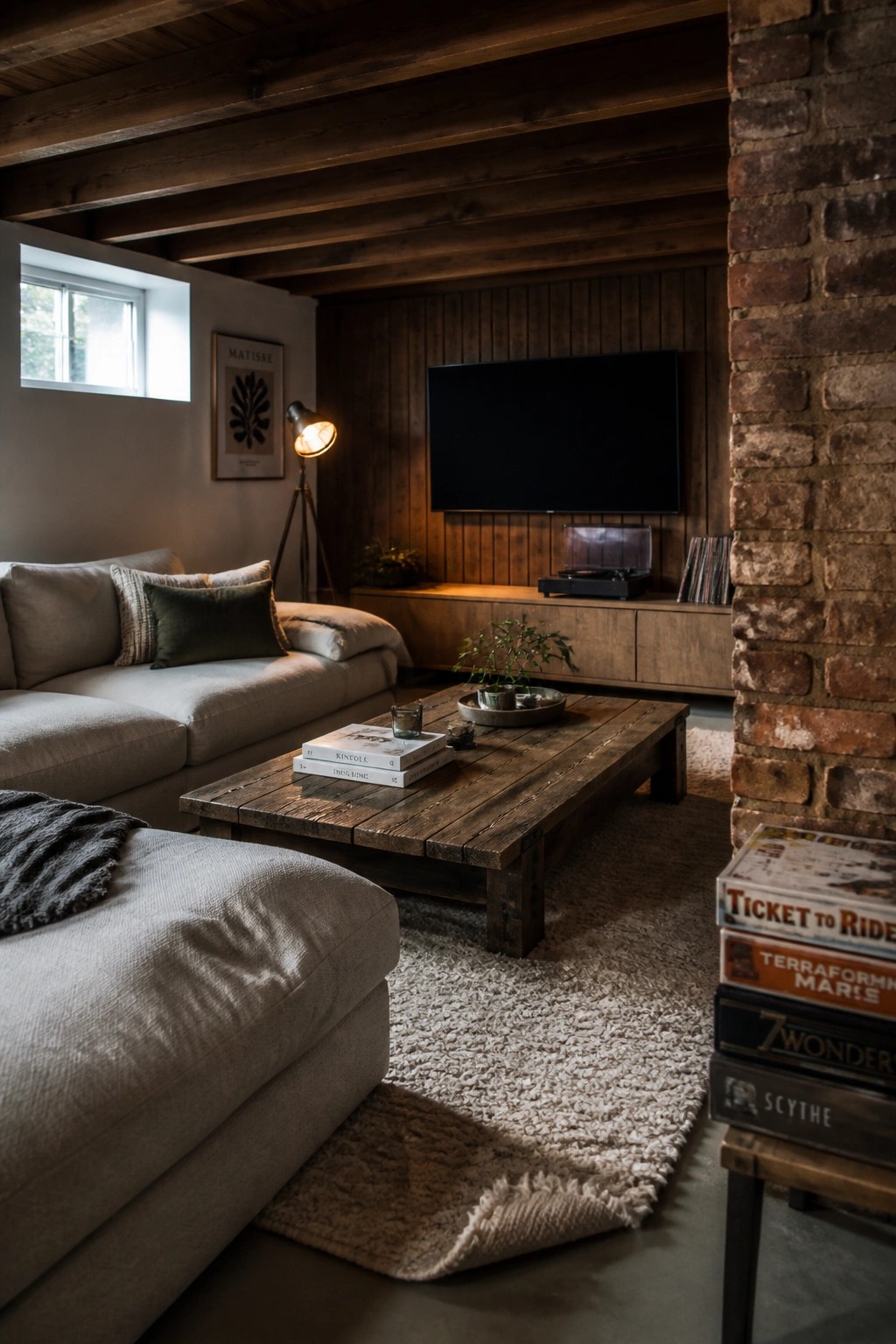
A solid wood coffee table can pull a living room together when everything else stays fairly simple. It adds weight and texture that softer pieces like sofas and rugs cannot provide on their own.
This works best in spaces that already have some wood on the walls or ceiling. Keep the table size in proportion to the seating so the room still feels open and easy to walk through.
Exposed Wood Beams In The Bedroom
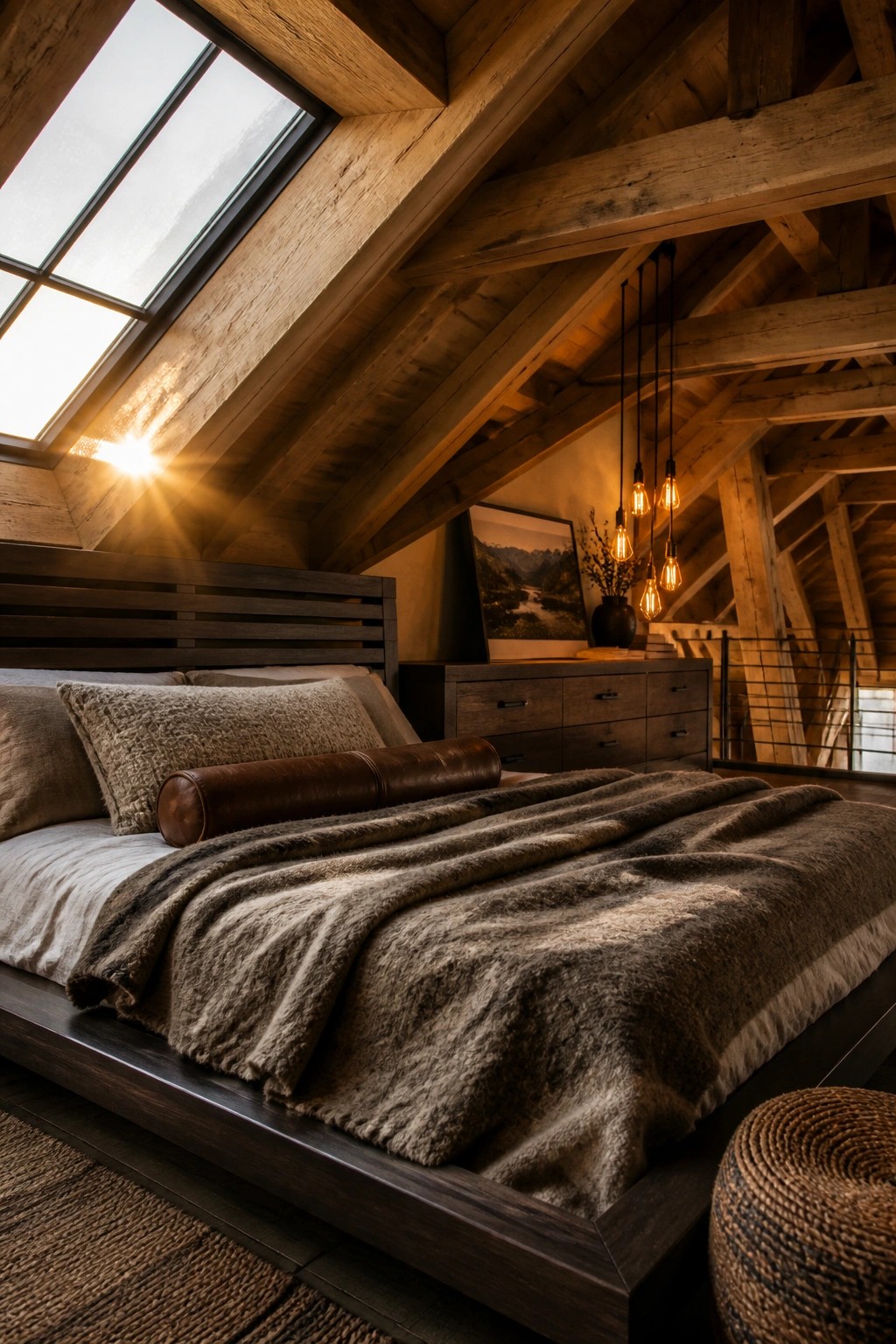
Exposed ceiling beams bring a lot of character to a bedroom without needing much else. They add texture and warmth that painted ceilings often lack, especially when the wood has some age or variation in tone.
This approach works well in homes with slanted ceilings or attic spaces. Keep the beams natural and match them with darker wood furniture so the room feels pulled together rather than busy.
Frequently Asked Questions
Q: How much wood should I use before it feels like too much? A: Focus on one main element like a feature wall or ceiling beams. Mix in some painted surfaces to balance things out. This keeps the room from feeling heavy.
Q: Can I mix different wood tones in one room? A: Yes, go for woods with similar undertones like warm browns. Test samples side by side first. It adds depth when done right.
Q: What about using rustic wood in a kitchen? A: Pick sealed wood for countertops or cabinets. Wipe spills right away to avoid stains. It brings that cozy cabin vibe to cooking areas.
