

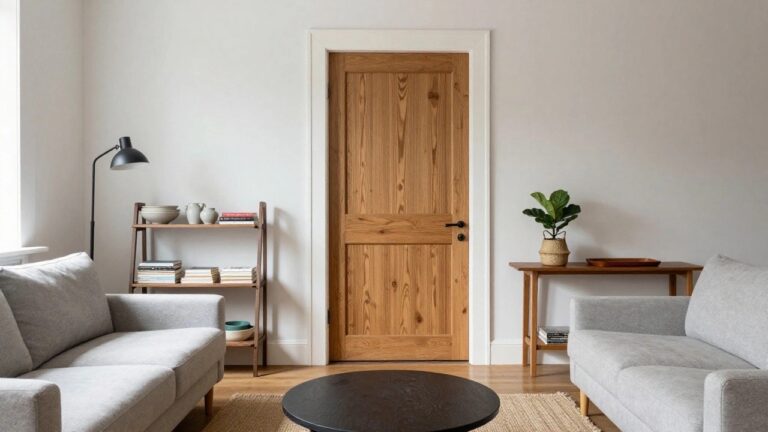
I have come to appreciate how much a living room door influences the daily feel of the space.
Wooden doors in particular seem to soften the room while still giving it structure that painted ones often lack.
The choice of wood tone can shift everything.
In my last place I swapped out a basic door for one with simple panels and the room suddenly felt more put together without any other changes.
Trying out different hardware finishes on the same door helped me see what actually worked with the furniture layout.
Natural Wood Doors For Living Room Entries
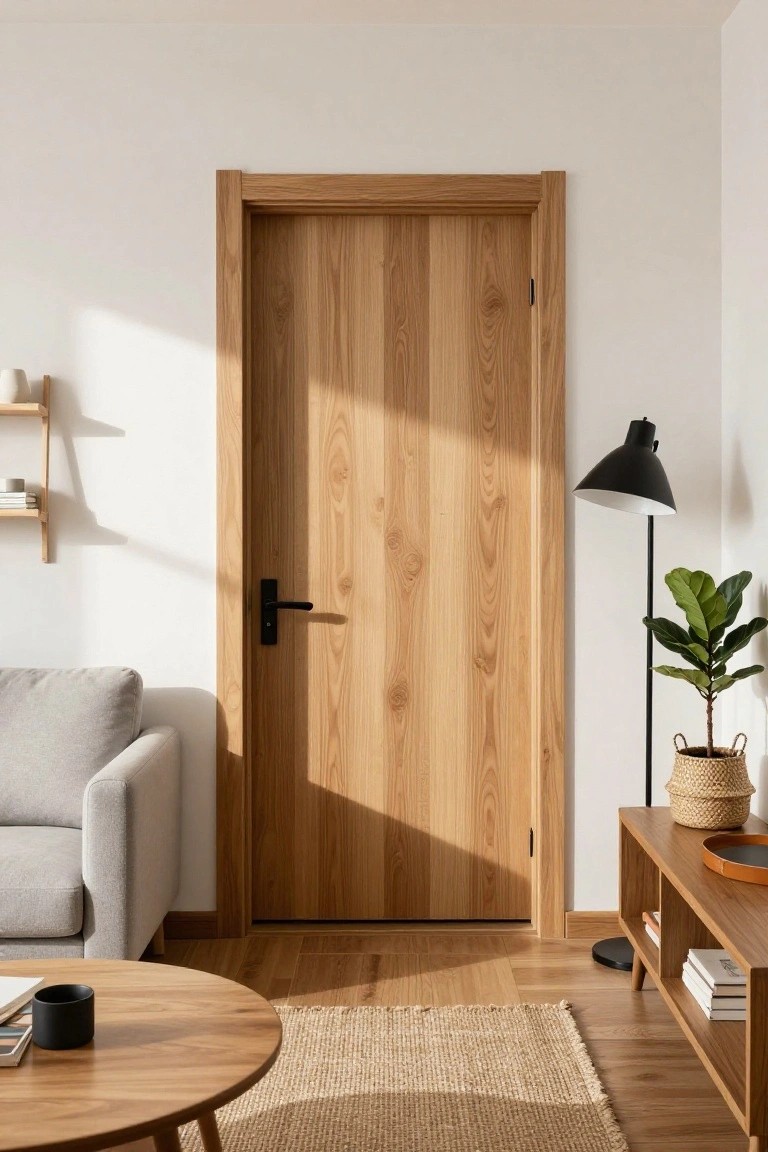
A plain wood door can make a living room feel more finished without any extra effort. The warm tone and visible grain add just enough texture to balance the space, especially when the rest of the room stays fairly neutral.
This works well in homes that already use wood floors or simple furniture. Keep the trim and hardware understated so the door remains the main feature instead of competing with other details.
Wood Doors With A Vertical Glass Panel
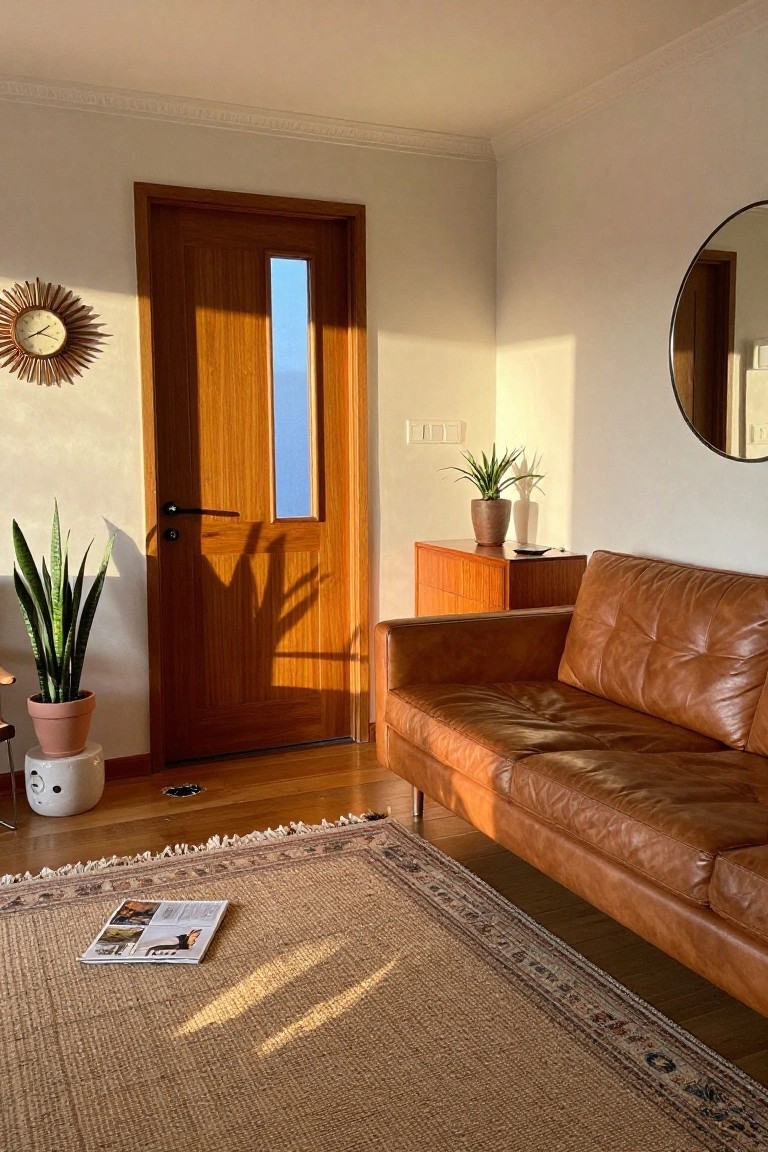
A wood door with a narrow vertical window brings natural light into the living room while keeping the warmth of solid timber. It avoids the heavy look of a fully solid door and still feels substantial.
This works best in spaces where the door leads from a hallway or entry and you want to borrow light without losing privacy. It suits homes with wood floors and simple furniture, but skip it if the room already gets plenty of sun from other windows.
Arched Wooden Doorways For Living Rooms
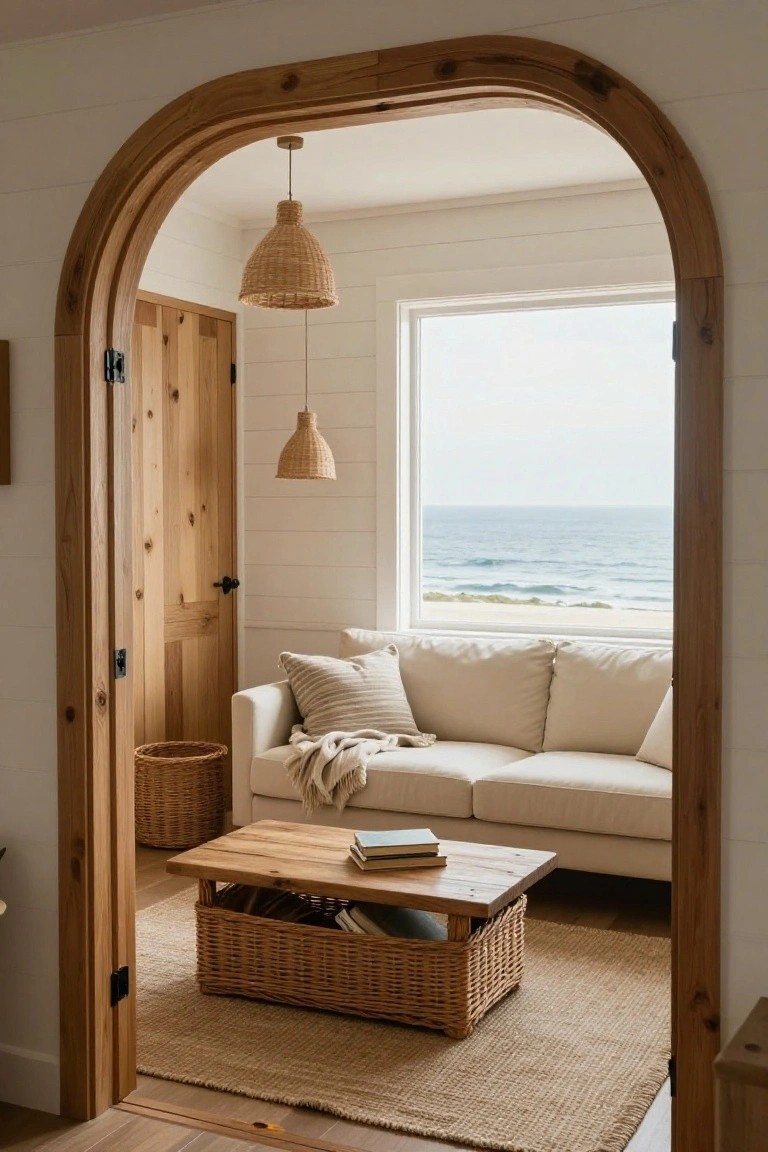
An arched wooden doorway gives a living room a clear sense of entry without closing it off. The curve softens the transition and makes the space feel more settled compared to a plain rectangular opening.
This approach suits homes with light walls and natural wood floors, where the door frame can match other wood tones in the room. It works best when kept simple so the shape itself does the main work rather than added hardware or heavy staining.
Dark Wood Doors With Glass Panels
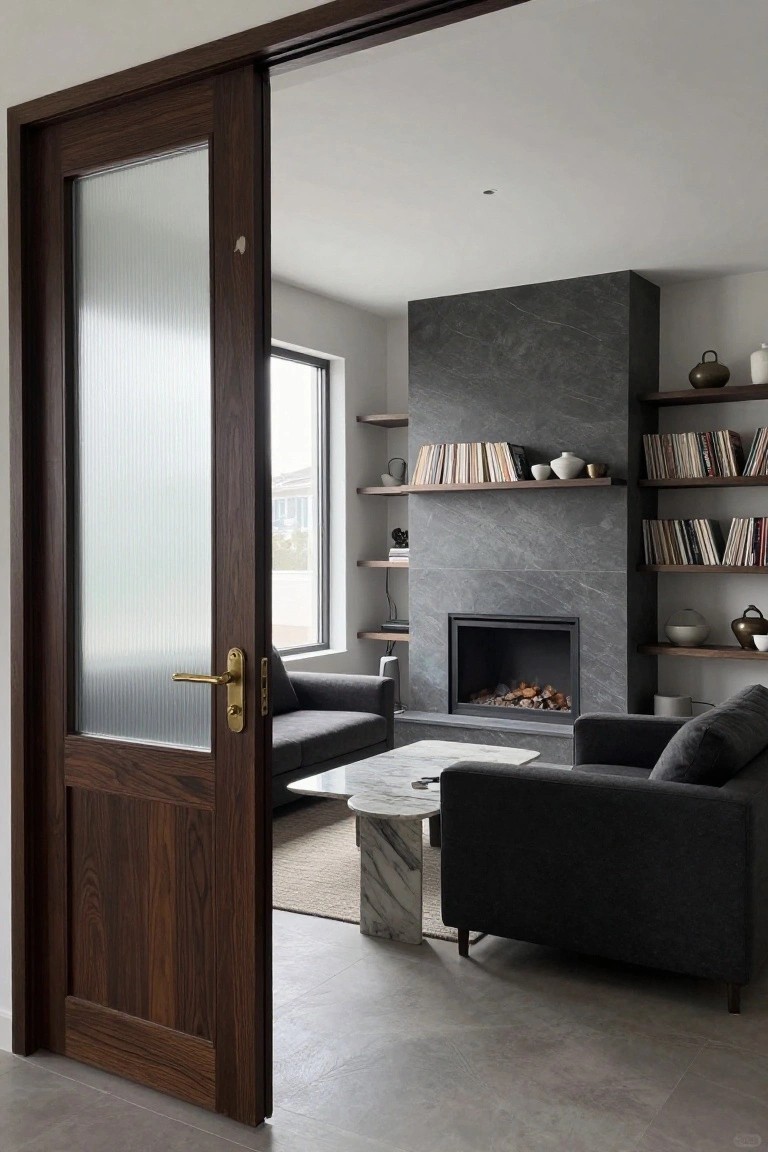
A solid wood door with a glass panel gives the living room a clear entry point without making the space feel closed off. The wood adds weight and warmth that pairs naturally with other materials like stone or built-in shelving.
This works best in homes where the door can match nearby wood tones so the whole room feels pulled together. Keep the glass textured if you want privacy while still letting light through.
Wood Doors That Add Natural Texture To Living Rooms
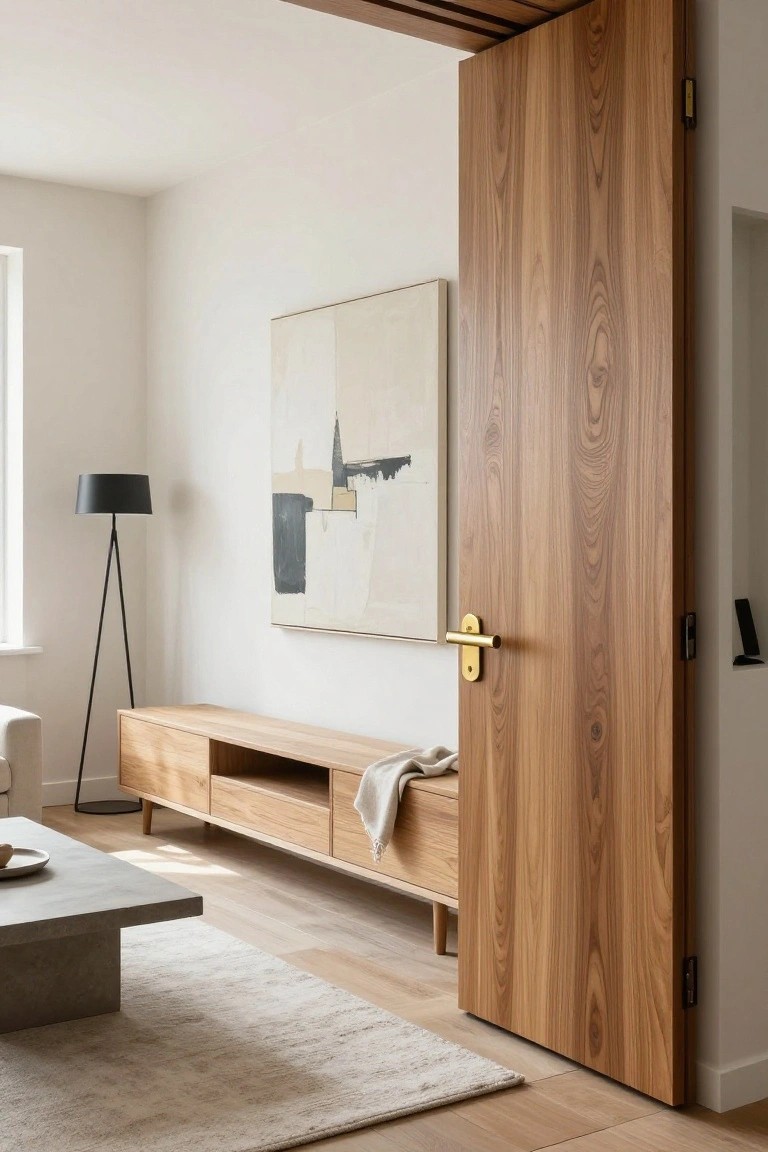
A solid wood door with visible grain brings a quiet warmth into a living room that painted doors often miss. It stands out best when the walls and floors stay light, so the door becomes the main source of natural material without fighting other elements.
This works well in homes that already use wood elsewhere, like a console or coffee table, because the tones can match without feeling forced. Keep hardware simple and avoid busy wall decor right next to it so the door keeps its clean presence.
Wooden Doors With Mirror Inserts
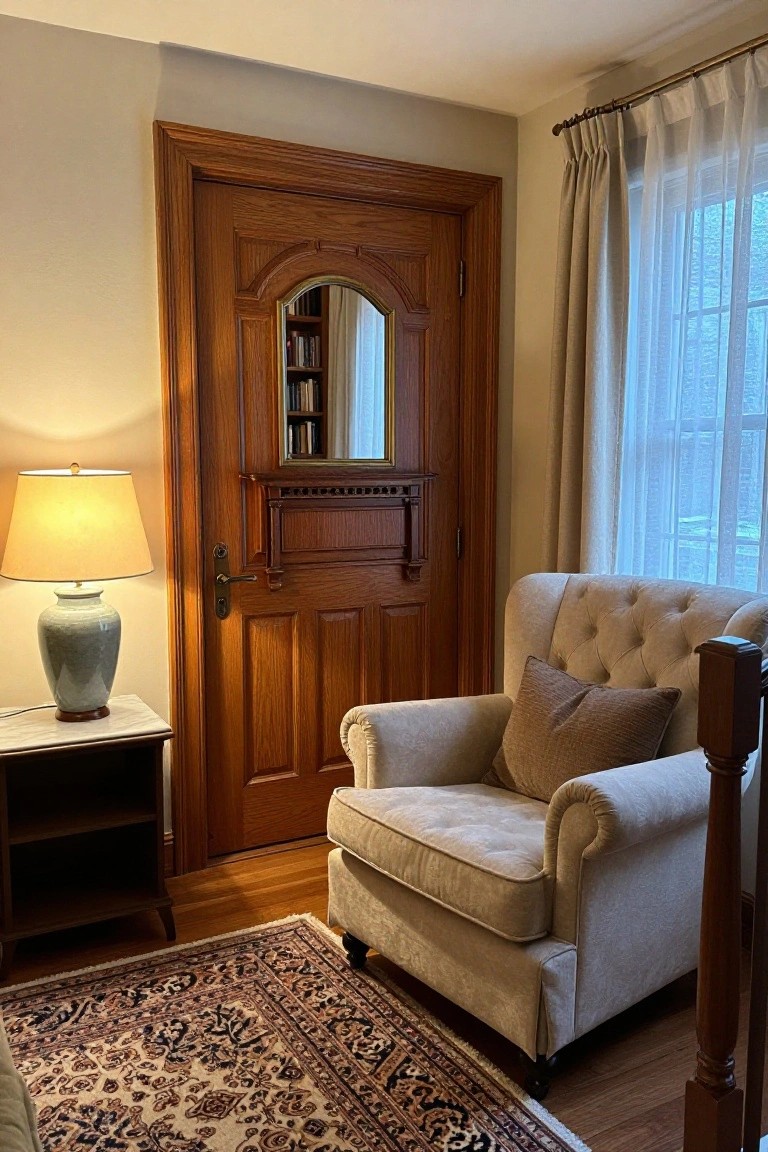
A wooden door with an arched mirror panel gives a living room a solid focal point without much extra effort. The wood brings warmth and weight, while the mirror reflects light and adds a bit of depth to the space.
This style suits homes that already lean traditional or transitional. It works best when the door sits near seating rather than tucked away in a corner, so the details stay visible and the room feels more finished.
Painted Doors With Cane Details
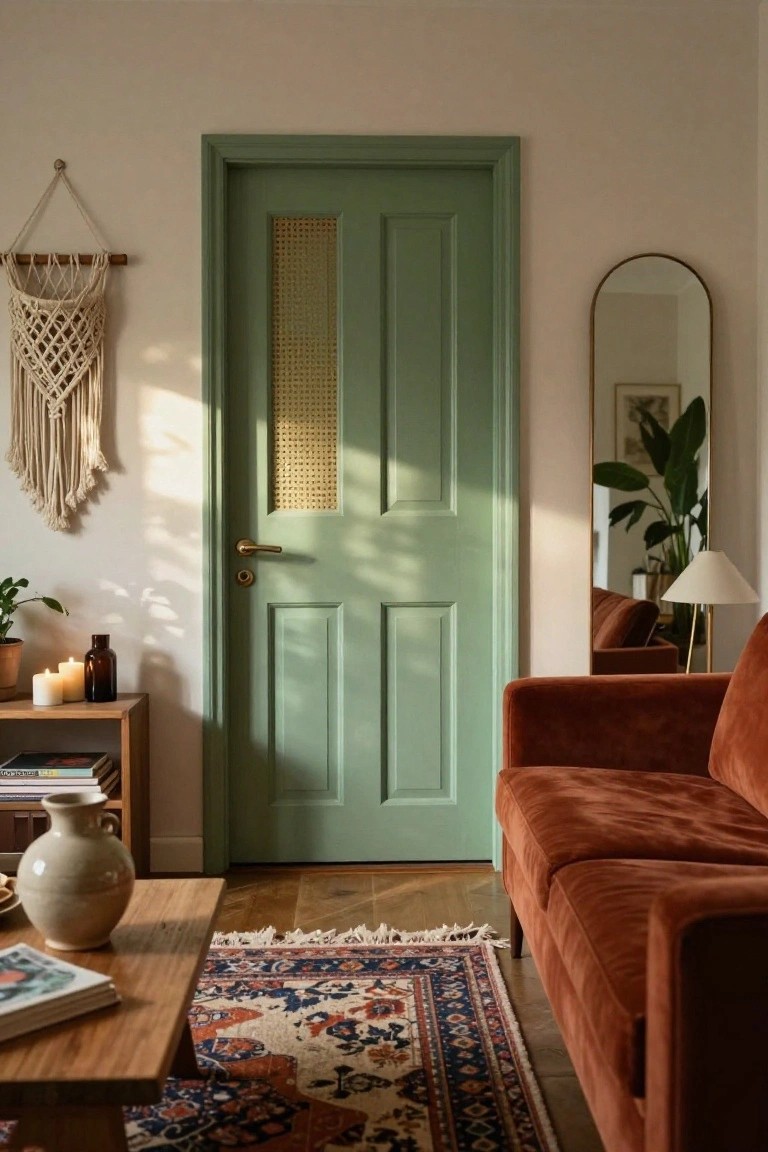
A painted wooden door can become a quiet focal point in a living room when you add a simple woven insert. The cane panel breaks up the solid surface and brings in a bit of texture that feels natural next to wood furniture and soft textiles. Many people like this approach because it gives the door character without making it overly ornate.
This works best in homes that already mix natural materials with painted woodwork. Keep the color soft and slightly muted so the door blends with the walls while still standing out enough to catch the eye. Avoid busy patterns around it so the cane detail stays the main point of interest.
Wooden Sliding Doors With Grid Inserts
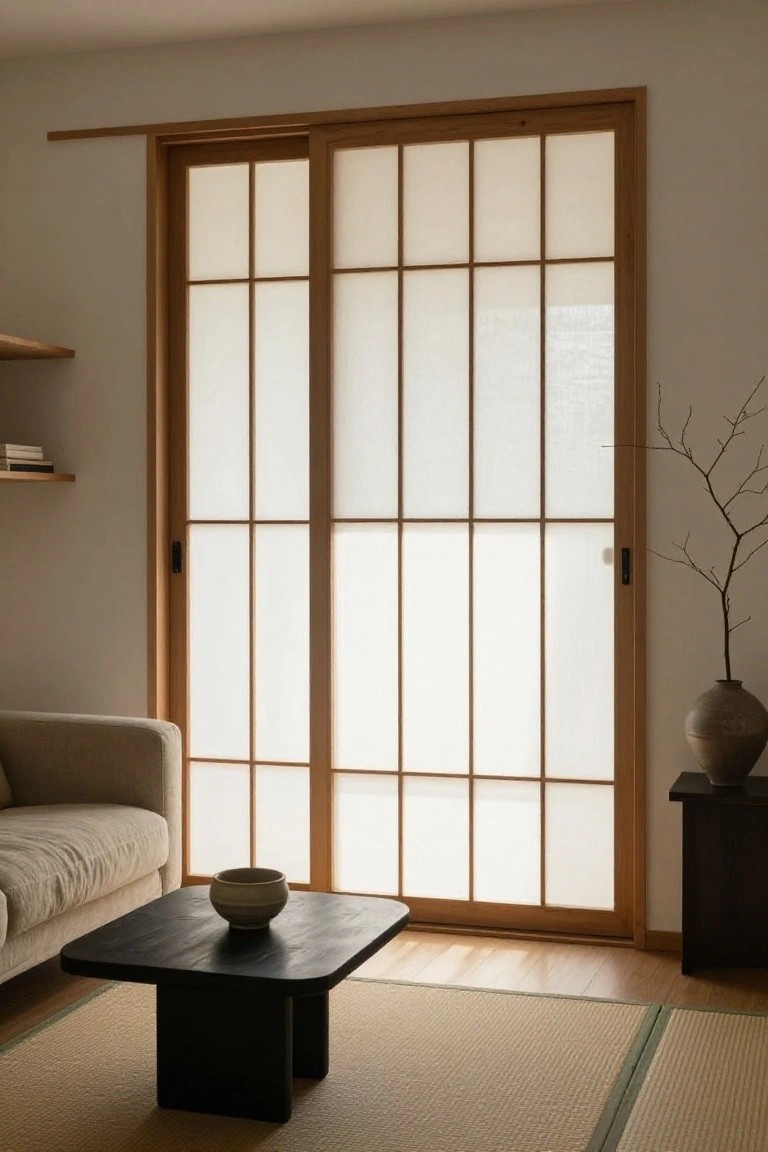
These doors give a living room a quiet sense of order while still letting light move through the space. The wood frame and divided panels keep things simple and structured without making the room feel closed off.
They suit homes that want a bit of separation between rooms without building walls. Keep the rest of the furniture low and neutral so the doors stay the main feature.
Dark Wood Double Doors
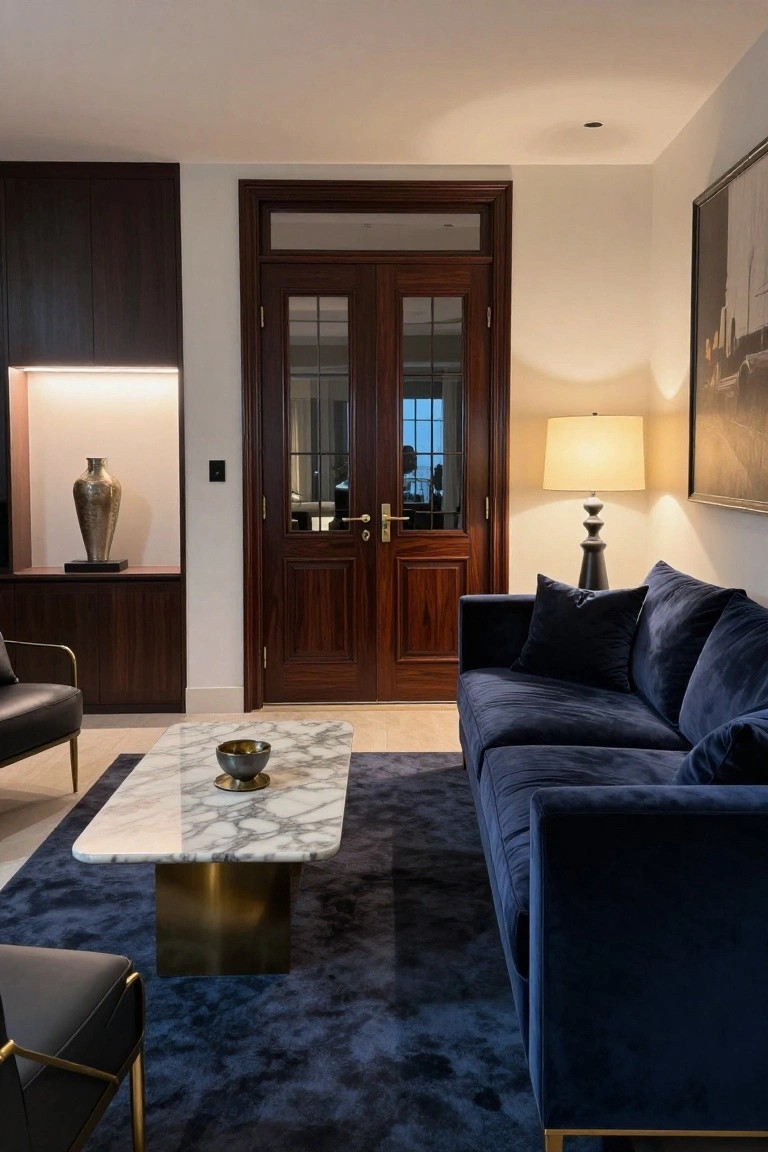
A dark wood double door can give a living room a clear sense of entry and weight. The rich tone stands out against lighter walls and helps the space feel more finished without extra decoration.
This choice works best in homes where the living area leads into other rooms or hallways. Keep the trim and walls simple so the door stays the main focus, and avoid crowding the area right in front of it.
Wood Built-In Window Seats
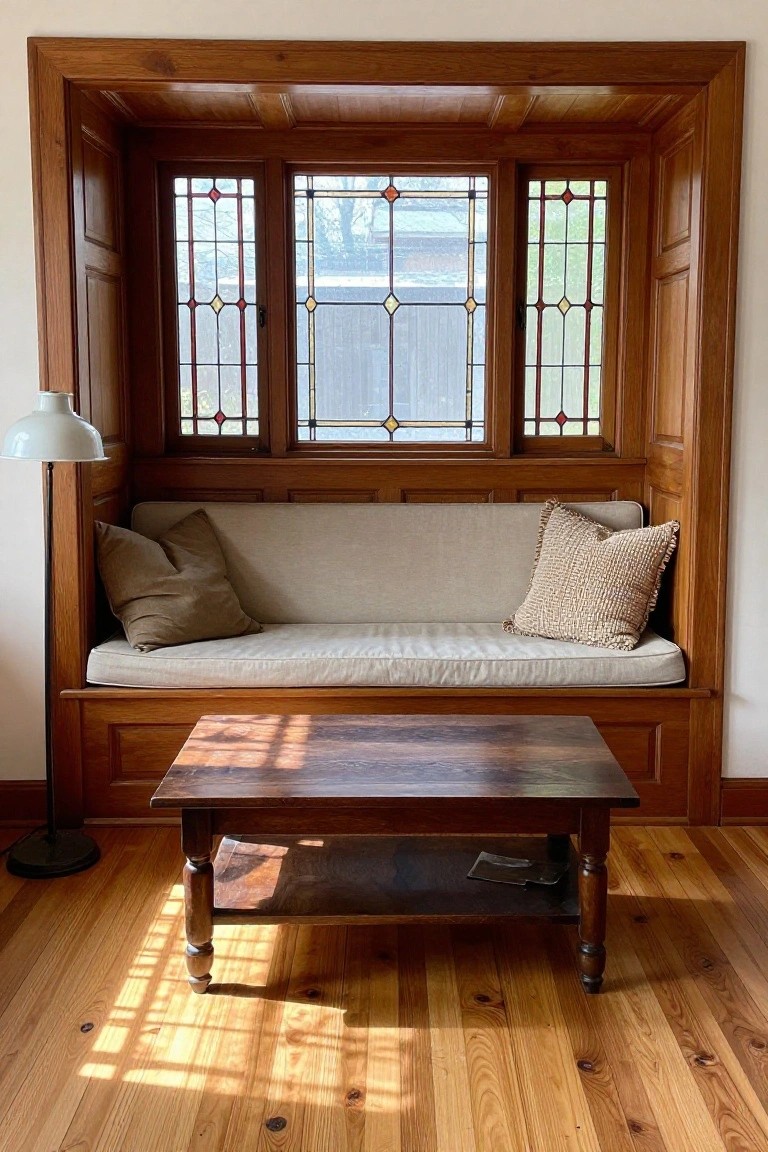
A built-in window seat framed in wood turns an ordinary wall into useful seating and a quiet spot to read. The wood ties the windows and the seat together so the whole area feels intentional instead of like separate pieces added later.
This idea works best in rooms where the windows already have some character. Keep the cushions neutral and let the wood do most of the work, and place a low table in front if you need a spot for a lamp or books.
Wooden Doors That Shape A Living Room
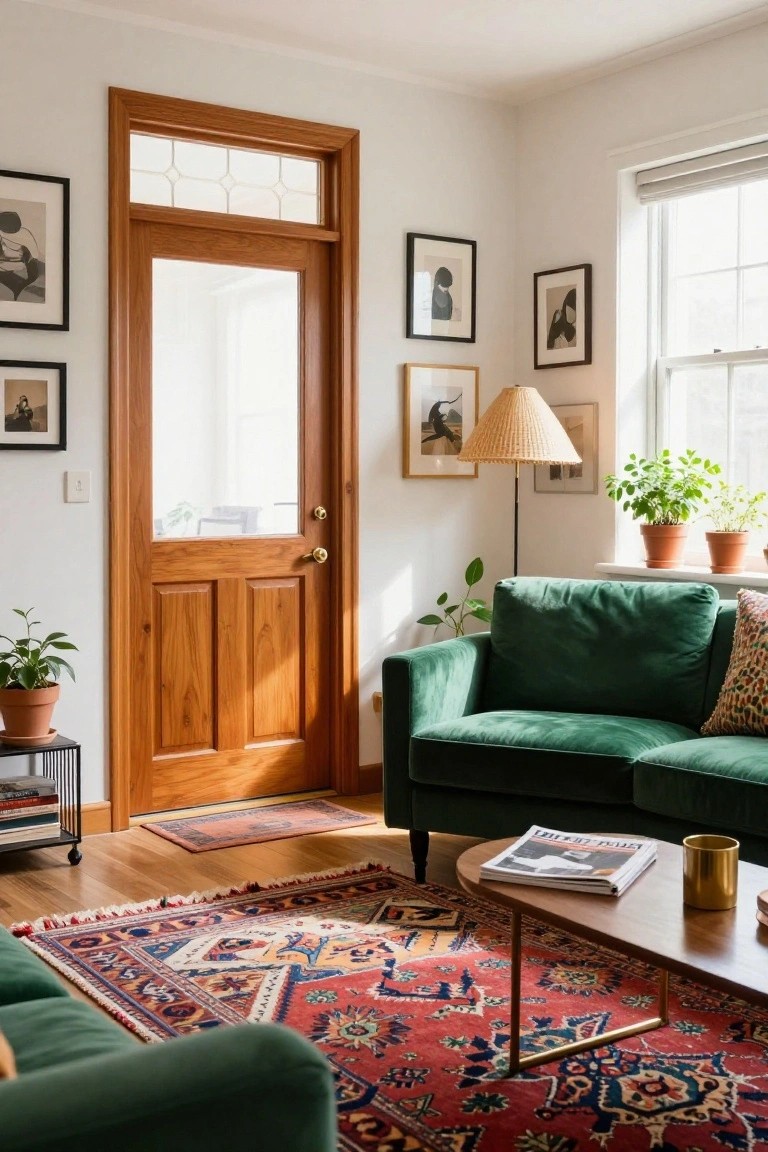
A solid wood door can quietly set the tone for the whole room. It brings warmth and structure without needing extra decoration, and it turns the entry into something that feels intentional rather than just functional.
This approach works especially well in homes with open living areas where the door is visible from the main seating space. Keep the surrounding walls light and let the wood grain do the work, then add simple textiles like a rug or sofa in a contrasting color to keep the door from blending in.
Natural Wood Doors Bring Quiet Warmth to Living Rooms
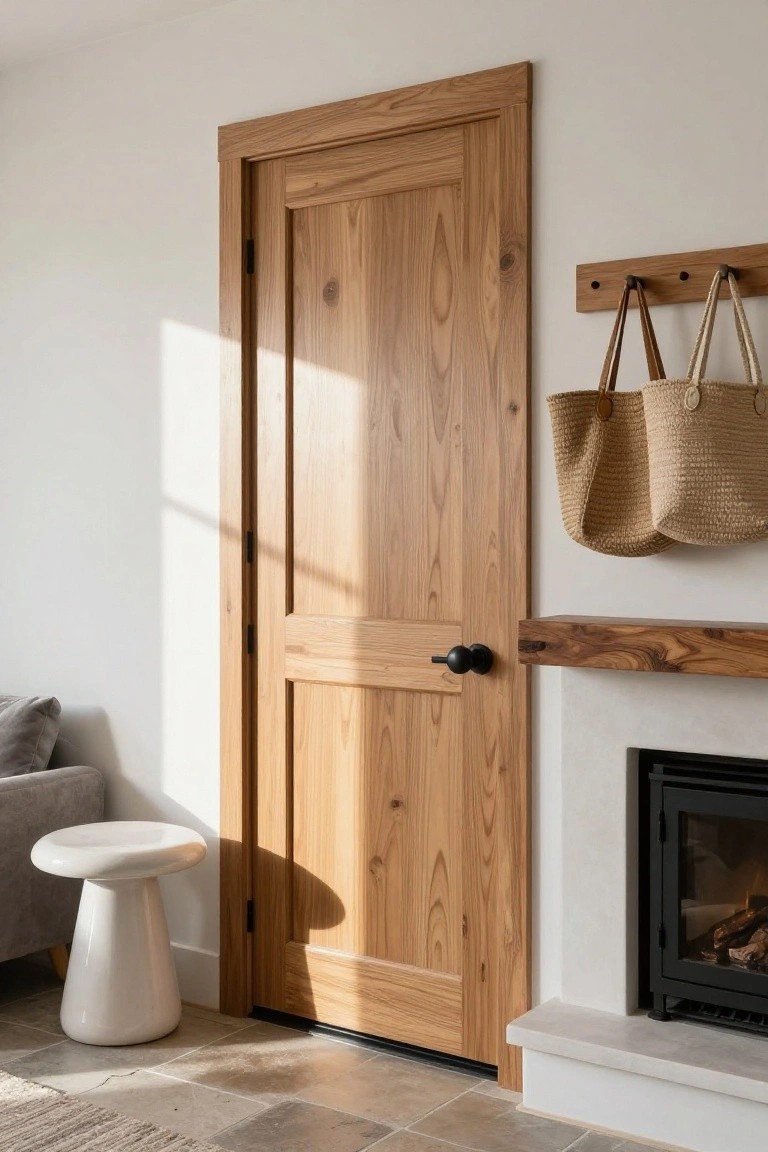
A solid wood door with visible grain gives a living room a grounded feel that painted doors rarely match. The natural texture stands out against plain walls and pairs easily with other wood or stone elements already in the space.
This choice works well in homes that lean neutral and simple. Keep the hardware minimal so the wood itself stays the main feature rather than competing with extra details.
Wooden Doors With Vertical Detailing
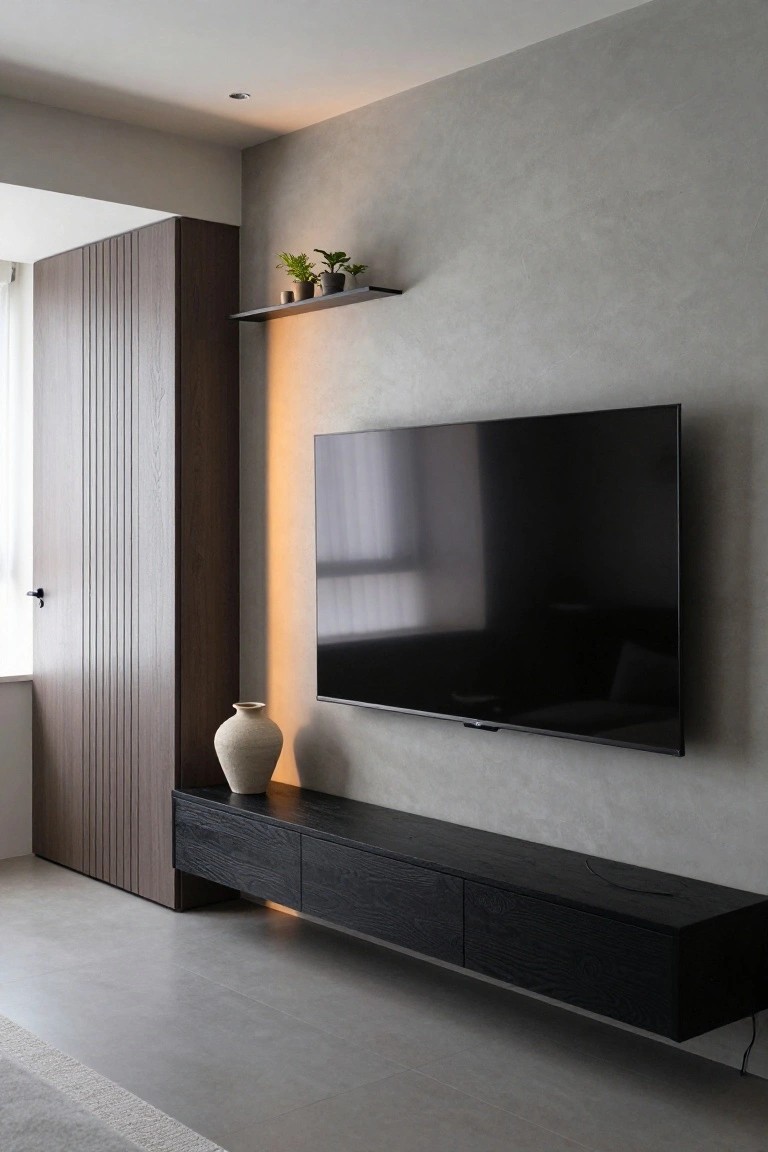
A tall wooden door with vertical lines can quietly organize the look of a living room while adding useful storage. It brings a bit of texture to the wall without needing extra trim or decoration, and the narrow grooves keep the surface from feeling too flat next to a large television.
This approach works best in rooms where you want the wood tones to connect different pieces, like a media console and nearby cabinetry. Keep the finish consistent across both so the door reads as part of the furniture rather than a separate element, and avoid overcrowding the wall above it with too many shelves or art.
Natural Wood Doors For Connected Rooms
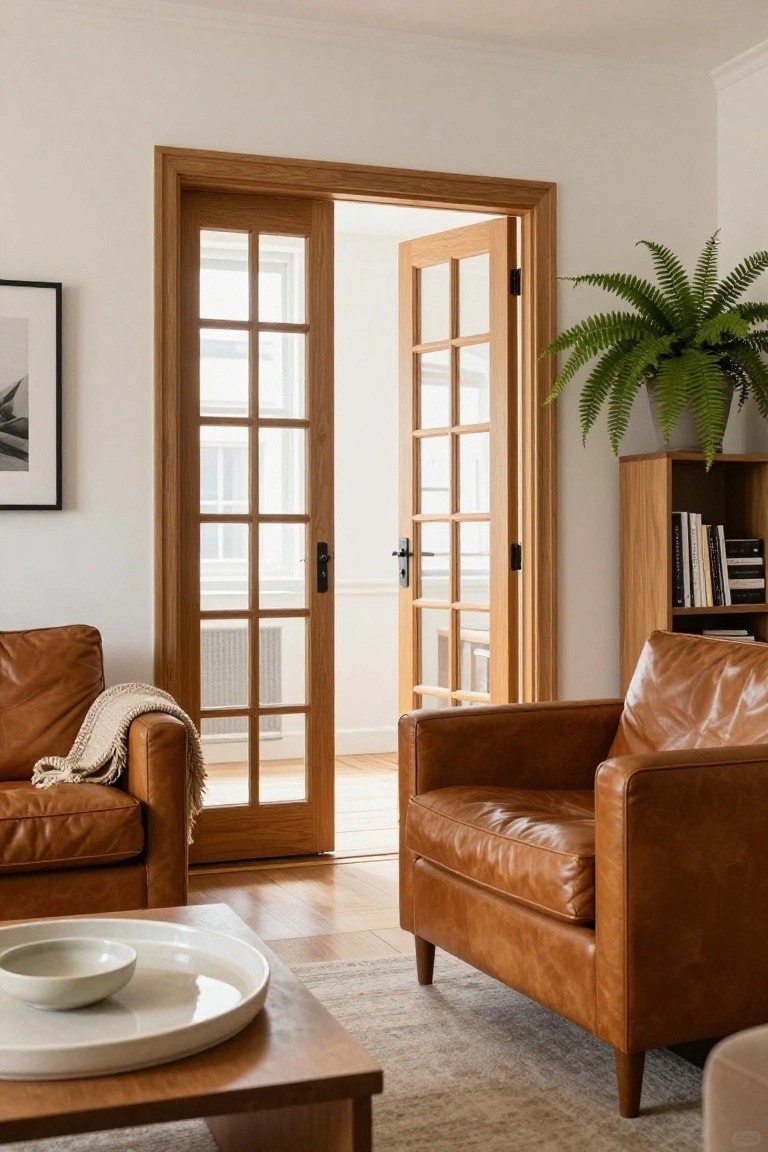
Wooden doors with glass panels give living rooms a way to stay open without losing any sense of separation between spaces. The warm tone of the wood adds a simple layer of character that pairs easily with most furniture styles.
They suit homes that already use wood tones elsewhere, since the doors can tie things together without extra effort. Make sure the swing direction works with your traffic pattern before committing to this style.
A Wooden Door Adds Warmth To The Living Room
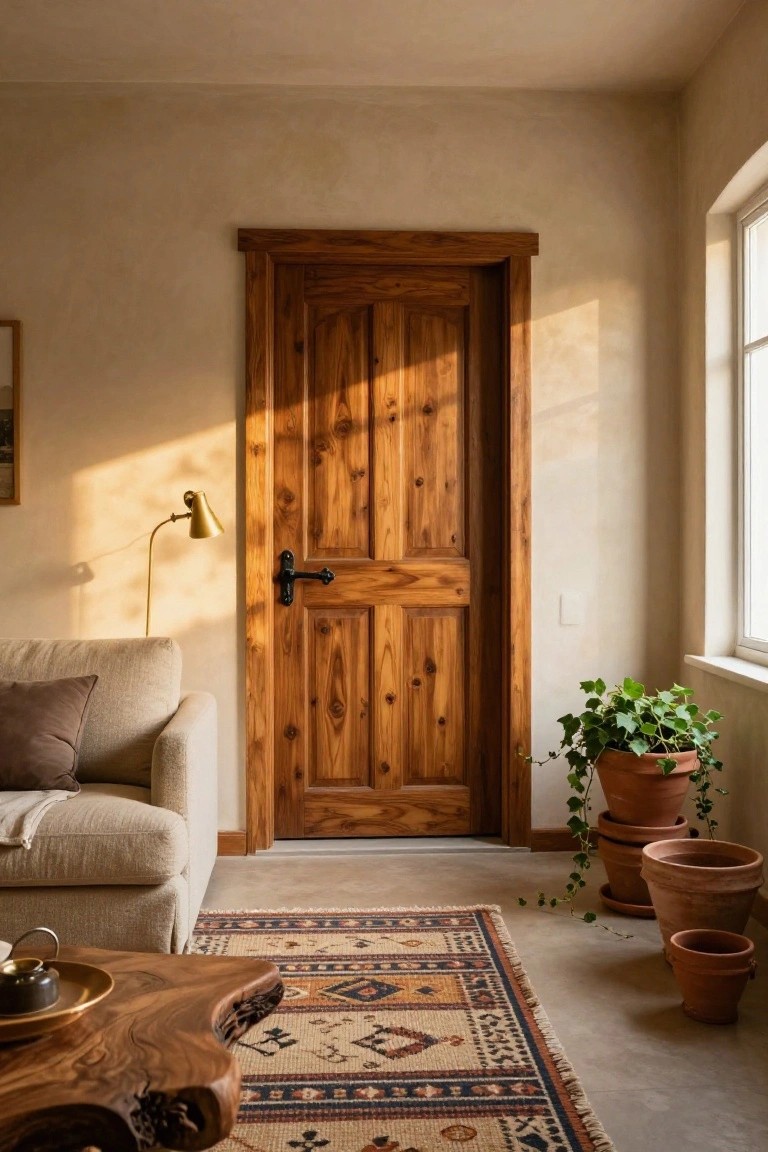
A solid wood door with visible grain can become the main feature in a living room without much effort. It brings natural texture and a sense of structure that painted walls alone often lack, and it works especially well in spaces with soft neutral tones and simple furnishings.
This approach suits homes that already lean toward natural materials or need a grounded focal point near the entry. Keep the hardware simple and let the wood stand on its own rather than competing with too many other textures nearby.
Frequently Asked Questions
Q: How do I match a wooden door to my existing furniture? A: Pick a wood tone that echoes your main pieces like the coffee table or shelves. This keeps things simple without forcing everything to match exactly. Try samples against your sofa in natural light first.
Q: What maintenance do these doors really need? A: Wipe them down with a damp cloth every week or so. Avoid harsh cleaners that strip the finish. A quick polish once a year keeps the shine going.
Q: Can I add glass panels to these designs for more light? A: Many styles work well with frosted or clear glass inserts. It brightens the space while keeping the wooden frame as the focus. Just check the door’s structure before cutting.
