

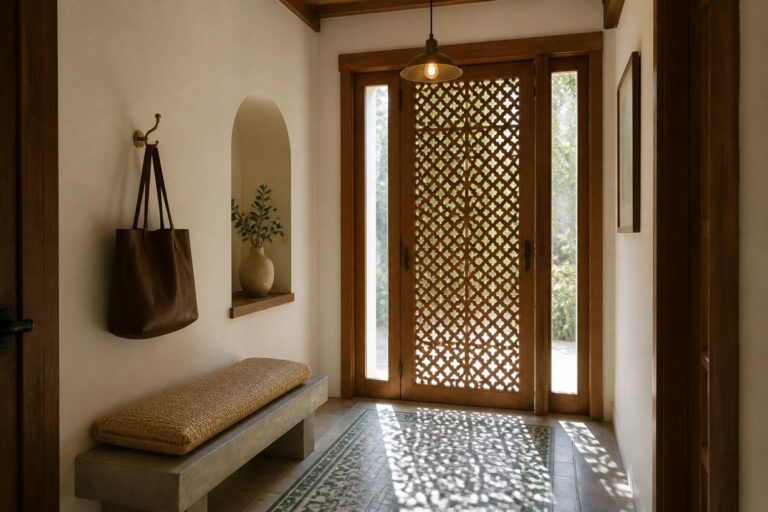
I have always noticed that the way air moves through a house changes how comfortable the rooms feel on warm days.
Wooden jali doors can add that kind of subtle pattern without making a space feel closed off.
When I think about updating older homes these screens often come to mind because they let light filter in gently while keeping things private.
One idea I would test first is placing a jali door between a living area and a hallway to see how it softens the transition.
They work best when the cutouts match the scale of the room so the design does not overpower the furniture.
Jali Doors for Light and Ventilation
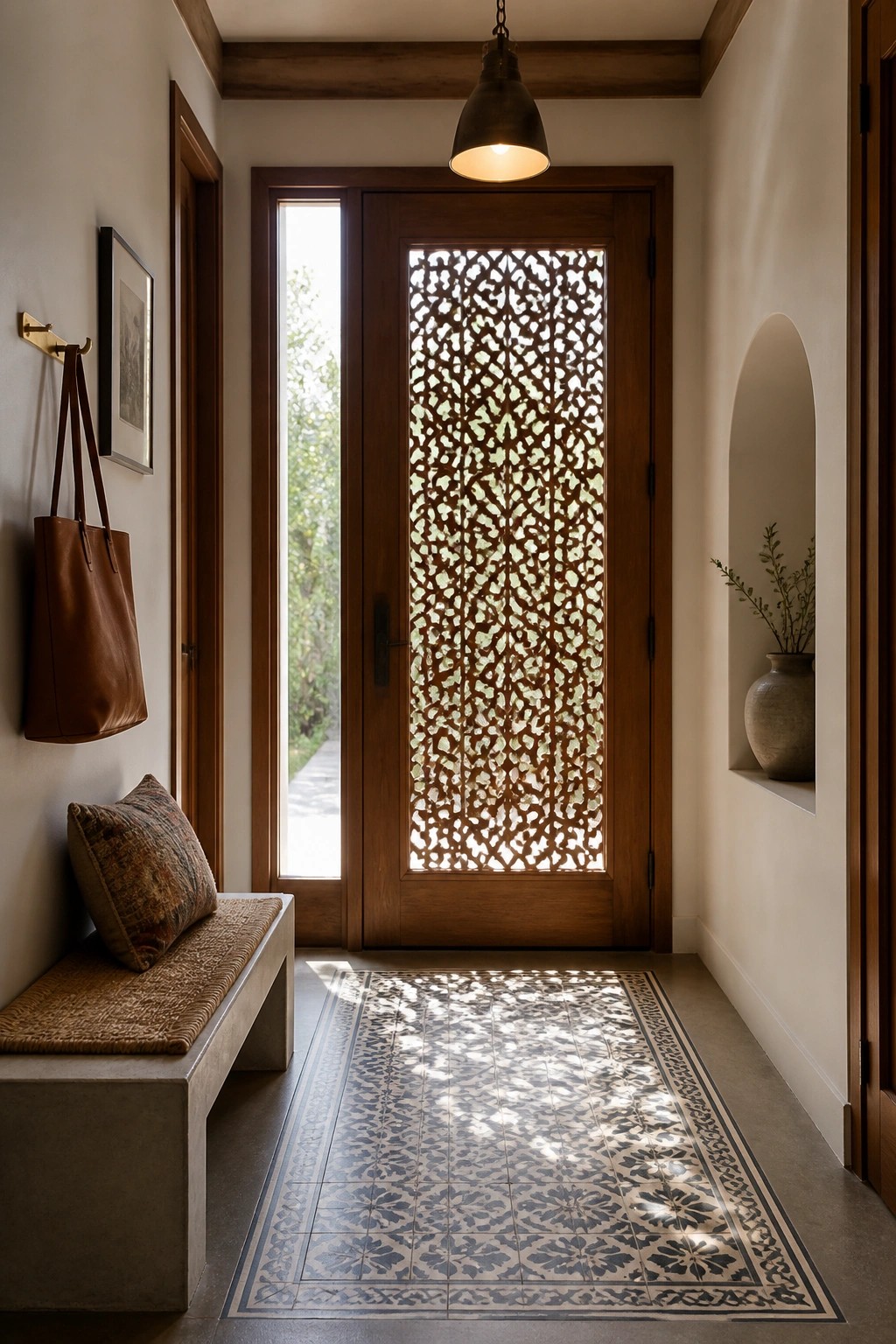
A jali door like this lets air move through the house while breaking up the light into soft patterns on the floor. The cutouts keep the space from feeling closed off, and the wood adds warmth without blocking the view completely.
This style works best on entry doors that face a garden or walkway where you want some privacy but still need airflow. It suits homes in warmer climates and pairs well with simple floors that show off the shadows.
Jali Doors As Functional Room Dividers
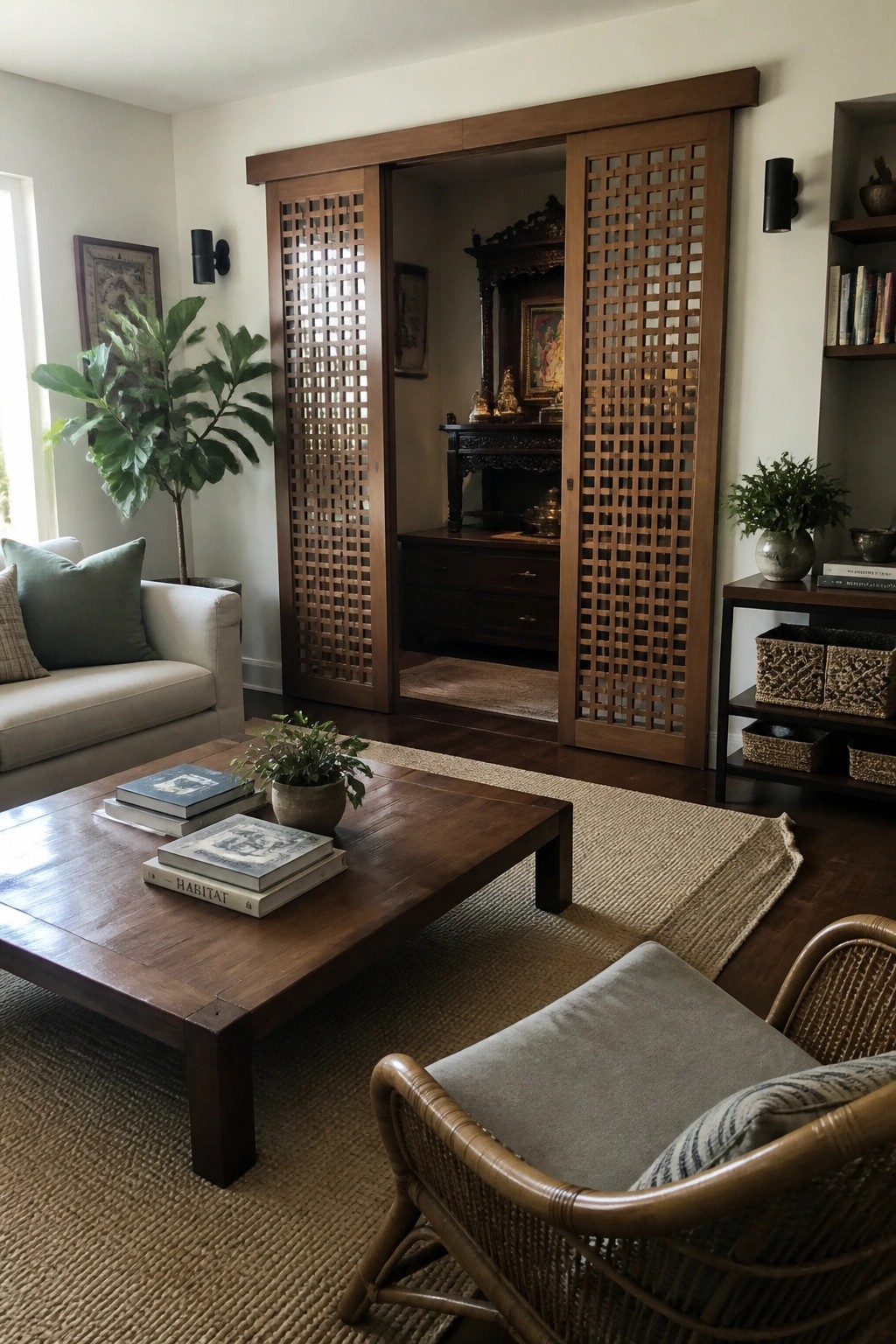
Wooden jali doors like these work well when you want to split a larger room without losing airflow or light. The open lattice pattern lets air move through while still marking a clear boundary between the main living space and the area behind it.
They suit homes with connected rooms where full walls would feel too heavy. Try them in spots that need a bit of separation but still benefit from natural ventilation, and keep the wood tone consistent with nearby furniture so the doors feel like part of the room rather than an afterthought.
Jali Doors Improve Airflow In Bedrooms
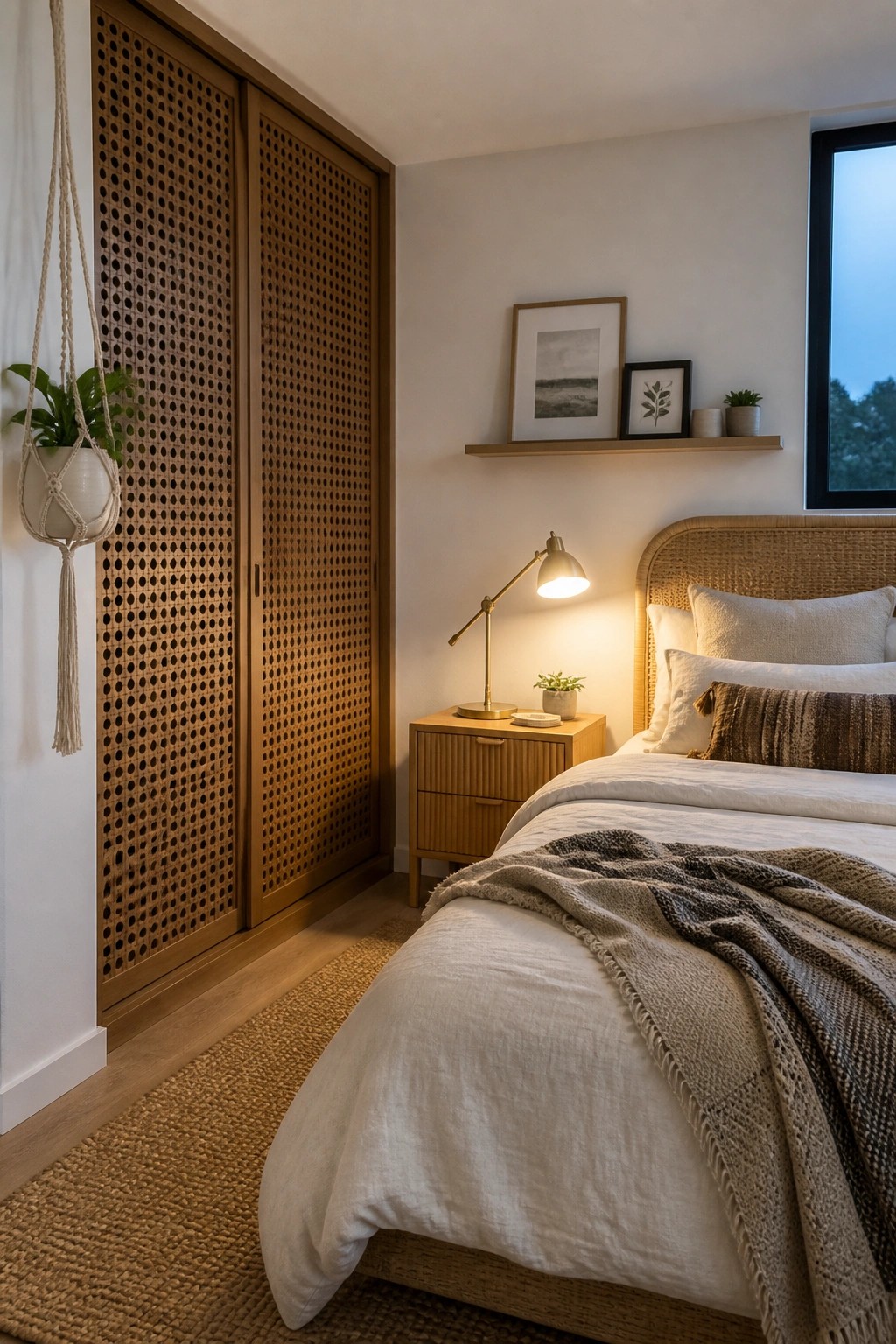
Wooden jali doors work well when you want air to move through a room without leaving everything wide open. The pattern lets light and breeze pass while still giving a sense of separation, which helps in spaces like bedrooms where closets can trap musty air.
They suit homes that need simple ventilation upgrades without major changes. Place them on closet fronts or as room dividers in smaller layouts, and choose a wood tone that matches your existing floors or trim so the doors blend in rather than stand out too much.
Jali Doors For Pantry Airflow
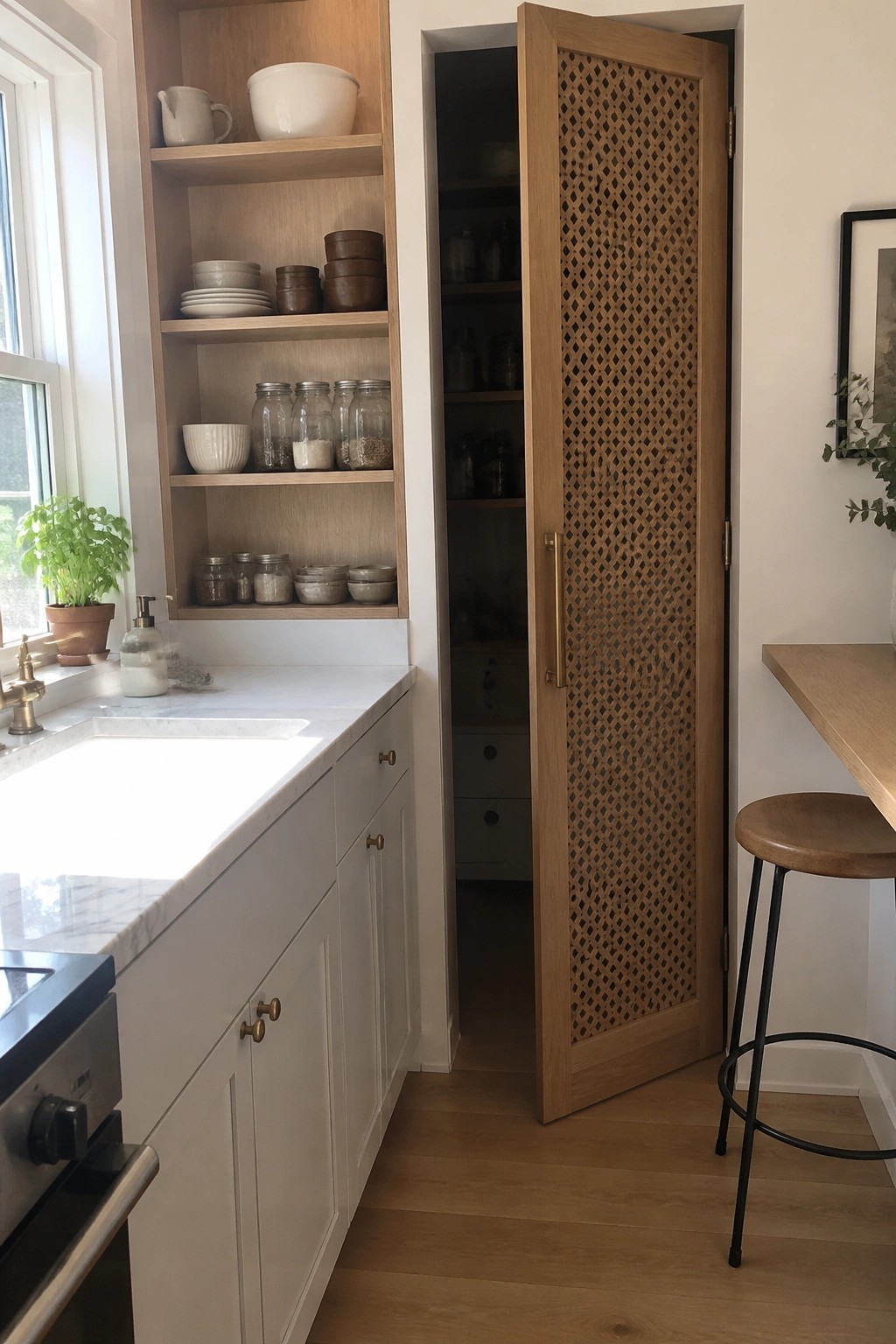
A jali door like the one shown here works well when you want to keep a pantry or storage closet ventilated without leaving it wide open all the time. The cutout pattern lets air move through while still giving the space a finished look that blends with the rest of the kitchen.
This approach suits older homes or any kitchen where dry goods and dishes need a bit of airflow to stay fresh. Place the door on a closet that sits near a window or range hood so the pattern can do its job without blocking natural circulation.
Wooden Jali Doors In The Bathroom
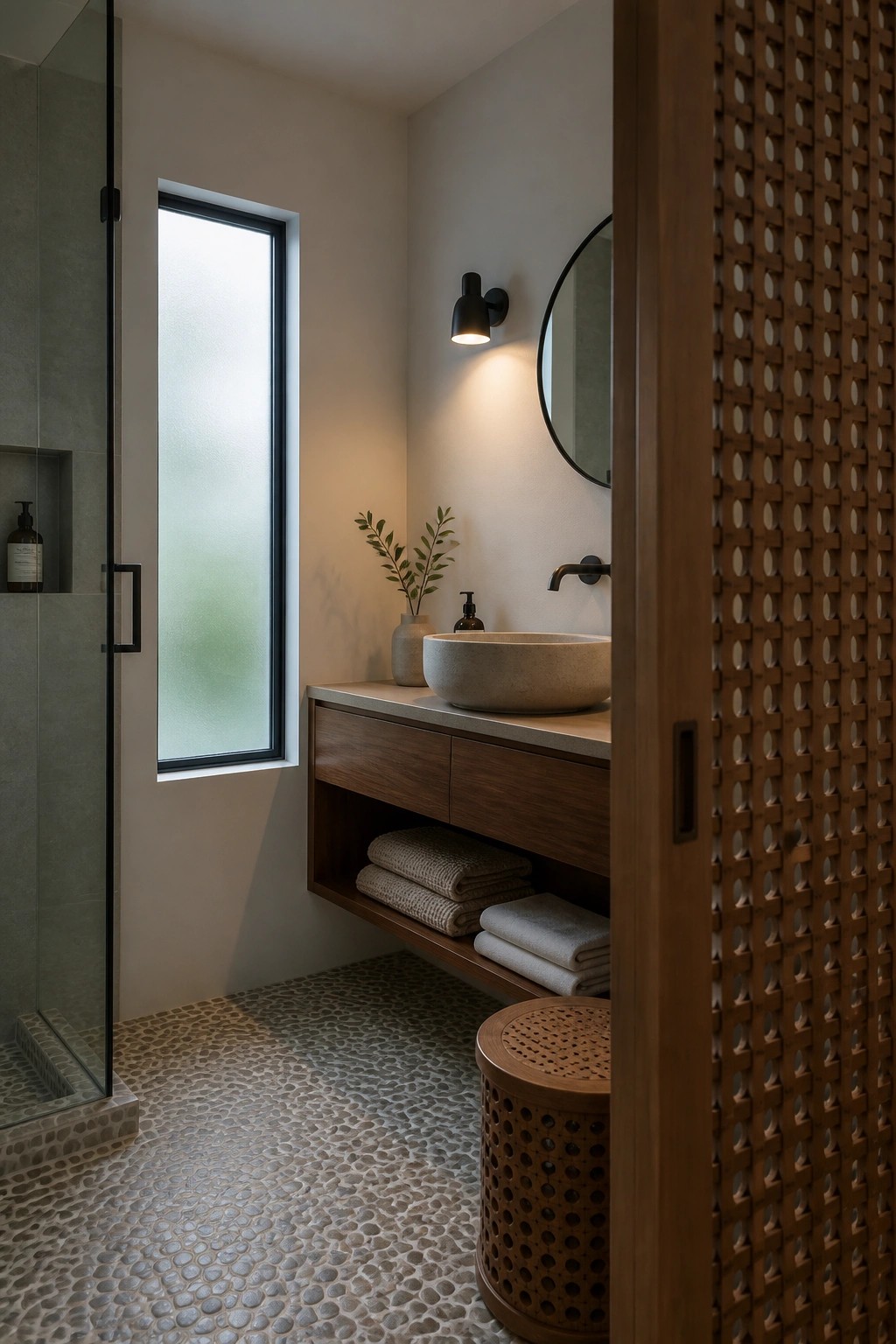
A wooden jali door lets air move through a bathroom while still marking off the space. The open pattern keeps the room from feeling closed in and adds a simple layer of texture that works with wood vanities and stone surfaces.
This approach works best in homes where the bathroom sits near living areas or needs steady airflow. Treat the wood for humidity and keep the cutouts large enough for real ventilation rather than just decoration.
Jali Screens For Room Division
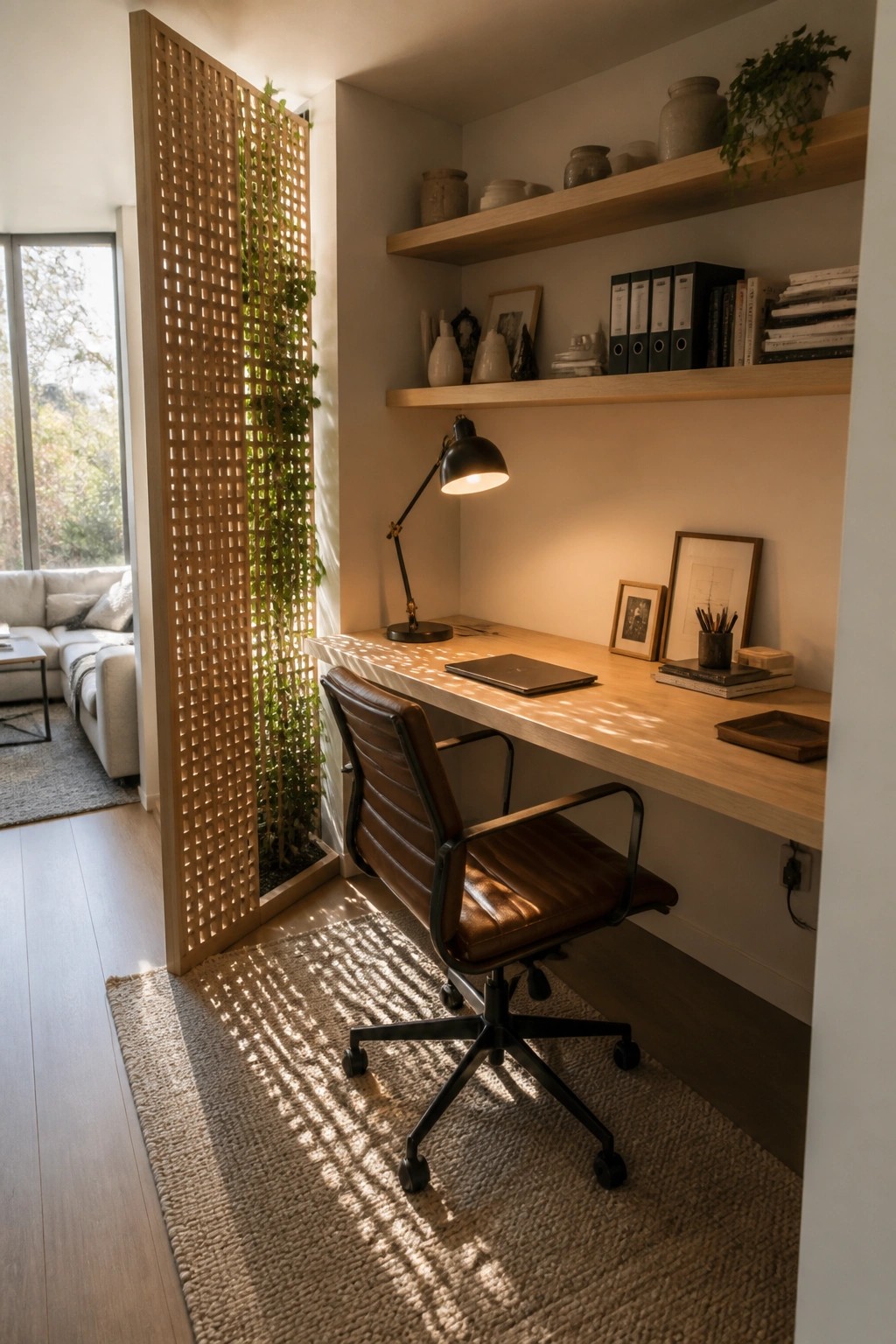
A wooden jali screen gives you a simple way to split one space into two without losing light or airflow. The open pattern lets sun move across the floor and keeps air circulating between the areas on either side.
This works best in smaller homes or open layouts where a solid wall would close things in too much. Try it along the edge of a workspace or reading spot so the rest of the room still feels connected.
Jali Screens For Dividing Rooms Without Blocking Light
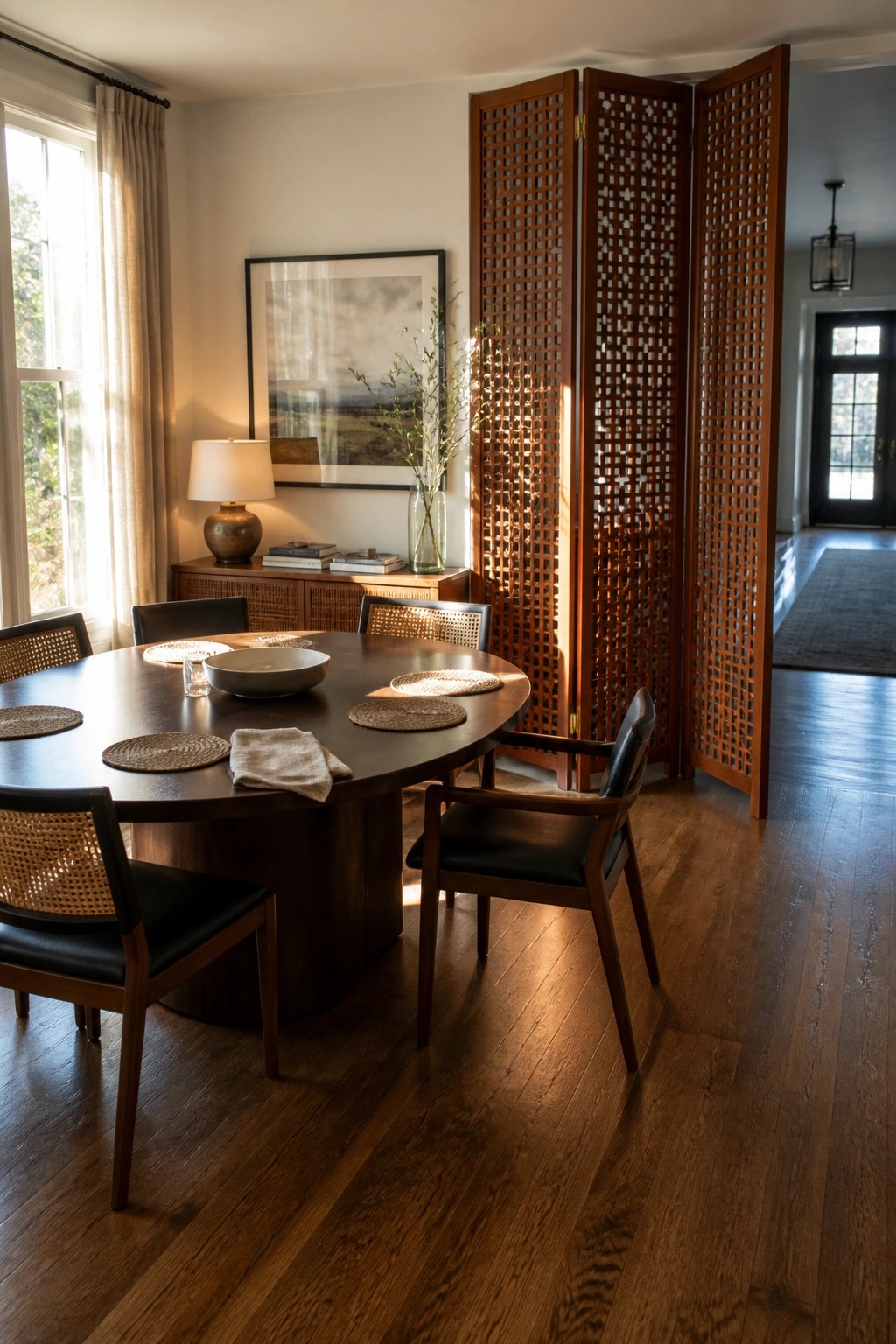
A wooden jali screen gives you a way to split up a larger space without making it feel closed in. The open pattern lets air move through and keeps light coming in from windows on the other side.
It works best in dining areas or living rooms where you want a bit of separation from a hallway or entry. Try placing it where the sun hits during the day so the shadows add some movement to the room.
Jali Screens That Divide Without Blocking Air
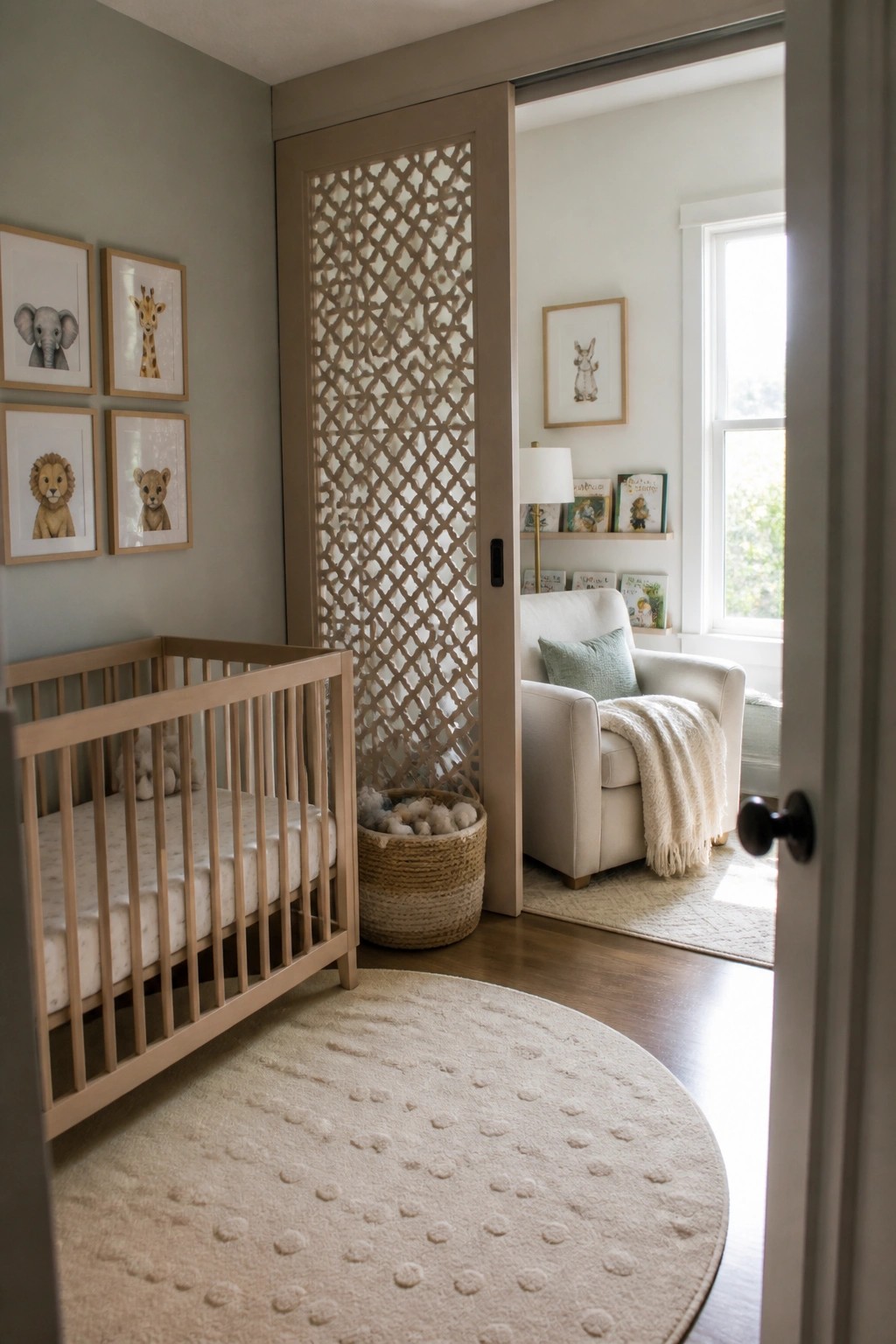
A wooden jali screen works well when you want to split a room but still need air and light to move through. The open pattern keeps the space from feeling closed off, which is useful in rooms that share a window or vent.
This type of door fits best in homes with steady airflow or in layouts where one area serves multiple uses. It works in smaller homes or open plans where a solid wall would cut off too much light.
Jali Doors for Laundry Closets
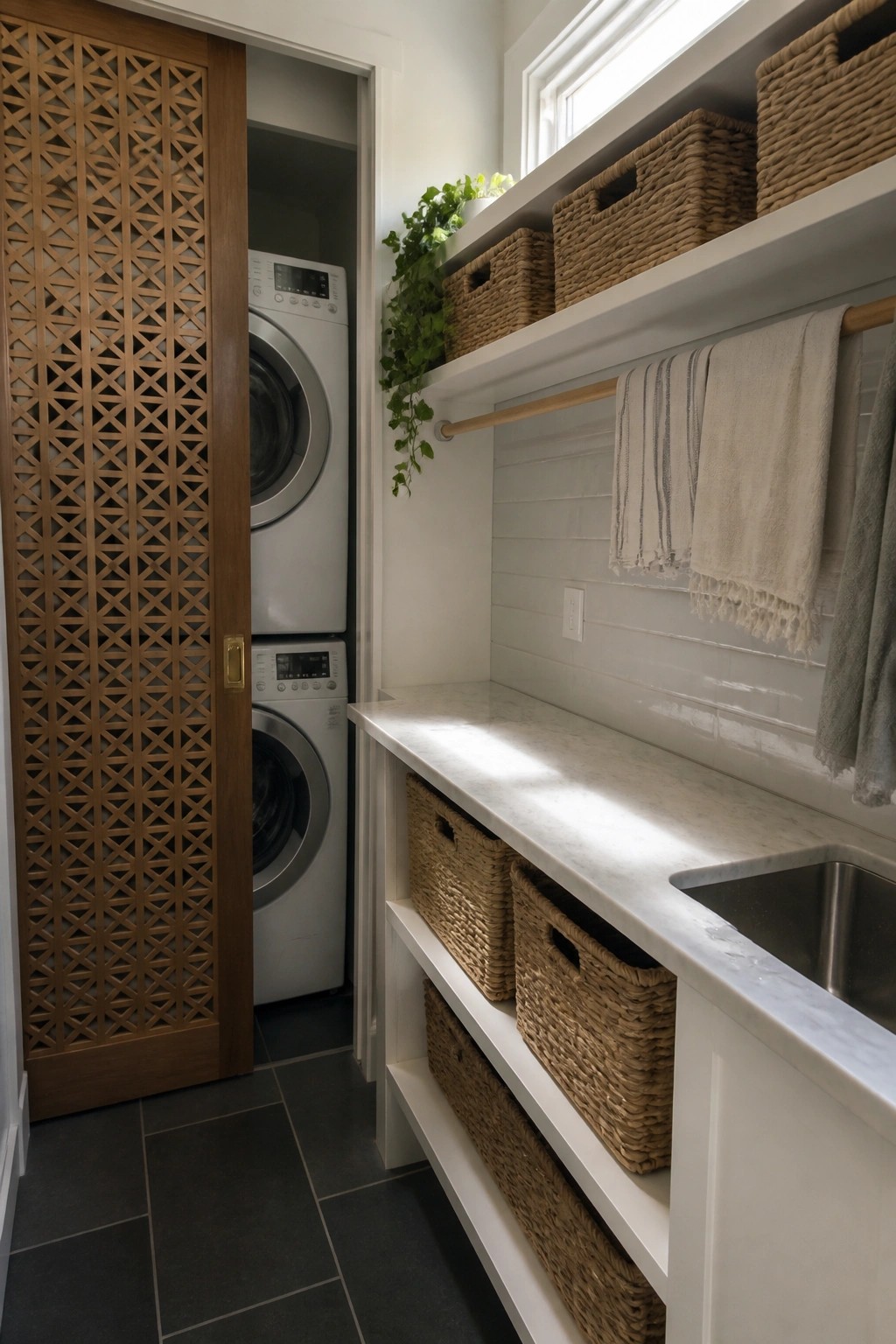
A jali door gives a laundry closet more character while still letting air move through the space. The pattern keeps the area from feeling closed off, and it hides the machines without needing a solid panel that would block ventilation.
This approach suits homes where the laundry area opens into a hallway or main room. Match the wood tone to other trim, and make sure the door clears the appliances when it opens or slides.
Jali Doors That Shape a Reading Corner
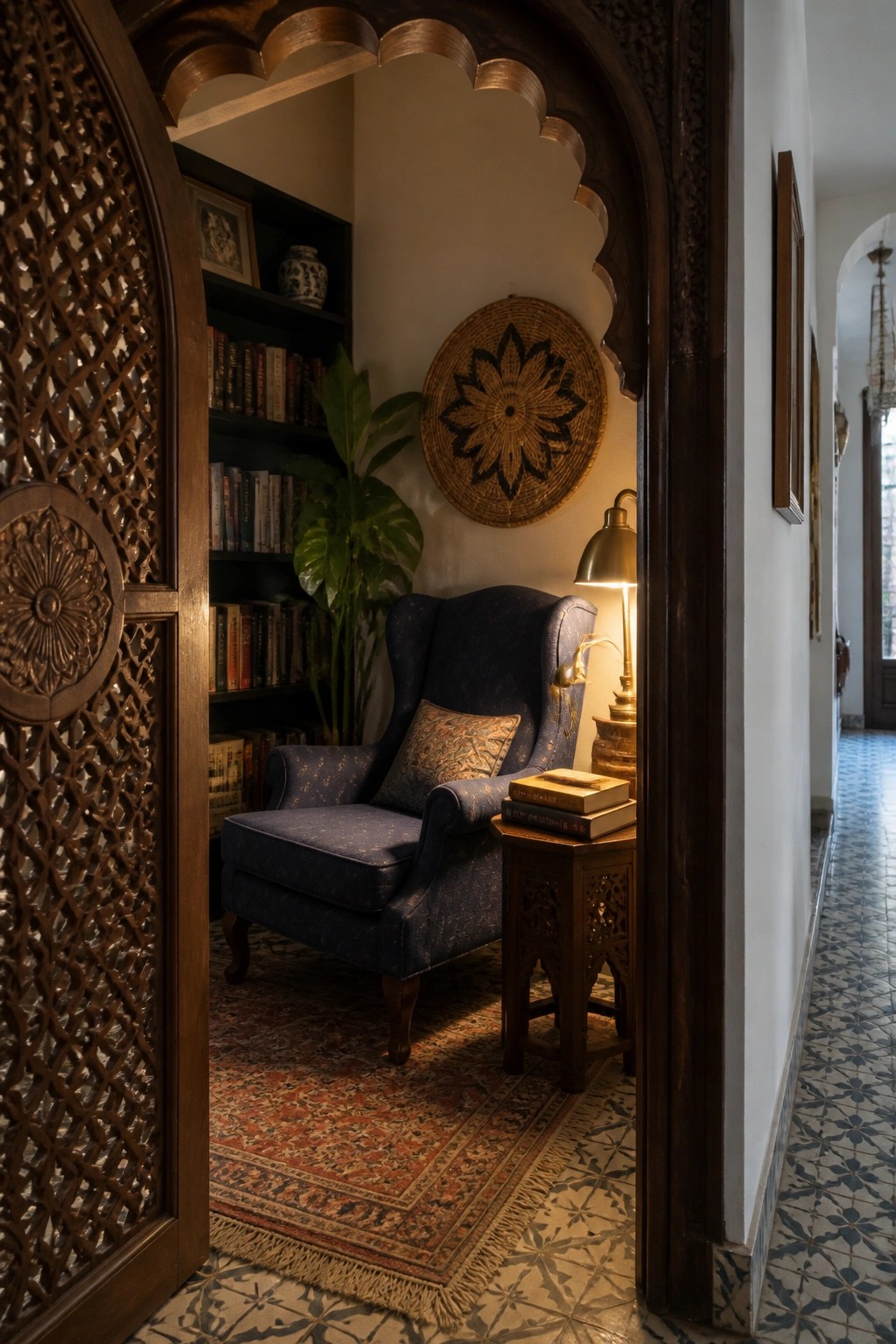
A carved wooden door works well when you want to set off a small seating area without making it feel closed in. The open pattern lets light and air pass through, so the space stays connected to the rest of the room while still feeling a bit private.
This approach suits older homes or any layout where you have an alcove or extra wall depth. Keep the door simple in finish and pair it with low seating and a few shelves so the corner stays useful rather than just decorative.
Wooden Jali Doors For Better Bedroom Airflow
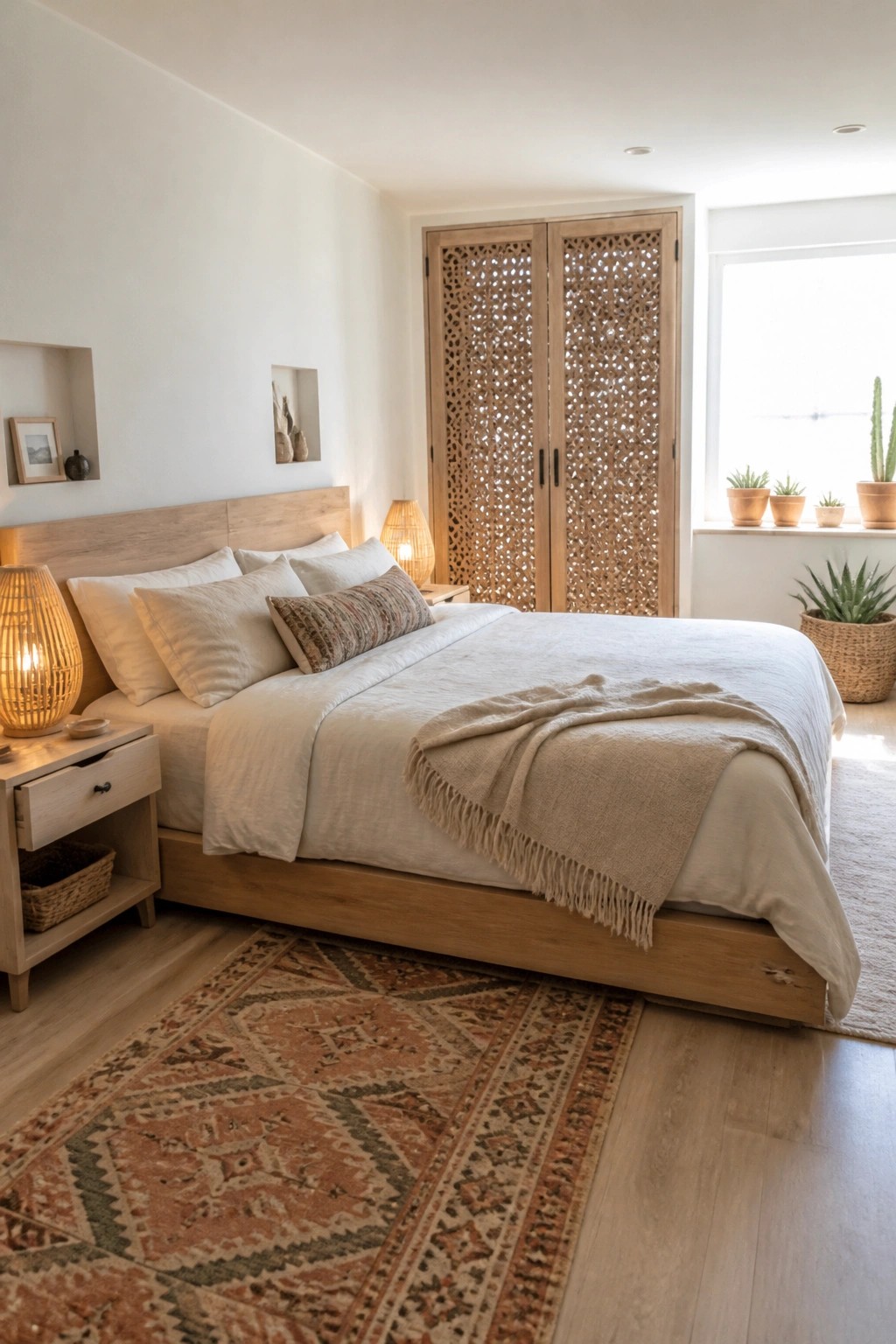
Many bedrooms stay stuffy because the doors stay shut for privacy. A pair of carved wooden jali doors solves that by letting air move through the pattern while still blocking the view.
They suit homes that run warm or lack cross ventilation. Keep the carving simple enough that the doors still open and close without catching, and place them where you want air to travel between the bedroom and an adjoining space.
Wooden Jali Along Hallway Walls
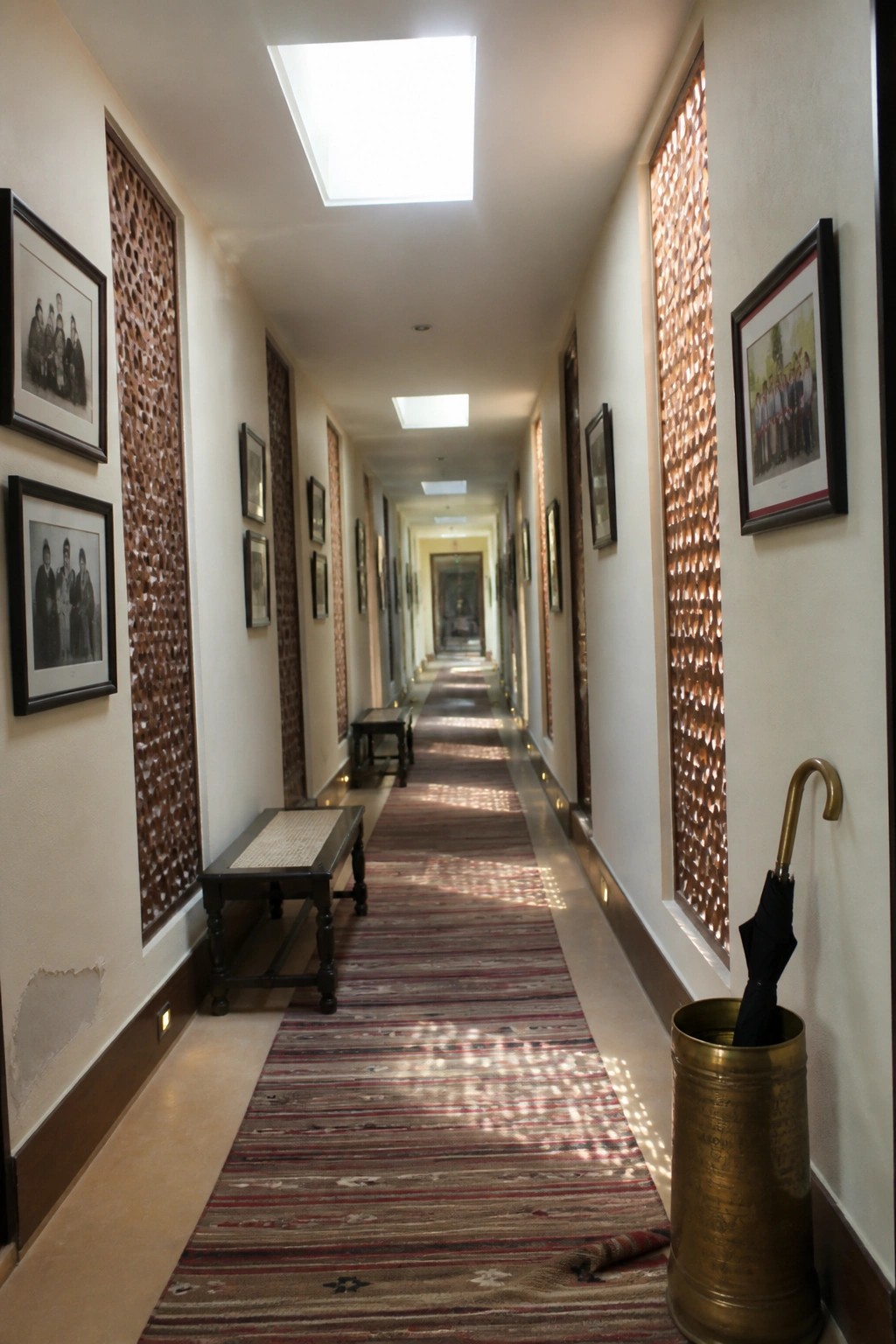
Wooden jali panels work well in long interior hallways because they bring pattern and airflow without making the space feel closed in. The open lattice lets light pass through while adding texture to plain walls, which keeps a narrow corridor from looking too plain or tunnel-like.
This approach suits homes with traditional or eclectic styles where you want some separation between rooms but still need air to move freely. Place the screens on one or both sides and keep the rest of the hall simple so the pattern stands out without crowding the space.
Colorful Lattice Doors For Play Spaces
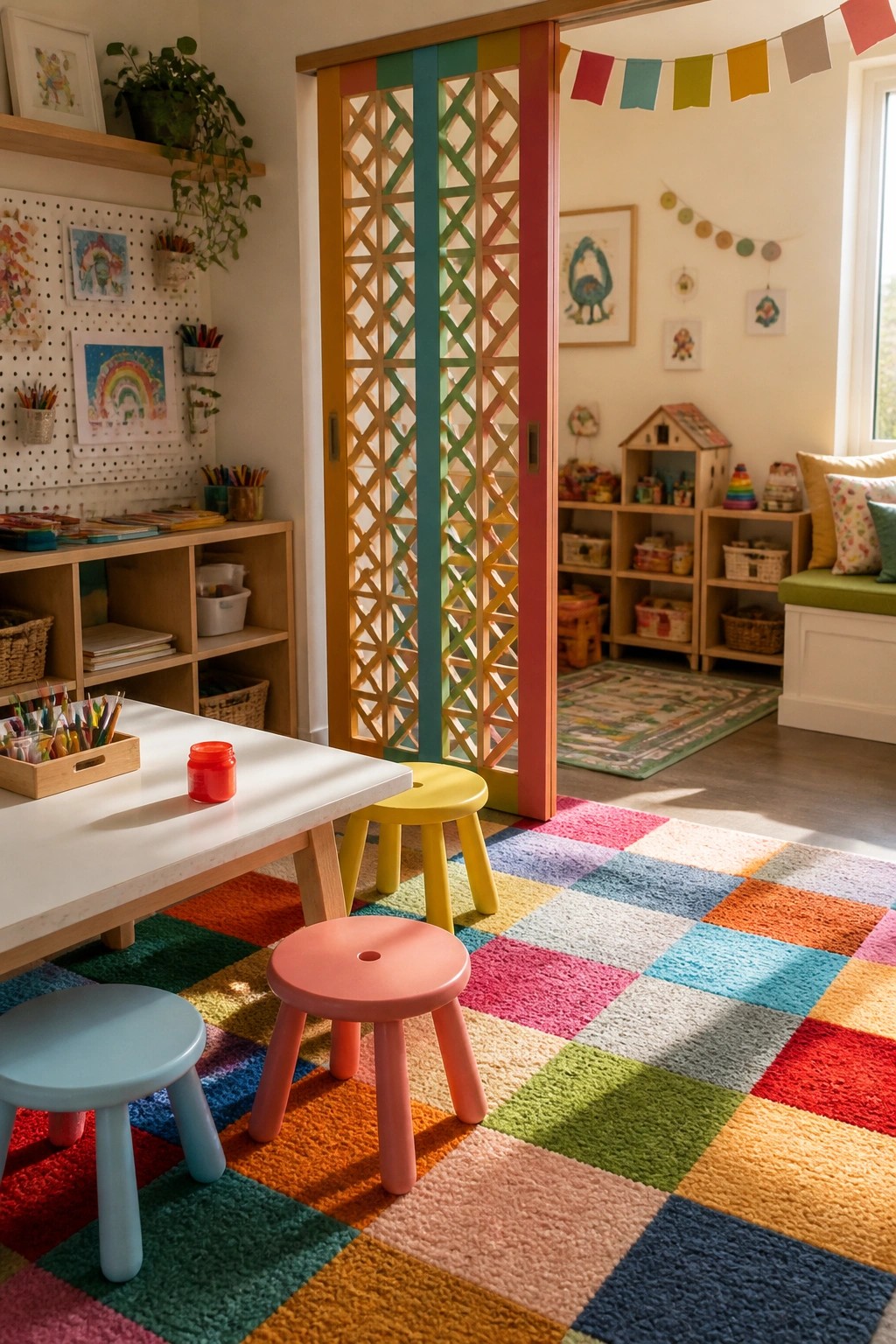
Many people like jali doors because they let air move through while still marking off one area from the next. In a room meant for kids this keeps things from feeling closed in and helps the space stay fresh during long play sessions.
They suit homes where the play area sits next to another shared room. Pick a bright painted finish so the door adds color without needing extra decor, and make sure the wood frame is solid enough to handle frequent opening and closing.
Jali Doors That Improve Airflow Indoors
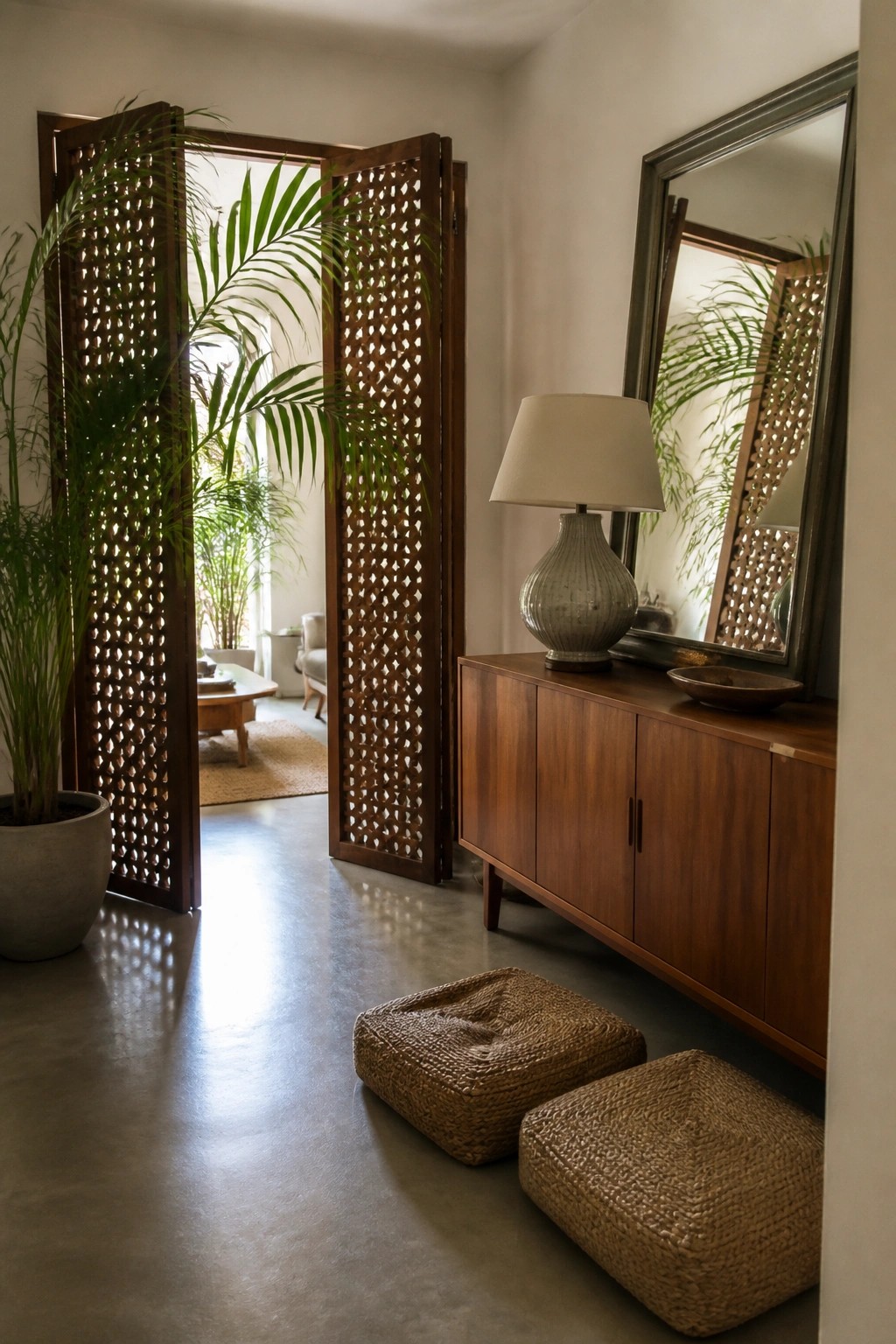
Many homes keep rooms closed off with solid doors even when some air movement would feel better. Jali doors fix this by letting breezes pass through the cutout patterns while still giving each space its own feel.
They suit warmer homes or any layout where you want light and air without making everything one big room. Place them between a living area and an entry or near a window that catches cross ventilation. The doors shown here do exactly that between two connected spaces.
Lattice Doors That Improve Airflow In Utility Rooms
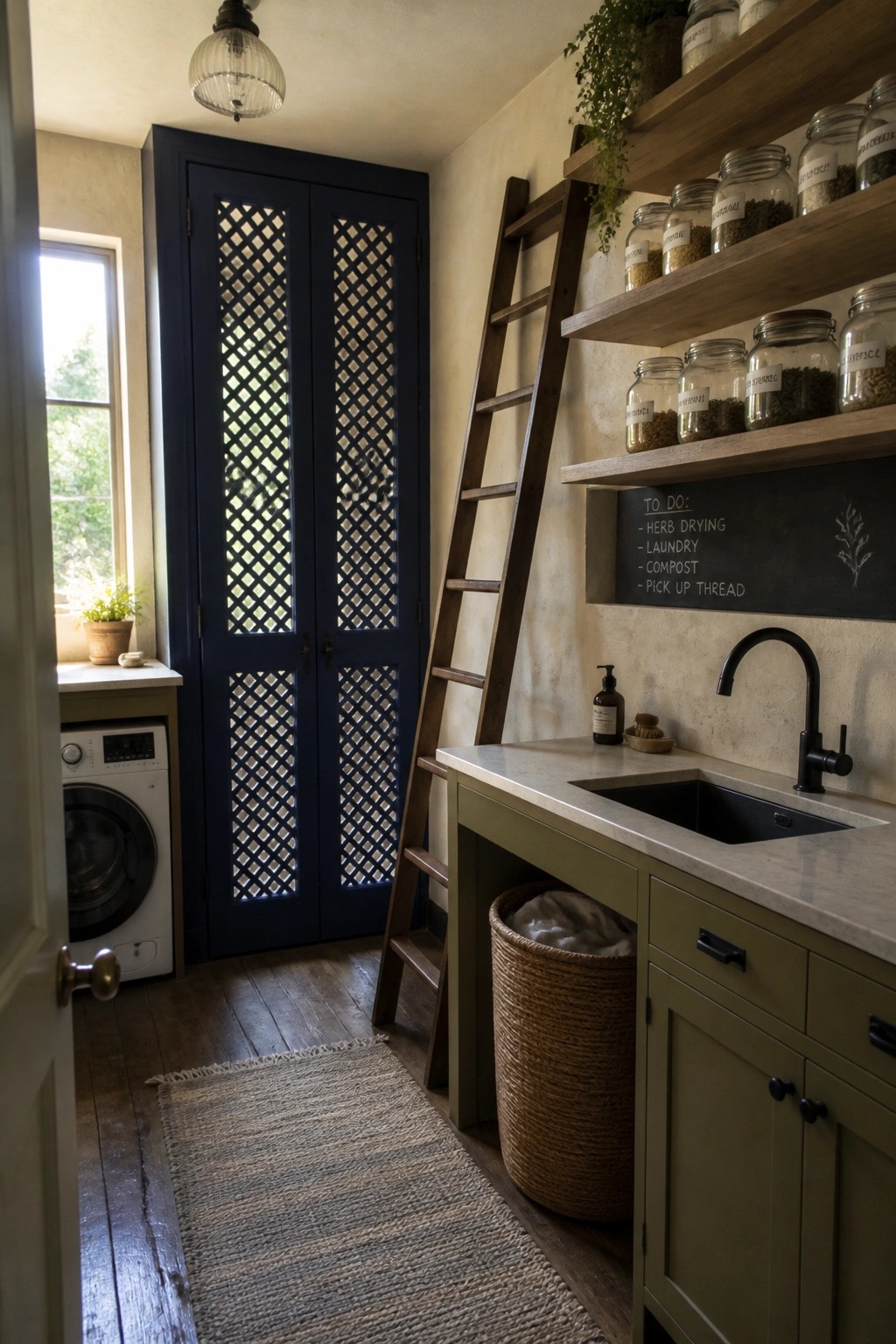
Many utility rooms get closed off with solid doors because they hold noisy machines and damp air. A jali door changes that by letting air move through the pattern while still giving the room its own boundary.
This works best in smaller homes where the laundry area sits close to main living spaces. The open grid keeps things from feeling stuffy and adds a simple bit of detail that fits older homes or cottages without much extra work.
Lattice Doors For Better Room Ventilation
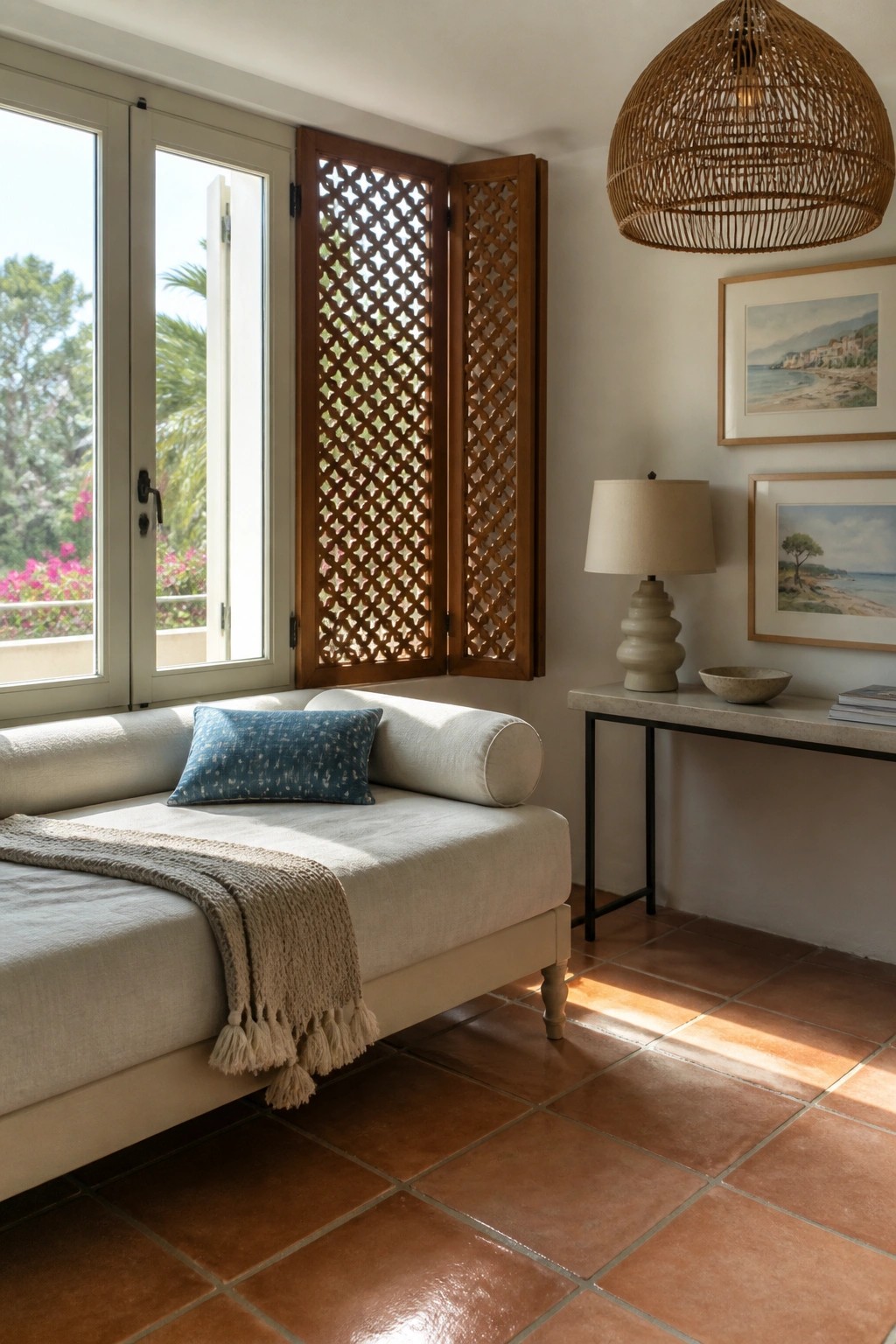
Wooden jali screens like these work well because they let air move through the room while still giving some privacy and a bit of pattern on the wall. The open carving keeps the space from feeling closed off, especially next to large windows that already bring in light.
They suit homes in warmer climates where you want airflow without leaving everything wide open. Place them on windows or as folding panels between rooms, and keep the rest of the space simple so the wood pattern stays the main detail.
Wooden Jali Screens For Covered Patios

A wooden jali screen brings pattern and airflow to an outdoor seating spot without making it feel closed in. The cutouts let light filter through in shifting shapes while still giving a bit of separation from the rest of the yard.
This approach works best on patios or courtyards that get strong sun and need some shade during the day. It suits homes that already lean toward tile, stucco, or simple wood details. Just make sure the scale of the screen fits the size of the seating area so it does not crowd the space.
Jali Doors For Built-In Closets
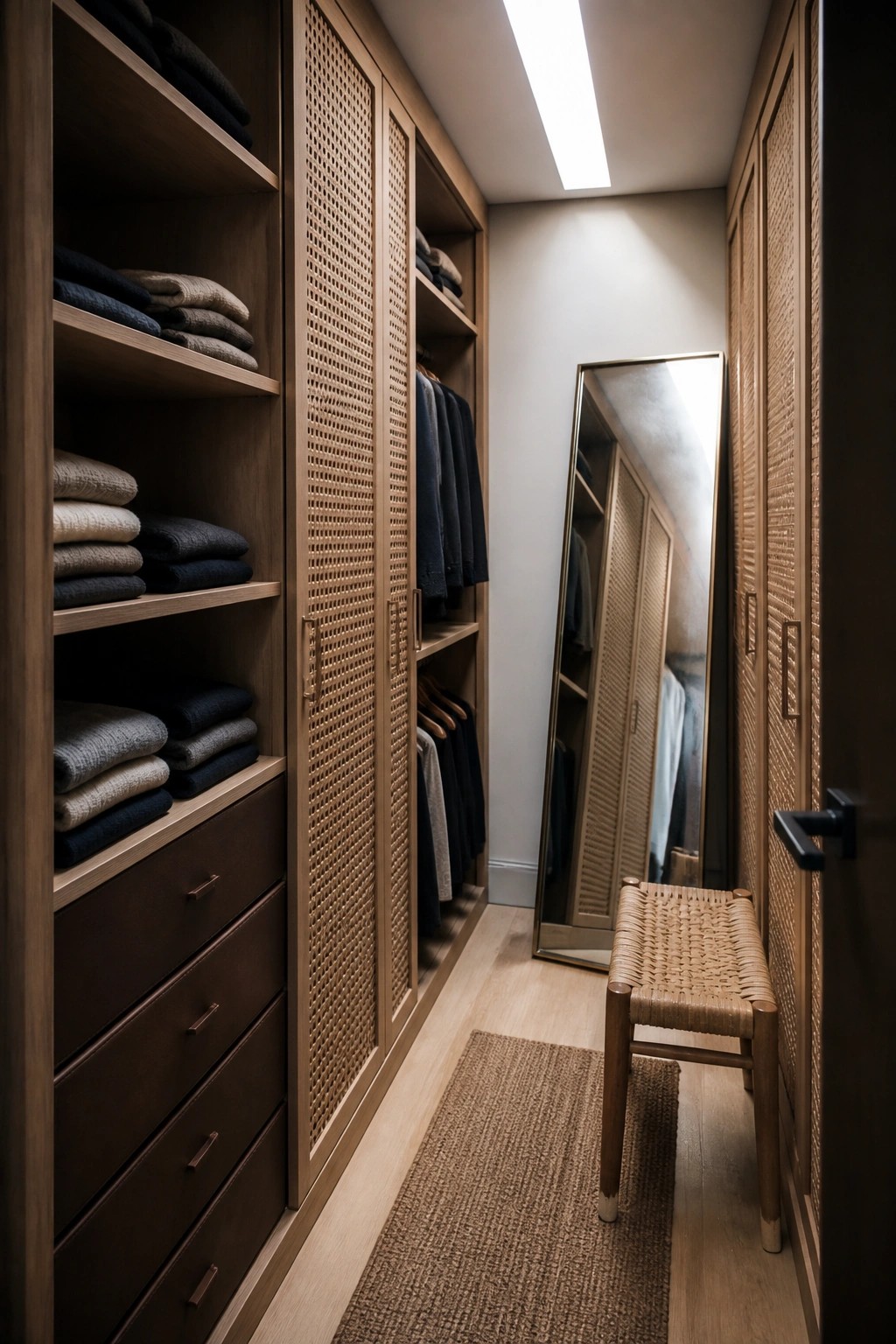
Jali doors on storage cabinets give closets a lighter feel because the open weave lets air move through the space. This helps with airflow around clothes and linens while adding texture that plain solid doors lack.
The approach works best in larger walk-in areas where storage runs along the walls. It suits homes that already lean on natural wood finishes and simple materials rather than glossy or painted surfaces.
Jali Doors In Bathroom Storage
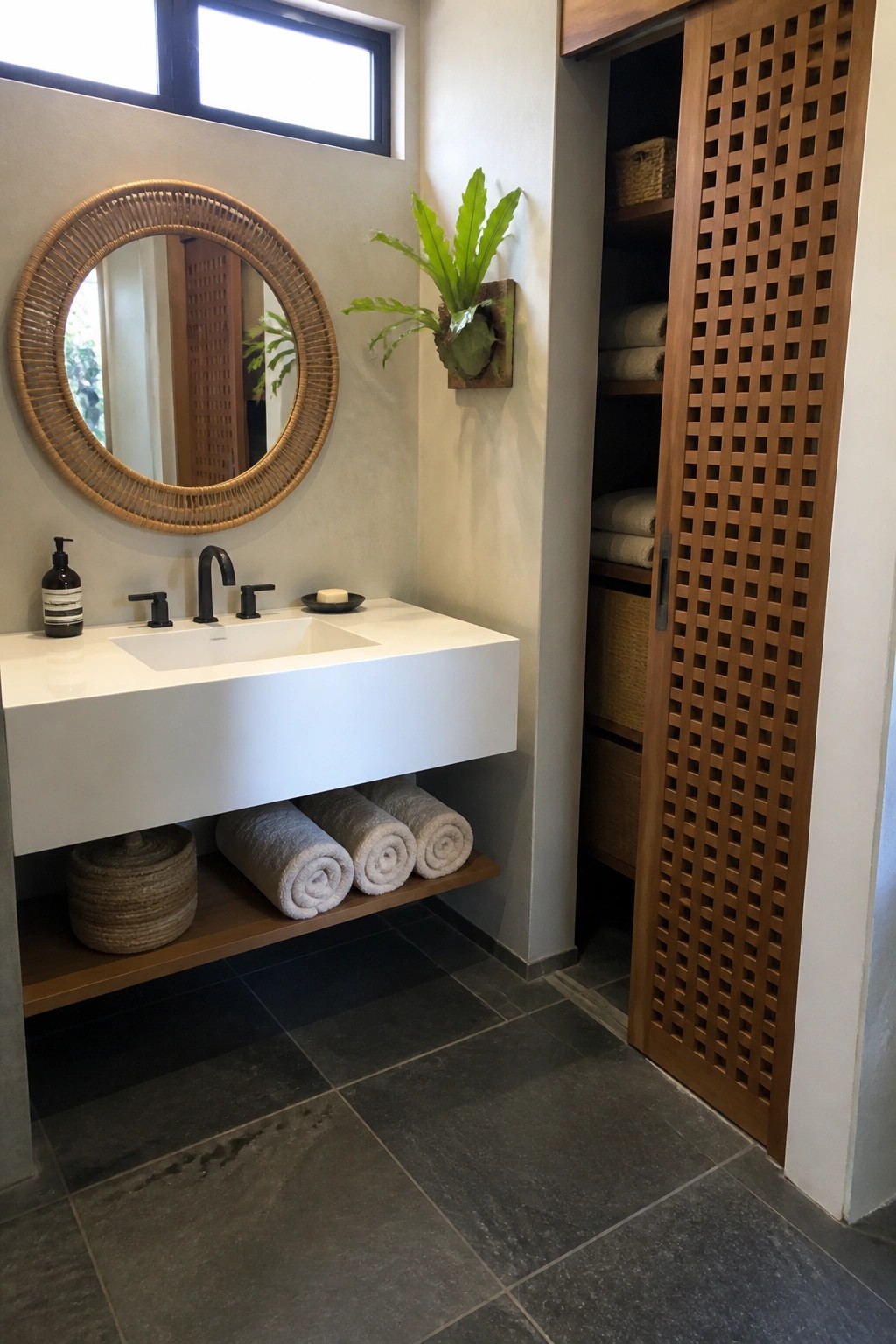
A wooden jali door works well in bathrooms because the lattice pattern lets air move through the storage area. This helps reduce moisture buildup on towels and other linens while still keeping the contents mostly out of sight.
It suits homes that already use wood tones or natural textures elsewhere in the room. Place it on a linen closet or open shelf unit rather than a full room door so the ventilation benefit stays focused where humidity tends to collect.
Jali Doors That Keep Air Moving Indoors
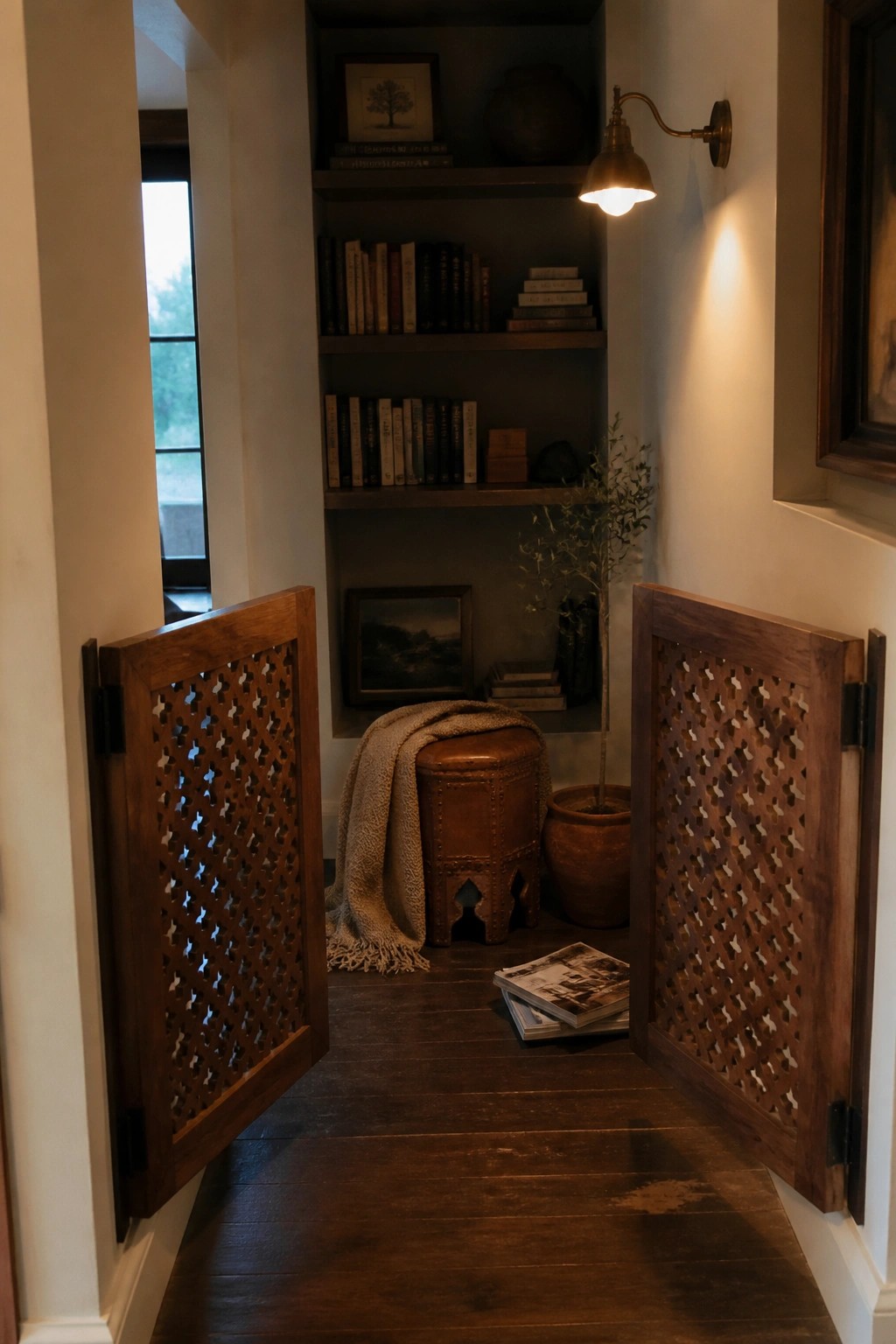
These cutout doors let air pass through even when they are closed. In a narrow hallway or small alcove that can feel closed off, the pattern helps the space stay fresher without losing any sense of separation.
They suit older homes or any place where you want a bit of privacy but still need airflow. Place them between rooms that share similar temperatures so the breeze can travel easily from one area to the next.
Wooden Jali Screens For Better Airflow
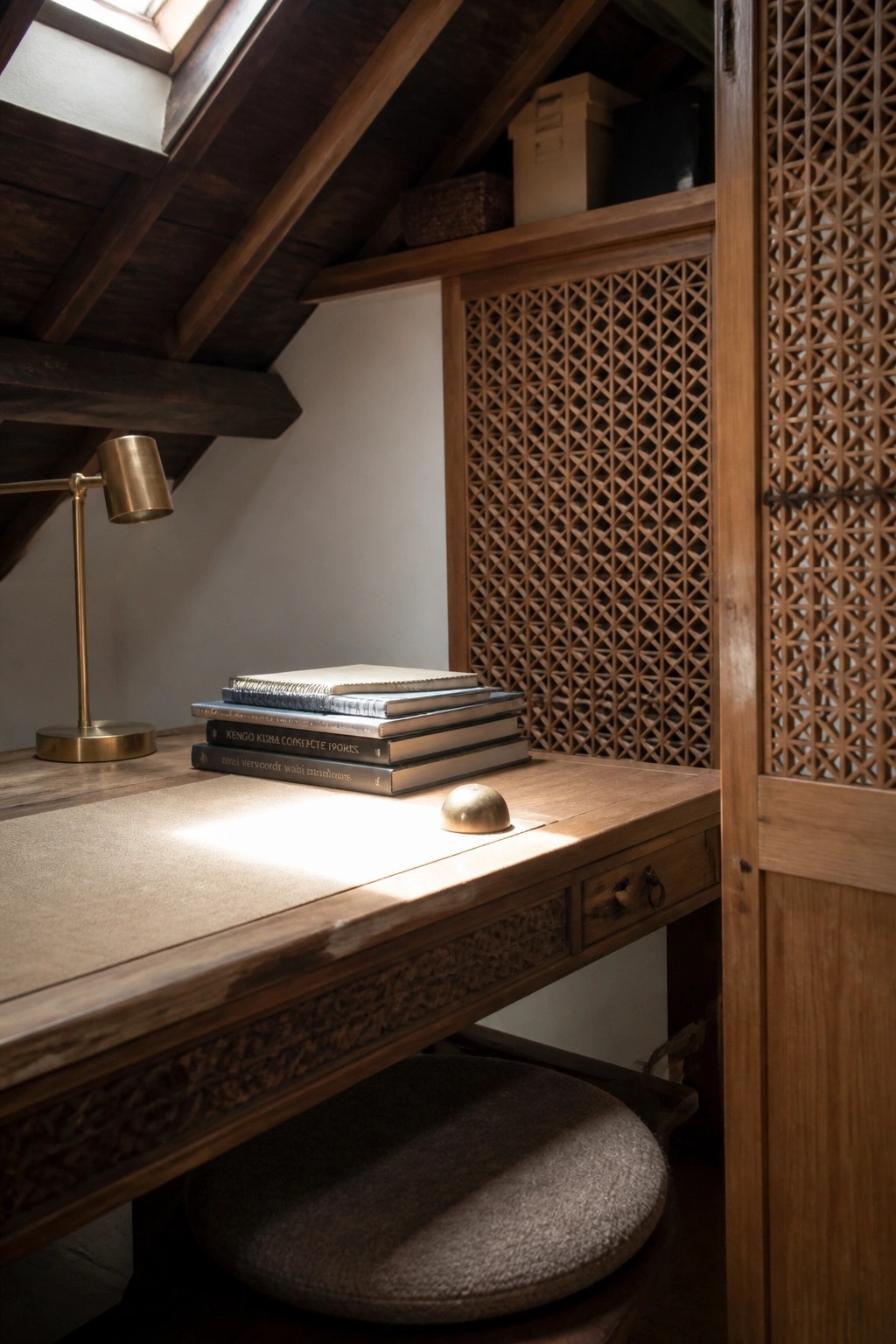
A wooden jali screen adds useful separation while still letting air move through the room. It works especially well in compact spaces where a solid wall or door would make things feel stuffy.
Try placing one between a workspace and the rest of the room if you want a bit of privacy without losing the sense of openness. Keep the pattern open enough so the ventilation benefit stays strong.
Jali Doors That Keep Air Moving
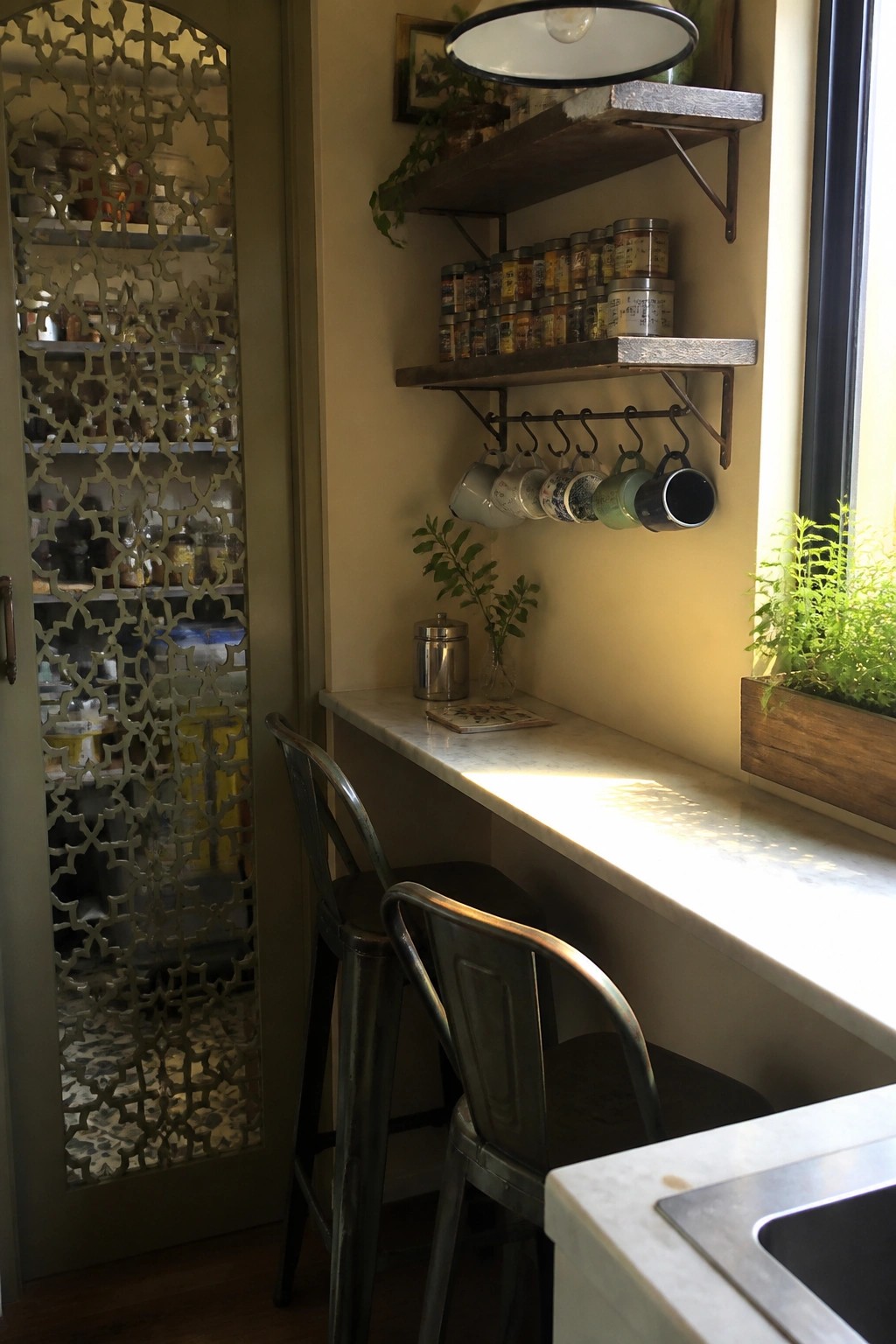
A carved wooden jali door works well when you want to separate a kitchen or pantry from the rest of the house but still need air to circulate. The open pattern lets light and breeze pass through, so the space does not feel stuffy even when the door stays closed most of the time.
This approach suits older homes or small layouts where full walls would cut off too much airflow. Place the door between a cooking area and a storage zone, and keep the pattern simple so it does not compete with other details in the room.
Wooden Jali Doors for Natural Ventilation
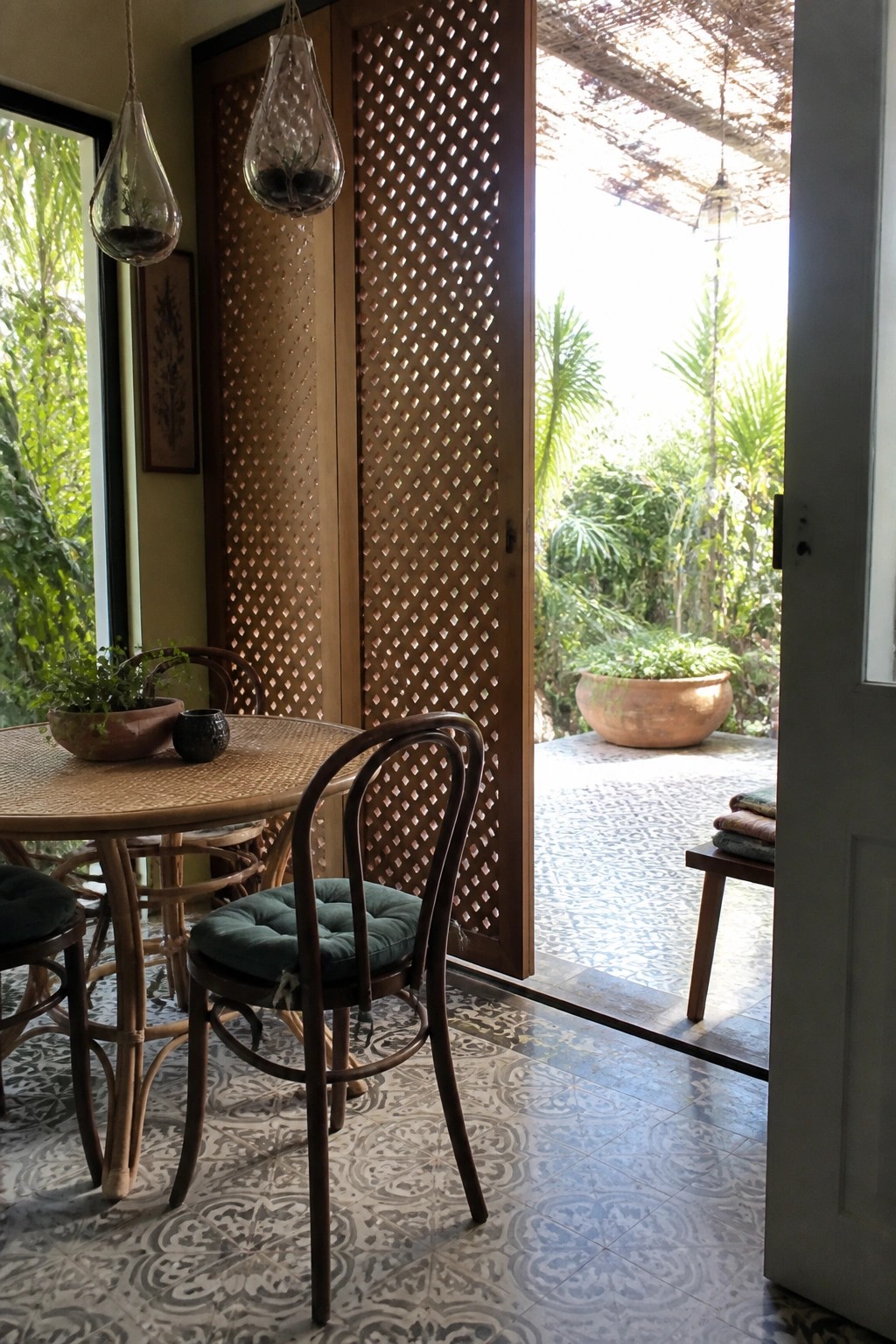
A wooden jali door works well when you want airflow between rooms or between inside and out without leaving a full opening. The pattern lets air move freely while still giving a sense of separation, and it adds a quiet layer of detail that does not feel heavy.
This kind of door suits older homes or any space that opens to a patio or garden. It performs best in warm climates where you can keep it open most of the year. Just make sure the pattern is not too fine or dust will collect quickly.
Frequently Asked Questions
Q: How do these doors handle heavy rain if they face an open courtyard? A: Treat the wood with a good outdoor sealer before installation. This keeps moisture from warping the panels. Check the finish once a year and reapply if it starts to fade.
Q: Can I use a jali door as a room divider instead of an entry? A: The designs work great for that. They create visual separation without cutting off airflow between spaces. Just make sure the frame is sturdy enough to stand alone.
Q: What if the pattern I like blocks too much light in a small hallway? A: Choose a more open jali style with larger cutouts. You can also position it near a window to bounce extra light through the holes. This keeps the area bright and airy.
Q: How often should I oil the wood? A: Twice a year keeps most indoor doors in good shape. Apply a light coat and buff it well.
