

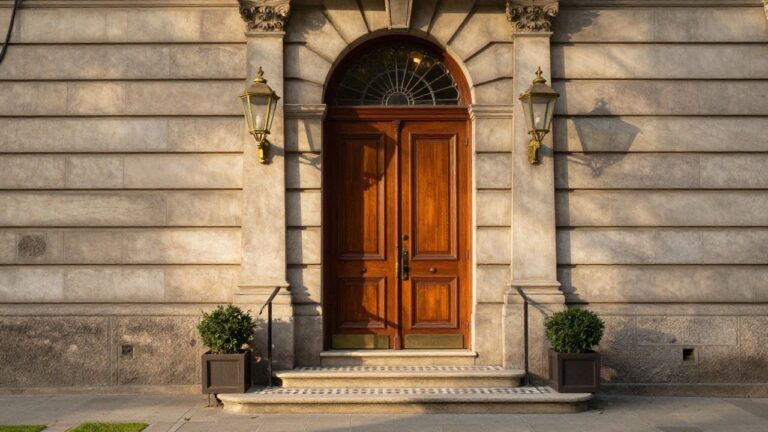
I often notice that the front door sets the tone for how a house presents itself from the street long before anyone steps inside.
Choosing wood with classic details can tie the entry to the rest of the facade in a way that feels grounded rather than added on later.
Some designs hold up better in real weather than others.
The proportions matter more than the carvings alone when the door has to work with the surrounding trim and windows.
I keep a few sketches of door styles that seem worth trying on a plain wall to see how they change the scale of the entrance.
Double Wood Doors Under Stone Arches
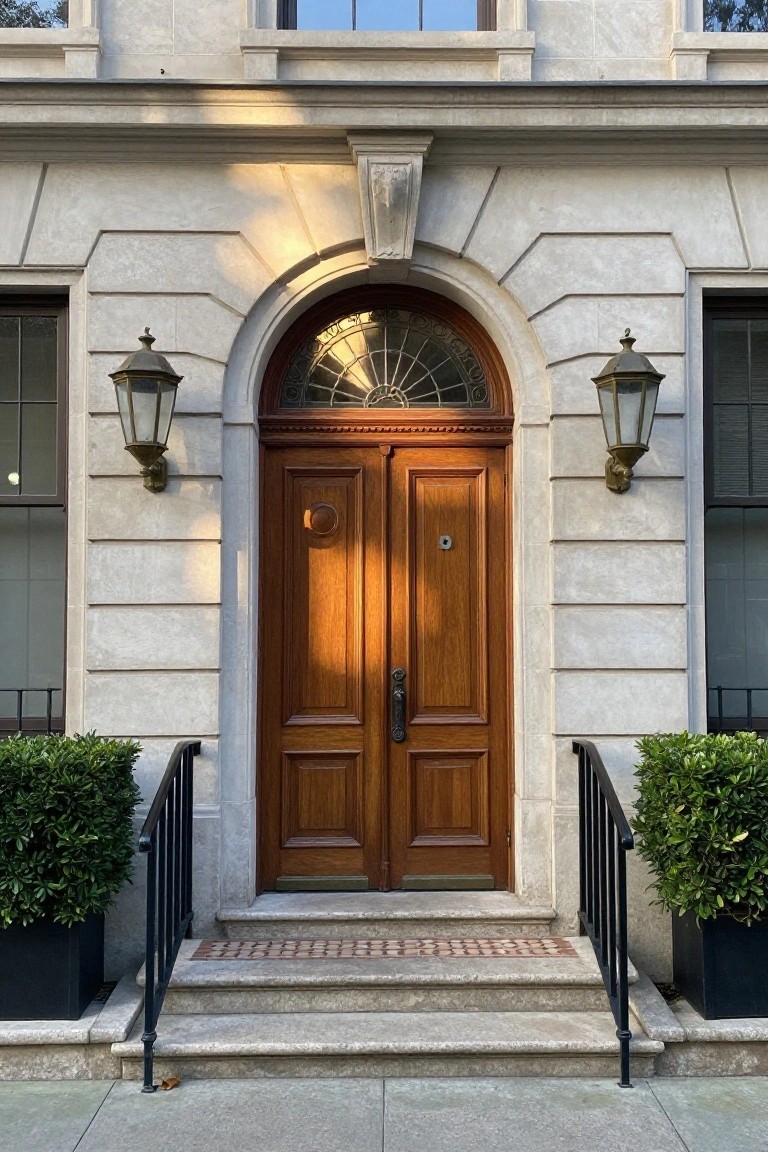
A pair of solid wood doors set into a stone arch gives the front of a house real weight. The arch frames the door cleanly and the wood grain adds warmth against the masonry.
This setup works best on homes with a traditional or classical style. Keep the hardware simple and let the door and arch carry the look. It suits two-story facades where the entry can stay centered and balanced.
Classic Wooden Doors In Stone Frames
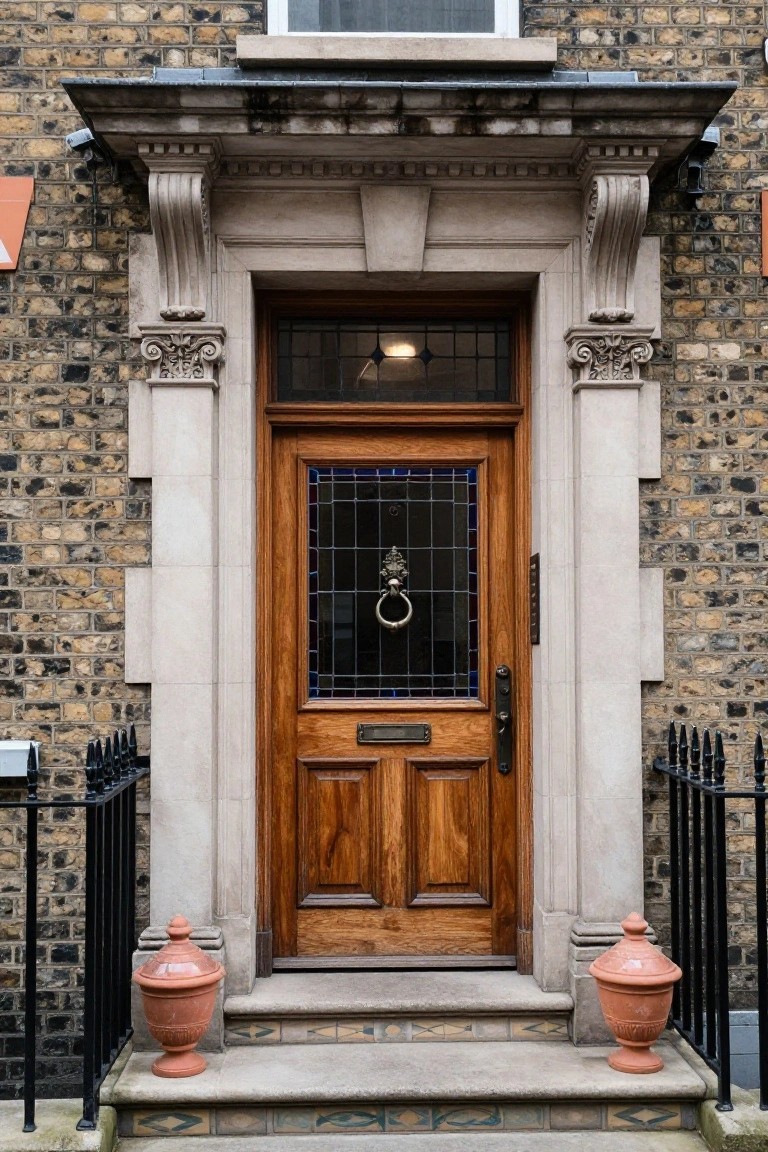
A solid wooden door gains real presence when it sits inside a carved stone surround. The natural grain and warm tone of the wood balance the cooler, heavier look of the masonry without competing with it.
This works best on brick or stone homes that already have some classical detailing. Keep the door finish simple and let the surrounding columns and architrave provide the ornament.
Carved Double Doors For A Classic Entry
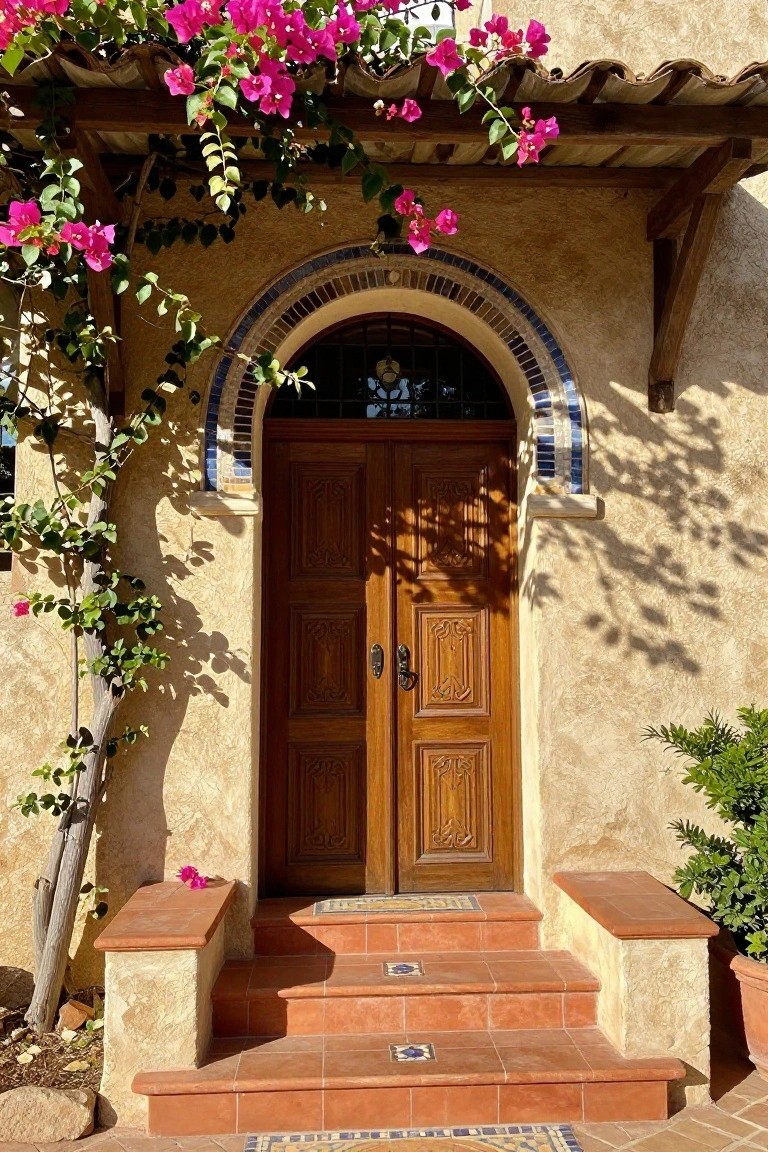
Carved wooden double doors give an entry a solid, finished look that feels more substantial than plain ones. The raised panels and details catch the light nicely and make the whole front feel more intentional without needing extra trim or hardware.
This style works best on homes with stucco or plaster walls and a simple arch or overhang above. Keep the finish in a warm brown tone so the carvings show up, and add a small tiled step or threshold to tie the doors into the rest of the facade.
Wooden Doors For Traditional Entries
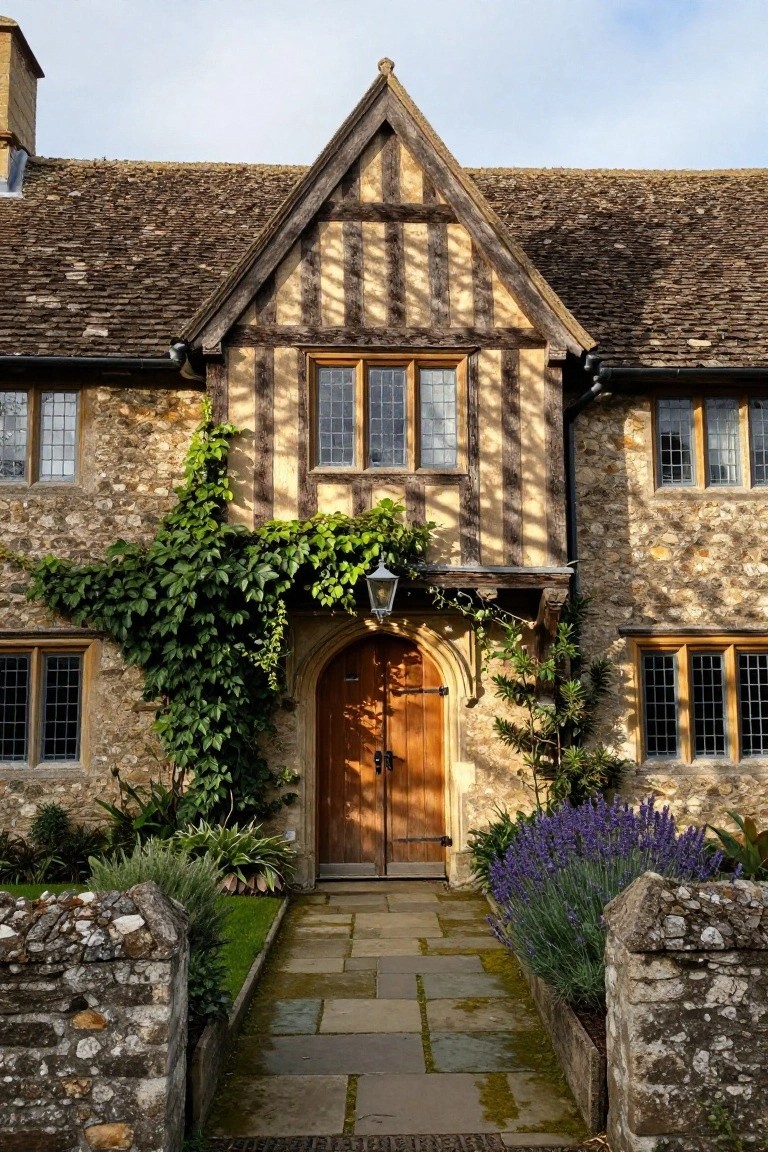
A pair of solid wooden doors can give a house that settled, classic look without much extra effort. The natural wood grain and simple hardware stand out nicely against stone walls and timber framing, which is why this style keeps showing up on older homes.
This works best on facades that already lean traditional. Keep the door design plain so the wood itself does the work, and make sure the opening feels balanced with the windows and roofline above it.
Frame Double Doors With Mosaic Borders
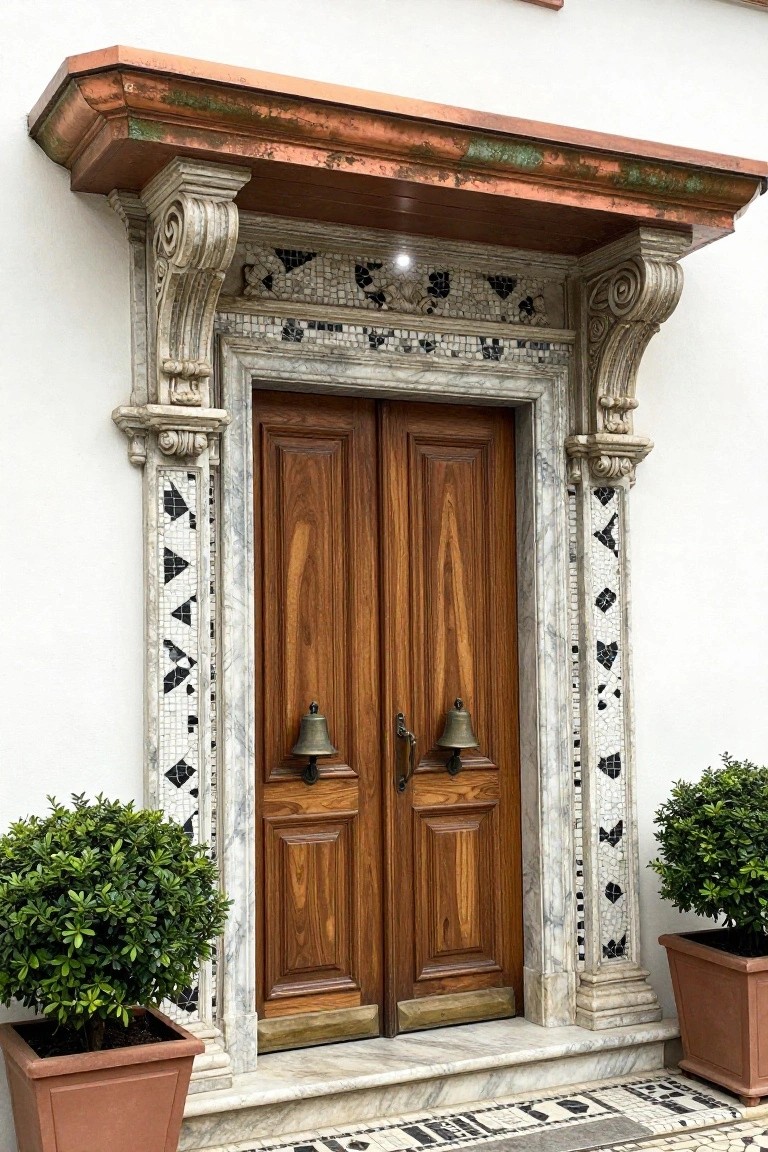
Many homes gain a stronger entry by adding a patterned border around the main doors. The mosaic and marble here give the wood doors more weight and make the whole doorway feel more finished without needing extra trim or color.
This works best on houses that already lean classic. Keep the doors in a natural wood tone and limit nearby planting to one or two pots so the border stays the main feature.
Adding a Pediment Over a Wooden Door
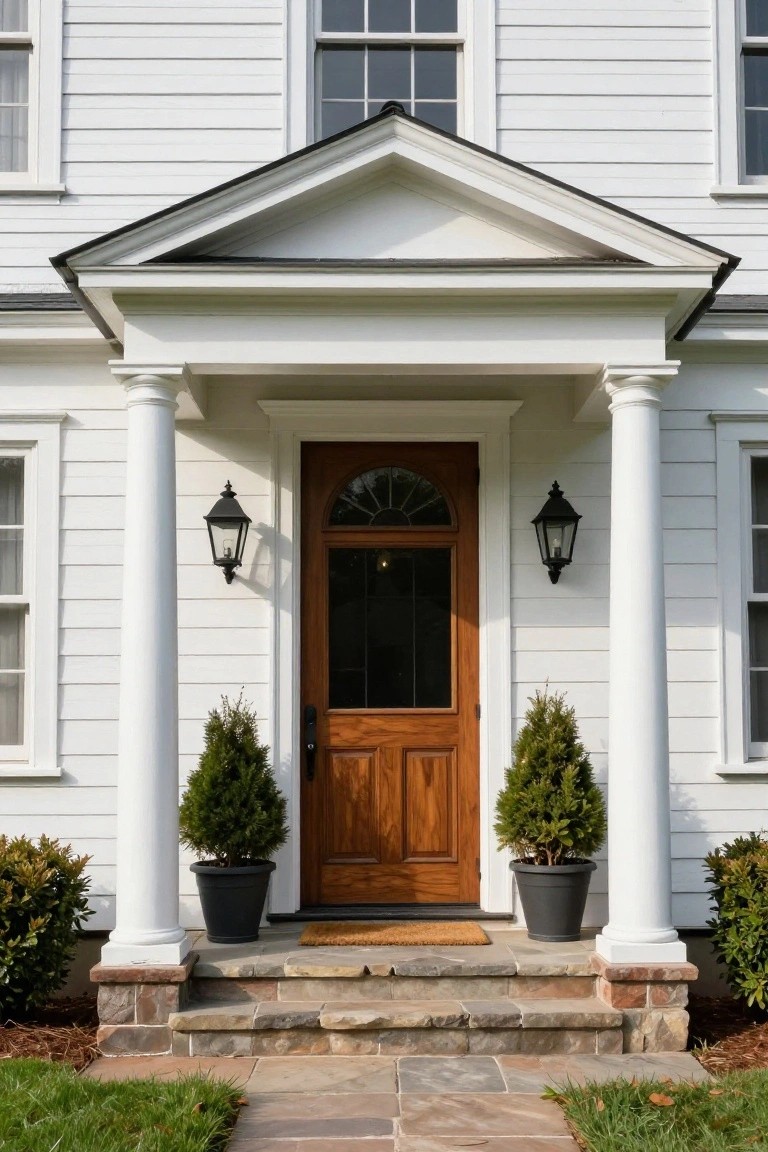
A pediment above the door gives the whole entry a finished, classic shape. It draws attention to the wood without needing much else around it.
This setup works best on homes with a fairly simple facade. Keep the trim and columns light so the door stays the main focus.
Stone Arches Over Wooden Doors
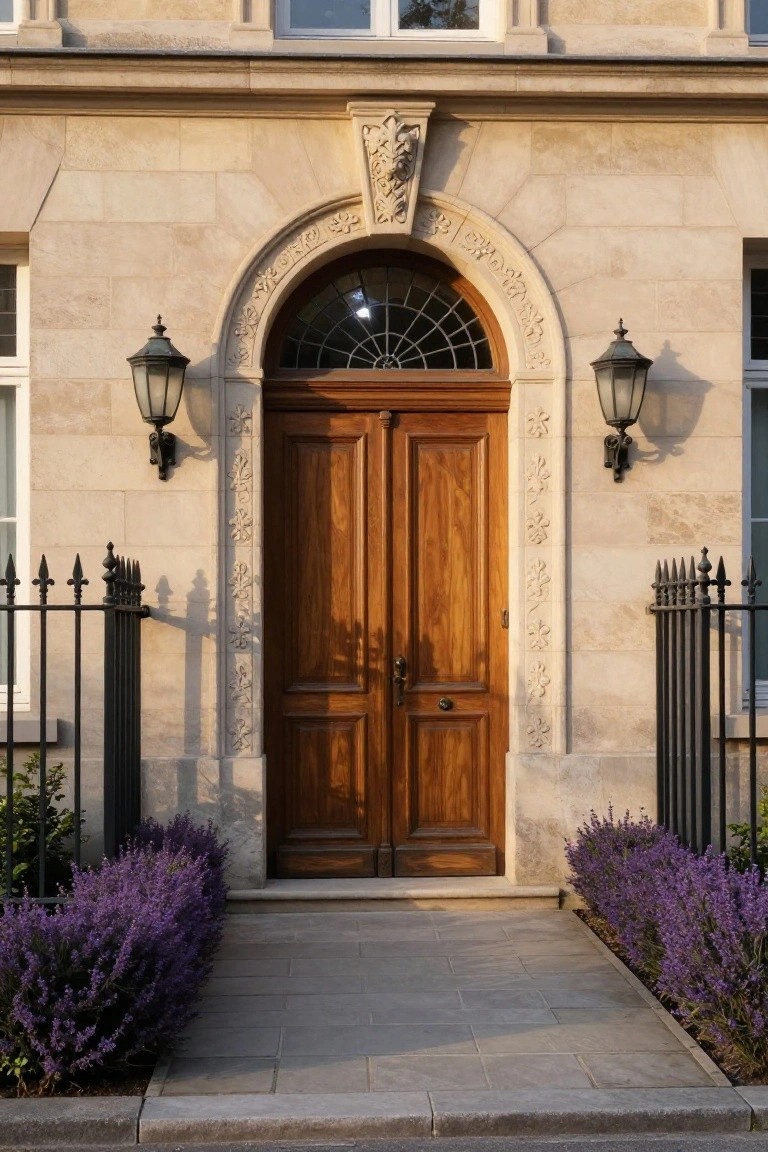
A wide wooden door gains real presence when it sits inside a carved stone arch. The contrast between the warm wood grain and the lighter stone makes the entrance feel solid and welcoming at the same time.
This approach suits traditional homes that already have stone or masonry on the facade. Keep the rest of the entry fairly simple so the door and arch remain the main feature.
Painting Ornate Wooden Doors Black
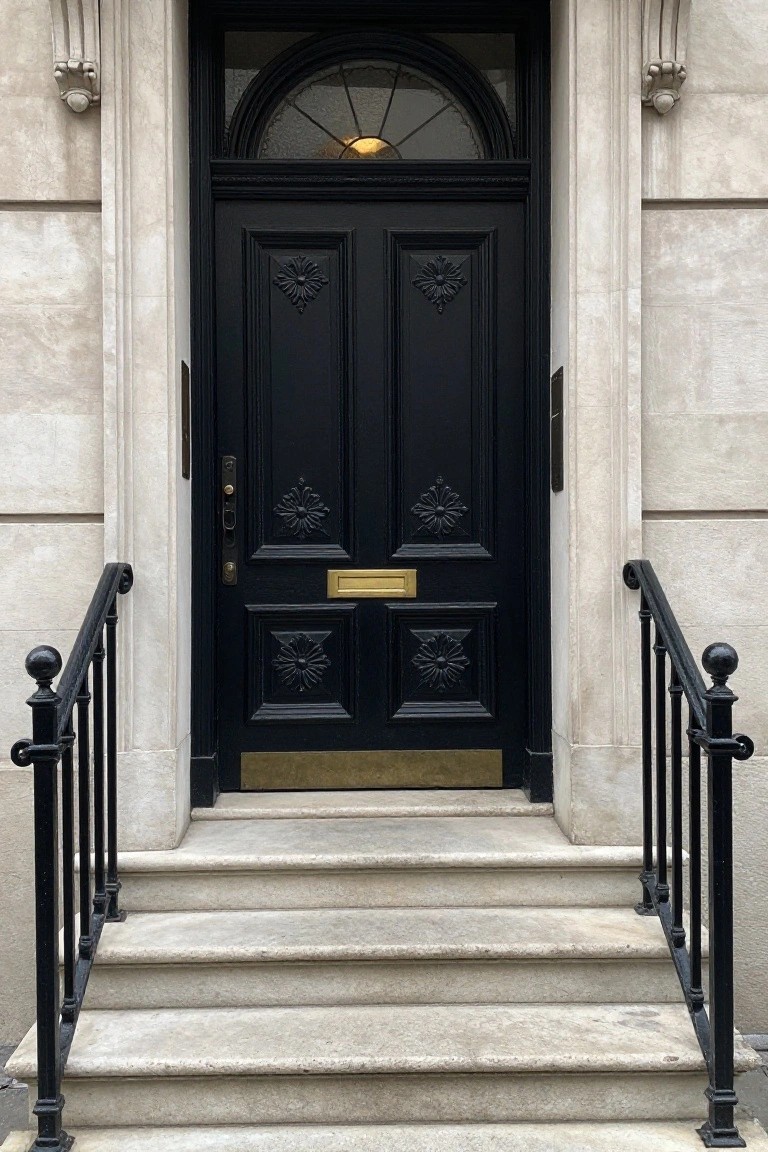
Black paint makes the carved details on a wooden door stand out without needing extra trim or color changes. The dark finish gives the whole entry a solid, finished look that still feels classic rather than heavy.
This approach works best on homes with stone or light-colored siding where the contrast can do the work. Keep the hardware simple, like plain brass, so the carvings stay the main point instead of competing with shiny extras.
Ornate Double Doors for the Front Entry
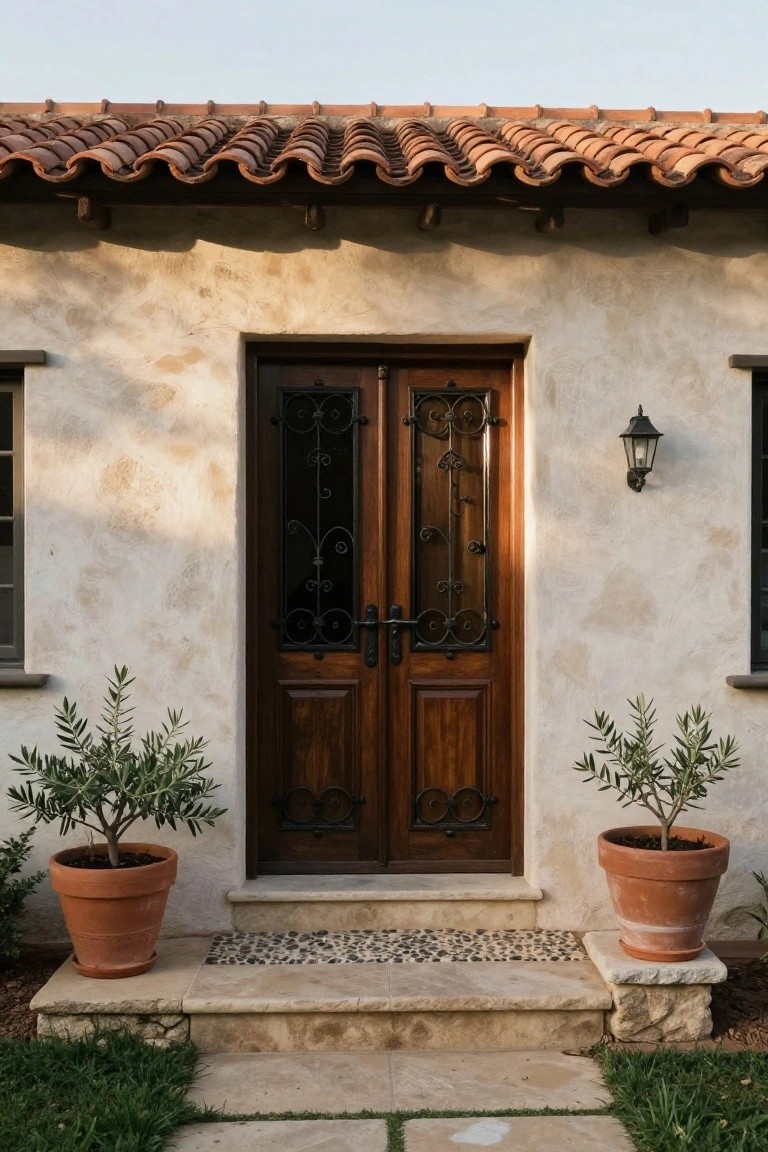
A set of wooden double doors with iron scrollwork can give an entry real presence even when the rest of the facade stays plain. The dark wood and metal details stand out against light stucco, and that contrast is what makes the look feel classic rather than busy.
This works best on homes that already have a simple wall surface and a low roof overhang. Keep the area around the doors uncluttered so the doors remain the focus, and choose hardware that matches the ironwork instead of trying to add more decoration.
Classical Columns for a Traditional Door Entry
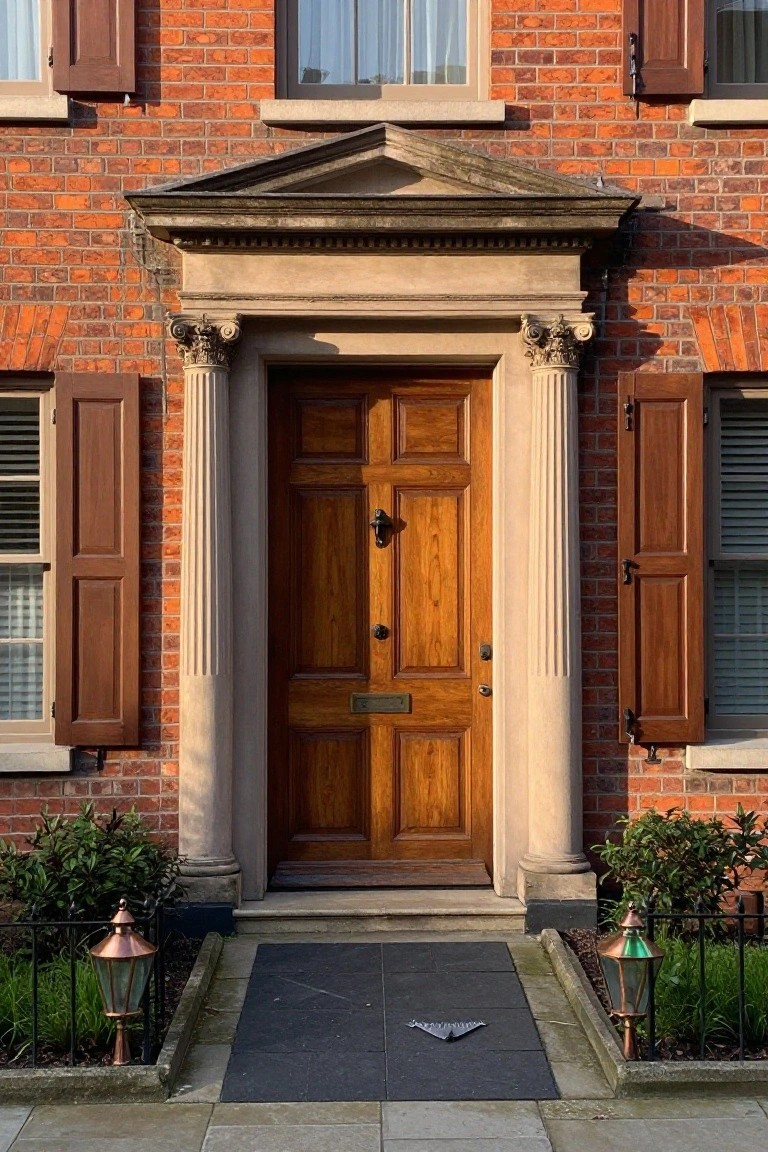
Many homes gain a stronger presence when columns are added around the front door. The pair of fluted columns here supports a pediment and gives the wooden door a more formal look without needing extra decoration.
This approach suits brick houses or any older style home where you want the entry to feel balanced and lasting. Keep the columns simple and match the scale to your door so the whole setup stays proportional rather than overwhelming the facade.
Carved Stone Frames For Classic Entries
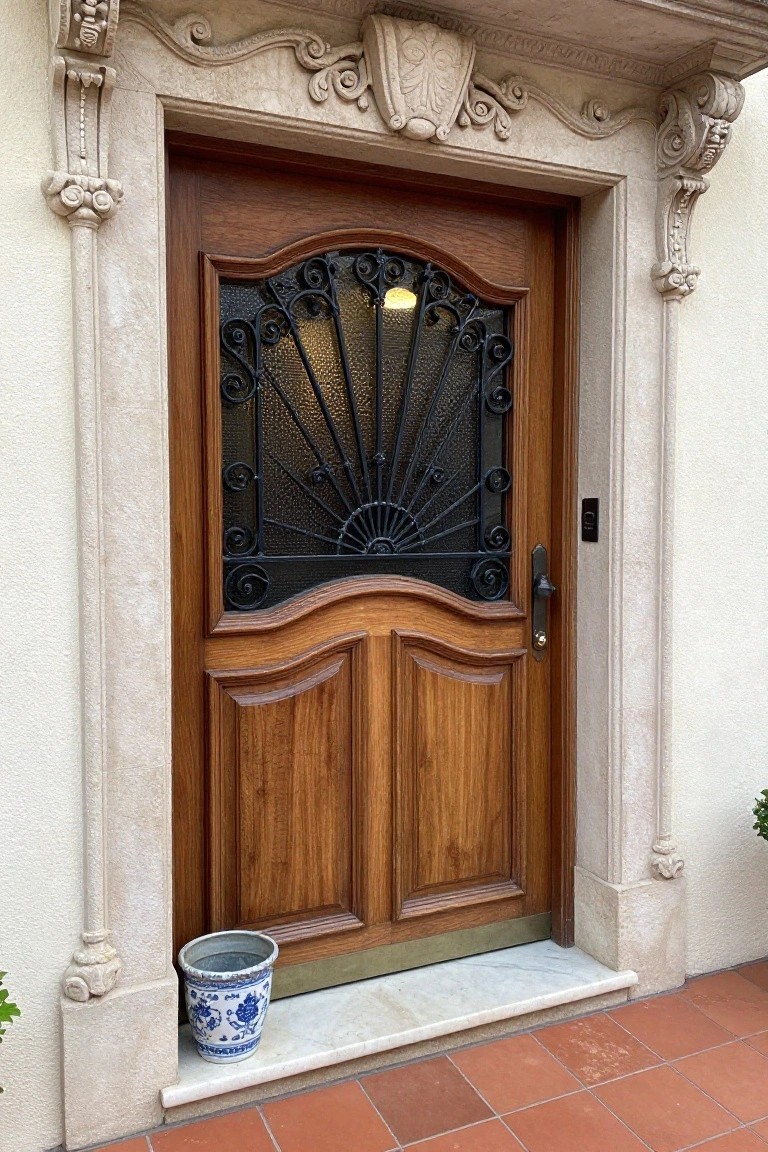
Many homes gain a stronger sense of age and presence when the door is set inside a carved stone surround. The stone adds weight and detail without overpowering the wood itself.
This approach suits masonry or stucco houses that already lean traditional. Match the stone tone to the surrounding wall so the door remains the main focus rather than competing with the frame.
Classic Wooden Doors For The Front Entry
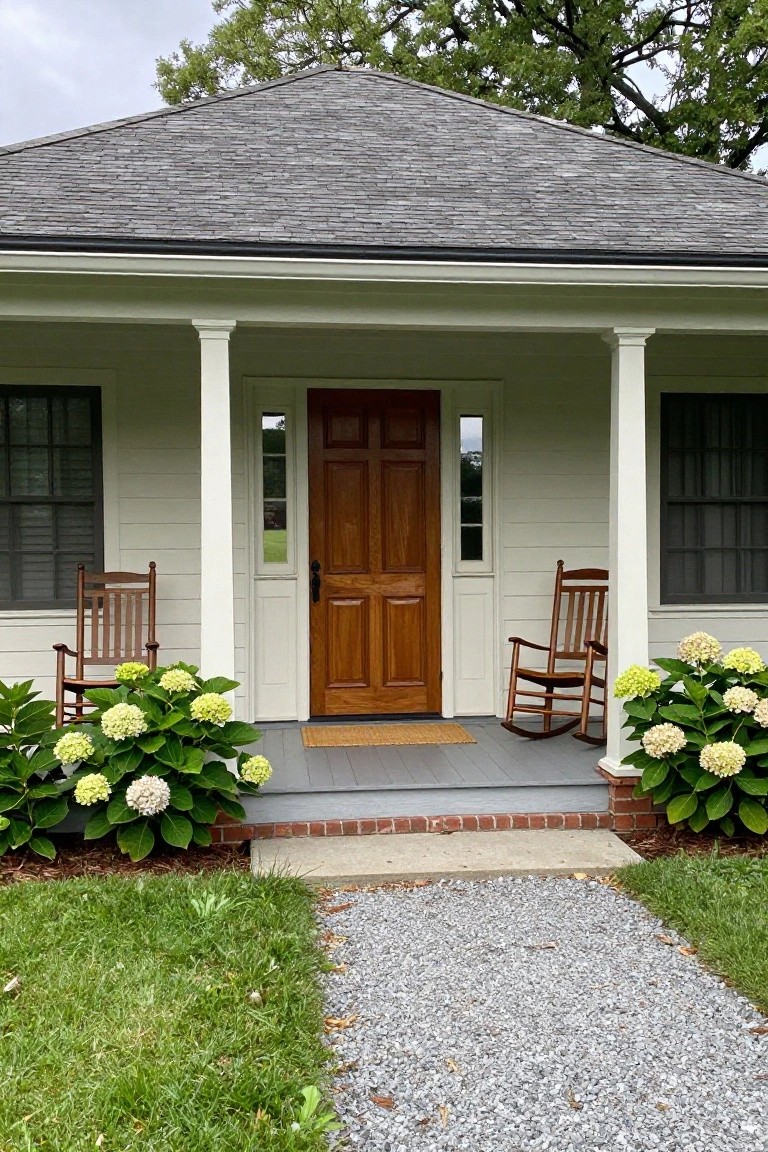
A wooden door with raised panels brings a traditional look to any home exterior. It stands out nicely against lighter siding and makes the entrance feel more important than a plain one would.
This approach works well on houses with porches or covered entries. Keep the surrounding details simple so the door remains the main focus.
Pointed Arch Entries
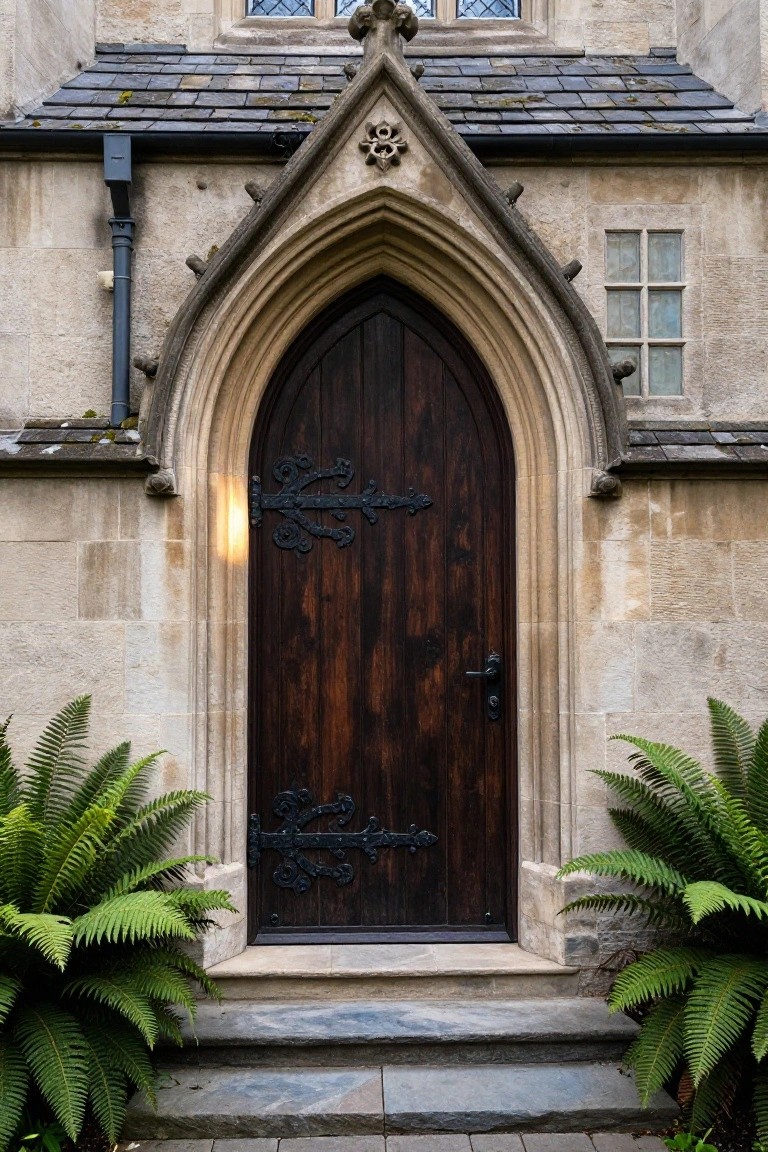
A pointed arch above the front door adds height and a clear sense of history to the entrance. It works especially well on stone homes where the shape can stand out against the flat wall surfaces.
This style suits houses that already lean classic or formal. Keep the arch proportions balanced with the door width so the whole entry stays grounded rather than overly grand.
Stone Surrounds Around Wooden Doors
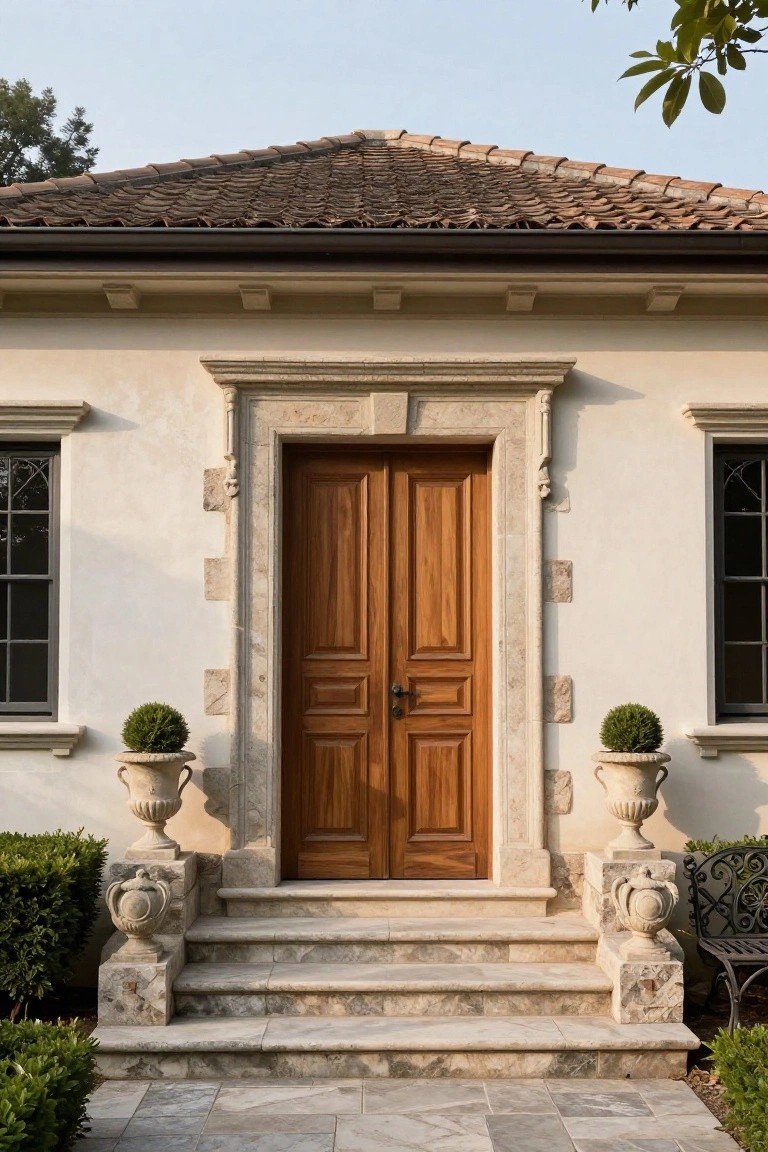
A stone surround gives a wooden door extra weight and presence without needing fancy hardware or big changes. It turns a basic double door into something that feels more permanent and tied to the house itself.
This works best on homes with stucco or light walls where the stone can stand out as a clear frame. Keep the door wood simple and let the surround do the work, but make sure the scale matches the entry steps so it does not feel added on later.
Soft Colors On Painted Wooden Doors
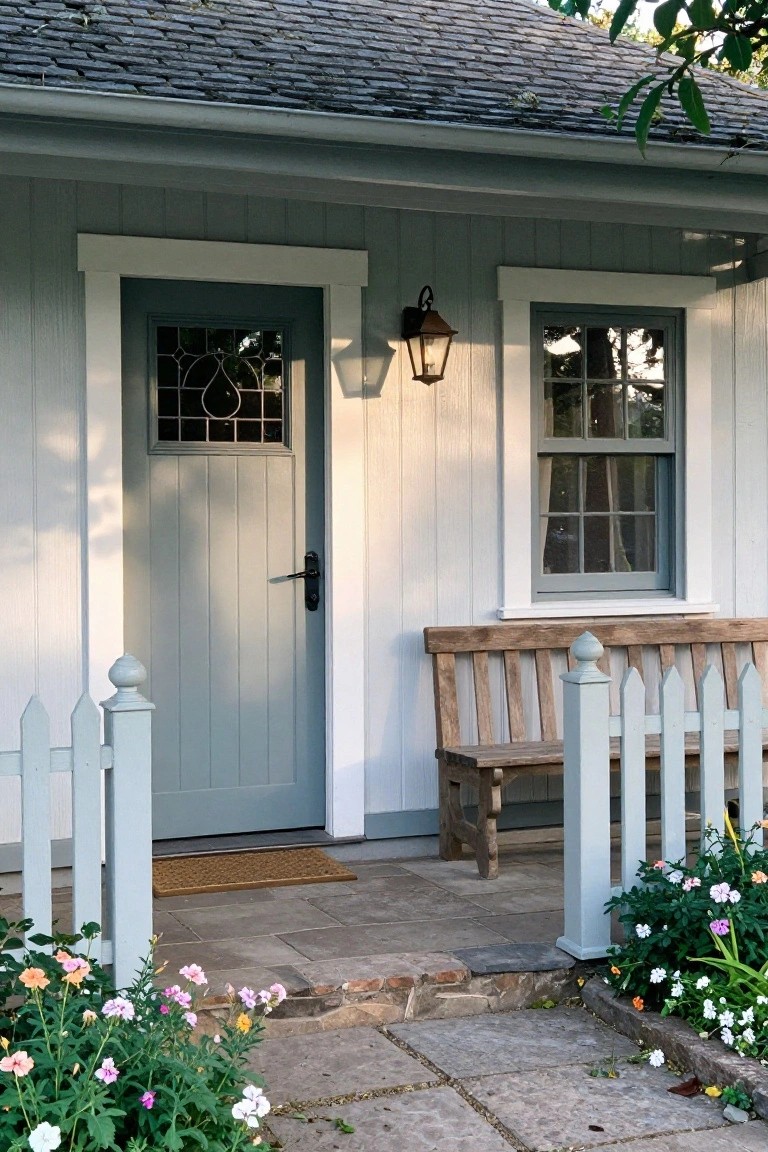
A painted wooden door in a gentle blue gray tone gives an entry a calm and classic feel. The color works because it blends with light siding while still standing out enough to mark the main door without extra trim or bold hardware.
This approach suits smaller homes or side entries where you want something friendly rather than grand. Keep the finish matte and choose simple black or dark metal handles so the door itself remains the focus.
Arched Entries With Wooden Doors
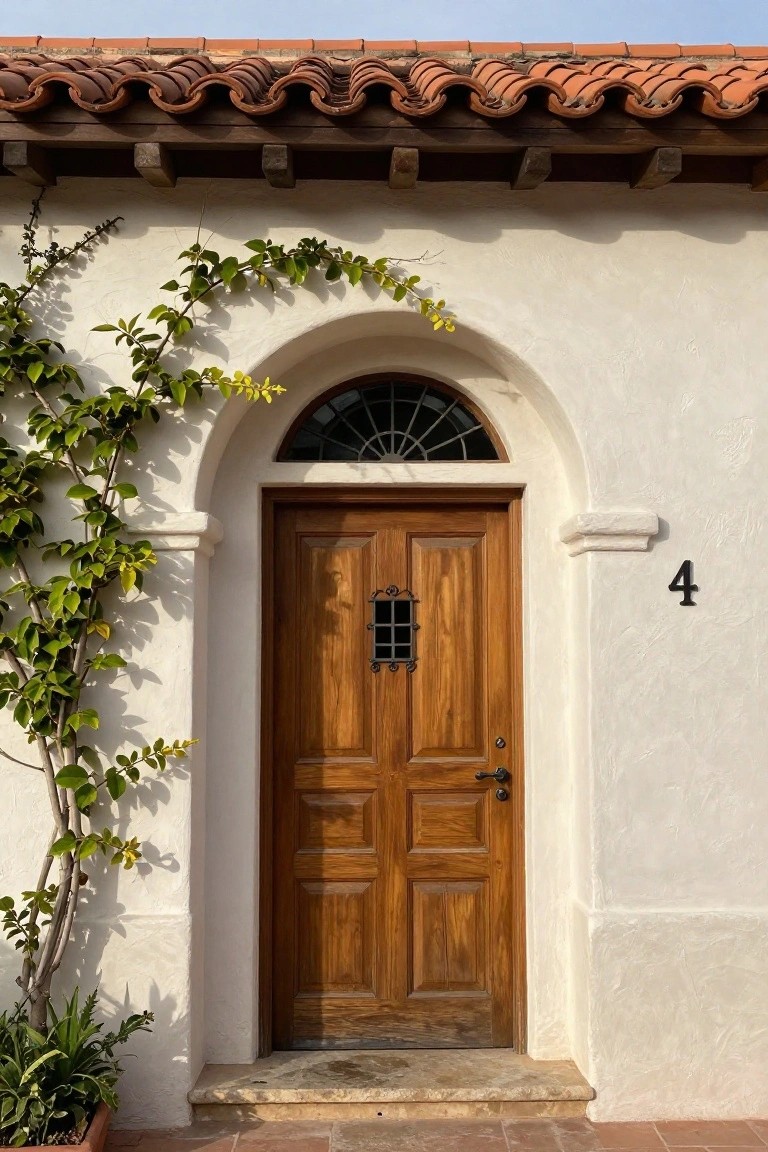
An arched recess around a wooden door gives the whole entry a settled, classic feel without needing extra trim or decoration. The curve softens the lines of the house and makes the door itself stand out more.
This approach works well on stucco or masonry homes that already lean Mediterranean or Spanish in style. Keep the arch simple and let the wood door carry the detail. Just make sure the depth of the recess is enough to cast a little shadow, otherwise the effect flattens out.
Arched Wooden Doors With Stained Glass
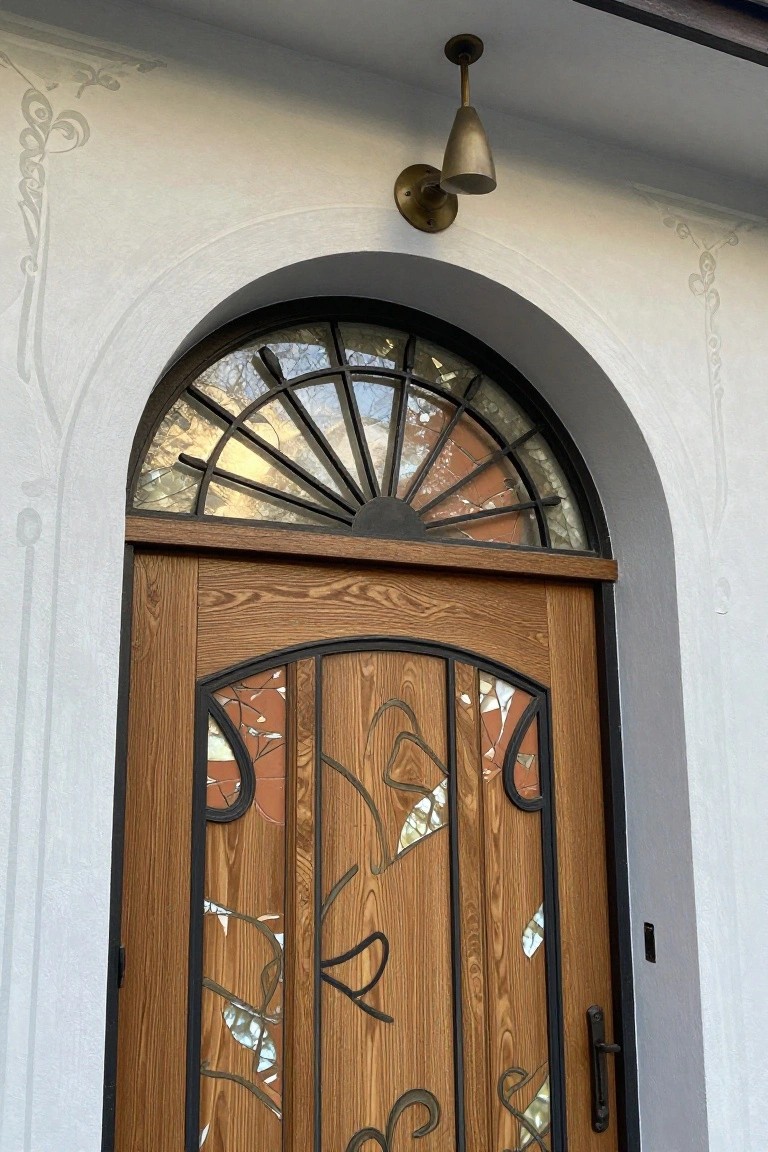
An arched wooden door with stained glass panels gives an entry a classic, slightly formal look. The curve overhead and the colored glass add detail that feels rooted in older architecture without needing extra trim or decoration.
This approach works best on homes that already have some traditional lines. Keep the wall color light and the hardware simple so the door stays the main point of interest.
Classical Columns Around A Wooden Door
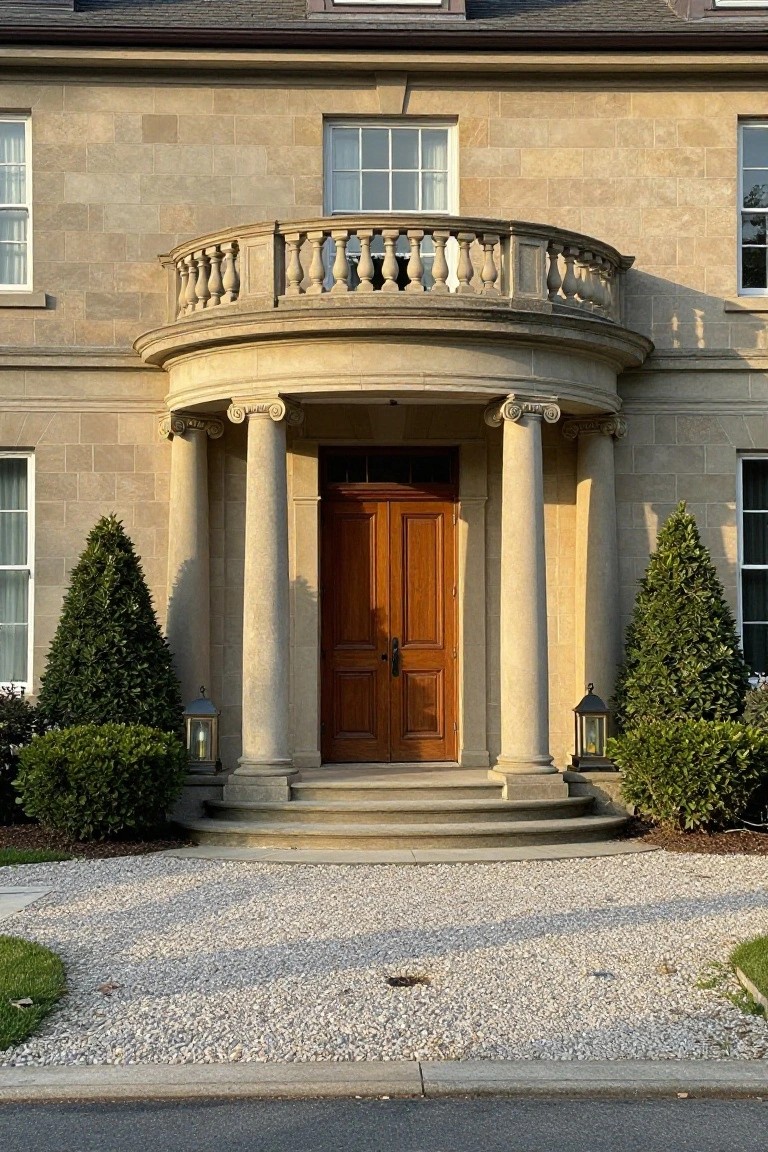
Columns can make a wooden door feel more important without changing the door itself. They create a clear frame that draws attention to the entry and adds a sense of structure to the front of the house. This approach works especially well when the door is made of solid wood with simple paneling, since the columns provide the ornament.
This setup suits larger homes with enough wall space on either side of the door. Keep the columns in proportion to the door height and choose a material like stone or painted wood that matches the rest of the facade. Avoid adding too many extra details above the door, since the columns already do the main work.
Framing a Door with Matching Planters
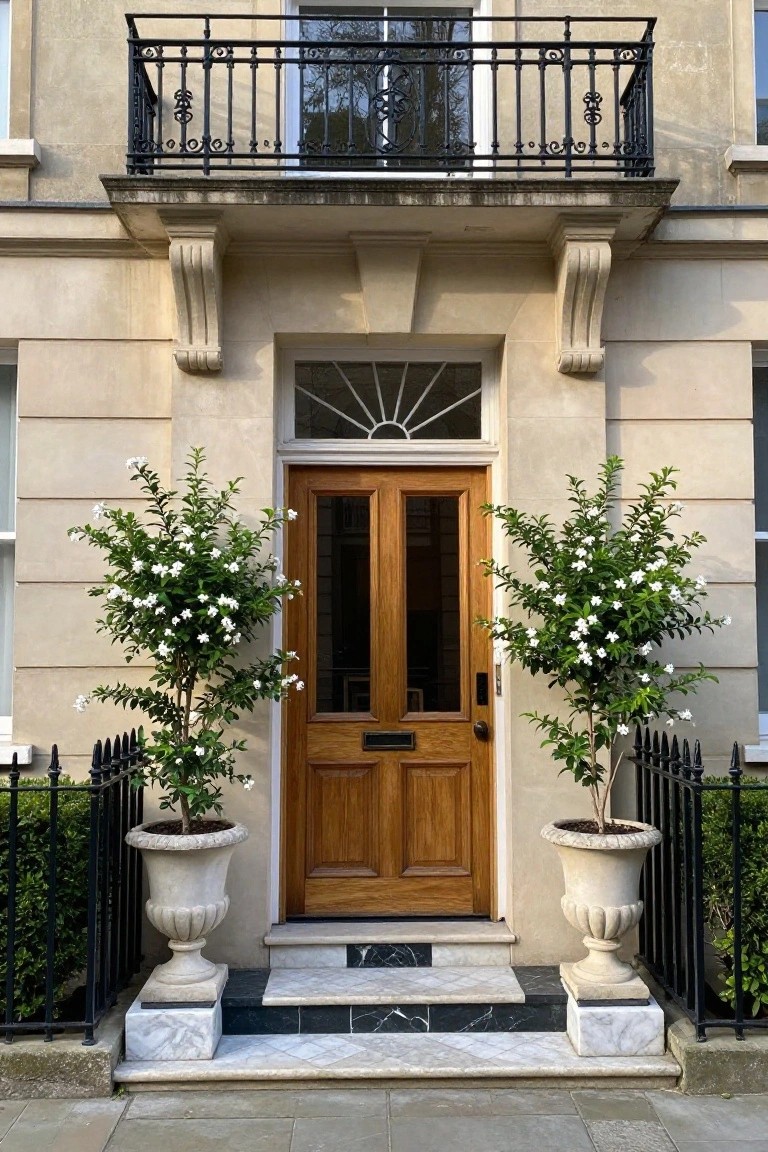
Matching planters placed on either side of a front door can give even a simple wooden entrance more presence. The balance draws attention to the door itself while softening the hard lines of the steps and stonework around it. This works especially well on homes with a classic or slightly formal style where you want the entry to feel intentional rather than bare.
The approach suits most traditional or period homes and is easy to adapt. Choose urns in the same material and size, then fill them with plants that stay roughly the same height and shape. Keep the color of the flowers or foliage consistent so the pair reads as a single design move rather than two separate accents.
Frequently Asked Questions
Q: Will these ornate doors fit in a smaller entryway without looking out of place? A: Scale down the carvings a bit on the panels. Pick simpler moldings that still echo the classic style. This keeps the royal feel while suiting your space.
Q: How often do I need to refinish wooden doors like these? A: Check the finish every couple of years. Touch up any worn spots right away to protect the wood. A good coat now and then keeps them looking sharp for decades.
Q: Can these designs work with modern hardware like smart locks? A: Yes many of the styles adapt easily. Choose hardware that blends with the wood tones. It adds function without clashing with the ornate look.
