

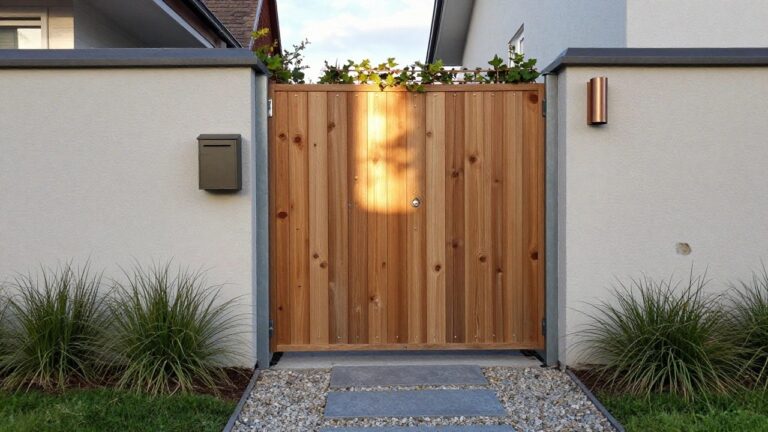
I often find that the side entrance to the yard gets overlooked until privacy becomes an issue during daily use.
Wooden gates can tie into existing structures without looking like an afterthought, which matters when you spend time out back.
Privacy changes everything out there.
Simple styles with vertical boards tend to work better than ornate ones because they hold up to weather and still look clean after a few seasons.
I would probably start with the more straightforward builds if I were trying this myself.
Tall Wooden Gates For Side Yard Privacy
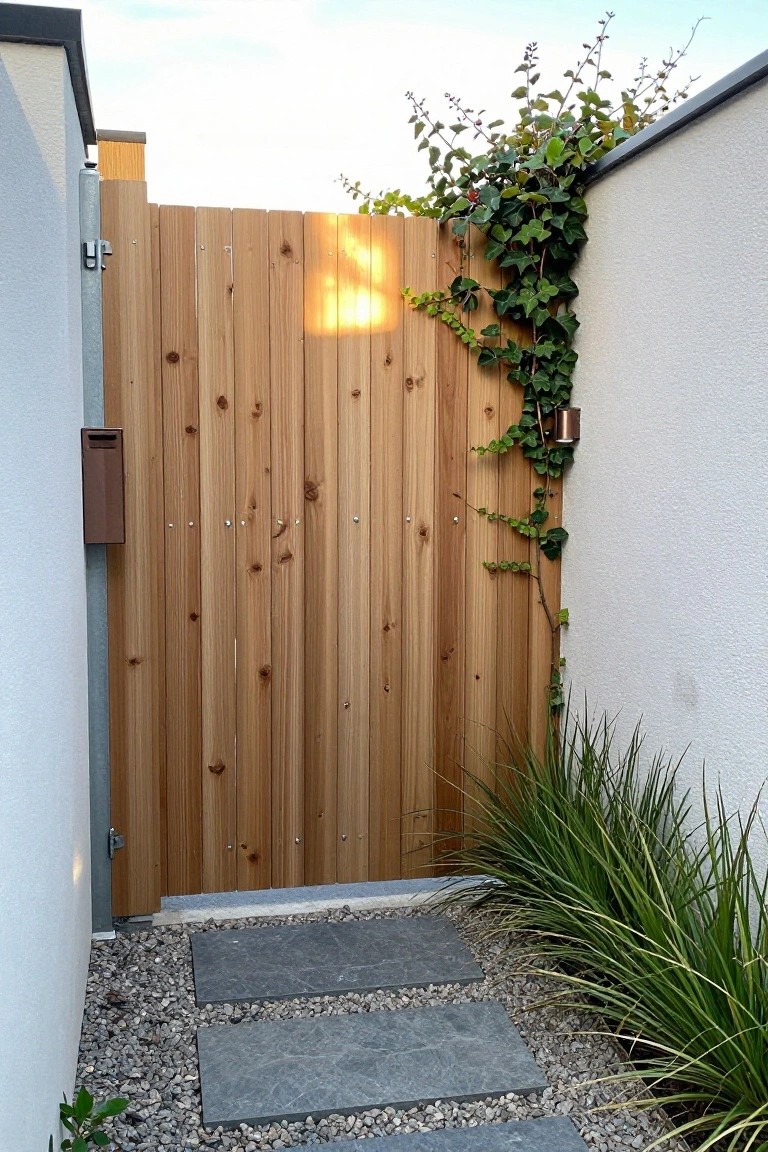
A tall wooden gate built with vertical boards gives solid privacy in narrow side passages where you need it most. The full height and tight spacing keep views blocked from the street or next door without feeling too heavy.
This style works best on homes with a clear side entrance and some planting along the fence line to soften the look. Use weather-treated wood and strong hinges so the gate stays straight over time.
Grow Climbing Roses Over Your Side Gate
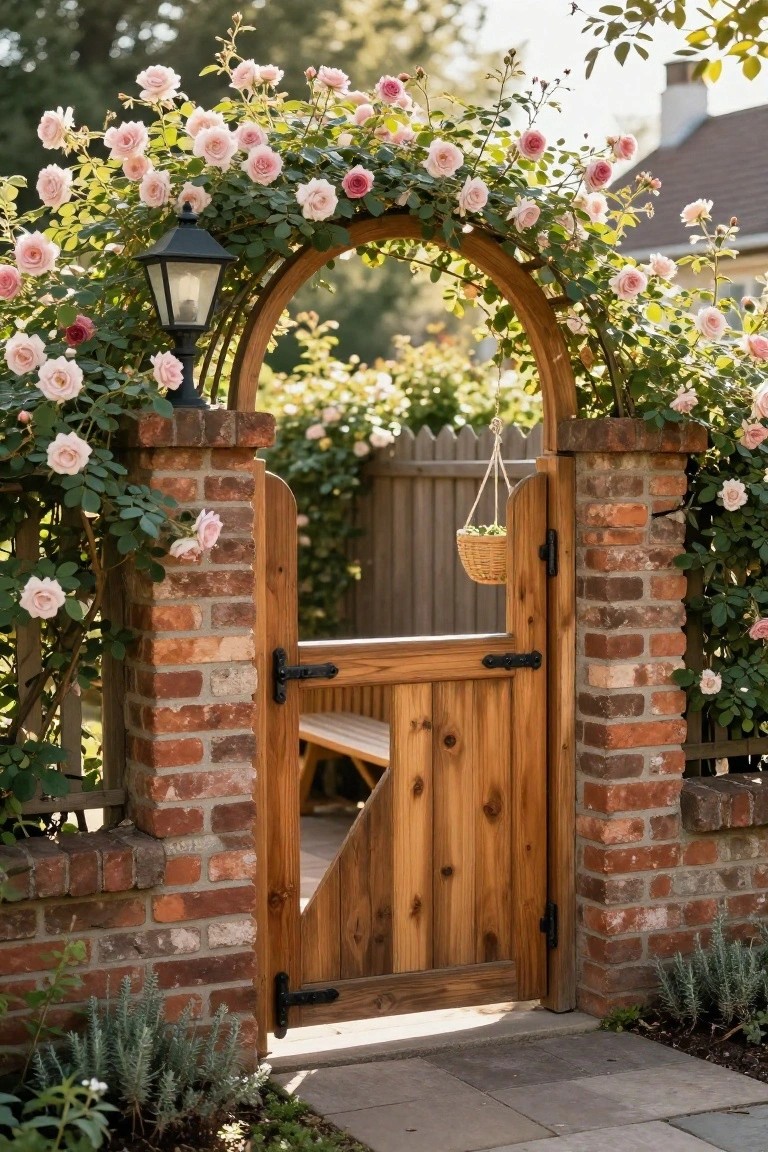
Adding an arch above a wooden side gate gives you a simple way to raise the privacy level without building a taller fence. The structure lets climbers fill in overhead and creates a natural screen that feels less like a barrier.
This works best on homes where the side path leads into a garden or backyard area. Choose a sturdy arch that can handle the weight of the vines as they grow, and pick roses or similar plants that suit your climate. The gate itself stays easy to use while the planting adds coverage year after year.
Wooden Gate With Arbor for Clear Garden Entries
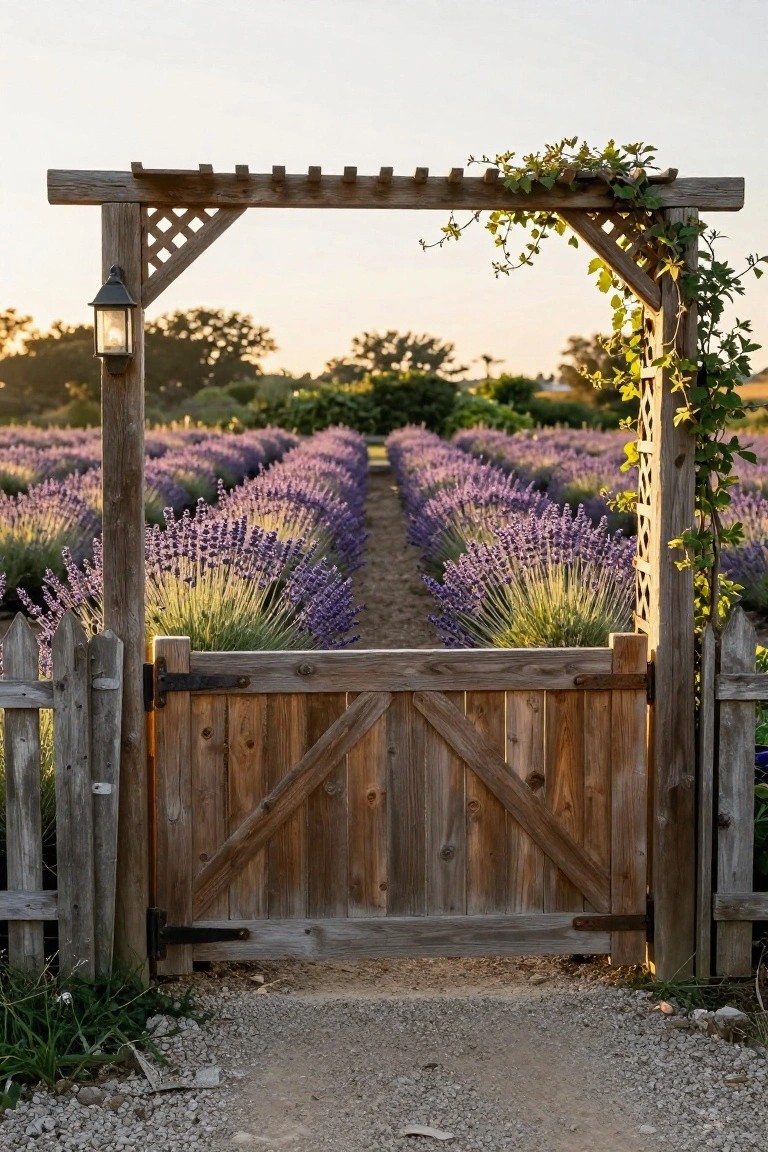
A wooden gate with an overhead arbor marks the transition into a garden in a simple way. It gives the path a defined start and adds a bit of privacy while still letting light and views through.
This approach suits larger side yards or herb and flower gardens where you want to separate spaces without a solid fence. Weathered wood holds up well outdoors and the open trellis can support vines if you want extra greenery later.
Wooden Gates That Define a Garden Entry
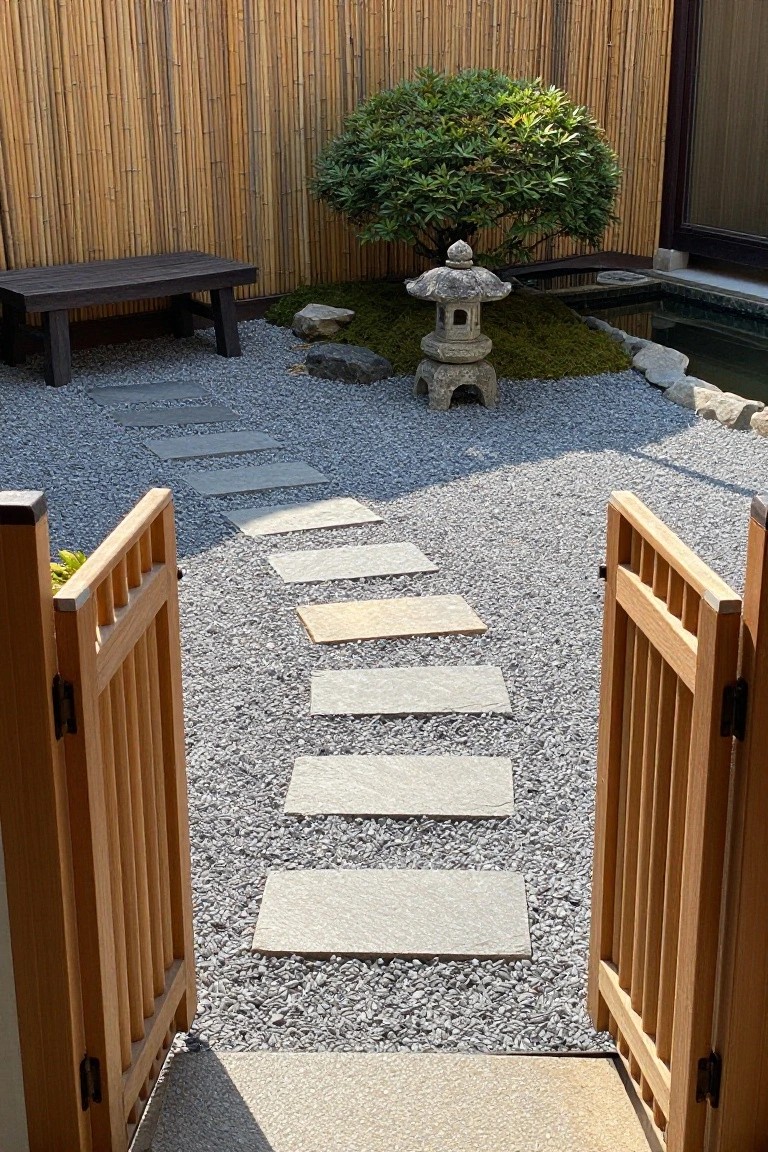
Wooden gates like these work well because they create a clear boundary without making the garden feel closed off. The simple vertical slats let in light and air while still giving a sense of privacy from the surrounding area.
This approach suits homes with side yards or narrow garden spaces where you want to separate the main outdoor area from the rest of the property. Match the gate wood tone to any nearby fencing for a cleaner look, and keep the path simple so the gates remain the main focal point.
Horizontal Slats On Side Gates
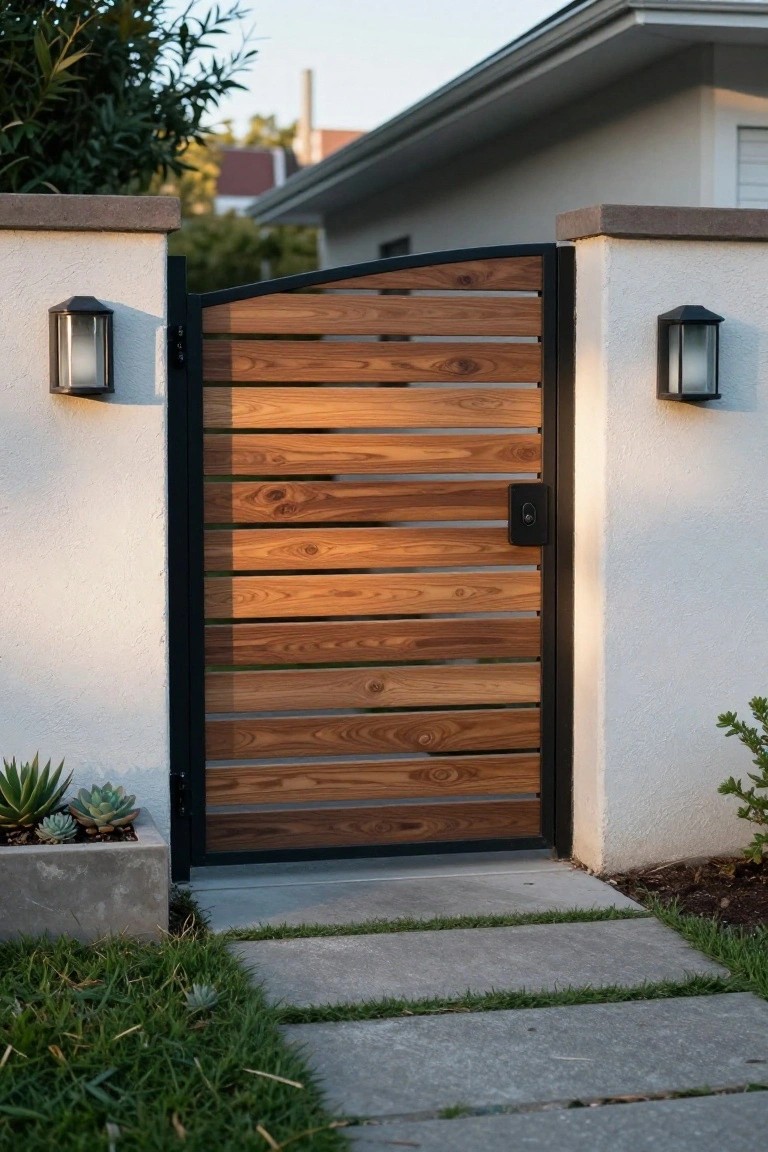
Horizontal wood slats give a side gate solid privacy without making the whole thing feel heavy or closed off. The spacing lets a bit of light and air through, which keeps the area from looking too boxed in.
This style works best on homes with clean lines and simple fencing. Keep the gaps narrow enough to block the main sight lines from the street, and choose a dark frame to make the wood stand out.
Grow Vines Over A Side Gate
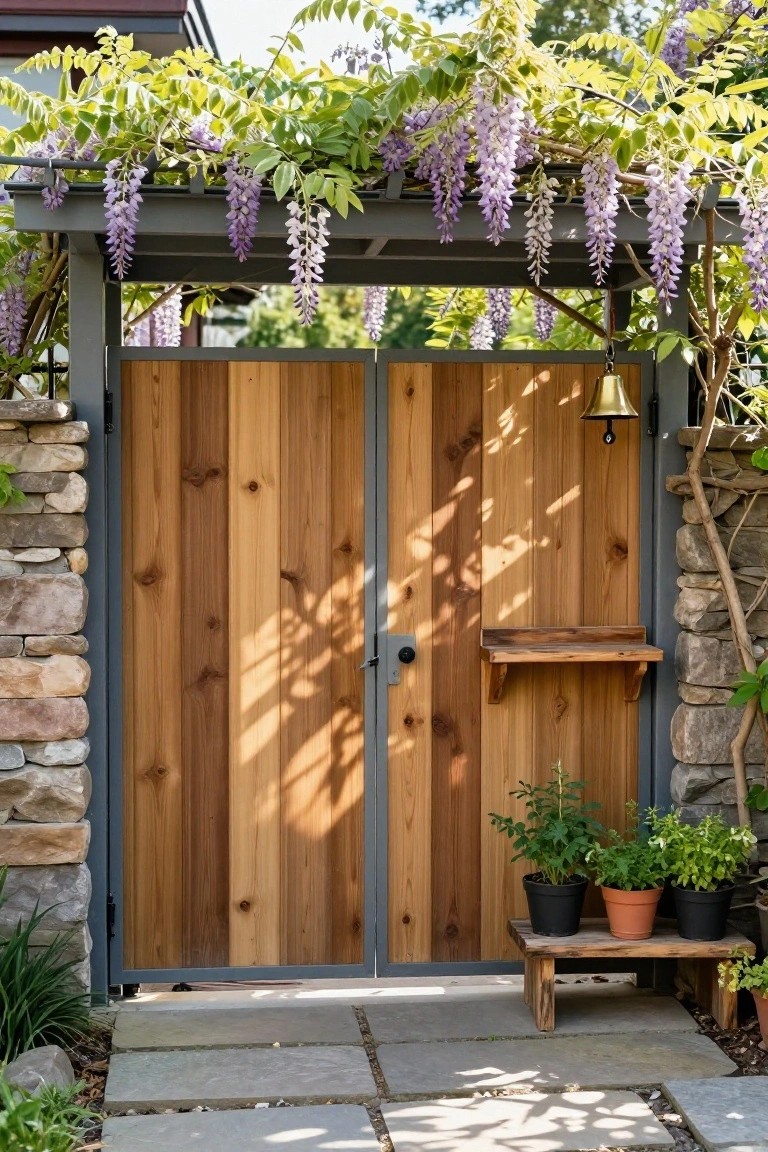
A solid wooden gate already blocks the view, but adding a simple pergola or trellis across the top lets vines hang down and fill in the upper space. This creates a softer screen without making the gate feel heavy or closed in. The wisteria in the photo shows how the flowers add color while the leaves help hide the structure above.
This works best on gates that lead to a side yard or garden where you want a bit more seclusion from the street. Keep the vines trimmed so they do not block light or grow into the frame, and choose a sturdy overhead support that matches the gate material. It suits homes with stone or wood accents and gives the entry a lived-in look over time.
Side Gates With Built-In Seating
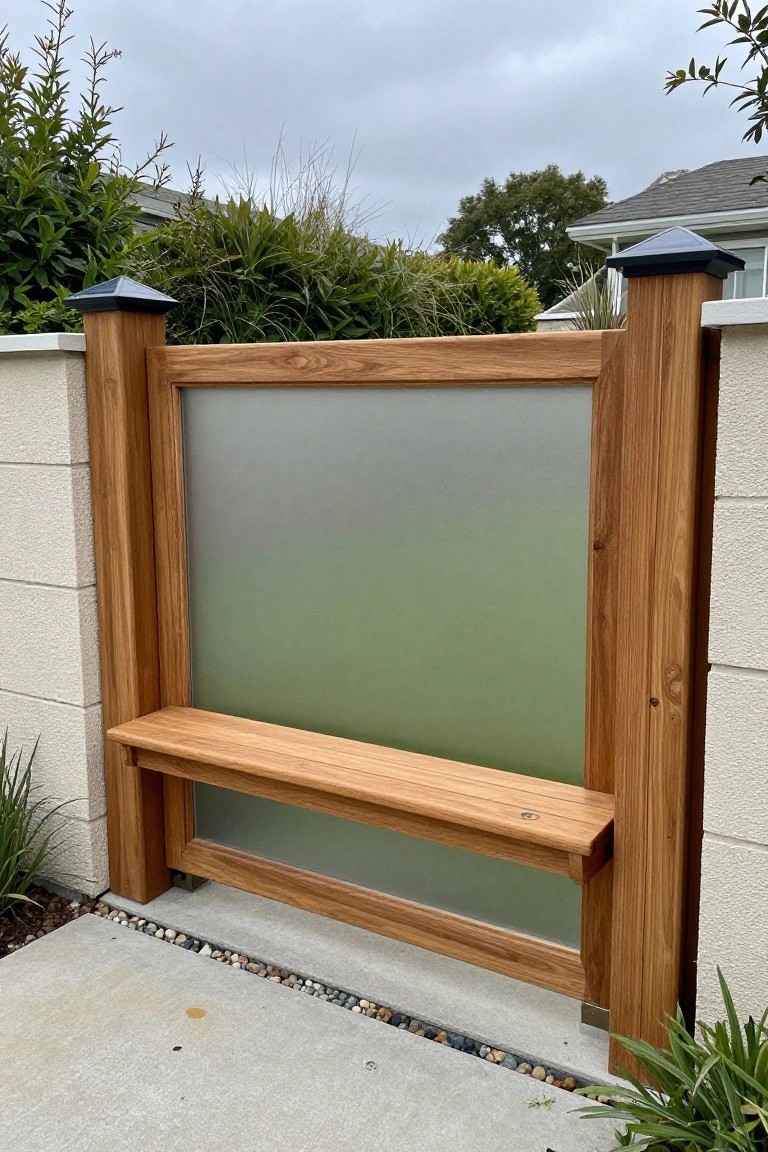
Many people like side gates that do more than just close off an area. Building a bench into the lower part of the gate turns it into a spot where you can sit and enjoy the space without needing extra furniture.
This setup fits well in side yards or along a path where extra seating comes in handy. The frosted panel above helps keep things private without making the area feel too closed in, and the whole thing stays simple to maintain.
Slatted Wooden Gates For Side Entries
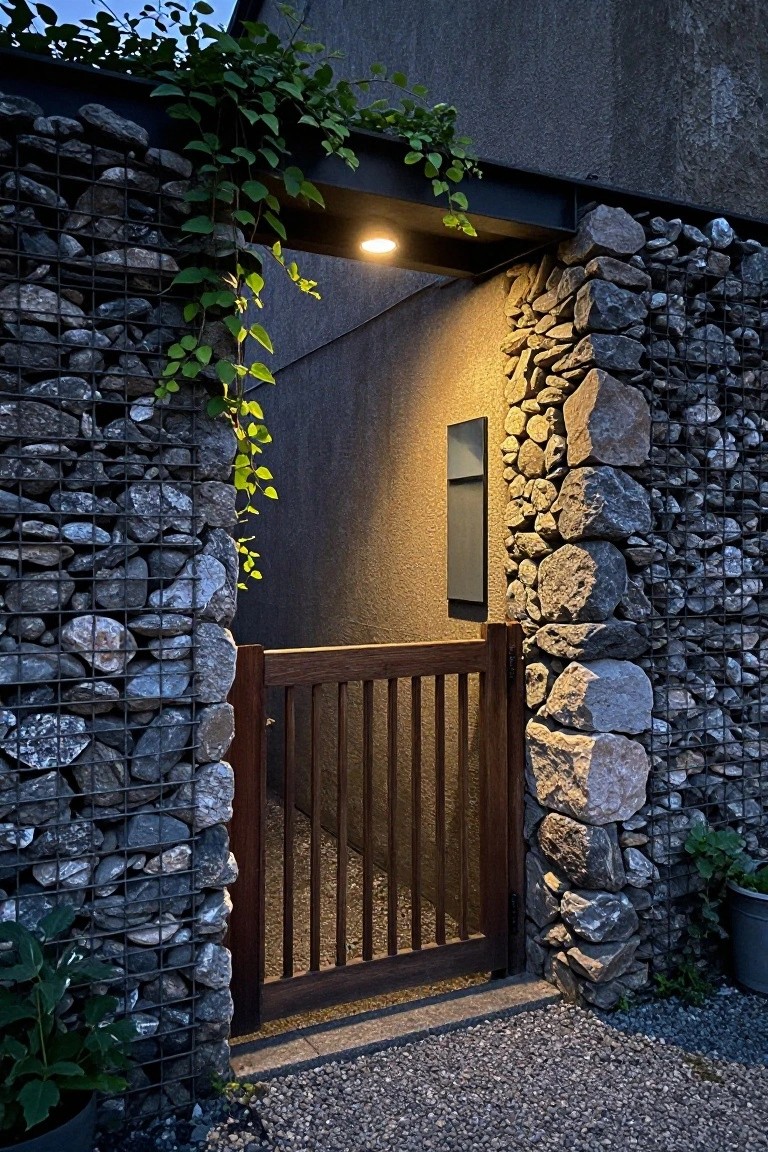
A wooden gate built with vertical slats gives you privacy without making the side entrance feel completely closed off. The gaps let some light and air through, so the area stays usable instead of turning into a dark tunnel. This works especially well when the gate sits between heavy stone walls like the ones shown here.
Place one where a side path meets the street or a neighbor’s yard. The wood ages nicely and pairs with most materials, though it needs a coat of sealer every couple of years to hold up. Keep the spacing even and the frame simple so the gate stays easy to open and close.
Reclaimed Wood Panels For Side Gate Privacy
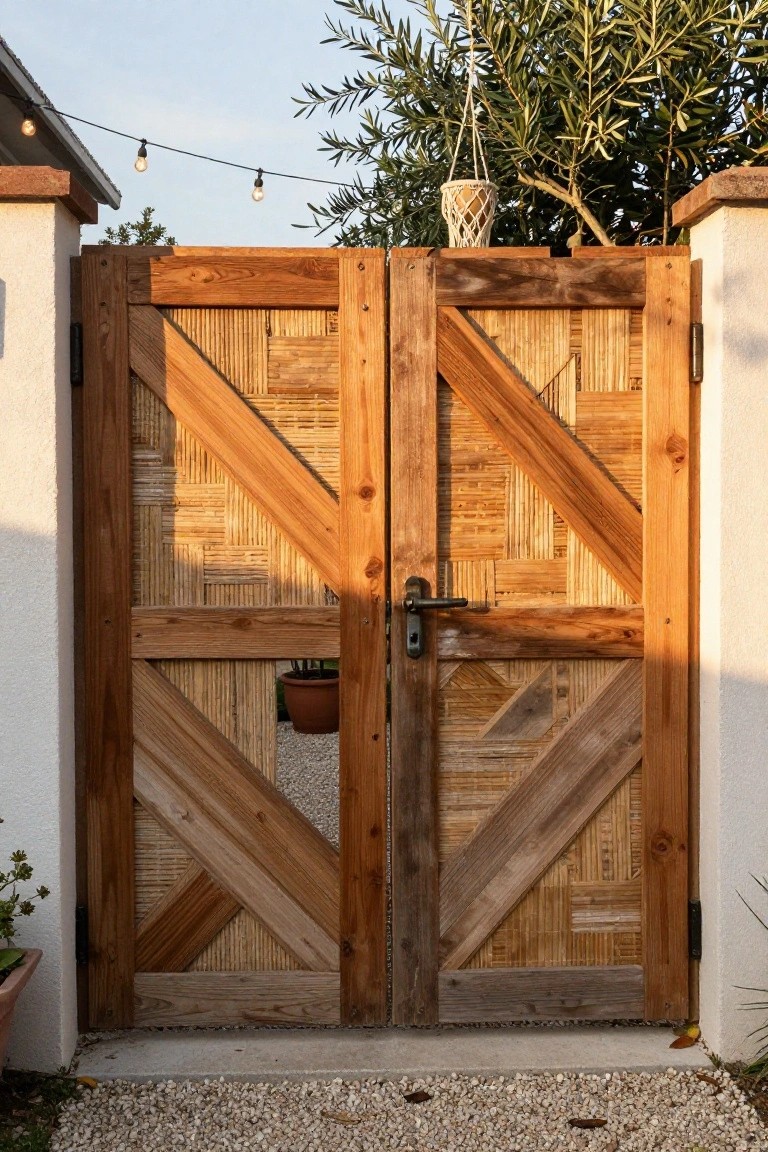
Many people turn to gates built from assorted wood pieces because they block the view completely while still feeling natural. The mix of tones and grain directions keeps the surface from looking flat or too heavy.
This style works best on homes with a relaxed garden layout where you want solid privacy but do not want the gate to feel like a blank wall. Treat the wood well so it lasts, and keep the frame simple so the focus stays on the texture.
Horizontal Wood And Panel Side Gates
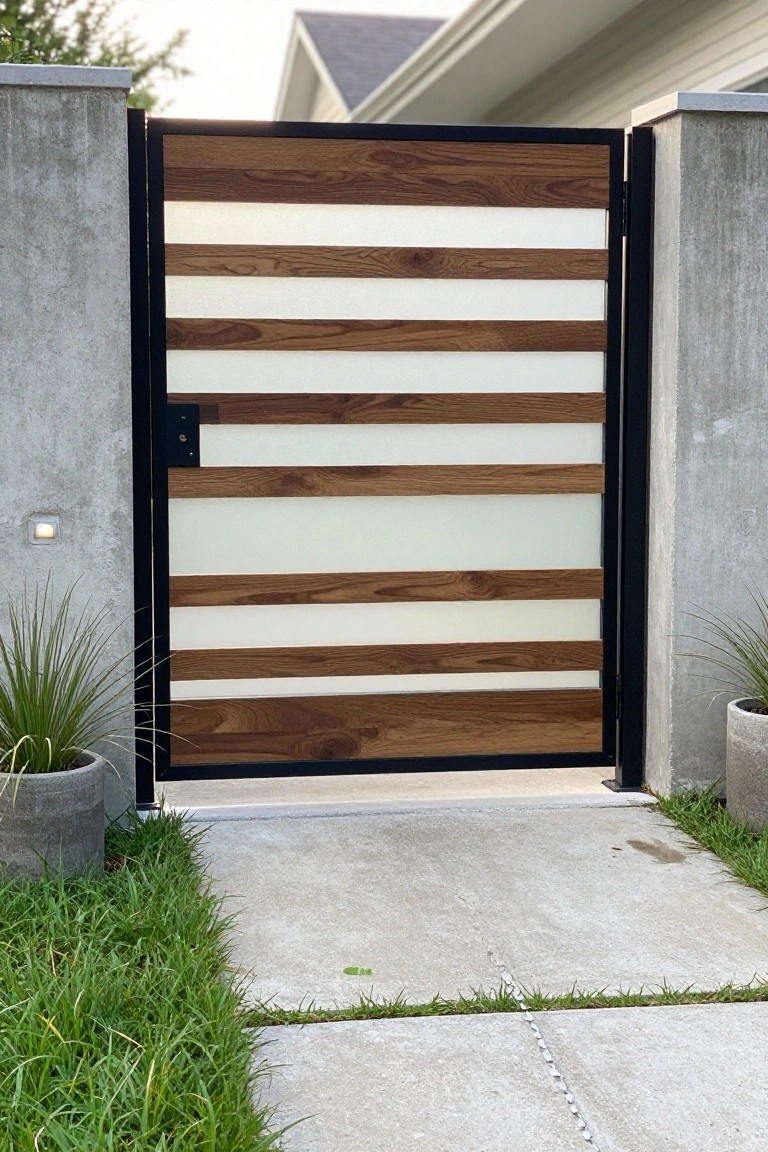
A side gate built with alternating horizontal strips of wood and a lighter panel material gives solid privacy without cutting off all light or air. The pattern breaks up the view from outside while keeping the gate from feeling like a blank wall.
This style works best on modern or updated homes where the entry sits between concrete or masonry pillars. Use it where you want a clean look that still feels open enough for the space to breathe. Make sure the lighter panels are made for outdoor use so they hold up without yellowing.
Wooden Double Gates For Side Privacy
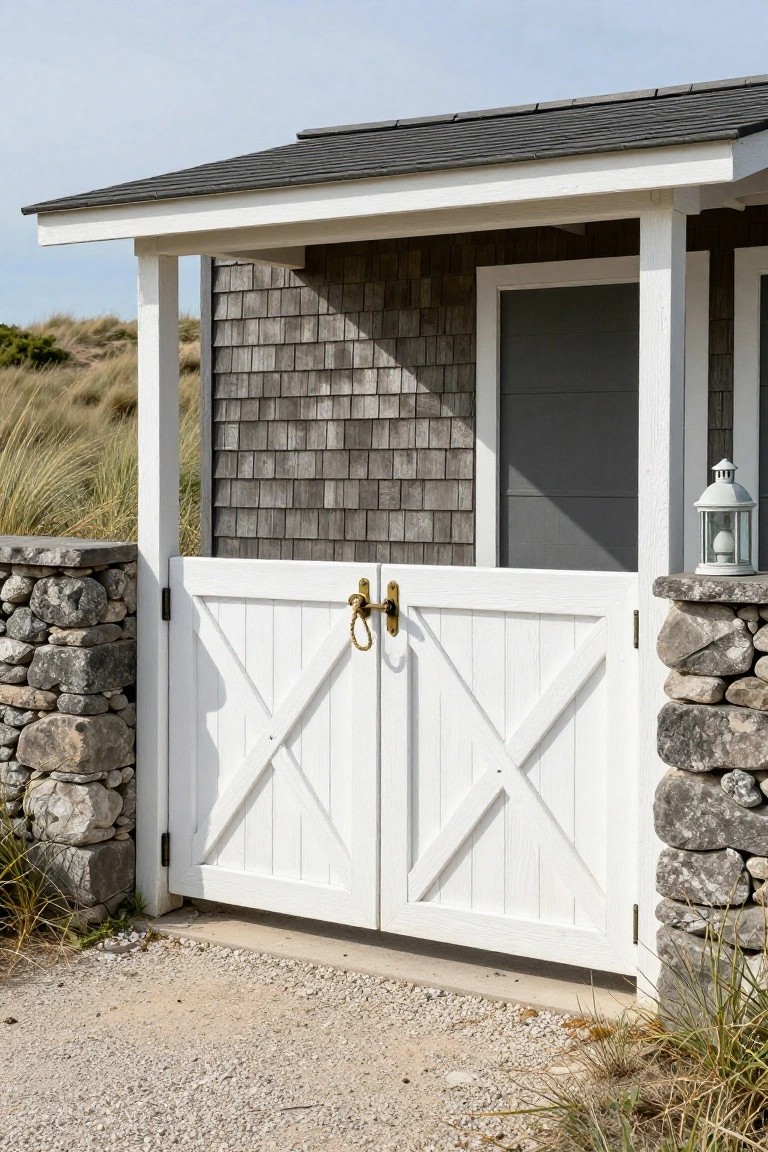
A double wooden gate like this one gives solid privacy without needing a full fence along the whole property line. The X bracing adds strength so the gate stays straight over time, and the solid panels block the view from the outside.
This setup works best on homes with gravel paths or side yards where you want controlled access. Stone pillars on either side help anchor it and keep the look simple and lasting.
Mix Wood Slats With Metal Screening
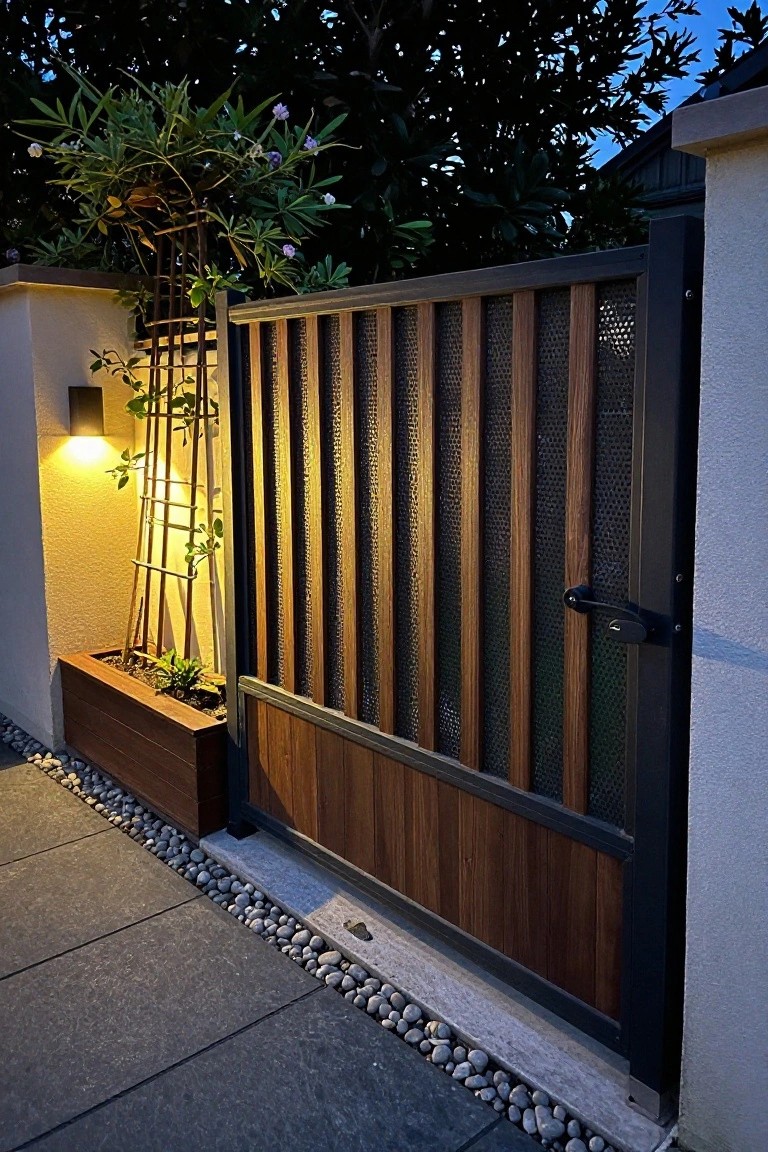
A side gate built with vertical wood slats and sections of perforated metal gives you solid privacy while still letting some light and air through. The lower solid panel blocks the view from the street, and the upper mix of wood and metal keeps the gate from feeling heavy or closed in. This approach works well when you want screening without turning the side of the house into a solid wall.
It suits homes with modern or simple exteriors and pairs nicely with gravel paths or raised planters along the fence line. Make sure the metal is powder coated so it holds up outdoors, and keep the wood sealed if you want it to age evenly.
Wood Side Gates With Glass Panels
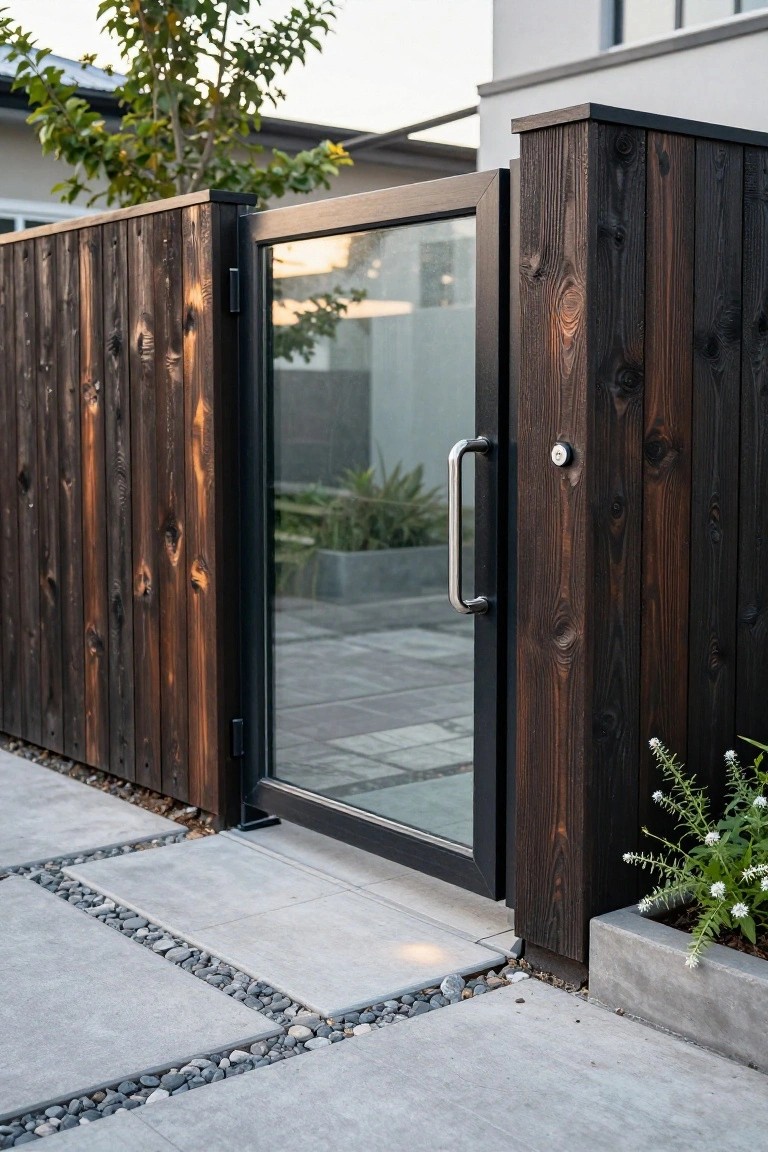
A glass panel set into a wooden side gate gives you privacy without making the entrance feel completely closed off. The solid wood on either side still blocks the view from the street, while the glass lets light reach the path and lets you see through to the yard.
This setup works best on homes where the side gate sits close to living areas or walkways that need some natural light. Match the frame color to the fence and choose tempered glass so it holds up to weather and daily use.
Frequently Asked Questions
Q: How do I stop the wood from warping after a few seasons? A: Pick kiln-dried lumber to start. Seal all sides before hanging the gate. Check the fit twice a year and tighten any loose bolts.
Q: Can these gates work on a slope? A: Yes, you can build the gate to follow the ground line. Keep the top level for looks. Hinge it on the high side so it swings open without dragging.
Q: What if I want to match my existing fence? A: Use the same wood type and stain. Copy the panel style from your fence boards.
Q: How often should I oil the hinges? A: Hit them with oil once a year. That keeps the gate swinging smooth even after rain or snow.
