

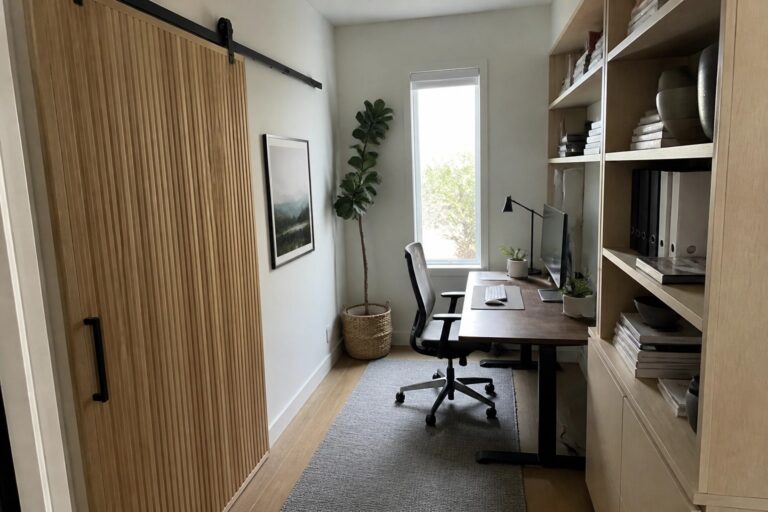
When I step into a workspace the door often decides whether the room feels pulled together or still unfinished.
Wood brings a natural weight that helps the rest of the furniture settle into place without extra effort.
The right tone changes everything.
I have seen doors with simple panels make a small office feel more grounded while heavier frames can make the same space feel boxed in.
A couple of these choices seem worth trying first if the goal is a room that stays comfortable through long workdays.
Sliding Wooden Doors For Flexible Office Space
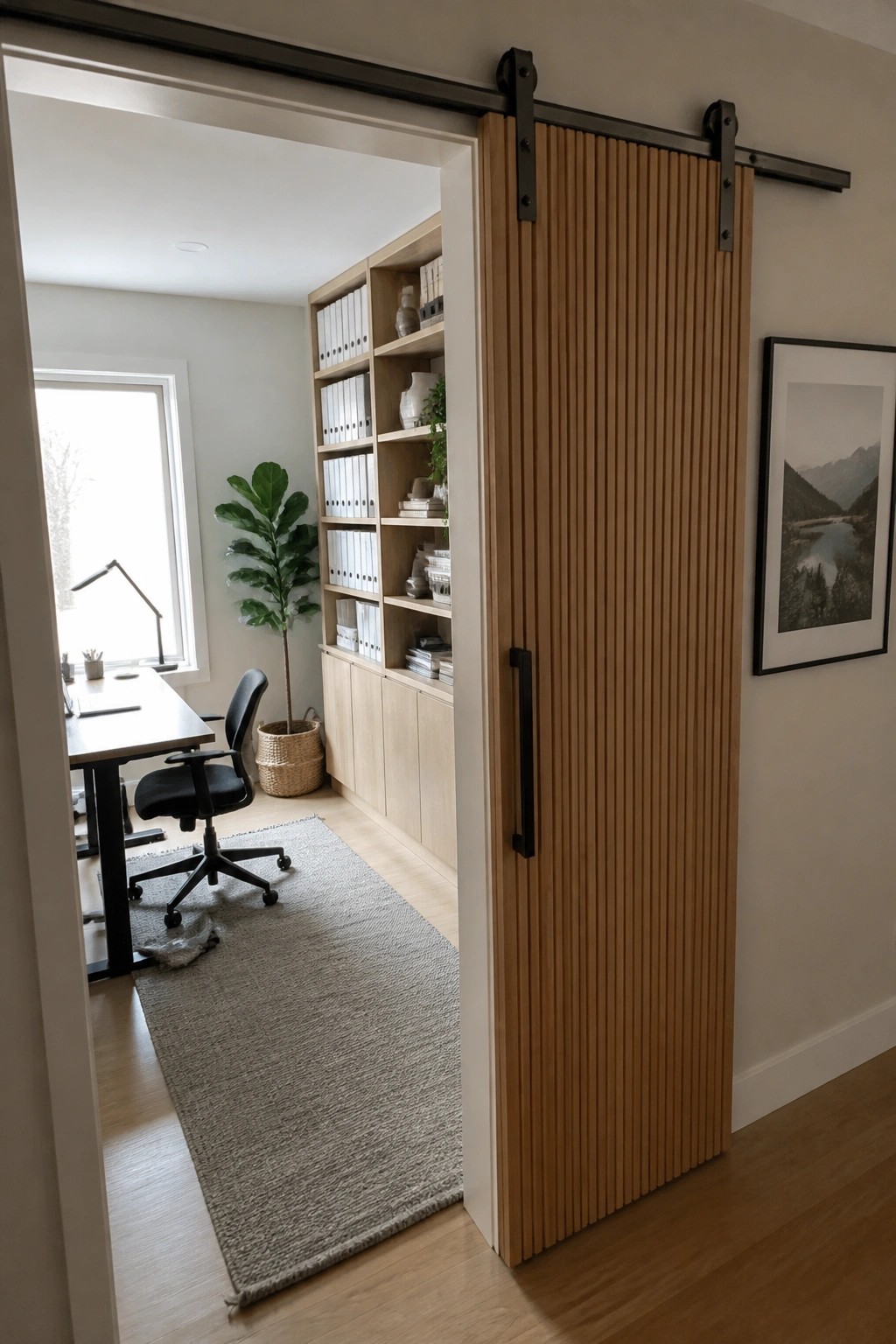
A sliding wooden door works well when you need to close off a home office without losing the option to open the room up again later. The vertical lines on the door keep the look simple and the wood tone stays light enough to fit most office setups.
This style suits homes where the office sits right off a hallway or shared area. Choose a track that runs smoothly and make sure the door width covers the opening fully so it actually blocks sound and sight when closed.
Wooden Doors With Frosted Glass
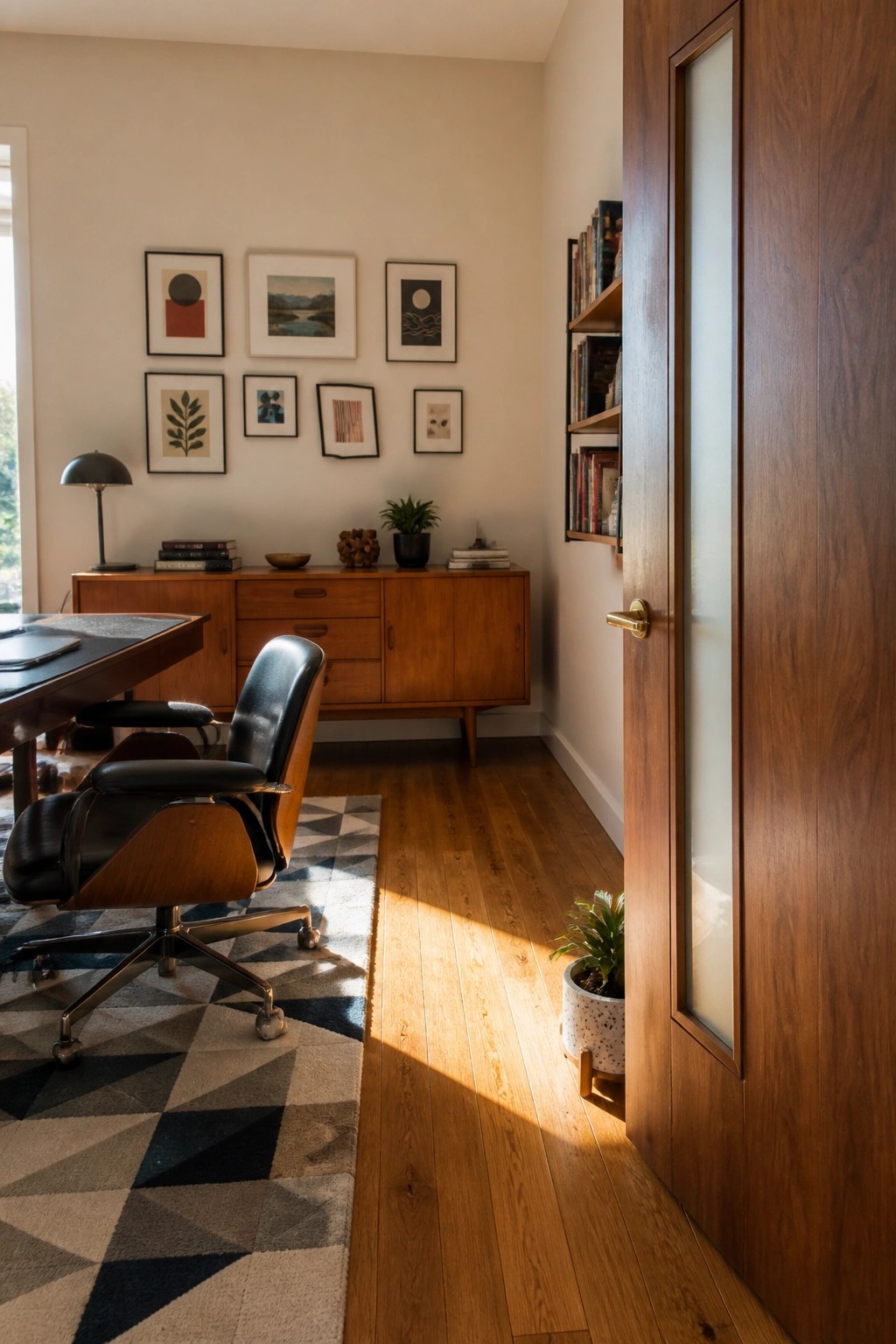
A wooden door that includes a tall glass panel works well in an office because it brings in light from the hallway while still keeping the room quiet. The wood grain gives the door a solid, professional look that fits most workspaces without feeling too heavy.
This style suits smaller homes where you want separation but not a completely dark room. Match the wood tone to your desk or floor and keep the glass frosted so the view stays private.
Sliding Wooden Doors For Flexible Office Layouts
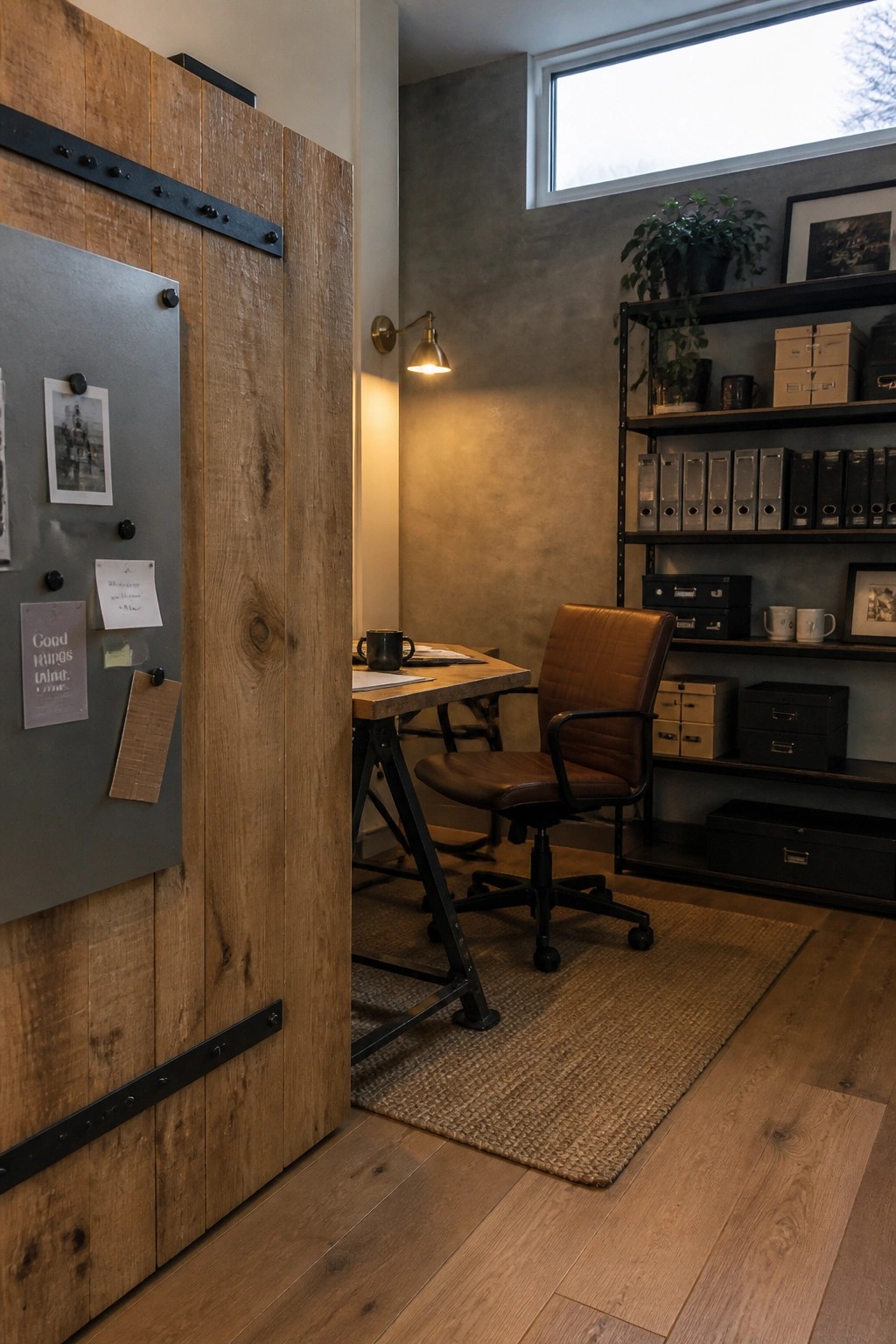
A sliding wooden door gives an office a clean way to open up or close off the space without losing floor room. The wood brings warmth that pairs well with concrete walls and simple furniture, while the metal track keeps the whole thing practical and easy to move.
This style works best in smaller homes or rooms that double as work areas. It gives quick privacy when needed and lets light flow through the rest of the time. Just make sure the track is mounted solidly so the door stays quiet over years of daily use.
Painted Wood Doors In Soft Neutral Tones
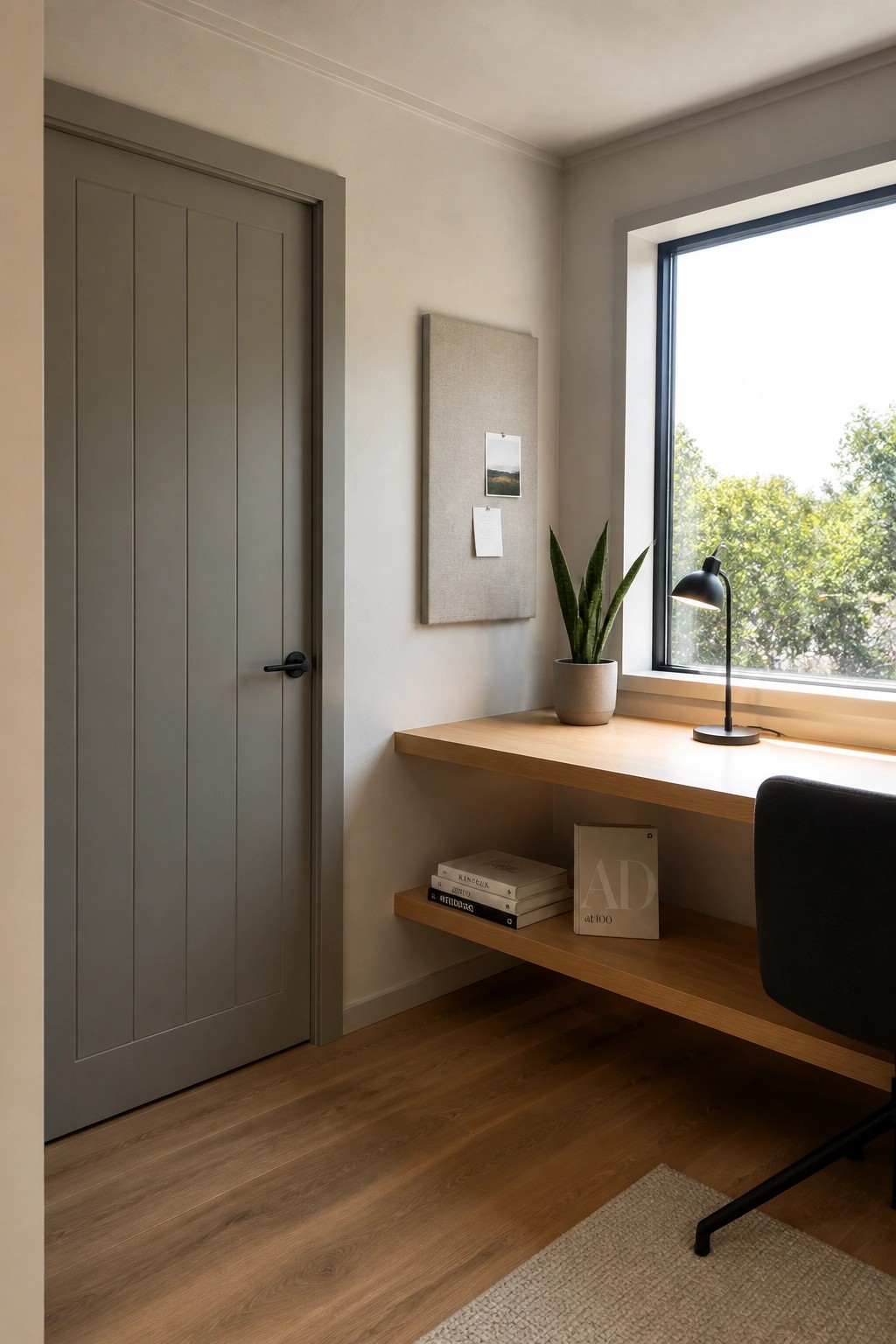
A painted wooden door in a muted gray tone can make an office feel calmer without much effort. It blends into the walls enough to keep the focus on the work area instead of the entry.
This choice suits smaller rooms or setups where the desk and window already do most of the visual work. Just match the door color to nearby trim so the whole space reads as one quiet, practical room.
Blending A Wooden Door Into Built-In Bookshelves
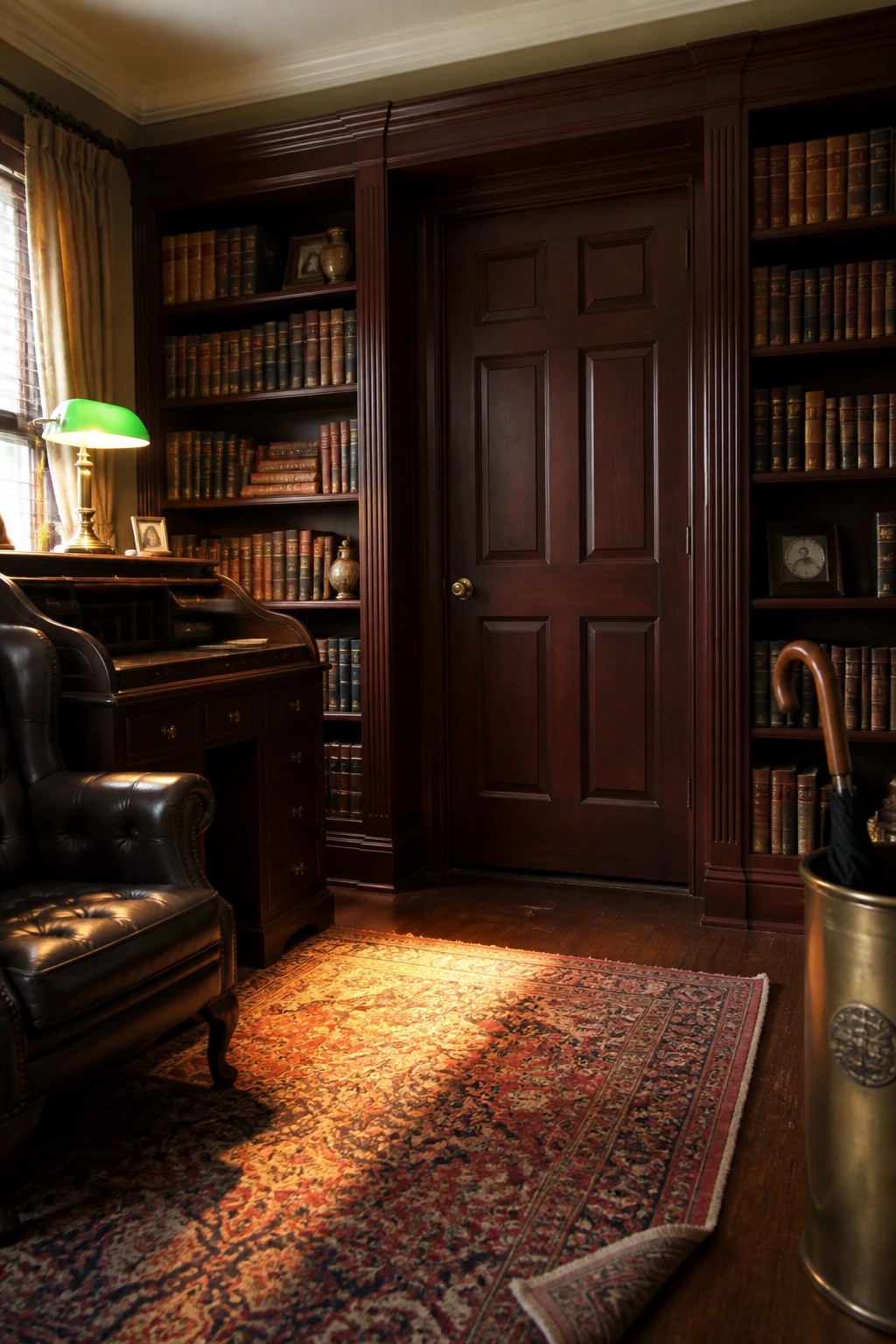
One practical approach in a home office is to let the door sit inside a wall of matching built-in shelves. The same wood tone and simple panel style make the door feel like part of the storage rather than a separate element, which keeps the room looking calm and orderly.
This works especially well in smaller studies or libraries where every wall needs to hold books. Use the same trim details on the door and shelves so the whole wall reads as one unit, and place the door where it will not interrupt the main flow of the room.
Louvered Wooden Doors For Better Airflow
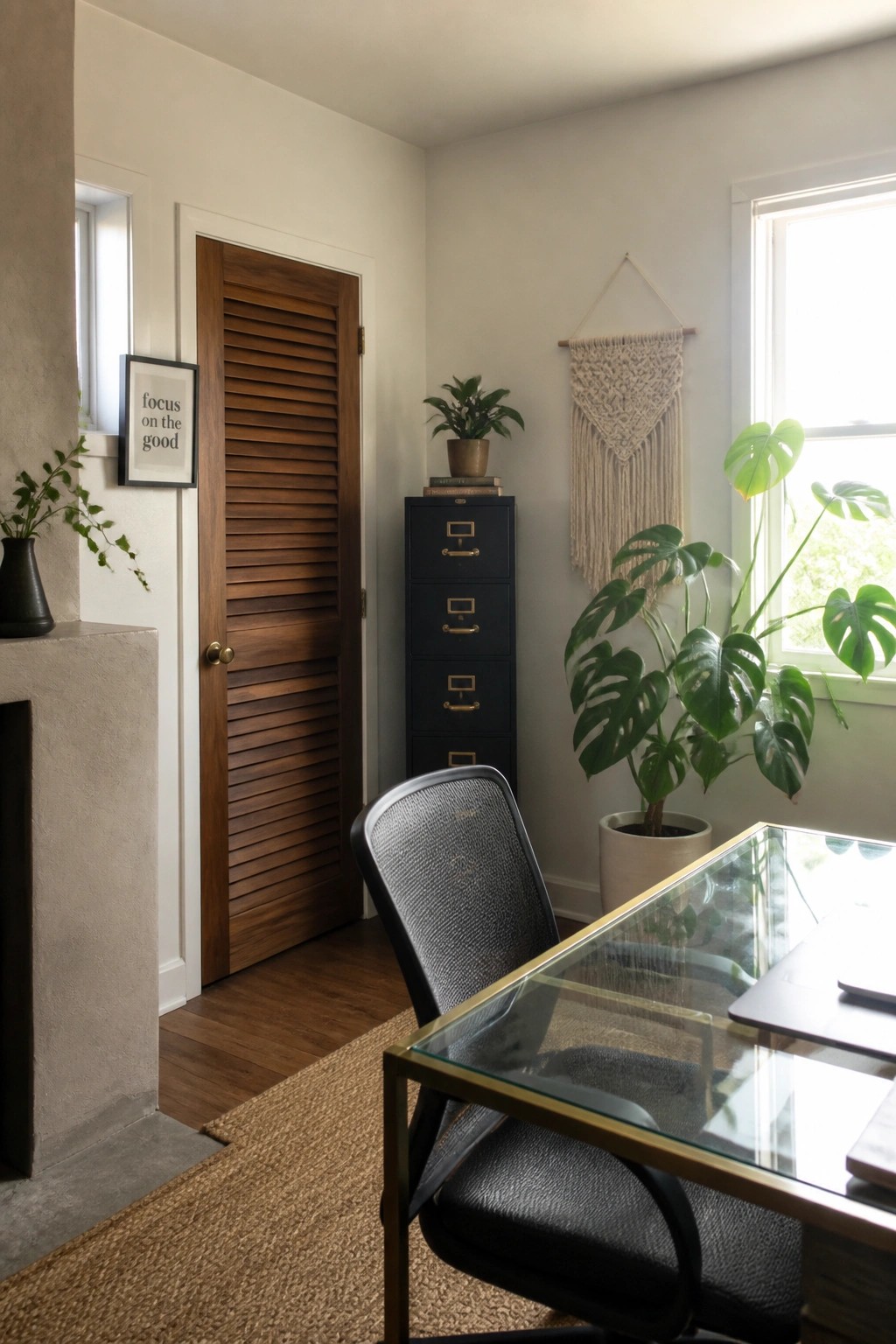
Louvered doors make sense in a home office because they let air move through the room while keeping the space separate. The horizontal slats block direct views but still allow light and ventilation, which helps the room feel less closed off during long workdays.
This approach works best in smaller homes or shared spaces where you need a door but do not want the room to feel stuffy. Keep the surrounding walls light and avoid heavy window coverings so the door can do its job without competing for attention.
Sliding Barn Doors In Home Offices
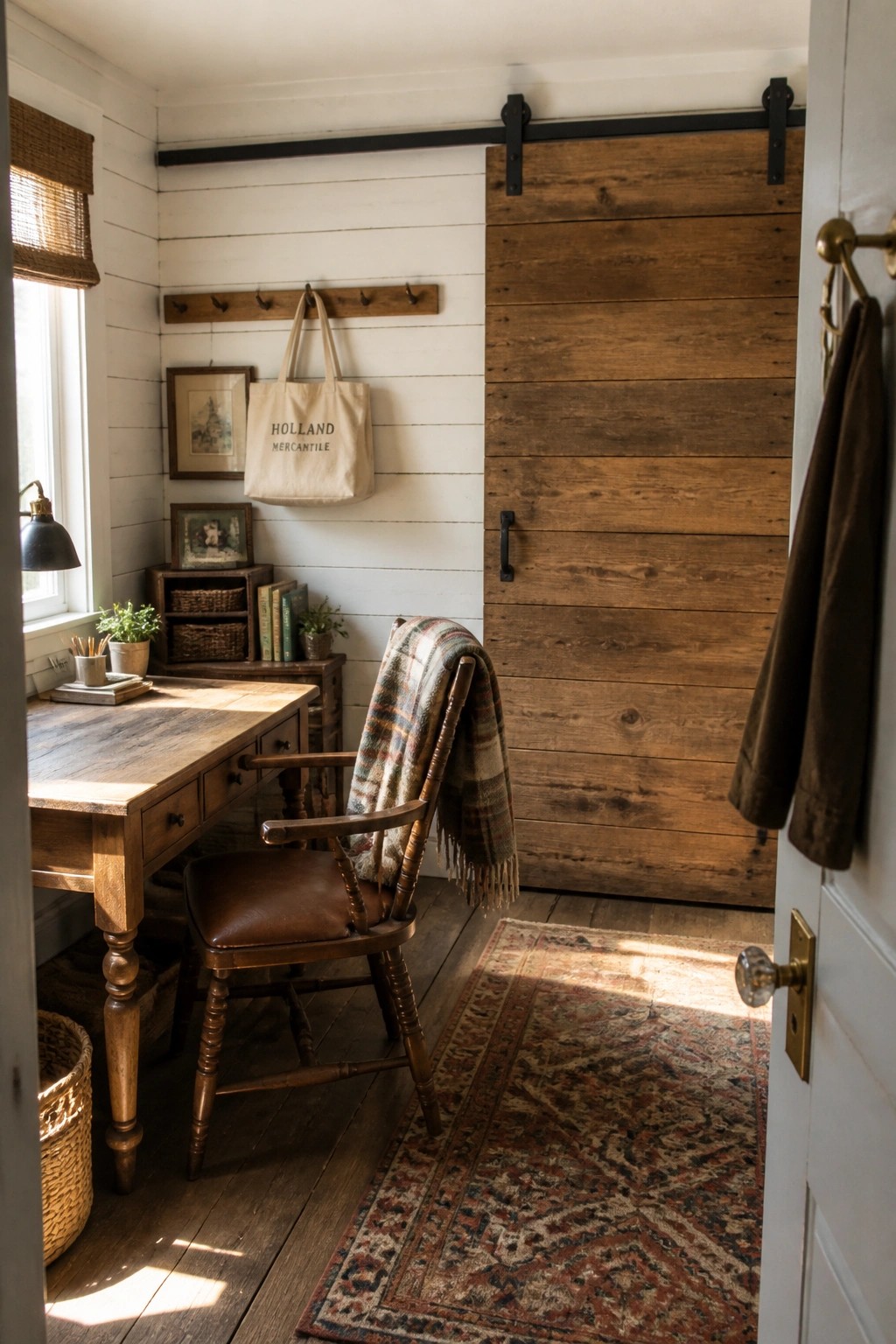
Many people turn to sliding barn doors for home offices because they slide along a track instead of swinging out into the room. This keeps the workspace usable even in tighter spots where a regular door would get in the way.
The look fits older homes or simple rustic setups, and it works best when the wood tone matches the desk or floor. Just check that the hardware can handle daily use without sagging over time.
Wooden Doors With Frosted Glass Panels
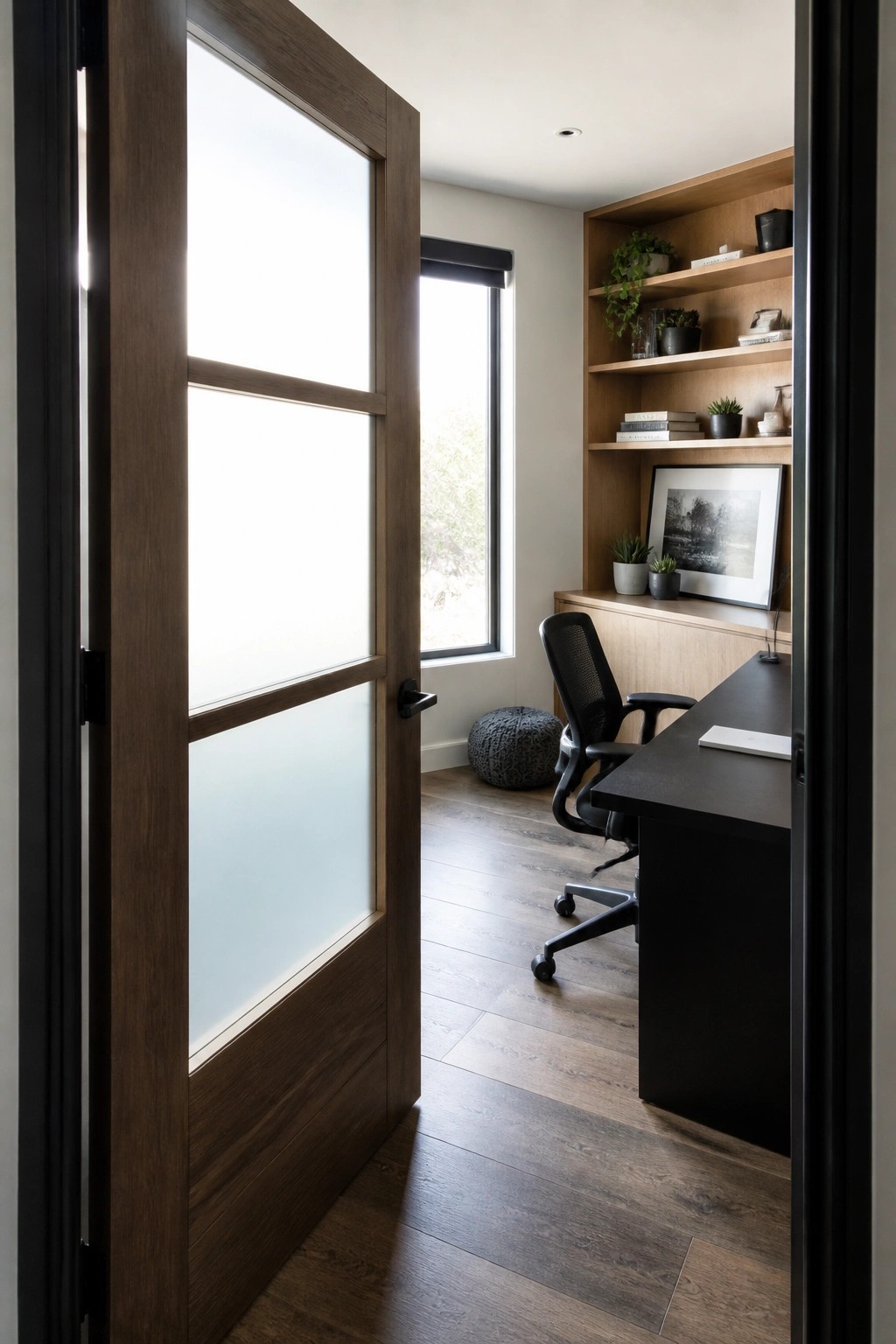
Many home offices sit near hallways or shared spaces, so a solid door can make the room feel closed in. Frosted glass panels solve that by letting daylight through while still keeping the workspace private.
This style works best in smaller homes where you want the office to feel connected to the rest of the house without giving up quiet. Match the wood tone to any built-in shelves or desk surfaces so the door blends in rather than stands out.
Arched Wooden Doors for Compact Workspaces
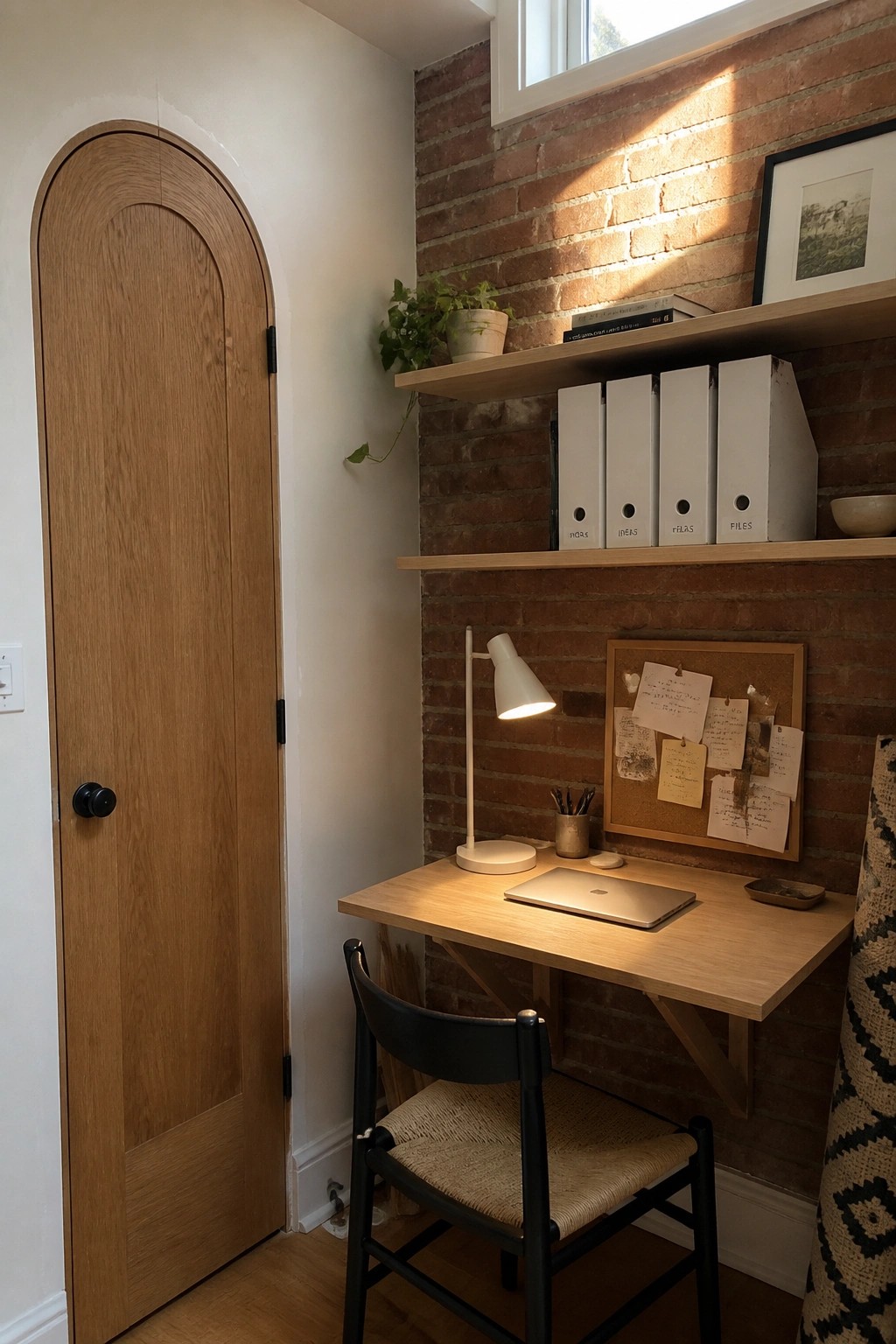
An arched wooden door brings a simple architectural touch to a small workspace without crowding the room. The curve softens the look of the door while the wood grain adds warmth that fits well with a desk area and nearby shelving.
This option works best in alcoves or tight corners where you need clear separation from the rest of the house. Keep the finish consistent with other wood pieces in the room so the door blends rather than stands out too sharply.
French Doors To Keep An Office Bright
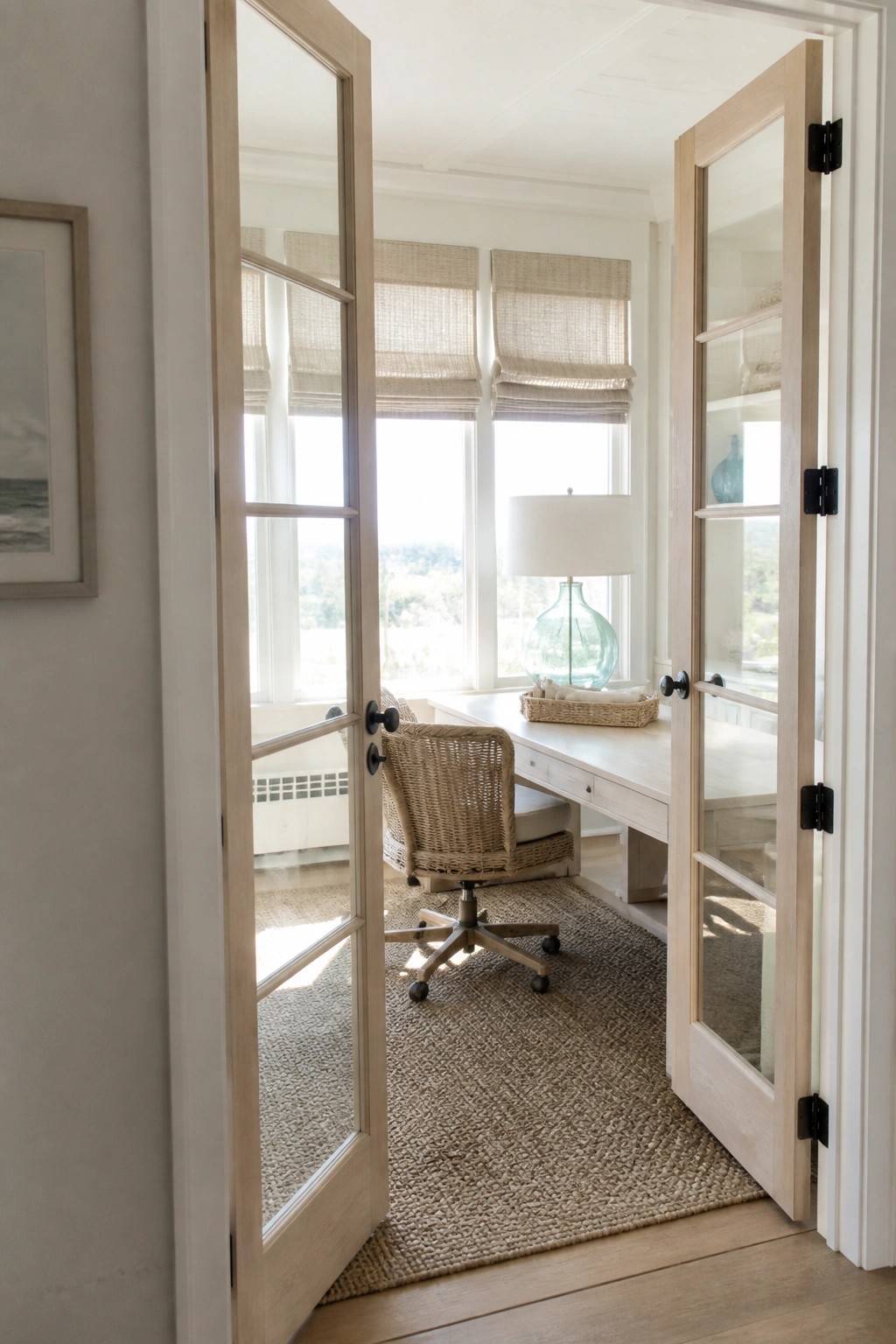
Many people choose wooden French doors for a home office because they mark off the workspace without cutting off light. The glass panels let daylight reach deeper into the room, which helps the space feel less closed in during long work hours.
These doors suit homes that already have decent window light and work best when the wood tone stays light and simple. They can stay open most of the day for easy movement and close when more privacy is needed.
Dark Wood Doors in Studio Workspaces
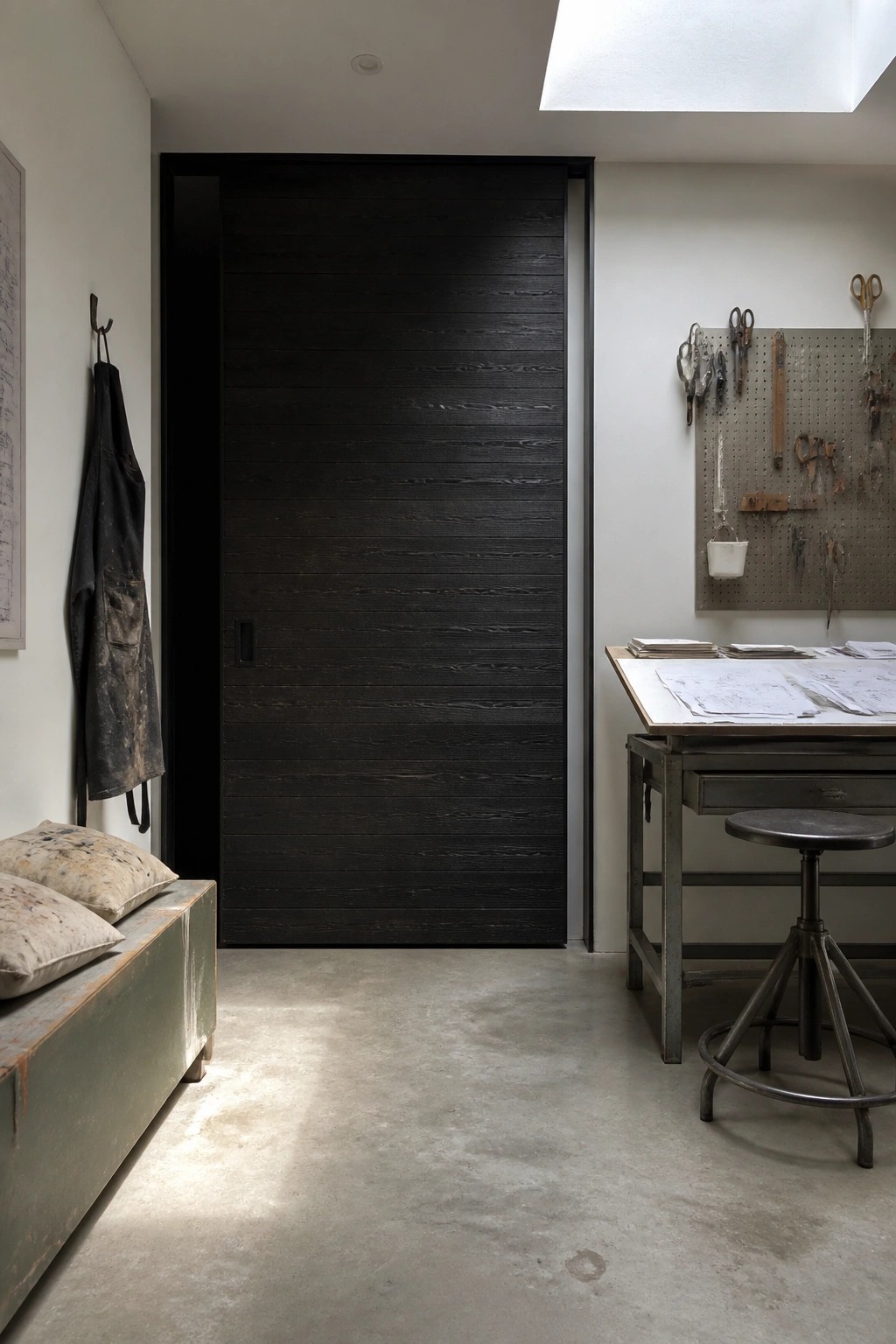
A large dark wood door gives a creative workspace clear separation while still feeling open and practical. The solid surface and horizontal grain help the door hold its own against worktables and tool storage without looking decorative.
This style suits home studios or small offices where you want privacy during focused work but also need quick access to the rest of the space. It pairs well with metal furniture and simple wall storage, and the dark finish hides wear better than lighter woods over time.
Wooden Doors With Edge Lighting
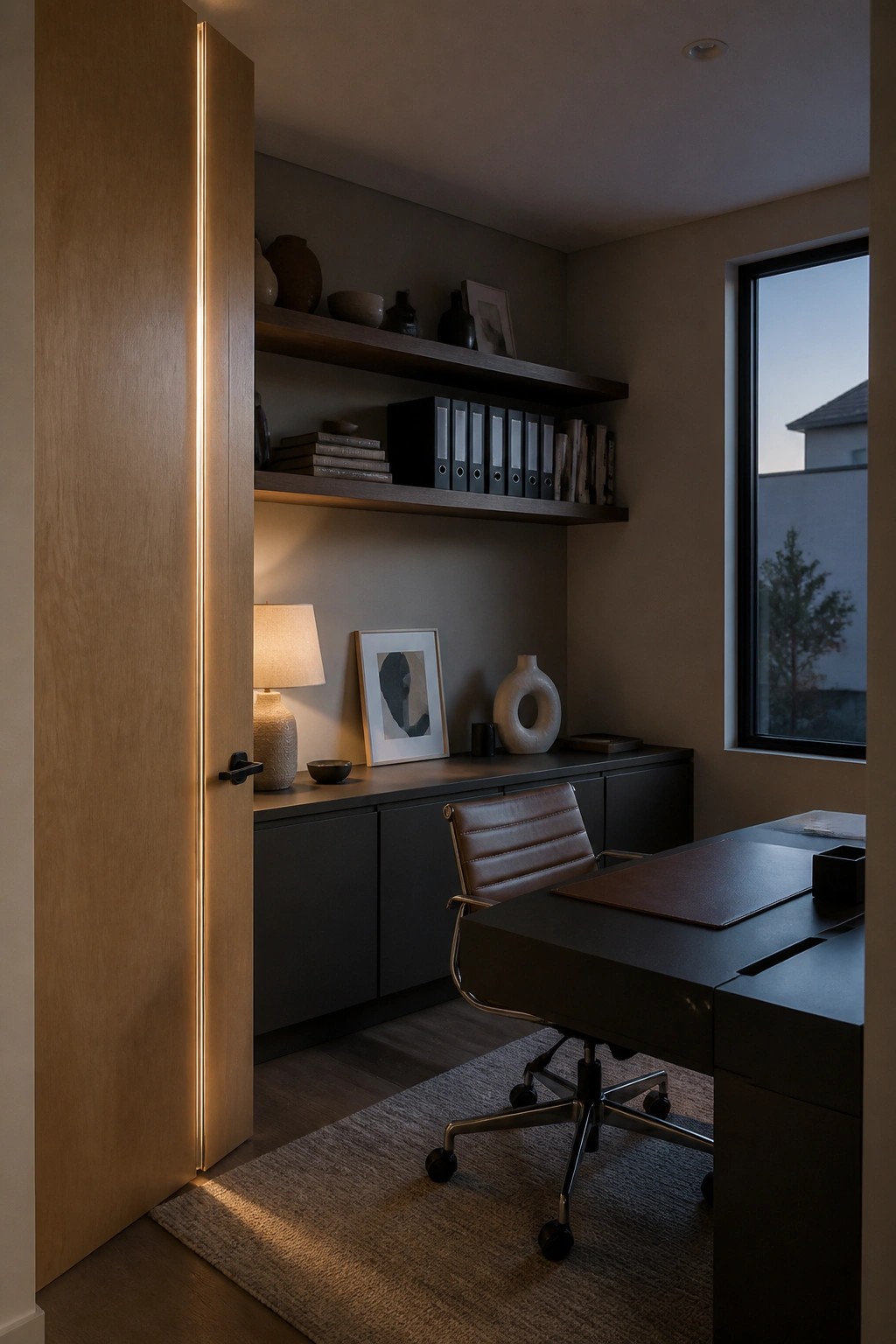
A wooden office door with a thin vertical light along one edge gives the room a quiet sense of warmth. The light softens the look of the wood while making the door easy to find at night without needing extra lamps or switches.
This detail works best in home offices that already have built-in shelves and dark cabinetry. It adds a bit of function and interest without taking up wall space or cluttering the layout.
Classic Paneled Doors For Office Entries
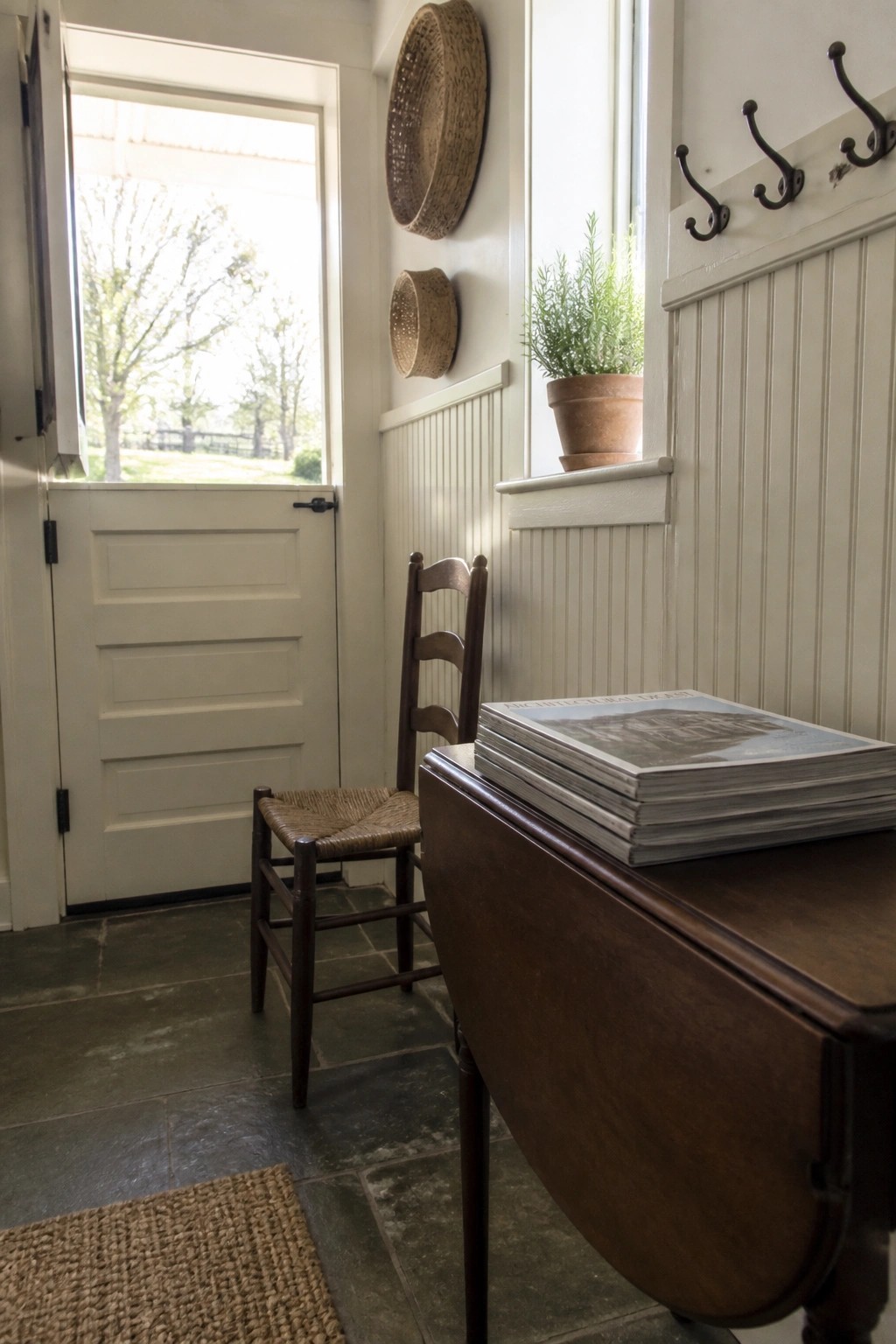
A paneled wooden door brings a practical feel to a workspace entry. It keeps the room separate when needed but still lets light through when left open, and the simple lines work with both traditional and updated offices.
This type of door fits best in homes where the office sits near living areas. Match the paint or stain to the trim so it blends in, and place a sturdy chair nearby if you want a spot to drop things or sit for a quick call.
Carved Wooden Doors For Home Office Entries
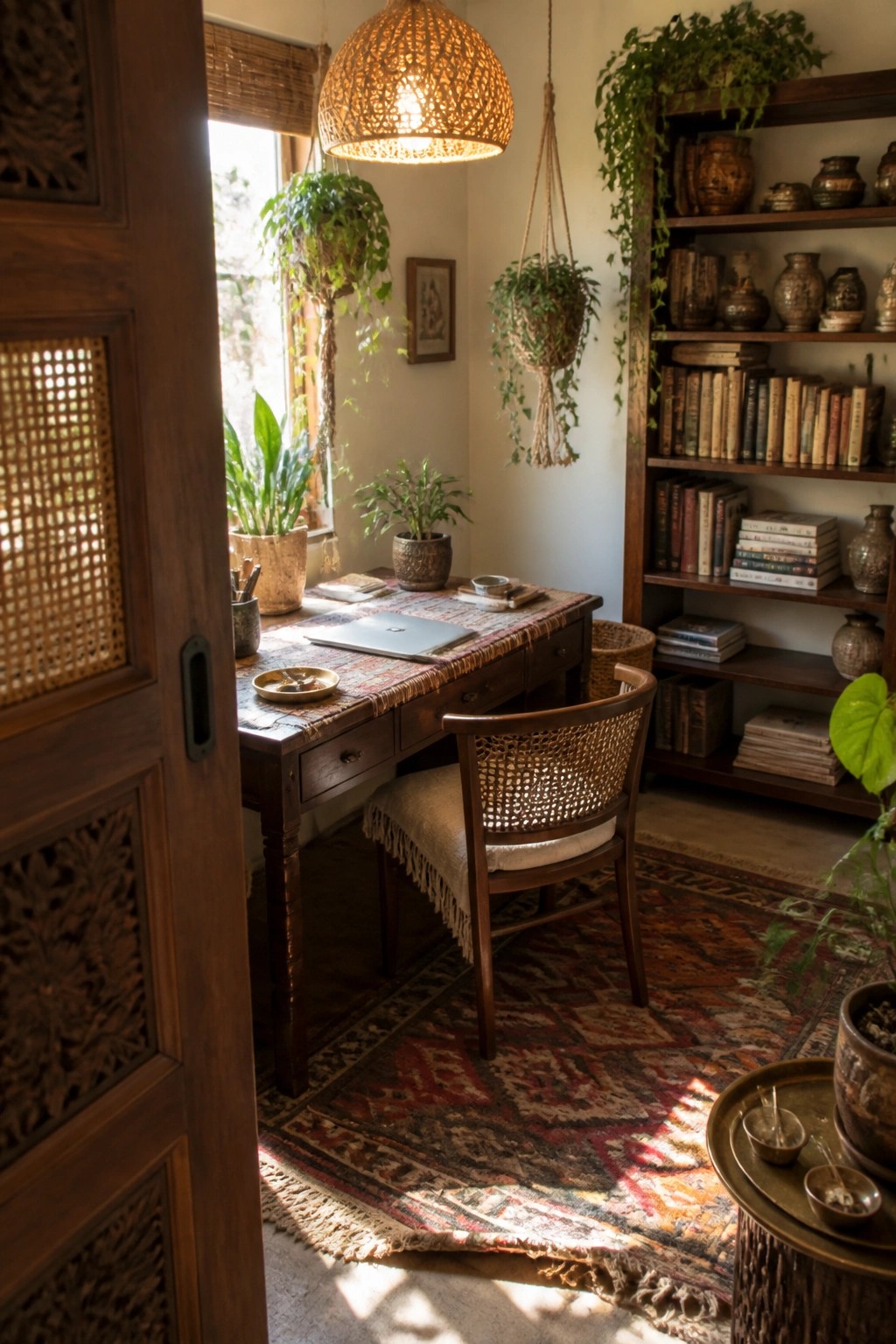
A carved wooden door can make a home office feel more defined and welcoming without much extra effort. The natural grain and hand-carved details bring warmth that plain doors often lack, and the texture helps the space feel grounded rather than like a basic work corner.
This style works best in smaller rooms where you want a bit of separation from the rest of the house. It suits homes that already use wood tones and simple furnishings, and it stays practical as long as the carvings stay subtle enough to avoid dust traps.
Sliding Wooden Doors For Flexible Office Spaces
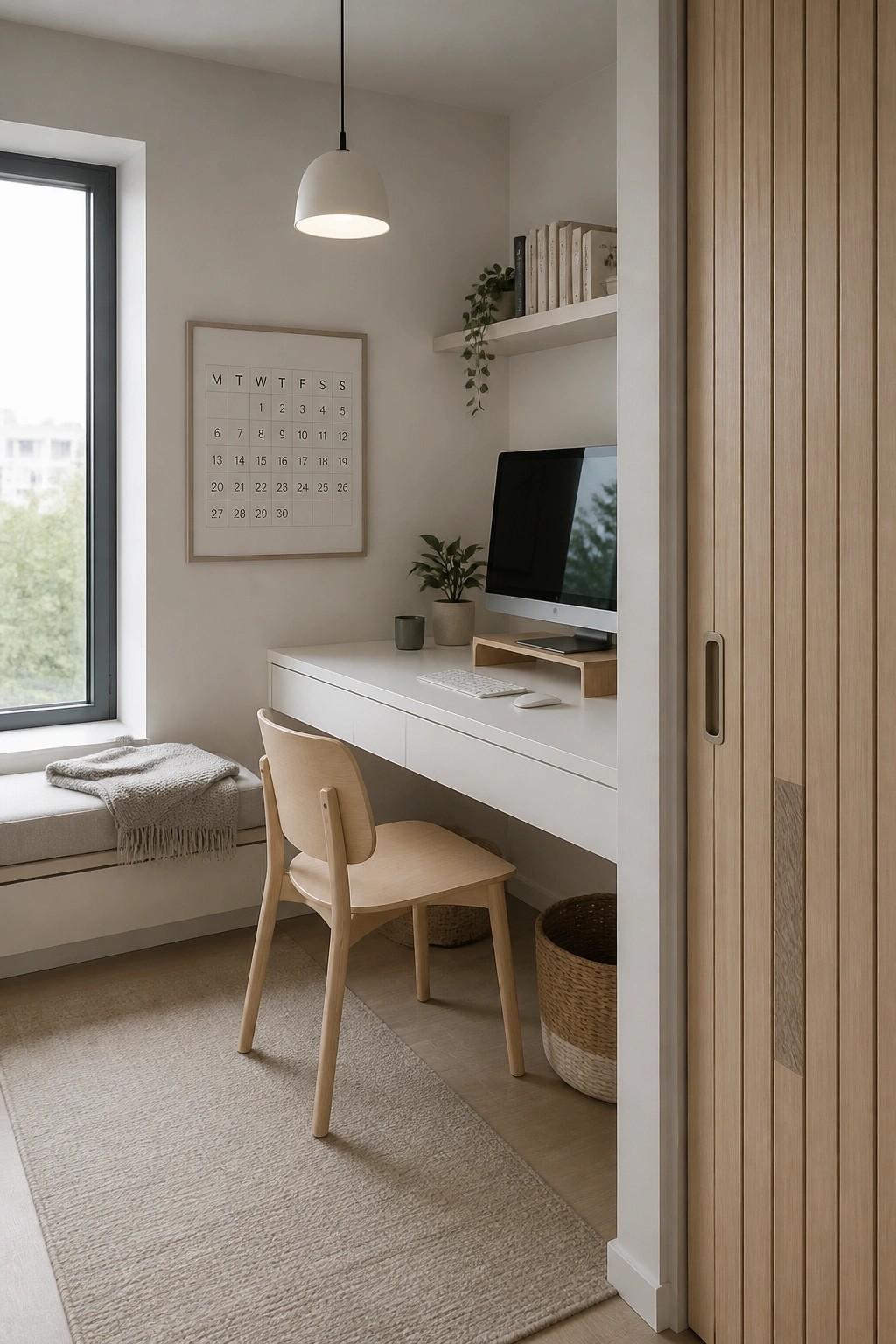
A sliding wooden door gives you an easy way to turn part of a larger room into a dedicated workspace. It lets the area feel open when you want it that way and gives you privacy when you need to focus or end the workday.
This setup works especially well in apartments or smaller homes where a full separate office is not an option. Light wood with a simple vertical grain keeps the look clean and helps the door blend with floors or other wood tones in the room.
Double Wooden Doors for Office Separation
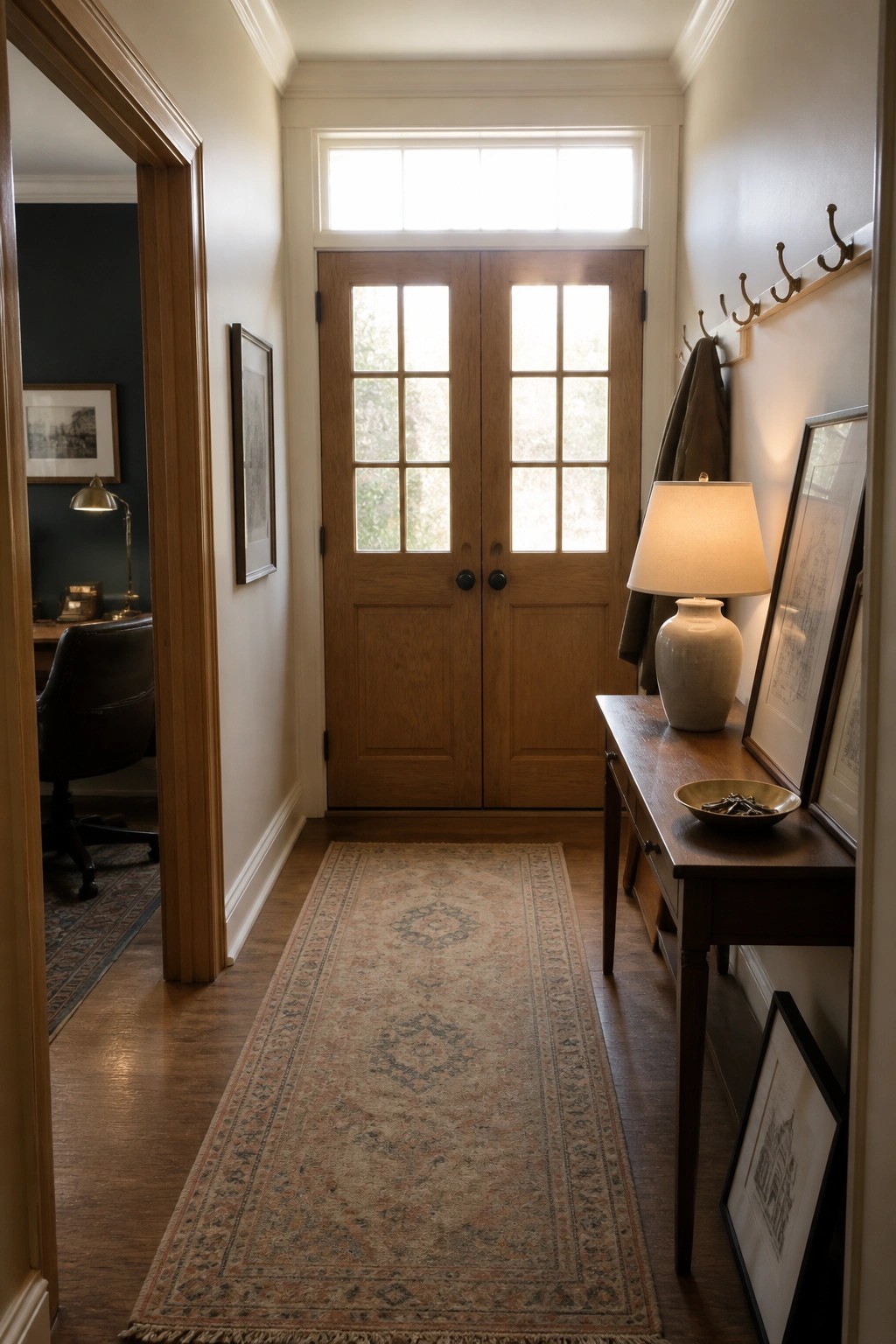
Double wooden doors give an office its own clear entrance inside the home. They mark the space as a dedicated workspace without needing extra walls or heavy construction.
This setup works well in homes with a hallway leading to the office. The doors keep noise and distractions at bay while the glass panels still let in some natural light from the rest of the house.
Vertical Grooves On A Wooden Office Door
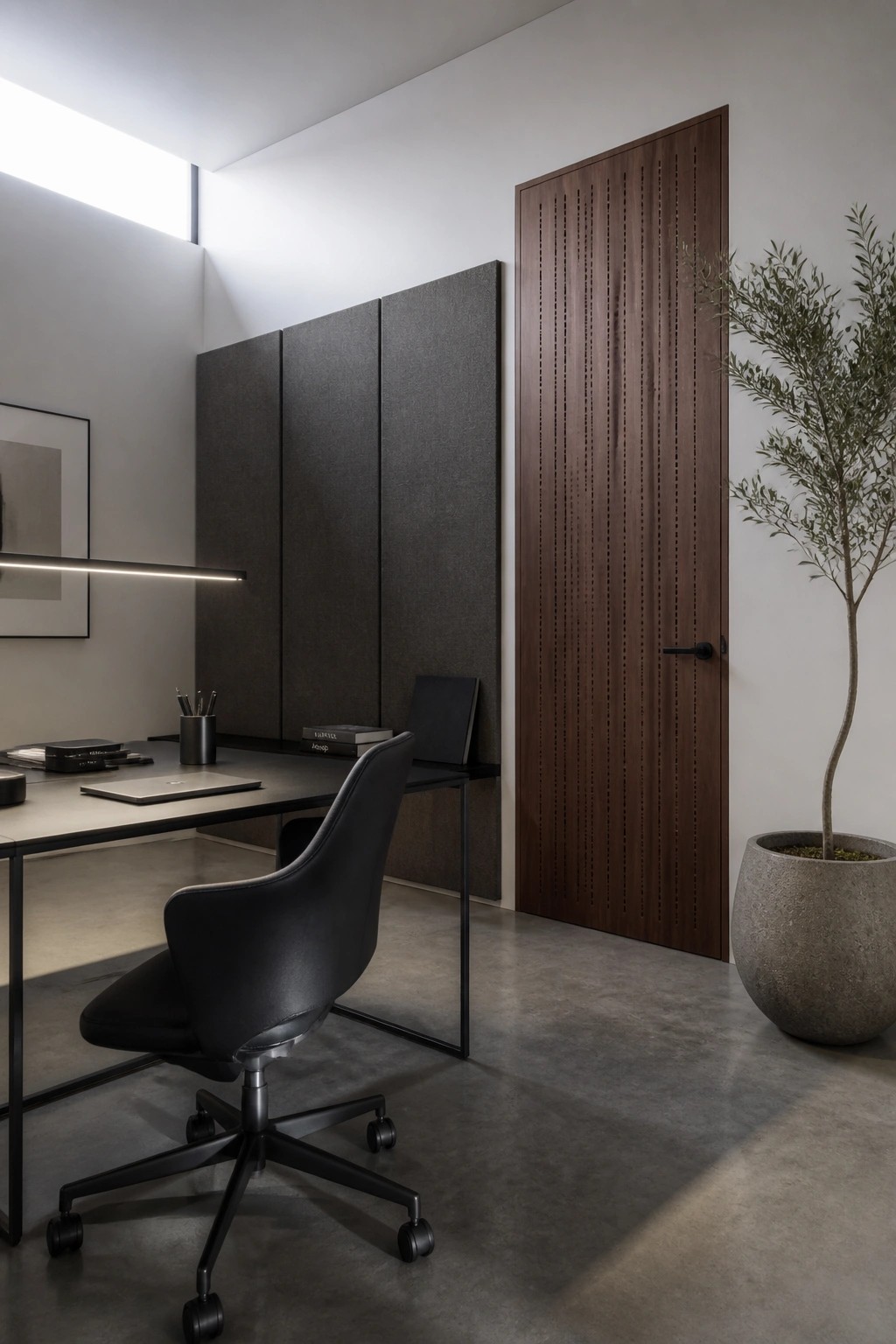
A flat door can disappear in a workspace, but one with vertical grooves gives the wood some quiet character. The lines break up the surface without adding extra color or pattern, so the door feels solid yet still fits a simple room.
This approach suits offices that already have clean walls and minimal furniture. Keep other surfaces plain so the door texture can do its job without fighting for attention.
Herringbone Wooden Doors For Office Texture
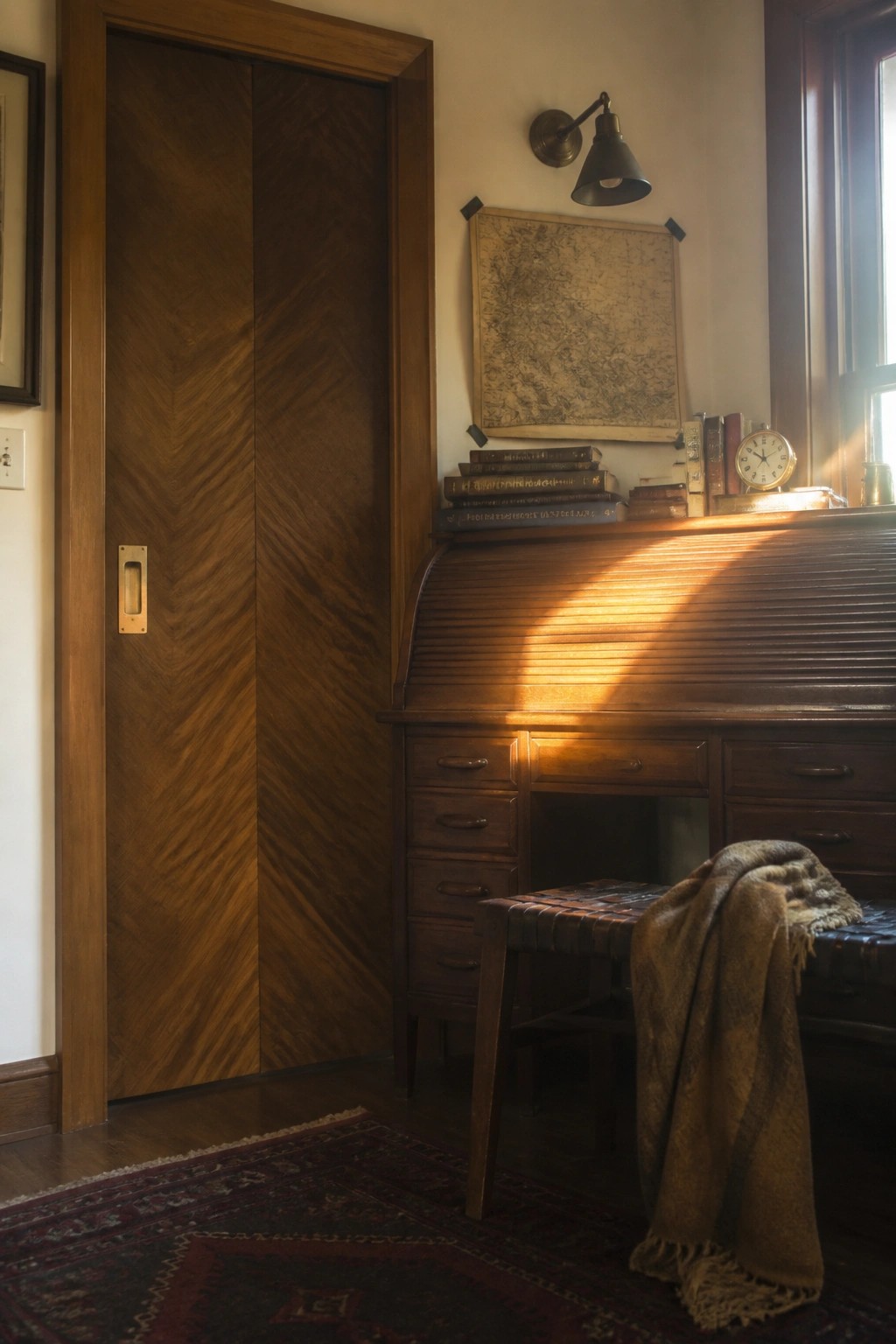
A wooden door with a clear herringbone grain gives an office a bit of quiet character without adding clutter. The pattern catches the light in a simple way and keeps the space from feeling too plain or flat.
This works best in homes that already lean traditional or transitional. Pair it with a few other wood pieces nearby and leave the rest of the room fairly plain so the door can do its job without competing.
Wooden Doors With Glass Panels For Office Flow
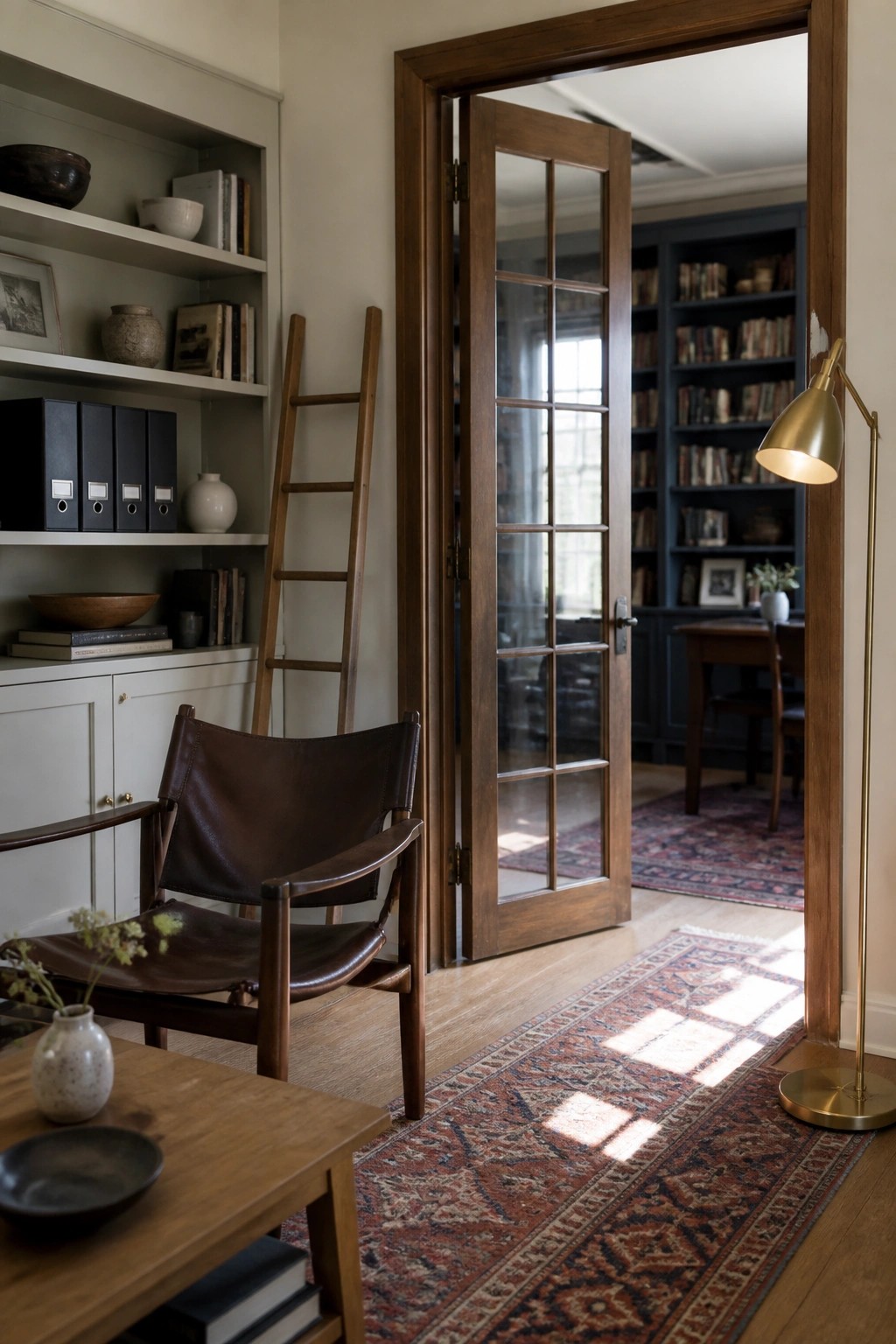
Wooden doors with glass panels work well in home offices because they divide space without cutting off light or the sense of connection between rooms. This approach keeps both areas feeling open while still giving each one its own purpose, especially when bookshelves line the walls on either side.
Try this style if your office sits next to another work or reading area in the same home. The wood brings warmth and a professional look, while the glass keeps things practical for daily movement between the spaces.
Wooden Doors That Close Off Creative Workspaces
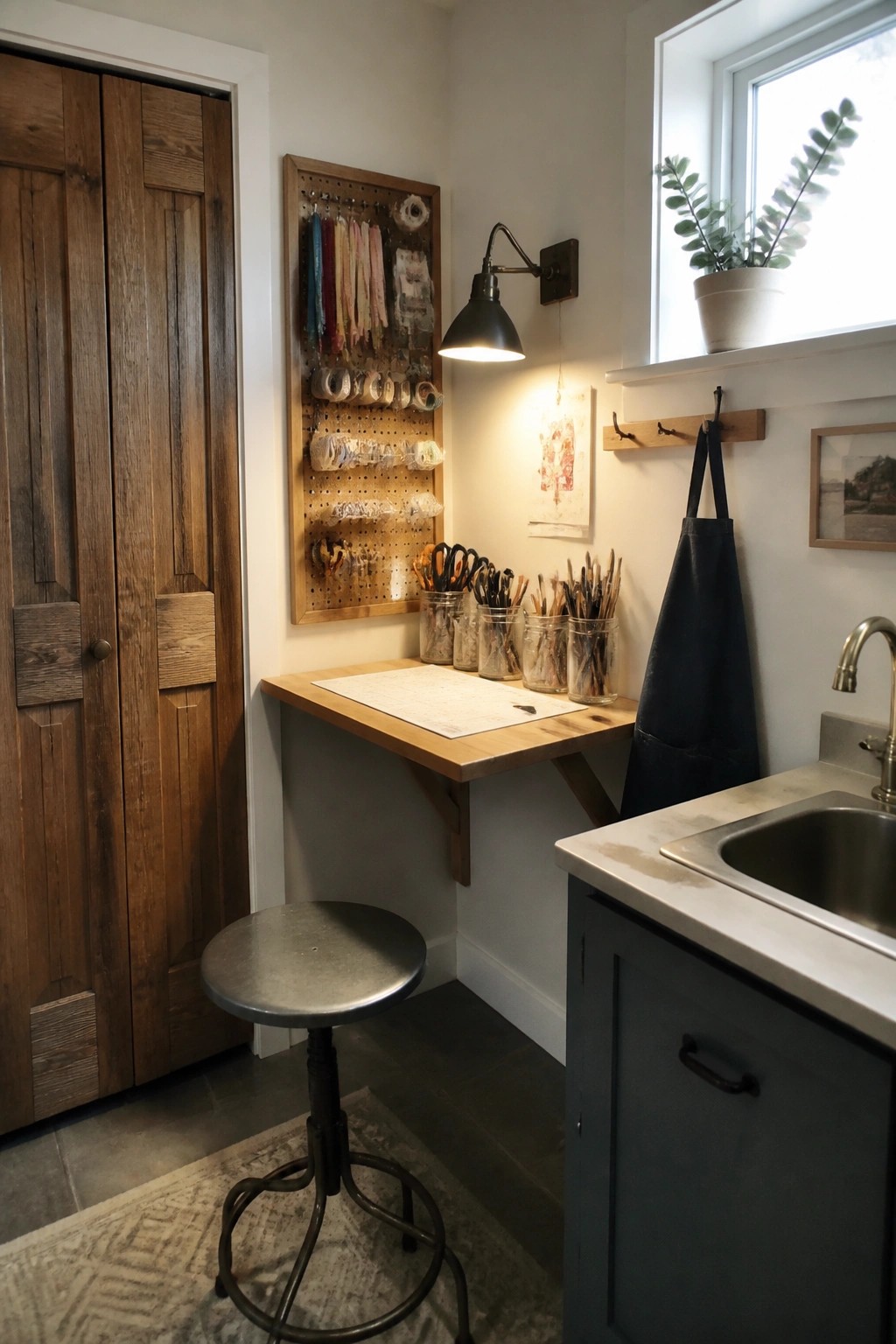
A solid wood door works well when you want a creative space to feel separate from the rest of the house. It keeps supplies and projects contained while giving the room a quieter, more focused feel during the day.
This setup suits smaller homes or apartments where the workspace shares space with living areas. Keep the door simple in style so it blends with the room rather than competing with the tools and materials inside.
Wooden Doors With A Tall Glass Insert
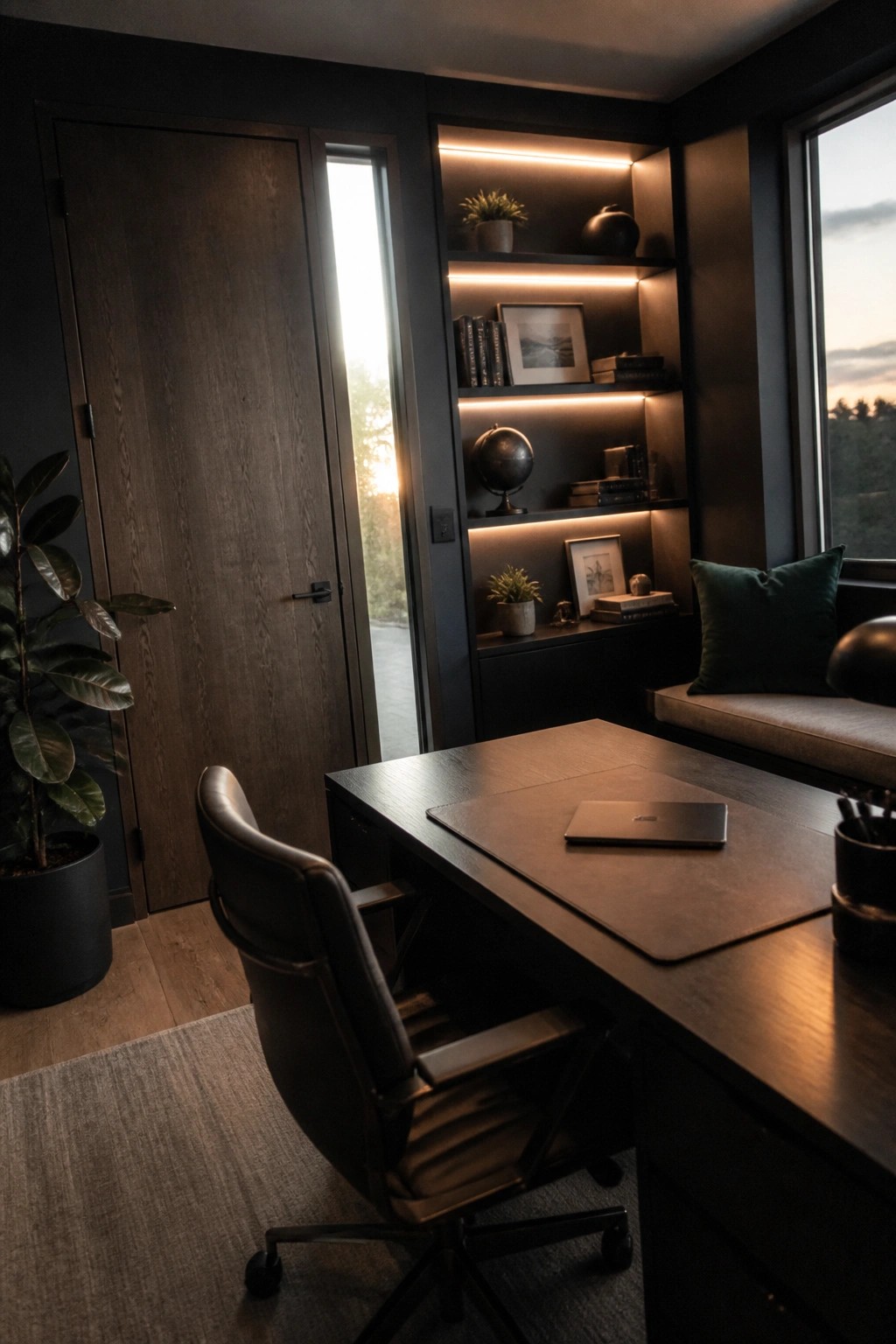
A wooden office door with a tall narrow glass panel solves a common problem in home workspaces. It keeps the room feeling private while still pulling in daylight from the hallway or another part of the house. The vertical shape of the glass keeps the look clean and avoids the busy look of a wider window.
This style works best in homes where the office door faces a shared space. Match the wood tone to nearby cabinetry or trim so the door feels like part of the room rather than an afterthought. Just make sure the glass sits at eye level so it does not create unwanted views in either direction.
Sliding Wooden Doors In Home Offices
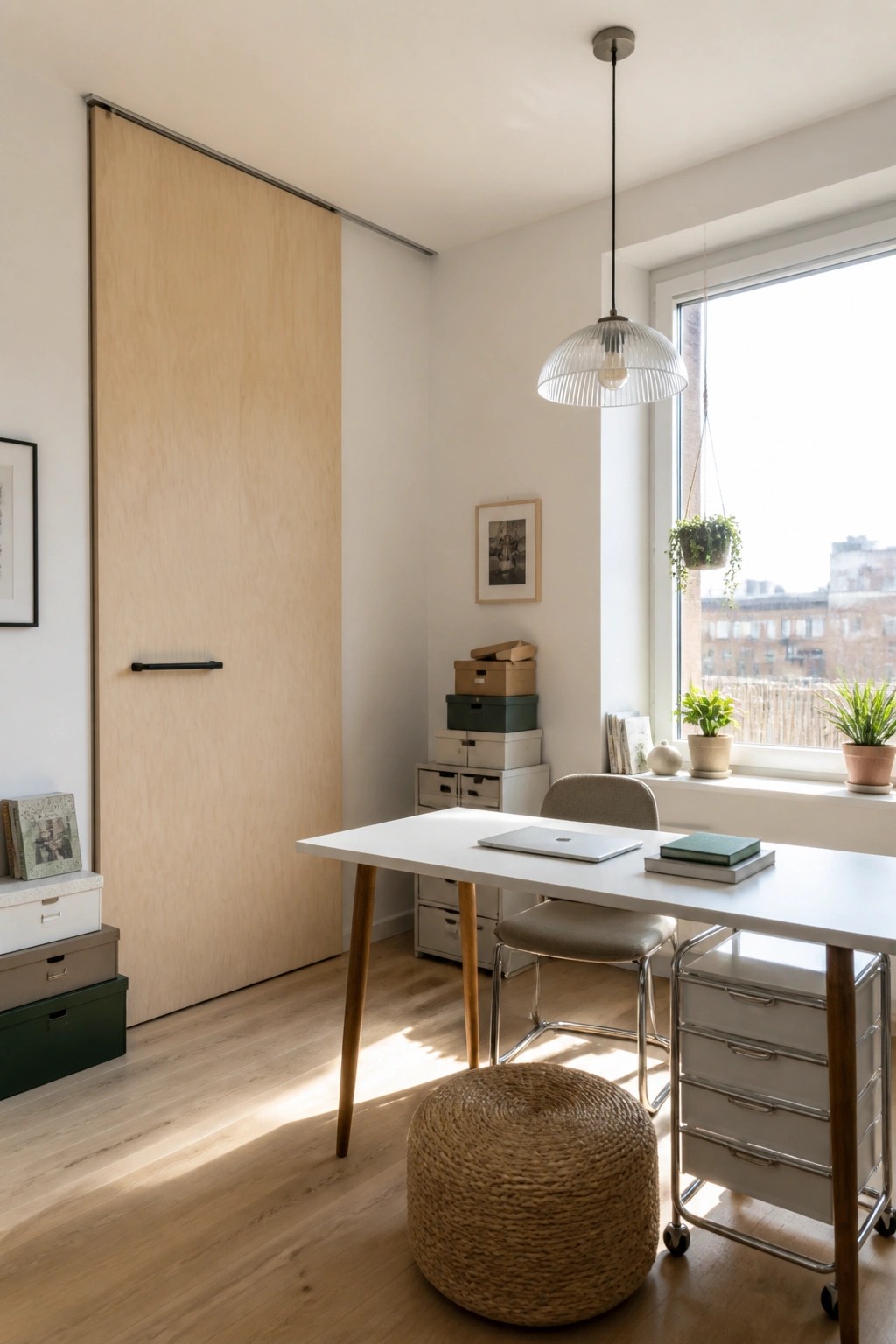
A sliding wooden door gives a home office the option to close off the space without losing floor area to a swinging door. The natural wood adds warmth and texture that pairs easily with simple furniture and light walls.
This setup works best in smaller rooms or apartments where every bit of space matters. Choose a light wood tone if you want the room to stay bright, and keep the hardware minimal so the door stays easy to use day to day.
Wooden Double Doors for Office Light
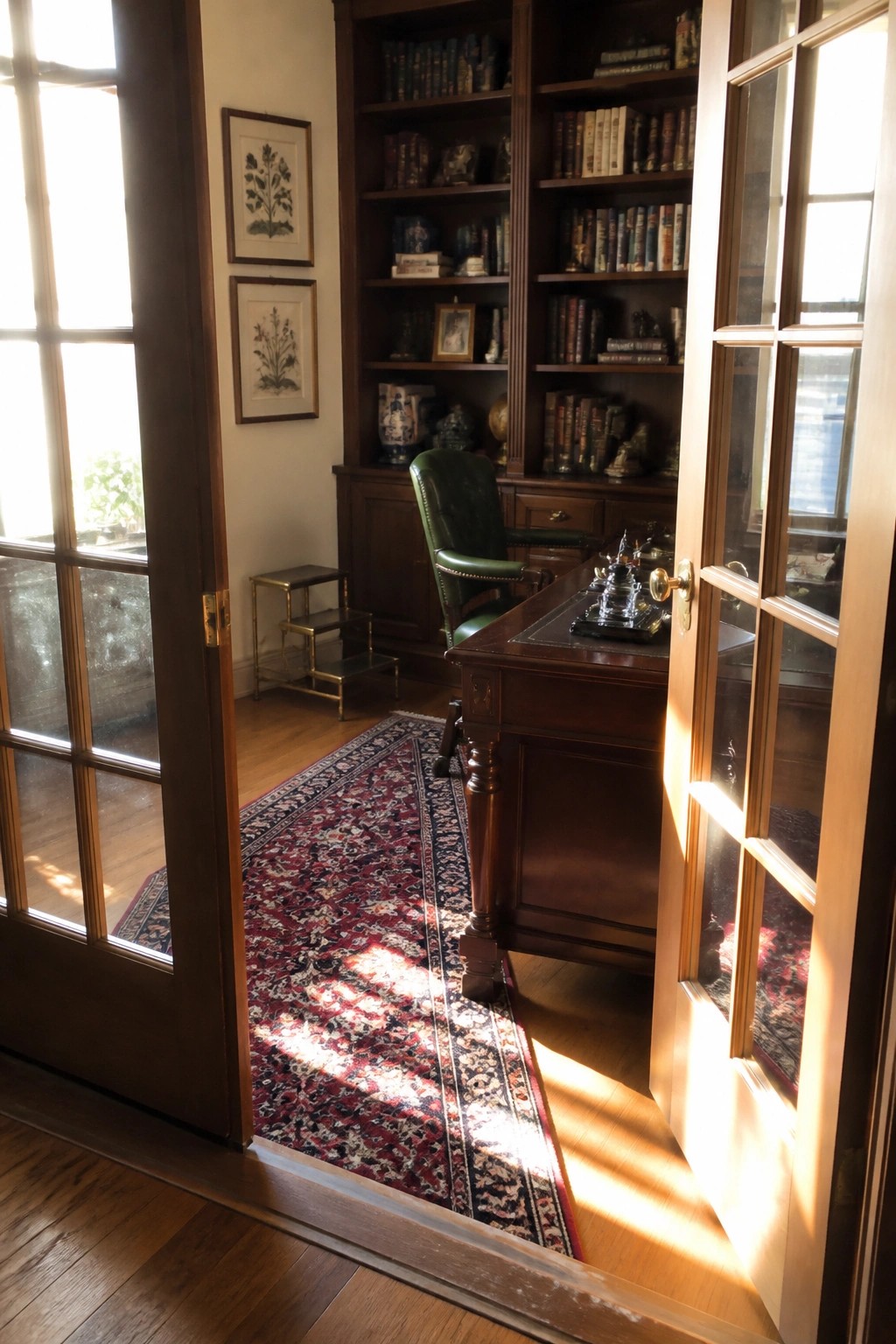
Wooden double doors make a simple upgrade in a home office when you want more daylight without losing the sense of a separate workspace. The glass panels let sun reach the desk and floor while the wood frame keeps the room feeling enclosed and professional.
They work best in homes where the office sits beside a hallway or living area. Keep the doors in a natural wood finish and add a simple lock if you need privacy during calls.
Louvered Wooden Doors For Airy Workspaces
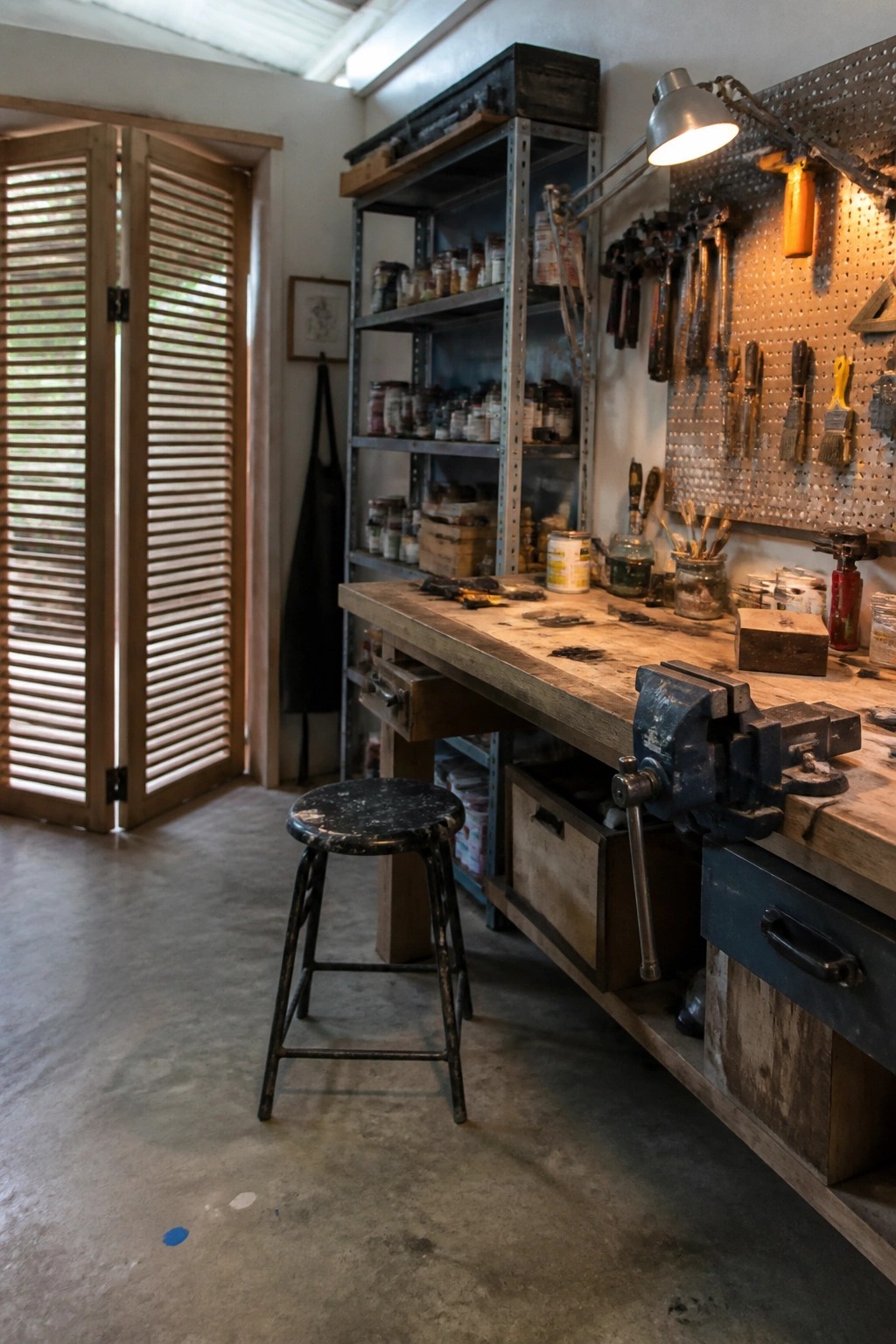
Louvered wooden doors make a lot of sense in creative workspaces because they let air move through the room without leaving the space completely open. They give you separation when you need it but still keep things from feeling stuffy during long work sessions.
These doors work best in home studios or small offices where ventilation matters more than total privacy. They pair well with simple wood finishes and hold up better than solid doors in rooms that see paint, dust, or frequent use.
Wood Doors Add Quiet Structure To Home Offices
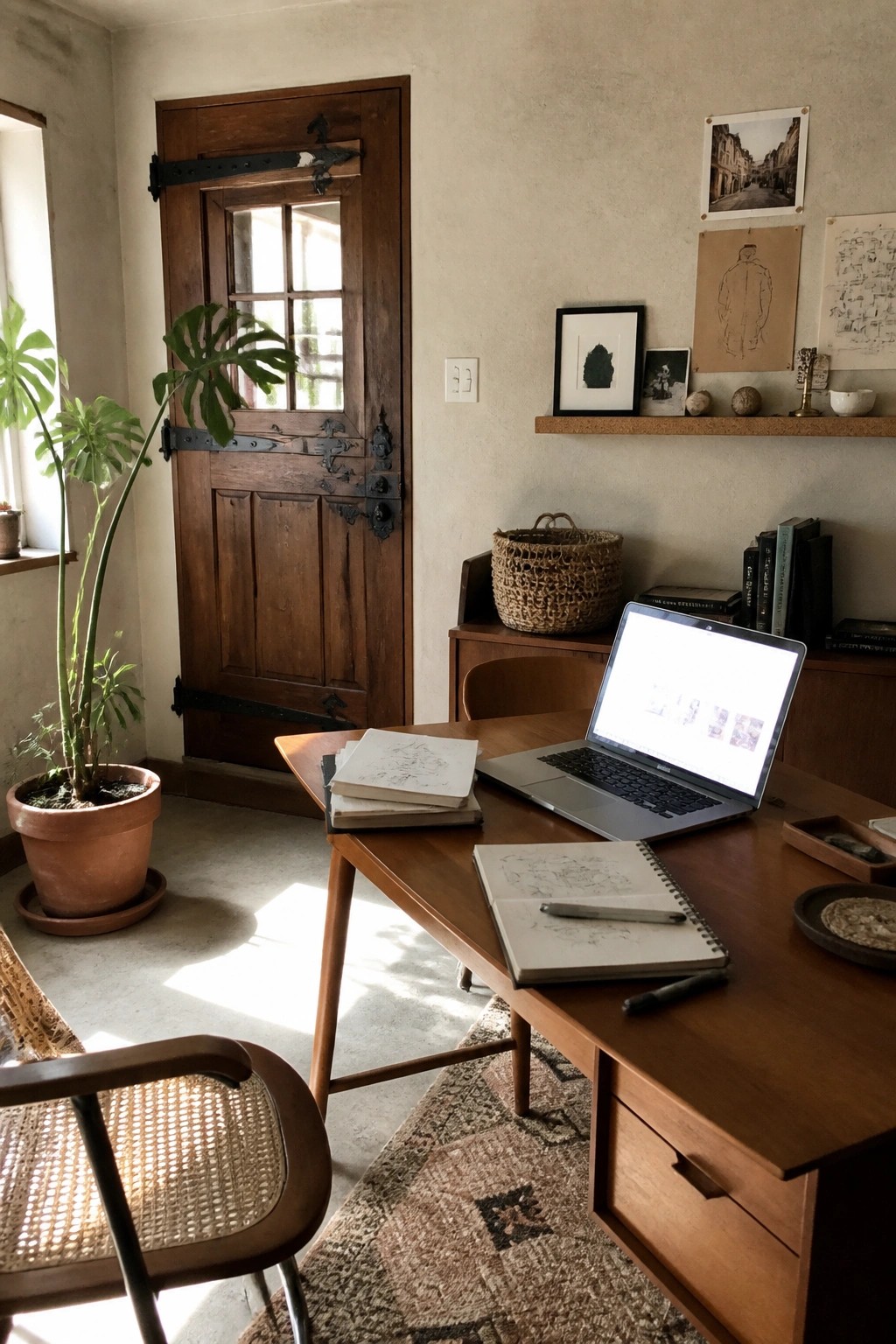
A solid wood door gives an office a clear sense of separation without making the space feel closed in. The natural grain and simple hardware keep the room grounded while still letting light through the small window panes. Many people like this look because it feels practical and lasting rather than trendy.
This style works especially well in smaller homes or converted rooms where the door needs to double as a visual anchor. Keep the surrounding walls light and the furniture simple so the wood stays the main feature. Avoid overcrowding the area right in front of the door if you want the room to stay easy to move through.
Frequently Asked Questions
Q: Which wood type holds up best when people bump into the door all day? A: Oak takes the hits without denting as fast as softer woods. It keeps its surface smooth even in high traffic spots. Go with that if your office stays busy.
Q: How do I stop the door from looking out of place next to my current desk and shelves? A: Match the stain color to your main furniture pieces. Test it on a hidden edge first to see how the grain takes it. This pulls the whole room together without extra pieces.
Q: Will a solid wooden door cut down on hallway noise during meetings? A: It blocks sound better than a thin door because the material absorbs vibrations. Keep it closed when you need focus and the difference shows up fast.
