

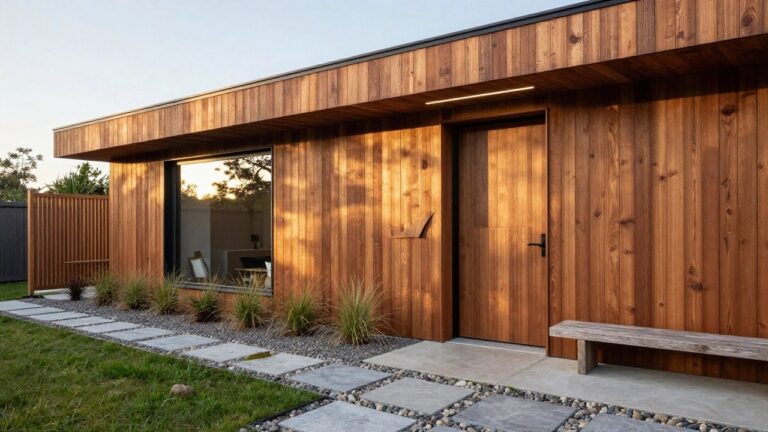
I’ve noticed how a well-chosen wooden facade can turn a stark modern box into something that actually belongs in the neighborhood. When folks pull up to a house, they zero in on the front door and siding first, judging if it feels solid or just showy. Wood warms up those clean lines without overwhelming them, and it ages into the landscape over time. That texture matters up close. I’ve saved a couple of these entry ideas myself for when we redo our front.
Warm Vertical Wood Siding
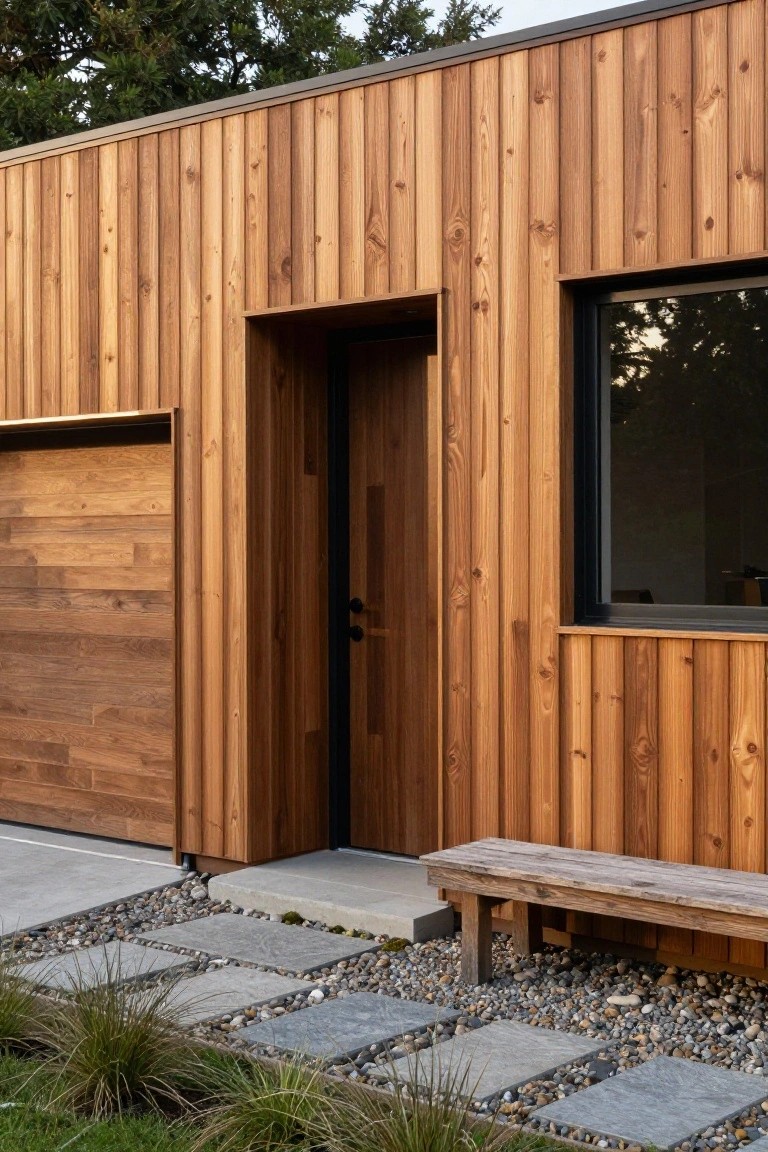
Vertical wood siding like this cedar cladding brings a cozy, natural touch to modern homes. It covers the walls in tight, even planks that follow the house’s clean lines without overwhelming them. Paired with a simple recessed entry and dark window frames, it makes the facade feel welcoming instead of stark.
You can use this on garages, side walls, or full facades where you want warmth without much upkeep. It works best on homes in wooded or coastal spots, blending right in. Just seal the wood now and then to keep it looking fresh.
Crisp White Siding with Wooden Door Entry
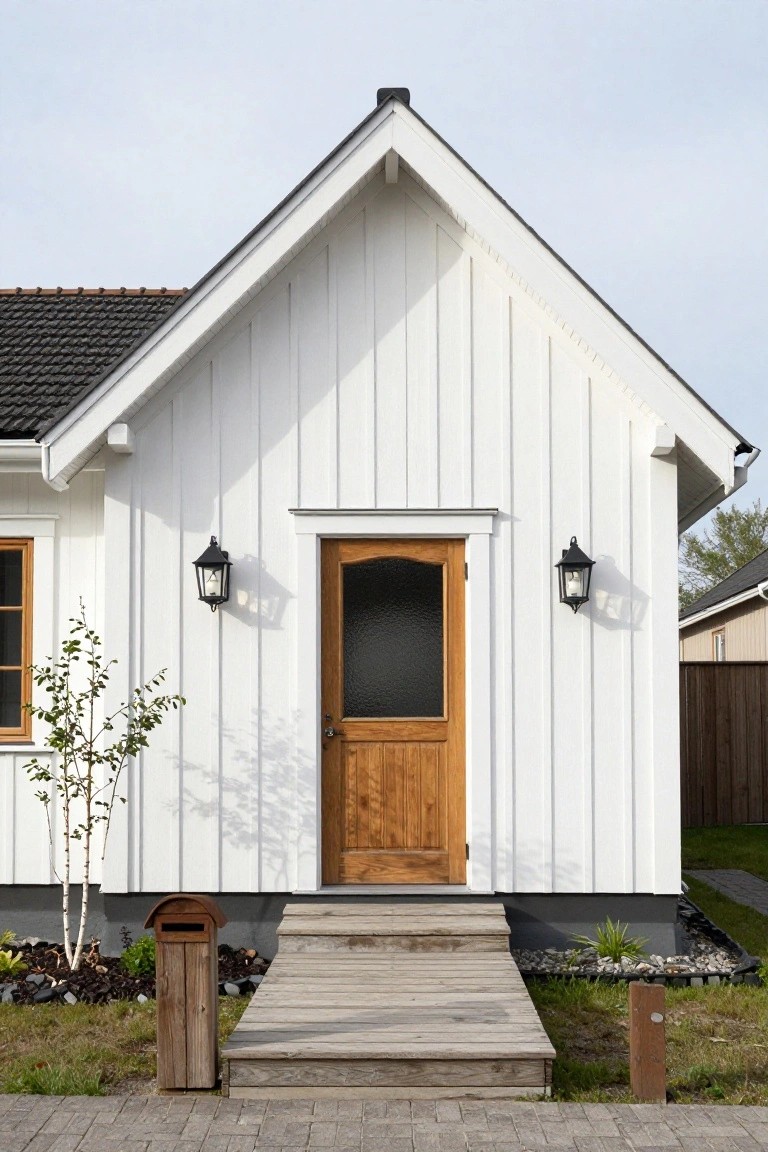
White siding like this, with its clean vertical boards, gives a house a fresh modern look that feels light and open. Pair it with a solid wooden front door in a warm stain, and you get instant warmth at the entry. The two black lanterns on either side frame things nicely without overdoing it. It’s a simple combo that makes the whole facade more welcoming.
This setup suits smaller homes or ones in wooded areas, where the white stands out clean against trees and grass. Go for durable cedar or oak on the door, sealed well against moisture. Wooden steps leading up add to the rustic feel, but keep plantings simple so they don’t crowd the front.
Wood Siding Over Stone Base
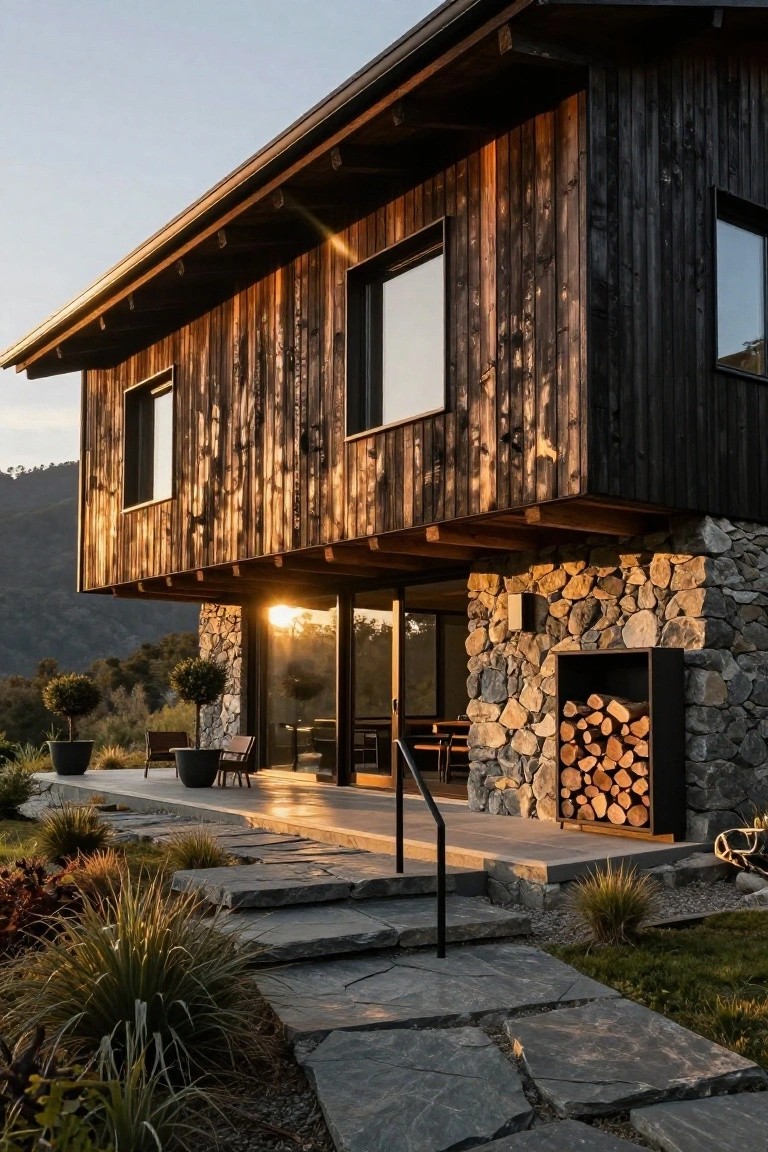
One solid way to boost curb appeal on a sloped lot is pairing dark vertical wood siding with a rugged stone base. The wood gives a sleek, modern cabin look that warms up the facade, especially in evening light. The stone below anchors everything, making the house feel like it grew out of the hill instead of sitting on top. You see it here with the charred timber planks flowing over textured rocks.
This setup works best for homes in wooded or mountainous spots where you want some natural tie-in without going full rustic. Source local stone for the base to match your site, and go for weather-treated wood siding that’s low fuss. Just keep the stone proportion right, maybe a third of the height, so it supports without overwhelming the wood above.
Warm Wooden Entry Design
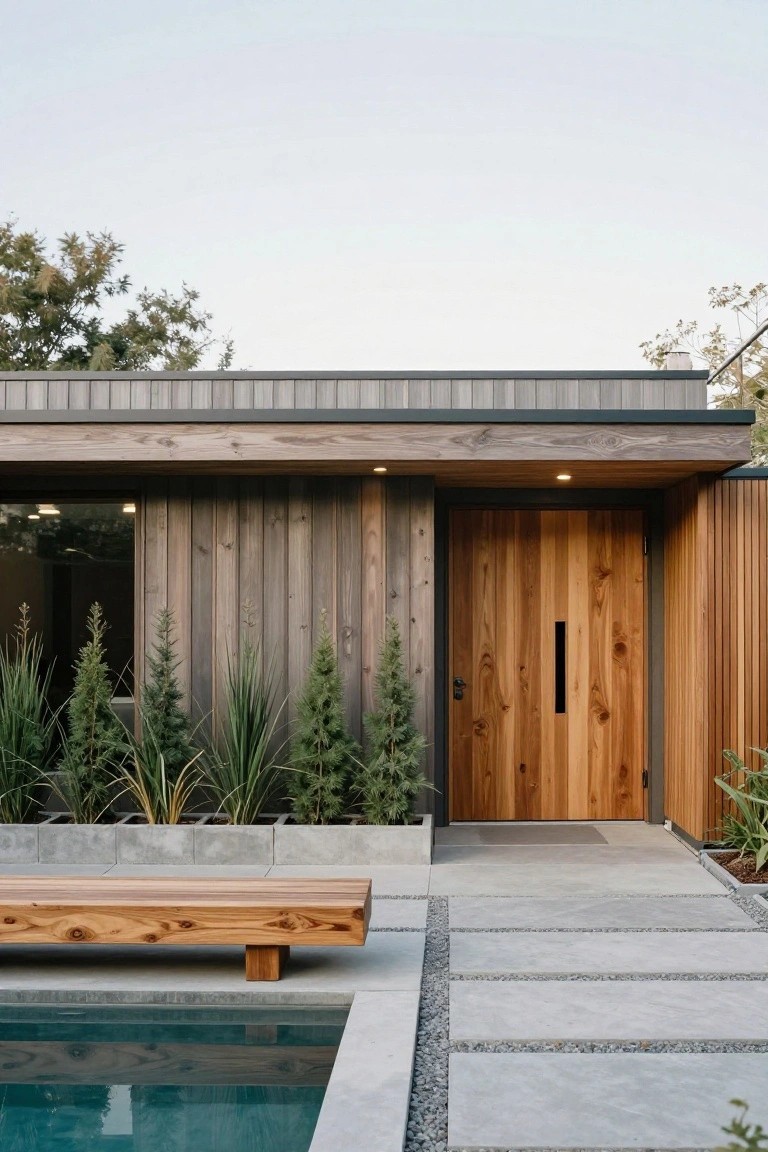
A solid wooden door like this one, paired with matching vertical siding around the entry, turns a plain modern facade into something that feels right at home in nature. The rich cedar tones warm up the clean lines and gray roof, while the simple black handle keeps it understated. It’s a straightforward way to make your front door the star without overdoing it.
This works best on homes with flat or low roofs where you want some organic texture up front. Frame the entry with a few structured plants, maybe agaves or small pines, and drop in a long bench nearby for sitting. Skip heavy paint jobs; let the wood age naturally for that lived-in look. It suits suburban spots or yards with a pool edge close by.
Shingle Siding for Coastal Homes
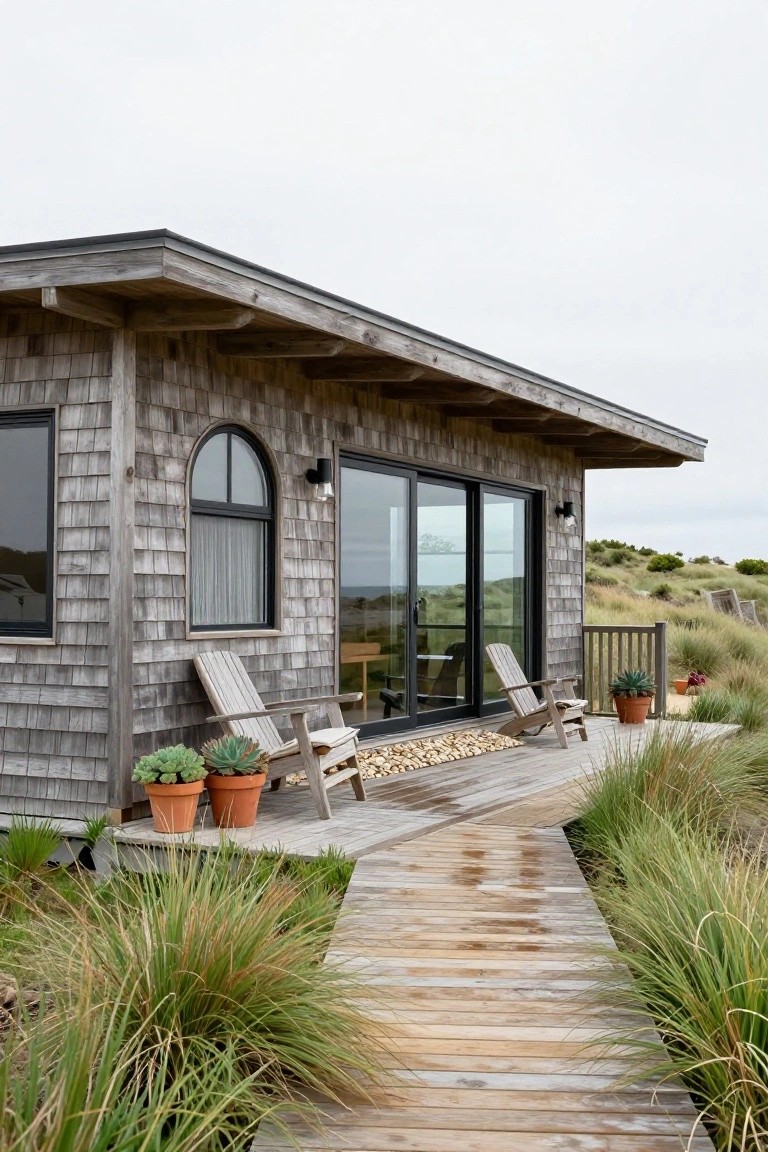
Shingle siding catches the eye on this kind of house because it looks right at home by the beach. The rough wood texture weathers naturally over time, picking up gray tones that match the sand and sea grass around it. Here it’s used on a simple rectangular build, keeping things straightforward but with enough character to stand out from plain siding.
Try it on smaller homes or cabins where you want low upkeep and a nod to older beach styles. Black-framed windows and a wide deck like the ones shown pull the look together without much fuss. It holds up well in salty air, though you might seal it at first to slow the graying if you prefer.
Dark Wood Slatted Entry Gate
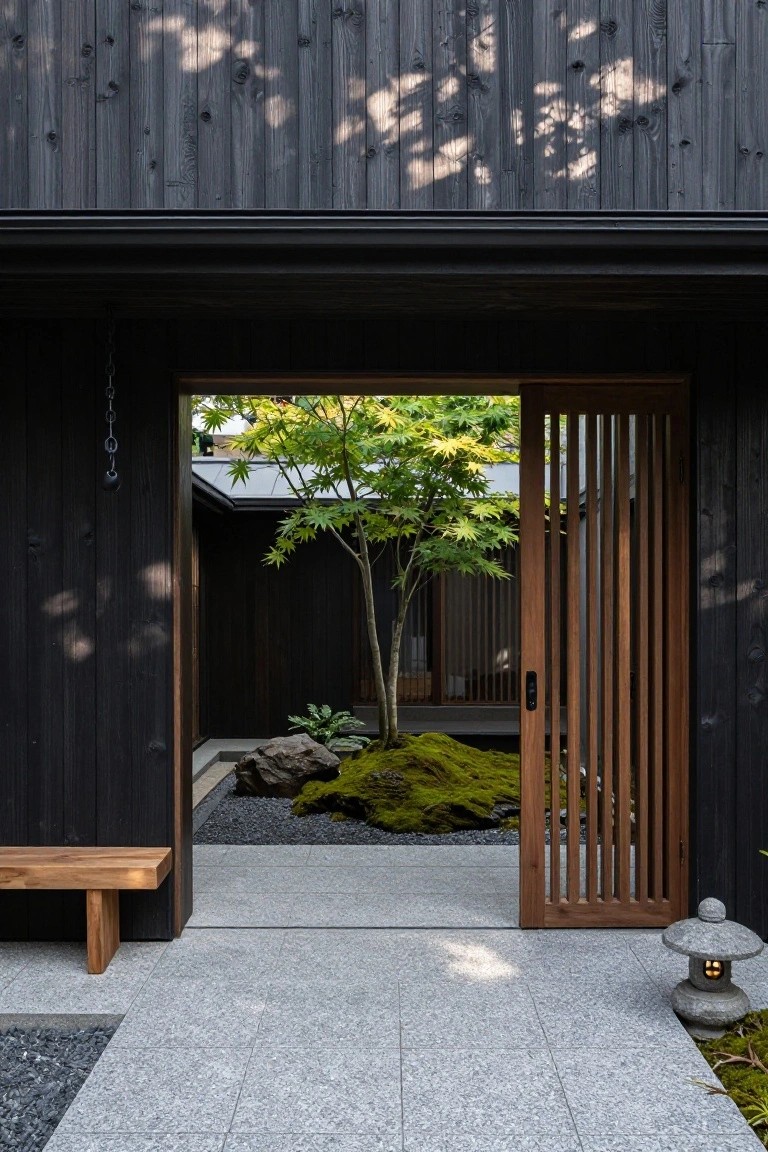
This kind of entry pulls you right in with tall dark timber walls framing a simple slatted wood gate. The vertical slats on the gate offer privacy from the street but let light filter through and give a hint of the garden beyond, like the maple tree you can just see. It’s a clean modern take on wooden houses that feels solid and calm without being plain.
You can use this setup on the front of ranch-style homes or modern boxes to boost curb appeal fast. It suits spots with a small side courtyard, where gravel and rocks inside keep things low fuss. Just make sure the gate slides smooth and the wood gets treated for weather.
Vertical Wood Cladding Warms Up Boxy Modern Homes
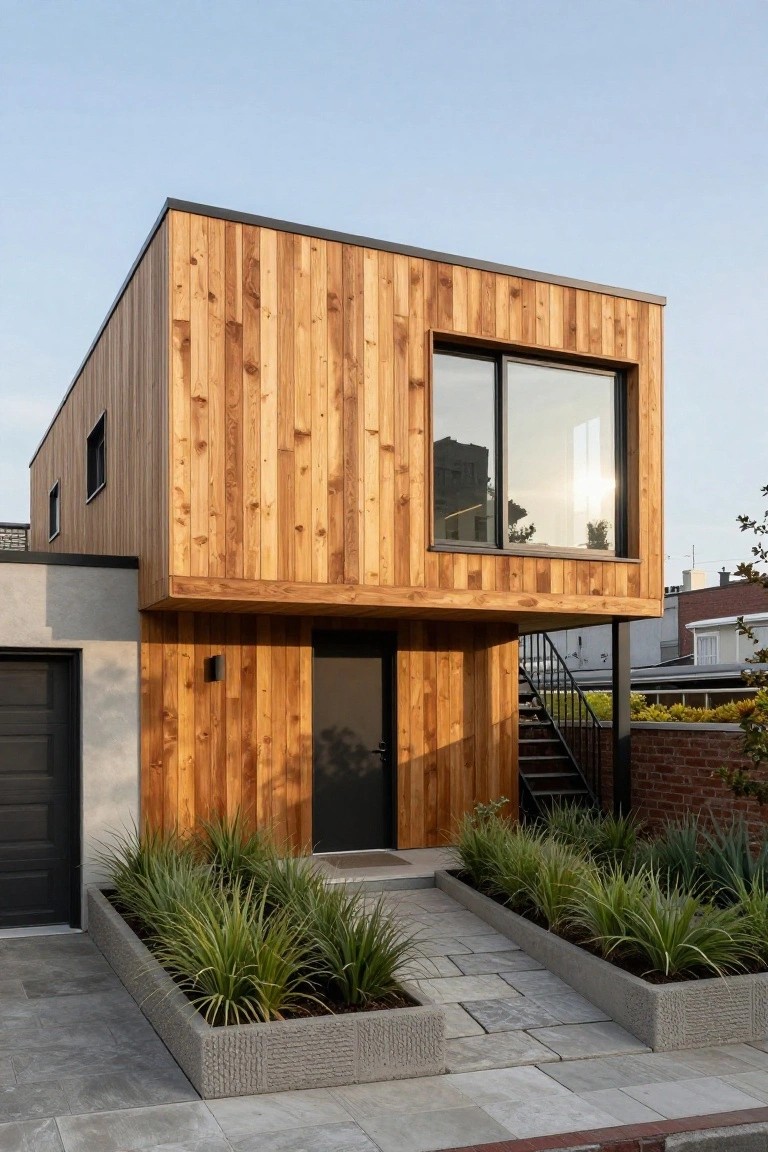
One simple way to make a stark modern house feel more welcoming is covering it in vertical wood planks. Here, the warm cedar tones wrap the boxy two-story structure, softening those sharp edges without losing the clean lines. Black-framed windows and a matching dark door keep things crisp, while the wood brings in that natural touch right at the street.
This works best on narrow urban lots or additions next to older neighbors. Pick durable wood like cedar or larch, treat it for weather, and pair with simple plant beds at the entry. It upgrades curb appeal fast, especially if your current facade feels too plain or concrete-heavy.
Vertical Wood Cladding for Modern Facades
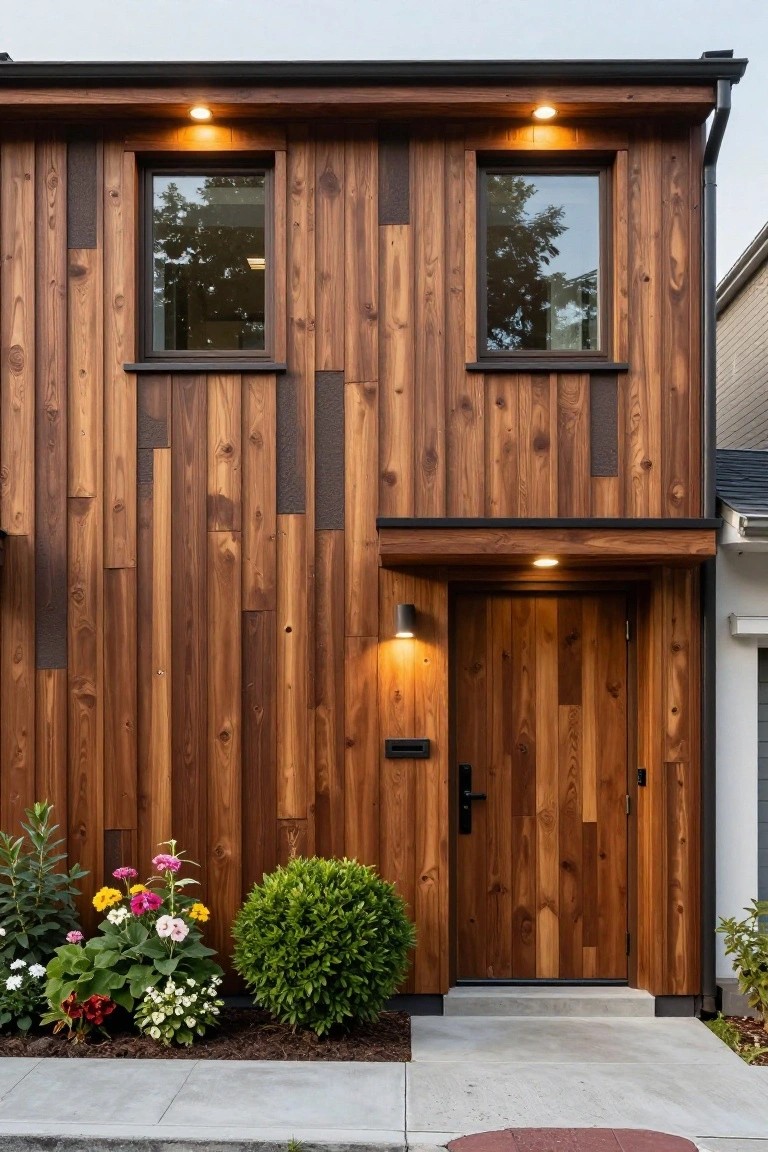
One look at this house front shows how vertical wood boards can change a plain exterior. The rich, dark-stained planks run straight up the walls, broken by slim metal inserts that add just enough contrast. It pulls the eye to the entry without much fuss, and that warmth from the wood makes even a simple two-story setup feel solid and new.
Try this on homes in town or out where you want curb appeal that lasts. It works best with clean lines like flat roofs and big windows, keeping things low-key. Skip it if your spot gets too much direct sun, since the wood might fade unevenly over time.
Wood and Stone Entry Facade

Houses with wood siding often look best when you ground them with a stone base around the entry. Here, dark vertical wood planks rise above a textured stone section that frames wide wooden double doors. Black sconces light up the doors nicely, and a big fern in a pot sits right by the steps. That mix keeps things rugged but pulls you right to the front door without feeling too busy.
Try this on mid-sized homes in wooded spots or suburbs where you want curb appeal that lasts. Pick light beige stone against charred or walnut-toned wood for contrast that pops even on cloudy days. Skip fussy trim. Just let the materials do the talking, maybe add gravel mulch nearby to tie it to the yard.
Built-In Porch Bench Seating

One practical touch on this porch is the bench built right into the wall next to the door. It’s topped with simple leather cushions and has space below for stacking firewood. That setup turns an empty spot into usable seating without dragging out chairs every time. Folks who spend time outdoors appreciate how it fits the space naturally, especially when the house sits among trees like this one does.
You can add something similar to most covered porches, whether they’re wide like this or a bit narrower. Go with sturdy wood that matches your siding, maybe cedar or reclaimed timber, and pick cushions that handle rain. It suits cabin-style homes or any place with a wooded yard best… keeps things low-fuss and ready for company.
Wooden Deck Around a Koi Pond
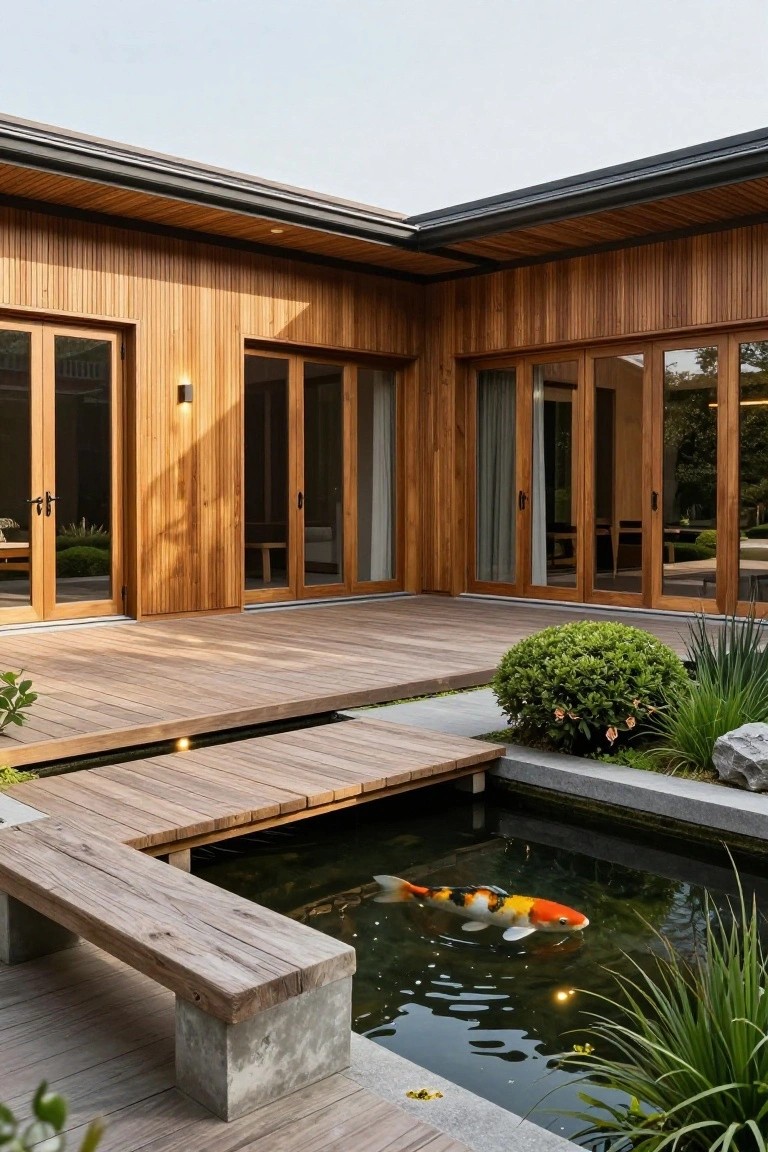
One nice way to make your deck more interesting is to build it around a small koi pond. The wood deck flows right up to the water’s edge, with colorful koi swimming below and a simple bridge crossing over. It turns a plain outdoor spot into something calm and a little special, especially with the house walls nearby providing shade.
This setup works well on decks off the back or side of the house, where you want a quiet seating area. Use sturdy wood like teak for the deck and bench, keep the pond shallow, and add low plants around it. It’s best for milder climates so the fish do well, and it suits homes that lean modern or natural.
Wood Cladding for Modern Facades
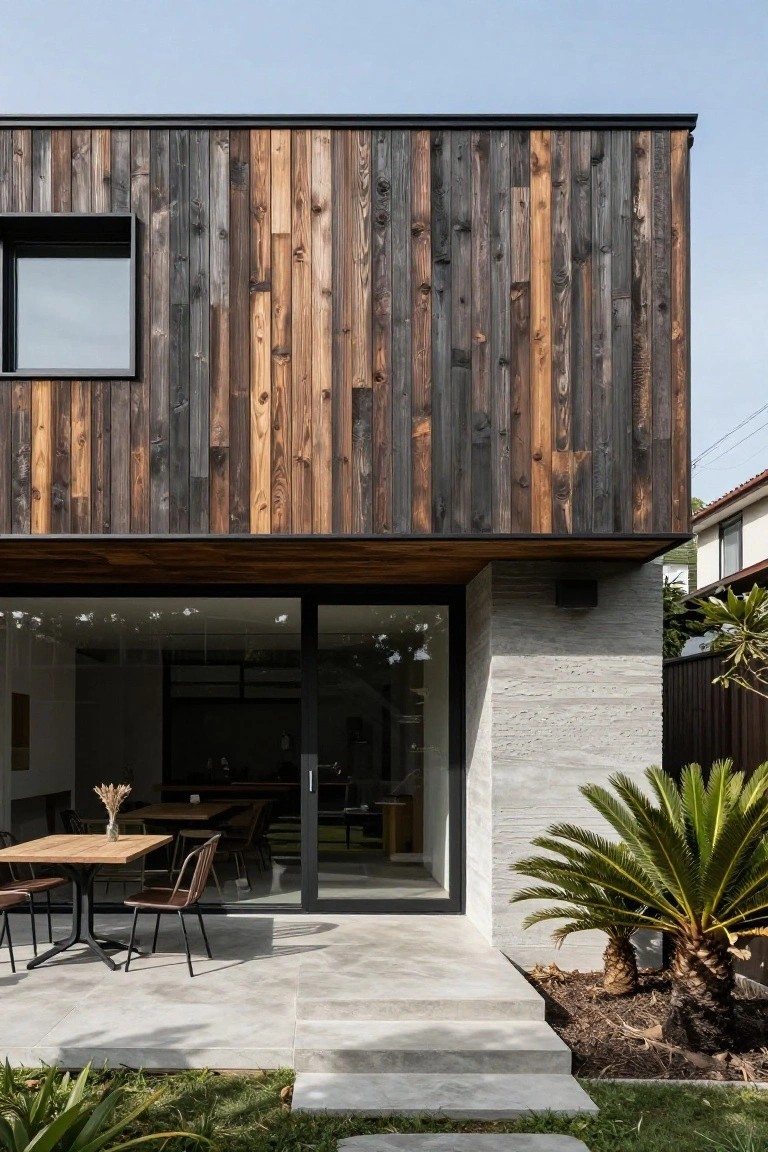
Dark wood cladding like this adds real texture to a plain modern house. Those vertical planks in mixed tones of char and natural grain stand out against the smooth concrete pillar and black-framed glass doors. It keeps the look rugged yet clean. No fussy details. Just enough warmth to make the place feel lived in from the street.
Try this on side walls or rear elevations where you want some character without going overboard. It suits homes in suburban spots or near greenery. Pair it with concrete bases for stability. Works best if your lot has some trees or grass nearby. Skip it on super small houses though. Might overwhelm.
Warm Wood Entry Against Dark Siding
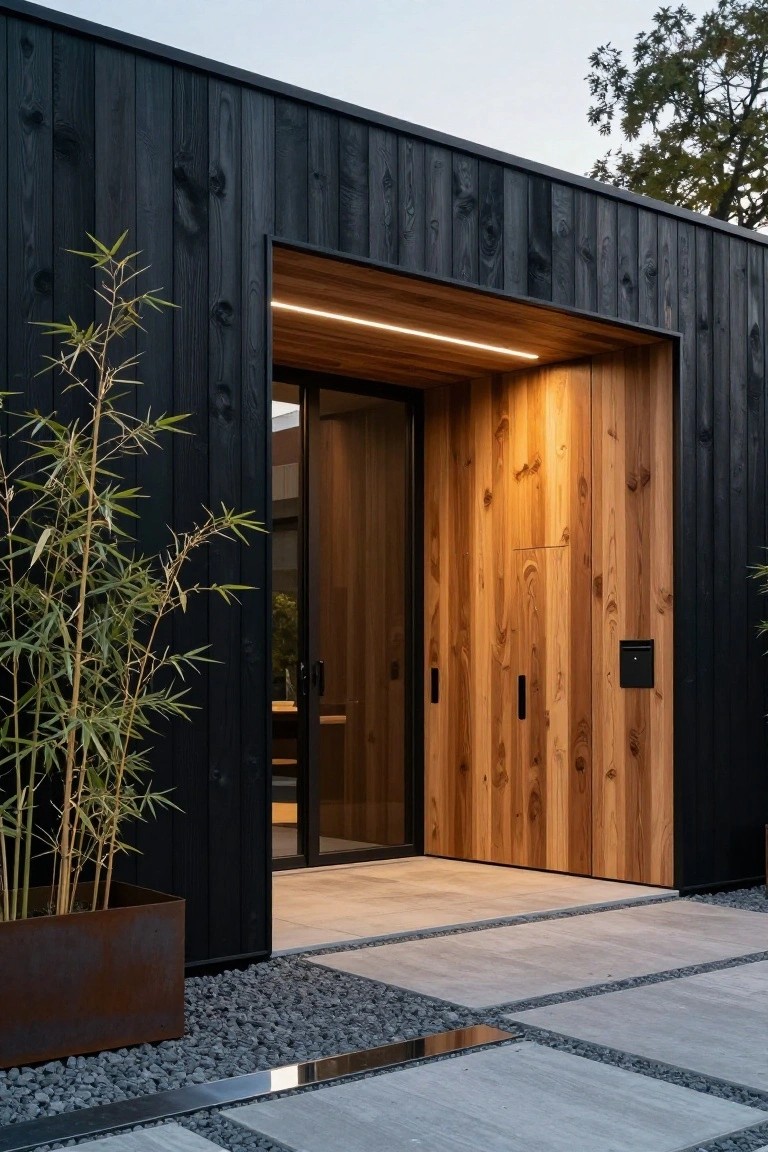
Houses with dark wood siding can feel a bit stern sometimes. But look at this one. The entry pulls back into a frame of lighter natural wood. That simple switch softens things up. Makes folks feel welcome before they even step inside.
You can do this on ranch styles or modern cabins. Pick cedar or similar for the door area. Keep the dark stuff like charred pine on the walls. A slim light strip overhead helps at night. Just match the grains so it stays clean.
Modern Vertical Wood Siding
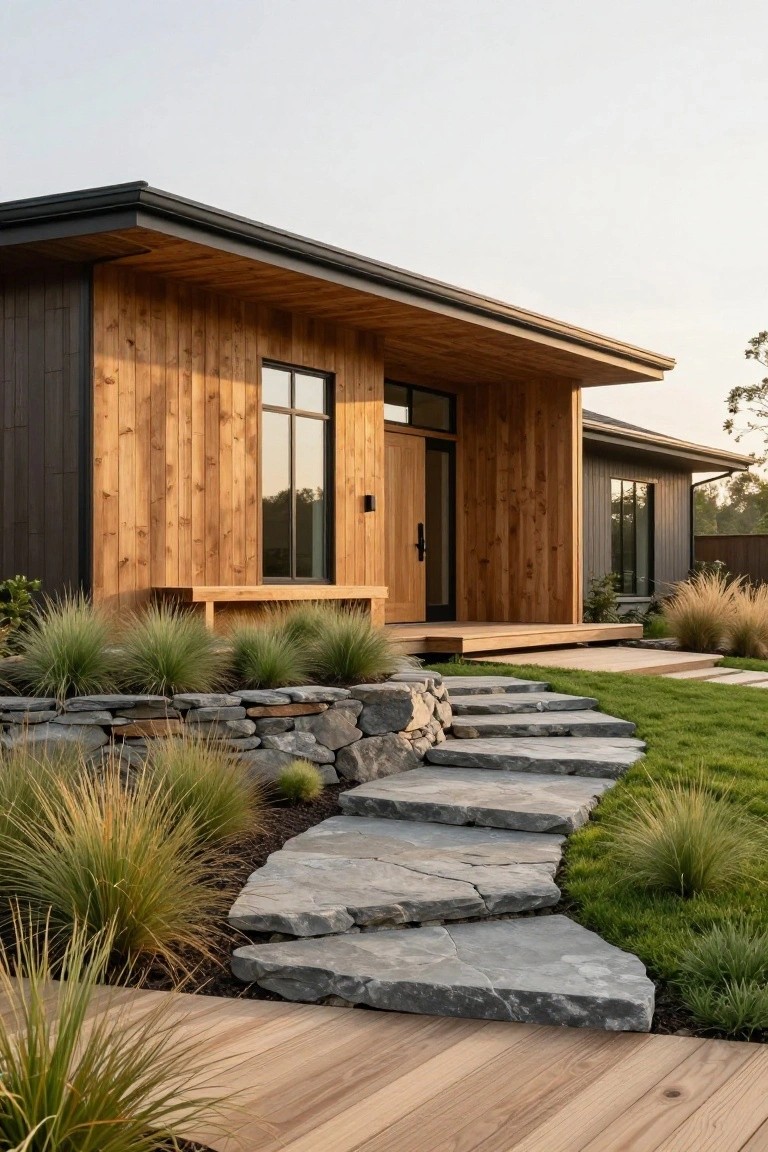
Vertical wood siding like this gives a modern house real texture and warmth right at the front. The boards run straight up the facade, catching light in a way that pulls your eye to the entry without any fuss. Paired with a simple overhang and big windows, it softens those clean lines that can sometimes feel cold.
This look works best on homes with a bit of slope, where you can run stone steps up to a wooden landing. It suits places with natural surroundings, keeping things low-key and tied to the outdoors. Just make sure the wood is treated for weather, or it fades too fast.
Warm Vertical Wood Siding Boosts Curb Appeal
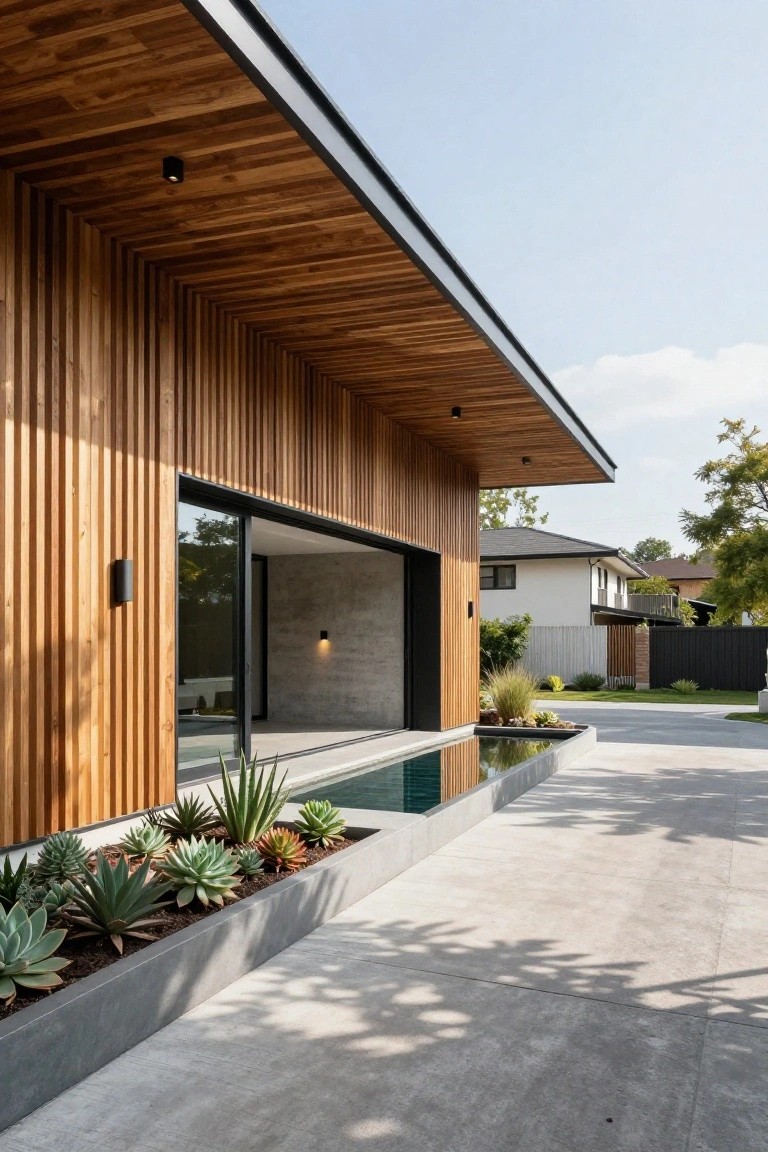
Vertical wood siding like this brings a touch of natural warmth to sleek modern homes. The slim timber boards run up the wall in tight rows, catching light in a way that softens hard lines from concrete and glass. It wraps around corners smoothly here, making the whole side of the house feel more connected and less boxy.
This siding works great on homes with flat or simple facades. Try it on a side entry or garage wall to draw the eye without overwhelming the front. It suits warmer climates where wood holds up well outdoors. Just seal it properly to avoid weathering too fast.
Vertical Wood Cladding for Modern Facades
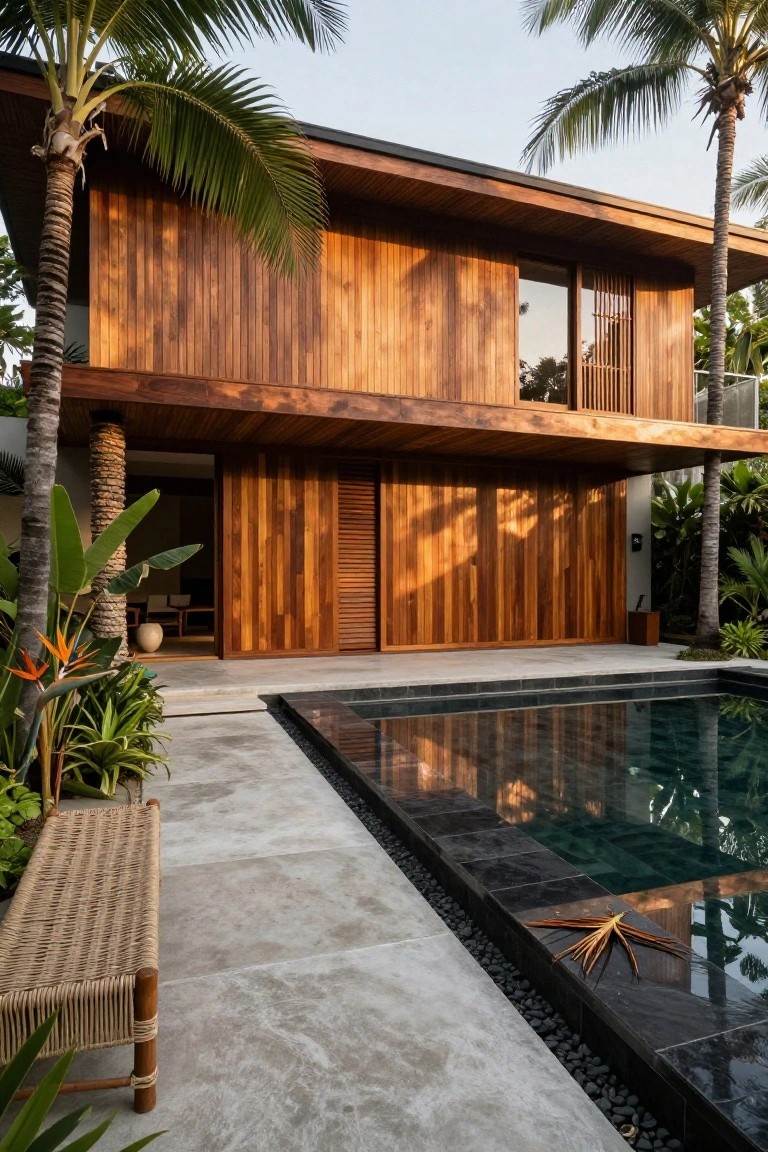
Vertical wood cladding like this gives a modern house real warmth. The tall panels run up the walls and across the entry doors, softening those clean lines without hiding them. It picks up the light at sunset and sits right at home with palms and greenery.
This works well on homes in tropical or warm spots. Go for sturdy woods that handle humidity. Add concrete underfoot and dark pool edges for balance. It’s a straightforward way to make your front yard more interesting.
Warm Wooden Porch Entry
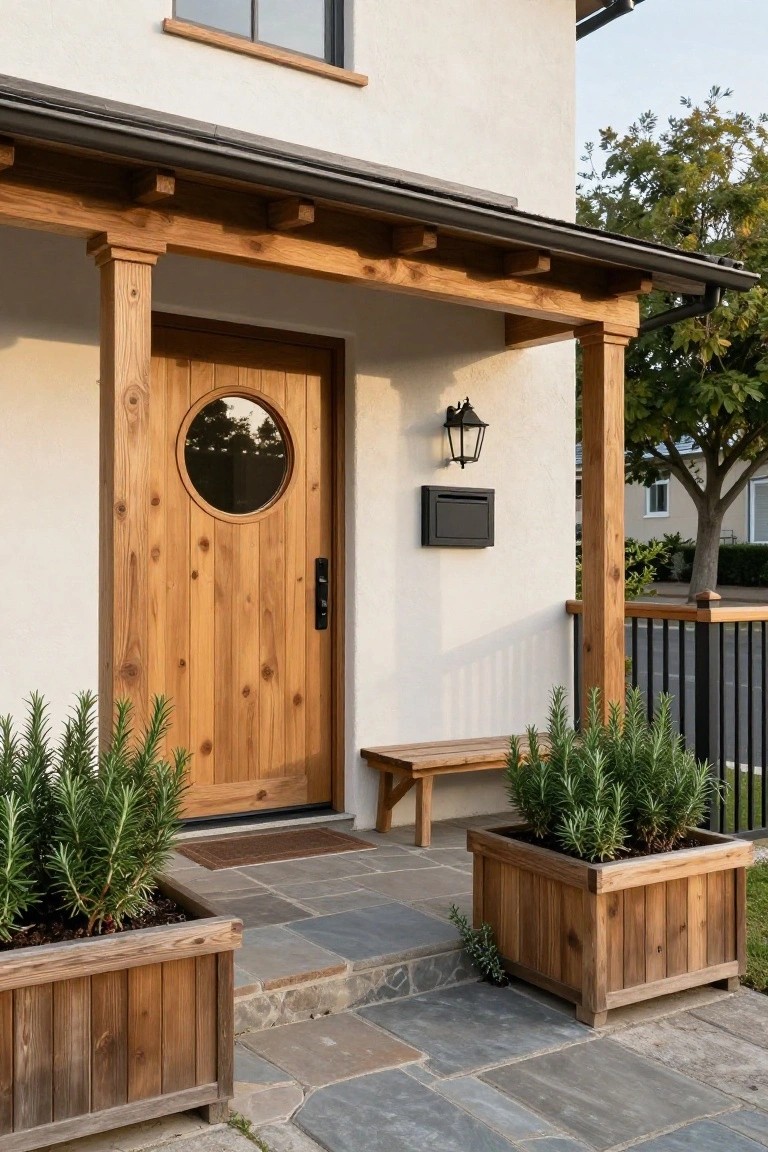
A timber porch like this one frames the front door just right. The wooden posts and beams give a sturdy, natural feel over the smooth stucco walls. That round window in the door lets in a bit of light and adds a simple nautical touch without trying too hard. Paired with the bench and herb planters nearby, it turns a basic entry into something folks notice from the street.
This works great on single-story homes or low-slung designs where you want more character up front. Go for untreated cedar or redwood to keep the wood looking honest over time. Tuck in rosemary or lavender pots on either side for scent and green without much upkeep. Skip it if your lot’s too shady, since the wood shows best in good light.
Wood Shingle Siding on Modern Cabins
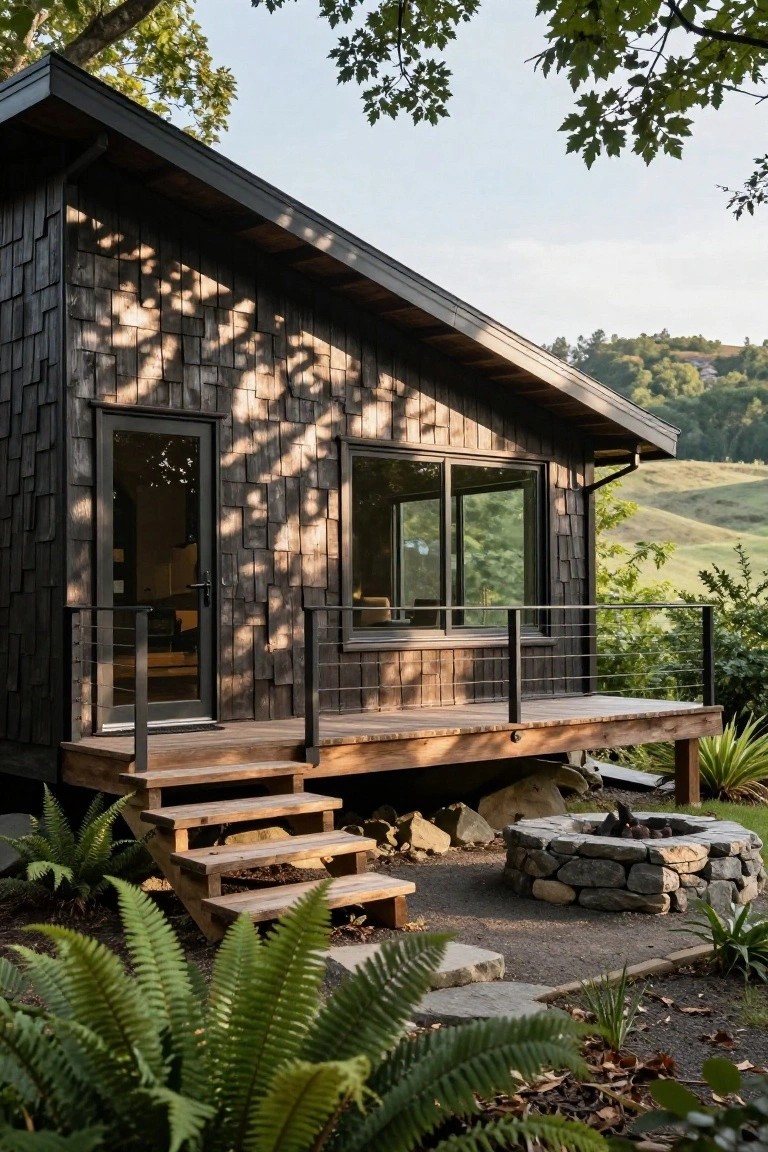
Dark wood shingles cover this compact cabin, giving it a textured look that feels right at home in the woods. The overlapping pieces catch shadows from nearby trees, so the house stands out without screaming for attention. It’s a simple way to mix modern lines with that cabin vibe.
This siding works best on smaller structures like guest houses or weekend retreats, especially on uneven lots. Raise the base on posts for airflow underneath, and add a basic deck out front. Just make sure the wood is treated for weather, since it sees a lot of exposure.
Simple Gravel and Rock Backyard Nook
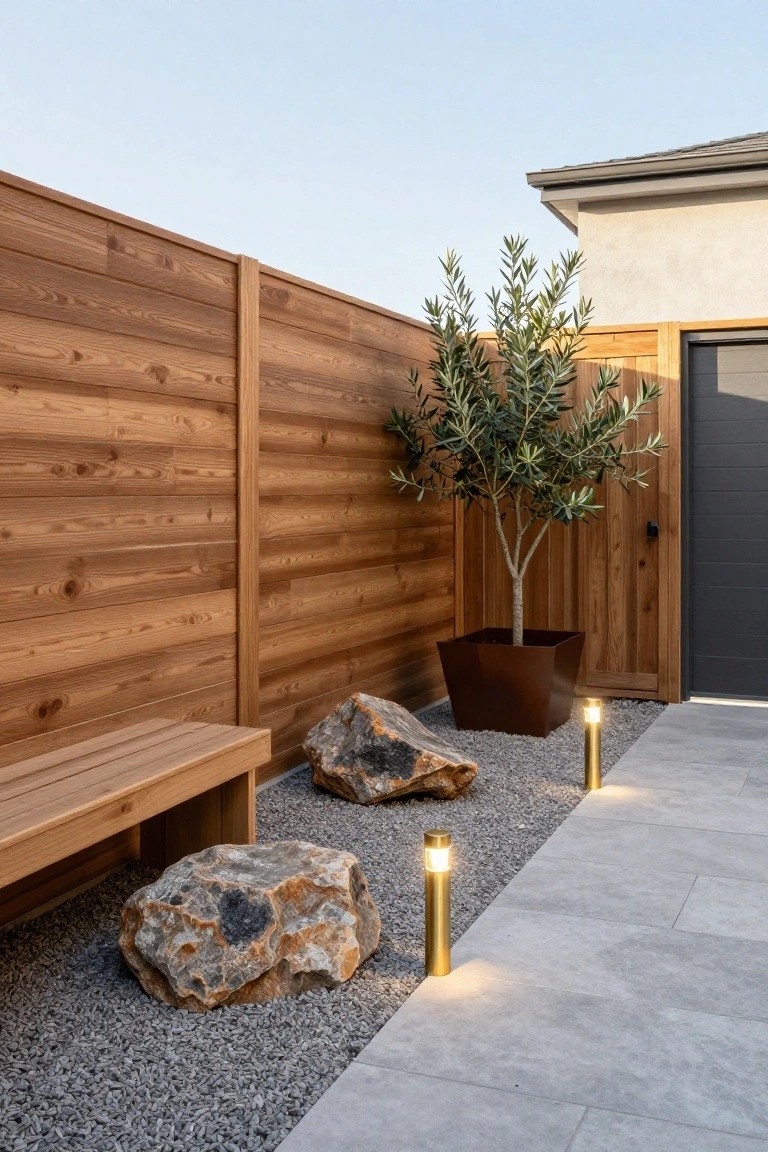
Gravel paths with a few big boulders make for an easy, calm spot in the yard. Here the large rocks sit right next to the path, with pea gravel filling in around them. A simple wooden bench nearby turns it into a place to sit. That olive tree in the pot adds some green without much work.
This works best tucked in a corner by a fence, like for side yards or back patios. It fits modern wood fences well and keeps things low maintenance. Line the path with short lights for night use. Just level the ground first so water doesn’t pool.
Wooden Poolside Decks
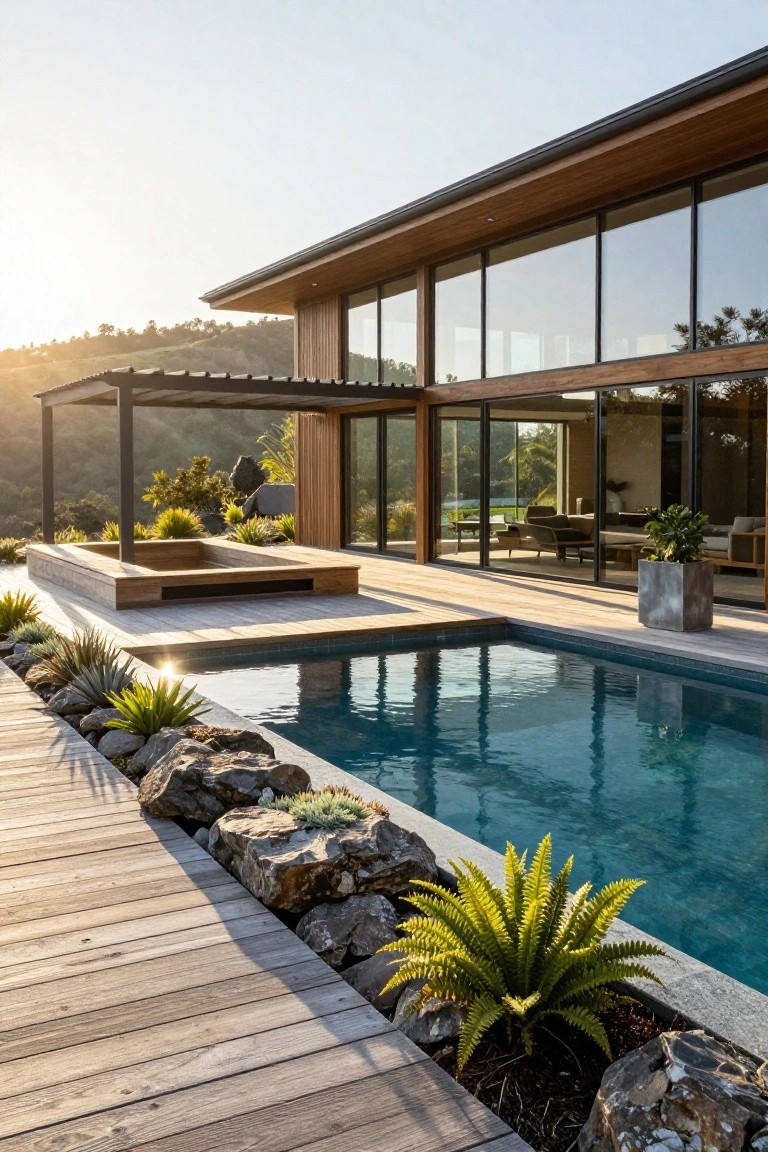
Wide wooden decking runs right up to the pool in this setup. It creates one smooth surface for lounging or walking poolside. Rocks form a simple border with low plants tucked in. That keeps the look rugged and easy on upkeep. No fussy lawn needed.
This works great for hillside lots or modern homes. The wood picks up on house cladding for a tied-together feel. Go with treated cedar or composite boards that last near water. Line the edge with local stones and succulents. Just make sure good drainage or the rocks shift over time.
Vertical Wood Cladding for Warm Modern Facades
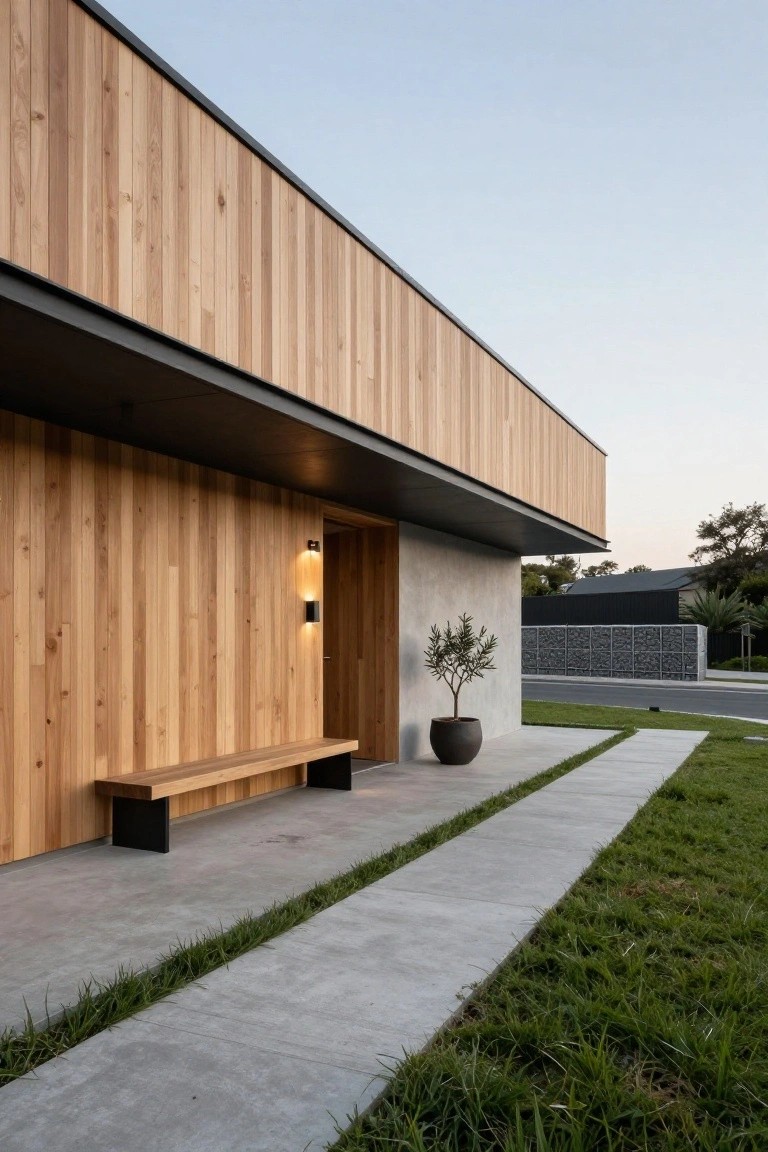
Vertical wood cladding like this brings a natural warmth to otherwise stark modern designs. The light-toned panels cover the main wall, wrapping right up to a black steel overhang that shades the entry. Paired with simple black bench legs, it softens the look without losing that clean, contemporary edge. It’s a straightforward way to make a house feel more approachable from the street.
This works best on single-story or low-slung homes in suburban spots where you want curb appeal that doesn’t shout. Use cedar or similar weather-treated wood for low upkeep, and keep accents minimal like the steel here. Skip busy landscaping around it. Just a clean path and one pot plant let the cladding do its thing.
Frequently Asked Questions
Q: Can I add wooden accents without replacing my whole exterior? A: Focus on high-impact spots like the entryway or porch railing first. Grab pre-cut cedar slats and screw them right over existing surfaces. You see a huge difference with minimal hassle.
Q: What’s the simplest wood to work with for beginners? A: Cedar cuts easily and nails straight into place. It resists bugs and rot on its own. Finish the job by brushing on a clear sealant.
Q: How do I keep wooden features looking new in wet weather? A: Pick naturally tough woods like redwood. Slap on a water-repellent stain at install and refresh it every other year. Skip this and you’ll regret the faded look.
Q: Do these designs work on smaller houses too? And yes. Scale down to slim vertical panels or a wood-clad garage door. They punch up the curb without overwhelming tight spaces.
