

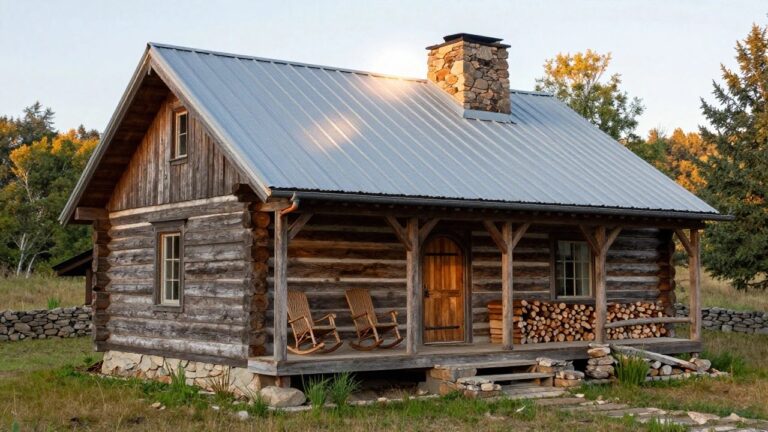
I’ve driven past plenty of rustic cabins over the years, and the ones that stick with me always nail their facade from the road. What draws the eye first tends to be the play of weathered wood siding against stone bases or steep gabled roofs that nod to the woods around them. I remember one where the deep porch overhang and grouped windows made the front feel solid yet open, something that works better in person than sketches suggest. These exteriors succeed when materials like reclaimed timber age naturally, blending into the site instead of shouting for attention. Save a few of these for your next project if you’re chasing that lived-in curb appeal.
Rustic Stone Chimney on Log Cabins
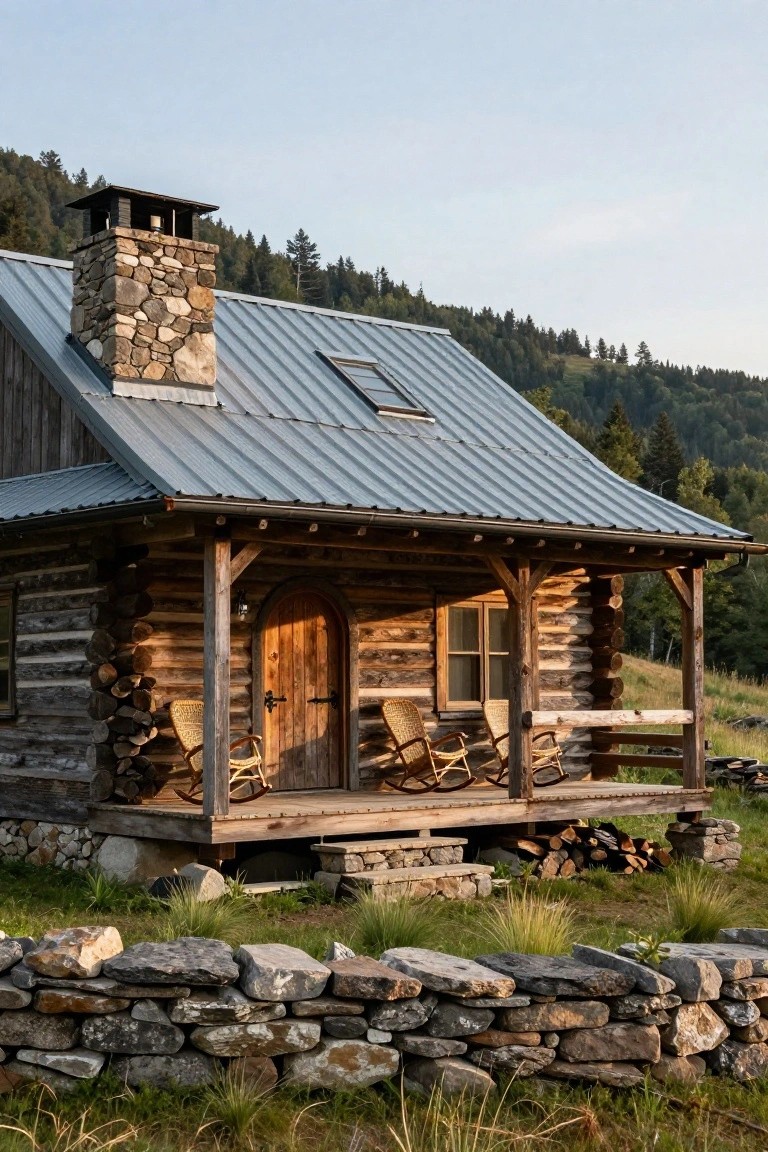
A tall stone chimney like this one really anchors a log cabin exterior. Built from rugged, uneven stones, it rises prominently from the log walls and metal roof, adding weight and character without overpowering the simple cabin shape. It feels right at home in a wooded setting, like it grew out of the hillside.
This works best on smaller cabins where you want one strong focal point up high. Source stones from nearby if you can, to match the local vibe, and pair it with a basic porch to keep things practical. Skip fancy cuts. Just stack them rough for that lived-in look.
A-Frame Cabin with Waterfront Glass Front
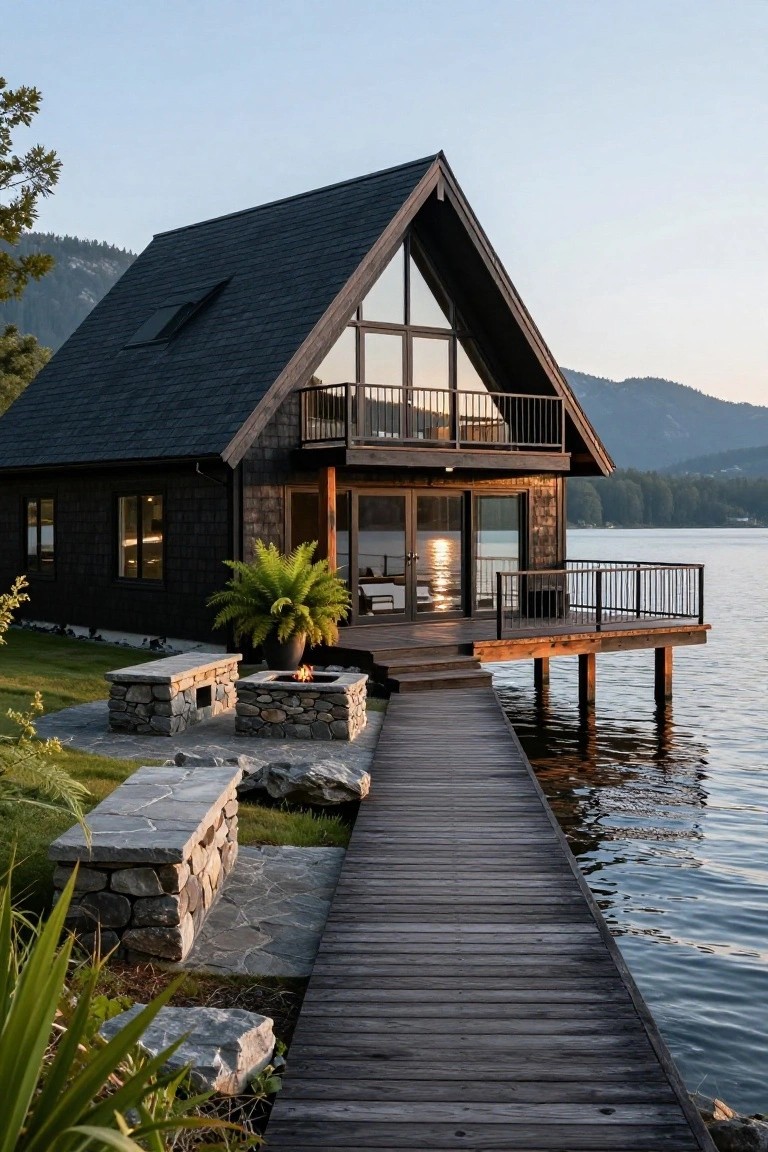
This cabin takes the familiar A-frame shape and punches it up with a tall glass wall right in the gable end. The dark wood siding keeps things rustic, but those big panels pull the lake view straight inside. It’s a simple way to make a small cabin feel bigger and more connected to the outdoors.
Try this on wooded lots where you want views without losing the cozy cabin vibe. Black-stained shakes or cedar hold up well near water, and the glass works best on the sunny side. Just make sure the framing is sturdy for that steep roofline.
Rustic Cabin Nestled in Boulders
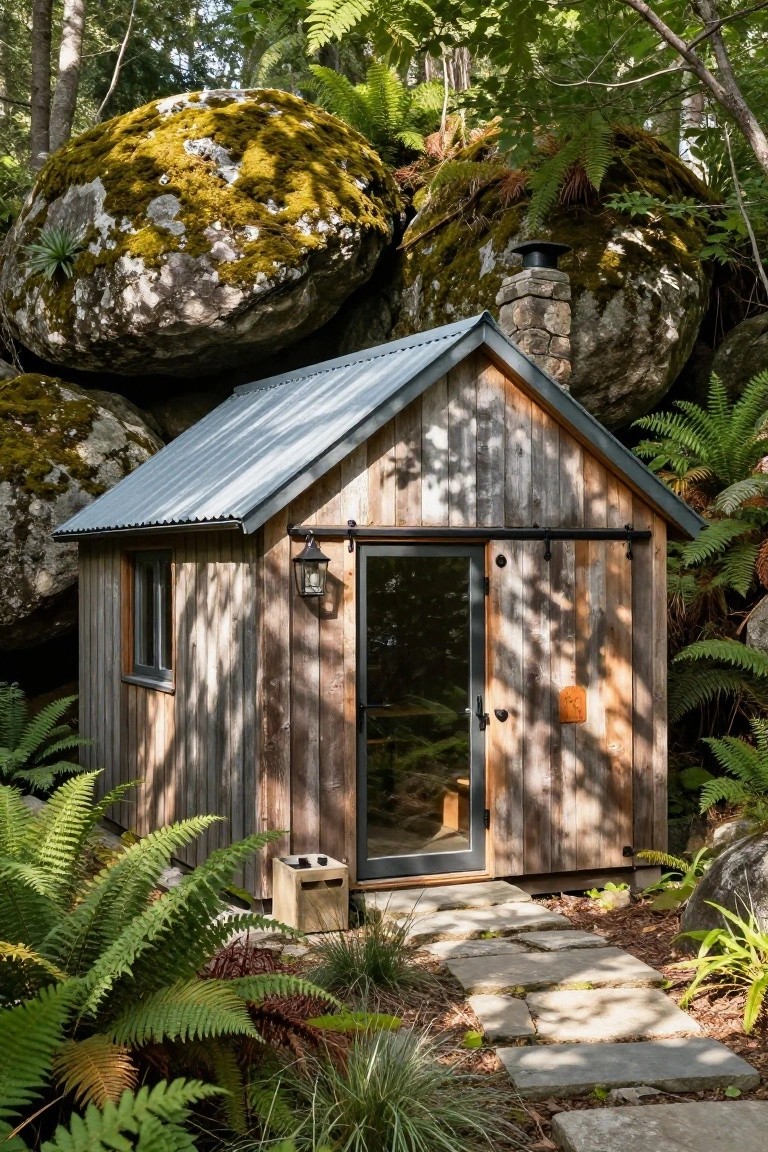
Tucking a small cabin right up against big mossy boulders gives it this natural, almost hidden feel that fits perfectly in a wooded spot. The weathered wood siding and simple metal roof let the rocks do a lot of the work, making the whole thing look like it grew out of the site instead of being plunked down. That stone chimney poking up ties it all together without trying too hard.
This setup works best on a sloped lot with existing rocks, where you can build around them to save on foundation costs. It’s great for a getaway cabin in the Pacific Northwest or any damp forest area. Just make sure the boulders drain well so moisture doesn’t creep into the walls.
Built-In Bench Along the Cabin Wall
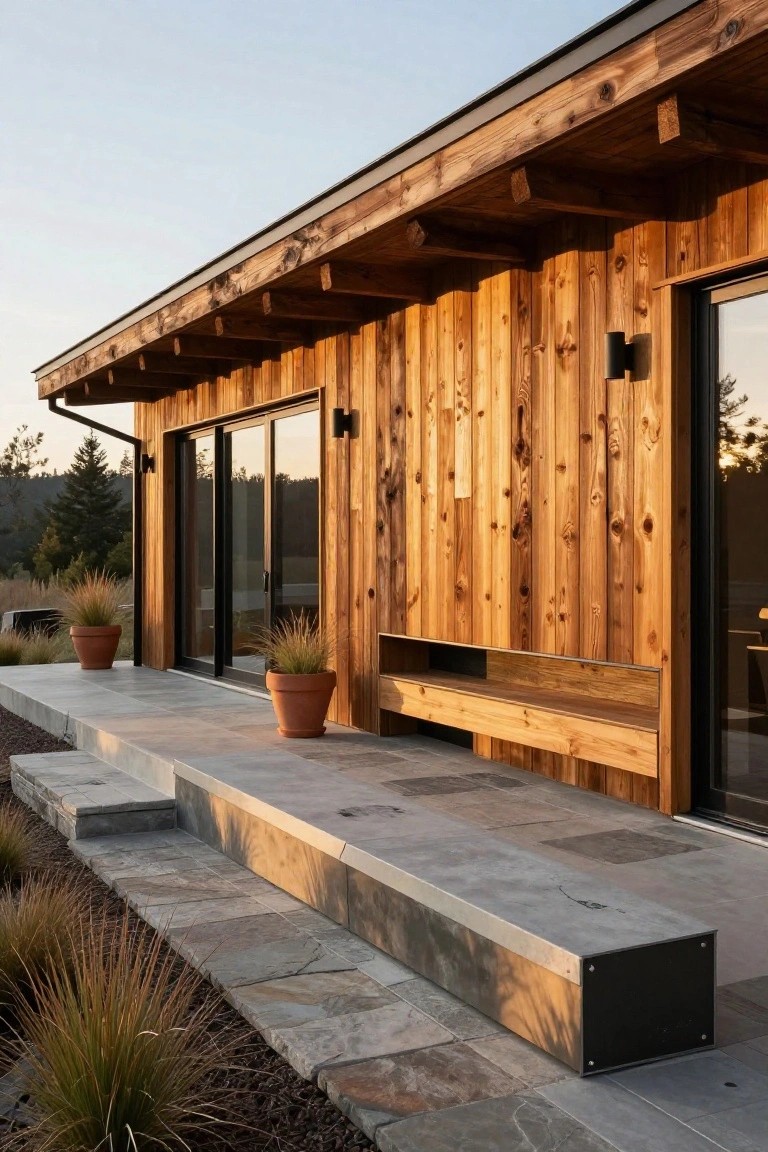
One nice touch on rustic cabins is sliding a simple built-in bench right into the wood siding. It uses the same warm planks as the wall so everything matches up without extra fuss. That bench here sits low along the patio edge with a metal lip on one side. Makes a spot to sit and take off boots or just hang out looking at the view.
Put one like this near sliding doors where you step out most. Works great on sloped sites with a few steps up to the door. Keep the wood treated so it lasts and maybe add a cushion for comfort. Avoid making it too deep if space is tight. Fits cabins big or small as long as the wall has enough run.
Vibrant Blue Double Doors
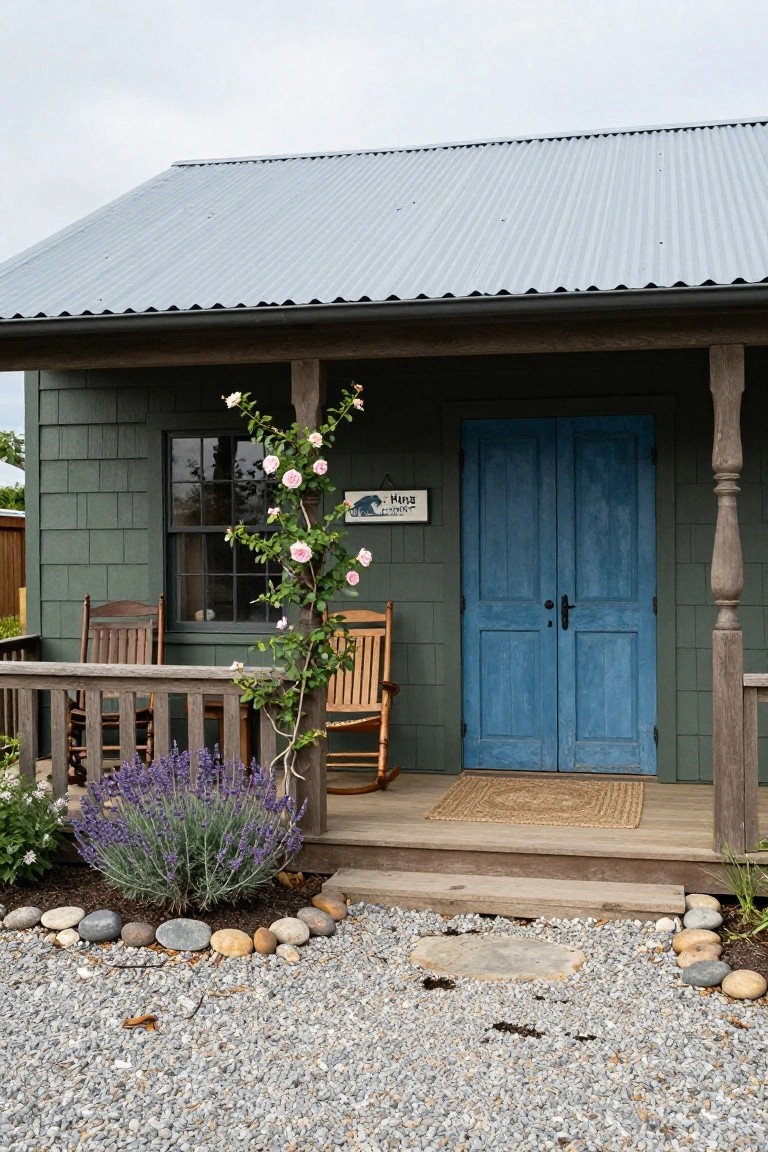
A pair of bright blue double doors turns this rustic cabin’s entry into the main event. Set against the green shingle siding and simple metal roof, they add just enough color to feel welcoming without overwhelming the natural look. Rocking chairs on the porch complete the cozy vibe.
This works best on smaller cabins or cottages where you want to highlight the front door. Pick a bold shade like this blue that picks up hints from the landscaping, maybe the sky or nearby plants. It suits wooded spots or rural settings. Keep the porch plain so the doors stay the focus.
Stone and Timber Cabin Porch
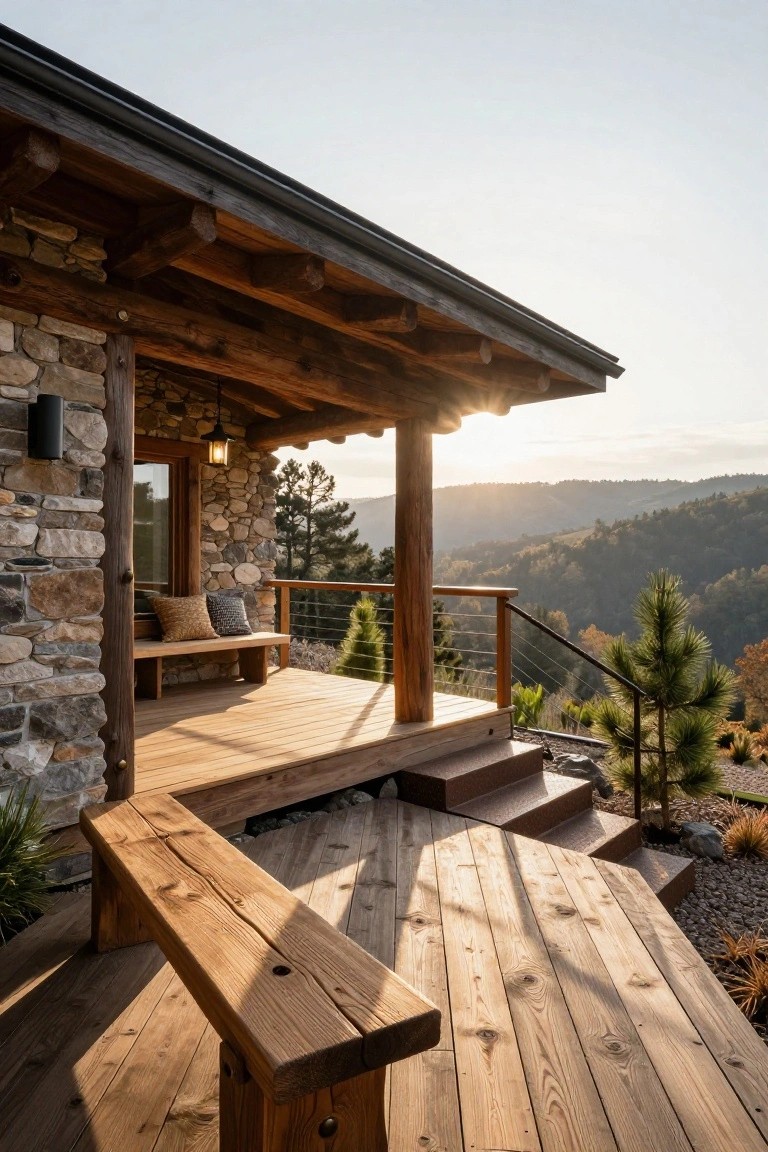
This setup uses rugged stone walls at the base paired with heavy timber posts and beams for the porch. It gives the cabin a solid, rooted look that fits right into a hilly spot. The wood deck flows out naturally, making the whole side of the house feel open to the outdoors without losing that cozy cabin vibe.
It works best for homes on uneven ground or in wooded areas, where the stone handles the slope and the timbers keep things light up top. Go for local stone if you can, and treat the wood well against moisture. Skip it on flat urban lots, though. It shines where nature takes center stage.
Dark Metal Roof on Rustic Cabin
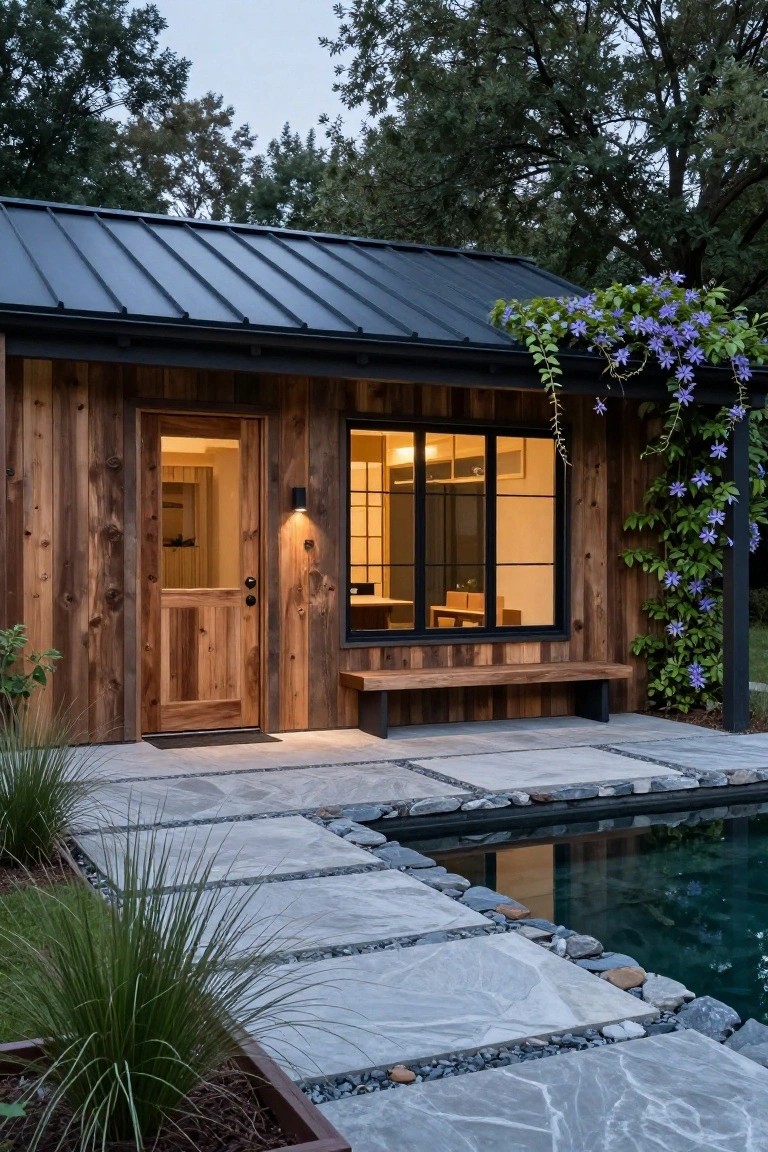
A black standing-seam metal roof sits right on top of this cedar-sided cabin. That simple combo keeps the warm wood look we love in rustic spots but adds a clean modern edge. The roof’s dark shine bounces off the lighter siding without overpowering it. And with the soft glow from that entry light… it pulls everything together at dusk.
Try this on a guest house or small backyard retreat where you want low upkeep. It suits wooded yards best, since the metal handles weather well and sheds leaves easy. Just match the roof lines to your main house so it doesn’t stick out too much.
Stone and Timber Cabin Facade
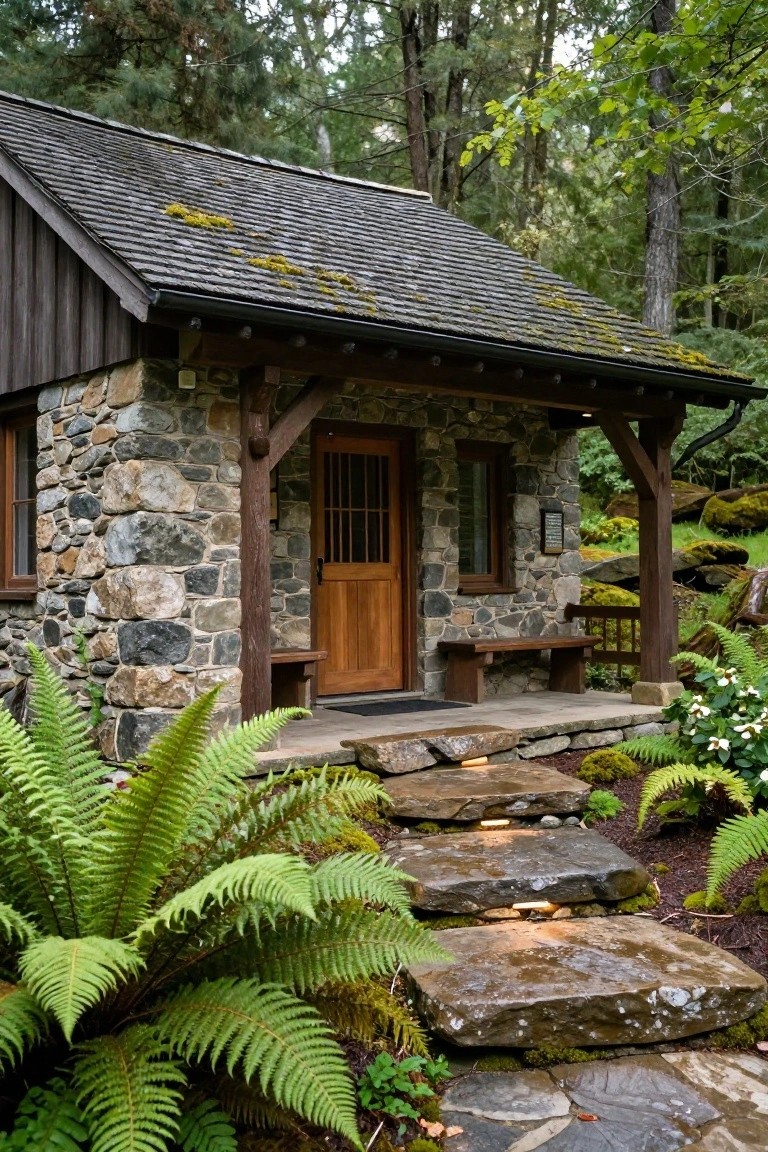
This kind of cabin exterior uses rough-cut stone for the walls and thick timber beams for the porch frame. It gives the place a sturdy feel that fits right into a forest setting. The moss growing on the slate roof just happens naturally and makes everything look settled in.
You can pull this off on smaller wooded properties where you want something tough but not fussy. Pick stones in mixed sizes from nearby sources to keep costs down, and use pressure-treated timber that ages well. It works best away from the street, letting the surroundings do some of the work.
White Clapboard Cabin with Turquoise Door
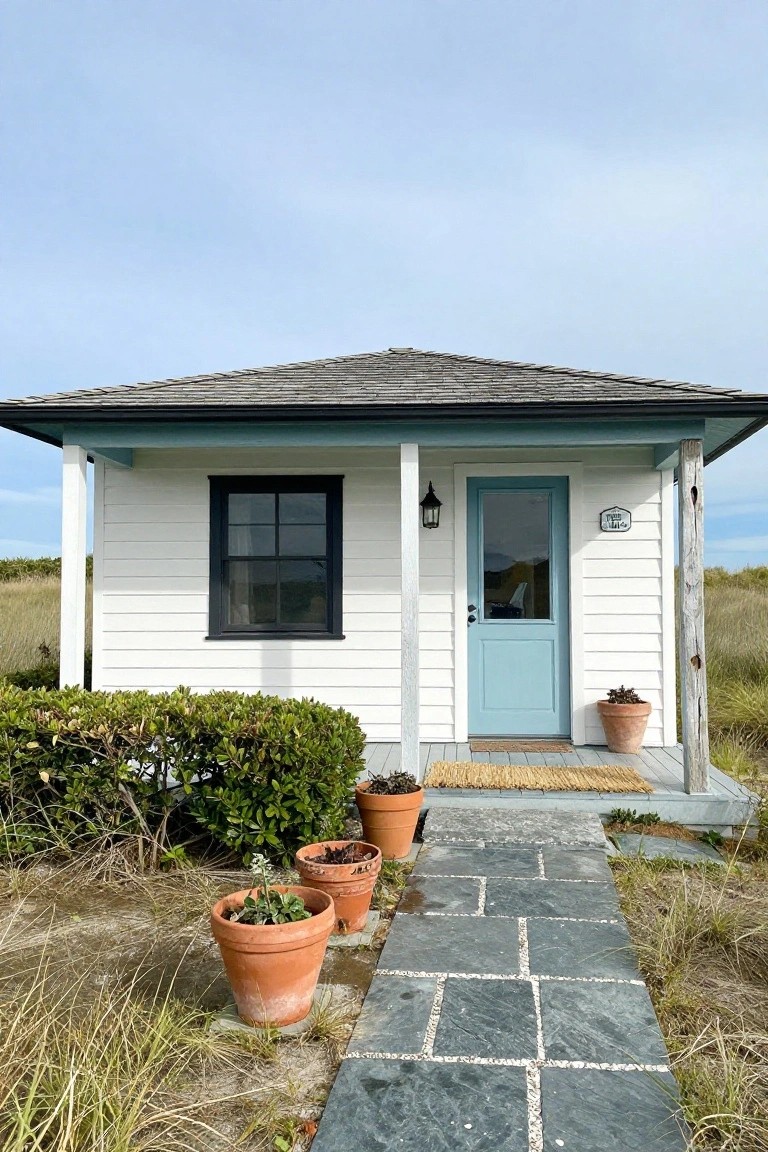
A simple white clapboard cabin like this one gets a lot of charm from its turquoise front door. The siding stays crisp and classic, almost like old beach houses, but that door pulls your eye right to the entry. It works because the color feels fresh against the white, without needing fancy extras.
Try this on a small guest house or cottage where you want easy curb appeal. Add a lantern and a couple pots by the steps, like here. It suits sandy lots or wooded spots. Just keep the trim dark to make the door stand out.
Stone and Timber Chalet Facade
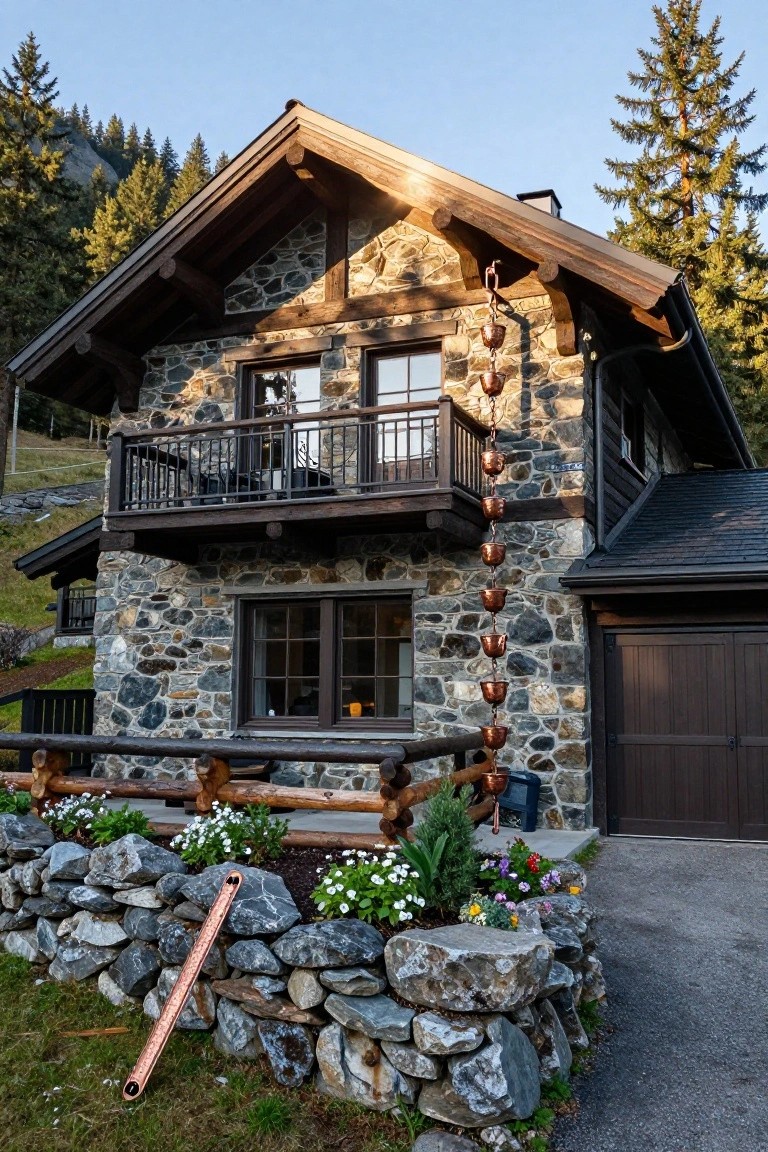
Rustic cabins like this one get their charm from mixing rough stone walls with sturdy timber framing. The fieldstone base looks right at home against rocky terrain. Dark wood beams and roof overhangs pull it all together without much fuss.
This setup suits mountain homes or wooded lots best. Source local stone for a natural fit. Let the wood weather on its own. Skip paint. It holds up to snow and wind just fine.
Rustic Cabin Raised on Pilings
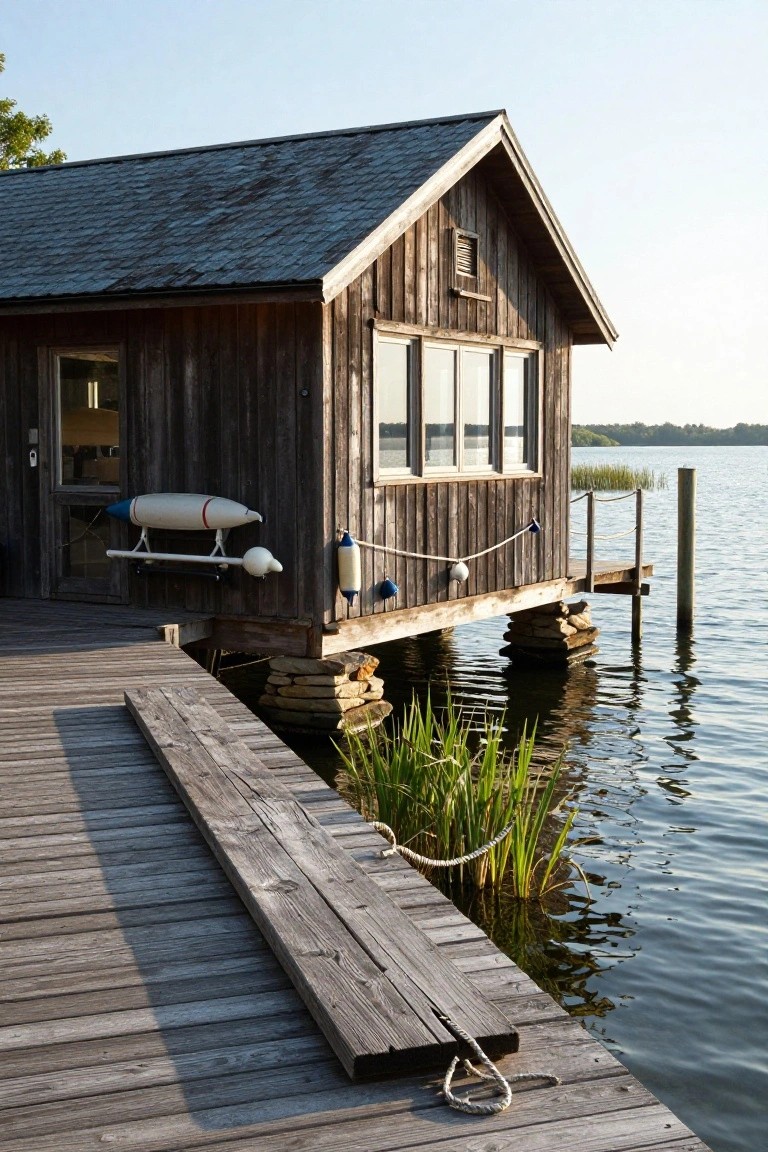
Raising a cabin on wooden pilings like this one puts your home right over the water. It keeps things dry during high water while giving you that up-close lake view from inside. The dark slate roof and rough wood walls blend into the surroundings without trying too hard.
This setup suits small waterfront lots or spots prone to flooding. Extend a dock out front for boats, and add simple ropes and buoys for a nautical touch. Check local codes first, though, since pilings need good engineering.
Dark Green Siding on Rustic Cabins
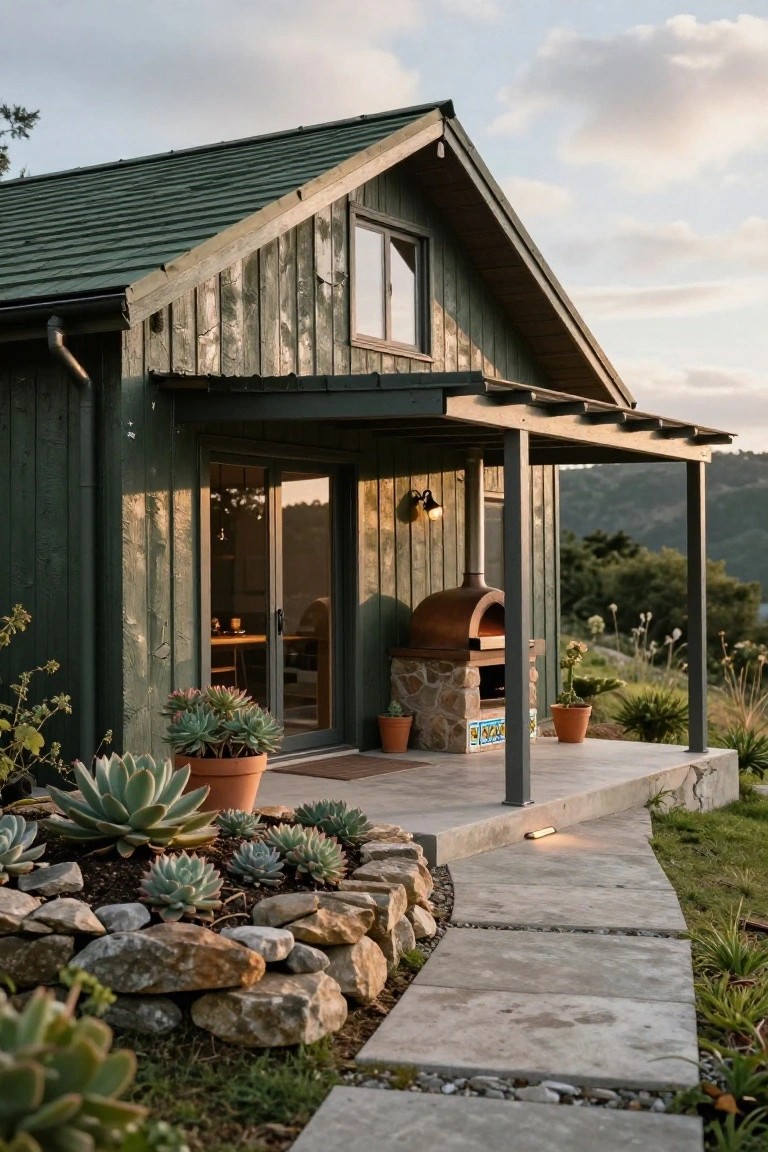
Dark green siding like this gives a cabin that lived-in forest feel without much effort. The vertical boards here catch the light just right, showing off some texture from the wood underneath. It pulls the house right into the hillside setting, making it look like it’s always been there.
Paint it on shiplap or board-and-batten for cabins or small homes tucked into wooded spots. It hides dirt well and works year-round. Skip it on super sunny sites, though. Pair with stone accents around the base to keep things sturdy.
Dark Weathered Wood Siding
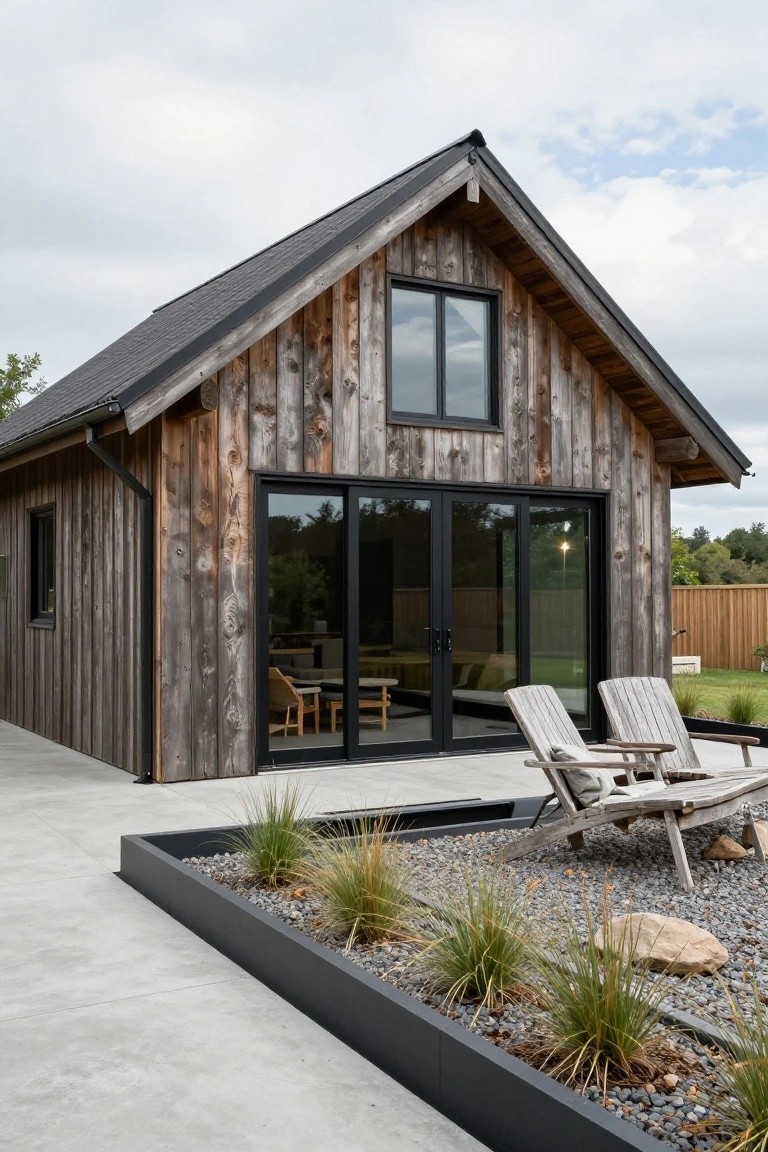
This cabin pulls off a classic rustic look with its dark, weathered wood siding. The planks have that aged, almost charred finish that blends right into a natural setting. It keeps things simple and sturdy looking, especially on a small gabled structure like this.
You can get a similar effect by choosing thermowood or shou sugi ban treatments for the planks. It suits wooded backyards or rural spots best, where the dark tone ties into trees and shadows. Just make sure the roof and frames are dark too, to avoid clashing.
Rustic Beach Cabin on Stilts
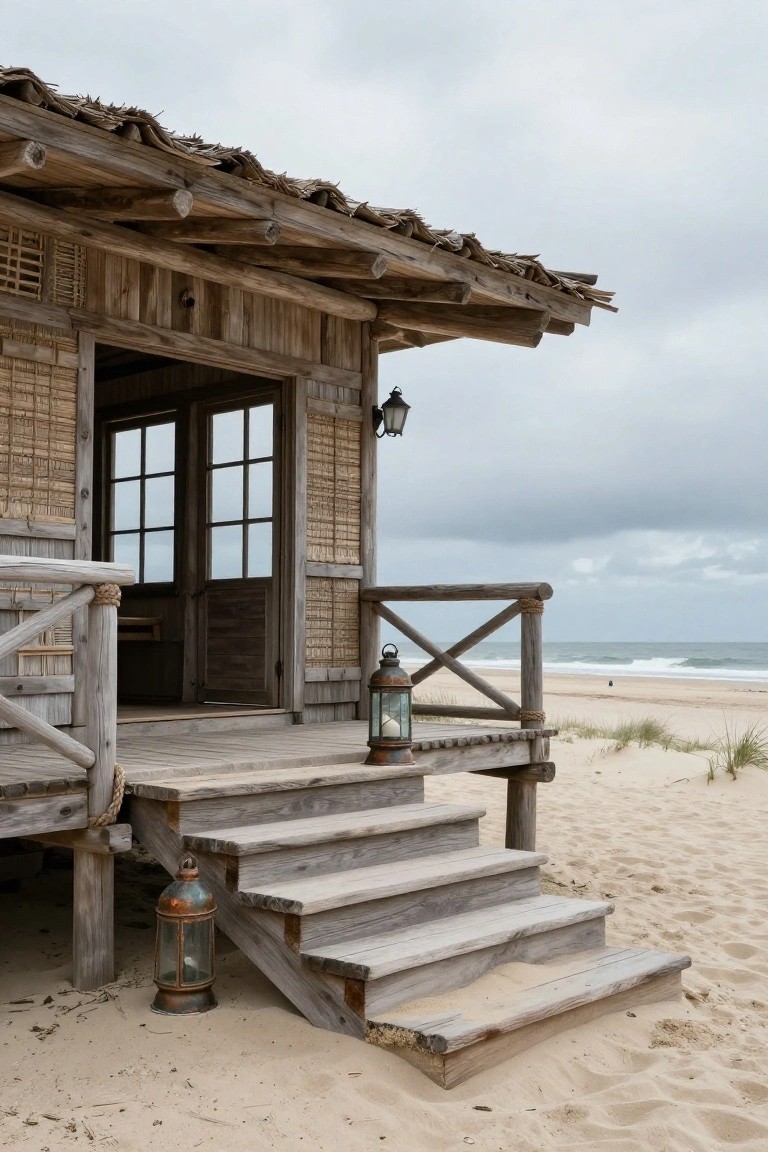
There’s something about a cabin lifted up on sturdy wooden stilts that just fits the beach perfectly. This design uses weathered wood planks and bamboo screens to blend right into the sandy dunes, with a thatched roof adding that extra touch of natural rusticity. It keeps the place safe from tides and storms while giving it a cozy, lived-in look that feels at home by the ocean.
You can pull this off on any coastal lot where flooding is a worry. Start with pressure-treated posts for the base, then layer on reclaimed wood siding and simple railings. Add a few lanterns on the porch for evenings. It works best for smaller footprints, keeping things practical and low-key without much upkeep.
Dark Wood Siding on a Rustic Cabin
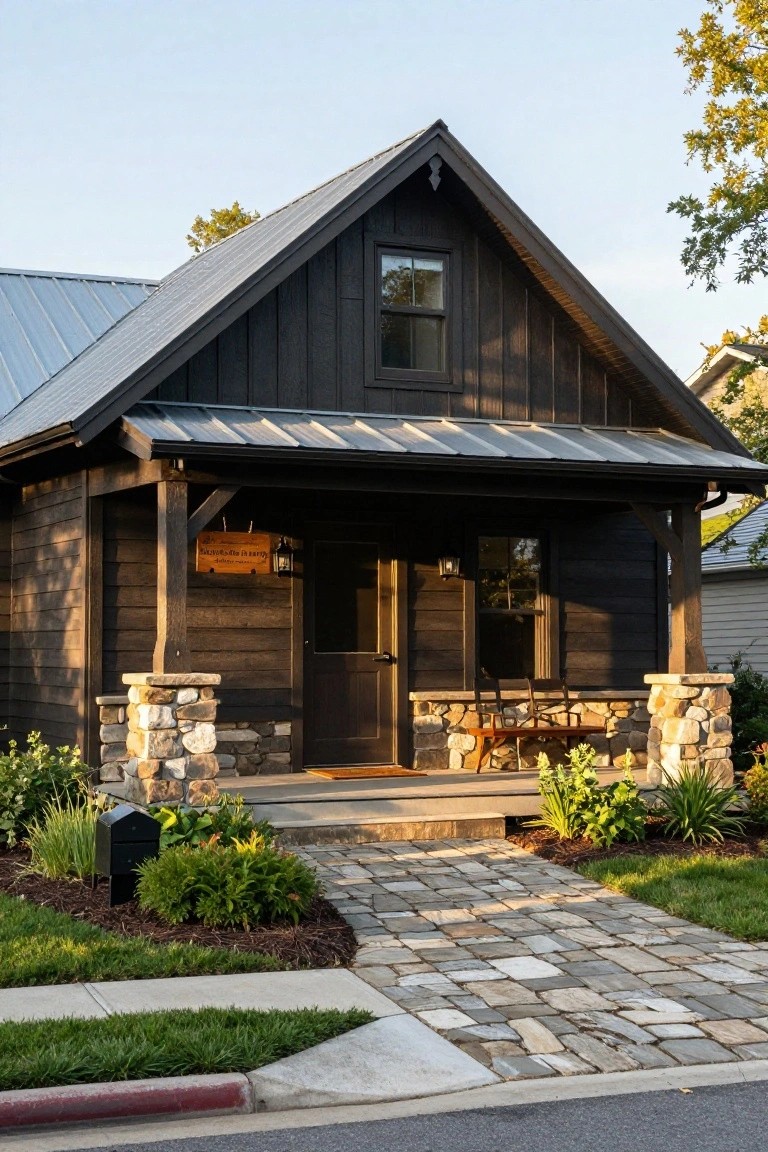
Dark wood siding like this charred or deeply stained board-and-batten gives a cabin that moody, lived-in rustic feel right away. It works well against the silver standing-seam metal roof, keeping things simple and tough for weather. Those stone pillars down at porch level add just enough contrast without overdoing it.
This look suits smaller cabins on wooded lots or even neighborhood spots where you want curb appeal without a lot of upkeep. Go for it if your site has some trees for backdrop. One thing, pair it with light stone or path elements so the dark doesn’t swallow the entry whole.
Simple Gravel Path to Cabin Door
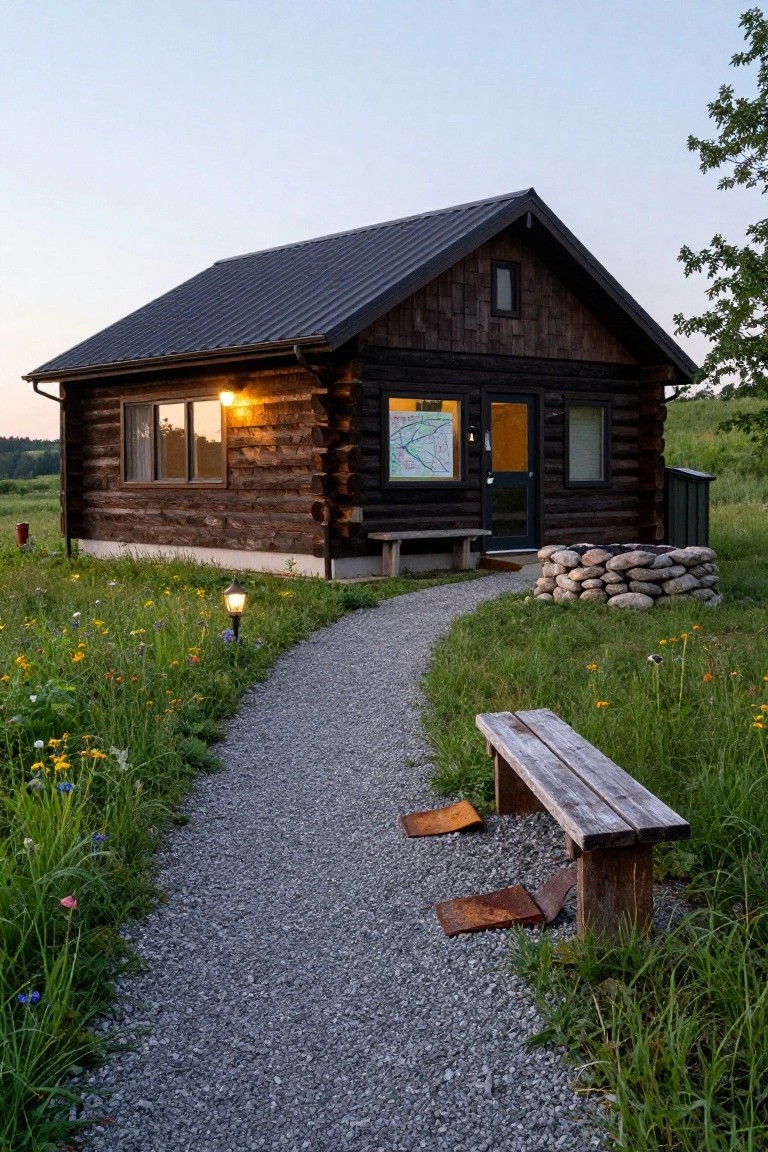
A gravel path like this winds right up to the cabin door and keeps the rustic look going strong. It blends into the grass and flowers without any fuss, while that post lantern adds just enough light to guide you in at dusk. Makes the whole front feel open and easy to reach.
This works best on sloped or natural sites around a small cabin. Curve the path a little for interest, keep it wide enough for two people. Skip fancy edging… gravel stays put on its own. Good for country spots where you want low upkeep.
Cabin Exteriors with Stone Bases
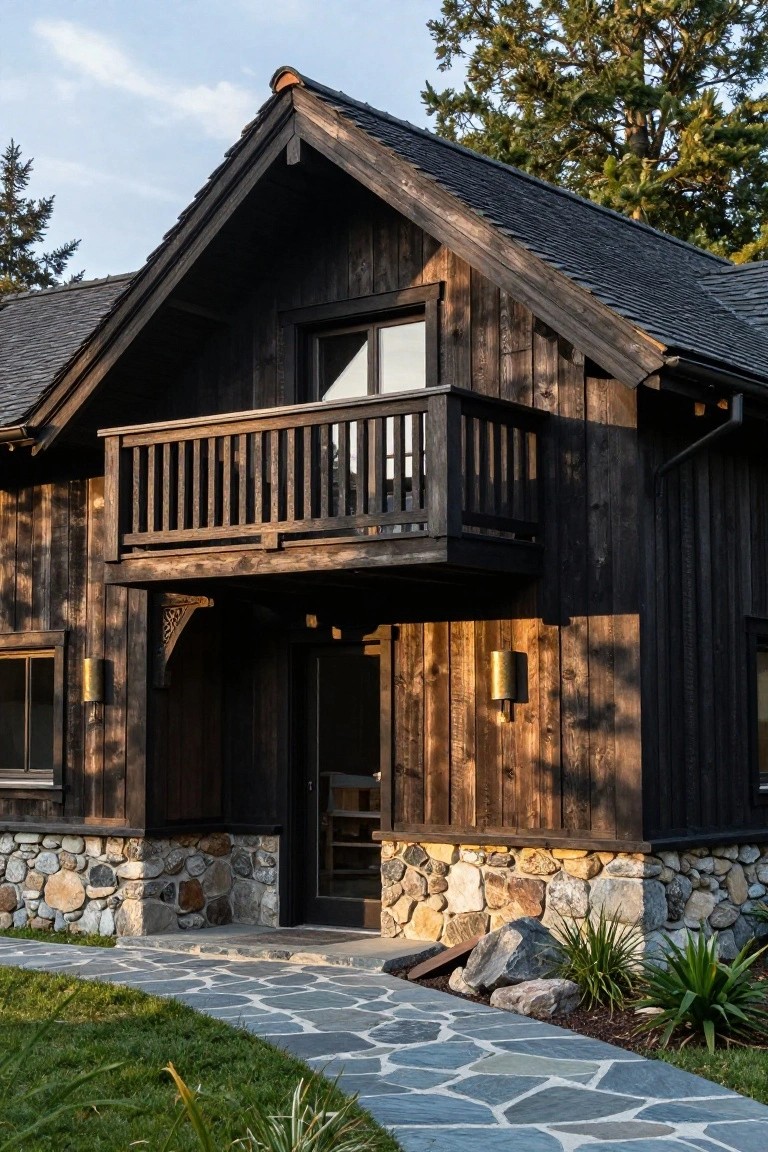
A solid stone foundation like this one gives a wood cabin real staying power. The rough fieldstones at the bottom contrast nicely with the dark timber siding up top. It makes the whole place feel rooted in the ground. Especially on a site with trees around.
This setup works well for cabins in wooded or hilly spots. Hunt for local stones to blend right in and save on hauling. Use darker wood cladding that weathers over time. Keep the entry simple so the materials do the talking.
Rustic Cabin with Black-Framed Windows
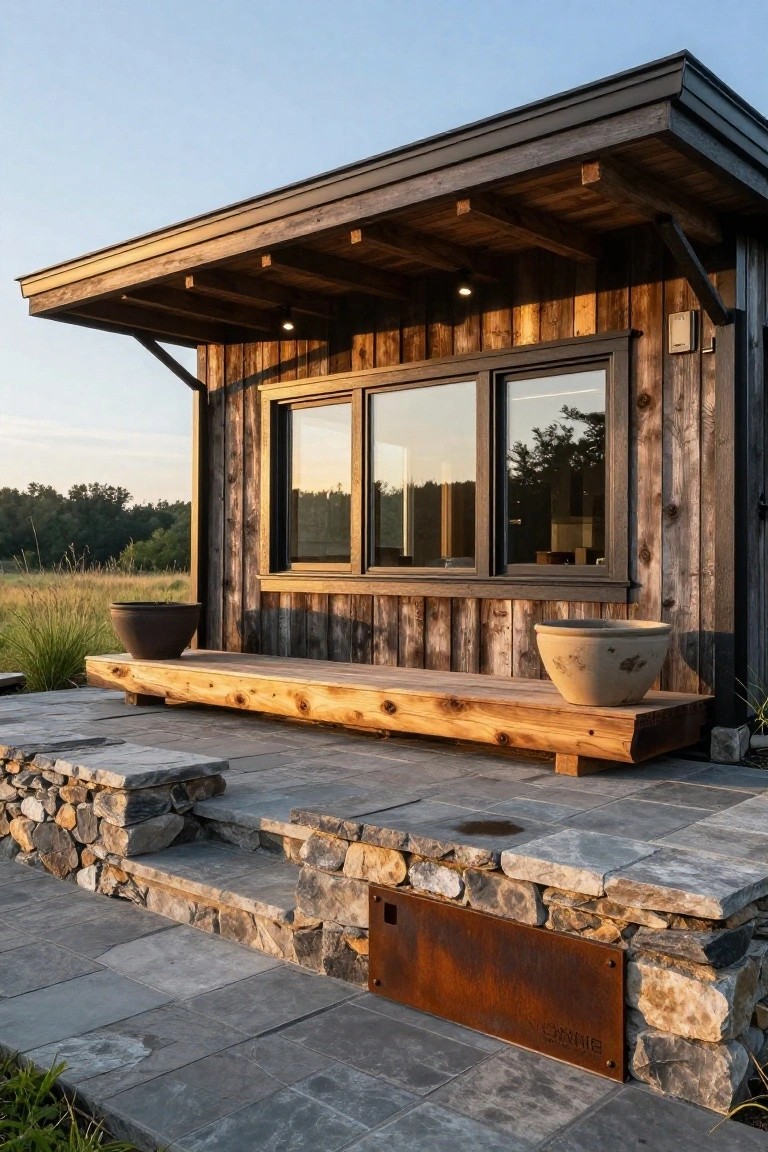
One simple way to give a rustic cabin a fresh look is black-framed windows. They stand out against the dark wood siding here, like on this small cabin where a big triple window pulls in light and frames the woods outside. The contrast keeps things from feeling too folksy. It adds just enough modern edge without changing the cozy cabin feel.
Try this on a cabin or small house tucked into the trees. Go for oversized windows if your site has good views. Make sure the frames are slim to let the glass do the work. It suits wooded spots best, where you want that indoor-outdoor tie. Skip it on super sunny sides, or the glare might fight the wood tones.
Dark Stained Log Cabin Exterior
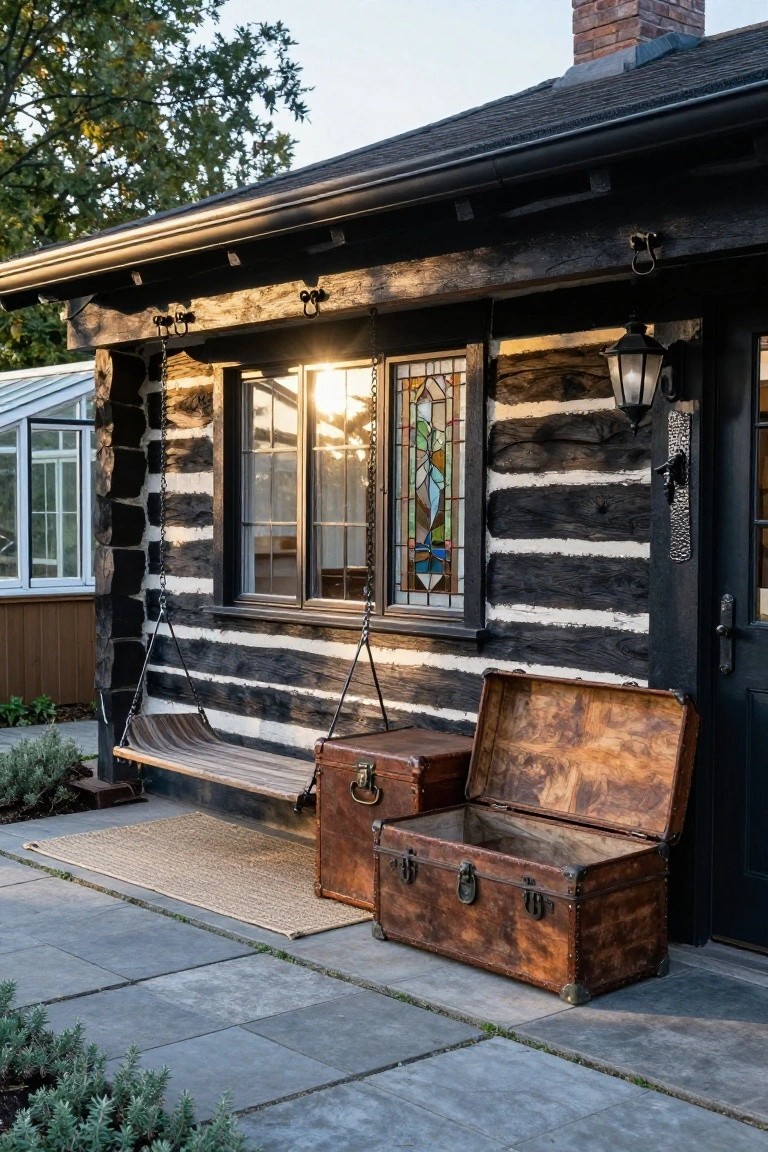
One look at this cabin front shows how a dark stain on the logs changes everything. The black finish against the light chinking creates clean stripes that pop, especially in the late sun. It keeps the rustic roots but adds edge, making the house feel solid and a little mysterious. That stained glass window next to the porch just ties it together nicely.
Go for a dark stain if your cabin sits in trees or gets shady light. It hides wear from weather and bugs better than light tones. Works on new builds or old ones needing refresh. Seal it well, and add basic porch touches like a swing. Skip if you want super bright and beachy vibes.
Built-In Bench on the Cabin Porch
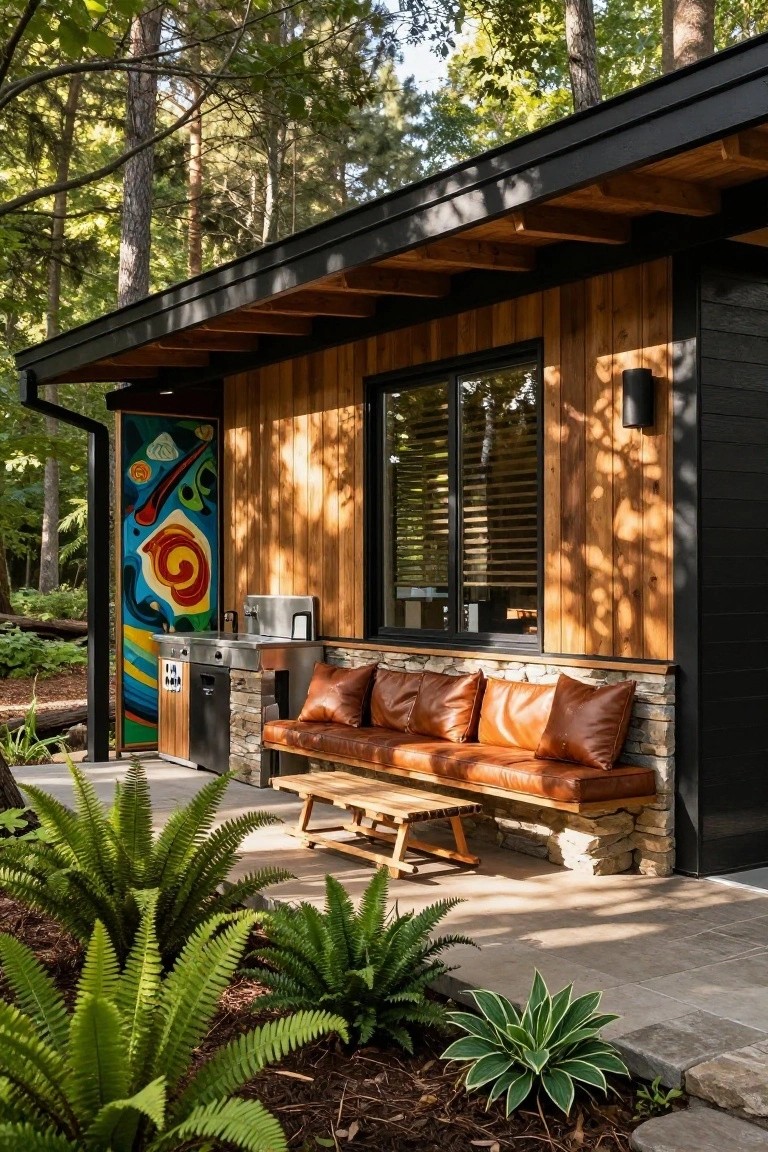
A built-in bench running along the cabin wall makes for easy outdoor seating that feels part of the house itself. Here it’s set on a low stone base with thick leather cushions for comfort, plus a simple wooden table in front. That setup turns a side porch into a spot you actually use, blending right with the wood siding and overhang.
This works best on cabins tucked into woods where you want shade and protection from bugs. Build it sturdy with local stone or block, then add weatherproof cushions. Keep the kitchen bits like the nearby grill handy but not crowding the seats… practical for morning coffee or evening hangs.
Frequently Asked Questions
Q: How do I keep the wood siding from rotting in wet climates? A: Brush on linseed oil mixed with a bit of turpentine each spring. It penetrates deep and breathes with the wood. Skip heavy sealants, they trap moisture.
Q: What porch furniture pairs best with these rustic looks? A: Grab Adirondack chairs in raw cedar. Scatter wool rugs and lanterns on the floor.
Q: Can I pull off the stone accent walls myself? A: Stack dry-laid fieldstone around your door, no mortar needed. Hunt free rocks from nearby creeks or farms. Tamp gravel behind for drainage, it lasts forever.
Q: How do I pick roof colors that match the cabin vibe? A: And stick to deep charcoals or earthy rusts on metal roofs… they fade into the woods. Test samples in morning light. Dark shades hide dirt better too.
